Posted on Leave a comment

Video: Every Single Switch Game Released in Year One

The Switch, as it stands, is an unmitigated success both commercially and critically. Developers are flocking to release their games on the system as soon as they can, but just how many games have been released in the first year of this console’s life?

Short answer, 404 in Western territories. That’s over 100 more than the N64 got in its entire life! You could just look at them all on a Wikipedia list, but to try and put this into perspective we had the hugely impractical idea of showing off every single one of these games in the video above, rapid-fire style.

For me personally this has really opened my eyes to the sheer volume of the Switch’s library. Having to sit there and read out the title of every single game and think about the work hours that have gone in to creating them all is a little bit flooring to say the least.

Make sure you check out the video above, because blimey did it take an age to put together.

Posted on Leave a comment

Feature: Nintendo Switch Year One: A Review

The Nintendo Switch, eh? Inaugural years don’t come much better than this. Not since the debut year of PlayStation 4 has a modern console enjoyed such a meteoric rise on all fronts. Ever increasing sales; exclusives that are both critical and commercial successes; the new wave of ‘Nindies’; the list goes on and on. 

The Switch has gone from strength to strength, and it’s made for quite the ride. So, to celebrate the one year anniversary for Switch, we’ve dialled back the clock as we follow the handheld wonder from launch to the end of its freshman tenure. 

This is the year that was for Nintendo’s latest console sensation…


March 2017 – The big launch, a new Zelda and all the hype

Following the official reveal in November 2016 and a whole host of hands-on events in January 2017, the world was suitably hyped when Nintendo Switch launched worldwide on 3rd March. And it lived up to the hype, too. Countless glowing reviews filled the games media, the tech press and mainstream outlets. Having taken something of a backseat following the commercial failure of Wii U, Nintendo was back in vogue and handhelds were once again the talk of the town in the console sphere.

With the launch came the long-awaited release of The Legend Of Zelda: Breath Of The Wild and an instant 10/10 across the board – including here at Nintendo Life – and a game that rivalled Ocarina Of Time for the title of ‘Best Zelda Game Ever’. And that good press did wonders for its sales figures too. By the end of the month, Nintendo Switch had sold 2.74 million units worldwide. What. A. Start.

April 2017 – Mario Kart 8 goes Deluxe and Switch takes over the US

Having had a stellar launch month, all eyes were on Nintendo Switch as it entered its second month out in the wild. Could that momentum continue now that the launch hype was beginning to wane? Nintendo had a new Zelda to its name, but its other launch titles weren’t quite so outstanding. Enter Mario Kart 8 Deluxe. Wisely bringing one of Wii U’s greatest assets to Switch was a stroke of genius, offering up the console’s first proper online multiplayer hit.

April also saw Nintendo rack up quite the month for sales. Combined Switch and 3DS sales made up nearly half of all hardware sales on North American soil. MK8 Deluxe played a big role in that too, pulling in 550,000 sales (in both retail and digital) in just two days. Two days.

May 2017 – Minecraft arrives and shares soar for Ninty

Following two excellent months headlined by two first-party hits (one of which, technically, was a re-release), the Switch entered May with impressive sales figures and a growing library of software to its name. The month of May proved relatively quiet in terms of major releases (a cooling off period was always going to happen), but it did see Minecraft: Nintendo Switch Edition hit the eShop along Disgaea 5 Complete and Ultra Street Fighter II: The Final Challengers. They weren’t major hits, but along with a steady stream of Neo Geo ports from HAMSTER, Switch was far from drying up when it came to software.

Nintendo Switch’s sales figures and positive PR profile did the business in business too, with Nintendo’s share price rocketing by 108% by the month’s end. The console was becoming the firm’s biggest commercial hit since the Wii, with shares rising dramatically. That value even exceeded the short-lived boom elicited by Pokémon GO back, giving Ninty stock its highest value since 2010. However, stock shortages were starting to become an issue

June 2017 – Switch keeps selling out, Switch Online gets a rethink and Rabbids return

Now entering its fourth month of life, Switch was ready to hit the ground running as it headed into a successful E3 showing. With Nintendo shares on a seven-year high and sales continuing to soar, reality came calling. Switch was selling out in retailers across the world. Nintendo fought to meet demand as everyone scrambled to grab a console, promising it would meet the need for handheld goodness with a wave of new units in July. News of it selling out simply made demand even higher. Switch also got another first-party IP in the form of unique brawler ARMS, which would go on to become something of a cult smash.

June also saw Nintendo clarifying the state of play when it came to Nintendo Switch Online, the much-talked about online infrastructure. It allayed fears that the free classic games included with each $20 subscription would be pulled at the end of the month (a la PlayStation Plus) by confirming all members would have access to a collection of titles. The service was delayed into 2018, but online play would continue to be free until that eventual launch. And let’s not forget the emotional reveal of Ubisoft Milan’s Mario + Rabbids Kingdom Battle, which became the talk and toast of E3 2017.

July 2017 – Splatoon 2 paints the town neon and Switch sales hit a new high

The end of Nintendo Switch’s first proper quarter saw some impressive numbers for the Big N, with reports ending 30th June rounding off at 64.73 billion yen ($578 million) in gross profit and 16.21 billion yen ($145 million) in operating profit. It was an astounding quarter for the company, especially when you consider it pulled in 30.5 billion yen ($272 million) in operating profile for the same period in 2016. Poor old Wii U. Still, with 4.7 million Switch sales by July, the next quarter promised to be even better.

July also saw the release of Nintendo’s next big first-party franchise: Splatoon 2. Another series that reviewed incredibly well back on Wii U but struggled under the weight of a deflated system, the cutesy shooter sequel rode a wave of hype (and paint) following a handful of successful test betas. Splatoon 2 was the highest-selling game in North America (as well proving a hit across Europe) and helped Nintendo become the best-selling publisher in July.

August 2017 – Kingdom Battle claims victory and Switch just keeps selling

Switch headed toward its six-month anniversary with a swagger in August, thanks in no small part to sales figures that continued to rise. No one quite expected a handheld device to perform so well, especially half a year into its lifecycle, but it became the highest selling console in the US (something it pulled off four out of six months from launch). The likes of Sonic Mania and Slime-San kept the eShop flowing with new titles, but it would be an unlikely union that would send critics and consumers ablaze with adoration…

Yes, August saw the release of David Soliani’s dream project, Mario + Rabbids Kingdom Battle, mashing turn-based strategy and overworld exploration into one of the most accessible and rewarding games to take turns. It reportedly sold over 215,000 units in its first week at retail – no mean feat when you consider it wasn’t due to arrive in Japan for a few more months. And a game with Rabbids in it no less. Switch sales did take something of a dip in Japan in August, but Splatoon 2 continued to perform well.

September 2017 – Nindies continue to rule and another cracking Nintendo Direct

Now into the second half of its first year, Nintendo Switch headed into September with one of those Nintendo Directs that did everything right and set the stage for a great end to 2017. Not only did we get a new trailer for a certain little indie game called Super Mario Odyssey, we finally got a release date for The Elder Scrolls V: Skyrim, and a surprise announcement that DOOM – yes, actual 2016 DOOM – was being ported to Switch.

The eShop also had some great new games in September, lead by some brilliant Nindies that shine on Nintendo’s new hardware. We had SteamWorld Dig 2, Golf Story and Thimbleweed Park among others, proving that games made by smaller studios had a proper new home. Kirby Battle Royale was also announced for 3DS, as was, bizarrely, a port of Wolfenstein II: The New Colossus.

October 2017 – More eShop hits, chart-topping hard and Super Mario flippin’ Odyssey

Much like March, April and July, October was set to be one of Switch’s biggest months, mainly because a certain Mario-fronted game was set to debut exclusively on the console at the end of the month. Before that, the eShop received some stone cold instant classics in the form Oxenfree, Axiom Verge and Stardew Valley (the latter proving to be a chart topper that continues to sell strong in 2018).

Nintendo Switch sold very well in September, but that shouldn’t surprise anyone considering Super Mario Odyssey launched on 27th October. It dominated the charts, rocketing to the top and keeping the other big release on that day – Assassin’s Creed Origins – at bay. Not bad for a single-platform exclusive. Switch was number one in hardware sales in the US, with 3DS coming in at number two. Not bad, Nintendo. Not bad at all.

November 2017 – Skyrim arrives, Rocket League scores a winner and physical sales rule

By November, and with most of its major releases for 2017 out of the way (bar one – see December’s entry for more), Nintendo Switch entered November with worldwide sales that were hurtling towards 10 million units. And with Black Friday sending the entire world into bargain madness, Switch rode the wave becoming the most sought often piece of hardware among online retailers over Thanksgiving – not bad considering it didn’t feature the same kind of discounts being thrown at PS4 and Xbox One. GAME also reported that three physical Switch games were being sold per console. Switch also hit 2 million sales in Japan by the beginning of November.

On the game front, Skyrim finally came out, proved to be a robust and perfectly managed port, but all hats go off to Panic Button and that DOOM port. Even with the graphical downgrades that were necessary, we still can’t get our head around the idea of 2016 FPS working on Switch. But Panic Button did it, and it rocks on so many levels. Rocket League also debuted on Switch, bringing its insane vehicular acrobatics to the portable market.

December 2017 – Xenoblade Chronicles 2 rounds off the year, Switch hits 10 million

When the month of December finally descended on the world, Nintendo Switch broke the milestone it had been chasing since launch. It was official: the console had sold 10 million units worldwide in under a year. Under a year. It’s still a mind-blowing statistic and enabled Ninty to sign off the year with all the confidence in the world (and, presumably, all the money as well). Over in Japan, Switch was also closing in on Wii U’s lifetime sales despite only being out for nine months.

On the game front, Xenoblade Chronicles 2 – and all those regional accents – launched on Switch, adding the console’s final major exclusive in 2017. It proved a real hit among critics – including our very own former editor Thomas Whitehead – opening up the long-running franchise to a new audience. We also got the surprisingly smooth (and long delayed) port of Yooka-Laylee, and the terrible port of WWE 2K18. The less said about that, the better.

January 2018 – Rabbids arrive in Japan and records are broken everywhere

With 2017 a distant memory and the fresh scent of 2018 in its nostrils, Nintendo Switch entered the new year with an incredible ten months of performance behind it. It remained the console on everyone’s tongue, as it smashed PlayStation 2’s year one sales in Japan, record sales in France and Italy and courted rumours that it had sold 14.6 million units following a stellar December where Switch topped multiple hardware charts.

Mario + Rabbids Battle Kingdom also had an amazing launch in Japan, the localised version reportedly selling through 78% of its initial shipment. Considering pre-orders and interest had been a little tepid, it soon took off and took over the Japanese charts. Indies also had a great start to the year, led by the news that Super Meat Boy’s day one sales on Switch were almost as high as those racked up during its Xbox 360 debut.

February 2018 – Bayonetta returns, Payday gets criminal and Switch rides high

On the eve of its one year anniversary, Nintendo Switch had no intention of slowing down. It kicked off with some high profile new releases in the form of Bayonetta and Bayonetta 2 (the latter previously being a Wii U exclusive). The duo of PlatinumGames hits shone on Switch and proved some ports worked if done with the right kind of care. Payday 2 also dropped in February, but its lack of parity with other platforms in terms of updates left a fun little shooter out in the cold.

By February, Switch had already surpassed the lifetime sales of Wii U in many a region with the UK soon following suit. The hybrid console had sold 700,000 units by the second month of 2018, but it did prove that the machine’s performance wasn’t quite so impressive when compared with North America or the rest of Europe. Right at the end of January, Nintendo also announced the Nintendo Switch Online service would launch in September, and we saw a number of regional price schemes revealed throughout Feb. Customer reviews on the Nintendo site were also a thing, for about a minute, before Nintendo changed its mind

And just like that, Nintendo Switch was one…


So that was the year that was, 12 months in the life of Nintendo Switch. It was an incredible year for the console and one that will go down in history as one of the most successful. We’d love to hear your take on Switch Year One, so be sure to share your stories, thoughts and take of various temperatures below…

Posted on Leave a comment

Video: Bask In The Gory Glory Of Bloodstained: Ritual Of The Night’s Soundtrack

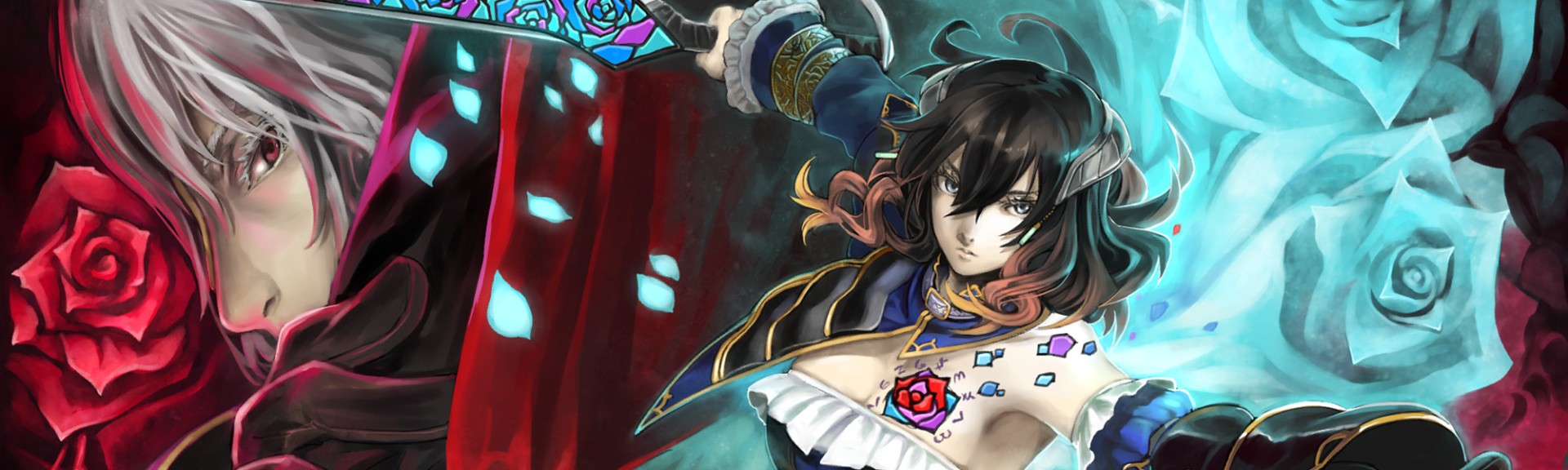
What’s that? You’d like Nintendo Life to post another video offering a behind-the-scenes look at the making and recording of a video game soundtrack? Well, as we’re feeling generous this Friday night, how about five minutes of insight into the new tunes of Bloodstained: Ritual Of The Night?

Michiru Yamane and company are on hand to discuss what went into writing and recording the soundtrack, and what to expect from the Kickstarted throwback to Castlevania of old. Check it out below…

Bloodstained: Ritual Of The Night will be spilling buckets of claret all over Nintendo Switch in 2018. Let us know what you make of the soundtrack, and your thoughts on the game’s details so far, in the comments section below…

Posted on Leave a comment

Soapbox: Nintendo Switch Learned A Lot From Wii U’s Struggles During Its Own First Year

Soapbox features enable our individual writers to voice their own opinions on hot topics, opinions that may not necessarily be the voice of the site. In today’s article, editor Dom explores the very opening 12 months of Nintendo Switch and its predecessor, Wii U. We all know Switch’s success story, but why did Wii U start off so well and disappear into the background?


You could be mistaken for thinking we don’t like Wii U here at Nintendo Life. Whenever its mentioned it’s usually as part of a story showing how well its successor, Nintendo Switch, is performing. Words such as ‘botched’ and ‘failure’ usually aren’t far behind, either. It seems like there’s a lot of love for Switch and not much for its predecessor.

Fact is, I (and many of the other staff on the team) love Wii U, regardless of its faults. Its GamePad evolved 3DS’ dual-screen setup beyond the remit of a less powerful handheld and gave us a truly unique second screen experience. It brought The Legend Of Zelda: The Wind Waker HD, Pikmin 3 and Super Mario 3D World to life, and supported features, in ways no other console could even dream of. It even managed to bring a new dimension to the likes of Super Mario Maker, Mario Kart 8 and more. Even the Batman: Arkham ports benefited in one form or another by having Wii U’s functionality on hand. 

Without it, there wouldn’t be a Nintendo Switch. Wii U was the stop gap that had to exist between the motion control innovation (and mainstream uber-success) of Wii and the semi-rebirth that is Switch. So no I (and we) don’t hate Wii U, we’re simply transparent enough to admit Nintendo produced a console that failed to live up to its potential. 

So, with its successor now approaching the end of its first year, it seemed high time to look back on Wii U’s own initial 12 months to see whether the console that eventually faded away ever truly burned bright. We all know it had a handful of killer games to its name as the years wore in – in fact, its first-party titles and exclusives were pretty stellar, all told – but did it stumble out of the gate or hit the ground running?

In reality, Wii U didn’t start out as a disaster for Nintendo, but it did have its fair share of problems that held it back. It entered the market relatively strong when it launched in November 2012. Wii U even sold out its entire stock in the United States by Christmas 2012 – that’s a whole 400,000 units – but this was mainly down to the fact that stock wasn’t as high as it should have been, and that Nintendo had only started manufacturing units in the summer of that year. These shortages drove demand up, leading to countless models being sold on eBay and other bidding sites for extortionate prices. 

When Nintendo Switch launched, Nintendo was already inundated with pre-orders so Nintendo was already more prepared with hardware, but it too began to sell out. So why did Wii U start to get such bad press when Switch came up smelling of roses? News of a sizeable firmware update for new adopters didn’t help (one that could ‘brick’ your console if interrupted), issues with Wi-Fi and HDMI connections and general issues setting up an internet connection mixed with cutthroat eBay prices curdled to create a bad vibe in the mainstream press.

The streamlined UI and online connectivity that came with Nintendo Switch made investing in a brand new platform a far more attractive, and a stream of glowing reviews across the gaming, tech and mainstream press only made consumers – myself included – want a Switch for themselves even more. Mere months into its life cycle and Switch was consistently selling out, but by this point Wii U was no longer enjoying the same problem/benefit. Wii U’s launch wasn’t a bad one – it sold 890,000 in the first six weeks in the US and 636,000 in its first month in Japan. These aren’t bad figures, but they’re not great either.

It just shows you how a positive reaction and a greater sense of goodwill has helped Nintendo avoid too much backlash regarding the sorry state the eShop has been in since launch and the sheer lack of a proper online infrastructure. Nintendo Switch Online will launch almost 18 months after the arrival of the console itself, yet somehow the hardware has managed to dodge most of the flack for this. The buildup for either console was also vastly different. That goodwill afforded to Switch owes some of its presence to the strength and savvy of Switch’s advertising, but there was barely any marketing for Wii U in 2012.

Then there’s the issue of games. Wii U may have had a core selection of great games by the time it was discontinued, but that wasn’t the case between 2012 and 2013. Wii U launched without a proper killer app. Yes, it had New Super Mario Bros U, but was anyone falling over themselves to own a copy? Does anyone even remember Nintendo Land? Pikmin 3 was the closest offering Wii U had to such a big release, but it’s always felt like a niche title that’s nearly impossible to market.

Switch launched with The Legend Of Zelda: Breath Of The Wild, offering the very definition of a killer, system-shifting app. And yeah, I know it came out on Wii U, but it didn’t matter because everyone’s eyes were on Switch as the hot new thing and Wii U’s install base was so small the Wii U version was more of a courtesy than anything else. Switch had a pretty weak launch lineup outside of BOTW, and still it managed to sell 2.74 million consoles worldwide in March alone.

The more you look at Wii U’s own first 12 months, the more you start to realise how much Nintendo learned from the Wii U era. Much like Sony’s overhauled approach to the design, launch and support of PlayStation 4 compared to the issues that dogged PlayStation 3, Nintendo did what Nintendo does best with Switch. It took all the things Wii U did right, avoided most of the things Wii U did wrong and gave it the support that old console simply didn’t have enough of.

By around the 10-11 month mark in its first year, Wii U had sold approximately 3.91 million units. In less than nine months, Nintendo Switch had hit 10 million. It’s hard to argue with figures like this, but that doesn’t mean Wii U was a failure by its own making. Timing was also key to both Wii U’s downfall and Switch’s success. Wii U launched a mere year before the arrival of PS4 and Xbox One, so no one was talking about a soon-to-be underpowered console. Switch arrived less than three and a half years into a console generation where consumers like myself were desperate for something new and fresh. Switch filled that role – and still does – to a tee. 

So we as enter Switch’s second year, let’s hope Nintendo’s new hardware fares far better than its predecessor did. Bar a handful of great games, Wii U slipped further and further into obscurity as all eyes turned to PS4 and Xbox One. With the next generation of consoles still a few years away at least, Switch has plenty of time to maintain its upward trajectory. Here’s to Nintendo Switch Year Two…


So that’s Dom’s take on Wii U and Nintendo Switch, but what do you think? Did Nintendo make a fair few mistakes with Wii U? Was it ahead of its time, or just the victim of bad timing? Let us know in the usual way below…

Posted on Leave a comment

Video: Koei Tecmo Unleashes New Attack On Titan 2 Trailers

Attack on Titan 2 launches on March 20th, and to drum up some interest publisher Koei Tecmo has released a trio of new trailers showing off various elements of the game.

The game’s online multiplayer features get detailed in one trailer. Annihilation Mode offers 4v4 action where players have to compete for the highest possible score by downing Titans and capturing bases, while the Story Co-op mode sees you teaming up with friends to finish the main quest. However, even more exciting is the news that another online mode featuring playable Titans is also planned. Aspects of the game’s combat system and avatar creation mode are also detailed.

Is Attack on Titan 2 on your shopping list for March? Let us know with a comment.

Posted on Leave a comment

Review: Mulaka (Switch eShop)

Mulaka is an adventure game that draws full inspiration from the Tarahumara people of Mexico, offering a very different cultural palette wrapped up in a much more commonly understood action-adventure package. The game feels like it’s trying to not only teach us about the traditions and mythology of these people, but also act as a preservation tool, enabling you to soak up this hidden world in an interactive setting.

The game begins with the titular character arriving in the Sierra Tarahumara – the land of the Tarahumara people – which has been threatened by an evil being called Teregori. As a Sukurúame (a class of shaman believed to possess magical power), Mulaka sets off on a journey to try and save the world, collecting knowledge and assistance from ancient demigods along the way. These demigods take the form of various animals and, together, they believe that they can stop the Teregori from bringing destruction upon their land.

As you can probably already tell, this game is great from an educational point of view; developer Lienzo has put in an awful lot of work to create something that is truly representative of the Tarahumara culture, and for many players all of this information will be entirely new. We found ourselves intrigued by the clear differences between these people and our own way of living, and the artwork used during the game’s loading screens are so beautiful that we felt immersed within this world that we were experiencing for the first time.

In terms of gameplay, Mulaka revolves around a loop which tasks you with exploring an area to find three crystals, using the crystals to unlock a giant door, and then taking on that area’s boss before moving on to the next place. It’s a repetitive system, but it gets the job done. Exploring can be really enjoyable at times, but it largely depends on the area you’re in; the first area or two feel a little bland, and the low-poly graphics often meant that we couldn’t see the difference between areas that could and couldn’t be walked on. Other areas later in the game were more successful, however, with a wider variety of colour helping to show off the art-style much better. 

The game’s basic platforming, adventure, and puzzle solving is a very standard, but decent experience. The demigods you encounter will each provide you with a special power, such as the power of flight, breaking down heavy objects, scaling walls, and so on, and these are used nicely to progress through the mostly obvious, but still relatively pleasing areas. The puzzles don’t put up too much of a challenge – in fact, the bigger challenge is usually finding your way around – but their inclusion is essential for breaking up the game’s persistent combat.

You see, this is the area where the game takes the biggest hit. Some elements of the combat are done nicely, such as your life system representing the three souls that Tarahumara men are said to have, and the need for potions that are assigned to the D-Pad to restore health, use bombs, create a temporary shield, or increase your attack, but there are two main issues which cause more frustration than they are worth.

Firstly, the game suffers from a lack of any ‘locking-on’ type of mechanic that we so often see in the Legend of Zelda series. As you take on opponents you’ll be aimlessly running around the 3D arenas, trying to make contact with enemies without being able to properly keep them where you want them. Thanks to this, throwing your spear can be an absolute nightmare, and the cursor that displays where the spear will land is often hidden behind your character model.

Secondly, the game halts progress far too often with ‘lockdown’ areas, forcing you to defeat waves of enemies to progress. It’s all fun at first, but after being forced into drawn-out fights for the tenth time, everything gets far too frustrating and you’ll just want to be exploring the areas around you. The enemies presented to you in these fights all have different ways to be defeated, which is great in theory, but when you have five to ten different enemy types running around you with no way to lock on to them, you’ll find yourself taking hits thanks to a flaw in the game’s design rather than a lack of player skill.

The boss fights, on the other hand, are great. We don’t want to spoil too much here, but this time Mulaka has followed in the Zelda series’ footsteps with each monster having a weak point that must be reached and then hit. The battle designs vary nicely here, with a particular highlight seeing you use your flying power to navigate one boss’ enormous form, taking out parts of the creature on the way up, before smashing back down to the ground to deal some real damage on the surface.

As you can see, the gameplay itself is somewhat of a mixed bag, and it has to be said that we also ran into the occasional software crash which forced us to reload our save file on a small handful of occasions. The developer is aware of these crashes and is working on a patch to fix them, so this issue should hopefully be resolved soon, but the problems that plague the game’s combat and general flow will always remain intact. Mulaka is by no means a bad adventure game, but there are just a few too many gameplay decisions that seem to work against it.

Conclusion

Mulaka offers a truly intriguing insight into the culture and mythology of the Tarahumara people, but is let down by some frustrating gameplay issues. Exploring and puzzle solving is a simple but enjoyable affair, and there are elements of the combat system that show real promise, but some oversights surrounding the game’s pacing and controls leave quite a lot to be desired. If you’re interested enough in learning about the topic it wouldn’t be unwise to give the game a go despite its flaws, but players looking purely for great gameplay might want to ponder over it a little longer.

Posted on Leave a comment

Review: Paper Wars: Cannon Fodder Devastated (Switch eShop)

War. War never changes. But Paper Wars: Cannon Fodder Devastated? No, those don’t change either. We first stumbled upon iFun4all tower defence game back in 2011 where a very wise man stated the Wiiware offering was “(…) far from the worst game ever”. Seven years later, does this new entry bring anything new to the paper battlegrounds or is it just the same old piece of sheet? Beware of paper-cuts…

It is strange the game’s genre still insists in being labelled ‘tower defence’, since it rarely is these days. In fact, it has more in common with the classic Atari’s Missile Command than any tower defence game we can think up. Instead of nukes flying in from the top in, here you have endless hordes of paper units that creep their way from the right side of the screen and you, a paper tank, starts shelling these poor paper souls back to the recycle bin.

This is not however a 1:1 remake of the original game, hence the new subtitle. The original charming paper graphics have been all remade so at least the new soldiers do look better than in the original while still retaining their pleasing children drawing aesthetics. Gameplay does, however, remain true to the original: you aim the targeting reticule on the battlefield, press the fire button and decide how much bang you want on your paper shell by how long you keep that same button held. Bonus items often show up in the battlefield so you do have to take some care not to blow them up. This became a nuisance fast when things got more hectic.

The game offers several missions in three difficulties. Do yourself a favour and skip both the ‘rookie’ and ‘soldad’ settings, only young children will find a challenge there. There are only two types of mission: prevent a set number of enemy paper soldiers reaching your base (i.e. the left side of the screen) or hold the onslaught for a set period of time. As expected the game starts throwing different types of paper soldiers (and eventually vehicles this time) at you, with different walking speeds and boom resistance, but they always walk in a straight left-to-right line making them truly the titular cannon fodder. Still, there is a mysterious, somewhat zen quality to it all as you try to maximise you paper ordinance to take out the biggest possible number of them.

Quality, however, is not what you will find on the user interface. Yes, we understand the whole misprint and reverse letter shtick, but more often then not we had trouble distinguishing which options were highlighted, leading to some frustrating, accidental menu problems. The main issue then becomes if you will be able to unlock the two extra campaigns (the return of ‘Winter Assault’ and the all new ‘Zombie Wars’ featuring… yep, you guessed it: paper zombies!) before the novelty wears off. Criminally, one of the redeeming features from the original as gone MIA.: Survival mode returns, but the chaotic four-player option is nowhere in sight. A sadly missed ‘papertunity’ right there. At least the music is certainly… loud.

Conclusion

Paper Wars: Cannon Fodder Devastated is not a good game. It is not a bad game. It is a game. A harmless time-waster that will neither bring a revolution nor it will end the world by its quiet presence on the Switch eShop. It is, however, hard for us to recommend it at the current price point considering there are far more viable options content and gameplay wise for the same price. What we have here is yet another incredible kusoge whose existence made us remember not to take life too seriously. Plus the title did remind us to replay the Sensible Software developed classic Cannon Fodder. In conclusion: ‘Paper Wars: Paper-thin Fodder’.

Posted on Leave a comment

Gallery: Tokyo’s Latest Pokémon Cafe Is Full Of Delicious Poké-Treats

We know, we know – Japan gets all the cool stuff! Nintendo-centric stores and restaurants aren’t all that rare in Japan, with Pokémon in particular being the focus of a number of stores in the country’s capital, but this new Pokémon cafe has definitely risen towards the top of our ‘must visit’ list.

Opening later this month, and taking its first seat reservations next week, this new Poké-cafe is actually launching alongside a new Pokémon Center DX in Tokyo. Its official website has now uploaded some photographs showing off a beautiful interior and – most importantly – the yummy food that customers will be able to purchase. You can take a look at some of our favourites below.

Of course, you can order more than just food. A selection of plushies, coffees, desserts, and drinks are available, too – the ‘Gengar’s Dubious Illuminating Smoothie’ (bottom right) is definitely one that we’d like to see in the flesh.

If you’re interested you can check out the full menu available at the new cafe here, and if you’re planning on taking a trip to Tokyo anytime soon – remember to invite us along for the ride!

Posted on Leave a comment

Hyperkin’s New SupaBoy Has Superior Coloured Buttons And A 4:3 Screen Option

The Hyperkin SupaBoy has already been revised once – resulting in 2016’s SupaBoy S – but the company isn’t done with the machine yet. The SupaBoy SFC is the latest variant and brings with it some notable upgrades.

The most welcome is the ability to toggle between 16:9 and 4:3 aspect ratio by holding down the brightness button. As we noted in our review of the SupaBoy S, the picture was stretched to fit the widescreen display, making games look a bit odd. Hyperkin has taken this feedback on-board and come up with a solution for the new model. A proper 4:3 screen would have been preferable – the first model had one – but we imagine the move to a 16:9 panel is related to the fact that these are available cheaply, whereas very few devices use 4:3 screens these days.

The second big change relates to the buttons – they’re now multi-coloured to match the scheme sported by the Super Famicom and European SNES. We might be biased here – we’re from the UK – but we vastly prefer this colour scheme to the purple and violet buttons of the North American SNES.

Elsewhere, there’s a 3.5mm headphone jack, adjustable brightness, two SNES controller ports, AV output and Hyperkin’s patented “Pin Perfect” cartridge slot technology:

Pin Perfect™ technology ensures gameplay isn’t interrupted even if you shake or bump the machine. The cartridges slot into the SupaBoy in a satisfyingly secure way and – given that you’ll be taking the SupaBoy and your games on the road – it’s a great addition to this portable console.

The console will accept carts from any region. You can pre-order the SupaBoy SFC from Funstock now, ahead of its March 9th launch. Expect a review the moment we’re able to get our hands on one.