Posted on Leave a comment

Valkyria Chronicles 4 Combat Trailer Shows Off Larger Maps And New Features

Sega has released a new trailer for the upcoming Valkyria Chronicles 4, which launches on Switch later this year.

The trailer focuses primarily on the game’s combat system, which looks set to build on the good work seen in the previous titles. It’s also clear from the footage that this sequel will benefit from much larger maps, as well as enhanced visual effects such as weather, dust and gunfire.

In terms of mechanics, things look very similar to what has gone before, but the trailer does show off one significant new feature – the ability of armoured transports to pick up soldiers – all set to Hitoshi Sakimoto’s gorgeous soundtrack from the first game.

Valkyria Chronicles 4 launches on Switch and PS4 in Japan on March 21st, with a worldwide release – which also include the Xbox One – coming later in the year.

Posted on Leave a comment

Mario Kart 8 Deluxe And Super Mario Odyssey Climb Back Up The UK Charts

It’s Monday, so that can only mean one thing. UK chart data! Yaaaaaay!

For the week ending 3rd March, Nintendo Switch saw two of its biggest first-party titles – namely Mario Kart 8 Deluxe and Super Mario Odyssey – climbing back up the multi-format ladder to number four and number six respectively. Oh, and is that The Legend Of Zelda: Breath Of The Wild jumping back into the top ten, claiming the number nine slot having dropped to 16 last week? Good on ya, Link.

1(1) FIFA 18
2(2) Grand Theft Auto V
3(3) Call Of Duty: WW2
4(8) Mario Kart 8 Deluxe
5(4) Monster Hunter World
6(9) Super Mario Odyssey
7(5) EA Sports UFC 3
8(15) PlayerUnknown’s Battlegrounds
9(16) The Legend Of Zelda: Breath Of The Wild
10(7) Shadow Of The Colossus

We’ve also included the official Switch-only charts, to give you a better idea how the platform is performing without all that PS4 and Xbox One nonsense. As you can see, the above titles are sitting proudly in first, second and third, but there are also some surprise appearances. Pokkén Tournament DX enters at number nine (up for 11) and LEGO Worlds leaps from 18th to 10th. The power of LEGO, eh?

1(1) Mario Kart 8 Deluxe
2(3) Super Mario Odyssey
3(4) The Legend Of Zelda: Breath Of The Wild
4(2) FIFA 18
5(7) Splatoon 2
6(8) Mario + Rabbids Kingdom Battle
7(6) 1-2-Switch
8(5) Bayonetta 2
9(11) Pokkén Tournament DX
10(18) LEGO Worlds

What do you make of this week’s UK charts? Leave a comment below and share your thoughts…

Posted on Leave a comment

Feature: Switch Exclusive Rogue Star ACE Aims To Out-Do Elite With Its Dynamic Universe

The Switch’s meteoric rise has resulted in a flood of support from small-scale indie developers, some of which have swiftly ported over smartphone games which benefit from enhanced features on Nintendo’s console. While a great many of these games are well worth your time, a few have been quite lazy – leading some players to dismiss such efforts with scorn.

Those same individuals may be tempted to disregard RedBreast Studio’s upcoming Rogue Star ACE; previously available on the iOS App Store – where it was blessed with the Editor’s Choice accolade – it’s now bound for Switch, but creator James Duncan wants to make it perfectly clear that this is no simple mobile port; it’s a sequel built exclusively for Nintendo’s hybrid system.

Keen to know more about the game and its forthcoming Kickstarter campaign, we sat down with Duncan for a quick chat.

Nintendo Life: Can you give us a little background on your career and what other games you’ve worked on in the past?

James Duncan: I’ve been involved in the art side of the games industry for quite a while. My first finished title was Die Hard Trilogy, way back on the PlayStation. I created a lot of its 3D world and models. After some years at Sony, via a film degree, I ended up at Lionhead creating art assets on Fable 2 and 3.

What led you to establish you own indie studio and what challenges does it bring when compared to working for a larger company?

I started because around 2010 the environment suddenly existed for truly independent development. This became possible really through a combination of mass digital distribution and the availability of genuinely viable 3D engines. Challenges, where to start! I think it mostly boils down to though a general lack of resources. However that can be an asset occasionally as these type of restrictions regularly force you to be very creative! This can be fulfilling and frustrating in equal measure!

We’re getting a Wing Commander / X-Wing vibe from Rogue Star – is it fair to say that those games inspired you? The trading aspect also brings up comparisons with Elite – was that an influence as well?

Absolutely, I hold Tie Fighter in the highest esteem possible, a hair’s breadth beneath Elite in fact – which is my all-time favourite game. I’ve found inspiration in other great titles like Red Baron, Secret Weapons of the Luftwaffe and Independence War. When I was a kid I loved collecting and reading old second-hand ’60s and ’70s science fiction novels and storytelling in general. I also had a passion for flight in all its forms; planes, helicopters, rockets – so when Elite came along and combined my two loves, I was well and truly hooked. It was this specific combination of imaginative sci-fi and old fashioned dog fighting which I found irresistible.

What makes Rogue Star unique when compared to other games of this type?

I think more than anything its the approach, which was born of a passion for a time when games were very much designed to provoke a player’s imagination and provide a fun challenge. Games from that era relied on skill-based mechanics to offer a real sense of progression, achievement and wonder. I also feel that the title has a distinct personality and character, with a healthy dose of humour along the way.

What aspect of the game are you most proud of?

That I didn’t dumb it down. There was a lot of advice during development to tone down the control mechanic with auto lock-ons, “auto this, auto that” to make it more approachable for mobile gamers. However, I was clear that I wanted to stick to my original intention of creating a game that I wanted to play and that meant a mechanical depth which provided nuance and challenge. In the end, this approach led to the sequel – Rogue Star ACE – being relatively pain free so far to bring to the console space, where players expect a certain amount of depth and features.

What improvements will you be including in the Switch version of the game?

Well, the Switch version is a sequel, so there will be substantial differences! Enhanced graphics, 3D cockpits, different cameras, orbital platforms, more ships, enhanced trading and multiplayer dogfighting, to name a few. The highlight however, will be a totally unique story driven mechanic which I’m dubbing ‘Space Master’. I will be announcing more about this in time for the Kickstarter, but essentially, certain player exploits will be continually monitored and the story will change based on those exploits. Imagine a game with a narrative influenced by real-time events but controlled by a Space (Dungeon) Master. It’s going to be very cool.

How easy has it been to work with the Switch? Was it easy to port the game over?

The actual process is relatively straight forward currently because of the use of robust 3D engines, in ACE’s case, Unity. The actual ‘port’ itself will start if the Kickstarter succeeds. Everything up to this point has been designed within the engine using the Switch as the target. These engines reward thoughtful planning and economical solutions, which I find very much a throwback to an older style of development. In those days you had to work within constraints and be creative to wring every last ounce out of hardware.

How much contact have you had with Nintendo so far? Have they been supportive of your work, when compared to Apple or Google?

Speaking as an indie, building a relationship with publisher and platform holders is always one of the most challenging aspects of development. Not having the clout of a big company behind you means you have to fight for every inch. Contact with Nintendo has been good. It was tough initially to get their attention but it was understandable, given the launch of a new console.

What do you make of Switch as a gaming platform in general? Could you see yourself making a game exclusively for it?

Well, at the present time of speaking ACE will be an exclusive Switch title. I’ve always been extremely enthusiastic about Nintendo’s consoles. A little known fact is that Rogue Star was originally designed for the DS! What I’ve always loved about Nintendo is the passion and knowledge of its user base. That’s what really draws me to their consoles as a developer. The Switch’s feature set is extremely flexible and offers much for developers to explore their creativity. I do miss StreetPass though!

What’s next for you, project-wise?

At the moment getting the opportunity to finish ACE is the only thing that I’m thinking about! Moving forward though, ideally I’d like to support the title further and build on the franchise and Space Master feature. The game takes place in Rogue System, which is effectively a penal colony, just a very big one. There’s a whole galaxy out there I’d like to tell the story of though. Imagine all the cool stuff that goes on outside in free space!


We’d like to thank James for his time. You can keep up to date on Rogue Star ACE by visiting the game’s official website.

Posted on Leave a comment

Review: Subsurface Circular (Switch eShop)

A little less conversation, a little more action, please. Lyrics don’t get more popular than that, and yet it’s this Elvis Presley quote that Subsurface Circular flies directly in the face of. From the mind behind Thomas Was Alone, Mike Bithell’s latest outing is all about the spoken interaction, and it makes for one very special experience.

The entirety of Subsurface Circular takes place inside a single train carriage, with you assuming the role of a robot, who is referred to as a ‘Tek’. Every android is programmed to perform a specific role, and after a fellow passenger tells you about his missing friend, it’s a good job you’ve been wired up as a detective.

This only scratches the surface, however, as you begin to uncover a conspiracy of multiple disappearances. To say much more would step into spoiler territory, but it’s fair to say that things escalate magnificently. You’ll take great care in your dealings with every Tek you come across, as you question them on anything they’ve seen that could be deemed suspicious, or influence them into revealing a secret. Twists and turns also keep you on your toes, with genuine surprises turning proceedings on its head. This all culminates in a final chapter that has to be some of the best storytelling we’ve come across. 

Presented with a choice, you’ll have to deal with the consequences no matter which side you pick, as what started out as a simple inquiry turns into a situation you feel is way over your head. This is an incredible plot that grows and grows from the word go, with curveballs thrown into the mix that you would never have guessed to be tackled by a seemingly simple game such as this, as well as a conclusion that had us both mesmerised and feeling a little bit too guilty because of our actions.

Carrying out your detective work is done by interviewing the various Teks that join you in the train carriage. The gameplay loop is based around the conversations you have, as you select who to talk to, choose between dialogue options and then react to what they say. It’s simple, but it works flawlessly.

Some depth to the interactions can be found in the fact that due to you wanting to extract information out of someone, they’re going to want something in return. This sets up the conversational puzzles, where giving correct responses or gaining a piece of information from someone and then incorporating it into a separate discussion is the key to victory. The driving force behind these puzzles are the focus points, words or phrases that can be used as a topic of conversation to turn the chatter in your favour. You’ll gather so much more knowledge from using these after all other avenues have been exhausted, if a Tek is refusing to budge on some important intelligence, a focus point is most likely going to get what you want.

Thanks to never getting too complex, this conversational system is so much fun to engage with. Watching a focus point change the course of the communication is a joy as you uncover something meaningful, while the general chit chatter of the Teks is funny and engaging. With simple side objectives that seamlessly intertwine with the main plot, Subsurface Circular’s systems allow you to interact with and help the many just as much as the few.

The other robots you meet all come with their own personalities and traits, and they’re a bit of an odd bunch to say the least. One Tek will have you playing the role of a priest as they confess their sins, while another will only talk to you if you can convince their lover to leave the train. They’re all endearing in their own ways, and it’s entertaining to speculate just who you’ll meet next.

Subsurface Circular looks and runs like a dream in both docked and handheld mode, as we didn’t experience a single glitch or graphical hick-up during our time with the game. We were too busy being distracted by the thumping electronic soundtrack produced by Dan Le Sac, which goes a long way in setting the mysterious but exciting tone that pulsates throughout the entire experience. This is one you’ll want to have playing on your chosen music device long after you’re done with the title.

A single playthrough can be completed in two hours, and with the conversational system sticking to a linear path rather than allowing you to branch out, there isn’t much reason to return a second time for the core plot. However, completing the game unlocks developer commentary, which actually slots itself into the experience seamlessly in the form of an ever-present BithellBot on the train with you. You can talk to it just like any other Tek, asking it questions about the game’s development. Delving into the title’s code, design, art, and mechanics, you can get into the nitty-gritty of how it all came together.

Conclusion

Subsurface Circular is a landmark moment in interactive storytelling. The elegance of its escalation is simply unmatched, as it tells a story that makes you feel like you’re in completely over your head, and yet still perfectly believable. The characters you meet along the way all feel unique with their own personality, which makes interacting with them a test of wit and cunning as you use the conversational mechanics to their full effect. There’s nothing quite else quite like Subsurface Circular, and when that uniqueness is combined with the phenomenal narrative at hand, you have all the ingredients for a simply unforgettable and very special journey aboard the subway.

Posted on Leave a comment

Review: Fear Effect: Sedna (Switch eShop)

Fear Effect: Sedna is the answer to a question only a select few dedicated gamers of a certain age were asking. It’s the Kickstarter-funded sequel to two cult action games and an unreleased third game from the PS1 era. If that sounds like a slightly odd list of ingredients for a modern Switch game, then you’re onto something. Fear Effect: Sedna is, indeed, a strange mish-mash. Sushee’s game is part puzzler, part squad-strategy game, part twin-stick shooter, and part stealth game. The main problem here is that the execution isn’t particularly great with any of those components.

Main characters Hana and Rain are partners in life and in work, serving as globe-trotting mercenaries on a futuristic Earth. When they’re offered a large amount of money for what appears to be a routine art heist they stumble into old teammates Glas and Deke, as well as a mystery concerning Inuit mythology and gene splicing.

The theme of the game’s story is an apt one, as the game is something of a Frankenstein’s monster. This is ostensibly a twin-stick action game, with the core requirement that you move around confined environments exchanging fire with gangs of armed thugs. However, the game has the zoomed-out isometric perspective, cover mechanics and team mate-switching ability of a squad-based strategy game. You can even pause the action with ‘-‘ and issue commands to each member before resuming. It’s also possible to observe the movement patterns and vision cones of your unaware enemies, sneak up on them and take them down with a single hit.

Whichever approach you choose, Fear Effect: Sedna doesn’t quite hit the target. Its action lacks the visceral feedback and precise aiming of, say, Enter The Gungeon. Lock-on is automatic, so you simply press ZR to fire your pop-gun until the enemy falls over – or until you do.  In the case of the latter, control switches to one of your team mates, where you continue to grind down those enemy energy bars. Once your last foe keels over, your downed squad member miraculously revives. It all feels a bit flat, even with the provision of a slow-motion dodge-roll.

The strategy side of the game is even less well formed. Pausing and issuing commands might appear like a good idea – particularly with each character having access to a couple of unique special weapons – right up until the first time the action resumes and you run into a hail of bullets. Often this is when the rest of the enemy squad reveals itself from the game’s stifling fog-of-war effect and wrecks your best-laid plans. Stealth is the safest, easiest, and arguably most satisfying way to progress in the game’s early stages, but it’s pretty basic and eventually loses its efficacy when the enemy numbers ramp up. Your own AI members tend to give the game away too, requiring you to issue a command for them to hold back.

Fear Effect: Sedna also stirs in a healthy smattering of puzzles from time to time. There’s nothing massively clever about any of them, but they’re nicely varied. You might find yourself observing the environment for clues to a pass code, shifting around haulage containers to form a pathway, partaking in a hacking mini-game, or shifting bookcases to block security cameras.

There’s also a heavy focus on narrative and the interaction of your teammates, though this too is a bit of a mixed bag. On the positive side, the game’s cel-shaded visual style gives everything a fresh 3D comic book style that really stands it apart from anything else on Switch.

On the less positive side, the dialogue is clunky and the voice acting stilted. Both issues could well be down to a less than perfect English translation (developer Sushee is French), with some expressions coming across as a little stiff or forced. Either way, it tends to spoil the flow of what promises to be an entertaining sci-fi romp.

In all honesty, the game needed more time in development. In addition to its half-baked strategy component – which almost feels like a vestigial limb from an earlier take on the game – there are general issues with signposting. It can be tricky figuring out where you’re meant to be going or what you’re supposed to be doing, while the game’s combat systems aren’t adequately explained. 

It all combines to produce a curious hybrid of a game. Fear Effect: Sedna’s varied components ensure that it’s surprisingly difficult to grow bored of, even though each constituent part is rather lacking in isolation. There’s enough positive here for us to look forward to the developer’s forthcoming remake, Fear Effect Reinvented, at least. Here’s hoping that game has a slightly more cohesive set of ingredients and spends a little longer in the oven.

Conclusion

Fear Effect: Sedna is a flawed amalgam of disparate parts. It fails to wholly convince as an action, strategy or stealth game, and the delivery of its story is a little stilted. However, the sheer variety of its mix and its fresh visual style may prove enough to keep you playing through.

Posted on Leave a comment

Super Mario Odyssey’s Latest Update Has Subtly Changed The Game’s 100% Ending

Super Mario Odyssey’s recent update to version 1.2.0 brought with it the wonderful addition of Luigi’s Balloon World – a free DLC update which tasks players with hiding and finding balloons from other players across the globe. Alongside this new mini-game of sorts, however, a change has also been made to the reward that players receive when 100% completing the game. If it isn’t already obvious, those who do not want to have anything spoiled should stop reading now.

Previously, if you managed to collect every single Power Moon, Regional Coin, and cleared every single stage – including the ‘Hard Mode Bowser’ stage that unlocks after finding all of the collectibles – you would be presented with a postcard featuring the game’s main cast to celebrate your amazing achievement. It looked a little something like this:

Since the update, however, a very small – but also cute and welcoming – change has been made to the postcard. Can you spot the difference?

Yes, now that Luigi plays a part in the game, you can now see him flying through the air above the castle like the true legend that he really is. It’s a small change, but we love it.

Anyway, back to tracking down those last couple of Power Moons to see all of this first-hand for ourselves!

Posted on Leave a comment

Mechanica Scraps Her Way To Victory In The Latest ARMS Party Crash

This last weekend saw ARMS fans around the world taking part in the latest Party Crash event, with dedicated Mechanica lovers taking on Byte & Barq’s trusty allegiance of followers for the crown.

The event took place between 9am on 2nd March and ended at 9am this morning, allowing ARMS players to raise their Lab Level with buckets of juicy points while earning some exclusive shiny badges to add to their collections. This time around it was Mechanica’s time to shine, as players using the character scored more points than those supporting Byte & Barq’s cause.

Did you manage to take part in this Party Crash? Will you be looking forward to jumping into the next one? Let us know down below.

Posted on Leave a comment

Review: Samurai Aces (Switch eShop)

Following the release of the shmup Aero Fighters, several members of developer Video Systems left and formed a new company: Psikyo. Aero Fighters 2 still turned out rather well without them, but Psikyo would release some high-quality titles itself. Zerodiv has already brought some of those to Switch, but now it’s bringing Psikyo’s first game to the eShop: Samurai Aces (aka Sengoku Ace).

Like many of the games Psikyo produced, Samurai Aces is a shmup where you pick one craft from a selection of choices and then go through several levels shooting down anything in sight. It was also designed with a vertically orientated monitor in mind and should you be playing undocked this experience can be recreated by playing in TATE mode; optional scanlines can also be added to the image. Play on the big screen and the default display makes more sense than flipping your TV on its side, but naturally this restricts the action to the middle third of the screen.

There’s a similar art style to Psikyo’s later released (but already on Switch) Gunbird and Strikers 1945 games, with the same powerup and bomb icons and similar bullets, explosions and colour choices. The locations are different however, with a variety of rocks, greenery, water and villages flown over. There’s a wide range of enemies encountered with different aircraft types, insect-like attackers, tanks and turrets. In other instances statues rise from the water to attack and large armoured warriors appear on screen to unleash bullets or shuriken in your direction. Similar to the Strikers titles these enemies are more technologically advanced than the setting would normally allow, but aesthetically fit right in.

There’s also variety in the six aircraft availabl, with regular designs included alongside bird-like craft and a wooden X-Wing. Each has different attacks that become more apparent when you collect weapon upgrades as well as having different bomb and charged attacks. As is common with Psikyo shmups there are two buttons for shooting your primary weapon, where one is held down for the charged attack and the other is held for rapid fire.

Set across seven levels, gameplay is enjoyable as you move about the screen dealing with the various enemy attacks and movements. You need to keep alert as buildings can slide aside to reveal more dangers and other enemies can emerge from clouds. Bullets come from multiple directions and can crisscross to make safe passage tricky. The pace of the game alters too, sometimes enabling you to make slight adjustments to gently slide out of the way of a stream of bullets, where as other times enemies streak towards you requiring quick reflexes to if not shoot them down, then to at least get out of the way. 

Boss battles put you up against large mechanical creatures or constructions and require you to blast pieces off before their ultimate destruction. They can be tense affairs when low on lives and/or bomb attacks, with the screen getting dense with bullets as you try desperately to navigate a safe pathway whilst also trying to get in attacks of your own.

If struggling with the game, there are seven difficulty settings available (default: five) and your three lives and two continues can be increased to nine and unlimited respectively. Whilst this can certainly aid in clearing the game it doesn’t completely remove the challenge as after the first few levels, failure sends you back to the beginning of the stage. After clearing the game (apart from on the easier difficulties) a much tougher second loop begins, although (unlike some Psikyo games) you can still use continues.

The game is fun to replay, with each craft having a different pilot that results in different between-stage dialogue and endings. Two-player mode is also available if you’d like to have a friend join you to help vanquish the enemy forces, whilst also adding an element of competition as you look to see who has the highest score at the end of it. Hi score chasing can add a lot of replayability to a shmup in single player mode, but here the scoring is flawed due to there being no score reset upon continue. Struggle on a stage and replay again and again and you will score higher than a player who has breezed straight through.

Conclusion

Psikyo’s Samurai Aces plays a lot like its Gunbird and Strikers titles. As they were both great shmups, however, seven more levels in that style is no bad thing. Dealing with attacks and utilising your own offensive options leads to varied and enjoyable gameplay and the changing pace of combat keep you on your toes as you anticipate the next attack. With no credit/life limited mode included, the hi score leaderboard is flawed unless you and those using your Switch agree on what settings to use. It is a well put together shmup however, so whether playing alone or with a friend Samurai Aces is fun to replay whenever you choice to boot it up.

Posted on Leave a comment

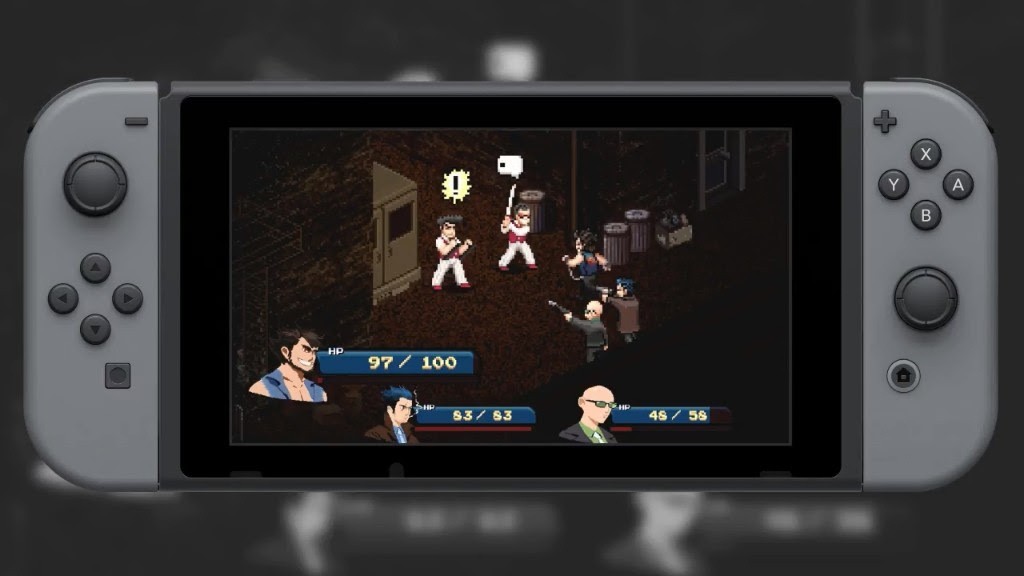
JRPG-Inspired Detective Game Pixel Noir Is In Development For Nintendo Switch

Badland Games has revealed that SWDTech’s JRPG-inspired title Pixel Noir is now in development for Nintendo Switch after smashing its funding goal on Kickstarter.

Pixel Noir is a detective game set against a film noir backdrop which sees your character, who has been in jail for many years, finally get a chance to clear his name once and for all. For ten years you were haunted by unanswered questions and unspeakable horror, frightened by what you saw and what you did, leaving you with no choice but to take the opportunity to fix things.

The Switch version of the game is said to contain all of the features coming to other platforms, which you can check out below.

Features

– Solve a variety of mysteries as Pinnacle City’s cheapest Private Eye! From missing pets to murder investigations, your detective skills will earn you either fortune or face punches.
– Fight enemies in turn-based combat. Unleash devastating combo attacks by teaming up with other heroes in your team!
– Explore Pinnacle City–a wretched hive of scum and villainy harboring black market trade & hawked by colorful characters.
– Use your investigation mode to reveal clues. Level it up over time to unearth new secrets and storylines!
– Overkill mechanic: if you do too much damage, instead of knocking your enemy out, you can kill them. This will affect what type of spoils you get from battle!
– New timed hit mechanics for skills including button sequences and d-pad rotation!
– CRDTech card game… can you find Phil, the Dust Master?

While we have no confirmed release date as of yet, the fact that the game is now officially coming to the Switch (and at the same time as other platforms) is, of course, great news. Does this one look right up your street? Let us know in the comments below!

Posted on Leave a comment

Review: Outlast: Bundle Of Terror (Switch eShop)

As shock Switch releases go, Outlast: Bundle Of Terror didn’t so much sneak up on us as jump out at us with a knife. Not that we’re complaining about this surprise attack. When it comes to horror games, Switch owners have had to take the rough (Hollow) with the smooth (Resident Evil Revelations).  

Thankfully, Outlast joins Capcom’s re-release in the ‘frighteningly good’ category. This is a terrifyingly compelling and suspenseful first-person adventure with admirable production values, and it also serves as a consummate example of how to port a game from more powerful hardware onto Nintendo’s wonder-hybrid. Playing the part of journalist Miles Upshur, it falls to you to investigate the shady goings on at Mount Massive Asylum, run by the suitably named Murkoff Corporation. You’ve been tipped off by a whistleblower (whom you learn more about in the included DLC episode) that some distinctly weird experiments are being carried out on inmates.

The difference between Outlast and most other survival horror games is that you’re completely defenceless against the crazed inmates and pumped up abominations that lurk within the asylum walls. It kind of resembles the old ‘Nemesis’ system from many of the Resident Evil games, whereby an implacable foe stalks you across a whole game. Here, though, even an ordinary stooge can end you in a couple of successive strikes, with no hope of retaliation. Your only options are to run away or hide. Fortunately, you do have a few evasive manoeuvres at your disposal. 

Break the line of sight with your pursuer and you can hide in a dark corner. Light – or the lack thereof – plays an important role in Outlast. Alternatively, you could hide in a locker or under a bed, though if an opponent suspects you’re in the room they’ll start searching all the other hiding spots around you. It’s a moment of obvious artifice, but you’ll still find that it gets your pulse racing.

Outlast’s most interesting mechanic, and Upshur’s only tool, is an old-fashioned camcorder. From your first-person view you can film events with a press of R, and use its night vision mode to see in the dark with a click of the right stick. There’s a tension-raising catch with that latter function in the form of limited battery life. The game is at its most tense in the moments where you’re wholly reliant on the grainy image of your viewfinder to see what’s ahead, and the battery indicator starts to blink red.

Fortunately, there are plenty of spare batteries littered around Outlast’s grim environments, which serve as the key incentive to stray off the beaten track. Goodness knows there’s no other sane reason to delve into a murky bathroom, padded cell or underground pipe – not with the gory sights that await you. This game isn’t for the squeamish.

However, this stripped back approach means that Outlast is a pretty shallow game from a purely mechanical perspective. At times it even feels a little like a walking simulator, as you trot from one horrific scenario to the next, picking up fragments of the story from files and your own recordings. To its credit, Outlast thoroughly sells the concept through the rich atmosphere it creates. Technically, this is a highly impressive effort from developer Red Barrels.

It may have been cut down from the earlier PC and PS4 versions, but we were still mightily impressed by the crisp graphics, dramatic lighting effects, and grisly textures of this Switch port. It runs at a slightly curious but still solid 1008p when docked, and a full 720p in handheld mode, while both modes run at a fluid (for this kind of game) 30fps. 

The audio design is arguably even more impressive, with a reactive score that ramps up the tension whenever a threat appears. Meanwhile, hearing Miles hyperventilating at a particularly grisly discovery really serves to set your own pulse racing, even when the game’s numerous jump scares start to wear a little thin.

And make no mistake, this is far from a perfect survival horror experience. The run-and-hide gameplay not only gets a little repetitive, it can occasionally verge on the farcical during protracted chase sequences. When the game’s mask occasionally slips, such as when you’re running between two hiding positions in a bid to shake off your pursuers, it can feel like a particularly grisly episode of Benny Hill.

Still, this is a richly enjoyable package overall, particularly at this cut-down eShop price and with the enjoyable Whistleblower episode adding a couple of hours of extra gameplay. Just take our advice and play the game in brief sessions – for the sake of your heart, if nothing else.

Conclusion

Outlast is a generous package of finely crafted survival horror thrills. It looks and sounds great on Nintendo Switch, and while its brand of hide-and-seek gameplay occasionally falters, it’ll still keep you playing right until the grisly end.