Posted on Leave a comment

That Japanese “Dragon Quest Law” Is Actually An Urban Myth

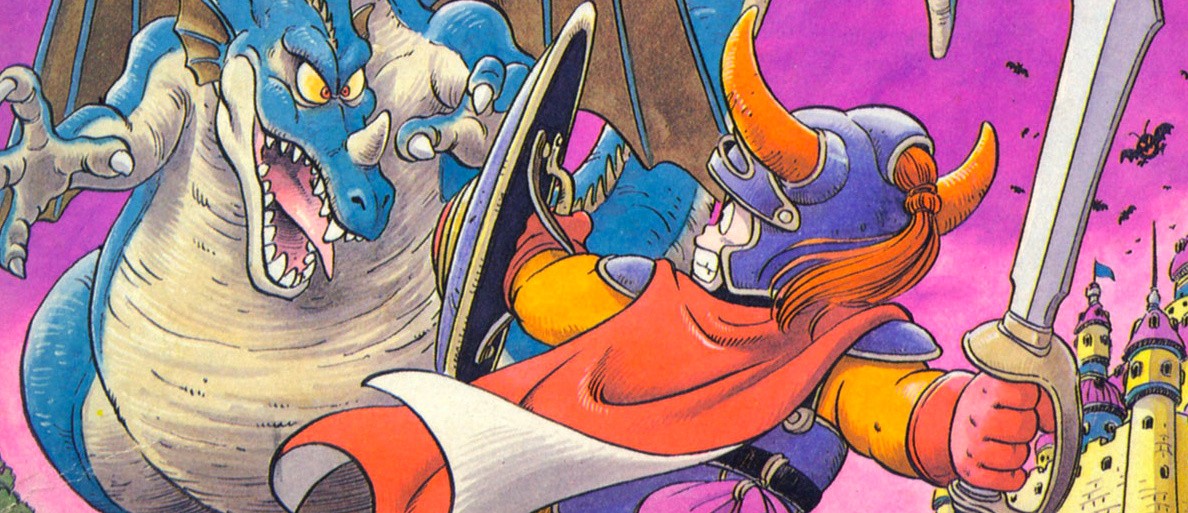
Those of you versed in video game history will be aware of a story relating to the astonishing popularity of Dragon Quest, one of Japan’s most beloved RPGs. Back when the series was just starting out on the Famicom, kids and adults alike would bunk off school or work to buy it and spend an entire day playing. The resultant “sick day” epidemic was apparently so bad that it actually had an adverse effect on the Japanese economy (or so the legend states).

Things became so dire that a law was passed in Japan which forbade Enix from releasing a new Dragon Quest game on a weekday – and that tradition continues to this very day. Many have since accepted the “Dragon Quest law” as solid fact, but here’s the rub – it’s a myth, although some elements are true.

Enix did begin to release Dragon Quest games on a Saturday, but not because it was told to by the Japanese government – it came to an agreement with Nintendo and decided to shift the release day voluntarily.

So there you have it – another urban myth is squashed.

Posted on Leave a comment

The Nintendo Switch eShop Prepares To Launch In Hong Kong

Nintendo is no doubt really keen to sell Switch in China, which could be potentially very lucrative indeed. Until then, Nintendo will have to make do with launching the handheld console in Hong Kong, which is an autonomous territory of China.

The Switch eShop for the Hong Kong region will launch on 3rd April and here’s what games will be on offer:

The Legend of Zelda: Breath of the Wild – HKD560 – Chinese support yes
1-2-Switch – HKD400 – Chinese support no
Mario Kart 8 Deluxe – HKD480 – Chinese support yes
ARMS – HKD480 – Chinese support yes
Splatoon 2 (Japanese) – HKD480 – Chinese support no
Splatoon 2 (English) – HKD480 – Chinese support no
Pokkén Tournament DX – HKD480 – Chinese support no
Super Mario Odyssey – HKD480 – Chinese support yes
Snipperclips Plus: Cut it Out, Together! – HKD260 – Chinese support yes
Xenoblade Chronicles 2 – HKD640 – Chinese support yes
Mario + Rabbids: Kingdom Battle – HKD480 – Chinese support yes
Kirby Star Allies – HKD480 – Chinese support yes

And here’s the DLC:

The Legend of Zelda: Breath of the Wild Season Pass – HKD180 – Chinese support yes
Xenoblade Chronicles 2 Season Pass – HKD230 – Chinese support yes

It’s good to see lots of these games such as The Legend of Zelda: Breath of the Wild and Xenoblade Chronicles 2 arriving with Chinese language support. It’s a bit strange that Splatoon 2 hasn’t been translated, but residents of Hong Kong will be able to choose from the Japanese and English versions of the games, it seems.

Let us know your thoughts on Nintendo’s expansion into Hong Kong with a comment below.

Posted on Leave a comment

Suda51 Is Working On A Secret New Game And Famitsu Is Really Excited About It

It was only yesterday we were reporting on the potential for the upcoming Travis Strikes Again: No More Heroes to eventually hit retail with a physical release, and now the man behind it – auteur and all-round cool dude, Goichi Suda aka Suda51 – has revealed he’s working on a new, as-yet-unannounced game.

The game was revealed to Famitsu in a recent interview, and while the name of the game was redacted, the interviewer’s candid reaction was left as a tease in the magazine’s latest issue:

Goichi Suda: “Actually, we’re also developing ●●●.”

Famitsu: “It’s finally coming! I can’t help but have expectations for it!”

So what could it be? It seems likely it’s a sequel to something Suda51 has worked on previously, and considering the love Travis has received over the years, there are so many other strange and wonderful games from his CV that could be getting a new lease of life. Could it be a new Lollipop Chainsaw? Or another Shadows Of The Damned? So many possibilities.

So what do you think Suda51’s game could be? What would you like to see him tackle next? Share your thoughts below…

Posted on Leave a comment

All-Star Fruit Racing Powerslides Onto Switch This July

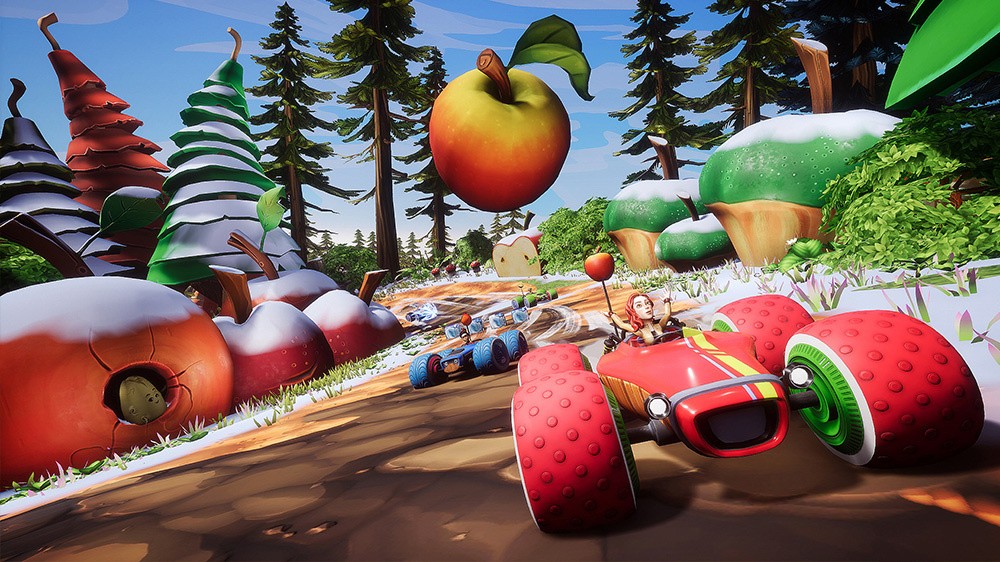
PQube has announced that its upcoming kart racer All-Star Fruit Racing will be zooming onto Switch this summer, with a brand new trailer revealing a July release window.

We first heard about the game’s upcoming Switch release a couple of weeks ago, with a Brazilian rating being given to the game for the console, but now we have confirmation of the release and some more details about the games’s features, too.

A career mode will have players picking their favourite characters, racing for first place in a series of championships, unlocking new characters, championships, and kart parts along the way. You’ll also be able to create ‘Custom Championships’, selecting between three different difficulty settings and speeds to fine-tune your challenge, and you can dive into a range of different gameplay types including dragster races, hill climbs, elimination races, time attacks and modifier-filled modes.

The game features 21 courses spread across five worlds: Spring, Summer, Fall, Winter and Special Islands, including some crazy track designs such as volcanoes and giant snakes that wouldn’t go amiss in Mario Kart. Kart customisation and items are also available in game – again similar to the Switch’s top-selling racer – but hopefully the bonkers fruity nature of your attacks and weapons will give the game a fresh, different vibe.

Sadly, the online features promised to be present in other versions of the game don’t seem to be making their way to the Switch. We’re unsure as to why this might be, but could this dampen what may have been a tempting Mario Kart alternative?

We’ll make sure to give the game a spin this summer, but until then, feel free to share your thoughts in the comments below.

Posted on Leave a comment

The First Wave Of Friends Have Arrived For Kirby Star Allies Players In North America

Kirby Star Allies has brought the little pink ball of gluttony back into our hearts, and he’s brought plenty of friends along for the ride. In fact, Kirby is getting even more pals as the first wave of additional buddies arrives for users in North America.

Spotted by eagle-eyed Twitter user Ilexand, the update brings four new buddies to the mix, and many of them will be familiar to long-serving Kirby fans. You’ll get to buddy up with Gooey from Kirby’s Dream Land 3, Kirby Super Star boss Marx and the trio of Rick, Kine and Coo from Kirby’s Dream Land 2

Are you still playing Kirby Star Allies? Will need incoming waves of new Friends keep you playing or attract you back if you’ve already completed it? Share your thoughts with us below…

Posted on Leave a comment

Super Rocket Shootout Will Bring Pixel Art Brawls To The Switch Next Week

One-man indie developer Oddly Shaped Pixels has announced that Super Rocket Shootout is headed to Nintendo Switch, releasing just next week.

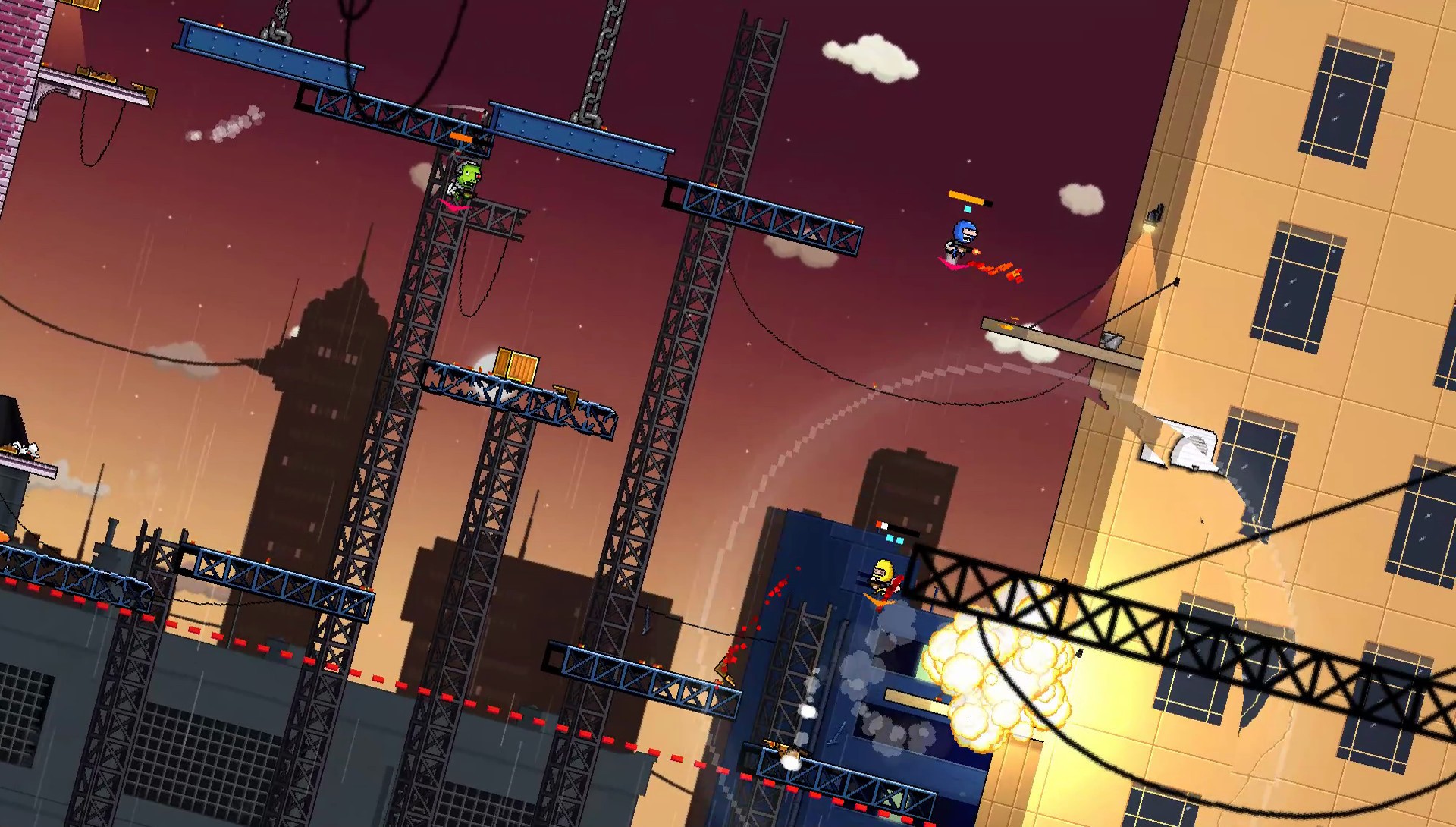
The game is a frantic pixel art brawler which mixes lightning-fast platforming actions with fighting game mechanics for up to four players. Players will be able to master jetpacks to slip right behind opponents for melee-range attacks, or use shotguns, homing missiles, boomerangs and more to fight from a distance. Defence is just as important – players have to use their shield wisely, performing perfect blocks to deflect incoming attacks – and the fighting goes deeper with combos, ‘Super Moves’, ‘Super Attacks’, and counters.

Super Rocket Shootout features a story mode and local multiplayer mode (for up-to-four players), has eight playable characters with unique abilities, eight destructible stages, and various in-game achievements and unlockables. The game has been receiving positive reviews on Steam, so this could be one to watch out for.

The game is scheduled to release on Nintendo Switch on 5th April for $9.99 / €9.99.

Do you like the look of this one? Let us know your thoughts down below.

Posted on Leave a comment

Nintendo Knows It Needs To Improve Discoverability On The Switch eShop

The Switch has had an incredible first year in terms of software, but with this flood of games comes the problem of discoverability. The design of the eShop on Switch is workmanlike at best, and many games are getting lost in the crush, robbed of their chance to shine.

Speaking to Glixel, Nintendo of America’s Damon Baker acknowledged this issue, and said that the company is aware it needs to get better at highlighting content and improving overall discoverability:

In July of last year we knew of about 150 titles from third-party coming out. By the end of 2017, 320-some-odd games had come out on the Switch. It was a significant jump in terms of expectations. There is an even higher number (we know of ) for this year and we expect that to be surpassed as well. While we’re really fortunate with the reception, we know it’s our responsibility to recognize that there is a lot of content coming and that we need to find ways to improve discoverability.

How Nintendo intends to do this remains to be seen; let us know what improvements you’d like to see on the eShop by posting suggestions below.

Posted on Leave a comment

Hardware Review: The Hyperkin SupaBoy SFC Is A Portable SNES For Under £100

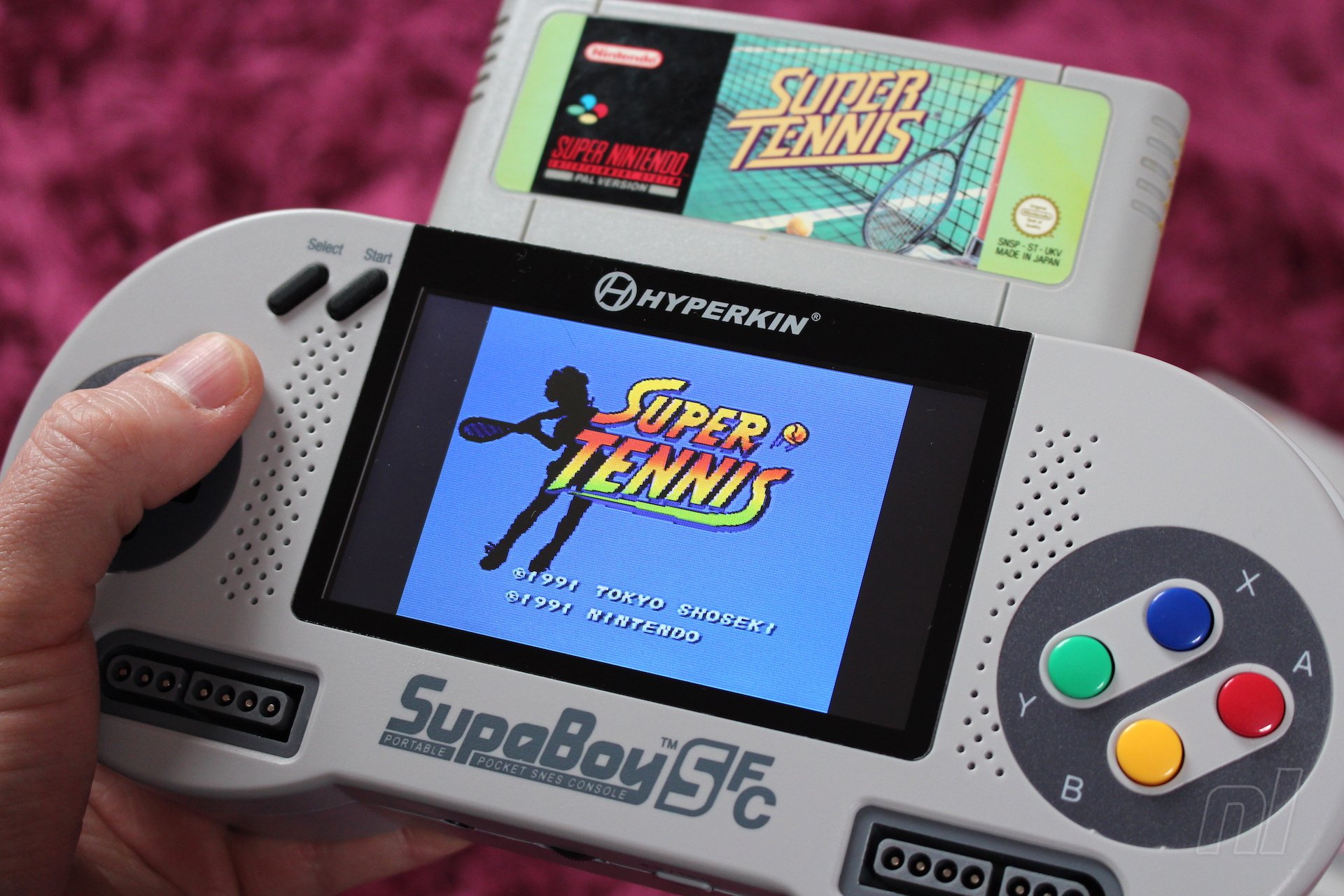
It’s fair to say that the SupaBoy handheld is one of Hyperkin’s most successful products; it initially hit the market in 2012 and has been revised once already in the form of the SupaBoy S. We’re now on the third iteration of the same model, and we can imagine this fresh SKU will do the business just as well as its forerunners did – thanks partly to the fact that it finally uses the best SNES button colour scheme known to mankind: the Japanese / European one. Needless to say, those iconic multi-coloured buttons look fabulous.

The changes between this version and the earlier SupaBoy S aren’t merely cosmetic, however. Hyperkin has fixed one of the biggest problems we had with the ‘S’ model – its 16:9 screen. While the 2012 original had a 4:3 aspect ratio LCD, Hyperkin used a widescreen version on the sequel, presumably because 4:3 panels were becoming hard to source. The shortcoming of this screen was obvious the moment you turned it on – games were stretched to fill the entire display. The same panel is used in the SupaBoy SFC, but now you can toggle between 16:9 and 4:3 by holding down the brightness button for a few seconds. Pleasingly, the console remembers the aspect ratio you selected even when you turn it off. Sure, those black borders either side are annoying, but we can live with them.

Unfortunately, the actual quality of the screen remains identical. It’s slightly fuzzy and colours appear a little washed out; compared to the displays on the 3DS, PS Vita or even your typical Android or iOS smartphone, the SupaBoy SFC is noticeably inferior. Viewing angles are also poor, with the image inverting with even the slightest tilt of the device. It’s also worth noting that, as was the case with earlier models, production quality leaves something to be desired; our unit had a human hair sealed inside the plastic panel covering the screen (you can just about make it out in this image, top left of the screen), presumably a stow-away left in place during assembly.

In terms of ergonomics, the SupaBoy SFC hasn’t changed since the last model (which, in turn, was largely the same as the one before it). It’s pretty bulky so don’t expect to fit it in your pocket; think of this more as a backpack companion and you’ll be fine. The D-Pad and buttons are both excellent, and the shoulder buttons are easy enough to reach during gameplay. It’s not too heavy, but your arms might tire after a few hours of use – speaking of which, the replaceable rechargeable battery is rated for around 10 hours of use, although this depends on how high you have the volume and which of the four brightness settings you use.

On the front there are two SNES controller ports, into which you can plug your original pads for some two-player gaming on the go. Interestingly, this feature (which has been present since the first model) apes the core hook of the Switch; you can rest the SupaBoy SFC on any available flat surface and play with a friend. However, a better use of this mechanic is hooking up the console to your television using the supplied AV cables. The drawback here is that Hyperkin has once again opted for a composite connection, so image quality is predictably poor – especially when compared to what we’ve come to expect from systems like the SNES Classic Edition, Supa Retron HD and Analogue Super Nt, all of which output a much sharper HD signal via HDMI. It would have been nice to see Hyperkin include this kind of connection on the SupaBoy SFC, given that it’s being sold as a revised version of an existing product. Maybe next time.

A 3.5mm headphone socket is included, as is a region switch which means the system is theoretically capable of playing every SNES and Super Famicom game. Powered by an old-school “system on a chip” approach, the SupaBoy SFC doesn’t use FPGA technology like the Analogue Super Nt, so it’s not quite as faithful when it comes to performance. Having said that, we tested many games on the console and couldn’t spot any glaring problems; the audio on some titles was ever so slightly off but it otherwise seemed accurate enough – although we imagine under closer scrutiny a few more cracks might appear. It’s also worth noting that games with specialised chips inside – such as Super FX – run perfectly, as do Game Boy games played using the Super Game Boy peripheral.

The only other real addition to this new model is the introduction of what Hyperkin is grandly calling “Pin Perfect” technology, which boasts “state of the art” cartridge slot pins. This might sound like marketing speak – and, to be honest, it is – but one of the other problems we noticed with the SupaBoy S (especially when using flash cartridges, like the SD2SNES) was that slight movements or knocks could result in cartridge getting jolted and the game crashing, forcing a complete restart and potentially costing you hours of progress. The tighter, higher quality pins on the SupaBoy SFC seem to almost eradicate this problem, although we’ve still be able to make a game crash by violently shaking the console (something you’d argubly avoid doing in normal use).

Just like the SupaBoy S, the SupaBoy SFC is an evolution rather than a complete overhaul. Hyperkin has mercifully fixed the aspect ratio issue, but hasn’t addressed other problems – such as poor production control and the use of a composite connection for AV out, something which, in 2018, seems positively ancient. We imagine that the company will continue to iterate and revise this product and fix these complaints while adding in new functions and features, but for the time being this is an excellent means of enjoying the SNES library on the move, despite its many teething troubles. It’s also the closest thing we have to a portable SNES with multiplayer support, at least until Nintendo decides to bring its Virtual Console service to the Switch.


The Hyperkin SupaBoy SFC is available now from Funstock.

Posted on Leave a comment

Asymmetrical Shooter/Brawer Aftercharge Is Headed To Switch For Some 3v3 Battles

Much like horror games (such as the recently released Outlast 2 – check our review!), shooters are finding a new and welcome home on Nintendo Switch, and Aftercharge looks to keep that trending firing on all cylinders. Coming from Canadian indie studio Chainsawesome Games, it’s a 3v3 asymmetrical shooter/brawler with some really intriguing features.

In the style of Overwatch and other objective-based shooters, each match sees two teams – one that’s invisible and one that’s invincible – competing to take control of six glowing structures on each map. There are eight playable characters to choose from, each with own special abilities, weapons and traits.

And, as an extra treat, the Nintendo Switch version will support cross-platform play with those playing on PC and Xbox One. One, big brawling family! “Having Aftercharge support cross-play with the three platforms at launch has always been super important for us, so we can’t wait to see the three gaming worlds collide this summer,” comments Laurent Mercure, communications officer at Chainsawesome Games. “Aftercharge on the Switch not only makes the game playable on-the-go, but also opens the door to building a more unified gaming community without platform-based borders. And for those gamers who want to get an early look at the game, we’ll be showcasing a playable PC build at PAX East 2018, as well as holding a special Alpha playtest in April. So, stay tuned for more details!”

Check out the trailer from last year to get you in the mood for some 3v3 multiplayer action. What do you make of Aftercharge? Will you be adding this title to your collection come the summer?

Posted on Leave a comment

Review: Outlast 2 (Switch eShop)

Outlast 2 is one of the most beautiful games on Switch, and also one of the ugliest. This sequel to the hit indie shocker Outlast (which hit the eShop earlier this month as Outlast: Bundle Of Terror) provides a strikingly evocative, bone-chillingly atmospheric game world for you to creep through. The use of light and shade in its depiction of the Arizona wilderness, not to mention some excellent sound design (accentuated by a new sound-tracking mechanic), are occasionally enough to make you gasp in appreciation rather than horror. 

Make no mistake though, this is indeed a horrific game. While the original was hardly a walk through the Mushroom Kingdom, Outlast 2 almost makes it look as such. Trading themes of grim medical experimentation for sickening religious perversion (in every sense), Outlast 2 sets out to one-up its predecessor on the shock count. For better or worse, it manages to do so at every step. The game’s tale of warring cults in a remote US community certainly serves to raise the stakes for some trademark hide-and-seek gameplay, even if it does stray into regions of questionable taste from time to time. Frequent flashback sequences, meanwhile, ground the queasiness in a more relatable everyday setting and add extra shade to protagonist Blake Langermann.

Needless to say, those of a particularly sensitive nature should move well along. Hardened horror nuts will find that Outlast 2’s new, more open setting throws up a whole bunch of memorably tense set-pieces. You haven’t been truly scared in a game until you’ve been hunted by deranged cultists in a moonlit cornfield. As in the first game, our protagonist is quite literally hopeless in a fight, so you must use your environment to your advantage. You can climb into a handy oil barrel, slip under a blood-stained bed, or duck into a nearby wardrobe to avoid patrolling goons and Terminator-like stalkers. This time your environmental camouflage options have increased in tandem with the scope of the levels, so you can also crouch in long grass or water, or hop into a hollow tree stump. In each case, hiding means robbing yourself of situational awareness, so the tension is maintained.

Once again your only tool here is a camcorder, with which you must document the horrors of the case that you and your reporter wife are working. Outlast 2 brings a more immersive recording system to the table than the original game, enabling you to record or snap key occurrences and texts and view them back with a press of ‘-‘.  A handy side function of this recording device is a night vision mode, and it’s through this grey screen that you’ll experience the game’s murkiest sections. There’s an almost comical number of prohibitively dark sections in Outlast 2, and cranking up the gamma setting will only get you so far. 

In a way it’s a shame that to have you experience such a convincingly realised game world through a grainy filter. Maybe it’s because we played the original just a few weeks before, but we found the novelty of this mechanic was definitely starting to pall by the end of our time with the sequel. When you’re ambling through the game at a steady pace, successfully picking your way through each stealthy challenge, the game is at its most brutally effective. Pick at the game’s seams, or fail to determine exactly what it wants you to do, and its limited nature starts to grate. 

Like the original, you’ll eventually realise that this is basically a walking simulator (or rather a running-away simulator) with limited scope and interactivity. What’s more, if you don’t tackle its stealth system perfectly, you’ll fall frustratingly short again and again, and will be forced to start afresh following another gruesome death animation. Of course, the key to any good horror movie is the suspension of disbelief on the viewer’s part. If you approach Outlast 2 with a determination to be absorbed by its impressively realised world, there’s nothing on Switch quite like it.

Conclusion

Outlast 2 ramps up the tension and the technical achievement from the original, with one of the most stunningly atmospheric game worlds around. The level design has expanded along with your stealth options, creating a handful of truly memorable moments. It definitely isn’t for everyone, though. Themes of religious perversion and abuse make Outlast 2 (un)comfortably the most horrific experience on Switch, while the limitations of its stealth mechanics can try the patience.