Way back in September last year, Danish developer Playdead confirmed the heart-wrenching and award-winning puzzle-platforming of Inside would be making its way to Nintendo Switch. Well, we’ve had to be patient for a good nine months, but that wait is almost over with Japanese games mag Famitsu confirming the game will arrive on the Nintendo Switch eShop on 28th June.
The same report also states Playdead’s seminal platformer Limbo is also due to drop on the same day, marking the first time the game has appeared on a Nintendo console. It should be noted that these dates are, at least for the moment, Japan only. Should Playdead clarify a solid western release date, we’ll update this story immediately.
Will you be playing Inside and Limbo on your Switch? Will their dark and grim worlds make a good fit for Nintendo’s machine? Share your thoughts below…
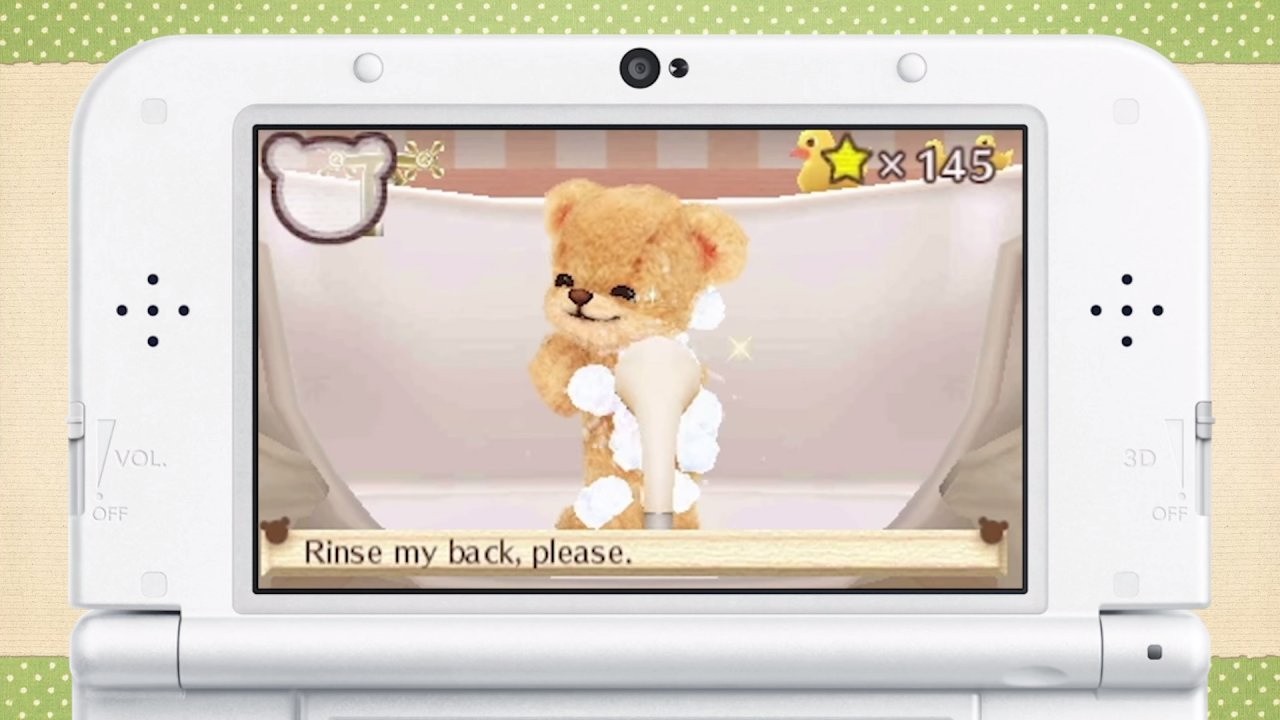
Like a sleeping giant, the Twitter account for Kuma Tomo – known in the west as Teddy Together – has finally emerged from its stuffing-filled slumber after more than three years to tease some big news.
The tweet in question marks five years since the original launch of the game in Japan and states that an announcement is expected in the near future.
Developed by Arika and published by Bandai Namco in 2013, Kuma Tomo was adapted for western 3DS release by Nintendo in 2016, launching in Europe and Australia.
Teddy Together is a pleasant little game, and is a great option for children to play with their parents. Although the voice acting is a bit off, there is so much to be explored that it won’t matter. A lot of kids’ games can be rushed through, but the level of detail and effort put into Teddy Together makes it a solid choice for young gamers that enjoy the likes of Nintendogs and Tomodachi Life.
Are you up for some more Teddy Together action? Do you think this could be released on Switch, or will Bandai Namco aim for the 3DS market again? Let us know by posting something below.
Psyonix has released details surrounding Rocket League‘s upcoming ‘Rocket Pass’ progression system, providing players will several ways to earn new content in the game.
The system will work in an almost identical way to the setup seen in Fortnite, with free and premium passes being available for each in-game season. The Free Rocket Pass (which will be available at no cost for every player) will have rewards that unlock automatically such as new customisation items, banners, in-game titles, and decryptors, but the Premium Rocket Pass upgrade will net you much more.
Equivalent to USD $9.99 (other regions yet to be confirmed) this upgrade comes with even more content, including a wider variety of the items mentioned before as well as new car bodies, keys, and premium player banners and titles. You’ll also unlock ‘XP Boosts’ that multiply your earned XP throughout the duration of your Rocket Pass, again acting in exactly the same way as Fortnite’s current system, allowing you to level up to earn more rewards.
The passes will be available across all platforms, and every item will be tradable (excluding typical non-tradable items like titles). You’ll also be able to upgrade to Premium at any time while a Rocket Pass is active without losing any progress. Psyonix has also made a point of clarifying that you’ll be able to view every piece of content available from the premium pass before upgrading, so you’ll know exactly what items are coming your way before you buy.
There is currently no word on when this feature will kick in, but it is expected to launch “later this year”.
Do you love Rocket League enough to treat yourself to XP boosts and cosmetic rewards? Or will you just keep playing the game as normal without spending a penny? Let us know what you think of the Rocket Pass in the comments below.
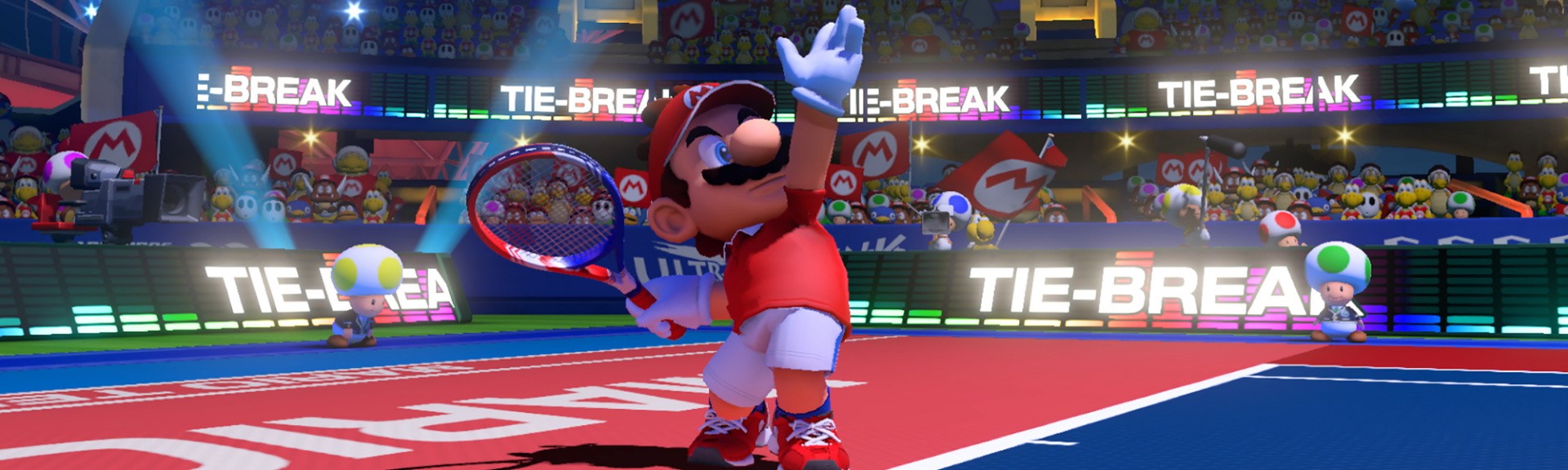
Bereft of feature content though it was, the Wii U’s Mario Tennis: Ultra Smash delivered addictively enjoyable core gameplay, for as long as its online servers remained populated. Its measly offline attractions and lack of court and character variety proved its critical undoing, but developer Camelot Software – makers of the Mario Tennis (and Golf) games since the N64 days – nevertheless managed to make the essentials sing. And it’s from this solid foundation that the studio has built the game Ultra Smash should have been: Mario Tennis Aces.
Where Ultra Smash’s extras were a pure Monkey Island’s worth of living without that particular piece of junk – here’s your context, kids – Aces stuffs its kit bag with activities until the zip’s positively pinging off across the locker room like a smartly volleyed can of energy drink. Not everything is evenly fleshed out, but whatever your preferential way to play, there’s plenty to get stuck into, both solo and with pals.
Aces’ offline tournament play is limited to three difficulty levels – the standard Mushroom (beginner), Flower (intermediate) and Star (harder) – with eight entrants each time, and doesn’t represent too much of a test for experienced Mario Tennis players. But at least there are actually tournaments in here – an immediate improvement on Ultra Smash, which couldn’t even manage the most basic bracket.
Having every playable character available from the moment you first turn on the game, from classic favourites to the surreal sight of a Chain Chomp smacking balls about the place, is a treat. It sure beats having to earn coins to add them to the roster, the Ultra Smash way. Each character has a playstyle they stick to – each of which is self-explanatory – such as defensive, powerful, and speedy just to name a few. Each style has its distinct advantages and disadvantages, so there’s no doubt in our minds that you’ll be able to find at least one character who fits the way you want to play.
It’s not just the characters who add life to the game; the arenas you play in feel equally alive and packed with personality. Different courts are unlocked for free play by progressing through Aces’ Adventure Mode. Notably lacking in Ultra Smash, these unique courts certainly mix things up, but are totally optional and don’t interfere too heavily with the rest of play. One has mirrors that spit your shots back at you, another has passengers rushing rudely across the court getting in the way of your shots, and one has a mast right slap-bang in the middle of the net, occasionally bouncing shots in ways nobody intended and at least half of the players didn’t want; it can really freshen things up when you’re tired to just slamming across a normal court.
Local multiplayer works just fine with the Joy-Cons removed, albeit with the compromise of each character’s distance-covering trick shot being mapped to a double-tap of the X button rather than a flick of the right analogue stick. An alternative control method is available, however – the Wii Sports-recalling Swing Mode, which lacks the accuracy that can be gained from regular pad play but makes for greater laughs with pals who aren’t so games savvy. And you might just get a little workout, too. Just be sure, as always, to move the valuables away from where you’re wafting your virtual racquet. Nobody wants to celebrate victory over their old man by sweeping up the remains of grandma’s favourite vase. Heirloom, that. Been in the family a hundred years. And so on.
Online play is something we couldn’t test at the time of writing, but we look forward to swinging into it once Aces has officially launched. If there’s anything wildly amiss about it, you can bet we’ll serve up an addendum to this review, but Ultra Smash played just fine when facing off against opponents staring at screens on the other side of the world, so we can’t see Aces falling short on that front.
As well as the risky trick shots that each character can attempt – successfully executed moves add extra energy to your top-corner gauge – Aces introduces one blistering special shot per competitor. Again, these are connected to your energy gauge – when it’s full and flashing, a tap of the left shoulder button will trigger a canned animation leading to a scorching return. There’s no guarantee it’ll score you a point, but Aces’ energy-fuelled fantastical strokes often offer the best way to defeat opponents, especially when you factor in that equipment failure is a massive part of this game.
Each player begins a match with a set number of racquets, which will lose power and ultimately shatter if they don’t return both special and (star-indicated) zone shots, performed with a tap of the right shoulder button, with perfect timing. Too early or too late, and these vital tools of the tennis trade take damage, although activating slow motion at the expense of some of your energy does help get that timing right.
As such, reading not only your opponent’s shots in the moment, but also the state of their energy gauge, is paramount to success, as is timing your own unleashing of a might-be-unstoppable move. With breakable defences and full-pelt body shots very much an aggressive option, Aces sometimes has the feel of a fighting game, as much as it does a stylised sports sim. But if you’re not into any of these striking abilities, simple rules are selectable for local and tournament play, which do away with the gauges and broken gear.
The Adventure Mode, returning to this series for the first time since 2005’s Mario Tennis: Power Tour for the Game Boy Advance, offers no such assets-stripping, actively funnelling the player – as Mario, with motivational support from Toad – towards all manner of bizarre showdowns based around bouncing balls and flailing bats.
The storyline is pure nonsense – something about a mean, magical racquet kidnapping Luigi (after possessing Wario and Waluigi), and a series of power stones that need retrieving in order to rescue him – but it’s a typically bright and breathlessly imaginative affair. What’s less expected (and welcomed) is the occasional significant difficulty spike, and the need to grind in order to level up. Mario’s skills, like power and accuracy, are tied to his current level, so you may find yourself backing away from a boss to spend time on the practise court, before returning feeling fitter and happier.
Toad offers advice after defeats, but this can be as confusing as it is helpful, making you look for chinks in armour that simply aren’t there. And the game’s array of special abilities aren’t explained too clearly in Adventure Mode, either – it’s better to play a few tournament games to get to grips with Ace’s mechanics, feeling initially awkward as they do after Ultra Smash’s streamlined move set. Once the controls do click, though, it’s clear that Camelot has realised a system that is adaptable to a lot of different strategies, equally suited to back-foot defensive manoeuvres on the baseline as it is confident net play. And you’d better believe you need to mix these approaches up the further you get into the game, or you’ll wind up hopping madder than any McEnroe tantrum.
Conclusion
We’re used to seeing Wii U games transfer to Switch, but for Ultra Smash to have moved across without a substantial makeover would have been disastrous. Aces, wonderfully, is anything but that – it’s a superb arcade sports game that’s generous with its suite of player options and only occasionally guilty of being a little cheap in its Adventure Mode. The presentation is spot on, and the core tennis action is absorbing whether you’re trading simple strokes or firing off special shots. Some animations and voice overs are identical to Ultra Smash’s, but everything around them has been overhauled to quite splendid heights. This is something of a Switch Port Plus, then – not quite a whole new experience, but so improved as to be near unrecognisable next to its preceding title.
Mario + Rabbids Kingdom Battle was something of a smash hit when it launched last year; after initially being disappointed at the sight of early leaks of the game, fans soon realised that a near-masterpiece was being introduced, bringing Mario and those pesky Rabbids together to create a fun turn-based strategy experience. Now a large chunk of DLC is just around the corner, and it looks set to please fans all over again.
Speaking with Eurogamer at E3 this year, creative director (and E3 2017 hero) Davide Soliani has gone into detail about the new Donkey Kong DLC, as well as what the future may hold for the series. Originally, this DLC was going to be a much smaller experience, but the overwhelming positivity from fans drove the studio to create something much bigger and bolder.
“We reprioritised ourselves. It was going to be a small experience, two to three hours, one world. But in the end, it is almost half of the main game. In the main game you have 27 minutes of cinematics. DK has 20. In the main game you have four worlds, this is one but it is as big as two. It’s 10 hours of gameplay. We’ve put everything in – all our passion.”
When asked about Ubisoft’s plans for Mario + Rabbids in the future, Soliani confirmed that plenty of ideas are still circling around the studio, yet to be used. As you might expect, he wouldn’t confirm whether or not we’ll see more from the franchise for certain, but we’re certainly remaining hopeful.
“We still have loads of ideas. We used one tenth of the ideas. But now the DLC is done… what I can say is we are working out, for the future… [pauses] who knows!… We need time to work on something which makes sense. We are taking that time to see how it goes. You need time to think what you can do to bring something new for players.”
The Mario + Rabbids Kingdom Battle Donkey Kong Adventure DLC arrives on 26th June (or 25th June for season pass owners). Make sure to let us know if you’ll be joining DK in his latest adventure with a comment below.
Update: The demo has now appeared for both Nintendo Switch and 3DS in Europe, too.
Original Story: Captain Toad: Treasure Tracker is now only a handful of weeks away from releasing on Switch and 3DS, hopefully giving our favourite little mushroom man’s Wii U adventure another chance to shine. To give players an early look at the game, a demo has now gone live on both consoles’ eShops in Japan.
The demo only takes up 204MB of space on your Switch, or 498 blocks (62.25MB) on 3DS, and the Switch version of the game is actually playable in English. If you have a Japanese account on your Switch (or if you feel like setting one up), you’ll be able to download the demo for free from the Japanese store and play it in English from your main account. Awesome!
Alternatively, you could simply wait to see if the demo appears in other regions. We’ve had no official confirmation of this happening just yet, but it would make sense for the demo to become available in North America and Europe over the coming days.
Captain Toad: Treasure Tracker launches on Nintendo Switch and 3DS on 13th July. Let us know if you plan to grab a copy for yourself in the comments below.
Created by indie developer Hyperbolic Magnetism, Chameleon Run is an autorunner that was originally released on smartphones back in 2016, going on to win various awards and generating an awful lot of positive reviews. The studio has now released a deluxe edition of the game for Switch, adding a dollop of new content in the process. Is it worth your time and money, though? Let’s have a look.
The game looks incredibly simple on the surface, and in some ways that’s true, but Chameleon Run is a deceptively tricky little blighter. Each level presents you with a multi-coloured obstacle course featuring an array of platforms, gaps, and orbs to collect, and all you have to do is make it to the other side. Of course, being an autorunner, your little blocky character is always moving forward without any input, leaving you to deal with some fast-paced, ninja-style jumping while trying to keep him safely under control.
Despite only being triggered with one button, your jump can actually do an impressive number of things. There’s a standard jump, of course; a long jump, which is performed by holding the button down for longer; and you can even pull off double jumps and smaller jumps in mid-air which can both be used to fall underneath platforms, safely rising up again on the other side. Other more advanced techniques are introduced later on, too, creating a surprisingly complex list of skills to master that should please even the most highly experienced platforming geniuses.
The only other control you’ll ever need is a quick colour swap, achieved by pressing ‘right’ on the D-pad. This will change your character’s colour from yellow to pink, or vice versa, allowing you to survive on that particular colour. You see, you can only touch a platform of the same colour; landing on either the opposite colour or a deadly black section will result in an instant game over, throwing you back to the start of the level. The combination of jumping and colour swapping acts like an intense brain training exercise, with your reflexes, course memory, and hand-eye coordination all being put to the test in one go.
The levels do start to get a little repetitive at times – they are all varying takes on yellow and pink lines, after all – but the different course paths and regularly added jump tricks help to ease this for the most part. Every course has two sets of collectable orbs lying on various platforms, making up two extra challenges to complete per level, and you’ll need to explore different routes through the courses to grab them all. A third challenge also sees you having to complete each stage without ever changing colour, and finding the exact path (and actually being able to pull off the required actions) can be extremely tricky.
The game also encourages you to try your hand at speedrunning, with online leaderboards showing you how well (or not) you stack up against other players. Returning to an already completed level gives you the best chance at grabbing fast times as each course adds lightning bolt collectibles once beaten, allowing your character to speed up through certain portions of the stage. You can also generate more speed by switching colour at the last possible moment, just before you make contact with a platform.
If you’ve played the game before on a mobile device, you’ll be pleased to know that this Switch Deluxe Edition features a handful of new courses, and even a fourth additional challenge to complete for each level. This challenge doesn’t unlock until you’ve beaten every single level of the game, though, which is no mean feat. Originating as a mobile game naturally makes it a perfect fit for Switch, too – especially as a game that you can pick up and play in handheld mode for a few minutes at a time in between other activities.
On the flipside to this, however, being a mobile game first and foremost does mean that its length is relatively short compared to other platformers on the console – with patience and persistence you should be able to clear the main goal of each stage in around three hours or so. There is more content here than in the original release, and we’d argue that the Switch’s screen and real, physical buttons make this the superior way to play, but the upscale in price (£4.99 on Switch compared to £1.99 on mobile in the UK) might be the one sticking point we have in our hopes to fully recommend a purchase.
Conclusion
Chameleon Run Deluxe Edition offers a challenging autorunner experience that will no doubt have you hooked and cursing at the same time. The combination of slick jumping and colour swapping makes whizzing around each level enjoyable, and the new features added to this Switch edition are very welcome, but the main bulk of the game will likely be over relatively quickly for most. It’s definitely an enjoyable ride while it lasts, though, and fans of the genre shouldn’t be disappointed.
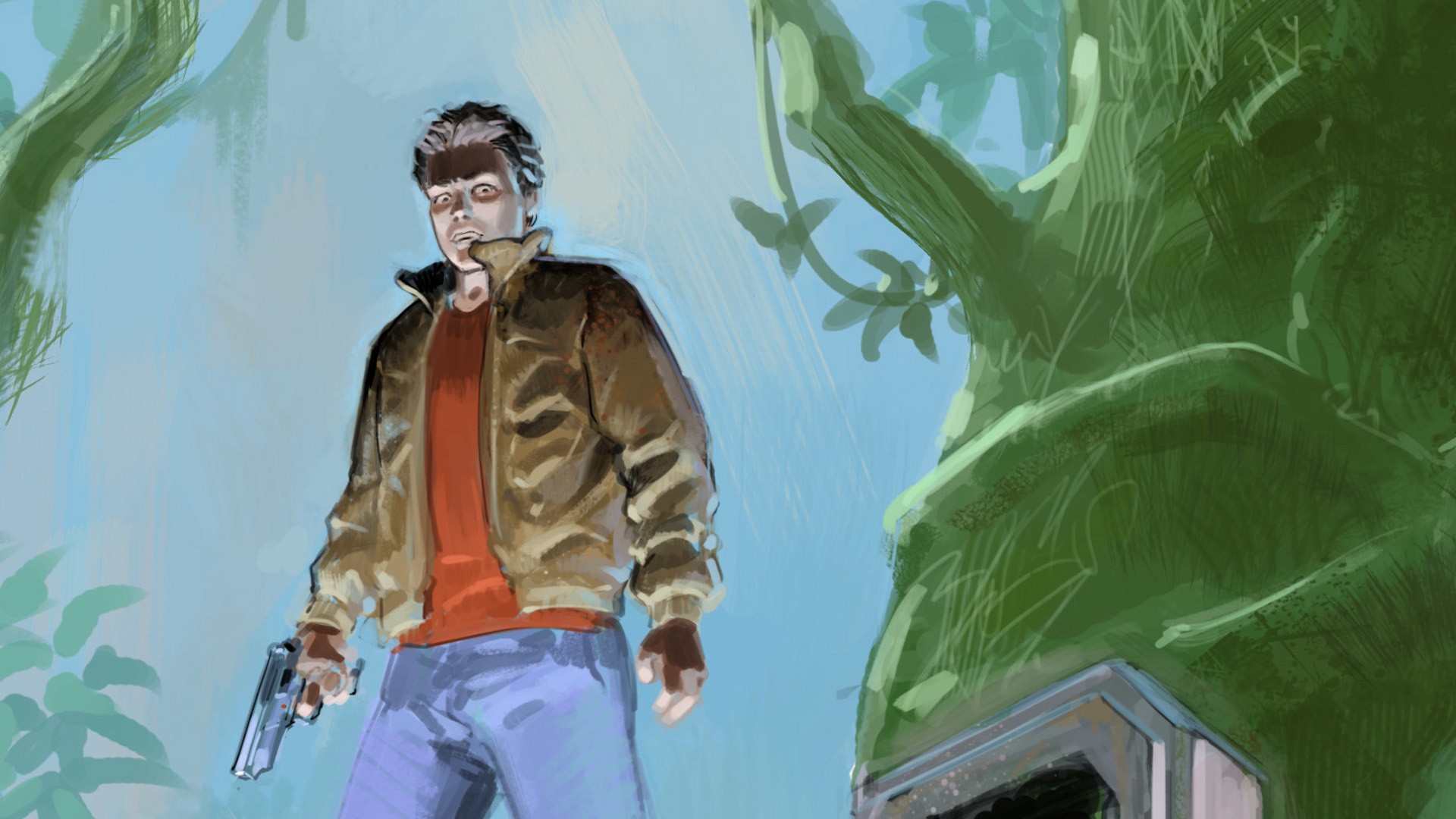
This month sees some potentially special games come out for the Nintendo Switch. From Wolfenstein II to Lumines Remastered via the arcade sports action of Mario Tennis Aces, the console’s not wanting for attractive offerings. Yet perhaps the most interesting of the month’s new releases is a game that’s actually fairly old, now faithfully revived for the platform. But don’t be fooled into thinking Flashback holds nothing but nostalgic appeal for greying gamers – this pixel-art masterpiece is as compelling today, for newcomers and veterans alike, as it ever was.
“We were just trying to make the best games,” says the game’s designer, Paul Cuisset, thinking back to the beginnings of his game development career. A simple mission statement perhaps, and a commonly cited one, too. Clichéd, even, these days – but it came to fruition at Delphine Software in the late 1980s and early 1990s as the studio came to define the parameters of the era’s cinematic adventures.
“Before I started with Delphine, I’d been an independent developer,” Cuisset continues, from his home in France. “And when I joined the team, the whole idea was creativity. We wanted to be free to make the games that we wanted to do. And we were lucky to get that chance, as the president of Delphine, Paul de Senneville, was a musician, so he knew that it was important to give freedom to the people who were working with him.”
With de Senneville at Delphine’s helm, Cuisset and those around him were encouraged to explore new ideas in video games, new ways to tell stories that had, outside of old-school text adventures and the emerging point-and-click titles, largely been generic tales of rescue or revenge. And didn’t they jump in with both feet. “Nothing was considered impossible,” Cuisset remembers of the time. “If it’s good for the games, go for it, and don’t be afraid to try things.”
In 1989 came the sci-fi, time-travelling adventure Future Wars, running on the appropriately named, in-house-developed Cinematique engine. It drew rave reviews from the press – as did Delphine’s 1990 follow-up Operation Stealth, a spy-themed affair which released stateside with the James Bond license attached. Both games were overseen in a significant way by Cuisset, but the game that he would come to be truly known for was still a couple of years away.
1991 was a watershed year for Delphine Software. The company had already enjoyed success with its two adventure titles, but now their profile was to skyrocket – and not as a result of Cuisset’s next game. While he steered the narrative-heavy murder-mystery Cruise for a Corpse to completion, for the Amiga and Atari ST, another talent at the studio was finishing up something that broke Delphine’s established style. A side-on, exposition-light, platform-puzzler, Another World brought Cuisset’s contemporary Éric Chahi to the gaming world’s attention.
Chahi had been the lead artist on Future Wars, but Another World was his project from the ground up. It shook the foundations of 16-bit gaming, attracting several awards and racing past a million sales. In 2012, it took its place in New York’s Museum of Modern Art, one of only 14 games to do so. It’s been called, among many other things, “visionary”, “an experience every gamer should have”, and “the best video game of all time”. Suffice to say, Delphine had suddenly gone from something of a cult developer to playing in the biggest leagues of the industry.
“When Éric showed Another World to us, it blew us all away,” Cuisset says. “There was no question about what genre of game it was, that it didn’t fit our past games – it was just so beautiful and so great, that it was not possible to pass it up. We didn’t really have a unified direction with the games we would do, at that time. It was more a feeling of whether or not we liked something. What would be cool to do? We wanted to do that next.” And what came next would do for Cuisset what Another World had done for Chahi.
You may have heard about the genesis of Flashback before, but it bears repeating for its weirdness. Cuisset’s career high watermark (so far), the game is set in a future of intergalactic travel, alien infiltration, and high-tech cities beneath the surface of Titan. It’s all holocubes and hover-bikes. And yet, when Delphine began planning Flashback, it was because they’d received a request from British games publisher US Gold to adapt a very famous movie.
“US Gold came to us with the proposal to do an adaptation of The Godfather,” Cuisset recounts with a chuckle, like he never tires of the absurdity of it all. “They wanted to create a game about the movie. So, Flashback was originally created around the universe of The Godfather.”
Needless to say, the design of the game very quickly moved away from any obvious associations with Francis Ford Coppola’s 1972 Oscar-winner (a Godfather game did eventually come out, in the form of EA’s 2006 title, to a modestly positive reception). It wasn’t just the initial suggestion of a movie tie-in that was new to Delphine – for the first time, they were tasked with making a game for a console, rather than a home computer.
“US Gold proposed we worked on the Mega Drive, which was really new at the time,” Cuisset explains. “Traditionally, we used to do adventure games, point and clicks, so this was a big change for us. We had to use a new interface, and develop a new way to move the characters. We had to redesign how to tell our stories. It was an evolution of what we’d been doing before on the Amiga and Atari ST. We had to redesign the way the game would be. In fact, I had to change the whole interface, and I decided to have a game that would be more action focused.”
The Mega Drive was, Cuisset admits, “very technical and way beyond our experience”, which saw Delphine take time to adapt to developing for the new platform. “It took us a good year before we really started the project,” he continues, before revealing that even though the machine was powerful for its time, the team ran into their share of obstacles in realising Flashback for Sega’s flagship system.
“Having a game on a cartridge was something new. We had so many sprites that we had to use some new systems to decompress on the fly, for the Mega Drive. There were so many things we needed to do, including creating a new engine. We had to do perform some hacks to bring the game to completion. There wasn’t enough memory to save the game, so we used the memory on the sound chip to store the save game. That was the kind of thing we were doing.”
And then there was the small matter of the Mega Drive’s cartridge capacity, capped at the time to 16 megabits – a ceiling that simply wasn’t high enough to accommodate Cuisset and company’s ambitions. “For a long time, we weren’t able to test the game from beginning to end, because it was too big to fit into a cartridge,” he says. “So, we reverse-engineered the cartridge itself, and we made our own with 24 megabits. And we actually built it before telling Sega. When we showed them that we’d modified it… Well, I’m not sure if they were happy, exactly, but they were okay, and they didn’t sue us or anything. It was announced that there would be 24 megabit cartridges in the future, so we felt okay to go there ourselves.”
Flashback released for the Mega Drive in 1993, earning terrific acclaim for its gorgeously rotoscoped animation – protagonist Conrad Hart moves with the kind of rare fluidity that only Prince of Persia and Another World had previously delivered – and compelling story of human society slowly being overtaken by an alien menace. It mixed role-play with puzzles, platforming with gunplay, and slick side-on visuals with animated cut scenes that looked spectacular for the hardware. Accolades flowed in, with major publications considering it one of the greatest games of all time. It even scored an entry in the Guinness Book of Records, as the best-selling French-developed video game of all time (at the time).
But Sega’s version wasn’t the first to reach the market. That honour goes to the Amiga port, which arrived in 1992 – but Cuisset maintains that Flashback was a Mega Drive game, first and foremost. “The Mega Drive was the target,” he reaffirms. But had it not been, one wonders how different Flashback could have been.
“We had to cut some of the game, because we just couldn’t make it fit on a cartridge,” Cuisset continues. “At the beginning, there were some monsters in the (Titan) jungle, that we couldn’t include. There was a… well, not exactly a lion, but a strange creature that would run after Conrad, and you had to flee because it was very fast. But it had too many frames of animation, so we had to cut it. We couldn’t compromise Conrad’s animation, and the number of frames it needed.
“We tried different frame rates, for the game, and finally we settled on 24 frames per second, as it was really the most beautiful. We tried with 12 frames per second, and it was okay, but it just wasn’t smooth enough. When I saw the 24 frames per second animation, it was obvious that we needed to do that. Even when we did the calculations on the space that many frames of animation would take, it was an important thing that we needed to include. We had to do everything we could to keep these frames in. That meant there were some other parts that we had to remove, but I think we kept the essential parts. You can’t keep everything. You have to make those decisions.”
Nowadays, such trimming wouldn’t be a necessity. “There’s so much power on the Switch,” Cuisset exclaims, rightly excited about Flashback’s imminent return to a Nintendo console, having last been seen on the SNES. “I think it’s a really nice machine. For Flashback, it is so fast, compared to the Mega Drive.” But with power comes, as we’re told, responsibility, or something to that effect – and when he began to move Flashback onto the Switch, Cuisset realised he had to exercise some self-control.
“I had to limit myself, as the plan was never to do anything too different from the original,” he says. “So, there are just two different modes for Flashback on the Switch. There’s classic, which is the old game, and it plays the same way it did in 1993. And then there’s a modern mode, which includes some things that people are more used to in games today. There are tutorials, for example, as when you pick up a game it’s important to know how it works. And then there’s a new feature we call Rewind, which lets you rewind the time back, after you die. Because Flashback was, at the time, very unforgivable.”
Which means there’s no more despairing as you accidentally roll Conrad off a precipice or fall victim to those pesky alien Morphs – just rewind the game, as much as two minutes, and try again in light of your mistakes. Cuisset explains that just how much you can rewind over the course of a playthrough depends on the difficulty you select – on easy, it’s infinite, and on hard, you’re limited to five minutes’ worth across the entire game.
For that to be, pretty much, the sole concession to modern audiences on a game that’s celebrating its 25th anniversary of being on console, is an illustration of great restraint. But then, Cuisset has been burned by trying to update Flashback once before: a 2013 remake was rightly criticised for its ropey controls, dull visuals and voice acting that couldn’t have been more phoned in if it was a Maureen Lipman television commercial. (Now there’s a period reference for you.)
“With the remake, we tried something, and it didn’t work,” Cuisset says. “But now I’m very pleased that the game will get a new life with the Switch release. This is the original game. And even if we’ve added some features, I was really picky about what to add. I didn’t want to change the game – the experience had to be what we had before. People who played it 20, 25 years ago, they’ll know this game. And it’s cool that people can discover this game now, for the first time, with it being on Switch.”
But why is this the 25th anniversary edition, when the Amiga version of Flashback came out 26 years ago? “It’s 25 years since the SNES version, which is why this is the 25th anniversary version, as we’re on Nintendo again,” Cuisset answers, matter-of-factly. “But it’s not really important if it’s 25 or 26 years since the game came out. What matters is that people can play the game again now. And I hope they’ll be satisfied.”
Dancing with others to raise the disco ball near Loot Lake is one of the Battle Pass challenges in week five, season four of Fortnite. Complete it and you’ll earn five Battle Stars that will help boost you up the tiers for those sweet season four exclusive rewards.
In this guide, we’re going to help you figure out how to complete this curious challenge, and also help you find the exact location you need to go to.
Fortnite – How To Dance With Others To Raise The Disco Ball Near Loot Lake
This challenge sounds more complicated than it actually is. Basically, in a building on the west side of Loot Lake, there’s a disco ball surrounded by four different platforms.
You and three other players have to stand on a platform each and dance to send energy to the disco ball. When enough energy has been generated, the disco ball will raise to the ceiling and the challenge will be complete.
The other players don’t have to be in your squad, though we’d recommend that as the easiest way to complete the challenge. If you’re brave enough, you can do it with strangers and just hope they won’t try and kill you.
While you don’t have to dance on one of the platforms – any emote will do – we do recommend that you do dance. That’s because the animation constantly plays, and you’ll have to spam another emote otherwise.
If all four of you do this in synch, the disco ball should raise no problem and you’ll complete the challenge. You do have to go on to finish the match though, by winning or dying. Quitting out will cause it to fail.
Fortnite – Where To Dance With Others To Raise The Disco Ball Near Loot Lake
The disco ball is inside a warehouse on the western edge of Loot lake. For reference, if you look at the map of Fortnite, you’ll see two piers on the western edge of Loot Lake. The building you need o find is on the topmost pier.
Of course, you can also just look at our map above for the exact location. We’ve also included screenshots below to help you narrow it down.
If you’re arriving from the air, it’s the building on the right side of our character. The image on the right reveals what it looks like from the ground.
Once inside, you’ll find the disco ball and four metal platforms. You and three friends have to dance on one each to complete this challenge.
Nintendo Labo didn’t quite get off to the flying start that Nintendo may have been hoping for; despite receiving an overwhelmingly positive reaction from fans and media on the whole, the two bundles – the Variety Kit and the Robot Kit – quickly plummeted out of the sales charts. Support for the new brand will continue, however, with strong aspirations still very much present in Nintendo’s thoughts.
Speaking with The Verge, Nintendo of America president Reggie Fils-Aimé has explained Nintendo’s thought process on Labo. Interestingly, he likens the new experience to games such as Brain Age and Wii Fit, suggesting that it will continue to sell at a steady pace.
“Labo is the type of game, much like Brain Age for the Nintendo DS, much like Wii Fit, it’s a game that’s going to sell for a very long time at a very steady pace. Which is a different curve than a traditional video game. And so from that standpoint, our focus is on how we can continue to support it, how we continue to help consumers understand the proposition. There’s a lot of activity happening with Labo around the summer, especially as kids are out of school, we think it’s a prime opportunity. Labo is off to a strong start and in our view is going to continue to get a lot of support.”
Shinya Takahashi, general manager of Nintendo’s software division, Nintendo EPD, also mentioned how Labo’s target audience is still in the process of being reached. As it stands, fans of gaming (who might not be completely sold on the concept) are the only people who really know about it, but Nintendo hopes this will change in the future.
“We want to get to a demographic that’s not traditionally reached by games at all. I think the case with Nintendo Labo right now is that there are some people who know about it, and quite a lot of potential still for us to explore. The people who are aware of Nintendo Labo right now I think are still in the circle of Nintendo fans and game fans in general. We’re really interested in how we can go beyond that, to people who aren’t really in the loop of game news.”
Nintendo Labo does seem like a unique middle ground between traditional video games and the more hands-on style of toys such as LEGO; the aim here is clearly to sell the product as a creative toy with interactive elements, rather than a video game that has parts to build. Whether or not Nintendo will be successful in reaching its desired audience is yet to be seen, but continued support for Labo in general can only be a good thing.
Have you tried Nintendo Labo? Did you have fun building and playing with the Toy-Con? Let us know with a comment below.