The It’s a Wonderful Bag Limited Edition is a Square Enix e-Store exclusive priced at 17,000 yen (US$155.31) and, as you might expect, it’s a Japanese exclusive (for now at least). For your money you get a physical copy of the game, a mini soundtrack, an artbook, a stylus pen, acrylic stand, silver foil sticker, puffy stickers and a re-usable bag.
You can check out the Japanese trailer above. Let us know what you make of it, and whether we’re going to see more special editions with ‘re-usable bags’…
In the Wii U game, a co-op event called ‘The Ultimate Battle’ can be played, tasking you with defeating every character that was present in the roster at the time. You can see a screenshot of this event’s description screen in @LiquidHbox‘s tweet below.
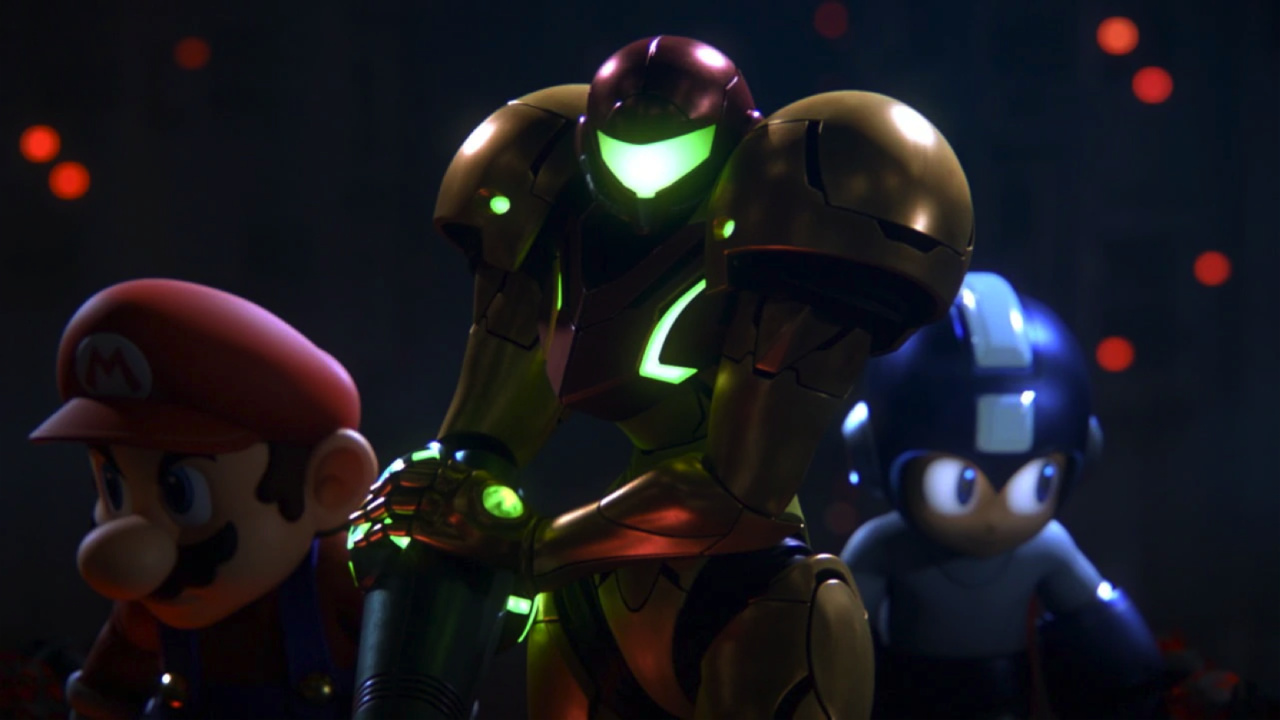
The wording here is particularly interesting. You may remember that spine-tingling moment from the new game’s reveal which declared “Everyone is Here!” (as seen below). Now, look back at the image in this tweet and compare – the emphasis given to the word “ultimate”, as well as the “they’re all here” line, are both surprisingly in line with the new reveal. *Cue mysterious, sci-fi conspiracy music*.
The chances of this being a definite tease and not just an almighty coincidence? Possibly rather slim. Although it’s definitely possible that Sakurai and his team had already discussed the idea of having every fighter available in the next game, so maybe it was a cheeky little hint at things to come after all. We’ll never know…
Was it a clever nod that wasn’t picked up before now, or just a strange coincidence that has no meaning at all? Let us know which side you’d vote for in the comments below.
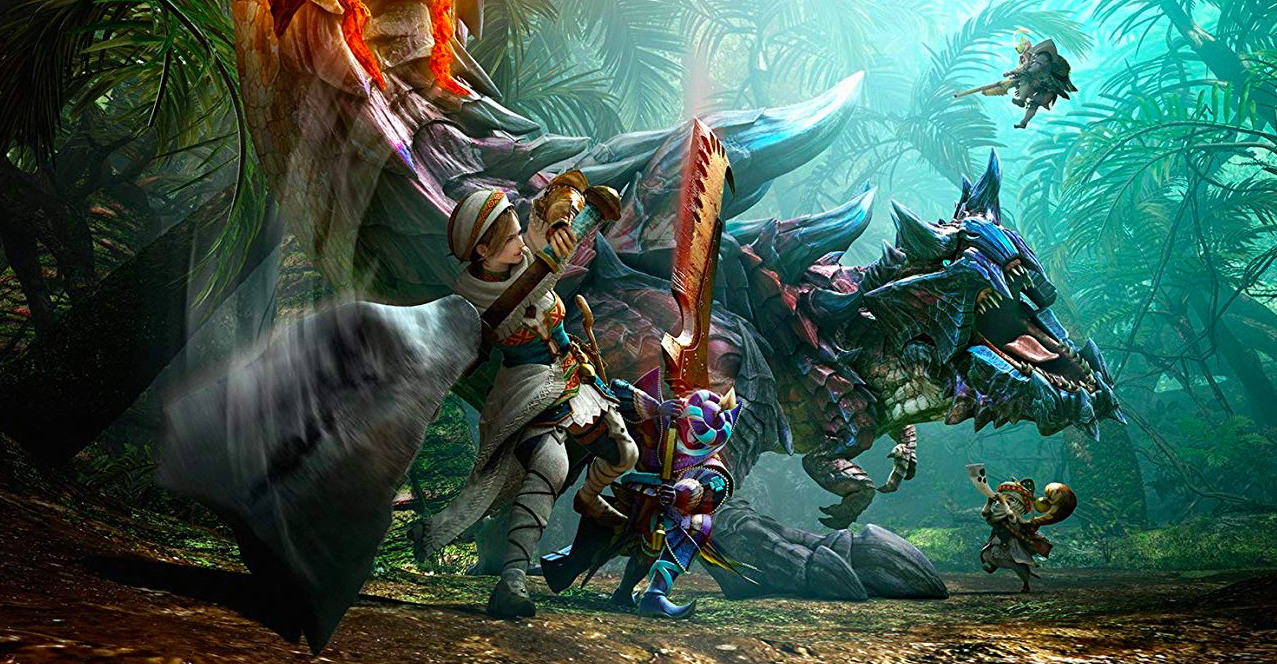
We already know that Switch is getting Monster Hunter Generations Ultimate this year, with an August 28th launch date giving Nintendo’s console another AAA release for the holiday season.
However, it would seem that Capcom may have plans to release another entry in the Monster Hunter series on Switch alongside this updated edition. The company has just shared part of the Q&A session which took place during the 39th shareholders meeting earlier this month, and in it, Capcom was quizzed about the chances of Monster Hunter World getting a Nintendo Switch version.
While the answer was no – Capcom feels World simply wouldn’t be possible on Switch – the company did say that Switch might see another Monster Hunter game post-Generations Ultimate.
What would you hope to see from a Monster Hunter entry built from the ground-up for Switch? Let us know with a comment.
Here is a sobering thought. It’s been twenty years since developer Rare’s famous bear and bird first burst onto the video game scene. Yikes. Making its debut on the Nintendo 64, Banjo-Kazooie is an iconic platformer, chock-full of humour, pioneering spirit and ambitious ideas. A masterclass in the 3D platforming genre, the game is right up there with the likes of Super Mario 64 and other first-party Nintendo titles of the era.
In it, you play as Banjo and Kazooie, a bird and bear, exploring the lair of wicked witch Grunty in a quest to save Banjo’s sister, Tootie. You traverse nine (it’s technically eleven, including the hub and training area) super-immersive worlds collecting items – lots of items! – that open up yet more content and secrets. It’s early days 3D platforming at its best, before the advent of DLC and the internet holding your hand every step of the way.
We caught up with two of its developers, Chris Sutherland and Steve Mayles, now the head honchos at Yooka-Laylee studio Playtonic Games, to chat about Banjo-Kazooie’s origins, its development and the secret to the game’s enduring popularity.
Codename: Project Dream
Rare was a special place in the ’90s. Pre-YouTube and pre-online gaming news, the development studio almost had a mythology surrounding it, a small team of developers operating out of a converted barn in sleepy Twycross, Leicestershire. Chris recalls a number of special factors coming together, both “creative and situational” that eventually gave rise to Banjo-Kazooie, which grew out of the legendary ‘Project Dream’. “At the core, we were a small team that had worked together for some time. Before Project Dream started, we’d been working on Donkey Kong Country and Donkey Kong Country 2, which were games that were developed in one year, so we were all itching to finish something as soon as possible.”
Project Dream started out as an experiment in “2.5D platforming”, where the main character had undergone a massive transformation, from pirate to bunny to bear. “Thankfully the bear was chosen, else you’d all have been playing ‘Bucky McBunny and the Quest for the Golden Carrot’. Or something,” says Steve Mayles. “The influence of Mario 64 showed what could be done on the N64 and we felt the 2.5D game wasn’t a big enough step forwards.”
Opting for a fully 3D game and agreeing on its protagonist, Banjo, Kazooie wasn’t far behind. Originally conceived as a means of simply giving Banjo a double-jump, she would evolve into the shade-throwing and hyper sassy “Red-Crested Breegull” we’ve come to know. Starting out as a quirk in Banjo’s backpack, Chris says, “we added legs for a fast run move, so with wings and legs already coming out of the backpack, the logical step was to have a whole bird in there.”
Other scrapped content, characters and themes from Project Dream would later make their way into the game’s sequel, Banjo-Tooie. In the game, if you go to the tavern in Jolly Roger Bay, you’ll find the scrapped antagonist for Project Dream, Captain Blackeye, drowning his sorrows. Speak to him enough and he’ll eventually fall over, lamenting:
I were in this fine game… Arrr! I had a dream once. A bear stole me glory… Looked a bit like you ‘e did.
It’s a clear nod to the early days of the cancelled project. And twenty years later, Rare has finally developed its long-anticipated pirate game, Sea of Thieves, although Blackeye is yet to make an appearance.
The Birth of Banjo (and Kazooie)
On its release in 1998, the colourful, eye-popping visuals and memorable characters of Banjo-Kazooie were on a par with the likes of Mario 64. Graphics, gameplay and controls were super-tight, Rare’s development teams having had two extra years to get to grips with the N64 and learn how to squeeze the most out of the console. The sheer size of environments like Freezeezy Peak, experiencing Click Clock Wood in four different seasons, exploring the grounds of Mad Monster Mansion and playing the piano with a giant hand… It was impressive in the relatively new space of 3D gaming. “For me, it was the freedom to explore the whole world,” says Mayles. “When we got things working like swimming underwater, and flying for the first time in Treasure Trove Cove, it was great. I’d fly as high as I could above the Jinjo on the ship’s mast and beak buster straight down – you’d either collect the Jinjo or die. It kept me amused for hours.”
Other memorable characters, like Clanker “the giant metal shark thing” were not easy to pull off, pushing the N64 to its limits. Not only was the character huge, but he was also animated – throw in the player being able to interact with him and it added up to major challenges with frame rate. Mayles recalls it being a persistent problem, working with small texture sizes of 64×64. “We overcame this by manually cutting up larger textures into usable pieces. Sure, you might have got a few more seams, but the result was worth it. We’d seen earlier N64 games with blurry, muddy textures and really wanted to improve in this area. Something we did a lot of was render hi-res models with lighting then apply these textures to the in-game models. It definitely helped give the game the rich, detailed look we were after.”
Alongside its environments, the characters you meet are what make Banjo-Kazooie one of the N64’s most memorable titles. As with all Rare games of this era, it was often the company’s own developers and staff that voiced their creations, giving them the most authentic voice possible, even if – as in Banjo-Kazooie’s case – that was simply a bunch of well-edited sounds. Sutherland, AKA: the voice of Banjo, recalls the origins of the character’s famous “Guhuh” and the decision to go with sounds, rather than voice acting. “I think it may have even been Tim [Stamper] that suggested the “Guhuh” style noise. When we switched from developing Dream to Banjo, there was a focus on getting the game finished as soon as possible, so we knew that one thing that could save us development time would be to swap prerecorded speech for text. We did want to maintain the feeling of speech though, thus the development of the vocal noises that play as the text appears. I probably spent many a drive to/from work muttering strange sounds in my car!”
Cut Content and Easter Eggs
The internet has found the majority of Banjo-Kazooie’s secrets and extras, including extensive exploration of the scrapped Stop ’n’ Swap feature, but there are a couple of more subtle references you could have missed, such as a screenshot (portrait) of Project Dream hanging in Banjo’s house, and the 1881 barrel in Mad Monster Mansion being “a reference to the ZX Spectrum game Atic Atac.” Pretty deep cut.
“There were plenty of ideas, of course, some which made it over into Banjo-Tooie, but in terms of assets, we wasted very little,” says Mayles. “There was an awesome new idle animation for Banjo-Kazooie, ‘cack bad egg’, where Kazooie hilariously pooped out a rotten egg which gassed Banjo. But Chris didn’t put it in. I’ve never forgiven him. Did I ever tell you how he always removed frames from my Donkey Kong animations to save his precious memory from being used up?”
Clues of a scrapped post-game adventure also exist, Grunty being trapped under a rock, which the player can interact with, and the witch firing a spell at the end of the game that, seemingly, does nothing. “There were a couple of mad ideas thrown around near the end of the project,” says Mayles. “The spell Grunty fires was going to hit Banjo and turn him into a frog and you’d have to play again, as a frog…and also multiplayer.” Multiplayer, of course, made it into Banjo-Tooie, but not the frog. Although, playing as a T-Rex in the sequel was arguably cooler.
Legacy and Nostalgia Factor
The popularity of Banjo-Kazooie has endured. Search the game’s title in YouTube and you’ll be greeted with pages of ‘let’s plays’, reviews and soundtrack compilations. Part of that success is, at least in part, due to its first generation of players coming of age and looking for very specific content on YouTube, but there is a lot to be said about the game’s brand of humour and cartoonish visuals that surely have helped it stand the test of time. “It will date less quickly,” says Sutherland. “Added to that, it was one of the more visually advanced N64 titles of its time, aided by us choosing a 30Hz (mostly!) frame rate,” and all the other tricks the team used to achieve it. “Those returning [to Banjo-Kazooie] will often spot jokes in the visuals or dialogue they didn’t quite ‘get’ first time around. I think the way the game appealed on multiple levels to kids and adults helps show the game in a positive perspective for those looking back.”
Whereas visuals can age and become dated, relationships between characters hold up for far longer. Banjo and Kazooie’s contrasting personalities created something distinctive that, when players return, is still amusing by today’s standards. “Having two characters, rather than a single protagonist, also helps,” says Sutherland. “Because each has quite a different attitude, and the interactions between them [are more relatable] in the players’ minds. We weren’t the first to do this of course, and even then it wasn’t deliberate from the start, but it can be very effective.”
Mayles appreciates character development but cites Banjo-Kazooie’s special kind of world-building immersiveness as a primary reason the game still has a fanbase and that there is a market for Playtonic’s flagship title, Yooka-Laylee. “Banjo-Kazooie was one of the earlier games, certainly on the N64, that created a fully immersive, believable 3D world, which players could get lost in and just have fun. We tried to ground things in reality a bit more than Super Mario, give everything a reason for being there, a story, and I think people really appreciated it. The nostalgia factor is very strong [with these same people] and is part of the reason Yooka-Laylee had such a successful Kickstarter.”
Sometimes when you go back to N64 titles, the experience can easily fall short of expectation. The pioneering days of 3D gaming were not always the most pleasing to look at, with players being able to count the number of polygons that made up their protagonists and a lot of games suffering from short draw distances. Despite this, Banjo-Kazooie – with it’s popping colours, relatable characters and solid gameplay – holds up really well. “I often see messages on Twitter of people doing playthroughs of the game for the umpteenth time,” says Mayles. “Very occasionally I’ll break it out, drag the kids off Fortnite and we’ll have a go. I’m usually consulting the internet to help me remember by World-4 though!”
It’s easy to see the impact that Banjo-Kazooie has had, especially from the very first screen of Yooka-Laylee. Even the game’s menu is lifted directly from the N64 outing, now rendered in beautiful HD and is a nostalgic treat to look at. Throw in some “Pagies” (the game’s equivalent to Banjo’s Jiggies), some massive sprawling worlds, as well as humorous characters and you are on to a pure Banjo-Kazooie nostalgia trip, which fans of the original series will have no problem subscribing too.
To celebrate Banjo-Kazooie’s twentieth year, dust off your N64, slam in your battered cartridge and experience a piece of history; when Rare worked for Nintendo, 3D platformers were all the rage, and controllers had three handles.
According to a tweet from someone who supposedly attended Square Enix’s 38th annual meeting of stockholders, the firm plans to include extra content in the eventual Switch version that doesn’t appear in the PS4 incarnation. Square Enix hasn’t provided any official word on this information, so take it with a large handful of salt, especially considering every on-record statement its made about the Switch port has focused on how far off it is.
Does it matter to you that the Switch version may feature extra content? Does such a premise incline you to wait for the Switch version over PS4? Share your thoughts below…
A former employee of Epic Games is reportedly being sued by the company for leaking details surrounding Fortnite‘s fourth season, sharing information on its themes and plot points before its official release.
As the game’s third season was coming to a close, excitement began to rise amongst players who had noticed meteors falling from the sky in-game. The meteors turned out to be a tease from Epic, subtly hinting towards the destruction of Dusty Depot and the superhero themes which would become available for characters. Days before the season officially started, however, these details were leaked online by a man named Adam DiMarco, and Epic is claiming that he received this information through one of its own employees.
According to the suit (thanks IGN), Epic says that ex-quality assurance tester Thomas Hannah is guilty of breaching a non-disclosure agreement, claiming that he had access to confidential information through private meetings regarding upcoming seasons which was ultimately shared with DiMarco. The information is said to have been shared three weeks after Hannah’s last day with the company.
Hannah has filed a defence to this suit, acknowledging the breaking of an agreement despite also stating he had no control over DiMarco’s eventual actions. It states that DiMarco made deductions based on Hannah’s vague responses, rather than Hannah outwardly presenting complete information.
As always, legal cases such as this can take a very long time to reach any conclusion so we’re unlikely to hear any outcomes for a while. In the meantime, with Fortnite’s fifth season now just around the corner, let’s hope no-one else gets themselves into trouble. If you’re interested, you can read through Epic’s suit here, as well as the full defence.
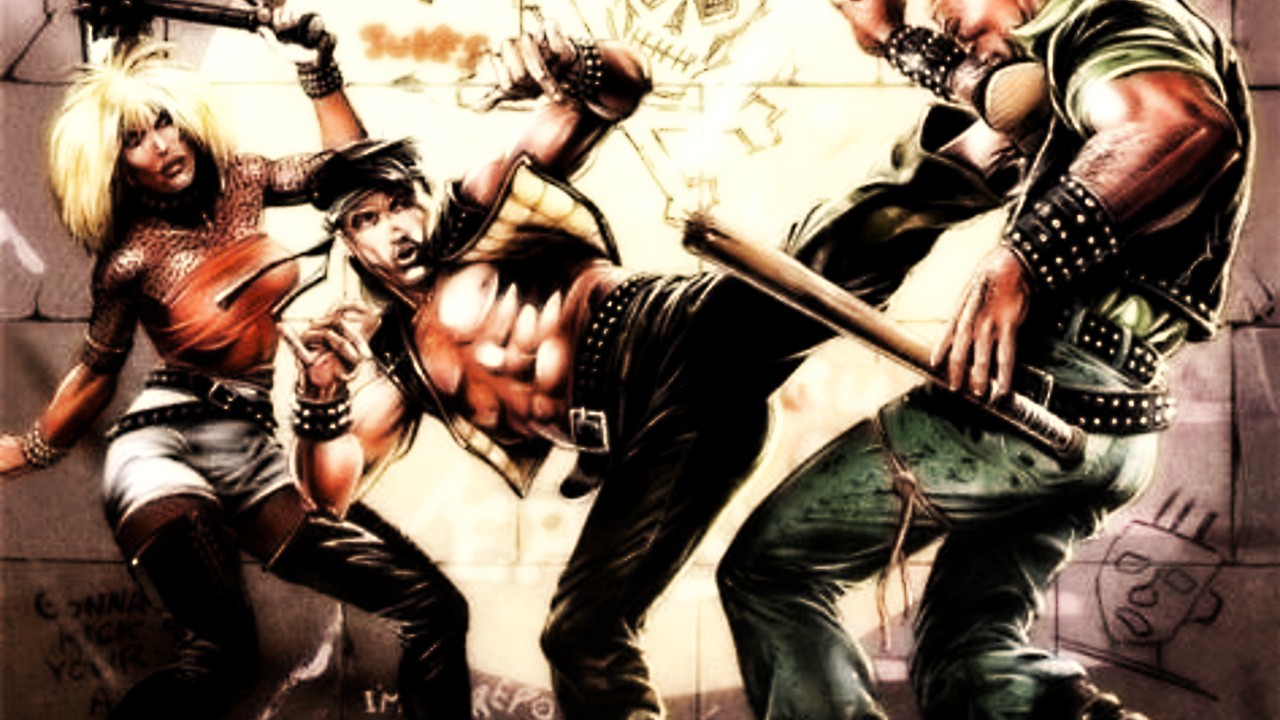
Hamster will be re-releasing Yoshihisa Kishimoto’s iconic beat-’em-up Renegade this upcoming Thursday. Released at the arcades one year prior to 1987 classic Double Dragon, Kunio’s debut adventure first won the hearts of Japanese gamers when it was originally released as Nekketsu Kouha Kunio-kun (translated as ‘Hot-Blooded Tough Guy Kunio’). It was then extensively reskinned for western audiences and eventually ported to virtually every 8-bit home format where if gained even more of a cult following.
Thanks to a very low-key Nico Nico broadcast during E3, we also know that the next two (non-Neo Geo) Arcade Archives to hit the Switch will be a shmup double header featuring 1986’s Argus from Jaleco and 1989’s Omega Fighter by NMK. No given date for these two, except that they’re both due to arrive sometime in the summer.
Looking forward to expanding your virtual Switch arcade salon with any of these titles? Did you play any of them back in the day? Send your nostalgic comments below…
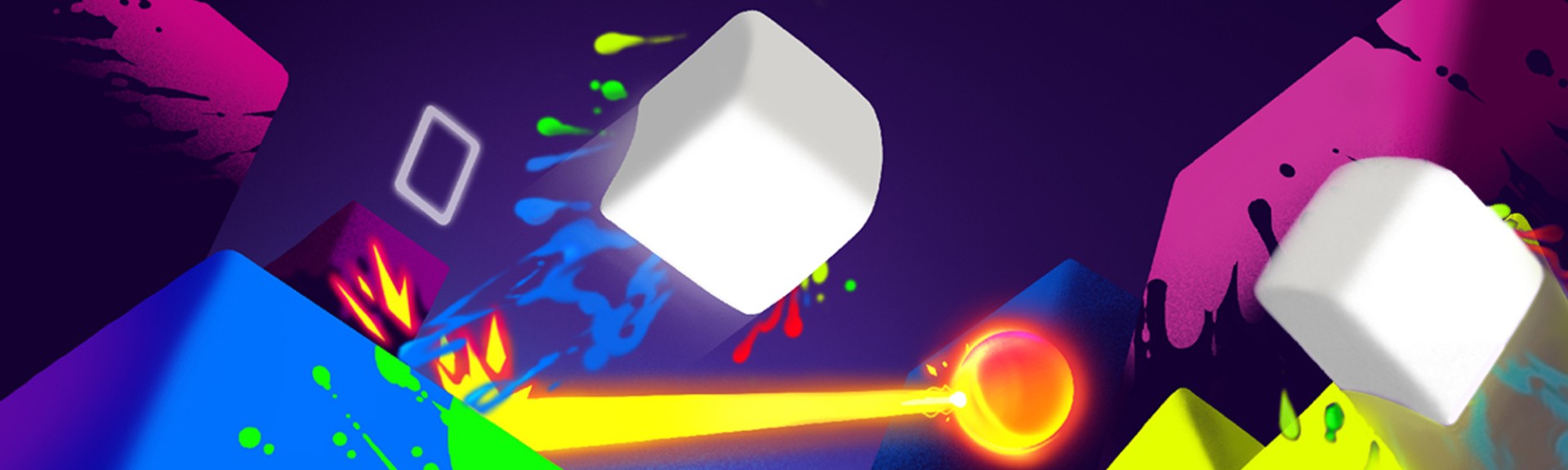
Don’t let the colourful palette in INK deceive you, as friendly as it might look, this is a game – originally released in 2015 – inspired by fast-paced and challenging platform titles such as Super Meat Boy. With failure inevitable, it’s all about learning from your previous mistakes as you work your way through 75 levels and even take down the occasional boss.
To differentiate itself from its idol, each level in INK is invisible. In order to progress, the blocky protagonist must paint the walls and floors every colour of the rainbow by splashing and sliding about. Similar to Meat Boy, the inanimate block you control in this title is adept at double-jumping and wall sliding. It’s these two manoeuvres that must be flawlessly executed on a regular basis if you hope to succeed.
The first few levels teach you how to jump and move. From here on out, you’re on your own as the difficulty is slowly increased. At the start, you’ll simply be moving from point A to B to access a portal, and then in the next level you might be required to wall jump upwards to a ledge in a high location. Eventually, enemies and other dangers including spikes, flying triangles and moving platforms are implemented. These additional hazards are likely to stall you from completing a level for up to minutes at a time until you can finally nail your run. Often you’ll be required to defeat every enemy in sight just to activate a portal.
There’s a sense of challenge in each level, and at the same time, you never feel as if the task at hand is completely impossible. As well balanced as it is, it’s not quite as difficult as certain other games of this variety, and will only take a maximum of a handful of hours to complete. The controls do an adequate job supporting the demands of each level, but lack precision compared to the top echelon of platformers already available. The game’s performance in both docked and handheld modes is also smooth enough; ensuring technical issues don’t hamper runs.
With no penalty in place but having to restart a level, the best way to find your bearings in each stage is to jump around with the blocky hero while mashing the button to fling paint. Doing this will reveal the boundaries within the surrounding vicinity. This is about the only strategy required. The more you fail, the more paint you spray in all directions, essentially making the level easier to navigate on the next go. Changing the pace is the inclusion of boss-like enemies. These battles compare to traditional boss encounters you will have no doubt experienced in other platform titles before. For additional thrills, there’s a timer you can activate if you want to put your speed running skills to the test and a local two-player mode – exclusive to the Switch version of the game – means you play through levels with a friend.
The visual presentation in INK is its most eye-catching aspect. It’s not just there for the sake of it since it directly contributes to the gameplay mechanics in each level. Beyond this, it falls short with an inability to illustrate any greater meaning or themes, which you might expect a game like this to exude – not that this is necessarily a problem. Regardless of this, the soundtrack still goes well with the art style, even if it is mostly comprised of ambient noises magnifying the splash of paint.
Conclusion
Replace the blood and brutality of Super Meat Boy with paint, add invisible levels and marginally tone down the difficulty, and what you have is INK. The practical use of the featured art style is a novel idea, but somehow the title still lacks a distinctive sense of character – even with all the vivid colours on display. What’s left is a streamlined but more basic fast-paced platform game that does a competent job recreating the same types of experiences we’ve seen in the past, requiring twitch-like reflexes and pinpoint accuracy.
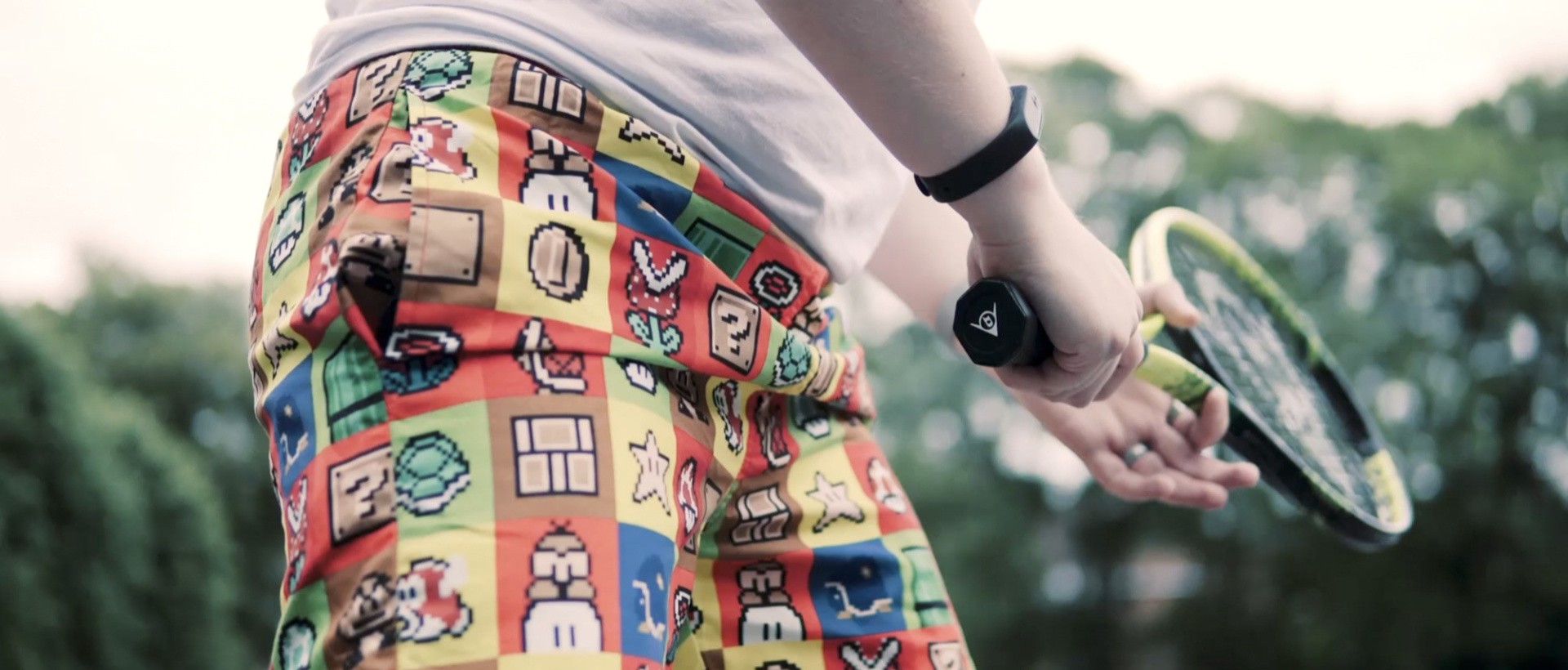
Mario Tennis Aces is a little bit of all right in our eyes, which you’ll know if read or watched our review, so when Nintendo UK asked to make some videos that are distinctly related, we thought that was a fairly marvellous idea.
So as you can probably see, we’ve compiled all three videos below for your viewing entertainment. We’re personally very chuffed with the introduction to the Swing Mode video, so if you only watch one of them for some mad reason, make sure it’s that one.
Up first we’re looking at the story, and to make sure it’s all spoiler-free and delicious, we’re only going to be taking you through the introduction of the story, because yes, there’s a real, ludicrous plot tied to it. And we love it.
Secondly we’re going to take it up just a smidgen with some quick tips to help you get an edge in-game. There’s five of them to chew through, but they’re genuinely handy if you find yourself stuck in Adventure Mode or being repeatedly pummelled online.
And lastly, the Wii Sports-reminiscent Swing Mode. If your memories of Wii Sports Tennis is of just waggling the controller from a comfortable seat on the sofa, this will be a bit of a shock. As technology has improved, so have motion controls, and this is probably one of the hardest game modes to get to grips with as it relies almost entirely on real-life tennis structure and mechanics.
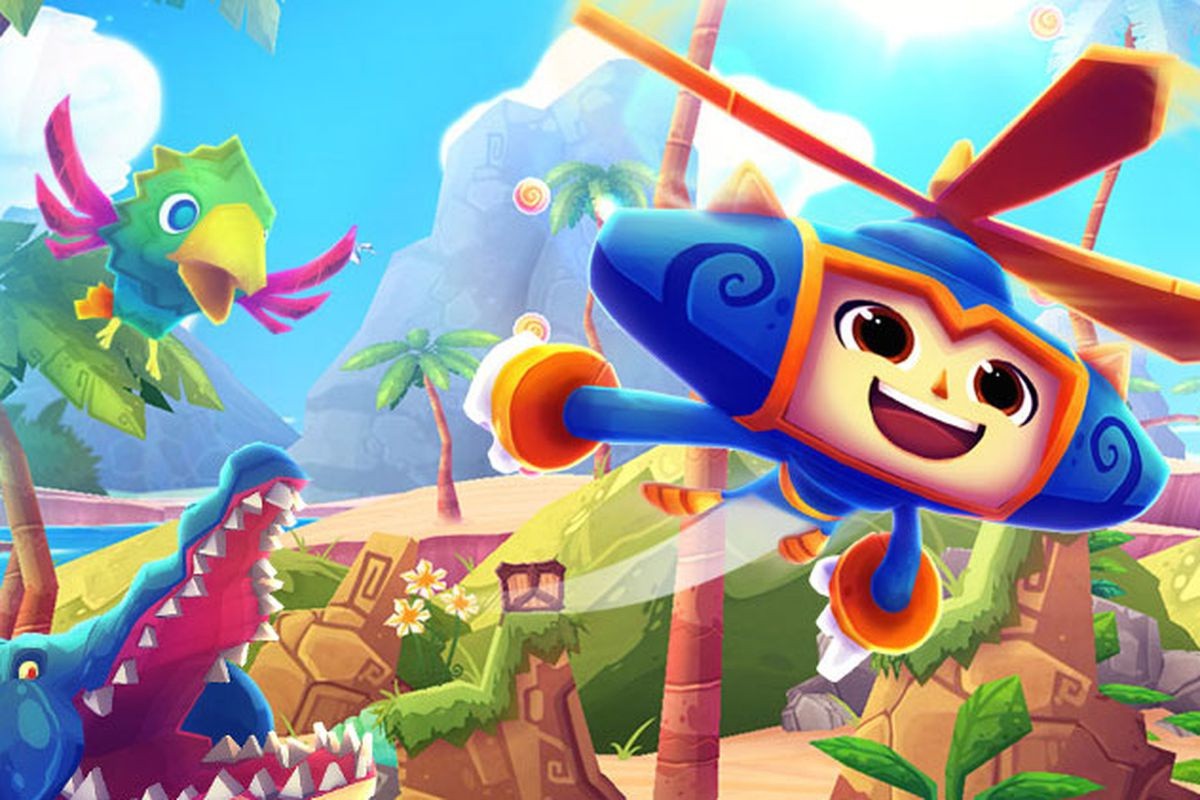
Picomy has announced that its 2015 adventure platformer Heroki will arrive on Nintendo Switch next month.
Originally published on iOS, Heroki sees players flying headfirst into an award-winning action adventure, tasked with saving a whimsical world full of flight and fantasy. Players must master the wind to fly, freefall, dash, and bash their way across the game’s sky-islands, jungles, seas, and deserts.
The developers have stated that this is “the best version of Heroki on any platform”, perhaps thanks in part to some of the Switch’s unique features like HD Rumble. You can check out a full feature list below.
FEATURES: – 10+ hours of deep gameplay – Fly, freefall and fight, with the help of the wind and a propeller – Master new skills such as powerful Dash and Bash attacks or use the power of Wind to solve puzzles – Spawn many Power-ups such as a Shield, Hourglass, Aeroblade and more – Find hidden treasures and collect many items – Explore four stunning worlds – Meet and befriend a cast of friendly characters – Face dozens of unique enemies and prepare for an epic boss battle – Discover a host of islands within your village to play mini-games and side-quests to earn special rewards – 60FPS Full HD performance – HD Rumble
The game is scheduled to launch on 20th July, but a pre-purchase option will be available from 30th June. This pre-purchase will have a limited-time 30% discount, hacking down the game’s usual $9.99 price point.
Do you like what you see from the trailer above? Are you tempted by the pre-purchase discount? Let us know your initial impressions with a comment down below.