Posted on Leave a comment

Choose Your Own Adventure In The Deadly World Of Midnight Caravan On Switch

Nintendo Switch is getting a new choose your own adventure title, and it’s certainly going for a more adult theme than your usual interactive adventure. Midnight Caravan comes from developer Gamera Interactive and sees you tasked with leading a caravan across the rolling hills of Italy, as you rub shoulders with miscreants, outcasts and other unsavoury characters.

You’ll need to choose your allies wisely with betrayals and double-crosses a-plenty, as well as managing resources as your troupe travels across the Italian peninsula. It’s also got a Game of Thrones-approach to nudity, so watch the trailer below with caution. 

So what do you make of Midnight Caravan? It’s certainly happy to *ahem* show off its assets. Share your thoughts on it below…

Posted on Leave a comment

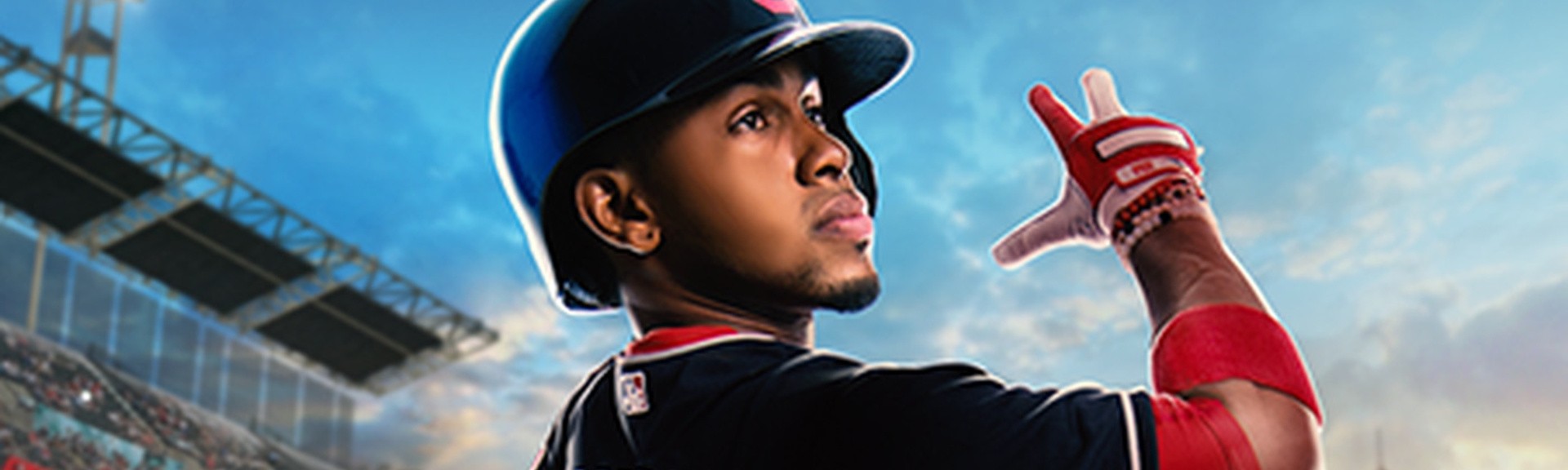
Review: R.B.I. Baseball 18 (Switch)

R.B.I. Baseball 18 is the second title in the series to be released on the Nintendo Switch. Last year’s title was lambasted with negative reviews across the board, and if you’re hoping for better this time around then, unfortunately, we are going to have to let you down gently. There was so much chatter around R.B.I. 18 prior to release. Talk of a graphics overhaul, a new development team, new gameplay modes, new features and so on, but in reality, such talk has sadly proved itself to be cheap.

The problems start almost immediately with the sheer agony of the loading times. Load times, in general, are both plentiful and woeful. And it doesn’t get much better from there. Even while navigating around menus there is an overwhelming sense of lethargy. Menus feel a little sluggish to navigate, cycling teams and uniforms sometimes leads to a delay in players and uniforms appearing. It just doesn’t feel one hundred percent smooth. It’s certainly not enough to make you chuck the game on the fire straight away but first impressions and all that…

So what’s on offer? Well, you can enter a straightforward exhibition game. Quick and easy if you just fancy a no strings game of baseball. A full franchise mode is available with the option of playing a full or partial season roster along with a Post Season mode too. One feature of significance is the ability to draft in pre and post 1990 superstars. There is also a new Home Run Derby mode, a precursor to the annual MLB All-Star Game. Pick from a small roster of top sluggers and proceed to smash as many balls as you can out of the ballpark within four minutes. Alas, online matches and leaderboards are missing in the Switch version, though it is entirely possible an update could arrive once Nintendo’s online service launches.

There is a good deal of mileage to be had out of the Home Run Derby at first. It’s not only fun to just sit and slug homers all day, but you could also use it as batting practice seeing as the game lacks such a feature. Smashing comets out of the ballpark quickly becomes tedious, and the longer you play the more it feels as though rounds are rigged. A good 99 times out of 100 you’ll likely knock out between 11 and 14 home runs within the time limit. It always seems to follow a pattern of finding your feet, hitting a rake of balls out of the park and then missing loads of bankers before hitting a slew of jacks before the time runs out. This seems to be the same process over and over again. Maybe it is coincidence or just a lack of skill, try it and judge for yourself.

Lack of online play hurts because there is a lot of fun to be had playing nine innings with a friend or a randomer, but R.B.I. Baseball 18 keeps you locked firmly into the solo experience. Neither has there been any opportunity taken to have some fun with the controls. No motion control means no chance of doing your best pitching stance and firing a Joy-Con straight out the window.

Visually the game is a disappointment. Not just with bland, basic visuals, but with an inexplicable omission. In the PS4 version, crowd animations resemble a shoal of sardines not unlike something you’d see on an episode of Blue Planet. In the Switch version? Nothing. Zilch. Zip. It begs the question why this was left out. Stadiums are left dull and boring, crowds are static and lifeless. Player visuals are also poor and ill-defined. Gameplay adds to the list of negatives. You are limited to two types of pitches and with regards to batting, you can either swing for your life or play a snide bunt. That’s it.

Choosing to field unassisted will lead to a very frustrating experience, with many a dropped ball that you would swear blind you actually caught. Finding the outfielder in your formation is about 97 miles away from where they should be standing quickly become infuriating. Batting isn’t much better and appears to present a steep difficulty curve in your successfully producing a quality hit. Chasing every ball is not how you play baseball, granted, however, very few players will bother to try to master batting we imagine.

R.B.I. Baseball 18 is a game that suffers greatly from not knowing what it wants to be. If you want an all-in-one baseball experience on today’s platforms, go buy a PS4 and a copy of MLB The Show 18 and be happy. This game is an attempt at both a retro arcade slugger and a half-hearted simulation yet the mix is so volatile it borders on imploding entirely. In short, it’s a huge letdown. This is the official MLB licensed video game for crying out loud. Switch owners deserve better. Yes, there’s MLB The Show, but this is a Nintendo console. Give us something proper, something enjoyable, something gamers have longed for and deserve. Powerful Pro Yakyuu made it to the 3DS, what about the Switch?

Conclusion

R.B.I. Baseball 18 is another disappointing baseball ‘simulation’ on Switch. If you want a solid baseball experience on the Switch, you could do worse than Super Baseball 2020. Failing that, go buy a PS4 and MLB The Show 18 and be happy the rest of your life. On today’s platforms, Sony San Diego has it sewn up and this is not going to change any time soon.

Posted on Leave a comment

Cat Quest Is Getting A Retail Edition This September On Nintendo Switch

Cat Quest, with its cute yet challenging world of RPG mechanics and sword-wielding felines, has already left some memorable claw marks on the Nintendo Switch eShop, and now it’s preparing to do the same for retail shelves the world over.

Publisher PQube has confirmed the action-RPG will be getting a physical release on 7th September in Europe and on 11th September in North America. So if you’ve missed out on this 2D hack ‘n’ slasher in digital form (or you’re a collector) you can pick up a copy on a game card in a few of months time.

Have you played Cat Quest? Does a physical edition make a game more of an attractive prospect, or is the usual bigger price tag an issue?

Posted on Leave a comment

Fortnite’s ‘Playground’ Mode Is Imminent, Set To Offer A Very Different Way To Play

Battle Royale phenomenon Fortnite is about to receive a rather significant update in the form of a new game mode called ‘Playground’, allowing players to roam around freely in a creative setting, rather than the standard 1 vs 100 fight to the death.

The mode was initially teased by Epic a few weeks ago in a blog post (which you can see below), and could arguably be the start of the biggest change the game has seen since the introduction of the Battle Royale mode we all know today. Playground is a creative mode that ditches the usual focus of securing a Victory Royale, instead allowing you to practice your strategies, build as you see fit, play casually with friends, and crucially immediately respawn after death, taking away all of the pressures present in the main game.

“The Playground LTM will load you into the Battle Royale Map with some adjusted settings.
 
Battle and build to your heart’s content with an extended period of time to roam around the map as well as increased resource generation. All treasure chests and ammo crates will be spawned, try droppin’ in different spots and scope out the loot. Friendly fire is on so you can scrimmage with your squad (up to 4 friends per match), but fear not you’ll respawn immediately.”

It seems like a perfect fit for newcomers to the game on Switch; without the Save the World mode available on other platforms, the Switch version of the game currently has no way for players to practice or even learn what the game’s all about without jumping headfirst into a field of experienced players. This could be the perfect way for new players to get used to the controls and see what’s possible before taking on the main course.

A limited-time version of the mode has appeared in-game on Fortnite’s news board, hinting that it’s “coming soon”; when an announcement is made here, we usually see that content arrive during the next scheduled update (which should be tomorrow, 26th June). This limited-time trial is expected to act as a test for a full mode in the future, potentially becoming a major, permanent fixture of the game.

We can already imagine the mayhem being shared online, with users building crazy structures, creating their own games within the mode, and possibly even using the game’s environment in ways we haven’t seen before.

Have you been enjoying Fortnite on Switch? Would you welcome a more sandbox-like mode to learn the ins and outs of everything you can do in-game? Let us know down below.

Posted on Leave a comment

Yoshi For Nintendo Switch “Making Really Good Progress” Despite E3 No-Show

Nintendo’s 2018 E3 presentation left a lot of unanswered questions regarding games that were expected to be explored; with a huge focus on Super Smash Bros. Ultimate, and a little on Pokémon: Let’s Go, Pikachu! and Let’s Go, Eevee!, no time was left over for any news on the likes of Metroid Prime 4, the upcoming Pokémon RPG, or Yoshi for Nintendo Switch.

Soon after the E3 Direct, the upcoming Yoshi title’s game page on Nintendo’s website hinted at a delay to 2019, with Nintendo of America’s Bill Trinen going on to confirm that this is indeed the case. Trinen has now gone into a little more detail surrounding the game’s delay and non-appearance at the show, telling IGN that it’s been making some good progress behind the scenes.

“It’s actually been making really good progress. They decided they wanted to make some improvements, so they’re going to take just a little bit more time on it and that’s why we’re not showing it this year at the show, but I think you can look forward to some updates on it later in 2018.”

As always, all that’s left for us to do is play the waiting game, hoping to see more of Yoshi later this year as suggested. Despite delays being upsetting at first, having additional time for a major project such as this is almost always a good thing; if the wait means we’ll see a higher quality end result, we’re all for it.

Are you looking forward to the next Yoshi adventure? Let us know if you plan to keep an eye out for this one with a comment below.

Posted on Leave a comment

Digital Eclipse Tackles SNK Rotary Joystick Emulation Challenge

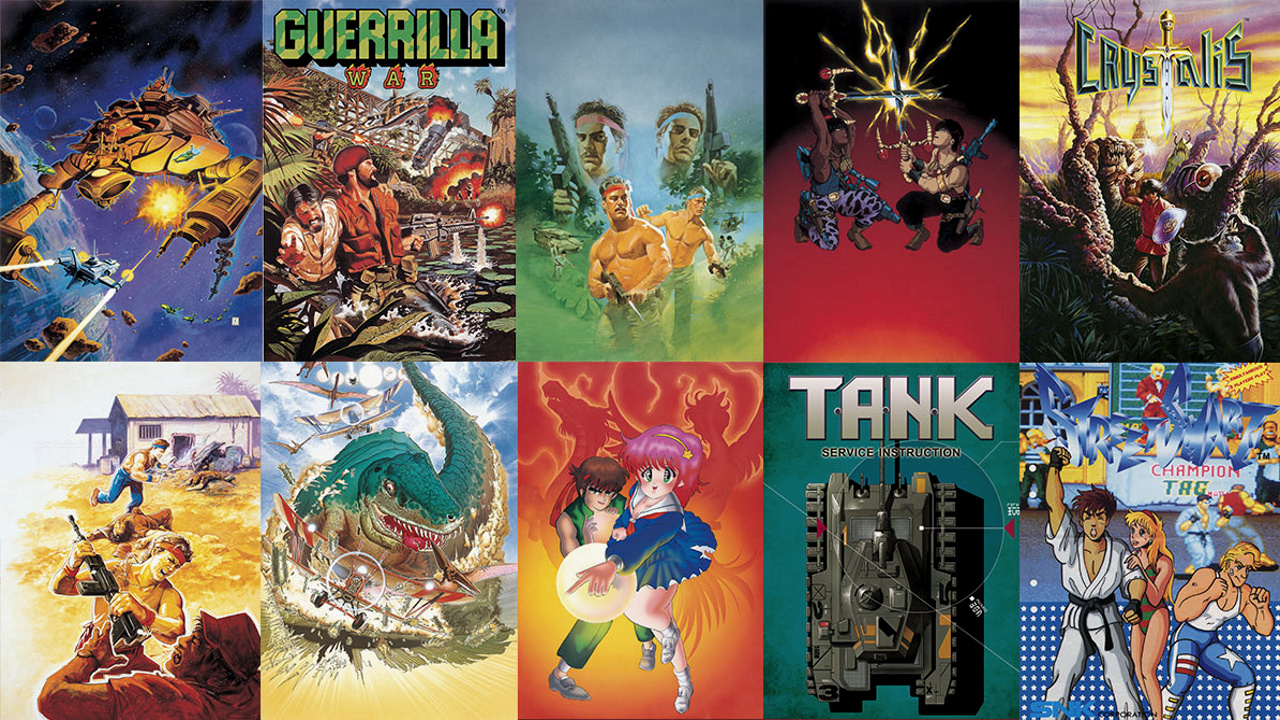
Capcom and SNK’s rivalry actually began a number of years before Street Fighter II and Fatal Fury arrived in the arcades. The “Look, we can do it too!” back-and-forth exchange translated into several classic hits from both sides, including Capcom’s 1985 Senjō no Ōkami (better known in the West as Commando) and SNK’s Ikari Warriors in the following year. While both titles went on to become revered run-and-gun classics, there was a small yet brilliant twist that failed to be translated to the home conversions of SNK’s title: The rotary joysticks!

While in Capcom’s Commando you were always forced to fire in the direction you were moving (often into an incoming line of enemy fire), on Ikari Warriors (and a few other games that will be a part of the upcoming SNK 40th Anniversary Collection) the cabinets came with rotary joysticks which allowed the players to move and aim in distinct directions simply by twisting the handle left or right.

As you probably have figured out by now, since the sticks on your Joy-Cons and Pro Controllers can’t be twisted, this particular aspect has always been a bit of a hassle to properly emulate in the past. However, Digital Eclipse has now found a solution around this issue. The news were delivered by The Video Game History Foundation owner, Frank Cifaldi, on Twitter:

I wanted to show off something I’m incredibly proud of: we managed to force all the rotary games to work as twin stick. Let me explain how cool this is: pic.twitter.com/GnzwhVgYRH— Frank Cifaldi (@frankcifaldi) June 21, 2018

By mapping firing directions to the right analog stick, the classic SNK titles that used rotary sticks will now become full-fledged twin-stick shooters. This will surely make them an easier experience than the original arcade counterparts. It’s a far better option than simply assigning extra digital buttons to twist your avatar left and right.

What do you think about this modernised take on classic SNK games? Are you looking forward to picking up SNK’s 40th Anniversary Collection when it releases on the Switch later this year? Leave your twisted replies below.

Posted on Leave a comment

Nintendo reveals Nintendo Labo functionality for Mario Kart 8 Deluxe, plus a playful new contest

Nintendo reveals Nintendo Labo functionality for Mario Kart 8 Deluxe, plus a playful new contest

3 … 2 … 1 … Nintendo Labo! Starting today, a free software update is available for the Mario Kart 8 Deluxe game for the Nintendo Switch system, allowing you to use the Toy-Con Motorbike from the Nintendo Labo: Variety Kit to control your in-game vehicles. Enjoy every game mode and every vehicle type with this immersive, interactive controller option that makes you feel like you’re really in the driver’s seat! Click here to view a preview video of the new feature.

But that’s not the only exciting news for Nintendo Labo owners this week! Nintendo is happy to announce the categories for the second Nintendo Labo Creators Contest*: “Best Gaming Experience using Toy-Con Garage” and “Best Toy-Con Musical Instrument.”

Fans who submit creations to either of these contests have the opportunity to win some cool limited-edition prizes, including a specially designed, collectible cardboard-inspired Nintendo Switch system! Fans in the U.S. or Canada (excluding Quebec) who are 13 years old or older can enter their creations in the Nintendo Labo Creators Contest No. 2. Learn more about the contest and upload your submissions here: https://labo.nintendo.com/share/#!/contest/.

After downloading the update for Mario Kart 8 Deluxe, simply select the “Nintendo Labo” icon on the game’s title screen to access a menu where you can select Toy-Con as the control type. When racing, turning the handlebars changes direction, twisting the right handlebar accelerates, and the various Joy-Con buttons are used for items, brakes and drifting. Up to four players can play at the same time with Toy-Con Motorbike with their own Toy-Con and Joy-Con controllers. (Nintendo Labo kits and additional Joy-Con are sold separately. Toy-Con Motorbike is part of the Nintendo Labo: Variety Kit.)

Mario Kart 8 Deluxe is the first game outside of Nintendo Labo software to receive Toy-Con support, and more titles will be compatible with Nintendo Labo in the future.

For more information about Mario Kart 8 Deluxe, visit https://mariokart8.nintendo.com/. For more information about Nintendo Labo, visit https://labo.nintendo.com/.

*Void where prohibited. Open to legal residents of the U.S. and Canada (excluding Quebec), ages 13+. Nintendo Switch system and Nintendo Labo kit required. Contest begins 11AM PT on 7/19/18 and ends at 10:59AM PT on 8/20/18. To enter, upload a video of your Toy-Con creation or invention as detailed in the Official Rules. 2 Grand Prize winners will each receive one (1) collectible Nintendo Switch system (ARV: $ $1,000 USD), one (1) Nintendo Labo Creators Jacket (ARV: $ 70.00 USD), and one (1) award certificate (ARV: $ 70.00 USD). 8 Runner-Up winners will each receive one (1) collectible pair of Joy-Con controllers, one (1) Nintendo Labo Creators Jacket (ARV: $ 70.00 USD), and one (1) award certificate (ARV: $ 70.00 USD). Total ARV of all prizes: $3,640 USD. Chances of winning a prize depend on eligibility and quality of entries received, and how well each meets the judging criteria. Details and restrictions apply. For Official Rules, visit https://labo.nintendo.com/share/#!/contest-rules/. Sponsor: Nintendo of America Inc.

Posted on Leave a comment

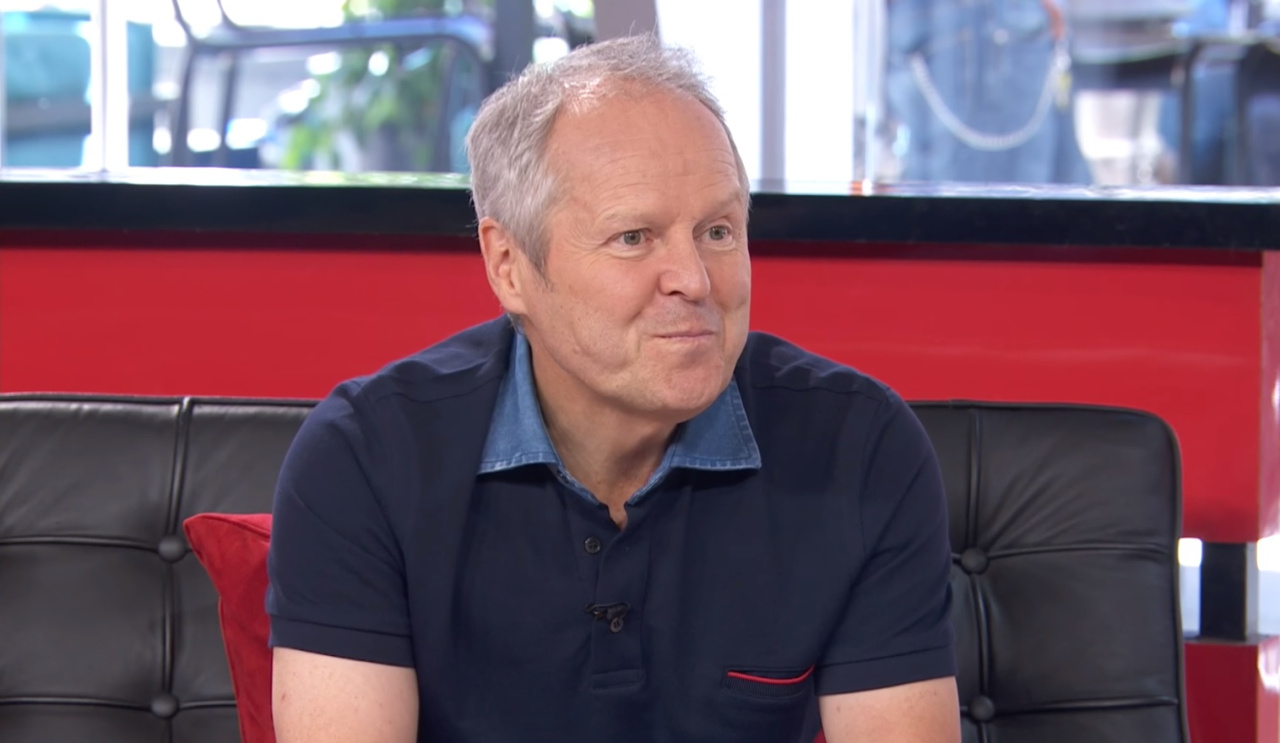
Ubisoft’s CEO Shares Views On Partnership With Nintendo And State Of The Video Game Industry

When Geoff Keighley interviewed Ubisoft CEO, Yves Guillemot, at this year’s E3, the pair spoke about an array of topics ranging from the current state of the video game industry to the French publisher’s recent collaborations with Nintendo.

In response to a question about the state of the industry, Guillemot noted the recent developments, including the release of Nintendo’s Switch, and said the future looked promising for Ubisoft because of such hardware:

It’s changing, it’s becoming more worldwide as well…the fact that Nintendo came with mobility with the Switch…it’s giving all the publishers in our capital cities the abilities, finances actually, to create better games…it’s a booming industry today.

When queried about free-to-play models, Guillemot explained the use of it was dependant on what was best for the experience:

Some of those games will use those roots, but the goal is to actually have a bit diversity in the portfolio, we can use the best approach for the experience.

On the subject of the “relationship” with Nintendo, including guidance from Shigeru Miyamoto, the CEO of Ubisoft said games such as Starlink: Battle for Atlas was a great example of the blossoming partnership with the Japanese company as well as the glowing relations with Mario’s creator. 

Yes, we are big fans of Mr Miyamoto, in the last 30 years we’ve been looking at what he was doing and learned a lot from him. Being able to approach him and his team, is really something that is a wonderful experience for all the teams at Ubisoft, they love to collaborate and learn from him.

Lastly was a question about what Ubisoft franchises could potentially be adapted to Nintendo’s latest device. Guillemot avoided naming any specific games and instead explained how various factors were taken into consideration during this process:

We need to make sure the brands are well adapted to the machine, and that they will fit with the public as well, when we decide to go on the machine we take into consideration those elements and also the capacity of the machine.

What do you think about Yves Guillemot’s views on the industry? How do you feel about Ubisoft collaborating with Nintendo? Tell us in the comments section. 

Posted on Leave a comment

Splatoon 2 Returns To Top Of Japanese Gaming Charts 48 Weeks After Launch

There’s no denying the fact Splatoon has become one of Nintendo’s most marketable modern IP. The first and now second game in the series has paved the way for a bright future. Even in the short time frame of their existence, the inklings have made a surprise cameo in Mario Kart 8 Deluxe and were recently added to the Super Smash Bros. Ultimate roster as official fighters. 

With all this in consideration, the latest data reinforces just how successful the new squids on the block have become, with the second game in the series, Splatoon 2, returning the top of the Japanese gaming charts, last week, after a 48-week absence. It’s likely linked to the recent release of the lovely Octo Expansion, perhaps illustrating how effective DLC can be sales-wise when done right. If this doesn’t blow your mind, this is the longest time on record since a game has returned to the top spot since the original Pokémon titles did it back in 1997 – exactly 89 weeks after launch.

According to Game Data Library, Splatoon 2 is estimated to sell more than a million units in Japan over the course of 2018, with its total sales expected to be closer to 4 million by the end of the year.

Are you still playing your copy of Splatoon 2? Have you tried out the new Octo Expansion yet? Tell us in the comments. 

Posted on Leave a comment

Feature: Chronicling The Legend Of Zelda With Dark Horse Comics

When it comes to breaking down world-building and exploring lore, few games offer as much character and exposition as the wonderful world of The Legend of Zelda. Thanks to a fruitful ongoing collaboration with Nintendo, North American comics/book publisher Dark Horse Comics has been producing all manner of glossy hardcovers on the series, including many other Nintendo franchises. 

From Hyrule Historia to the upcoming title based on The Legend of Zelda: Breath of the Wild, it’s a partnership that’s only going to get more exciting. Nintendo Life had the opportunity to sit down with editor Patrick Thorpe to explore the vaults and gain an insight into how Nintendo’s properties are getting a new lease of life in book form…

So can you list which books you have worked on over at Dark Horse, including all Nintendo related titles?

Oof. I don’t know that I could ever give you a comprehensive list of all the books I’ve ever worked on at Dark Horse. I’ve been lucky enough to have worked on thousands of comics in my ten years at Dark Horse. There is a website that tracks that kind of thing, but I haven’t even tried. More specifically, I’ve worked on a number of video game comics from Tomb Raider to Dragon Age, among others.

More recently, I’ve shifted focus from comic books to art books. I’ve done The Legend of Zelda: Hyrule Historia, The Legend of Zelda: Art & Artifacts, The Legend of Zelda: Encyclopedia, The Legend of Zelda Breath of the Wild: Creating a Champion (upcoming), The Art of Splatoon, The Art of Fire Emblem Awakening, The Art of Mirror’s Edge: Catalyst, and Go Team Venture!: The Art and Making of the Venture Bros. (upcoming). I’m also developing a number of books that haven’t been announced yet.

Nintendo and Dark Horse’s collaboration is a relatively new partnership. It seems to have been an extremely successful one. Can you give us the insider story of how it all got started?

A lot of it had to do with timing. I’ve been a huge Nintendo fan for my entire life and noticed that they were not doing much in the way of published materials. We had just recently had some success with video game related comics with Mass Effect, and, more importantly, art books. Samantha Robertson, a former Dark Horse editor who now works in Nintendo’s Treehouse division, had created an art book for the Art of Avatar: The Last Airbender. It was this big, beautiful 9 x 12 coffee table book of really high quality that would become the template for our whole art book line.

We then did The Art of Alice: Madness Returns and had a book called The Art of the Mass Effect Universe book in the works. It was really obvious that we were on to something really fun and interesting. People really responded to these books. Calling them art books might be a bit of a misnomer because they all include behind the scenes information and development materials. They feature a lot of beautiful artwork, but they’re also ‘making of’ books.

So in 2011, I tracked down Nintendo’s booth at San Diego Comic Con and met Seth McMahill. We exchanged cards and he put me in contact with Cammy Budd who was Nintendo’s senior third-party marketing manager. She asked me what a partnership with Nintendo might look like. I knew that the 25th anniversary of the Legend of Zelda was coming up, so I pitched her on a book that would be a retrospective look at the whole series. Initially, she told me that she wasn’t sure that they’d have the resources available to support such an endeavor, which is totally reasonable, these are incredibly time intensive to make.

A month or so later, she contacted me again saying that she had talked to NCL and that they were in talks with another company, which I later learned was Shogakukan, who was developing a book very similar to that in Japan. They obviously weren’t going to do two books, but asked if we were interested in doing a localisation of that book. After bringing in Dark Horse’s licensing guru Nick McWhorter, we worked out the details and were off and running. Hyrule Historia hit my desk shortly after that.

How many copies of Hyrule Historia have been sold?

I don’t know the exact number of how many copies Hyrule Historia has sold to date, but I believe it’s around 900,000 copies at this point.

I’m interested in hearing more about your workflow. A lot of people are involved in the page layouts, so how does all this artwork cohesively get sorted onto your pages?

Shogakukan and Ambit did the sorting for Hyrule Historia and the other three Zelda books respectively, so I can’t speak to their process, though I know they had heavy cooperation from the fine people at Nintendo. There were mountains of materials for Breath of the Wild, for example. But I can speak to the more general aspects of organising these books from the ground up. You do it in the way that makes the most logical sense.

For video game retrospective books, I generally like to organise chronologically by release. For cartoons, I organise by season and break those down by episode. The key is to find your narrative. You want to show through the artwork and captions the whole process in a linear way. You are telling a story. For all four of the Zelda books, Cary Grazzini has been my partner in that. He’s handled the design since Hyrule Historia and he was the one that gave us that iconic green and gold cover.

Yeah, let’s talk about that! Beginning with Arts & Artifacts and going into Encyclopedia, your team has come up with some gorgeous special edition versions of the titles. Where did that idea come from? Who designed those covers?

This is one of my favorite topics. After the success of Hyrule Historia, Cary and I were able to play with every toy in the toy box, so to speak. Cary, our print director Vanessa Todd-Holmes, and I would sit and hash out ideas. Cary came up with the Master Sword special edition for Art & Artifacts. His logic was that this book heavily featured the artifacts from each of the games, and what artifact is more precious or central to the games than the Master Sword? 

We came up with all kinds of plans for it from trying to house it inside a pedestal to the design we eventually landed on. Vanessa suggested the 3D embossing so that it was not just raised but also shaped like a sword. We had just done another book with a clear acetate sleeve, so we knew we could print a sheath on it. Cary made sure that the sword was made to scale so that it felt like you were drawing the Master Sword yourself. That was a fun one.

I came up with the gold cartridge cover idea a long time ago. We were possibly going to do another edition of Hyrule Historia and I couldn’t figure out what color to make the cover. A good friend of mine Jim Gibbons took one look at me and said, “gold,” as though it were the most obvious thing in the world. And I was like, “Oh, right! Of course!”

Initially, we had mocked up a version that was metallic gold with a red Gate of Time symbol on the front just like Hyrule Historia. That didn’t look right to me, so I decided to lean into the gold origins and out of that sprang the gold cartridge cover. We even went as far to get a dummy version created for Hyrule Historia. We eventually decided not to do a new edition and I was afraid that idea would never see the light of day. When the Encyclopedia became a reality, I pushed hard for the gold cartridge cover and expanded it to include the dust sleeve and instruction booklet. The instruction booklet, by the way, was so much fun to write and for Cary to design. It’s a tongue-in-cheek love letter to the original game which we both love. Cary and I are such huge Zelda fans. 

Nintendo has quite a big vault. How has it been working with their asset team? Do you make the requests, or do they provide what they are willing to share? We’d love to know how that collaboration works, given how secret Nintendo can often keep their behind-the-scenes stuff.

Again, the assets for these were handled by the wonderful people over at Shogakukan and Ambit, but, for something that may be in development for the future, I can say that Nintendo did the organisation and provided the materials that they would like to see in the book. From there, you go back to them and ask for other pieces of art that best show the narrative you are trying to express. There is so much of it that not all of it can possibly fit in one book, so you have to pick representative pieces that give the most insight into the process, tell the story of the game’s creation, or are too stunning to pass up.

I believe your books are the first place Nintendo had officially confirmed the Zelda split timeline theory as canon. Can you describe how that came about?

The timeline was provided to us, so I do not know the inside story of its development and finalisation. But, boy, that was the most hotly anticipated and debated portions of Hyrule Historia. People still debate aspects of it. I love talking to fans about the timeline. There are some really, really brilliant fan theories out there that connect certain aspects of the game. Here’s a teaser. The Encyclopedia leans into the timeline and elucidates portions of it. The order of at least one of the video games has moved as well, based on some new information.

Have you heard any feedback from any of the original featured artists, especially from decades past?

I have not, unfortunately. I hope that they like our presentation of their artwork in our books. That’s extremely important to Shogakukan, Ambit, and Dark Horse. We have chosen the highest quality paper for printing and have tried to feature their artwork in the most aesthetically pleasing way that we can. When you’ve got artwork by Takizawa-san, Wada-san, or any of the brilliant artists over at Nintendo, you let it shine.

What is unique about The Legend of Zelda Encyclopedia compared to the first two titles? And can you say anything about the upcoming Breath of the Wild title?

The Legend of Zelda: Encyclopedia is by far the most content dense. I can’t even tell you how many hours that Cary, Ben Gelinas (our English language writer), and myself put into this book. Every page has hundreds of pieces of information. I can’t tell you how many things I fact checked for this book. I used every resource imaginable. This is less of an ‘art book’ as it is a straight ahead compendium.

It has plenty of art in it, but it’s dense with text as well. It does things like tracks the Triforce through the timeline, shows the relationships of characters to each other, etc. It also gives answers to questions fans have had for years like, “If the Rito evolved from the Zora, why did that happen in a game where Hyrule is covered in water?” I mean, it would seem counterintuitive that a water-based tribe would evolve in a water-based game like Wind Waker, but the answer is here in the book! The beauty about the first three books is that they complement each other. That’s why I decided to group them into the Goddess Collection and give them the colors of Farore, Din, and Nayru.

Hyrule Historia gives you the ‘making of’ portion of the first 25 years of games, Art & Artifacts gives you the art, and Encyclopedia gives you pure in-game information of the first 30 years. If you have all three, you have a pretty comprehensive look at the first 30 years of Zelda. By the way, it wasn’t by accident that we gave the Encyclopedia Nayru’s blue. She is the Goddess of Wisdom, after all.

As for Breath of the Wild: Creating a Champion, so far I can say it is a very art-heavy ‘making of’ book. It has a huge gallery dedicated to Takumi Wada-san’s illustration, 300 pages of designs, and a 50-page section dedicated to the lore of the game.

Finally, so far Dark Horse has published Zelda, Fire Emblem, Splatoon, and an upcoming Mario hardcover book. What can we expect in the future, and it’s a special edition Metroid book, isn’t it?

Ha! I believe that I’m on the record somewhere stating that developing Metroid books would be the ultimate dream project for me, so I appreciate your enthusiasm on that front. As far as what is currently being developed? You can certainly expect more from the Dark Horse/Nintendo partnership. As for what? I guess we’ll just have to wait and see.

We’d like to thank Patrick for his time. You can order The Legend of Zelda: Encyclopaedia from Amazon right here.