Damien has over a decade of professional writing experience under his belt, as well as a repulsively hairy belly. Rumours that he turned down a role in The Hobbit to work on Nintendo Life are, to the best of our knowledge, completely and utterly unfounded.
Artifex Mundi has announced My Brother Rabbit, a hand-painted point-and-click adventure that is headed to Switch later this year.
In this world of make-believe, a cute little rabbit wants to nurse his ill friend, a flower, back to health. To do so, he must use his wits to decipher point-and-click-style puzzles, discovering hidden objects and playing minigames along the way.
As it happens, this world truly is make-believe, as the story’s innocent children conjure up an increasingly curious land in what promises to be an emotional adventure – and a rather gorgeous looking one, too. Toy Rabbit is desperately trying to help Flower, all while visions of a much more scary reality creep through. We’ll let the official PR tell the tale:
“A picture-perfect, loving family discovers that their daughter has fallen ill. While her parents set out to get her the treatment she needs, her determined older brother turns to the power of imagination to help both of them cope. While the outside world offers tragedy, these pure children envision a fantastic, surreal world that provides the innocent fun they deserve.”
The game is scheduled to launch on Switch in Q3 2018, and we’re hopeful that the trailer’s emotional pull will be present in the full adventure. We’ll make sure to keep an eye out for more news on this one as we get nearer to release.
Do you like the look of this one? Does the child-like imagination setting appeal to you? Let us know if you’re intrigued by this one in the comments below.
Right from its opening cutscene, Figment isn’t afraid to get stuck in and tackle its hugely important and always centric theme of depression. Looming behind the bright colours and musical melodies seen on the surface, Figment’s plot and locations are buried deep within the human mind, telling a story of the difficulties faced when coping with the disease. The game handles the burden of dealing with this topic rather well, especially considering the vast potential for error or misjudgement that comes with it, and it’s one that we’re glad to have experienced.
Opening with a black screen, Figment’s soundtrack tells you that you’re a father absently speaking to your young child, blankly driving along until your car is involved in a crash. It’s a rather chilling opener, and one that evolves immediately into the very different world that can be seen in the screenshots on this page. You’re left to simply wonder what happened, before coming to the realisation that you’re now inside the man’s mind, running around as his emotions in a similar fashion to Disney Pixar’s ‘Inside Out’.
From here on out you’re tasked with exploring the inner workings of the mind as Dusty – the brain’s former voice of courage – solving puzzles to rid the demons within. The game is split up into three main chunks, granting you access to both the creative and logical sides of the brain before rising up to the consciousness, and each of these areas has its own aesthetic and level design theme.
These themes, at least from a sensory point of view, are fantastic; the creative side is full of music, silliness, and crazy designs, while the logical side literally runs like clockwork. The gameplay itself is a slightly more mixed affair, however, regardless of which area you’re in, with the puzzles somehow being extremely creative and annoyingly repetitive at the same time.
You see, almost every task revolves around the idea of finding batteries to power certain objects, and handles that can be used to manipulate them. As you get used to the game’s flow, you’ll start to find yourself thinking, “Right, a handle will definitely be needed for that,” and you’ll almost always be spot on with your assumptions. The way in which you stumble across these items can sometimes be incredibly clever, especially as you stumble into completely new areas, but the familiar nature does impact the enjoyment a little. The difficulty balance does work quite nicely from puzzle to puzzle, though, with the game never feeling too easy or too hard.
You’ll also be partaking in occasional doses of combat, with Dusty being able to swing a wooden sword at foes. The combat never really provides anything more than a quick hammering of the ‘Y’ button, and actually acts more as a way to split up the otherwise constant puzzles, but it’s when these two elements work together that the game really shines. During boss battles, which see you fighting away physical renditions of nightmares, you’ll need to keep on top of enemies that surround you while simultaneously working out how to get around. The puzzles alone aren’t quite as complex as the ones seen throughout the main adventure, but the excitement of the battle and combination of the two elements helps them to stand out as the most enjoyable moments of the game.
As we’ve already touched upon slightly, the artistic direction in Figment is truly beautiful; the muted colour palette acts a nice halfway point between the fun you’d expect to have playing a video game and the sombre tones of the game’s subject. The music is great, too, with the game’s ‘nightmare’ bosses singing humorous songs throughout that reminded us of the singing Phantom boss in Mario + Rabbids Kingdom Battle.
The characters are occasionally rather grating, however, and we initially found ourselves being almost too put off by NPC voices. You’ll find houses scattered around the mind, with a quick knock on the door allowing you to hear their thoughts, but the voice acting for these characters is so ridiculously over-the-top and barmy that we quickly stopped talking to them. The conversation between Dusty and your sidekick Piper is usually better, though, with healthy doses of puns and sarcasm leading you through what would have otherwise been a rather mundane adventure.
There are a few things that let Figment down, such as those we’ve already mentioned and the lack of an accessible world map to show you where certain locations are when needed, but the game is very well done on the whole. The pacing of the game’s first areas, which are full of humour and creativity while occasionally reminding you of the darker overtones, works really nicely to set you up for a slightly murkier finale. Perhaps most importantly, though, Figment manages to tackle that always looming topic of depression without pushing away those who might be sensitive to its plot; the characters are open and self-aware in how they speak and act, and the game does a good job of not shoving things in your face unnecessarily. It’s not quite a must-have experience, but it certainly takes a very decent stab at its goal.
Conclusion
Figment is an attractive, creative puzzler that explores the human mind’s inner demons very nicely indeed. The gameplay is good, if never revolutionary, with just a handful of downers being present in an otherwise solid experience. The game’s most creative moments – such as its boss battles – and the way in which it deals with its heavy subject matter are the real winners here, though, and should go a long way towards encouraging a purchase for those who are most interested.
Austrian developer Mipumi Games has announced that its critically-acclaimed narrative adventure series The Lion’s Song is coming to Nintendo Switch on 10th July.
Set in early 20th century Austria, The Lion’s Song is a series of four self-contained point-and-click adventures featuring a cast of fictional artists and scientists, each blessed with outstanding skills. Each chapter follows one of these exceptional minds, and players are tasked with helping them to overcome their intimate struggles.
The choices you make along the way have a direct impact on the storylines of other episodes, connecting the individual stories ofthe game into one overarching narrative. This release on Switch contains all four of the episodes in one package.
As mentioned above, the game is scheduled to release on 10th July and will be available directly from the Nintendo eShop for $9.99 / £9.99 / €9.99.
Are you a fan of point-and-click adventures? Let us know if this one’s going on your Switch game wishlist with a comment below.
Two years after Gate of Doom, Data East once again ventured dangerously close to a Dungeons & Dragons intellectual property infringement lawsuit. Wizard Fire (know as Dark Seal II in Japan) upped its game in the graphics department thanks to new hardware, but was it a better experience than its prequel? Let us crawl into this dungeon.
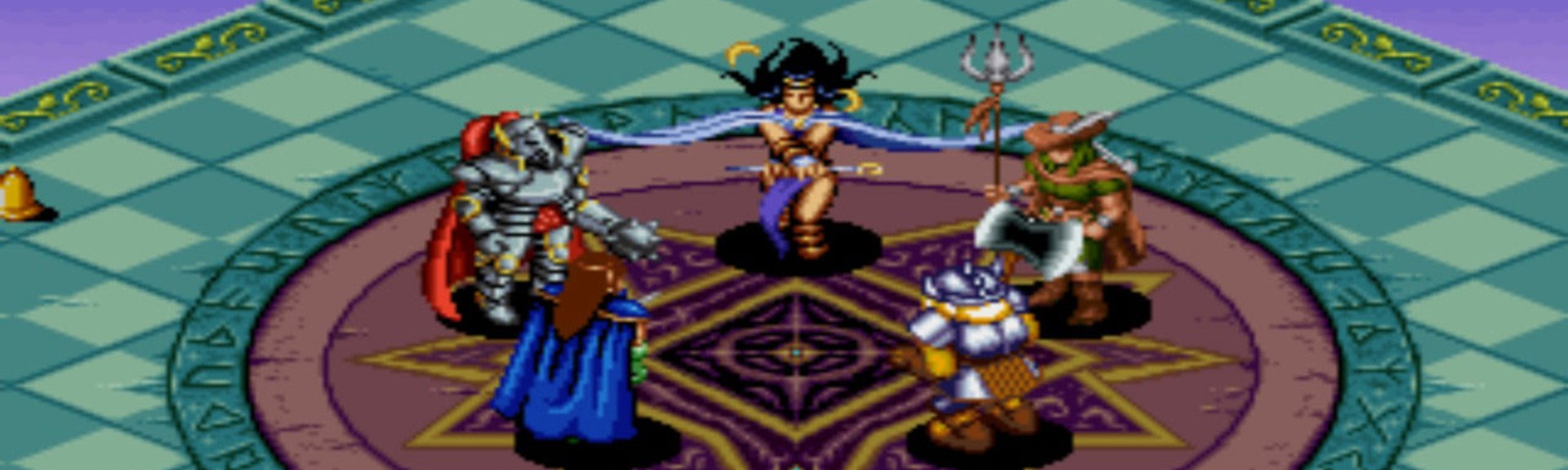
The first noticeable difference is in the playable roster. Carl F Greystone the Knight, Freya Edirne the Wizard and Hark Riger the Bard make a glorious return but the stealthy Kirikaze the Ninja is nowhere to be found. Since he was the odd one out that didn’t really fit the whole AD&D vibe, he’s instead been replaced with Eminna Jozestore the Elf and Jade Greataxe the Dwarf (who, unsurprisingly, fights with axes).
The two-button control scheme is back, with ‘A’ used to attack and ‘B’ to cast whatever magic transformation is displayed in your magic book. While most of these are rather handy and come with extra firepower, it pays to avoid transforming yourself into a harmless pig. Characters have slightly different play styles this time with Carl and Freya able to build up power before unleashing stronger attacks, while Hark and Eminna can unleash a flurry of rapid-fire attacks by mashing the ‘A’ button. Despite the different classes they all pretty much play the same which is not a real deal breaker for an arcade game.
Your characters move in eight directions on an isometric playfield. From the earlier ruined village all the way to the final stage, colour and detail are far more abundant than in the previous adventure. Presentation has been beefed up since the first game with cutscenes delivering the plot between levels, now voice-acted with hilarious Shatner-style overacting responsible for such hilarious snippets such as the memorable line uses for this review’s very own tagline. Music and sounds effects are a bit on the loud and distorted variety, something that would indeed feel right at home in an arcade.
Despite sometimes being an incredibly frustrating coin muncher (especially on some of the bosses) and a confusing one when your characters get hit by curses such as poison and confusion (which will invert your controls for a set period of time), it still manages to be a compelling experience if you have a friend to play along with. But don’t expect to do a run without losing a single life; much like most arcade games, the developer really stacked the odds against you with this one.
Unlike the game’s improvements over the prequel, Flying Tiger Entertainment’s emulation wrapper remains static from the very first release of Johnny Turbo. There is still no access to DIP switch options and despite some graphics filtering, you can never disable bilinear filtering which will always upset pixel purists. There is an option to stretch the screen to 16:9, but since the original game was designed in 4:3 you will never want to use that. A real shame since we know improvements on this would elevate the whole experience.
Conclusion
Wizard Fire might not have set the world ablaze but is still a more than adequate sequel to a more than adequate dungeon crawler. Even today the sprite work is fantastic and it most certainly worth a few runs to try out all the characters. But don’t expect long-term replay value, it is, after all, a coin muncher first and foremost. A solid, if unspectacular, option for those looking to expand their range of arcade titles on their Switch library.
About a month ago PUBG Corp – the company behind the incredibly successful “Battle Royale” title PlayerUnknown’s Battlegrounds – issued a copyright violation lawsuit against Epic Games, makers of Fortnite.
In case you’ve been living under a rock for the past year, Fortnite is currently one of the biggest games in the world, though its critics point out that PUBG arrived at the Battle Royale concept first, and that Epic simply tacked a similar mode onto Fortnite’s flagging “Save the World” campaign.
PUBG Corp has been eyeing up legal action since the start of the year, and had planned to take Epic Games to court in South Korea following claims that Fortnite had ripped off PUBG. Strangely, PUBG Corp has now dropped all legal action and has even sent a letter to Epic Games confirming that no challenge will be made in court.
It’s not known what triggered this turnaround, or if an agreement was reached behind the scenes. It could well be that PUBG Corp realised that it didn’t really have much of a claim in the first place, as the Battle Royale concept existed long before PUBG appeared. Whatever the reason, it seems that any legal threat hanging over Epic Games is now gone, and it can go back to enjoying the fact that it has one of the most bankable properties in the world of gaming right now.
Naturally, with this being the first time we’ve seen voice chat take place through the console itself, players are stumbling across interesting little things that were previously unknown. Perhaps the best example of this is the fact that the Switch’s video capture functionality (performed by holding down the Capture button on your controller) actually records any voices that can be heard while playing. You can hear this happening in @CaptainSlayer‘s recording below.
As you can clearly hear at the end of the video, a teammate cries out a very audible “good job”, congratulating the uploader on their Victory Royale success. Things get even more interesting, however, as it turns out that this friend was playing the game on an Xbox One X. Yes, that’s right: you can seemingly record any voices coming into your game, even from other systems.
Until other games adopt a similar voice chat method, it’s impossible to know whether this feature will always be available across the board. It could be that while Fortnite is set up to allow this, Nintendo may choose to block this from happening in its first-party releases. We’ll just have to wait and see.
Until then, feel free to start sharing your team’s victory cries on social media immediately and, if you’re reading this @CaptainSlayer – good job!
Nintendo took the world by storm when it released the Game Boy back in the late ’80s, but much of the device’s early success was owed to a little game called Tetris that came as a pack-in. Featuring simple block-dropping gameplay, Tetris would go on to define a whole new genre of puzzle action games that’s still going strong to this day. Enter Lumines Remastered, a game which originally launched on the PSP back in 2004. It only takes a few seconds to recognize the DNA of Tetris in Lumines, yet it takes things to new heights by infusing the gameplay with audiovisual elements that simply need to be experienced to be understood. By creating its own identity, Lumines quickly sets itself apart as a high-quality, unforgettable, and wildly enjoyable puzzle action game that you’ll likely spend an unhealthy amount of hours trying to master.
Gameplay in Lumines is the perfect example of the age-old phrase ‘easy to pick up, tough to master’. 2×2 blocks sporting two distinct colours constantly fall from the top of the screen, and it’s your job to position them in such a way that four squares of the same color line up in a 2×2 block. As you’re working on this, a ‘Timeline’ is constantly moving the length of the screen in time with the background music and it erases all blocks that you manage to assemble. If your board is starting to get buried, a block will sometimes drop with a special square, which eliminates all like-colored squares in an adjacent chain and can almost clear the board if you know where to put it.
Naturally, things deepen as you work further into the game and come to understand the nuances better. If you can get more than one monochromatic block assembled before the timeline sweeps again, you’ll score more points, and bigger bonuses will be awarded if you can keep up a streak of successful match ups. On top of this, different songs and stages lead to different block drop and timeline speed, which can greatly affect one’s strategy. If the timeline moves slower, for example, you have more time to set up several blocks before it resets, but you also have to go that much longer without blocks disappearing from your cramped and cluttered board. It’s the kind of gameplay cadence that almost perfectly straddles that line between frantic and relaxed; Lumines is the kind of game that will almost certainly put you ‘in the zone’ and seize all your attention.
There are several different game modes in Lumines, each offering a distinct twist or modifier on the core experience, while still staying focused on the core of what makes this game unique. The first of the ‘main’ modes is Challenge, which contains three separate sub-modes that are essentially as simple as it gets. Basic is the first sub-mode, and it tasks you with successfully clearing 100 levels in one shot. As the levels go up, the blocks gradually start coming faster and after a while the game will change ‘Skins’, meaning the look and the music of the stage will be switched up. This mode is where you unlock most of the skins for use across the whole game, though it’s quite a feat to make it far enough to unlock the later ones.
After making it decently far into Basic mode, you’ll unlock Shuffle mode, which is new to this remaster. As opposed to the linear progression of skins that you encounter in Basic mode, Shuffle mode allows you to play through all the skins you’ve unlocked so far in a randomized order. In addition to this, if you can manage to actually beat basic, you’ll then unlock endless mode, which is exactly what it sounds like.
If Challenge mode is a little too vanilla for you, the next mode in the list is Skin Edit, which allows you to select ten of the skins you’ve unlocked for a custom ‘playlist’ that you can then choose to run through in either a single lap, or on endless repeat. This is a nice inclusion as it not only gives you a more tangible record of your progress on unlocking skins, but it also gives you greater agency to tackle the skins that you want to focus on. If you want to hear all your favorite songs, or perhaps want more practice on the tougher ones, this is the place to go.
Time Attack is the next mode, offering up the first minor twist on the basic formula. Here, you can select a challenge of 60, 180, or 300 seconds, and the goal is not to score as many points as total, but to clear out as many blocks as you can. This demands that you approach puzzle-solving a bit differently, as it’s no longer about building up combos, but about clearing everything out as quickly as possible. It’s a bit of a bummer, however, that you’re restricted to a single preset skin when doing Time Attack, but this is something that can be overlooked easily.
Then there’s Puzzle mode, and this is where things start to get interesting. There’s a total of 100 puzzles, ranging from easy to super hard, each of which task you with constructing a certain shape out of your blocks within a limited time. Things like dogs, horses, UFOs, and airplanes show up here, and require a fundamentally different way of thinking. While the early puzzles can be solved rather easily by just sticking a few specific block types together, later ones make you think a few steps ahead and plan out how certain blocks’ disappearances will enable you to progress further. Considering the depth and number of puzzles, this mode is sure to keep you on your toes with the new kind of thinking involved, and stood out to us as the best extra mode.
Mission mode comes next and, much like Puzzle mode, tasks you with fulfilling certain conditions to clear each stage. There’s a total of 50 missions to be cleared and these are carefully designed puzzles that involve you solving problems like clearing out only one column of squares, or giving you a fixed order of blocks and tasking you with clearing them all out in a certain number of moves. While being delightfully brain-busting in its own right, Mission Mode also has the secondary appeal of teaching you plenty of techniques and formations that can be carried over into the other modes.
Next up is VS CPU, which is the ‘arcade mode’ of Lumines. Here, you’re challenged with taking on a gauntlet of ten CPUs, with each successive battle significantly ratcheting up the difficulty. The board is cut in half, with each contestant given a side to work with, and scoring successful match-ups and combos will push your side of the stage further into the CPU territory, giving you more space to work with and giving them less. It goes both ways, of course, and the first one to fill their side to the top loses. What’s exciting about this mode is how dynamic things can get, especially with the higher-level CPUs, and it makes for a far faster-paced experience than any other mode.
Finally, there’s 2P Battle, which is functionally the same thing as VS CPU, but with a buddy on the other side. The inclusion of split Joy-Con play is a big plus here, as the easy to pick up nature of the core gameplay pairs wonderfully with the ability to slide off the controllers at any time for a quick game. Matches are generally short in length, making them ideal for that ‘one more go’ feeling while also ensuring that the playing field gets reset after only a few minutes. Our only complaint here is that there’s no form of online multiplayer, which feels like an unfortunate miss. It’s not a game breaker by any means, but just be aware that you’re going to have to be dependent on a friend or the CPU battles if you want that fast-paced, head-to-head action anytime.
All of these games modes are governed by an in-game achievement system, which gives you an incentive to push yourself to new challenges and to branch out into all the game modes. Doing things like hitting certain score thresholds or completing modes under a time limit will net you new avatars to represent you. In any game mode, these avatars sit on your side of the screen and functionally act as a ‘health bar’; dancing if you do well and playing dead if you don’t. Penguins, cats, dogs, tanks, and robots are all par for the course here, and the coolest ones are locked away behind the hardest achievements. These achievements are a welcome inclusion; not only do they give you tangible rewards for completing them, but they give you a bit more reason to play through the game modes than just for the sake of it.
Though there sadly aren’t any head-to-head online modes in Lumines, there are still leaderboards to keep you motivated to score higher. There’s a separate list for each game mode, and these will show how you stack up relative to local scores, your friends, or the whole world. The leaderboards may be a relatively minor feature in the bigger picture, but they’re a nice quality of life addition to the game that’ll help give it some longer legs
On the presentation side of things, Lumines Remastered is quite the showcase. Music is as integral a part of the game as its gameplay and director Tetsuya Mizuguchi spared no expense in putting together a knockout soundtrack of trance, house, and groove music that’s as weird as it is wonderful. While not every track on here is necessarily a hit, they’re all catchy in their own way, and go a long way towards carving out the distinct identity that Lumines is known for. These sonic arrangements are joined by equally bizarre and hypnotic visuals that provide a varied and interesting treat for the eyes. Backgrounds explode in a menagerie of color and light, images and animations, but the real trick is that none of this visual splendor detracts one iota from your enjoyment of the puzzle action. Boards are easily readable regardless of the skin being employed at the time, meaning that you get the best of both worlds in terms of visual appeal and usability.
For the Switch version, HD Rumble is also supported, and this helps to elevate the experience even further in terms of immersion factor. The Joy-Con will lightly rumble each time you drop a block, and they even pulse to the rhythm of the beat, which has the secondary effect of helping predict when the timeline will complete another full sweep without needing to look at it. Though the rumble can sometimes get a little loud in handheld mode, the developer fortunately had the foresight to allow you to adjust which elements the rumble responds to, or to turn it off completely. It also bears mentioning that Lumines looks gorgeous on the portable screen and, considering how the game sounds when you put in headphones, we’d highly recommend that you spend time with this one undocked. Those of you worried about performance will be pleased to know that we didn’t notice any frame drops in docked or undocked modes, so you’re not losing anything by taking it on the go.
Danish developer Zaxis and Munich-based publisher EuroVideo have announced that Fimbul will be making its way to Nintendo Switch later this year.
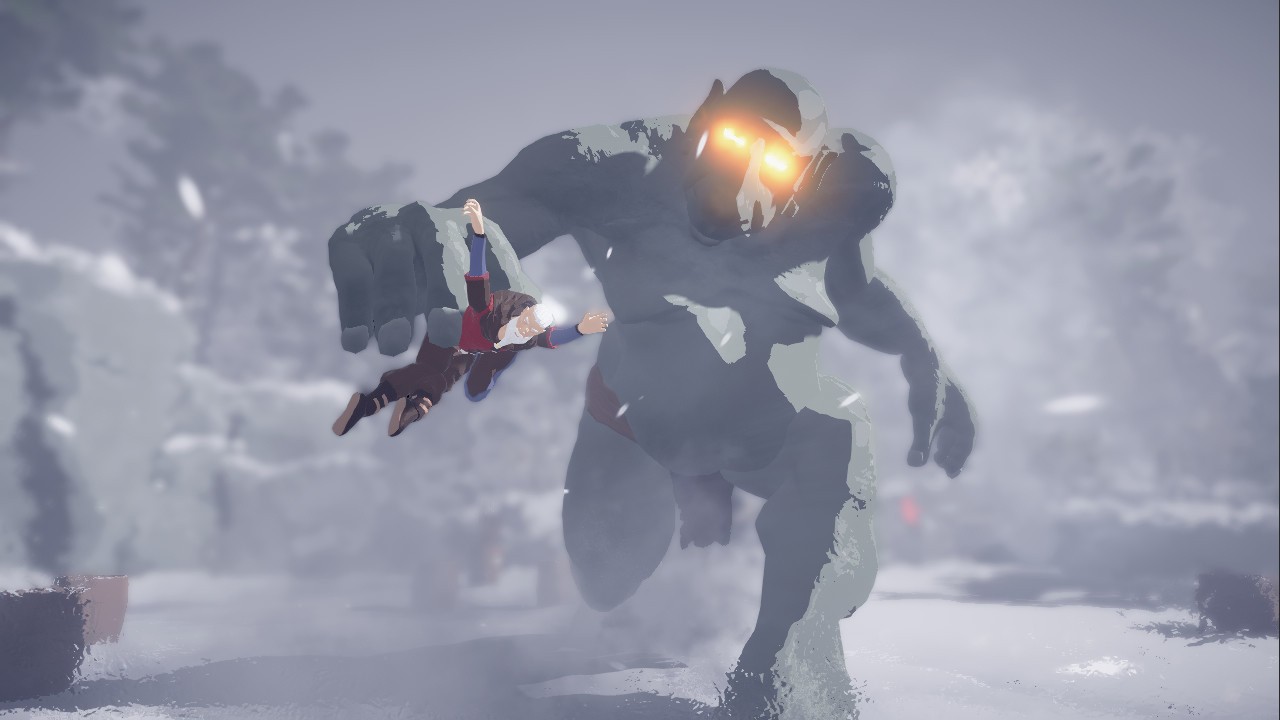
Fimbul is a single-player comic book-style action adventure set in the final winter before Ragnarök, The Fimbul Winter. You play as an old berserker, Kveldulver, travelling through the frozen Midgard to battle Trolls and Jotuns in a quest to reclaim an ancient artefact that might just save the world.
The game’s non-linear story is heavily influenced by the player’s actions, and thanks to an autosave feature called “The Thread of Life”, players will be able to come back to crucial moments in the story to explore alternative branches at any moment. Its combat system will ask you to get to grips with a wide variety of weaponry, matching up your arsenal with an array of different enemies in a range of diverse environments. Players will have to use their Vikings’ individual skills and different items to survive against enemy warriors and dangerous creatures like hungry wolves, monsters, and the giant Jotun.
No exact release date or pricing has been confirmed just yet, but Fimbul is expected to launch on Switch in November this year.
Do you like the look of this one? Let us know if you’ll be keeping an eye out for more info as we get nearer to the game’s release with a comment below.
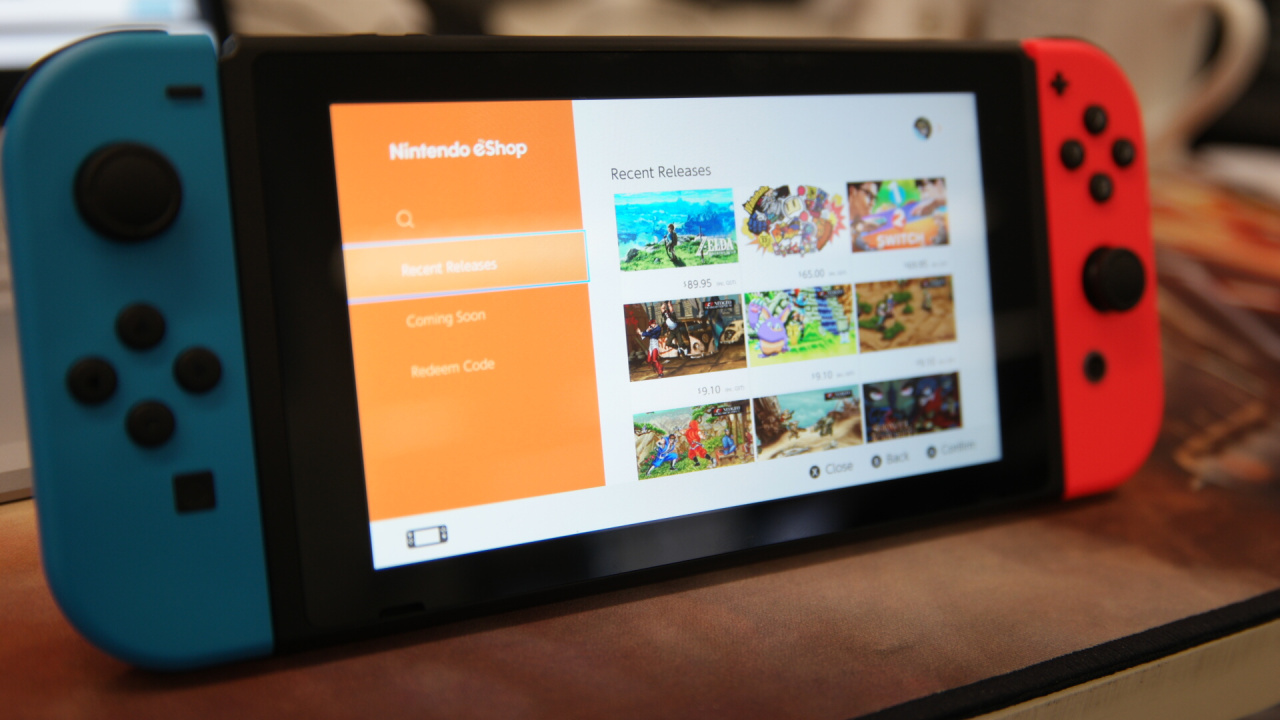
Research analysts from Piper Jaffray, a US-based investment bank and asset management firm, have revealed that they believe gaming could become an all-digital affair from as early as 2022.
With the relatively recent evolution of digital storefronts across all major gaming platforms, a shift from physical purchases to the instant, more convenient digital option has been very clear to see. The lower costs associated with publishing games in this way has led to an influx of indie titles appearing almost every week on modern consoles, and even full retail releases are digitally downloaded much more commonly now than they were several years ago.
It’s certainly something that is constantly evolving, and something that will no doubt continue to grow over the coming years, but this recent claim from Piper Jaffray suggests that digital purchases could be set to completely take over the market in just four years’ time. The analysts even describe this potential shift as “a certainty”.
“It is a certainty that video games will be approximately 100% digital in the coming years. While exact timing is hard to pinpoint, we think 2022 is a realistic expectation.”
We have to say that we find the timing mentioned here incredibly unlikely. If recent console generation trends are anything to go by, and definitely when thinking about its level of success so far, we’re almost certain that the Switch will still be going strong at this time. While digital purchases may see more growth on the whole, potentially claiming a larger ratio of sales compared to physical carts than they do currently, it would be very surprising to see the console ditch its physical versions of games altogether.
Of course, we’re yet to see the next console offerings from Sony and Microsoft, and it’s definitely possible that we’ll start to see systems relying on digital media alone one day, but publishers know that consumers love to collect physical games. Fans are always quick to lap up limited edition physical releases and deluxe sets at retail, nevermind those who just like to own a physical version regardless of what comes with it, but could all of this be about to change?