We’ve known that the upcoming core RPG Pokémon entry for Switch is expected to arrive in 2019 for some time now, but the official release window has now been given a slight tweak.
Since the game(s) was first detailed back in May, the release window has been described as “second half” of 2019; new information from Nintendo’s financial release today has now listed the window as “late 2019”, however. While the change might initially seem relatively minor, this essentially confirms that the new entry will be a holiday season release rather than a summer arrival. The change was spotted by Serebii.net.
The change shouldn’t be too worrying, though; rather than being a delay, the new wording appears to simply be a more specific refinement of that previously mentioned date. With Pokémon: Let’s Go, Pikachu! and Let’s Go, Eevee! releasing this November, we’re likely looking at a one year gap in between mainline entries – a trend that has now been present since 2016.
Are you desperate for the new Pokémon RPG to release, or are you happy to wait a little longer for the best possible final result? Let us know down below.
Mario Tennis Aces looks set to receive a new update tomorrow, finally giving players the option to quickly retry missions in the game’s story mode.
The news comes from the official Japanese patch notes for the incoming update, in which a whole wave of tweaks and adjustments have been listed. This new ‘retry’ function will allow you to quickly restart a mission should you fail, and will also be available to select from the pause menu, finally getting rid of the tedious wait between failing a level and jumping back in again.
On top of this, several characters have seen changes and balancing improvements including the likes of Waluigi, Bowser, Wario, and Toad, various bugs have been fixed, and minor adjustments to energy consumptions have also been made. In a nice touch, players will also now be able to select ‘R Stick only’ as an option for trick shots, moving that shot option away from the face buttons to avoid any accidental mistakes.
Elsewhere, it appears that the next most wanted feature – to be able to select how many sets you’d like to play in free play mode – still hasn’t been addressed. The patch notes say that a one-set, six-game option has been added to Swing Mode, with no mention of any other additions, suggesting that players are still unable to fully customise their experience in the way you might expect.
The update is scheduled to go live on 1st August in Japan and we’d expect other regions to follow suit very soon after.
Are you happy with this new update, or are you still left wanting more? Share your thoughts with us below.
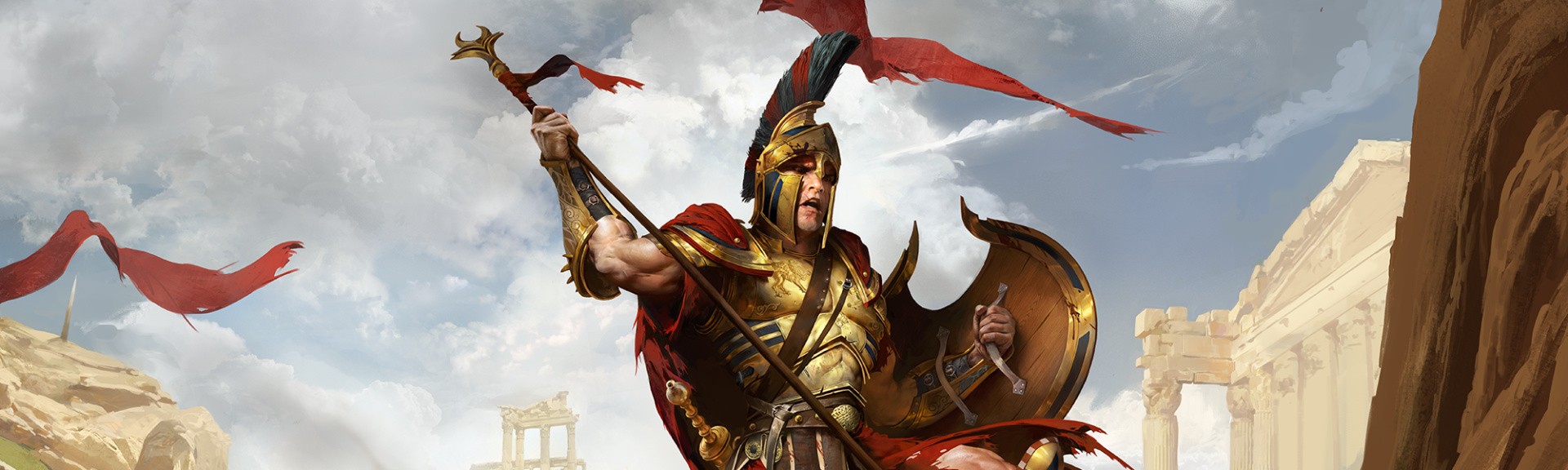
Switch’s success caught publishers off guard, and it seems portfolios are being raided to keep the steady stream of ports a-coming. Titan Quest – a revamp of the twelve-year-old hack-and-slash ARPG – is finally launching on Nintendo’s console following a PS4 and Xbox One release earlier this year. Reception was mixed on those platforms thanks largely to a host of problems including movement lag and loot falling through the floor. Has the extra time been used to polish a rough nugget into a portable jewel?
Well, kinda. We saw none of the game-breaking bugs reported with the other versions, although graphical glitches still abound. Environment textures load slowly, sporadically exposing grey level geometry. In misty areas one of our magical moves turned the fog’s bounding box completely white for several seconds. More seriously, our controls momentarily froze on several occasions and we experienced a number of crashes.
Hardly plain sailing, then. However, passing a rebirth fountain saves your progress and there are periodic auto-saves, plus a manual option via the pause menu, so we didn’t lose much progress. Considering the sheer amount of game, we’d say the Switch edition is both functional and enjoyable in its current form. There’s plenty of room for improvement, but Titan Quest on Switch isn’t an embarrassment at launch.
Your quest encompasses a globe-trotting hunt, from Greece to Egypt, through Asia and beyond. You’ll guide your warrior with the left stick through all manner of ancient cities and territories, despatching vile monsters and completing quests (mostly achieved through the dispatch of said monsters). The camera is fixed, although the right stick zooms in.
Your character auto-runs at enemies in range when you hit an attack button (‘X’ or ‘Y’). Keep tapping and they’ll run to the next and the next, with no further input necessary. Holding down the button brings up a directional cone, enabling you to redirect your target, but we’d have preferred a button to cycle through opponents. Much of your success relies on selectively aggroing enemies and drawing them away from the pack, which gets complicated when your character randomly targets a beastie in the distance and runs away from the group you’re fighting.
Character creation is as simple as choosing a name and gender; customisation comes from the gear you equip and your chosen Mastery, a branch of skills unlocked from nine possibilities. These function as classes and provide elemental moves and powers. You can choose a pure branch or combine two – we took a melee/caster route by combining ‘Warfare’ and ‘Dream’. Other Masteries better suit high dexterity users with bows or staffs.
Our playstyle consisted of lining up a bunch of enemies before casting a psychic death wave – which consumes Energy – and getting stuck in with a frosted pickaxe while the spell recharged. Pummelling the attack button reactivated our dormant Pokémon Go-related RSI, but the tactic was effective. Keeping an eye on your health meter is essential, as is having a large supply of health and energy potions to chug by tapping ‘L’ and ‘R’ respectively.
Later in the game, you encounter mystics who enable you to re-spec within your chosen branch(es). The original Immortal Throne expansion (which introduced the ‘Dream’ Mastery and other tweaks) is integrated here, although the Ragnarök expansion is missing. It’s apparently still coming to consoles – certain exclusive items and the Runes Mastery are currently visible, though inaccessible.
From the off, Titan Quest feels like a PC game of its vintage. Menus, sub-menus, weapon sets, stats, percentages – these things have been well-integrated into console games over the past decade, and while Titan Quest takes a decent stab at it, there are still too many steps required to perform simple operations. Inventory management is predictably tedious. ‘Y’ auto-sorts your gear but simply accessing your inventory requires pressing ‘+’, pushing up on the menu wheel and confirming with ‘A’. You get used to it, but three inputs to open your map is two too many.
Beyond optional tool tips, there’s refreshingly little in the way of tutorials, although it’s easy to miss useful info. For example, when the ground’s cluttered with loot, sorting the wheat from the chaff without picking everything up and scrutinising your inventory is tough. That is until you realise that holding down ‘A’ opens a box enabling you to select individual items and even compare with equipped gear. We’d recommend exploring the options menu, too – any loot below a certain tier can be toggled into oblivion. Handy.
The remnants of decade-old PC game design poke through here and there, which may fire up your nostalgia if you’ve ever lost months to Civilization or Diablo. The presentation on the main menu is authentically bare-bones. Dialogue textboxes are tiny auto-scroll affairs and spoken audio fades out if you walk away. The voice work is solid if you have the patience to stick around, although the audio sounds a little muffled.
Performance-wise, this port isn’t going to top the tables over at Digital Foundry, but it’s never less than playable. There are drops and dips, and you’ll certainly notice the framerate jump in enclosed spaces. As you roam the map compulsively wiping away the fog of war, you’ll see trees and terrain pop-in. Visually, some nice textures can’t hide the 12-year-old level geometry beneath, but a day/night cycle provides variety. There are some decent shadow effects and the water looks pleasant. Handheld mode softens the image significantly and screen text is a tad small, but that won’t prevent you playing on the bus.
Although online and local multiplayer options were unavailable to test, we did manage to try the vertical split screen mode by creating a second character. Two players are able to operate independently in entirely different in-game locations, though with predictable effects on framerate. Lacking access to the fast-travel network, the level 1 noob was stuck in the starter village, so our level 25 Harbinger teleported back from Egypt for some jolly cooperation. It’s a novel and unexpected extra, but not something we see people committing to for an entire quest.
Which brings us to the grind. Titan Quest has loads of content – around 50 hours depending on your skill and inclination for side quests – and you’ll need to battle every enemy you come across to be strong enough to take on later foes. Provided you don’t just beeline past enemies, you’re rarely forced to revisit an area (creatures respawn only when you quit the game). It’s fun, but hack-and-slash by its nature involves plenty of mechanical repetition, and the linearity of the game makes multiple playthroughs (and therefore exploration of different classes) unlikely for all but genre devotees.
Conclusion
A certain historical perspective and a touch of nostalgia will go a long way to helping you appreciate Titan Quest and its quirks. That core loop of killing satyrs in four hits before finding rare loot that destroys them in one is as compelling as it ever was. Disappointing visual glitches and the occasional crash give the impression that everything is held together with nothing more than sticky tape and a prayer, but it was never enough to stop us playing. Handheld mode is a massive boon for any RPG and, as long as you’re not expecting miracles, this Switch port delivers the core experience well enough to warrant investigation.
Many will remember Satoru Iwata as the late president of Nintendo, and particularly as the warm and gentle face of some fantastic Nintendo Direct moments but, of course, he is also well known for his time at Kirby developer HAL Laboratory. While technically being an independent studio, HAL has always been very closely linked with Nintendo, going on to create the Kirby, Earthbound, and Super Smash Bros. series.
HAL’s current president, Satoshi Mitsuhara, recently sat down with Forbes to talk about his career, the company, and his close friendship with Iwata-san. He first mentions Iwata as being the man who brought HAL and Nintendo together after expressing a desire to work on the Famicom.
“Satoru Iwata, who had worked for HAL Laboratory back then, expressed that he wants to make Famicom games to Nintendo. That was the beginning of our relationship with Nintendo. The differentiating point between us and our competitors was that we made games before the Famicom was released. That meant we had the know-how.”
Iwata was much more than a businessman and a game developer, however, often being described as someone who was truly loved by those around him. The case is no different for Mitsuhara, who reminisced over some slightly more personal qualities and memories shared between them.
“Satoru Iwata was a very straight person. Never tried to cheat or have any kind of intent to do that at all. Even when other people were cheating or doing something underhand, he never used that as a reason to do likewise. At work, he was also a very serious and honest person, that sincerity and honesty made the company very pleasant. He also had a big capacity for things, he could take on a lot. We were very close friends.
“One time, when we were extremely busy on Mother 2 (EarthBound) for Super Famicom we often went out together for dinner after work. On our way home from dinner, we used to go to the arcades and play Daytona USA exactly twice. Always twice and leave. I reckoned we did that every week. It was really like work hard and play hard.”
If you want to read the full interview with Mitsuhara, you can check that out here.
In the meantime, though, feel free to share any thoughts or memories of Iwata-san you might have in the comments below.
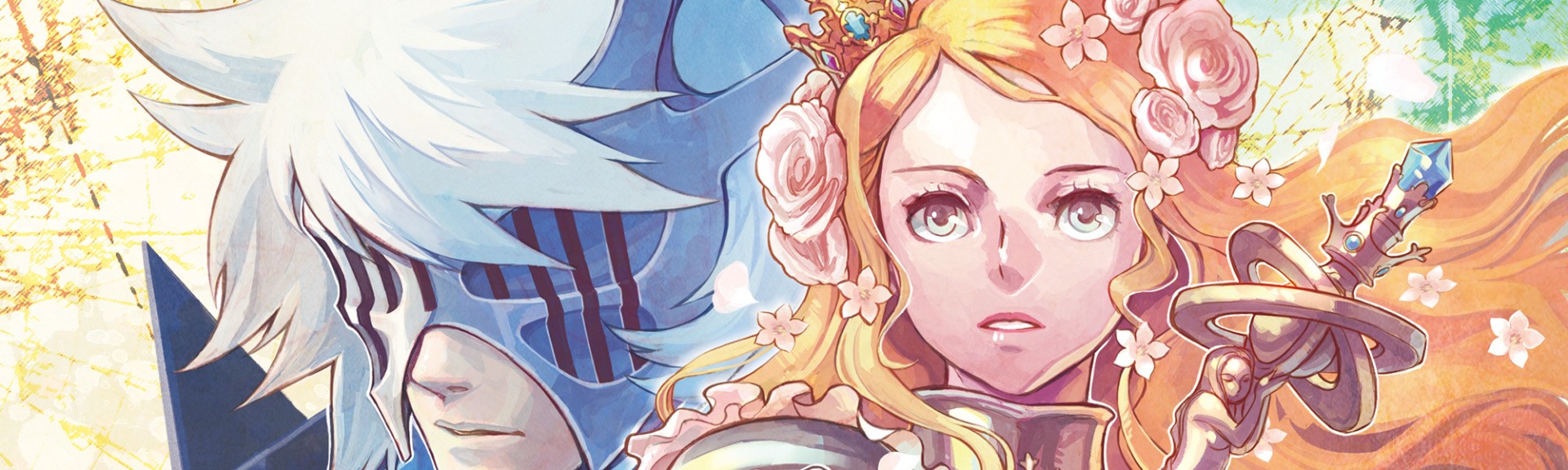
Proudly continuing the Japanese tradition of awkward-sounding fantasy game titles, Code of Princess arrives on Switch in ‘EX’ form courtesy of new publisher, Nicalis. The 3DS original launched back in 2012 and positioned itself as a spiritual successor to the SEGA Saturn cult classic, Guardian Heroes. This souped-up edition promises a range of improvements, although it’s not quite the revamp we were hoping for.
This is a hack-and-slash game with some RPG trappings (you level up and use stat-altering equipment). The story is broken into thirty-or-so ‘Quests’ – essentially side-on battle arenas. You arrive in an area, get attacked by waves of enemies, perhaps defeat a boss, then the narrative takes you to a new area and the cycle repeats.
As with classic 2D brawlers, the controls aren’t too complicated. ‘A’ and ‘B’ offer different attacks, with special moves available by pressing down twice on the analogue stick before attacking. Each fight screen is separated into horizontal ‘rails’ which you hop between by holding ‘L’ or ‘R’ and pushing the stick up or down. It feels restrictive at first (and we’d have preferred the option to jump between rails using the more easily-pressed Z-triggers), but success relies on herding and prioritising enemies to your advantage.
Pressing ‘Y’ locks on to a specific foe and increases the damage dealt. You can also activate a limited number of ‘Bursts’ which drain a Magic meter for additional damage. This was toggleable on 3DS but deemed overpowered, so now, once activated, it can’t be paused. You develop a satisfying flow with your chosen fighter, but after hitting a couple of frustrating difficulty spikes in the middle of the campaign, we found ourselves wishing we were a little OP. Hack-and-slash enthusiasts will certainly enjoy it, but Code of Princess won’t convert naysayers to the genre – take the score at the bottom of the page and add or subtract a point according to your appetite.
Quests are spread across multiple modes: Campaign, Free Play, Bonus and Tutorial. Free Play allows you to replay quests using any of the fifty characters you unlock throughout the game proper. The original four Campaign characters are now joined by a handful that were previously relegated to Free Play. Bonus Quests offer further opportunities to level up and online multiplayer is available in co-op and versus flavours. Lobbies were empty at the time of review, but we’ll be sure to update if online play isn’t up to scratch.
The original roster remains unchanged, from the heroine who wears little more than a belt into battle to the genteel villain who got lost en route to the masquerade ball. It’s a suitably oddball (and pleasantly female-strong) cast with impossibly large swords and impossibly larger hair. Rather than spoil any of the story, we’ll leave it to the description of the eponymous princess to give you a taste of the tone: “Solange Blanchefleur de Lux, Princess of DeLuxia and protector of the sacred blade, DeLuxcalibur.” Quite.
Suffice it to say, it’s nonsense of the highest calibre, but – crucially – the game’s tongue is firmly in its cheek. It jokes about inappropriate battle attire and fantasy conventions, and the localisation is possibly the best thing in the game. Cutscenes are skippable but you’d be missing out.
Which leads us to our first doubts over this Switch edition: the cracking English language voice over is not included here. Whether due to oversight or bureaucracy, it’s a baffling omission. A Japanese VO option would have made a fine addition to the package but losing elements from the original is disappointing, especially for a game purporting to be the definitive version.
In general, the audio varies in quality. A barrage of MIDI trumpets grate on your nerves in the introduction, as do the repetitive battle cries during combat – you get the feeling that those diminutive 3DS speakers helped disguise this. Perhaps our expectations are simply different on a home console in 2018, but the soundtrack doesn’t quite hold up like other games of the period.
Elsewhere you’re left wondering where exactly the ‘EX’ is hiding. Fire up the game in docked mode and welcome to Jaggy Town, population: Princess Jiggle-Physics. While portraits and text look sharp (and pleasingly large), the character models display line artefacts and the action looks a bit ropey on a big screen. The little 3DS helped to gel the art styles together in the frame but there’s a visual disconnect in HD. Change to handheld mode, however, and the softer presentation makes everything look significantly better – portable mode certainly offers the better visual experience.
So what else is there to justify that ‘EX’ tag? Well, 60fps is a notable upgrade over the original, which struggled to deliver a steady 30fps. Couch co-op is now possible without needing multiple consoles and copies of the game, and the simple controls lend themselves well to snapping off a joy-con with a mate. Stat allocation is now automatic, with manual customisation limited to the gear you equip. While this preserves each character’s individuality, we’re not convinced removing the ability to tailor your favourite fighter to your specific playstyle is necessarily a change for the better.
Other alterations include rebalanced AI and some redrawn textures, although you’ll only notice if you have an intimate knowledge of the original. Your entire party now earns XP as you play (although at a reduced rate), making levelling up less of a chore. All-in-all, there are changes, then, but not universally positive ones.
Conclusion
If you’re a fan of the original, you’ll likely enjoy the minor tweaks and upgrades on offer, but don’t dive in expecting a ‘remaster’. You get couch co-op and a healthy framerate, although it doesn’t look great on a TV and the original’s excellent English voiceover is AWOL. Despite modest enhancements, the 3DS origins of this six-year-old game are plain to see, which may put off newcomers. It’s a solid hack-and-slash experience, as it always was – we just wish it did more to earn that ‘EX’ addendum.
Bandai Namco has now officially confirmed that Digimon Survive will release on Nintendo Switch in the west next year.
The upcoming adventure/tactical RPG is being released next year to celebrate the 20th anniversary of the Digimon anime series. The game sees a brand-new group of teenagers, led by Takuma Momozuka, get lost on a school camping trip, finding themselves being transported to a strange new world of monsters and danger. The action takes place inside a brand new adventure set in a mysterious world with characters designed by Uichi Ukumo, and music by Tomoki Miyoshi.
Since its initial reveal just a couple of weeks ago, we’ve started to see very pleasing little glimpses of the game’s plot and battle mechanics. If you’re interested in finding out more, make sure to check out these official screenshots, and video footage. It’s certainly looking very tasty indeed.
No specific release date has been mentioned just yet, but Bandai Namco has said that further information will be “revealed soon”.
Are you excited for this one? Share your early thoughts on the game so far with a comment or two below.
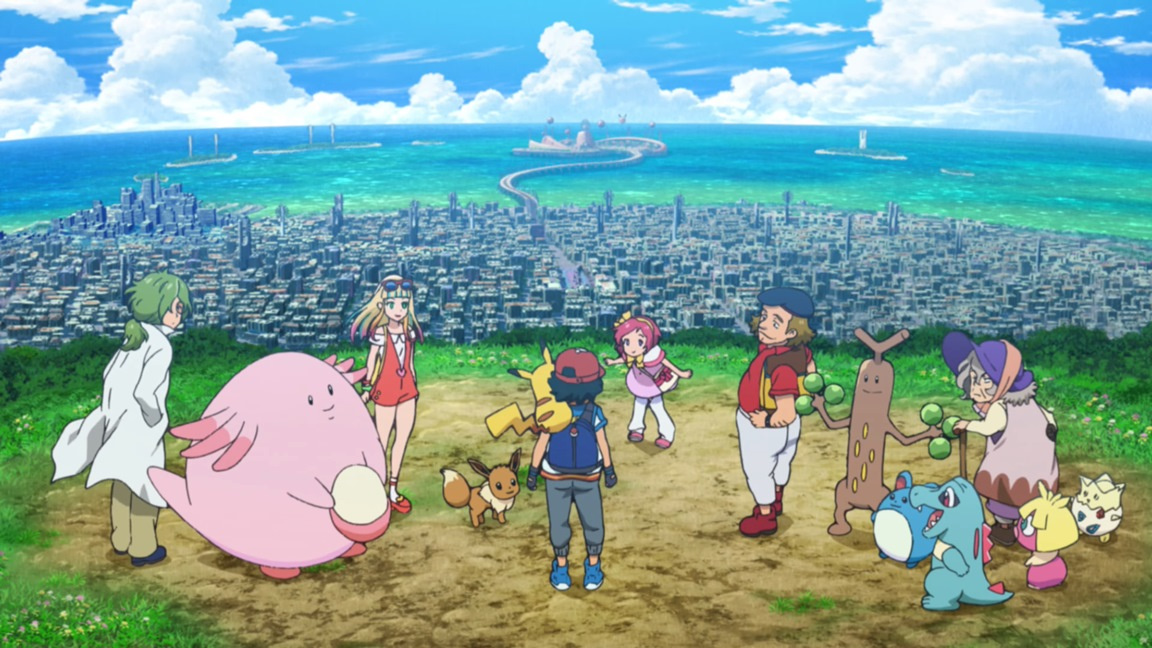
The latest Pokémon movie (known as Pokémon: Everyone’s Story in Japan) has received a bunch of new announcements surrounding its western release, with release dates being given for the US, and even a brand new name for the movie itself.
The movie will now be called Pokémon: The Power of Us, no doubt referring to the franchise’s second film which featured a tagline saying ‘The Power of One’ and also featured legendary Pokémon Lugia as a central character. The movie debuted in Japan earlier this month, bringing with it a fresh new animation style reminiscent of Studio Ghibli.
The movie will be available to view in select theatres in the US on 23rd, 26th, and 28th November, as well as 1st December, with ticket sales expected to be handled by Fathom Events as those dates draw nearer. Other countries are also expected to follow suit with more details still to come. The plot sees Ash and Pikachu attend a wind festival, teaming up with a small bunch of characters to work together and rescue a seaside town from a series of threatening incidents, with all the lovely Pokémon battling goodness you’d expect to see.
Are you a fan of the Pokémon anime? Will you try to get tickets for this one? Let us know down below.
There’s a good chance that many of you hadn’t heard of Austin-based studio Panic Button before the Switch came out, but don’t feel downhearted; the company had flown under the radar prior to the release of Nintendo’s latest console, creating a handful of Wii and Xbox 360 exclusives before finding its niche as an in-demand porting powerhouse. But there’s a lot more to Panic Button than simply being an outfit which is repeatedly entrusted with major conversion duties; this is a company which has deep technical roots and has mastered the complexities of the Switch in a way few others have managed, outside of Nintendo itself.
“Panic Button was founded eleven years ago, at the end of 2007,” says Adam Creighton, Panic Button’s Studio General Manager and Director of Development. “Two of those founders, Craig Galley and D. Michael Traub, are still with the company, and are active, hands-on Technical Directors and Developers. They were doing tools development at the time with their other company, [and] they wanted to get back into working with games, so they founded Panic Button.” At the time of the company’s birth, the Wii was dominating the world of home console gaming, and Panic Button – like so many other companies – identified Nintendo’s platform as the one which offered the biggest chance of commercial success.
“It was a very different focus for developers who were coming from working on the other consoles or on the PC, where you had basically the same interaction capabilities,” explains Panic Button’s Technical Director, Andy Boggs. However, the experience ultimately stood the company in good stead, and arguably laid down the foundations for its future success on Switch. “It was an arms race for power and graphical fidelity,” continues Boggs. “On the Wii, you had to go into it targeting a different look and performance profile, but you also had this huge unique challenge in the motion controls. We spent a lot of time tuning input – you might write some input code that felt great to you, and then hand it to another person and it would fall apart. Interpreting user intent through motion controls, in a way that works for every person, was – and still is – very challenging.”
2009’s Go Play Lumberjacks was followed by We Wish You A Merry Christmas in the same year and then Attack Of The Movies 3D in 2010; the latter title also came out on Xbox 360. Swords was the company’s final contribution to the Wii library before it moved onto another challenge – but one that was at least thematically connected to the motion-based gameplay seen on Wii. “After we had spent a lot of time working with the Wii’s motion controls, the Kinect looked like a natural step,” says Boggs. “It was just another novel way of interpreting user intent. Looking back, I think everyone who developed for Kinect wasn’t prepared for just how difficult it was to do that. Looking at a rough outline of someone’s ‘skeleton’ and trying to develop real-time gameplay with that data was just massively complex and difficult.”
In 2012, Panic Button embarked on the path which has given it the most success, although Creighton suggests it was a case of heart ruling head, at least initially. “I guess we did one port in 2012 – Ms. SplosionMan – but that project was more about working with good Austin folks and a good game,” he says (the original developer, Twisted Pixel Games, is based nearby). Nonetheless, this was the first step in what has proven to be a very rewarding process. Panic Button has since worked on properties such as Injustice: Gods Among Us, Disney Infinity and Octodad: Dadliest Catch, but it is the company’s efforts on Switch which have singled it out as a studio in demand.
Rocket League was the first title to make the public aware of the company’s talents; an assured conversion job which effortlessly retained the core mechanics of the original game but allowed players to take the experience on the road thanks to superb portable performance. The stunning conversion of id Software’s FPS masterpiece DOOM followed, but not before Panic Button released its own original Switch eShop game, Astro Duel Deluxe. As we all know, the company’s latest effort – Wolfenstein II – caused jaws to drop all over the world in the same way that DOOM did, and this year it will also carry over the popular online shooter Warframe to Nintendo’s console.
It’s therefore easy to see why Panic Button has gained such as solid reputation in the development industry. In Creighton’s opinion, the studio as a whole pulls together to make these projects really sing, and one solid project has a habit of leading to another. “What makes this work is amazing, amazing people. From technical chops to business savvy, and soft skills like context switching and collaboration. We’ve brought in projects that explicitly, strategically build on each other. We worked with Disney on Disney Infinity, and after doing Disney Infinity 2.0, we made a case for putting the full game on the PS Vita, which was our first, big, ‘challenging’ retargeting effort. We did the Xbox One version of Rocket League from those great, great Psyonix folks, and then we pitched and did the PS4 Pro version, and then we pitched and did the Nintendo Switch version. We did DOOM for Nintendo Switch, which is a technically and thematically challenging game, and then we did Wolfenstein II for Nintendo Switch, and that game is more technically and thematically challenging – that wasn’t ‘serendipitous’ or ‘lucky’.”
Creighton adds that a key reason the company’s Switch ports have turned out so great is the way in which the company works closely with the original content makers to ensure the end product is as faithful as possible. “We like all of our stuff to be collaborative,” he says. “I don’t like ‘throw-it-over-the-wall’ projects. For things like DOOM, Wolfenstein II, and Rocket League, we’re actively working with those development teams and publishers. They make that stuff, and they make it great – we make it great and special for the hardware we’re responsible for.”
Panic Button has worked wonders on Nintendo hardware, but Boggs is keen to stress that it’s rarely a cakewalk when it comes to bringing AAA titles to Switch, despite the studio’s prior successes. “The bar has been set so high for what’s possible for the Switch, and so optimizing games for performance and making sure things still look great in handheld mode is always pretty hard.” Ultimately though, the effort is worth it. “There’s still just something magical about having this gameplay experience on your TV that you can transition to a handheld and take with you. We see that during development, and it’s still exciting every time.” And the satisfaction level of Panic Button’s current clients? “That’s a great question for them!” laughs Creighton. “I would say they say they are happy. And we almost always do more than one project with them, so… hopefully?”
It’s tempting to suggest that the company’s work is doing more to enrich the perception of the Switch in the eyes of the gaming public than even Nintendo’s own first-party software; games like DOOM, Rocket League and Wolfenstein II have a mainstream appeal which is capable of drawing in new players, perhaps even more so than the adventures of Mario, Link and Samus, all of which arguably cater for the needs of Nintendo fans first and foremost. “The folks at Nintendo are great platform partners,” replies Creighton diplomatically. “My hope is Panic Button is a part of broadening the appeal of their great platform, and bringing franchises like DOOM and Wolfenstein to Nintendo gamers – for some people, maybe for the first time.”
However, while Panic Button has scored commercial and critical successes with its initial salvo of Switch ports, all of these titles have appeared first on rival console hardware which is now coming towards the end of its lifespan. Given that Switch is still a relatively young system, is there a shrinking window of opportunity for these cross-platform ports? What happens when Sony and Microsoft release their next-gen hardware, and the bar gets raised dramatically once again? Can Switch – and Panic Button – possibly keep up? “I think there is a lot of room for good games on good platforms,” comments Creighton. “Personally, I’m not going to talk or guess about future hardware. I do think there will continue to be opportunities for passionate, talented developers like the folks at Panic Button who can and want to do amazing things on all sorts of hardware, for games they are passionate about.”
Warframe is up next, and Creighton reveals that more information on the port will be forthcoming this year. “Digital Extremes have been great about letting people know publicly they’re exploring all options for people to play on and with the Nintendo Switch,” he says. “Personally, I dig the game and the hardware, and I am happy with what’s being developed for new and existing Tennos.” But does Panic Button have any other ports in the works right now? “Maybe, yes,” replies Creighton. It’s fair to assume that the company – which has limited resource, lest we forget – gets inundated with requests for ports these days, so how does it go about deciding what to take on? “[We’re] always, always selective,” replies Creighton. “Personally, wherever I am, I want to make good games with good people. Just speaking for me, I work hard to take projects that we are passionate about, that make strategic sense, are challenging, and are surprising and exciting – without me having to tell people, ‘Hey, these are surprising and exciting!'”
Panic Button has found its niche after a decade of experimenting with motion-based gaming. However, the aforementioned Astro Duel Deluxe proves that the desire is still there to create original content. “I’m a portfolio guy, so wherever I am, I want to make sure the company I am with is doing interesting and exciting things, is growing, and is taking care of everyone that is part of making that happen,” explains Creighton. “I think most developers want to make their own original game, and I would say we are no different. Where we are maybe different is we won’t ‘bet the farm’ on a new game, and if it doesn’t succeed, have the company go away. So, original IP is an explicit part of our portfolio strategy, we’re creative about how we do that, and we won’t risk the company on it.”
In the past decade, Panic Button has grown from a relatively obscure indie to a technical powerhouse which commands the respect of major publishers and is constantly in demand thanks to its talent for porting big-name titles to challenging hardware. But where will the studio be in another five years, when the console battlelines have shifted and Switch may have been supplanted by other groundbreaking platforms? “Hopefully, we’ll have more great people and continue to work on challenging and interesting games. Maybe even our own?” replies Boggs. Creighton’s response is very similar. “If it’s the same people we’re working with right now? I can only see us doing ‘more’ and ‘bigger’ and growing and taking care of and being successful with this wonderful, passionate fan base that has decided they like what we’re doing – honestly, that is what makes any game successful.”
Here’s to another decade of Panic Button – we can’t wait to see what the company achieves on Switch, and beyond.
Showing absolutely no signs of slowing down, Crash Bandicoot N. Sane Trilogy has kept hold of its number one chart position in the UK for a fifth consecutive week.
It was a quieter-than-usual week in the UK gaming retail space this week, with a lack of truly major new releases or huge physical sales – like last week’s charts which were heavily affected by Amazon Prime Day – to play any huge impact on the final table. Joining Crash in its quest for consistently high placements is LEGO The Incredibles, which has also remained right near the top of the charts for several weeks.
1. (1) Crash Bandicoot: N. Sane Trilogy 2. (2) LEGO The Incredibles 3. (8) The Crew 2 4. (7) God of War 5. (10) Mario Kart 8 Deluxe 6. (11) Call of Duty: WWII 7. (18) Grand Theft Auto V 8. (5) Sonic Mania Plus 9. (14) Jurrasic World Evolution 10. (13) Mario Tennis Aces
Did you buy any of these chart-topping games this week?Any surprises? Let us know your thoughts below.
During the NintendoUKVS Live event that took place over the weekend, media personnel were invited to go hands-on with a small demo of the new Pokémon titles. The folks over at Dot Esports encountered one of these very rare Pokémon during the event, and have now shared details on the experience to give fans an idea of what to expect when they get their hands on the game later this year.
Shiny Pokémon – which are known for their distinct colouring that is different to the standard design for each creature – will keep their usual colouring on the overworld display, only changing colour once the Pokémon GO-like catching sequence begins. If you look carefully, however, a small glimmer of “star-like particles” will appear above any shiny Pokémon on the overworld screen, giving you the chance to touch that particular ‘mon and catch it for your collection. With this being a demo, there is a small chance that this could change before launch, but we’d imagine the method will remain for the full release.
This has the potential to make finding shiny Pokémon a little bit easier, as shiny hunters will be able to simply ignore any Pokémon in the wild that clearly aren’t shiny, rather than hoping for one to appear through random encounters. Employees at the event told Dot Esports that “they’d only seen two people find a shiny Pokémon in the wild” previously, however, suggesting that they are still very much a rarity. Of course, it has also been confirmed that any shiny Pokémon from Pokémon GO will keep their shiny status when transferred over to Let’s Go Pikachu and Eevee.
Do you often spend your time tracking down shiny Pokémon for your collection? Let us know if you’ll be keeping an eye out for these special monsters on your adventures in the comments below.