Posted on Leave a comment

Daily Deal – Not Tonight, 25% Off

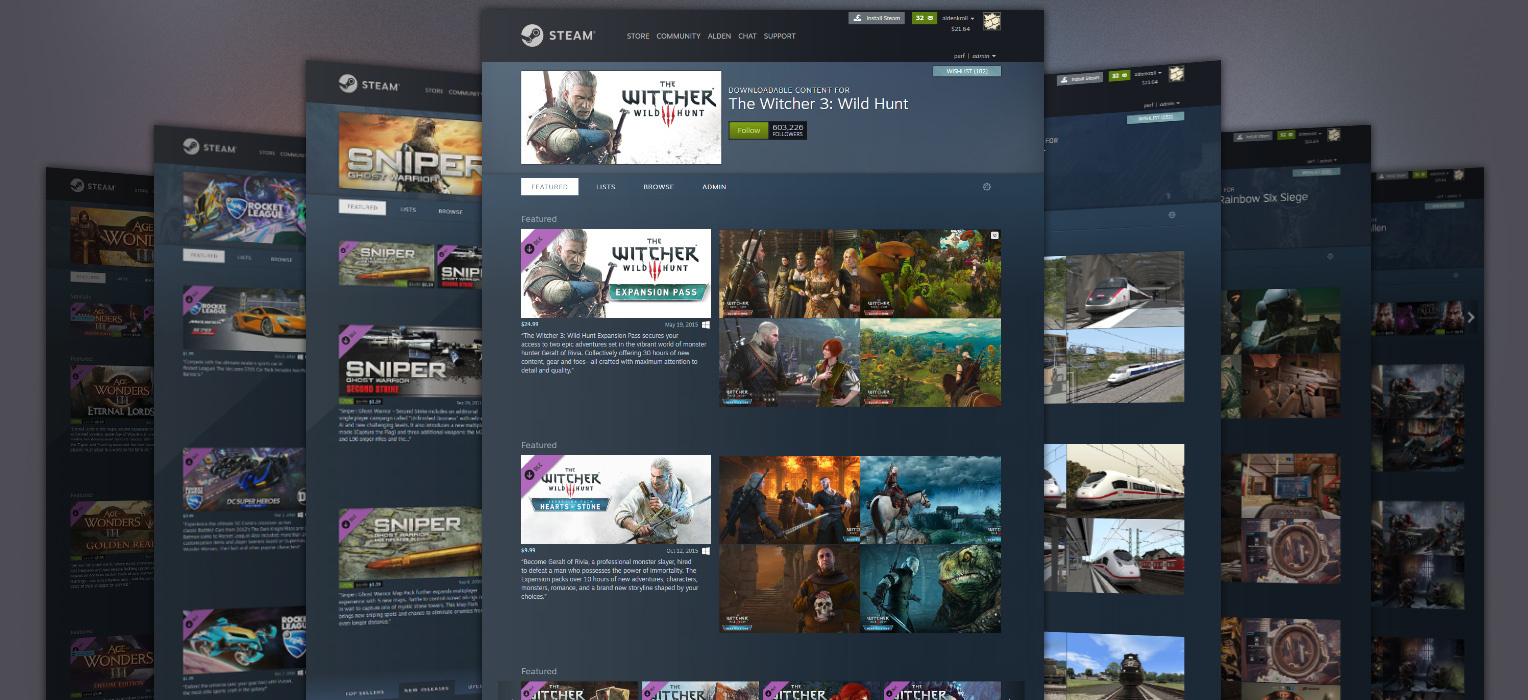
We’ve just rolled out an update that makes it easier to find downloadable content for your favorite games. Any game that offers DLC will now have a sortable, featured page of all of its DLC in one place. Furthermore, (and especially for games that have a tons of DLC) we’re providing ways for developers to customize how these pages by creating lists, adding branding and specifying which titles to feature.

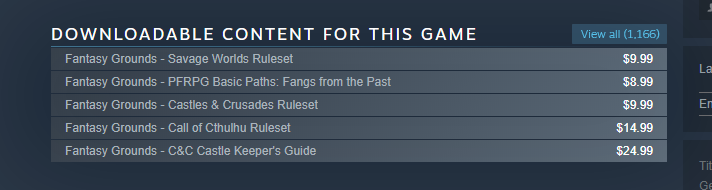
Here are a few examples: Fantasy Grounds (1,166 DLC), Train Simulator 2019 (586 DLC), Microsoft Flight Simulator X: Steam Edition (272 DLC), and Rocket League (28 DLC)

To find these new pages, visit the store page for any game with DLC and click the new ‘View all’ button in the DLC area.

Let us know if you run into any issues or have feedback on these new pages.

-The Steam Team

Posted on Leave a comment

Video: How Double Fine approaches rapid prototyping to create games

In this GDC 2012 session, Double Fine’s Nathan Martz, Brad Muir, Lee Petty and Tim Schafer explain the inspiration and ideas behind their rapid prototyping process, and how it’s central to the way Double Fine generates new ideas and promotes other creative voices at the company.

They dig into the process of going from those prototypes to full games, presenting specific case studies of production challenges that their projects faced and the solutions that were employed to overcome those issues.

It was an insightful talk that’s definitely still worth watching, so developers shouldn’t miss the opportunity to do so now that it’s freely available on the official GDC YouTube channel!

In addition to this presentation, the GDC Vault and its accompanying YouTube channel offers numerous other free videos, audio recordings, and slides from many of the recent Game Developers Conference events, and the service offers even more members-only content for GDC Vault subscribers.

Those who purchased All Access passes to recent events like GDC or VRDC already have full access to GDC Vault, and interested parties can apply for the individual subscription via a GDC Vault subscription page. Group subscriptions are also available: game-related schools and development studios who sign up for GDC Vault Studio Subscriptions can receive access for their entire office or company by contacting staff via the GDC Vault group subscription page. Finally, current subscribers with access issues can contact GDC Vault technical support.

Gamasutra and GDC are sibling organizations under parent company Informa

Posted on Leave a comment

Settlement reached in long-running 38 Studios lawsuit

The Securities and Exchange Commission (SEC) and Wells Fargo Securities said in a joint court filing yesterday that they have agreed to settle a lawsuit over 38 Studios.

The studio, known for developing Kingdoms of Amalur: Reckoning, was founded by former Boston Red Sox pitcher Curt Schilling and shut down back in 2012 after running out of money, and has been the subject of a long-running legal battle with the state. 

Final approval has been delayed due to the current government shutdown, but lawyers for both parties asked a federal judge to put the case on hold until after the shutdown is over “to give the SEC and its relevant divisions and offices time to consider and approve the settlement-in-principle.”

As reported by the Boston Herald, details of the proposed settlement have not been disclosed.

Schilling moved the company from Massachusetts to Rhode Island in 2010 after the Rhode Island Commerce Corp. agreed to give the studio a $75 million loan guarantee.

The SEC said Wells Fargo and the Commerce Corp. allegedly failed to disclose that 38 Studios needed at least $75 million, but would receive only $50 million of proceeds from the bond offering, leaving a $25 million gap.

The complaint filed in 2012 claimed that many of the “defendants knew or should have known, but failed to inform the EDC Board, that 38 Studios was destined to fail according to 38 Studios’ own financial projections.”

38 Studios filed for bankruptcy less than two years after the move, prompting investigations and lawsuits into the company.

Posted on Leave a comment

Gearbox CEO accused by former studio lawyer of taking $12M bonus

Gearbox CEO Randy Pitchford is being accused by former general counsel of the studio of receiving a secret $12 million bonus from publisher Take-Two Interactive.  

This legal dispute comes shortly after Gearbox sued its former counsel, Wade Callender, back in December 2018 for “fraud and breach of fiduciary duty.”

Callender filed his suit against the studio in response, and both men seem to be suing each other over allegedly violating their legal duties to the company. 

As reported by Kotaku, Pitchford allegedly received the $12 million in secret as an advance against Borderlands profits, which Gearbox has claimed is “absurd.” 

According to the lawsuit filed by Gearbox, the studio alleged that Callender, who worked at the company from 2010 until 2018, borrowed money for a home loan and tuition, neither of which were paid back in full. The studio also claims Callender destroyed evidence of the home loan agreement. 

In addition, Callender reportedly “abused the privilege of credit card access by charging unapproved, wholly personal expenses, including family vacations, gun club memberships and firearms accessories.”

In December 2018, Callender sued Gearbox and Randy Pitchford, accusing Pitchford “of violating various contracts involving both Gearbox and a separate real estate company that they both owned, as well as Callender’s own employment contract.”

The lawsuit against Gearbox alleges that Pitchford struck a deal in 2016 to receive a “personal, secretive ‘Executive Bonus’ of $12,000,000 to be paid directly to Pitchford entity called ‘Pitchford Entertainment Media Magic, LLC.'”

Callender and his lawyers argue that the bonus was an advance upon royalties that would otherwise go to Gearbox’s staff.

“This is particularly tragic exploitation,” the lawsuit states, “because these millions are being syphoned to Randy Pitchford’s personal accounts instead of funding the development of Borderlands.”

“The allegations made by a disgruntled former employee are absurd, with no basis in reality or law,” a Gearbox spokesperson said to Kotaku. “We look forward to addressing this meritless lawsuit in court and have no further comment at this time.”

The full lawsuit from both Gearbox and Callender can be viewed here.

Posted on Leave a comment

Weekly Jobs Roundup: Sucker Punch, Within, Skydance, and more are hiring now!

Whether you’re just starting out, looking for something new, or just seeing what’s out there, the Gamasutra Job Board is the place where game developers move ahead in their careers.

Gamasutra’s Job Board is the most diverse, most active, and most established board of its kind in the video game industry, serving companies of all sizes, from indie to triple-A.

Here are just some of the many, many positions being advertised right now. If you’re a recruiter looking for talent, you can also post jobs here.

Location: Marina del Rey, California

Skydance Interactive, known for Archangel, a futuristic mech combat game in virtual reality and PWND, a high-flying, pulse-pounding, multi-player rocket arena shooter, is now bringing the iconic phenomenon of The Walking Dead to the VR realm.

Skydance Interactive is looking for a Gameplay Engineer to join our studio. In this position you’ll be responsible for maintaining and extending major game subsystems, creating and optimizing gameplay elements, and working with the design team to implement ideas while providing technical and creative feedback. At Skydance Interactive, we believe that a small, focused, and dedicated team of talented people can create exceptional games. 

Location: Culver City, California

Heart Machine is a small, deeply motivated and close-knit team located in Los Angeles. Our focus is gameplay that’s engaging, fluid and fun, while also building atmosphere through lush art and sound design. We’re immensely excited to be creating things we love every day. 

We’re looking for talented, passionate people to become part of our small crew, to help build and shape something ambitious and completely unique from the ground up. Although we work incredibly hard, our studio is not a crunch-factory – we like to live our lives, have holidays, and remain healthy throughout a project. Work-life balance is important.

If you’re an incredibly capable level designer with ample spacial reasoning skills, a strong sense of storytelling and pacing and an artistic eye for great compositions, please reach out to us!

Location: Los Angeles, California

Founded in 2014 with the goal of expanding the potential of immersive storytelling, WITHIN creates, acquires, and distributes premium AR & VR experiences across web, mobile, console and headsets including Oculus Rift/Go, Samsung Gear VR, HTC Vive, Sony Playstation®VR, Google Daydream, and Xiaomi MiVR. 

We’re looking for a Systems Designer to join our team! At Within, we move fast in a rigorous and creative environment. The right candidate will be an inventor, optimizer, and collaborator who possesses persistence and determination to create beloved experiences. Above all, the Systems Designer must be passionate about driving results and making great products.

As a Systems Designer you’ll be responsible for the development and execution of systems that captivate our users. You’ll be trusted to fully understand the people we serve and apply your expertise toward deeply engaging them. If you share our belief that virtual and augmented reality will be a major part of the future, and you think you can help us create that future, we’d love to meet you!

Location: Bellevue, Washington

Sucker Punch is an award-winning developer of Playstation games. We produced the Sly Cooper series of stealth platformers for the Playstation 2, which taught the youth of the world that stealing was OK (in certain circumstances). More recently, we’ve been working on the inFAMOUS series of games, which explore the joy of having superpowers and the pain of sidekicks nagging you about how to use them. We work on one game at a time, on one platform at a time, and all we care about is the quality of the games we produce. We’re looking for people who share our drive to do stunning, ground-breaking, genre-defining games and want to join us at our base of operations in sunny Seattle. 

The Senior Community Manager is responsible for directing and conducting day-to-day Web and Social Media interactions with the enthusiasts and fans of Ghost of Tsushima. They will provide world class, personal support by engaging, educating, informing and entertaining our players, while maintaining an ongoing dialogue with the community at large.

Whether you’re just starting out, looking for something new, or just seeing what’s out there, the Gamasutra Job Board is the place where game developers move ahead in their careers.

Gamasutra’s Job Board is the most diverse, most active, and most established board of its kind in the video game industry, serving companies of all sizes, from indie to triple-A.

Looking for a new job? Get started here. Are you a recruiter looking for talent? Post jobs here.

Posted on Leave a comment

Improbable calls for Unity to clarify TOS in wake of SpatialOS dev concerns

SpatialOS developer Improbable has published “a final statement on SpatialOS and Unity” with the goal of summarizing the last day’s worth of public back-and-forth between it and Unity. In the post, the company calls for Unity to clarify recent changes to its Terms of Service that have seemingly put Unity-based games that utilize SpatialOS at risk.

The post, which can be read in its entirety on Improbable’s website, reiterates its original argument that changes to Unity’s Terms of Service make it so that any owner or user of a managed service (like SpatialOS in this case) can be potentially found in breach of Unity’s terms, despite Unity’s informal assurances that this is not the case.

Improbable has already been found in violation of Unity’s terms (a violation the company refutes in this latest post) and had its Unity licenses revoked as a result. So while Unity says that the TOS changes don’t affect individual game developers with live or in-production SpatialOS games, Improbable says that, with its Unity access cut off, it is no longer able to legally support those projects, fix Unity-centric bugs, or improve the service for those devs.

Unity’s post from yesterday (published in response to Improbable’s original notice) outlines why the company says SpatialOS devs don’t need to be concerned with the falling out between the two companies, but, as Improbable argues now, the actual text of the TOS offers none of those same assurances. Unity has, in an update to that post, said it is currently working to make its TOS clearer.

“Currently the lack of clarity in the Terms of Service for Unity – and the ambiguity created by their subsequent statements – places us and developers in a difficult situation,” says Improbable. “We urgently need clarity in order to move forward.” 

Improbable goes on to note that it does not have technical arrangements with other engine makers like Crytek and Epic Games, and that commercial arrangement should not be prerequisite for services to run as intended. 

“Our preference would be that Unity simply adopts industry standard practice and allows platforms to host the engine as was the case before the change in Terms of Service. Failing that, Unity must grant Improbable sufficient legal basis to protect its existing customers, or be honest with the community about the situation.”

Meanwhile, Improbable has teamed up with Epic Games to open a $25 million fund dedicated to helping SpatialOS developers “left in limbo by the new engine and service incompatibilities” introduced by the Unity/Improbable falling out migrate from Unity to Unreal Engine.

Posted on Leave a comment

Netflix sued for trademark infringement by ‘Choose Your Own Adventure’ publishers

Netflix is being sued by Chooseco LLC, known for publishing the “Choose Your Own Adventure” novels popular in the 1980s and 90s, for alleged trademark infringement in the interactive episode of Black Mirror, ‘Bandersnatch’

In its complaint, Chooseco points out a scene in Bandersnatch where a character makes reference to a “Choose Your Own Adventure” book, which seems to be the main infringement charge against Netflix.

According to the suit, Netflix apparently tried to obtain a license for Chooseco’s trademark in the past, but wasn’t able to reach a deal with the publisher.

As reported by Variety, the suit claims that the episode is violent and disturbing, with its “dark and violent themes” being inappropriate for readers of the series. The suit also claims that the themes tarnish the “Choose Your Own Adventure” brand. 

It’s worth noting that Bandersnatch is certainly not the first example featuring choose-your-own-adventure styled storytelling, with various video games having incorporated choice-based storylines as well (think Until Dawn). 

After R.A. Montgomery, the original publisher and author of the “Choose Your Own Adventure” series, passed away in 2014, his widow Shannon Gilligan took over the company. 

In a statement issued earlier today, Gilligan explains that the episode has nothing to do with the books, and it does not “adhere to the Choose Your Own Adventure rules about successful interactive storytelling.”

“The misappropriation of our mark by Netflix presents an extreme challenge for a small independent publisher like Chooseco,” she said.

“The use of Choose Your Own Adventure in association with such graphic content is likely to cause significant damage, impacting our book sales and affecting our ability to work with licensing partners in the future.”

Chooseco is seeking at least $25 million in damages, and has issued a cease-and-desist request against Netflix regarding its use of the “Choose Your Own Adventure” mark in another one of its programs.

Posted on Leave a comment

The Weekender: Much Ado About Nothing Edition

Things are settling back to normal here at PT HQ – it’s still going to be a bit slow in terms of content this month, but we’re getting there. We’ll probably have some filler reviews next week, followed by more recent stuff as it comes out. I’ve already earmarked a few games arriving later this month to target.

We’re also going to be looking into some more guides. Our ‘Best Mobile Wargames’ feature should finally be coming towards the end of the month, and I’m going to try and give our Android readers some extra love as well. Also, a special surprise guest will be making a return towards the end of next week!

Meanwhile, in the world of mobile games…

Out Now

Silent Abyss – Fate of Heroes (iOS Universal)

Only one game really caught our eye this week, and sadly it’s only out on iOS. Silent Abyss is a card-based roguelike, echoing elements we’ve seen in other beloved Pocket Tactics games – One Deck Dungeon, Meteorfall etc… If you play much on PC, there’s been several comparisons to Slay the Spire as well.

You choose two heroes on each play-through, and each one will come with their own suit of special cards. Additional cards with equipment, spells, etc… can be acquired midgame. It bills itself as being quite challenging. So far it has two IAPs – Hero unlocks for the Warlock and the Archer. It’s unclear whether you can unlock these heroes through play.

silent heroes

Updates

Carcasonne Official Board Game (Android) (Review)

This update actually dropped just before Christmas, but we’ve only just spotted it (sorry). Asmodee Digital’s currently Android-exclusive version of hit boardgame Carcasonne got a new update and DLC. The Winter 1.7 update added new AI behaviours and a stronger 4th AI, and the Traders & Builders expansion was also added to the game as an IAP.

Old School Runescape (iOS Universal and Android

I’m sure we’ll get around to reviewing this game eventually (sorry), but in the mean time if you’ve already jumped in, you’ll be pleased to know the classic version of Runescape got a major content update yesterday.

The Kebos Lowlands have been added to the game, which come with a new town, a new dungeon, new quests guilds and rewards. Content for OSR has to be approved by the community first, and this new update got a 95% approval rating from the community, so you know it must be good.

meteorfall challenge

We’ve also heard that Pocket Tactic’s GOTY – Meteorfall – will be getting a new update soon. We’re not sure when, but it will introduce daily challenges. You can read more here.

Sales

Agricola (iOS Universal) (Review): $1.99

Hit board-game Agricola is going for a couple of bucks on iOS, although it is also available on Android.

Among the Stars (iOS Universal & Android) (Review): $2.99

One of 2018’s best board/card game releases is going cheap on iOS and Android, although it’s a little bit more expensive on Google Play.

Siralim 3 (iOS Universal & Android): $2.99

Another RPG we didn’t get around too, people generally have said good things about this Monster Hunter-esque game, and it’s currently enjoying a small discount.

Seen anything else you liked? Let us know in the comments!

Posted on Leave a comment

Blog: Applying level flow in games like Uncharted 4 and The Last of Us

The following blog post, unless otherwise noted, was written by a member of Gamasutra’s community.
The thoughts and opinions expressed are those of the writer and not Gamasutra or its parent company.


For the past few months I have been researching several different games. During that time I have been researching games like “Uncharted 4” and “The Last of Us” (made by Naughty Dog).

With this article I want to share my knowledge with my fellow peers, in the hope of empowering and motivating them to learn more about level design. This will be a crash course on the different elements of level flow, that level designers can use to make informed decisions about their level design.

1 – Introduction: What is level flow

My definition of level flow:

“When the player knows what to do, where to go. 

But not always know how to achieve/get towards that goal.”


(keyword: Spatial Awareness)

It is a state where the player has a pleasant experience, traversing through the level. It goes hand in hand with game flow.

This definition is quite vague and that is because level flow is a broad subject. For simplicity I will split up “level flow” into four (4) smaller pieces. In high-level terms, these are some of the elements we level designers use to guide the player(s)..

“I need to know about geometry and composition? But I am not an artist?!”

Yes, I am also not an artist but I do believe that everything is in some way intertwined with level design. Mastering small bits about these subjects will allow you to make more informed design decisions.

Geometry

  • Think about collision, physical interactive objects, shape design.

Composition

  • A) Focal points. Funneling the player with use of Geometry/Assets.
  • B) Contrast (positive & negative space): Between, Space, Lighting or Color.

Scripted Events

  • Companions, Enemies (AI), Moving/Patrolling around.
  • Other events that makes the player move: such as an explosion or a fallen tree trunk.

Storytelling

  • Text/Signs (direct)
  • Assets placed in a particular order, like pickups scattered across the map or barrels in a corner (indirect)

Geometry, Composition and Scripted Events can be combined to create Storytelling elements. Being able to master these sections will allow you to guide/move the player to where ever you desire them to go.


Here are some examples of flow elements that can be used to guide the player through the level.

2.1 – Examples: The use of lines

Lines, Arrows Shape Silhouettes, Pathways…

Lines have two points, a begin and an endpoint. A line affords direction. It is a 2D object that moves in a direction. We can see lines as arrows and arrows afford direction.

In this example, multiple objects in the scene will hint towards this focal point, the mega structure.

  • Nathan Drake points at the landmark. (not in this picture, but in game he does)
  • The pathway underneath them, leads towards the landmark.
  • The shape of the mountains.
  • The shape of the houses (especially the roofs)
  • The contrast between the mountains and the forest.

As you can see lines are powerful tools to indicate direction. They help to guide the players eye from A to B and visa versa. 

2.2 – Examples: Landmark Visibility

Landmark definition:

An object or feature of a landscape or town that is easily seen and recognized from a distance, especially one that enables the player to establish their location on the map.

Landmarks can be used to determine someone’s location, approximately from the landmark. Therefore it is a method to improve flow in the level. An exceptional level designer would work together with the environment artists, to make sure that each area is recognizable. They should work together to determine the line of sight and the visual language of the area.

In this example, Joel will be able to see the bridge from multiple angles. This allows the level designer to create a level that doesn’t go into a linear/straight direction. As walking straight towards the objective is boring and no fun.

The high buildings on the side also helps to frame the bridge, funneling the player towards the objective. The only indication the player needs to know is how far away they are from the bridge. If they are approaching closer to the bridge, they can assume that they are going towards the right direction.

2.3 – Examples: The use of Color

Using Color as Affordance:

Color can be used to indicate the player, that a certain object is able to afford something. It can be used to contrast the scene, shifting the focal point.

In this example, all reachable & climbable ledges have these “light yellowish” color casted on them. Informing the player that those afford to be grabbed/climbed. This is a clever way to indicate something to the player, without it breaking the immersion. By blending in with the cliffs, using the same “earthly” tones.

  • You can also use color to invoke an emotion from the player.

Bright shades of red and yellow might indicate danger , while a blue color let them think about water, the sky, calmness or peace.

2.4 – Examples: Repetition, good or bad?

Repetition is beautiful as humans can see patterns. Nature is build up out of patterns and we love it.

But when you repeat it too often, it becomes boring. You can compare it to listening to the same song for 100x times. At first you might like the song, although after repeatedly listening to it, you might come to hate it.

This problem is also true in level/environment design. Do not let the player(s) traverse through areas that all look the same. What is the point of exploring if everything looks the same?

You can keep it look coherent, but be sure to have a bit of variation. As mentioned in the previous point: Color is a nice way to break up the monotone feel of a scene and to attract the players attention.

3.1 – Examples: Movement in a Static World

In a static scene, movement will catch the players eyes. When characters or objects move from one position to another position, they create a line. (See example 2.1) As I mentioned previously, a line indicates direction. We can use a dynamic element to guide the player through the level, creating flow.

[youtube https://www.youtube.com/watch?v=cAbIzG-aSDY]Video by: Dops Gaming

Do you know the way?

In this example, Nathan breaks out of prison with two of his comrades. In this action packed scene, your goal is to escape the prison. The player can experience this scene as stressful and rushed. You aren’t prepared for this. You don’t even know the layout of the prison and now you have to make a break for it!

During this moment, the player doesn’t want to constantly think about where they need to go and accidently get lost. This is where the two side characters take it over and guide you through the scene.

3.2 – Examples: Movement, Following the Crowd

I don’t know where to go, guess I follow everyone else.

This is another example of movement being used. Similar to the previous example, the player is confronted with a high intensive experience. Where “yet again” the goal is to escape from the mess you’re in.

[youtube https://www.youtube.com/watch?v=HawhjjF5qFc]

Video by: theRadBrad (fragment: 10:30 – 13:30)

In all the chaos you don’t know where to go, so you follow the crowd. Where ever they go, you will follow. Your only goal is to get out and keep Sarah safe.

The crowd is moved by “seemingly” uncontrollable events in the scene. An exploding car would drive the crowd to the opposite direction, towards safety.

3.3 – Examples: Movement, Subtle environmental hints

It doesn’t have to be complicated. The previous two examples requires the developers to create AI with a behavior system. Although that could be really cool, it’s also complicated.

[youtube https://www.youtube.com/watch?v=nGQM0yzg2Jk]

Video by: IFreeMz (fragment: 42:18 – 42:30)

A subtle tumble weed rolling in a certain direction or in this example; a swan flying away into the distance. It tells you to keep moving in “that” direction.

4.1 – Examples: Flow through Storytelling elements

The easiest noticeable storytelling elements are: 

  • Text, signs
  • Decals
  • Meshes placed in a deliberate order

You can make patterns or create contrast to highlight an object.

Due to how the tank is angled 45 degrees, it naturally guides the player towards the left side. The tank is used as a physical barrier/obstacle to guide the player to the left.

Signs will tell you where to go. The left billboard reads: “Medical Evacuation, Use Tunnel” while the right billboard reads “Salt Lake City, Military Zone Ahead”. Given that the theme of the game is about survival, the player wants to avoid danger.

Another example is to use breadcrumbs to assist your player through the level. It can be a way to indicate the player that they are on the right path.

5.1 – Why everything I mentioned about composition is wrong (kind of…)

Well, 3D levels are created in…3D.

Cool 2D -> 3D street art from talented artist: Julian Beever

It is easier to make a 2D picture look nice from one view. But in games where the player can freely roam around and explore, they usually have multiple views on an object.

You and the environment artists can make everything look nice, but you probably don’t have all the time of the world to make it perfect.

However, as a level designer you can plan ahead and make sure to get the most out of the level, by setting up rules for yourself.

  • Limit the views the player can have.
  • Pay detail to the more important aspects. What do you want the player to see?
  • Try out different lighting setups.

Guide the player through the map with use of flow elements! Make the chances that the player wants to go off-track unlikely! Don’t place landmarks at spots where you don’t want the player to go to. Uncharted 4 levels feel very open. But secretly their levels are linear, with a golden path.

There is no point in going off road, there is nothing there anyway… oh look a cool mountain! (road 66)

5.2 – How Naughty Dog makes sure you still see their cool views!

A dedicated button!

With a press on a button (L3), they allow the camera to momentarily reposition itself, aiming at the focal point. Using this method, the developers have total control on what they want the player to see.


6.1 – Demonstration: Flow Gone Wrong, how to recognize the designers intentions. The good, the bad.

To demonstrate on how you can used your now new profound knowledge to recognize flow elements in other games, I will dissect a level section in Uncharted 4. (Chapter 2: Infernal Place)

Something to keep in mind: Nathan doesn’t have a map, he doesn’t use a compass. What a badass.

[youtube https://www.youtube.com/watch?v=4Mg7B8hhbAM]

Video by: Moghi plays (fragment: 8.49 – 10:50)

Steps performed by the player: 

  1. The player sees a tower and grapple hook his way towards it.
  2. He proceeds to climb up the tower with use of the grooves.
  3. Climbs inside of the tower.
  4. Walks around the plateau.
  5. Falls in the ocean, trying to find a pathway.
  6. Re-spawn

Can you recognize what goes “wrong” in this small section? What do you think caused the confusion by the player to suddenly fall off the map, into the ocean? Was the player misinformed, weren’t there enough flow elements?

To my observation, they placed a lot of flow elements to guide the player but because of a few poorly placed assets. It unintentionally outweighed the other flow elements placed by the designers.

The cues that should had helped the player

This wooden bar seemed to afford to be hooked. It doesn’t, but it does points towards the objective.

  • Direction & Shape Language

A pointy triangular rock. Points & triangles can be seen as arrows, arrows indicate direction. In this case this rock is telling us to go upwards.

These grooves have a light yellow rim. In example 2.3, I explained that Uncharted 4 likes to use color to indicate towards the player, that it affords something.

  • Text & Speech

Nathan knows something you don’t know. “Onward and Upward” he says. He hints to keep going up. This is a critical cue that gets triggered a bit late.

Summarized

With so many flow elements, the player shouldn’t had to be confused right?

The reason for the confusion was likely because of two elements.

  • The doorway
  • The wooden balcony

When we convert the picture to black and white, we can see that the difference in contrast makes your eyes focused on the doorway and the wooden plateau.

The doorway affords to be walked through, gates are strong methods of guiding the player. They have a strong attraction to them. You want to walk through it to see whats on the other side. The imbalance between the contrast in shape, lighting and color made the doorway and wooden board pop out more than intended.

A solution?

A potential solution to this problem would be to highlight the grooves a bit more. With use of decals, color or by perhaps destroying part of the construction. Any kind of additional indication that tells the player that they can climb the tower.

But nonetheless, without applying my potential solution. You can also jump of the cliff and the game would re-spawn you on a spot with a nice view of the wooden bar. It almost seems like they intended you to struggle.

Is this the real reason?

It almost seems like they intended you to struggle.

Another theory of mine is that the designers at Naughty Dog planned this all along and this part was supposed to play out like this, to slow down the pacing of the player. Showing them that it is important to look around the environment to find clues. There are really uncountable ways to guide your players.

We might never know the truth. 😉 


LinkedIn: in/trinhleveldesigner/

Portfolio: https://www.trinhleveldesigner.com/


Disclaimer: At the time of writing this article, I am a 4th year level design student at the Breda University of Applied Science (NHTV). I have no affiliation with Naughty Dog. This article is my own view on their awesome level design. Thanks for reading!

Posted on Leave a comment

These were the most downloaded games on the PlayStation Store in 2018

FIFA 19, Call of Duty: Black Ops 4, and Red Dead Redemption 2 were the most downloaded titles on the PlayStation Store throughout 2018. 

The news comes straight from Sony, with the company naming the top 20 most downloaded PlayStation 4 and PlayStation VR titles in a post on the PlayStation Blog.

Familiar names like Beat Saber, Job Simulator, and Superhot VR topped the PlayStation VR download charts, and were joined in the top 10 by the likes of Skyrim VR and Moss.

Although the console maker didn’t reveal any exact download figures, it’s still interesting to see which games thrived on its digital marketplace last year. 

We’ve spotlighted the 10 most downloaded PS4 and PSVR games below, but those interested can check out the full lists by clicking right here

PlayStation Store’s most downloaded PS4 titles

  1. FIFA 19
  2. Call of Duty: Black Ops 4
  3. Red Dead Redemption 2
  4. Grand Theft Auto V
  5. God of War
  6. Marvel’s Spider-Man
  7. FIFA 18
  8. Gang Beasts
  9. Rocket League
  10. Far Cry 5

PlayStation Store’s most downloaded PSVR titles    

  1. Beat Saber
  2. Job Simulator
  3. Superhot VR
  4. The Elder Scrolls V: Skyrim VR
  5. Batman: Arkham VR
  6. Astro Bot Rescue Mission
  7. Robinson: The Journey
  8. Moss
  9. Rick and Morty: Virtual Rick-ality
  10. Arizona Sunshine