Posted on Leave a comment

Now Available on Steam – Onimusha: Warlords / 鬼武者

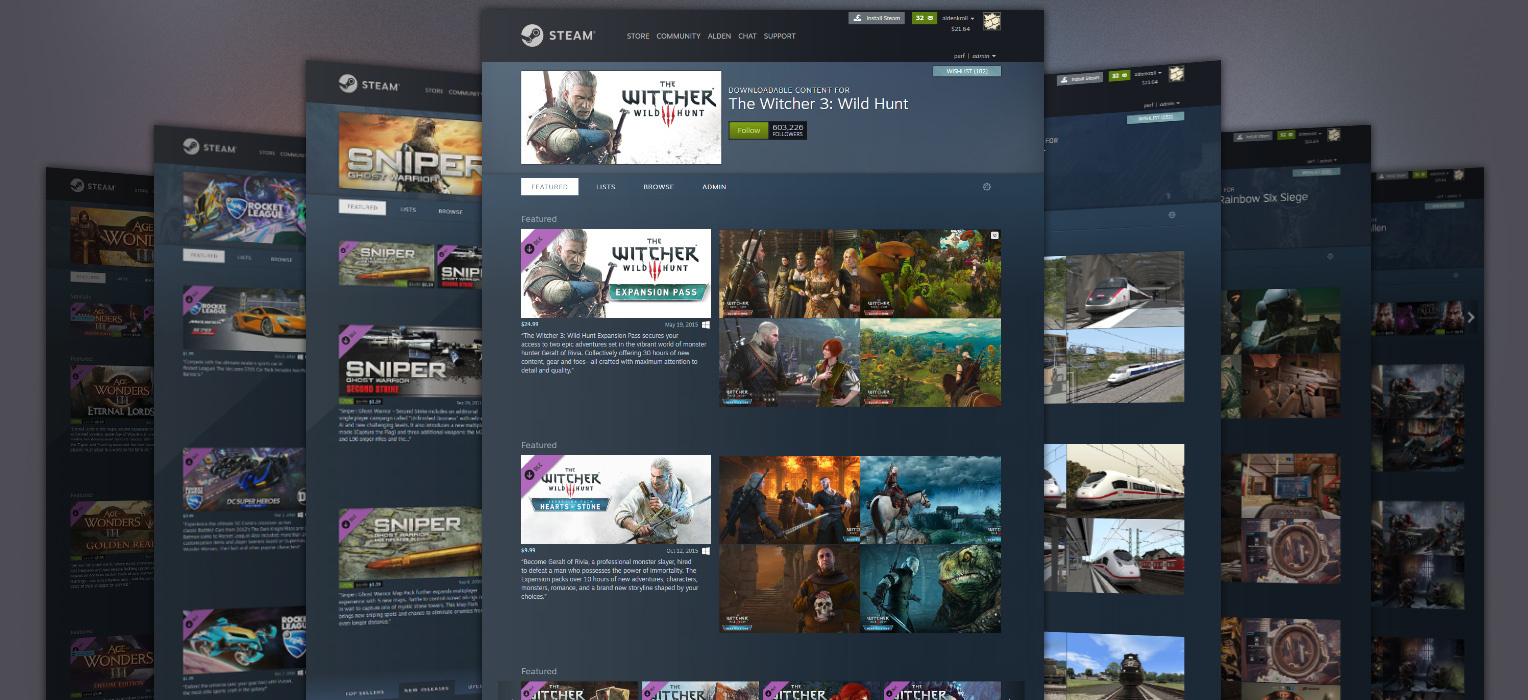
We’ve just rolled out an update that makes it easier to find downloadable content for your favorite games. Any game that offers DLC will now have a sortable, featured page of all of its DLC in one place. Furthermore, (and especially for games that have a tons of DLC) we’re providing ways for developers to customize how these pages by creating lists, adding branding and specifying which titles to feature.

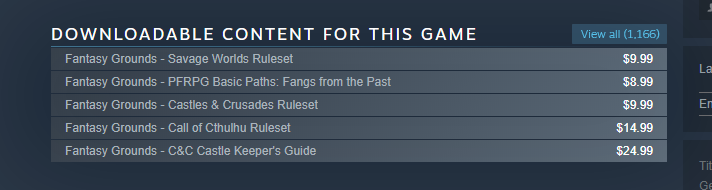
Here are a few examples: Fantasy Grounds (1,166 DLC), Train Simulator 2019 (586 DLC), Microsoft Flight Simulator X: Steam Edition (272 DLC), and Rocket League (28 DLC)

To find these new pages, visit the store page for any game with DLC and click the new ‘View all’ button in the DLC area.

Let us know if you run into any issues or have feedback on these new pages.

-The Steam Team

Posted on Leave a comment

Blog: VR assets for the game music composer

The following blog post, unless otherwise noted, was written by a member of Gamasutra’s community.
The thoughts and opinions expressed are those of the writer and not Gamasutra or its parent company.


Video game music composer Winifred Phillips hard at work on the Audioshield Fitness VR project in her video game music production studio.

By Winifred Phillips | Contact | Follow

Welcome!  I’m videogame composer Winifred Phillips, and my projects lately have included music composition for a lot of great virtual reality games.  It’s been fascinating work!  Last year, when my VR work started to really pick up, I wrote an article with lots of resources to help video game music composers become more comfortable in the world of VR audio development.  Since this discipline progresses rapidly, I thought it would be best to post an update article now that adds additional resources to address new developments in the field.

VR development is continuously innovative and cutting-edge, and I’ve been fortunately to experience this first-hand.  As an example: one of my more recent virtual reality game projects was music for Audioshield Fitness, developed by the creator of the famous Audiosurf music-rhythm game. I was asked to compose the new official Audioshield Theme for release with the Audioshield Fitness game, which takes the core game mechanics of Audioshield and pumps up the challenge with obstacles that make players dodge and duck to the music.  The result is an intense workout that was named as one of the top 5 VR Fitness Games of 2018 by PerfectBodyMate.com. To maximize the power of the Audioshield procedural system, my composition had to attune itself to the system’s powerful music analysis algorithm and deliver moments of both challenge and spectacle. I composed and mixed the music with specifically-targeted EQ frequency ranges where I placed rhythmic elements and punchy crescendoes.  The Audioshield music analysis system then reacted to this audio content and changed the pacing and content of gameplay to match these variables.  It was a fun challenge!  Here’s a video showing how that worked:

[youtube https://www.youtube.com/watch?v=Msmxue7g_b0?rel=0]

Composing for virtual reality is its own unique discipline, requiring a specialized set of skills and tools.  In this article, let’s collect some resources that explore the techniques, tools, and technologies associated with VR audio development.  Let’s also take a look at the professional community of VR developers that are there to help each other through the rough spots.  Ready?  Let’s go!

Technology and tools

An illustration of famous technology and tools for game composers - section of the article by video game music composer Winifred Phillips.First, let’s consider some of the tools and technology that has been designed to help audio folks create awesome virtual reality sound, starting first with new innovations over the past year:

Google Releases Resonance Audio

Google has entered the VR business in a big way, first with Google Cardboard, then with the Google Daydream device.  Now, Google has released its own multiplatform software development kit for VR audio.  This article sums up some of the features.  

Below, I’ve also included a video demonstration of a binaural and ambisonic demo for Resonance Audio:

[youtube https://www.youtube.com/watch?v=Wl8axtBNdQw?rel=0]

Let’s Test: 3D Audio Spatialization Plugins

In this article from the Designing Sound site, three spatializer plugins are tested for their performance in localizing sound sources under an assortment of conditions: circular movement, acoustic shadowing, vertical position, occlusion, moving occlusion, modeled attenuation, and near-field effect. Similarities and differences between the plugins are discussed, and multiple audio samples are provided for comparison.

MixOnline: The dearVR 3D Audio Reality Engine

This system from the Dear Reality company combines a plugin suitable for integration with Digital Audio Workstations, and a virtual reality application that allows users to instantly test their DAW mixes within a VR environment.  The MixOnline article (linked above) argues that such a system is long overdue and necessary for effective VR audio production workflows.  Below I’ve also included the demo video for this technology, produced by Dear Reality:

[youtube https://www.youtube.com/watch?v=zr-5RSiz-8Y?rel=0]

Envelop for Ableton Live

This suite of spatial sound tools is designed to integrate into the Ableton Live Digital Audio Workstation.  For Ableton Live users, the Envelop suite of tools allows effective mixing for a virtual space.  The article (linked above) discusses many practical applications for this software, including virtual reality.

Below, I’m including the links that were offered in last year’s article, since the information is still relevant:

Image illustrating the concept of popular technology tools useful to game audio pros, from the article by Winifred Phillips for video game composersThe “Works” 3D Audio plugin for Pro Tools

This article explores the 3D rendering technology of the G’Audio Works plugin, which supports multi-channel, object-based and ambisonic spatialization within the Pro Tools application.

The Steam Audio Software Development Kit

This article focuses on the spatialized audio solution for VR developed by the famous Steam software distribution platform. Available as a free download without any royalty requirements, Steam Audio is designed to assist both Unity and Unreal developers in creating and implementing spatialized audio in their projects.

Facebook 360 Spatial Workstation

The Two Big Ears audio company is known for its 3Dception software enabling audio folks to author spatialized audio for VR applications. Now that Facebook has purchased the company, the software has been rebranded as the Facebook 360 Spatial Workstation with added compatibility for 360 videos hosted on the Facebook platform. The software is free for everyone to use in their projects. However, the previous plugin compatibility with Unity, Wwise and FMOD is no longer offered for new users.

Google’s Omnitone, the open source project for spatialized sound in VR

This article describes the Omnitone application, developed by Google to combine ambisonic decoding with binaural rendering. Omnitone was designed to deliver spatialized audio for browser-based experiences and apps designed for Android and iOS.

NVIDIA VRWorks Audio

For Windows games and applications, NVIDIA now offers the VRWorks Audio Software Development Kit for implementing spatialized audio in VR for 64 bit Windows apps. For developers working in Unreal Engine 4, the VRWorks Audio game engine plugin can be added directly to the UE4 engine, while future plugins are promised for other game and audio platforms.

Methods and techniques

Now, let’s check out some recent articles that offer methods and techniques for creating immersive virtual reality sound:

An image accompanying a discussion of popular methods and techniques for game composers - section from the article by Winifred Phillips, video game music composer.How to Build Audio for VR Games

In this article, the audio director of CCP Games delves into how human beings perceive sound, and how that extends to VR.  Included: the virtues of hard panning stereo in VR, and the importance of adaptive music in VR.

Oculus’ Audio SDK: Localization and the Human Auditory System

While this article is primarily a component of the Oculus Audio SDK documentation for VR audio development, it includes a concise and thorough breakdown of the components of sound that enable human beings to localize sound sources.

Immersive Audio for VR Workflow

This is a video recorded at the VR LA conference, in which a panel of game audio experts discusses a variety of topics connected to VR audio development.  Included: an exploration of the ways in which audio pros can lobby for the importance of audio content within a VR development team, and what features would be most welcome in audio production tools to make them more useful in VR development.  Watch here:

[youtube https://www.youtube.com/watch?v=EQHkmysYnes?rel=0]

Audio Design for Interactive Narrative VR Experiences

In this audio postmortem of the VR project The Price of Freedom, the audio director explores how to prioritize audio implementation tasks during development, and how to effectively place audio elements within VR environments.  Mixing in VR is also discussed.

9 Things You Should Know When Creating Sound for Virtual Reality

This article published by the GameSoundCon organization lays out several issues to consider when creating and implementing sound content in VR titles.  Among the topics addressed: equalization issues pertaining to HRTF processing, and natural human barriers to sound localization that can be addressed with careful spatialization choices.

An image accompanying a discussion of professional software solutions for VR audio developers, from the article for video game composers by Winifred Phillips (game music composer).As before, I’m including the links that were offered in last year’s article on this topic below, since the articles share a wealth of professional solutions to VR audio problems, and their insights can still be useful:

3D Audio Formats for VR

3D Sound Labs takes us through the three most popular sound formats for spatial audio in VR: Multi-channel, Object-based, and Ambisonic.

How 3D Spatialized Audio Bottlenecks Virtual Reality Video

VR audio can consume enormous computational resources, resulting in a resource war between audio and video content. This article discusses how audio demands in VR consume memory bus bandwidth, and proposes a short-cut that manipulates the frequency response of the audio content to enhance spatialization while consuming fewer resources.

Adapting Your DAW for VR Audio

A VR sound editor discusses his methods and workflow for virtual reality in this article. Topics include capturing audio in the ambisonic format, and customizing the Pro Tools environment for spatialized audio projects.

Simple Spatial Audio for Beginners

This article summarizes the available entry-level techniques and equipment that can help a newcomer jump into the world of spatial audio for virtual reality.

An audio post production house shares techniques for VR Audio

In this article, we learn about some of the top equipment and methods used by the VR-focused division of an experienced audio post production facility.

Communities & Organizations

In this article for video game composers, Winifred Phillips discusses the importance of communities where game audio practitioners can offer advice and seek guidance.

Virtual reality audio development can be daunting.  Fortunately, there are lots of online communities and organizations that can provide advice and encouragement when needed.  I’ve assembled links to some of these below:

Here are the communities and organizations that were included in the article from last year:


Conferences

An illustration accompanying the discussion of famous conferences of interest to game composers who want to learn about VR audio - section of the article by video game music composer Winifred Phillips.

Finally, here’s a list of the virtual reality conferences, summits and conventions that have featured audio discussions and demonstrations in their past program schedules:

Here are the conferences that were included in the article from last year:

Conclusion

I hope you find the above resources interesting and helpful! If you have any suggestions for additions to this list, please let me know in the comments section below!


Photo of video game composer Winifred Phillips in her game composers production studio.Popular music from composer Winifred Phillips’ award-winning Assassin’s Creed Liberation score will be performed live by a top 80-piece orchestra and choir as part of the Assassin’s Creed Symphony World Tour, which kicks off in 2019 with its Los Angeles premiere at the famous Dolby Theatre. As an accomplished video game composer, Phillips is best known for composing music for games in five of the most famous and popular franchises in gaming: Assassin’s Creed, LittleBigPlanet, Total War, God of War, and The Sims.  Phillips’ other notable projects include the triple-A first person shooter Homefront: The Revolution, and numerous virtual reality games, including Scraper: First Strike, Dragon Front, and many more.   She is the author of the award-winning bestseller A COMPOSER’S GUIDE TO GAME MUSIC, published by the MIT Press. As a VR game music expert, she writes frequently on the future of music in virtual reality games.

Follow her on Twitter @winphillips.

Posted on Leave a comment

Blog: A (very incomplete) review of Artifact cards

The following blog post, unless otherwise noted, was written by a member of Gamasutra’s community.
The thoughts and opinions expressed are those of the writer and not Gamasutra or its parent company.


</p> <p><big><strong>Artifact</strong></big></p> <p>Since it was announced I’ve followed <em>Artifact </em>with the intention of writing about it. It’s right in my wheelhouse – not only do I play card games but I worked on a game that’s similar in some ways. It’s also appealing to write about a new game rather than one that’s several years or decades old.</p> <p>Normally I write what is probably best described as design-centric game criticism. But based on metrics <em>Artifact </em>clearly has issues and those issues are fairly well-understood. There’s no definitive writeup or video on those issues (though <a href="https://youtu.be/YZh7mNO5k7o">this video</a> provides a good overview) but if you care enough to read forums the repetitive nature of the complaints is clear. It’s also tough to write about the design issues with <em>Artifact </em>in that you have to get deep in the mechanical weeds. Someone unfamiliar with the game might not understand the complaints, and someone familiar with the game will be well-aware of them.</p> <p>I expected <em>Artifact </em>to be bigger than it is, that I’d strike while the iron is hot with some cogent analysis and reap the benefits of high click counts. (At zero cents a click you need a lot of clicks to get rich) But not many analytical developer types are discussing it, and when they try to discuss it the conversation often turns to “well I can’t say much because I haven’t played it myself.”</p> <p>So for this blog post I’m diverging from my normal format. Rather than writing design-centric criticism I’m instead doing something more akin to game design work, the kind of design work I’d do on my own games or as a consultant.</p> <p><img decoding="async" alt="" src="http://www.sickgaming.net/blog/wp-content/uploads/2019/01/blog-a-very-incomplete-review-of-artifact-cards.png" width="640" /></p> <p><em>Shamelessly taken from <a href="https://www.reddit.com/r/Artifact/comments/acnkl7/urobomartion_made_a_boxart_for_artifact_so_i_used/">https://www.reddit.com/r/Artifact/comments/acnkl7/urobomartion_made_a_boxart_for_artifact_so_i_used/</a></em></p> <p><big><strong>A (Very Incomplete) Review of Artifact Cards</strong></big></p> <p>My Google doc <strong><a href="https://docs.google.com/document/d/18yg5Bkf4zeXnqi1jXvcj_tV6kEOAwr1xNZML9218_nk/edit#">notes on Artifact cards.</a></strong></p> <p>In college I took a short fiction creative writing class and got back an assignment splashed with red ink. One of the errors called out by the professor was that I’d written “she saw a vision of” – his note was that you see visions by definition. They key lesson of that class was that while a novel can have entire sentences, paragraphs or chapters (or in the case of long fantasy series, entire books!) that are sloppily thrown together, in a short story every word matters, and you can and should make every word the best possible one.</p> <p>A card game is similar in that the cards represent a finite amount of content. In a card game with 100 cards you have 100 text entries, 100 pieces of art, 100 names, 100 sets of stats, some keywords (hopefully not 100!) – you can and should iterate and agonize over each of them.</p> <p><em>Artifact </em>strikes me as a messy game – I sometimes describe it as “loose.” But I wasn’t sure what caused that feeling. So as an experiment I started doing what I might do for work – I began listing the cards in order and noting issues. And there are a lot of issues. </p> <p>Fresh eyes on a project can be invaluable and they only last a short while. Like a pet owner who gets used to pet smells developers and testers quickly become used to quirks or difficulty issues.</p> <p><em>Artifact </em>feels to me like a game that needed fresh eyes. The document I’ve written represents that – it was written after a few hours with the game, to reflect the thoughts of a new player. In some cases it’s not correct – initially I thought that blocking and combat targets are the same. They aren’t. But my confusion reflects how these two concepts mostly overlap and appear to be used somewhat interchangeably, even if on closer examination there’s some technically justifiable logic behind that.</p> <p>That last sentence describes a lot of <em>Artifact </em>– on deep examination awkward rules technically work out, but they’re inscrutable on not just a technical level but an intuitive one.</p> <p><img loading="lazy" decoding="async" alt="" height="831" src="http://www.sickgaming.net/blog/wp-content/uploads/2019/01/blog-a-very-incomplete-review-of-artifact-cards-1.png" width="646" /></p> <p>In the document I tear pretty hard into Regeneration. This is a Reddit conversation on how Regeneration in <em>Artifact</em> works. As you can see there are about 5 different mental models on display: it’s an instant heal, a shield, like armor, like single-use armor that also heals you so “actually not really like armor”, “negative damage”…</p> <p>This is not the only conversation like this I’ve seen. When I first saw Regeneration I too was confused, and I’m a relatively smart person who’s played other card games and DOTA2. Regeneration is not a novel concept invented for <em>Artifact</em>, it’s a straightforward one that appears in dozens of video games. It takes some doing to make regenerating health over time this complicated and confusing.</p> <p>After playing the game more I’m no longer confused by Regeneration, and every game has some oddities that must be learned. But <em>Artifact</em> has too many – a death by a thousand cuts. It’s not just Regeneration that’s problematic, or the wording on Purge, or the counter-intuitive nature of Siege Damage – it’s all of these things together. And these are just card problems that are joined by base mechanical problems like the apparent arbitrariness of attack arrows.</p> <p>Some of the things in this document might appear anal – but if there’s a place to be anal it’s when examining the text of cards in card game. To write these complaints off as pedantic is like accusing a copy editor of being pedantic about grammar.</p> <p>A note on format: the bold bullet point lists are probably where I’d stop if I was writing this for my own game, or if I was writing it for someone I’d conversed enough with to be on the same page. The paragraphs are more talky, for the benefit of readers unfamiliar with <em>Artifact </em>or who aren’t in basic agreement about high level issues. Tonally it’s a little less professional than I’d write for an employer and a little more than I’d write for myself.</p> <p>I suspect they’ll be the temptation among some people to go through the document and rebut – well this isn’t right, this is just your opinion, etc. “Well I don’t think Regeneration is confusing at all.” These are, of course, my opinions, and if you don’t like them you probably shouldn’t hire me to do contract work on your game. But if I think this way probably other people do as well, and in many cases I know that they do through observation of internet chatter and watching people play.</p> <p>The point of this sort of card design review is not to be 100% correct. It’s an early step in a process that would involve a lot of back and forth that results in a variety of changes and, in some cases, none at all.</p> <p><big><strong>On Intended Audience</strong></big></p> <p>My hope is that this document will be interesting to three audiences:</p> <ul> <li>Laypersons looking for an example of day-to-day game design work</li> <p> </p> <li>Game developers looking for an example of card game iteration</li> <p> </p> <li>Players (including developers) familiar with <em>Artifact </em>looking for criticism</li> <p> </ul> <p>While the document is a design-style document it works as criticism, and one reason I wrote it is to push back on “nobody can deny the core game design is excellent”, a sentiment I see a fair amount.I enjoy <em>Artifact</em>. The design is interesting and in some ways very thoughtful. But it’s fraught with issues. Too often I see both players and developers refuse to acknowledge design problems in a game, and instead push the blame for underperformance onto factors like marketing and ancillary features. When <em>Heroes of the Storm</em> shuttered its competitive league there were multiple Reddit posts on what Blizzard could have done differently to make the game more successful, but most of them didn’t address the gameplay at all, instead focusing on irrelevant changes like “improve the MVP voting screen.”</p> <p>(Side note: I wrote about <a href="https://www.gamasutra.com/blogs/JamesMargaris/20161212/287359/On_the_eSports_Failure_of_Heroes_of_the_Storm.php">Heroes of the Storm struggling as an esport</a> in 2016)</p> <p>When you like a game, when you or your friends worked on it, or if you’re just trying to be mindful of hurt feelings it feels a lot better to say that the PR strategy was flawed or that the game just missed the target audience rather than that the game has major issues. But “it’s not you it’s me” usually means that it is in fact you. It’s not helpful to say that a game “failed to find an audience” unless you can say why – just saying that is more restatement than explanation. </p> <p>Perhaps I’m committing some sort of faux pas as a developer critiquing the work of another developer, especially on a game so close to release. But I think the document is fair and not written out of malice, and in my defense I never attended game developer finishing school.</p> <p>On the first point: we often do a great (if dismissive) job of explaining what game design is not. It’s not the “idea gal” who says “what if <em>World of Warcraft</em> but <em>Starcraft</em>?” But we often don’t do a great job of explaining what game design is, and what a game designer or jack-of-all-trades indie developer does. Often game designer is positioned as the person who writes and maintains the “game design doc”, a keeper of the sacred scrolls. But that view of game design is both partial and more outdated each day. We’ve gone from massive game design bibles to smaller docs to wikis or loose collections of different docs for different departments. Most game developers have some collection of design docs but the idea of the game designer as the person who writes the doc then leans back in their chair with their hands clasped behind their head elides most of the work. It yadda yadda yaddas over the best parts.</p> <p>So this is an example of what form day-to-day design work can take, while hopefully being more interesting than entering numbers into an enemy stats spreadsheet.</p> </div><!-- .entry-content --> <aside class="entry-taxonomy"> <div class="cat-links"> Category: <a href="https://sickgaming.net/blog/category/news/" rel="category tag">News</a> </div> </aside> </article><!-- #post-## --> <article id="post-75747" class="post-75747 post type-post status-publish format-standard has-post-thumbnail hentry category-news"> <header class="entry-header"> <span class="posted-on">Posted on <a href="https://sickgaming.net/blog/2019/01/15/jurassic-world-evolution-and-planet-coaster-have-crossed-2-million-sales/" rel="bookmark"><time class="entry-date published updated" datetime="2019-01-15T13:58:00+00:00">January 15, 2019</time></a></span> <span class="post-author">by <a href="https://sickgaming.net/blog/author/sickskills/" rel="author">sick skills</a></span> <span class="post-comments">— <a href="https://sickgaming.net/blog/2019/01/15/jurassic-world-evolution-and-planet-coaster-have-crossed-2-million-sales/#respond">Leave a comment</a></span><h2 class="alpha entry-title"><a href="https://sickgaming.net/blog/2019/01/15/jurassic-world-evolution-and-planet-coaster-have-crossed-2-million-sales/" rel="bookmark">Jurassic World Evolution and Planet Coaster have crossed 2 million sales</a></h2> </header><!-- .entry-header --> <div class="entry-content"> <img width="200" height="200" src="https://sickgaming.net/blog/wp-content/uploads/2019/01/jurassic-world-evolution-and-planet-coaster-have-crossed-2-million-sales.jpg" class="attachment- size- wp-post-image" alt="" decoding="async" loading="lazy" srcset="https://sickgaming.net/blog/wp-content/uploads/2019/01/jurassic-world-evolution-and-planet-coaster-have-crossed-2-million-sales.jpg 200w, https://sickgaming.net/blog/wp-content/uploads/2019/01/jurassic-world-evolution-and-planet-coaster-have-crossed-2-million-sales-150x150.jpg 150w, https://sickgaming.net/blog/wp-content/uploads/2019/01/jurassic-world-evolution-and-planet-coaster-have-crossed-2-million-sales-1x1.jpg 1w" sizes="auto, (max-width: 200px) 100vw, 200px" /><p>All three of Frontier Developments’ self-published game franchises have hit new sales milestones. </p> <p>As reported in the company’s <a href="https://www.londonstockexchange.com/exchange/news/market-news/market-news-detail/FDEV/13934373.html">latest trading update</a>, both <em>Planet Coaster</em> and <em>Jurassic World Evolution</em> have surpassed 2 million base game sales worldwide, while popular space exploration sim <em>Elite Dangerous</em> has now sold over 3 million base copies. </p> <p>For context, <em>Plant Coaster</em> launched in November 2016, <em>Jurassic World Evolution</em> hit shelves in June 2018, and <em>Elite Dangerous</em> landed all the way back in December 2014. </p> <p>The studio also revealed development of its fourth franchise remains on track, and said the mystery title should launch during the upcoming financial year.</p> <p>“We are very pleased with the success of <em>Jurassic World Evolution</em>, which has been our biggest launch to date,” said Frontier CEO, David Braben. </p> <p>“<em>Elite Dangerous</em> and <em>Planet Coaster</em> also continue to perform well, as our strategy of supporting, nurturing and enhancing each of our game franchises continues to deliver.”</p> </div><!-- .entry-content --> <aside class="entry-taxonomy"> <div class="cat-links"> Category: <a href="https://sickgaming.net/blog/category/news/" rel="category tag">News</a> </div> </aside> </article><!-- #post-## --> <article id="post-75816" class="post-75816 post type-post status-publish format-standard hentry category-game-releases category-nintendo-news"> <header class="entry-header"> <span class="posted-on">Posted on <a href="https://sickgaming.net/blog/2019/01/15/classic-mario-zelda-and-star-fox-games-for-nintendo-3ds-now-only-19-99-each/" rel="bookmark"><time class="entry-date published updated" datetime="2019-01-15T00:00:00+00:00">January 15, 2019</time></a></span> <span class="post-author">by <a href="https://sickgaming.net/blog/author/mdp4life/" rel="author">Mdp4life</a></span> <span class="post-comments">— <a href="https://sickgaming.net/blog/2019/01/15/classic-mario-zelda-and-star-fox-games-for-nintendo-3ds-now-only-19-99-each/#respond">Leave a comment</a></span><h2 class="alpha entry-title"><a href="https://sickgaming.net/blog/2019/01/15/classic-mario-zelda-and-star-fox-games-for-nintendo-3ds-now-only-19-99-each/" rel="bookmark">Classic Mario, Zelda and Star Fox games for Nintendo 3DS now only $19.99 each</a></h2> </header><!-- .entry-header --> <div class="entry-content"> <section class="row"> </section> <h2 class="h4">Classic Mario, Zelda and Star Fox games for Nintendo 3DS now only $19.99 each</h2> <p> Starting on Feb. 4, three high-quality <a href="https://www.nintendo.com/3ds/">Nintendo 3DS</a> games starring iconic characters – <i><a href="https://supermariomaker.nintendo.com/3ds/">Super Mario Maker for Nintendo 3DS</a></i>, <i><a href="https://www.zelda.com/majoras-mask/">The Legend of Zelda: Majora’s Mask 3D</a></i> and <i><a href="http://starfox643d.nintendo.com/">Star Fox 64 3D</a></i> – are joining the <a href="https://www.nintendo.com/nintendo-selects">Nintendo Selects</a> library. Nintendo Selects is a collection of games available at a suggested retail price of only $19.99 each. </p> <p> The Nintendo Selects library features a wide variety of games for various Nintendo systems. In addition to these three newly added games, other games in the Nintendo Selects library for the Nintendo 3DS family of systems include classics like <i><a href="http://supermario3dland.nintendo.com/">Super Mario 3D Land</a></i>, <i><a href="http://www.animal-crossing.com/newleaf/">Animal Crossing: New Leaf – Welcome amiibo</a></i>, <i><a href="http://kirby.nintendo.com/triple-deluxe/">Kirby: Triple Deluxe</a></i> and <i><a href="https://www.zelda.com/link-between-worlds/">The Legend of Zelda: A Link Between Worlds</a></i>. For a full listing of games in the Nintendo Selects library, visit <a href="https://www.nintendo.com/nintendo-selects">https://www.nintendo.com/nintendo-selects</a>. </p> <p> In the <i>Super Mario Maker for Nintendo 3DS</i> game, build, play and share your own side-scrolling Super Mario levels using a wide variety of tools. Want to make your cannons shoot coins or have Bowser fly? With the intuitive touch-screen controls of the Nintendo 3DS family of systems, creating levels is easy and fun. Plus, you can take on 100 built-in courses as you tackle the Super Mario Challenge. </p> <p> <i>The Legend of Zelda: Majora’s Mask 3D</i> game brings Link’s classic adventure to Nintendo 3DS. This remastered and enhanced version features a cast of memorable characters, unforgettable gameplay and a dark and mysterious story. With control of time itself, Link must save the world of Termina from destruction by helping citizens, battling bosses and solving challenging puzzles. </p> <p> Join ace pilot Fox McCloud in the <i>Star Fox 64 3D</i> game, an action-packed space shooter that puts you in the control of the classic Arwing ship as you blast, warp and barrel roll across space. Each mission in the game takes you through a different planet of the Lylat system as you face off against enemies, collect power-ups and fight powerful bosses on the way to the final battle against the evil Dr. Andross. </p> <p> Anyone looking to play these great games on a system in the Nintendo 3DS family can pick up any one of these affordable options: </p> <ul> <li> A black-and-turquoise or purple-and-silver New Nintendo 2DS XL system* pre-loaded** with the <i><a href="http://mariokart7.nintendo.com/">Mario Kart 7</a></i> game at a suggested retail price of $149.99. </li> <li> A Scarlet Red or Electric Blue Nintendo 2DS system with the <i><a href="http://newsupermariobros2.nintendo.com/">New Super Mario Bros. 2</a></i> game pre-installed** at a suggested retail price of only $79.99. </li> </ul> <p> For more information about Nintendo 3DS, visit <a href="https://www.nintendo.com/3ds">https://www.nintendo.com/3ds</a>/. </p> <p> *Nintendo 2DS and New Nintendo 2DS XL play Nintendo 3DS games in 2D only. </p> <p> **In specially marked packages. </p> <p> For Nintendo 3DS systems, use Parental Controls to restrict 3D mode for children 6 and under. </p> <p> <img decoding="async" src="http://www.sickgaming.net/blog/wp-content/uploads/2019/01/classic-mario-zelda-and-star-fox-games-for-nintendo-3ds-now-only-19-99-each.jpg" /></p> </div><!-- .entry-content --> <aside class="entry-taxonomy"> <div class="cat-links"> Categories: <a href="https://sickgaming.net/blog/category/news/game-releases/" rel="category tag">Game Releases</a>, <a href="https://sickgaming.net/blog/category/nintendo-news/" rel="category tag">Nintendo News</a> </div> </aside> </article><!-- #post-## --> <article id="post-75750" class="post-75750 post type-post status-publish format-standard has-post-thumbnail hentry category-game-development tag-gamedev-news"> <header class="entry-header"> <span class="posted-on">Posted on <a href="https://sickgaming.net/blog/2019/01/14/the-future-of-the-godot-game-engine/" rel="bookmark"><time class="entry-date published updated" datetime="2019-01-14T22:58:41+00:00">January 14, 2019</time></a></span> <span class="post-author">by <a href="https://sickgaming.net/blog/author/sickskills/" rel="author">sick skills</a></span> <span class="post-comments">— <a href="https://sickgaming.net/blog/2019/01/14/the-future-of-the-godot-game-engine/#respond">Leave a comment</a></span><h2 class="alpha entry-title"><a href="https://sickgaming.net/blog/2019/01/14/the-future-of-the-godot-game-engine/" rel="bookmark">The Future Of The Godot Game Engine</a></h2> </header><!-- .entry-header --> <div class="entry-content"> <img width="630" height="775" src="https://sickgaming.net/blog/wp-content/uploads/2019/01/the-future-of-the-godot-game-engine.jpg" class="attachment- size- wp-post-image" alt="" decoding="async" loading="lazy" srcset="https://sickgaming.net/blog/wp-content/uploads/2019/01/the-future-of-the-godot-game-engine.jpg 630w, https://sickgaming.net/blog/wp-content/uploads/2019/01/the-future-of-the-godot-game-engine-244x300.jpg 244w, https://sickgaming.net/blog/wp-content/uploads/2019/01/the-future-of-the-godot-game-engine-1x1.jpg 1w" sizes="auto, (max-width: 630px) 100vw, 630px" /><p>With the recent <a href="https://www.gamefromscratch.com/post/2019/01/08/Godot-31-Beta-Released.aspx">release of Godot 3.1 beta</a>, it’s a good time to look at the future.  That is exactly what <a href="https://twitter.com/reduzio">Juan Linietsky</a>, lead developer on the Godot engine has done.  On Twitter he laid out his current roadmap for development priorities in Godot 4.0/4.1.</p> <p>In a pair of tweets, he <a href="https://twitter.com/reduzio/status/1084460955420057600">first discussed</a> general Godot improvements, mostly around the renderer:</p> <blockquote> <p><a href="https://www.gamefromscratch.com/image.axd?picture=Godot_2.jpg"><img loading="lazy" decoding="async" width="630" height="775" title="Godot" alt="Godot" src="http://www.sickgaming.net/blog/wp-content/uploads/2019/01/the-future-of-the-godot-game-engine.jpg" border="0" /></a></p> </blockquote> <p>Then in a <a href="https://twitter.com/reduzio/status/1084465020115869696">second tweet</a>, he discussed Physics improvements:</p> <blockquote> <p><a href="https://www.gamefromscratch.com/image.axd?picture=Physics.jpg"><img loading="lazy" decoding="async" width="600" height="417" title="Physics" alt="Physics" src="http://www.sickgaming.net/blog/wp-content/uploads/2019/01/the-future-of-the-godot-game-engine-1.jpg" border="0" /></a></p> </blockquote> <p>Keep in mind, although Juan is the lead and perhaps most important developer on the Godot team, he is by no means the only one.  This means even though you don’t see a feature on the two above lists doesn’t mean it wont happen, as there is a vibrant community of developers adding new features to Godot.</p> <p align="center">[youtube https://www.youtube.com/watch?v=-f8xU-gEkg4&w=1280&h=720]</p> <p class="under"> <span class="categories"><a href="https://www.gamefromscratch.com/category/GameDev-News.aspx">GameDev News</a></span> <span class="tags"><a href="https://www.gamefromscratch.com/?tag=/Godot" rel="tag">Godot</a></span> </p> <hr /> </div><!-- .entry-content --> <aside class="entry-taxonomy"> <div class="cat-links"> Category: <a href="https://sickgaming.net/blog/category/news/game-releases/game-development/" rel="category tag">Game Development</a> </div> <div class="tags-links"> Tag: <a href="https://sickgaming.net/blog/tag/gamedev-news/" rel="tag">GameDev News</a> </div> </aside> </article><!-- #post-## --> <article id="post-76043" class="post-76043 post type-post status-publish format-standard has-post-thumbnail hentry category-new-steam-games"> <header class="entry-header"> <span class="posted-on">Posted on <a href="https://sickgaming.net/blog/2019/01/14/daily-deal-crash-bandicoot-n-sane-trilogy-35-off/" rel="bookmark"><time class="entry-date published updated" datetime="2019-01-14T18:00:00+00:00">January 14, 2019</time></a></span> <span class="post-author">by <a href="https://sickgaming.net/blog/author/sickskills/" rel="author">sick skills</a></span> <span class="post-comments">— <a href="https://sickgaming.net/blog/2019/01/14/daily-deal-crash-bandicoot-n-sane-trilogy-35-off/#respond">Leave a comment</a></span><h2 class="alpha entry-title"><a href="https://sickgaming.net/blog/2019/01/14/daily-deal-crash-bandicoot-n-sane-trilogy-35-off/" rel="bookmark">Daily Deal – Crash Bandicoot™ N. Sane Trilogy, 35% Off</a></h2> </header><!-- .entry-header --> <div class="entry-content"> <img width="1528" height="700" src="https://sickgaming.net/blog/wp-content/uploads/2019/01/daily-deal-crash-bandicoot-n-sane-trilogy-35-off.jpg" class="attachment- size- wp-post-image" alt="" decoding="async" loading="lazy" srcset="https://sickgaming.net/blog/wp-content/uploads/2019/01/daily-deal-crash-bandicoot-n-sane-trilogy-35-off.jpg 1528w, https://sickgaming.net/blog/wp-content/uploads/2019/01/daily-deal-crash-bandicoot-n-sane-trilogy-35-off-300x137.jpg 300w, https://sickgaming.net/blog/wp-content/uploads/2019/01/daily-deal-crash-bandicoot-n-sane-trilogy-35-off-768x352.jpg 768w, https://sickgaming.net/blog/wp-content/uploads/2019/01/daily-deal-crash-bandicoot-n-sane-trilogy-35-off-1024x469.jpg 1024w, https://sickgaming.net/blog/wp-content/uploads/2019/01/daily-deal-crash-bandicoot-n-sane-trilogy-35-off-2x1.jpg 2w" sizes="auto, (max-width: 1528px) 100vw, 1528px" /><p><img decoding="async" src="https://steamcdn-a.akamaihd.net/steamcommunity/public/images/clans/27766192/e08a78dfe21c5fbdb353bbf31660509a9f3b2628.jpg"/></p> <p>We’ve just rolled out an update that makes it easier to find downloadable content for your favorite games. Any game that offers DLC will now have a sortable, featured page of all of its DLC in one place. Furthermore, (and especially for games that have a tons of DLC) we’re providing ways for developers to customize how these pages by creating lists, adding branding and specifying which titles to feature. </p> <p>Here are a few examples: <a class="bb_link" href="https://store.steampowered.com/dlc/252690/" target="_blank" rel="noreferrer">Fantasy Grounds</a> (1,166 DLC), <a class="bb_link" href="https://store.steampowered.com/dlc/24010/" target="_blank" rel="noreferrer">Train Simulator 2019</a> (586 DLC), <a class="bb_link" href="https://store.steampowered.com/dlc/314160/" target="_blank" rel="noreferrer">Microsoft Flight Simulator X: Steam Edition</a> (272 DLC), and <a class="bb_link" href="https://store.steampowered.com/dlc/252950/" target="_blank" rel="noreferrer">Rocket League</a> (28 DLC)</p> <p>To find these new pages, visit the store page for any game with DLC and click the new ‘View all’ button in the DLC area.</p> <p><img decoding="async" src="https://steamcdn-a.akamaihd.net/steamcommunity/public/images/clans/27766192/af8268f4bc7573c0c724852ce6d4925923d2b6a1.png"/></p> <p>Let us know if you run into any issues or have feedback on these new pages.</p> <p>-The Steam Team </p> </div><!-- .entry-content --> <aside class="entry-taxonomy"> <div class="cat-links"> Category: <a href="https://sickgaming.net/blog/category/news/game-releases/new-steam-games/" rel="category tag">New Steam Games</a> </div> </aside> </article><!-- #post-## --> <article id="post-75509" class="post-75509 post type-post status-publish format-standard has-post-thumbnail hentry category-news"> <header class="entry-header"> <span class="posted-on">Posted on <a href="https://sickgaming.net/blog/2019/01/14/blog-what-happens-when-your-ui-is-the-game/" rel="bookmark"><time class="entry-date published updated" datetime="2019-01-14T15:54:00+00:00">January 14, 2019</time></a></span> <span class="post-author">by <a href="https://sickgaming.net/blog/author/sickskills/" rel="author">sick skills</a></span> <span class="post-comments">— <a href="https://sickgaming.net/blog/2019/01/14/blog-what-happens-when-your-ui-is-the-game/#respond">Leave a comment</a></span><h2 class="alpha entry-title"><a href="https://sickgaming.net/blog/2019/01/14/blog-what-happens-when-your-ui-is-the-game/" rel="bookmark">Blog: What happens when your UI is the game?</a></h2> </header><!-- .entry-header --> <div class="entry-content"> <img width="1920" height="1080" src="https://sickgaming.net/blog/wp-content/uploads/2019/01/blog-what-happens-when-your-ui-is-the-game.png" class="attachment- size- wp-post-image" alt="" decoding="async" loading="lazy" srcset="https://sickgaming.net/blog/wp-content/uploads/2019/01/blog-what-happens-when-your-ui-is-the-game.png 1920w, https://sickgaming.net/blog/wp-content/uploads/2019/01/blog-what-happens-when-your-ui-is-the-game-300x169.png 300w, https://sickgaming.net/blog/wp-content/uploads/2019/01/blog-what-happens-when-your-ui-is-the-game-768x432.png 768w, https://sickgaming.net/blog/wp-content/uploads/2019/01/blog-what-happens-when-your-ui-is-the-game-1024x576.png 1024w, https://sickgaming.net/blog/wp-content/uploads/2019/01/blog-what-happens-when-your-ui-is-the-game-2x1.png 2w" sizes="auto, (max-width: 1920px) 100vw, 1920px" /><p><strong><i><small> The following blog post, unless otherwise noted, was written by a member of Gamasutra’s community.<br />The thoughts and opinions expressed are those of the writer and not Gamasutra or its parent company. </small></i></strong> </p> <hr /> <h3>Introduction</h3> <p>Hi! My name is Julian. I’m one third of the core team behind the upcoming space economy simulation <a href="https://prosperousuniverse.com/" rel="noopener" target="_blank">Prosperous Universe</a>, a browser-based MMO that recently launched its first public version.</p> <p>I know what you’re thinking.</p> <p>There are scores of mobile and browser-based sci-fi strategy games out there. Why the hell make another one? Well, we’ve been going our own way with Prosperous Universe, off the beaten track littered with premium currencies, combat, and flashy visuals that, let’s face it, oftentimes serve to embellish otherwise shallow gameplay. Prosperous Universe looks like this:</p> <p><img loading="lazy" decoding="async" alt="" height="366" src="http://www.sickgaming.net/blog/wp-content/uploads/2019/01/blog-what-happens-when-your-ui-is-the-game.png" width="600" /></p> <p><em>An example setup of APEX.</em></p> <p>What you are seeing here is called APEX, and it’s the tool through which players access the entire game world of Prosperous Universe. At the same time, the whole interface is itself part of the fiction.</p> <p>Throughout the following paragraphs, I’d like to introduce you to our design philosophy behind APEX, its inspirations, its biggest advantages and challenges, and what kind of gameplay it ultimately allows for. If you want a sneak peek of the status quo, check out our short introductory video. Take it away, me in full cosplay:</p> <p>[youtube https://www.youtube.com/watch?v=wI4mxBqGk8c?feature=oembed&enablejsapi=1&origin=https://80.lv]</p> <h3>Flavor vs. Usability</h3> <p>The way I see it, the major conflict in APEX’s design process has been this: Interfaces that look really cool aren’t practical to work with, and vice versa.</p> <p>What’s the last big-budget movie with a futuristic touch you’ve watched?</p> <p>Chances are it featured a fair share of sci-fi user interfaces. Some artists are specialized in making only these UIs, taking endless hours to perfect them visually for a few seconds of screen time glory. As a result, they look incredibly cool – but if you take a closer look, they are often extremely impractical and borderline impossible to use by a real person.</p> <p>On the other end of the spectrum, we have real user interfaces which were designed as pragmatically as possible. Since we tried to create a realistic, grounded experience through a believable and practical UI that our players would actually need to understand and use, we drew our initial inspiration from real pieces of software.</p> <p>Unfortunately, they look really dull.</p> <p>That is why, after APEX’s core functions were established and a high degree of usability was ensured, we started working our way back towards cool looks in an effort to strike the perfect compromise between practical design and sci-fi flavor.</p> <h3>To Achieve Realism, Copy Reality</h3> <p>Let’s talk about where our journey started: with functionality. At its core, APEX is an enterprise management software. There are plenty of those to draw inspiration from in the real world, SAP being one example that’s famous here in Germany:</p> <p><img loading="lazy" decoding="async" alt="" height="450" src="http://www.sickgaming.net/blog/wp-content/uploads/2019/01/blog-what-happens-when-your-ui-is-the-game-1.png" width="600" /></p> <p>However, as you can tell, this still looks very different from APEX.</p> <p>Especially when it came to our maps of the Universe and its various systems, we again turned to a kind of software that is used by real people every day: Air Traffic Control.</p> <p><img loading="lazy" decoding="async" alt="" height="375" src="http://www.sickgaming.net/blog/wp-content/uploads/2019/01/blog-what-happens-when-your-ui-is-the-game-2.png" width="600" /></p> <p>ATC’s look and features greatly informed the way we designed our in-game maps. There aren’t many spaceships in this screenshot, but the general lack of fluff in the UI’s design allows for a decent overview no matter how crowded outer space becomes:</p> <p><img loading="lazy" decoding="async" alt="" height="344" src="http://www.sickgaming.net/blog/wp-content/uploads/2019/01/blog-what-happens-when-your-ui-is-the-game-3.png" width="600" /></p> <p><em>Ships move between systems (circles) along FTL routes (lines). Small triangles show the location of owned ships, big triangular bars indicate traffic activity.</em></p> <p>Besides standard business management operations and space travel, APEX allows for a third kind of interaction: staying in the loop about economic developments. This includes tracking prices for commodities, the value of different currencies, and more. This is where stock market data software like Bloomberg Terminal has left a mark on APEX’s design.</p> <p><img loading="lazy" decoding="async" alt="" height="291" src="http://www.sickgaming.net/blog/wp-content/uploads/2019/01/blog-what-happens-when-your-ui-is-the-game.jpg" width="600" /></p> <p>Not only did we borrow the different ways data is visualized in these types of software, but also a lot of stock market terminology. Here’s what a data tracking screen in Prosperous Universe can look like:</p> <p><img loading="lazy" decoding="async" alt="" height="247" src="http://www.sickgaming.net/blog/wp-content/uploads/2019/01/blog-what-happens-when-your-ui-is-the-game-4.png" width="599" /></p> <p><em>As you may be able to see on the right side, my company isn’t doing so well at the moment.</em></p> <p>At this point, APEX has a big number of features akin to any other business management software, only with a twist towards sci-fi content. Users can buy and sell goods, check their companies’ balance statements, keep tabs on their workforce, track the values of different currencies, and much, much more.</p> <p>So, what’s next?</p> <h3>Sandbox Flexibility</h3> <p>Prosperous Universe is a hybrid of different genres: sci-fi MMO, business simulation, strategy game, sandbox. The latter is a term we don’t mention very often, even though it’s fairly central to our vision: Players should be able to set their own goals and find their own ways to reach them. To achieve this kind of flexibility during gameplay, it needed to be reflected in APEX’s design.</p> <p>That’s where APEX is different from just about every video game interface out there: its many possibilities for customization. If you watched the video at the top of this article, you already got an idea of what I mean by that.</p> <p>At the core of APEX’s flexibility lies the idea of <strong>tiles</strong>. A tile displays a specific set of information like, say, the contents of a planetary storage. Or everything about the “Farm” building type. Or the exchange rate history of two currencies. Or a map of your home system. Because tiles can be specific to instances of things – like planets, bases, flight routes etc. –, there is a near-endless number of different contents a tile can display.</p> <p>To grant every player maximum flexibility in what they do and what information they track, players can set up their tiles completely by themselves. That entails several things. First, <strong>APEX has no fixed contents</strong>. The player can fill up all tiles with their desired information:</p> <p><img loading="lazy" decoding="async" alt="" height="338" src="http://www.sickgaming.net/blog/wp-content/uploads/2019/01/blog-what-happens-when-your-ui-is-the-game.gif" width="600" /></p> <p><em>A tile is split in two. The new one is filled with new content via a command.</em></p> <p>Second, <strong>APEX has no fixed layout</strong>. The player can drag and drop, resize, and delete tiles at will:</p> <p><img loading="lazy" decoding="async" alt="" height="338" src="http://www.sickgaming.net/blog/wp-content/uploads/2019/01/blog-what-happens-when-your-ui-is-the-game-1.gif" width="600" /></p> <p><em>Tiles can be split, changed in size, emptied and filled with content etc.</em></p> <p>And that’s not all.</p> <p>The player can set up numerous screens, all with different contents and layouts. Of course, they are all saved in-between sessions:</p> <p><img loading="lazy" decoding="async" alt="" height="338" src="http://www.sickgaming.net/blog/wp-content/uploads/2019/01/blog-what-happens-when-your-ui-is-the-game-2.gif" width="600" /></p> <p><em>A drop-down at the top lets the player cycle through the Screens they have set up.</em></p> <h3>Spicing It Up</h3> <p>Okay, it’s a business tool. Where does the sci-fi come in?</p> <p>Firstly – and most obviously –, your company operates in a sci-fi setting. Your trade partners might reside on other planets, in other systems maybe. Space travel is itself a big pillar of the game’s industry.</p> <p>Secondly, we thought about how to introduce more sci-fi flavor into APEX’s visuals. As I mentioned above, some sci-fi UI clichés are pretty terrible to implement into an interface people are actually supposed to use. For example, circles and hexagons are impractical due to all the empty space they leave along their edges and the awkwardly shaped negative space around them. That is why we decided to stick to our initial, practical solution of rectangular tiles.</p> <p>Luckily, as it turns out, sci-fi flavor and practical, rudimentary design actually do go hand in hand in some instances. I guess the common denominator is sobriety; look at our sans-serif font, for example. Similarly, the combination of blue and yellow provides both readability (even for most colorblind) and an overall “spaceship cockpit” feel. Other games and movies have been utilizing this color scheme to great effect:</p> <p><img loading="lazy" decoding="async" alt="" height="338" src="http://www.sickgaming.net/blog/wp-content/uploads/2019/01/blog-what-happens-when-your-ui-is-the-game-5.png" width="601" /></p> <p><em>A ship cockpit in Elite: Dangerous.</em></p> <p>Our planets and wireframe stars are another example where rudimentary looks provide an inherent sci-fi touch:</p> <p><img loading="lazy" decoding="async" alt="" height="460" src="http://www.sickgaming.net/blog/wp-content/uploads/2019/01/blog-what-happens-when-your-ui-is-the-game-6.png" width="631" /></p> <p><em>Triangles indicate spaceships orbiting the planet.</em></p> <p><img loading="lazy" decoding="async" alt="" height="338" src="http://www.sickgaming.net/blog/wp-content/uploads/2019/01/blog-what-happens-when-your-ui-is-the-game-1.jpg" width="600" /></p> <p><em>A star and its planetary system.</em></p> <p>But we’re not done yet.</p> <p>Much of our visual design is still “coder art”, as they say. We recently hired a dedicated UI designer who worked on several IPs both for the big screen and Netflix. He was tasked with bringing more eye-candy into our game without sacrificing any usability. Especially the 3D maps have proven their potential for visual improvements:</p> <p><img loading="lazy" decoding="async" alt="" height="840" src="http://www.sickgaming.net/blog/wp-content/uploads/2019/01/blog-what-happens-when-your-ui-is-the-game-7.png" width="534" /></p> <p><em>Added some depth blur and differently colored stars.</em></p> <p>And of course, there was still room for improvement when it came to fonts, separators, corners, all the little elements that come together to form a whole:</p> <p><img loading="lazy" decoding="async" alt="" height="192" src="http://www.sickgaming.net/blog/wp-content/uploads/2019/01/blog-what-happens-when-your-ui-is-the-game-8.png" width="600" />However, these designs are just mock-ups and still subject to change before they are implemented into the actual game.</p> <h3>But Where’s The Fun?</h3> <p>Okay, it’s a business tool for a space company. But what makes it a game?</p> <p>We’ve heard this question once or twice at every event we’ve been to so far. Putting aside the debate of whether or not games need to be fun, what people are – in my opinion – really asking is: How is this fun, and not work?</p> <p>Generally speaking, fun is highly subjective. Some people might merely look at these screenshots and ask: Where isn’t the fun? More specifically, however, there are a few concrete ways to have fun in Prosperous Universe, despite its comparative lack of flavor and flashy graphics.</p> <p>In a game like this, fun doesn’t emerge directly from the actions taken during gameplay. Clicking a button labeled “Place Order” can’t compete with the feeling of firing a high-caliber sniper rifle in a shooter, or steering a high-end car in a racing game. Instead, Prosperous Universe is all about the goals.</p> <p><strong>Like any user interface, APEX is a mere means to an end</strong> towards which a player works. The fun lies in making your way there. Due to the game’s sandbox design, players’ goals can be vastly different. You might decide you want to be the first settler on a particularly hostile planet. Or the designer of the fastest ships in the universe. Or simply the richest person in the system.</p> <h3>It’s All In Your Head</h3> <p>For some players, large parts of the fun lie in the fantasy of their in-game persona.</p> <p>Optimizing your interface and, with it, your processes to reach your personal goal, that is where APEX shines. Add to that social interaction – it’s an MMO after all, featuring a vast chat system and different ways for players to band together – and the aforementioned sci-fi fantasy, and you get, as we hope, a compelling, unique type of gameplay through UI alone.</p> <p>With a little bit of luck, managing the interface and, through it, your company will make you feel like… well, like a boss.</p> <p>To further help with the “space CEO fantasy” in our marketing, we decided to commission artworks that show glimpses into the world of Prosperous Universe, the world you influence by enforcing your decisions via APEX. To that end, we hired the incredible Maciej Rebisz, Senior Concept Artist at CD Projekt Red. He came up with several designs that honor realism down to its smallest details:</p> <p><img loading="lazy" decoding="async" alt="" height="338" src="http://www.sickgaming.net/blog/wp-content/uploads/2019/01/blog-what-happens-when-your-ui-is-the-game-2.jpg" width="600" /></p> <p><img loading="lazy" decoding="async" alt="" height="338" src="http://www.sickgaming.net/blog/wp-content/uploads/2019/01/blog-what-happens-when-your-ui-is-the-game-3.jpg" width="600" /></p> <p><img loading="lazy" decoding="async" alt="" height="338" src="http://www.sickgaming.net/blog/wp-content/uploads/2019/01/blog-what-happens-when-your-ui-is-the-game-4.jpg" width="600" /></p> <p>I hope these insights into our processes have been valuable for some of you, or at the very least interesting or entertaining. If you’d like to play the game in First Access, you can sign up today on the <a href="https://prosperousuniverse.com/" rel="noopener" target="_blank">Prosperous Universe website</a>.</p> <p>Thanks for reading!</p> </div><!-- .entry-content --> <aside class="entry-taxonomy"> <div class="cat-links"> Category: <a href="https://sickgaming.net/blog/category/news/" rel="category tag">News</a> </div> </aside> </article><!-- #post-## --> <article id="post-75513" class="post-75513 post type-post status-publish format-standard has-post-thumbnail hentry category-news"> <header class="entry-header"> <span class="posted-on">Posted on <a href="https://sickgaming.net/blog/2019/01/14/epic-games-store-alters-refund-policy-to-match-steam/" rel="bookmark"><time class="entry-date published updated" datetime="2019-01-14T14:19:00+00:00">January 14, 2019</time></a></span> <span class="post-author">by <a href="https://sickgaming.net/blog/author/sickskills/" rel="author">sick skills</a></span> <span class="post-comments">— <a href="https://sickgaming.net/blog/2019/01/14/epic-games-store-alters-refund-policy-to-match-steam/#respond">Leave a comment</a></span><h2 class="alpha entry-title"><a href="https://sickgaming.net/blog/2019/01/14/epic-games-store-alters-refund-policy-to-match-steam/" rel="bookmark">Epic Games Store alters refund policy to match Steam</a></h2> </header><!-- .entry-header --> <div class="entry-content"> <img width="200" height="200" src="https://sickgaming.net/blog/wp-content/uploads/2019/01/epic-games-store-alters-refund-policy-to-match-steam.jpg" class="attachment- size- wp-post-image" alt="" decoding="async" loading="lazy" srcset="https://sickgaming.net/blog/wp-content/uploads/2019/01/epic-games-store-alters-refund-policy-to-match-steam.jpg 200w, https://sickgaming.net/blog/wp-content/uploads/2019/01/epic-games-store-alters-refund-policy-to-match-steam-150x150.jpg 150w, https://sickgaming.net/blog/wp-content/uploads/2019/01/epic-games-store-alters-refund-policy-to-match-steam-1x1.jpg 1w" sizes="auto, (max-width: 200px) 100vw, 200px" /><p>The Epic Games Store has altered its refund policy so users can return games they’ve played for less than two hours within 14 days of purchase. </p> <p>It’s a change that means the fledgling marketplace, which only launched in December last year, now offers exactly the same refund options as competitor Steam. </p> <p>Epic’s director of publishing strategy Sergey Galyonkin (who some of you might know as Steam Spy) <a href="https://twitter.com/galyonkin/status/1083780576472113164">announced the policy change on Twitter</a>, explaining users seeking a refund will have to apply through player support while the team works on a self-service solution. </p> <p>He also revealed the storefront now supports regional prices for 30 different countries, with more due to be added in the future. </p> <p>The Epic Games Store has been making waves since being unveiled last year, and has been praised by games developers for <a href="http://www.gamasutra.com/view/news/332124/Epic_Games_launching_Steam_competitor_with_88_revenue_share_for_devs.php">offering a universal 88 percent revenue share</a>.</p> <p>Although it only <a href="https://www.gamasutra.com/view/news/332456/Epic_Games_Store_launches_with_handful_of_games.php">featured a handful of titles at launch</a>, more have been added in the weeks since, and Epic claimed a big scalp last week then <a href="http://www.gamasutra.com/view/news/334073/The_Division_2_is_skipping_Steam_in_favor_of_the_Epic_Games_Store.php">Ubisoft revealed</a> it would only be launching the PC version of <em>The Division 2</em> on Uplay and the Epic Store — making it one of the first big-name releases to skip Steam in favor of the nascent marketplace. </p> </div><!-- .entry-content --> <aside class="entry-taxonomy"> <div class="cat-links"> Category: <a href="https://sickgaming.net/blog/category/news/" rel="category tag">News</a> </div> </aside> </article><!-- #post-## --> <article id="post-75515" class="post-75515 post type-post status-publish format-standard has-post-thumbnail hentry category-news"> <header class="entry-header"> <span class="posted-on">Posted on <a href="https://sickgaming.net/blog/2019/01/14/was-classic-jrpg-grind-that-bad-an-in-depth-analysis/" rel="bookmark"><time class="entry-date published updated" datetime="2019-01-14T09:01:00+00:00">January 14, 2019</time></a></span> <span class="post-author">by <a href="https://sickgaming.net/blog/author/sickskills/" rel="author">sick skills</a></span> <span class="post-comments">— <a href="https://sickgaming.net/blog/2019/01/14/was-classic-jrpg-grind-that-bad-an-in-depth-analysis/#respond">Leave a comment</a></span><h2 class="alpha entry-title"><a href="https://sickgaming.net/blog/2019/01/14/was-classic-jrpg-grind-that-bad-an-in-depth-analysis/" rel="bookmark">Was classic JRPG grind that bad?: An in-depth analysis</a></h2> </header><!-- .entry-header --> <div class="entry-content"> <img width="911" height="662" src="https://sickgaming.net/blog/wp-content/uploads/2019/01/was-classic-jrpg-grind-that-bad-an-in-depth-analysis.png" class="attachment- size- wp-post-image" alt="" decoding="async" loading="lazy" srcset="https://sickgaming.net/blog/wp-content/uploads/2019/01/was-classic-jrpg-grind-that-bad-an-in-depth-analysis.png 911w, https://sickgaming.net/blog/wp-content/uploads/2019/01/was-classic-jrpg-grind-that-bad-an-in-depth-analysis-300x218.png 300w, https://sickgaming.net/blog/wp-content/uploads/2019/01/was-classic-jrpg-grind-that-bad-an-in-depth-analysis-768x558.png 768w, https://sickgaming.net/blog/wp-content/uploads/2019/01/was-classic-jrpg-grind-that-bad-an-in-depth-analysis-1x1.png 1w" sizes="auto, (max-width: 911px) 100vw, 911px" /><p><strong><i><small> The following blog post, unless otherwise noted, was written by a member of Gamasutra’s community.<br />The thoughts and opinions expressed are those of the writer and not Gamasutra or its parent company. </small></i></strong> </p> <hr /> <p><span><em>The <a href="http://www.significant-bits.com/the-jrpg-startup-cost/" target="_blank">full article with screenshots</a> was originally posted on the game design blog <a href="http://www.significant-bits.com/" target="_blank">Significant-Bits</a>. Unfortunately Gamasutra no longer allows hotlinking of non-https images, so only the charts are included here.</em></span></p> <hr /> <h2>Introduction</h2> <p>Having grown up with JRPGs, it’s somewhat surprising how rarely I play them these days. That desire for a wondrous epic is still there, but pursuing new titles usually results in a feeling of slogging through manufactured bloat. The introductory segments are often filled with painfully-gated progression, overenthusiastic tutorials, and a juvenile narrative. In the limited instances where the opening is great, the overall game-loop tends to sputter out into protracted tedium. In either case, I quickly lose interest.</p> <p>This general reaction to modern JPRGs must have a lot to do with growing up and having less free time, a lower tolerance for anime tropes, and no emotional attachment to the new series. But hasn’t the genre improved overall? Weren’t the older games just grind-fests burdened with copious amounts of random battles?</p> <p>To help answer that question, I thought it would be interesting to quantify some of the less subjectives elements of JRPGs, starting with the <a href="https://en.wikipedia.org/wiki/Fourth_generation_of_video_game_consoles" rel="noopener" target="_blank">4th generation of consoles</a>.</p> <h2>Methodology</h2> <p>My approach was to replay the first 2 hours of the more renowned JRPGs released in North America and measure the amount of time it took to reach various gameplay-milestones in each one. To avoid the more contentious titles occasionally placed under the JRPG umbrealla, I only included games with multiple controllable party members, a turn-based battle system, and a character-driven narrative.</p> <p>Despite having played many of these games in the past, I only had a vague recollection of most and attempted to emulate a first-time, completionist experience. I talked to every NPC, entered every building, brought up every menu, and skipped no cutscenes or dialogue. I did, however, increase text-display and walking speeds wherever possible.</p> <p>My main goal was to measure two elements, <strong>Time to Freedom (TTF)</strong>, and <strong>Time to Comfort (TTC)</strong>. I define Time to Freedom as the first time the player gets to interact with the game in any way beyond simply advancing cutscenes, and Time to Comfort as the amount of time it takes to experience all applicable gameplay-milestones within a 2 hour limit. These two metrics are meant to show how quickly the player can start experimenting with the game, and how long it takes to experience its main mechanics and gain a certain sense of mastery over them. Additionally, I noted each game’s <strong>Freedom to Comfort (FTC)</strong>, defined as the difference between TTC and TTF.</p> <p>The common gameplay milestones consisted of the following:</p> <ul> <li><strong>Mobility – </strong>first time the player gains control over their avatar.</li> <p> </p> <li><strong>Save – </strong>first time the player is allowed to save their game. If an auto-save feature with an indicator is included, I will attempt to note its first use.</li> <p> </p> <li><strong>Item – </strong>first time the player manually obtains a usable item.</li> <p> </p> <li><strong>Rest – </strong>first time the player can manually and repeatedly recover all HP/MP/etc., typically by staying at an inn.</li> <p> </p> <li><strong>Combat – </strong>first time the player enters an interactive battle.</li> <p> </p> <li><strong>Travel – </strong>first time the player gains access to the overworld map or reaches a hub area that can transition to multiple other nodes.</li> <p> </p> <li><strong>Level-Up – </strong>first time a character’s statistic increases, typically through leveling up.</li> <p> </p> <li><strong>Dungeon – </strong>first time the player enters a geographically-distinct area that focuses on traversal and combat.</li> <p> </p> <li><strong>Ability – </strong>first time a character gains a new spell or ability (meant to be used in or out of combat).</li> <p> </p> <li><strong>Gear – </strong>first time the player manually obtains an equipment upgrade.</li> <p> </p> <li><strong>Companion – </strong>first time the player encounters a character who joins the party and can participate in battles, level up, etc. (i.e., not a temporary companion).</li> <p> </p> <li><strong>Boss – </strong>first time the player encounters a unique and powerful enemy.</li> <p> </ul> <p>A few other elements such as vehicles and minigames were not included as they were either not common enough or typically appeared in the mid to late stages of a game. In addition, I provided a bit of context for each title, highlighting what made it stand out from other JRPGs, and contributed a bit of analysis on the milestone results.</p> <p>Finally, I am limiting each console cycle to 10 games and sorting them chronologically by original release date (usually in Japan) in order to give a better idea of the genre’s progression.</p> <h2>Final Fantasy IV – <em>July 19, 1991</em></h2> <p>My first JRPG and a landmark title in the genre. It injected a bit of dynamism to turn-based combat via the Active Time Battle system, and managed to take a narrative step forward by creating plot-related story arcs for all party members. It’s also known for having a fairly brisk pace, partially credited to <a href="https://www.nintendoenthusiast.com/2018/06/25/final-fantasy-iv-development/" rel="noopener" target="_blank">lots of content being cut</a>.</p> <p>Further cuts were made to the North American release removing various items and characters skills, but even this eroded version was ultimately <a href="https://www.ign.com/articles/2009/06/18/ign-presents-the-history-of-final-fantasy?page=3" rel="noopener" target="_blank">deemed as too complex by SquareSoft</a>. Consequently this led to the development of the much-maligned Final Fantasy: Mystic Quest in order to introduce JRPGs to the West. Mystic Quest fared even worse, but eventually Final Fantasy IV gained enough popularity to warrant various re-releases, a remake, and even an episodic (albeit not as fondly received) sequel.</p> <p><a href="http://www.sickgaming.net/blog/wp-content/uploads/2019/01/was-classic-jrpg-grind-that-bad-an-in-depth-analysis.png" target="_blank"><img loading="lazy" decoding="async" alt="" height="436" src="http://www.sickgaming.net/blog/wp-content/uploads/2019/01/was-classic-jrpg-grind-that-bad-an-in-depth-analysis.png" width="600" /></a></p> <p>I remembered Final Fantasy IV’s intro as rather long, but apparently it didn’t even last 5 minutes. Part of this might be the fact that dialogue popups (unusually located at the top of the screen, not the bottom) appear without any delays, and multiple characters’ lines can be displayed in the box at one time. The TTF is still a bit deceptive as once the mobility milestone is hit, the player has to sit through various cutscenes and expository sequences before being deposited on the overworld map.</p> <p>Once the restraints are fully off, FFIV hits an excellent pace in terms of both gameplay and narrative. Random battles are fairly frequent, but running away is always an option — with the additional risk of losing money — and level-grinding is not required. Party members come and go very quickly, and the plot continuously unfolds at each turn.</p> <p>The only outlier is the first equipment upgrade that comes unusually late as the weapons/armour shop is closed in the first town, and there’s no gear to collect in the first dungeon.</p> <p><strong>FTC:</strong> <em>32:43</em></p> <p>Miscellaneous Points:</p> <ul> <li>Hidden paths and out-of-the-way areas on the borders of maps have always been present in JRPGs, but they reached a crescendo in FF IV. They continued to pop up in JRPGs afterwards, but never quite to the same extent.</li> <p> </p> <li>As with all Final Fantasy games, the battle system is more complex than most other JRPGS: back/front row formations affect damage and defense attributes as well as weapon efficiency (and are flipped when an enemy group surprise-attacks the party), elemental resistances vary all the way to some attacks actually healing instead of damaging, items not only serve as restoratives and a way buff/debuff but also duplicate spell functionality, spells can be toggled to target all enemies/allies instead of single individuals, character classes come with unique abilities such as stealing items from opponents or temporarily summoning giant monsters, unique reactions are coded into certain enemies such as life-reviving items/spells insta-killing undead creatures, etc.</li> <p> </p> <li>There are no random battles on the world-map when riding in a vehicle or on a Chocobo, speeding up some of the exploration and backtracking.</li> <p> </ul> <h2>Lunar: The Silver Star – <em>June 26, 1992</em></h2> <p>I was a little surprised to see the original Lunar appear so early on the list, but in retrospect it makes sense. By 1991, various “multimedia” heavy games such as <a href="https://www.mobygames.com/game-group/cosmic-fantasy-series" rel="noopener" target="_blank">Cosmic Fantasy</a> were coming out on Japanese PCs and the CD-ROM² System.</p> <p>Lunar: TSS was the Mega CD’s flagship JRPG, and its North American publisher, Working Designs, created a port known for a <a href="http://www.gamasutra.com/blogs/RadekKoncewicz/20190110/333488/lunar.wikia.com/wiki/Working_Designs" rel="noopener" target="_blank">fair amount of changes</a>. Extra humour and pop culture references were sprinkled in, and the packaging itself included various extras to position it as a premium title. The Silver Star was successful enough to turn Lunar into a franchise, spawning a sequel, various spinoffs, and multiple ports and remakes.</p> <p><a href="http://www.sickgaming.net/blog/wp-content/uploads/2019/01/was-classic-jrpg-grind-that-bad-an-in-depth-analysis-1.png" target="_blank"><img loading="lazy" decoding="async" alt="" height="436" src="http://www.sickgaming.net/blog/wp-content/uploads/2019/01/was-classic-jrpg-grind-that-bad-an-in-depth-analysis-1.png" width="600" /></a></p> <p>Despite the multimedia experience being a large selling point, Lunar: TSS started off fairly quickly, mainly due to its voiced and animated intro playing before the title screen. From there, it took very little time to get some items, a few companions, and go out exploring. Menus and dialogues displayed instantly so there were no unnecessary delays, although movement was a bit tricky as the game auto-pathed whenever the party ran into a collidable obstacle. Keeping a direction pressed down made the party hug the wall and keep going, making it at times difficult to properly line up with interactive elements such as NPCs and treasure chests, especially when they were close together.</p> <p>Combat included movement and attack animations so it was a bit slower than its contemporaries, but it didn’t drag on with overly involved spell sequences. Random encounters were truly random in terms of frequency, but the overworld was littered with HP/MP restoring statues so I was never in any real danger.</p> <p>Lunar: TSS’ only outlier was its first boss battle, which came fairly late into the game. It was also quite difficult and required a bit of grinding as the boss was only susceptible to magic and the protagonist unlocked his spell-potential right before the boss’ dungeon. The remakes of the game changed this up quite a bit, adding more boss battles and altering the narrative-driven party composition.</p> <p><strong>FTC:</strong> <em>1:51:16</em></p> <p>Miscellaneous Points:</p> <ul> <li>Extra XP is awarded for completing story segments, which is a nice CRPG-like touch that never makes it to any of the sequels/remakes.</li> <p> </p> <li>Another small CRPG-like element is that each character has their own limited inventory, which includes all the equipment items. This means that restoratives need to be placed here in order to use them in combat.</li> <p> </p> <li>The AI command in combat usually makes a character attack the closest enemy, and each character has two toggles for whether AI can also include casting magic and using items. However, it needs to be selected for each character individually once per combat round, so it’s not quite an auto-battle toggle.</li> <p> </p> <li>There’s actually a hidden checkpoint system in the game which I discovered upon dying to the first boss. The game didn’t restart me in the battle, or even the boss’ dungeon, but rather in the town above it, so I’m not sure what governs its behaviour. Either way, it was still a nice, forward-thinking element that became much more prevalent in future games.</li> <p> </ul> <h2>Phantasy Star IV: The End of the Millennium – <em>December 17, 1993</em></h2> <p>Phantasy Star was Sega’s main JRPG for their other console, the Mega Drive, and The End of the Millenium was the final entry in the series. Despite not relying on a CD-ROM for storage, it featured lots of animated characters and enemies, and copious amounts of pixel art stills for its <a href="https://shmuplations.com/phantasystariv/" rel="noopener" target="_blank">manga-esque cinematic sequences</a>.</p> <p>The high production values and epic scope did a lot to wash away the negative reception of Phantasy Star III, but it wasn’t enough to keep the series going. The Phantasy Star IP was eventually used again, but this time for a series of real-time, squad-based online games rather than a traditional JRPG.</p> <p><a href="http://www.sickgaming.net/blog/wp-content/uploads/2019/01/was-classic-jrpg-grind-that-bad-an-in-depth-analysis-2.png" target="_blank"><img loading="lazy" decoding="async" alt="" height="436" src="http://www.sickgaming.net/blog/wp-content/uploads/2019/01/was-classic-jrpg-grind-that-bad-an-in-depth-analysis-2.png" width="600" /></a></p> <p>PS IV’s dialogues were printed out one letter at a time in a text box that was only two lines high, its menus popped up one above the other and all closed individually when dismissed, and much of the environment could be investigated for flavour-text that bogged down a completionist playthrough. Despite all these elements, PS IV was the second fastest game to hit all the milestones, and it could’ve easily taken first spot if I had played the games slightly differently.</p> <p>The intro was brisk and started the player off in a town with an inn, an item shop, and a short dungeon with a boss at the end. Saving could be done anywhere, and another character joined the cast before the first dungeon was entered.</p> <p>Combat was filled with animations, but there was no need for movement like in Lunar and all attacks played out very quickly. In addition, there was an option to use “macros” in battles, pre-defined actions for each character that played out automatically.</p> <p>Once the local problems were dealt with, the overworld map became available and a trek to a nearby optional town provided gear upgrades. Random battles seemed more rare on the overworld map than in dungeons, and they never happened in quick succession. Combined with a quick walking speed, PS IV feels like a very rapid JRPG, and my milestone measurements seemed to back that up.</p> <p><strong>FTC:</strong> <em>18:38</em></p> <p>Miscellaneous Points:</p> <ul> <li>The main menu has a “mumbl” option that has a party member speak a line or two about the current goals of the party. This sort in-game reminder for what to do next is common these days, but was quite forward-thinking at the time.</li> <p> </p> <li>In addition to spells, dubbed “techniques,” some characters also possess “skills” that don’t rely on a points system but instead can be used a limited amount of times before resting is required to refill them.</li> <p> </p> <li>Secret combination attacks are executed when using certain skills/techniques in a single combat round, but these rely on a pretty strict action-order that is often outside the player’s control.</li> <p> </p> <li>Movement has some auto-pathing like in Lunar, but unlike that game, it only activates when bumping against the corners of collidable objects.</li> <p> </p> <li>Unusual for top-down JPRGs of the era, entering buildings tends to show a “zoomed-in” version of their surroundings instead of just a black colour fill.</li> <p> </ul> <h2>Final Fantasy VI – <em>April 2, 1994</em></h2> <p>One of most renowned JPRGs of all time, Final Fantasy VI continues to vie for the top spot in the series and the console generation as as whole. Unlike Lunar and Phantasy Star, Final Fantasy continued to avoid combat animations and pixel art stills for its presentation, instead relying on complex backdrops, larger sprites with a fair amount of custom animations, and all sorts of Mode 7 trickery.</p> <p>The complexity of the narrative and gameplay also increased to levels much beyond its contemporaries, with a large cast of characters, loads of optional content, and numerous cinematic set-pieces.</p> <p><a href="http://www.sickgaming.net/blog/wp-content/uploads/2019/01/was-classic-jrpg-grind-that-bad-an-in-depth-analysis-3.png" target="_blank"><img loading="lazy" decoding="async" alt="" height="436" src="http://www.sickgaming.net/blog/wp-content/uploads/2019/01/was-classic-jrpg-grind-that-bad-an-in-depth-analysis-3.png" width="600" /></a></p> <p>FF VI continued the new trend of starting off with a short dungeon crawl that covers a variety of gameplay elements without overwhelming the player. The first segment introduced movement, combat, saving, leveling up, items (the first one I got was actually a random drop following a battle), and ended with a relatively easy boss fight.</p> <p>Once the boss was defeated, the game switched to a different playable character, a motif unique to FF VI as the game deemphasized the singular protagonist. The overall experience was also a lot more scripted than other JRPGs as there wasn’t as hard a line between cutscene and freedom; some of the enemies were present on the map and quickly yelled out before attacking, the camera briefly panned to show forces pursuing the player, party members were given short barks in combat to hint at a tactic against the boss, etc.</p> <p>A party-splitting minigame was up next with a band of Moogles forming three distinct player-groups. Switching between these could be used to cut off slowly moving enemy parties, while the combat itself previewed various weapon attacks as the Moogles were all equipped with a variery of armaments. This sequence also provided an early gear upgrade as I managed to use the Steal ability to obtain a MithrilKnife.</p> <p>After the starting characters both joined up, the overworld map opened up (with a handy restorative bucket nearby) and the game-proper began.</p> <p><strong>FTC:</strong> <em>28:26</em></p> <p>Miscellaneous Points:</p> <ul> <li>The intro has the party storming a snowy town in Steampunk mechs. A neat element of this is that various parts of the town are organically inaccessible to the player due to the bulky frame of the mechs.</li> <p> </p> <li>In addition to surprising the enemy or being attacked from the back, FF VI adds two more battle orientations: having the enemy surrounded, and being pincered attacked where each character alternates which direction they’re facing.</li> <p> </p> <li>An “Optimum” option is present on the equip menu that attempts to suit up the current character with the highest stat-boosting gear currently available. Conveniently, this does not include artefacts with custom behaviour that might not include stat boosts; those are segregated into their own “Relic” menu.</li> <p> </ul> <h2>Earthbound – <em>August 27, 1994</em></h2> <p>Nintendo’s own shot at an in-house JRPG was typically atypical. Instead of a vaguely medieval setting with the occasional firearm or spaceship, Earthbound elected for modern-day quirkiness. The game was like a funhouse mirror version of America steeped in references to Western media that were woefully outdated for its target audience, e.g., the Beatles and Blues Brothers, 50’s sci-fi flicks, the Little Rascals, etc.</p> <p>The premise was a bit of a hard sale, and <a href="http://www.gamasutra.com/blogs/RadekKoncewicz/20190110/333488/retrovolve.com/this-game-stinks-how-nintendos-marketing-failed-earthbound/" rel="noopener" target="_blank">the odd marketing campaign didn’t seem to help</a>, but eventually Earthbound gained a fan base that — while not the largest — has to be one of most dedicated out there.</p> <p><a href="http://www.sickgaming.net/blog/wp-content/uploads/2019/01/was-classic-jrpg-grind-that-bad-an-in-depth-analysis-4.png" target="_blank"><img loading="lazy" decoding="async" alt="" height="436" src="http://www.sickgaming.net/blog/wp-content/uploads/2019/01/was-classic-jrpg-grind-that-bad-an-in-depth-analysis-4.png" width="600" /></a></p> <p>Earthbound was the first and only title on the list not to hit all the gameplay milestones within the 2 hour limit. It started off quite briskly, coming in at or below the median for TTF, item and equipment acquisition, combat, leveling up, and gaining a new ability. However, overall progression had a slower pace than its contemporaries.</p> <p>Text in Earthbound is printed out in small comic book balloons, and while it was generally fun and charming, there was also quite a bit of it. Combat used a lot of printed descriptions as well, and the higher frequency for missing attacks (both by the player and the enemies) extended the average battle duration. Walking speed was also fairly slow, and combined with large maps filled with NPCs, exploration had a bit of a languid feel to it. It was quite fitting for the happy-go-lucky setting, but it did put the game on the slower side of things.</p> <p>Enemies were visible on the map and could be largely avoided — and they even started running away from me once I reached a high enough level — so replaying the game could go much faster if one simply made a beeline for the next plot point. The only caveat here is that I actually had to do some grinding to defeat the second boss; it wasn’t strictly necessary, but I died on my first attempt and didn’t want to rely on luck to continue.</p> <p><strong>FTC:</strong> <em>NA</em></p> <p>Miscellaneous Points:</p> <ul> <li>There are lots of funky sound effects for combat, menu navigation, etc., that help to give off a quirky vibe.</li> <p> </p> <li>Part of the game’s unique look is due to its <a href="https://en.wikipedia.org/wiki/Oblique_projection#Examples" rel="noopener" target="_blank">cabinet projection</a> for regular maps and a charming little diorama-esque view for indoor locations.</li> <p> </p> <li>Enemies can be surprised by running into them from behind, and they can get a free combat round as well if they pursue and catch up to the protagonist. When a battle is initiated, other enemies that were visible on-screen can also rush in to join the fight before transitioning to the combat screen.</li> <p> </p> <li>The rolling-metre system in combat only actualizes damage when the HP counter hits its target value. While the metre scrolls quite quickly. making it at best a minor factor, there was at least once occasion where I managed to defeat an opponent following what should’ve been a lethal blow to the protagonist.</li> <p> </p> <li>Following a fight, the protagonist briefly flashes to indicate invincibility. While in this mode combat cannot be initiated, giving enough time to access the menu and prepare for any subsequent battles.</li> <p> </ul> <h2>Lunar: Eternal Blue – <em>December 22, 1994</em></h2> <p>A rarity amongst JRPGs: a direct sequel that retains the same setting and links to the previous game’s events and characters. Eternal Blue also upped the ante on the multimedia content with more cinematics and voiced content, and much like The Silver Star, received various remake-ports. Despite this, it was the last main entry in the series and only received side-story sequels of dubious quality.</p> <p><a href="http://www.sickgaming.net/blog/wp-content/uploads/2019/01/was-classic-jrpg-grind-that-bad-an-in-depth-analysis-5.png" target="_blank"><img loading="lazy" decoding="async" alt="" height="436" src="http://www.sickgaming.net/blog/wp-content/uploads/2019/01/was-classic-jrpg-grind-that-bad-an-in-depth-analysis-5.png" width="600" /></a></p> <p>In many ways, Lunar: EB was a preview of the next generation’s JRPGs. There was more text — with NPCs often rambling on for a while, and having different things to say a second time around or when the plot advanced — more cinematics, more voice overs, etc., and a lot of it unskipable.</p> <p>The game began with a lengthy intro that was more than twice as long as any other game on the list. Things picked up right after, though, with the ability to save and rest, access to the overworld map, random combat, a gear upgrade, and a new companion. This whole segment would’ve gone even faster if it wasn’t for one relatively big problem: loading times. Every instance of combat, which was already on the slower side, was preceded and followed by a noticeable load time. The unusually low success rate for running away from battles exacerbated this issue.</p> <p>Since the party started off with a fair amount of items, it actually took a while to reach the first dungeon and obtain new ones. Following some more lengthy cinematics and traversal, the first boss appeared leaving only one more milestone on the list: gaining a new ability.</p> <p>In Lunar: EB, there actually is no automatic unlocking of any new spells. Instead, magic experience points are gained following each battle (which in the North American port are also used to save), and these are used to upgrade individual abilities. I started off by strengthening a few characters’ spells, but refrained from using MXP until I got close to the 2 hour limit. At that point, I focused on upgrading the protagonists abilities, and had just enough points to morph one of the old spells into a new one, and gain a brand new spell as well.</p> <p><strong>FTC:</strong> <em>1:48:35</em></p> <p>Miscellaneous Points:</p> <ul> <li>More so than any other JRPG of the era, Lunar: EB’s narrative is character driven. The plot focuses not so much on saving the world as helping out a mysterious character the protagonist encounters while avoiding an NPC that pursues them. The world saving element is still there, but more as a backdrop for the characters’ individual goals.</li> <p> </p> <li>Enemies often assume certain stances in between combat rounds that work as tells for what ability they’ll do when their turn comes up. This adds an extra wrinkle to combat, hinting at which foes should be focused on by the party. e.g., the Sand Sharks do more damage and target an area when their heads are sticking out of the sand, Althena’s Guards block all basic physical damage when their shields are up, etc.</li> <p> </p> <li>There’s some interesting interactivity between some of enemy groups that add further consideration to combat, e.g., Bandage Boys all perish when their Mummy leader is destroyed, while a pointing Cave Rat will cause all other rats to rush and attack a single character.</li> <p> </p> <li>Unlike the original Lunar, AI is a proper auto-battle toggle that lasts round after round until manually turned off. In addition, the game has three “tactic” slots that work like macros in PS IV and allow the player to assign specific commands to be executed for one round.</li> <p> </p> <li>Party HP/MP appear in a different outline/fill colour based on whether they’re at maximum values, below them, or close to running out.</li> <p> </ul> <h2>Lufia II: Rise of the Sinistrals – <em>February 24, 1995</em></h2> <p>Neverland is best known for its Rune Factory series, but Lufia II is by far my favourite game from the developer. It also filled a bit of a niche as Dragon Quest titles never made it out to the West during the 4th generation and the two series shared many similarities: the art style, the combat, the almost-episodic nature to the narrative, the gambling minigames, churches being used for saving and curing ailments, the ability to recruit certain monsters into the party, etc.</p> <p>However, Lufia II built on top of those elements with a bit of a kitchen-sink approach, adding a roguelike step-turn system to its Zelda-inspired dungeons, providing equipment that granted unique abilities, and even included an optional but giant randomly-generated maze.</p> <p><a href="http://www.sickgaming.net/blog/wp-content/uploads/2019/01/was-classic-jrpg-grind-that-bad-an-in-depth-analysis-6.png" target="_blank"><img loading="lazy" decoding="async" alt="" height="436" src="http://www.sickgaming.net/blog/wp-content/uploads/2019/01/was-classic-jrpg-grind-that-bad-an-in-depth-analysis-6.png" width="600" /></a></p> <p>Aside from the last two gameplay milestones, Lufia II was the quickest game to get going. The protagonist walked into a shop, exchanged a few words with a girl, and we were off!</p> <p>Text was shown in comic book balloons — with characters’ inner thoughts displayed using a different border and notch — but plenty of it could fit in these balloons as the number of lines adjusted to the dialogue itself. The text display speed was also set to fastest by default; the only time I recall ever seeing that in a JRPG. Walking speed was quick as well, and enemies could be seen and often avoided in dungeons (random encounters existed on the overworld map, but didn’t happen too).</p> <p>The starting town provided items, equipment, and spells for purchase, as well as an inn. Stepping outside brought me to the overworld map, and an introductory dungeon just to the south granted the first level up. It took a few more towns and dungeons to fight the first boss and gain the first companion, but Lufia II generally progressed at a very fast pace.</p> <p><strong>FTC:</strong> <em>54:34</em></p> <p>Miscellaneous Points:</p> <ul> <li>The dungeons are very compartmentalized, and despite a lot of reused mechanics, each room feels like a unique puzzle: drop through the floor in the right place to hit a switch on the floor below, stun an enemy with an arrow to keep it positioned over a trigger that opens the exit, hit the musical chime columns with the right attack to unlock the next room, etc. It’s a lot of complexity, but areas with new mechanics often have notes pinned to the wall that explain the new gameplay.</li> <p> </p> <li>Pressing “X” when highlighting a spell or item brings up a short description along with any special attributes. These sorts of interface niceties are fairly common in Lufia II, e.g., there are options for equipping the strongest gear available removing all items, toggling spell-targeting to all, instantly buying and equipping gear in stores <em>or </em>just purchasing it, etc.</li> <p> </p> <li>Many pieces of equipment provide additional abilities such as elemental attacks and healing. These rely on an IP metre, a third resource for all characters that fills up as they’re damaged.</li> <p> </p> <li>Enemies have a small chance of dropping “rocks,” equipable items that somewhat represent the essence of the creature and provide new IP abilities in addition to significant stat boosts.</li> <p> </p> <li>Recruitable monsters can’t be controlled or healed in combat. However, they do automatically recover after every encounter and level up along with the party. In addition, monsters can be fed items and equipment to “evolve” into a new class, but this takes a long while and filling the evolution metre works best when the monsters is given their requested treat. This changes after most feedings and provides a further use for old weapons and armour (so much so that I rarely had enough gold to purchase all the available spells and gear).</li> <p> </ul> <h2>Chrono Trigger – <em>March 11, 1995</em></h2> <p>SquareSoft and Enix were the two largest JRPG competitors during the 4th generation, so it was quite a boon for SquareSoft to welcome Yuji Horri (Dragon Quest’s creator who was apparently freelancing at the time) and Akira Toriyama (the concept artist for Dragon Quest and creator of Dragon Ball) into the fold. Expectations for the <a href="https://chrono.fandom.com/wiki/Dream_Team" rel="noopener" target="_blank">Dream Team</a>‘s project were quite high, but considering Chrono Trigger is often cited as the <a href="https://www.ign.com/lists/top-100-rpgs/1" rel="noopener" target="_blank">best</a> <a href="https://gameranx.com/features/id/16096/article/top-25-best-japanese-rpgs-of-all-time/" rel="noopener" target="_blank">JRPG</a> <a href="http://www.gamasutra.com/blogs/RadekKoncewicz/20190110/333488/orzzzz.com/top-25-best-japanese-rpgs-of-all-time.html/5" rel="noopener" target="_blank">of all</a> <a href="https://www.reddit.com/r/JRPG/comments/6jnyf5/our_top_100_rpgs_final_results/" rel="noopener" target="_blank">time</a>, it’s safe to say they were more than met.</p> <p><a href="http://www.sickgaming.net/blog/wp-content/uploads/2019/01/was-classic-jrpg-grind-that-bad-an-in-depth-analysis-7.png" target="_blank"><img loading="lazy" decoding="async" alt="" height="436" src="http://www.sickgaming.net/blog/wp-content/uploads/2019/01/was-classic-jrpg-grind-that-bad-an-in-depth-analysis-7.png" width="600" /></a></p> <p>In some ways, Chrono Trigger felt like the streamlined JRPG that FF: Mystic Quest always wanted to be. The party was limited to 3 characters, the overworld map was visually compressed and had no random encounters, equipment was reduced to 4 slots, only restorative and stat-upgrading items were available, and the dungeons tended to be fairly small. Despite this, the game didn’t start railroaded to an excessively linear path.</p> <p>Chrono Trigger’s short opening let the player instantly visit two different towns, rest & save, purchase items and equipment, visit a small forest to fight enemies and level up, and partake in various minigames. To move the plot forward, a new companion was met at the fair, and one optional boss battle later all the gameplay milestones were hit in just under 20 minutes; perhaps the streamlining of the game also helped to remove a lot of common filler?</p> <p><strong>FTC:</strong> <em>18:28</em></p> <p>Miscellaneous Points:</p> <ul> <li>Holding the “cancel” button causes the character to run, something that became a common convention for JRPGs.</li> <p> </p> <li>Enemies are not only visible on maps, but also fought there instead of transitioning to a separate screen. Like in Lunar, abilities also include certain specifications for which enemies or party members they can target, but there’s still no manual movement in combat so it plays out at a quick pace.</li> <p> </p> <li>Enemies don’t just stand or randomly wander around the environment: some can be caught sleeping, others hide in bushes and won’t appear unless their sanctuary is investigated, while others still are busy playing games or patrolling a specific area.</li> <p> </p> <li>Items are can be hidden in pots or other environmental objects, but these are usually accompanied by a sparkle effect that makes their presence quite obvious.</li> <p> </p> <li>Text boxes are not modal so it’s possible to simply walk away from talking NPCs instead of clicking through their whole speech. The text box can also be toggled on the fly to either appear at the top or bottom of the screen.</li> <p> </p> <li>Special combination attacks are selected from the menu when all the necessary characters are able to act. This removes the guessing work in discovering them like in PS IV, and prevents them from not working due to timing issues.</li> <p> </p> <li>Chrono Trigger dubbed the concept of a New Game+ which was required to obtain all of the game’s various endings.</li> <p> </ul> <h2>Super Mario RPG: Legend of the Seven Stars – <em>March 9, 1996</em></h2> <p>Despite the Mother series’ relative success, Nintendo reached out to SquareSoft to make a JRPG starring their flagship mascot (perhaps wanting to avoid further conflict with Miyamoto who <a href="https://www.ign.com/articles/2010/05/24/yoshi-evolution-of-a-dinosaur?page=4" rel="noopener" target="_blank">scoffed at using CG graphics following Donkey Kong Country’s success</a>). The relationship between the two companies soon soured, but Super Mario RPG itself was both a critical and commercial hit, and managed to morph into <a href="https://www.mariowiki.com/Paper_Mario_(series)" rel="noopener" target="_blank">two</a> <a href="https://www.mariowiki.com/Mario_%26_Luigi_(series)" rel="noopener" target="_blank">individual</a> sub-series for Nintendo.</p> <p><a href="http://www.sickgaming.net/blog/wp-content/uploads/2019/01/was-classic-jrpg-grind-that-bad-an-in-depth-analysis-8.png" target="_blank"><img loading="lazy" decoding="async" alt="" height="436" src="http://www.sickgaming.net/blog/wp-content/uploads/2019/01/was-classic-jrpg-grind-that-bad-an-in-depth-analysis-8.png" width="600" /></a></p> <p>Just like FF VI, Super Mario RPG started off with a short, railroaded dungeon that set up the main premise of the game while letting the player get comfortable with basic combat and exploration. A few tutorials then followed introducing resting, saving, items, and overworld exploration; further milestones were a bit more spread out.</p> <p>Perhaps wanting to avoid overwhelming newcomers to the genre, all numerics in Super Mario RPG were on the smaller side. This included max character levels, which were restricted to 30 rather than the more typical 99. This meant that leveling up, and by extension gaining new abilities, was a bit more spread out. Despite this, Super Mario RPG still hit all its milestones in well under 45 minutes.</p> <p><strong>FTC:</strong> <em>38:52</em></p> <p>Miscellaneous Points:</p> <ul> <li>There’s a lot of charm and humour in the game, including Mario being the silent protagonist who pantomimes events via custom animations and temporary transformations into enemies to get his point across.</li> <p> </p> <li>The isometric maps require some rudimentary platforming and make good use of interactive elements common to Mario platformers.</li> <p> </p> <li>Enemies are visible on maps and there’s a lot of scripted behaviour to them: Goombas rush from behind bushes to ambush the player, Koopa Paratroopas fly around with a kidnapped Toad, K-9s swarm the screen for easy dispatching when a Super Star is collected, etc.</li> <p> </p> <li>The party shares a Flower Points pool for all ability use.</li> <p> </p> <li>Timed button presses allow the player to power up attacks and abilities, and reduce incoming damage. The timing for these isn’t always obvious, but all ability descriptions provide a hint as to when the appropriate button should be pressed.</li> <p> </p> <li>Combat menus are mapped to the four face buttons, creating a slightly more reactive experience when choosing to attack, use abilities, use items, or defend/run away.</li> <p> </p> <li>Enemies typically drop coins when defeated, but occasionally they’ll relinquish an HP-restoring item or provide the attacking character with an extra turn.</li> <p> </ul> <h2>Pokémon Yellow – <em>September 12, 1998</em></h2> <p>Despite its humble roots, Pokémon went on to become the most successful JRPG series of all time. In fact, <a href="https://en.wikipedia.org/wiki/The_Pok%C3%83%C2%A9mon_Company" rel="noopener" target="_blank">a whole separate company</a> was spun out to manage the IP, and it’s still hailed as the <a href="https://en.wikipedia.org/wiki/List_of_highest-grossing_media_franchises" rel="noopener" target="_blank">highest grossing media franchise in the world</a> beating out such juggernauts as Star Wars, Mickey Mouse, Harry Potter, and the entire Marvel Cinematic Universe. A trend with the series has always been to split each entry into two slightly different titles, and eventually put out a combined version. That’s what I decided to cover here: Pokémon Yellow, the merging of the original Red/Green releases.</p> <p><a href="http://www.sickgaming.net/blog/wp-content/uploads/2019/01/was-classic-jrpg-grind-that-bad-an-in-depth-analysis-9.png" target="_blank"><img loading="lazy" decoding="async" alt="" height="436" src="http://www.sickgaming.net/blog/wp-content/uploads/2019/01/was-classic-jrpg-grind-that-bad-an-in-depth-analysis-9.png" width="600" /></a></p> <p>Pokémon started off very quickly, coming in at or below the median for mobility, resting & saving, obtaining an item, combat, traveling, leveling up, gaining a new ability, and having a companion join the party. However, Pokémon didn’t map onto all these milestones as directly as other JPRGs.</p> <p>I considered the first companion to be the first Pokémon I was given. These pocket-monsters can be swapped in and out at will and can’t be equipped with any gear, so they don’t function quite like your typical party member. The protagonist has no equipment either, so I waited until the first stat-boosting badge was obtained before toggling that milestone. The game also lacked typical bosses, so in this category I substituted in the first encounter with a Pokémon Trainer who had multiple creatures to dispatch. However, because their minions are not completely unique and there are so many Pokémon Trainers in the game, it might be more accurate to describe them as minibosses.</p> <p>It could also be argued that the wilderness areas between towns all constitute individual dungeons. They’re certainly deliberate from a level design point of view, and contain their own groups of Pokémon, Pokémon Trainers, and treasures. The main reason I didn’t count them as dungeons, though, was that much like Super Mario RPG, they served as common transitions between distinct locations rather than being unique destinations in and of themselves.</p> <p>The “Gotta catch ’em all!” slogan of Pokémon also led to an interesting dynamic when it came to grinding. An experienced player can easily capture and upgrade the Pokémon most suited for exploiting the weaknesses of the upcoming enemies and bosses. However, a new player or a completionist will spend vast amounts of time trying to encounter, capture, and level up all the available creatures, slowing down overall progression quite a bit.</p> <p><strong>FTC:</strong> <em>1:53:09</em></p> <p>Miscellaneous Points:</p> <ul> <li>Despite not being as action oriented as Super Mario RPG, general traversal is still more interesting than in a typical JRPG. One-way ledges make backtracking easier, random battles can be avoided by limited exposure to tall grasses, and careful navigation can skip past Pokémon Trainers who rush forward to fight if the player walks in front of them.</li> <p> </p> <li>Pokémon don’t use MP for their abilities, instead relying on Power Points that work similarly to skills in PS IV. Each ability costs one PP to use, but unlike PS IV, these are usually quite numerous, e.g., 30-40 uses.</li> <p> </p> <li>Each Pokémon is limited to 4 abilities, but can learn many more. When a Pokémon obtains a fifth ability via leveling up or using a TM item, the player can decide to not learn it or replace one of the old abilities with the new one.</li> <p> </p> <li>At certain level ups — or through the use of special items or trading — Pokémon can evolve into new forms, complete with a new spriteset and a different progression path for statistics and abilities.</li> <p> </p> <li>The Pokémon themselves are well integrated into the game world, often appearing in people’s houses and generally being intertwined with the setting rather than being a standalone element within it.</li> <p> </ul> <h2>Conclusion</h2> <p>10 games make for an extremely small sample size, but timing these titles still proved quite eye-opening. I generally suspected that combat, items, and equipment milestones would come first, followed by overworld travel, resting, and saving. Once this initial loop was established — giving the player freedom to upgrade and recover as needed — I figured the next steps would involve delving into a dungeon and fighting the first boss. Some plot exposition would then follow, a new companion would join the group, and the old character(s) would learn a few new tricks in combat.</p> <p>Things didn’t quite go that way.</p> <p>Resting & Saving was already an early-game staple, while most titles either began in a dungeon where a boss awaited, or took a long way to build up to those encounters. Acquisition of equipment was something I just flat out got wrong; getting new gear was a lengthy process, often coming in <em>after</em> new abilities were obtained.</p> <p>The most shocking aspect of the timing, though, was the TTF itself. I thought that some openings would last up to 30 minutes, but the longest one wasn’t even half of that. In fact, 9 games started off in under 5 minutes, with most only taking a minute or so to get going. Part of the reason for this was an interesting trend to play an opening cinematic before the title screen, or via an attract-mode. These would often set up the setting itself, leaving only character introductions once the game itself began.</p> <p>Grinding proved to be mostly a non-issue, at least in the first 2 hours of each game. Even more surprisingly, random encounters themselves were already being diminished. Not only was combat not as obnoxiously frequent as I had feared, many games were either showing enemies on the maps or experimenting with the approach, e.g., the Pokémon Trainers in Pokémon Yellow and the guards aboard Leo’s ship in Lunar: Eternal Blue.</p> <p>Another unexpected element was the proliferation of minigames. I thought these mostly started appearing 5th generation, but they often popped up in this one as well, e.g., the slots in Lufia II, the carnival games in Chrono Trigger, the collection-races of Super Mario RPG, etc.</p> <p>Considering combat wasn’t quite as unavoidable as some might think, I expect things to slow down a bit in the next console generation. There will be more cinematics, more voice overs, and more text; as odd as it might sound, a game’s script was one of the many things limited by cartridge size. I already have a rough list of which JRPGs to cover next, but feel free to let me know if you have any suggestions!</p> </div><!-- .entry-content --> <aside class="entry-taxonomy"> <div class="cat-links"> Category: <a href="https://sickgaming.net/blog/category/news/" rel="category tag">News</a> </div> </aside> </article><!-- #post-## --> <nav id="post-navigation" class="navigation pagination" role="navigation" aria-label="Post Navigation"><h2 class="screen-reader-text">Posts pagination</h2><div class="nav-links"><ul class='page-numbers'> <li><a class="prev page-numbers" href="https://sickgaming.net/blog/category/news/page/370/">Previous</a></li> <li><a class="page-numbers" href="https://sickgaming.net/blog/category/news/">1</a></li> <li><span class="page-numbers dots">…</span></li> <li><a class="page-numbers" href="https://sickgaming.net/blog/category/news/page/370/">370</a></li> <li><span aria-current="page" class="page-numbers current">371</span></li> <li><a class="page-numbers" href="https://sickgaming.net/blog/category/news/page/372/">372</a></li> <li><span class="page-numbers dots">…</span></li> <li><a class="page-numbers" href="https://sickgaming.net/blog/category/news/page/638/">638</a></li> <li><a class="next page-numbers" href="https://sickgaming.net/blog/category/news/page/372/">Next</a></li> </ul> </div></nav> </main><!-- #main --> </div><!-- #primary --> <div id="secondary" class="widget-area" role="complementary"> <div id="tag_cloud-2" class="widget widget_tag_cloud"><span class="gamma widget-title">Tags</span><div class="tagcloud"><a href="https://sickgaming.net/blog/tag/sickmemes/" class="tag-cloud-link tag-link-1369 tag-link-position-1" style="font-size: 17.541899441341pt;" aria-label="#sickmemes (656 items)">#sickmemes</a> <a href="https://sickgaming.net/blog/tag/accessibility/" class="tag-cloud-link tag-link-63 tag-link-position-2" style="font-size: 10.893854748603pt;" aria-label="Accessibility (92 items)">Accessibility</a> <a href="https://sickgaming.net/blog/tag/adventure/" class="tag-cloud-link tag-link-962 tag-link-position-3" style="font-size: 8pt;" aria-label="Adventure (39 items)">Adventure</a> <a href="https://sickgaming.net/blog/tag/android/" class="tag-cloud-link tag-link-853 tag-link-position-4" style="font-size: 14.335195530726pt;" aria-label="Android (257 items)">Android</a> <a href="https://sickgaming.net/blog/tag/art/" class="tag-cloud-link tag-link-74 tag-link-position-5" style="font-size: 10.815642458101pt;" aria-label="Art (91 items)">Art</a> <a href="https://sickgaming.net/blog/tag/artificial-intelligence/" class="tag-cloud-link tag-link-135 tag-link-position-6" style="font-size: 12.536312849162pt;" aria-label="Artificial Intelligence (151 items)">Artificial Intelligence</a> <a href="https://sickgaming.net/blog/tag/aspnetcore/" class="tag-cloud-link tag-link-67 tag-link-position-7" style="font-size: 9.5642458100559pt;" aria-label="AspNetCore (62 items)">AspNetCore</a> <a href="https://sickgaming.net/blog/tag/azure/" class="tag-cloud-link tag-link-54 tag-link-position-8" style="font-size: 12.77094972067pt;" aria-label="Azure (162 items)">Azure</a> <a href="https://sickgaming.net/blog/tag/blazor/" class="tag-cloud-link tag-link-120 tag-link-position-9" style="font-size: 8.391061452514pt;" aria-label="Blazor (44 items)">Blazor</a> <a href="https://sickgaming.net/blog/tag/covid-19/" class="tag-cloud-link tag-link-946 tag-link-position-10" style="font-size: 8.2346368715084pt;" aria-label="COVID-19 (42 items)">COVID-19</a> <a href="https://sickgaming.net/blog/tag/diversity/" class="tag-cloud-link tag-link-58 tag-link-position-11" style="font-size: 9.4078212290503pt;" aria-label="Diversity (59 items)">Diversity</a> <a href="https://sickgaming.net/blog/tag/education/" class="tag-cloud-link tag-link-96 tag-link-position-12" style="font-size: 12.927374301676pt;" aria-label="Education (167 items)">Education</a> <a href="https://sickgaming.net/blog/tag/faqs-and-guides/" class="tag-cloud-link tag-link-606 tag-link-position-13" style="font-size: 9.6424581005587pt;" aria-label="FAQs and Guides (63 items)">FAQs and Guides</a> <a href="https://sickgaming.net/blog/tag/fedora/" class="tag-cloud-link tag-link-45 tag-link-position-14" style="font-size: 16.603351955307pt;" aria-label="fedora (497 items)">fedora</a> <a href="https://sickgaming.net/blog/tag/fedora-project-community/" class="tag-cloud-link tag-link-61 tag-link-position-15" style="font-size: 14.882681564246pt;" aria-label="Fedora Project community (302 items)">Fedora Project community</a> <a href="https://sickgaming.net/blog/tag/for-developers/" class="tag-cloud-link tag-link-42 tag-link-position-16" style="font-size: 9.7206703910615pt;" aria-label="For Developers (65 items)">For Developers</a> <a href="https://sickgaming.net/blog/tag/for-system-administrators/" class="tag-cloud-link tag-link-43 tag-link-position-17" style="font-size: 10.268156424581pt;" aria-label="For System Administrators (76 items)">For System Administrators</a> <a href="https://sickgaming.net/blog/tag/free-to-play/" class="tag-cloud-link tag-link-966 tag-link-position-18" style="font-size: 13.553072625698pt;" aria-label="Free to play (205 items)">Free to play</a> <a href="https://sickgaming.net/blog/tag/gamedev-news/" class="tag-cloud-link tag-link-72 tag-link-position-19" style="font-size: 15.899441340782pt;" aria-label="GameDev News (404 items)">GameDev News</a> <a href="https://sickgaming.net/blog/tag/healthcare/" class="tag-cloud-link tag-link-106 tag-link-position-20" style="font-size: 9.5642458100559pt;" aria-label="Healthcare (62 items)">Healthcare</a> <a href="https://sickgaming.net/blog/tag/ios/" class="tag-cloud-link tag-link-203 tag-link-position-21" style="font-size: 14.960893854749pt;" aria-label="iOS (307 items)">iOS</a> <a href="https://sickgaming.net/blog/tag/iphone/" class="tag-cloud-link tag-link-155 tag-link-position-22" style="font-size: 12.067039106145pt;" aria-label="iPhone (130 items)">iPhone</a> <a href="https://sickgaming.net/blog/tag/magazine/" class="tag-cloud-link tag-link-46 tag-link-position-23" style="font-size: 16.603351955307pt;" aria-label="magazine (497 items)">magazine</a> <a href="https://sickgaming.net/blog/tag/microsoft-365/" class="tag-cloud-link tag-link-51 tag-link-position-24" style="font-size: 11.050279329609pt;" aria-label="Microsoft 365 (96 items)">Microsoft 365</a> <a href="https://sickgaming.net/blog/tag/microsoft-on-the-issues/" class="tag-cloud-link tag-link-152 tag-link-position-25" style="font-size: 9.6424581005587pt;" aria-label="Microsoft on the Issues (63 items)">Microsoft on the Issues</a> <a href="https://sickgaming.net/blog/tag/microsoft-research/" class="tag-cloud-link tag-link-159 tag-link-position-26" style="font-size: 9.1731843575419pt;" aria-label="Microsoft Research (55 items)">Microsoft Research</a> <a href="https://sickgaming.net/blog/tag/microsoft-teams/" class="tag-cloud-link tag-link-156 tag-link-position-27" style="font-size: 10.268156424581pt;" aria-label="Microsoft Teams (77 items)">Microsoft Teams</a> <a href="https://sickgaming.net/blog/tag/new-in-fedora/" class="tag-cloud-link tag-link-75 tag-link-position-28" style="font-size: 9.4078212290503pt;" aria-label="New in Fedora (59 items)">New in Fedora</a> <a href="https://sickgaming.net/blog/tag/news/" class="tag-cloud-link tag-link-47 tag-link-position-29" style="font-size: 17.22905027933pt;" aria-label="news (606 items)">news</a> <a href="https://sickgaming.net/blog/tag/press-releases/" class="tag-cloud-link tag-link-112 tag-link-position-30" style="font-size: 13.31843575419pt;" aria-label="Press Releases (190 items)">Press Releases</a> <a href="https://sickgaming.net/blog/tag/programming/" class="tag-cloud-link tag-link-73 tag-link-position-31" style="font-size: 18.558659217877pt;" aria-label="Programming (882 items)">Programming</a> <a href="https://sickgaming.net/blog/tag/python/" class="tag-cloud-link tag-link-468 tag-link-position-32" style="font-size: 18.402234636872pt;" aria-label="Python (857 items)">Python</a> <a href="https://sickgaming.net/blog/tag/recent-news/" class="tag-cloud-link tag-link-50 tag-link-position-33" style="font-size: 22pt;" aria-label="Recent News (2,472 items)">Recent News</a> <a href="https://sickgaming.net/blog/tag/release/" class="tag-cloud-link tag-link-583 tag-link-position-34" style="font-size: 8.0782122905028pt;" aria-label="Release (40 items)">Release</a> <a href="https://sickgaming.net/blog/tag/roblox/" class="tag-cloud-link tag-link-1267 tag-link-position-35" style="font-size: 9.4860335195531pt;" aria-label="Roblox (61 items)">Roblox</a> <a href="https://sickgaming.net/blog/tag/rpg/" class="tag-cloud-link tag-link-990 tag-link-position-36" style="font-size: 11.441340782123pt;" aria-label="RPG (109 items)">RPG</a> <a href="https://sickgaming.net/blog/tag/security/" class="tag-cloud-link tag-link-52 tag-link-position-37" style="font-size: 12.379888268156pt;" aria-label="Security (144 items)">Security</a> <a href="https://sickgaming.net/blog/tag/simulation/" class="tag-cloud-link tag-link-976 tag-link-position-38" style="font-size: 10.268156424581pt;" aria-label="Simulation (76 items)">Simulation</a> <a href="https://sickgaming.net/blog/tag/strategy/" class="tag-cloud-link tag-link-993 tag-link-position-39" style="font-size: 9.2513966480447pt;" aria-label="Strategy (56 items)">Strategy</a> <a href="https://sickgaming.net/blog/tag/sustainability/" class="tag-cloud-link tag-link-188 tag-link-position-40" style="font-size: 8.5474860335196pt;" aria-label="Sustainability (46 items)">Sustainability</a> <a href="https://sickgaming.net/blog/tag/switch/" class="tag-cloud-link tag-link-1162 tag-link-position-41" style="font-size: 9.6424581005587pt;" aria-label="Switch (63 items)">Switch</a> <a href="https://sickgaming.net/blog/tag/tutorial/" class="tag-cloud-link tag-link-528 tag-link-position-42" style="font-size: 18.402234636872pt;" aria-label="tutorial (857 items)">tutorial</a> <a href="https://sickgaming.net/blog/tag/uncategorized/" class="tag-cloud-link tag-link-102 tag-link-position-43" style="font-size: 8.2346368715084pt;" aria-label="Uncategorized (42 items)">Uncategorized</a> <a href="https://sickgaming.net/blog/tag/using-software/" class="tag-cloud-link tag-link-44 tag-link-position-44" style="font-size: 11.91061452514pt;" aria-label="Using Software (125 items)">Using Software</a> <a href="https://sickgaming.net/blog/tag/xbox/" class="tag-cloud-link tag-link-56 tag-link-position-45" style="font-size: 14.022346368715pt;" aria-label="Xbox (234 items)">Xbox</a></div> </div></div><!-- #secondary --> </div><!-- .col-full --> </div><!-- #content --> <footer id="colophon" class="site-footer" role="contentinfo"> <div class="col-full"> <div class="site-info"> © Sick Gaming 2026 <br /> <a href="https://woocommerce.com/products/storefront/" target="_blank" title="Storefront - The perfect platform for your next WooCommerce project." rel="noreferrer nofollow">Built with Storefront</a>. </div><!-- .site-info --> </div><!-- .col-full --> </footer><!-- #colophon --> </div><!-- #page --> <script type="speculationrules"> {"prefetch":[{"source":"document","where":{"and":[{"href_matches":"/blog/*"},{"not":{"href_matches":["/blog/wp-*.php","/blog/wp-admin/*","/blog/wp-content/uploads/*","/blog/wp-content/*","/blog/wp-content/plugins/*","/blog/wp-content/themes/storefront/*","/blog/*\\?(.+)"]}},{"not":{"selector_matches":"a[rel~=\"nofollow\"]"}},{"not":{"selector_matches":".no-prefetch, .no-prefetch a"}}]},"eagerness":"conservative"}]} </script> <script src="https://sickgaming.net/blog/wp-content/themes/storefront/assets/js/navigation.min.js?ver=4.6.2" id="storefront-navigation-js"></script> <script id="wp-emoji-settings" type="application/json"> {"baseUrl":"https://s.w.org/images/core/emoji/17.0.2/72x72/","ext":".png","svgUrl":"https://s.w.org/images/core/emoji/17.0.2/svg/","svgExt":".svg","source":{"concatemoji":"https://sickgaming.net/blog/wp-includes/js/wp-emoji-release.min.js?ver=6.9.4"}} </script> <script type="module"> /*! This file is auto-generated */ const a=JSON.parse(document.getElementById("wp-emoji-settings").textContent),o=(window._wpemojiSettings=a,"wpEmojiSettingsSupports"),s=["flag","emoji"];function i(e){try{var t={supportTests:e,timestamp:(new Date).valueOf()};sessionStorage.setItem(o,JSON.stringify(t))}catch(e){}}function c(e,t,n){e.clearRect(0,0,e.canvas.width,e.canvas.height),e.fillText(t,0,0);t=new Uint32Array(e.getImageData(0,0,e.canvas.width,e.canvas.height).data);e.clearRect(0,0,e.canvas.width,e.canvas.height),e.fillText(n,0,0);const a=new Uint32Array(e.getImageData(0,0,e.canvas.width,e.canvas.height).data);return t.every((e,t)=>e===a[t])}function p(e,t){e.clearRect(0,0,e.canvas.width,e.canvas.height),e.fillText(t,0,0);var n=e.getImageData(16,16,1,1);for(let e=0;e<n.data.length;e++)if(0!==n.data[e])return!1;return!0}function u(e,t,n,a){switch(t){case"flag":return n(e,"\ud83c\udff3\ufe0f\u200d\u26a7\ufe0f","\ud83c\udff3\ufe0f\u200b\u26a7\ufe0f")?!1:!n(e,"\ud83c\udde8\ud83c\uddf6","\ud83c\udde8\u200b\ud83c\uddf6")&&!n(e,"\ud83c\udff4\udb40\udc67\udb40\udc62\udb40\udc65\udb40\udc6e\udb40\udc67\udb40\udc7f","\ud83c\udff4\u200b\udb40\udc67\u200b\udb40\udc62\u200b\udb40\udc65\u200b\udb40\udc6e\u200b\udb40\udc67\u200b\udb40\udc7f");case"emoji":return!a(e,"\ud83e\u1fac8")}return!1}function f(e,t,n,a){let r;const o=(r="undefined"!=typeof WorkerGlobalScope&&self instanceof WorkerGlobalScope?new OffscreenCanvas(300,150):document.createElement("canvas")).getContext("2d",{willReadFrequently:!0}),s=(o.textBaseline="top",o.font="600 32px Arial",{});return e.forEach(e=>{s[e]=t(o,e,n,a)}),s}function r(e){var t=document.createElement("script");t.src=e,t.defer=!0,document.head.appendChild(t)}a.supports={everything:!0,everythingExceptFlag:!0},new Promise(t=>{let n=function(){try{var e=JSON.parse(sessionStorage.getItem(o));if("object"==typeof e&&"number"==typeof e.timestamp&&(new Date).valueOf()<e.timestamp+604800&&"object"==typeof e.supportTests)return e.supportTests}catch(e){}return null}();if(!n){if("undefined"!=typeof Worker&&"undefined"!=typeof OffscreenCanvas&&"undefined"!=typeof URL&&URL.createObjectURL&&"undefined"!=typeof Blob)try{var e="postMessage("+f.toString()+"("+[JSON.stringify(s),u.toString(),c.toString(),p.toString()].join(",")+"));",a=new Blob([e],{type:"text/javascript"});const r=new Worker(URL.createObjectURL(a),{name:"wpTestEmojiSupports"});return void(r.onmessage=e=>{i(n=e.data),r.terminate(),t(n)})}catch(e){}i(n=f(s,u,c,p))}t(n)}).then(e=>{for(const n in e)a.supports[n]=e[n],a.supports.everything=a.supports.everything&&a.supports[n],"flag"!==n&&(a.supports.everythingExceptFlag=a.supports.everythingExceptFlag&&a.supports[n]);var t;a.supports.everythingExceptFlag=a.supports.everythingExceptFlag&&!a.supports.flag,a.supports.everything||((t=a.source||{}).concatemoji?r(t.concatemoji):t.wpemoji&&t.twemoji&&(r(t.twemoji),r(t.wpemoji)))}); //# sourceURL=https://sickgaming.net/blog/wp-includes/js/wp-emoji-loader.min.js </script> </body> </html>