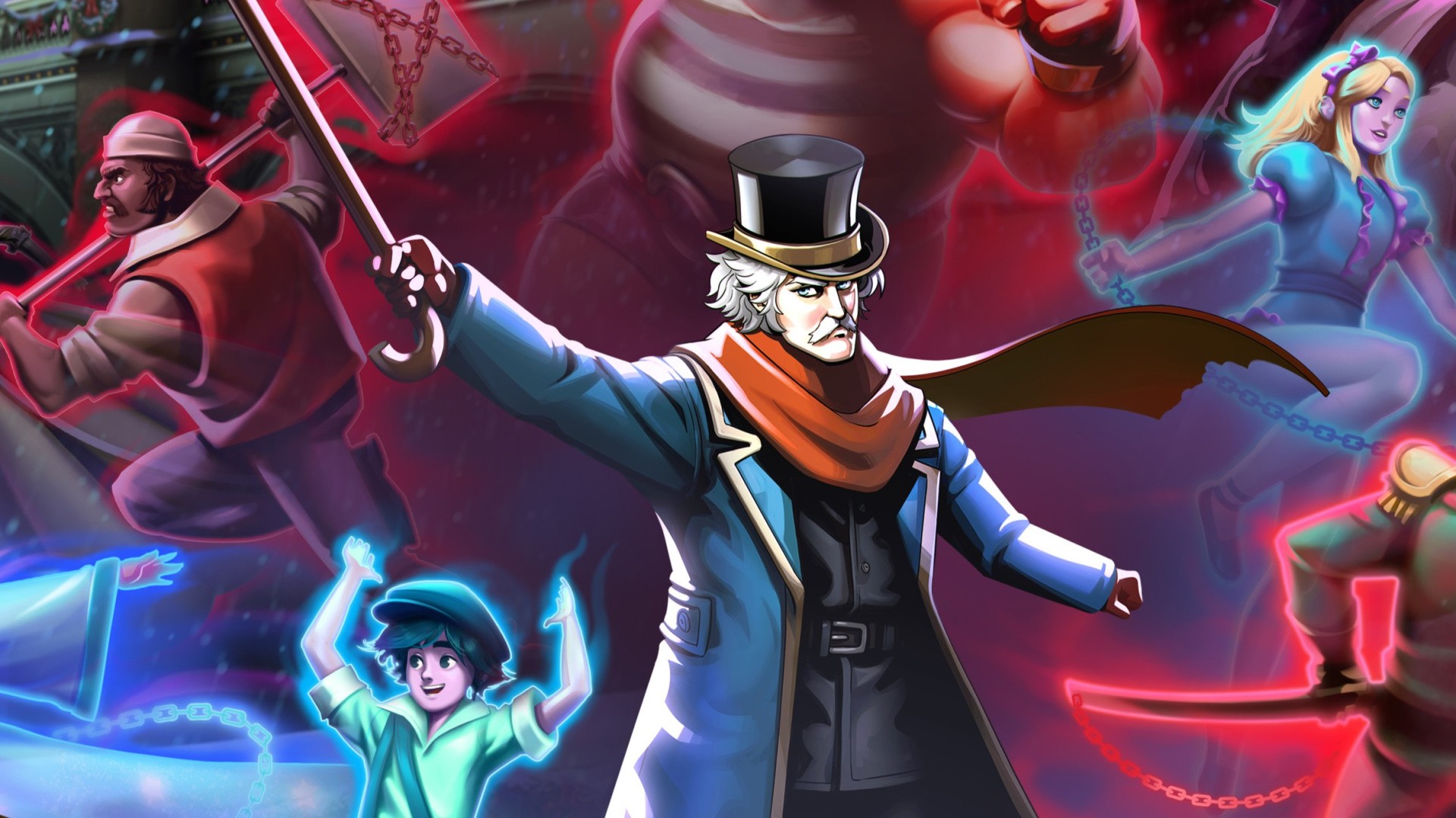
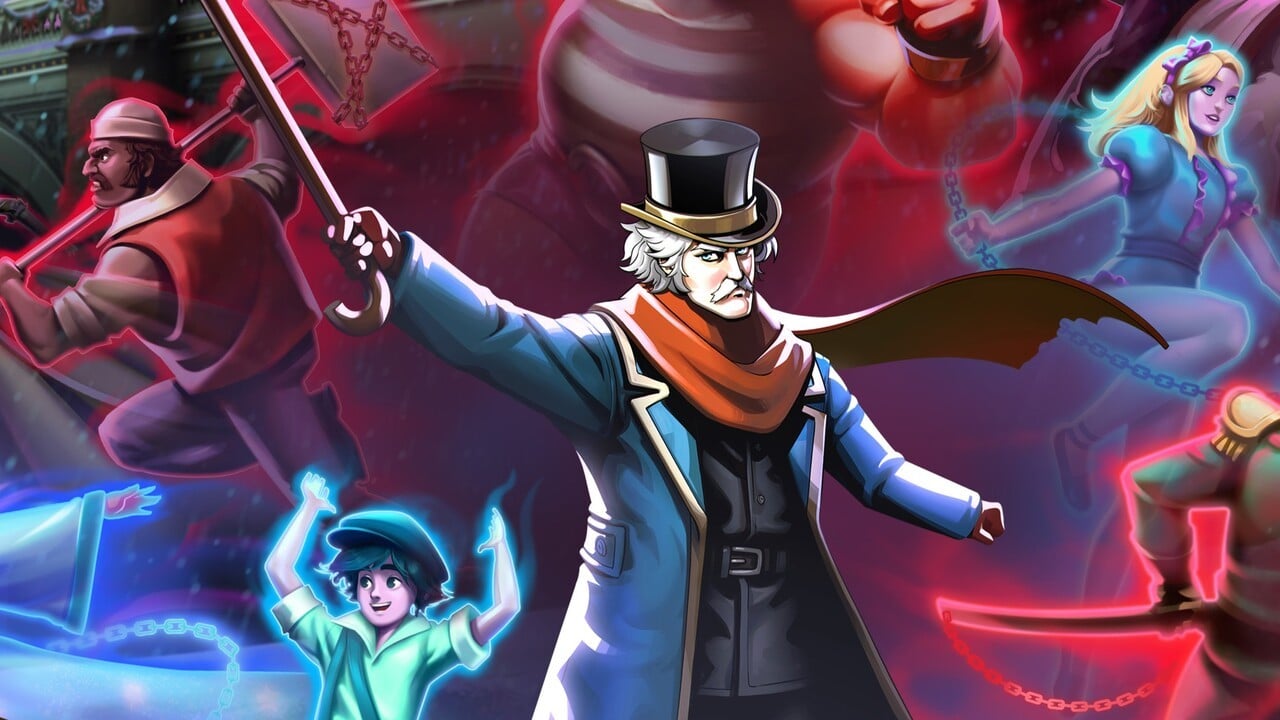
A literary classic meets a video game genre hybrid in Ebenezer and the Invisible World, a Metroidvania inspired by Charles Dickens’ classic novel ‘A Christmas Carol‘. And during today’s MIX Next online showcase, developers Orbit Studio and Play On Words have revealed that they’ll be giving the gift of action platforming to gamers across the land on 3rd November.
Yes, this really is real, and not the ghost of Christmas Yet to Come. Ebenezer and the Invisible World is a beautiful-looking hand-drawn Metroidvania that sees Scrooge be anything but a Scrooge. Following his story after meeting the ghosts of Christmas Past, Present, and Yet to Come, he brings hope to the people of London and can resolve the problems of the many unsettled spirits.
All of the standard bells, whistles, and bows of the Metroidvania genre are here — Scrooge really will get to use swords and axes — but the fun thing will be collecting the many heirlooms such as Hannibal’s Satchel to customise Ebenezer’s skillset.
This will be a holiday season to remember — and you can find out more from the details below:
Dash through the cobblestone streets of London, encountering malicious phantoms and Malthus’ private guards along the way. Fortunately, Ebenezer has spirits up his sleeve. Summon familiar ghosts with distinct abilities, including impressive attacks, movement skills, and potent buffs. Repel the Unrepentant Ghosts lingering in the wake of the Dark Spirit’s return.
Investigate awe-inspiring locations including the magical London Observatory, the underground Necropolis, and the Old Bedlam Hospital. Traverse the invisible world, solving puzzles, collecting rare materials, and defeating ghastly bosses along the way. Master an intricate Metroidvania map filled with gorgeous, hand-drawn art with frame-by-frame coloring and animations, set to a dramatic soundtrack of reimagined Holiday favorites.
Customize builds with ghostly weapons like swords and axes, and precious heirlooms including Hannibal’s Satchel, Maria’s Charm and Sibyl’s Crystal Sphere. Craft items and unlock new abilities and upgrades to ensure survival. Take on sidequests and encounter friendly NPCs, each with their own harrowing backstories, that may lend a hand in times of distress.
Ebenezer and the Invisible World brings a Christmas miracle to Switch on 3rd November. Will you be wishing for this under your Christmas tree? Tell us in the comments.
Squishmallows toy manufacturer Jazwares has revealed the next two Pokémon-themed Squishmallows.
Clefairy and Teddiursa will be getting the squishy toy treatment “soon”, bringing the Squishmons up to eight. Currently, you can get two different types of Pikachu, Gengar, Snorlax, Togepi, and Piplup.
While we haven’t seen what the plush versions of these two newcomers will look like, the design concept shown in the official Squishmallows tweet gives us a good idea. Look, it’s round, it’s cute, and it’s probably going to be soft — that’s a win, right?
You’ll need to be quick to snap these up when they drop, as the Pokémon Squishmallows have proven extremely popular in the past, selling out within minutes online.
We’ll let you know when Clefairy and Teddiursa become available. For now, let us know what you think of these two new additions in the comments.
-----BEGIN PGP SIGNED MESSAGE-----
Hash: SHA512 The PHP development team announces the immediate availability of PHP
8.1.23.
This is a bugfix release. All PHP 8.1 users are encouraged to upgrade to this version. For source downloads of PHP 8.1.23 please visit our downloads page. Windows
binaries can be found on the PHP for Windows site. The list of changes is
recorded in the ChangeLog. Release Announcement: <https://php.net/releases/8_1_23.php>
Downloads: <https://php.net/downloads>
Windows downloads: <https://windows.php.net/download#php-8.1>
Changelog: <https://php.net/ChangeLog-8.php#8.1.23>
Release Manifest:
<https://gist.github.com/patrickallaert/041d0e12ecbad72018b7b0f29b248b82> Many thanks to all the contributors and supporters! Patrick Allaert, Ben Ramsey & Joe Watkins php-8.1.23.tar.bz2
SHA256 hash:
929a62785177da892ddffca074bab2f1ff578473a0d4adb915c12f5f3e34ec1b
PGP signature:
- -----BEGIN PGP SIGNATURE----- iQIzBAABCAAdFiEE8faSI4+8FmblpczUGZ+d/vb/uv0FAmTu/QIACgkQGZ+d/vb/
uv1K2A//fgPNcTT9etiGqu0iiN84LHIwgC2WF5nQ9evoB4R3QKmsjk2wP6Q9jPys
wNLqecyjgfJ5s3uizcnY1BC5cXnzCnuyd0hN58vEhv144pt10AkLriIMK2BbRMMH
AF8lcL1uhWcT6bItJOk/UlMEu5SPuwotz/o10oxWS7EqsAzgTRntnIjaDl/E3OTn
vTFooz08PMHaGywomcMBR5YZBEY7ScCq47Qy8V3ocu7QrYRDFYYRSWjJ/hj4iyPk
vFzu4SrxVJKzJIJO18JcAzIieOEfJeDc2sYtoHIxXTBVvYgyzNyb4dP+Y0TU3sb7
HKLwxm9h/s5pMW4DVAeT9SafAyfXAohoWnNzUkFOU/wg0ZrFWHui9gTsfLOUEGFe
+Gec6PRjwKhgN3ANxbATSWd+aU4rveK5GQZkiwP+b/oclxizO6GwbYvhAm0m6Rk+
h7ZU1/uCI39p7yvmZmNdRyJVgpcDBmZywRsSAPUPSACRAJUl2GSePSjnHxNS0CFy
oLPdE05ng6373bMqEDs7wF9cS2ZYcHESsYjkA96NxswDjly9Gb9P7joYCcODzws5
tiRjwDzzM/2G3GgB5/4iiux05U4j5oDAQEoEkk+j65aCgPV8Eo2N+O/6l38Mh6JT
z5SrLvaZO7gX8PA9Bja9JpWHujxN/h0Ry4AysxBh6S/6J/fHMps=
=w3+6
- -----END PGP SIGNATURE----- php-8.1.23.tar.gz
SHA256 hash:
ec5330b3978edc8fe2f78830720505bf69d12542622b5cddccee63ae3a0e5b58
PGP signature:
- -----BEGIN PGP SIGNATURE----- iQIzBAABCAAdFiEE8faSI4+8FmblpczUGZ+d/vb/uv0FAmTu/QIACgkQGZ+d/vb/
uv0luA/+JDk76MTVQb0vMy0nwPv/kOmZEdeg9/Ls7wNg4z95oNPynUFZfVjLdw4r
6Ihbb706/SW6uB4FutNzbu2sC5D7jGN1GBzAJij/o83UScywOyVctOydwcx94akw
GeYJRowPLpEiNCf61tVvGcyTxdj3FQYvjUfcOkCh4UMcwbsXRJziU4XCLhkdODT/
uy56AMrUgzu2N7I0k2rSGi5U8aAJD7Zj5wXgQqauUo+PFsu8o/ccNm7PHNkj4CQW
8Qqk3nHU45Xx3iXl29k0Xt9PyUCR1QufkMKMHJi2Q0VZ97X2wZkoWFZsWM/9sSVo
815szOyJmL/yjDJEmuKlWz+GrFLTxQ6GSSP23vVUoPEI8r7+4xxtmefuk5qs3aVL
ii1+akyPh+ICm663Y3yJ64XCE4ZMeynBP4erJj2ip6QYDzeuitmmpzaiVjh1RHHc
S0iLsSWZuOswk/DPnAcw4ZHY6bcM9O7+SvhQod6/6/II7/weBBtN18z3EHRqjAhs
OQ4W++/tW1hUWyOcDgTJ8PUzbVKwnplzrvsG4aMXEdUJRbyMCrBvuneUgpN9NiHO
6k2x1csH16m8nk9n570gBnIEZf/PDQc0Olv0tcgnK6CpYIxwSchHuNBuxo/Yxsaz
DItUHE9/44sz+8GjQbqTR1zgwxsQe4PS4NVqv5wEy44u9wkPLQg=
=a3bN
- -----END PGP SIGNATURE----- php-8.1.23.tar.xz
SHA256 hash:
fc48422fa7e75bb45916fc192a9f9728cb38bb2b5858572c51ea15825326360c
PGP signature:
- -----BEGIN PGP SIGNATURE----- iQIzBAABCAAdFiEE8faSI4+8FmblpczUGZ+d/vb/uv0FAmTu/QIACgkQGZ+d/vb/
uv0B2Q/8CufI5pitSgVdeP19sRlA3mcT7jRtXmEmq9fHJdNkltb2kSs9810mflgZ
dGMF2A+NwrWCA79+nKdql1yPV4D+71ueqZmwHl6nSLL5e3i5JaIOjg7SlCPENXT8
UovYwe8U08x/VW5sbgJMsvpcwOnh3kJytZCqBz5iBUg9gCYqAmZB9mL0luKLP9kZ
7kDOTTGxYOfzVMnP7Pz3fhNjXA0iNFaBOVHwCv+o1N4rSxpU6VV79sV5HKMVmFv0
pas4WruViL1qOVXZ1OLUETOJypxGj9/7NEk2UcxZyVns6VUyAgDddDa2uXCNU780
LpsQ4abMTcYdWoZ0JOFG5GEjqVpGbDWkANsBie9znd0Ny0ibkaoE61mfimPIdZ2M
mBRoCdWjf26STb4AQWTd0hsenxKUrj3ft0ZZhieMQhTQZ1igc1Zg/1uFfl5A/zEk
0h5l75turfk7qt0fQW+n4E/cpQEDZQXAkqgZGj+aW7KHHHqzKIdTXjLmThvPtrxX
PkxHH6R6zhnCdGJyFCiZj/jJFQgn2aAKKdGkj3ntg5wwqCYVUhV0YiKzFesteNSH
X3QBCpTTYOlR17GYSbtSqOjzdnoWRoB3tXX00MjYQ7cGa7/+aDwmXdhbei7FA6nI
1OBIRju1YO/6vsdyqCTdI7jeeXiQCrYAmfBLGwCPVeDtmC0bQzA=
=wLe0
- -----END PGP SIGNATURE-----
-----BEGIN PGP SIGNATURE-----
Version: FlowCrypt Email Encryption 8.4.8
Comment: Seamlessly send and receive encrypted email wsFzBAEBCgAnBYJk8MwuCZAZn53+9v+6/RYhBPH2kiOPvBZm5aXM1Bmfnf72
/7r9AAA20xAAvOzH5qgtUHM31ZUxifK37pWDk42kMSqYtC60JAISTS0HdY4Z
QFDCiTwkPaoZ+NVco0NwTFX1NIxgfuCHTUpy9J+/JWu9srSdQAvsUTlMptgj
h7jNDFJ878UOg1+sC0S746eDhGWpzEsLUd06mglSrenZz5EtkQ22CUTQk699
DdTjYAj3QjdS+H05ggGVmiLjCfu2wBBYwKJPpiw3oKCDd0J83p0SILi6zXBq
sWwkuSyrq6Aj93aXzWlGjxaMOPLLa2h1KdTqusFlT98BUvGuIdvsah9vHV21
3xnuuc9hZ9AdbtZXG/CSDFWebZ/h4XDmr7p87cnc2+IHGl+259BGUYngZLVy
dBCS9wHkY/Lz5M/qb2fgkI11l2WYqRaXMSLXqLjeKsFMpzYFSO9S9jfZgL8P
zfrTyiE3Na2zp5wJjxfQKvF63GkJOSLH6SiTF6BvJWmlhQncqpaStPbGO/4Z
vZvN9hzNuJPaexwDj8sv5yoAIbxTbXMehNDT0F2/6G7uFFU3B0OQd5rZKSnV
SaxswRk6oFtk29X/WSfNFbMhj6oj4V5gqTSSJORVsUObD6l5AdT/+1LkPYGd
dC35l+fG5kxLUu7DefeIstN9CPkqDsCX8kShJXVCgwMVXk2Y7OHD1FEa9Uvx
50lfcrtzuJbyhgGgOhhzh2YX/4qJEHPQEvA=
=7Hpf
-----END PGP SIGNATURE-----
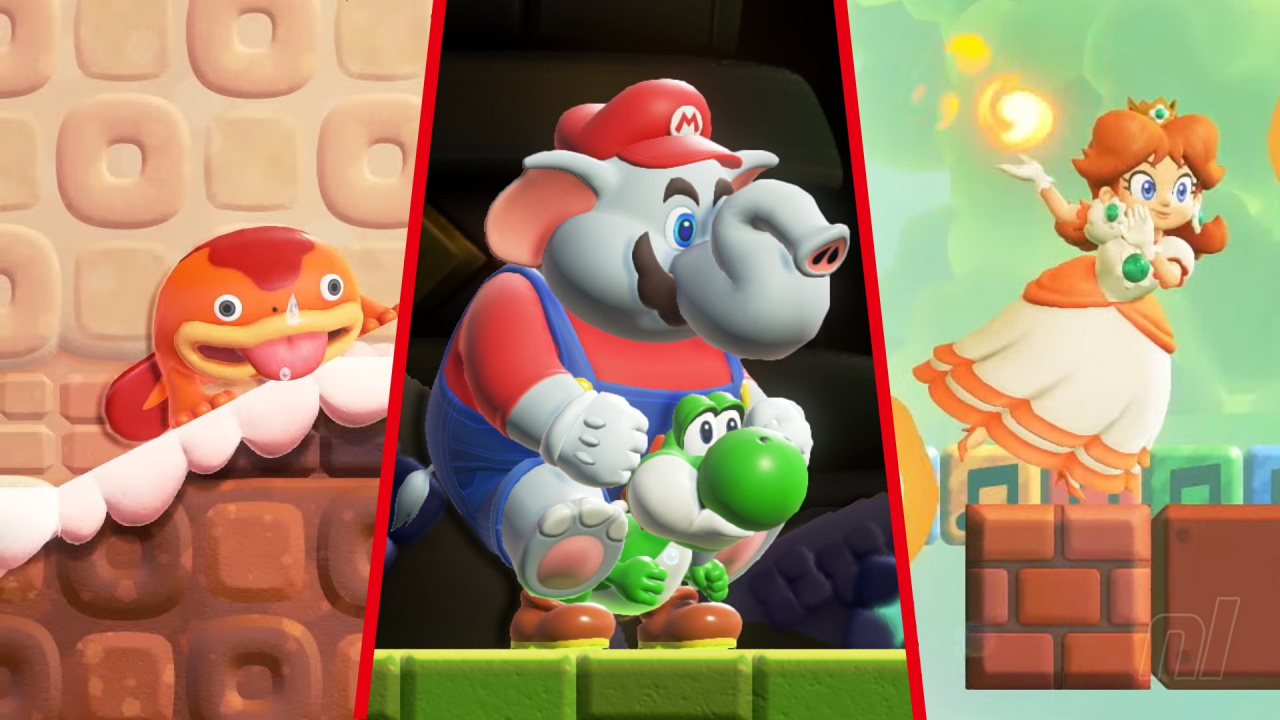
A brand new 2D Mario is just months away, and today, we got an in-depth look at Super Mario Bros. Wonder, the first new 2D Mario in almost 11 years.
Today’s Nintendo Direct didn’t give us any shocks, per se, but we have a better idea of what to expect from the Flower Kingdom, how to play online, and some new enemies and power-ups.
Here’s everything revealed during today’s Super Mario Bros. Wonder Direct.
Super Mario Bros. Wonder Direct – Every Announcement And Detail
Prince who?
Image: Nintendo
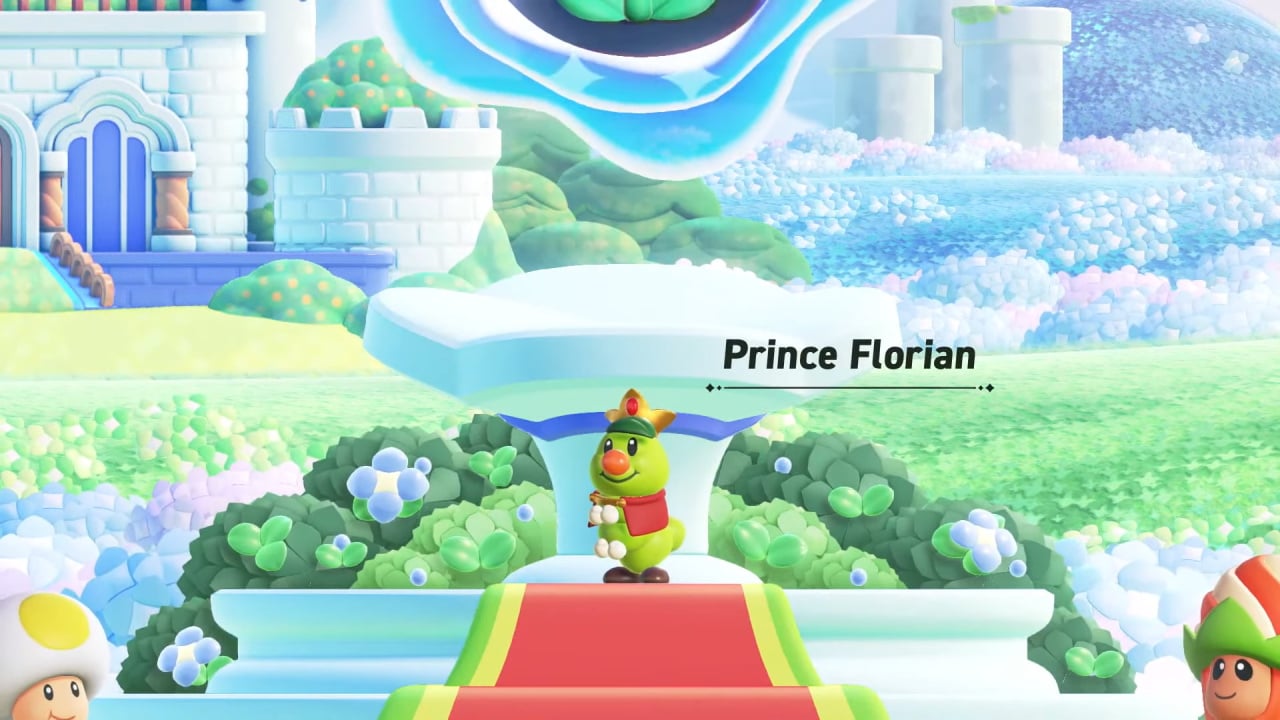
Remember the cute little caterpillar on the game’s main art? Well, it turns out he’s a prince!
Prince Florian is the ruler of the Flower Kingdom, and his castle is taken over by Bowser. Florian then teams up with Mario and friends to help them on their journey. He’s not playable, just extremely cute and very noble. We like that in a prince.
New worlds and levels
Image: Nintendo
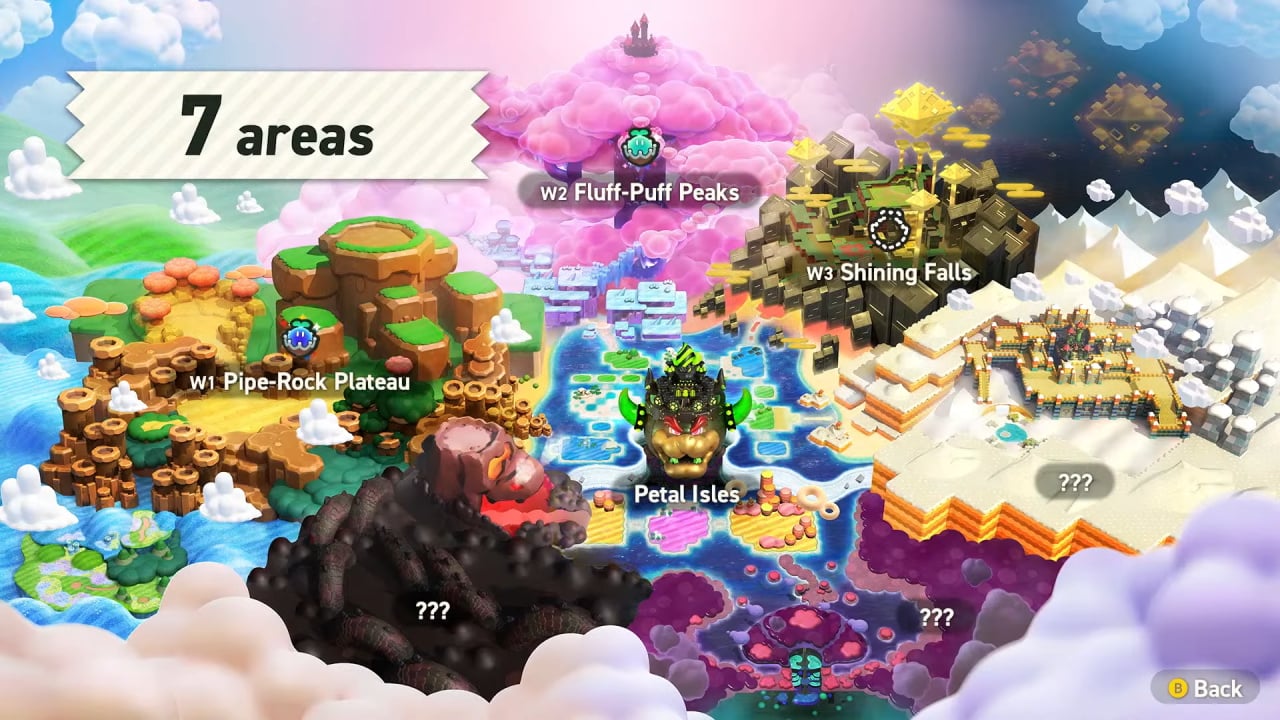
The Flower Kingdom is a brand new setting for the Mario series. Made up of seven different worlds — six islands that surround the central Petal Isles.
Other locations have been teased — such as a desert area and a poisonous mushroom forest — but for now, let’s go over the worlds Nintendo has named.
Pipe-Rock Plateau
The Starting world, and very much like your traditional starting Super Mario world. Many of the mountains and hills look like pipes. Dinosaurs and grassy plains await Mario and friends on their adventure.
Fluff-Puff Peaks
A blend of a winter wonderland with mystical, fluffy clouds, Fluff-Puff Peaks is situated high up some snowy mountains and will give Mario a bit of a chill. At least until he reaches the top, where he can venture through the cloud sea and go higher than ever before.
Shining Falls
Golds, browns, and bronzes make the Shining Falls glisten under the cascades of the waterfalls. Lots of moving platforms and cave networks seem to make up this world, while big snails and water enemies lie in wait.
Petal Isles
The central area of the Flower Kingdom, the courses in this world vary from deep caves to sprawling seas. This looks like it connects to all six other worlds, so we’ll have to see how this comes into play.
Open areas
No, 2D Mario isn’t going open-world, but this little feature will help people play their own way. In some of the worlds, there are open areas that allow Mario to walk around freely, which lets you tackle certain courses in whatever order you see fit!
The traditional map structure is there too, but this helps Super Mario Bros. Wonder feel fresh.
Once you’ve beaten a course or level, you can select it from a menu, which will warp you directly to that level on the map.
What do the talking flowers do?
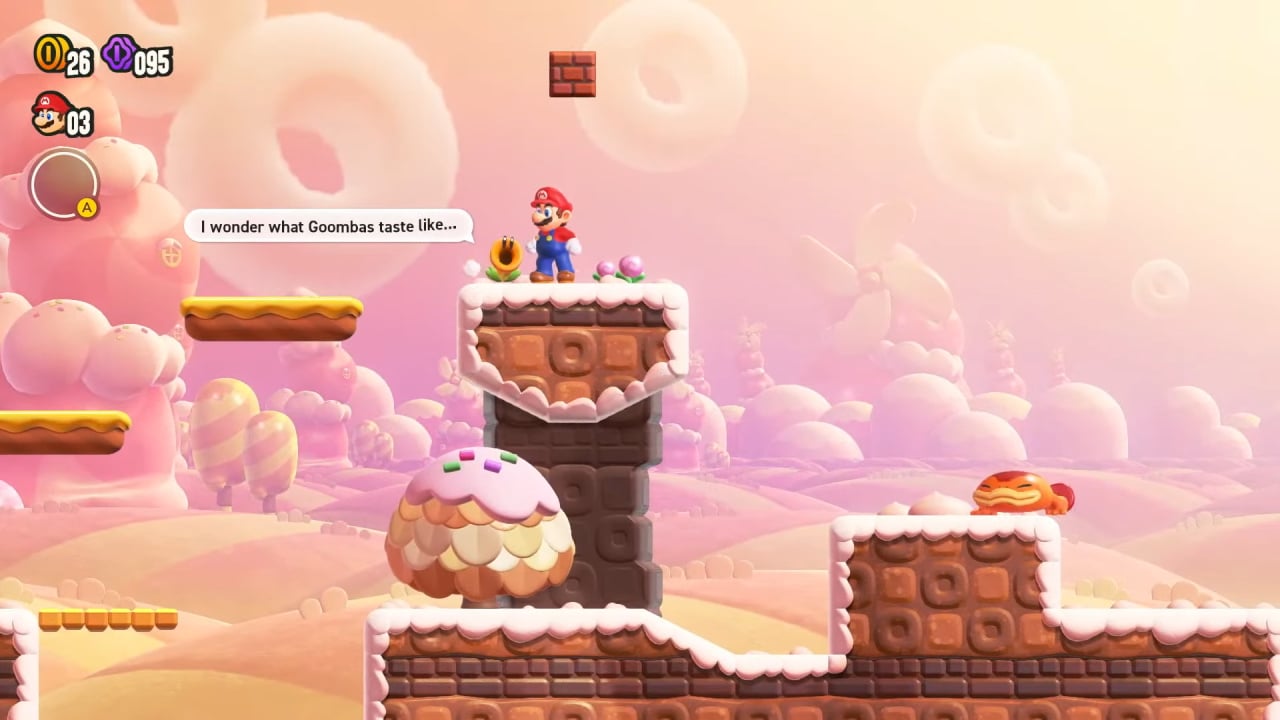
Seriously… what are they for? The talking flowers have featured pretty prominently in the trailers so far, and they had their own little spotlight during today’s Direct.
They add flavour and personality to the world — talking flowers in the Flower Kingdom makes sense, right? But otherwise, it doesn’t look like they benefit Mario other than perhaps commenting on the scenery or acting surprised when you appear out of nowhere, dressed as an elephant.
Image: Nintendo
But don’t worry, they’re not just decoration — these flowers can give you hints for your adventure, but some will also give you coins if you water them. How do you do that? Well… we’ll get to that.
All characters play the same
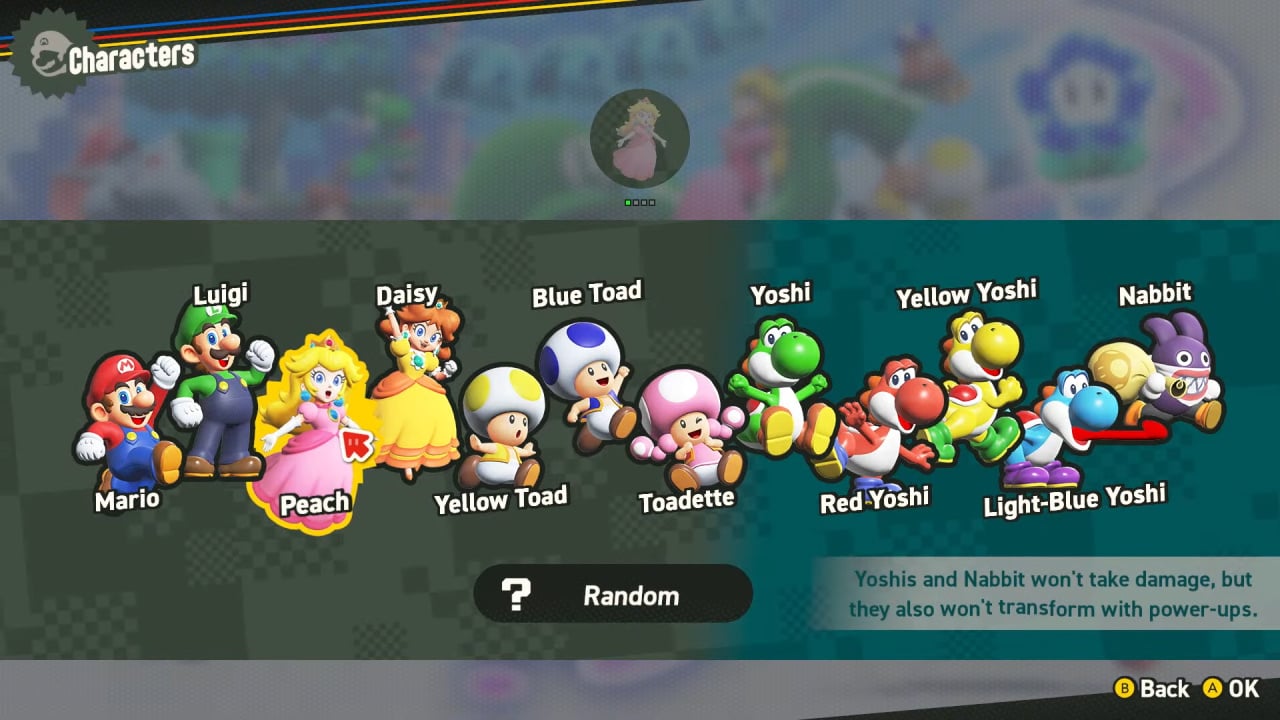
There are 12 playable characters in Super Mario Bros. Wonder — five of which are a little more unique than the rest.
But in terms of the normal cast, we have Mario, Luigi, Peach, Daisy, Yellow Toad, Blue Toad, and Toadette. It’s fantastic to see some of these characters in a 2D style Mario game, and you can play as whoever you want whenever you want, but today’s Direct also stated that all of them play the same — so no floating with Peach or no high jump from Luigi.
Image: Nintendo
There are a few exceptions to this rule, however, and it relates to those five characters at the back.
Nabbit is back!
New Super Mario Bros. U favourite Nabbit returns in Super Mario Bros. Wonder, and he brings the same benefits as before. he’s basically the invincible mode of the game, and while you can still lose a life, it means you can run into enemies without fear of losing health.
Playable Yoshis
Image: Nintendo
Four different-coloured Yoshis are also playable in Super Mario Bros. Wonder — and you can pick from Green, Red, Yellow, or Light-Blue Yoshi. But they come with a twist. They don’t take damage, either.
Just like Nabbit, Yoshi make the player invincible to damage, but can also lose lives. As an added bonus, the little dinosaur does have his flutter jump to let him get higher up much easier than the others.
Tons of new enemies
Goombas, Koopa, Dry Bones, and Lakitu are all making a comeback — would it be a Mario game without them? But there are a lot of new enemies to encounter in the Flower Kingdom, too. Nintendo touched on a few of these during the Direct, but we also spotted some extra ones that we know very little about so far.
Let’s dive into what we know.
Hoppycats
What looks like a harmless little mound of green stuff, Hoppycats copy your character’s actions — specifically, your jumps. This can make it tricky to get over them, but they’re kind of cute, right?
Image: Nintendo
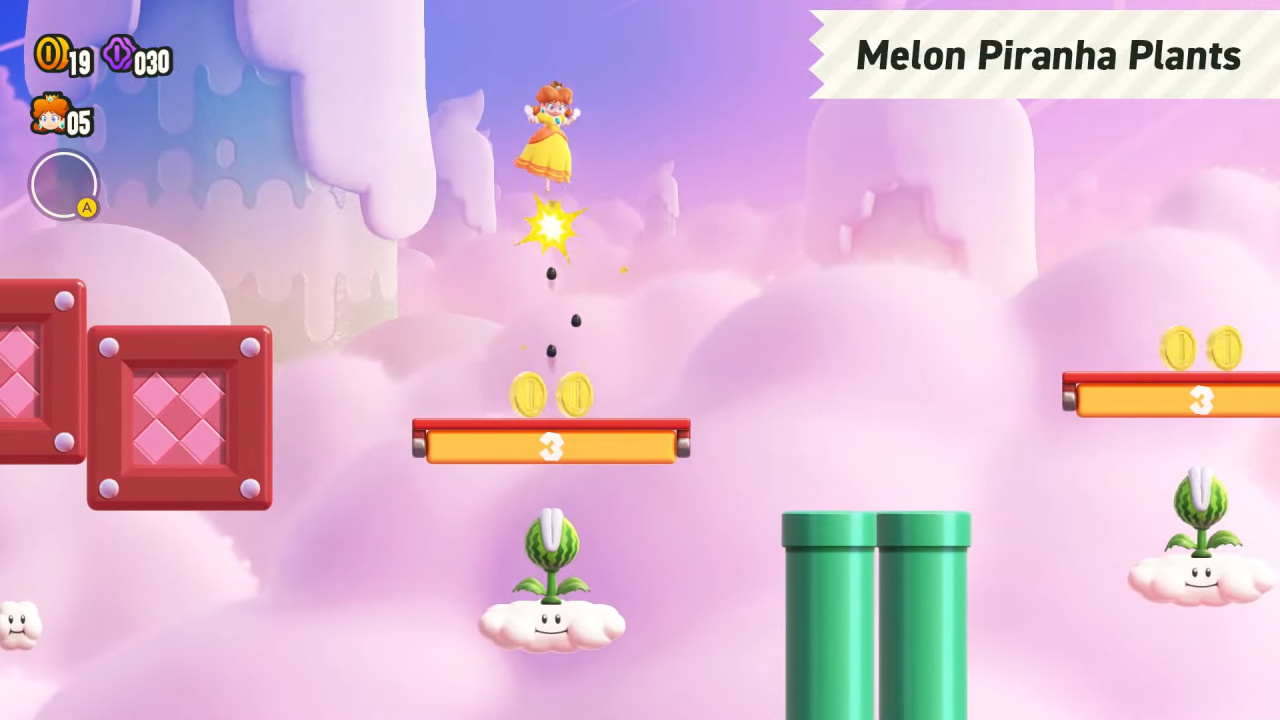
Melon Piranha Plants
A new melon twist on the popular enemy, Melon Piranha Plants look like melons — we bet Yoshi is keen on these. They spit seeds out of their mouths as opposed to fireballs, and it looks like you can bounce on top of those seeds, too.
Condarts
A new bird-like enemy, these hang from the ceiling or wall and shoot themselves towards you, often getting stuck in the wall or floor if they miss. They can also destroy blocks, from the looks of things.
Image: Nintendo
Konks
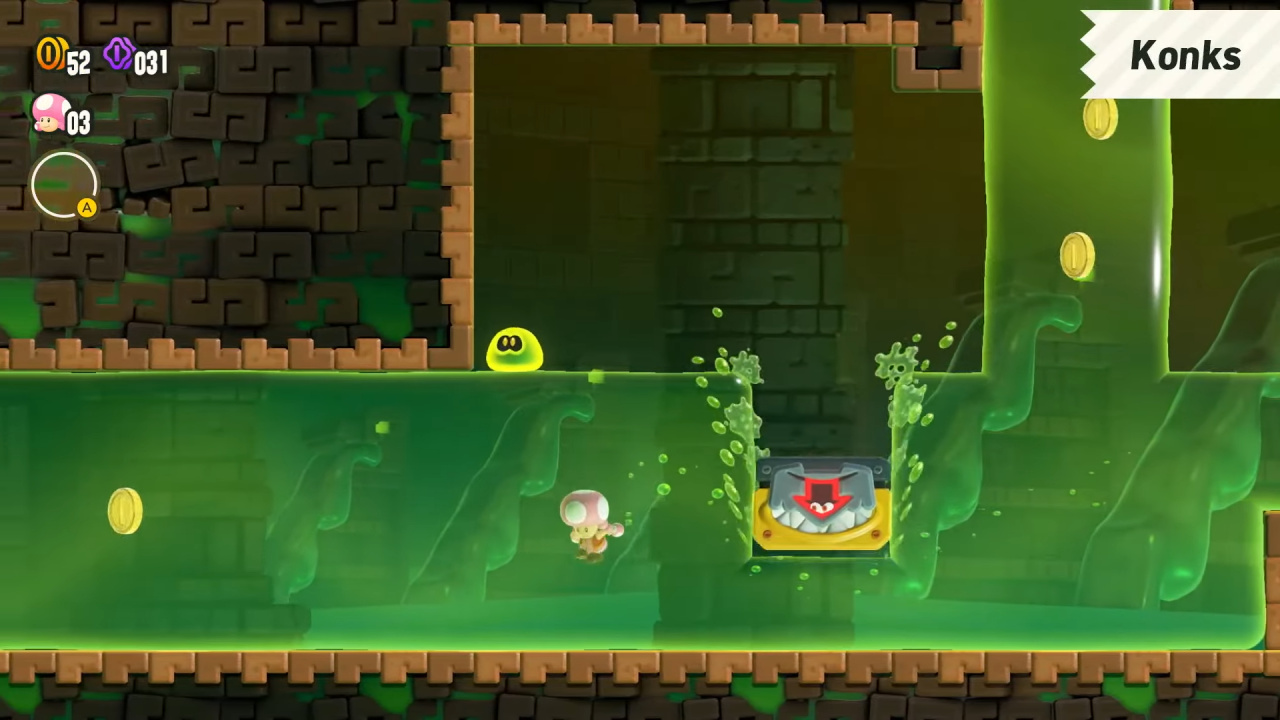
We reckon Konks are in the same family as Thwomps and Whomps. These are big blocks that like to crush things, but these can even push through the ticky, sticky goo you’ll find in the Flower Kingdom’s more sinister areas.
Mumsies
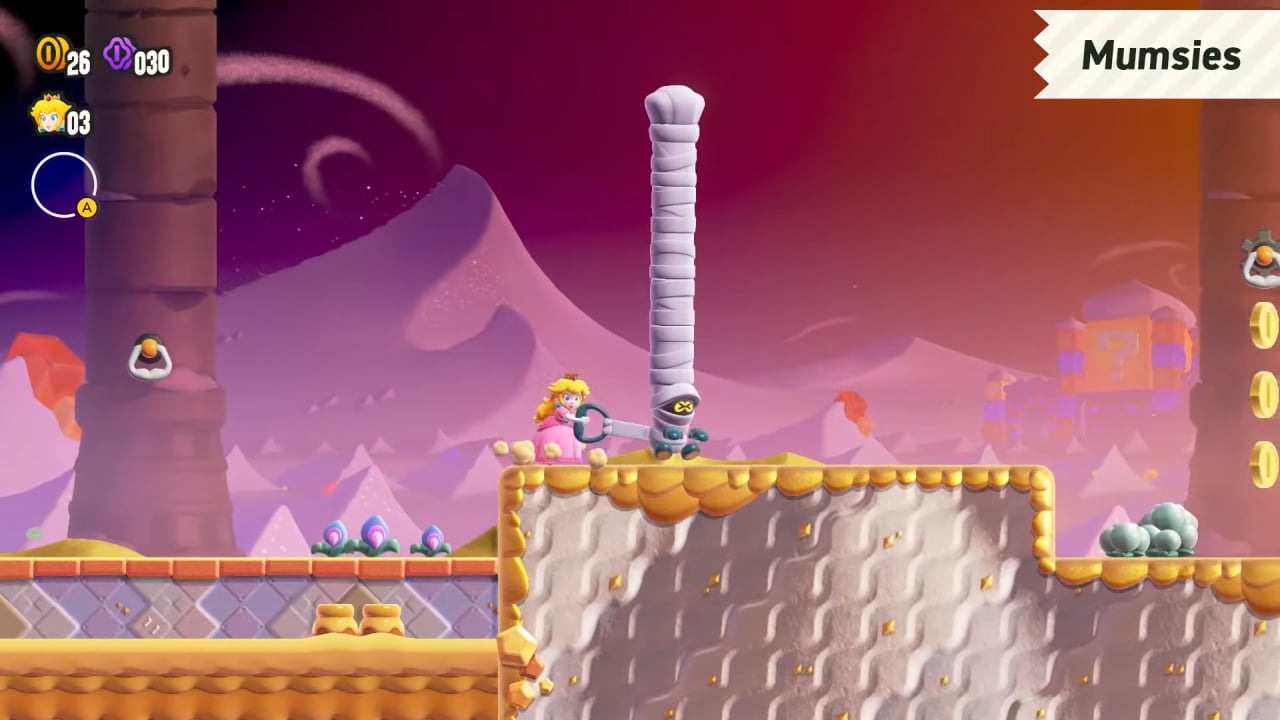
We’re not talking about flowers or pet names for parents, here. Mumsies are mummified enemies that you can actually unwrap to reveal… well, nothing, just coins.
Image: Nintendo
Maw-Maws
These might be our favourites — flat, platypus-like creatures that eat up everything in their paths. They look so goofy. You can lure them into other enemies, and they’ll gobble up Goombas.
…and the rest!
Lots of other foes were shown off during the Direct, but many didn’t get a name. There’s an unusual chipmunk-type enemy that you can chase through levels, giant snails with shells that react like a Koopa Shell, and those chunky dinosaurs.
Three new power-ups
Image: Nintendo
A trio of power-ups are making their debut in Super Mario Bros. Wonder. We’ve gone over these in some detail elsewhere, but let’s give you a brief summary of what these are.
Elephant
Go big or go home with this new power-up which turns Mario, Luigi, Peach, Daisy, and everyone into an elephant. This makes your character bigger, stronger, and lets you run across big gaps.
Bubble
This bubble-blowing power-up is great for taking down impervious enemies, but you can also use it to create platforms to get to hard-to-reach areas.
Drill
Mario gets a little drill hat with this power-up. You can use this to drill through the ceiling or the floor, which will let you get past obstacles.
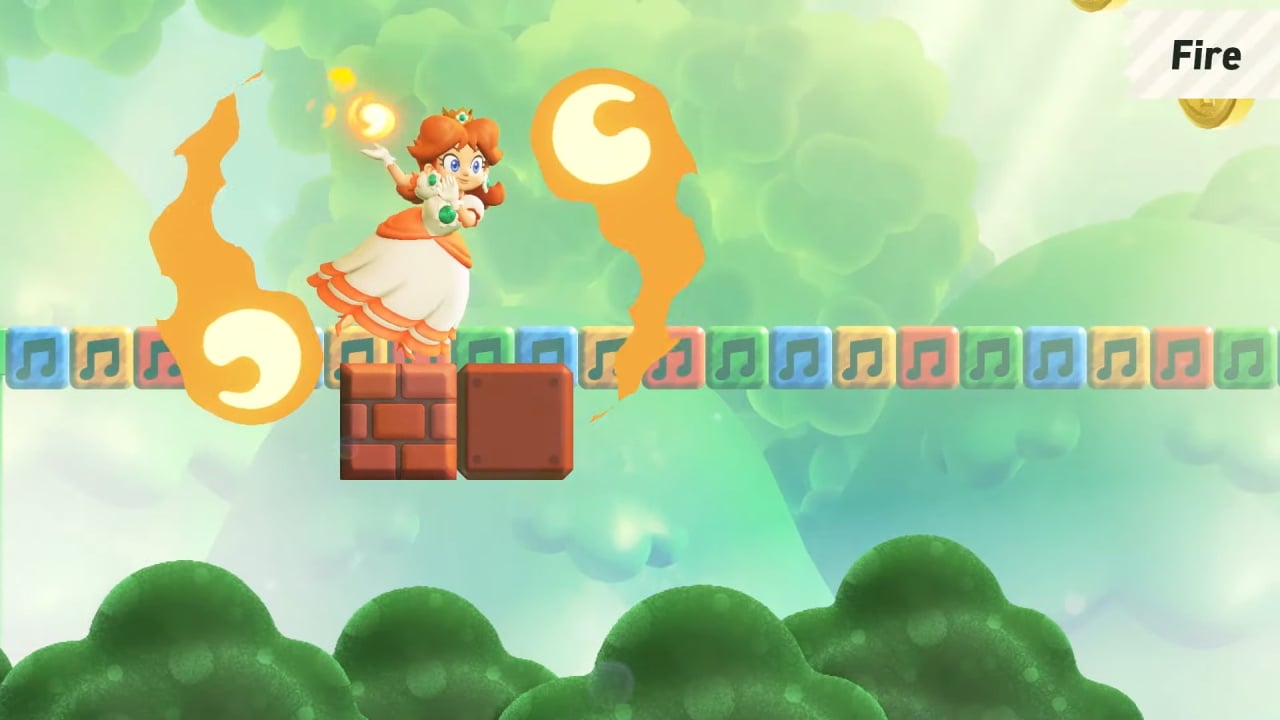
Daisy can use the Fire Flower!
Finally. We know Daisy fans are already happy with her inclusion in a new 2D Mario game, but seeing Daisy use the Fire Flower just feels right, you know?
How many people re going to play as Daisy in this game? Everyone? Okay.
Image: Nintendo
The Wonder Flower gets weird
Super Mario Bros. Wonder’s name likely comes from the Wonder Flower, a special flower that shifts reality in weird and wonderful ways. it’s the power that Bowser claims at the start of the story, and the one you sometimes need to use to get through a level.
What this does is trigger a Wonder Effect in the level you’re in. This can do anything from summon swarms of enemies, turn Mario into a ball, send him to space, or blow tons of bubbles around the level. When this happens, you need to find the Wonder Seed to revert things back to normal. You’ll also need Wonder Seeds to unlock some levels, so make sure you seek out those flowers.
Nintendo said to “expect the unexpected”, and with how wild some of these shifts are, we’re excited to see what else the Wonder Flower has up its roots.
Badges galore!
If you’ve played Paper Mario or Mario & Luigi RPGs, then you might be raising an eyebrow here — but the badges in Super Mario Bros. Wonder are a bit different, though they are working on a similar level.
You unlock badges by spending Flower Coins, saving Poplins (the residents of Flower Kingdom), or clearing Badge Challenges. Equipping a badge will change the way you can play, giving Mario and his friends some new abilities. One badge allows you to dolphin kick underwater, while another lets you do a wall-climb jump to just directly up a wall.
Some badges will also help players out if they’re struggling — there’s a badge that gives you a safety bounce, for instance, and another that gives you an item sensor.
Orange badges are called Action Badges, while Blue badges are called Boost Badges. There are some yellow ones at the end here — we think these are the badges that can turn you invisible and cause you to constantly run, which means they add some extra challenge to the game.
Poplin Shop until you drop
In some areas of the world map, the Poplins will have shops set up for you to buy items from. These include the aforementioned Badges, as well as extra lives, Wonder Seeds, and useful items for Online Play.
Four-player local multiplayer
It shouldn’t be a surprise to anyone, but local multiplayer is back. Up to four players can play together on the same Switch console and work together to get through the game.
There are lots of benefits to playing with friends, but one addition is the ability to save your friends if they lose all of their health. When you “die”, you turn into a ghost, which when touched by an ally, you will be brought back into the game. Want another big benefit? If someone is playing as Yoshi, you can ride Yoshi.
Yoshi can ride Yoshi
… that also means that if two people are playing as Yoshi, then one Yoshi can ride another Yoshi. Oh goodness.
Image: Nintendo
…and Elephant Form can ride Yoshi
Though the scariest thought is the fact that even if you’re in Elephant form, you can ride Yoshi. Poor guy is probably getting very squished like that.
Online play is a bit different
We knew some kind of online play would be coming to Super Mario Bros. Wonder, but it’s not as straightforward as you might expect. Online co-op in the traditional sense is gone — if you want to play the game normally with friends, then you’ve got to be in the same room together, sadly. That doesn’t mean there aren’t any unique or interesting additions, though.
Online play
Online play means you’ll see in real time where other players are in the game. You’ll spot their Live player shadows on the map and in levels, and you can bump into a shadow to revive yourself if you lose all your health.
If you spot others in-game, you can send them a greeting or share items in-game with each other to help them out. Nintendo puts this as a “subtle connection” between players, which is a nice way of wording it, we think.
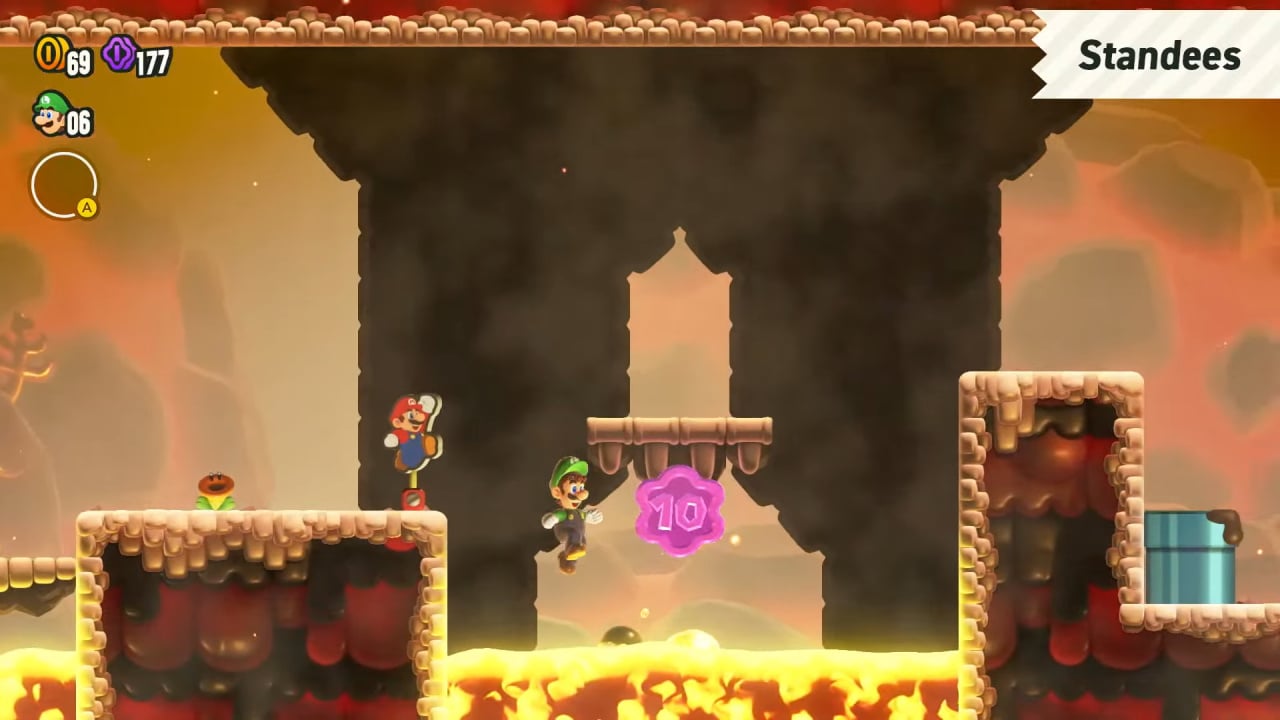
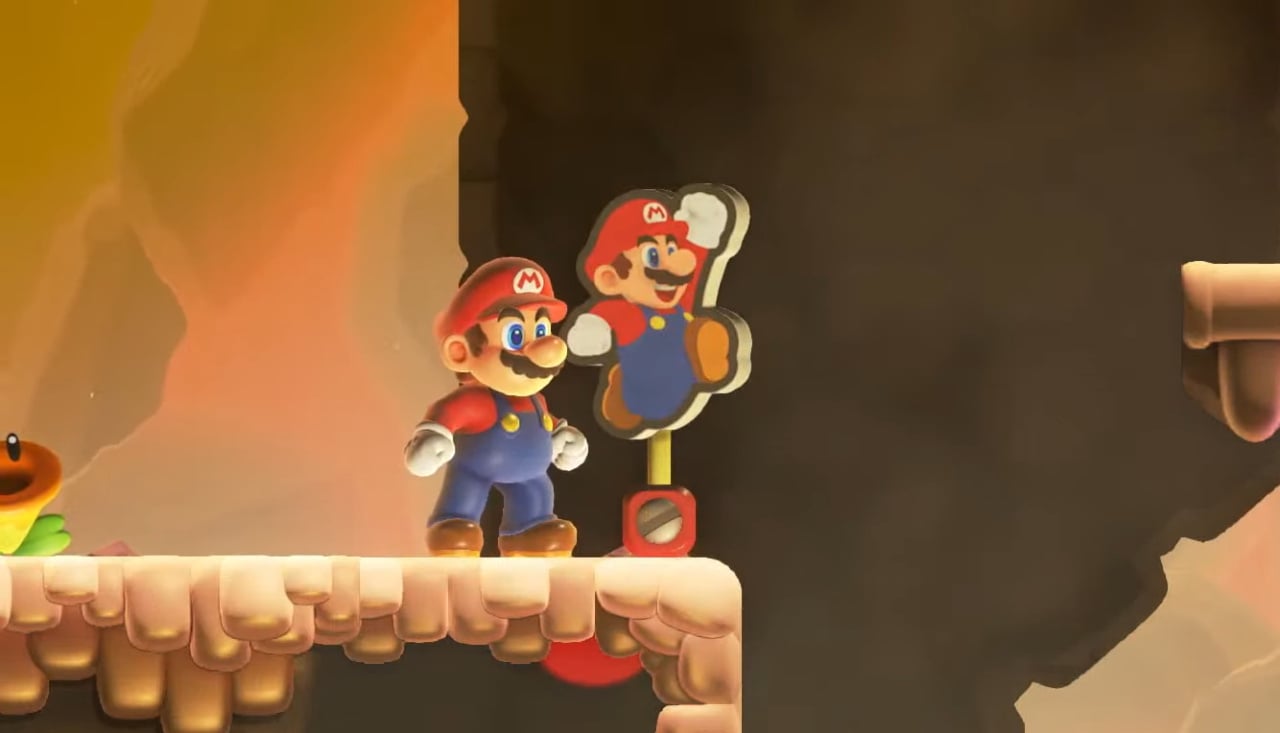
You can also place Standees in levels now. These are handy for difficult sections, as they will revive ghosts who touch them. Standees also display Heart Points, showing others how many people you’ve helped out.
Image: Nintendo
Online multiplayer
As we said, online multiplayer is a bit different. You can still play with friends, but not in co-op play.
To play with others, you can create a room for friends to join. You’ll be able to see which levels your friends are playing, start playing through the course together (but not together if that makes sense), and enter a race.
This last one is called a Friend Race, and you and three others can race through certain courses together online in a competitive mode. Reach the Flag Pole, get a Wonder Seed, or defeat a boss first to win.
Mario Red Edition Nintendo Switch OLED
The final big announcement during the direct was the reveal of a brand new Switch OLED — the Mario Red Edition.
Featuring red Joy-Cons and a red dock (and some hidden coins), it’s a simple design that is sure to pop on your shelf. Check out where you can pre-order yours ahead of its 6th October release.
Super Mario Bros. Wonder is coming out on 20th October 2023, and it looks wonderful. What did you think of today’s Direct? Let us know in the comments below.
Publisher Atlus has revealed that the gorgeous 13 Sentinels: Aegis Rim — Vanillaware’s sci-fi adventure game RTS hybrid — has shipped over 1 million copies physically and digitally (thanks, Gematsu).
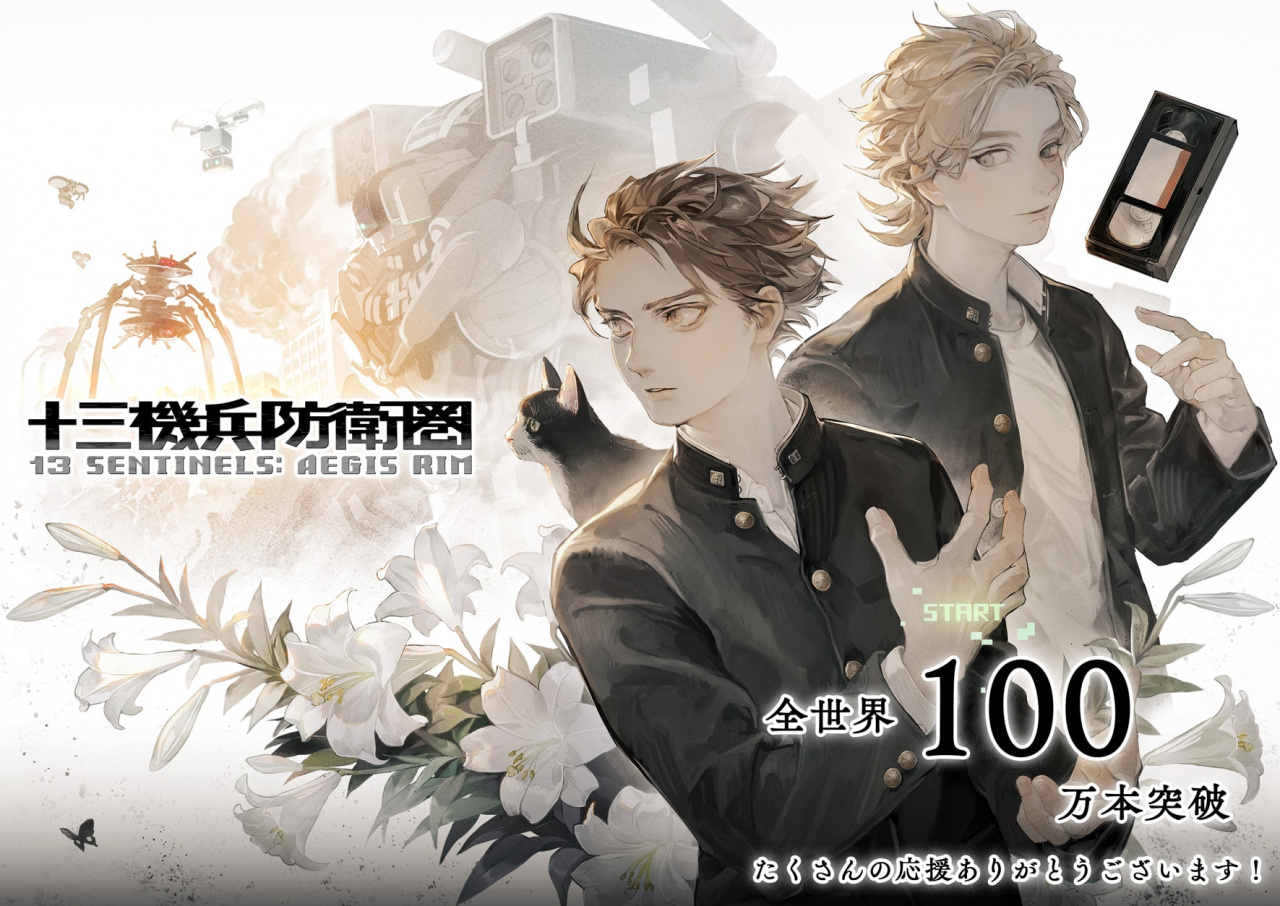
Atlus shared the news in a post on its official Japanese website earlier today, which also expressed the company’s “deepest gratitude” for supporting the game. The publisher also shared a brand new commemorative illustration from one of Vanillaware’s incredible artists, Yukiko Hirai, which you can see below.
Vanillaware is known for making beautiful-looking titles, each one with a unique twist on the genre it’s portraying. This new sales milestone for the developer is significant because it means it’s likely closing in on sales numbers for its best-selling title — RPG brawler Dragon’s Crown — which topped 1 million sales back in 2017.
13 Sentinels originally launched in Japan in 2019, with a PS4 Western release following in 2020. The game then received a Switch port in April 2022, which we reviewed and absolutely adored.
In recent times, we’ve also seen GrimGrimoire get a remaster on Switch, as well as the president’s desire to get Muramasa ported to modern consoles.
Have you played 13 Sentinels: Aegis Rim? Are you happy with the game’s success? Let us know in the comments.
Pikmin 4 has had strong little legs since its launch in July, and it’s taken until FromSoftware’s return to mecha to take it down. The PS5 version of Armored Core VI sits at the top, with the PS4 version right behind it in second place. In total, the game has shifted 163,342 physical copies.
Pikmin 4 has had another strong week, though, with 31,312 units sold in the week of 21st to 27th August. Outside of Armored Core’s explosive return, there aren’t many changes to the top ten, with Mario Kart 8 Deluxe and Tears of the Kingdom right behind Pikmin 4.
Here’s this week’s physical sales charts in Japan:
It’s a pretty similar story to last week in terms of hardware sales. Once again, the Switch OLED is at the very top of the pile, selling 52,125 units. Right behind it is the PlayStation 5, which has seen a small increase in sales to bring it up to 38,217. Interestingly, the Switch Lite has outsold the OG Switch model this week, with the handheld-only version of the console shifting 10,597 units compared to 8,980 units for the regular ol’ Switch. The Xbox Series X and S have seen a jump in sales, too.
Once again, shout out to the New 2DS LL buyers out there. Here are the week’s hardware sales, then:
The Super Mario Bros. Wonder Direct today shared details on the games online multiplayer, but one big surprise is that it doesn’t have traditional online co-op, really.
While you can play co-op locally with up to four people, Mario Wonder’s “Online Play” is completely different, encouraging you to create rooms for friends and participate in Friend Races. In these rooms, you can see what levels your friends are currently playing, and play those same levels — you’ll appear as a live shadow that can revive them or give them items.
One other neat addition, though, is a sort of Dark Souls-esque mechanic, where you can leave a standee in a level and any player online can touch it if they die to revive themselves. Standees can be bought from shops throughout the game, and there are more than just Mario standees.
The standees can reveal a lot about a player, too. If you touch someone’s standee, you’ll see their ‘Heart Points’, which shows how many people they’ve helped online by reviving or giving them items.
Super Mario Bros. Wonder is bringing lots of new additions to the Mario universe — aside from its changes to online multiplayer, we’re also getting three new power-ups to play around with.
Super Mario Bros. Wonder is coming to Switch on 20th October 2023. Are you disappointed about the lack of a traditional online co-op mode? Let us know in the comments.
I’ve read the expression of large language models (LLMs) being “Money Laundering for Copyrighted Data” on Simon Willison’s blog. In today’s article, I’ll show you which exact training data sets open-source LLMs use, so we can gain some more insights into this new alien technology and, hopefully, get smarter and more effective prompters. Let’s get started!
There’s a tectonic shift happening in software development. AI developers working for Tesla, OpenAI, and Google more and more focus on … data curation rather than explicitly writing intelligent algorithms.
In fact, Andrew Karpathy, Tesla’s former AI director, coined the phrase Software 2.0, i.e., software that is written implicitly by data and AI training rather than explicitly by coders. “Mechanistic Interpretability” describes analyzing and understanding how neural nets have self-learned and encoded algorithms in their weights.
One of the critical aspects of large language model training is the availability of diverse and high-quality training datasets. These datasets play a vital role in shaping the LLM’s understanding of text structure, context, and general semantics. Various datasets have been employed for training LLMs, depending on factors such as specialization of the model, size, and performance goals.
But where does the training data of LLMs actually come from? Let’s find out!
Overview of Training Datasets
One of the most comprehensive open-source datasets available is The Pile (paper, online), which consists of a diverse range of text sources. The Pile aims to provide a solid foundation for training LLMs, incorporating a wide variety of subjects, writing styles, and domains. It includes data from scientific articles, books, web pages, and other text sources to ensure a comprehensive and well-rounded training base.
Here’s an overview of the training data used:
As you can see, many of the data sets used are not copyright-free at all. They are actually copyrighted content. For example, the Books3 dataset consists of “mostly pirated ebooks”:
However, these copyrighted contents are only used to train LLMs, For example, if you read 2000 pirated books, you’ll still become more intelligent and educated. But your “output” wouldn’t necessarily contain copyrighted content. Reading pirated books may not be very ethical, but it sure is effective in learning abstract and specific knowledge, and it’s not necessarily illegal.
Another essential resource in LLM training is the C4 dataset, which is short for Colossal Clean Crawled Corpus. C4 is derived from the Common Crawl dataset, a massive web-crawled resource containing billions of web pages. The C4 dataset is preprocessed and filtered, making it a cleaner and more useful resource for training LLMs.
RefinedWeb is another valuable dataset specifically designed for training LLMs on HTML understanding. It focuses on understanding the structure and content of web pages, which is crucial for LLMs to generate contextually accurate and meaningful results.
Wikipedia forms an essential part of various training datasets as it offers a vast source of structured, human-curated information covering an extensive range of topics. Many LLMs rely on Wikipedia in their training process to ensure a general knowledge base and improve their ability to generate relevant and coherent outputs across different domains.
Huggingface has a collection of tens of thousands of training datasets.
Meta’s Llama research group published the data sources in their Llama v1 paper confirming some of our findings above:
Especially Books and CommonCrawl are not copyright-free datasets to the best of my knowledge.
Many other dataset aggregation resources have emerged such as this GitHub repository and this Reddit thread. These data sources are very unstructured and they also contain input/output pairs of other LLM models such as ChatGPT which would likely yield biased models or even violate the terms of services of existing LLMs such as OpenAI’s GPT model series or Meta’s Llama models.
Domain-Specific Large Language Models
Domain-specific large language models (LLMs) incorporate industry-specific knowledge and formulations. These models are trained on extensive datasets within specialized fields, enabling them to generate accurate and context-aware results.
In the healthcare sector, LLMs are transforming medical practices by leveraging vast repositories of clinical literature and medical records. Large language models in medicine are instrumental in improving diagnostic predictions, enhancing drug discovery, and refining patient care. The use of domain-specific text during the training of these models results in higher utility and performance, addressing complex medical queries with higher precision.
For instance, check out Google Research on leveraging proprietary medical data sets to improve the LLM performance:
The finance industry also benefits from domain-specific LLMs tailored to handle financial data and industry-specific tasks. The Bloomberggpt, a large language model for finance, is designed to support a diverse array of tasks within the financial sector. By focusing on domain-specific content, this model can effectively comprehend and generate finance-related insights, such as market analysis, trend predictions, and risk assessment.
Many other proprietary data sources are often used for training (but not for providing exact content to avoid copyright issues), e.g., StackOverflow and GitHub, Quora and Twitter, or YouTube and Instagram.
Domain-specific LLMs have the potential to revolutionize various industries by combining the power of large-scale machine learning with the expertise and context of domain-specific data. By focusing on specialized knowledge and information, these models excel in generating accurate insights, improving decision-making, and transforming industry practices across healthcare, finance, and legal sectors.
Check out how to make your own LLM with proprietary data using GPT-3.5:
Large language models (LLMs) are usually trained on a diverse range of text data, which can include books, articles, and web pages. Some popular datasets used for training LLMs include the Common Crawl dataset, which contains petabytes of web crawl data, and the BookCorpus dataset, which comprises millions of books. Other examples of primary datasets include Wikipedia, news articles, and scientific papers.
How is data collected for training large language models?
Data is collected for training LLMs through web scraping, dataset aggregation, and collaborative efforts. Web scraping involves extracting text from web pages, while aggregation consolidates existing databases and datasets. Collaborative efforts often involve partnerships with organizations that possess large volumes of data, such as research institutions and universities. Preprocessing is an essential step to ensure quality, as it includes tasks such as tokenization, normalization, and filtering out irrelevant content.
What are the open-source resources to find training datasets for LLMs?
There are various open-source resources to find training datasets for LLMs, such as the Hugging Face Datasets library, which provides easy access to numerous datasets for machine learning and natural language processing. Other resources include the United Nations Parallel Corpus, Gutenberg Project, and ArXiv, which offer extensive collections of text data.
Are there any limitations or biases in current LLM training datasets?
Yes, current LLM training datasets can exhibit limitations and biases. These can result from factors such as biased data sources, imbalanced data, and overrepresentation of certain domains or demographics. This may lead LLMs to inherit and even amplify these biases, which can affect the fairness, reliability, and overall quality of the models. Public attention is growing around the need to address these issues in the development of LLMs.
How do different LLMs compare in terms of dataset size and diversity?
Different LLMs may vary in terms of dataset size and diversity. Generally, state-of-the-art LLMs tend to have larger and more diverse training datasets to achieve better performance. However, the specific features of different LLMs can contribute to the variations in the datasets used. For instance, some LLMs may prioritize specific domains or languages, while others may focus on capturing broader content from various sources.
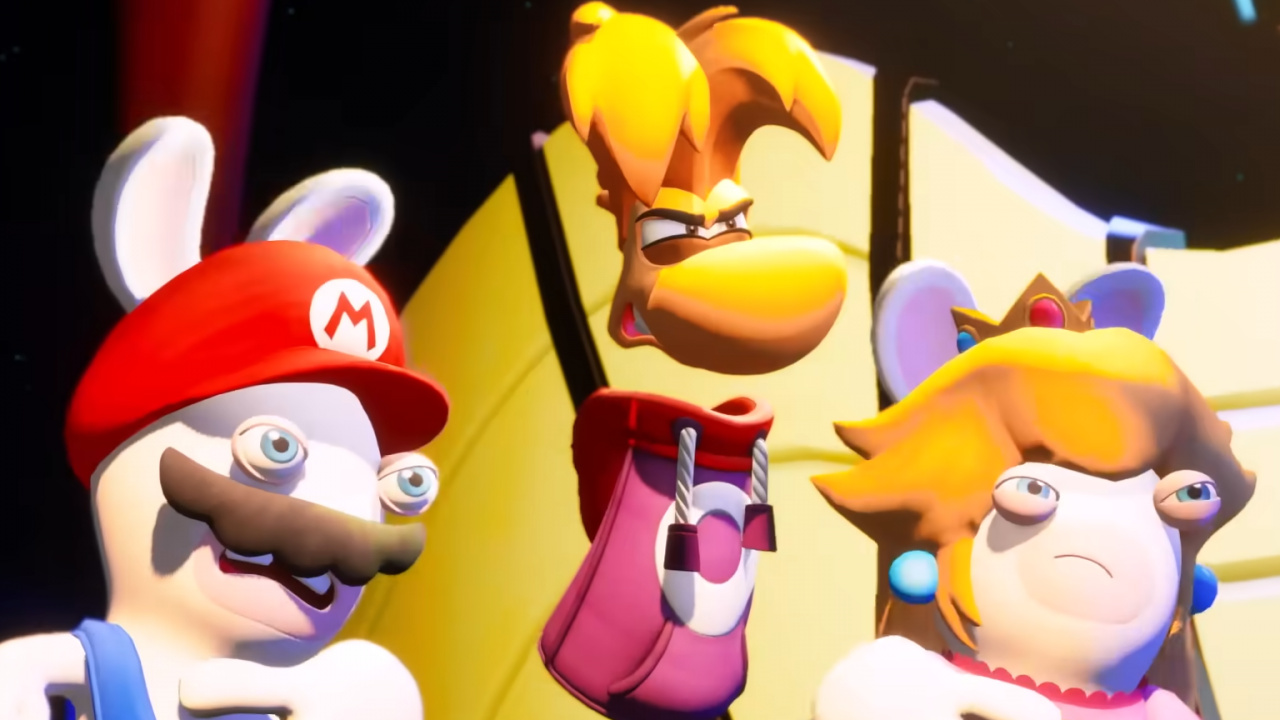
In case you missed it, here’s your reminder that the Rayman DLC for Mario + Rabbids Sparks of Hope is now officially live.
This latest update bumps the game up to ‘Version 1.4.2225842‘ and includes not only the new DLC content but also a bunch of general updates addressing some issues to improve the overall experience. Here’s the rundown, courtesy of Perfectly-Nintendo:
Mario + Rabbids Sparks of Hope DLC 3: Rayman in the Phantom Show – 29th August 2023
Support for additional content
Adds support for the third set of additional content from the Mario + Rabbids Sparks of Hope Season Pass (Rayman in the Phantom Show)
General
Several issues were fixed and various adjustments were made to improve the gameplay experience.
If you do plan on playing this DLC, according to the game’s creative director there’s a “secret hidden message” that can be unlocked when you 100% this new content. It seems like it might have something to do with Rayman…
Will you be checking out the final DLC for Sparks of Hope? Tell us in the comments below.
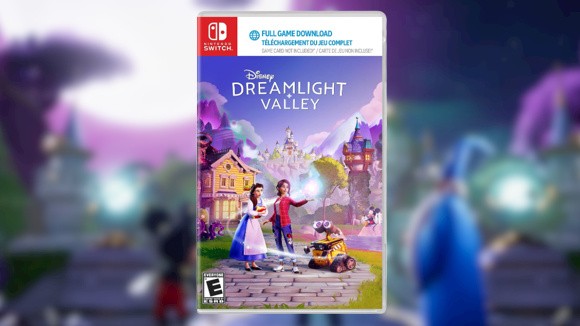
Ahead of the free-to-play launch of Disney Dreamlight Valley later this year, it’s been revealed the life simulation adventure game starring Mickey Mouse and friends will be getting a $50 physical release on all platforms including the Nintendo Switch.