Niantic’s mobile title Pokémon GO now officially has the most Pokémon to collect, placing it ahead of the mainline entries.
With the new Pokémon Scarlet and Violet Paldea region update going live this week, the total number of pocket monsters you can catch in the mobile hit has now been bumped up to 814. As highlighted by Eurogamer, this puts it ahead of the Pokémon Ultra Sun and Ultra Moon Pokédex.
Ultra Sun and Ultra Moon featured data for every Pokémon species but when Pokémon Sword and Shield was released, Game Freak made the decision to cut back and instead offer a select roster, rather than the complete National Dex. Scarlet and Violet also got a hand-picked Pokédex – featuring a mix of new and old Pokémon.
Game Freak has previously mentioned it simply can no longer include every Pokémon in new mainline games, while also citing the possibility of balance issues if it did include every pocket monster. The total Pokédex count to date has now also surpassed the 1,000 mark.
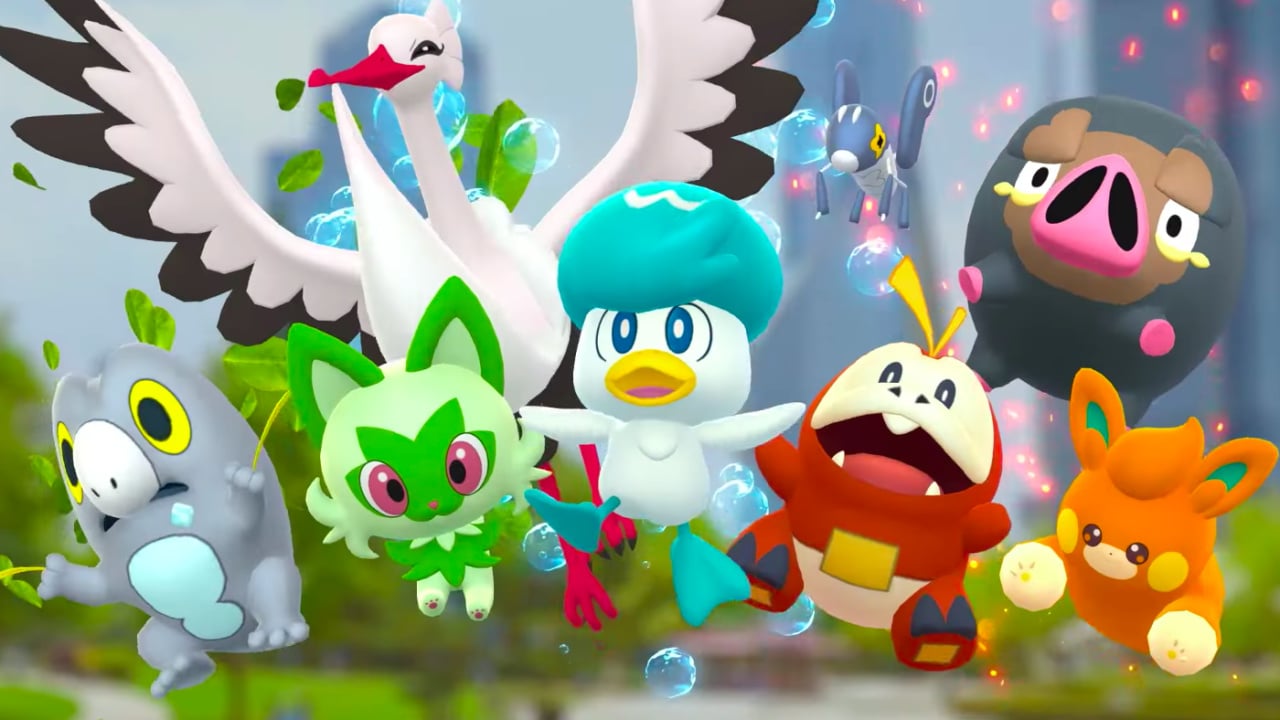
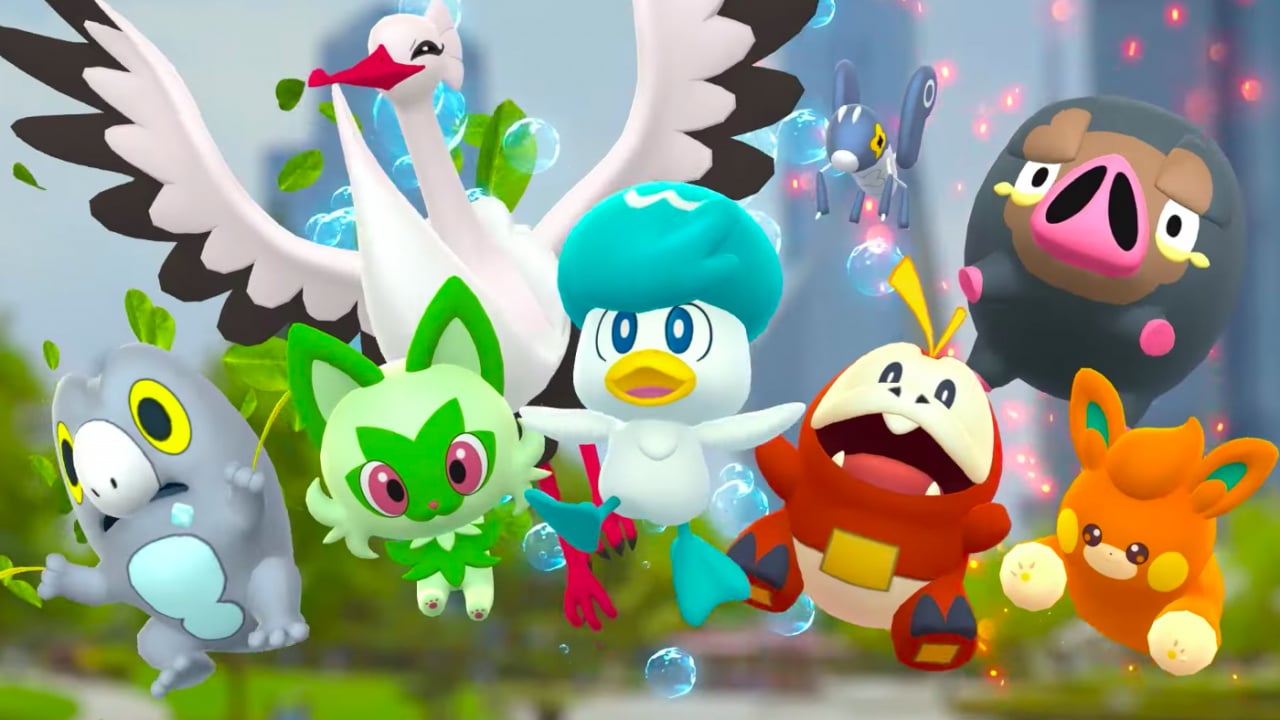
If you do plan to participate in GO’s latest event, you’ll be able to catch Pokémon like Sprigatito and Fuecoco between now and 10th September, and then there’ll be even more familiar faces added to the game next week.
Can you believe Pokémon GO’s Pokédex is now bigger than any of the mainline games? Would you like to see the full roster return to the major entries in the future? Leave your thoughts below.
Apple tends to hold its iPhone events on a Tuesday and release products about ten days later, but overnight updates to physical retail stores could mean quick product availability.
Of course, it could just be a simple marketing update. Apple tends to update marketing like posters and displays after an event anyway, so this wouldn’t be unusual.
Today’s Pre-Release showcases the changes being made to rebalance Villager Trading as well as some changes to loot. If you want to check out the snapshot yourself be sure to enable snapshots within your Minecraft Launcher in the Installations tab.
The Recipe Book search has been updated with the following changes:
The search will only match the beginning of any word in the item’s name
For example, searching for “tor” will still show Torch and Redstone Torch but not Daylight Detector anymore
All recipes, including those that have not been unlocked, will now show up in search results
This will enable experienced players to find the recipes they are looking for (even if it hasn’t been unlocked yet) without overwhelming new players
Updated structure icons on explorer maps sold by Cartographers
When villagers unlock new trades, the order of those trades in the UI is now always random instead of sometimes being deterministic
The data pack version is now 18
Client options are now sent during the configuration network phase when joining a server
Data Pack Version 18
This data pack version removes the recently introduced execute if function and return run functionality. Flaws with those commands (see bugs MC-264595, MC-264699, and MC-264710) require some substantial changes to fix, which we do not want to make close to a release.
These commands will instead be reintroduced early in the next snapshot series when we can take the time to iterate on and test them together with pack makers.
Removed execute if|unless function command form
Removed return run command form
Numbers used as macro arguments are now always inserted without suffixes, regardless of numeric type
Added game rule enderPearlsVanishOnDeath, controlling whether thrown ender pearls vanish when the player that threw them dies (default true)
Villager Trade Rebalance Part 2
This pre-release updates the Villager Trade Rebalance experiment. This experiment has no effect on normal worlds. If you want to try these changes, you must turn on the Feature Toggle in the Experiments Menu when creating a new world. You can find more information about Feature Toggles here.
Thank you to everyone who has sent in their suggestions and feedback regarding the experimental trade change! We are trying out these changes to rebalance the villager trade system and make it more fair and fun for everyone. However, these changes are not yet final, and they will stay as experimental features while we continue to work on them. We appreciate your feedback on these changes. Visit this link to share your thoughts! We have been following the discussions about the previous Librarian and Wandering Trader updates and look forward to seeing the conversation continue.
Cartographer
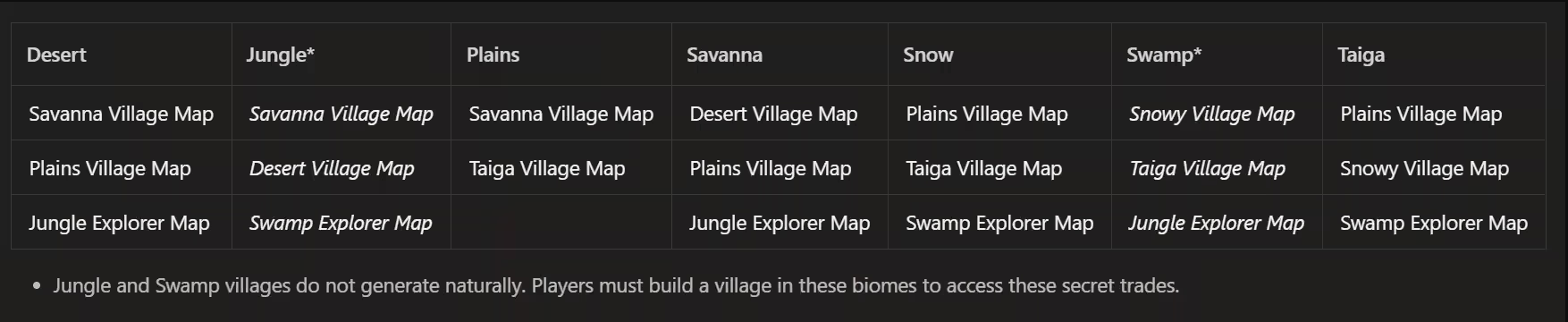
Before now, Cartographers only sold maps to the Ocean Monument and Woodland Mansion. In this experiment, Cartographers can sell seven new maps as well. These new maps each point to a different village or structure and can be used to find seven different biomes. This will help players who want to quickly find a specific location without waiting until they come across it by chance.
Cartographers from different biomes will sell a different selection of maps. Starting from one village, it will be possible to find every other village type by following maps from village to village.
Cartographers now sell 7 new maps: Desert Village Map, Jungle Explorer Map, Plains Village Map, Savanna Village Map, Snow Village Map, Swamp Explorer Map, and Taiga Village Map.
Armorer
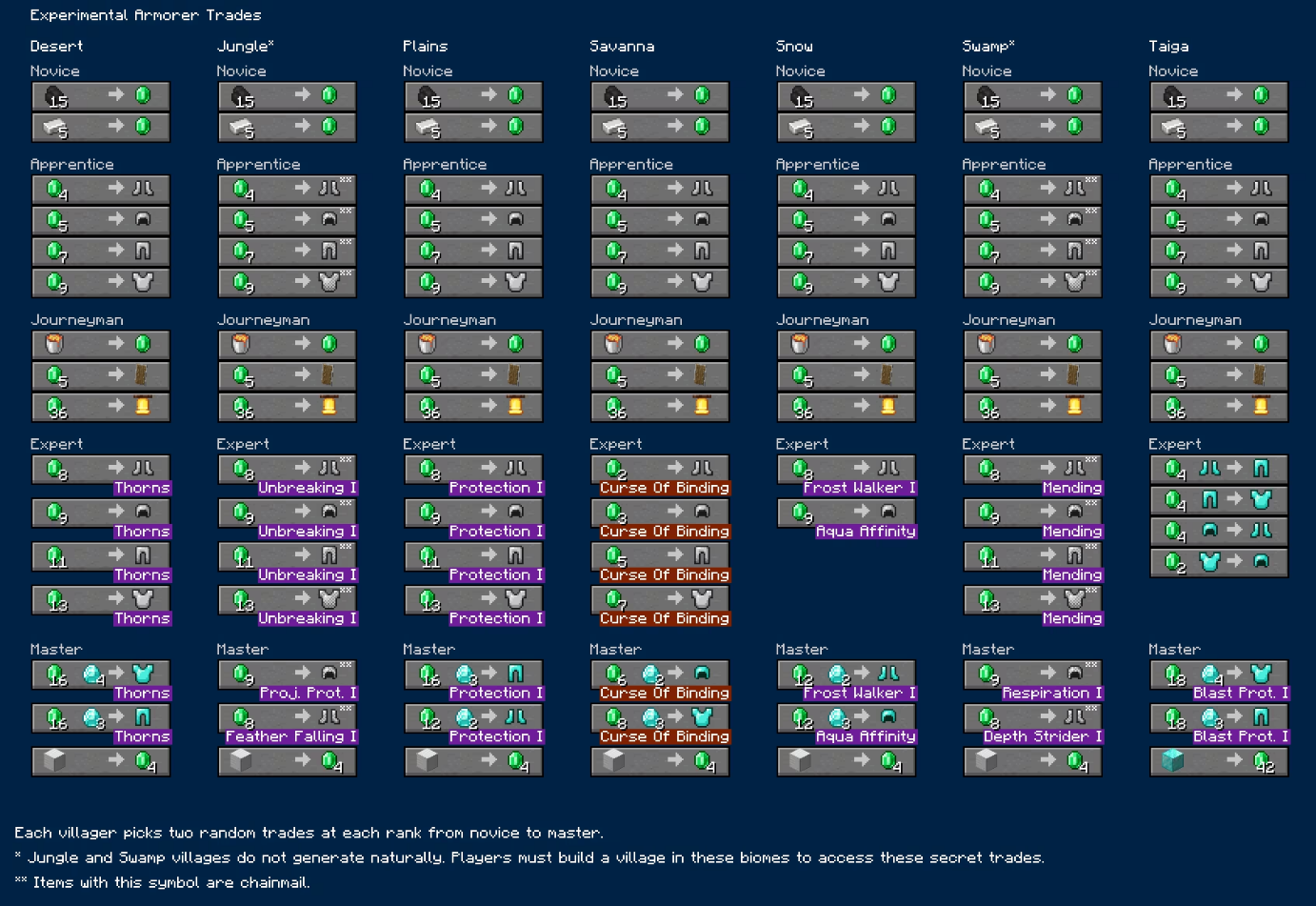
The Armorer’s trades have been updated with many changes.
The biggest change is that buying diamond armor now requires paying a small amount of Diamonds as well as Emeralds. This is meant to make the Armorer’s diamond armor trades less useful at the start of the game when players don’t have any Diamonds, while still giving a powerful advantage to advanced players who have spent some time collecting Diamonds.
Early-game players will find Armorers useful as a great source of iron armor, Shields, and Emeralds.
Other changes include:
Most master-level Armorers buy Iron Blocks (and pay very well for them)
Chainmail armor is exclusively sold by the secret Jungle and Swamp Armorers
The Savanna Armorers sells cursed diamond armor at reduced prices
The Taiga Armorer can swap one piece of diamond armor for another
Structure Loot
Certain Enchanted Books now have a high chance of generating in some structures:
Ancient Cities: Mending
Mineshafts: Efficiency (I to V)
Pillager Outposts: Quick Charge (I to III)
Desert Temples: Unbreaking (I to III)
Jungle Temples: Unbreaking (I to III)
MC-70127 – Some block state changes aren’t communicated to clients
MC-72721 – Chat messages show after death independent of the chat setting
MC-103800 – Sometimes armor stands won’t update their visual rotation
MC-119873 – The text used for the credits button within the title screen is untranslatable
MC-154827 – Typo in splash text “Verlet intregration!”
MC-177172 – Dash in villager/trader UI is hardcoded / untranslatable
MC-248778 – The item count symbol within the shulker box tooltips is untranslatable
MC-248833 – The parentheses used before and after the warning label within the language menu are untranslatable
MC-248844 – The page indicator symbol within the recipe book GUI is untranslatable
MC-248846 – The colon used within the death screen to show the player’s score is untranslatable
MC-249355 – The hyphen used within the statistics menu to show a null value is untranslatable
MC-252295 – The word “whilst” within several death messages isn’t spelled in American English
MC-252298 – Death messages relating to the Thorns enchantment don’t contain conjunctions where appropriate
MC-252316 – The word “burnt” within some death messages isn’t spelled in American English
MC-253241 – The player count indicator symbol within the multiplayer menu is untranslatable
MC-253269 – The advancement progress indicator symbol within the advancements menu is untranslatable
MC-253270 – The hyphen used within boss bars for raids is untranslatable
MC-253278 – The percentage symbol used within the level loading screen to show the loading progress of the world is untranslatable
MC-253281 – Text within filled map tooltips when advanced tooltips are hidden is untranslatable
MC-253283 – The percentage and chunk indicator symbols used within the optimize world menu are untranslatable
MC-253638 – The symbols used within shulker box tooltips to show random loot table contents are untranslatable
MC-255418 – Vertical redstone dust placed against dropper/dispenser/hopper doesn’t visually disappear when the dust above is removed
MC-256777 – The two characters used within the tab list to show players’ health are untranslatable
MC-260819 – The “death.attack.message_too_long” string is missing an article before the word “stripped”
MC-263133 – Inconsistent word usage in Out of Memory screen
MC-264233 – The player is shown as Anonymous after dying and respawning
MC-264574 – symlink does not work for the root world folder
MC-264615 – It takes several seconds for the absorption effect icon to display after obtaining the effect
MC-264656 – Regular golden apples don’t increase the number of gold hearts if you previously ate an enchanted golden apple and then took damage
MC-264657 – Absorption gold heart refilling is determined by whether the low level and the high level have the same hideParticles parameter
MC-264658 – Only integer numeric data type can be used in macro
MC-264809 – Redstone comparators cause redstone dust connection issue
MC-265053 – Programmer Art lapis lazuli outline texture in enchanting table UI incorrectly uses the old formatting
MC-265060 – Missing sprite for error in Loom GUI (loom.png)
MC-265126 – The ‘requirements’ field can no longer be skipped in advancements
MC-265151 – The “(Unknown)” string that’s displayed when being banned from a server for an unknown reason is untranslatable
MC-265209 – Switching to protocol “CONFIGURATION” causes race condition
MC-265213 – The chat message from the /random command says “between 1 and 6” instead of “1 to 6”
When we first got our hands on Teenage Mutant Ninja Turtles: Shredder’s Revenge last year, we were by no means of the impression that the game was lacking in the content department — this is, after all, what we deemed to be “the best Turtles scrolling beat ’em up ever“. A little over a year later, the game’s first DLC, ‘Dimension Shellshock‘, is here to show that sometimes bigger is in fact better, and even more Turtle action is always a good thing.
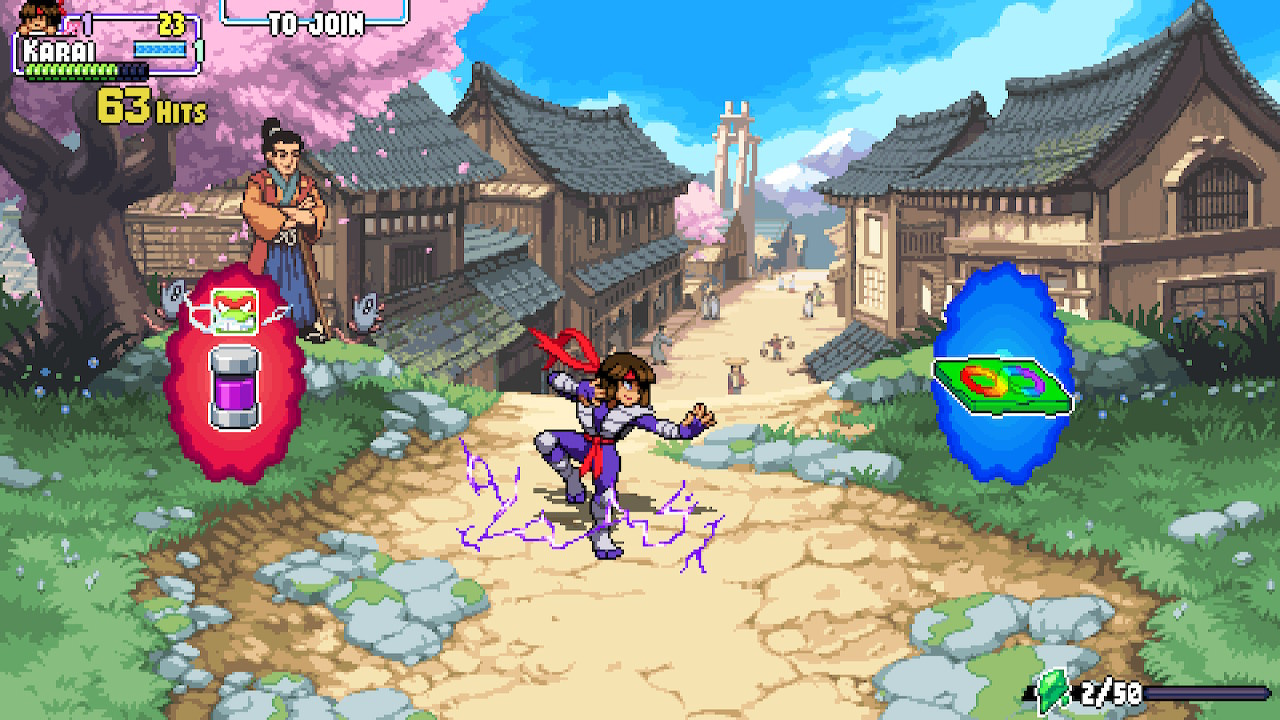
This DLC comes as a rather solid package. Alongside several new character colour palettes (many of which come from a free update that launched alongside the DLC), there’s also the addition of a brand new game mode, two fresh-faced fighters — Usagi Yojimbo (aka ‘Miyamoto Yojimbo’ in his original comics) and Karai (a mainstay of the 2003 animated TMNT series) — and a number of shredding original music tracks from composer Tee Lopes.
We’ll kick things off with the star of the show: Survival mode. If a roguelike-style take on the beat ’em up wasn’t the first thought to pop into your mind after completing the Shredder’s Revenge Story mode, then know that you are not alone, but after getting to grips with waves of tough foes, power-up propositions and the never-ending desire for ‘just one more run’, we were pleased to see that the latest loop continues to kick shell.
Captured on Nintendo Switch (Handheld/Undocked)
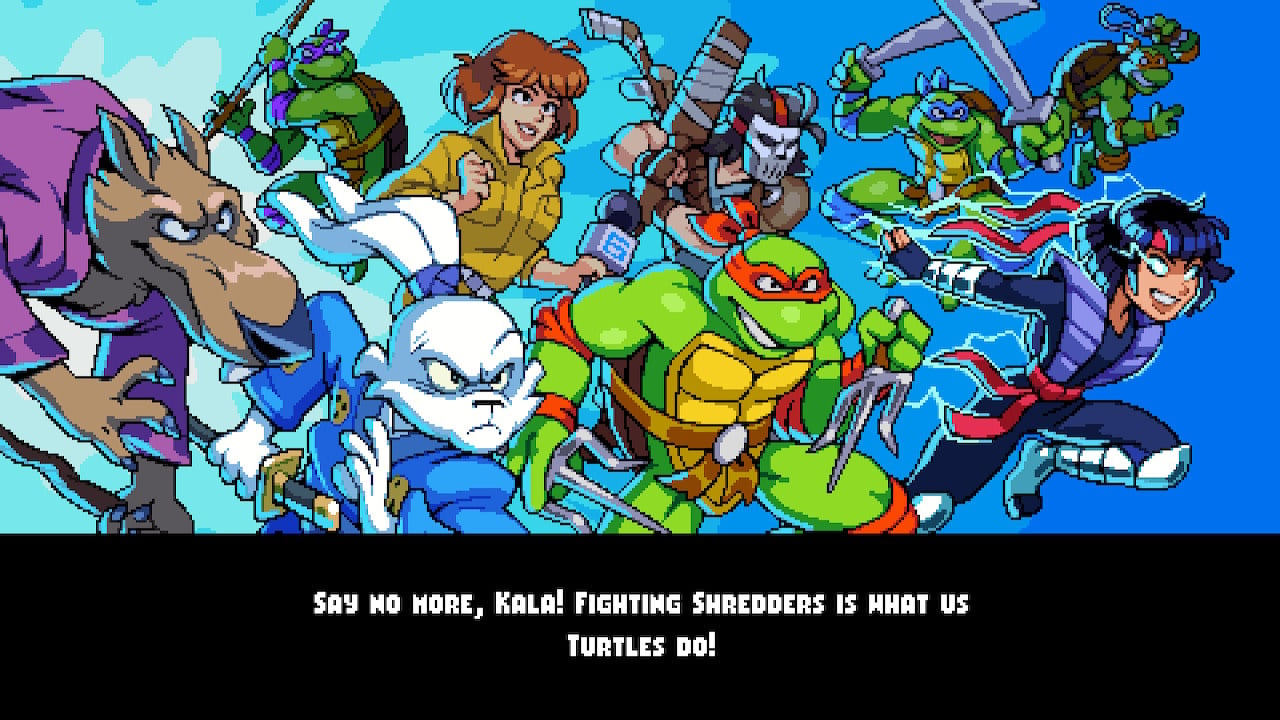
Survival mode begins with a short cutscene. The Neutrinos (a race of humanoid teenagers from Dimension X that you might remember from the original animated series) appear through a wormhole and warn the Turtles that Shredder is attempting to conquer the multiverse — because you can never have too many of them, right? The old gang, now joined by a ninja rabbit and a former-Foot Clan member, leap into action to take down the big bad once again.
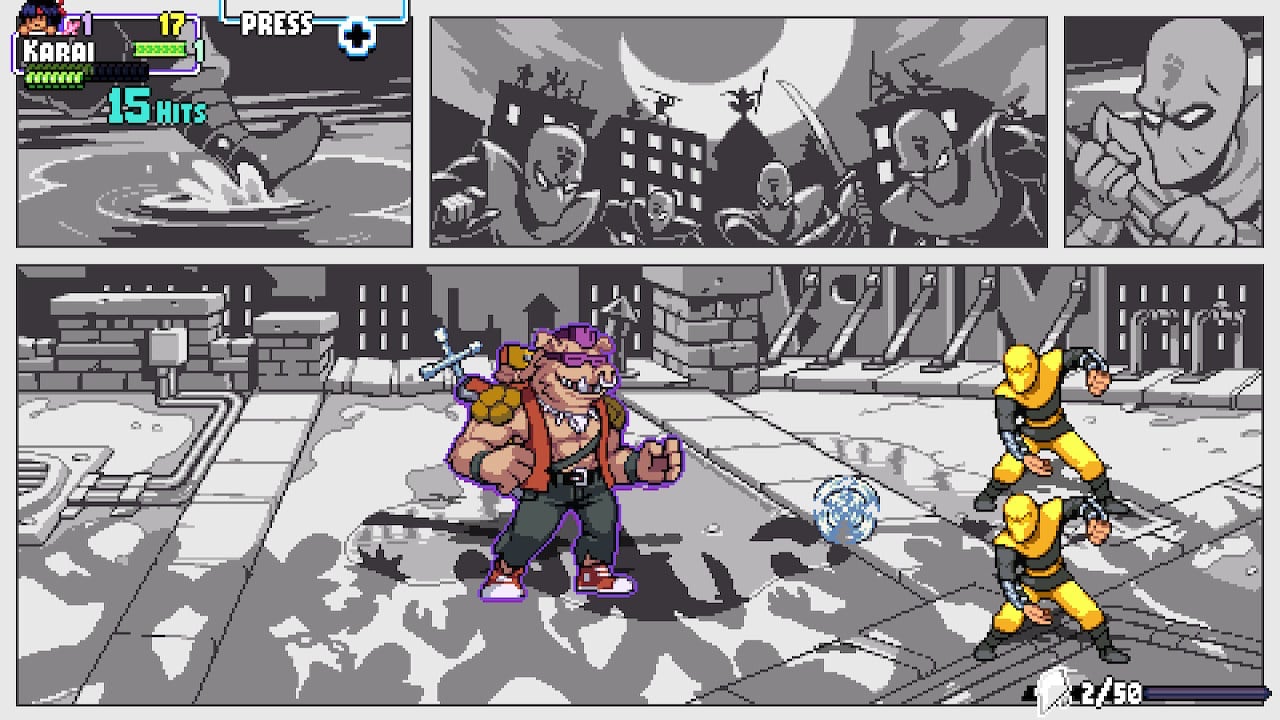
So begins the central loop. You hop into one of the five new Dimension settings — the retro ‘8-Bit Battleground’ and comic book-inspired ‘Mirage’ environments are standouts — take out a wave of foes, and aim to collect enough shards to complete a Dimension Crystal and progress onto the next area. When you die, your collected Crystals are tallied up and produce upgrades for your next run. So far, so roguelike, though the similarities to Dotemu’s previous ‘Survival Mode’ DLC for Streets of Rage 4 are also clear.
The structure is repetitive by its very nature, but a bonus mechanic at the end of each wave keeps things interesting. Before diving into the next battle, you are given a choice between two upgrades including more shards, health, strange power-ups, or the chance to mutate into some classic villains for a short time. These range in their usefulness — playing as Shredder, Bebop, and Rocksteady provides some respite from your fighter’s decreasing health, though the villains’ limited movesets feel a little slow compared to the fluidity of the Turtles’ — but the ever-changing rewards add an interesting risk/reward system to what would otherwise be punch, collect, repeat. Do you play it safe and collect a Pizza Box health boost at every opportunity, or is it worth grabbing a bundle of shards to ensure quick progression? With boss battles randomly thrown into the lineup of enemy waves, your choice of bonuses can either make or break a run.
Captured on Nintendo Switch (Handheld/Undocked)
And boy, do you need that boost in the early stages. Each fighter’s first run sees them with only one life and limited hit points, making those initial waves feel all the more challenging while you attempt to rebuild your beat ’em up muscle memory. That being said, once the upgrades start rolling in and the final goal of completing five Dimension Crystals and defeating the Master of the Void seems all the more attainable, Survival mode quickly becomes difficult to put down.
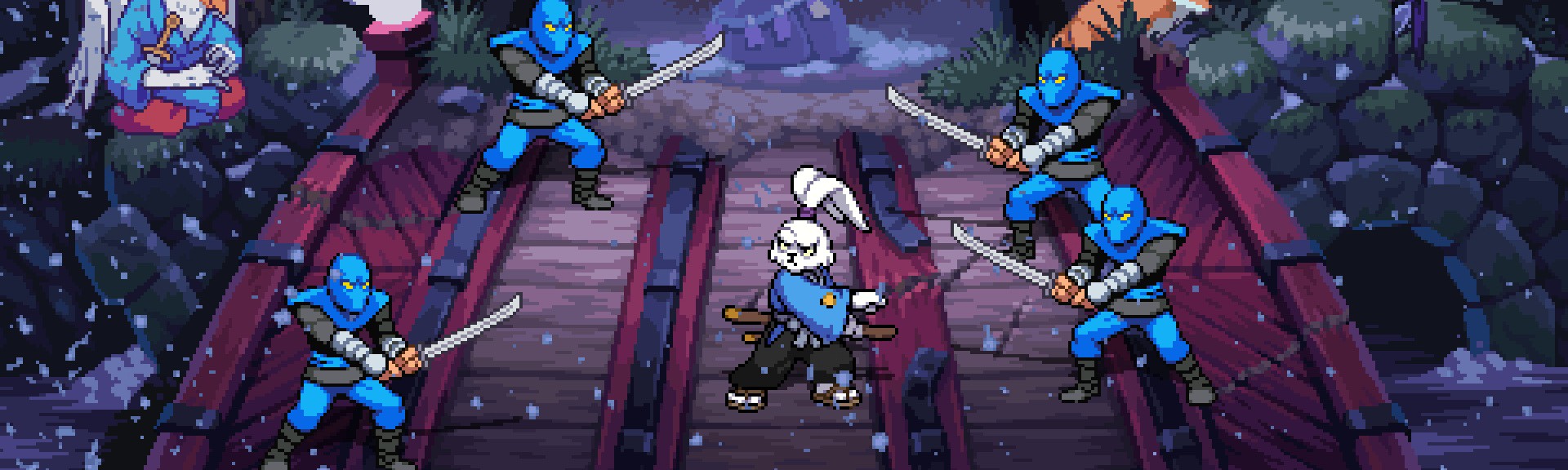
But what about the new fighters? Many of us will have tried out a few different Turtles in the game’s main story, but the addition of Survival mode encourages fighter experimentation, making it the perfect time to throw two newbies into the mix. Usagi Yojimbo has quickly fallen into our rotation, with high speed and balanced range and power making him a strong choice for navigating some of the busier waves, though Karai’s improved strength is a blessing when taking on tougher foes. Both are available to use in Survival, Arcade, or Story mode, so you can get to grips with the new animations and combat styles however you please.
Seeing two new characters included with the strong new game mode makes the DLC’s £6.69 / $7.99 / €7.99 pricetag ooze value. It is rare that a DLC provides just as much entertainment value as the main game, but we can see the new mode becoming a replayable staple for many a game night to come — no quarters required.
Conclusion
This has all the charm of the base game, but with a challenging new stand-alone mode that adds quality and value. The opening challenge won’t be for everyone and those early runs can be pretty unforgiving, but once you see those unlocks rolling in and with an upgrade or two under your belt, you’ll soon wonder why a Turtles roguelike hasn’t been on your wishlist from the very beginning. With these added bells and whistles, Teenage Mutant Ninja Turtles: Shredder’s Revenge is still totally tubular, dude.
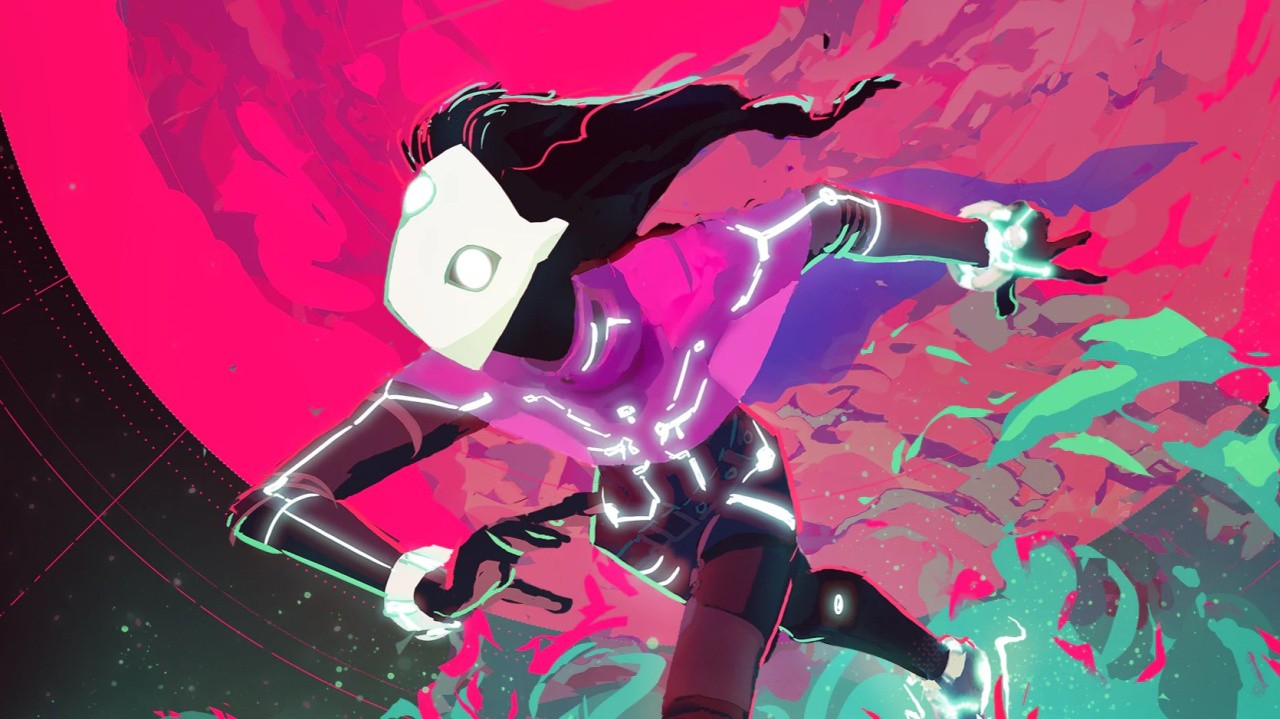
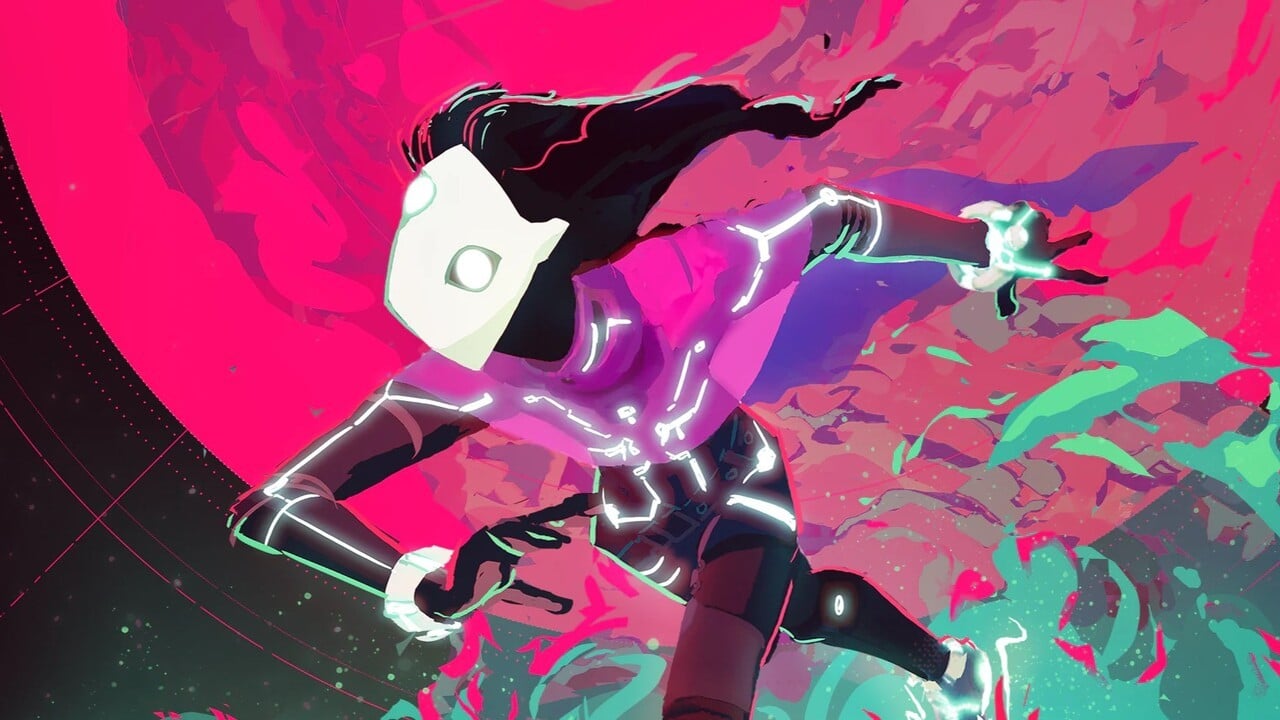
Annapurna Interactive has announced that it’s bringing Heart Machine’s stunningly surreal 3D platformer Solar Ash to Switch on 14th September.
Originally launching on PS4, PS5, and PC in 2021, Solar Ash is the second game from Hyper Light Drifter developer Heart Machine. Swapping beautiful 2D pixel art for stunning 3D landscapes, Solar Ash is set in the same universe as the studio’s popular indie hack-and-slash, but instead of focusing on action, Solar Ash focuses on movement.
The Switch port has long been rumoured, as back in March this year, a rating for the game appeared on PEGI’s website.
While not as well-received as its predecessor, Solar Ash was still highly praised for its visuals, atmosphere, and traversal. Our sister site Push Square scored the game 7/10, saying that “the traversal at the heart of everything does about enough to carry you through to a satisfying conclusion”.
Heart Machine is currently working on a new game in the Hyper Light Drifter universe — Hyper Light Breaker, a 3D co-operative roguelite. The game is due to launch in Early Access on Steam in 2024, and other release platforms have yet to be confirmed.
Have you played Solar Ash? Will you be picking this up on Switch next week? Let us know in the comments.
TL;DR: Transformers process input sequences in parallel, making them computationally efficient compared to RNNs which operate sequentially.
Both handle sequential data like natural language, but Transformers don’t require data to be processed in order. They avoid recursion, capturing word relationships through multi-head attention and positional embeddings.
However, traditional Transformers can only capture dependencies within their fixed input size, though newer models like Transformer-XL address this limitation.
You may have encountered the terms Transformer and Recurrent Neural Networks (RNN). These are powerful tools used for tasks such as translation, text summarization, and sentiment analysis.
The RNN model is based on sequential processing of input data, which allows it to capture temporal dependencies. By reading one word at a time, RNNs can effectively handle input sequences of varying lengths. However, RNNs, including their variants like Long Short-term Memory (LSTM), can struggle with long-range dependencies due to vanishing gradients or exploding gradients.
On the other hand, the Transformer model, designed by Google Brain, solely relies on attention mechanisms to process input data. This approach eliminates the need for recurrent connections, resulting in significant improvements in parallelization and performance. Transformers have surpassed RNNs and LSTMs in many tasks, particularly those requiring long-range context understanding.
Recurrent Neural Networks (RNN) are a type of neural network designed specifically for processing sequential data.
In RNNs, the hidden state from the previous time step is fed back into the network, allowing it to maintain a “memory” of past inputs.
This makes RNNs well-suited for tasks involving sequences, such as natural language processing and time-series prediction.
There are various types of RNNs, such as Long Short-Term Memory (LSTM) and Gated Recurrent Unit (GRU). LSTMs, for example, were introduced to tackle the vanishing gradient problem common in the basic RNNs.
This problem occurs when the gradient of the loss function with respect to each weight decreases exponentially during backpropagation, making it difficult for the network to learn long dependency relationships between elements of the input sequence.
LSTMs address this issue with their cell state, which is designed to maintain and update information over long sequences.
Recurrent Neural Networks (RNN) are designed to handle sequential data, making them ideal for applications like language modeling, speech and time-series prediction. Some key components of RNNs include:
Hidden states: These are internal representations of the network’s memory and are updated by iterating through the input sequence, capturing dependencies between elements in the sequence. – source
LSTM: Long Short-Term Memory (LSTM) is an advanced type of RNN that addresses the vanishing gradient problem, allowing it to learn long-range dependencies within the sequence. LSTM units consist of a cell state, forget gate, input gate, and output gate. – source
GRU: Gated Recurrent Unit (GRU) is another variant of RNN that aims to address the vanishing gradient issue. GRUs are similar to LSTMs but have a simpler structure, with only two gates involved: update and reset gates.
Feel free to play this highly educational video right here on the page giving you a basic intro on RNNs that is also relevant to Transformers, shown next:
Here’s an excellent visualization of the sequence to sequence model used by many neural network approaches such as RNNs and transformers:
What’s going on under the hood? Here’s another visualization looking into the model (source):
The context is an array of numbers (vector) and the encoder and decoder tend to both be recurrent neural networks.
If you want to dive deeper into this topic, I recommend you read this and this excellent tutorial.
Understanding Transformers
Transformers, on the other hand, are a more recent neural network architecture introduced to improve upon the limitations of RNNs.
Instead of relying on the sequential processing of input data like RNNs, transformers utilize attention mechanisms to weigh the importance of different elements within the input sequence.
These attention mechanisms allow transformers to process input data more efficiently and accurately than RNNs, leading to better performance in many natural language processing tasks. Furthermore, transformers can be easily parallelized during training, which contributes to faster computation times compared to RNNs.
Transformer networks, introduced as an alternative to RNNs and LSTMs, enable more efficient parallelization of computation and improved handling of long-range dependencies. Key components of Transformer networks include:
Encoder and Decoder: Transformers consist of an encoder and a decoder, both of which are composed of multiple layers. Encoders encode input sequences, and decoders generate the output sequences. – source
Attention Mechanism: Attention mechanisms allow the network to weigh the importance of different parts of the input sequence when generating the output. They have been incorporated into RNN architectures like seq2seq, and they play a vital role in the Transformer architecture. – source
Self-Attention: Transformers use self-attention mechanisms, which allow them to compute the importance of each token in the sequence relative to all other tokens, resulting in a more sophisticated understanding of the input data.
Multi-Head Attention: This is a crucial component of the Transformer that facilitates learning different representations of the sequence simultaneously. Multi-head attention mechanisms help the network capture both local and global relationships among tokens. – source
GPT (Generative Pre-trained Transformer) is another popular model created by OpenAI. GPT is known for its capacity to generate human-like text, making it suitable for various tasks like text summarization, translation, and question-answering. GPT initially gained attention with its GPT-2 release. GPT-3.5 and GPT-4 then significantly improved in text generation capabilities:
Transformer-XL (Transformer with extra-long context) is a groundbreaking variant of the original Transformer model. It focuses on overcoming issues in capturing long-range dependencies and enhancing NLP capabilities in tasks like translation and language modeling. Transformer-XL achieves its remarkable performance by implementing a recursive mechanism that connects different segments, allowing the model to efficiently store and access information from previous segments .
Vision Transformers (ViT) are a new category of Transformers, specifically designed for computer vision tasks. ViT models treat an image as a sequence of patches, applying the transformer framework for image classification . This novel approach challenges the prevalent use of convolutional neural networks (CNNs) for computer vision tasks, achieving state-of-the-art results in benchmarks like ImageNet.
Today, the Transformer model is the foundation for many state-of-the-art deep learning models, such as BERT and GPT-2/GPT-3/GPT-4 by OpenAI. These models are pretrained on vast amounts of textual data, which then provides a robust starting point for transfer learning in various downstream tasks, including text classification, sentiment analysis, and machine translation.
In practical terms, this means that you can harness the power of pretrained models like BERT or GPT-3, fine-tune them on your specific NLP task, and achieve remarkable results.
RNNs and transformers are two different approaches to handling sequential data. RNNs, including LSTMs and GRUs, offer the advantage of maintaining a “memory” over time, while transformers provide more efficient processing and improved performance in many natural language processing tasks.
A Few Words on the Attention Mechanism
The 2017 paper by Google “Attention is All You Need” marked a significant turning point in the world of artificial intelligence. It introduced the concept of transformers, a novel architecture that is uniquely scalable, allowing training to be run across many computers in parallel both efficiently and easily.
This was not just a theoretical breakthrough but a practical realization that the model could continually improve with more and more compute and data.
Key Insight: By using unprecedented amount of compute on unprecedented amount of data on a simple neural network architecture (transformers), intelligence seems to emerge as a natural phenomenon.
Unlike other algorithms that may plateau in performance, transformers seemed to exhibit emerging properties that nobody fully understood at the time. They could understand intricate language patterns, even developing coding-like abilities. The more data and computational power thrown at them, the better they seemed to perform. They didn’t converge or flatten out in effectiveness with increased scale, a behavior that was both fascinating and mysterious.
OpenAI, under the guidance of Sam Altman, recognized the immense potential in this architecture and decided to push it farther than anyone else. The result was a series of models, culminating in state-of-the-art transformers, trained on an unprecedented scale. By investing in massive computational resources and extensive data training, OpenAI helped usher in a new era where large language models could perform tasks once thought to be exclusively human domains.
This story highlights the surprising and yet profound nature of innovation in AI.
A simple concept, scaled to extraordinary levels, led to unexpected and groundbreaking capabilities. It’s a reminder that sometimes, the path to technological advancement isn’t about complexity but about embracing a fundamental idea and scaling it beyond conventional boundaries. In the case of transformers, scale was not just a means to an end but a continually unfolding frontier, opening doors to capabilities that continue to astonish and inspire.
Handling Long Sequences: Transformer vs RNN
When dealing with long sequences in natural language processing tasks, you might wonder which architecture to choose between transformers and recurrent neural networks (RNNs). Here, we’ll discuss the pros and cons of each technique in handling long sequences.
RNNs, and their variants such as long short-term memory (LSTM) networks, have traditionally been used for sequence-to-sequence tasks. However, RNNs face issues like vanishing gradients and difficulty in parallelization when working with long sequences. They process input words one by one and maintain a hidden state vector over time, which can be problematic for very long sequences.
On the other hand, transformers overcome many of the challenges faced by RNNs. The key benefit of transformers is their ability to process the input elements with O(1) sequential operations, which enables them to perform parallel computing and effectively capture long-range dependencies. This makes transformers particularly suitable for handling long sequences.
When it comes to even longer sequences, the Transformer-XL model has been developed to advance the capabilities of the original transformer. The Transformer-XL allows for better learning about long-range dependencies and can significantly outperform the original transformer in language modeling tasks. It features a segment-level recurrence mechanism and introduces a relative positional encoding method that allows the model to scale effectively for longer sequences.
When handling long sequences, transformers generally outperform RNNs due to their ability to process input elements with fewer sequential operations and perform parallel computing. The Transformer-XL model goes a step further, enabling more efficient handling of extremely long sequences while overcoming limitations of the original transformer architecture.
Performance Comparison: Transformer vs RNN
Transformers excel when dealing with long-range dependencies, primarily due to their self-attention mechanism. This allows them to consider input words at any distance from the current word, which directly enables consideration of longer sequences.
The parallelization nature of Transformers also contributes to improved execution times, as they can simultaneously process entire sentences rather than one word at a time like RNNs.
Consequently, they have found great success in tasks such as language translation and text summarization, where long sequences need to be considered for accurate results.
On the other hand, RNNs like LSTMs and GRUs are designed to handle sequential data, which makes them suitable for tasks that involve a temporal aspect.
Their ability to store and retrieve information over time allows them to capture context in sequences, making them effective for tasks such as sentiment analysis, where sentence structure can significantly impact the meaning. However, the sequential nature of RNNs does slow down their execution time compared to Transformers.
While Transformers generally seem to outperform RNNs in terms of accuracy, it’s crucial to be mindful of the computational resources required. The inherently large number of parameters and layers within Transformers can lead to a significant increase in memory and computational demands compared to RNNs.
Frequently Asked Questions
What are the key differences between RNNs and Transformers?
Recurrent Neural Networks (RNNs) process input data sequentially one element at a time, which enables them to capture dependencies in a series. However, RNNs suffer from the vanishing gradient problem, which makes it difficult for them to capture long-range dependencies. Transformers, on the other hand, use a sophisticated self-attention mechanism. This mechanism allows them to process all input elements at once, which improves parallelization and enables them to model longer-range dependencies more effectively.
How do Transformers perform compared to LSTMs and GRUs?
While both LSTMs (Long Short-Term Memory) and GRUs (Gated Recurrent Units) were designed to address the vanishing gradient problem in RNNs, they still process input data sequentially. Transformers outperform LSTMs and GRUs in various tasks, especially those involving long-range dependencies, due to their parallelization and self-attention mechanism. This has been demonstrated in several benchmarks, such as machine translation and natural language understanding tasks.
Can Transformers replace RNNs for time series tasks?
Transformers have shown promising results in time series analysis tasks. However, they may not be suitable for all time series problems. RNNs, especially LSTMs and GRUs, excel in tasks with short-term dependencies and small datasets because of their simpler architecture and reduced memory consumption. You should carefully consider the specific requirements of your task before choosing the appropriate model.
What are the advantages of using Transformers over RNNs?
Transformers offer several advantages over RNNs:
Transformers can model long-range dependencies more effectively than RNNs, including LSTMs and GRUs.
The parallelization in Transformers leads to better performance and faster training times compared to sequential processing in RNNs.
Transformers’ self-attention mechanism provides valuable insights into the relationships between input elements.
However, it is important to note that Transformers may have higher computational and memory requirements than RNNs.
How does attention mechanism work in Transformers compared to RNNs?
While RNNs can incorporate attention mechanisms, they typically use it to connect the encoder and decoder only, as seen in seq2seq models. In contrast, Transformers use a self-attention mechanism that calculates attention scores and weights for all pairs of input elements, allowing the model to attend to any part of the sequence. This gives Transformers greater flexibility and effectiveness in capturing contextual relationships.
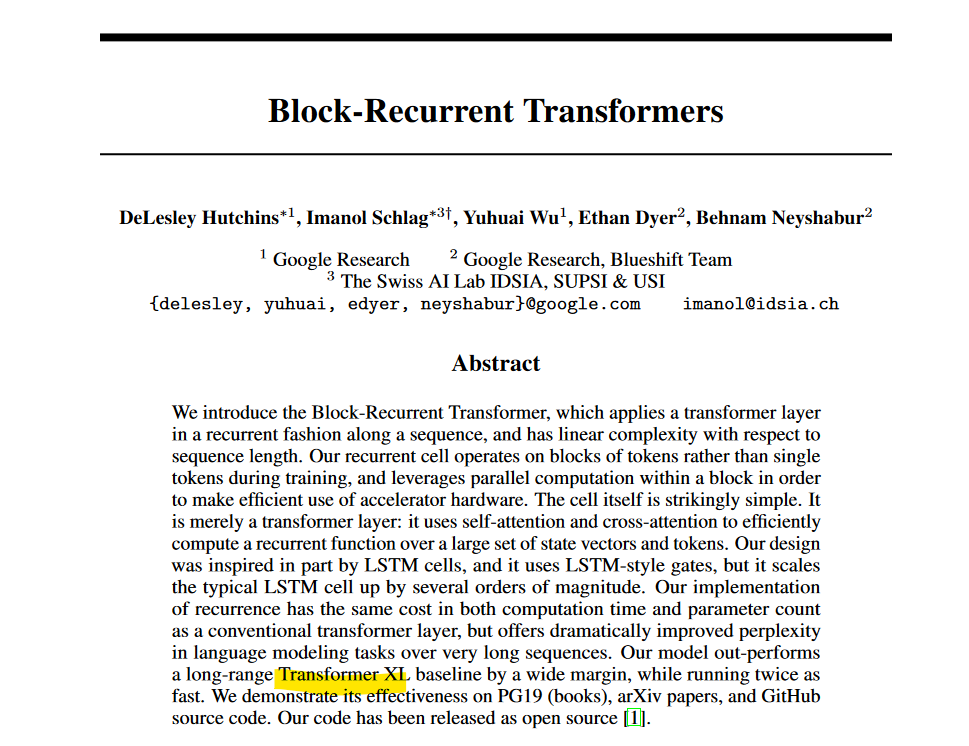
What is the Block-Recurrent Transformer and how it relates to RNNs?
The Block-Recurrent Transformer (BRT) is a variant of the Transformer architecture that combines elements of both RNNs and Transformers. BRTs use blocks of Transformer layers followed by a Recurrent layer, allowing the network to capture long-range dependencies while also exploiting the autoregressive nature of RNNs. This hybrid approach aims to harness the strengths of both architectures, making it suitable for tasks that require modeling both local and global structures in the data.
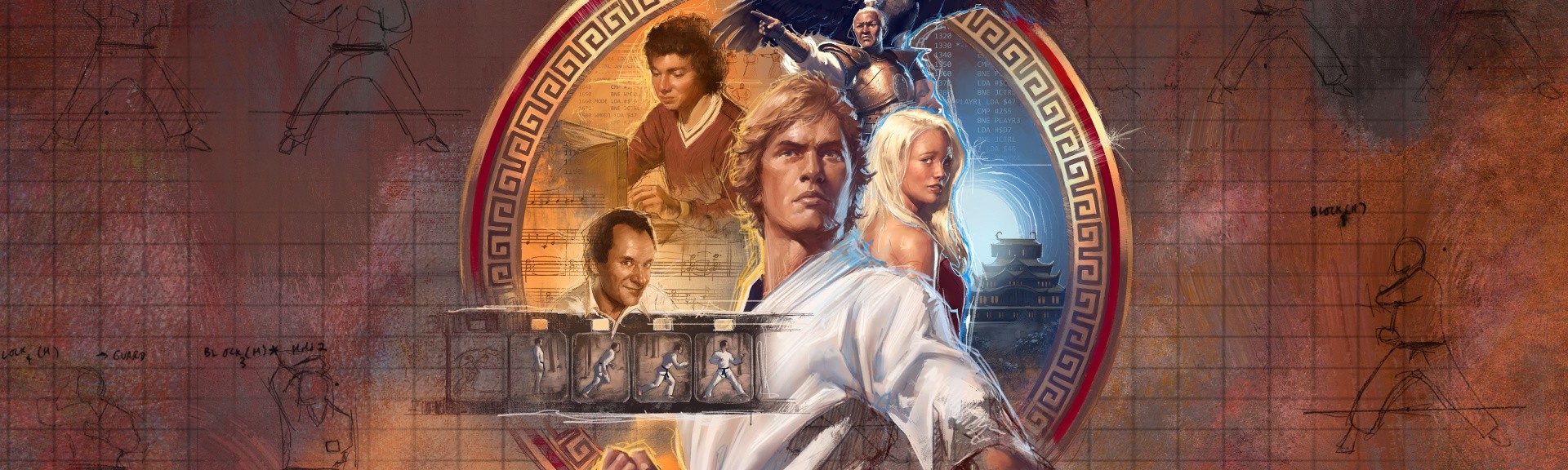
Digital Eclipse, following on from Atari 50: The Anniversary Celebration and Teenage Mutant Ninja Turtles: The Cowabunga Collection, is continuing its trend of going back to the past to rekindle the games that kicked ass. While the Cowabunga Collection was wrapped in comic book paraphernalia and finished with a lick of old-fashioned Konami, The Making of Karateka follows the clean and tranquil stylings of Atari 50: The Anniversary Collection, a package we commended for being so thoughtfully arranged.
Digital Eclipse’s “interactive documentary” angle, thus far, has been somewhat pioneering, built with robust research, stuffed with original interviews, and showcasing unearthed and playable prototype materials. And, priced at a reasonable $19.99, there’s a good chance that anyone who sits down and actually sifts through everything in The Making of Karateka, from video interviews to superb audio commentaries, will probably spend more time with it than they do with most games, such is the attention span of today’s impulse buyers and the wealth of content on-board. Without even playing the games in the package, you can kick back and enjoy the story of how Karateka came to be, in alluring, personal detail.
Captured on Nintendo Switch (Docked)
Mechner, probably best known for Prince of Persia (1989), was infatuated with movie-making back in 1984. While studying at Yale, he brainstormed a concept for a martial arts game set in old Japan; something that would capture the spirit of the movies, while being revolutionary for the medium. Learning to program for the Apple II computer, he drew upon the works of film legend Akira Kurosawa for tone and used traditional Japanese woodblock art as a visual touchstone.
Karateka, on release, was a massive success. It introduced the world to one-on-one fighting like they had never seen before. While at first glance it may seem similar to 1984’s Karate Champ, Data East’s two-player versus arcade game that saw combatants face off with various martial arts strikes, Karateka happens to be quite different, offering a broader game with a cinematic feel, a sense of adventure and progression, and more fluid and exciting combat. And, while the game is a series of one-on-one engagements, some may consider the format of scrolling through stages and taking out guards to have more in common with the belt-scrolling beat ’em ups spearheaded by Irem’s Kung-Fu Master (1984). Mechner used rotoscoping to draw out realistic, fluid animation, which was graphically remarkable at the time, and something he would later become noted for with Prince of Persia. Digital Eclipse’s thorough interactive documentary goes into great detail on the subject, recounting in an audio commentary the people who allowed him to record their motions on an old Super-8 camera; his father Franice Mechner contributed the running animation, his mother’s Karate teacher Dennis Holliday the martial arts moves.
Captured on Nintendo Switch (Handheld/Undocked)
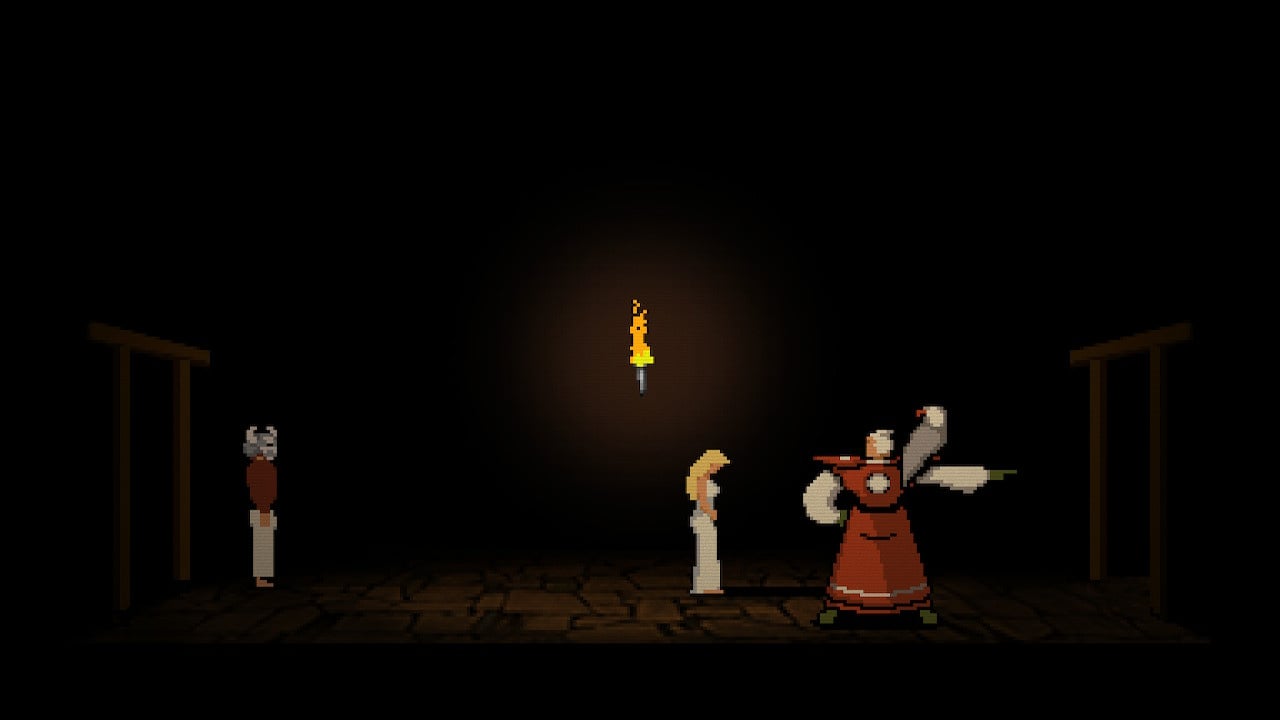
In Karateka, you play a Karate hero on a mission to save Princess Mariko from the clutches of evil Japanese warlord Akuma. Set in feudal Japan, the graphical motifs of Mt. Fuji, Tori gates, and wood-structured castle enclaves, remain impressively atmospheric. The protagonist marches forward until the screen cuts, in real-time, to a guard running in approach. When you meet, it’s time to fight, at which point you need to enter a Karate stance and trade blows. The original game had only two buttons and used the directional keys to plant low, medium, and high punches and kicks. Here, you can use six buttons if you wish, relinquishing the need for directional inputs. You can also rewind gameplay at will if you’re a sore loser, and adjust the screen with borders and filters.
Even by today’s standards, Karateka plays very well. Yes, you can get away with spamming the low kick to get you through quite a few enemies, but there’s still a tactical element to it. It features regenerating health bars for you and your enemies, meaning you can back off to regain energy during a fight, but your opponent receives the same recuperative bonus. You also need to press on quickly between fights to limit the number of approaching guards and reach the end of the stage.
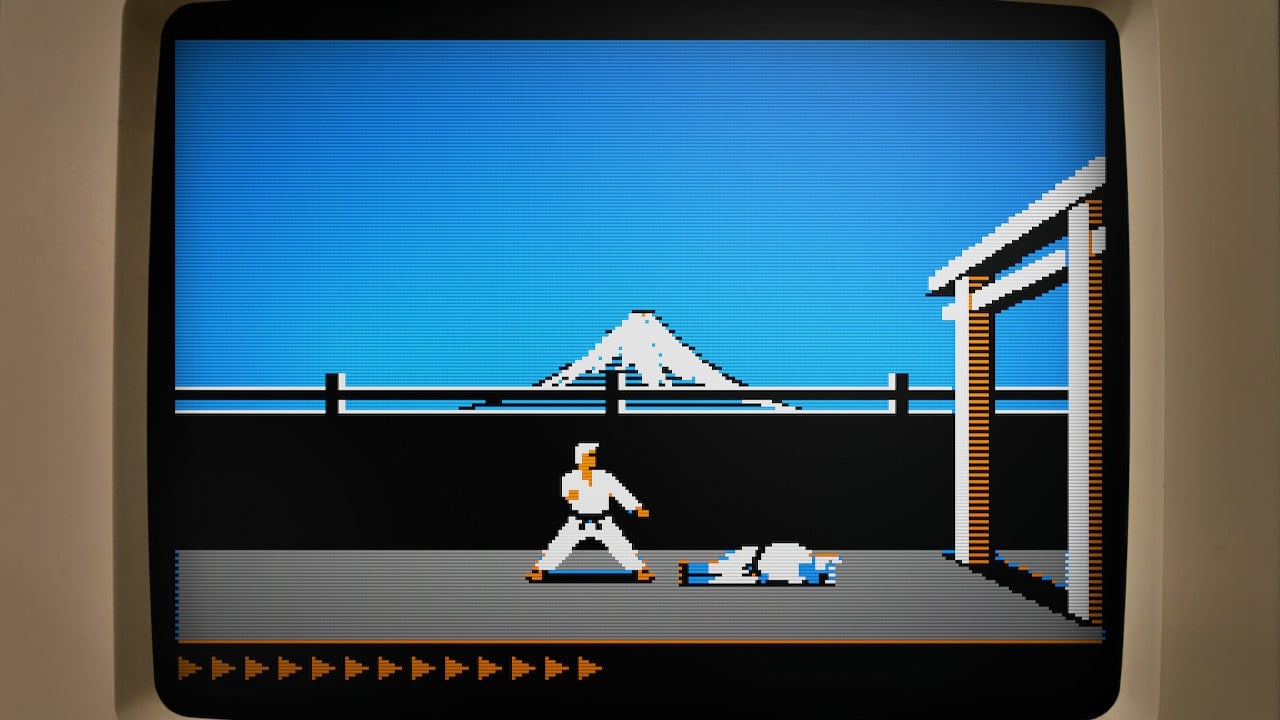
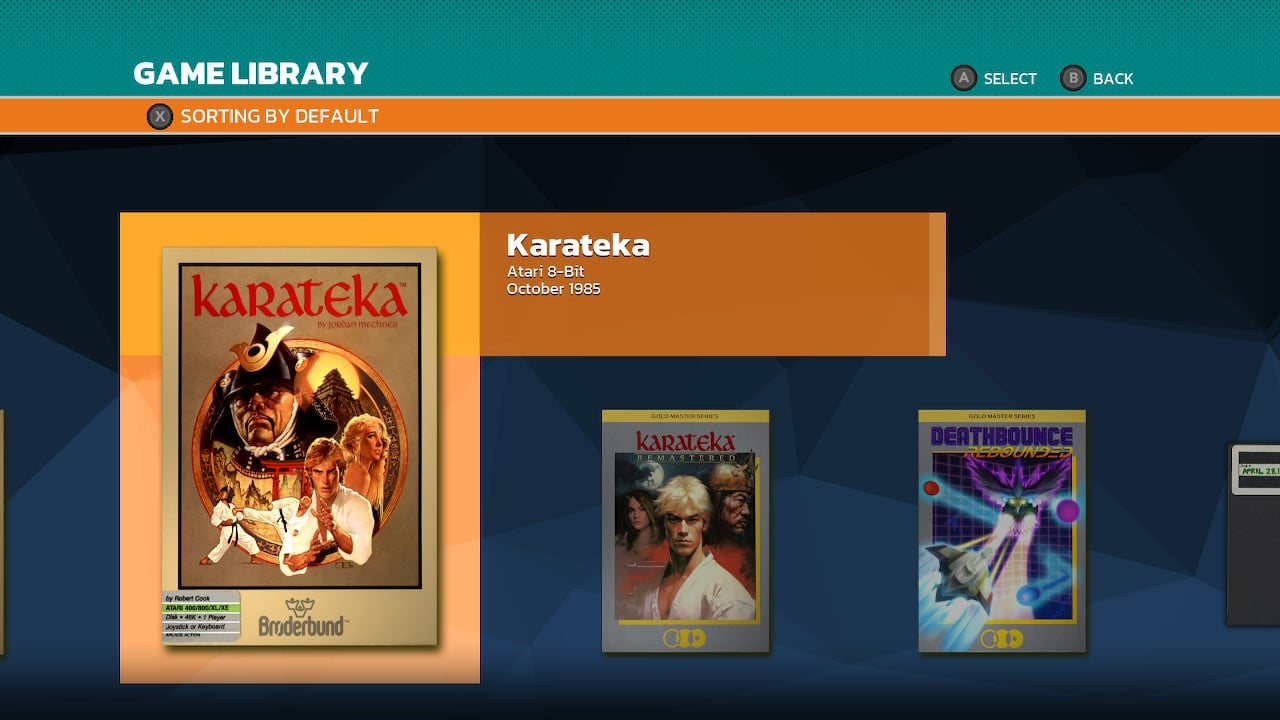
In addition to a ton of historical tidbits on board, and a genuinely interactive element that allows you to jump in and start playing the game during commentaries, the package features every available prototype of Karateka, allowing you to play its work in progress and all the finished releases and ports, including Apple II, Commodore 64 and Atari 8-bit versions. Deathbounce, a game Mechner originally coded at 17 entitled Asteroids Blaster, has several prototype versions that changed based on feedback from Broderbund Software, who ultimately never put it out for sale. Broderbund’s input, however, did influence its transformation from an Asteroids clone to an altogether novel arena shooter set on the cars of a space train. There is a remaster of Deathbounce included, too, and it’s lots of fun to play for score, hurtling from car to car and littering the screen with destructible firework explosions.
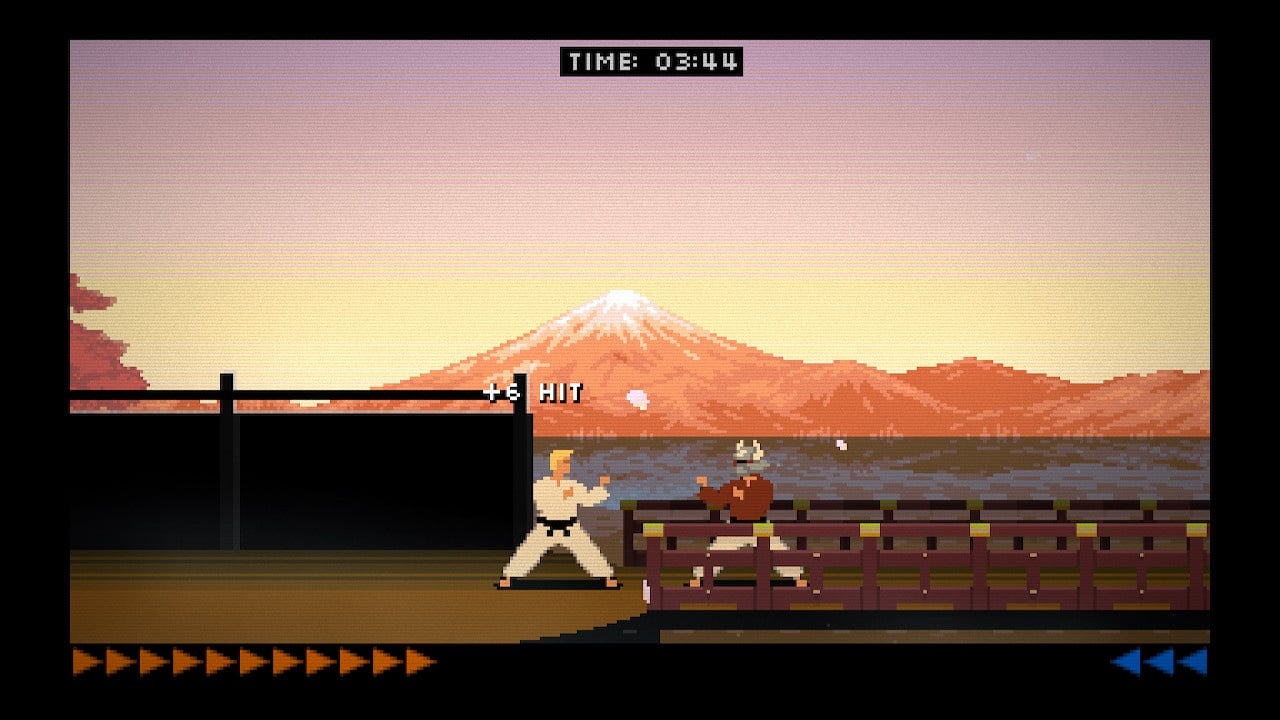
Of greater interest to fans will be the Karateka remaster, which sensibly does nothing to lose the charm of the original. That is to say, it’s nothing like the 3D 2012 Karateka remake and is more about keeping the format exactly as it was. Heavily tuned up, it has a lot more pixels and colours, as well as a rousing score by Francis Mechner, and visually sits somewhere between the 8 and 16-bit era. And it’s wonderfully done. Cherry blossom, bridges, and other new background elements breathe new life into the adventure, and there is an optional audio commentary track from the programmer that interrupts your playthrough at certain stages to tell you about the project’s development.
On the whole, The Making of Karateka is superbly handled. But — and there is a but — one must be aware that it’s a very niche field of interest. If you suffer from a ‘2D looks old’ disposition then it’s simply not for you. Despite its animated fluidity, Karateka was built around the limitations of ancient home PCs — an aspect that’s discussed often in the documentary snippets — and as such, is a simple game with a relatively slow input system. People looking to dive in on this should know what they’re getting: an excellently laid out documentary with interactive timelines, soothing menu music, and plenty to watch and play, even if the number of unique games is fairly thin.
Captured on Nintendo Switch (Docked)
Perhaps broadening the package to include Mechner’s other works, like Prince of Persia, would have made this truly unmissable, although that would no doubt require the involvement of Ubisoft (the owners of that IP) and a price point to match, not to mention a huge amount of additional work. Still, considering the quality of the execution and the wealth of researched content, the price stands fair and will be a no-brainer for fans of the game or historical compendiums generally.
Conclusion
The Making of Karateka is not for everyone, and most of its appeal will lie with older gaming generations. If you’re a student of historical gaming flash points, however, it’s a package that delivers the goods, and in fine form. It doesn’t have anywhere near as much unique gaming content as Atari 50: The Anniversary Celebration, a fact that will limit its appeal. Despite this, the two remasters are solid, the prototypes intriguing, and the content comprehensive. If you were a fan of Atari 50, The Making of Karateka will find you well.
Today Nintendo announced a few fun new Nintendo Switch bundles, finally adding some variety alongside the stalwart Mario Kart 8 Deluxe SKU that has arrived every holiday season like the Coca-Cola Christmas advert. Luckily, Nintendo fans have a Nintendo Switch Sports bundle on shelves, alongside two Animal Crossing New Horizons Switch Lite consoles with special artwork.
All three bundles arrive on October 20, 2023, just one day before the release of Super Mario Bros. Wonder. Nintendo is pairing a pre-installed digital Nintendo Switch Sports alongside a regular (non-OLED) Nintendo Switch with neon red and blue Joy-Cons. It’s a little strange to still be getting a regular old Switch, but Nintendo might be squeezing out the last bits of stock before a Nintendo Switch 2 release date in the future.
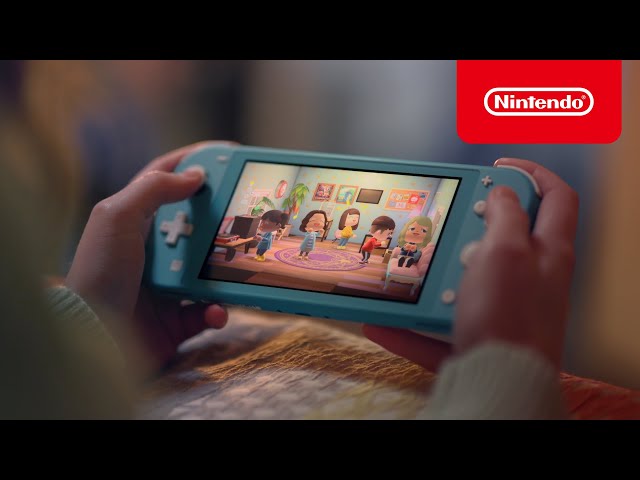
Meanwhile, you can also grab either a coral pink or turquoise blue Nintendo Switch Lite, though, unlike the previous versions of those colors, these new Animal Crossing-themed versions feature a white pattern on the back of the Switch, with the illustrations featuring the iconic Animal Crossing leaf. There’s even a little Animal Crossing logo under the right analogue stick adding an extra bit of flair. Will you be picking any of these up?
There’s no trailer for the Animal Crossing New Horizons Switch Lite, but you can check out this cozy advert below to get in the mood for some winter gaming.
That’s all we have on these Nintendo Switch bundles today folks, but if you’re getting ready to grab the console for yourself or a friend, be sure to check out our list of the best Nintendo Switch games of 2023.
A brand‑new App Store will launch with Apple Vision Pro, featuring apps and games built for visionOS, as well as hundreds of thousands of iPad and iPhone apps that run great on visionOS too. Users can access their favorite iPad and iPhone apps side by side with new visionOS apps on the infinite canvas of Apple Vision Pro, enabling them to be more connected, productive, and entertained than ever before. And since most iPad and iPhone apps run on visionOS as is, your app experiences can easily extend to Apple Vision Pro from day one — with no additional work required.
Timing. Starting this fall, an upcoming developer beta release of visionOS will include the App Store. By default, your iPad and/or iPhone apps will be published automatically on the App Store on Apple Vision Pro. Most frameworks available in iPadOS and iOS are also included in visionOS, which means nearly all iPad and iPhone apps can run on visionOS, unmodified. Customers will be able to use your apps on visionOS early next year when Apple Vision Pro becomes available.
Making updates, if needed. In the case that your app requires a capability that is unavailable on Apple Vision Pro, App Store Connect will indicate that your app isn’t compatible and it won’t be made available. To make your app available, you can provide alternative functionality, or update its UIRequireDeviceCapabilities. If you need to edit your existing app’s availability, you can do so at any time in App Store Connect.
To see your app in action, use the visionOS simulator in Xcode 15 beta. The simulator lets you interact with and easily test most of your app’s core functionality. To run and test your app on an Apple Vision Pro device, you can submit your app for a compatibility evaluation or sign up for a developer lab.
Beyond compatibility. If you want to take your app to the next level, you can make your app experience feel more natural on visionOS by building your app with the visionOS SDK. Your app will adopt the standard visionOS system appearance and you can add elements, such as 3D content tuned for eyes and hands input. To learn how to build an entirely new app or game that takes advantage of the unique and immersive capabilities of visionOS, view our design and development resources.
The collection is currently set to land on the Nintendo console this Autumn, and will combine the base game and its two expansions (Opposing Fronts and Tales of Valor) in one neat little package.
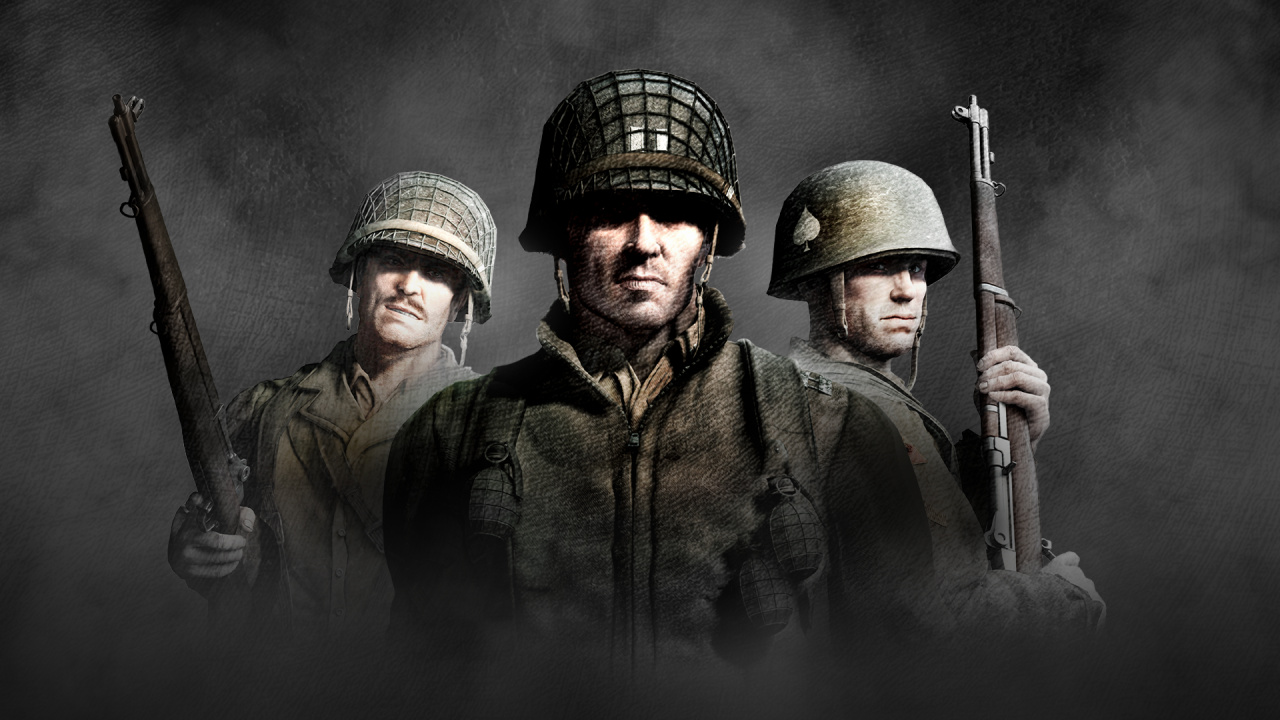
If you have never come across the title before, Company of Heroes is a real-time strategy game that sees you taking on the role of either the Allied or the Axis forces in a series of campaigns throughout World War II. There will be 41 different missions for you to take on in total, with every tactical decision directly shaping how the battle plays out — no pressure there, then…
Originally released for the PC in 2006 before being ported to mobile in 2020, this collection will feature an all-new control scheme designed specifically for the Switch so you can keep the campaign alive on the go.
For a little more information about the upcoming collection, check out the following from Feral:
With a bespoke user interface and controls designed for play on Nintendo Switch, the full battlefield will be under the player’s command. Intense tactical combat takes place across 41 squad-based missions, with moment-to-moment encounters shaping the course of each battle. A customisable Skirmish mode is also included, with unique factions, multiple game modes and a wealth of maps, offering enormous replayability and rewarding bold experimentation.
The Skirmish mode looks to provide a less story-driven style of gameplay, though Feral has noted that the game will only be single-player at launch with a multi-player update planned for after the release.
We will be sure to keep an eye on this one for more details of a secure release date.
Will you be picking the Company of Heroes Collection up this Autumn? Leave a comment to let us know.




 Recommended:

 If you want to dive deeper into this topic, I recommend you read

 .
. . This novel approach challenges the prevalent use of convolutional neural networks (CNNs) for computer vision tasks, achieving state-of-the-art results in benchmarks like ImageNet.




 Academy: