Posted on Leave a comment

Review: Chants Of Sennaar – Enchanting Anthro-Puzzling With A Side Of Frustration

Chants of Sennaar Review - Screenshot 1 of 5
Captured on Nintendo Switch (Docked)

Your character wakes up in a sarcophagus. At first blush, you seem alone as you guide your cloaked character, wandering through gorgeously rendered arches and passageways. At last, you chance upon another person. Finally! A chance to absorb some exposition about what the heck’s going on. Maybe you’ll even get a quest!

Not quite.

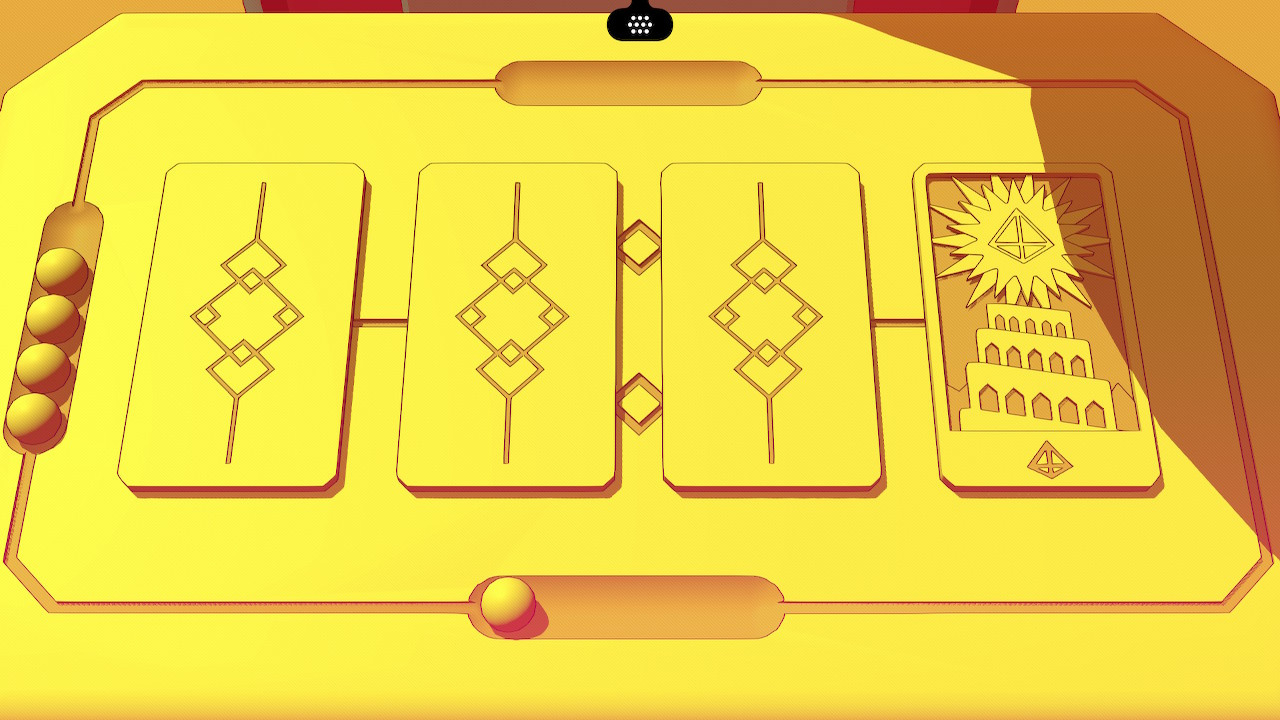
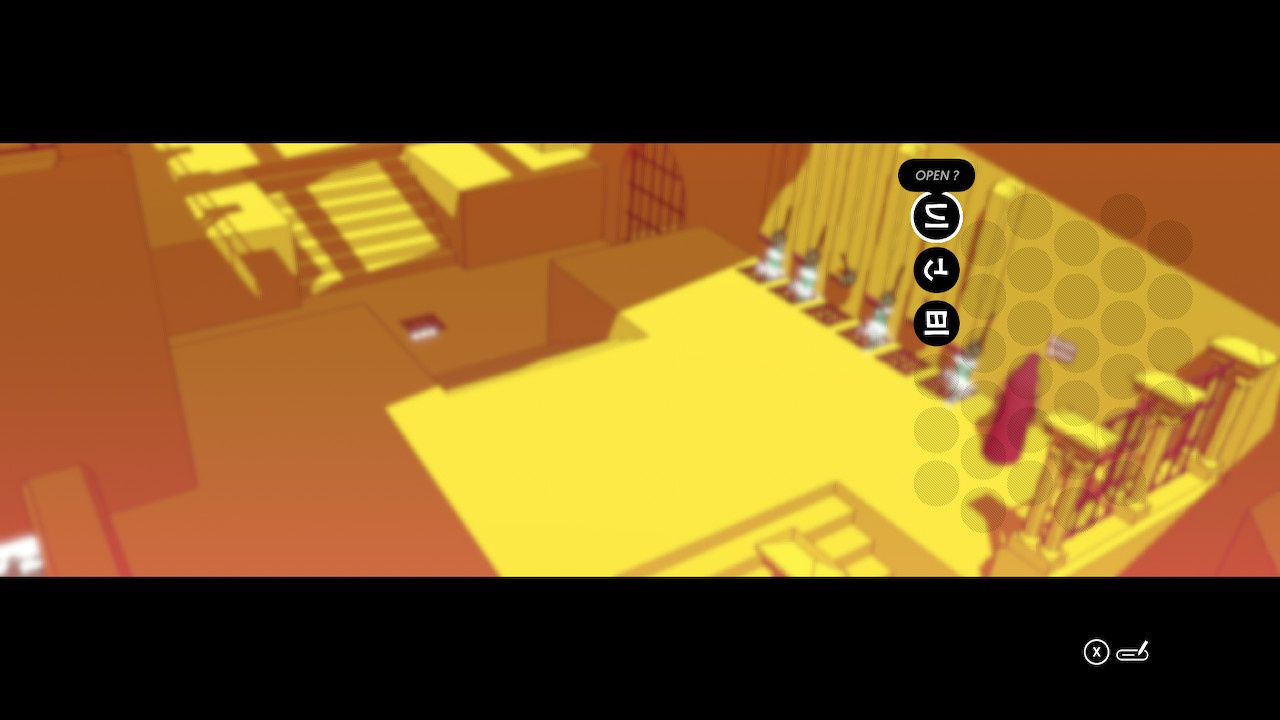
They say… something before pointing to a nearby lever. It’s not that you don’t understand what they’re saying, in fact, you’re pretty sure they’re asking you to pull the lever, but you can’t read what they’re saying. Then a subtle UI flair at the top of the screen prompts you to press ‘X,’ where these foreign characters pop up in a neat row. You write down what you think these characters mean, but still don’t feel absolutely certain. After another exchange, your character pulls out a journal with drawings that confirm your suspicions; now you just need to line up the drawings with the characters. Maybe it takes a try or two, but you put what seems to mean ‘open’ next to a drawing that shows an open door, and the other two characters with their respective drawings. Suddenly the characters in Sennaar’s journal flicker and change color with a satisfying chime, confirming your suspicions.
Chants of Sennaar Review - Screenshot 2 of 5
Captured on Nintendo Switch (Docked)

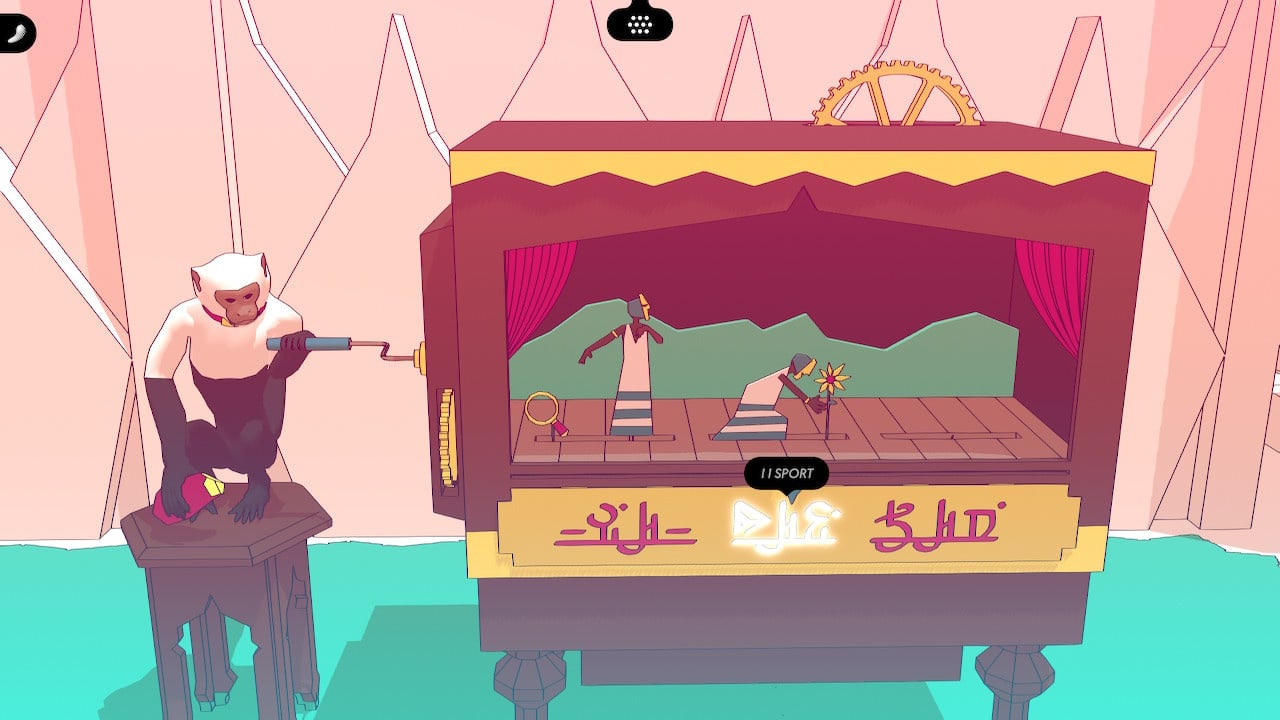
It’s a deceptively intricate magic trick that never loses its novelty through Chants of Sennaar‘s runtime (19 hours for us) that makes you feel like an archaeologist or anthropologist piecing together the building blocks of a forgotten language. While it hinges on other environmental puzzles and interactions, Chants of Sennaar shines in its ability to essentially teach you a new language through almost nothing but context clues.

Chants of Sennaar is an impressive, if steadfast, adventure through a richly defined, stunning world whose languages, cultures, and secrets are the key to uniting five peoples divided by an evil force. Instead of just figuring out which switches to press in the proper order or pushing a box in the right direction to open a door or bypass a set of obstacles, you’ll be tasked with deciphering a foreign language in order to determine which switches to flip or crates to move. It’s an impressive exercise in anthropological puzzle design that’s also seriously challenging and often frustrating.

While it’s difficult to discuss the premise of the game without diving into its sudden, plot-heavy third act, suffice it to say that you’ll find yourself exploring five different civilizations in Chants of Sennaar. Each civilization has its own defining traits, cultures, and characteristics. One might be orderly and strict while another might be simpler, but staunchly devoted to its religion. They all have their own art, music (all of which is excellent), fashion, architecture, and sense of purpose. Most importantly, though, they each have their own language. Each civilization’s language reveals a lot about its culture; the alchemists might have individual words for specific elements, while artists have words for more abstract concepts.
Chants of Sennaar Review - Screenshot 3 of 5
Captured on Nintendo Switch (Docked)

Each language has its own distinct feel but follows its own rules. Not in the grammatical sense, but in the actual design of each word. Words for person, warrior, and priest may all be variations on one specific shape or outline because they’re all related to people. Verbs might all be anchored by an underline or curve. Developer Rundisc clearly went to great lengths to not only create languages and cultures that added context to these mysterious runes but to make them follow their own rules.

Outside of its anthropological puzzle-solving, there’s also some pretty standard puzzling here; it’s not bad, but nothing we haven’t seen dozens of times over. Press a switch at the right time, turn a statue to face the right direction, and so on. That stuff normally wouldn’t be very interesting, but slowly uncovering how and where to solve these puzzles by learning a language breathes new life into even the most rote puzzle idea.

The problem is Chants of Sennaar’s ability to thread the needle properly. This game makes very few affordances in its design and, therefore, can force you to spin your wheels for a long time before you’re rewarded for your effort. If you misread even one context clue, that can throw stuff off later on, which can really undermine its sense of play and progression. On the other hand, many of these moments feel more like a deliberate choice motivated by artistic vision rather than a qualitative fault that might prove divisive. That said, its quality of life offerings don’t lay the proper foundation to reliably bolster Chants’ lofty—sometimes top-heavy—aspirations.

This sensibility permeates its gameplay. Trying to assign an abstract idea like the word ‘not’ to a drawing sounds easier than it actually is. Words like ‘fear,’ ‘you,’ or ‘transform’ make for difficult translations, which can tack on a lot of trial and error (and backtracking) to something that should be brief because the context of a situation can be so subjective. It’s one thing when a person points at a lever and says “Open door,” but when someone says, “Can I help you?” it’s not always as simple as it might sound to parse that out in the broader context of a conversation or environment.

Sometimes it’s a small touch; like the lack of permanently accessible maps for any of the game’s levels, for example. While Chants does present the player with maps in the context of its respective levels, you can’t pick them up and carry them with you. So, unless you memorize every room in every level, you’re going to be running back and forth between your destination and rooms with maps in them. Considering the game has a bespoke mechanic for picking up and examining items, the lack of something as simple as a paper map is frustrating. Plus, Sennaar always has their journal on hand, so the lack of a drawn map as you progress is questionable.

That frustration compounds in Chants’ endgame, where intimate knowledge of its various levels and areas is non-negotiable. There are dozens of such rigidities in Chants of Sennaar. While the map issue is one of its most pointed and significant, other small issues come from its highly bespoke sense of puzzle-solving that prioritizes narrative, world-building, and immersion over play. There’s no log containing recent conversations, so if you need more context to better suss out what a specific character means, you need to find the sign, NPC, or book where you initially encountered it, which means you need to backtrack to do so.
Chants of Sennaar Review - Screenshot 4 of 5
Captured on Nintendo Switch (Handheld/Undocked)

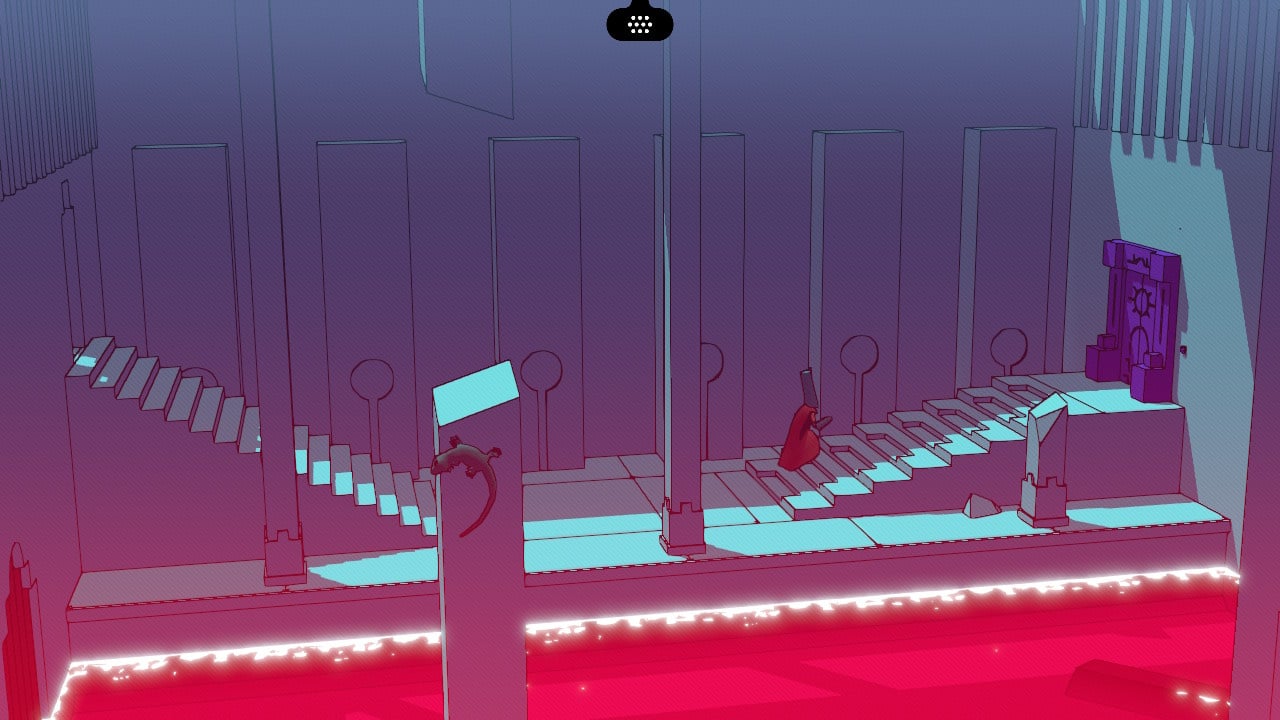
This is all in service of Chants of Sennaar’s impressive, dogmatic dedication to putting you in its world without making compromises. In trying to put you in this world, Chants might push some players too far. But those who persevere are going to be rewarded for busting their brains. It operates on a similar push and pull that you could expect from classic adventure games like Grim Fandango or The Secret of Monkey Island. It can be really frustrating, especially if the game’s rigid logic doesn’t click with you. In that regard, it’s a great option for a more low-key co-op game. Sitting down to play in a new session might enlighten you to new ways to approach a particularly difficult translation, so introducing a completely new mind to the mix might add some interesting depth.

The only hindrance that doesn’t feel deliberate is its home on Switch. Because you’re encouraged to take notes on each character you encounter to try and guess what it might mean, you’re likely to spend a lot of time using the Switch’s native keyboard. While there are some ways to bypass the frustrating aspects of typing on the Switch (or any console), it’s annoying to constantly have to deal with the constraints of typing with a controller unless you’re playing in handheld.

Conclusion

Chants of Sennaar is as defined by its peaks as its valleys. For every moment of mind-blowing, brilliant puzzle design comes an inversely frustrating moment stymied by ’90s adventure game logic. The game’s ability to teach a player aspects of a language is awe-inspiring, and its way of guiding players along with as little information as possible is intensely rewarding—when it works. Even though it isn’t for everyone (or consistently excellent), it’s constantly impressive. If you’re interested, we recommend checking out the free demo for the game that’s available on the eShop, which will help let you know whether or not this game might be up your alley.
Posted on Leave a comment

Pokémon TCG Card Dex Is Being Removed From App Stores Later This Month

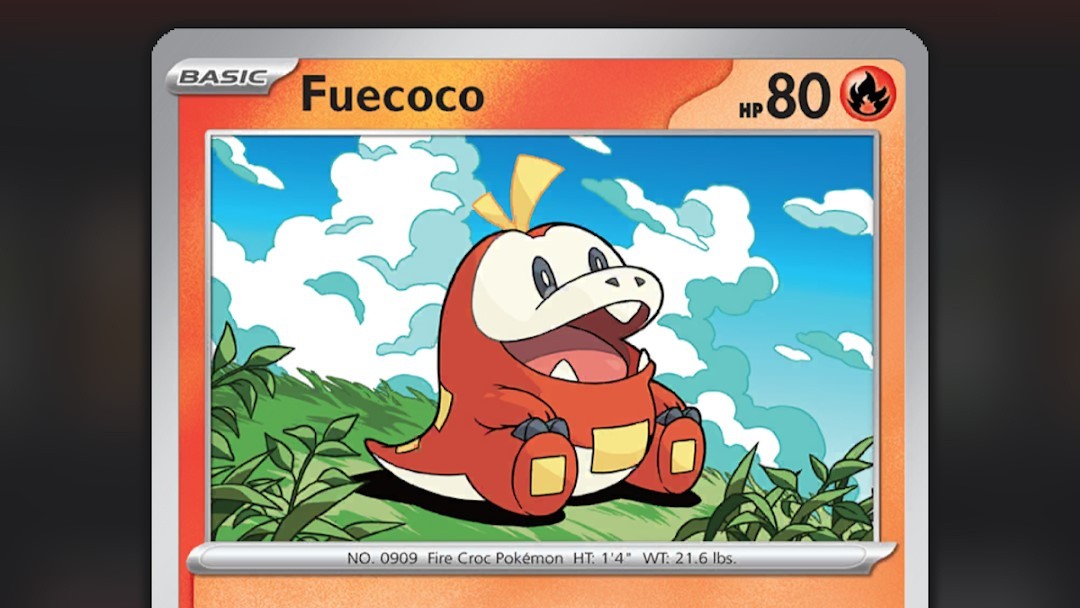
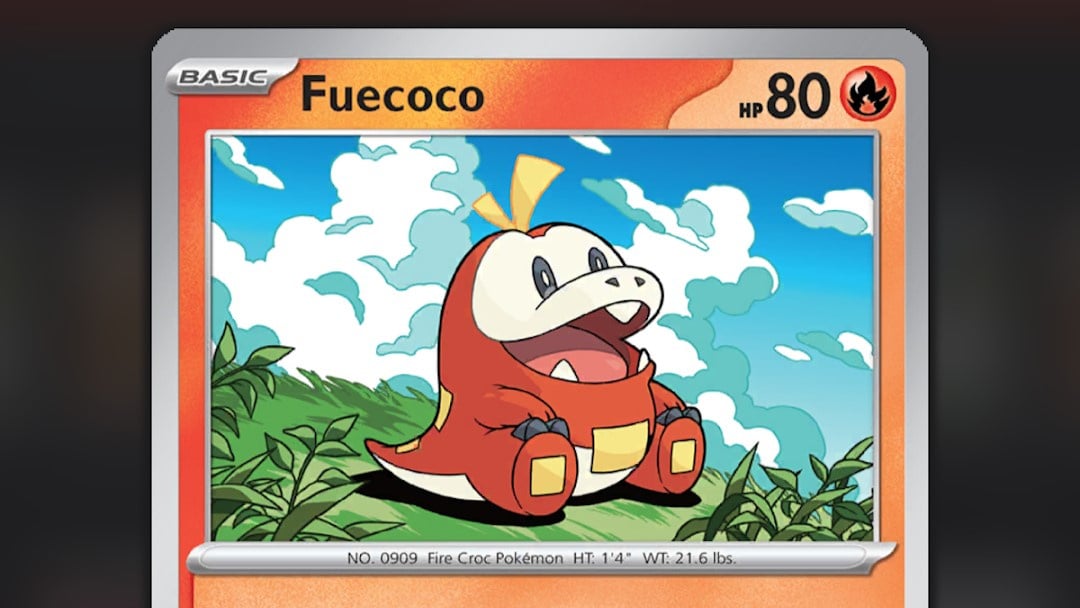
Fuecoco Card TCG Dex App
Image: The Pokémon Company

The Pokémon Company has announced that it will be removing the Pokémon Trading Card Game Card Dex app from storefronts on 20th September 2023 (thanks, Serebii).

TPC confirmed in a post today that it’s “sunsetting” the app so it can focus on the ongoing development of Pokémon TCG Live, which replaced the Pokémon Trading Card Game Online earlier this year.

The Pokémon Trading Card Game Card Dex app is used by players to scan their cards and document their card collections digitally. Instead, trainers will need to head over to the Trading Card database to read up about their cards or build a digital collection in Pokémon TCG Live by redeeming the codes that come with the physical cards.

TPC also confirmed that the newest deck — Scarlet & Violet—151 will not be coming to the app and all data saved on the TCG Card Dex app is non-transferrable, so it will be lost when the app is removed.

The app is expected to disappear at around 10am PT / 1pm ET / 6pm BST on 20th September, which is two weeks from today.


Do you use the Pokémon Trading Card Game Card Dex app? Are you sad to see it go? Share your thoughts in the comments.

Posted on Leave a comment

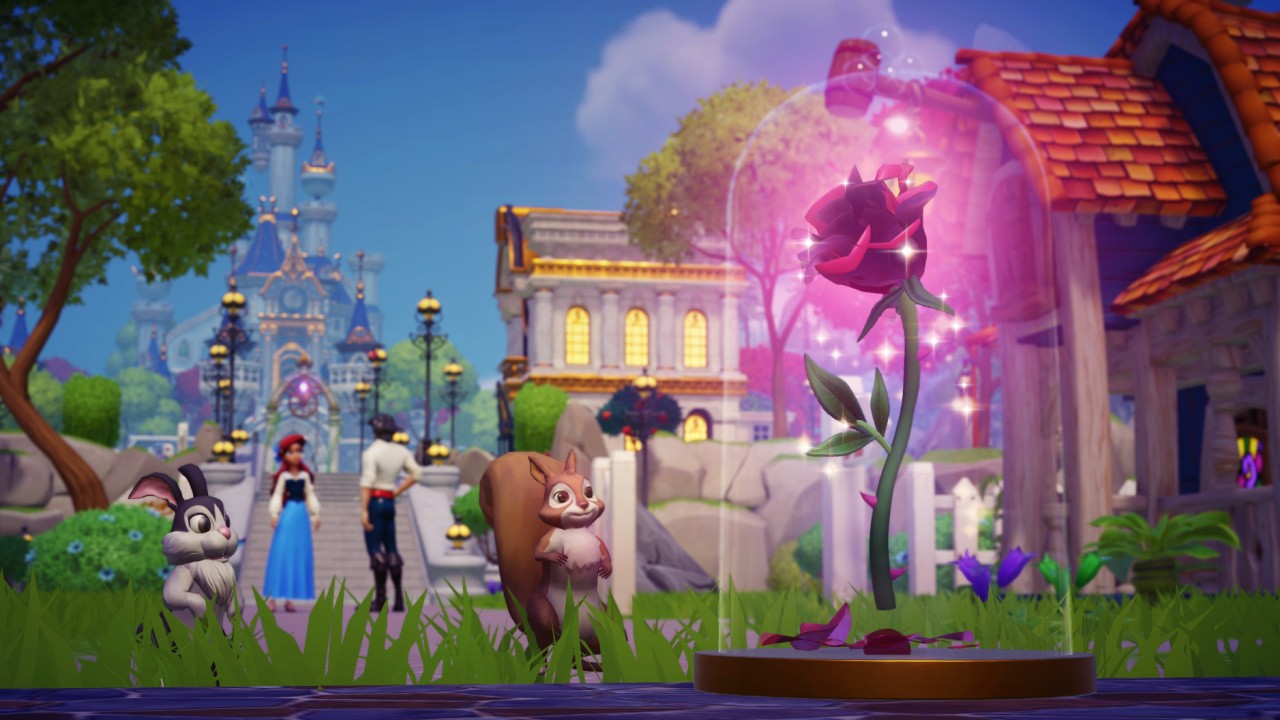
Belle And Beast Will Be Your Guests In Disney Dreamlight Valley’s Next Update

Disney Dreamlight Valley Beauty and the Beast
Image: Gameloft

Believe it or not, Disney Dreamlight Valley is celebrating its one-year anniversary and to mark the occasion, two familiar faces will be your guest, as Belle and Beast are sauntering into the game with the next update.

The classic pair will enter the Valley as a part of the upcoming ‘Enchanted Adventure’ update, which is set to kick off a little later this month after being initially teased with the reveal of the new 2023 roadmap back in June. The news was shared by the official @DisneyDLV Twitter account, which posted the following image accompanied by some gorgeous string music — all together now, “tale as old as time…”

Belle and Beast follow the recent addition of Wreck-It Ralph‘s Vanellope and, according to the roadmap, spells the beginning of a busy end to 2023 with new Chapters, characters and Frontiers all planned.

Are you ready to welcome Belle and Beast to the Valley in the next few weeks? Let us know in the comments.

Posted on Leave a comment

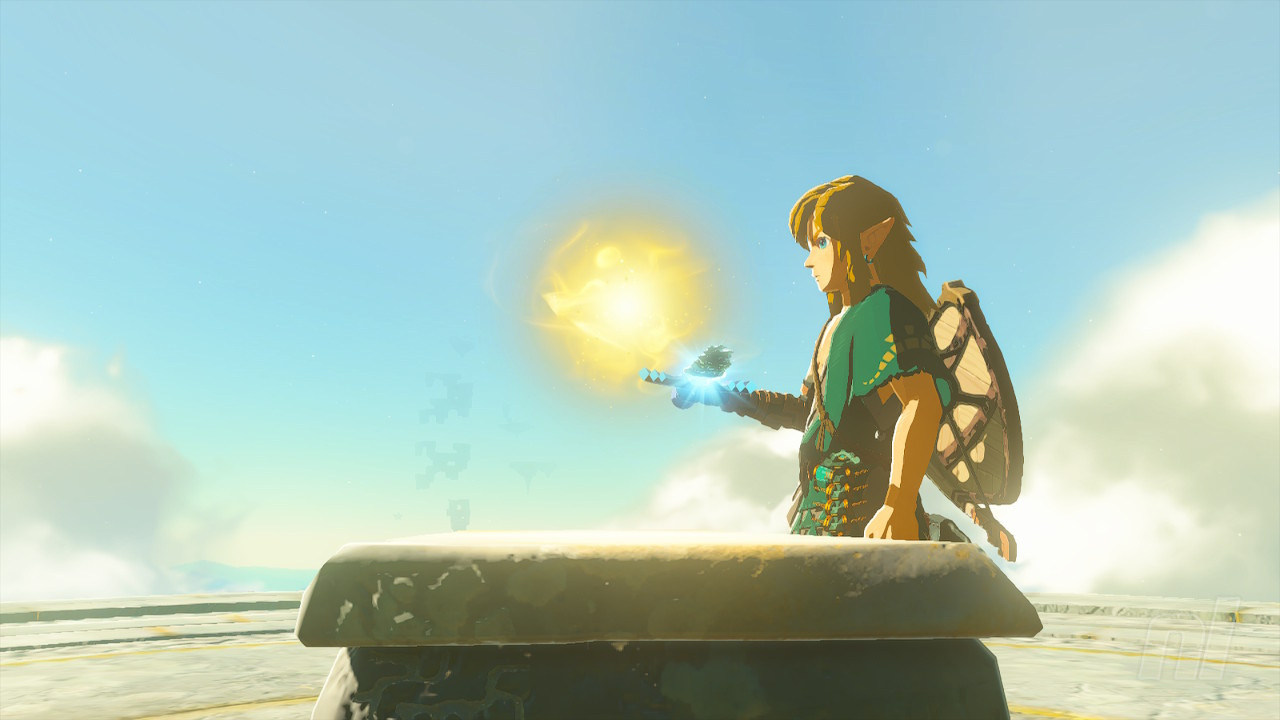
TOTK Director Is Extremely Vague On Game’s Placement In Zelda Timeline

Zelda: Tears of the Kingdom Link Sword
Image: Nintendo Life

There is a certain beauty to the chaotic ordering of the Zelda timeline. Ever since the ‘official’ rundown first appeared in the Hyrule Historia, theories have popped up all over the place to either prove or disprove its legitimacy. It’s not surprising that Tears of the Kingdom would raise even more questions than it answered, but what would the game’s director have to say about its chronological positioning? Expectedly, not much.

In a recent interview with Famitsu, Hidemaro Fujibayashi was asked to comment on this very topic. Unsurprisingly, the director’s answer was somewhat vague and only confirmed the fact that the game comes directly after Breath of the Wild (we know, what a shock!), though he could offer nothing more precise in his response.

Fujibayashi does state that the series is designed so as to not contradict itself too much and he likes there to be room for fans to fill in the blanks between games (of which there sure are many). The original Famitsu interview is currently available in Japanese only, though the following translated summary of the director’s response was provided by MondoMega on the relevant Famiboards thread.

The interviewer asks about how the game fits into the existing Zelda timeline, given Skyward Sword seemingly depicted the founding of Hyrule, while this game also does. Fujibayashi only reaffirms that the game is set following Breath of the Wild, and that the Zelda series is designed to have a story and world that doesn’t fall apart. With the latter assumption in mind he believes there is room for fans to wonder if there are various other possibilities. He suggests one “possibility” (and clarifies that he is only speaking on it as a possibility) that there may have been a history of destruction before TotK’s story of Hyrule’s foundation. He says he does not create things randomly, and wants fans to imagine the parts of the story that have not been told.

We have speculated about how Link’s latest fits into the timeline using our own research in the past and while Fujibayashi’s answer sure is interesting in suggesting possibilities, it’s clear that Nintendo is keen not to set anything in stone for the time being.

The interview also saw series producer Eiji Aonuma suggest that there are no plans for Tears of the Kingdom DLC, and the pair also discussed the game’s design process, playtesting changes and more. You can check it out in full here.

Where do you think TOTK and BOTW sit on the Zelda timeline? Get your tinfoil hats on in the comments below.

Posted on Leave a comment

Review: Fae Farm – A Thoughtful, Utterly Gorgeous Farm Sim, But Avoid The NPCs

Fae Farm Review - Screenshot 1 of 5
Captured on Nintendo Switch (Handheld/Undocked)

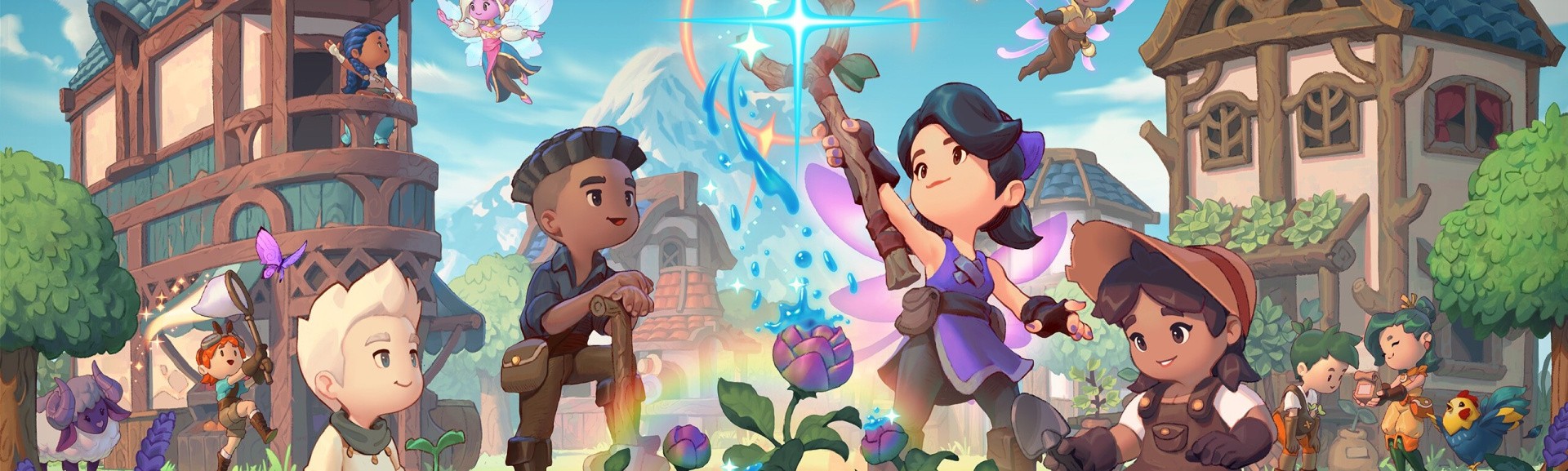
Let’s cut to the chase. You’re here because you’ve most likely got a hankering for another farming-type game in your life. In fact, you’ve probably played most of them already, from Stardew to Harvestella, and you’ve most likely been burned a few times by games that didn’t quite scratch the itch. Now, you’re wanting to know if Fae Farm, one of the most promising-looking farming-type games of the past few years, matches up to the hype.

The short answer: Mostly. The long answer: This review.

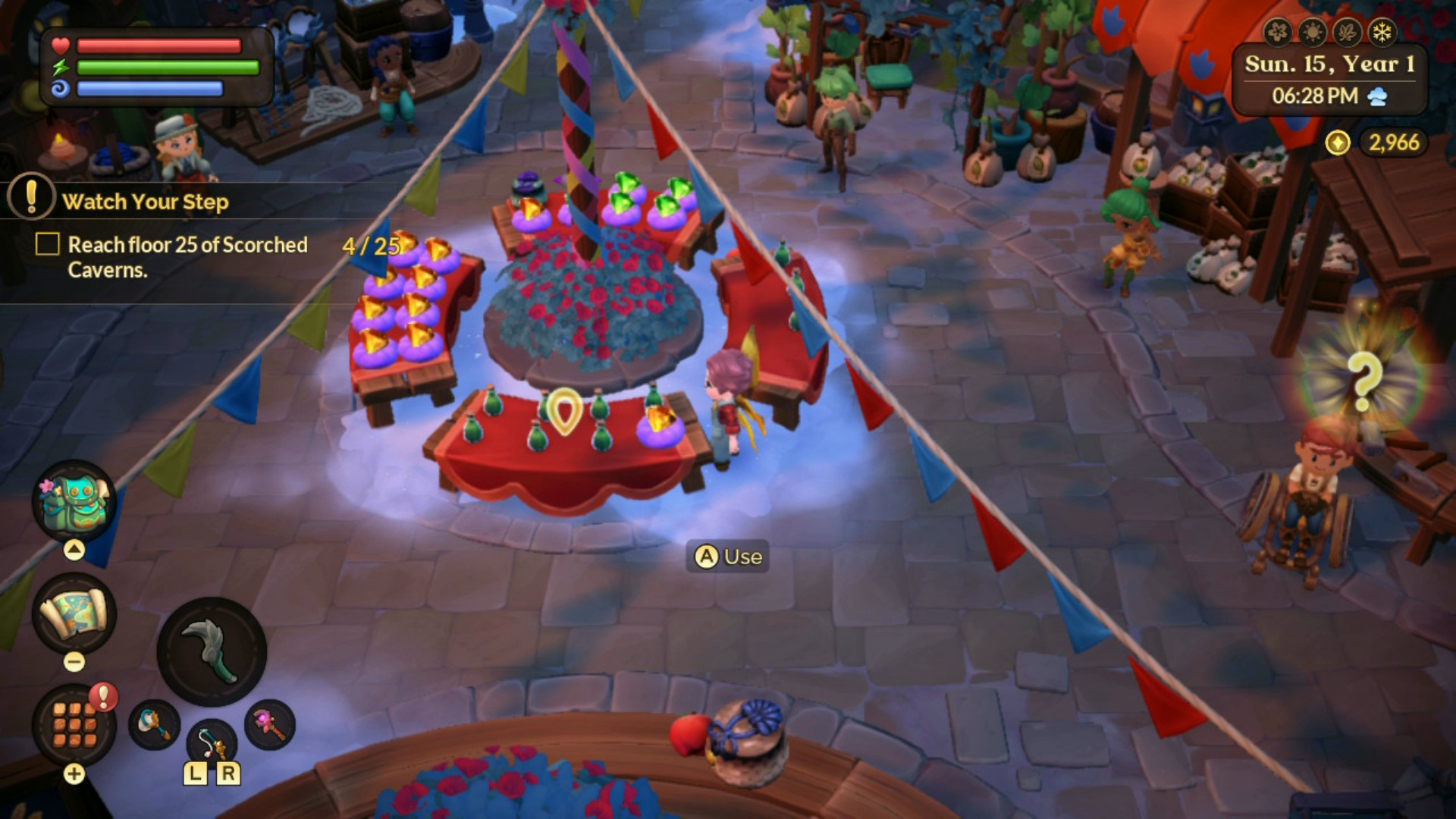
To start off with the praise – of which there is a lot – Fae Farm is utterly gorgeous. You may think the trailers look a bit like My Sims or one of those mobile game adverts where the grandma murders everyone, and we agree, but in motion, Fae Farm is beautiful. Colours bloom from every inch of its meticulously hand-painted landscapes, and although the character art leans on the side of simplicity, it works well, especially when the game is played in handheld mode. The designs of the food, the decor, and the monsters are all so adorable and clever that it seems almost timeless and illustrative, like a Beatrix Potter book. It’s a genuine pleasure to look at.

Fae Farm Review - Screenshot 2 of 5
Captured on Nintendo Switch (Handheld/Undocked)

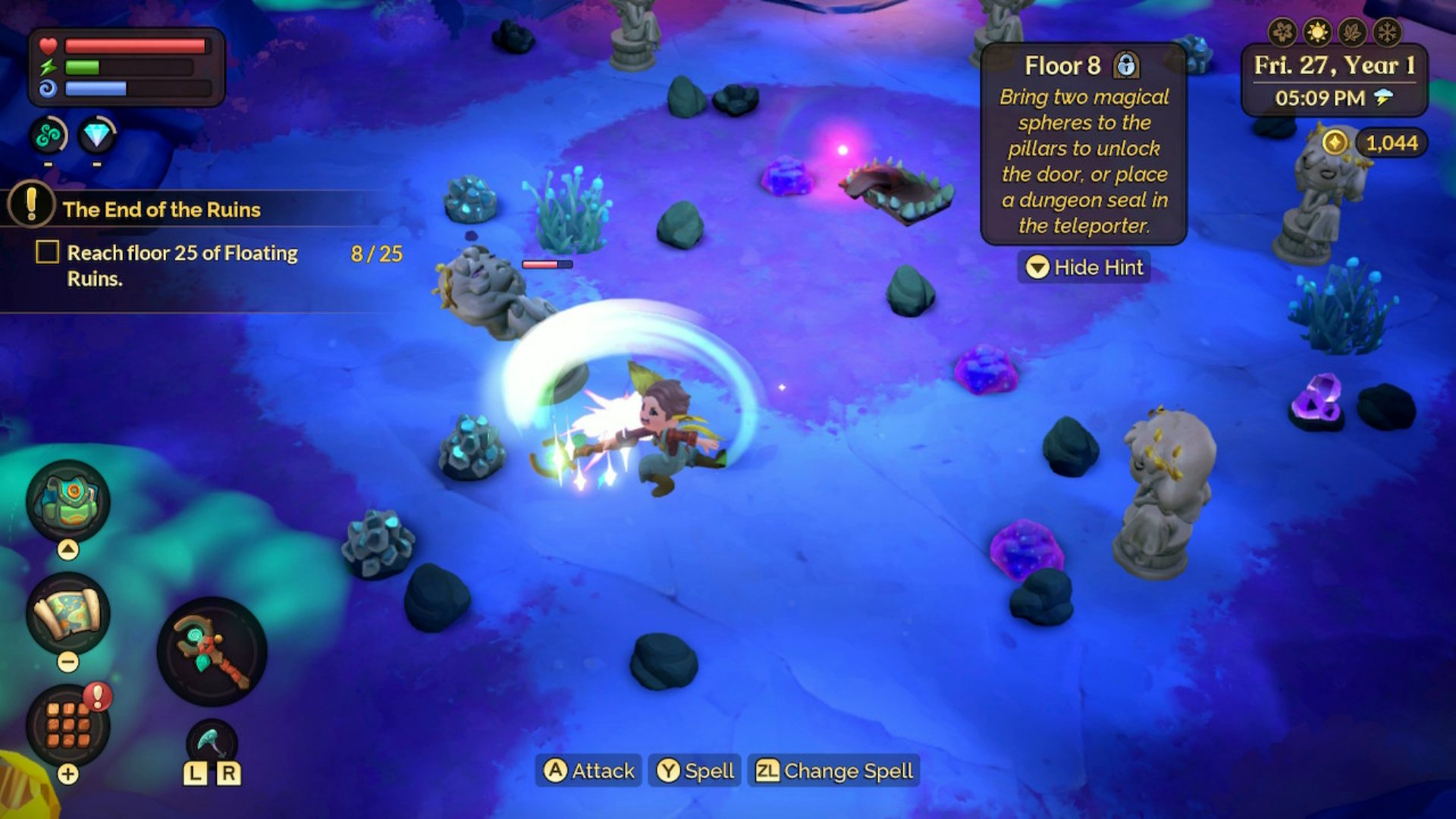
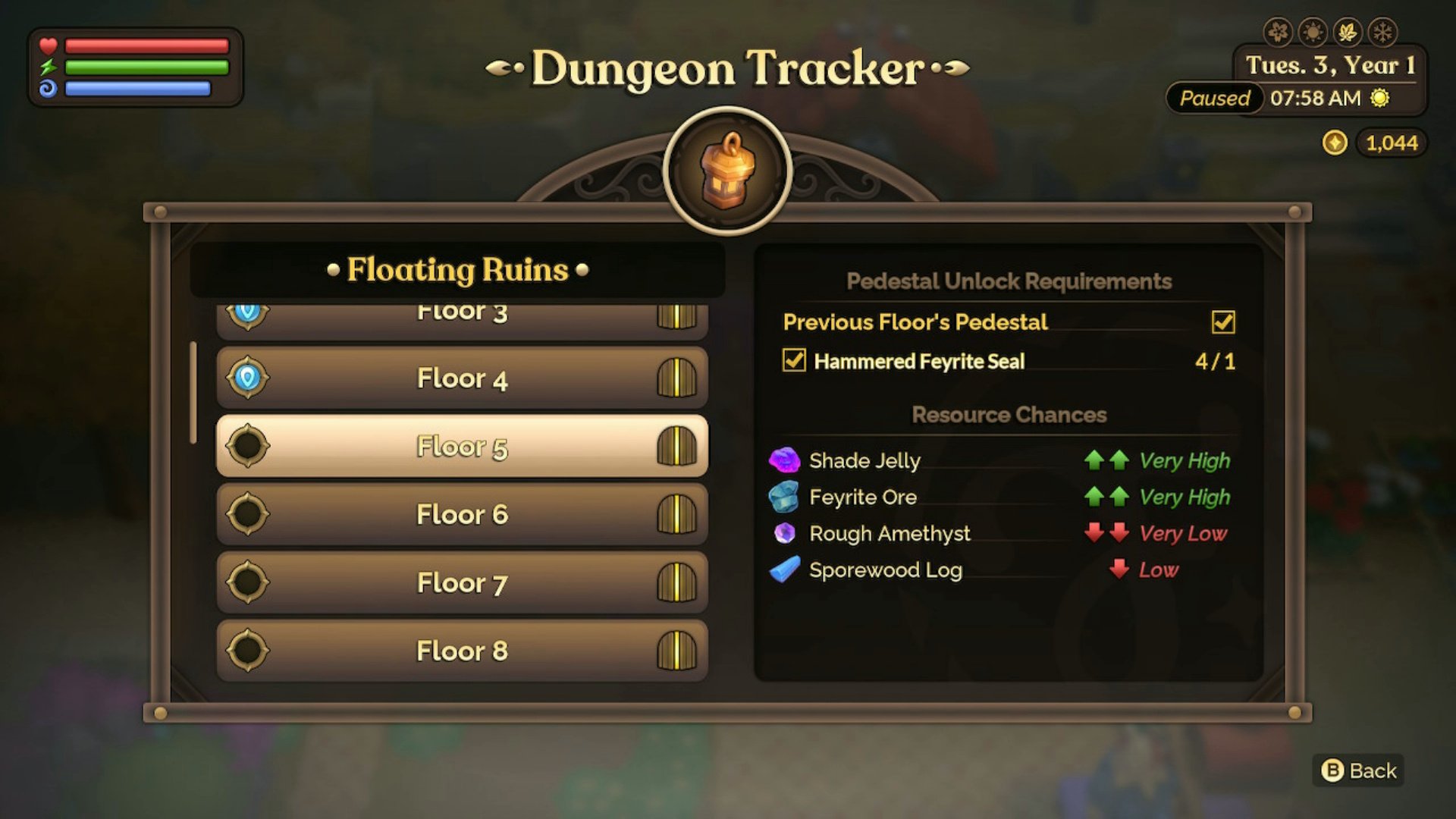
If you’ve played any Rune Factory, you’ll know more or less how the game itself shakes out. Some dreadful environmental issue (whirlpools, thorns, poison gas, etc.) blocks progress, so you must delve into dungeon-like areas to find the source of said issue. You’ll need to collect resources, money, homegrown crops, and materials to craft potions, tool upgrades, and food to survive the dungeons; then, when the clock strikes 11, it’s time to head home and sleep. Rinse and repeat.

It’s that ‘collecting resources, money, crops, and materials’ part that constitutes most of the game. Between growing crops, discovering new crops, animal husbandry, and managing an ever-increasing number of farm buildings and workbenches, you’ll absolutely have your work cut out for you. Whatever you don’t need can go onto market tables in the middle of town, where it’ll be sold overnight; whatever money you make can be spent in the very same market, mostly on home decor.

But home decor is actually, secretly, a vital part of the game. Certain pieces of furniture increase your health, stamina, and mana bars, letting you venture further into the mine-dungeons and cast more spells. As the game’s name suggests, there is a great deal of fae business that you’ll need to interact with – although it only appears after the first couple of long chapters – and magic is everywhere. Mana is the currency you spend to use powerful tool abilities, like increasing your watering can’s range, and it’s also how you do attacks when fighting Jumbles, the beautifully-designed inanimate-objects-brought-to-life that plague your journeys into the mine-dungeons.

Fae Farm Review - Screenshot 3 of 5
Captured on Nintendo Switch (Handheld/Undocked)

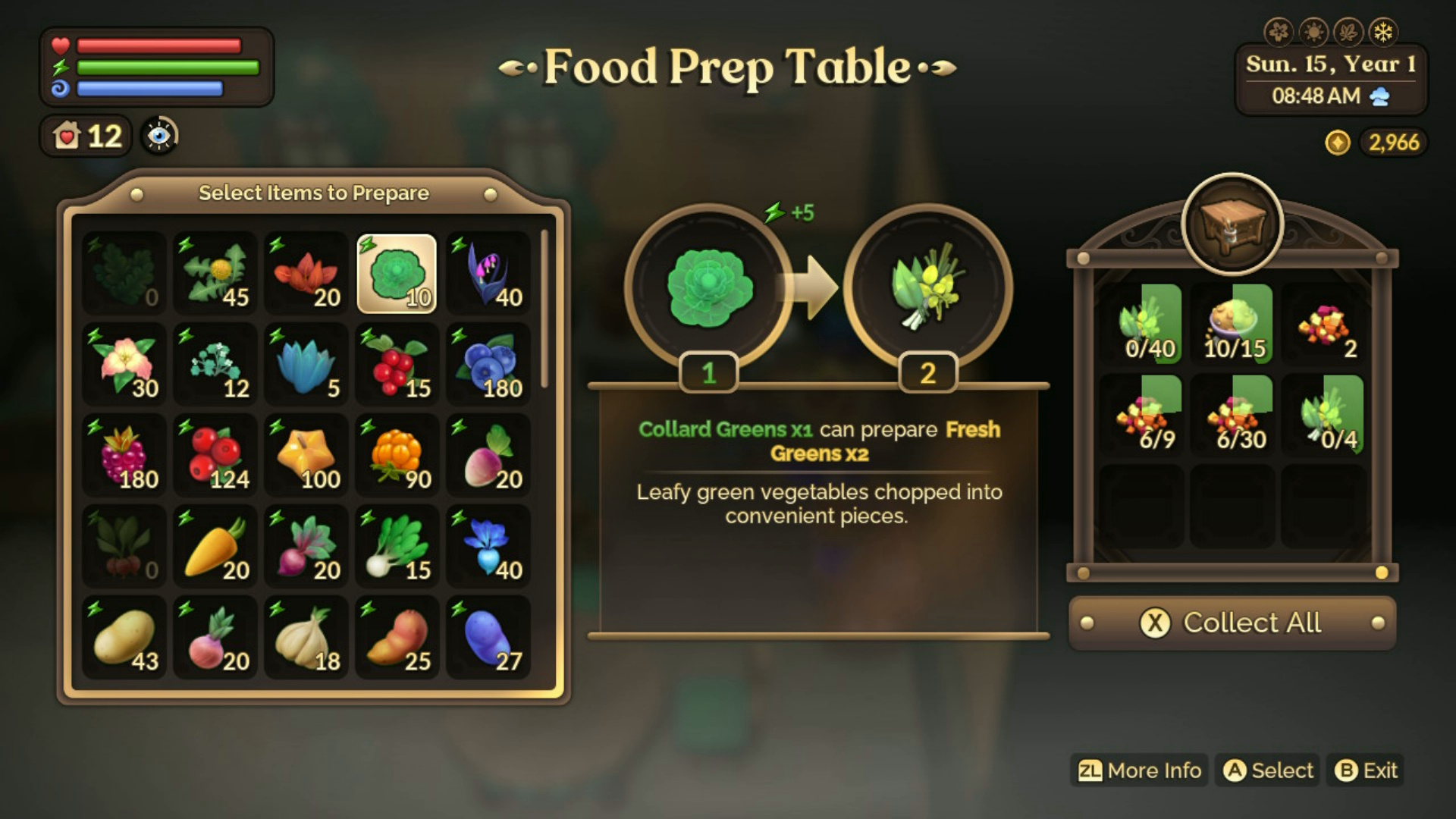
If this sounds like a lot to handle, it is. Our save file is at over 40 hours, and we still haven’t reached the end of the game’s story, because there’s so much to do. There’s a workbench for everything: smelting ore, chopping wood, cooking, chopping food, making preserved food, making drinks, polishing gems, making seeds, making fabric, making potion ingredients, making potions, making honey, and making seals that allow you to skip to a specific dungeon floor. There’s also critter catching, fish catching, shell collecting, ingredient harvesting, and… the list just keeps going.

It is in this plethora of systems that Fae Farm’s first downfall appears. There’s just a LOT of stuff to keep track of. On top of the many, many crafting stations, there are also job quests for pretty much every one of those, plus different biomes with different types of wood, ore, critters, and grass. And there are different seasonal crops that you have to make yourself, AND there are at least four different farms to unlock, which doesn’t sound bad until you realise that EACH ONE has its own farm buildings that you can’t move, so you need to visit them all every day. No wonder our farmer is always exhausted despite eating five baked potatoes an hour.

Granted, some of you may be reading about the tremendous pile of Things To Do and grinning. And we don’t blame you! It can be fun to manage a billion little systems. But it did always leave us feeling a little run off our feet at times, and we were never quite in control of it all.

Fae Farm Review - Screenshot 4 of 5
Captured on Nintendo Switch (Handheld/Undocked)

But oh, the developers make it so hard to complain! A ton of little tweaks here and there make Fae Farm a relatively smooth experience, not least of which is the auto-tool selector. Hover over a plant and it’ll change to watering can automatically; stand next to a rock and it’ll switch to your pickaxe. Your character can also jump and swim around the map, making shortcuts a breeze, or select the NPC they’re looking for to get flawless directions. Your calendar keeps track of events and birthdays, the quest tracker tells you what you’re supposed to be doing, and the almanac reminds you of everything you’ve learned so far. And that whole thing about home decor being the source of your personal upgrades? It’s so novel! You can tell the developers have paid attention, and that they actually care.

But we’ve been putting off the biggest sour note of this review: The game’s social aspect. It’s… not bad, it’s just… not good. All of the NPCs are about as interesting as a tea towel, with recycled lines that they repeat every time you see them. You can become friends with someone just by listening to them thank you, for the thousandth time, for something you did three seasons ago. And friendships don’t even do anything. They won’t give you discounts, come to your house for tea, or even change their dialogue much.

Even worse, the pre-decided romantic characters, with all the emotional complexity of wet cardboard, will fall in love with you whether you want them to or not. You’ll go on dates with them – which are short and sweet – but your character is voiceless, and will simply listen to them talk, normally about their insecurities, before they thank you for listening as if you had a choice. If you choose to marry one, you’ll get a cute ceremony out of it, but for the cost of 10,000 coins, you’ll just occasionally see them loafing around your farm. That’s it.

Fae Farm Review - Screenshot 5 of 5
Captured on Nintendo Switch (Handheld/Undocked)

The disappointing puddle-deep socialisation of this game feels like such a drop in quality compared to the loveliness of everything else. The game itself is not massively deep, either, but it makes up for it with wonderful breadth. Coming back from a busy day on the farm to a husband who talks to me like we’ve only just met seems like a massively wasted opportunity.

Also, as you might perhaps expect with a game that has this many systems, there are a few bugs at launch, although the developer, Phoenix Labs, seems to be really on top of it with patches. One NPC has a permanent quest marker above his head, because he wanted to go on a date with us but then we – the utter bastards that we are – got married instead. We also can’t complete Shipping Contracts, one of the main ways to get Big Money, and we experienced a couple of hard crashes, too, although the autosave meant we never lost too much progress.

However, as a whole, Fae Farm is a stunning, thoughtful addition to the farming game oeuvre, with so much to do that it’ll keep you entertained for a long time. Just… don’t go in expecting the people to be much more interesting than the turnips.

Posted on Leave a comment

Our hope is that games like Starfield bring joy to millions of people around the world and inspire the next generation of explorers and creators.

Frontline workers represent the face of organizations and make up the lion’s share of the workforce. But new Work Trend Index data reveals that 1 in 2 frontline workers cite being burned out in their jobs. Investing in technology that supports the frontline is key. Notably, 65% of frontline workers are optimistic that AI will help them in their jobs.  
We are excited to highlight new Microsoft solutions and investments in next-generation AI for the frontline workforce across nearly every business. Frontline managers and workers can optimize their time from work order creation to schedule management with Copilot in Dynamics 365 Field Service and the new Shifts plug-in for Microsoft 365 Copilot. In Viva Connections, frontline workers can stay up-to-date on internal communications. And with shared device mode for Intune, VMware and SOTI, employees can simplify the sign-in experience securely.  
Today’s announcements not only reduce administrative burden and time on spent on manual tasks, but also enable frontline workers to focus on end customer experiences and receive an overall improved employee experience. Learn more here: https://lnkd.in/e9Ash_82

Posted on Leave a comment

Pokémon: Paldean Winds Episode One Is Available Now On YouTube

Pokémon Paldean Winds
Image: The Pokémon Company

The first episode of the Pokémon web series Paldean Winds is available to watch now on The Official Pokémon YouTube channel.

The new miniseries was announced during the August 2023 Pokémon Presents and has been produced by Studio WIT, the same talent behind last year’s Pokémon: Hisuian Snow. Set in the Paldea region — the home region for Pokémon Scarlet & Violet — the Paldean Winds will follow three students from the academy as they make a video showcasing their school.

Episode one, titled ‘Breathe Out’, focuses on Ohara, a flautist who is struggling with the video work, so she heads to Glaseado Mountain to carry out the school’s Treasure Hunt. Ohara and her partner Pokémon Fuecoco explore the mountain and get involved in some danger, but they also meet a familiar face from the main game. The series is due to be four episodes long, so we’re sure the other episodes will focus on Ohara’s friends, Aliquis and Hohma.

To commemorate the episode’s release, The Pokémon Company has shared a brand new Mystery Gift Code to redeem in Scarlet & Violet, which will get you a Cetitan.

The first episode comes just seven days before Pokémon Scarlet & Violet – The Hidden Treasure of Area Zero: The Teal Mask is due to launch. This first piece of DLC — which makes up one-half of the Expansion Pass — is set in a new location: Kitakami. So it’s going to be a big month for Pokémon!

Check out episode one below, and let us know what you think of it in the comments.

Posted on Leave a comment

Transformers vs Convolutional Neural Nets (CNNs)

Rate this post

Deep learning has revolutionized various fields, including image recognition and natural language processing. Two prominent architectures have emerged and are widely adopted: Convolutional Neural Networks (CNNs) and Transformers.

  • CNNs have long been a staple in image recognition and computer vision tasks, thanks to their ability to efficiently learn local patterns and spatial hierarchies in images. They employ convolutional layers and pooling to reduce the dimensionality of input data while preserving critical information. This makes them highly suitable for tasks that demand interpretation of visual data and feature extraction.
  • Transformers, originally developed for natural language processing tasks, have gained momentum due to their exceptional performance and scalability. With self-attention mechanisms and parallel processing capabilities, they can effectively handle long-range dependencies and contextual information. While their use in computer vision is still limited, recent research has begun to explore their potential to rival and even surpass CNNs in certain image recognition tasks.

CNNs and Transformers differ in their architecture, focus domains, and coding strategies. CNNs excel in computer vision, while Transformers show exceptional performance in NLP; although, with the development of ViTs, Transformers also show promise in the realm of computer vision.

CNN

Convolutional Neural Networks (CNNs) are designed primarily for computer vision tasks, where they excel due to their ability to apply convolving filters to local features. This architecture has also proven effective for NLP, as evidenced by their success in semantic parsing and search query retrieval.

A CNN can efficiently handle large amounts of input data which makes them suitable for computer vision tasks as mentioned before.

CNNs are composed of multiple convolutional layers that apply filters to the input data.

These filters, also known as kernels, are responsible for detecting patterns and features within an image. As you progress through the layers, the filters can identify increasingly complex patterns and ultimately help classify the image.

One of the key advantages of using CNNs is their efficient computation, which significantly reduces the number of parameters required for training.

Transformers

Transformers, on the other hand, have become the go-to architecture in NLP tasks such as text classification, sentiment analysis, and machine translation. The key to their success lies in the attention mechanism, which enables them to efficiently handle long-range dependencies and varied input lengths. Vision Transformers (ViTs) are now also being employed in computer vision tasks, opening up new possibilities in this field.

Transformers have gained a lot of attention in recent years due to their extraordinary capabilities across various domains such as natural language processing and computer vision. In this section, you’ll learn more about the key components and advantages of transformers.

For those interested in coding these models from scratch, CNNs utilize layers with convolving filters and activation functions, while Transformers involve multi-head self-attention, positional encoding, and feed-forward layers. The code for these architectures can vary depending on the particular use-case and the design of the model.

To start with, transformers consist of an encoder and a decoder.

The encoder processes the input sequence, while the decoder generates the output sequence. Central to the functioning of transformers is their ability to handle position information smartly. This is achieved through the use of positional encodings, which are added to the input sequence to retain information about the position of each element in the sequence.

“Each decoder block receives the features from the encoder. If we draw the encoder and the decoder vertically, the whole picture looks like the diagram from the paper.” (Source)

One of the fundamental aspects of transformers is the self-attention mechanism. This allows the model to weigh the importance of each element in the input sequence in relation to other elements, providing a more nuanced understanding of the input. It is this mechanism that contributes to the excellent performance of transformers for tasks involving multiple modalities, such as text and images, where context is crucial.

A key advantage of transformers is their ability to process input sequences in parallel, enabling parallelization and making them more computationally efficient compared to recurrent neural networks (RNNs) or convolutional neural networks (CNNs). This efficiency is partly due to their architecture, which employs layers of Multi-Head Attention and Multi-Layer Perceptrons (MLPs). These components play a significant role in extracting diverse patterns from the data and can be scaled as needed.

It is worth noting that transformers typically have a large number of parameters, which contributes to their high performance capabilities across various tasks. However, this can also result in increased complexity and longer inference times, as well as an increased need for computational resources. While these factors may be a concern in certain situations, the overall benefits of transformers continue to drive their popularity and adoption in numerous applications such as ChatGPT.

💡 Recommended: Alien Technology: Catching Up on LLMs, Prompting, ChatGPT Plugins & Embeddings

Comparison of CNN and Transformer

One key distinction is that CNNs leverage inductive biases that encode spatial information from neighboring pixels, whereas Transformers use self-attention mechanisms to process the input.

Beginning with the competitive performance of these models, CNNs have long been the go-to solution for image recognition tasks. Many popular architectures, such as ResNet, have demonstrated exceptional performance on a variety of tasks.

However, recent advancements in Vision Transformers (ViT) have shown that transformers are now on par with or even surpassing the accuracy of CNN-based models in certain instances.

Regarding accuracy, due to advancements in self-attention mechanisms, Transformers tend to perform well on tasks involving longer-range dependencies and complex contextual information. This is especially useful in natural language processing (NLP) tasks. CNNs primarily excel in tasks focusing on local spatial patterns, such as image recognition, where input data exhibits strong spatial correlations.

Inductive biases play a crucial role in the performance of CNNs. They enforce the idea of locality in image data, ensuring that nearby pixels tend to be more strongly connected. These biases help CNNs learn and extract useful features from images, such as edges, corners, and textures, which contribute to their effectiveness in computer vision tasks. Transformers, on the other hand, do not rely heavily on such biases and instead use the self-attention mechanism to capture relationships between elements in the input data.

The way both architectures handle neighboring pixel information differs as well. CNNs use convolutional layers to detect local patterns and maintain spatial information throughout the network. Transformers, however, first convert input images into a sequence of tokens, effectively losing the spatial connections between the pixels. The self-attention mechanism is then used to model relationships between these tokens.

While CNNs have a long history of success in image recognition tasks, there has been a steady increase in the adoption of Transformers for various computer vision tasks.

Applications in Language Processing

In the field of natural language processing (NLP), both Transformer models and Convolutional Neural Networks (CNNs) have made significant contributions.

One common NLP task is machine translation, which involves converting text from one language to another. Transformers have become quite popular in this domain, as they can effectively capture long-range dependencies, a crucial aspect of translating complex sentences. With their self-attention mechanism, they have the ability to pay attention to every word in the input sequence, leading to high-quality translations.

For language modeling tasks, where the goal is to predict the next word in a given sequence, Transformers have also shown remarkable performance.

By capturing long-range dependencies and leveraging large amounts of context information, Transformer models are well-suited for language modeling problems. This has led to the development of powerful pre-trained language models like BERT and GPT-3 and GPT-4, which have set new benchmarks in various NLP tasks.

On the other hand, CNNs have proven their effectiveness in tasks that involve a fixed-size input, such as sentence classification. With their ability to capture local patterns through convolutional layers, CNNs can learn meaningful textual representations. However, for tasks that require capturing dependencies across larger contexts, they may not be as suitable as Transformer models.

While working with Transformer models, it is essential to keep in mind that they require more memory and computational resources than CNNs, mainly due to their self-attention mechanism. This could be a limitation if you are working with resource constraints.

💡 Recommended: Claude 2 LLM Reads Ten Papers in One Prompt with Massive 200k Token Context

Applications in Computer Vision

One common computer vision task where these models excel is image classification. With CNNs, you can effectively learn to identify features in images by applying a series of filters through convolutional layers. These networks create simplified versions of the input image by generating feature maps, highlighting the most relevant parts of the image for classification purposes.

On the other hand, transformers, such as the Vision Transformer (ViT), have been recently proposed as alternatives to classical convolutional approaches. They relax the translation-invariance constraint of CNNs by using attention mechanisms, allowing them to learn more flexible representations of the input images, potentially leading to better classification performance.

Another critical application in computer vision is object detection. Both deep learning techniques, CNNs and vision transformers, have been instrumental in driving significant advances in this area.

Object detection models based on CNNs have paved the way for more accurate and efficient detection systems, while transformers are being explored for their potential to model long dependencies between input elements and parallel processing capabilities, which could lead to further improvements.

In addition to these popular tasks, CNNs and transformers have also been applied to other computer vision challenges such as semantic segmentation, where each pixel in an image is assigned a class label, and instance segmentation, which requires classifying and localizing individual instances of objects.

These applications require models that can effectively learn spatial hierarchies and representations, which both CNNs and transformers have demonstrated their capability to do.

💡 Recommended: I Created My First DALL·E Image in Python OpenAI Using Four Easy Steps

Frequently Asked Questions

What makes Transformers more effective than CNNs?

Transformers are designed to handle long-range dependencies in sequences effectively due to the self-attention mechanism. This allows them to process and encode information from distant positions in the data efficiently. On the other hand, CNNs use local convolutions, which may not capture large-scale patterns as efficiently. Transformers also parallelize sequence processing, leading to faster computations.

How do Transformers and CNNs perform in computer vision tasks?

CNNs have been the dominant approach in computer vision tasks, such as image classification and object detection, due to their effectiveness in learning local features and hierarchical representations. Transformers, though successful in NLP, have recently started to gain traction in computer vision tasks. Some research suggests that Transformers can perform well and even outpace CNNs in certain computer vision tasks, especially when handling large images with complex patterns.

Can Transformers replace CNNs for image processing?

Transformers are a promising alternative to CNNs for image processing tasks, but they may not replace them entirely. CNNs remain effective and efficient for many computer vision problems, especially when dealing with smaller images or limited computational resources. However, as the field advances, it’s possible that we will see more applications where Transformers outperform or complement CNNs.

What are the advantages of CNN-Transformer hybrids?

CNN-Transformer hybrids combine the strengths of both architectures. CNNs excel at capturing local features, while Transformers efficiently handle dependencies across larger distances. By using a hybrid, you can leverage the benefits of both, leading to improved performance in various tasks, from image classification to semantic segmentation.

How does Transformer architecture compare to RNN and CNN?

All three models have unique strengths. RNNs are known for their ability to handle sequential data and model temporal dependencies but may suffer from the vanishing gradient problem in long sequences. CNNs excel at processing spatial data and learning hierarchical representations, making them effective for many image processing tasks. Transformers emerged as a powerful alternative for handling long sequences and parallelizing computations, which led to their success in NLP and, more recently, computer vision.

Why is Transformer inference speed important compared to CNN?

Inference speed is critical in many real-world applications, such as autonomous driving or real-time video analysis, where quick decisions are crucial. With their parallel computation capabilities, Transformers offer potential speed advantages over CNNs, especially when dealing with large sequences or images. Faster inference times could provide a competitive edge for various applications and contribute to the growing interest in Transformers in the computer vision domain.

💡 Recommended: Best 35 Helpful ChatGPT Prompts for Coders (2023)

Prompt Engineering with Python and OpenAI

You can check out the whole course on OpenAI Prompt Engineering using Python on the Finxter academy. We cover topics such as:

  • Embeddings
  • Semantic search
  • Web scraping
  • Query embeddings
  • Movie recommendation
  • Sentiment analysis

👨‍💻 Academy: Prompt Engineering with Python and OpenAI

The post Transformers vs Convolutional Neural Nets (CNNs) appeared first on Be on the Right Side of Change.

Posted on Leave a comment

Stardew Valley Creator Shares A Minor Update About Version 1.6

Stardew Valley
Image: ConcernedApe

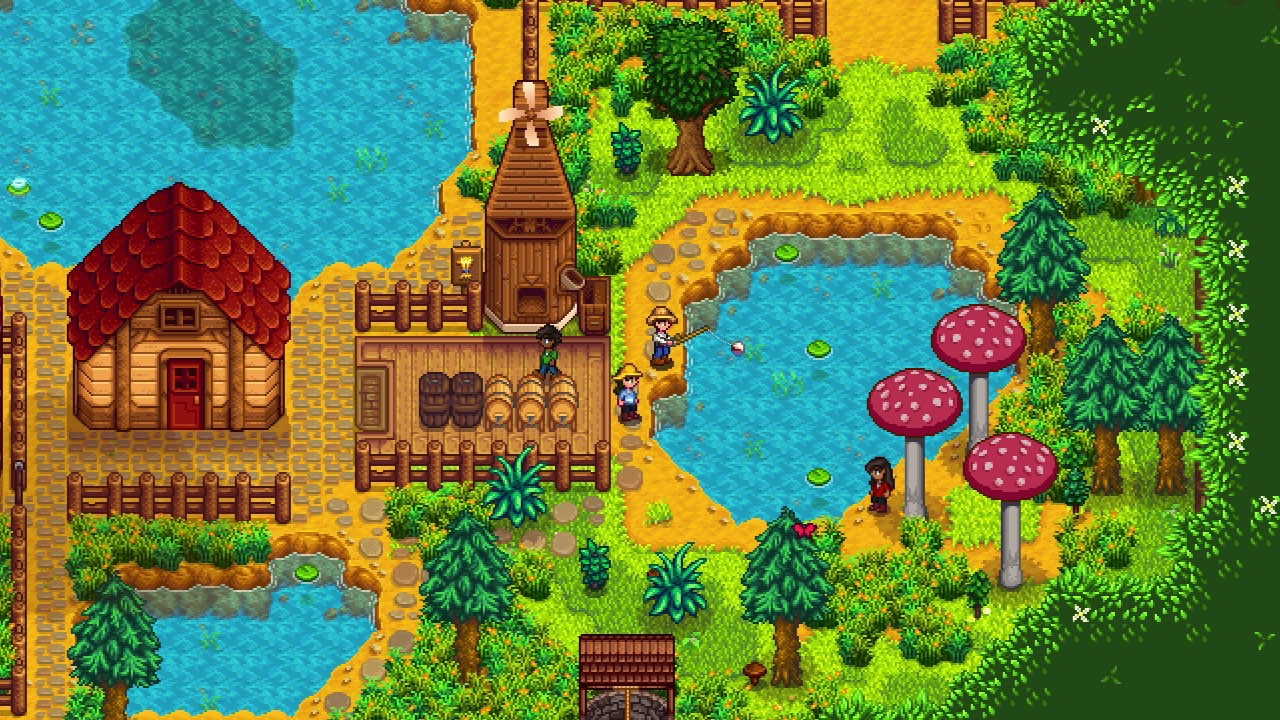
It’s been a few months since the last Stardew Valley news, so what’s the latest? According to the developer Eric ‘ConcernedApe’ Barone, Version 1.6 is still a work in progress.

In an update via social media, ConcernedApe actually shared a screenshot of his new project the Haunted Chocolatier, noting how he was sitting on “a lot of screenshots”. Of course, this resulted in many fans questioning the status of Stardew’s 1.6 update. Here’s what he had to say:

“I am working on the 1.6 update right now, but just wanted to share a HC screenshot, I’m sitting on a lot of screenshots that I could share, just felt like it

… all I ask for is patience, I don’t want any pressure”

In a Stardew development update dating back to July 2023, ConcernedApe mentioned how this next update for the lifestyle-farming simulation would feature a “new festival, new items, more dialogues and secrets” and even an “iridium scythe”, it will be “mostly changes for modders” though.

Stardew Valley’s previous major update Version 1.5 was released back in February 2021 – adding a Beach Farm, advanced customisation, split-screen local co-op, and more. As for the Haunted Chocolatier, no platforms other than PC have been confirmed, and there’s still no release date.

Are you excited for the next Stardew update? How about the Haunted Chocolatier? Comment below.