More microgame madness is coming soon to the form of WarioWare Move It! for the Nintendo Switch. If you’re curious to learn more about this upcoming release, you’ve come to the right place as we’ve put together this round up featuring some early impressions.
Firstly, if you haven’t already, be sure to check out Alex’s “hands on”, who thoroughly enjoyed his time with the game.
Right, now that you’ve read and watched all that, here are some early impressions from various other outlets:
Polygon said “drawing with your butt” summed up this new entry in the microgame series:
“Drawing with your butt summarizes what the WarioWare series is all about. Nintendo’s 20-year-old microgame franchise has never shied away from crude, gross-out gags and absurdist humor — this is a series famous for its nose-picking and fart-clearing games, after all — and WarioWare: Move It!, the latest microgame collection for Nintendo Switch, is no different.”
GameSpot also mentioned how the game was a “very direct sequel to Smooth Moves”:
“That game was made when Nintendo was riding high on the success of the Wii and putting motion controls into its various franchises, and it works as a WarioWare gimmick well enough. But that also means it’s an homage to an era of motion-based controls that lent themselves to party games, which haven’t necessarily aged as well as the more traditional frantic microgames compiled in WarioWare Gold. Still, Nintendo seems keen to recapture the party game magic, and maybe Wario’s unique brand of gonzo humor and fast action can bring it back.”
Pocket Tactics had positive feedback based on its first impressions but is eager to see what’s beyond the story mode:
“We need to see just how much there is beyond the story mode, as while the main path is a blast, the extra silly party mode games like darts or ping pong are what get me picking up WarioWare months after the party is over. Plus, a couple of microgames felt a bit naff compared to others, and we’ve only seen a fraction of the full library of games on offer. Here’s hoping the rest of the microgames are just as funny and equally as simple and satisfying to play.”
CGMagazine said it could potentially be a must-have game:
“While WarioWare: Get It Together on Switch in 2021 was a more traditional entry, Move It! looks like a reinvention that will make multiplayer madness even more…well, maddening. The microgame concept is perfectly suited for quick pick-up-and-play sessions, too. It’s sure to be a hit at parties and family gatherings this holiday season.”
And GamesRadar+ felt it really encouraged players to get moving and calling it a “real workout”:
“It feels like Nintendo wants us up and out of our seats more than ever this time as some of the microgames really do require you to put your whole body into it. As I’ve already mentioned, the main method of gameplay sees players take on different poses aka Forms. The different Forms will affect how the game is played, so don’t expect to take on many of these minigames sitting down. In Move It, you’ll be stretching, squatting, stamping, and more – it’s a real workout!”
Would you be interested in WarioWare: Move It! on Switch? Tell us in the comments.
The Super Nintendo classic Super Mario RPG will land on the Switch in November with updated graphics and cinematics that give the game a fresh look.
That’s not all, either. As highlighted by Nintendo Europe’s social media account, there’ll be the option to swap between the “original” 1996 Super Nintendo soundtrack and the newly-arranged Switch music. Here’s a quick example of this, featuring the levels Bandit’s Way and Forest Maze.
And as noted, after clearing the game, you’ll be able to listen to your favourite tracks in the Sound Player section. To top it off, veteran composer Yoko Shimomura will be returning, with one of her standout songs being ‘Beware the Forest’s Mushrooms‘, which is the track that plays in Forest Maze.
Will you be listening to the newly-arranged or original music in the Switch release? Tell us below.
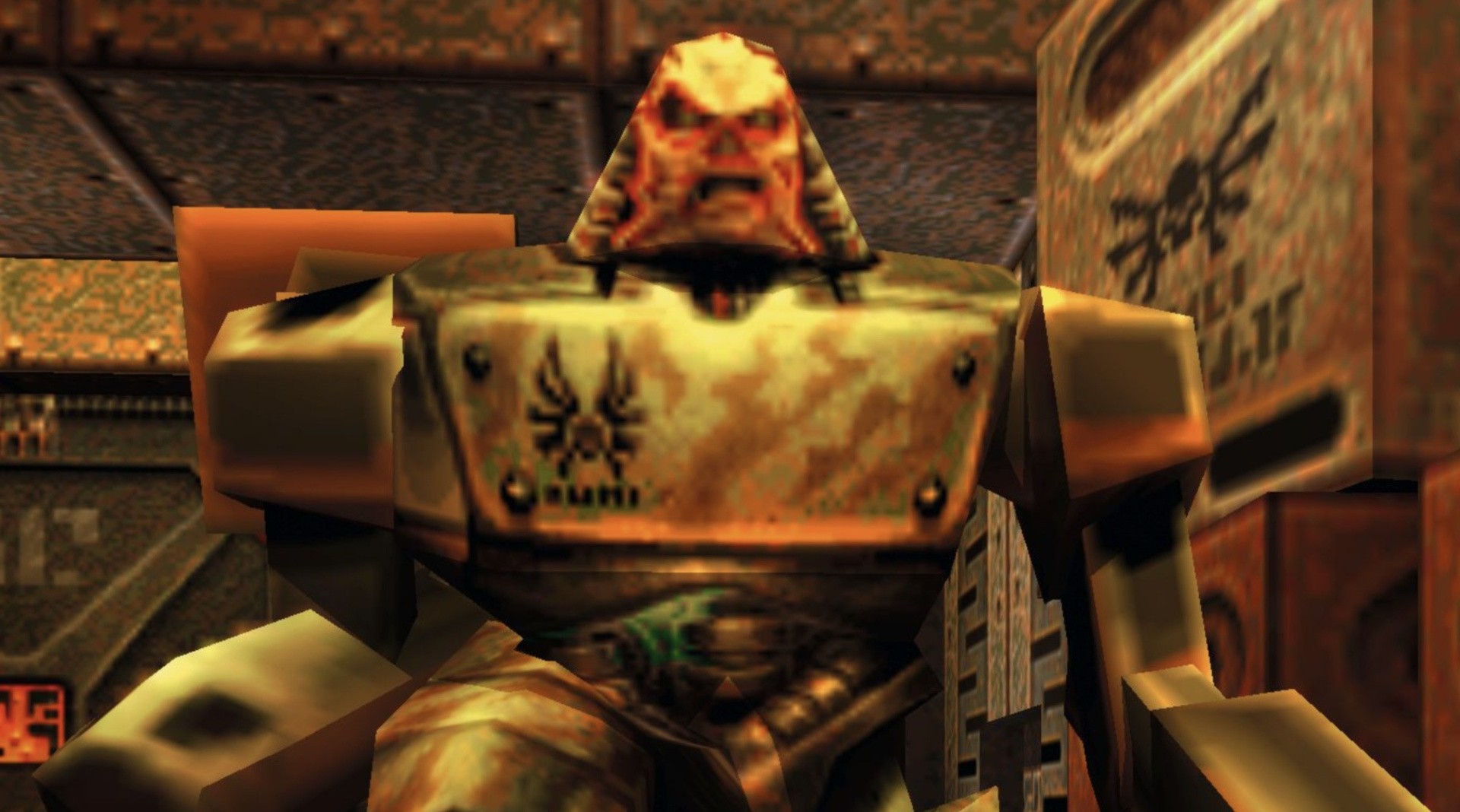
It’s been a few months now since the enhanced version of Quake II arrived on the Nintendo Switch and Bethesda is now rolling out its very first “major update” for this re-release.
New vibration effects have been added for controller users across all platforms, some quality-of-life improvements have been made to both Quake II and the 64 versions, and there have been a stack of changes to multiplayer. And to top it off there are a bunch of balance changes and bug fixes.
Here’s the full rundown, courtesy of Bethesda:
Enhanced Quake II re-release – first major update (3rd October 2023)
QUALITY OF LIFE IMPROVEMENTS
-All Platforms-
General Gameplay
Added controller vibration effects when taking damage
Restored Always Run in the Input Options menu, with separate options for controller and keyboard
Save and load menus will now indicate which campaign a save is from
The Compass, Drop CTF Tech and Use Grapple actions can now be mapped as custom binds from the Input Options menu
Added toggle for Underwater Warp in the Gameplay Options menu
Increased the window in which input is disallowed after disengaging the weapon or inventory wheel to prevent erroneous look input or accidental item/weapon deselection
Disabling View Bob in the Gameplay Options menu bobbing results in fewer residual head bobs
Added missing Tank animation
Improved Compass objective navigation throughout various places in Quake II, The Reckoning, Ground Zero, and Quake II 64
Skipping cinematics now requires the Action key/button to be pressed instead of any key/button
Added an extra chain segment to the Plasma Beam and Grappling Hook when using higher FOVs
Improved cases where momentum would be lost when traveling up stairs
Proper drowning sounds are now used based on selected player model
Multiplayer
Added ability to load quick saves and manual saves in online co-op without having to back out to the lobby
Bot chat can now be disabled from Multiplayer Options menu
Added match browser filters and the ability to sort by ping in the Multiplayer/Online/Join Match menu
Raised the maximum number of visible matches in the Multiplayer/Online/Join Match menu from 20 to 50
Excluded full servers from visible matches in the Multiplayer/Online/Join Match menu
Disabled Quake II 64 physics changes when playing Quake II 64 multiplayer maps
Enabled Spawn Furthest by default in competitive game modes
Enabled Auto Join Teams by default for team-based game modes
Raised default Frag Limit to 30
Set multiple cvars as cheat-enabled, disallowing hosts to use them when cheats are disabled
Updated Q2CTF2 (Stronghold Opposition) and Q2CTF3 (The Smelter) to better reflect the original versions of these Capture the Flag maps
PC and Xbox
Added support for PC and Xbox consoles to play on LAN together
PC
Capped maximum FPS to 1,000 prevent possible engine anomalies at higher frame rates
Prioritized Saved Games directory over game install directory when basepath is changed
BALANCE CHANGES
-All Platforms-
General Gameplay
Increased Railgun damage from 100 to 125
Monsters will no longer dodge shots coming from the side or behind
The slime and lava traps in The Slimy Place and The Frag Pipe can no longer be avoided
Turrets no longer do extra damage when blind firing
Killing a Brain while its chest is open will now always count as a kill
Monsters will no longer open nearby doors immediately after spawning
Fixbots will abort healing when staggering from pain
Berserker:
The Berserker’s attack can be dodged by jumping when the slam occurs
Added a visual tell to indicate when the Berserker’s jump is being charged up
Added an additional 100ms delay before the Berserker jumps after it is fully charged
Reduced slam attack damage
Multiplayer
Removed ladder sounds from multiplayer for balance reasons
BUG FIXES
-All Platforms-
General Gameplay
Reduced vision cone size on monsters waiting in ambush to fix some cases of accidental trap activation
Power shield will no longer reactivate after picking up ammo if it was manually turned off
Power-ups will no longer leave a phantom pickup after a player dies
Fixed crash when a soldier tries to use a run attack against no player
If you haven’t already tried out Quake II on the Switch, check out our Nintendo Life review. We called it an outstanding remaster and is one of the best remasters on the Switch.
Have you downloaded this update yet? Comment below.
The team behind Plex has a brilliant strategy for dealing with bugs and addressing potential issues: Find them first.
“We’ve got a pretty good process in place,” says Steve Barnegren, Plex senior software engineer on Apple platforms, “and when that’s the case, things don’t go wrong.”
Launched in 2009, Plex is designed to serve as a “global community for streaming content,” says engineering manager Alex Stevenson-Price, who’s been with Plex for more than seven years. A combination streaming service and media server, Plex aims to cover the full range of the streaming experience — everything from discovery to content management to organizing watchlists.
This allows us more time to investigate the right solutions.
Ami Bakhai, Plex product manager for platforms and partners
To make it all run smoothly, the Plex team operates on a six-week sprint, offering regular opportunities to think in blocks, define stop points in their workflow, and assess what’s next. “I’ve noticed that it provides more momentum when it comes to finalizing features or moving something forward,” says Ami Bakhai, product manager for platforms and partners. “Every team has their own commitments. This allows us more time to investigate the right solutions.”
The Plex team iterates, distributes, and releases quickly — so testing features and catching issues can be a tall order. (Plex releases regular updates during their sprints for its tvOS flagship, iOS, iPadOS, and macOS apps.)
Though Plex boasts a massive reach across all the platforms, it’s not powered by a massive number of people. The fully remote team relies on a well-honed mix of developer tools (like Xcode Cloud and TestFlight), clever internal organization, Slack integration, and a thriving community of loyal beta testers that stretches back more than a decade. “We’re relatively small,” says Danni Hemberger, Plex director of product marketing, “but we’re mighty.”
Over the summer, the Plex team made a major change to their QA process: Rather than bringing in their QA teams right before the release, they shifted QA to a continuous process that unfolds over every pull request. “The QA team would find something right at the end, which is when they’d start trying to break everything,” laughs Barnegren. “Now we can say, ‘OK, ten features have gone in, and all of them have had QA eyes on them, so we’re ready to press the button.’”
Now we can say, ‘OK, ten features have gone in, and all of them have had QA eyes on them, so we’re ready to press the button.’
Steve Barnegren, Plex senior software engineer on Apple platforms
The continuous QA process is a convenient mirror to the continuous delivery process. Previously, Plex tested before a new build was released to the public. Now, through Xcode Cloud, Plex sends nightly builds to all their employees, ensuring that everyone has access to the latest version of the app.
Once the release has been hammered out internally, it moves on to Plex’s beta testing community, which might be more accurately described as a beta testing city. It numbers about 8,000 people, some of whom date back to Plex’s earliest days. “That constant feedback loop is super valuable, especially when you have power users that understand your core product,” says Stevenson-Price.
All this feedback and communication is powered by TestFlight and Plex’s customer forums. “This is especially key because we have users supplying personal media for parts of the application, and that can be in all kinds of rare or esoteric formats,” says Barnegren.
(CI) is a safety net. Whenever you push code, your app is being tested and built in a consistent way. That’s so valuable, especially for a multi-platform app like ours.
Alex Stevenson-Price, Plex engineering manager
To top it all off, this entire process is automated with every new feature and every new bug fix. Without any extra work or manual delivery, the Plex team can jump right on the latest version — an especially handy feature for a company that’s dispersed all over the globe. “It’s a great reminder of ‘Hey, this is what’s going out,’ and allows my marketing team to stay in the loop,” says Hemberger.
It’s also a great use of a continuous integration system (CI). “I’m biased from my time spent as an indie dev, but I think all indie devs should try a CI like Xcode Cloud,” says Stevenson-Price. “I think some indies don’t always see the benefit on paper, and they’ll say, ‘Well, I build the app myself, so why do I need a CI to build it for me?’ But it’s a safety net. Whenever you push code, your app is being tested and built in a consistent way. That’s so valuable, especially for a multi-platform app like ours. And there are so many tools at your disposal. Once you get used to that, you can’t go back.”
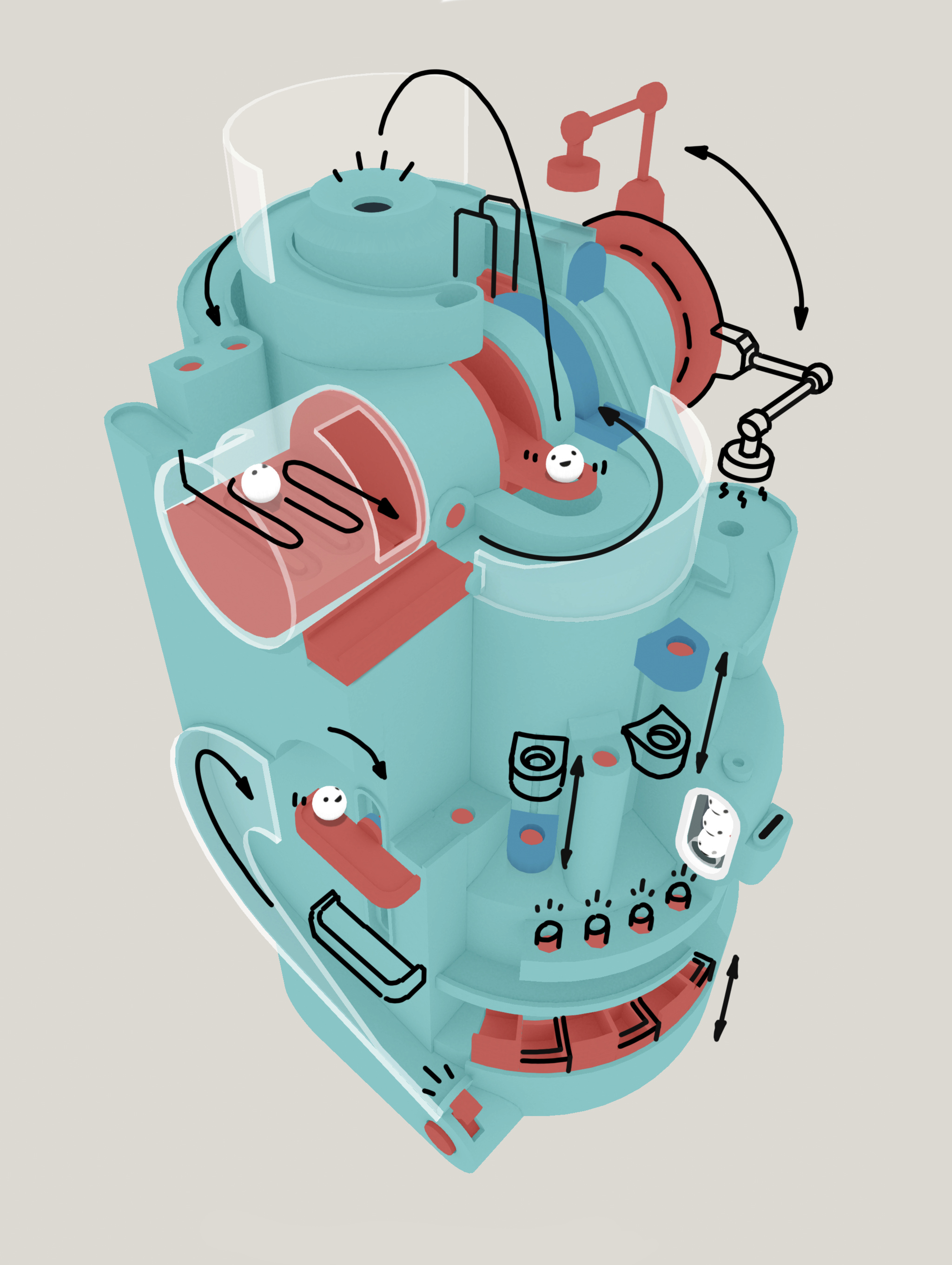
Steffan Glynn’s Automatoys is a mix between a Rube Goldberg machine and a boardwalk arcade game — and there’s a very good reason why.
In 2018, the Cardiff-based developer visited the Musée Mécanique, a vintage San Francisco arcade packed with old-timey games, pinball machines, fortune tellers, and assorted gizmos. On that same trip, he stopped by an exhibit of Rube Goldberg sketches that showcased page after page of wildly intricate machines. “It was all about the delight of the pointless and captivating,” Glynn says. “There was a lot of crazy inspiration on that trip.”
That inspiration turned into Automatoys, an Apple Design Award finalist for Interaction in games. Automatoys is a single-touch puzzler in which players roll their marble from point A to point B by navigating a maze of ramps, elevators, catapults, switches, and more. True to its roots, the game is incredibly tactile; every switch and button feels lifelike, and players even insert a virtual coin to launch each level. And it unfolds to a relaxing and jazzy lo-fi soundtrack. “My brief to the sound designer was, ‘Please make this game less annoying,’” Glynn laughs.
While Automatoys’ machines may be intricate, its controls are anything but. Every button, claw, and catapult is controlled by a single tap. “And it doesn’t matter where you tap — the whole machine moves at once,” Glynn says. The mechanic doesn’t just make the game remarkably simple to learn; it also creates a sense of discovery. “I like that moment when the player is left thinking, ‘OK, well, I guess I’ll just start tapping and find out what happens.’”
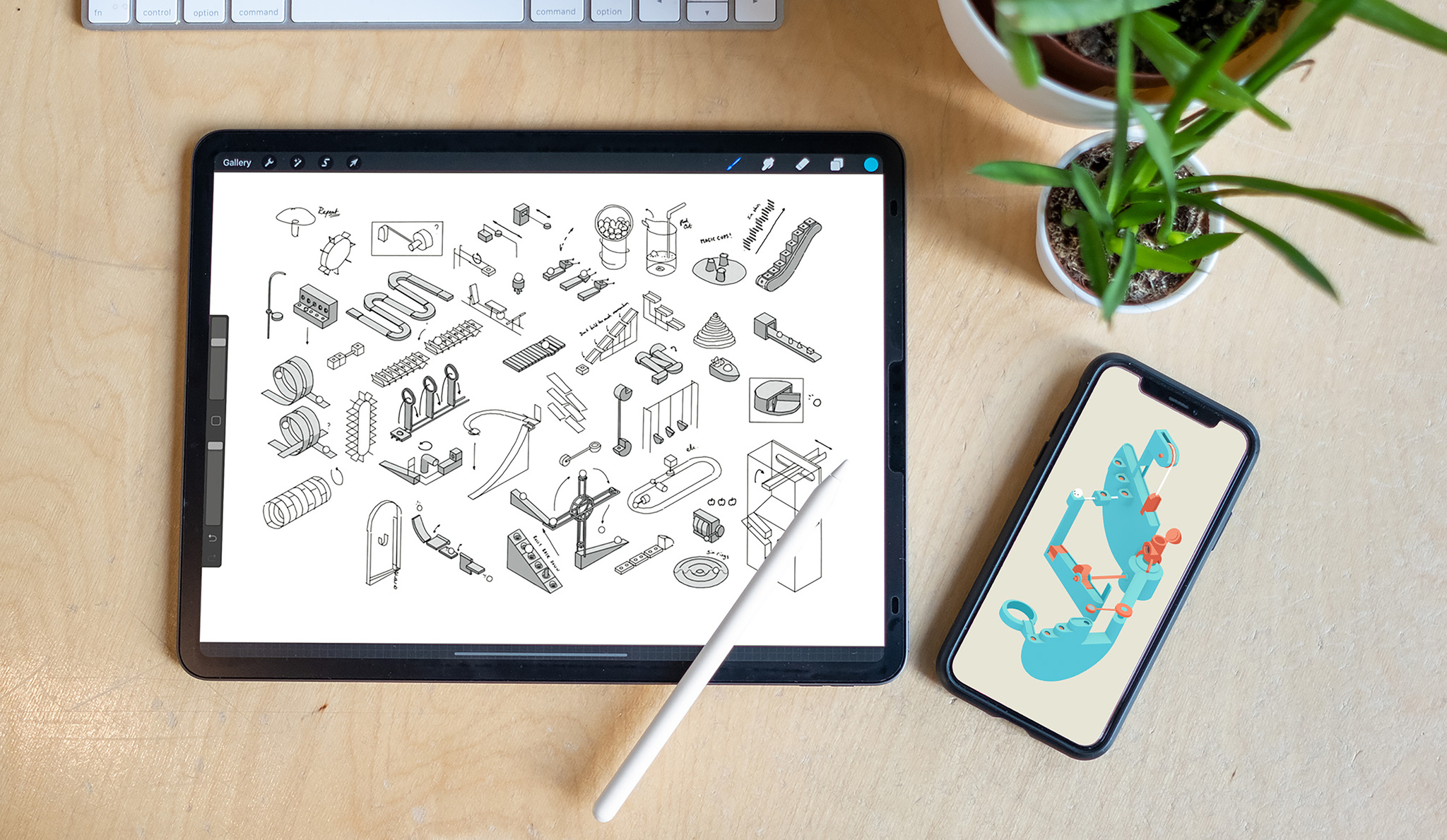
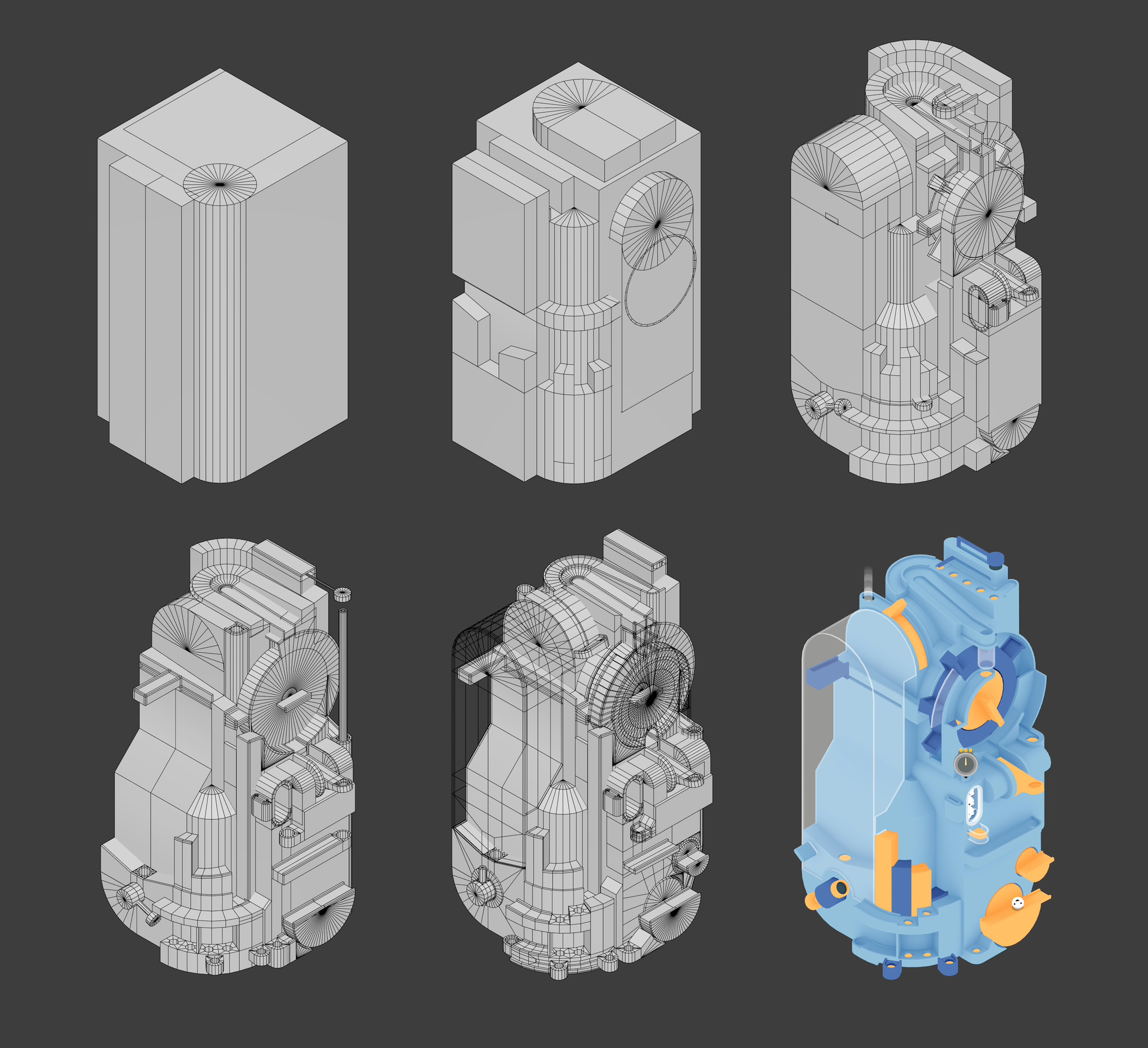
To design each of the game’s 12 levels, Glynn first sketched his convoluted contraptions in Procreate. The ideas came fast and furious, but he found that building what he’d envisioned in his sketches proved elusive — so he changed his strategy. “I started playing with shapes directly in 3D space,” he says. “Once a level had a satisfying form, I’d then try to imagine what sort of obstacle each part could be. One cylinder would become a ferris wheel, another would become a spinning helix for the ball to climb, a square panel would become a maze, and so on.”
The game was a four-year passion project for Glynn, a seasoned designer who in 2018 left his gig with State of Play (where he contributed to such titles as Lumino City and Apple Design Award winner INKS.) to focus on creating “short, bespoke” games. There was just one catch: Though he had years of design experience, he’d never written a single line of code. To get up to speed, he threw himself into video tutorials and hands-on practice.
In short order, Glynn was creating Unity prototypes of what would become Automatoys. “As a designer, being able to prototype and test ideas is incredibly liberating. When you have those tools, you can quickly try things out and see for yourself what works.”
Behind the Design is a series that explores design practices and philosophies from each of the winners and finalists of the Apple Design Awards. In each story, we go behind the screens with the developers and designers of these award-winning apps and games to discover how they brought their remarkable creations to life.
Clayton Christensen’s “Disruptive Innovation Model” refers to a theory that explains how smaller companies can successfully challenge established incumbent businesses. Here’s a detailed breakdown:
Disruptive Innovation refers to a new technology, process, or business model that disrupts an existing market. Disruptive innovations often start as simpler, cheaper, and lower-quality solutions compared to existing offerings. They often target an underserved or new market segment. They often create a different value network within the market. However, truly disruptive innovation companies improve over time and eventually displace existing market participants.
In fact, there are two general types of disruptive innovation models:
Low-End Disruption: Targets the least profitable customers who are typically overserved by the incumbent’s existing offering.
New-Market Disruption: Targets customers with needs previously unserved by existing incumbents. You may have heard of the “blue ocean strategy”.
Low-end disruption is exemplified by Southwest Airlines and BIC Disposable Razors. Southwest Airlines disrupted the aviation industry by focusing on providing basic, reliable, and cost-effective air travel, appealing to price-sensitive customers and those who might opt for alternative transportation. BIC, on the other hand, introduced affordable disposable razors, offering a satisfactory solution for customers unwilling to pay a premium for high-end razors, thereby securing a substantial market share.
In terms of new-market disruption, Tesla Motors and Coursera stand out. Tesla targeted environmentally conscious consumers, offering electric vehicles that didn’t compromise on performance or luxury, creating a new market for high-performance electric vehicles and prompting other manufacturers to expedite their EV programs. After introducing the high-end luxury cars, Tesla subsequently moved down market and even announced in the “Master Plan Part 3” that they plan to release a $25k electric car. Coursera disrupted the traditional educational model by providing online courses from renowned universities to a global audience, creating a new market for online education.
The Blue Ocean Strategy, which is somewhat related to new-market disruption, emphasizes innovating and creating new demand in unexplored market areas, or “Blue Oceans”, instead of competing in saturated markets, or “Red Oceans”. An example of this strategy is the Nintendo Wii, which carved out a new market space by targeting casual gamers with simpler, family-friendly games and innovative controllers, thereby reaching an entirely new demographic of consumers and avoiding direct competition with powerful gaming consoles like Xbox and PlayStation.
The disruptive innovation process often plays out like so:
Introduction: The innovation is introduced, often with skepticism from established players.
Evolution: The innovation evolves and improves, gradually becoming more appealing to a wider customer base.
Disruption: The innovation becomes good enough to meet the needs of most customers, disrupting the status quo.
Domination: The innovators often come to dominate the market, replacing the previous incumbents.
Technological advancements typically undergo an S-curve progression, as seen with smartphones, which experienced slow initial adoption, followed by rapid uptake, and eventually, market saturation.
Companies often align innovations with their existing value networks, ensuring new products resonate with their established customer base, like how Apple’s product ecosystem is meticulously designed to ensure customer retention and continuous engagement.
The implications of disruptive innovation are profound, with established companies, such as Kodak, often facing dilemmas and organizational inertia in adopting new technologies due to a deep-rooted focus on existing offerings and customer bases.
To navigate through disruptive waters, incumbents might employ strategies like establishing separate units dedicated to innovation, akin to how Google operates Alphabet to explore varied ventures, adopting agile methodologies for nimble operations, and maintaining a relentless focus on evolving customer needs to stay relevant and competitive in the market.
Here’s my personal key take-away (not financial advice):
It is tough to create a huge disruptive startup. It is easy to disrupt a tiny niche.
A great strategy that I found extremely profitable is to focus on a tiny niche within your career, keep optimizing daily, and invest your income in star businesses, i.e., disruptive innovation companies in high-growth markets (>10% per year) that are also market leaders.
Only invest in companies or opportunities that are both, in a high-growth market and leader of this market.
Bitcoin, for example, is the leader of a high-growth market (=digital store of value). Tesla, another example, is the leader of a high-growth market (=autonomous electric vehicles).
A Short Primer on the Star Principle — And How It’ll Make You Rich
The Star Principle, articulated by Richard Koch, underscores the potency of investing in or creating a ‘star venture’ to amass wealth and success in business.
A star venture is characterized by two pivotal attributes: (1) it is a leader in a high-growth market and (2) it operates within a niche that is expanding rapidly.
The allure of a star business emanates from its ability to combine niche leadership with high niche growth, enabling it to potentially command price premiums, lower costs, and subsequently, attain higher profits and cash flow.
The principle asserts that positioning is the key to success, provided that the positioning is truly exceptional and the venture is a star business. However, it’s imperative to note that star ventures are not devoid of risks; the primary pitfall being the loss of leadership within its niche, which can drastically diminish its value.
While star ventures are relatively rare, with perhaps one in twenty startups being a star, they are not so scarce that they cannot be discovered or created with thoughtful consideration and patience.
The principle emphasizes that whether you are an employee, an aspiring venture leader, or an investor, aligning yourself with a star venture can pave the way to a prosperous and enriched life.
Here’s a list of 20 example star businesses from the past (some are still stars ):
Apple: Dominates various tech niches, offering premium products that command higher prices.
Amazon: A leader in e-commerce and cloud computing, consistently expanding into new markets.
Google (Alphabet): Dominates the search engine market and has successful ventures like YouTube.
Facebook (Meta): Leads in social media through platforms like Facebook, Instagram, and WhatsApp.
Microsoft: A leader in software, cloud services, and hardware, with a vast, growing ecosystem.
Tesla: Revolutionizing the electric vehicle market and autonomous technologies. The bot!
Netflix: A dominant player in the streaming service industry, with a massive global subscriber base.
Alibaba: A leader in e-commerce, cloud computing, and various other sectors in China and globally.
Shopify: A giant in the e-commerce platform space, enabling myriad online stores globally.
Zoom: Became essential for virtual communication, especially during the pandemic, and continues to grow.
Spotify: Leading the music streaming industry with a vast library and substantial subscriber base.
PayPal: A major player in the digital payments space, facilitating global e-commerce.
Adobe: Dominates several software niches, including graphic design and document management.
Salesforce: Leads in customer relationship management (CRM) software and platform technology.
NVIDIA: A dominant force in GPUs, expanding into AI, machine learning, and autonomous vehicles.
Airbnb: Revolutionized the hospitality industry, becoming a go-to platform for home-sharing.
Square: Innovating in the financial and mobile payment sectors, providing solutions for small businesses.
Uber: Despite controversies, it remains a significant player in ride-hailing and has expanded into food delivery.
Tencent: A conglomerate leader in various sectors, including social media, gaming, and fintech, particularly in China.
Samsung: A leader in various tech niches, including smartphones, semiconductors, and consumer electronics.
These businesses have demonstrated leadership in their respective niches and have experienced significant growth, aligning with the Star Principle’s criteria of operating in high-growth markets and being a leader in those markets.
Let’s dive into some practical strategies you can use as a small coding business owner to become more innovative, possibly disruptive in a step-by-step manner:
9-Step Guide to Leverage the Disruptive Innovation Model for a Small Coding Business
Step 1: Identify Underserved Needs
Imagine embarking on a journey to create a startup named “ChatHealer,” an online platform that uses Large Language Models (LLMs) and the OpenAI API to provide instant, empathetic, and anonymous conversational support for individuals experiencing stress or emotional challenges.
Step 2: Define Your Value Proposition
In the initial phase, identifying underserved needs is crucial. A thorough market research might reveal that there’s a gap in providing immediate, non-clinical emotional support to individuals in a highly accessible and non-judgmental platform.
The unique value proposition of ChatHealer would be its ability to offer instant, 24/7 emotional support through intelligent and empathetic conversational agents, ensuring user anonymity and privacy.
Step 3: Develop a Minimum Viable Product (MVP) to Validate and Iterate
The development of a Minimum Viable Product (MVP) would involve creating a basic version of ChatHealer, focusing on core functionalities like user authentication, basic conversational abilities, and ensuring data security. The MVP would be introduced to a select group of users, and their feedback would be paramount in validating and iterating the product, ensuring it aligns with user expectations and experiences.
Step 4: Utilize LLMs and AI to Scale Labor and Find a Business Model
Leveraging LLMs and AI, ChatHealer could enhance its conversational agents to understand and respond to user inputs more empathetically and contextually, providing a semblance of genuine human interaction.
The business model might adopt a freemium approach, offering basic conversational support for free while providing a premium subscription that includes additional features like personalized emotional support journeys, and perhaps, priority access to human professionals.
Step 5: Focus on Customer Experience and Scale Gradually
Ensuring a seamless and supportive customer experience would be pivotal, as the nature of ChatHealer demands a safe and nurturing environment. As the platform gains traction, gradual scaling would involve introducing ChatHealer to wider demographics and possibly integrating multilingual support to cater to a global audience.
Step 6: Continuous Improvements
Continuous improvement would be embedded in ChatHealer’s operations, ensuring that the platform evolves with technological advancements and user needs. Building partnerships, perhaps with mental health professionals and organizations, could enhance its credibility and provide a pathway for users to access further support if needed.
Step 7: Manage Finances Wisely
Prudent financial management would ensure that funds are judiciously utilized, maintaining a balance between technological development, marketing, and operations. Cultivating a culture of innovation within the team ensures that ChatHealer remains at the forefront of technological and therapeutic advancements, always exploring new ways to provide support to its users.
Adaptability would be key, as ChatHealer would need to be ready to pivot its strategies and offerings in response to user needs, technological advancements, and market trends. Ensuring that all operations, especially data handling and user interactions, adhere to legal and compliance standards would be paramount to maintain user trust and regulatory adherence.
Step 9: Measure and Analyze Throughout the Process
Lastly, employing analytics to measure and analyze user engagement, subscription conversions, and user feedback would be instrumental in shaping ChatHealer’s future strategies and innovations, ensuring that it not only remains a disruptive innovation but also a sustained, valuable service in the emotional support domain.
Case Study: Is Uber a Disruptive Innovation?
In this section, we will explore whether Uber is a disruptive innovation by examining its origins and how its quality compares to the mainstream market expectations.
Disruptive Innovations Start with Low-End or New-Market Footholds
Disruptive innovations typically begin in low-end or new-market footholds, as incumbents often focus on their most profitable and demanding customers. This focus can lead to less attention being paid to less-demanding customers, allowing disruptors to introduce products that cater to these neglected market segments.
However, Uber did not originate with either a low-end or new-market foothold. It did not start by targeting non-consumers or finding a low-end opportunity. Instead, Uber was launched in San Francisco, which already had a well-established taxi market. Its primary customers were individuals who already had the habit of hiring rides. Therefore, Uber did not follow the typical pattern of disruptive innovations that begin with low-end or new-market footholds.
Quality Must Align with Mainstream Expectations in Disruptive Innovations
Disruptive innovations are initially perceived as inferior in comparison to the offerings by established companies. Mainstream customers are hesitant to adopt these new, typically cheaper, alternatives until their quality satisfies their expectations.
In the case of Uber, most elements of its strategy appear to be sustaining innovations. Its service is often regarded as equal or superior to existing taxi services, with convenient booking, cashless payments, and a passenger rating system. Additionally, Uber generally offers competitive pricing and reliable service. In response to Uber, established taxi companies have implemented similar technologies and challenged the legality of some of Uber’s offerings.
Based on these factors, Uber cannot be considered a true disruptive innovation. While it has certainly impacted the taxi market and incited changes among traditional taxi companies, it did not originate from classic low-end or new-market footholds, and its service quality aligns with mainstream expectations rather than being perceived as initially inferior.
Frequently Asked Questions
What makes disruptive innovation different from regular innovations?
Disruptive innovation refers to a process where a smaller company with fewer resources challenges established businesses by entering at the bottom of the market and moving up-market. This is different from traditional or incremental innovations, which usually improve existing products or services for existing customers.
Can you give some examples of disruptive innovation in the healthcare sector?
Some examples of disruptive innovation in healthcare include:
Telemedicine: Remote consultations through video calls, making healthcare services more accessible.
Wearable health technology: Wearable devices that monitor and track health data, empowering individuals to take control of their health.
Electronic health records (EHR): Digitizing patient records for more efficient and secure management of information.
Which companies have successfully implemented disruptive innovation?
Some well-known companies that implemented disruptive innovation strategies include:
Netflix (transforming the way we consume video content)
Uber (redefining transportation services)
Airbnb (disrupting the hospitality industry)
Slack (changing team communication and collaboration)
Could you share some low-end disruptive innovation examples?
Low-end disruption refers to innovations targeting customers who are not well-served by the incumbent companies due to high prices or complex products. Examples include:
IKEA (providing affordable and stylish furniture)
Southwest Airlines (offering low-cost air travel)
Xiaomi (manufacturing and selling high-quality smartphones at affordable prices)
What is the process for introducing disruptive innovations?
Launching disruptive innovations typically involves the following steps:
Identify an underserved market segment or new niche.
Develop a cost-effective, simple, and efficient solution targeting this segment.
Iterate and improve the product or service offering as you learn more about customers and the market.
Gradually move up-market, improving the product or service as it gains traction and market share.
Can you provide examples of new market disruptions?
New market disruptions typically create entirely new markets that did not exist before. Examples include:
E-commerce platforms like Amazon (creating a massive online marketplace)
Social media platforms like Facebook (connecting people worldwide and creating an advertising market)
Streaming music services like Spotify (transforming how individuals listen to music and generating revenue through subscriptions and ads)
If you want to keep learning disruptive technologies, why not becoming an expert prompt engineer with our Finxter Academy Courses (all-you-can-learn) such as this one:
It feels like 3D platformers have come back in a big way these last few years, and some of the most memorable entries have been the most unconventional. Demon Turf utilized a fascinating hand-drawn 2D art style. Tinykin had you leaping and exploring bedrooms and kitchens while commanding a small army of not-Pikmin. Snake Pass tasked you with slithering around as a snake in a platformer without jumping. Super Adventure Hand fits this canon of offbeat 3D platformers like a glove, and though it isn’t an exceptional entry in the genre, it’s so bizarre that we can’t help but suggest you give it a try.
Super Adventure Hand begins with the titular appendage going for a woodland stroll before being accosted by the nefarious feet, who knock the hand unconscious and steal the arm it was attached to. You thus set out on a quest across various hand-themed worlds, collecting mugs along the way that (somehow?) aid you in your goal of reclaiming your arm. From the feet.
It’s a 3D platformer at heart but with a weird twist. You’re presented with relatively simple, linear levels packed with expected staples—fire traps, rotating platforms, fans—yet much of the challenge and charm comes from directing the unwieldy hand to do what you want it to. The hand doesn’t accelerate or move quite like you’d expect a typical 3D platformer protagonist to move, and trying to understand the odd physics that govern it often reminded us of Snake Pass’s unique approach to ‘platforming’.
It’s humorously strange, but controlling the hand can occasionally feel like an exercise in frustration. Sometimes you’ll attempt to leap to a distant platform, only for one of your fingers to push off a surface at an odd angle and send you careening into the depths, forcing a respawn earlier in the level. It’s a short and easy enough experience that such hiccups don’t totally sink your enjoyment—indeed, many times such failures elicited a chuckle—but the goofy controls can eventually start to feel like a joke that’s wearing thin.
To pad out the replayability a bit, hidden thimbles scattered across each level unlock new cosmetic options like watches, rings, and nail polish for customizing your hand. Additionally, you can get up to three ‘thumbs up’ on a level depending on how quickly you cleared it, adding in a time attack element for achieving true mastery. Collecting everything and nailing all the time requirements requires some serious dexterity, adding a nice skill ceiling for those with quick fingers.
Visuals are pretty basic here, but a big part of Super Adventure Hand’s charm is the viscerally revolting sensation of watching a disembodied hand scurry around as it tickles its way up walls and across platforms. The fingers all move independently while they warp and twist according to the terrain, taking on an almost rubbery texture as the hand desperately clings to surfaces. It’s uncanny and disturbing, but watching that hand move is one of the most consistently enjoyable parts of the game.
We’ve got to hand it to Devm Games (Moving Out) for coming up with the concept. This is a joyous, eccentric platformer that’s not quite like anything you’ve played before. Though the controls can be frustrating, that’s also the point of this brief, uncannily gripping experience.
Can you believe it’s October already? Yes, we’re now very much at the business end of the year for game releases, and boy can you tell looking at Nintendo’s upcoming line-up.
We’ve been busy rounding up our usual selection of games headed to retail in the coming weeks, including some highlights picked by us as well as lots of other games and accessories that are launching soon. Have a browse through and see if anything takes your fancy:
Please note that some external links on this page are affiliate links, which means if you click them and make a purchase we may receive a small percentage of the sale. Please read our FTC Disclosure for more information.
The tough-talking, coffee-guzzling Detective Pikachu returns in, well… Detective Pikachu Returns!
A sequel to the original 3DS game, Detective Pikachu Returns sees the titular mouse teaming up with his pal Tim Goodman for another journey to solve a series of mysterious incidents that are occurring within the city. Pre-orders are open now, with more options available here.
In the blue corner of what will be quite the late-October showdown (more on that in the next entry on this list), Sonic Superstars speeds onto Switch on the 17th.
This new platformer will have players setting off on an all-new 2D adventure through the mystical Northstar Islands as Sonic, Tails, Knuckles, and Amy. All-new Emerald powers are also in play, allowing you to move and attack in “dynamic new ways”.
We’re feeling pretty optimistic about what we’ve seen on this one so far, with features like a series-first co-op campaign available. You can treat yourself to a copy below.
And in the red corner of that October battle we have Super Mario Bros. Wonder, the first new 2D Mario game in a decade!
As anyone who watched the game’s initial Nintendo Direct reveal will remember, this new Mario game sees the series’ classic side-scrolling gameplay be turned on its head thanks to the addition of Wonder Flowers! These game-changing items trigger all sorts of weird and wonderful moments like warp pipes coming to life – it all looks utterly fantastic. More pre-order options are available here.
The next WarioWare game is fast approaching, launching on Switch on 3rd November.
WarioWare: Move It! will feature more than 200 of the series’ fast and frantic microgames, having players shake, punch, dance, and wiggle their Joy-Con in heated multiplayer madness. Up to four players can play this one together by using a Joy-Con each, so grab some friends, grab some controllers, and grab a pre-order below if you’re keen on picking this one up:
The SNES classic Super Mario RPG returns in a lovely-looking remake on Switch on 17th November.
If you haven’t played the original, Super Mario RPG has you teaming up with an oddball group of heroes to save Star Road and stop the troublemaking Smithy Gang. This remake comes with updated graphics and cinematics and will be particularly noteworthy to European fans – the original game only launched in North America and Japan, with Europe only getting access to it via the Wii’s Virtual Console service until now.
More Upcoming Switch Games For October And November 2023
As well as the highlighted games above, there are plenty of Switch retail games that could pique your interest over the coming weeks…
New Accessories For Your Switch
And finally, below you’ll find a selection of Switch accessories coming up soon as well as our Switch buyer’s guides if you’re looking for anything in particular.
Raw Fury has revealed that summer is definitely not over, as Kingdom Eighties: Summer of Greed is launching on the Switch eShop on 16th October 2023.
The popular micro-strategy series has shifted away from the medieval landscapes of previous titles and swapped it for the hazy summer of the 1980s. Stuffed full of references to your favourite movies from the era, this newest entry sees you saving your neighbourhood from a strange alien-like race.
The Steam version launched back in June and has received positive reviews from critics, though Kingdom fans should not that this game is reportedly a bit easier than what they’re previously used to.
Here’s a rundown of what to expect from the game:
A stylish new spin on the hit Kingdom franchise, Kingdom Eighties is an epic adventure of micro-strategy and base-building wrapped in the neon-retro vibes of the ‘80s. As the Leader, a young camp counselor, you’ll team up with new friends like the Champ, the Tinkerer, and the Wiz to protect the town of Monarch from the relentless attacks of the mysterious Greed.
Recruit neighborhood kids and assign them roles like soldiers and builders, use coins to build and expand your kingdom, and fortify it by raising walls and defensive turrets. But be ready – when night falls, the Greed will attack without mercy. Explore your town, unlock new mounts, discover powerful weapons and tech upgrades, and manage your resources wisely to survive.
Key Features – Step into the Kingdom Franchise:Kingdom Eighties builds on the series’ well-known world and mechanics with a new experience perfect for newcomers to learn the ropes and fall in love with the franchise. –Befriend Your Trusty Companions: Join forces with three supporting characters who will lend you their aid on your journey: the Champ, the Tinkerer, and the Wiz. Each has different abilities you can combine to progress through the game. –Hit the Streets in Style: Explore new urban locations never before seen in a Kingdom game. Find fresh wheels at the skateboard park, visit the shops on Main Street, and free the New Lands Mall from the Greed. –Live for the Summer: Kingdom’s iconic, handcrafted, pixel-art magic is back with a distinctively ‘80s neon feel. Vibe to an original synthwave soundtrack from Andreas Hald, and travel back to the wonder days of bike rides and summer camp, when anything seemed possible! –Brand-New ‘Survival Mixtapes’ Mode: Press play on the mixtape in the pause menu and get ready for heart-pounding survival gameplay. Try your luck beating endless waves of Greed to earn yourself a crown – how many days will you last?
That’s another one to add to the jam-packed release slate of October, then! Kingdom Eighties: Summer of Greed will be available on 16th October.
Will you be making time for this one? Let us know in the comments.
The return of Wario’s manic series on Switch was cause for great celebration back in 2021 (was it really that long ago?), and we absolutely loved the fresh-feeling, multiplayer-focused WarioWare: Get It Together!
For many people, however, the series peaked with the classic Wii outing WarioWare Smooth Moves, and frankly we’re in that camp as well. Madcap microgames are just more fun when you have to make yourself look like a total ninny waving your various body parts about, and WarioWare Move It! attempts to capture that same lightning in a bottle. After having played it for a bit, we the developer Intelligent Systems might have cracked it.
The game is split up into various modes, but all of them boil down to one idea: holding one or more Joy-Con and performing ludicrous actions with reasonable accuracy in microgames lasting all of a few seconds. If you’ve ever grabbed a Wii Remote (sorry, Form Baton) and played 2007’s Smooth Moves, this is essentially a direct sequel to that idea, with a few ways to mix it up and provide even more silly things for you to embarrass yourself with. Off-the-wall nods to other Nintendo properties, uncouth actions involving noses and bottoms — they all make a return here, and quite right, too.
Story Mode has you taking on a variety of different microgame playlists for one or two players, Party Mode is the go-to for groups with various different objectives which can naturally only be achieved by playing microgames, and Museum just lets you pick a microgame to play at your leisure.
We don’t think Nintendo is pushing any major boundaries here, but frankly it doesn’t need to. If the presentation is slick (it is) and the microgames are fun (they are), then that’s all the game requires.
We thoroughly enjoyed our short time with the game and are keen to have a deeper dive for our review when the time comes. In the meantime, check out the video above for some slightly more in-depth thoughts (hey, we didn’t have loads of time with it!) on this very welcome second round of WarioWaring on Switch.
Please note that some external links on this page are affiliate links, which means if you click them and make a purchase we may receive a small percentage of the sale. Please read our FTC Disclosure for more information.
WarioWare Move It! launches on 3rd November, which somehow is only a single month away. Keep an eye out for further coverage in the future, it’ll be on the same website and everything.











 Disruptive Innovation refers to a new technology, process, or business model that disrupts an existing market. Disruptive innovations often start as simpler, cheaper, and lower-quality solutions compared to existing offerings. They often target an underserved or new market segment. They often create a different value network within the market. However, truly disruptive innovation companies improve over time and eventually displace existing market participants.


 Here’s my personal key take-away (not financial advice):

 ):
):

 Recommended: