Super Smash Bros. Ultimate Hosting Royal Tournament Later This Week
Nintendo isn’t slowing down on the weekly Super Smash Bros. Ultimate events. This week it’s a tournament celebrating all of the royal representatives in the game.
As you can see in the lovely promotional artwork above, it’ll feature fighters such as Princess Zelda, Princess Peach and Daisy, Lucina and Corrin from the Fire Emblem series, and many more. During this event, you’ll play on castle stages and get better spirits each time you win.
This royal event starts this Friday on 21st August and will run over the duration of the weekend. Will you be participating in this upcoming event? Leave a comment down below.
Posted by: xSicKxBot - 08-20-2020, 04:14 AM - Forum: Lounge
- No Replies
Stranger Things Co-Creators Give Season 4 Update
All has been pretty darn quiet on the Stranger Things front for quite a while this year, which isn't a total shock given that filming for the show's fourth season began in February this year--just before COVID-19 impacted countless productions, and left the Netflix series in relative filming limbo. But thanks to a new interview with The Hollywood Reporter, co-creators the Duffer Brothers have revealed some interesting new details about what's to come.
"Everyone's excited to get back to work, but the priority of the cast and crew, and that will dictate when we go back to work," said Ross Duffer. "Season 4 won't be the end [of the series]. We know what the end is, and we know when it is. [The pandemic] has given us time to look ahead, figure out what is best for the show. Starting to fill that out gave us a better idea of how long we need to tell that story."
Matt Duffer shared an insight into what he feels is a silver lining about the pause due to the pandemic: "We've had a lot more time to work on the scripts. For the first time, we have all the scripts written and we're able to look at it as a whole piece and make adjustments."
Poll: What Did You Think Of The August 2020 Nintendo Indie World Showcase?
Well, with only a day’s notice Nintendo has broadcast another Indie World Showcase filled with 23-ish minutes of indie goodness. It was a tight broadcast with over twenty titles shown off and a host of games surprise launching today (they may very well be available on eShop by the time you’re reading this!).
While many fans are still waiting on a full-fat Nintendo Direct (one that, realistically-speaking, may not come this year at all), there were still plenty of great games to get excited for in today’s presentation. Raji: An Ancient Epic looked particularly intriguing (and is out today), as did Torchlight III, Manifold Garden (also launching today), Hypnospace Outlaw, and of course, hounding innocent villagers as a pair of rowdy nameless geese! It was a packed little presentation all right, with arguably a little something for everybody.
But what did you think? We’re keen to hear your thoughts, so let us know by taking part in the poll questions below (and feel free to go into more detail in the comments):
Let us know below if the August 2020 Nintendo Indie World Showcase hit the spot for you with a comment in the usual place. Will you be downloading any of those shadow-dropped indie games?
Dinosaurs Come To Life In Minecraft’s New Jurassic World DLC
Mojang has just released Jurassic World DLC for its popular survival crafting game Minecraft.
Your job as a park manager is to keep a resort operating while crafting and training dinosaurs, building exhibits, and going on expeditions to discover dinosaur DNA. There are vehicles to drive and disasters to solve – allowing you to “earn a high score”.
It’s all about seeing how long you can keep the park open. All up, there are 21 skins and more than 60 dinosaurs (including hybrids) to discover. Alongside this DLC, Mojang is releasing a free Character Creator item: the rare Blue Hoodie. Take a look:
Do you still play Minecraft on a regular basis? Is this the DLC you’ve always wanted? Tell us down below.
Netflix has announced the cast of Guillermo del Toro's (The Shape of Water, Hellboy) upcoming stop-motion animated musical version of Pinocchio. If that previous sentence didn't already make you arch your eyebrows in curiosity, the cast will: Tilda Swinton, Christoph Waltz, John Turturro, Tim Blake Nelson, and Cate Blanchett are just a few of the names involved with the project. Newcomer Gregory Mann will play the titular wooden boy, and Ewan McGregor and David Bradley round out the biggest roles in the familiar children's story, playing Cricket and Gepetto, respectively.
"After years of pursuing this dream project, I found my perfect partner in Netflix," said del Toro. "We all love and practice animation with great passion and believe it to be the ideal medium to retell this classic story in a completely new way."
The film will be produced by del Toro, The Jim Henson Company's Lisa Henson, and ShadowMachine's (Robot Chicken, BoJack Horseman) Alex Bulkley. Planned for a 2021 release, Pinocchio is co-directed by del Toro and Mark Gustafson (Fantastic Mr. Fox). Del Toro co-wrote the script with Patrick McHale (Adventure Time, Over the Garden Wall). The film's puppets are being built by Mackinnon & Saunders (Corpse Bride).
Audio components for your computer don’t always produce the quality of sound you want. For instance your laptop speakers may be a bit “tinny” sounding, or a set of speakers for your desktop may be too boomy for your room. Or if you use a desk or headset microphone, you may find that recordings you make are not as high quality as you’d like. Enter PulseEffects!
PulseAudio and Gstreamer
The PulseAudio sound server comes with Fedora Workstation by default. It’s highly flexible and easily modified. PulseAudio can deal with many different inputs and outputs. For instance, it lets you switch between different inputs known as sources (such as microphones, or sound files) or outputs known as sinks (such as speakers or headphones).
By default, PulseAudio manages sound as streams, digitally sampled at a specific rate and bit depth with a defined number of channels — two for most stereo streams. It handles different sample rates for you, so you don’t have to know the details of the stream. PulseAudio simply deals with moving sound from one point to another.
The Gstreamer multimedia framework, on the other hand, provides myriad ways to modify audio and video data on their way through a pipeline. Gstreamer comes with plugins that allow it to attach to PulseAudio. This means that you can use Gstreamer to make a pipeline between your inputs and outputs to change audio streams.
PulseEffects manages this process with a nice, graphical front end. It lets you select and order different effects for your sound.
Installing PulseEffects
To install PulseEffects, use the Software tool and type pulseeffects to find the package. Fedora carries this software in its official repositories. So if you need to, you can switch the source from the Flatpak version to the Fedora one. Then click Install.
If you’re using a command line, you can use the sudo command with dnf to do the same thing:
$ sudo dnf install pulseeffects
Start playing some audio. This can come from your Videos or Rhythmbox media player, a website such as YouTube, a music streaming app such as Spotify, or something else. The best source to use is a full-fidelity digital audio source, like a CD or a FLAC file. (MP3 and online digital streams cut out some frequency information to reduce data size.) Ideally, it should be music that you are used to listening to in many places, and know well, like an album or playlist. Put it on repeat so you can use it while you tune your sound.
Then launch the program using either the Software tool’s Launch control, or your desktop’s application launcher. On Fedora Workstation, go to the Activities hotspot, use the Show Applications control to locate PulseEffects in the list, and click to launch. You should see your application in the list of active sound streams, with color bars that show an average frequency response:
PulseEffects initial screen with one sound stream from Videos
Notice all the sound modules available on the left. None are running by default when you first start PulseEffects. Any enabled modules are applied to your sound in order from top to bottom. You can use the up/down controls next to the module names to alter the order.
What does “better” mean?
Before we get started, realize that what constitutes “better” will usually be different based on many factors:
Specific hardware like the model of speakers or microphone
The environment the sound device is in (your room)
What your ears prefer
There is no magic cure for bad sound that works universally everywhere. So the examples you’ll see are based on some common problems. But you will need to use your ears to determine what’s best for your hardware, in the place you’re using it.
Making desktop speakers sound better
Often desktop speaker sets consist of a subwoofer and small satellite speakers. These tend to be both excessively “boomy,” meaning too much very low frequency sound, and “honky” or “boxy,” meaning too much of some middle (or “mid”) frequencies. To fix frequencies that are over- or under-represented, we can use an equalizer.
By default, all the effects are off in PulseEffects. Since you want to modify a sound output — your speakers — make sure the “speaker” icon at the upper left is selected. Locate the Equalizer control in PulseEffects and select it. Select the toggle switch at the top of the equalizer controls to turn it on.
The default equalizer appears as a 30-band graphic EQ. Older readers might be familiar with seeing physical equipment like this. Each band alters not just that specific frequency, but a fairly narrow band of frequencies around it. Think of it like a “dip” or “bump” in the frequency graph, depending on whether you lower or raise the slider.
PulseEffects default EQ, with a roll-off of extreme low frequencies and some reduction of unpleasant “boxiness” around 450Hz
If you’re not sure how to alter frequencies to get better sound, click the “tools” icon under the on/off toggle. Under Presets you can select different EQ settings to find something closest to what you like. Then you can modify those settings as you like. If things get out of control, under Settings use the Flat response control to zero out all the EQ.
Using the “tools” icon, you can also choose a different number of bands to simplify your choices. Using the “gear” icon above each band, you can choose different types of EQ, as well as the width and Q. Additional filter types like a low/high pass or low/high shelf are also available. Feel free to play with the EQ to see how it works, but be careful not to increase EQ levels too high if your speakers are above a moderate volume, because you can damage speakers that way.
Tips from a mix engineer
These guidelines may help you find the optimal sound for your situation.
It’s almost always better to reduce a problem frequency than to boost other things. If you boost too much, your music can start to distort.
To fix excessive boominess, apply a high pass filter somewhere between 30 and 50 Hz. You may also want to try a bell EQ reduction somewhere between 40 and 100 Hz.
If you want to fix a boxy sound (reminds you of a cardboard box), try a bell EQ to reduce some frequencies between 300 and 500 Hz.
To fix a honky or nasal sound, try reducing some frequencies between 650 and 900 Hz.
If guitar/keyboard solos or vocals seem a bit muffled, try a gentle boost centered somewhere between 1 and 2 kHz to make them a little more present.
If your speakers sound overly tinny, apply a high shelf reduction starting somewhere between 4 and 8 kHz — start at a high frequency and dial back to where it’s helpful. To fix a dull sound, apply a high shelf boost using the same approach.
Remember that a little EQ goes a long way. Try keeping your bell boosts or cuts between +4 and -4 on the sliders. The goal is not to make the music sound extreme, but to make slight corrections. Otherwise your ears will get tired more quickly, or in extreme cases you may even get headaches.
Watch the Input and Output meters at the bottom of every module. If you see a lot of green on one or both, the sound module is overloading at that stage. You’ll often find MP3 files, especially of modern music, have this issue. You may also see “warning” icons flashing over the check mark on enabled modules.
One way to cure this is to use the Limiter module at the beginning of the chain, and simply turn the input gain on the chain down about -3dB, leaving the limit at 0dB. This simply lowers the overall signal level without any attenuation. Then you can run other modules without worrying quite as much about distortion or overload in later stages.
Making laptop speakers sound better
While the above guidelines might be good for bigger speakers, laptops have the additional burden of being very small. Typically they lack bass response, because more and/or larger speakers, and more powerful magnets, are needed to produce those frequencies well.
However, you can correct this using the Bass Enhancer module in PulseEffects. You may want to move this module downward in the stack after your EQ for best results. Rather than turning the amount up excessively, try a modest change of +3 or +4dB, and then move the Scope frequency around until you find where you start to notice good results. Don’t be tempted to amplify too much because again, if it’s too high you could start to damage your laptop speakers over time.
Storing your work
First, set PulseEffects to run whenever you login. Use the “hamburger” tool at the top right to open up the General settings. Set Start Service at Login to enabled, and also enable the option to Process All Outputs. This does not mean all devices will get the same settings. Instead, it means that PulseEffects will run a chain for any sound output device you have connected. You can apply different chains to different devices.
Next, select the Presets button, and in the text box, type a name for your preset. One recommendation is to use the name of the device for which you’ve created a chain. Then click the “+” icon to add the preset. If you make changes, you can either use the “save” icon to save the changes to the selected preset, or click Apply to throw them away and re-apply the saved preset.
Finally, you can click the “cycle” icon if you want the preset to be applied every time the currently used sound output is detected. This is almost always a good idea. If you want to set up different presets for other outputs, first connect the output. Then make a new preset as described above, and select that to be auto-applied.
One final note: When you close the PulseEffects application, your active chain of effects does not stop. It will stay running unless you reset or stop the service. PulseEffects will consume a few percent of CPU time (depending on processor speed). On all but the oldest systems the load should not be noticeable. However, if you are sensitive to power use such as on a laptop, you may want to stop the service using this command:
$ pulseeffects -q
Conclusion
Remember that every environment and person’s hearing is different, so beware of the overly dogmatic. Finally, you can’t make terrible speakers into great ones. But you can usually make them sound not so terrible — and if you have decent speakers, you usually can make them sound quite good!
The PulseEffects author also has both a LiberaPay donation site and a Patreon account, so if you find the software useful, you might want to consider contributing.
In the next installment, you’ll learn how to set up better sound on a desktop or headset microphone, to improve your teleconference meetings or make better audio or video spoken content. Until then, enjoy your new sound possibilities.
Indie Puzzle-Platformer Evergate Surprise Drops On Switch Today
The Nintendo Indie World Showcase presentation broadcast earlier featured a cluster of indie games that are launching later today, and one of them is enchanting puzzle-platformer Evergate.
Coming from Boston-based Stone Lantern Games, Evergate is a deeply personal adventure that has players exploring the afterlife as Ki, a childlike soul revisiting areas of the world that she once inhabited. Using crystals you find around the environment, a gameplay mechanic known as the Soulflame fundamental to navigating the world by forming platforms, boosting, teleporting and generally zipping around in acrobatic fashion.
Check out the trailer above for a better look at the Soulflame mechanic in action, or alternatively the timestamped segment from the presentation itself with messages from members of the dev team. We also recently spoke to the team at Stone Lantern about the game and the inspiration behind it; when we asked about a potential release date, they were understandably cagey with their response – and now we know why!
Evergate is available on the Switch eShop now for $16.99 / £14.44, a 15% launch discount down from $19.99 / £16.99.
Will you be giving the Soulflame a whirl later on? Let us know if your puzzle-platforming flame burns for this one below.
Round Up: All The Games From The Nintendo Indie World Showcase – August 2020
Another jam-packed Indie World Showcase has now been and gone, once again providing us with more exciting games than we could ever know what to do with.
More than 20 games were shown in total, so we’ve rounded up info for as many as we could and shared it in one handy place for you below. We’ve also shared the Showcase itself, just in case you happened to miss it!
Nintendo Indie World Showcase August 2020 – The Whole Presentation
OK, with that out of the way, here’s a full recap of the games shown in the presentation:
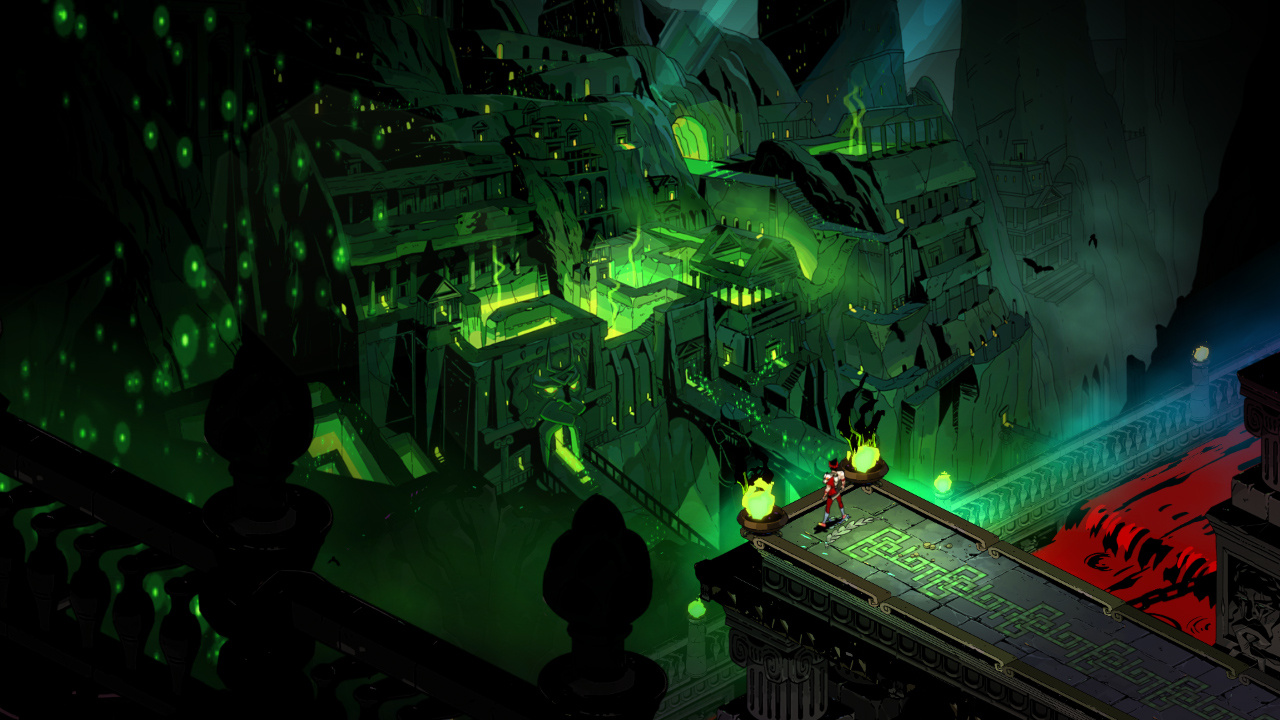
Hades is a god-like, rogue-like dungeon crawler that combines the best aspects of Supergiant’s critically acclaimed titles, from the fast-paced action of Bastion to the rich atmosphere and depth of Transistor. As the immortal Prince of the Underworld, players will wield the powers and mythic weapons of Olympus to break free from the clutches of the infamous god of the dead himself, while growing stronger and unraveling more of the story. Thousands of viable character builds and a fully voiced cast of colorful, larger-than-life characters ensure each and every escape attempt through the ever-shifting Underworld is unique. Hades will feature cross-saves with the PC version when the game comes to Nintendo Switch this fall.
This intense action-adventure game is set in ancient India and inspired by Hindu and Balinese mythology. A young girl, chosen by the gods, stands against the demonic invasion of the human realm. Her destiny: Rescue her younger brother and face the mighty demon lord. Players will experience fluid combat and parkour while mastering divine weapons. Raji: An Ancient Epic launches later today on Nintendo Switch as a timed console exclusive.
As the Spiritfarer Stella, help the spirits of the deceased make their way into the afterlife by transporting them across the seas on a hand-crafted ferry. In this cozy management game featuring hand-drawn art and animations, players will befriend passengers, customize and improve their ferry and explore an imaginative world – or just go wherever the wind takes them. Spiritfarer makes its maiden voyage on Nintendo Switch later today.
What could be more troublesome than a horrible goose? Two horrible geese! A free two-player update for the popular slapstick-stealth-sandbox game will be available starting on Sept. 23. Untitled Goose Game will also be getting a physical release on Nintendo Switch, with more information revealed in the future. A Q&A with the developers of Untitled Goose Game will be hosted on the Indie World Twitter account on Aug. 20 from 1 to 2 p.m. PT.
Hike, climb and soar through the peaceful mountainside landscapes of Hawk Peak Provincial Park. A Short Hike is a game about players taking things at their own pace, choosing their own path and seeing where it leads them. Along the way, players will meet other hikers, discover hidden treasures and enjoy the beauty of the world. A Short Hike launches later today on Nintendo Switch as a timed console exclusive.
From: Perfect World Entertainment / Echtra Games, Inc.
Torchlight III is the light-hearted and fast-paced dungeon crawler sequel to the critically acclaimed action-RPG Torchlight II. In Torchlight III, it’s been a century since the events of Torchlight II, in which the great heroes of old defeated The Dark Alchemist. Now, Novastraia is threatened by invasion once again, and players must venture forth to defend the land against the evil Netherim and its allies. Torchlight III features all of Torchlight’s signature gameplay mechanics, including satisfying hack-and-slash combat, epic loot drops and, of course, the beloved pet system that captured the hearts of ARPG fans. This grand adventure also introduces new features, including fully customizable forts, unique Relic skills and a new end-game experience. Torchlight III will launch for Nintendo Switch this fall with an exclusive Red Fairy pet.
The worlds of stop-motion animation and RPGs combine in Takeshi and Hiroshi. As 14-year-old aspiring game designer Takeshi, the player’s goal is to entertain their little brother Hiroshi with the latest chapter of their game. Takeshi needs to improvise: While it’s his goal to let Hiroshi meet big challenges, he also wants to prevent him from losing. Takeshi and Hiroshi launches on Nintendo Switch later today.
From: Tendershoot / Mike Lasch / ThatWhichIs Media / Xalavier Nelson Jr. / No More Robots
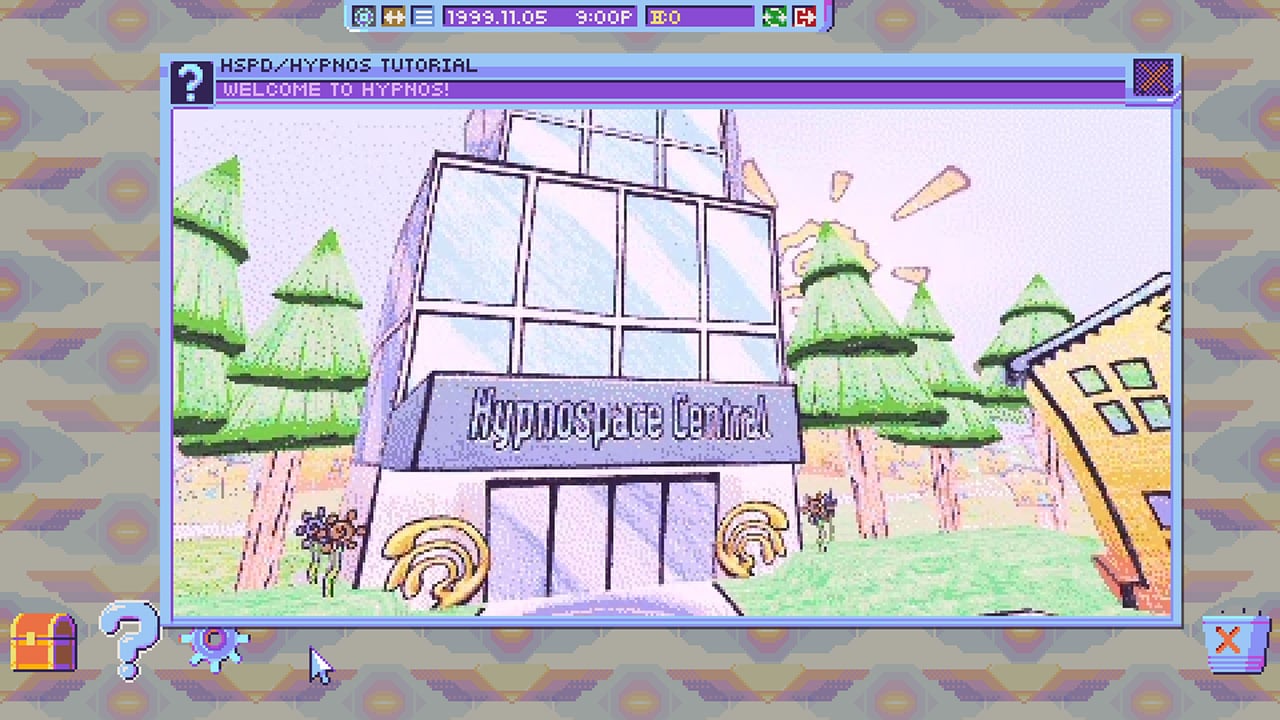
In this ’90s internet simulator, players will scour a wide variety of websites, add useful downloads to their desktop, dodge computer viruses and hunt down virtual villains as an Enforcer in the Hypnospace Patrol Department. Hypnospace Outlaw launches for Nintendo Switch on Aug. 27. The game will be available for pre-order in Nintendo eShop later today, with a free demo version also available to download.
Players will fleece and cheat their way to the top of 18th century French society in Card Shark, a stylishly illustrated adventure game that is all about playing your cards right. On their journey from table to table, players will need to build their repertoire of card tricks and carefully manage their ill-gotten gains as the stakes rise ever higher. But players must be cautious – if cheating is exposed, they’ll be gambling with their life. Card Shark arrives on Nintendo Switch in 2021.
Set foot in a beautiful world filled with mind-bending puzzles in Manifold Garden, a game that reimagines the laws of physics. Geometry repeats infinitely in every direction, and falling down leads players back to where they started. In order to progress, players need to manipulate gravity to change their perspective and see the world in new ways.
In Subnautica, players discover the depths of a vast alien underwater world by collecting resources, crafting underwater structures and outsmarting wildlife to uncover the mystery of the planet they crash-landed on. For explorers seeking a frozen adventure, the sequel Subnautica: Below Zero will have divers trying to survive the icy biomes of planet 4546B. Subnautica and Subnautica: Below Zero will both launch on Nintendo Switch in 2021.
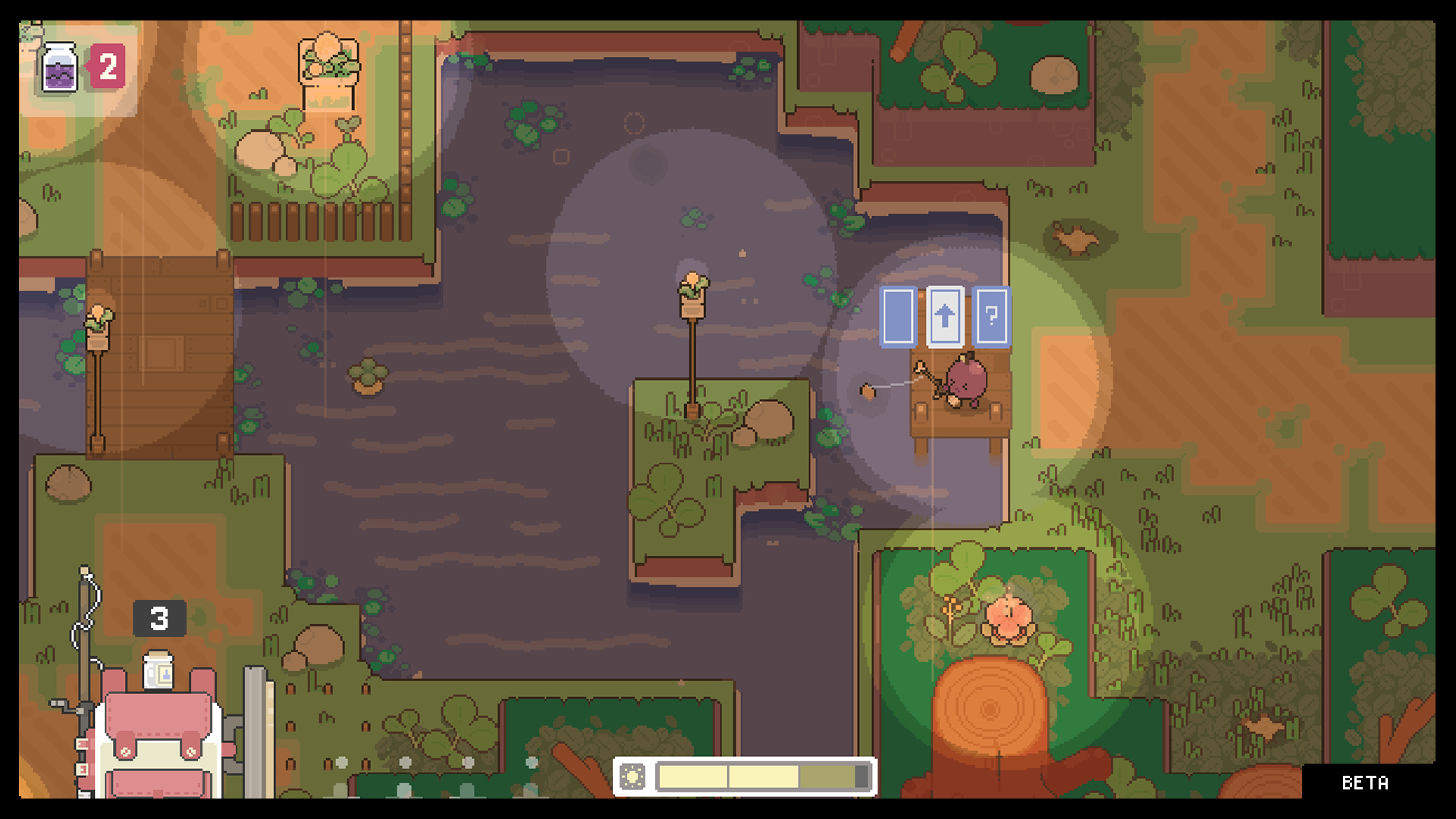
Garden Story invites players into a wholesome and delightful world where they’ll rebuild the community as Concord, the newly appointed Guardian of the Grove. Traverse a vibrant island to combat invasive Rot, cultivate fruity friendships, gather precious resources, restore buildings and rebuild your home. Garden Story will bloom on Nintendo Switch in 2021.
Evergate is a dream-like 2D puzzle-platformer set in the afterlife, in which players control Ki, a child-like spirit on a journey through life, death, space and time. The innovative Soulflame mechanic grants the power to slow down time, and gives players great flexibility in how they choose to navigate this beautiful yet haunting world. Evergate launches on Nintendo Switch later today.
In Bear and Breakfast, a laid-back management adventure game, players take on the role of Hank, a well-meaning bear trying to turn an abandoned shack into a successful B&B. As the business expands, so do the mysteries of the forest, and soon Hank will find himself uncovering a plot deeper than the wilderness itself. Bear and Breakfast combines building, management and exploration elements with deep customization and side quests galore. The game launches on Nintendo Switch in 2021 as a timed console exclusive.
New To Disney+ In September 2020: Mulan Arrives, For An Additional Price
This year has been a little rough on the entertainment industry, as movie theaters have been closed and some movies have been delayed, pushed back to 2021. However, a few films are getting a straight-to-digital release, and that includes the highly-anticipated live-action take on Disney's Mulan.
On September 4, Mulan arrives on Disney+, but it's not included in the base subscription. For $30, you can purchase the movie--which is in addition to the subscription--for "Premiere Access." Eventually, the film will arrive for all subscribers, but the $30 price tag gets you early access to it. You'll be able to watch the film as many times as you want, but you'll lose access if you cancel your subscription to Disney+.
If you're looking for a comic book adaptation to watch, The Wolverine arrives on September 4. The 2013 film follows the titular X-Man as he heads to Japan. However, during his trip, he loses his powers and finds himself involved in a conspiracy. The film is much, much better than 2009's X-Men Origins: Wolverine.
Posted by: xSicKxBot - 08-19-2020, 08:54 AM - Forum: Python
- No Replies
The 80/20 Principle in Programming
In this article, you’ll learn about the profound impact of the 80/20 principle on your life as a programmer. It’s based on a first draft of a chapter from my upcoming book “From 1 to 0: A Minimalistic Approach to Programming”.
The 80/20 principle has many names but the second most famous is the Pareto principle, named after his discoverer Vilfredo Pareto. So, how does the principle work and why should you care?
Pareto Principle Basics
The principle says that the majority of effects come from the minority of causes. For example, the majority of income is earned by the minority of people, the majority of innovations come from the minority of researchers, the majority of books is written by the minority of authors, the majority of the sales come from a minority of the clients, and the majority of goals are shot by the minority of soccer players.
Most likely, you’ve already heard about the 80/20 principle—it’s everywhere in personal productivity literature. The reason for its popularity is two-fold. First, the principle allows you to be lazy and productive at the same time—if you can figure out the things that matter and focus on those relentlessly. Second, the principle is observable everywhere in the real world. It’s very difficult to even come up with some phenomenon where the effects come equally from the causes. Go ahead and try to find some examples of 50/50 distributions where 50% of the effects come from 50% of causes! Sure, the distribution is not always 80/20. The concrete numbers can change to 70/30, 90/10, or even 95/5. However, the distribution is always heavily skewed towards the minority of the causes that produce the majority of effects.
Here’s an example of a Pareto distribution:
Figure: Example of a Pareto distribution: the causes are ordered according to the results they produce.
You can see the mathematical plot of a Pareto distribution that plots the generalized results against the causes—assuming the causes are ordered according to the results they produce.
Application Software Optimization
The following figure shows the application of the Pareto distribution to a software project: the minority of the code is responsible for the majority of the runtime. The x-axis shows code functions sorted by the runtime they incur. The y-axis shows the runtime of those code functions. The units don’t really matter here, but you should realize that the shaded area dominates the overall area under the plot. Most code functions contribute much less to the overall runtime than a few selected code functions. Spending a lot of time optimizing the “trivial many” barely produces any improvement of the overall runtime.
Figure: Example of a Pareto distribution in software engineering: most functions contribute little to the overall runtime but some functions contribute heavily.
While the principle is easily understandable, most people don’t intuitively understand the relevance of the principle in their own lives. How can you make use of the principle to get more done in less time?
Few people know that the principle was successfully employed by large computing companies such as IBM, Microsoft, and Apple to build computers that feel much faster and to create a user experience that has previously been unheard of. How did they do this? They channeled their focus on the “Top 20%”—by repeatedly optimizing the 20% of the code that was executed most often by the average user. Not all code is created equal. A minority of code has a dominating impact on the user experience while much of the code has little impact on it. For example, you double-click on an icon multiple times per day—programs should load very fast for great user experience—but you change the access rights of a file only seldomly, if at all. The 80/20 principle tells you where to focus your optimization efforts!
Productivity
In fact, the 80/20 principle is a principle of focus. By focusing on the vital few rather than the trivial many, you can 10x, even 100x your productivity at work. Don’t believe me? Let’s calculate where these numbers come from, assuming an underlying 80/20 distribution.
Figure: The average output of the 20% top performers is 16x the average output of the 80% bottom performers.
The real world tells us that a minority of people produces the majority of results. This fundamental principle is observable in a wide variety of different applications. Let’s plug in some numbers to get an intuition how large the performance difference is. For instance, let’s use the conservative 80/20 parameters: 80% of the results come from 20% of the people. In some fields (like programming), the distribution is probably much more skewed.
The previous figure shows that in a company of 10 persons, only two persons produce 80% of the results while eight produce 20% of the results—a direct consequence of the 80/20 principle. If you divide 80% by two, you get an average output of 40% per top-performing person in the company. At the same time, if you divide the 20% of results generated by the eight persons, you obtain an average of 2.5% per bottom-performing person. The difference in performance is 16x!
And note that this is not a theoretical difference that could be achieved under some impractical settings—this 16x difference in average performance is already a fact in millions of organizations throughout the world.
The performance difference exists: there are two persons in your organization who create more than 10x higher output than a “normal” employee. The question is: how can you become one of those two? Or, to formulate it more generally: how can you “move to the left” on the Pareto distribution curve in your organization (see figure)?
Figure: To create more output, you need to constantly move to the left of the curve.
On the y-axis in our 80/20 world, I used the label “Output” to keep it general. You may want to optimize for income (20% of the people earn 80% of the incomes). You may want to optimize for happiness (20% of the people enjoy 80% of the happiness at work). You may want to optimize for monthly active users (20% of the websites have 80% of the monthly active users). You may want to optimize for book sales (20% of the books receive 80% of the sales). Or you may want to optimize for citations (20% of the researchers receive 80% of the citations).
This shows a critical take-away that follows from the 80/20 principle: be clear what you want to optimize.
Success Metrics
Let’s say, we want to optimize for income as a proxy for happiness. How can you move to the left in the Pareto curve?
Now, you’re leaving exact science because you need to find the reasons why some people succeed: which of their expertise generates most of the success? You need to find a plausible, simplifying argument in your specific industry and develop actionable success metrics you can control. If you do more of them, you’ll become more successful. If you do less of them, you’ll become less successful. The tricky thing is that the success metrics are different in most fields. In fact, the 80/20 principle also applies to success metrics: some success metrics have a dominating impact on your performance in a field, while others barely matter at all.
For example, when working as a doctoral researcher, I soon realized that it’s all about citations. The more citations you have as a researcher, the more credibility, visibility, and opportunities you’ll experience in science. How can we influence citations (“today, I’ll increase the number of citations” is hardly an actionable success metric)? Citations come from high-class papers. If you publish more high-class papers, you’ll receive more citations. So, writing high-class papers is the most important activity for most scientists. However, many researchers get distracted by secondary activities such as preparing presentations, organizing, teaching, drinking coffee, the most successful researchers focus heavily on generating a maximal number of high-quality papers. For researchers, the Pareto distribution of the success metric for researchers may look like this:
Figure: Success metric in research: number of words written towards high-class paper.
By replacing the generalized “Output” with the new success metric “Number of words written towards high-class paper”, you have gained crystal clear insight into what you must do every day to push towards the left in research. If you write more words today, you’ll publish your next high-class paper sooner, receive more citations faster, grow your scientific footprint, and become a more successful scientist as a result. The beauty of this 80/20 approach is that it allows you to find your focus. Everything else doesn’t matter. You can relax, lean back, and focus on the things that are very important. You can spend less time on all the different tasks. You don’t have to die the death of a thousand cuts. You can be lazy with all activities but one: writing papers. You can blend most things out, ignore emails, don’t go to meetings that don’t push you to more papers, be lazy in all the other activities. Say, you work 8h per day and you spread your day into eight one-hour activities. After completing the success metric exercise, you realize that you can skip two 1h activities per day and reduce four of them by half to complete them in half an hour instead of an hour (being less perfectionistic). You have saved 4h per day but you still accomplish, say, 80% of your results. Now, you invest 2h into writing more words towards high-class papers per day. Within a few months, you’ll have submitted an extra paper and over time, you’ll submit much more papers than any other of your colleague. You work only 6h per day and you generate imperfect quality in most of your work tasks. But you shine on where it matters: you submit more research papers than anyone else in your environment. As a result, you’ll soon be one of the top 20% of researchers. You generate more with less.
This is the power of 80/20 thinking: you invest resources where they have the highest leverage. You create more results by investing less time, effort, money. You become lazy in most things in life. But you focus some of the saved time, energy, and money on the ones that are wildly important. Instead of becoming a “Jack of all trades, master of none”, you become a one-trick pony. You heavily focus on the vital few and ignore the trivial many. You lead a less stressful life, but you enjoy more fruits from your invested labor, efforts, time, and money.
Pareto Implications for Coders
Let’s consider another example: if you’re reading this book, you’re a programmer. In programming, the results are much more heavily skewed towards the top than in most other fields. Instead of 80/20, the distribution often looks more like 90/10. Bill Gates said that a “great lathe operator commands several times the wage of an average lathe operator, but a great writer of software code is worth 10,000 times the price of an average software writer”. Bill Gates has overseen hundreds of thousands of programmers and software developers and if he makes this statement, it must have some merit. Interestingly, the difference is not 16x like you’ve seen previously. The difference between a great and an average software writer is 10,000x! How can this be? Well, here are a number of reasons why this extreme Pareto distribution holds especially in the software world:
A great programmer can solve some problems that the average programmer simply cannot solve. In some instances, this makes him infinitely-times more productive.
A great programmer can write code that is 10,000 times faster than the code of an average programmer. This can make or break the viability of a whole product line of a billion-dollar company.
A great programmer will write code that has fewer bugs. Think about the effect of a single security bug on Microsoft’s reputation and brand!
A great programmer will write code that is easier to extend which may improve the productivity of thousands of developers that work on his code at a later stage of the software developing process.
A great programmer will think out of the box and find creative solutions to circumvent costly development efforts and help focus on the most important things.
Each of the previously stated arguments show why a great software developer can be 10,000 times more productive. In practice, a combination of those factors is at play so that the difference can be even higher.
The key question is: how do you become a great programmer? Because if you can become a great programmer, you’ll always have much more work than you can handle, and the most successful companies in the world—Google, Facebook, Amazon, Apple, and Microsoft—will be happy to pay you big premiums for your services.
A Success Metric for Programmers
Unfortunately, the statement “become a great programmer” is not a success metric you can directly optimize—it’s a multi-dimensional problem. A great programmer can mean a lot of things. He or she understands code quickly, knows algorithms and data structures, knows different technologies and their strengths and weaknesses, can collaborate with other people, is communicative and creative, stays educated and knows about ways to organize the software development process, and possesses hundreds of soft- and hard-skills. But you cannot master all of those! If you don’t focus on the vital few, you’ll become enslaved by the trivial many. To become a great programmer, you must focus on the vital few. One of those vital few activities that will ensure that you become a better coder over time is the success metric “write more lines of code”. If you write more lines of code than your peers, you’ll become a better coder than most of your peers. It’s a simplification of the multi-dimensional problem but we simplified towards the vital few—by optimizing the proxy metric “write more lines of code”, we increased our odds of succeeding at the target metric “become a great writer of software code” (see figure).
Figure: Success metric in programming: number of lines of code written.
By writing more code, you create a self-reinforcing feedback loop. By writing more code, you begin to understand code better. You talk and behave more like an expert coder. You attract better coders and more challenging programming tasks, so you write more code and become even better. You get paid more and more per line of code you write, thus, it makes economic sense to write more code instead of doing housework or doing tedious non-programming tasks at work. You or your company outsource everything else. The more you code, the more successful you’ll become. Here you have the 80/20 activity you can follow every day: track the number of lines you code every day and optimize it. Make it a game to at least match your average every day. If you code more, you’ll ultimately join the top 10% of coders with income levels far above six figures.
Relationship Between Focus and the Pareto Distribution
A closely related topic I want to discuss is focus. The 80/20 principle explains why focus is so powerful. Let’s dive into the argument!
Consider the Pareto distribution in the next figure that shows the percentage improvement of moving towards the top of the distribution. Alice is the fifth most productive person in the organization. If she just overtakes one person in the organization, thereby becoming the fourth most productive person, she’d increase her output (e.g., salary) by 10%. If she moves one step further, her output increases by additional 20%. Think about this: even if she could keep increasing her income by 10% repeatedly, this would be great because she would experience superlinear growth. But in a Pareto-distribution, the growth per rank explodes. This is why even small increases of productivity can result in big increases of income. If you can move towards the top 10% in any Pareto distribution, you’ll be a wildly successful person with massive results in your life. It doesn’t matter if you’re a golfer, Poker player, programmer, or machine learning engineer. Increasing your productivity leads to super-linear improvements of your income, happiness, and joy at work. Some call this phenomenon: the winner takes it all.
Figure: Disproportional benefit of improving your rank in a Pareto distribution.
That’s why it doesn’t pay not to focus: if you don’t focus, you participate in many pareto distributions. Let’s consider the following graphic of two persons: Alice and Bob. Both have three units learning efforts every day. Alice focuses on one thing: programming. She’s neither a good chess player, nor a good golfer, nor good at politics. She just spends three units of efforts in learning to code. Bob spreads his focus to multiple disciplines. He spends one unit of time polishing his chess skills, one unit training his programming skills, and one unit training his politics skills. As a result, he’s reached average skills and output in each of the three areas. However, due to the nature of the Pareto distribution to disproportionally reward the winners in any Pareto distribution, Alice collects more total output (e.g., income or happiness) than Bob through her focusing strategy.
Figure: Non-linearity of rank output – A strategic explanation attempt for the power of focus.
Note that this holds true not only across broad and independent areas such as programming, chess, and politics. It also applies within narrow areas such as programming. For instance, Bob may spend his time reading three general books (let’s call them: Introduction to Python, Introduction to C++, and Introduction to Java) while Alice reads three books diving deep into Python (let’s call them: Introduction to Python, Introduction to Machine Learning with Python, and Machine Learning for Experts). As a result, Alice will focus in becoming a machine learning expert and can demand a higher salary for her specialized skill set.
Github Contributions
Another example for a Pareto distribution gone extreme can be seen in contributions to Github repositories. There’s scientific evidence that contributions to open-source projects are Pareto distributed.[1] Let’s consider a wildly repository for machine learning computations in Python: TensorFlow. Here are the top seven contributors to the Github repository:
Here’s the table showing the same data numerically:
Contributor
Commits
tensorflower-gardener
21426
yongtang
1251
mrry
1120
gunan
1091
River707
868
benoitsteiner
838
sanjoy
795
The user tensorflow-gardener contributed more than 20% of the 93,000 commits to this repository. Given that there are thousands of contributors, the distribution is much more extreme than the 80/20 distribution. The reason for this extreme skewness is that the contributor tensorflow-gardener consists of a team of coders at Google who create and maintain this repository. The interesting observation, however, is that the top contributors are extremely successful programmers with impressive track records working for some of the most successful companies in the world. You can check them out publicly on the Github page. Whether they became successful before or after they generated a large amount of commits to the open-source repository is a mere theoretical discussion. For all practical matters, you should start your success habit write more lines of code every day now. There’s nothing stopping you from becoming #2 on the TensorFlow repository – by committing valuable code to the TensorFlow repository 2-3 times per day for the next 2-3 years. If you persist, you can join the ranks of the most successful coders on earth – by choosing one powerful habit and sticking to it for three years!
The underlying driver of excellence is to leverage the 80/20 principle on multiple fronts: First, you focus on the minority of activities that are most able to push you to success in your profession. Second, you do more of these activities than 80% of the professionals in your industry so that you belong to the top 20% of the professionals regarding these selected activities. By chaining these two Pareto distributions—select the top 20% of activities and join the top 20% in terms of activity execution quantity—you maximally leverage your resources and you’ll become an unstoppable force in your industry. Are you prepared to take a ride to the moon?
Programmer Net Worth
Sure enough, the net worth of programmers is also Pareto distributed. For privacy reasons, it’s hard to get data about individual’s net worth but one page[3] shows the self-reported net worth of computer programmers. Although the data may be noisy, it shows the characteristic skewness of real-world Pareto distributions:
Figure: Self-reported net worth of 60 programmers.
In fact, the curve is likely to be even more skewed in the real-world because there are many billionaire programmers who’ve initiated software services used by billions of people –
Mark Zuckerberg, Bill Gates, Elon Musk, Steve Wozniak come to mind. Each of those tech geniuses created the prototypes of their services themselves laying hand on the source code. The number of software millionaires is significant.