Touch Wood: Six Ages is a success so far, and a sequel seems likely
By Joe Robinson03 Jul 2018
A Sharp’s Six Ages has a lot a riding on its shoulders: It’s a premium game, and the landscape for premium has changed a lot in the years since its predecessor King of Dragon Pass launched onto iOS. It also has to follow on from that iconic game – fans have been wanting a KoDP sequel for forever, so expectations were probably high.
It’s not an easy scenario to launch a mobile game in, but Six Ages: Ride like the Wind launched to our own critical acclaim last Thursday. How has it fared over it’s opening weekend? What surprises have cropped up? We spoke to David Dunham to find out.
[embedded content]
“Launching a game is a bit like opening a booster pack,” he told us:
Did you luck into the Black Lotus of a hit? The duplicate cards of the typical game that fades into obscurity? Maybe the foil card of a success? The analogy breaks down a bit because if you’re releasing a premium game in a free-to-play world, you get only one pack, ever.
Based on current sales data, Six Ages has so far sold at 96% the rate of King of Dragon Pass when that released on the App store in 2011. It’s probably not going to top many charts (apart from in Finland, apparently, where it’s #1), but it’s enough for David to consider it a success. “If this holds up for a month,” he stated, “we will be able to start work on the next game in the Six Ages series: Lights Going Out.”
David admitted to us that he was concerned over the fan reaction to Six Ages, given that it’s not a ‘true’ sequel to King of Dragon Pass and tried to break some new (if still familiar) ground.
I’m glad to report that players seem to like it just as much. App Store ratings are 4.9 stars and say things like “lives up to King of Dragon Pass in every way and more” and “a major improvement on King of Dragon Pass.” Hearing this makes the gamble of the last four years pay off and makes me and the team want to start working on the next game.
In the meantime, you can expect a new update for the game sometime soon that will add new Adviser faces, fix bugs and introduce a new way to become infamous. Apparently, it involves behaving like a complete double-crossing weasel. Many thanks to David for taking the time to talk to us, and we wish him all the best!
Right now if you go to the Armory game engine Patreon page you are great with:
This engine was recently open sourced because it hit the Patreon goal of $1,600 a month. Development seemed to be proceeding nicely and everything was going swimmingly well, until this happened. Not only is this message displayed, it seems Patreons are being refunded, potentially every single contribution going back to day one. The following appeared on the Armory forums:
There are several other “me too” type comments in this thread. There are no further details from Armory, Lubos the lead developer, nor Patreon. I will update here if such an update occurs. Hopefully the Armory engine is ok, I’m pretty excited by it. In fact, I’ve done a full tutorial series!
EDIT – UPDATE, Lubos, the project creator just made the following tweet:
Following Fortnite's Rocket Launch, Cracks Have Appeared In The Sky
As teased, players who jumped into Fortnite: Battle Royale this past weekend got to witness a world-changing event: the launch of the Evil Lair's rocket, which resulted in a mysterious rift appearing in the sky over the island. It's unclear just what this strange development means for the future of the game, but it isn't the only consequence of the event, as additional rifts have also begun appearing in various portions of the map.
Following the rocket launch, players have begun noticing what appear to be dimensional tears across the island. The most obvious is the giant crack that appeared in the sky shortly after the rocket took off, but several smaller rifts have also started to pop up in various places around the island in the days since the event--some of which appear to be growing in size.
As you can see in the screenshots below, additional rifts can now be found near Lonely Lodge and Tomato Town. According to PC Gamer, the former was barely visible when it first materialized, but it has since grown and replaced the sign that was once outside of the building, suggesting that the rift is consuming nearby objects as it expands.
It remains to be seen whether or not more rifts will develop as we approach Season 5 of Fortnite, which is slated to kick off next week, but they'll undoubtedly play a major role in setting the stage for the new season. Epic heralded the arrival of Season 4 in a similar manner. In the weeks leading up to the season, a mysterious comet appeared in the sky over the map. The comet would eventually crash into the island at the start of the season, altering the landscape in the process and introducing new elements like Hop Rocks to the game.
Season 5 of Fortnite is scheduled to begin on Thursday, July 12, at 1 AM PDT / 4 AM EDT / 9 AM BST / 6 PM AET. In the meantime, players can still complete this season's challenges to level up their Battle Pass and unlock any remaining rewards. If you need help completing the challenges, be sure to check out our full Season 4 challenge guide.
As usual there’s been a flurry of activity in the cloud and DevOps security space recently. In case you missed it, a particularly painful flaw was found in Red Hat Enterprise Linux’s DHCP (Dynamic Host Configuration Protocol) service not long ago.
The bug specifically affects RHEL 6 and 7 (and derivative OS, Fedora 28, apparently). The CVE folks allocated the following ID to it in case you want to look it up: CVE-2018-1111. What’s important to note about this discovery is that DHCP (the service which asks a DHCP server for a (usually) temporary IP address and then binds it to one of the host’s network interfaces) is a sometimes forgotten cornerstone of our current tech stacks. Amazon’s EC2 for example shouts out to a DHCP server whenever an instance is spun up. As well as asking for an IP address, your servers will usually pick up DNS servers from DHCP requests, too.
A descendant of BOOTP, a similar service from a time gone by, the pervasive DHCP bug is commonly used on your home networks, your mobile networks and beyond. According to Red Hat the bug affects the “dhclient”, in tandem with the “NetworkManager” daemon, and means that “A malicious DHCP server, or an attacker on the local network able to spoof DHCP responses, could use this flaw to execute arbitrary commands with root privileges on systems using NetworkManager and configured to obtain network configuration using the DHCP protocol.”
At first glance, this vulnerability might make the RHEL naysayers complain that there’s yet another security issue that only affects Red Hat and not other Linux flavors. And, that must therefore mean that the other distributions are better at securing their packages. However, they couldn’t be more wrong.
The commercial model that Red Hat Inc offer is based around supporting enterprises with their products, on a paid-for basis, along with some consultancy on top for good measure. They’ve been very successful and now their products are in use globally on many mission critical opensource server estates. Why is this relevant? Well, aside from the fact that the (free) CentOS Linux flavour benefits from the downstream improvements made by Red Hat, the community as a whole does in addition.
I normally find that it’s hard to know who to believe when a lofty claim is made in the relatively congested Internet giants’ space, However, a report published in November 2017 — called “The State of Open Source Security” — shows some evidence that Red Hat’s Linux might be ruling the roost for security currently. Obviously, I can’t make any guarantees for the report’s impartiality.
Commissioned by Snyk, the report states: “Open source library vulnerabilities increased by 53.8% in 2016, while Red Hat Linux vulnerabilities have decreased.” The report is well-constructed and easy to digest and, as a plumb line to what’s going on the with security on the Internet in general, it’s a welcome read. It states that there’s been a “65% decrease in Red Hat vulnerabilities since 2012” and in addition to that: “In 2016, 69% of Red Hat Linux vulnerabilities were fixed within a day of their public disclosure, and 90% were fixed within 14 days of their public disclosure”.
The report continues: “Red Hat Linux seems to be finding some level of stability” and “…it does make us optimistic that better security is achievable with a little bit of work”.
The truth, of course, is that every device or service has a vulnerability of some description or another, and, as the report states, “there are a lot of steps involved in the lifecycle of an open source security vulnerability. From discovery through final adoption of fixes, each part of the process is important in its own way, and ultimately plays a role in the overall state of security.” Code auditing is key as well as timely response to vulnerabilities. Check out the report to learn more.
Chris Binnie’s latest book, Linux Server Security: Hack and Defend, shows how hackers launch sophisticated attacks to compromise servers, steal data, and crack complex passwords. In the book, he also shows you how to make your servers invisible, perform penetration testing, and mitigate unwelcome attacks. You can find out more about DevOps, DevSecOps, Containers, and Linux security on his website: https://www.devsecops.cc.
Save an island in peril on a childhood holiday. With restless spirits threatening the safety of Toromi Island?s inhabitants, Tai must venture through dangerous dungeons and across a variety of environments to put the spirits to rest. All in a summer holiday.
Ex-hatemonger confirms white supremacists recruit in Minecraft, Fortnite
Self-described former extremist turned peace advocate Christian Picciolini took part in an “Ask Me Anything” session on Reddit yesterday in which he confirmed that white supremacists regularly recruit new members in online games like Minecraft, Call of Duty, and Fortnite.
This claim (highlighted on Resetera) probably isn’t surprising to anyone who’s been involved in a toxic multiplayer experience, but it’s worth calling out as a reminder to devs that your online game can easily become (if it isn’t already) a recruiting zone for people looking to prey on what Picciolini calls “marginalized youth.”
“Absolutely! We sought marginalized youth and promised them ‘Paradise’,” he wrote yesterday in response to a question about whether white supremacists and other hate groups target young people. “Today they are using nefarious tactics like going to depression and mental health forums and in multiplayer gaming to recruit those same people.”
He went on to call out the afore-mentioned games specifically, noting that “mostly foreign recruiters from Russia and Eastern Europe and Poland” hang around in games like Fortnite and “drop benign hints…then ramp up when hooked.”
Devs curious to learn more about Picciolini’s perspective and background as an avowed former extremist should check out the rest of the AMA thread, in which he talks in some detail about how he would know this and why he thinks more people should pay attention to the way extremist groups recruit and spread.
Don’t Miss: A look at choice overload in game design, and how to avoid it
The following blog post, unless otherwise noted, was written by a member of Gamasutra’s community. The thoughts and opinions expressed are those of the writer and not Gamasutra or its parent company.
Bob Tilford has a PhD in Experimental Psychology and works as a Games User Researcher at Player Research – an award-winning playtesting and user research company based in Brighton, UK.
TL;DR version:
Too much choice can lead to dissatisfaction with or avoidance of choices
Excessive choice should be particularly avoided with game and genre newcomers
Choice overload seems to start kicking in when there are more than 7 options to pick from
Experienced players may not suffer from choice overload, and having more choice could even be beneficial for them
Avoid choice overload by reducing the options available, or by otherwise easing the decision making process for newcomers
Dividing options into categories can also help improve choice satisfaction among players unfamiliar with the choice domain
Games are full of decisions. Players routinely choose between sets of options, such as items in a store, heroes in a MOBA, dialogue branches in an RPG, or tactics for taking down an outpost in an open world. The processes of decision making are a core subject of cognitive psychology, and there’s a wealth of literature relevant to those wishing to present choices to players in ways that support the designers’ intent. This post will focus in on a particular avenue of research around the psychological implications of giving players many options to pick from, and consider the instances in which it can be beneficial (or not) to give players an abundance of choice.
Overloading new players with too much choice
It’s been argued that the more options you can give people to choose from, the better, since more choice means more opportunities to satisfy a range of individual preferences (e.g., Mas-Colell, Whinston, & Green, 1995). This perspective also has commonsense value – I mean, why wouldn’t you want more options to choose from? Research, however, tells a different story: one really can be spoiled for choice – something referred to in the literature as choice overload (e.g., Iyengar & Lepper, 2000), or the excess choice effect (e.g., Hafner, White, & Handley, 2016).
Iyengar and Lepper (2000) first demonstrated choice overload with an experiment in which they observed supermarket customers as they perused displays of either 6 or 24 varieties of jam. They found that customers exposed to only 6 jams were much more likely to make a purchase than those who saw all 24 jams. They concluded that a set of 6 options was more psychologically manageable, whereas a choice between 24 jams was overwhelming, leading people to defer a decision altogether. These shoppers had other options. They didn’t need to make a choice, so when confronted with an array of 24 subtly different styles of a non-essential food, they just moved on and went about finding other groceries, and making decisions that likely required less effort. How might these observations in a grocery store apply to players at home, making (or not making) choices in games?
Most simply, the excess choice effect suggests that if you give your players too many options to choose from, you might be discouraging them from picking one at all. If a player goes into an in-game store and finds there are 30 types of armour to choose from, they could defer this choice by just moving on and progressing with the game, or by quitting the game entirely. Avoiding a choice by quitting the game is perhaps most likely to occur during someone’s early experiences, when they have little investment in the game. Imagine you’ve just downloaded a mobile free-to-play game and, right off the bat, you’re confronted with a mandatory choice between 20 playable characters, all with different stat profiles. Consider how easy it would be to just put your phone back in your pocket and go about your day. Conversely, if presented with the same choice after investing some time into the game, you might feel more motivated to make the choice and keep playing. Indeed, it’s been shown elsewhere that people are more likely to keep investing in something if they’ve already sunk resources into it (Arkes & Blumer, 1985). On the other side of the coin, premium games paid for up-front may be less susceptible to players immediately quitting when confronted with choice overload, since they’ll have already sunk money into buying the game itself. However, in these circumstances choice deference could take another form, with players simply disengaging with parts of the game that give them excessive choice, but which might otherwise enrich their experience. Take Fallout 4, for example. If a new player spends several hours questing and looting, then checks out her crafting bench for the first time and finds she’s got over 40 items available for crafting, it would be very easy for her to abandon a decision on which item to craft and instead pursue other activities. While getting distracted by the multitude of things to do might be a core part of the Fallout experience, it’s unlikely that its designers actually intend for their players to avoid a part of the game due to choice overload. So, following this line of reasoning, designers should be especially careful with giving excessive choice to players during their early experiences with the game. Further on we’ll see more reasons why presenting large numbers of options is more risky with new, rather than experienced, players.
New Fallout 4 players may be overwhelmed by the crafting choices available to them early in the game, and therefore defer crafting in favour of other activities [Image credit: deadgames.org | Game: Fallout 4]
Besides deferring choices, Iyengar and Lepper (2000) also looked at what happens when people don’t defer choices, from both large and small option sets. Interestingly, it was found that people were less satisfied with, and less committed to choices made from excessively large sets of options. It seems, therefore, that while having more choice might sound appealing, it can have potentially unintended psychological consequences beyond simple choice deferral. Here designers must think carefully about how they want their players to feel about a choice, after it’s been made. If someone makes a relatively inconsequential decision from a set of options they’ll be able to try all of eventually (e.g., cars in a racing game, or special abilities in an action game), mild feelings of dissatisfaction or a lack of commitment might not be a big problem. In fact, these feelings could potentially enrich the experience by enhancing motivation to keep playing and unlock all of the options. However, if the decision is final, such as a choice of character class, or between dialogue options, or game endings, lingering feelings of dissatisfaction and lack of commitment could damage the player experience – especially so if the player only becomes aware of the decision’s finality retrospectively. The implication here is that special care should be taken with all decisions between large numbers of simultaneous options, and particularly when those decisions are final.
It’s important to think here about what constitutes excessive choice. Why should smaller sets of options be more psychologically manageable, and what’s the threshold for choice overload? Interestingly, Chernev (2003b) has noted that the findings in the literature are consistent with previous research showing that people perform poorly at tasks that require them to hold many more than 7 items in working memory (Miller, 1956). So, while a boundary between manageable and unmanageable numbers of options has not been systematically investigated, a useful rule of thumb to keep in mind is that the excess choice effect tends to manifest when the set of options is larger than 7.
What counts as excessive choice for newcomers might be fine for veterans
The excess choice effect has been examined in more detail and it’s been found to manifest differently between people who are experienced and those who are inexperienced in the choice domain. More specifically, it’s been shown that people who have expertise in the choice domain (e.g., a veteran player of a game or genre) – who already have a clear set of attribute preferences and values – are more likely than domain-novices to make, rather than defer, choices from large option sets (Chernev, 2003a). Additionally, people who’ve already accrued experience, and developed a preference for a particular set of attributes also show greater preference for the options they pick from large sets (Chernev, 2003b). Consider an expert League of Legends player trying out Dota 2 for the first time and being faced with a colossal set of 100+ heroes to pick from. He’s never seen Dota 2’s heroes before, but knows all about League’s champions and their attributes and, if asked, is able to clearly articulate his stat preferences, such as high attack damage, coupled with medium defence and low ability power. Since League of Legends and Dota 2 are in many senses very similar, he can simply compare each Dota 2 hero with his pre-existing preferences from League, and select one that matches. Compared to a MOBA novice, the domain expert is able to rely on this decision making shortcut when choosing from a large set of options, thereby making it easier to actually make a decision, and more likely that he’ll find something that matches his preferences. Interestingly, Chernev (2003b) also showed that domain experts, with clear attribute preferences, actually prefer large over small option sets, presumably because they afford them more opportunities for satisfying their ideal attributes.
An experienced League of Legends player might find it easier than a MOBA newcomer to make a Hero choice when starting Dota 2 for the first time, since they’re likely to have a preexisting set of attribute preferences [Image credit: PCInvasion | Game: Dota 2]
Chernev’s (2003a, 2003b) research suggests that large selections of options can be a good thing for experienced players, but, as highlighted earlier, new players are likely to struggle with such choices, which could contribute to them giving up on the game altogether. Consequently, if you’re designing choices that will require players to pick from large option sets, think carefully about where, when, and how you present these choices. Ideally, do not incorporate such decisions into the early stages of the game, when players are unlikely to have developed a clear set of attribute preferences that would enable them to benefit from such a large range of alternatives.
Occasionally, you may have no alternative but to include choices from large option sets in the early game. Let’s say you’re working under the design constraints of an existing game or an inflexible genre standard. In this case it’s important to acknowledge that there’s a good chance that the choice might negatively impact the early experience of your game, and may lose you some players. However, there are still measures you can take. Essentially, anything that eases the decision process for new players should help. You could, for example, reduce the number of available items temporarily, introduce the attributes to help players form an idea of their ideal set, narrow down the options that are most suited to novices, or provide a mechanism that facilitates easy comparisons between options. League addresses this issue by making a selection of 10 champions free to try each week. New players’ choice set is therefore practically reduced to a much more manageable number. Epic’s MOBA, Paragon, similarly focuses its set of heroes available to new players with a small set of recommended starter heroes. This is particularly good choice design for new players since it makes their decision easier by both reducing the number of options, and presenting those options that are most broadly appropriate for newcomers.
League of Legends narrows down the set of Champions for new players with a free Champion rotation, thereby easing the decision making process and avoiding choice overload. [Game: League of Legends]
Paragon makes it easier for novice players to decide on a hero by recommending a small set of starter heroes most appropriate to newcomers. [Game: Paragon]
Categorisation of options has also been shown to help improve choice satisfaction (Mogilner, Rudnick, & Iyengar, 2008). Specifically, it has been demonstrated that dividing up a set of options under category labels not only helps convey important information about the types of distinctions between options, but can also imply a greater variety of options, and therefore lead to a greater sense of self-determination and satisfaction after a choice is made (Mogilner et al., 2008). In fact, more categories tends to suggest more variety – especially to people unfamiliar with the choice domain – and can therefore lead to greater choice satisfaction (Mogilner et al., 2008). Consider, then, whether your options can be categorised in ways that support these effects. If you have a very large number of items to present to players, categorise them under informative labels, and don’t be afraid to use lots of categories if necessary (though it’s crucially important that these categories are also easy to understand and navigate). Thus, you may be able to offset some of the dissatisfaction that comes from excessive choice by leveraging the increase in satisfaction that comes from categorising options.
Conclusion
People find it hard to make choices from large sets of options, and when they make these choices they tend to be less satisfied with and less committed to their choice. It’s been argued that this is likely to be especially problematic for free-to-play games, where new players might feel less initial psychological investment in the game, which could in turn make it easier for them to avoid difficult choices by quitting the game altogether. Importantly, choice overload appears only to be a problem for domain novices, that is, people who don’t know what it is they should be looking for when comparing options, such as game or genre newcomers. While the number of choices that count as excessive for new players is likely a function of many factors, a useful rule of thumb is to avoid giving them many more than 7 things to pick from early in their experience with the game, especially if the choice is final, since this is likely to lead to choice deferral and/or dissatisfaction. If there is no alternative but to present new players with a large choice set, however, it’s suggested that measures be taken to ease the decision making process.
Arkes, H.R., & Blumer, C. (1985). The psychology of sunk cost. Organizational Behavior and Human Decision Processes, 35, 124-140.
Chernev, A. (2003a). Product assortment and individual decision processes. Journal of Personality and Social Psychology, 85(1), 151-162.
Chernev, A. (2003b). When more is less and less is more: The role of ideal point availability and assortment in consumer choice. Journal of Consumer Research, 30, 170-183.
Hafner, R.J., White, M.P., & Handley, S.J. (2016). The excess choice effect: The role of outcome valence and counterfactual thinking. British Journal of Psychology, 107, 36-51.
Iyengar, S.S. & Lepper, M.R. (2000). When choice is demotivating: Can one desire too much of a good thing? Journal of Personality and Social Psychology, 79(6), 995-1006.
Mas-Colell, A., Whinston, M., & Green, J. (1995). Microeconomic Theory. New York, NY: Oxford University Press.
Miller, G.A. (1956). The magical number seven, plus or minus two: Some limits on our capacity for processing information. Psychological Review, 63, 81-97.
Mogilner, C., Rudnick, T., and Iyengar, S.S. (2008). The mere categorization effect: How the presence of categories increases choosers’ perception of assortment variety and outcome satisfaction. Journal of Consumer Research, 35, 202-215.
New Preview Alpha & Alpha Skip Ahead 1806 System Update – 6/23/18
Starting at 2:00 p.m. PDT today, members of the Xbox One Preview Alpha and Alpha Skip Ahead Ring will begin receiving the latest Xbox One system update (1806.180621-1929). Read on for more about the fixes and known issues in the latest 1806 system update.
Fixes:
Groups
Fixed a UI bug with groups that resulted in the inbox apps showing a generic pin icon rather than the application artwork.
My Games and Apps
Fixed an issue with various Games failing due launch or update correctly after a title update and users found that they had to reinstall the title.
Home – Alerts
Fixed an issue in which the clear all button/shortcut on the Alerts page was doing nothing for some users.
Home – Content
Fixed an issue in which the User was unable to navigate the add suggestions content on Home.
Localization
Various localization fixes across the console.
Networking – Wi-Fi
Fixed the network Wi-Fi drivers so that when a user resumes the console from Instant On they no longer experience the following Wi-Fi network issues:
Your Wi-Fi SSID is missing and/or
Your console having no Wi-Fi on resume and /or
Your console was unable to obtain an IP address from your Wi-Fi network.
System Performance
Misc. performance fixes in the platform.
Known Issues:
Game Pass Tab
Preview Alpha and Alpha – Skip Ahead users will notice that the Entertainment tab has been replaced on the dashboard with Game Pass content. This new tab allows for easy access to the Game Pass catalog and is only available in the US region at this time, so Preview Alpha and Alpha Skip Ahead Insiders in regions outside of the US will continue to see the Entertainment tab.
Groups
You may see issues with Groups if you frequently switch between your non-Preview console and your Preview console. Workaround: Reset your Groups locally on the Preview console through “My games & apps” > Groups, then using the “Reset groups” button at the bottom of the page to resync from the service.
Profile Color
Sometimes users may encounter an incorrect Profile color when powering on the console.
At a glance, you would be forgiven for thinking SpiritSphere DX was a sequel to one of The Legend of Zelda titles released long ago on the Game Boy Color. It looks, sounds and feels like one of Link’s outings on the classic portable device, but upon closer inspection, has absolutely nothing to do with adventuring. This is more like a glorified sports title set within the confines of a fantasy universe.
Its concept is simple – two competitors hit a sphere back and forth until one is outplayed. It’s sort of like the Mario Tennis games, although, the game’s creator cites Windjammer and even arcade air hockey as sources of inspiration. The cast of playable and unlockable characters on offer all have abilities that enable them to hit the sphere and move about the court slightly different from one another. An example of this is ‘Lin’ who can perform the iconic spin-attack with her sword. Sound familiar to anyone? Other characters include a dwarf with an axe (obviously, what else would any self-respecting dwarf wield?), a mage with the ability to teleport and many other appropriately-themed creatures who all have unique performance stats.
In each arena – ranging from springs to forests and volcanos – items can appear. These include a bow and arrows, bombs and even potions. Using certain items means you can temporarily stun your opponent or power-up in the heat of battle to nab a vital point. Each level also has its own hazards and dangers that will need to be taken into account. One particular dungeon-themed arena has a crowd of skeleton spectators that jump out to engage in battle with you, all while you’re busy trying to win a point against the opponent on the other side of the court. As exhilarating as this may sound, it doesn’t necessarily elevate the title above the competition.
The erratic nature of the sphere physics can be troublesome, as intentional as this design choice appears to be. This is especially apparent on higher settings, requiring players to have both luck and skill on their side. While it’s easy to dictate the movement of the ball when you hit it, on the receiving end you’ll often find yourself taking a wild guess as to which direction it will travel or rebound. One mechanic to recover a play seemingly out of your control is the dash function. This allows you to prolong games, or might even give you a match point. If your character has problems returning shots, you can always slow down the play by making direct physical contact with the sphere. Fortunately, the controls are responsive, making sessions more tolerable – especially when opponents become impossible to outsmart on higher difficulties.
When you’ve adapted to standard matches, you’ll find there are plenty of other events to master in the campaign section of the game. On the same courts, you can partake in a game of squash – where the players take turns hitting the ball against a wall – and there are even bosses to take down. After each session, you are awarded lucky coins which can be spent at the ‘sphere fountain’ to unlock new character costumes and spheres.
Outside of the campaign, there are even more options. You can play a regular match with up to four players, play in a special hand-to-hand vertical mode with a friend, enjoy squash as a stand-alone spectacle, play the boss mode with two other people and refine your skills in the practice section. In the options menu, you can even enjoy a quick game of frisbee. There’s also a target mode, and a ghost mode for players who want to contribute but don’t have much faith in their own skills. The local multiplayer is on par with the campaign in terms of the value on offer. You can adjust the points required to win, enable or disable items, select the type of sphere you use and pick the level you play on. It’s just a pity there is no online play to extend the life of the game.
The graphics, as previously noted, act as somewhat of a focal point. Although the sprites look straight out of Zelda, they still add a great sense of personality to the game. Some visual aspects outside of matches and menus don’t look as impressive – such as enlarged characters on the selection screen. The music and sound effects aren’t a direct homage to Zelda, but still do an optimal job at recreating classic sounds you would commonly associate with games featuring these types of aesthetics.
Conclusion
SpiritSphere DX is possibly the closest we may ever get to a tennis game based on The Legend of Zelda series. In fact, in contrast to similar offerings currently available on the Switch eShop, this is a good budget pick. It’s got a small but challenging campaign mode with three difficulties, an adequate amount of local multiplayer content for up to four players and does a convincing job channeling the spirit of retro games.
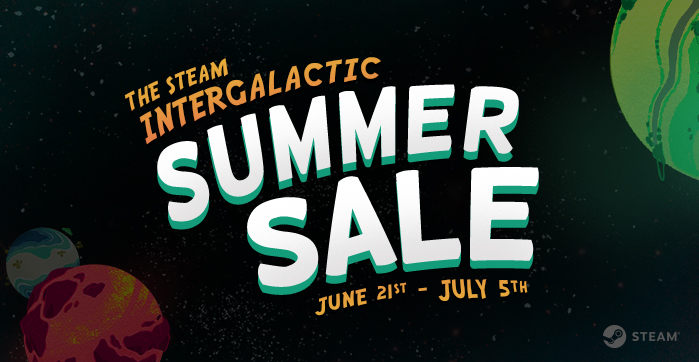
The Steam Intergalactic Summer Sale continues! For the next eight days, take advantage of huge savings throughout our store on over ten thousand games. You can also help unlock free games by playing our Summer Saliens Game.
Today’s Featured Deals include:
Assassin’s Creed Franchise – Up to 66% off They Are Billions – 20% off Hollow Knight – 34% off Euro Truck Simulator 2 – 75% off Counter-Strike: Global Offensive – 50% off Romance of the Three Kingdoms XIII – 40% off Watch_Dogs Franchise – 67% off Age of Wonders Franchise – Up to 75% off and many more
Along with the sale is the Summer Saliens Game. Team up with other Saliens to fight The Duldrumz on different planets and free the abducted games. Gain XP as you battle, level up, unlock new abilities, and win cosmetic items to deck out your Salien. Plus, get Summer Sale Trading Cards just for playing.
Choose to battle on a planet that piques your interest and you’ll automatically be entered for a chance to win one of its rewards when it’s conquered. The longer your Salien spends on a planet the higher your chances of winning! The groups with the most tiles when a planet is taken will get to plant their flag as conquerors, undoubtedly gaining Saliverse-wide fame in the process.
The Steam Intergalactic Summer Sale will run until 10 AM Pacific, July 5th. Complete information can be found HERE.



 An experienced League of Legends player might find it easier than a MOBA newcomer to make a Hero choice when starting Dota 2 for the first time, since they’re likely to have a preexisting set of attribute preferences [Image credit:
  League of Legends narrows down the set of Champions for new players with a free Champion rotation, thereby easing the decision making process and avoiding choice overload. [Game:
  Paragon makes it easier for novice players to decide on a hero by recommending a small set of starter heroes most appropriate to newcomers. [Game: