– Neutral items held by Lone Druid’s Spirit Bear now show as held by Lone Duid in the neutral items tab. – Neutral items that have been consumed now show as “Consumed” in the neutral items tab. – Neutral items that have been dropped on the ground outside the fountain, or are otherwise unaccounted for, are shown as “Unknown” in the neutral items tab. – When you open the shop, if you had the neutral items tab open last, open the basic tab instead. – The “Show Popular Items” button (star icon) in the shop is now a saved preference, and will not default to enabled when you start a new match. – Toggling the “lock combining” option on items carried by the courier will no longer cause the courier to return to base.
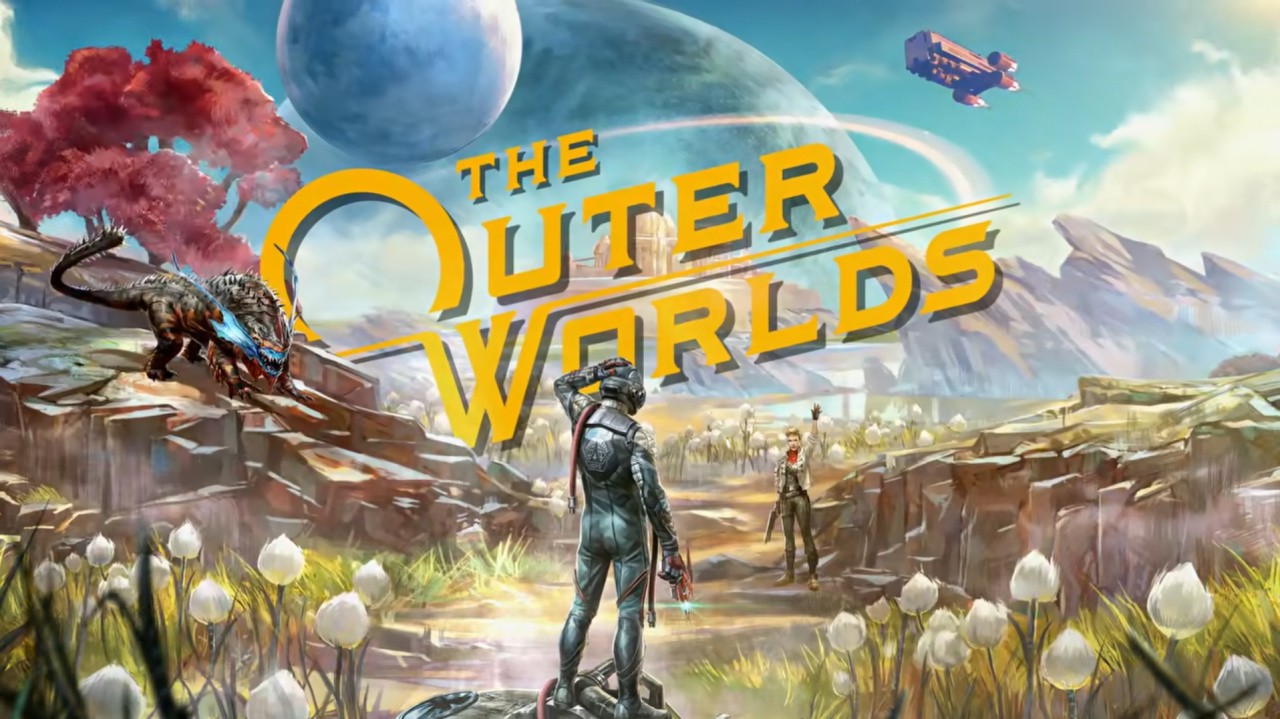
The Outer Worlds Switch Release Gets Delayed Due To The Coronavirus Outbreak
After already failing to release alongside other versions of the game in October last year, The Outer Worlds for Switch has now been delayed due to the coronavirus outbreak.
Private Division, the publisher who is handling the release, explained on Twitter how Virtuos – the talented team working on the game’s Nintendo port – needed more time to “finish” development. All of the team are safe and sound, but during this period certain Virtuos’ offices have been closed.
On a positive note, as you’ve probably read above, the Switch version will now be receiving a physical release on cartridge. This follows on from an announcement that the game would be launching before the end of March, and that it would only include a digital download code.
Virtuos isn’t the only video game company that’s been impacted by the coronavirus so far. At the end of last month we heard how Nintendo Switch production had been affected, and just yesterday we found out shipments of the new Animal Crossing: New Horizons Switch would be pushed back.
When we hear about the new launch date for this upcoming release, we’ll be sure to let you know.
Posted by: xSicKxBot - 02-08-2020, 02:15 AM - Forum: Lounge
- No Replies
Don’t Miss: Talking burnout, making art with Drinkbox’s Gabby DaRienzo
Gabby DaRienzo is sr. artist at Guacamelee developer Drinkbox Studios, was art director on the Independent Games Festival finalist A Mortician’s Tale, and worked on games including Super Crush KO, Parkitect, and Celeste. On the latest episode of the GDC Podcast, this fabulous goth-adjacent Forbes 30 under 30 game developer talked about art, creativity, burnout, and of course, death.
DaRienzo joined Gamasutra’s Kris Graft and a mysterious temporary co-host known only as “Alex” to educate us on all things art, the life of a (former) freelancer, and if you listen closely, you can hear her cats Bastion and Meredith aggressively agreeing with everything she says. Here are a few highlights.
“I think creative work–any work in general, there’s only so much you can do before you get burnt out–but creative work, whether it’s art or writing or even thinking of concepts for games–is especially tiring. [You] have to context-switch constantly, and I think that burnt me out. The team I was working with [no one] was pushing me to do this. This was just entirely self-imposed.
“…In hindsight it was very clear. I was getting frustrated and just was making a lot of really bad decisions. A lot of it was I felt the pressure to have to get it right, that I didn’t have time to concept and think of ideas, that I just had to get it right immediately. And we know that’s not the way anything works. Games especially are a very iterative process. They change so much, they evolve so much over the development. And setting up this expectation to get it right the first time–not realistic.
“And I was pushing myself to do it not just for one game, but for two games [at once], and that really messed me up because I was like, ‘If I don’t get this right if this art isn’t completely unique then these games won’t sell and these companies will go under!’ That sounds really so bizarre and so huge but when I talk to a lot of game developers, that’s kind of how they feel. A lot of it is that the indie space in general is very…there’s a lot going on right now and a lot of people are just kind of panicking. So that panicking on top of thinking about art, working on two things at once and just coming off of a game that was very personal just all added up to burnout.”
“…A lot of the signs are just feeling really frustrated, feeling really unmotivated–I really did not want to work on these games at all. In my headspace I was really excited about these two projects, but when came down to sitting down and doing the work, I just didn’t want to do it; I just could not push myself to do it.
“It’s also things like I got really defensive. I got very defensive about my own art. Which is something I’m embarrassed to talk about, embarrassed to admit, but is kind of important to speak about because I see a lot of other artists go through the same thing. My cofounder [at her studio Laundry Bear] would be like ‘oh I think this art would be good’ and I’d like ‘WHAT?! What’s wrong with my art?!'” (laughs)
“…If you’re a person who thinks you might be burnt out or you know someone who might be burnt out, I think that’s a huge sign, someone getting very defensive about the work that they’re doing.”
“Burnout is such a big deal. When we think about burnout and we hear the term ‘burnout,’ especially in games, we often think about triple-A: big studios forcing their employees to work…But a lot of people, especially indie devs, we need to consider that a lot of it is self-imposed. We’re putting it on ourselves without even realizing it…I know a lot of indie devs that don’t notice they’re doing it or they’re doing it because [they think] you can’t be indie unless you work 16-hour days. And that’s just not true.”
“I think the biggest thing is–a lot of people don’t think about this when they want to do freelance–but it’s like 20 percent just admin and accounting. You’re not just 100 percent of the time doing art or game design or programming or writing or whatever it is that you’re doing freelance. You’re basically running a business. So a lot of your time is spent responding to emails, doing accounting.
“But it’s also things like self-marketing, putting yourself out there on social media, going to events, making sure your portfolio is always stocked with pieces, and if you have a slow period with work, making sure you use that time to find more work or fill your portfolio with pieces that will help you get more work. It’s a lot of that kind of stuff.
“If you’re a person who’s maybe not keen on that, then freelancing might not be a thing that you’re interested in doing. But I love that stuff (laughs).”
“…A lot of it too is networking. I hate the term ‘networking.’ It feels really business-professional and seems like a contrast to what we do in games. But essentially [what I mean is] making friends; going to events, being social on the internet and just making friends. And when people are like ‘oh, we need an extra artist on a thing’ or ‘we need to hire someone to do a logo,’ they think of you.
“And that’s how I got a lot of my work when I was freelancing…You don’t have to go to events and shove business cards in peoples’ faces, necessarily (laughs), I advise against that, probably. But making friends and putting yourself out there goes a long way if that’s something you’re comfortable with doing.”
Posted by: xSicKxBot - 02-08-2020, 02:15 AM - Forum: Lounge
- No Replies
Watch Casey Yano break down the design decisions behind Slay the Spire
Slay the Spire is a wildly unique deckbuilding roguelike that earned itself two nominations at the 2020 IGF awards. As the game heads for this year’s award ceremony, Yano was kind enough to drop by the GDC Twitch channel to share what he’s learned as a designer in his years working on Slay the Spire.
Now that the stream’s done, we’re excited to let you know you can watch it in its entirety in the video above. If you’re curious about the particular details that make Slay the spire so compelling and nomination-worthy, give it a watch!
Posted by: xSicKxBot - 02-08-2020, 02:15 AM - Forum: Lounge
- No Replies
Rogue One Director Gareth Edwards Is Working On A New Sci-Fi Movie
Gareth Edwards, the director of the first Star Wars spin-off, Rogue One, has found his latest sci-fi project. He'll be working on a new movie at New Regency.
The untitled project will be written and directed by Edwards, according to Variety. He'll be joined by Kiri Hart as producer, who had that same role on Rogue One.
Details are scarce, but Edwards' latest project will be a sci-fi movie taking place in the near-future. This is an original idea, and casting is reportedly already underway. The film may start production as early as this summer.
This will be the fourth feature film under Edwards' belt, and also the fourth sci-film as well. Edwards got his feature start with the 2010 movie Monsters--which he also wrote--then the American Godzilla reboot four years later.
New Regency has a good track record with sci-fi films recently. In 2017, the production company released A Cure For Wellness, a bizarre thriller with a mild sci-fi bent about a business man trying to retrieve his boss from a recovery center. In the process, the man slowly starts to lose his mind. Additionally, New Regency has produced 2011's In Time and 2006's The Fountain.
However, the production studio really nailed it with last year's Ad Astra. Starring Brad Pitt, the film followed an astronaut in the near future who goes on a journey to recover his father from a space station halfway across the galaxy.
Chucklefish Rolls Out Its Free Double Trouble Expansion For Wargroove
Update (Thu 6th Feb, 2020 17:00 GMT): The free Wargroove: Double Trouble expansion is now live on Nintendo Switch and other platforms. You can find more details on this one in our original article below.
Original Article (Thu 9th Jan, 2020 04:05 GMT): Last October, Chucklefish officially revealed its upcoming DLC for Wargroove. In case you forgot, it’s titled Wargroove: Double Trouble and is an entirely free update with “co-op play in mind”, a new story and three new Outlaw Commanders.
Now, months on, the game’s publisher and developer has confirmed this free DLC will arrive next month, on 6th February. Above is the official release trailer and below is some added context:
After an unexpected kidnapping and some severe ransom demands, your group of rogues have no choice but to perform the biggest heist that Aurania has ever seen…
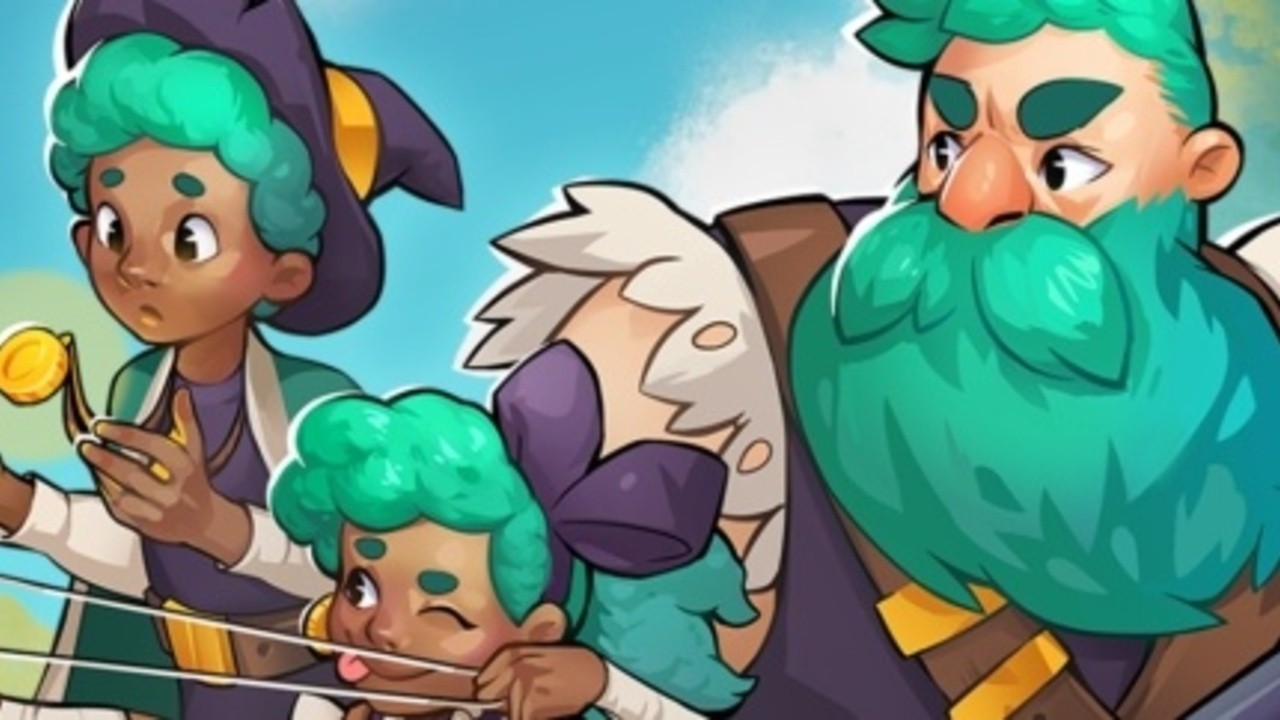
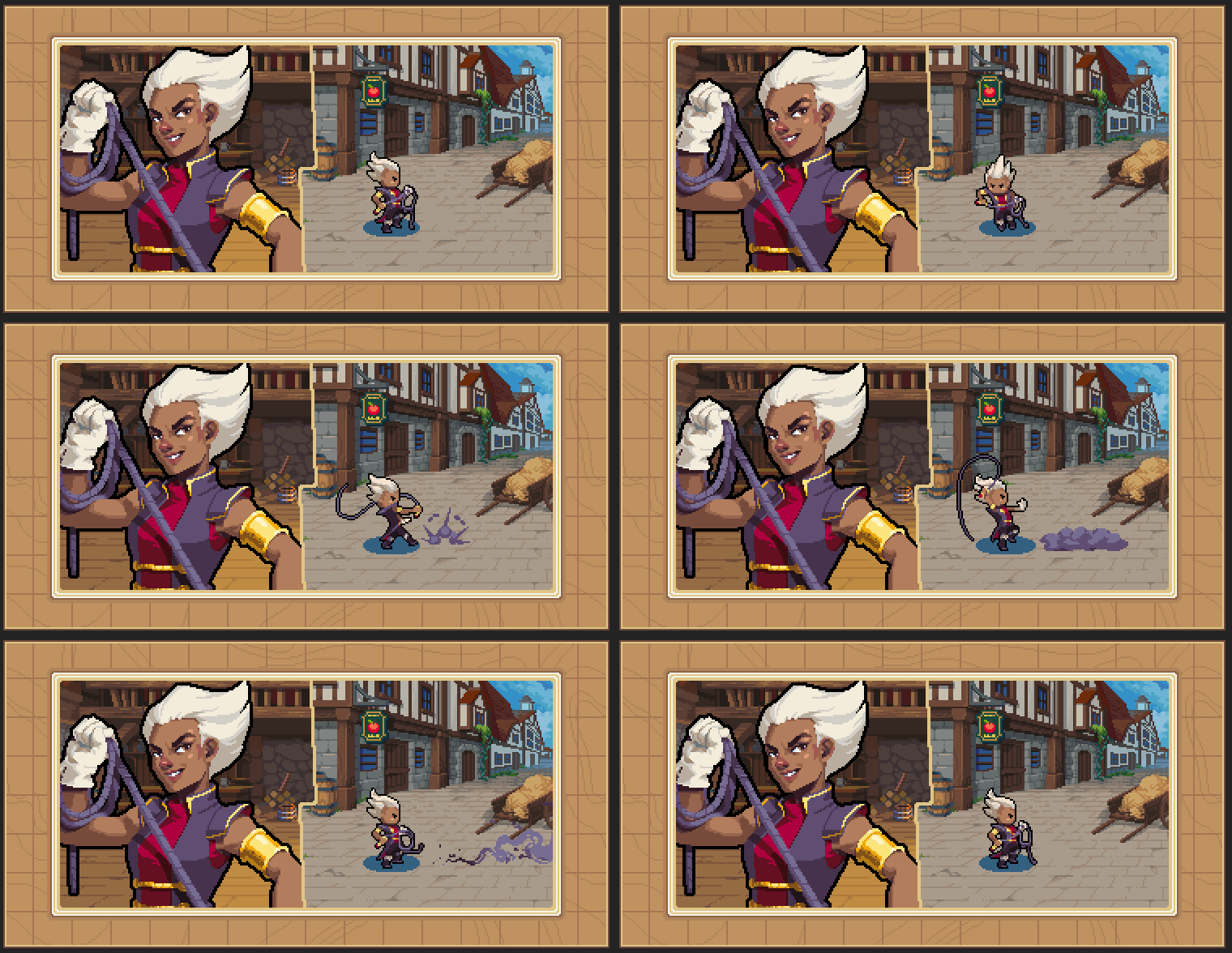
This new content will allow you to take control of the mighty Wulfar, the trouble-making twins Errol and Orla, and the maleficent Vesper. You’ll also gain access to two new units (Thieves & Riflemen), new arcade missions, a new volcano biome, updates to the custom editor, Outlaw music tracks and a number of online updates:
Competitive online Quick Play maps, including some of the community’s most competitive maps as voted for by the Groove of War team
Public and Private Multiplayer Lobbies – you can now also play custom campaigns online!
Visit the Wargroove website for more information about the balance and online changes. Will you be revisiting Wargroove to try out this free DLC when it arrives? Post a comment below.
Review: Arc of Alchemist – One Of The Worst RPGs To Hit Switch So Far
Say what you will about the overall quality of its output, but never let it be said that Compile Heart doesn’t love to make RPGs. The studio – best known for its successful Hyperdimension Neptunia series – has always been prolific, to say the least, but alas, it’s also developed a reputation for putting out many ‘filler’ RPGs that generally aren’t worth your time. Unfortunately, this latest release, Arc of Alchemist, falls in that category. There are some good ideas on display in Arc of Alchemist, but it notably fails to execute any of them in a meaningful or worthwhile way, making for a forgettable and easily skippable release.
The story takes place in a Mad Max-esque future in which the last remaining pockets of humanity struggle to survive in a barren, sandy wasteland. Quinn Bravesford – the sole wielder of a mysterious weapon called the “Lunagear” – acts as the main character, captaining a team of forgettable stereotypes that must traipse deep into the wastes in search of a fabled “Great Power” that will somehow pull back the world from the brink and put humanity on a safe path to the future. Unfortunately, that brief summary is about as deep as the narrative gets; there’s scarcely anything here in the way of effective characterization, plot twists, or generally effective storytelling.
For one thing, you begin Arc of Alchemist with your entire team already assembled and already partway into their fateful journey, and the narrative simply doesn’t bother explaining who anybody is or how they know each other. ‘In Medias Res’ plots like this can certainly work in RPGs, but some legwork has to be put in somewhere that gives the player context for the relationships at play and such effort is kept to an absolute minimum in Arc of Alchemist.
Failing the characterization on such a foundational level as this then has the snowball effect of undermining one’s investment in the rest of the plot, which is earnestly told with such a painfully angsty, weight-of-the-world tone that it’s hard not to roll one’s eyes at least once per cutscene. “How Ironic. Our souls are as dry as the desert that surrounds us,” drones Quinn in yet another scene where her quasi-suicidal inner monologue broods. Ugh. Mercifully, a little more levity is sometimes introduced in brief scenes that randomly play every time you return to base (more on that later), but it’s no exaggeration to say that the storytelling in Arc of Alchemist just doesn’t work.
While not nearly as painful to deal with as the plot, Arc of Alchemist’s gameplay, unfortunately, doesn’t do a whole lot to inspire confidence. Your whole adventure consists of moving between different Event Points to trigger cutscenes and story fights, while the bits in-between allow you to explore the admittedly small handful of simple maps. Exploration, then, mostly consists of running down a few side paths to open up a treasure chest or two, and maybe along the way there’s a simple environmental puzzle to solve with your Lunagear. Using this tool, you can do things like cast fireballs to melt ice or conjure up cubes that you can use to jump to higher places. It’s nice that the developers thought to include simple puzzles to make exploration a little more varied, but the word “puzzle” is stretching it given how straightforward these obstacles are. On occasion, the rewards for exploring can almost feel worth the effort, but on the whole, it feels like the exploration was put in just to pad out the length of an already rather short game.
As you move through each map, you’re sure to occasionally be accosted by some monsters, none of which put up meaningful resistance to your party. Combat takes the shape of a live-action hack ‘n’ slash, where you can bore through enemies using various combos and special drops from your Lunagear, such as a placeable sentinel that spits magic attacks at nearby enemies. Most enemies put up utterly pathetic resistance to your team, something which is only further underlined by how characters seem to level up after pretty much every enemy encounter.
The difficulty dramatically spikes, however, at many boss encounters, where you suddenly hit a brick wall and your team gets easily wiped. Such encounters can usually then be overcome by a bit of grinding, but the key thing here is how mindless the whole combat system turns out to be. There’s no real skill or tactics involved in battles; it’s just a simple matter of mashing attacks and occasionally dodging. Some flavour is introduced by how each weapon has its own unique attacks, but there’s otherwise very little in the way of incentive or, more bluntly, fun to be found in battling monsters.
The other half of gameplay is found in a base-building, resource management sub-game that you can access from various crystals dotted around the maps. Back at base, you can do all the housekeeping things like tweaking your team and outfitting them with new gear, but the main draw here is the fact that the base can be expanded by spending a little cash and using the resource you collect out in the field. Building and upgrading structures opens new shops and expands their effectiveness, while placing certain facilities in close proximity to each other can net you even more bonuses. Like everything else in Arc of Alchemist, this base-building gameplay proves to be rather shallow in its implementation, but it does introduce a nice break from the otherwise ho-hum roaming of the endless deserts.
Arc of Alchemist would be bad enough with its passable story and bland gameplay, but we feel that special mention needs to be made about the atrocious performance, docked or handheld. Arc of Alchemist is a visually simple game to begin with, featuring chunky models and muddy textures galore, and yet it somehow manages to deliver these middling visuals to you at a ‘nice and cinematic’ 20 FPS at the absolute best. Realistically, whether you’re simply running across the map or fighting enemies, your experience will usually be hanging somewhere in the sub-15 FPS range. Given the performance, we were amazed that we didn’t encounter any crashes or bugs during our time, but let it be known that Arc of Alchemist struggles every single step of the way and certainly deserves to be in the running for worst performing RPG on the Switch.
It bears mentioning that this English release of Arc of Alchemist comes with a few bonuses that have been included with the overall package; none of them are game-changing but they are nonetheless nice to have. The headlining feature here is that you can play as your other party members directly, and the other additions are the inclusion of some reworks to the UI and the base-building mechanics. Though you won’t probably notice the latter two features at all, other playable characters do help to pad out the replayability somewhat, although even your enjoyment of this is hindered by how you have to go all the way back to base each time you want to play as someone else. Unless you played the Japanese release when it came out last year, these additions probably won’t make much of a difference, but it’s nice to see the developers put in the extra time to make this version a little more playable, even if it doesn’t fix the game’s many other sins.
Conclusion
In sum, Arc of Alchemist is not worth your time. We’ll say it again just in case the people in the back didn’t hear: Arc of Alchemist is not worth your time. The story is barely serviceable, the gameplay is middling and uninspired at its very best, and the graphics often look like they could’ve been pulled from an early 3DS game. That would all be damning enough if it at least ran well, but Arc of Alchemist in fact runs at laughable framerates all the way through. That would be damning enough, but then the developers have the gall to ask you to pony up forty bucks (at time of writing) for this mess. The Switch library is packed to bursting with loads of fantastic RPGs that are each sure to deliver a great experience. This is definitely not one of them. Please, don’t waste your money on Arc of Alchemist.
"Honestly, it's been a bit of a hard week," J. Allen Brack said during an Activision Blizzard earnings call. "Our community has come to expect really amazing things from us, and we've heard from them that we have not achieved that bar."
Brack went on to say that Blizzard plans to support Reforged in the future with updates, while it also aims to communicate with fans about the next steps for improving the game.
"We stand behind our games and have consistently shown that we not only support them but we continue to build on them, even after launch. We're committed to doing that here as well," Brack said.
The executive is repeating what Blizzard's own Randy "Kaivax" Jordan said earlier this week. Jordan took to the company's forums to discuss Blizzard's plans for Reforged, specifying that the team is "fully committed to supporting the game [and the Warcraft 3 community] for a long time to come." This includes preparing a patch scheduled to go live later this week that will address mismatched color and shading modules, portrait animations and audio bugs, UI fixes, and more.
Many fans have noted that certain cutscenes failed to live up to what Blizzard had previously shown during BlizzCon 2018. Jordan said the lack of re-animated cutscenes was, essentially, to keep the original spirit of Warcraft 3 intact.
"[W]e did not want the in-game cutscenes to steer too far from the original game," Jordan said. "We went a little deeper into the thought process behind that at the show, but the main takeaway is that the campaigns tell one of the classic stories in Warcraft history, and we want to preserve the true spirit of Warcraft 3 and allow players to relive these unforgettable moments as they were (albeit rebuilt with new animations and the higher fidelity art)."
"[W]e want to say we're sorry to those of you who didn't have the experience you wanted, and we'd like to share our plans for what’s coming next."
Posted by: xSicKxBot - 02-07-2020, 06:09 AM - Forum: Python
- No Replies
Python Regex And Operator [Tutorial + Video]
This tutorial is all about the AND operator of Python’s re library. You may ask: what? (And rightly so.)
Sure, there’s the OR operator (example: 'iPhone|iPad'). But what’s the meaning of matching one regular expression AND another?
There are different interpretations for the AND operator in a regular expression (regex):
Ordered: Match one regex pattern after another. In other words, you first match pattern A AND then you match pattern B. Here the answer is simple: you use the pattern AB to match both.
Unordered: Match multiple patterns in a string but in no particular order (source). In this case, you’ll use a bag-of-words approach.
I’ll discuss both in the following. (You can also watch the video as you read the tutorial.)
Ordered Python Regex AND Operator
Given a string. Say, your goal is to find all substrings that match string 'iPhone', followed by string 'iPad'. You can view this as the AND operator of two regular expressions. How can you achieve this?
The straightforward AND operation of both strings is the regular expression pattern iPhoneiPad.
In the following example, you want to match pattern ‘aaa’ and pattern ‘bbb’—in this order.
>>> import re

>>> text = 'aaabaaaabbb'

>>> A = 'aaa'

>>> B = 'bbb'

>>> re.findall(A+B, text)

['aaabbb']

>>>
You use the re.findall() method. In case you don’t know it, here’s the definition from the Finxter blog article:
The re.findall(pattern, string) method finds all occurrences of the pattern in the string and returns a list of all matching substrings.
The first argument is the pattern A+B which evaluates to 'aaabbb'. There’s nothing fancy about this: each time you write a string consisting of more than one character, you essentially use the ordered AND operator.
The second argument is the text 'aaabaaaabbb' which you want to search for the pattern.
The result shows that there’s a matching substring in the text: 'aaabbb'.
Unordered Python Regex AND Operator
But what if you want to search a given text for pattern A AND pattern B—but in no particular order? In other words: if both patterns appear anywhere in the string, the whole string should be returned as a match.
Now this is a bit more complicated because any regular expression pattern is ordered from left to right. A simple solution is to use the lookahead assertion (?.*A) to check whether regex A appears anywhere in the string. (Note we assume a single line string as the .* pattern doesn’t match the newline character by default.)
Let’s first have a look at the minimal solution to check for two patterns anywhere in the string (say, patterns 'hi' AND 'you').
>>> import re

>>> pattern = '(?=.*hi)(?=.*you)'

>>> re.findall(pattern, 'hi how are yo?')

[]

>>> re.findall(pattern, 'hi how are you?')

['']
In the first example, both words do not appear. In the second example, they do.
But how does the lookahead assertion work? You must know that any other regex pattern “consumes” the matched substring. The consumed substring cannot be matched by any other part of the regex.
Think of the lookahead assertion as a non-consuming pattern match. The regex engine goes from the left to the right—searching for the pattern. At each point, it has one “current” position to check if this position is the first position of the remaining match. In other words, the regex engine tries to “consume” the next character as a (partial) match of the pattern.
The advantage of the lookahead expression is that it doesn’t consume anything. It just “looks ahead” starting from the current position whether what follows would theoretically match the lookahead pattern. If it doesn’t, the regex engine cannot move on.
A simple example of lookahead. The regular expression engine matches (“consumes”) the string partially. Then it checks whether the remaining pattern could be matched without actually matching it.
Let’s go back to the expression (?=.*hi)(?=.*you) to match strings that contain both 'hi' and 'you'. Why does it work?
The reason is that the lookahead expressions don’t consume anything. You first search for an arbitrary number of characters .*, followed by the word hi. But because the regex engine hasn’t consumed anything, it’s still at the same position at the beginning of the string. So, you can repeat the same for the word you.
Note that this method doesn’t care about the order of the two words:
>>> import re

>>> pattern = '(?=.*hi)(?=.*you)'

>>> re.findall(pattern, 'hi how are you?')

['']

>>> re.findall(pattern, 'you are how? hi!')

['']
No matter which word "hi" or "you" appears first in the text, the regex engine finds both.
You may ask: why’s the output the empty string? The reason is that the regex engine hasn’t consumed any character. It just checked the lookaheads. So the easy fix is to consume all characters as follows:
Now, the whole string is a match because after checking the lookahead with '(?=.*hi)(?=.*you)', you also consume the whole string '.*'.
Python Regex Not
How can you search a string for substrings that do NOT match a given pattern? In other words, what’s the “negative pattern” in Python regular expressions?
The answer is two-fold:
If you want to match all characters except a set of specific characters, you can use the negative character class [^...].
If you want to match all substrings except the ones that match a regex pattern, you can use the feature of negative lookahead(?!...).
Here’s an example for the negative character class:
>>> import re

>>> re.findall('[^a-m]', 'aaabbbaababmmmnoopmmaa')

['n', 'o', 'o', 'p']
And here’s an example for the negative lookahead pattern to match all “words that are not followed by words”:
The negative lookahead (?![a-z]+) doesn’t consume (match) any character. It just checks whether the pattern [a-z]+ does NOT match at a given position. The only times this happens is just before the empty space and the end of the string.
[Collection] What Are The Different Python Re Quantifiers?
The “and”, “or”, and “not” operators are not the only regular expression operators you need to understand. So what are other operators?
Next, you’ll get a quick and dirty overview of the most important regex operations and how to use them in Python. Here are the most important regex quantifiers:
Quantifier
Description
Example
.
The wild-card (‘dot’) matches any character in a string except the newline character ‘n’.
Regex ‘…’ matches all words with three characters such as ‘abc’, ‘cat’, and ‘dog’.
*
The zero-or-more asterisk matches an arbitrary number of occurrences (including zero occurrences) of the immediately preceding regex.
Regex ‘cat*’ matches the strings ‘ca’, ‘cat’, ‘catt’, ‘cattt’, and ‘catttttttt’.
?
The zero-or-one matches (as the name suggests) either zero or one occurrences of the immediately preceding regex.
Regex ‘cat?’ matches both strings ‘ca’ and ‘cat’ — but not ‘catt’, ‘cattt’, and ‘catttttttt’.
+
The at-least-one matches one or more occurrences of the immediately preceding regex.
Regex ‘cat+’ does not match the string ‘ca’ but matches all strings with at least one trailing character ‘t’ such as ‘cat’, ‘catt’, and ‘cattt’.
^
The start-of-string matches the beginning of a string.
Regex ‘^p’ matches the strings ‘python’ and ‘programming’ but not ‘lisp’ and ‘spying’ where the character ‘p’ does not occur at the start of the string.
$
The end-of-string matches the end of a string.
Regex ‘py$’ would match the strings ‘main.py’ and ‘pypy’ but not the strings ‘python’ and ‘pypi’.
A|B
The OR matches either the regex A or the regex B. Note that the intuition is quite different from the standard interpretation of the or operator that can also satisfy both conditions.
Regex ‘(hello)|(hi)’ matches strings ‘hello world’ and ‘hi python’. It wouldn’t make sense to try to match both of them at the same time.
AB
The AND matches first the regex A and second the regex B, in this sequence.
We’ve already seen it trivially in the regex ‘ca’ that matches first regex ‘c’ and second regex ‘a’.
Note that I gave the above operators some more meaningful names (in bold) so that you can immediately grasp the purpose of each regex. For example, the ‘^’ operator is usually denoted as the ‘caret’ operator. Those names are not descriptive so I came up with more kindergarten-like words such as the “start-of-string” operator.
We’ve already seen many examples but let’s dive into even more!
import re text = ''' Ha! let me see her: out, alas! he's cold: Her blood is settled, and her joints are stiff; Life and these lips have long been separated: Death lies on her like an untimely frost Upon the sweetest flower of all the field. ''' print(re.findall('.a!', text)) '''

Finds all occurrences of an arbitrary character that is

followed by the character sequence 'a!'.

['Ha!'] ''' print(re.findall('is.*and', text)) '''

Finds all occurrences of the word 'is',

followed by an arbitrary number of characters

and the word 'and'.

['is settled, and'] ''' print(re.findall('her:?', text)) '''

Finds all occurrences of the word 'her',

followed by zero or one occurrences of the colon ':'.

['her:', 'her', 'her'] ''' print(re.findall('her:+', text)) '''

Finds all occurrences of the word 'her',

followed by one or more occurrences of the colon ':'.

['her:'] ''' print(re.findall('^Ha.*', text)) '''

Finds all occurrences where the string starts with

the character sequence 'Ha', followed by an arbitrary

number of characters except for the new-line character. Can you figure out why Python doesn't find any?

[] ''' print(re.findall('n$', text)) '''

Finds all occurrences where the new-line character 'n'

occurs at the end of the string.

['n'] ''' print(re.findall('(Life|Death)', text)) '''

Finds all occurrences of either the word 'Life' or the

word 'Death'.

['Life', 'Death'] '''
In these examples, you’ve already seen the special symbol ‘n’ which denotes the new-line character in Python (and most other languages). There are many special characters, specifically designed for regular expressions. Next, we’ll discover the most important special symbols.
Related Re Methods
There are seven important regular expression methods which you must master:
The re.findall(pattern, string) method returns a list of string matches. Read more in our blog tutorial.
The re.search(pattern, string) method returns a match object of the first match. Read more in our blog tutorial.
The re.match(pattern, string) method returns a match object if the regex matches at the beginning of the string. Read more in our blog tutorial.
The re.fullmatch(pattern, string) method returns a match object if the regex matches the whole string. Read more in our blog tutorial.
The re.compile(pattern) method prepares the regular expression pattern—and returns a regex object which you can use multiple times in your code. Read more in our blog tutorial.
The re.split(pattern, string) method returns a list of strings by matching all occurrences of the pattern in the string and dividing the string along those. Read more in our blog tutorial.
The re.sub(The re.sub(pattern, repl, string, count=0, flags=0) method returns a new string where all occurrences of the pattern in the old string are replaced by repl. Read more in our blog tutorial.
These seven methods are 80% of what you need to know to get started with Python’s regular expression functionality.
Where to Go From Here?
You’ve learned everything you need to know about the Python Regex AND Operator.
Summary:
There are different interpretations for the AND operator in a regular expression (regex):
Ordered: Match one regex pattern after another. In other words, you first match pattern A AND then you match pattern B. Here the answer is simple: you use the pattern AB to match both.
Unordered: Match multiple patterns in a string but in no particular order. In this case, you’ll use a bag-of-words approach.
Want to earn money while you learn Python? Average Python programmers earn more than $50 per hour. You can certainly become average, can’t you?
Join the free webinar that shows you how to become a thriving coding business owner online!