In this tutorial, we’ll have a quick look at each of them and give you a link to a more detailed resource so you can set up your Solidity compiler as quickly and efficiently as possible.
Video: For your convenience, I embedded the video tutorial provided by our Solidity expert Matija so you don’t even need to leave this page.
Without further ado, let’s get started!
Method 1: Install Solidity Compiler via npm
As you watch the video or go through this tutorial, feel free to download the following slides as well — for your convenience:
Before we go into details about the Docker installation of solc, let’s first get introduced to what Docker is.
Docker is an open platform for developing, shipping, and running applications… Docker provides the ability to package and run an application in a loosely isolated environment called a container… Containers are lightweight and contain everything needed to run the application, so you do not need to rely on what is currently installed on the host.
There are some parts of the description I’ve deliberately left out (separated by the symbol …) because they’re not essential to our understanding of the technology.
Method 3: Install Solidity Compiler via Source Code Compilation
This is a very complex way to install the Solidity compiler and I wouldn’t recommend it for most people. Due to the complexity, I’ll only give a quick overview of the associated article (tutorial).
Feel free to dive into it after scanning through these three contributions:
First, we listed and explained the software prerequisites needed for compiling a Solidity compiler. In some cases, we reached a complete explanation, and in others, we just gave a brief introductory explanation and announced an entire topic, such as in the case of the Satisfiability Modulo Theorem, SMT.
Second, we installed the prerequisites by following the first part of a step-by-step tutorial. All the examples have been checked and validated at the time of writing the article, so I expect that we’ll be able to follow them without issues. We also concluded that a compilation process can in some cases take a substantial amount of time; it took almost 40 minutes to compile the z3 SMT solver on my machine.
Third, we compiled a Solidity compiler following a step-by-step tutorial. I explained for each command example to broaden our learning process even outside of the strict scope of Solidity, to Linux (as far as we needed to go). Finally, when the compilation ended, we confirmed that our home-compiled Solidity compiler works at least as charming as the ones we’ve simply downloaded or installed in a precompiled state.
Method 4: Install Solidity Compiler via Static Binary and Linux Packages
You’ll just download the compiler’s static binary, or in short, binary, and simply run it, without any additional prerequisites or preparations required.
First, downloading the file solc-static-linux and giving it an executable privilege:
$ cd ~ && wget https://github.com/ethereum/solidity/releases/download/v0.8.16/solc-static-linux
$ chmod +x ~/solc-static-linux
Second, running solc:
$ ~/solc-static-linux 1_Storage.sol -o output – abi – bin
Compiler run successful. Artifact(s) can be found in directory "output".
When checking our solidity_src directory, we’ll discover a new directory output, created by the Solidity compiler, containing both .abi and .bin files.
Solidity is the programming language of the future.
It gives you the rare and sought-after superpower to program against the “Internet Computer”, i.e., against decentralized Blockchains such as Ethereum, Binance Smart Chain, Ethereum Classic, Tron, and Avalanche – to mention just a few Blockchain infrastructures that support Solidity.
In particular, Solidity allows you to create smart contracts, i.e., pieces of code that automatically execute on specific conditions in a completely decentralized environment. For example, smart contracts empower you to create your own decentralized autonomous organizations (DAOs) that run on Blockchains without being subject to centralized control.
NFTs, DeFi, DAOs, and Blockchain-based games are all based on smart contracts.
This course is a simple, low-friction introduction to creating your first smart contract using the Remix IDE on the Ethereum testnet – without fluff, significant upfront costs to purchase ETH, or unnecessary complexity.
Also, you’ll learn how to solve a variant of this challenge.
Bonus challenge: Find only the length of the shortest list in the list of lists.
Here are some examples:
[[1], [2, 3], [4, 5, 6]]1
[[1, [2, 3], 4], [5, 6], [7]]1
[[[1], [2], [3]], [4, 5, [6]], [7, 8, 9, 10]]3
So without further ado, let’s get started!
Method 1: min(lst, key=len)
Use Python’s built-in min() function with a key argument to find the shortest list in a list of lists. Call min(lst, key=len) to return the shortest list in lst using the built-inlen() function to associate the weight of each list, so that the shortest inner list will be the minimum.
A beautiful one-liner solution, isn’t it? Let’s have a look at a slight variant to check the length of the shortest list instead.
Method 2: len(min(lst, key=len))
To get the length of the shortest list in a nested list, use the len(min(lst, key=len)) function. First, you determine the shortest inner list using the min() function with the key argument set to the len() function. Second, you pass this shortest list into the len() function itself to determine the minimum.
A Pythonic way to check the length of the shortest list is to combine a generator expression or list comprehension with the min() function without key. For instance, min(len(x) for x in lst) first turns all inner list into length integer numbers and passes this iterable into the min() function to get the result.
Here’s this approach on the same examples as before:
A not so Pythonic but still fine approach is to iterate over all lists in a for loop, check their length using the len() function, and compare it against the currently shortest list stored in a separate variable. After the termination of the loop, the variable contains the shortest list.
Here’s a simple example:
def get_shortest_list(lst): shortest = lst[0] if lst else None for x in lst: if len(x) < len(shortest): shortest = x return shortest print(get_shortest_list([[1], [2, 3], [4, 5, 6]]))
# [1] print(get_shortest_list([[1, [2, 3], 4], [5, 6], [7]]))
# [7] print(get_shortest_list([[[1], [2], [3]], [4, 5, [6]], [7, 8, 9, 10]]))
# [[1], [2], [3]] print(get_shortest_list([]))
# None
So many lines of code! At least does the approach also work when passing in an empty list due to the ternary operator used in the first line.
lst[0] if lst else None
If you need a refresher on the ternary operator, you should check out our blog tutorial.
Note: If you need the length of the shortest list, you could simply replace the last line of the function with return len(shortest) , and you’re done!
Summary
You have learned about four ways to find the shortest list and its length from a Python list of lists (nested list):
Method 1: min(lst, key=len)
Method 2: len(min(lst, key=len))
Method 3: min(len(x) for x in lst)
Method 4: Naive For Loop
I hope you found the tutorial helpful, if you did, feel free to consider joining our community of likeminded coders—we do have lots of free training material!
This article will show you how to delete a line from a file in Python.
To make it more interesting, we have the following running scenario:
Rivers Clothing has a flat text file, rivers_emps.txt containing employee data. What happens if an employee leaves? They would like you to write code to resolve this issue.
Contents of rivers_emps.txt
100:Jane Smith
101:Daniel Williams
102:Steve Markham
103:Howie Manson
104:Wendy Wilson
105:Anne McEvans
106:Bev Doyle
107:Hal Holden
108:Mich Matthews
109:Paul Paulson
Question: How would we write code to remove this line?
We can accomplish this task by one of the following options:
This example uses List Comprehension to remove a specific line from a flat text file.
orig_lines = [line.strip() for line in open('rivers_emps.txt')]
new_lines = [l for l in orig_lines if not l.startswith('102')] with open('rivers_01.txt', 'w') as fp: print(*new_lines, sep='\n', file=fp)
The above code uses List Comprehension to read in the contents of a flat text file to a List, orig_lines. If output to the terminal, the following displays.
Then, List Comprehension is used again to append each element to a new List only if the element does not start with 102. If output to the terminal, the following displays.
As you can see, the element starting with 102 has been removed.
Next, a new file, rivers_01.txt, is opened in write (w) mode and the List created above is written to the file with a newline (\n) character appended to each line. The contents of the file are shown below.
100:Jane Smith
101:Daniel Williams
103:Howie Manson
104:Wendy Wilson
105:Anne McEvans
106:Bev Doyle
107:Hal Holden
108:Mich Matthews
109:Paul Paulson
orig_lines = [line.strip() for line in open('rivers_emps.txt')]
new_lines = orig_lines[0:2] + orig_lines[3:] with open('rivers_02.txt', 'w') as fp: fp.write('\n'.join(new_lines))
The above code uses List Comprehension to read in the contents of a flat text file to a List, orig_lines. If output to the terminal, the following displays.
Then Slicing is used to extract all elements, except element two (2). The results save to new_lines. If output to the terminal, the following displays.
100:Jane Smith
101:Daniel Williams
103:Howie Manson
104:Wendy Wilson
105:Anne McEvans
106:Bev Doyle
107:Hal Holden
108:Mich Matthews
109:Paul Paulson
As you can see, element two (2) has been removed.
Next, a new file, rivers_02.txt, is opened in write (w) mode and the List created above is written to the file with a newline (\n) character appended to each line. The contents of the file are shown below.
100:Jane Smith
101:Daniel Williams
103:Howie Manson
104:Wendy Wilson
105:Anne McEvans
106:Bev Doyle
107:Hal Holden
108:Mich Matthews
109:Paul Paulson
Before moving forward, please ensure that the NumPy library is installed to ensure this code runs error-free.
import numpy as np orig_lines = [line.strip() for line in open('rivers_emps.txt')]
new_lines = orig_lines[0:2] + orig_lines[3:] np.savetxt('rivers_03.txt', new_lines, delimiter='\n', fmt='%s')
The following line uses List Comprehension to read the contents of a flat text file to the List, orig_lines. If output to the terminal, the following displays.
Then Slicing is applied to extract all elements, except element two (2). The results save to new_lines. If output to the terminal, the following displays.
100:Jane Smith
101:Daniel Williams
103:Howie Manson
104:Wendy Wilson
105:Anne McEvans
106:Bev Doyle
107:Hal Holden
108:Mich Matthews
109:Paul Paulson
As you can see, element two (2) has been removed.
The last code line calls np.savetxt() and passes it three (3) arguments:
100:Jane Smith
101:Daniel Williams
103:Howie Manson
104:Wendy Wilson
105:Anne McEvans
106:Bev Doyle
107:Hal Holden
108:Mich Matthews
109:Paul Paulson
Method 4: Use pop()
This example uses the pop() function to remove a specific line from a flat text file.
import numpy as np orig_lines = [line.strip() for line in open('rivers_emps.txt')]
orig_lines.pop(2)
np.savetxt('rivers_04.txt', orig_lines, delimiter='\n', fmt='%s')
The following line uses List Comprehension to read in the contents of a flat text file to the List, orig_lines. If output to the terminal, the following displays.
Then, the pop() method is called and passed one (1) argument, the element’s index to remove.
In this case, it is the second element.
If this List was output to the terminal, the following would display.
100:Jane Smith
101:Daniel Williams
103:Howie Manson
104:Wendy Wilson
105:Anne McEvans
106:Bev Doyle
107:Hal Holden
108:Mich Matthews
109:Paul Paulson
As shown in Method 3, the results save to a flat text file. In this case, rivers_04.txt. The contents are the same as in the previous examples.
Note: The pop() function removes the appropriate index and returns the contents to capture if necessary.
Method 5: Use remove()
This example uses the remove()function to remove a specific line from a flat text file.
import numpy as np orig_lines = [line.strip() for line in open('rivers_emps.txt')]
orig_lines.remove('102:Steve Markham')
np.savetxt('rivers_05.txt', orig_lines, delimiter='\n', fmt='%s')
This code works exactly like the code in Method 4. However, instead of passing a location of the element to remove, this function requires the contents of the entire line you to remove.
Then, the remove() function is called and passed one (1) argument, the index to remove. In this case, it is the second element. If this List was output to the terminal, the following would display.
100:Jane Smith
101:Daniel Williams
103:Howie Manson
104:Wendy Wilson
105:Anne McEvans
106:Bev Doyle
107:Hal Holden
108:Mich Matthews
109:Paul Paulson
As shown in the previous examples, the results save to a flat text file. In this case, rivers_05.txt.
Bonus: Remove row(s) from a DataFrame
CSV files are also known as flat-text files. This code shows you how to easily remove single or multiple rows from a CSV file
Finxter Challenge Find 2 Additional Ways to Remove Lines
Summary
This article has provided five (5) ways to delete a line from a file to select the best fit for your coding requirements.
Good Luck & Happy Coding!
Programmer Humor – Blockchain
“Blockchains are like grappling hooks, in that it’s extremely cool when you encounter a problem for which they’re the right solution, but it happens way too rarely in real life.”source – xkcd
Also, you’ll learn how to solve a variant of this challenge.
Bonus challenge: Find only the length of the longest list in the list of lists.
Here are some examples:
[[1], [2, 3], [4, 5, 6]]3
[[1, [2, 3], 4], [5, 6], [7]]3
[[[1], [2], [3]], [4, 5, [6]], [7, 8, 9, 10]]4
So without further ado, let’s get started!
Method 1: max(lst, key=len)
Use Python’s built-in max() function with a key argument to find the longest list in a list of lists. Call max(lst, key=len) to return the longest list in lst using the built-inlen() function to associate the weight of each list, so that the longest inner list will be the maximum.
A beautiful one-liner solution, isn’t it? Let’s have a look at a slight variant to check the length of the longest list instead.
Method 2: len(max(lst, key=len))
To get the length of the longest list in a nested list, use the len(max(lst, key=len)) function. First, you determine the longest inner list using the max() function with the key argument set to the len() function. Second, you pass this longest list into the len() function itself to determine the maximum.
A Pythonic way to check the length of the longest list is to combine a generator expression or list comprehension with the max() function without key. For instance, max(len(x) for x in lst) first turns all inner list into length integer numbers and passes this iterable into the max() function to get the result.
Here’s this approach on the same examples as before:
A not so Pythonic but still fine approach is to iterate over all lists in a for loop, check their length using the len() function, and compare it against the currently longest list stored in a separate variable. After the termination of the loop, the variable contains the longest list.
Note: If you need the length of the longest list, you could simply replace the last line of the function with return len(longest) , and you’re done!
Summary
You have learned about four ways to find the longest list and its length from a Python list of lists (nested list):
Method 1: max(lst, key=len)
Method 2: len(max(lst, key=len))
Method 3: max(len(x) for x in lst)
Method 4: Naive For Loop
I hope you found the tutorial helpful, if you did, feel free to consider joining our community of likeminded coders—we do have lots of free training material!
In the previous articles, we looked at some of the representative examples of smart contracts representing possible real-world scenarios.
Our main focus was on capturing the essence of each case, without particular attention given to the general structure, i.e. layout of the respective source files.
However, in this mini-series starting with this article, we will focus particularly on the source file layout.
The articles will continue with our tradition of going hand in hand with the official Solidity documentation, with the particular topic of our current interest available here.
Info: As we’ve reached such a nice, round number of articles on Solidity, I have a small foreword for my faithful audience.
For those of us who missed or skipped previous articles, the intent behind the content is to supplement and clarify the original documentation and even present it in a style that I find to be more appropriate to us as the audience.
Given that we come from various backgrounds, some less and some more technical, it is my permanent goal to soften the material and make it as close as possible to each reader. Sometimes, completely unannounced and unprovoked, I’ll even try and sprinkle some humor onto the content.
Will I succeed in making it funny and engaging? That’s whole another story
SPDX License Identifier
Smart contracts are somewhat a mystery to unfamiliar folks, and a mystery usually implies a certain amount of distrust. Even so, the more sensitive the subject is, the greater the amount of distrust. The best way to turn distrust into trust is to make the content in question open and available.
When we’re talking about smart contracts, the openness of a smart contract means the availability of its source code. However, making the source code available frequently triggers legal problems regarding copyright.
To alleviate these problems, the Solidity compiler instigates the use of SPDX license identifiers.
Info: SPDX stands for the Software Package Data Exchange, which is “An open standard for communicating software bill of material information, including components, licenses, copyrights, and security references. SPDX reduces redundant work by providing a common format for companies and communities to share important data, thereby streamlining and improving compliance.“
Yes, I agree, it’s a lengthy sentence, but the main takeaway ideas are a communication standard, an instrument of compliance, and a data exchange format:
SPDX is a standard used for communicating the information about the software contents;
SPDX reduces redundant work and improves compliance;
SPDX provides a common format for data sharing between companies and communities;
An SPDX license identifier should be included at the beginning of the source file, e.g.
// SPDX-License-Identifier: GPL-3.0-or-later
Although SPDX license identifiers are machine-readable, the compiler does not check if the license part of the comment is in the list of licenses allowed by SPDX.
Instead, the compiler will just include the string in the bytecode metadata.
We will touch on the subject of contract metadata in future articles, but until then, let’s just remember that there is a thing called metadata.
Info: Metadata can be loosely defined as “data/information about data”, meaning it provides more information or description of certain data.
We don’t have to specify a license or if the case is that the source code is closed-source (opposite of open-source), the recommendation is that we use a special value UNLICENSED.
The UNLICENSED value implies that usage is not allowed, i.e. there is not a corresponding item in SPDX license list; it differs from the value UNLICENSE which grants all rights to everyone.
If we as developers supply the UNLICENSE comment, we are still tied by the obligation related to licensing, i.e. we have to mention a specific license header or the original copyright holder in the source files.
Although the compiler recognizes the comment placed at any location in the source file, the recommendation, and good practice is to put it at the top of the file.
Pragmas
We’ve mentioned the pragma keyword somewhere in the first few articles, but now we’ll use the opportunity to say a few more words about it.
Pragma keyword is the element of the Solidity programming language that enables specific Solidity compiler (remember solc) features or validations, i.e. checks.
As the pragma keyword scope is its source file, we’d have to add the pragma to all our files to enable it in our whole project.
Note: A pragma from an imported file does not apply to the importer file, i.e. the file that imports the imported file.
Version Pragma
We always use a version pragma for limiting the source file(s) compilation to a specific range of compiler versions.
The intention behind this step is the prevention of incompatible changes introduced with future versions of compilers.
According to the Solidity authors, occurrences of incompatible changes are reduced to an absolute minimum, meaning that in all other cases i.e. cases of compatible changes, the changes in Solidity language semantics visibly coincide with the changes in language syntax.
To stay on the safe side, the recommendation is to study the changelog at least for releases that carry breaking changes, marked x.0.0 (major releases) or 0.x.0 (minor releases).
Info: semantic is relating to meaning in language or logic.
As in every our example so far, we’re using the version pragma as:
Note: pragma solidity ^0.x.y; allows changes that do not modify the left-most non-zero digit in the [major, minor, patch] tuple (docs).
The following line instructs the compilation process to use a compiler with the lowest version of 0.5.2 and with the highest version not exceeding 0.6.0 (this condition is incorporated by a ^ symbol):
pragma solidity ^0.5.2;
By recalling the article about semantic versioning, we’ll remember that no breaking changes are introduced until a minor version of 0.6.0 (in this specific case), therefore we can be sure that our code will compile just as we expect it to.
Also, by using the line above, we didn’t lock on the specific version, so the last part of the version label, i.e. the patch number can increase, leaving enough space for the compiler bug fixes.
Besides this most common way of expressing the allowed versions of the compiler, even more, complex rules are available by using the syntax available here.
Note: version pragma just instructs the compiler to self-check if it is compliant with the version required by the source file. In case of a mismatch, the compiler will throw an (in)appropriate error. I mean, who ever saw an appropriate error, anyways?
Conclusion
With this introductory article to the topic of the layout of a Solidity source file, we covered a few very light concepts, including SPDX license identifier, reintroduced the pragma keyword, and retouched the version pragma.
In the next article, we will continue with the next two pragmas and other, very interesting topics.
In the SPDX License Identifier section, we were asking around inconspicuously about the SPDX. We wanted to find out what it is, how and when it is used, and how it can make our developing life easier.
In the Pragmas section, we proudly reminded ourselves of the knowledge from long ago, why do we have to slam a pragma at the beginning of each source file?
If at least they looked nice… Starting our coding masterpieces with a dangling comment seemed like a skewed joke (like most of mine do) – until we learned why
Problem Formulation: Given a Python set. How to convert it to a tuple? And how to convert the tuple back to a set?
There are three main ways:
Method 1: To convert a Python set to a tuple, use the tuple(my_set) function.
Method 2: To convert a Python tuple to a set, use the set(my_tuple) function.
Method 3: To convert a Python tuple of mutable elements to a set, use the expression set(tuple(x) for x in my_tuple) to avoid a TypeError.
I’ll also give you a bonus method 4 that shows you what to do to retain the ordering information when converting a tuple to a set—so keep reading!
Method 1: Convert Set to Tuple with tuple()
To convert a set to a tuple, pass the set into the tuple() function. This is a built-in Python function, so you don’t need to import or install any library to use it. The return value is a new tuple from the values in the set.
Here’s an example where you convert the set {1, 2, 3} to a tuple (1, 2, 3):
By the way, here’s an explainer video on this function:
Method 2: Convert Tuple to Set with set()
To convert a tuple to a set, pass the tuple into the set() function. This is a built-in Python function, so you don’t need to import or install any library. The return value is a new set from the values in the tuple.
Here’s an example where you convert the tuple (1, 2, 3) to a set {1, 2, 3}:
Problem: However, the conversion process from a tuple to set doesn’t always work because if you try to convert a tuple of mutable values, Python will raise the TypeError: unhashable type!
Read on to learn more about this problem—and how to resolve it easily:
Method 3: Convert Tuple to Set with Set Comprehension
A Python set is an unordered collection of unique immutable elements. Each element must define explicitly or implicitly the __hash__() dunder method, i.e., must be hashable.
If you attempt to convert a tuple of mutable elements (e.g., lists) to a set, Python will raise an error such as the TypeError: unhashable type: 'list':
In this case, you can use set comprehension to convert each inner tuple element to an immutable type. For example, the expression set(tuple(x) for x in my_tuple) converts each inner list to a tuple. The result is a set of immutable tuples.
Here’s the solution to this problem in a minimal code example:
my_tuple = ([1, 2], [3, 4], [5, 6])
my_set = set(tuple(x) for x in my_tuple)
print(my_set)
# {(1, 2), (3, 4), (5, 6)}
The final “bonus” section introduces another elegant way to retain the ordering information in a set:
Bonus Method 4: Enumerate Elements
Sometimes, you want to associate each set or tuple element with a specific numerical “index” value, i.e., a unique integer identifier. The enumerate() method to the rescue!
Use tuple(enumerate(my_set)) to convert a set to an enumerated tuple.
Use set(enumerate(my_tuple)) to convert a tuple to an enumerated set.
The result is the respective container data structure with (identifier, value) tuples:
Especially in the case where you convert a tuple to a set, this makes a lot of sense because you can retain the information on the ordering of elements that would be otherwise lost after converting to a set.
Thanks for reading the whole article, my friend! You can join us here (we have cheat sheets too):
To find the longest string in a given NumPy array, say arr, you can use the max(arr, key=len) function that determines the maximum by comparing the length of the array elements using the len() function as a key for comparison.
import numpy as np arr = np.array(['Alice', 'Bob', 'Carl'])
print(max(arr, key=len))
# Alice
You can find more about the powerful max() function in our detailed blog tutorial:
To find the length of the longest string in a NumPy array arr, use the max(arr, key=len) function to obtain the string with the maximum length and then pass this max string into the len() function to obtain the number of characters of the max string.
len(max(arr, key=len))
Here’s a more detailed code example of a simple 1D NumPy Array:
import numpy as np arr = np.array(['Alice', 'Bob', 'Carl']) # Print Longest String:
print(max(arr, key=len))
# Alice # Print Length of Longest String
print(len(max(arr, key=len)))
# 5
Get Longest String from NumPy Axis (2D, Column or Row)
To get the longest string from a certain NumPy array axis (e.g., row or column), first use simple NumPy slicing and indexing to get that axis (e.g., arr[0, :] to get the first row) and pass it into the max() function with the key argument set to the length function like so: max(arr[0, :], key=len).
Here’s an example to get the longest string of the first row of a 2D array:
import numpy as np arr = np.array([['Alice', 'Bob', 'Carl'], ['Ann', 'Zoe', 'Leonard']]) print(max(arr[0, :], key=len))
# Alice
Here’s an example to get the longest string of the third column of a 2D array:
print(max(arr[:, 2], key=len))
# Leonard
You get the idea.
If you want to get the longest string from the whole NumPy array, not only from a column or row or axis, first flatten it and then pass the flattened array into the max() function using the key=len argument.
Summary: You can combine images represented in the form of Numpy arrays using the concatenate function of the Numpy library as np.concatenate((numpydata_1, numpydata_2), axis=1). This combines the images horizontally. Use syntax: np.concatenate((numpydata_1, numpydata_2), axis=0) to combine the images vertically.
Problem Formulation
Consider you have two images represented as Numpy arrays of pixels. How will you combine the two images represented in the form of Numpy pixel arrays?
Combining two images that are in the form of Numpy arrays will create a new Numpy array having pixels that will represent a new combined image formed by either concatenating the two images horizontally or vertically. Let’s understand this with the help of an example:
Given: Let’s say we have two different images as given below (Both images have similar dimensions) –
img_1.JPGimg_2.JPG
When you convert them to Numpy arrays this is how you can represent the two images:
So, are you up for the challenge? Well! If it looks daunting – don’t worry. This tutorial will guide you through the techniques to solve the programming challenge. So, without further delay let us dive into the solution.
Prerequisite: To understand how the solutions to follow work it is essential to understand – “How to concatenate two Numpy arrays in Python.”
NumPy’s concatenate() method joins a sequence of arrays along an existing axis. The first couple of comma-separated array arguments are joined. If you use the axis argument, you can specify along which axis the arrays should be joined. For example, np.concatenate(a, b, axis=0) joins arrays along the first axis and np.concatenate(a, b, axis=None) joins the flattened arrays.
To learn more about concatenating arrays in Python, here’s a wonderful tutorial that will guide you through numerous methods of doing so: How to Concatenate Two NumPy Arrays?
Combine Images “Horizontally” with Numpy
Approach: The concatenate() method of the Numpy library allows you combine matrices of different images along different axes. To combine the two image arrays horizontally, you must specify the axis=1.
Code: Please go through the comments mentioned in the script in order to understand how each line of code works.
from PIL import Image
import numpy as np
# Reading the given images img_1 = Image.open('img_1.JPG')
img_2 = Image.open('img_2.JPG')
# Converting the two images into Numpy Arrays
numpydata_1 = np.asarray(img_1)
numpydata_2 = np.asarray(img_2)
# Combining the two images horizontally
horizontal = np.concatenate((numpydata_1, numpydata_2), axis=1)
# Display the horizontally combined image as a Numpy Array
print(horizontal)
# converting the combined image in the Numpy Array form to an image format
data = Image.fromarray(horizontal)
# Saving the combined image
data.save('combined_pic.png')
Here’s how the horizontally combined image looks like when saved to a file:
Wonderful! Isn’t it?
Combine Images “Vertically” with Numpy
In the previous solution, we combined the images horizontally. In this soution you will learn how to combine two images represented in the form of Numpy arrays vertically.
Approach: The idea is quite similar to the previous solution with the only difference in the axis parameter of the concatenate() method. To combine the two image arrays vertically, you must specify the axis=0.
Code:
from PIL import Image
import numpy as np
# Reading the given images
img_1 = Image.open('img_1.JPG')
img_2 = Image.open('img_2.JPG')
# Converting the two images into Numpy Arrays
numpydata_1 = np.asarray(img_1)
numpydata_2 = np.asarray(img_2)
# Combining the two images horizontally
vertical = np.concatenate((numpydata_1, numpydata_2), axis=0)
# Display the vertically combined image as a Numpy Array
print(vertical)
# converting the combined image in the Numpy Array form to an image format
data = Image.fromarray(vertical)
# Saving the combined image
data.save('combined_pic.png')
Phew! That was some coding challenge! I hope you can now successfully combine images given as Numpy arrays in both dimensions – horizontally as well as vertically. With that we come to the end of this tutorial. Please subscribe and stay tuned for more interesting tutorials and solutions in the future.
This article continues on the Solidity Smart Contract Examples series, which implements a simple, but the useful process of safe remote purchase.
Here, we’re walking through an example of a blind auction (docs).
We’ll first lay out the entire smart contract example without the comments for readability and development purposes.
Then we’ll dissect it part by part, analyze it and explain it.
Following this path, we’ll get a hands-on experience with smart contracts, as well as good practices in coding, understanding, and debugging smart contracts.
Smart Contract – Safe Remote Purchase
// SPDX-License-Identifier: GPL-3.0
pragma solidity ^0.8.4;
contract Purchase { uint public value; address payable public seller; address payable public buyer; enum State { Created, Locked, Release, Inactive } State public state; modifier condition(bool condition_) { require(condition_); _; } error OnlyBuyer(); error OnlySeller(); error InvalidState(); error ValueNotEven(); modifier onlyBuyer() { if (msg.sender != buyer) revert OnlyBuyer(); _; } modifier onlySeller() { if (msg.sender != seller) revert OnlySeller(); _; } modifier inState(State state_) { if (state != state_) revert InvalidState(); _; } event Aborted(); event PurchaseConfirmed(); event ItemReceived(); event SellerRefunded(); constructor() payable { seller = payable(msg.sender); value = msg.value / 2; if ((2 * value) != msg.value) revert ValueNotEven(); } function abort() external onlySeller inState(State.Created) { emit Aborted(); state = State.Inactive; seller.transfer(address(this).balance); } function confirmPurchase() external inState(State.Created) condition(msg.value == (2 * value)) payable { emit PurchaseConfirmed(); buyer = payable(msg.sender); state = State.Locked; } function confirmReceived() external onlyBuyer inState(State.Locked) { emit ItemReceived(); state = State.Release; buyer.transfer(value); } function refundSeller() external onlySeller inState(State.Release) { emit SellerRefunded(); state = State.Inactive; seller.transfer(3 * value); }
}
The state variables for recording the value, seller, and buyer addresses.
uint public value; address payable public seller; address payable public buyer;
For the first time, we’re introducing the enum data structure that symbolically defines the four possible states of our contract. The states are internally indexed from 0 to enum_length - 1.
enum State { Created, Locked, Release, Inactive }
The variable state keeps track of the current state. Our contract starts by default in the created state and can transition to the Locked, Release, and Inactive state.
State public state;
The condition modifier guards a function against executing without previously satisfying the condition, i.e. an expression given alongside the function definition.
The constructor is declared as payable, meaning that the contract deployment (synonyms creation, instantiation) requires sending a value (msg.value) with the contract-creating transaction.
constructor() payable {
The seller state variable is set to msg.sender address, cast (converted) to payable.
seller = payable(msg.sender);
The value state variable is set to half the msg.value, because both the seller and the buyer have to put twice the value of the item being sold/bought into the contract as an escrow agreement.
Info: “Escrow is a legal arrangement in which a third party temporarily holds money or property until a particular condition has been met (such as the fulfillment of a purchase agreement).” (source)
In our case, our escrow is our smart contract.
value = msg.value / 2;
If the value is not equally divided, i.e. the msg.value is not an even number, the function will terminate. Since the seller will always
if ((2 * value) != msg.value) revert ValueNotEven(); }
Aborting the remote safe purchase is allowed only in the Created state and only by the seller.
The external keyword makes the function callable only by other accounts / smart contracts. From the business perspective, only the seller can call the abort() function and only before the buyer decides to purchase, i.e. before the contract enters the Locked state.
function abort() external onlySeller inState(State.Created) {
Emits the Aborted event, the contract state transitions to inactive, and the balance is transferred to the seller.
emit Aborted(); state = State.Inactive;
Note: “Prior to version 0.5.0, Solidity allowed address members to be accessed by a contract instance, for example, this.balance. This is now forbidden and an explicit conversion to address must be done: address(this).balance.” (docs).
In other words, this keyword lets us access the contract’s inherited members.
Every contract inherits its members from the address type and can access these members via address(this).<a member> (docs).
seller.transfer(address(this).balance); }
The confirmPurchase() function is available for execution only in the Created state.
It enforces the rule that a msg.value must be twice the value of the purchase.
The confirmPurchase() function is also declared as payable, meaning the caller, i.e. the buyer has to send the currency (msg.value) with the function call.
The eventPurchaseConfirmed() is emitted to mark the purchase confirmation.
emit PurchaseConfirmed();
The msg.sender value is cast to payable and assigned to the buyer variable.
Info: Addresses are non-payable by design to prevent accidental payments; that’s why we have to cast an address to a payable before being able to transfer a payment.
buyer = payable(msg.sender);
The state is set to Locked as seller and buyer entered the contract, i.e., our digital version of an escrow agreement.
state = State.Locked; }
The confirmReceived() function is available for execution only in the Locked state, and only to the buyer.
Since the buyer deposited twice the value amount and withdrew only a single value amount, the second value amount remains on the contract balance with the seller’s deposit.
function confirmReceived() external onlyBuyer inState(State.Locked) {
Emits the ItemReceived() event.
emit ItemReceived();
Changes the state to Release.
state = State.Release;
Transfers the deposit to the buyer.
buyer.transfer(value); }
The refundSeller() function is available for execution only in the Release state, and only to the seller.
Since the seller deposited twice the value amount and earned a single value amount from the purchase, the contract transfers three value amounts from the contract balance to the seller.
function refundSeller() external onlySeller inState(State.Release) {
Emits the SellerRefunded() event.
emit SellerRefunded();
Changes the state to Inactive.
state = State.Inactive;
Transfers the deposit of two value amounts and the one earned value amount to the seller.
 seller.transfer(3 * value); }
}
Our smart contract example of a safe remote purchase is a nice and simple example that demonstrates how a purchase may be conducted on the Ethereum blockchain network.
The safe remote purchase example shows two parties, a seller and a buyer, who both enter a trading relationship with their deposits to the contract balance.
Each deposit amounts to twice the value of the purchase, meaning that the contract balance will hold four times the purchase value at its highest point, i.e. in the Locked state.
The height of deposits is intended to stimulate the resolution of any possible disputes between the parties, because otherwise, their deposits will stay locked and unavailable in the contract balance.
When the buyer confirms that he received the goods he purchased, the contract will transition to the Release state, and the purchase value will be released to the buyer.
The seller can now withdraw his earned purchase value with the deposit, the contract balance drops to 0 Wei, the contract transitions to the Inactive state, and the safe remote purchase concludes with execution.
The Contract Arguments
This section contains additional information for running the contract. We should expect that our example accounts may change with each refresh/reload of Remix.
Our contract creation argument is the deposit (twice the purchase value). We’ll assume the purchase value to be 5 Wei, making the contract creation argument very simple:
10
Contract Test Scenario
Account 0x5B38Da6a701c568545dCfcB03FcB875f56beddC4 deploys the contract with a deposit of 10 Wei, effectively becoming a seller.
Account 0xAb8483F64d9C6d1EcF9b849Ae677dD3315835cb2 confirms the purchase by calling the confirmPurchase() function and enters the trade with a deposit of 10 Wei, effectively becoming a buyer.
The buyer confirms receiving the order by calling the confirmReceived() function.
The seller concludes the trade by calling the refundSeller() function.
Conclusion
We continued our smart contract example series with this article that implements a safe remote purchase.
First, we laid out clean source code (without any comments) for readability purposes.
Second, we dissected the code, analyzed it, and explained each possibly non-trivial segment.
Challenge: Given a string. How to find all palindromes in the string?
For comprehensibility, allow me to quickly add a definition of the term palindrome:
Definition: A palindrome is a sequence of characters that reads the same backward as forward such as 'madam', 'anna', or '101'.
This article wants to give you a quick and easy solution in Python. First, we’ll solve the easier but important problem of checking if a substring is a palindrome in the first place:
How to Check If String is Palindrome
You can easily check if a string is a palindrome by using the slicing expression word == word[::-1] that evaluates to True if the word is the same forward and backward, i.e., it is a palindrome.
Next, we’ll explore how to find all substrings in a Python string that are also palindromes. You can find our palindrome checker in the code solution (highlighted):
Find All Substrings That Are Palindrome
The brute-force approach to finding all palindromes in a string is to iterate over all substrings in a nested for loop. Then check each substring if it is a palindrome using word == word[::-1]. Keep track of the found palindromes using the list.append() method. Return the final list after traversing all substrings.
Here’s the full solution:
def find_palindromes(s): palindromes = [] n = len(s) for i in range(n): for j in range(i+1,n+1): word = s[i:j] if word == word[::-1]: palindromes.append(word) return palindromes print(find_palindromes('locoannamadam'))
# ['l', 'o', 'oco', 'c', 'o', 'a', 'anna',
# 'n', 'nn', 'n', 'a', 'ama', 'm', 'madam',
# 'a', 'ada', 'd', 'a', 'm'] print(find_palindromes('anna'))
# ['a', 'anna', 'n', 'nn', 'n', 'a'] print(find_palindromes('abc'))
# ['a', 'b', 'c']
Runtime Complexity
This has cubic runtime complexity, i.e., for a string with length n, we need to check O(n*n) different words. Each word may have up to n characters, thus the palindrome check itself is O(n). Together, this yields runtime complexity of O(n*n*n) = O(n³).
Quadratic Runtime Solutions
Is this the best we can do? No! There’s also an O(n²) time solution!
Here’s a quadratic-runtime solution to find all palindromes in a given string that ignores the trivial one-character palindromes (significantly modified from source):
def find_palindromes(s, j, k): ''' Finds palindromes in substring between indices j and k''' palindromes = [] while j >= 0 and k < len(s): if s[j] != s[k]: break palindromes.append(s[j: k + 1]) j -= 1 k += 1 return palindromes def find_all(s): '''Finds all palindromes (non-trivial) in string s''' palindromes = [] for i in range(0, len(s)): palindromes.extend(find_palindromes(s, i-1, i+1)) palindromes.extend(find_palindromes(s, i, i+1)) return palindromes print(find_all('locoannamadam'))
# ['oco', 'nn', 'anna', 'ama', 'ada', 'madam'] print(find_all('anna'))
# ['nn', 'anna'] print(find_all('abc'))
# []
Feel free to join our community of ambitious learners like you (we have cheat sheets too):

 Video: For your convenience, I embedded the video tutorial provided by our Solidity expert Matija so you don’t even need to leave this page.


 Docker is an open platform for developing, shipping, and running applications… Docker provides the ability to package and run an application in a loosely isolated environment called a container… Containers are lightweight and contain everything needed to run the application, so you do not need to rely on what is currently installed on the host.
 This is a very complex way to install the Solidity compiler and I wouldn’t recommend it for most people. Due to the complexity, I’ll only give a quick overview of the associated article (tutorial).

 Programming Challenge: Given a
  Let’s have a look at a slight variant to check the length of the shortest list instead.
 At least does the approach also work when passing in an empty list due to the ternary operator used in the first line.
 Note: If you need the length of the shortest list, you could simply replace the last line of the function with


 Finxter Challenge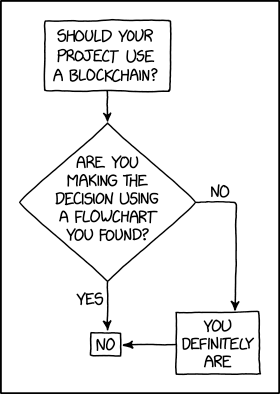


 Info:
Info: 


