Posted on Leave a comment

Feature: “It’s Rare For Me To Make Downtime” – Naoki Hamaguchi Talks Final Fantasy VII’s “Packed And Eventful” Development

FFVII Rebirth 1
Image: Square Enix

Mere months after the launch of Final Fantasy VII Remake Intergrade on Switch 2, Square Enix is following up with a port of its sequel, Rebirth, in June.

It’s an impressive accomplishment given that the development team is also knee-deep in producing the third and final entry in the trilogy. The currently-untitled game has yet to receive a firm release date, but according to director Naoki Hamaguchi, work is progressing very well.

This is just one of several topics we touched on in our recent interview with Hamaguchi-san, who kindly took time from his schedule to answer questions ahead of Rebirth’s launch. We discuss why Rebirth is launching so soon after Remake, how he relaxes during his downtime (or, to be more precise, doesn’t), and which first-party Nintendo game he’s particularly excited for in the months ahead.


Nintendo Life (Ollie Reynolds) – How has development gone for Final Fantasy VII Rebirth on Switch 2? Were you working on this alongside Remake?

Naoki Hamaguchi: Truthfully, from the moment we launched the Switch 2 version of Remake, the only thing I was thinking about was how to turn these other launches into a reality. This is because it wouldn’t be fair to the players if the platforms were split partway through, given how this project was designed to be a trilogy. So, rather than saying we developed Rebirth in parallel, it’s more accurate to say that we were operating with the assumption that we’ll continue this path forward from the moment Remake proved to be viable on the Switch 2.

Of course, this doesn’t mean we were developing two entire titles simultaneously. However, the optimisation insights we gained from Remake and our growing understanding of the Switch 2 hardware were fed back into Rebirth from a fairly early stage. As a result, Remake and Rebirth ended up releasing on the Switch 2 within a relatively short time span. This wasn’t because we prioritised speed, but rather, it was a decision driven by our top priority of avoiding a fragmented experience.

FFVII Rebirth 2
Image: Square Enix

How did you find the transition from the more linear gameplay in Remake to the more open-ended structure in Rebirth?

The transition from Remake to Rebirth was essentially the accumulation of adjustments focused on answering one question: “How can we make this work?” Because Rebirth features large-scale fields with heavy processing loads on rendering and streaming, it couldn’t be ported to the Switch 2 as is. That led us to take a step back and reassess things, from our approach to rendering techniques, to lighting, and background streaming.

We were especially keen on ensuring that switching between handheld and docked modes never made players feel like they were playing a different game.

We were especially keen on ensuring that switching between handheld and docked modes never made players feel like they were playing a different game. We prioritised stability and consistency of experience, exploring sensible solutions while keeping how games were played on the Switch 2 in mind. Through that process, we gained a very clear sense that an open-world experience of this scale can truly work across different environments. That realisation isn’t limited to Rebirth; it serves as a major source of validation for us as we take this series to its finish line as a trilogy.

With Remake, you’ve mentioned that lighting was crucial to ensuring the game looks so good on Switch 2. Was this the same for Rebirth, or did the open-world structure require a different approach?

Lighting is an important element in Rebirth, as it was in Remake. However, because Rebirth adopts an open-world structure with a much larger field scale, it’s a title where the amount of information being rendered at any given moment is higher. As a result, rather than making significant changes to lighting in isolation, our approach focused more on how to balance the overall rendering load.

The use of DLSS was indispensable in that regard and was readopted in Rebirth as it was in Remake. Neither of their modes relies on fixed resolutions and is instead designed based on dynamic resolution. In handheld mode, the internal resolution ranges between a maximum of 1344×756 and a minimum of 672×380. In docked mode, it ranges between a maximum of 1920×1080 and a minimum of 960×540, the same as Remake.

As for the compatibility between DLSS and hair rendering—which was a topic of discussion with Remake — for Rebirth, we took a slightly different approach. We didn’t fundamentally change the rendering technique itself, and applied subtle blur adjustments based on hair direction and density, aiming for the most natural balance possible under restricted conditions. While it’s not identical to the technique used in the PS5 version, we believe you’ll be able to feel the difference within the context of the Switch 2 environment.

FFVII Rebirth 3
Image: Square Enix

Speaking of open-world, did the larger scale of Rebirth cause any development headaches on Switch 2? What would you say was the biggest challenge?

The shift to an open world means the scale of the world in Rebirth is significantly different. This difference became the greatest challenge for the Switch 2’s port.

For Remake, we were able to maintain 30fps through adjustments to post-effects and fog, but because Rebirth dramatically increases the number of rendered meshes, we couldn’t implement the same thinking. For this reason, the background models themselves were optimised specifically for the Switch 2 in the port. We didn’t simply reduce the polygon counts; we made adjustments to the overall game structure by redesigning from the LOD (level of detail) stage, and reevaluating materials with heavy rendering loads from the ground up, etc.

We also adjusted the scale at which background LODs switch for the overall scene, ensuring the processing load wouldn’t spike suddenly even as draw distances increased. On top of that, we addressed these issues by identifying the conditions where processing loads tended to concentrate, determining cutoff points for minimising rendering of non-visible areas and reorganising the rendering order for the overall environment, etc.

By defining what absolutely needed to be preserved, then conducting tests based on real gameplay scenarios to identify and reproduce conditions where processing loads concentrated, we were able to address those issues one by one. It was through this cumulative process that we were able to achieve this stable frame rate.

Without going into spoilers, do you have a favourite scene or gameplay segment from Rebirth that you’d like to highlight for players?

I think the minigames pair exceptionally well with the Switch 2. Because they can be played in short sessions, they give rise to experiences that draw players in before they even realise it.

Take Queen’s Blood, for example. What starts as “just one match” flows into another. You think you’ll make a quick tweak to your deck, but you end up continuing to play. Picking up the game in handheld mode starts an organic chain of play sessions.

FFVII Rebirth 4
Image: Square Enix

How do you find the balance between extending the story of FFVII into three games whilst staying faithful to the original vision?

The greatest challenge was thoughtfully evaluating, title by title, how far to push “nostalgia” and “innovation” respectively, so they could work in balance.

For players familiar with the original game, I think what matters goes beyond the story arc itself—it’s the relationships between the characters, and the emotions they felt upon discovering this world. Those are elements we can’t afford to treat lightly. At the same time, for players discovering FFVII today, we needed to update the presentation and design to align with modern sensibilities; otherwise, the experience itself simply wouldn’t resonate. For this reason, we adopted modern approaches to visual expression while preserving the emotional core and character relationships that were beloved by many in the original game.

We want to capitalise on this cadence and moment to tie the experiences together without any gaps, from Remake to Rebirth to finally the third installment that lies beyond them.

Rather than framing this as a simple binary of whether to “preserve or change” something, we’ve continuously reevaluated how to interpret these notions of “nostalgia” and “innovation,” and how to express them. As we’ve expanded the story as a trilogy, that thinking has remained consistent. That’s our approach to making the Final Fantasy VII Remake series as a whole.

Rebirth is launching on Switch 2 just five months after Remake. What was the approach behind this, and does it feel like the right move?

The short span between releases was a deliberate choice. We view Remake and Rebirth not as completely separate titles, but as an experience unfolding within a single journey that follows one another. From the earliest stages of the remake project, each instalment was designed not to repeat the same experience, but to progressively expand the scale of gameplay. Remake focused on an experience that engages deeply with story and characters, while Rebirth continued that path and leaned even further into the sensation of journeying through the world.

With large-scale titles like this one, it’s common for a long gap to exist between the first and second instalments. However, because they were ports, we decided we could deliver them without leaving much of a gap. We want to capitalise on this cadence and moment to tie the experiences together without any gaps, from Remake to Rebirth to finally the third instalment that lies beyond them.

When we spoke in 2025, you mentioned that development on the third game was progressing well – you had finalised the story and begun working on the core gameplay. Without going into too much detail, can you provide an update on the game’s progress?

We’re very excited about how the game is currently progressing. I have already completed over 40 full playthroughs! I can’t wait for as many people as possible to experience the game for themselves, and myself and the team are working hard to ensure we can create an unforgettable gameplay experience.

FFVII Rebirth 5
Image: Square Enix

You must be so busy overseeing such an ambitious project. What do you do to relax during your downtime?

To be honest, it’s rare for me to make downtime with the intentional goal of “relaxing.” I play games and watch films, but sometimes I’m not even sure whether I’m purely enjoying them or engaging with them as part of my own creative process.

As a way of clearing my head, I’ve made it a habit to get off the train a few stops early and walk for about 30 minutes on the way home. While walking, my thoughts tend to connect in unexpected ways, and I’m able to make sense of things as a result. It’s also good for my physical health.

Are there any Switch 2 games you’ve been playing recently, or perhaps any that you’re looking forward to playing in the future?

Truthfully, the refinement work for the third instalment has been ramping up, and I haven’t been able to spend time with the Switch 2 after Donkey Kong Bananza. That said, there are a few titles that have piqued my interest that I’ve kept myself in the loop for.

For me, Final Fantasy VII is a truly special title that I’ve deeply admired, even as a creator. Because of that, I’ve always carried the belief that this remake series must live up to the expectations of fans who have continued to show their love for FFVII

Among them, Splatoon Raiders has particularly caught my attention. I’m interested in how it leverages an existing IP while expanding the game design itself, and I’m looking forward to seeing how it’ll balance its action gameplay and field design from the perspective of a game designer.

As you look ahead to the conclusion of the Remake Trilogy, how does it feel to bring such a significant chapter of your life to a close?

When I look back, the finish line of this project felt unimaginably far away when it first began. But now it feels like time has flown by surprisingly quickly, partly because our days in development were so packed and eventful.

For me, Final Fantasy VII is a truly special title that I’ve deeply admired, even as a creator. Because of that, I’ve always carried the belief that this remake series must live up to the expectations of fans who have continued to show their love for FFVII, and honour the efforts of my fellow creators who have run alongside me up until this point.

I, myself, have been involved with this project for over ten years, but with this final instalment, I feel a deep certainty that we’ll be able to deliver an experience that’ll make people think, “I’m glad I stayed with the series until the end.” That’s something I feel in my heart. For the many fans who have supported us over this long journey, I sincerely hope that the time you’ve spent following this story to its conclusion will stay with you, as something to cherish. My wish, from the bottom of my heart, is that we deliver a finale that’s worthy of that.

FFVII Rebirth 6
Image: Square Enix

This interview has been lightly edited for clarity. A huge thanks to Naoki Hamaguchi for taking the time to answer our questions. Final Fantasy VII Rebirth launches on Switch 2 on 3rd June 2026.

Posted on Leave a comment

Final Fantasy VII Rebirth’s Internal Resolution Detailed For Switch 2

FF7 Rebirth
Image: Square Enix

Final Fantasy VII Rebirth is storming toward its 3rd June 2026 release date for the Switch 2, and if you want to sample the game ahead of time, there’s a free demo available on the eShop right now.

Chances are, then, that you’ve already seen how the game holds up from a visual and performance point of view, either from your own experience or our recent hands-on impressions. But to give some more information, director Naoki Hamaguchi detailed the specific internal resolutions during a recent interview we conducted with him.

DLSS is doing some heavy lifting here, with the handheld internal resolution ranging between a maximum of 1344×756 and a minimum of 672×380 and the docked resolution ranging between a maximum of 1920×1080 and a minimum of 960×540.

For more context, here’s the full quote from Hamaguchi-san:

“Lighting is an important element in Rebirth, as it was in Remake. However, because Rebirth adopts an open-world structure with a much larger field scale, it’s a title where the amount of information being rendered at any given moment is higher. As a result, rather than making significant changes to lighting in isolation, our approach focused more on how to balance the overall rendering load.

“The use of DLSS was indispensable in that regard and was readopted in Rebirth as it was in Remake. Neither of their modes relies on fixed resolutions and is instead designed based on dynamic resolution. In handheld mode, the internal resolution ranges between a maximum of 1344×756 and a minimum of 672×380. In docked mode, it ranges between a maximum of 1920×1080 and a minimum of 960×540, the same as Remake.”

In our demo impressions piece, we did note that the performance raised a few concerns, stating that “closely examining some of the surrounding textures reveal things to be slightly lower-res than you might have hoped”. Overall, however, we’re exceptionally pleased with how Rebirth is shaping up on Nintendo’s console.

We also touched on the upcoming release of the untitled third entry of the remake trilogy with Hamaguchi-san, and he confirmed that he’s already completed “over 40 full playthroughs” during development.

Lots to be excited about, then, but for now, we’ve got our eyes firmly set on the release of Rebirth in just a handful of weeks. Be sure to check out our full interview with Hamaguchi-san for more information.

Are you excited to dive into Rebirth when it launches on Switch 2 in June? Share your thoughts with a comment down below.

Posted on Leave a comment

Final Fantasy VII Director Has Already Completed “Over 40 Full Playthroughs” Of The Third Game

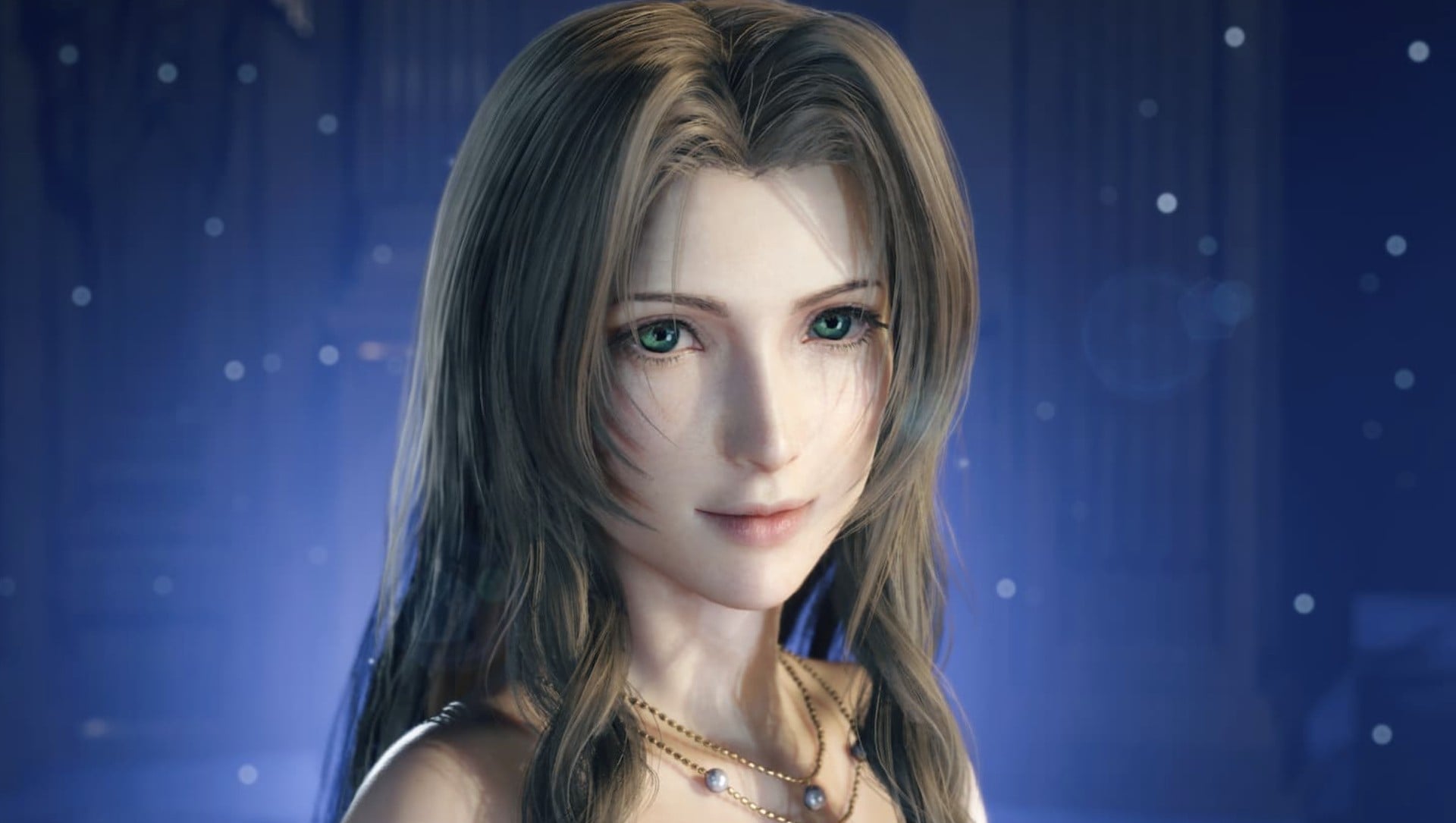
Aerith
Image: Square Enix

Final Fantasy VII fans are eagerly awaiting news on the upcoming final instalment in the remake trilogy, but if you’re worried or anxious about the status of its development, then a recent comment from director Naoki Hamaguchi might bring you peace of mind.

We recently interviewed Hamaguchi-san and asked how the third game is progressing, and to our surprise, he confirmed that he’s already completed “over 40 full playthroughs”. That’s quite an accomplishment, but we imagine it’s probably necessary to ensure the experience works as intended and doesn’t contain any nasty surprises.

Here’s what he had to say:

“We’re very excited about how the game is currently progressing. I have already completed over 40 full playthroughs! I can’t wait for as many people as possible to experience the game for themselves, and myself and the team are working hard to ensure we can create an unforgettable gameplay experience.”

There’s no release date for the third entry yet (and we still don’t even know its full title), but we’re confident an announcement can’t be too far off at this point.

In fact, when questioned about the short gap between the release of Remake and Rebirth on Switch 2, Hamaguchi-san may have subtly hinted at the idea of closing the trilogy fairly soon after, maintaining a steady cadence of launches to tell the overarching story:

“With large-scale titles like this one, it’s common for a long gap to exist between the first and second instalments. However, because they were ports, we decided we could deliver them without leaving much of a gap. We want to capitalise on this cadence and moment to tie the experiences together without any gaps, from Remake to Rebirth to finally the third instalment that lies beyond them.”

Our full interview with Hamaguchi-san is available now, so be sure to check it out for more interesting tidbits of information from the remake trilogy’s director.

When do you think we’ll see an announcement from Square Enix for the third FFVII Remake entry? Let us know your thoughts with a comment.

Posted on Leave a comment

New ‘BOXBOY! + BOXGIRL!’ Rating Spotted In Taiwan

BOXBOY! + BOXGIRL!
Image: Nintendo

The ratings board is at it again, and this time it’s for a Nintendo-published title. But there’s a little bit of confusion as to what it actually means.

Resetera user –R has spotted a rating for Hal Laboratory’s BOXBOY! + BOXGIRL! in Taiwan (via Knoebel on Bluesky). The lovely little puzzler is available on the Switch already, but this listing mentions Switch 2 as the platform.

However, the rating is dated 9th September 2025, which means it’s potentially been sitting in plain sight for a while. And, as some people have pointed out BOXBOY! + BOXGIRL! launched in Taiwan on the same day as the rating.

Some of the more-hopeful fans are praying this is the real deal, mostly because of the extortionately-priced BOXBOY amiibo, which you’ll regularly see for sale online for over $400. A reissue for that would be amazing.

But really, what’s the deal here? Is BoxBoy! + BoxGirl! getting a Nintendo Switch 2 Edition? Or a Switch 2 port? It’s hard to say at this point. But we can look back at another game rating in Taiwan for a bit more of an idea.

A rating for Dragon Quest XI S: Echoes of an Elusive Age – Definitive Edition on Switch 2 was spotted earlier this week, but that one was dated for 29th April 2026. So it is a brand new one, and not one that has been sitting around for a few months.

So, as with all of these little announcements and leaks, our advice remains the same: take it with a pinch of salt.

Would you like to see a new BOXBOY game? Or would you be happy with some enhancements to BOXBOY! + BOXGIRL! on Switch 2? Let us know in the comments.

Posted on Leave a comment

Animal Crossing’s Timmy & Tommy Are Getting Their Own LEGO Set This August

Timmy & Tommy's Fun Day Out
Image: LEGO

Here’s a cute little Nintendo Today! announcement we weren’t expecting: a brand new LEGO Animal Crossing set featuring our favourite tanuki nephew duo, Timmy & Tommy.

Arriving on 1st August, Timmy & Tommy’s Fun Day Out will cost $59.99 / £54.99 and features the pair fishing on a red bridge together. It’s pretty adorable!

The set contains 513 pieces, including models for both of the boys (in their New Horizons attire), a balloon present, flowers, a buildable bridge, and a little disc on the water that shows just where that pesky fish is — going under the bridge, of course.

When built, it’ll be 7.5 in. (20 cm) high, 9 in. (24 cm) wide and 5.5 in. (14 cm) deep.

It’s been a busy year for Nintendo LEGO sets already, with a range of 30th anniversary Pokémon sets, and a Luigi Mario Kart set. We also know we’re finally getting a Mario minifigure in 2027.

Of course, there’s also the range of LEGO furniture within Animal Crossing: New Horizons.

What do you think of the new LEGO set? Will you be grabbing it? Catch a fish in the comments and let us know.

Please note that some external links on this page are affiliate links, which means if you click them and make a purchase we may receive a small percentage of the sale. Please read our FTC Disclosure for more information.

Posted on Leave a comment

Resident Evil Requiem Director Breaks Down Players’ Camera Preferences

Grace
Image: Capcom

Resident Evil Requiem is quite unique in that it allows players to choose whether they experience the game in first or third-person.

In fact, you can experiment quite a bit with it, utilising different perspectives depending on whether you’re playing as Leon Kennedy or Grace Ashcroft. According to developer Koshi Nakanishi in an interview with Denfaminico Gamer (thanks, VGC), players were pretty keen to play as Leon in third-person, but were a little more indecisive with Grace.

If you’ve played Requiem, you’ll know that it recommends you play as Leon in third-person and Grace in first-person. However, Nakanishi states that about 90% of people play Leon’s scenario in third-person mode, while only 60% of players experienced Grace’s story in first-person, with 40% switching to third-person.

It’s likely that most people opted for third-person during Leon’s segments because his appearances in Resident Evil 2 and Resident Evil 4 also took the same approach. As for the 40% who switched Grace’s perspective to third-person, it’s possible that they just wanted some parity between the two scenarios. Well, either that or they were simply too scared to experience the horrors in first-person.

Nakanishi notes that players in Japan and other parts of Asia tend to prefer third-person games, while producer Masoto Kumazawa clarifies that the end results were largely in line with development expectations.

Still, very fascinating indeed!

What were your camera preferences when playing Resident Evil Requiem? Did you stick to the game’s recommendation? Let us know.

Posted on Leave a comment

Guide: Upcoming Nintendo Switch 2 Games & Accessories For May & June 2026

Yoshi
Image: Nintendo

As we slide into the middle of the year, James Bond might have slipped from his May release on Switch 2, but we’ve got both Indiana Jones and T. Yoshisaur Munchakoopas whipping their way to us this month, plus a bevvy of physical releases, large and small, across Switches 1 and 2.

Square Enix has a double helping of games to follow in June, too, so plenty to keep us going until July, when Nintendo has not one but two first-party games ready to go.

Below, we’ve highlighted the most exciting Switch 2 (and 1) games coming in the next couple of months. You’ll find more great games beneath our top picks, as well as a bunch of accessories.

Please note that some external links on this page are affiliate links, which means if you click them and make a purchase we may receive a small percentage of the sale. Please read our FTC Disclosure for more information.

New Switch 1 & 2 Games for May & June 2026

Indiana Jones & The Great Circle – May 12th (Switch 2)

MachineGames’ Indy adventure is finally arriving on a Nintendo console following its 2024 Xbox debut and its PlayStation launch last year.

It remains to be seen how Dr. Jones will hold up as he takes on the challenge of the Switch 2 port, but fingers crossed he’s got enough mileage left to go the distance.

The year is 1937, sinister forces are scouring the globe for the secret to an ancient power connected to the Great Circle, and only one person can stop them – Indiana Jones. You’ll become the legendary archaeologist in this cinematic action-adventure game from MachineGames, the award-winning studio behind the recent Wolfenstein series, and executive produced by Hall of Fame game designer Todd Howard.

Yoshi and the Mysterious Book – May 21st (Switch 2)

This adorable-looking platformer channels the cuteness of Yoshi games like Woolly World and Crafted World, and we’re here for it.

This game also marks the first instance in the US where the digital version will be priced $10 cheaper than the physical ($59.99 versus $69.99).

Play as Yoshi and help a mysterious talking book named Mr. E remember the creatures living within his pages. Open him up, explore colorful habitats, and experiment with each creature to learn all kinds of surprising findings across every page.

On your journey, you might see Bowser Jr. popping up in habitats! What could he be up to…?

Final Fantasy VII Rebirth – June 3rd (Switch 2)

Kicking off Square Enix’s one-two punch in June is this second round of FFVII remake featuring Cloud and co. reimagined on modern consoles. Originally launching for PS5 back in 2024, Rebirth is coming to Switch 2 and Xbox on 3rd June.

Physical lovers note: As with the rest of SE’s output, this one’s a Game-Key Card.

After escaping the dystopian city of Midgar, join Cloud and his friends on an epic journey across the planet in pursuit of Sephiroth. Ride chocobos, sprint across sweeping plains, and explore a vibrant, expansive world.
Experience new features and encounters as the story unfolds, culminating in the party’s journey to the Forgotten Capital from the original FINAL FANTASY VII.

The Adventures of Elliot: The Millennium Tales – June 18th (Switch 2)

And following after Rebirth is The Adventures of Elliot, an old-school Zelda-style affair that made a great first impression on us. (There’s a demo on the eShop if you’re keen to see it for yourself.)

Again, this one’s a Game-Key Card.

A brand-new action RPG from the creators of OCTOPATH TRAVELER and BRAVELY DEFAULT combines exciting action-adventure gameplay with stunning HD-2D for the first time! Join Elliot the adventurer and the fairy Faie in a journey through four ages.

More Upcoming Games for May & June 2026

As well as those picks above, there are plenty more Switch 1 & 2 retail games launching in the next couple of months (and a bit beyond).

New Switch 2 Accessories & eShop Credit

Finally, here’s a selection of Switch 2 accessories coming soon, and our Switch 2 buyer’s guides if you’re looking for something in particular.

Remember, you can also buy your Switch eShop credit and games from the Nintendo Life store. Purchases made on our store also help to support the site, so thank you in advance!


So that’s it for May and June — did we miss anything? Let us know with a comment and tell us if you’ve pre-ordered any of these goodies!

Posted on Leave a comment

POKEBOOK Is Taking You Back To Kanto For Pokémon’s 30th Anniversary Year

POKEBOOK
Image: Ninty Media

The latest addition to Ninty Media’s growing library of quality gaming tomes is around the corner, with Pokebook now live on Kickstarter and aiming for delivery this August.

Focusing on Gen 1 Pokémon games and coinciding with the series’ 30th anniversary year, this hardcover book is the first in Ninty Media’s ‘—BOOK’ line to concentrate on a single series. It’ll be exactly the same size as previous entries (Gamebook, Gamebook Color, Gamebook Advance, and NESbook), with a fetching cover designed by Jonathan Traynor and a foreword by Kinda Funny’s Tim Gettys.

Longtime Ninty Media writer Joe Wescott has penned much of the book this time, though you’ll find contributions from the likes of Dani Cross, Nathan Ellingsworth, Jonathon Greenall, Jamie Moorcraft-Sharp, and Chelsea Reed, with illustrations by Thiago Radice, Iago Machado, Raphaella Silva, and Darren Palma.

Including Pokémons Red, Blue, Green, and Yellow, naturally, the book will examine Stadium, Snap, Puzzle League, Hey You, Pikachu, Pinball, and Trading Card Game – anything on Game Boy or N64 that focused on the original 151, plus wider topics including the anime.

As well as the book itself (which will set you back £30), there’s the usual bounty of goodies available at higher pledge tiers. At the time of writing, the campaign is just a couple of backers away from hitting its funding goal of £20,000 (in fact, by the time you read this, it may well have hit it), with another 20 days to go – so you’ve still got plenty of time to check it out.

If you’ve read any of the previous —BOOKs (which various NL staffers — including this one! — and contributors have written features for), you’ll know they’re quality coffee table reads, beautifully presented. If you’re a Pokémon lover looking for a way to celebrate three decades of Pocket Monsters, Pokebook looks like a fine one.

Posted on Leave a comment

Fortnite Celebrates Star Wars Day With Month-Long Roadmap, Includes “A Galaxy Of New Star Wars Games”

The annual Star Wars Day celebrations are almost here, and to join in on the fun, Epic’s free-to-play Fortnite will be dropping all sorts of themed content throughout the month of May.

“Starting May 1, hundreds of these islands will go live and Fortnite will be the only place where you can come together with friends to race tauntauns through icy tracks, run a bustling cantina on Tatooine, pilot a T-65B X-wing starfighter, and go on imaginative Star Wars adventures.”

This includes three new Fortnite games from Epic and Lucasfilm – including Galactic Siege, Escape Vader and Droid Tycoon.

Galactic Siege (developed with JOGO Studios, island code: 5003-9856-3648) – Fight in large-scale PvP class-based battles with 10v10 combat across iconic Star Wars planets.

Escape Vader (made with Beyond Creative, island code: 7285-4185-5428) – Hide, run, and try to survive in this 4-player co-op game where you attempt to escape the terrifying Sith Lord, Darth Vader.

Droid Tycoon (created with FOAD, island code: 7865-8305-9184) – Build and customize droids using authentic Star Wars blueprints, manage your workshop and factory systems, and unlock rare components and special missions.

As part of the celebrations, there’ll also be The Mandalorian and Grogu watch party island on 19th May 2026.

This event will feature a special message from director Jon Favreau and a 10-minute sneak peek of the new movie ahead of its theatrical release on 22nd May 2026.

Fortnite Star Wars

LEGO Fortnite Odyssey is also getting its own Star Wars update on 14th May 2026, including the new hover brick, hover vehicles, Mando & Grogu, and many Star Wars enemies. Here’s the full roadmap of Star Wars celebrations this month:

Fortnite Star Wars

Will you be celebrating Star Wars Day in Fortnite this year? Let us know in the comments.

Posted on Leave a comment

Final Fantasy XIV Online Director Confirms Mouse And Keyboard Support For Switch 2 Version

Final Fantasy XIV Online
Image: Square Enix

Final Fantasy XIV Online was finally announced for the Switch 2 last week, and if you want to experience this popular MMORPG with mouse and keyboard controls on Nintendo’s new hybrid platform, you can!

Game director Naoki Yoshida (aka Yoshi-P) confirmed this during a recent chat with the press at this year’s Final Fantasy XIV Festival. He also mentioned how the Switch 2 version will include support for the Joy-Con 2 mouse controls. And depending on what task you’re tackling in-game, you can mix-up your control style.

Naoki Yoshida: “You can use Joy-Con 2 for mouse control. However, I myself haven’t yet tried playing Savage raids with mouse controls… (laughs). I’m sure the QA (Quality Assurance) team will check the mouse controls, but since the Nintendo Switch 2 version can also be played with a controller, I think I’ll play it that way.”

He further notes how if you’re participating in “high-difficulty raids” or something more demanding, you can simply connect a mouse and keyboard to your Switch 2 dock. Or if you’re crafting and gathering, you could swap to handheld mode.

Yoshida previously confirmed the Switch 2 version of Final Fantasy XIV Online would be able to reach “30fps in a stable state”. And during the announcement at Final Fantasy XIV’s Fan Festival keynote last week, he mentioned how the title will require a separate subscription on Switch 2.

Would you be interested in using Joy-Con 2 controls or a mouse and keyboard to play the Switch 2 version of this title? Let us know in the comments.