Posted on Leave a comment

Review: Yoshi And The Mysterious Book (Switch 2) – Charming Enough, But Ultimately Lacklustre

The Yoshi series has cemented itself as one of the most approachable in Nintendo’s arsenal, providing experiences that younger gamers in particular can enjoy without too much friction. Woolly World and Crafted World offer light-hearted platforming fun while still retaining some of the spirit of the SNES original, and both come recommended. Developer Good-Feel’s latest effort, Yoshi and the Mysterious Book, unfortunately, has a few too many stabilisers on its wheels, losing a lot of what made the series great to begin with.

The game takes place primarily in, well, a book, utilising a unique art style to depict its setting, much like its Woolly and Crafted predecessors. You’re tasked with entering the pages of the talking encyclopaedia Mr. E in order to seek out creatures within and discover their mysteries. Naturally, Bowser Jr. and Kamek are back to cause some mischief, though their overall presence is surprisingly muted.

Yoshi and the Mysterious Book Review - Screenshot 1 of 5
Captured on Nintendo Switch 2 (Handheld/Undocked)

The art style, while certainly pleasant, doesn’t quite hit as hard as earlier titles. Character animation purposefully skips frames to give it a stop-motion look, which is a nice touch. Stylised text can also occasionally be seen in the background and foreground while colours fade as you approach the edge of the levels – both of which are clear indications that, yes, you’re in a book.

Aside from this, though, I really wasn’t blown away by the visuals given the jump over to the Switch 2. In handheld mode, the ink-like edges applied to characters and environments look disappointingly soft and almost pixelated in motion. I can’t be 100% certain as to what resolution the game targets, but I’d be surprised if it’s hitting the full 1080p display.

Docked is much better, thankfully, but even then, backgrounds lack detail and vibrancy, while individual stages fail to introduce much visual variety. Yes, you have different biomes, but you’ll often see some of the same assets throughout.

The music is lovely, mind you, with plenty of charming, easygoing tunes that perfectly match the environments. Additional sound design is equally impressive, with Yoshi emitting delightfully cheerful “mlems” and the majority of the other creatures making their own unique sounds.

Yoshi and the Mysterious Book Review - Screenshot 2 of 5
Captured on Nintendo Switch 2 (Handheld/Undocked)

Starting off, you’ll have access to the opening Wildwoods world in which you select the creature you wish to investigate via a sort of overworld page within Mr. E. The aim of the game is to mess around with the critters until you make discoveries, thus granting you stars to unlock subsequent worlds.

Small discoveries are worth one star, and big ones, three. It could be something as simple as gobbling up a creature to see what it tastes like, or actually carrying it on your back to utilise its unique properties.

For example, you’ll come across the bubble-blowing Glubbit creature in Wildwoods, and this thing lets you access high places by producing a bunch of bubbles in which to float. Similarly, the Bafloonder, found in the Seaside world, lets you travel quickly underwater by shooting out air stored in its body. By using their abilities in different ways, you’ll gradually unlock new discoveries to fill out their encyclopaedia entries.

Each discovery is indicated by a cute on-screen animation with a short block of text describing the action, while anything left undiscovered will be hinted at in Mr. E’s pages. Oh, and if you’re feeling particularly creative, you can name the creatures yourself, so if ‘Glubbit’ doesn’t sound appealing, then maybe try ‘Bubs McBubblson’… or y’know, something actually good.

In keeping with the approachable nature of Yoshi games, most of the potential discoveries found within Mr. E’s pages will occur naturally through normal play; it’s quite rare that you’ll end one of the stages with many left over, and so it wasn’t long – three or four hours – until I’d accumulated enough stars to unlock all of the main worlds. Couple this with the mandatory invincibility and automatic recovery from falls, and you’ve got what might be one of the easiest games ever published by Nintendo.

It’s not completely without challenge, mind you. Like previous entries, all of the stages also contain collectible flowers, and some of these can be a little tricky to locate. Gathering them up isn’t mandatory, but doing so will unlock Exploration Tools during the latter portion of the game, adding custom UI elements to the screen that you can move around or swap out however you like.

Yoshi and the Mysterious Book Review - Screenshot 3 of 5
Captured on Nintendo Switch 2 (Handheld/Undocked)

Some of these are genuinely useful, like a flower radar to help mop up collectible stragglers, but others feel completely superfluous. Why on earth do I need a graph showcasing the real-time height of Yoshi’s jumps?

Ultimately, while there are dozens of neat little gameplay ideas from the multitude of creatures you discover, they’re all mostly segregated to the specific stages in which they’re found. As such, there’s little sense of progression or evolution as you make your way through to the later levels. It’s all just the same thing, again and again, punctuated by constant ramblings from Mr. E.

Similarly, the levels themselves feel more like miniature sandbox stages rather than handcrafted experiences designed to get you from A to B. As such, many of them feel surprisingly empty and drab, and so going from the beautifully dense, busy stages of Woolly World to this feels like an undeniable step down.

Yoshi and the Mysterious Book Review - Screenshot 4 of 5
Captured on Nintendo Switch 2 (Docked)

Though I’m certain Mysterious Book is squarely aimed at children, I struggle to really nail down an exact target audience. On the one hand, musical cues for ‘Twinkle Twinkle Little Star’ and ‘Mary Had A Little Lamb’ suggest that this is for pre-schoolers, but then, thanks to Mr. E’s chattering, there’s actually quite a lot of text to read, including the optional custom names for your creatures. This perhaps suggests that older children of a more advanced reading age would gain more from it.

Indeed, it’s practically screaming for some sort of two-player co-op mode to bring these ideas together and help younger players ease into things with the help of an adult. That it’s completely lacking such an option feels quite out of sorts for Nintendo. As it is, when I tried to introduce my own four-year-old daughter to Mysterious Book, she provided her own damning verdict after less than an hour: “Can we play Mario Kart World now, Daddy?”

One thing’s for sure. Although Nintendo’s studios are often adept at making games that children and adults can enjoy equally, I really can’t say that’s the case here. That’s not to say that you absolutely shouldn’t touch this if you’re a grown-up, but perhaps consider that it won’t offer the challenge or ingenuity of your average Nintendo platformer – it’s not one I’ll be going back to anytime soon.

Conclusion

Yoshi and the Mysterious Book isn’t a bad game. There’s a lot of fun to be had in discovering the many creatures hidden within Mr. E’s pages, though it also suffers from a repetitive structure that doesn’t evolve or provide any sense of meaningful challenge. Visually, it also lacks the punch that Woolly World and Crafted World offered, and it frankly looks pretty bad in handheld mode.

If you’ve got young children who are eager to see more from Yoshi after catching him in the Mario Galaxy Movie, then this will provide a few hours’ worth of fun while getting them used to basic platforming tropes. Otherwise, I’d probably recommend a Switch Online subscription to check out Yoshi’s Island for the SNES.

Posted on Leave a comment

Sektori’s Switch 2 Launch Has Proven A Huge Success For Its Solo Developer

Sektori
Image: Kimmo Factor Oy

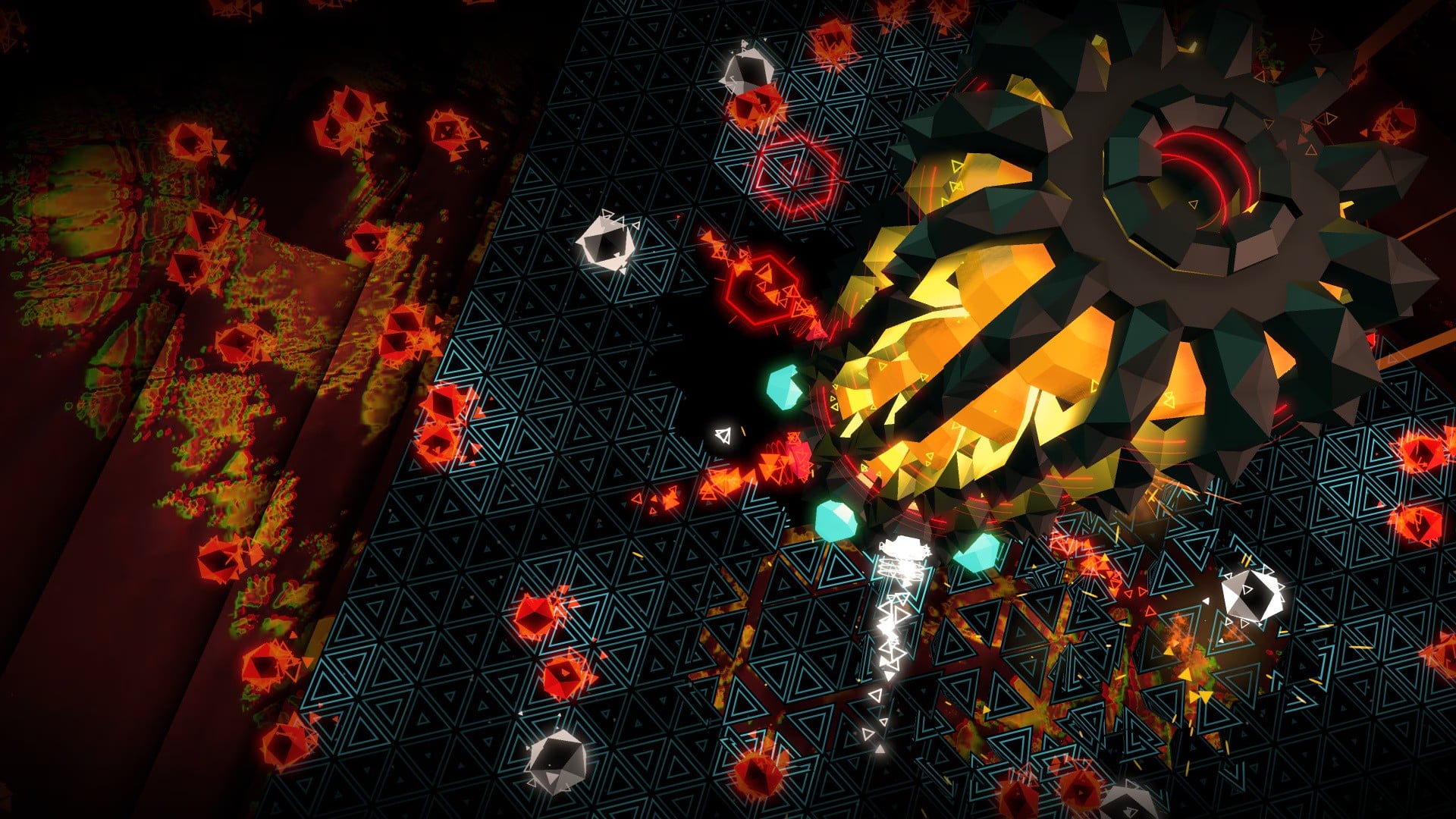
Sektori, the ridiculously good spiritual successor to Geometry Wars, has now launched on the Switch 2, and according to its solo developer Kimmo Lahtinen, the port has proven to be a big success.

As reported by Eurogamer, Sektori’s Switch 2 launch has essentially granted Lahtinen a living wage, with total sales sitting at around 30,000 at the time of the dev’s post on Bluesky.

Previously, Lahtinen confirmed that the game’s release on PC, PS5, and Xbox had only just managed to recoup indirect costs and overheads incurred, but this nevertheless left them with “zero salary for 4.5 years”.

This is great news then, and we can only hope that the game will continue to sell in the weeks, months, and years ahead. It’s a bloomin’ good time, yet it strikes us as one of those games that could live or die on word of mouth. Early signs are that it’s doing very well, so fingers crossed it continues.

We awarded Sektori a score of 9/10 and said that it’s essentially dethroned Geometry Wars as the king of twin-stick shooters thanks to “immaculate presentation with gorgeous visuals, a thumping soundtrack, and rock-solid 60fps gameplay”.

Have you played Sektori yet? Do you plan on picking it up at a later date? Let us know with a comment in the usual place.

Posted on Leave a comment

SWERY & SUDA51’s ‘Hotel Barcelona’ Is Coming To Switch 1 & 2 “Soon”

While announcing the release of the Late Check-Out DLC for 2025’s Hotel Barcelona, SWERY’s White Owls Inc. has confirmed that releases for Nintendo’s consoles are in the works and “coming soon”.

With Eden Industries on publishing duties, the Switch 1 and 2 versions will be “a complete package” for $34.99, including all the DLC and gameplay updates since it launched on other platforms back in September 2025, including the recent Under New Management overhaul which addressed various gameplay issues and criticisms of the original launch version. No word on a physical version just yet – we’ll keep you posted on further details.

A side-on action roguelite affair, Hotel Barcelona is collaboration between Japanese developers SWERY (Deadly Premonition, D4, The Missing) and SUDA 51 (Killer7, No More Heroes). It launched to a mixed reception last year, with a 58 on Metacritic at the time of writing.

The March update has apparently helped, with the PR blurb claiming that “Steam reviews have swung strongly positive” in the past couple of months. Checking out the Steam page, there are currently 13 “Very Positive” user reviews versus 257 “Mixed”, so take that “strongly positive” line with a fistful of salt.

Then again, if you’re a fan of these cult devs and their unique styles, you’re probably used to a caveat or five. Would it really be a Suda or Swery game if it launched to universal acclaim with 8s, 9s, and 10s across the board?

It does seem that Switch gamers will be getting the polished, finished product versus the patchy (or non-patchy, we guess) one they put out eight months back, and the devs are at pains to highlight that “Both the base game and the Late Check-Out DLC do not have AI-generated content.”

Here are some overview details, plus the screens above – check out the ‘relaunch’ trailer at the top of the page to see how it looks in action:

HOTEL BARCELONA is a collaborative horror project from Hidetaka “SWERY” Suehiro and Goichi “SUDA51” Suda, blending slasher cinema, surreal dream logic, roguelite progression, and stylish action combat into an unconventional horror experience.

Players control U.S. Marshal Justine Bernstein, whose mind is possessed by the spirit of a serial killer known as Dr. Carnival. Together, they must survive an ever-shifting hotel filled with traps, killers, and monstrous threats.

Failed runs return as armed “Slasher Phantoms” — echoes of previous attempts that fight alongside the player in future runs — creating a unique layered progression system that transforms death into momentum.

In March 2026, the game was substantially reworked and relaunched through the major Under New Management update, which refined core gameplay systems, balance, progression, and presentation while further realizing the creators’ original vision for the title.

The Nintendo Switch and Nintendo Switch 2 versions will support:
– 1–3 players
– Up to 4 players during invasion play
– Online multiplayer
– Co-op gameplay
– PvP invasion mode

The key art and the headliner devs piqued our interest back when the game was first revealed, even if the initial reviews dampened our enthusiasm. Given the unique talent involved and the tweaks made since launch, though, do you think this one will be worth a look on Switch? Played it elsewhere? Let us know below if you’ll be checking out Hotel Barcelona’s Tripadvisor rating before it arrives on a Switch.


Posted on Leave a comment

Nintendo Alarmo Has Received A Small Update Today

Nintendo has released a new update for its “sound clock” Nintendo Alarmo today, bumping its firmware up to Version 4.0.0.

The first Alarmo update of 2026 (following a patch last October) includes some adjustments and a new feature. And just like other Nintendo products, there’s even a stability patch!

Here’s the rundown, according to Nintendo’s official Japanese support page:

Nintendo Alarmo – Version 4.0.0 (19th May 2026)

Version 4.0.0 (Released May 19, 2026)

  • We’ve changed the method for selecting alarm scenes to “select a title first, then select an alarm scene.”
  • A new feature called “Random Selection from Favorites” has been added, which will sound your alarm on a different day from your favorite alarm scenes.
  • We’ve fixed several issues and improved operational stability.

If Nintendo shares any other information about this latest update in its English patch notes, we’ll update this post.

Nintendo Alarmo was originally released in 2024 and can be purchased directly from Nintendo’s website or in-store. It’s not exactly the cheapest clock, but if you’re big on sleep (and Nintendo), it might be worth considering. It’s also loaded with multiple themes from Animal Crossing to The Legend of Zelda.

Here’s what we had to say about Alarmo on release:

“Nintendo Sound Clock: Alarmo is a fun little device that’s easy to use and will absolutely appeal to Nintendo fans young and old if you value fun and whimsy over accuracy…If you’re comfortable with the steep asking price for a product that functions solely as an alarm clock with a few minor embellishments, you’ll find Alarmo an enjoyable, if limited way of starting your mornings with a Nintendo vibe. Now, if you’d kindly keep the noise down, we’re off to bed.”

Have you got Nintendo’s sound clock? Have you downloaded this update yet? Let us know in the comments.

Posted on Leave a comment

Rumour: LEGO’s Next Big Pokémon Set Might Have Been Revealed

LEGO Pokemon

LEGO is now releasing Pokémon sets and a new one has reportedly been leaked ahead of the official announcement.

According to now-removed listings on multiple web stores including Amazon, a Lego version of Arcanine from the original Pokédex is on the way. According to the box art, it will contain 1190 pieces, and reports suggest it will be priced at $109.99 USD and be released in August 2026.

Here’s a look via the Legoleak subreddit:

The existing Pokémon Lego sets released so far include Eevee, Pikachu and Poké Ball & Venusaur, Charizard and Blastoise. There have also been some gift set relases including the Kanto Region Badge Collection and the Mini Pokémon Center.

This follows the news last week that Lego will soon be retiring its first Legend of Zelda set. It will also be discontinuing some other Nintendo sets.

Would you be interested in a set like this if it was released? Let us know in the comments.

Posted on Leave a comment

Street Fighter 6’s Next Update Is Adding New Avatar Game Modes

Ahead of the release of Ingrid in Street Fighter 6 next week, Capcom has announced new modes for the title.

This includes a new Avatar Random Match and Avatar Arcade Mode, with both modes releasing alongside the new paid DLC character on 28th May 2026. Here’s a bit more about what to expect, and you can check out the official trailer above.

“Mix and match special moves to create a one-of-a-kind avatar with a fighting style of your very own and take them into these two chaotic modes to earn rewards and level up. You can even play Avatar Arcade Mode to strengthen your bonds with different masters by fighting them as much as you like, giving another option to unlock Outfit 2 for each master!”

The returning character Ingrid is part of Street Fighter 6’s Year 3 Character DLC Pass, which also includes Sagat, C. Viper and Alex. If you want to find out more about Street Fighter 6 on the Switch 2, be sure to check out our review here on Nintendo Life. We gave the Switch 2 port eight out of ten stars.

Will you be giving this new update a go when it arrives in Street Fighter 6? Let us know in the comments.

Posted on Leave a comment

Review: Coffee Talk Tokyo (Switch) – An Enjoyable, Bittersweet Third Blend

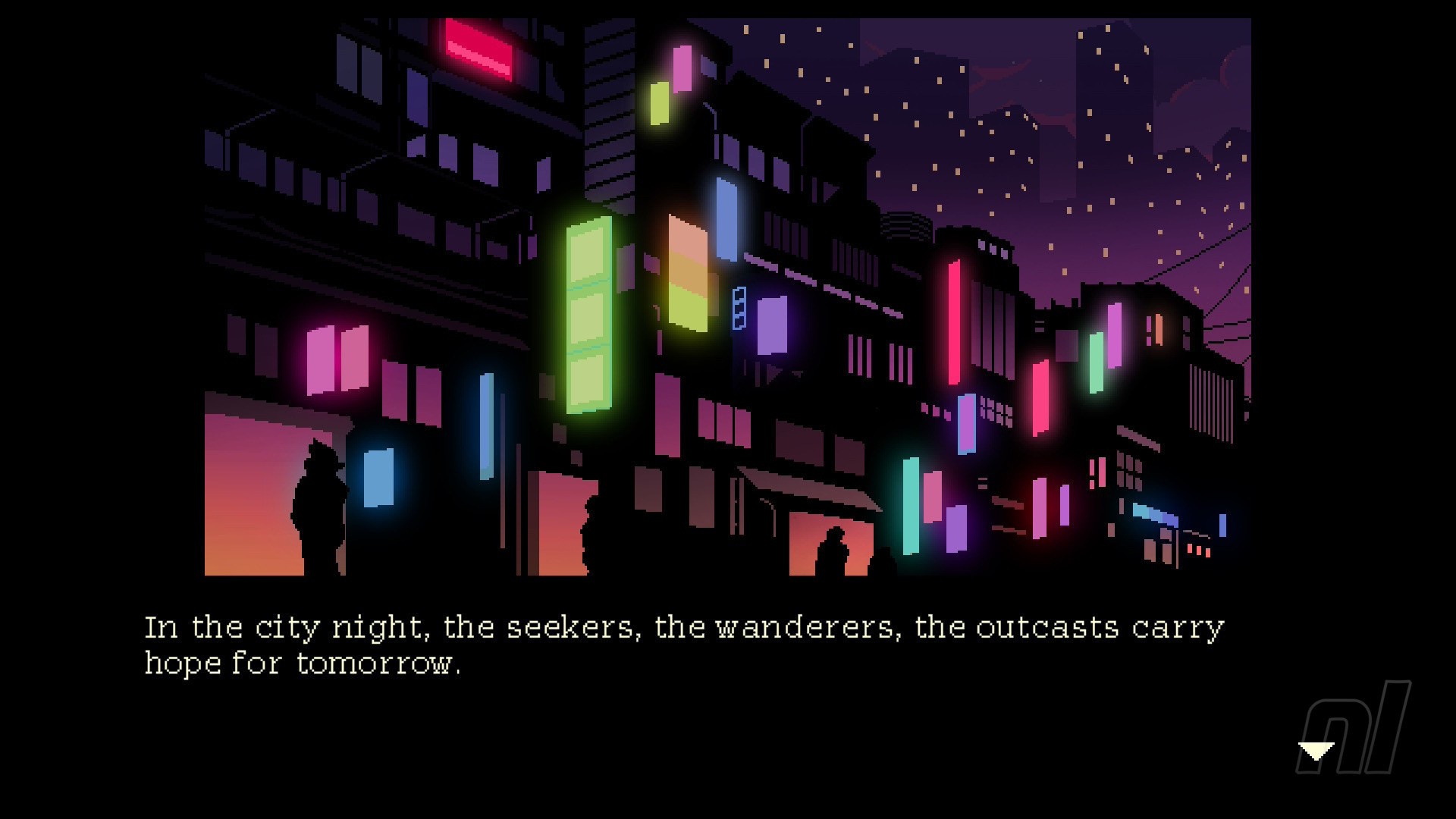
Coffee Talk Tokyo Review - Screenshot 1 of 8
Captured on Nintendo Switch (Docked)

When I was a teenager, I landed my first-ever job as a barista at a busy chain coffee shop in the heart of New York. When I didn’t have my nose in the books at school, I’d spend hours making all manner of drinks for the city’s thirsty clientele. It was daunting work — customers expected to get their drinks fast, and the surplus of orders during the morning and midday rushes could get downright brutal. I’d emerge at the end of each shift, clothes and hands reeking of coffee grounds, and command my aching feet to take me to class or back to my apartment.

I absolutely loved it.

Despite the pressures that came with fielding a seemingly never-ending queue of customers, I came to appreciate how the job broadened my perspective on people. I became familiar with plenty of the shop’s regulars, from the woman waiting to enthusiastically burst inside with her two dogs as soon as the store opened each morning to the building’s stern landlord who walked in every day to insistently order a small black coffee. Just plain. Not sweet. Nothing in it. In case I had forgotten how he likes it.

Coffee Talk Tokyo Review - Screenshot 2 of 8
Captured on Nintendo Switch (Docked)

I may not have gotten to know any of them particularly closely, but for the first time in my life, I was exposed to an unfiltered supply of people from all walks of life with unique stories. It helped me learn to see outside myself and my own preconceived notions about what the world was all about.

If learning about people and expanding your horizons is the jewel at the heart of the unrefined chunk of rock that is working in customer-facing food and beverage service, then Coffee Talk Tokyo is the idealised version — an experience that sands down the rough edges, leaving only that glittering core behind.

The third entry in developer Toge Productions’ visual novel series, Coffee Talk Tokyo retains the series’ winning loop of making drinks for fantastical customers and helping them work through their life struggles. This time, though, the rain-soaked streets of Seattle have been traded in for the stylings and mythological backdrop of Japan.

Coffee Talk Tokyo Review - Screenshot 3 of 8
Captured on Nintendo Switch (Handheld/Undocked)

It’s far from a drastic shift, but Coffee Talk Tokyo still excels as a visual novel through its sleek presentation, excellently-written cast, and dazzling, character-driven narrative that tackles numerous hard-hitting topics with real emotional depth and nuance.

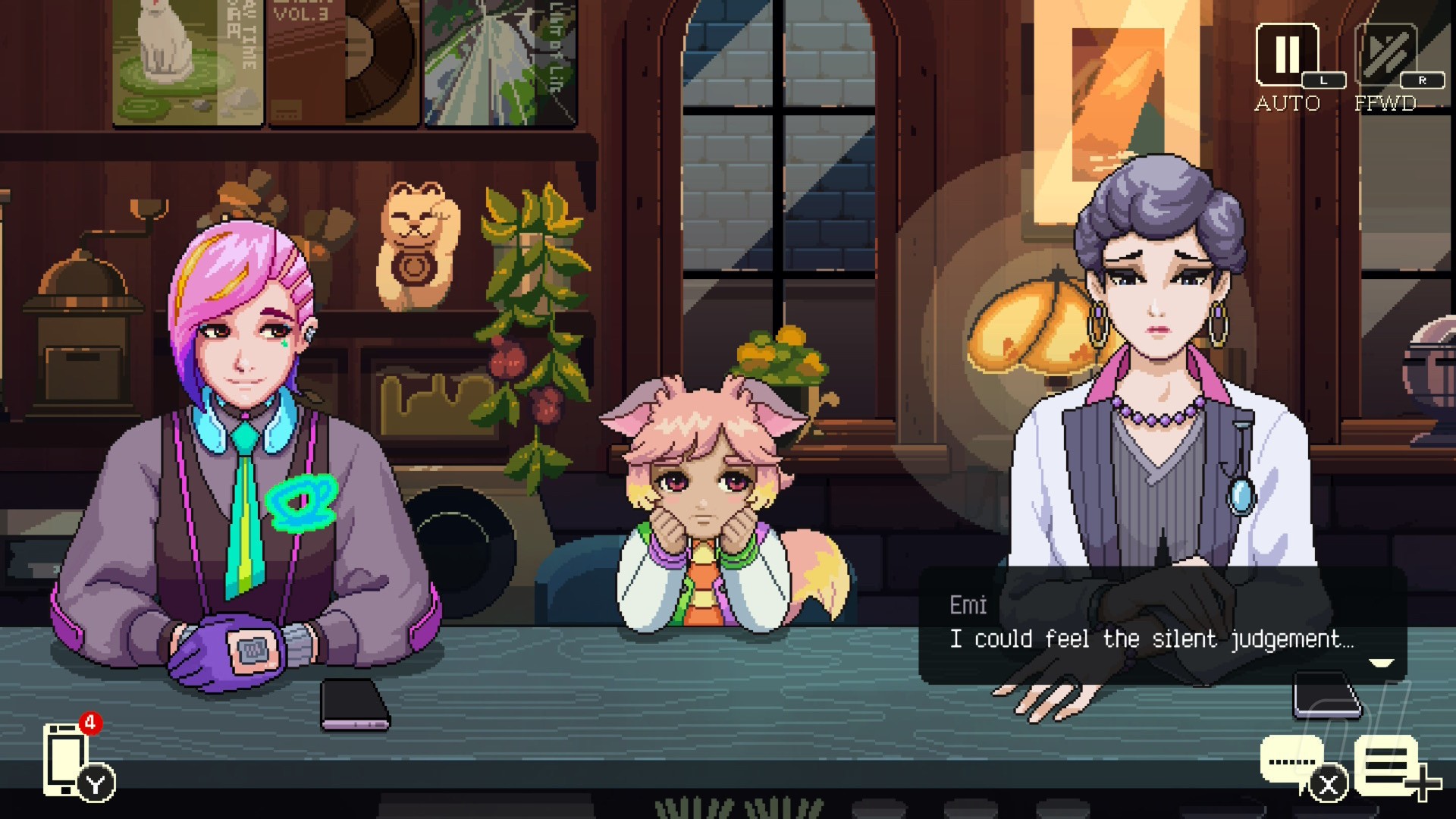
Similar to its predecessors, most of Coffee Talk Tokyo plays out across a single screen: the front bar of a late-night coffee shop nestled deep inside Japan’s capital city. Throughout each in-game day, you’ll get to know a small but diverse group of regulars as they take a seat at the bar, order drinks, and chat with one another about their ongoing trials and tribulations.

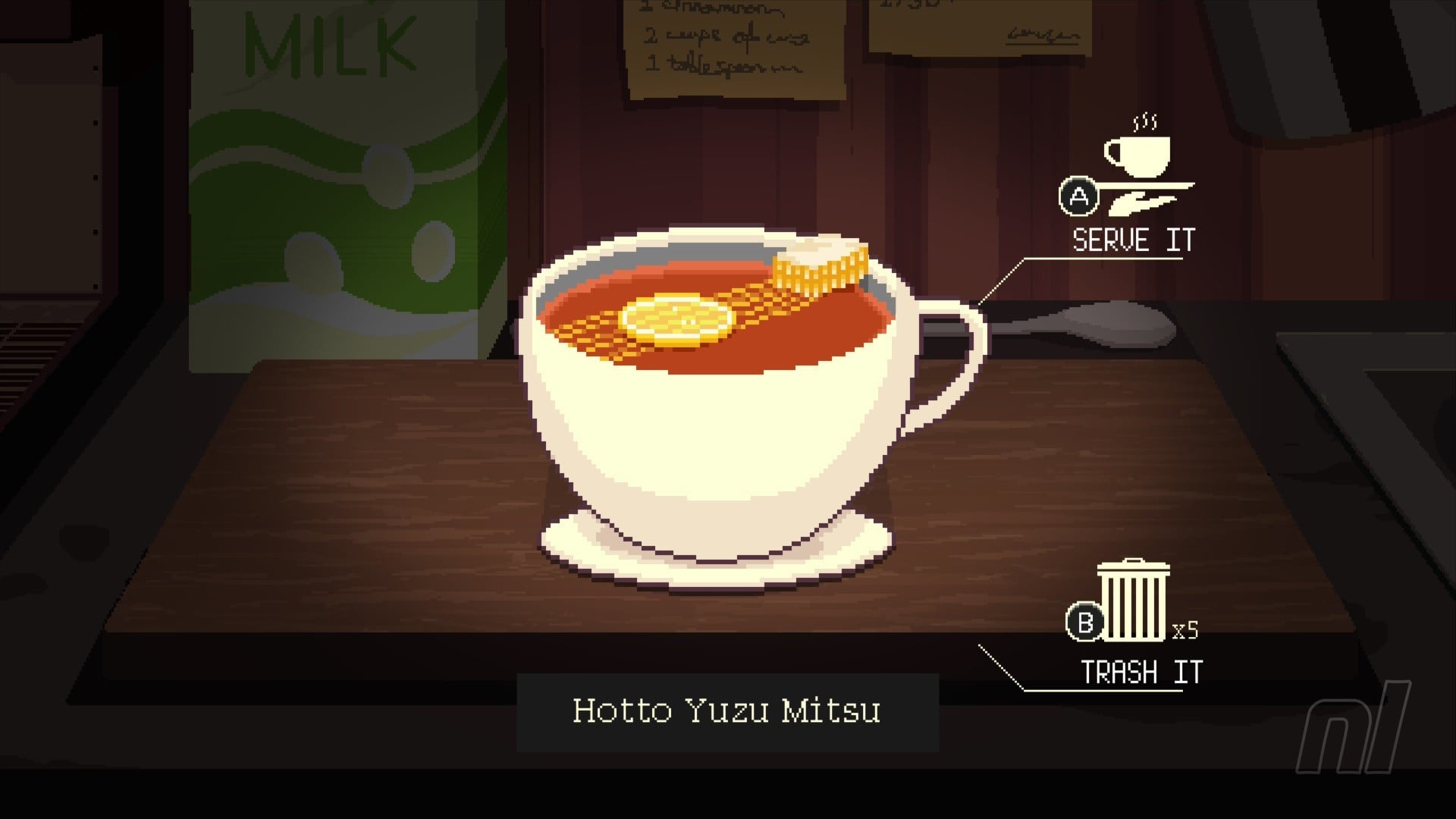
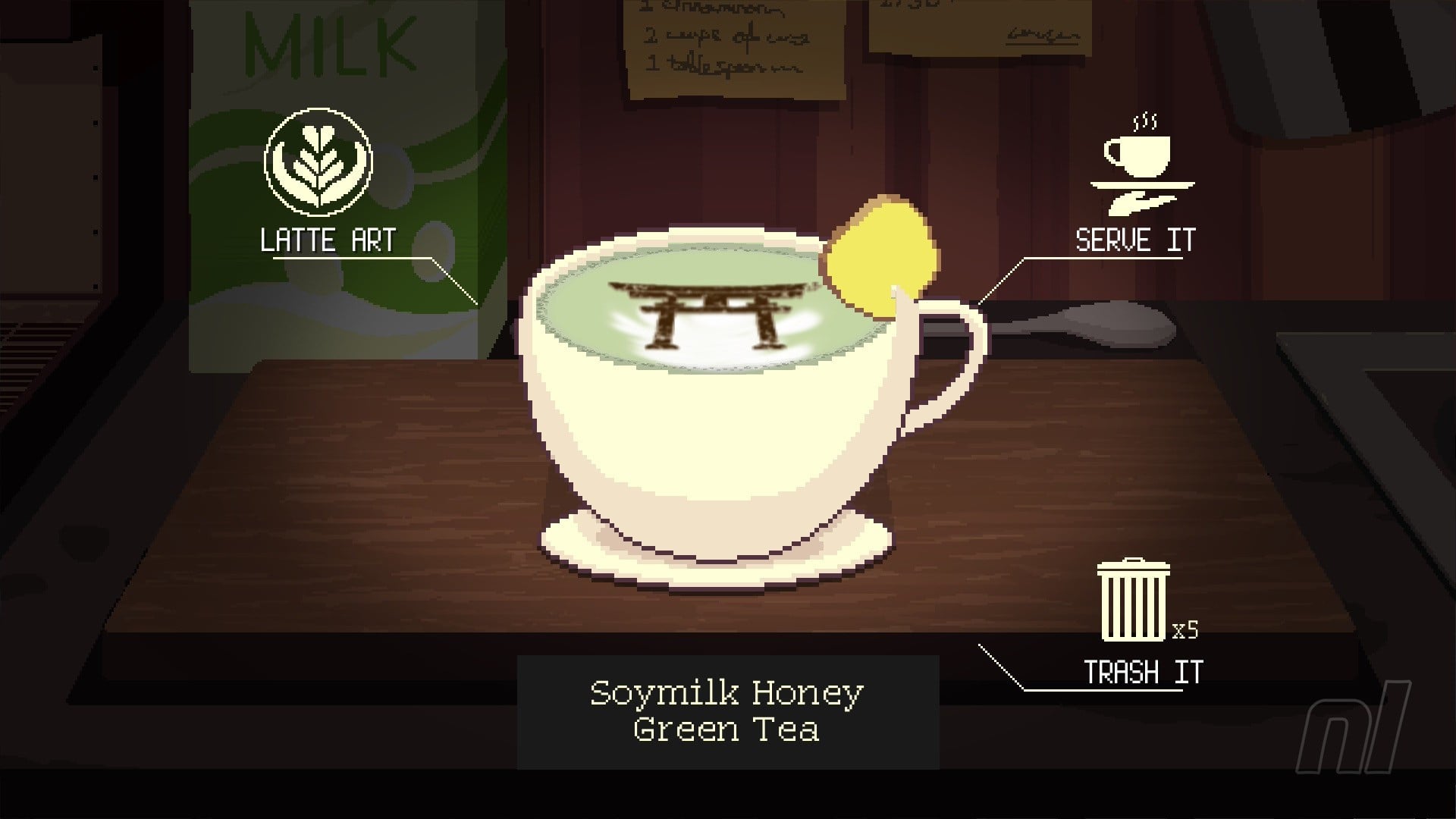
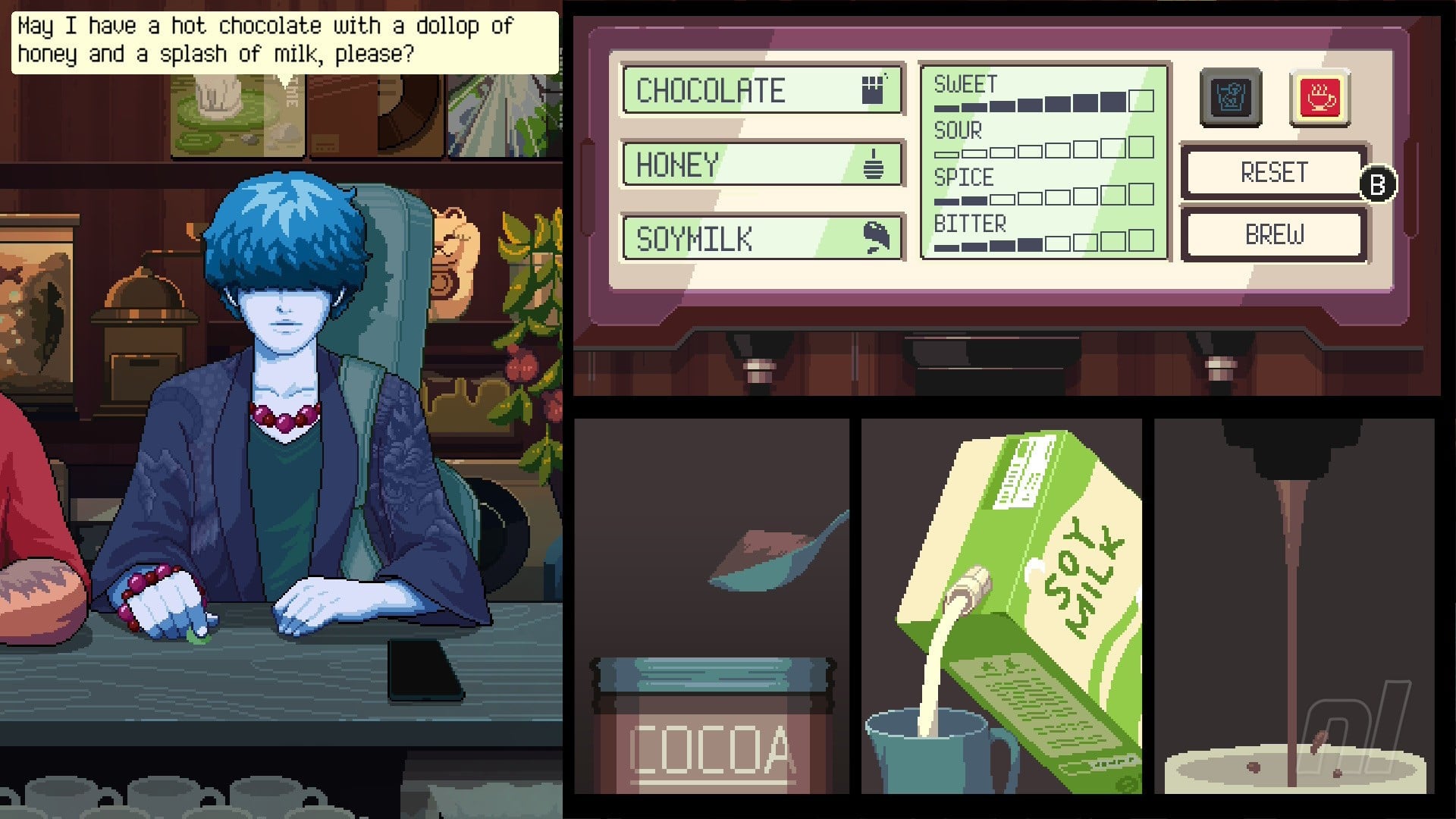
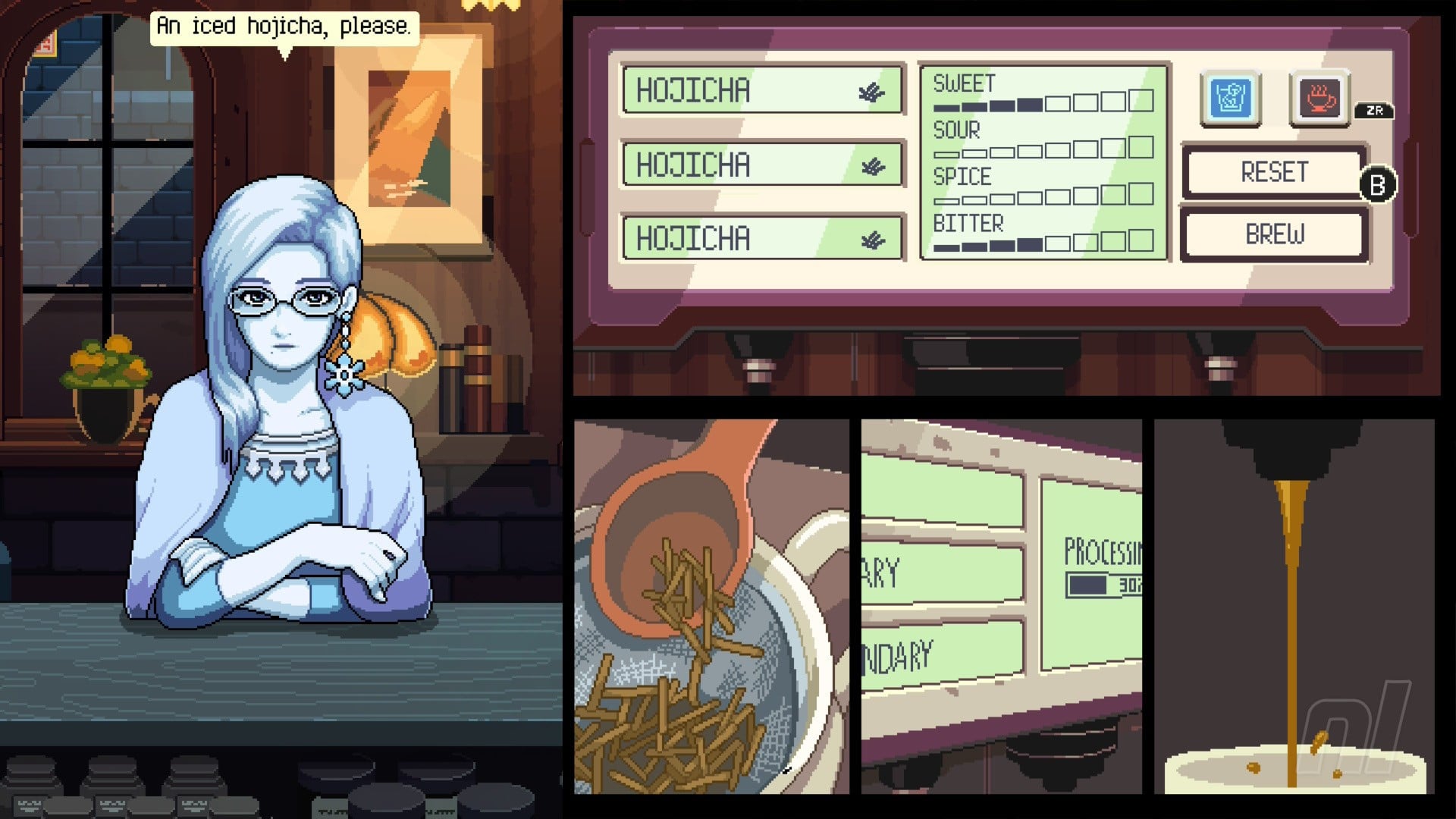
The main source of interactivity centres around the franchise’s returning drink-making minigame, in which you listen to a customer’s request at various story junctions and make them a beverage consisting of three ingredients. Some orders are cut-and-dry, while others are more abstract and require a bit of experimentation (and guesswork) on your part.

Coffee Talk Tokyo Review - Screenshot 4 of 8
Captured on Nintendo Switch (Handheld/Undocked)

Drink-making is not terribly complex, and it starts to feel rather repetitive with the limited options afforded to you, but there’s still satisfaction to be found in getting orders right. Doing so will also increase character affection levels, potentially unlocking new story events and endings.

Outside of making orders, you’ll primarily be listening to the cast as they open up about the personal challenges they face in their everyday lives. Discounting a returning face or two, Coffee Talk Tokyo features a standalone story with a new cast of characters based on Japanese yōkai.

The characters are just as interesting and three-dimensional as ever, with a satisfyingly diverse array of stories to tell: Jun, a water dragon and superstar singer-songwriter, faces a creative crisis that threatens to destroy his music career; Kenji, a freshly-retired kappa salaryman struggles to find purpose after a life spent working himself to the bone; Ayame, an amnesiac ghost trapped between the realms of life and death, desperately searches for clues to illuminate her unresolved business on Earth.

Coffee Talk Tokyo Review - Screenshot 5 of 8
Captured on Nintendo Switch (Docked)

These three are just a small smattering in the game’s overall tapestry of characters, which is excellent from end to end. While a few shine with particular brightness, each and every one feels well-developed, and it’s a joy to see how their stories interconnect with one another as they form bonds and talk through their problems. And, boy, what problems they are.

The emotional challenges that the characters face feel specific and somewhat mundane, yet realistic and relatable for players of different backgrounds and experiences. It runs a wide gamut of topics: life after a traumatic injury, learning to accept the cultural shifts of new generations, grieving the loss of loved ones, how well-intentioned support can still feel like pressure, and plenty more.

These topics are treated with the maturity they deserve, and the game strikes an effective balance between broaching topics with delicacy and refusing to pull punches on their hard and often complicated truths. In several cases, the game offered perspectives on issues that I had never considered before — valuable lessons and advice that I hope to carry forward.

Coffee Talk Tokyo Review - Screenshot 6 of 8
Captured on Nintendo Switch (Handheld/Undocked)

Of course, none of this would work all that well if Coffee Talk Tokyo’s character dialogue wasn’t rock solid, and it’s more than up to the task. Though the game does stretch the line of credibility a bit in terms of how considerate and thoughtful its characters can be (there is a mighty number of gentle “Are you okay?” proddings), it’s all done in the service of getting everyone to open up and have genuine, meditative conversations.

Dialogue feels organic as distinct personalities mesh and clash with one another in unexpected ways. None of these characters is perfect, and the way they bounce off of each other’s idiosyncratic personalities as they discuss what’s on their minds imbues the game’s musings with real personality and weight. I’ll fully admit that there are some hard-hitting lines and sequences in here that made my eyes more than a little watery.

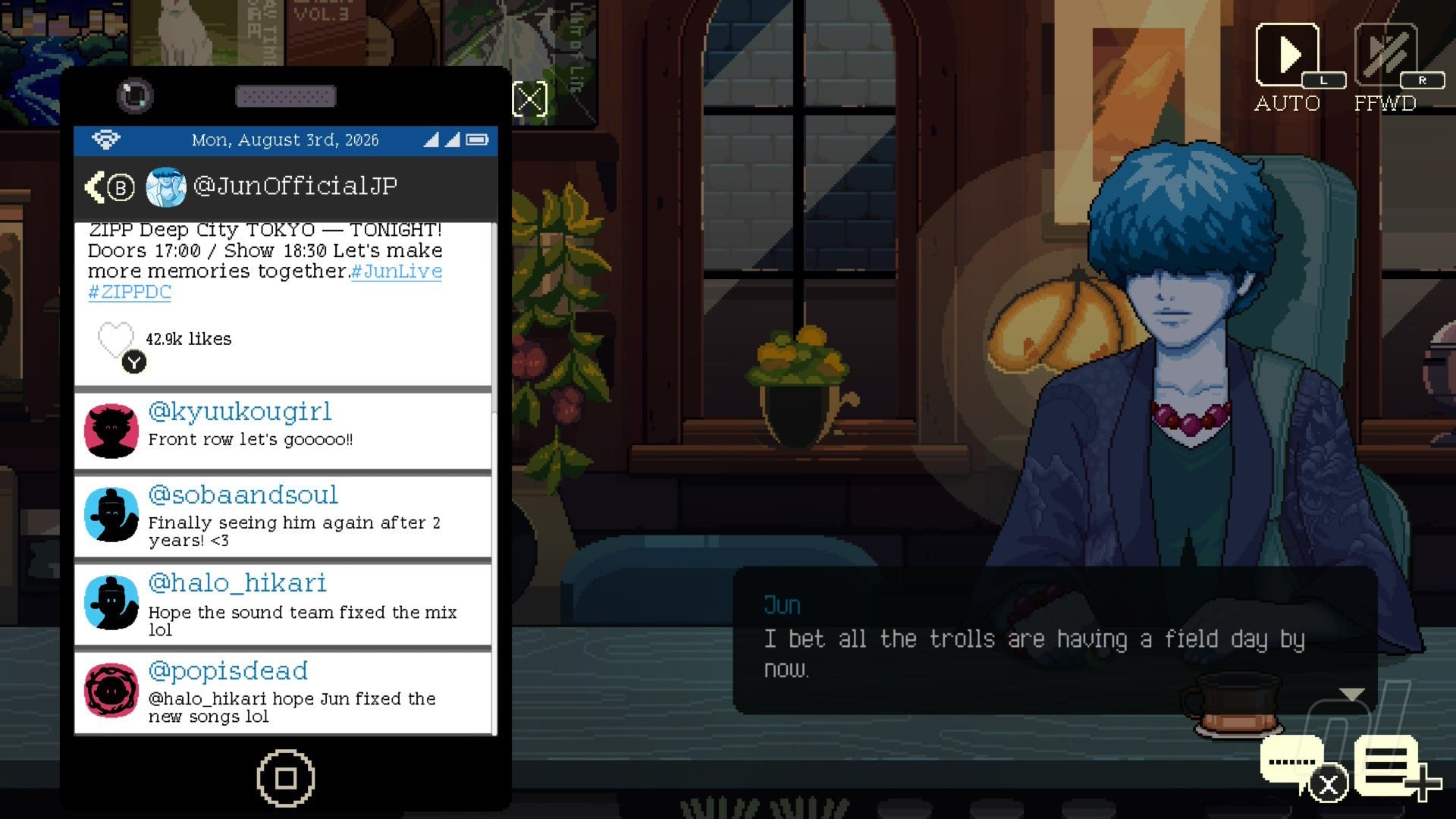
In addition to the main interactions between characters, you can also whip out your phone at a moment’s notice to scroll through the in-game social media Tomodachill and read posts from characters that give additional insight on their interests, relationships, and general state of mind as the story progresses. Reading certain posts can impact story progression, but it’s also just fun to see what characters are up to when they’re not sitting at your bar and sipping on a drink.

Coffee Talk Tokyo Review - Screenshot 7 of 8
Captured on Nintendo Switch (Docked)

Completing a single playthrough of Coffee Talk Tokyo offers a satisfying conclusion to the game’s narrative on its own. However, the game incentivises repeat playthroughs through alternate paths, additional dialogue sequences, and multiple endings for characters based on your drink choices and Tomodachill engagements.

Replayability is further bolstered by the game’s two extra Endless modes: one which lets you make drinks for customers at your own pace for as long as you want, and another which challenges you to correctly make as many drinks as possible within a set time limit. These side modes are nice inclusions but ultimately minor distractions from the game’s real meat, which lies in its core narrative.

On top of everything else, Coffee Talk Tokyo has great presentation across the board. The pixel art is some of the best in the business, from the cosy interior of the coffee shop to the expressive character emotes. The relaxing soundtrack of lo-fi beats, lovingly crafted by returning series composer Andrew “AJ” Jeremy, serves as the perfect auditory backdrop for ruminations over steaming cups of tea and coffee.

Coffee Talk Tokyo Review - Screenshot 8 of 8
Captured on Nintendo Switch (Handheld/Undocked)

All told, Coffee Talk Tokyo retains every part of what made its predecessors so great and successfully translates it all into a new Japanese-flavoured package. That said, it’s still quite a familiar package for anyone who has played either of the previous two games. While there are more options for drink-making and a couple of other minor refinements, the game doesn’t take any massive swings in developing its gameplay systems. It still has the same bones, and they’re very strong bones, but I wouldn’t mind the series taking an opportunity to deepen its scope and introduce a few more fresh twists on the now tried-and-tested formula.

Conclusion

Coffee Talk Tokyo may lean into the refreshed stylings of its new, titular locale, but the series’ foundation of listening to deep conversations about the complexities of life while brewing a host of delicious drinks is still intact and just as enjoyable as ever. The issues this eclectic cast of pixies, ghosts, and other creatures face are ironically some of the most human you’ll find in any visual novel out there — and you might just be surprised at how much you take away from their journeys of hardship and self-discovery.

It definitely falls more on the iterative side of sequels as far as its gameplay systems go, but there’s still plenty of substance to satisfy regulars and, perhaps, bring in a whole host of new customers as well.

Posted on Leave a comment

It’s Official, Nintendo Is Heading To Gamescom This Year

Gamescom Logo
Image: Gamescom

After putting together a staggering on-floor presence last year, Nintendo has announced that it’ll be returning to Cologne this summer for Gamescom 2026.

The news was shared by the Nintendo DE X account, confirming that the company will be in attendance throughout the whole event from 26th – 30th August. Naturally, there’s no information on what games it’ll have to show at the moment, but we’ll be keeping an eye out over the coming weeks for more details.

As a reminder, the company let attendees go hands-on with the likes of Metroid Prime 4: Beyond, Pokémon Legends Z-A, Elden Ring: Tarnished Edition, Final Fantasy 7 Remake Intergrade, Hollow Knight: Silksong, and Hades II at Gamescom 2025 — and we still don’t have a release date for one of those, a whole year on.

Whether Elden Ring makes its mighty return this year remains to be seen, but we’ve got our fingers crossed that there will be another first-party title or two that we’re yet to hear about.

What do you think Nintendo has up its sleeve for Gamescom 2026? Let us know in the comments.

Posted on Leave a comment

Using GameChat Will Actually Boost Pragmata’s Performance On Switch 2

If you’ve played Pragmata on the Switch 2, then you’ll know by now that it’s a pretty solid port from Capcom. Visuals look nice, it performs well, and it’s just a damn good game through and through. But what if you could push the performance even further?

Well, as demonstrated by the chaps over at Digital Foundry, you can, and it’s all tied to GameChat. So essentially, playing the game normally will yield a frame rate of around 47-53fps depending on the situation, but if you shrink the display down while using GameChat, this will actually increase the frame rate.

So when playing with the GameChat display set to ‘medium’, the frame rate will increase up to around 58fps, while shrinking it down even further boosts it up to that 60fps sweet spot. The reason? According to DF, decreasing the size of the display will also shrink the resolution down, with the ‘medium’ size yielding results of 432p, and the ‘small’ size coming out at 360p.

It seems, however, that this is a quirk limited to RE Engine games from Capcom, at least at the time of writing. Similar tests were performed on Layers of Fear from Bloober Team, and it seems that using GameChat at all, regardless of the display size, negatively impacts overall performance.

So, is it ideal? No, far from it. But if you’re adamant about playing Pragmata at 60fps, then it looks like you can do so by loading up a GameChat screen and shrinking the display down. Bonkers, right?

Will you be testing this out? Let us know your thoughts with a comment in the usual place.

Posted on Leave a comment

Hands On: The Classic Zelda Formula Is In Safe Hands With ‘The Adventures Of Elliot’

The Adventures of Elliot: The Millennium Tales
Image: Square Enix

The “classic” Zelda format has been on hiatus for a little while now. Echoes of Wisdom certainly tapped into a nostalgic vibe, but for a new top-down Zelda, you’ve got to go all the way back to 2013’s A Link Between Worlds to get your typical set-up of unlockable dungeons, Sage collecting, and puzzles with clearly-designed solutions. Even then, it was a lot more open than the 2D titles before it, thanks to Ravio’s item rental. My point is, Zelda is a different beast in this post-BOTW world, and who knows when Nintendo will next return to its roots?

Fortunately, we don’t need to sit around waiting for the House of N to get that classic Zelda fix. Many other developers have picked up the mantle in recent years, but few have reminded me of SNES Hyrule quite as much as Square Enix’s The Adventures of Elliot: The Millennium Tales.

You might recall this one rounding out the July 2025 Partner Direct. I wouldn’t blame you if it slipped your mind, however. The HD-2D art style, while still gorgeous, is hardly as groundbreaking today as it was back in 2018, and that name… talk about word soup, eh?

A demo arrived shortly after its reveal, which, upon closer inspection, had more than a little Zelda in its DNA. All these months on, I see that the Hylian vibes have grown even stronger.

I was lucky enough to go hands-on with an even bigger chunk of the game at a recent Square Enix preview event, where I played through roughly 90-minutes of dungeons, battles, and a good helping of open-world exploration. My biggest takeaway is that ‘Elliot’ is how you remember your first Zelda game, overflowing with mystery, puzzles, and adventure possibilities. Nobody does Zelda quite like Nintendo, but Square Enix is taking a damn good run at it.

Just in case this one slipped your mind, ‘Elliot’ is an action RPG from Square Enix’s Team Asano — the team that brought us the likes of TRIANGLE STRATEGY, Bravely Default, and the Octopath series — alongside Bravely Default II co-dev Claytechworks. It follows a young hero named Elliot (funnily enough), who, joined by his fairy companion Faie, sets out into a monster-filled open world and hops through time to save a princess.

It’s all so very Zelda-coded that if Tingle had cropped up in one of the rooms, I wouldn’t have batted an eyelid.

If that’s not ringing any bells for you, well, the set-up is Zelda to a T, and while Elliot is a little more chatty than the mostly-silent Link, Faie is absolutely Navi, Tatyl or Tri — albeit a slightly more useful variant with a ‘Partner Chattiness’ option to tweak to your liking.

My demo started in the Doorway Ruins, a dungeon that appropriately greeted me with a huge, red locked door. Taking the side routes led me through a series of bouncing-light mirror puzzles, treasure chests, bombable walls and solutions hidden between multiple floors, all before a final boss key kicked me back into the very room I started in to unlock that first passage and face the boss inside.

It’s all so very Zelda-coded that if Tingle had cropped up in one of the rooms, I wouldn’t have batted an eyelid. But there’s more to ‘Elliot’ than mere imitation. While the puzzles and dungeon layouts themselves were immediately familiar, there’s an unexpected depth under the surface.

Take Elliot’s combat skills, for example. We’ve all seen the sword, bow and arrow, bombs and boomerang before, but this hero can wield them like no 2D Link ever could. Aside from the ability to aim in all eight directions, there’s an upgrade system that packs in bonus abilities in return for collectible Magicite — shards of which can be found in smashed pots or monster remains. These boosts include arrows hitting multiple enemies, self-aim projectiles, or more powerful swing in certain scenarios, and they can be toggled on or off as you please.

Adding even more variety to proceedings, Faie comes with a batch of special abilities of her own. A few I saw include granting Elliot a burst of speed or warping abilities, but some of these can also apply to combat. The ‘Ignite’ skill, for instance, lets Faie chip away at enemies on one side of the screen with flame attacks, while Elliot takes a more traditional sword-and-shield approach on the other. It all allowed for a level of customisation that made exploring the overworld a blast.

Once I left the dungeon, I was only able to see a small section of what Philabieldia has to offer, but I was immediately drawn to the snowy Whiterea region; it’s so densely packed with secret caves, micro dungeons and shrines, I could have spent my entire time in a small segment alone and still only scratched the surface. Bearing in mind that the overworld and all its challenges will change as Elliot travels between different ‘Ages’ (think Hyrule as Child Link vs Adult Link in Ocarina of Time), this promises to be a rather beefy adventure.

I spent my time getting to grips with the attack patterns of the impressively varied enemies, collecting cats (yes, really), and uncovering hidden paths to yet more loot, but this was one of those joyous preview sessions where I could scan the room and see 10 different journalists embarking on 10 different missions.

I’m sure that the titular tale of ‘The Millennium Tales’ will be interesting enough to keep us on the main path (I didn’t really get a sense of any narrative in this brief look), but for all those prone to getting lost in a side quest or two, watch out for this one.

It should go without saying, but yes, this HD-2D joint is another stunner. The character sprites are just as detailed as we’ve come to expect from this art style now, but perhaps more so than any HD-2D title before it, the backdrops feel truly alive. Be it the glint of a treasure chest on a far-off platform, or the glow of a fire enemy in a dark cave, Philabieldia is a treat for the eyes — I’m already making an advanced apology to my screenshot button for the repeated mashing that’s in store.

I should note that my preview took place on PS5, but based on everything I saw in last year’s Switch 2 demo, I’m hopeful that the game will hold up every bit as well on Nintendo’s hardware as it does on the more powerful system, especially as it’s only coming to the newer Nintendo console, unlike Octopath Traveler 0. Keep those fingers crossed, folks.

With a final bit of dungeon exploring under my belt (in the wonderfully fantasy-named Dragon Pillar Dungeon, of all places), my preview came to an end. If the demo had my curiosity, this session fully had my attention. June is already looking like a busy one, but I’ll certainly be putting some time aside to see what else ‘The Adventures of Elliot’ has in store for me.


The Adventures of Elliot: The Millennium Tales launches on Switch 2 on 18th June.

Will you be checking this one out next month? Let us know in the comments.