Prepare your ‘Oh man, I am old‘ GIF of choice, because Toy Story is celebrating its 30th anniversary. We’ll let that gut punch sink in for a minute, but it’s not all bad news, because Digital Eclipse has announced that it’s got a pair of releases coming to mark the occasion.
This one will launch on 15th October, with pre-orders starting today.
Here’s a brief rundown of what you can expect, plus some screenshots, from Digital Eclipse:
Rewind and retry instantly: Roll back gameplay to retry difficult sections without restarting. Save and load anytime: Pick up and play exactly where you left off, and save progress when needed. Customize gameplay experience with Rex’s Cheat Code: Use Rex’s cheat codes to immediately unlock characters, levels, and bonus play modes including invincibility and unlimited lives. Learn with Practice Mode: Learn how to play by watching guided playthroughs or playing in practice mode. Modernized “How to Play” guides: Get straight to the action with simplified, fully localized instructions adapted for modern systems. Enhanced visuals with classic options: Play in upgraded, high resolution that brings the original look to life, or switch to the original PlayStation 1 presentation for a nostalgic feel.
Those after something from a little later in the Toy Story gaming world might prefer Toy Story 3 Complete Edition, a modern remake of the 2010 tie-in game. We have fond memories of this one from back in the day, too, and it’ll also launch on 15th October.
Once again, here are a couple more details and some screens:
Relive the adventure in Story Mode: Journey through locations, from Andy’s Room to Sunnyside Daycare, as Woody, Buzz Lightyear and Jessie embark on an action-packed adventure. Dynamic gameplay with co-op and character swapping: Switch characters on the fly to use each character’s unique abilities to overcome challenges. Team up with a friend in a local co-op. Explore, create, and play in Toy Box Mode: Step into a vibrant Wild West town inspired by Woody’s Roundup. Take on missions, unlock new content, and complete rewarding missions. Fun for all ages: Accessible controls, light platforming and open-ended gameplay provide a creative, low-pressure experience for new players, while still offering depth and charm for longtime fans. Enhancements: Up to 4K resolution and 60 frames per second on supported platforms.
The two releases will be available separately for digital purchases, but a physical edition will pack all six titles together in the one box. Pre-orders for the physical will also go live today, with the official launch coming — you guessed it — on 15th October, too.
Will you be checking out either of these on Switch (2) later this year? Let us know in the comments.
It feels like just yesterday that Final Fantasy VII Remake Intergrade launched on Switch 2, but here we are, a mere five months later, and the sequel is almost here too.
Final Fantasy VII Rebirth launches on our beloved hybrids on 3rd June (that’s tomorrow!), and today, we can get an idea of what the full game has in store as the reviews start rolling in.
We had a great time with the sequel here at Nintendo Life, granting it an 8/10 in our review and calling it “a tremendous addition to the growing Switch 2 catalogue”, despite some tech issues. Here’s a snippet of our thoughts, followed by the link to the full review:
Though there are some noticeable performance and visual concessions, these ultimately don’t detract enough from the game’s quality to derail the experience. I’d absolutely recommend you pick this up if you consider yourself a fan of JRPGs – Square Enix knocked this one out of the park, and it more than deserves a spot in your library
Of course, we’re not the only ones with a review out there, so below we’ve rounded up a handful of ’em to show the spread of opinions across the web. And yes, the following are only about the Switch 2 version — you’ll find no PS5 or PC thoughts in here!
We’ll kick things off with a meaty 9.5/10 from Gaming Boulevard, describing Rebirth as one of Switch 2’s “defining showcase titles”:
Rebirth isn’t merely another major third-party release arriving on Nintendo hardware. It’s proof that the platform can host modern blockbuster RPGs without sacrificing their identities.
RPGamer was similarly optimistic in its 4.5/5 review, with the performance being the only minor sticking point:
Technical compromises aside, Final Fantasy VII Rebirth stands as one of the best RPGs currently available on Switch 2 and a hugely impressive new realization of a classic that already defined the genre decades ago.
CGMagazine came in with a marginally lower 8.5/10:
I still think this is a must-play; Rebirth is one of the best games of the current generation, and even with its warts here, it deserves to be experienced by lapsed Final Fantasy fans or avid JRPG players alike.
Much like us, Pocket Tactics gave Rebirth an 8/10, and described the port as the “superior way to play portably” over the Steam Deck:
I’m primarily a portable gamer, meaning I’m much more forgiving of ropey graphics and framerate drops, so I happily completed Rebirth, and if I ever choose to do another replay, it will definitely be on the Switch 2.
Finally, COGconnected rounds us out with an 80/100, pointing to many of the performance pitfalls outlined above:
Rather than obsessing over what’s running at what framerate, I found myself instantly sucked into the game once more. It takes no time at all to forget that I’m playing a port. Which is high praise, especially for a Nintendo console.
Everyone seems pretty positive, no? The Switch 2 port currently sits at an 86 Metascore based on 27 reviews — a notable drop from the 92 of its PS5 counterpart, but perfectly respectful nonetheless.
Will you be checking out FFVII Rebirth on Switch 2? Let us know in the comments.
Yooka-Laylee dev Playtonic Games has been teasing an announcement on social media over the past couple of days, and now a listing for ‘Super Yooka-Laylee Kart’ playtest has appeared via SteamDB (thanks, Gematsu).
The listing includes art and a logo, suggesting that the studio’s recent teases (including the couplet “Collecting quills is far too slow, There may be faster ways to go…”) are indeed pointing to a racing game.
There’s no official word as yet, and therefore no confirmation on what platforms this may come to if it is Playtonic’s next project.
Here’s the logo that appears in the listing — Image: SteamDB
If you’re unfamiliar, SteamDB is a website and tool that tracks all publicly available data on Steam, including behind-the-scenes stats and uploads.
If true, Super Yooka-Laylee Kart would follow last year’s Yooka-Replaylee, which reworked the team’s first game and Kickstarter hit for modern platforms. An update in April brought 60fps performance to the Switch 2 version.
Reckon this is legit? Are you in the market for a Yooka-Laylee kart racer? Dreaming of a Diddy Kong Racing spiritual successor, perhaps? Let us know below.
It’s official, folks, LEGO has finally lifted the lid on its new range of Pokémon sets, complete with its fancy new Smart Play tech.
This might not be all that surprising to those who have been following the leaks in recent weeks, but hey, an official reveal is always a treat. We also have a release date, with all of the following sets launching on 1stAugust 2026.
There are 12 new sets in the Smart Play range, all of which deploy LEGO’s new interactive brick to make the ‘mon rumble, speak and otherwise emote when moved or placed near each other — though the brick itself is only included in the new Charizard and Pikachu sets.
They range in size (and price) from the 831-piece Umbreon vs. Garchomp Championship Battle set to the little 88-piece Jigglypuff Concert. Quite a bit smaller than the initial Pokémon sets, then, but a strong shout to bring in a younger audience.
We’ve been lucky enough to check out the sets already. Here’s a closer look at each of them, accompanied by their brick count and the all-important price:
£17.99 / €19.99 / $19.99
240 pieces
Create your own paradise picnic with the new LEGO® Pokémon™ Berry Bash with Bulbasaur and Bidoof SMART Play™ Compatible set. Compatible sets are great for building play on their own. Add SMART Bricks from any All-in-One set to unlock interactive battles and bring their play to life! Whether they’re starting the journey or expanding their team, LEGO Pokémon SMART Play sets offer responsive fun that keeps the adventure going – from bonding to battling like a true Pokémon Trainer.
Please note that some external links on this page are affiliate links, which means if you click them and make a purchase we may receive a small percentage of the sale. Please read our FTC Disclosure for more information.
£109.99 / €119.99 / $119.99
751 pieces
Bolts meets flames in an epic showdown with the new LEGO® Pokémon™ Charizard vs. Jolteon Ultimate Battle SMART Play™ All-in-One set that brings play to life! Kids can play like Pokémon Trainers as they catch, bond and train for battle with some of their favourite Kanto Region Evolutions. All-in-One sets contain everything you need to unlock interactive fun. Combine All-in-One sets with Compatible sets and make their Pokémon Trainer journey unforgettable.
£17.99 / €19.99 / $19.99
198 pieces
Get ready for seismic adventures with the new LEGO® Pokémon™ Charmander and Geodude’s Cavern Clash SMART Play™ Compatible set. Compatible sets are great for building play on their own. Add SMART Bricks from any All-in-One set to unlock interactive battles and bring their play to life! Whether they’re starting the journey or expanding their team, LEGO Pokémon SMART Play sets offer responsive fun that keeps the adventure going – from bonding to battling like a true Pokémon Trainer.
£79.99 / €89,99 / $89.99
782 pieces
Ghostly mischief meets bone-clubbing bravado in the new LEGO® Pokémon™ Cubone and Gengar’s Spooky Showdown SMART Play™ Compatible set. Compatible sets are great for building play on their own. Add SMART Bricks from any All-in-One set to unlock interactive battles and bring their play to life! Whether they’re starting the journey or expanding their team, LEGO Pokémon SMART Play sets offer responsive fun that keeps the adventure going – from bonding to battling like a true Pokémon Trainer.
£44.99 / $49.99 / $49.99
429 pieces
The hunt for Mew is on! Pilot your drone for a glimpse of one of the most elusive Pokémon with the new LEGO® Pokémon™ Drone Search for Mythical Mew SMART Play™ Compatible set. Compatible sets are great for building play on their own. Add SMART Bricks from any All-in-One set to unlock interactive battles and bring their play to life! Whether they’re starting the journey or expanding their team, LEGO Pokémon SMART Play sets offer responsive fun that keeps the adventure going – from bonding to battling like a true Pokémon Trainer.
£54.99 / €59,99 / $59.99
623 pieces
Search for hidden riches with the new LEGO® Pokémon™ Eevee and Lapras’s Treasure Hunt SMART Play™ Compatible set. Compatible sets are great for building play on their own. Add SMART Bricks from any All-in-One set to unlock interactive battles and bring their play to life! Whether they’re starting the journey or expanding their team, LEGO Pokémon SMART Play sets offer responsive fun that keeps the adventure going – from bonding to battling like a true Pokémon Trainer.
£12.99 / €14,99 / $14.99
88 pieces
Mesmerise the audience into a delightful trance with the new LEGO® Pokémon™ Jigglypuff Concert SMART Play™ Compatible set. Compatible sets are great for building play on their own. Add SMART Bricks from any All-in-One set to unlock interactive battles and bring their play to life! Whether they’re starting the journey or expanding their team, LEGO Pokémon SMART Play sets offer responsive fun that keeps the adventure going – from bonding to battling like a true Pokémon Trainer.
£59.99 / €69,99 / $69.99
605 pieces
Build the experiment that couldn’t be contained with the new LEGO® Pokémon™ Mewtwo’s Lab Break SMART Play™ Compatible set. Compatible sets are great for building play on their own. Add SMART Bricks from any All-in-One set to unlock interactive battles and bring their play to life! Whether they’re starting the journey or expanding their team, LEGO Pokémon SMART Play sets offer responsive fun that keeps the adventure going – from bonding to battling like a true Pokémon Trainer.
£29.99 / €34,99 / $34.99
313 pieces
Bring home the adventure with this trio of Paldea Region partner Pokémon in the new LEGO® Pokémon™ Sprigatito, Fuecoco and Quaxly Battle SMART Play™ Compatible set. Compatible sets are great for building play on their own. Add SMART Bricks from any All-in-One set to unlock interactive battles and bring their play to life! Whether they’re starting the journey or expanding their team, LEGO Pokémon SMART Play sets offer responsive fun that keeps the adventure going – from bonding to battling like a true Pokémon Trainer.
£24.99 / €29,99 / $29.99
320 pieces
Start your Pokémon Trainer journey in top gear with the new LEGO® Pokémon™ Trainer’s Buggy Adventure with Squirtle SMART Play™ Compatible set. Compatible sets are great for building play on their own. Add SMART Bricks from any All-in-One set to unlock interactive battles and bring their play to life! Whether they’re starting the journey or expanding their team, LEGO Pokémon SMART Play sets offer responsive fun that keeps the adventure going – from bonding to battling like a true Pokémon Trainer.
£59.99 / €69,99 / $69.99
400 pieces
Spark endless adventures with the new LEGO® Pokémon™ Training House with Pikachu SMART Play™ All-in-One set that brings play to life! Kids can play like Pokémon Trainers as they catch, bond and train for battle with Pikachu. All-in-One sets contain everything you need to unlock interactive fun. Combine All-in-One sets with Compatible sets and make their Pokémon Trainer journey unforgettable.
£69.99 / €79,99 / $79.99
831 pieces
An unstoppable force meets an immovable wall with the new LEGO® Pokémon™ Umbreon vs. Garchomp Championship Battle SMART Play™ Compatible set. Compatible sets are great for building play on their own. Add SMART Bricks from any All-in-One set to unlock interactive battles and bring their play to life! Whether they’re starting the journey or expanding their team, LEGO Pokémon SMART Play sets offer responsive fun that keeps the adventure going – from bonding to battling like a true Pokémon Trainer.
Will you be picking up any of the new Smart Play sets? Which one is your favourite? Let us know in the comments.
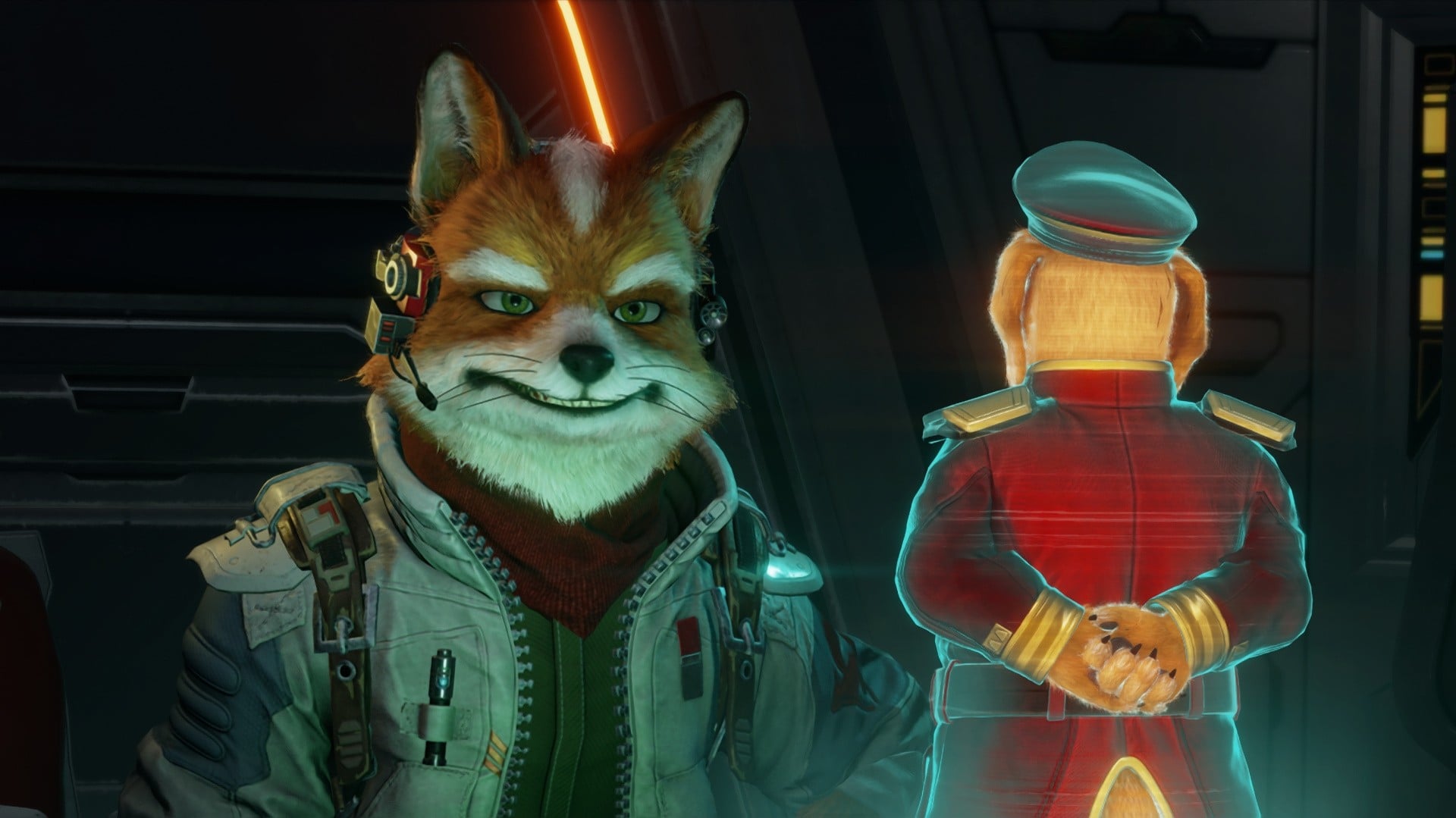
I grew up on Star Fox and Star Fox 64 (or Starwing and Lylat Wars as they liked to be called in Europe), but it’s safe to say that my initial response to the reveal of Star Fox (2026) was…mixed.
I’m still not convinced it’s going to set the gaming world on fire, but having now played the game after being invited by Nintendo to do so, I am a lot more positive than before, and I’m certain that only part of that is due to nostalgia.
Despite wanting to blast through an entire run in the 75-minute preview, I was only allowed to play Corneria, Meteo, Fichina, and Sector Y through a mix of single player and the new co-op mode that has one person manning the gun (me) using mouse controls, and another (one of the two other Alexs present at the event) handling the swooping and barrel-rolling.
Very first impressions were very much ‘Well, this is Star Fox 64 again,’ which isn’t surprising seeing as it’s definitely Star Fox 64 again. After entering Corneria city proper once I’d exhausted a life by slamming into the walls to see what the death screen was like, the changes became far more apparent.
Yes, this is Star Fox 64 again, but the past 29 years have been very kind to the industry’s graphical fidelity. Obviously, the game looks better, but more importantly, Corneria City actually looks like a flipping city now.
Frankly, all the environments I was able to look at were much more ‘believable’, which you’d bloody hope for nearly 30 years of innovation, but in the city specifically, the billowing smoke, the licking flames, the overbearing feeling of Andross’ forces – it all makes the atmosphere so much thicker, and not just because of all the carbon monoxide.
And what controls to move through it! The Arwing feels substantially snappier, more responsive, and much more like a lightweight fighter jet/spacecraft than it ever has before. It didn’t matter what level I was in; the controls paired with a practically flawless (to my trained eye) 60 frames per second just felt like shaking off decades of dust and detritus.
And it doesn’t stop there. As I was playing co-op with another Alex, I got to try out the mouse controls, which I mentioned earlier but felt the need to reiterate in case you’re skimming. I wouldn’t normally go for this myself, being more of a gyro-aiming boy, but for anyone looking to get a high score, this could well be the best way to do it.
The Arwing feels substantially snappier, more responsive, and much more like a lightweight fighter jet/spacecraft than it ever has before
Or it would, if it didn’t lack one key feature. In Star Fox, and indeed Star Fox 64 — which I only learnt on the day — you can disable the lock-on of your charge shot by holding both ‘ZL’ and ‘ZR’ together (or ‘Z’ and ‘R’ on the N64). Doesn’t sound very useful, but what it does do is provide you with more bonus hits if you manage to land this free-aim charged shot.
However, this is not possible when using mouse controls (from my testing), at least in the co-op mode that I played. A crying shame, and hopefully something Nintendo addresses in the future.
Anyone who’s seen anything of the game almost certainly will tell you that it is gorgeous, and I’m happy to report that it looks even better in person. No more so than in the rather splendidly put-together cutscenes, which feature some genuinely great voice acting and voice direction, the latter of which is sadly quite rare in this industry.
All the characters are deeper than ever as well, with Falco in particular being even more bitchy than usual, which I absolutely adored. “Last I checked, a real team needs a real leader” isn’t going to necessarily go down in any books of quotations, but it certainly gave me a hearty chuckle.
Image: Alex Olney
There’s one final string to Star Fox’s bow (beyond the AR avatar thing, which was admittedly quite amusing), and that’s the eight-player multiplayer battles. Anyone who played the equivalent in Star Fox 64 will be pleasantly surprised to hear that this new offering is head and shoulders above the original.
For one thing, it’s 4v4, Team Star Fox vs Team Star Wolf, meaning already there are more bodies to fling your shot at. On top of this, there are objectives to complete which vary per stage, such as capturing a zone, which is all I was allowed to do in this preview. It’s all points-based, though, so even if you ignore the objectives but shoot down a boatload of foes, you can still easily take the crown.
Furthermore, there are a load of fodder enemies as well, which provide a smattering of points for taking them down. This, combined with the Arwing’s new, more agile movement and far, far superior performance, makes this a seriously enjoyable dogfighter.
Having said that, with only three levels with their own unique objectives, I can’t help but feel that the biggest worry is longevity. Will swathes of people be playing this online in six months’ time? I wouldn’t bet on it.
But all in all, if Nintendo were set on remaking Star Fox 64, I’m not sure if they could’ve done a better job than what I’ve experienced so far. I still think a new game would’ve been my preference, but if I’m not excited for Star Fox (2026), I’m not Alex from Nintendo Life.
Star Fox‘s newest release is on the horizon, and today, Nintendo has shared a new overview trailer to remind us all what’s in store.
The trailer (first released on Nintendo Today!) provides a similar rundown of the game’s new features that we first saw back in the surprise reveal Direct, but there are a few bits of new footage in there, including a closer look at the multiplayer Dogfight’s special power-ups.
It continues to look really rather marvellous, with the updated visuals being a particular standout with every new bit of footage we see. If you want to find out what we make of the game so far, you’ll find our new preview hands-on below.
What’s your hype level looking like for Star Fox on Switch 2? Let us know in the comments.
When Square Enix originally announced that Final Fantasy VII Remake was coming to Switch 2, it came with the promise that Final Fantasy VII Rebirth and its eventual sequel would also be coming. While Remake established itself as one of the finest and most advanced titles for Nintendo’s new platform, there was lots of talk about whether the same would be true for the next instalment.
Known for its significantly expanded scope and open world, 2024’s Rebirth was a system showcase on more powerful hardware, and squeezing it down to a handheld seemed an impossible task. Though it doesn’t make the leap unscathed, I’m happy to report that Final Fantasy VII Rebirth is every bit as engaging and enjoyable as the versions you can find on other platforms – this is easily one of the greatest JRPGs of the last several years, and that’s still true of the Switch 2 port.
Captured on Nintendo Switch 2 (Handheld/Undocked)
Following on from the thrilling conclusion to Remake, Rebirth continues the journey of Cloud and the gang as they leave behind Midgar to pursue and confront Sephiroth before he can bring about the shared vision they received of the planet’s ultimate destruction.
The far-reaching consequences of the party’s choice at the end of their last adventure are still unknown, leading to a delightful tension as you move through the story not entirely sure if events will play out in quite the same way that they did the first time we experienced this world in 1997. While there’s still more yet to come with the planned Part 3 finale of this years-long project, this middle chapter nonetheless still feels like it tells a satisfying standalone narrative.
As you explore all corners of this much wider and expanded world, the interpersonal dynamics and relationships of the party are often brought to the forefront, highlighting the family-like nature of this eccentric band of warriors, flower-pickers, bartenders, and ninjas.
Yuffie is the dorky little sister of the group, while Cloud is the aloof but caring older brother, and the banter between them and all the party members as they forge a new fate for their world helps to keep the occasionally oddly-paced plot from feeling too awkward. This is a story that’s just as much about these people learning to trust and understand each other as it is about the quest that brought them together in the first place, which makes the finale of their penultimate outing all that much more impactful.
Captured on Nintendo Switch 2 (Handheld/Undocked)
I also loved how the storytelling effectively straddles cartoonish absurdity and gritty seriousness. The same game that portrays an incredibly graphic incident in which a village is burned to the ground with most of its inhabitants beneath also has no problem introducing an adorable dolphin companion whose playful aid is a mandatory component of plot progression. In a lesser game, such conflicting tones would run the risk of making the story seem unfocused and meandering, but Rebirth knows how to balance its various plot components to make for an adventure that feels as whimsical as it is unpredictable.
In stark contrast to Remake, which was a largely linear experience, Rebirth throws the doors wide open by giving you a massive open world to explore at your leisure. Spread out over a handful of densely packed zones, there are a variety of side quests, world activities, and minigames that lead to an incredibly varied gameplay loop which feels expansive without feeling like it devolves into an overdone checklist of copy and paste content.
Not only are there many well-written sub-narratives and character moments stashed away in various side quests, but every activity feels like it meaningfully contributes to the gameplay loop without being tacked on for the sake of padding the runtime.
Captured on Nintendo Switch 2 (Handheld/Undocked)
For example, not only do Lifesprings grant you rare crafting resources and some interesting notebook entries that expand on the lore for the region, but finding them all in a zone unlocks a unique boss hunt in the region that acts as its own reward above and beyond the resources it grants you.
The clever way in which the various activities have been neatly threaded together with both gameplay and story relevance makes it incredibly easy to get sucked into taking a couple of hours to complete everything on a portion of the map you just happened to be running through, powering up with rewards and learning more about the region as you go.
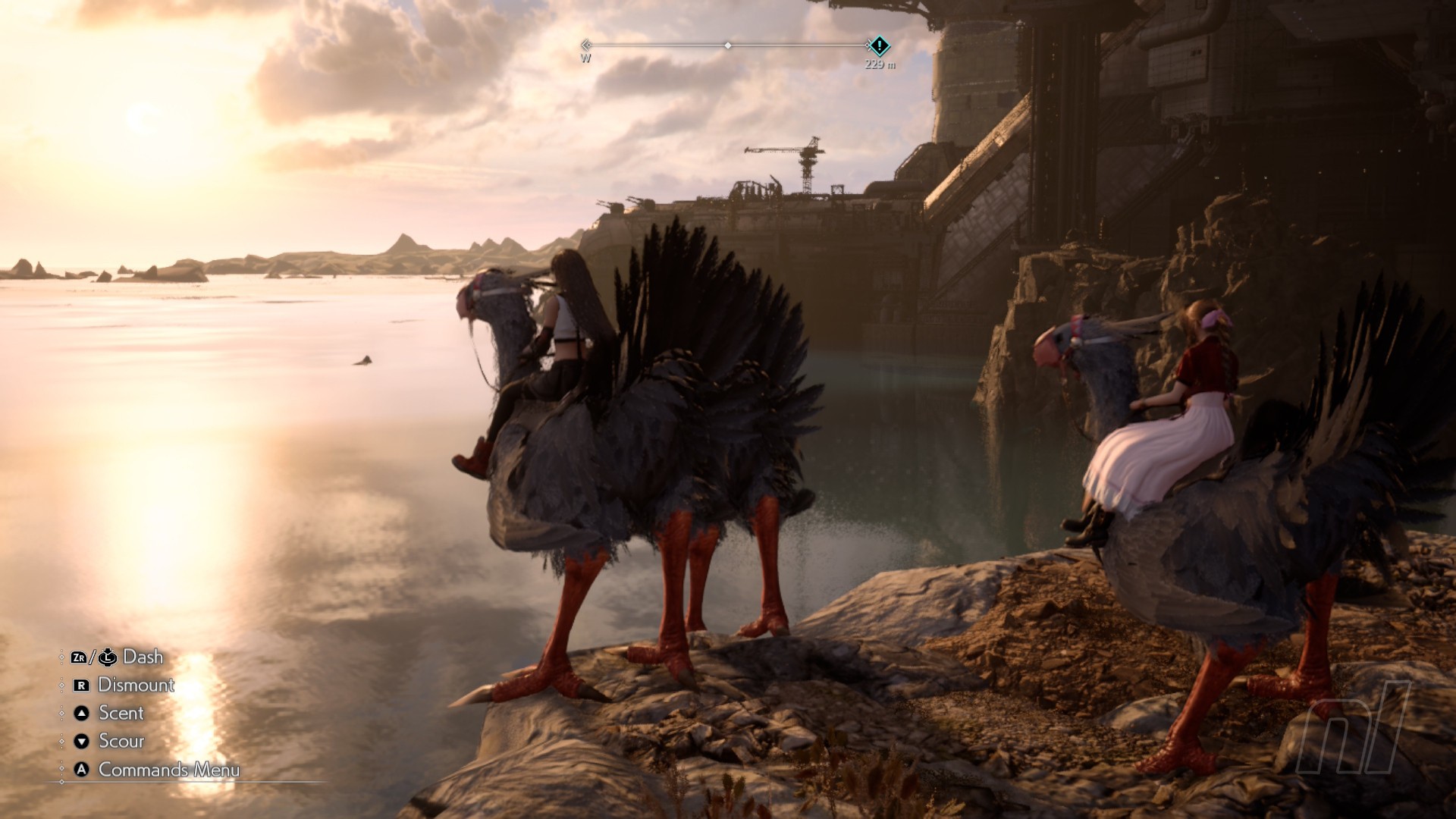
This is easily one of the most addictive open-world games I’ve played in a while, striking that balance between meaningful content density and giving you and the environment room to breathe. Roaming the land atop a chocobo, I never felt at a loss for interesting things nearby to get caught up in, but I also felt like the current region was usually wrapping up right around that point where the content fatigue was just beginning to set in.
Captured on Nintendo Switch 2 (Handheld/Undocked)
Perhaps best of all, you aren’t required to do any of it; all the optional content that fills the world is there for those who want to dig in deeper, while those who just want to keep the story moving can do so without worrying about being woefully underpowered.
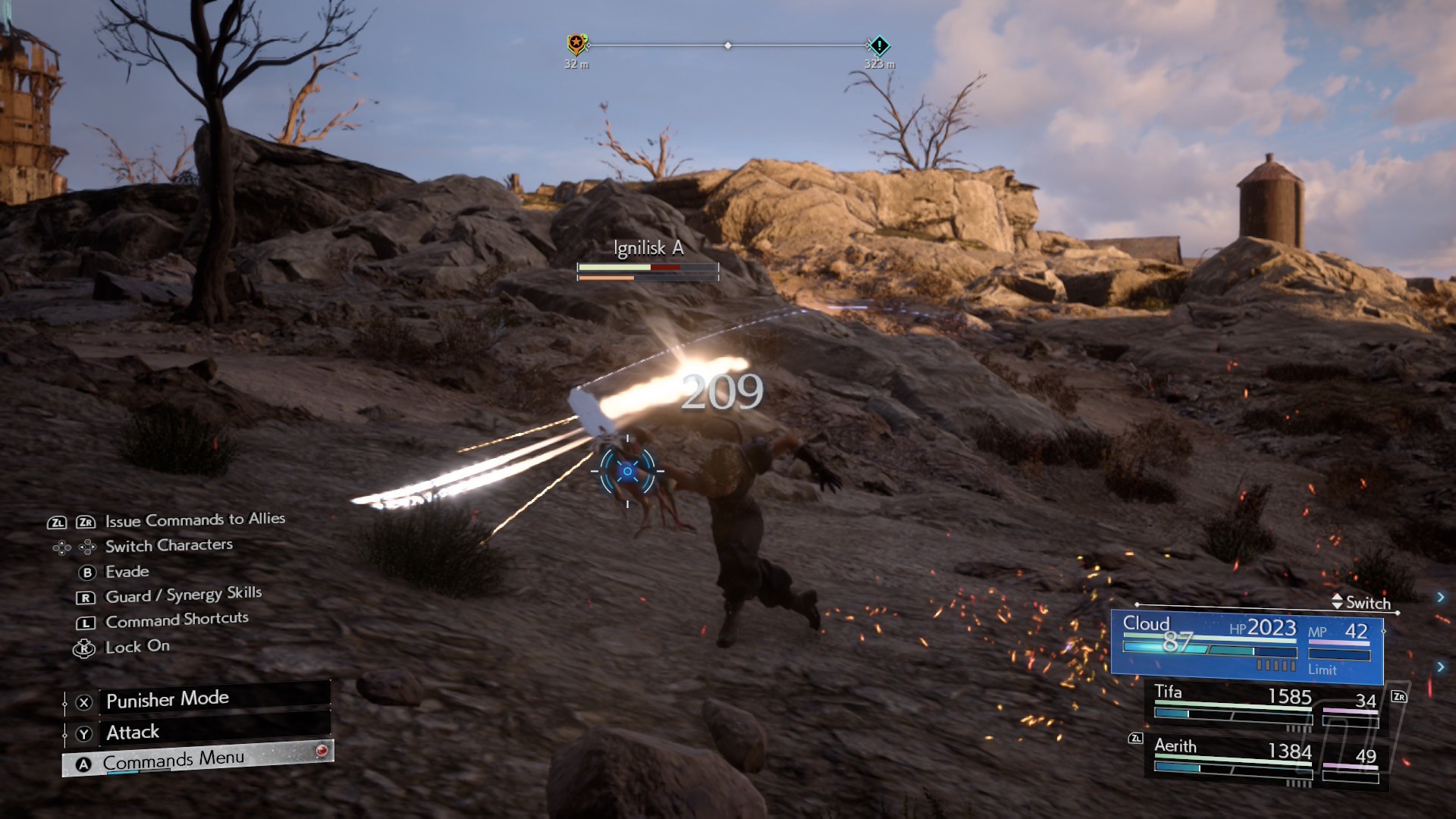
When you get pulled into fights, combat largely continues the system pioneered in Remake, with some welcome tweaks that make it feel both snappier and more strategic. Somewhat similar to the Xenoblade games, there’s a balance here between basic, quick attacks and more powerful abilities governed by cooldowns.
As you mash the attack button and guard against incoming attacks, you’ll build up part of your ATB gauge with each hit. Once a bar fills, you can then essentially freeze time while you select a spell or ability from the quick menu to help level the playing field more. This is where you can take advantage of elemental weaknesses an enemy may have and more effectively build up their stagger bar, which will temporarily stun them and lower their defence once it’s filled.
Every playable character has their own distinctive playstyle, creating a lot of gameplay variety to play around with as you switch between party members in the heat of battle. Tifa’s kit is built around close combat and building up stagger meters, with a signature ability that can manually raise her ‘chi’ level and enable her to deal more damage. Barret, on the other hand, specialises in long-range combat with his arm cannon and introduces a subtle rhythm element to the rotation where well-timed button presses charge his cannon faster.
To tie it all together and to encourage you to swap around the party more mid-fight, Rebirth has added in Synergy Skills and Abilities, iterating on a mechanic introduced in the Episode INTERmission DLC from Remake. Unlocked through each character’s skill tree, these powerful moves will see active party members teaming up for spectacular combo attacks that usually lead to some temporary bonus effect like no MP costs on spells or a more rapidly charging ATB gauge. These take some setup and planning to pull off, but just one of them activated at the correct moment can turn the tide of a fight that slowly wasn’t going the right way.
Captured on Nintendo Switch 2 (Handheld/Undocked)
All of this makes for an electric action combat system that manages to be fast-paced and energetic without descending into a mess of particle effects and mindless button mashing. There’s just as much focus on careful planning and strategy as there is on raw skill and dexterity, creating an interesting push and pull where you oscillate between beating up foes while reacting to enemy attacks and taking a quick breather to decide what spell to cast next and whether you should switch to another character to start building towards another Synergy Ability.
With practice, you start to pick up on the nuances of each character and how to operate your party as a singular unit that’s stronger than the sum of its parts, leading to a tremendous sense of satisfaction when you take down a mighty foe through incisive exploitation of its weaknesses by leveraging your active party’s strengths. Few games out there manage to balance turn-based and action combat so elegantly – Square has set a high bar for itself to meet for the inevitable Part 3 conclusion.
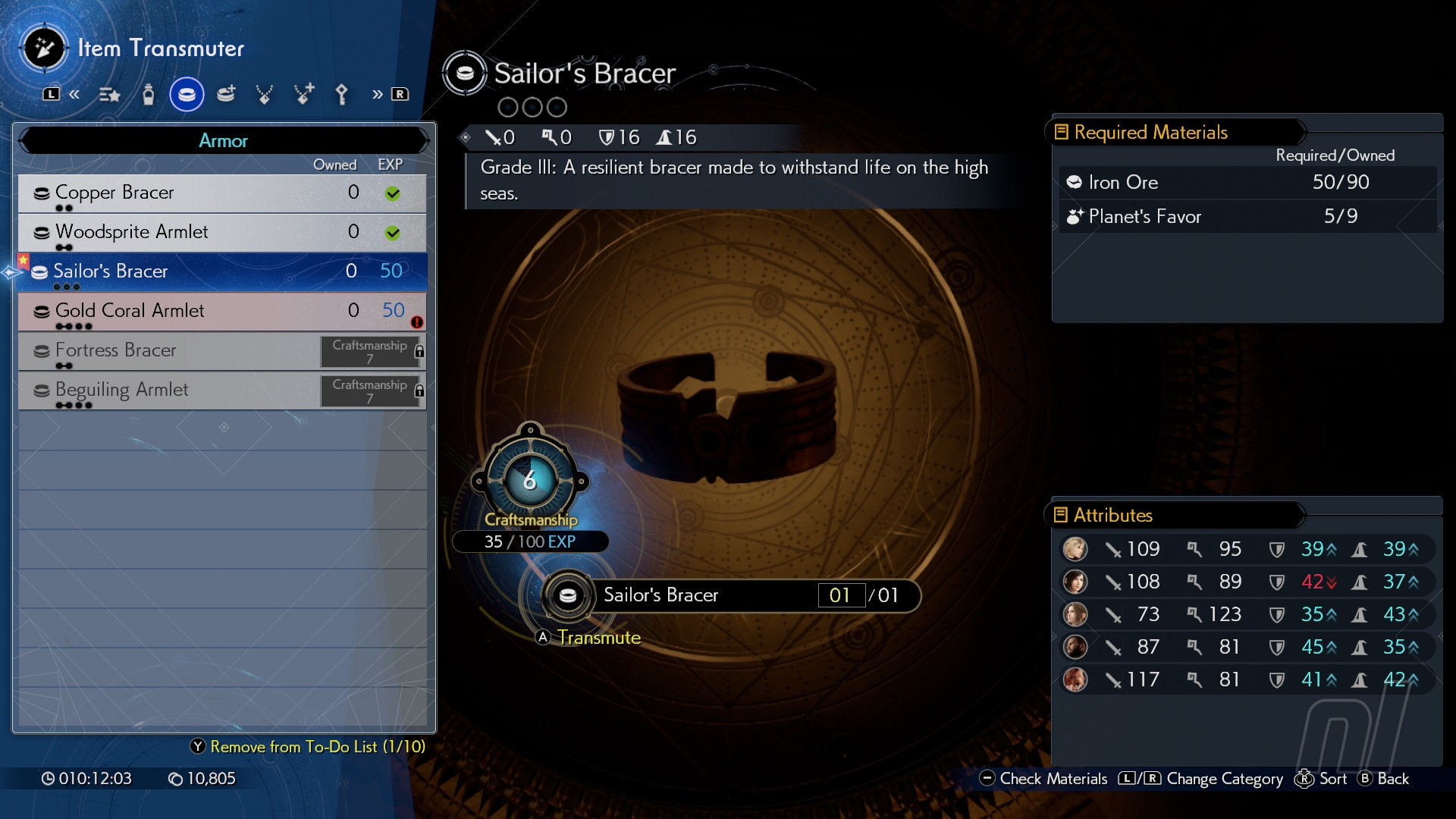
When it comes to tinkering with your party, the Materia system has returned as the central component of character building, allowing for a more flexible take on a class system that lets you mix and match moves and abilities. Obtained as shop, exploration, or combat rewards, Materia orbs represent individual spells or abilities which can be levelled independently to enhance their effectiveness. Some can be linked to others to enhance their effects, such as the Magnify Materia turning a single target spell into an AoE, while others will grant flat bumps to various stats, such as health or luck.
Captured on Nintendo Switch 2 (Handheld/Undocked)
Materia fits seamlessly with the flexibility of the open-world design, giving you all sorts of options to try out with various team compositions as you swap characters and loadouts to accommodate whatever content you’re challenging. Sometimes it’s best to load up Aerith with attack spells against a boss with various elemental weaknesses, while other times it’s better to swap some of those spells out for more defensive options that favour healing and aggro control. No Materia is locked to any one character, giving you a lot of leeway to mix various roles as you build your team to their strengths.
Each character also has a folio skill tree you can access, where SP earned from each level up can be invested in new abilities and passive stat bumps. These are each tailored to the intended strengths of each character, such as Aerith having many magic and MP-related nodes in hers, but there’s also still lots of room for you to prioritise various builds for your character as new nodes are unlocked and you have to make tough decisions about where to invest your limited SP.
When you’re getting tired of exploring the world or beating up monster packs, there are tons of minigames to master that break up the gameplay loop with some refreshing ideas. Whether you’re racing on the backs of chocobos or defending territory in a miniature RTS, a bunch of different genres are explored that are both addictive and surprisingly in-depth without distracting from the core gameplay. As an added plus, it feels like many of these minigames were designed with a handheld device in mind, making them feel right at home on the Switch 2 screen in portable mode.
Captured on Nintendo Switch 2 (Handheld/Undocked)
On the topic of minigames, I’d be remiss not to talk a bit about Queen’s Blood, a shockingly deep, ongoing side mode that could legitimately do well as a standalone release. Played on a simple 3×5 grid, this easy-to-learn card game focuses on finding a balance between claiming territory and building up points as you take turns trying to outwit your opponent. There are NPCs scattered throughout the whole game who you can challenge, each of which has a unique card you can win.
What at first just seems like another little time-waster soon reveals mechanical depth as you start to get more into deckbuilding and better understand the meta. Between levelling up your rank, winning powerful cards from rivals, and hoovering up booster packs at new stores you come across, there’s a strong sense of progression as you amass a mountain of cards and design new decks to counter your opponents’ increasingly advanced strategies. Suffice to say, there’s a lot to dig into with this, and it’s impressive how many hours you can drop into this optional mode alone.
Captured on Nintendo Switch 2 (Handheld/Undocked)
From a visual standpoint, Rebirth is one of the most impressive titles yet released for the Switch 2, but there are some caveats.
On one hand, the character models are expressive, the fight animations are full of bombast, and the wide shots of the valleys and mountains of the regions you explore capture the grandeur of the expansive world. In so many ways, this release compares favourably to other platforms.
And yet, some concessions have had to be made to fit this on a portable device. Regardless of whether you’re in a smaller environment or out in the open world, the resolution is noticeably fuzzy and soft around the edges, as if you’re viewing the action through smudged glasses. Meanwhile, pop-in is abundant, with all kinds of environmental assets loading in constantly right in front of you if you’re moving too quickly, and distant enemies will sometimes be completely frozen in place until you get close enough to them for their animations kick in.
Captured on Nintendo Switch 2 (Docked)
Amid all this, the frame rate does its best to adhere to 30fps, and it largely does so. But there are many moments where it appears to dip into somewhere in the low-to-mid-20s when there’s too much happening at once on screen. These frame drops weren’t serious enough to interrupt or alter my gameplay experience, but they’re both frequent and significant enough to be a noticeable issue.
All of which is to say, this is not the version of Rebirth to play if you’re particularly sensitive to graphical or performance hiccups. Yet despite the compromises, the overall experience is remarkably consistent, especially in portable mode. This is the epitome of a port that looks ‘good enough’ — there’s a fair amount to validly scrutinise about the image quality, but it’s also not difficult to ignore those rougher edges as you immerse yourself in this engaging world.
We missed Gravity Circuit when it first arrived on Switch back in 2023. A bunch of you recommended it to us in our recurring ‘Games We Missed‘ feature, and it has since been sitting in the ‘Overwhelmingly Positive‘ reviews bracket on Steam. In short, we’re rather pleased to see that a sequel is in the works.
Domesticated Ant Games and Dear Villagers have announced that Gravity Circuit 2 will launch on Switch at some point in 2027.
You’ll find the reveal trailer above, and trust us, it looks really rather polished. This time around, you’ll be able to play as both Kai and Cable, the latter bringing a new long-range combat approach to the platforming action. There are new abilities and Booster Chips on offer, too, all of which sound (and look) like another wonderful slice of nostalgia.
Here’s a handful of screenshots from Dear Villagers, so you can see all the gorgeous pixel art up close:
We’ll be keeping an eye out for a firmer release date down the line, but that 2027 window leaves plenty of time for another playthrough — or a decent opportunity to finally tick it off the backlog. To celebrate the sequel announcement, the dev is giving away the game for free on Steam until 14th June. You’ll find no such discount on the eShop, we’re afraid.
Will you be checking out Gravity Circuit 2 on Switch next year? Let us know in the comments.
Mouse: P.I. For Hire was one of the highlights of April, and if you happen to be playing this noir-style cartoon detective FPS on the Switch 2, Fumi and PlaySide have today released the “very first patch” for this version of the game.
Alongside this, the team has also announced a second “larger patch” for Nintendo’s new hybrid system is on the way. This one will come with quality of life enhancements, more bug fixes, and “importantly”, performance and optimisation improvements. More information about this update will be shared in the coming weeks.
As for today’s patch on the Switch 2, it includes a “range of bug fixes, addressing crashes, blockers, sound distortion in menus, issues with certain side quests” and more. Here’s the official patch notes from the Mouse: P.I. For Hire website:
Mouse: P.I. For Hire Patch v1.0.6 (Switch 2) – 2nd April 2026
Nintendo Switch 2:
Version: v1.0.6.
Bug Fixes & Improvements
Fixed a crash that players could experience if setting their game language to Traditional Chinese both on the initial game start and in the in-game settings.
Refined a small number of Simplified Chinese translations for better accuracy.
Resolved a graphical issue in ‘The Reel Deal’ that could prevent players from progressing due to a black screen when lens distortion was disabled.
Fixed a collision issue in the ‘Mouseburg Opera’ mini-boss arena to prevent players from getting stuck on the environment.
Corrected a logic error in the ‘Far Wetlands’ level, where the ‘No Entry Yet’ door could fail to open after all enemies were defeated.
Improved enemy pathfinding in the ‘Quagmire’ level to stop enemies from snagging on doors and level geometry, potentially causing a progression blocker.
Improved the final boss’s movement patterns during the ‘The Reel Deal’ encounter.
Ensured the D-Namite throwing animation triggers consistently.
Addressed a bug where shotgun-wielding enemies would occasionally fail to deal damage to the player.
Fixed a blocker in ‘Curdsville’ that was preventing some players from progressing.
Resolved an issue where players could find themselves in a loop when trying to accept Controller rebindings.
Added the option for players to opt out of data and analytics tracking in the Settings Menu, not only during onboarding.
Settings sliders, weapon wheel and other menu items no longer have corrupted or glitchy sound effects when interacting with them.
Added the game over music track to be excluded when the ‘Toggle Licensed Music’ setting is set to ‘Off’.
Players will now be able to correctly collect a clue when freeing the jailed Cop in the ‘Clergy Row’ level.
Players will now no longer be able to get stuck on the 6 door sequence in the ‘Tinsel Ave.’ level.
Players will now no longer be able to get stuck in certain geometry in the ‘Wallop Bay’ level.
The NPC character from the Side Quest ‘Friends in Deep Places’ will now no longer go missing in the ‘Fart Harbor’ Level.
The quest item from the ‘Slugs in the Shell’ will now be appearing correctly in the “Fart Harbor” Level.
Improved background process cleanup when closing the game.
Improved quest handling to reduce cases where players may not have an active quest and find themselves softlocked.
Updated the Privacy Policy in-game.
Resolved an issue where blueprints could not be collected, locking the player from completing the ‘Blueprint, please’ side quest.
Fixed an issue where ‘Active Jobs’ would disappear after completing ‘Far Wetlands’, causing the player to be blocked from progressing.
Resolved an issue where weapon scaling damage would persists across game sessions.
You can find out more about how Mouse: P.I. For Hire runs on the Switch 2 in our performance and resolution post here on Nintendo Life. The developer detailed the exact specifications in both handheld and docked, and also revealed how the game’s performance and quality mode runs.
For more information about this title, check our review. We gave it an “excellent” nine out of ten stars, calling it a bold, risk-taking FPS.
“This animated noir mystery is a great achievement. It takes risks, it’s challenging, it strives to be bold – and it works.”
Will you be checking out this new update? How are you finding the experience on the Switch 2 so far? Let us know in the comments.
The latest UK charts are in, and just like last week, the top spot has been claimed by a newcomer — another one that’s heading to Switch 2 at some point, no less.
It’s 007 First Light that’s snuck off with the gold in its debut week, beating last week’s champ, LEGO Batman: Legacy of the Dark Knight, and sending it down to second. We can’t wait to check both of these out on Switch 2… whenever they give us the new release dates.