Posted on Leave a comment

Feature: Exploring The Dual Worlds of InnerSpace On Nintendo Switch

The latest offering from Dallas-based developer PolyKnight might not feature Dennis Quaid or an ’80s journey into Martin Short’s body, but it will take you on an interstellar trip into a universe where reality is collapsing in on itself. This galactic odyssey is none other than InnerSpace, and it’s set to be one of the most exciting – and the most visually striking – titles coming to Switch in 2018. In the shoes of the Cartographer – a space-hopping archaeologist, no less – you’ll fly your ship through empty oceans and abandoned skies as you document civilisations seemingly lost to time.

With a release date pencilled in for 16th January, we sat down with PolyKnight co-founder and producer Eric Brodie to talk building a flying game set amid inside-out planets, building a mysterious new lore for its Inverse setting and what it’s like to develop a game for Nintendo Switch.

The announcement trailer is gorgeous and pretty mysterious. Is there a lore, narrative or specific characters in the game?

Yeah, definitely! Because it’s a game about exploration and finding artifacts, we spent a great deal of time writing the history of the world. We wanted to make sure that everything you saw had a reason for existing, but also keep it at arm’s length so it would take some thought to discover its meaning. As far as characters, it’s a story about you and the Archaeologist in your journey to eventually leave the Inverse. The entirety the Inverse is dyingand discovering the reasons why makes up the bulk of the story.

Tell us a little more about the concept of InnerSpace and what players will experience once they venture into the Inverse?

We like to think of InnerSpace as a mix of ‘lean in’ and ‘lean back’ moments of gameplay.  During the lean in times, you’re solving puzzles in encountering each world’s demigod, flying through tight corridors and other challenges the test your flying skills. Then, juxtaposed with that are moments where you lean back in your chair and relax. During these moments you’ll collect relics, which not only give you some insight into the world and help to color your interpretation of the events that take place during the story, but also provide upgrades and unlocks. It’s this back and forth between these two modes that I think makes InnerSpace fun  moments of chill, bookended by epic story moments.

Switching between oceans and skies plays a big role in the game. Is there an emphasis on one or the other and how does each affect the game in terms of the story or objectives?

Making the underwater sections feel right was definitely really important for us. We didn’t want for players to completely ignore the water, especially if they found flying more fun than swimming. So, the airframe controls a little differently in the water, and I think is really fun to control in its own right. Various worlds will provide reasons to go underwater, but other than that, it’s wholly of your own accord, depending on how much of the world you want to explore and how many of the relics you want to find.

To us, the game tonally and aesthetically reminds us of titles such as Rime or Abzu. How important is the art style to the feel of the game?

Very important!  As a game about exploration, it was really important that we made a place that people wanted to spend time in. For example, even though we’re telling a story about a dying world, we opted to choose a depiction of decay that was still beautiful. That not only presented a unique challenge for us both aesthetically and narratively, but I’d also like to think provides a refreshing take on that type of setting.

Did it develop organically or was it decided early on?

A little bit of both.  Some early decisions were out of technical constraints, such as deciding to forego textures and rely entirely on shaders, while others were to achieve the look and feel that we wanted.  An example of this is how we looked to impressionist paintings to inspire how we handled our level of detail – as you play, you’ll notice that objects in a distance slowly fade into flat colors.

What are your influences from games or other media?

I think ideas for games can come from anywhere. For example, Super Mario Galaxy kind of spurred our thinking about designing games that utilized gravity in unique waysOver time, we thought about what it would be like to fly in a space where gravity behaved differently. As we thought about where a game like that would take place, we initially put the setting underground, taking inspiration from the anime Gurren LagannOf course, that setting changed pretty significantly as the idea matured.

What was your knowledge and interest regarding the rumors surrounding the console that would eventually become Nintendo Switch?

I was really interested to see what they were going to do next. From the moment I heard it was possibly a portable device, I was stoked because, honestly, the DS might be my favorite system.

While you were working on your game, when did the Switch become a platform of interest?

From the moment it was announced. From the very first days of working on InnerSpace, I think every single one of us at some point mentioned how cool it would be to have on a portable system. The Switch really offers the best of both worlds.

What was the Switch like to develop for?

Really great! Without getting into the weeds, the code team has told me that, as far as ports go, it was relatively painless. The biggest challenge was optimising for it so that it ran as smoothly as possible, but there was plenty of that to do, anyway, at the end of development that it fit pretty neatly into the pipeline.

What was your exposure to Nintendo growing up and do you have any favorite games/ franchises?

Oh man, how much time you have? I think that question differs depending on who in the studio you ask. Steve, our art director, is probably the biggest Metroid fan I know. Metroid Prime had a particularly significant impact on him. Tyler, our creative director, is a huge fan of Rare’s N64 games from the late 90’s, like Banjo-Kazooie (he also has a yarn Yoshi amiibo on his desk, for what its worth). I think both of those games, along with plenty of others from that time period, can be seen in the games we make.


We would like to thank Eric for his time. InnerSpace lands on the Switch eShop on 16th January 2018.
Posted on Leave a comment

Gaming Addiction Is Officially A Disorder, According To The World Health Organisation

Do you find it hard to resist picking up the controller, even when it’s at the cost of other important things in your life? You could be suffering from a mental disorder according to the World Health Organisation, which has just published its 11th International Classification of Diseases – the first of its kind since 1992.

The BBC reports that in the new guide, gaming addiction has been listed as a mental health condition for the first time ever.

According to the guide, symptoms of this ailment include:

  • impaired control over gaming (frequency, intensity, duration)
  • increased priority given to gaming
  • continuation or escalation of gaming despite negative consequences

The guide comes at a time when many nations are struggling to deal with the issue of increased levels of game time among its younger citizens. In South Korea for example, where online gaming is incredibly popular, the government has introduced a law banning access for children under 16 from online games between midnight and 06:00 AM. Meanwhile in China, internet giant Tencent has introduced limits on the number of hours children can play its games.

Despite these moves, there is still some doubt as to whether gaming addiction is as widespread an issue as some would have us believe. The University of Oxford in the UK recently conducted a study which suggested that increased screen time didn’t stop children from successfully managing other aspects of their lives.

Researcher Killian Mullan said:

People think that children are addicted to technology and in front of these screens 24/7, to the exclusion of other activities – and we now know that is not the case.

Our findings show that technology is being used with and in some cases perhaps to support other activities, like homework for instance, and not pushing them out.

Just like we adults do, children spread their digital tech use throughout the day, while doing other things.

Where do you stand on this issue? Do you think gaming addiction is a real concern, especially when you consider how much time we spend glued to screens watching TV, surfing the web or posting on social media? Given that gaming has positive benefits too, do you think this new guide could cause more harm than good, or do you feel (as with many things in life) too much of a good thing can be harmful? 

Let us know with a comment.

Posted on Leave a comment

How DOOM On The SNES Pushed The Hardware To Its Technical Limits

DOOM recently launched on the Nintendo Switch and while technical compromises had to be made in order to get it to run on Nintendo’s portable platform, we nevertheless praised it in our review for being a quality port that had enough of a flavour of the full-fat version of the game to be worthwhile.

It’s amazing to think that more than 24 years ago in 1993, a similar miracle took place when the original PC game of DOOM was ported to none other than the SNES. If only Digital Foundry had been around at the time to evaluate what an impressive port this was! UK-based publication Nintendo Magazine System gave the SNES port of DOOM a mighty 95% in their review and praised its use of the FX2 chip to make the magic happen.

So why bring this up now? Good question! Randy Linden was a programmer on the SNES port of DOOM and recently did an interview which sheds some light on just how challenging this project was:

I started the project independently and demo’d it to Sculptured Software when I had a fully operational prototype running. A bunch of people at Sculptured helped complete the game so it could be released in time for the holidays.

The development was challenging for a few reasons, notably there were no development systems for the SuperFX chip at the time. I wrote a complete set of tools — assembler, linker and debugger — before I could even start on the game itself.

The development hardware was a hacked-up StarFox cartridge (because it included the SuperFX chip) and a modified pair of game controllers that were plugged into both SNES ports and connected to the Amiga’s parallel port. A serial protocol was used to communicate between the two for downloading code, setting breakpoints, inspecting memory, etc.

As if all that wasn’t impressive enough, when asked if there were features which Randy wanted to include but couldn’t get working on the SNES he said:

Sure! More levels for starters — Unfortunately, the game used the largest capacity ROM available and filled it almost completely. I vaguely recall there were roughly 16 bytes free, so there wasn’t any more space available anyway!

However, I did manage to include support for the SuperScope, Mouse and XBand modem! Yes, you could actually play against someone online!

It’s kind of insane to think that somebody could play DOOM online on the SNES back in 1993, but there we are. Let us know what you think about these impressive ports of DOOM with a comment below.

Posted on Leave a comment

Switch Has Beaten The PlayStation 2’s Year-One Sales In Japan

The Nintendo Switch is selling incredibly well worldwide, and Nintendo has made bold predictions based on this amazing first year, with 20 million consoles predicted to be sold in the next financial year alone.

That might seem like a bold projection, but consider this – the Switch has just beaten the PS2’s year-one sales in Japan, and Sony’s console went on to become the best selling home gaming system of all time, with 155 million units sold globally. According to Famitsu, Nintendo has now sold just under 3.3 million Switch consoles in its homeland, while the PS2 sold 3 million.

The comparison with PS2 is an interesting one; both machines launched in early March (2017 for Switch, 2000 for PS2) rather than the more traditional Christmas window. Switch shifted an impressive 520,000 units in its first month, but the PS2 sold an amazing 900,000 consoles. 

However, Nintendo’s console has benefitted from a solid first year of games, while the PS2 arguably suffered from a lack of titles which truly showed off its potential, at least in the first 12 months on sale. Sony also cited a production shortage as a key problem during most of 2000, which meant it couldn’t meet demand. Nintendo has had similar issues with supply over the past year.

While year-one sales hardly paint the definitive picture, it’s nevertheless interesting that the Switch has sold so well when compared to one of the most commercially successful gaming platforms ever; suggestions that it could potentially overtake the PS2 in terms of lifetime sales seem a little hasty, but it should be remembered that Nintendo’s console is a hybrid that offers both portable and home play – a fact which could potentially give it the edge when it comes to total units sold.

Posted on Leave a comment

Rumour: Konami Is Bringing Its WiiWare ReBirth Series To Switch

WiiWare wasn’t exactly inundated with quality games but it had a few solid-gold gems, three of which were part of Konami’s ReBirth series.

Developed by emulation experts M2, Gradius ReBirth, Castlevania The Adventure ReBirth and Contra ReBirth adopted a classic 16-bit visual style and aimed to replicate the look and feel of each respective franchise.

With WiiWare’s time now numbered (Nintendo is pulling the plug on the Wii eShop in 2019), it would make sense for Konami to find another digital storefront on which to sell these titles. The Switch eShop is perhaps the most obvious candidate. The rumour also states that a fourth game is in development.

While this rumour is a long way from being confirmed, we’d personally love to see all three games get a “rebirth” (ho ho!) on Switch. What about you?

Posted on Leave a comment

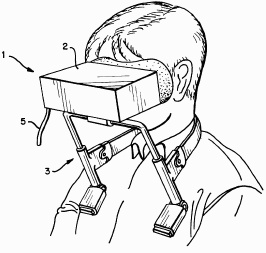
Random: This Could Well Be The Silliest Nintendo Switch Accessory Yet

We’ve seen some crazy third party accessories for the Nintendo Switch so far, with ‘The Switch Visor’ being one of our favourites for lazy players. 

However, the ‘Comfortable Hands Free Stand’ as spotted by eagle eyed game developer Jake Kazdal in Japan might take the biscuit.

Judging from the photo, the stand is suspended on a metal band which sits comfortably on the player’s neck. The stand offers between 7 to 14cm of movement and can be rotated in 360°. What more could you ask for?

If you could get over the sheer embarrassment of using it on a crowded tube, it might actually be quite practical when you think about it, but no, this is just plain ridiculous. It also reminds us of the equally silly mount for the Virtual Boy. Shudder.

Let us know if you’d give this Switch accessory a try in public with a comment below.

Posted on Leave a comment

Super Mario Odyssey Holds Its Own In The UK Software Charts

It seems like Christmas has been a strong sales period for the Nintendo Switch in the UK, at least from anecdotal evidence. The UK software charts for last week seem to back this up, with key Nintendo Switch games holding their own against PS4 and Xbox One behemoths such as Call of Duty: WWII, FIFA 18 (nobody seems to be buying the Switch version!), Star Wars Battlefront II and Assassin’s Creed Origins.

Based on the combined charts, the unstoppable juggernaut that is Super Mario Odyssey jumps from 7th place to 6th place this week. An impressive feat given the very strong multiformat competition at this time of year.

Mario Kart 8 Deluxe powerslides into 9th place from 11th and the mighty The Legend of Zelda: Breath of the Wild makes the leap from 20th place back to a respectable 10th. Of course, if you were lucky enough to find a Nintendo Switch under the Christmas tree this year, these are the must have games to go along with it.

We’re also seeing good momentum with sales of Splatoon 2, 1-2-Switch and Mario + Rabbids Kingdom Battle in the UK, too. Let us know your thoughts on the UK software charts with a comment below.

Posted on Leave a comment

Switch Owner Is Reunited With Their Lost Handheld Thanks To Reddit

What better way to kick off a brand new year than a heartwarming story about one gamer and their journey from lost Nintendo Switch to heartfelt reunion? A story involving the positive power of Reddit no less? Maybe we ate a little too much cheese on New Year’s Eve…

The story first popped up on Reddit last week when user Itcybun posted that a friend of their’s had found a Switch and wanted to know what to do next. Itchybun then reached out to Nintendo to help track down its owner, wisely holding off handing it into lost property. “I decided against bringing it to the lost and found office because the owner might not return to the location soon enough, and the console would then be auctioned off or something,” they wrote on Thursday.

In the meantime, another user just happened to be looking for their own lost Switch.

Turns out these two Reddit users were talking about the very same console. An hour and 15 minutes after the original post, a separate thread from user Pizzaboxmonster sent out an SOS in the Nintendo Switch sub-Reddit saying they’d lost their Switch on a bus at Frankfurt International Airport. “I’ve seen several posts about people losing their Switch so I thought I’d give it a try,” they wrote on the same day. “I know this has 0,000001% possibility to work, but here I go: Today, 27/12, in the bus from Terminal 2 to the Ryanair flight to Madrid. It’s in a black case, has two game cartridges in the card slots from the case and many eShop games. Last one played is Floor Kids.”

Pizzaboxmaster was already on their way back to Spain when they realised the Switch wasn’t with them, and knew that the chances of regaining said portable pal were slim to none. Thankfully, someone saw the two stories matched up and linked the two users up. A few security checks later and said console was winging its way back to its owner. Pizzaboxmonster was, understandably, ecstatic: “Today I love this community even more and especially that great user and person who decided that finding the owner would be more fun than just keeping it,” they gushed in an update. 

See, 2018 has already started strong with Switch firmly in hand. Have you guys ever lost a recovered a handheld console? The relief must be incredible…

Posted on Leave a comment

Random: You Can Now Play Ripened Tingle’s Balloon Trip of Love in English

Ripened Tingle’s Balloon Trip of Love, aside from having an absolutely wonderful name, is a game that was released for Nintendo DS in Japan back in 2009. The game sadly never saw a western release but, thanks to some very dedicated fan-translators, you can now play the full thing in English. What a time to be alive.

The game is strangely based on elements of The Wizard of Oz; Tingle is thrust into a fantasy world where he has to team up with equivalents of Scarecrow, Tin Man, and Cowardly Lion to win the heart of a princess. Tingle’s overall aim is to do a waltz with this princess during the great Dance Party in order to return to his own world.

Before you get positively giddy with excitement, however, it is worth noting that you’ll need a copy of the original Japanese game in order to apply the fan-made translation patch. If you do happen to have a copy lying around – today is your lucky day!

Are you a fan of Tingle? Would you like to see more games starring him in the future? As ever, let us know your thoughts below.

Posted on Leave a comment

Review: Stikbold! A Dodgeball Adventure Deluxe (Switch eShop)

Nintendo’s hybrid console is literally built for local multiplayer, and there is no shortage of incredible competitive and cooperative examples to get everyone milking, racing, snipping or dancing. While FIFA or NBA2K have the simulation side sewn up for now, Danish developer Swing Studios brings its retro themed and completely zany sports title Stikbold! A Dodgeball Adventure Deluxe to the Switch with a few extras compared to its 2016 console release.

Assuming the role of dashing, happy go lucky Stikbold player Björn and his more serious team mate Jerome, you have to deal with the devistation of coming second place in a highly prestigious Stikbold tournament. Their tyrannical coach is understandably not happy, and vows to push the dynamic, ball hurling duo to superiority once again. No only that, but Björn’s crush has been kidnapped. With regaining the highly coveted title of Stikbold champions and winning his damsels heart, Björn embarks on an adventure across sand, sea and even somewhere resembling hell.

In reality, stikbold bears a striking resemblance to dodgeball, albeit with a few tweaks to the rules. Individuals, pairs or trios face off against each other in a circular arena, with the surviving team declared the winner. If a team mate is knocked out, you are able to bring them back with a trusty, if a little time consuming high five. Serving as a tutorial, coach will remind you how to use accuracy as well as defensive and offensive maneuvers to be all conquering once again.

Despite stikblod being a sports title, and a party game, for all intents and purposes it controls like a typical twin stick shooter. It works really well, being easy to pick up but offering a satisfying level of mastery, which can especially come in to play when facing off against other human opponents. Move your player with the left stick, aim with a combination of holding ZR and the right stick. In addition, there are environmental hazards to quickly avoid as well as structures to use as cover or other, level themed objects to chuck. Learning more advanced moves such a catching an incoming projectile or being able to add curve to your throw sets you up to take on an increasingly tough array of rival teams, a variety of human and not so human bosses.

Spread across 12 stages and casual, professional or all star difficulty, the campaign might be short to some but there are three objectives to achieve in each level which adds replayability. In the early exchanges, these are essentially incentives to learn the extra tricks, but become a mixture of utilizing the environment, performing specific tasks with certain objects or avoid particular attacks. Rather than rehashing characters or stages, the number and variety in the campaign felt just right. 

Some stage specific hazards such as waves or a hippie’s Winnebago were hilarious diversions, and later stages require strategy and concentration to recognize and counter enemy attack patterns. As well as being able to play the story mode cooperatively, your AI buddy when playing alone is pretty responsive, and if you get knocked out, you’ll automatically switch players so you can revive your fallen teammate. Upon beating a stage, the NPCs become available to select in the games multiplayer modes. While they don’t have any specific special moves or other attributes, they are a fun and varied bunch.

Presentation wise, Stikbold’s blocky, vivid world and instantly likeable range of wacky, fully voiced (and amusingly unintelligible) characters are exaggerated and expressive, if visually a bit on the basic side. While the amount of environments may be limited, they all have personality and specific themes, hazards and characters.

Where Stikbold shines is in its local, drop in/drop out multiplayer. Up to six human players can compete in teams or individually in straight up quick matches, one of four mini games or a random selection of everything in the form of new addition retro style game show Wheel of Rumpus. While it is possible to play alone and add up to three bots with four levels of difficulty, its best to snap the Joy-Con off and get friends involved. The Wheel Of Rumpus can be set up to first to five, seven or nine points lasting roughly 20, 30 or 40 minutes.

Whatever you’re tasked with or whomever you’re team mate is, your goal is to win points to increase your own score. As a reward, you’ll earn glamorous accessories to kit your character out with such as hats or sunglasses. Challenges include hitting someone with a particular object, avoid instakill water balloons and so on. In most instances, felled players can return to seek revenge a la bomb karts from MK64 and fling things at remaining opponents to keep everyone involved.

The mini-games are brief and objective based but no less entertaining. Handyball is a team-based affair, with the side scoring the most goals in a set time emerging victorious. Pop Pop is a risk reward challenge, simultaneously trying to deplete your opponents beach ball while keeping yours intact. Crate escape allows you to lib rivals crates into the sea while safeguarding your own, and new mode Rainbow rumpus is a no holds barred, last person standing. All of the multiplayer modes strike a great balance of doing easy to understand and get started, but its perfectly possible to lose a few hours to a tourney or two, if you’re so inclined. 

Conclusion

Stikbold! A Dodgeball Adventure Deluxe fully deserves a place among Nintendo Switch’s already amazing line up of local multiplayer titles. It’s accessible yet deceptively deep twin stick-based mechanics make for a decent amount of challenge in the solo campaign, even if it’s a little on the short side. Even with no online, using bots or getting up to five other friends involved, multiplayer matches are a joy and always thoroughly entertaining. Striking a great balance between cooperative and competitive play styles, It’s combination of charming presentation and witty retro humour are sure to keep the laughs coming regardless of player demographic.