You may remember that towards the end of last year, HAL Labaratory – the studio behind such franchises as Kirby, Earthbound, and Super Smash Bros. – released its first smartphone game in Japan. Now, and with a slight name change, the game has finally been released worldwide.
Now titled Part Time UFO for western audiences, the game sees you using a claw – not too dissimilar from the ones that never give you prizes at arcades – to help people with their daily tasks. The idea is used quite extensively, too, with the same mechanic being used in a variety of different ways such as stacking things on top of one another, moving furniture around, and plonking cheerleaders on each other’s shoulders to create formations.
The game is available from iOS, Google Play, and Amazon stores for $3.99 / £3.99 and has no in-app purchases. This means, of course, that you’ll be paying that one-off cost to play the game without having to worry about spending too much on microtransactions or having to wait for certain things to unlock later down the line.
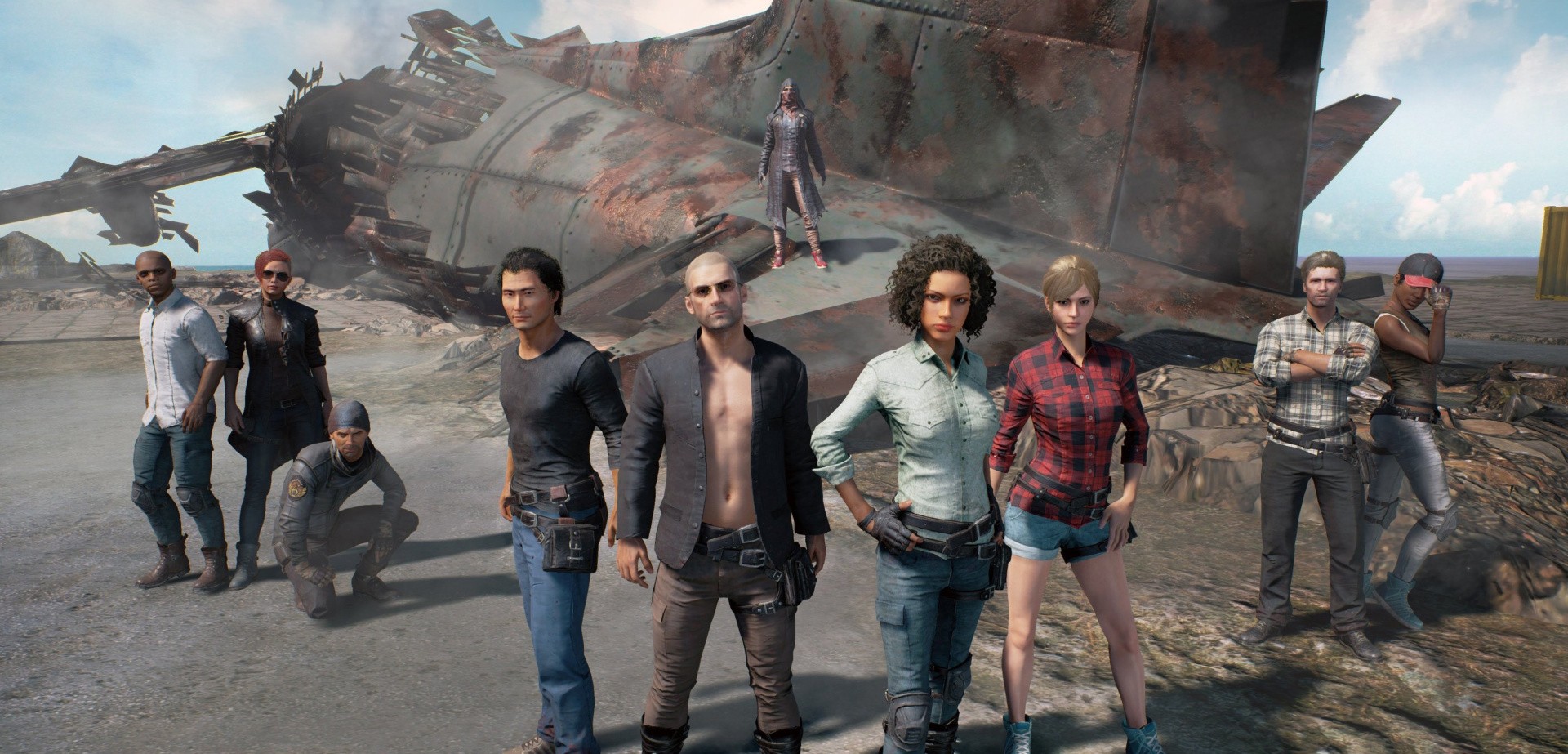
Playerunknown’s Battlegrounds is one of the world’s biggest games right now, attracting millions of players with its intense Battle Royale action. It’s also exclusive to the PC and Xbox line of platforms at present, but that’s going to change soon and the developers have stated that they want to bring it to as many systems as possible.
PUBG Corporation CEO Chang Han Kim is the one behind that particular comment, and many have cast doubt on whether the game could run properly on anything less powerful than an Xbox One X (a console on which PUBG doesn’t exactly perform smoothly at the moment). The notion of Switch hosting the game was mocked by many, but an interesting development has occurred since then: PUBG has come to mobile devices in China.
As you might imagine, the mobile version is subject to some serious cutbacks in terms of visual complexity, but the core experience remains intact – and according to Digital Foundry, it could point the way for a potential Switch version:
The concept of a PUBG Switch port seemed highly unlikely based on the issues we’ve noted with the Xbox One and even X versions of the full-fat game, both of which seem to struggle with CPU-based limitations – an aspect that would only be amplified on Switch.
What we’ve seen of PUBG on mobile is a bit of a game-changer though and presents a route to viability for a potential Switch conversion. At the very least it demonstrates that in handheld play, graphical reductions can have a positive impact on making the gameplay work on a smaller screen – something that would be crucial for Nintendo’s hardware. Secondly, while the CPUs in the likes of the Galaxy S8 and the Razer Phone are a generation or two ahead of Switch’s ARM Cortex A57s (with significantly higher clocks to boot), Tencent’s approach to scaling back PUBG does result in much less capable hardware managing a 100-player Battle Royale game with a performance level that is obviously higher than the Xbox One game in its most notorious trouble spots. It’s not hard to believe that this approach could benefit the Switch too.
However, Digital Foundry also point out that the mobile version of PUBG has to run across a wide range of potential hardware configurations, while a Switch port would benefit from a fixed target platform – something which could lead to a superior port, albeit one that would require some additional work:
In terms of setting a graphical threshold for what a potential Switch version could deliver, this port probably isn’t the best evidence. Although Nintendo’s console is indeed based on a mobile chipset that has hosted the same OS, the conversion tested here has to run on an extraordinary diverse range of lower power devices, using an OS and graphics API that is notorious for under-delivering on the core hardware’s potential. While aspects of the work here may prove helpful in helping to address problematic aspects such as the CPU question, Switch developers would have the advantages of targeting a fixed platform with a superb ‘to the metal’ development environment that has now proven itself many times over. Put simply, if PUBG does arrive on Nintendo’s hardware, we should expect more than a straight port of the Android game – but from our perspective, a lot of thought would need to go into a different, more bespoke execution.
Of course, all of this is pure speculation but we already know that PUBG Corporation is mulling over its options for when Microsoft’s console exclusivity period ends, and with Switch being such a hot ticket right now, it would be the perfect platform to port PUBG to. Perhaps this mobile version is simply the first step in that process?
Let us know what you think, and if you’d like some PUBG action on your Switch.
Golf-like platformer Midnight has been out on PC since January 2016, but with many an update and a slew of new content, developer Petite Games has decided to bring a retooled version – known as Midnight Deluxe, no less – to Nintendo Switch. And, best of all, it’s due out next week on 8th March.
With its Limbo-esque shadowy art style, you play a cute-looking cube that needs to traverse 70 challenging levels filled with obstacles to overcome and dangers to avoid. The golf-link comes in the form of its control scheme – you’ll fling your cuboid avatar and aim to land it in a sparkling portal without getting stuck or splatted.
The Switch version comes with full touchscreen control, and with enhanced graphics and that lovely piano soundtrack, it looks like Ninty’s handheld is getting another tricky platformer to add to its growing digital shop window.
Let us know what you make of this Angry Birds-esque curio and whether it’ll stay on your radar come next week?
Minnesota-based firm ColorWare has already made a name for itself with bespoke special edition consoles that mash modern hardware with designs that hark back to classic machines, and now it’s giving its 8-bit-style retro design a glossy black makeover.
ColorWare has released two designs – an Pro Controller 8-Bit and some Joy-Cons 8-Bit – which combine a rather fetching mix of black, grey and red accents. They’ll set you back $189 (£134) for the Pro Controller and $199 (£141) for the Joy-Con set, with shipping set for around three weeks.
So what do you guys think of these new designs? Will you be giving your Switch peripherals a retro redux? Let us know…
Last year, the unthinkable happened – the Switch got a new Doom game, the first since the ’90s. A remarkable technical accomplishment, Doom gained rave reviews – but if industrious hackers have their way, it won’t be the last slice of hellish FPS action we get on Switch.
As reported by Kotaku, there are other Doom games coming to the console, albeit unofficially. Late last year, kgDoom continued the happy tradition of trying to get id Software’s original 1993 outing onto every new piece of consumer tech by porting it to Switch.
Doom 3 has also been ported over, thanks to the fact that in 2011 id Software released the source code to the game. iodoom3 is a project which aims to get it running on as many platforms as possible, and Switch is included.
With Linux now known to be working on Nintendo’s console, the sky is really the limit here; there’s no reason why we couldn’t see Doom II or Doom 64 running on the system under emulation. It’s also worth pointing out that Doom 3: BFG Edition has previously been ported to the Nvidia Shield – a platform which runs on Tegra tech, just like Switch. It therefore wouldn’t take a lot of work to bring that enhanced version over (officially), either.
Raids are a relatively new feature in Pokémon GO. Just like in the MMORPGs that inspired these encounters, raids require teamwork from all nearby players to bring down powerful Pokémon known as Raid Bosses.
Not only do these battles provide exclusive rewards, but they’re also the only present way to get your hands on Legendary Pokémon. But we’ll go into more details about how Raids work in a separate guide.
This one focuses on the Raid Bosses themselves. Below, we’ll provide a list of these, and organise them by tier so you know exactly what you’re about to face when you join a Raid.
Niantic has announced that Kyogre and Groudon have returned to Pokémon GO, giving trainers another chance to get their hands on the legendary creatures.
Joining Rayquaza, who was also added to the game recently, Kyogre and Groudon make up the Hoenn legendary trio that adorn the covers of Pokémon Ruby and Sapphire and Pokémon Emerald. The return is thanks to an in-game celebration called Legendary Week, meaning that anyone who missed catching the pair in December and January can have another shot.
This celebration, which is actually scheduled to run from 23rd February to 5th March, will monitor how many times each Pokémon can be defeated at Gyms across the world. If Rayquaza is defeated more than Kyogre and Groudon combined, Pokémon that typically prefer windy weather (like Bagon, for example) are more likely to hatch from Eggs from March 5 to March 16. If not, Pokémon that prefer sunny or rainy weather (like Trapinch or Lotad) are more likely to hatch.
These Pokémon are notoriously difficult to defeat so, to help players a little during the event, some new special boxes containing Raid Passes will be appearing from 24th February.
As you will no doubt have noticed, our PAYDAY 2 review is now live, and we quite liked the co-op crime simulation, if we’re honest.
What we didn’t expect to see was the name Sumo Digital in the game’s credits. The UK-based studio is perhaps most famous for its work in the racing genre, but it would seem it has a neat little sideline in Switch ports, too. Alongside Panic Button and Japanese firm Virtuos, Nintendo’s console appears to be keeping plenty of people busy in the games dev industry.
Sumo’s name has been in the news recently following rumours that it is working on another Sonic-themed racing game for Sega, but could it be assisting with other ports? Feel free to speculate in the comments.
CIRCLE Entertainment has revealed that it is bringing EasyTech’s World Conqueror X to the Switch eShop next month.
The latest entry in the long-running wargame series takes the action to World War II. It will include support for touch controls in handheld mode, in addition to controller support when playing in desktop or TV mode.
World Conqueror X will arrive on the Nintendo Switch eShop on 8th March in North America, Europe, Australia and New Zealand. World War II cost the lives of millions, but this game will only set you back $9.99 USD / €9.99 / £8.99 at launch. If you pre-order on 1st March, your loyalty will be rewarded with a 10 percent discount.
Here’s some PR:
Across dozens of battles and multiple campaigns, players manage a diverse range of troops and military units in turn-based conflict, utilising advanced resources such as air defenses while always being mindful of battlefield environments and cities. You can level up your HQ, capture enemy strongholds and also strengthen your own cities, build landmarks and gain access to powerful Generals based upon historical figures. Battles take place on the ground, at sea and in the air, requiring careful strategy for victory.
There are two main modes that combine to offer many hours of challenging strategic warfare. Scenario Mode includes Axis and Allied missions from WWII in Europe and in the Pacific, as you experience key historic battles from both sides. There are 40 missions (plus tutorial stages) to conquer.
You can also engage in Conquest Mode, choosing a starting point of 1939 or 1943. Choose from over 20 countries and seek strategic and military dominance over your foes.
Features:
+ Turn-based strategic warfare based around key events from World War II + Engage in historic battles from both the Allied and Axis perspective in Scenario Mode, with 40 battles in total + Build your own wartime empire in Conquest Mode, choosing from over 20 countries + Develop your HQ, earning access to powerful Generals and perks to turn the tide of battle + Consider all aspects of strategy – ground units, air and sea battles, establishing defenses and evolving your cities to boost your chances of success + Utilise touch controls in handheld mode or use a controller for portable, desktop or TV play + A Switch console exclusive
Let us know if you’ll be rolling onto the battlefield with World Conqueror X by posting a comment below.
It’s tempting (if not inevitable) to start this review with an anecdote aboutthat infamous E3 (which will be a decade ago by the time this year’s event rolls around), and in particular, the oblivious flailing exploits of one Ravi the drummer. While maestro Tak Fujii’s own meme-farming antics over the years live long in seasoned gamers memories, his newest project – the motion-controlled music game Gal Metal – deserves more than just a curious glance.
The truth is, much time has passed and the stigma that comes with motion-controlled games is slowly and surely becoming less valid. The Wii had its moments of genius as well as ridicule, but for all intents and purposes, it was instrumental (pardon the pun) in the ‘blue ocean’ strategy to get every one and their dog playing video games. Even within its first year, the Nintendo Switch has shown time and again its universal appeal and versatility by having everything from first person juggernauts like DOOM and Wolfenstein II on board, to a series of cardboard construction kits to customise to your heart’s desire. It is a pretty incredible machine, but memories that fateful E3 presentation and what could have been for motion-based music games still linger.
On the most basic level, Gal Metal is a game that allows you to detach the Joy-Con controllers to mimic a pair of drum sticks. Other optional control schemes not withstanding (we will deal with them later), Gal Metal’s other unique selling point is that it turns the ‘traditional’ music game formula on its head. Rather than employing a rigid, icon tapping or coloured button pressing method to measure musical proficiency or punish failure, there is a much more organic, creative and interpretive system at work here.
There are three parallel stories going on throughout Gal Metal’s 13 song campaign. Firstly, there’s a slightly odd, gender-changing side story reminiscent of the hugely successful anime Your Name, and it serves as a light plot device to set up the main mechanic. You actually play as a boy that has been transferred into a girl’s body, and as a separate entity, your female form helps you to socialise with your friends, work together with your band mates and play the drums. There are some predictably awkward moments and some visual gags that miss the mark, but it’s whimsical, quaint and not hugely intrusive.
Secondly, there is a narrative dealing with the lives and interactions of the different characters in the game, in the form of agonisingly long text message conversations. The ‘contemporary’ exchanges about social politics and incessant buzzing of your smart phone notifications explain the difficulties of juggling school life and managing a successful band. There are a few brief dialogue options to choose from, and some suitably wacky Japanese LINE emoticons thrown in for good measure, but overall if you aren’t really bothered about the lengthy conversations (regardless of your Japanese reading ability – almost everything is in Kanji) it can become an arduous exercise in skipping to the end time after time.
Finally, as if dealing with the pressures of adolescence and identity weren’t enough, some gold records have been stored on a voyager satellite orbiting the Earth, but instead of classics like Chuck Berry, the record collection is made up exclusively of metal tunes. An unsuspecting group of octopus-like aliens experience this metal music and seek revenge on Earth for subjecting them to such head-banging nonsense. It is up to you and your band to thwart their invasion plans and convert them to true metal heads. This part of the story is presented in a panelled comic book style, with sparse animations and extremely exaggerated expressions bringing a basic but functional and bold art style to the presentation. In addition, the gig introduction splash pages have a groovy red, white and black colour scheme which will please any Persona 5 fans out there.
Outside of high school politics and octopus alien invasions, you’ll spend your time going around various institutions in town, such as the convenience store, arcade and cafe. While the text is all in Japanese, it’s reasonable straightforward to follow. In any given day, you’ll have 40 hearts to exchange for different skill points, ranging from cult and passion, to moral and active. You’ll use your notebook to choose various places, meet up with friends and build relationships. Once the days are gone and the yellow arrow appears in the bottom right of the screen, it’s show time.
Leave your stage fright at the start screen, because Gal Metal is certainly best enjoyed by going all out. It’s also a great idea that the game is centred around listening to the actual music rather than following a rigid set of predetermined timing-based notes. Gone are the cascading, colour-coded blocks that bombard screens and demand attention from games such as Guitar Hero or Rock Band; instead, we have an almost gamified tutorial approach like Rocksmith. Musically, Gal Metal has a daringly open (and dare we say esoteric) approach and range to its control schemes, but in terms of gameplay it retains an accessible arcade feel. This works for two reasons. Using classical music means there’s no predetermined drum beat; it’s completely up to you. Second, the scoring system relies on not only proficiency, but variety and experimentation.
Of course, any music game sinks or swims on its track list, and while Gal Metal’s list of just 13 heavy guitar versions of various classical compositions may initially seem difficult to digest, both the challenge and allure of the game becomes apparent. Crashing cymbals to the fourth movement of Antonín Dvorák’s New World Symphony or adding a thrash-influenced thump to Friedrich Schiller’s Ode An Die Freude are acts that are as bizarre as they are empowering, and the determined among you will revisit a song over and over, itching to strap the Joy-Cons back on and start rocking out again to try new combinations.
Anecdotally, after replaying the same song five times, we found a real sense of progression and satisfaction, with enough desire to keep improving; there is a freedom offered in Gal Metal to accommodate your ability while providing enough incentive to develop. Getting the rhythm and timing down is only part of the puzzle, as the tracks have a basic chart at the top but no set drum pattern to follow, so you’ll probably feel frustrated figuring out structure and what suits which song – whether it’s a straightforward but fast-paced thrash style or a sparse stadium rock anthem moment. For the less musically inclined, Gal Metal will start off as a quite basic and monotonous trudge through unfamiliar (sometimes brief) tracks.
The main campaign is pretty easy to breeze through, with the scores required paling in comparison to the astronomical free play targets, but it’s listening to the songs structure and time signatures that will keep you coming back. Do the same beat over and over will only get you a limited number of points, but string together different and alternate rhythms while hitting those crescendos with crashing cymbals and your score will exponentially improve.
During a gig, your ‘Metalgon’ score in the top left gives you an indication as to what’s working and what isn’t, multiplying and increasing as you go. Your final score is calculated based at the end of the song. There are bonuses galore in Gal Metal, as points will increase dramatically based on your rhythm selection and variety, overall structure and a borderline mythical ‘refrain’ that can boost your score massively, making previously impossible targets suddenly become attainable. Rewarding your ambition and familiarity of the song rather than exclusively muscle memory, it’s more like learning new moves in a fighting game or even a kind of musical Tony Hawk-style experience than something like Taiko Master.
Drumming in Gal Metal is, on the whole, varied and very responsive, if a little inconsistent. It will take you plenty of tries to get into the swing of things, as it is initially a more disorientating experience than it should be. Those used to the more rigid scoring structure of music games may initially find Gal Metal to be dauntingly open to the point of almost being obtuse. We had a handful of instances where not holding the Joy-Con quite right would break a combo; even robotically repeating the same rhythm in order to find the ‘sweet spot’ wasn’t as forgiving or reliable as we’d hoped when starting out.
Once you get the motion controls down, there’s a great amount of variety presented to you in the shape of a series of drop-down menus in your practice room. As an aside (and personally a minor annoyance), the directory of around 40 (some unlockable) rudiments to practice is only accessible from within the story mode. If you enter free play mode, you can immediately replay any song you have beaten in the main campaign with additional (and certainly daunting) challenge scores.
Rudiments start from slow and standard timing to trademark grooves by genre legends Metallica, Iron Maiden, Judas Priest and Queen. Anyone that can perform fast and double bass heavy rhythms like ‘Bloodstorm’ on cue with the Joy-Con gets a lot of kudos from us, and as the speed and complexity increases, so too will your persistence. In addition, any beat can be ‘inverted’; ‘Harlot’ for example, is a standard, single 4-4 beat on the bass drum, but it’s also possible to do the same beat with the snare, further increasing your possibilities when it comes to gig time.
While it is possible to get a stern, dark blue coloured ‘fault’ plastered across the practice room for one too many botched attempts at a bar length double time groove, the gigs themselves do have a score to reach, but it’s up to you to balance variety, proficiency and astute understanding of a particular song’s progression. This is where Gal Metal shines. Yes, it will take a great deal of patience and persistence for them to become familiar, but when everything falls into place and you get caught up in the motion-controlled moment, it is immensely satisfying. If you don’t end up looking like a complete pillock, you’re not having fun – as the saying goes, at least.
The motion controls might seem limited, even primitive to begin with; think more along the lines of ‘left, right, together’ of Donkey Konga rather than the button holding mess of Wii Music, but as a neat addition before you’ve found your groove, there are other options. Unless you want to invest in one of these dashing cradles to play with motion controls on the go, Gal Metal thankfully supports both button inputs and touch control. Being able to unleash your inner beast on the commute without accidentally smacking someone in the head is actually a rather valuable inclusion.
Using it to try out different combos is actually really useful, and the controls themselves feel a lot smoother than trying a new pattern out on the fly with the Joy-Con. There’s also the nice inclusion of an overlay, and using both triggers alternately as a double kick drum feels tight when combined with the full kit mapped to shoulder and face buttons, all of which means you can generate a more fleshed-out sound. The touch screen controls are equally useful and responsive, especially considering there are no specific notes to hit or commands to follow.