Posted on Leave a comment

Legend of Kay Anniversary Will Slash Its Way Onto Nintendo Switch In May

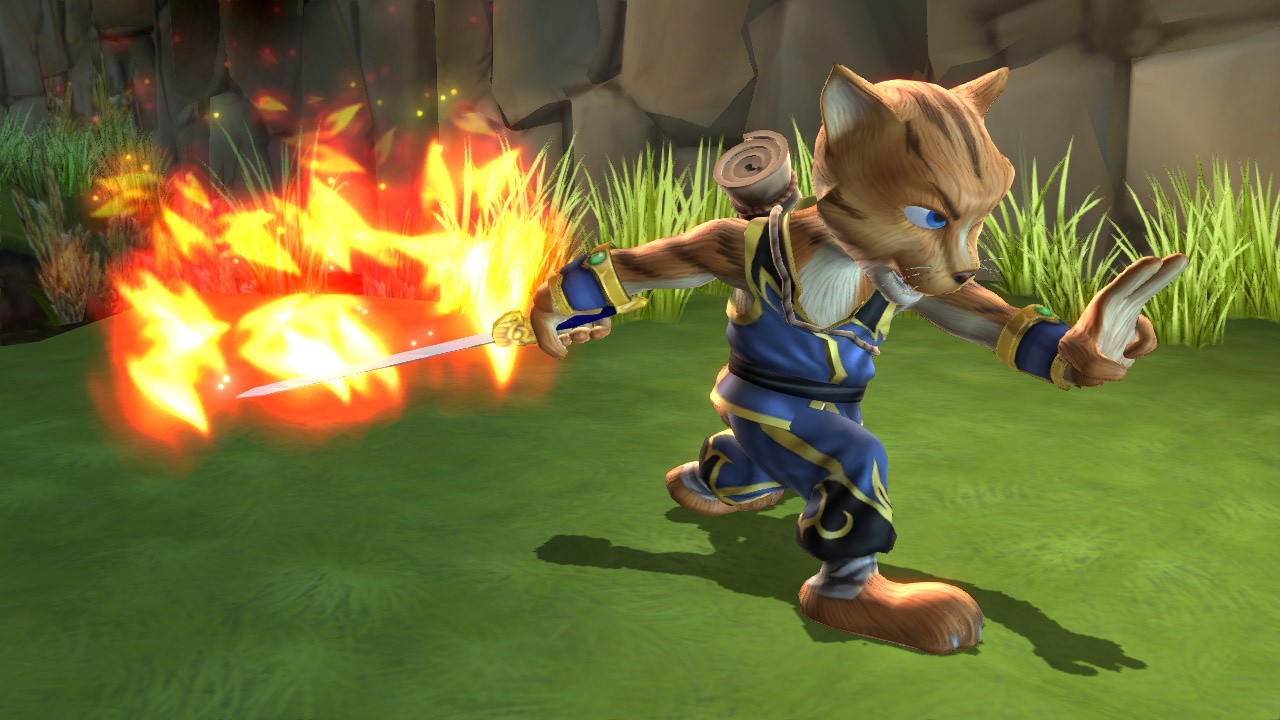
THQ Nordic has announced that Legend of Kay Anniversary will arrive on Nintendo Switch on 29th May.

Since the game’s initial release on PS2, Legend of Kay has seen a port appear on Nintendo DS, and a remastered ‘Anniversary’ version on Wii U and various other platforms, so we weren’t too surprised to hear that it was headed to Switch when the news broke a couple of months ago.

The game is a thoroughly remastered version of the original including high-resolution textures, new, more detailed character models, modern rendering techniques and “crystal-clear surround sound”. You’ll also spot various nods to old martial arts films and pop culture quotes as you play.

Features:
25 different levels with over 15 enemy types and epic boss battles.
3 different primary weapons (sword/hammer/claws) with distinct combat styles.
Various mini-games such as wild boar racing, dragon flying and wolf riding.
Online rankings: compare your score with your friends’ and compete against the best in the world.

The game will join a pretty competitive roster of releases during May including Donkey Kong Country: Tropical Freeze, Hyrule Warriors: Definitive Edition, and Dark Souls: Remastered to name a few.

Will you be keeping an eye out for Legend of Kay Anniversary?

Posted on Leave a comment

The Garment-Matching Madness Of Gururin Is Next Week’s ACA Neo Geo Release

After some intense fighting and shmuping retro weeks, a change of pace is in order: a match-three puzzle game is on the menu for next week’s HAMSTER Neo Geo release. Developed by Face, and published in 1994, Gururin sees you trying your best to match at least three people wearing the same colour vestments with a literal ‘twist’: Instead of rotating said people, you rotate the square container in which they are being stored – which opens up rather unusual matching possibilities. We’re still unsure if the game is some sort of society critique to modern office life or just some lighthearted, often psychedelic nonsense fun.

Gururin will be released on 12th April 12th set you back the usual $7.99 / €6.99 / £6.29. It will join up with the likes of Magical Drop III and Puyo Puyo Tetris to bolster the Switch puzzle library. Will you be shuffling people around a rotating square next week? Match your comments below.

[via japanesenintendo.com]

Posted on Leave a comment

Review: Tengai (Switch eShop)

From the western title you might not be immediately aware that Tengai’s full Japanese title is Sengoku Blade: Sengoku Ace Episode II. This is, in fact, the sequel to Psikyo’s very first game, the brilliant Samurai Aces. But with only a few familiar faces returning and a complete change of shmup orientation style, did Psikyo stretched out too far from it’s winning TATE shmup formula?

Horizontal shmup change aside, you can rely on its memorable, zany roster of characters: the titular Tengai is a brutish monk who shoots beads; the young ninja warrior Sho uses throwing blades as weapons; Junis is a kunoichi who uses both kunai and shurikens in a spread pattern; Katana looks like the main protagonist from Super Nintendo’s Hagane (which just so happens to be its original Japanese name) and, of course, uses laser attacks. Finally, there’s Miko – despite her striking redesign this really is the same shrine maiden that flew a biplane in the original game. Her attacks, naturally, are based on ofuda cards. Due to ‘reasons’ she also became a poster girl not only for the series, but for Psikyo’s games in general.

Another big departure from the original is the fact no one is flying any sort of machine in this game. Instead everyone flies by themselves freely across the screen. Each character starts with just their main ranged weapon attack. Power-ups will not only increase their base firepower, but summon familiars to ride along for the journey. Tengai has a hawk; Sho has mirrors with reflections of his lover; Junis has a mongoose called Socrates; Katana summons a magical spear and Miko summons a water spirit by her side. Holding the fire trigger will charge the use of these familiars. Smart bombs are also present – they’re a rare commodity and most of them aren’t really as screen-clearing in power as previous Psikyo games.

With gameplay variety assured by that memorable roster, it’s time to take a look at the playing field. The first four levels are presented in random order (but Zerodiv was kind enough to provide costumers with a level order select by hitting ‘Y’ instead of ‘A’ on the main title screen) until you eventually hit the fifth level and must face off against every previous mid-boss on a row. If you manage to clear that nasty gauntlet, a branching path is your last choice before reaching the final boss for an epic, screen-filling glorious battle. Even here you can’t quite relax since this end showdown is a timed affair; do poorly and you will get your character’s ‘bad ending’ instead of a complete victory.

Gameplay also has a few surprises for a shmup: physical contact with enemies will not cost you a life. Instead, you get a downgrade in your firepower which can make certain sections real troublesome (such as losing your familiar just before a boss fight). So your top priority to remain alive is to make sure you dodge all the yellow/orange bullets that regularly fill the screen. It never gets to ‘bullet hell’ levels of mayhem, but they certainly show up in far more intricate patterns and speed than in previous Psikyo games. You will not find many moments of peace to appreciate the gorgeous backgrounds.

On the subject of graphics, Psikyo has really outdone itself in that department. Not only sprite art for both playable characters and enemies is spot on, the portraits for each character and mid-bosses are truly excellent. As we mentioned above, the constant barrage of enemy bullets might make you miss out on some of the most beautiful parallax scrolling backgrounds ever made for a 2D video game. Steampunk medieval Japan has rarely looked this aesthetically pleasing. And so is the game soundtrack that carries with it a distinct oriental flavour, perfectly wrapping up the whole atmosphere. Tengai was a beautiful package back in 1996 and age hasn’t robbed its beauty.

Once again, Zerodiv’s emulation wrapper goes above and beyond to ensure you can customise your experience properly. Everything from graphic filter options and screen orientation to number of lives, credits, button remapping and difficulty settings are all present and accounted for. This shows not only a proper care for the legacy of Psikyo’s catalogue, but also respect for the consumer.

Conclusion

Tengai is part of a distinguished niche shmup pantheon we like to refer to as the ‘flying-person shooter’. It sits comfortably on top of other great examples of the genre such as Forgotten Worlds, Space Harrier, Lords of Thunder, Cho Aniki and Gynoug (aka Wings of Wor). It’s not only one of the finest shmups developed by Psikyo during its active years, but an absurd luxury to have it at this very sensible price. It offers an arcade perfect, single- or two-player horizontal scrolling shmup that still manages to not only pack a punch and a challenge but make current age efforts looks dull by comparison.

Posted on Leave a comment

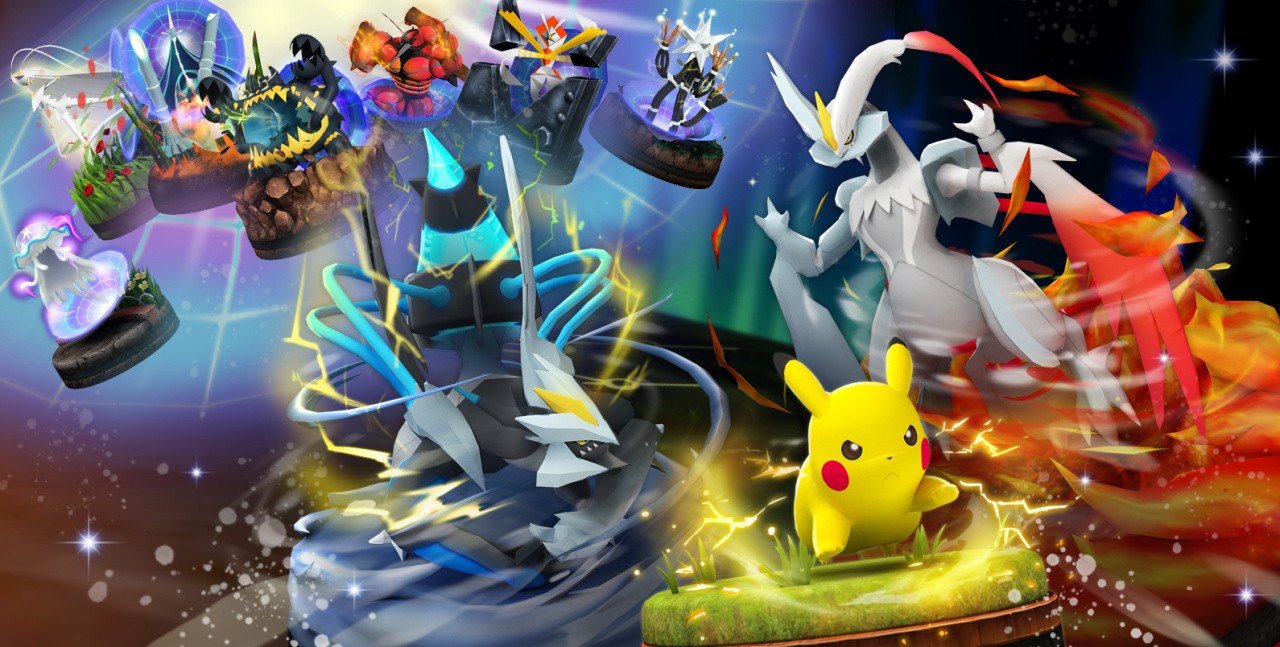
Major Update For Pokémon Duel Adds Tournaments, Legendaries And More

A major update has been released for the smartphone game Pokémon Duel, adding a bunch of new content and new ways to play.

Certain Pokémon will now be able to change their forms during battle, adding a new layer to your dueling antics. The legendary Pokémon Kyurem is now available, and in the right deck it’ll be able to change its form to both Black Kyurem and White Kyurem; this makes sense as the legendary Pokémon Reshiram and Zekrom have also been introduced. All three of these Pokémon are available in the ‘April 2018 Recommended Booster A’ and the ‘April 2018 Booster 10-pack A’.

As well as this, a new social feature introduces the ability to follow other players and track their progress in-game – you’ll even receive special items if you follow enough players, and more if you have enough players following you in return. A brand new tournament mode is coming to the game soon (with a pre-tournament set to take place to preview the feature) so keeping an eye on the strongest decks from your friends would be a smart move.

If you haven’t already, you can grab yourself a copy of Pokémon Duel for free from the App Store, Amazon Appstore for Android, and on Google Play.

Do you play the game? If not, are you intrigued to give it a go? Let us know in the comments below.

Posted on Leave a comment

Brawlout’s Next Update To Bring Ranked Mode, Video Capture And More

With a lack of Super Smash Bros. on Nintendo Switch at the moment, alternative brawlers such as Brawlout have helped fill that over-the-top fighting action void in our hearts. Developer Angry Mob Games is still hard at work supporting the title, and it’s just submitted its latest patch to Nintendo for approval. And it’s a biggie, too.

When it finally hits Switch, it’ll bring in a 1v1 ranked mode for testing your true mettle online, which uses the basic rules of Competitive mode with a few extra tweaks to make it a purely defensive affair. Character Paco gets a character variant makeover with the shark-esque Mako, and those annoying Brawler Pinatas have been removed entirely.

Video capture will be added, so you clip those awesome knockout moments, while Dash Dancing (among many other tweaks to gameplay) will help mix up your in-fight movement repertoire. You can check all the full additions and changes via the patch notes right here.

What do you make of Brawlout’s new proposed changes? Is it a worthy alternative to Super Smash Bros. while you wait for the Switch version to arrive? Let us know in the comments section below…

Posted on Leave a comment

Feature: Barking Up The First Tree With Indie Developer David Wehle

The First Tree is a beautiful and touching adventure centred around two parallel stories of hope and family. The game was recently announced for Nintendo Switch, so we took the chance to speak to creator David Wehle. We talk exploring the game’s emotional themes, building a unique narrative and supporting up and coming developers…

Nintendo Life: Congratulations on bringing The First Tree to Nintendo Switch. Could you outline what we’ll be doing gameplay wise? 

David Wehle: The First Tree is about exploring a colorful surreal world where two stories are uncovered in unexpected ways: one of a fox looking for her missing cubs, and one of a son reconnecting with his estranged father in Alaska. Players play as the fox where she digs up items from the son’s past, and the characters explain their lives like it’s a memoir and learn how they got to that point. While there are some small platforming and puzzle segments to overcome, the focus is almost entirely on the story of these two entities and how their paths intertwine. 

The narrative is told through voiceovers and environmental storytelling, so gamers who want a change of pace and are looking for a relaxing and thought-provoking experience will probably like The First Tree. At the end of your journey to the first tree on Earth, there are some unique aspects of the story that could only be accomplished through the gaming medium, so I’m excited for Nintendo Switch players to find out what that is!

The game is centred around two parallel stories- how was the writing process? 

Almost all my ideas come to me while I’m doing repetitive work… in this case, it was doing the dishes. I was thinking of a way I could tell a personal story that was juxtaposed with the epic. I love the idea of these two unrelated families (one of a fox, one of a young couple in Washington state), and how they both were connected to an archetypal symbol for life: the first tree on Earth. The idea of this tree not only has a poetic quality to it, but it’s deeply rooted (ha) in mythology and religion. It’s one of the most archetypal symbols I can think of, especially when you consider countless religions pay respect to a tree of life of some sort. This symbol of life, knowledge, and even the afterlife has powerful implications for the characters in this story, and eventually it affects both parties in unexpected ways.

Was it difficult to connect/ separate the two stories? 

Yeah, it can be difficult to keep it coherent. However, the surreal, dream-like quality of the game works in its favor. Some of my favorite filmmakers like David Lynch or Terrence Malick don’t necessarily make sure every story thread is perfectly resolved… they focus more on the texture or the feeling of the journey. But those are my favorite stories anyway… the ones that leave something to the imagination.

Were there any particular personal experiences that you drew upon? 

My game is intensely intimate, probably so much so that I won’t ever fully explain my connections to the story. If it wasn’t intensely intimate, it probably wouldn’t be worth playing as a low-budget one-man-team indie game. What Jonathan Blow said about vulnerability comes to mind. He said, “A lot of people come into indie games trying to be like a big company. What those companies do is create highly polished things that serve as large of an audience as possible. The way that you do that is by filing off all the bumps on something. If there’s a sharp corner, you make sure it’s not going to hurt anybody If they bump into it or whatever. That creation of this highly glossy, commercial product Is the opposite of making something personal. If you don’t see a vulnerability in somebody you’re probably not relating with them on a very personal level.”

I will say that like everybody, we had deaths in the family that shook us to our core, and made us question why things are the way they are on this dumb planet. The First Tree is a result of me coming out from that dark place and sharing what I learned. At the end of the day, The First Tree is a game about families.

How does the use of both humans and animals in the story affect the dynamic of the narrative/ gameplay? 

A lot of people ask me, “why a fox?” There’s lots of reasons, but the big one is it’s my wife’s family name and her favorite animal. Two wooden foxes she crafted were our wedding cake toppers. I put a lot of my life and personal details into it, because in my opinion that’s how you make a story that lasts… you put yourself into it, warts and all.

I’m more drawn to domestic stories like Gone Home or Firewatch probably because that’s the part of my life that’s most important. I became a father two years ago when we welcomed Evelyn into our family, and as I do this interview my wife just started having her first contractions for our second little one (she’s alright though, promise!). The premise of The First Tree is juxtaposing an ancient, epic story of finding the first tree on Earth with a young married couple dealing with something that happens everyday around the world: the death of a loved one. I will also say that Cormac McCarthy’s novel The Road had a huge impact on me as well. Even though The Road is about the death of the Earth, which is probably the grandest, heaviest topic you could tackle, the story focuses on a father and son, and because of that it makes it real and relatable. McCarthy wrote The Road because of his son. Those same themes of parenthood and life and death are explored in The First Tree. 

Was it a challenge to balance an exploration based game with a linear story? 

A lot of the story is reminiscing about objects in the young couple’s lives. These artifacts the fox uncovers slowly pieces together the lives of these people, and by the end you have an understanding why they’re the people they say they are. I don’t want to explain every little detail, so I love that players can inadvertently miss a voice over… they still will need to piece together the story from the fragments they’ve gathered, and that can be an insightful experience. There’s also lots of secrets and hidden objects, since I don’t think an exploration game can thrive without lots of interesting vignettes tucked away in the environment.

What influenced the art style? 

I played Journey right before coming up the with the idea for the game… it was just a sublime amazing experience.  For The First Tree, I thought the brilliant colors and stylized look fits into the surreal, dreamy aesthetic I was shooting for. There will be some fantastical elements in the game, and I think the art will make those things more believable. It also helps seeing all of the gorgeous artists I’m inspired by, like Jane Ng (Firewatch), Mikael Gustafsson (Unity artist), and Heather Penn (Overland). Their work is so inspirational that the images of The First Tree and this story in my head just formed with that inspirational backdrop.

Why was nature chosen as a plot device/ a fox and cubs chosen as the playable character? 

It goes back to the fox being this personal thing that connects to my family in real life. It also distanced itself from the real people (and fictional people) involved in this painful story… it made it more approachable. I can’t tell you how many kids played the game thinking it would be a goofy animal platformer, then told me their outlook on life had changed dramatically, and in a real way they saw life and the living in a new light. That’s what makes it all worth it, hearing cathartic tears were shed.

Funny enough,  It was difficult finding accurate sounds for the fox, but I think visually it just works beautifully. The typical color of the fox really accentuate the environment around it, and that’s the big focus… the fox is important, but the environment even more so. There will be fox-like traits expressed in the game naturally… jumping, digging, running and chasing rabbits. But in the end, the fox is a vehicle for the player to observe the environment and the story.  

Without spoiling anything, ‘The path to the first tree’- could you explain its significance? 

I don’t want to give away since the game is so strongly symbolic. Even the camera perspectives during gameplay carry significance. But I will say that the archetypal symbol for the “tree of life” has carried significance for humans since they could write. The a large theme is the idea of simple memories seen through the lens of the grandiose. I love seeing intimate, domestic stories juxtaposed next to epic, origin-of-life stories, because in my mind they’re not that dissimilar. Microcosms next to macrocosms allow us to gain perspective in a way that was hidden before.

What is the balance between the game being an intimate journey and having an overarching theme?

I think the best stories are ones with the end destination being a huge focus. There’s the question of what will happen, and you need that mystery and excitement in a slower-paced game like mine. Probably another example that’s inspired me is Tree of Life, a film by Terrence Malick. That film really shook me to my core… it was about the birth of the universe, but also about this family in Texas. And the crazy thing, those two incomparable things were held in the same regard. They were both strikingly important, and that resonated with me because that’s what I believe.

The theme of family seems to connect The First Tree and your previous title, ‘Home Is Where One Starts’. Was it a conscious decision to progress this theme? 

Yeah, I guess it’s something that’s on my mind a lot! In fact, there are easter eggs for players who’ve gone through my first game… they’re related in a lot of ways.

Have you utilised the Switch hardware in any way? 

I’m working with the very talented DO Games in London, and they’re awesome, I feel like they can do anything. We’re still early in development, but we would of course like to utilize the unique features of the Nintendo Switch. I’ve heard gamers love taking narrative games like Night in the Woods on the go since there’s lots of reading, and it’s a relaxing way to pass the time. The First Tree is a relaxing game that may unexpectedly end in a huge feels trip for players.

What Nintendo games did you play growing up? 

Like all kids ever, I was obsessed with all the NES Mario games. I never had a SNES, but I was obsessed playing it at friend’s houses. They would get so sick of me, but I literally couldn’t help myself, I just had to keep playing. The first time I played through Final Fantasy VI, I stared at the end credits scene for at least an hour… I just couldn’t believe I had experienced something so epic and emotional on a Super Nintendo. That was a turning point, and it drove me to make narrative-driven games later in life. Now I have a SNES Mini, so I’m overcoming that childhood absence with lots of playtime with my little girl.

If I told little kid David that I would have a game on a Nintendo console, I would probably laugh in his face. It’s just amazing to me that a one-man team can develop and publish a game on a major console now, and I find it incredibly exciting. I love talking to people about being a solo-developer and how to make that happen, so aspiring game creators can reach out to me on Twitter or email at [email protected]

Is there any extra content or features for the console versions of the game? 

I don’t have anything to announce at this point. I really hope to polish the gameplay and its performance to a shine, especially with the controls and the handling.

When can we expect to see The First Tree on Nintendo Switch? 
I’m hoping late summer or early fall, but I don’t have an official announcement at this time. Follow me on Twitter to stay updated! @DavidWehle 

We would like to thank David for his time. The First Tree arrives on the Switch eShop in ‘late 2018’.

Posted on Leave a comment

Video: Here’s What Wolfenstein II Looks Like Running On Nintendo Switch

While we don’t know exactly when Wolfenstein II: The New Colossus will arrive on Nintendo Switch, we know that developer Panic Button is hard at work fitting the 2017 shooter onto the plucky little portable console. And with Bethesda offering hands-on previews of the game at PAX East this week, we’ve finally got our first glimpse of how it runs on handheld hardware.

The team at USGamer were on hand in Boston to put the game through its paces, as well as taking some all-important off-screen footage. As you can see, it’s not running quite as smoothly as its fellow console versions, but considering the technical limitations Panic Button are playing with, the brief glimpse of the action (including a brutal stealth takedown and a small firefight) went off without any noticeable slowdown. We’d also be interested to see if we’ll be getting motion controls much like those retroactively added to DOOM.

Check out a longer video capture above – thanks to site user Nintendoforlife for the tip. So what do you make of Wolfenstein II running on a Switch? It’s not much to go on, and doesn’t show how it runs in handheld mode, but it’s a sign we’re getting ever close to its eventual release…

Posted on Leave a comment

A New Pokémon Will Be Revealed Next Week In Upcoming Movie Trailer

As you may well be aware, the upcoming Pokémon movie ‘Everyone’s Story’ is gearing up for imminent release in Japan; the film is scheduled to premiere in Japanese theatres on 13th July, and we are expected to receive some brand new footage of the film early next week.

According to Serebii, some new footage of the movie will air on Japanese Variety Show Oha Suta on Monday 9th April, and as intriguing as that may be on its own for Poké-fans, the more exciting news is that a new Pokémon is set to be revealed during the show. Who could it be?

Well, before you get too excited, it’s much more likely that this reveal will be an official announcement for Zeraora – an electric-type mythical Pokémon that was unveiled by datamines of Pokémon Ultra Sun & Ultra Moon – rather than anything from the game(s) coming to Switch in the future. It might be quite some time until we see anything entirely new, but an official announcement for the (currently) last entry to the Pokédex will still be very welcome indeed.

Either way, it’s still fun to speculate over what may or may not appear, and we’ll make sure to keep an eye out for the announcement. Are you desperately waiting for news on the future of the Pokémon series on Switch? Let us know what you’d like to see in the comments.

Posted on Leave a comment

Awesome: Hand-Drawn Guide To Contra Proves The Pen Is Mightier Than The Keyboard

If you grew up in the 8 and 16-bit eras then you’ll no doubt be familiar with the concept of writing down notes and drawing maps to help you beat tricky games. 

In the days before the internet and readily-available guidebooks, players had to make their own luck – and that usually involved putting pen to paper and creating your very own game-busting tips guide.

Artist Philip Summers has attempted to reclaim this lost art with a hand-drawn guide to Konami’s classic NES title, Contra. The guide features tips, maps and much more besides, and has been created entirely by hand.

It’s available from today on Gumroad; you can download it for free or pay whatever you think is appropriate. Just remember that this guide could save your life one day, soldier.

Posted on Leave a comment

Review: Atelier Lydie & Suelle: The Alchemists And The Mysterious Paintings (Switch)

Atelier Lydie & Suelle: The Alchemists and the Mysterious Paintings is the final entry of the Atelier ‘Mysterious’ trilogy, and actually happens to be the first main-series Atelier game to appear on a Nintendo console. We’ve seen various side games hit Nintendo’s handheld consoles, dating way back to the Game Boy Color, but it comes as a pleasant surprise to see this main entry on Nintendo’s new hybrid.

Playing the first two entries of the trilogy isn’t an essential warm-up for playing this title, but for those who have already experienced Atelier Sophie and Atelier Firis, you may be interested to know that things have been changed up once again here. The open-world approach that was introduced in the second entry has vanished once more, seemingly only being allowed to have one shot in the limelight. Instead, this game returns to the classic formula of travelling between separate maps.

Before we get too far ahead of ourselves, though, let’s dive in to explore what the game is all about. Lydie and Suelle are twin sisters who co-run an amateur alchemist service. Their business is facing some pretty hard times, however – partly thanks to their father wasting all of their earnings – so the plot revolves around the sisters making cash to build their reputation in their craft. When their kingdom announces a new ranking system for aspiring ateliers, promising financial backing for the most successful applicants, the twins set out to achieve the highest available rank.

To do this, you must guide Lydie and Suelle through their alchemy practice, levelling up your skills to create the highest quality items you can. By examining your notebook – a feature that you’ll be using an awful lot during your playtime – you can find quests that will task you with finding particular residents, creating a specific set of items for customers, and even fighting monsters to protect people of the town. Completing these tasks will grant you extra cash and experience points, so taking on as many quests as possible is definitely the way to go.

If you’re unfamiliar with the series, the crafting side of the game may take some getting used to; you are presented with several menus full of items, all containing various stats, and the game doesn’t provide the best explanation for how of these things can affect your creations. Naturally, you’ll start to get to grips with what works and what doesn’t with time, and you’ll come to realise that there’s a pretty impressive alchemy system in place, but you might find yourself feeling a little lost in the beginning.

To gather all of the resources you’ll need, you’ll once again need to consult your trusty notebook. From there, you can warp to new locations that you unlock over time, fast-travelling between your store’s town and a whole host of different areas full of items to collect. New to this game are the ‘mysterious paintings’ which allow you to travel to all sorts of whacky places that wouldn’t necessarily fit within the main game. To give some examples, these paintings will whisk you off to places such as a Halloween-themed land and even underwater, seemingly acting as a trade-off for this title’s lack of open-world.

The combat we briefly mentioned earlier is a rather relaxed affair, and as with most areas of the game, the early stages are a little underwhelming. Battles are turn-based, with the twins acting as independent characters for your side. You’ll be using a variety of skills along the way, and can also use your crafted items to slay monsters, too. As the game progresses, you’ll start to gather several more party members alongside the twins, allowing you to fight in a two-line formation. This setup allows fighters on the back row to recover for a moment while the front team attack.

There are six playable characters in total and, as it’s likely that you’ll find a winning strategy to stick to for the most part, the combat does start to feel a little repetitive after a while. That said, it is only part of the game as a whole, which essentially feels like a collection of different RPG-traits rolled into one; the combat and quests make up a fair portion of your activities, but the focus on alchemy and crafting does help to set the series apart from similar titles.

Presentation and performance-wise, Atelier Lydie & Suelle is pretty average. The games graphics are a bit of a mixed bag, with attractive anime-style cut-scenes pulling you in, only to reveal a relatively disappointing overall art style for the main game buried underneath. There is no English dub present here, either, meaning that you’ll be listening to the original Japanese vocal recordings with subtitles being present throughout, although the girls do have an interesting relationship and are often full of humour.

Although this is very much an Atelier game, with the core features that fans of the series will have come to expect, it rounds off a trilogy that seems to have been making things up as it goes along. The game features some interesting new elements, such as the titular paintings, but it’s a shame that the open-world elements from the previous title were never developed further as this could be viewed as a slightly backward, or cautiously sideways, step.

Conclusion

Atelier Lydie & Suelle is a rather standard entry to the Atelier series. Content with relying on a pretty standard setup, the game doesn’t innovate or move forwards, although fans of the series will no doubt be interested in the new story alone. It’s a pretty interesting take on the ridiculously wide genre of RPGs, with a much heavier focus being given to its deep crafting system, but that might not be enough to convince new players on its own.