Aksys Games has announced Quad Fighter K for Nintendo Switch, a 4-player co-op shooter set to launch this summer.
Set far into the future, the game sees a mysterious alien race setting its sights on the conquest of the Earth, hoping to destroy the entire human race. Despite humanity’s best efforts, the alien invaders’ superior technology proved too much and they took over most of the planet. Just before all hope was lost, however, the remaining survivors stumbled across alien artefacts that could help them to launch one last attack against the alien race. Your job will be to lead this assault and destroy the very heart of the alien stronghold.
Features of Quad Fighter K include:
– It’s Dangerous to Go Alone: The alien forces are an overwhelming force, but one you don’t have to face alone. Bring along three friends and face the alien hordes with local co-op play!
– It’s not Retro, it’s Timeless: With 8-bit graphics and a focus on pure arcade shooting action, Quad Fighter K harkens back to the times when it was all about you (and perhaps a couple of friends), a quarter, and lightning-fast reflexes.
– Quad Fighter Powers, ACTIVATE!: Do your best work solo, or unleash real damage by linking your ship with a teammate to crush your foes and save the planet. Unlock different attacks by connecting your ship with your allies.
– Should I Stay or Should I Go?: Whether you’re gaming at home or on the run, thanks to the mighty morphing powers of the Nintendo Switch™, you can take out the alien hordes threatening our alternate Earth whenever, wherever.
As mentioned, Quad Fighter K is scheduled to launch on the Nintendo eShop this summer – we’ll make sure to keep an eye out for future announcements.
Until then, let us know what you think in the comments below.
Peach provides some “alternative moves” for the Beyoncé track Naughty Girl, complete with a selection of Rabbids backing dancers. It’s so bad, it’s good.
Here’s some PR:
Beyoncé’s ‘Naughty Girl’ has been a fan favourite from Just Dance 2018 and we felt it would make a great song to give an alternate version to. But, the new choreography needed something new… something special.
Not just any coach could take us through these new moves and it’s incomparable sensual nature. We needed the best. We thought hard on who would be the ideal fit. Then it finally hit us! We all know that ever since her sassiness has hit the scene, dancing has never been the same. Her iconic presence and angelic voice parallel no other, and she would be perfect. Of course, we are talking about Rabbid Peach!
Join Rabbid Peach as she breaks down the new alternate choreography in the only way she could, fiercely. Of course, she couldn’t do it all alone. Her Rabbid back up dancers are up to their usual antics as they dance along and enjoy the map backdrop right from the Mario + Rabbids Kingdom Battle game. Have fun, dance along, and maybe take a few selfies!! BWAHHHH!
Indie developer Monster Couch has confirmed that Die for Valhalla! will hit the Switch eShop on May 29th. Pre-loading is already live in Australia and should (fingers crossed) be hitting other regions shortly. We assume the release date will be the same in North America and Europe, too.
Described as an action RPG with arcade beat ’em up trimmings, Die for Valhalla! places you in the role of a mythical Valkyrie, blessed with the power to bring fallen viking warriors back to life. Solo and 4-player options are available, and the game will feature over 80 different skills to select when levelling-up your character.
Here’s some PR:
Die for Valhalla! is an action RPG where you hack, slash and crush your enemies! Possess and take full control of heroes, monsters and other things to help Vikings save their realm!
You are a Valkyrie, a supernatural maiden bestowed with the ability to possess fallen warriors. You embark on a quest that will lead you through strange lands where Norse Mythology collides with Lovecraftian mythos. Sounds Weird? Well, because it is!
You can play solo or locally with friends (up to 4 players).
Key features
– An action-packed hybrid of Roguelike and arcade Beat ‘Em Up. – Unique Possession mechanic. – More than 10 Viking Clans to discover and unlock – Each of the 7 Viking Classes comes with unique playstyles and combos. – Over 80 skills to choose from when leveling up your Valkyrie. – Cute but bloodthirsty creatures will become your companions. – Play against your friends in Deathmatch and Survival modes. – And more!
Does this look like something you’d be interested in? Sound off in the comments section below.
How do you take half a decade’s worth of critical and commercial success and flush it down the toilet? Easy – you release a device like the Sega 32X. At the start of the 1990s Sega was arguably at the height of its powers; the dawn of the decade saw the western launch of the popular Mega Drive console (Genesis in the States), which managed to gain both commercial and critical acclaim – much to the annoyance of arch-rival Nintendo. Such success was not to last, however; in less than a decade Sega’s position would be far less dominant and the firm would be forced to limp meekly out of the hardware arena.
Why this disastrous fall from grace occurred is very much open to debate, but if you keenly followed Sega’s fortunes in the middle of the ‘90s one thing is abundantly clear – the company took far too many risks when it came to video game hardware. The forward-thinking but commercially disappointing Mega CD represented the first indication that something was amiss, but many would point to the positively disastrous retail performance of the 32X as the real straw which broke the camel’s back.
Like the Mega CD before it, the 32X was a device which augmented the capabilities of the 16-bit Mega Drive, allowing it to perform the kind of 3D graphical tricks which would later become the mainstay of 32-bit consoles. However, by the time the machine was launched it was already being out-gunned by Sega’s own Saturn, and in less than 12 months it had been dropped from the company’s plans altogether. From an outsider’s perspective, the failure of the 32X was almost a foregone conclusion, so why did Sega choose to sour its relationship with the gaming public just months before it intended to release the Saturn? Scot Bayless – a Senior Producer at Sega of America from 1990 to 1994 – is the ideal man to shed some light on this turbulent time because he was there the moment Sega’s American division got the telephone call from Sega of Japan CEO Hayao Nakayama which resulted in the birth of the machine.
“We were at CES ’94 in Las Vegas and Sega of America’s head of R&D Joe Miller asked a few of us to join him in his suite for a call he was expecting from Nakayama,” remembers Bayless. “There had already been some discussion about an up-gunned Mega Drive with Hideki Sato and his Sega Hardware Team, but the essence of the call was that we needed to respond to Atari’s Jaguar and we needed to do it right away. Joe said he was confident the US team could come up with a design that would do the job, so Nakayama said ‘get it done’ and we were off to the races. Marty Franz grabbed one of those little hotel note pads and drew a couple of Hitachi SH2 processors, each with its own frame buffer. That’s pretty much where 32X started.”
The 32X – which at this juncture was known by the codename Mars – was actually one of two cartridge-based projects which were in development at the time; the other was known as Jupiter (as the more observant amongst you will no doubt have noticed by now, Sega had a habit of naming its hardware projects after planets in the solar system). “Jupiter started as a ROM-based unit with theoretical specs a bit like Saturn,” explains Bayless. Although it was to be a more powerful machine on paper, the emergence of Project Mars meant that Jupiter was ultimately squeezed out of Sega’s strategy. “I think Sato was really feeling the cost control heat and the CD-based Saturn was hugely attractive from a cost perspective,” continues Bayless. “Therefore, Jupiter was officially put to bed and Mars was born.” From an engineering standpoint the machine certainly had a lot of potential. “The design of the graphics subsystem was brilliantly simple, something of a coder’s dream for the day,” says Bayless. “It was built around two central processors feeding independent frame buffers with twice the depth per pixel of anything else out there. It was a wonderful platform for doing 3D in ways that nobody else was attempting outside the workstation market.”
Marty Franz – then Sega’s Vice President of Technology – agrees. “We pushed really hard for the dual SH2 architecture,” he says. “We really liked the Hitachi SH2 CPUs that the Saturn had and felt they were the star of the show. Putting two of them in a package with a good graphics buffer was a big advance at that time; it enabled software rendering tricks that were limited only by the imagination.”
Despite Nakayama’s keenness to square up to the Atari Jaguar, the decision to start work on the 32X was far from straightforward and within the walls of Sega’s Japanese HQ there was much brow-furrowing over the project. This is largely due to the fact that in Japan the Mega Drive had finished in third position behind Nintendo’s Super Famicom (or SNES) and NEC’s PC Engine (known in the States as the TurboGrafx-16), and the consensus was that the company should plough all of its available resources into the 32-bit Saturn. However, Sega of Japan was savvy enough to realise that much of its current wellbeing was down to the incredible commercial performance of its 16-bit hardware in the West, and when Sega of America insisted that it was too early to pull the plug on this large market, Nakayama took notice. “The 32X was going to add additional life to the 16-bit Mega Drive market,” Franz says. “This was good business for Sega, since that was where it was earning the most income.” Bayless thinks timing had a lot to do with this decision, too. “There was consensus at Sega of America that making an add-on for Mega Drive was the right move,” Bayless explains. “To really understand the decision, though, you need to see it in context. The 32X call was made in early January and Nakayama’s mandate was to get to market by the end of the year. I think at the time he lacked confidence that Saturn would make it to market within 1994.”
Although the Mars project was very much Sega of America’s baby, Bayless and his team were in constant contact with their Japanese counterparts. “The guys at Sega of Japan were great – especially Sato’s team,” he says. “We were all in super-double-secret-crunch-mode and nerves were wearing pretty thin. I remember one of our technical guys going completely ballistic over his dev kit losing one of its Hitachi SH2 CPU chips and then being told he’d have to wait two weeks to get a new part, but the guys in Japan were awesome. They worked their tails off to help us. We did however have a persistent problem with translations of manuals. Sega of Japan had a small localisation team in Tokyo, but those guys were completely slammed. So we started hiring translators in the Bay Area to help open up the technical translation bottleneck – with sometimes amusing results. The engineers in Sato’s group were literally sending us the docs as they wrote them and then we were handing them off to contract translators in San Francisco. Technical Japanese is something of a hybrid of English and non-standard uses of Japanese language and orthodox translations can produce phraseology like: ‘The cracker of remembrance receives a tickle from the command of stern ancestor accounting.’ It was like a party whenever a new batch of translations came in; we’d read them over lunch and howl.”
Although the 32X was meant to enhance the abilities of the Mega Drive hardware – which was half a decade old by this point, having launched in Japan in 1988 – it actually shared several similarities with the Saturn. At the heart of both machines were those aforementioned twin Hitachi SH2 processors, which were included to assist in the creation of complex 3D environments. However, despite sharing the same CPU setup the way in which the two devices utilised these chips was quite different. “Only the dual CPU architecture was lifted from the Saturn,” explains Franz. “The rest was developed from scratch for the 32X. We had a short timeframe to develop the product and couldn’t do much in the way of fixed function hardware development. We had to keep it simple to make the development timeline. We pushed for everything we could imagine that would enable great games in the development timeline we had.”
“Saturn was essentially a 2D system with the ability to move the four corners of a sprite in a way that could simulate projection in 3D space,” adds Bayless. “It had the advantage of doing the rendering in hardware, but the rendering scheme also tended to create a lot of problems and the pixel overwrite rate was very high; much of the advantage of dedicated hardware was lost to memory access stalls. 32X on the other hand did everything in software but gave two fast RISC chips tied to great big frame buffers and complete control to the programmer. To be honest, there’s a part of me that wishes Saturn had adopted the 32X graphics strategy, but that ship had sailed long before the green light call from Nakayama.”
When you consider the state of the market at the start of 1994 then it becomes a little easier to see why the 32X ever came to be. The 3DO and Atari’s aforementioned Jaguar were breaking through and garnering some nervous glances from established firms like Sega and Nintendo; 16-bit games were beginning to look terribly outdated and something was certainly needed to keep the momentum going. Sadly, almost from the start things didn’t go according to plan for the 32X; the aforementioned similarity between the machine and its sibling the Saturn caused numerous headaches. “Early on, the Saturn launch date was uncertain,” says Bayless. “There were a number of issues bearing on launch timing in the West and, while Sega of America was busily making software for Saturn, we weren’t initially fixed on a launch date. Meanwhile, the 32X had to ramp up like a rocket just to hit its timing. So what happened is the two projects basically ran decoupled from each other, which is fine if there are no dependencies between the two; unfortunately there were tons. The systems used many of the same parts, so suddenly 32X was facing shortages because chips were needed for Saturn.”
Bayless and Franz – along with the rest of the hardware team at Sega of America – were essentially attempting the impossible; they were trying to bring a hardware blueprint to life in less than a year and had to fight within Sega to get the resources to accomplish the task. To make matters significantly worse, Sega of Japan dropped a bombshell which essentially wrecked the 32X’s chances of any kind of success. “Saturn got its launch date: November of 1994 in Japan,” remembers Bayless with a pained grimace. Rather than being the forerunner of the Saturn, the 32X now had to face the prospect of sharing the same release window as its 32-bit big brother. “Not surprisingly, word got out quickly in the West,” continues Bayless. “US and EU consumers immediately started asking the obvious question: ‘Why should I buy 32X when Saturn is only a few months away?’ Sadly, the best answer Sega could come up with was that 32X was a ‘transitional device’ – that it would form a bridge from Mega Drive to Saturn. Frankly it just made us look greedy and dumb to consumers, something that a year earlier I couldn’t have imagined people thinking about us. We were the cool kids.”
The earlier-than-expected launch of the Saturn had thrown all of Sega of America’s already flimsy plans into complete and utter disarray, transforming the 32X from a life-saving blood transfusion for the Mega Drive into a cancerous tumour which would further erode the company’s standing in the global marketplace. As Bayless is keen to point out, the timing was horrendous. “Sega of America had a devil of a time convincing anyone that 32X made sense when Saturn was just around the corner. Imagine how much harder that would be to sell to the public if Saturn was already on store shelves?”
As well as boosting the performance of the Mega Drive, the 32X also had the ability to connect with the Mega CD to create more impressive CD-ROM titles – that was the hype communicated at the time, at least. In reality this hellish amalgamation of hardware didn’t live up to the propaganda and those games which were specially coded to take advantage of the setup were mainly poor FMV titles like Corpse Killer and Supreme Warrior. The controversial Night Trap also got a re-release which featured better quality video, but the gameplay itself remained identical to the Mega CD original. If the lack of decent games wasn’t enough to convince you to disassemble the towering Mega Drive/Mega CD/32X fusion then the fact that it required three separate power supplies in order to function – one for each component – most certainly was. Looking back, one can understand why Sega was so keen to create all-in-one consoles like the never-released Sega Neptune.
Despite the obvious setbacks, the 32X experienced a reasonably successful launch in the West. It hit American stores shelves in November 1994, retailing for the substantial sum of $159.99. Regardless of this hefty price tag the machine shifted its initial shipment of 600,000 units with ease; it was even reported at the time that demand had far outstripped supply. A similar story can be told of the European release, which is unsurprising when you consider how much power Sega still held in PAL territories at the time. However, despite this initial interest for the device on both sides of the Atlantic, demand quickly cratered thanks largely to a distinct lack of compelling software. Indeed, it could be argued that the 32X never really saw any games which could truly demonstrate its potential and give it a solid reason for existing. “Not to be too harsh, but the launch mix for 32X was horrible,” laments Bayless. “Actually, it was non-existent. Some of the games were pretty good, but in context they needed to be amazing. Unfortunately for Sega, by the end of 1994 that context had become a whole lot more demanding. When PlayStation launched in Japan, any argument in favour of 32X just sounded ridiculous.”
One possible argument is that developers struggled to co-ordinate the internal architecture of the Mega Drive and 32X correctly, which prevented them from truly pushing the console to its limits. “I don’t think complexity was the problem,” retorts Bayless. “By then, experience with Mega CD had taught us orderly ways of spreading the workload across the various buses and chips in the combined system. I think the real issue was timing; the games in the queue were effectively jammed into a box as fast as possible which meant massive cutting of corners in every conceivable way. Even from the outset, designs of those games were deliberately conservative because of the time crunch. By the time they shipped they were even more conservative; they did nothing to show off what the hardware was capable of.”
Taking this chain of events into account, it begs one fairly obvious question: did Sega’s technical staff ever have any faith in the project at all? “I think 32X was a great hypothesis,” he replies. “But in execution it was disastrous. Aside from the obviously murky marketing message that crippled it before it even launched, everything about the device was rushed. Nine months from a cold start is a ridiculous timeline for launching a new platform; everything about it was slammed together at breakneck speed and the result was exactly what you’d expect. The hardware was flaky, the industrial design was questionable and the games were either late or buggy – or both.”
Bayless is quick to point out that it wasn’t for lack of trying, and he himself dedicated a considerable portion of his time trying to make the 32X a viable product. “I spent weeks working with id Software’s John Carmack, who literally camped out at the Sega of America building in Redwood City trying to get Doom ported. That guy worked his ass off – he sweated blood – and he still had to cut a third of the levels to get the game done in time. What amazes me now is that with all that going on nobody at Sega was willing to say: ‘Wait a minute, what are we doing? Why don’t we just stop?’ Sega should have killed 32X in the spring of 1994, but we didn’t. We stormed the hill and when we got to the top we realised it was the wrong damned hill. Looking back now I’d say that really was the beginning of the end for Sega’s credibility as a hardware company.”
The 32X’s dismal reception killed off another piece of hardware which Sega had on the table at the time: Project Neptune. Clearly of the opinion that you can never have too many consoles on the market at once, the plan was that following the 32X’s release Sega would launch an all-in-one machine which pulled together the internal architecture of the Mega Drive and 32X to create a console which could play both software formats and win a straight fight with the Jaguar. This bold strategy came to nothing. “By the time Neptune got into serious discussion Sega CEO Hayao Nakayama was betting the company on Saturn,” reveals Scot Bayless. “That, plus the fact that 32X was clearly going to fail made Neptune pointless.”
By the time 1995 arrived the writing was on the wall for the 32X. Sega of America CEO Tom Kalinske remained bullish, insisting that better titles were on their way, but Bayless feels he was making hollow claims. “We knew it was DOA. Everybody knew it, but nobody would say it. It’s a phenomenon that’s all too familiar in big companies; people are afraid to speak out against the company’s public posture. They’re afraid of hurting their colleagues. They want to believe in what they’re doing, so they remain silent – but we all knew. I’ve never spoken to Tom about what was in his head at that point, but I suspect he knew as well. But what was he going to do? The chance to stop 32X had long since come and gone. He had to make the best of the situation he was facing and admitting publicly that 32X was a mistake just wasn’t an option.”
Kalinske didn’t have to make much of this bad situation for long; in 1995 he left the company he had so brilliantly taken to the top of the video game arena in North America just a few years before. Bayless had already beaten him to it, handing in his notice at the end of 1994. He admits losing faith in Sega as a whole, something which is hard for him to disclose, even after all this time. “Even now I feel bad admitting it because I genuinely liked and respected some of the people making those decisions,” he explains. “When you look back at the hardware choices the company made between 1992 and 1995 it was like watching the death of the Hindenburg in slow motion. Just about every call the company made turned out to be the wrong one. Using cheap consumer drives in Mega CD, FMV games, positioning 32X as an orphan system, designing Saturn as a modified last-generation 2D system when clearly 3D was going to be the next big thing… even Sega’s peripherals were stupid. Remember Activator? Sega VR? The company poured insane amounts of money and time into projects that simply didn’t make sense, and consumers did what they always do. They voted with their wallets and stayed away.”
Ultimately, the 32X is a mere footnote in the history of our beloved industry, but in the eyes of Bayless it represents an important lesson in how not to produce and position an item of video game hardware. “32X is a great case study in two things,” he explains. “First, messaging; your number one job in marketing is to establish the value proposition. Even with all the rushed hardware and late software, if Sega had been able to convince people that 32X was really worth having it might have had a chance to succeed. But we never did that; we never managed to explain to anyone in any credible way what was so unique and worthy about 32X. The result is exactly what you’d expect in that situation: Sony ate our lunch. Second, honesty; not in the legal sense – nor in the public sense – but internally. I remember when I arrived at Microsoft in 1998 I attended an executive orientation briefing on my first day. The VP who met with us said, ‘The one thing we demand of every one of you guys is to say what you think.’ That attitude was what kept Microsoft vibrant, healthy and successful for more than 20 years. Sega, by contrast, lacked that ruthless cultural honesty. Nobody wanted to hurt anyone’s feelings. Even when everybody knew 32X and Saturn were way behind the power curve, nobody was willing to stand up and say so. And it wasn’t just the hardware; during the same period, Sega published some of the oddest games it ever released, games that were deeply flawed. Games that completely failed to connect to their imagined constituency. And all the while everyone was smiling and saying ‘Gosh aren’t we great?’ I wasn’t able to articulate all this at the time, but I know I felt it intuitively. I knew there was something wrong, that we were losing our way.”
Today, the 32X is experiencing something of a renaissance as collectors dig into gaming’s history in search of new experiences and challenges. Despite its tiny library of just 34 games (40 if you include those which also required the Mega CD), the 32X isn’t a cheap machine to collect for, especially if you’re after boxed and complete games. For some strange reason, Sega decided against employing the plastic cases seen during the Mega Drive era and instead used flimsy cardboard packaging; needless to say, this packaging hasn’t stood the test of time and finding pristine, fully-boxed games at a reasonable price is getting harder and harder. The 32X unit itself is also rising in value as the years march on; not so long ago it could be obtained for relatively little on the second-hand market, but those days are gone. Another concern – especially if you intend to use the 32X along with the Mega CD – is that all three machines require their own power supply. Using the original Sega PSUs, this creates an insane amount of cables and, depending on the available power sockets in your setup, may not even be possible. Thank goodness then that modern alternatives are available.
Still, if you don’t mind making use of flash carts like the Mega Everdrive, you can avoid paying through the nose for cartridges – while this might seem like a morally dubious means of experiencing the 32X’s minuscule selection of titles, it’s unlikely that many of its most notable releases will ever see any form of re-release; the surprisingly accurate ports of Space Harrier and After Burner have been rendered superfluous by the arrival of better versions on systems like the Nintendo 3DS, while primitive 3D games like Star Wars Arcade, Virtua Fighter and Virtua Racing Deluxe – which were best described as mildly impressive back in 1994 – are underwhelming when viewed with modern eyes. Shovel-ware like Spider-Man: Web of Fire, Cosmic Carnage and Primal Rage was embarrassing even by the standards of the time, but there are some gems to consider, such as Darxide (by Elite Dangerous developer Frontier) Knuckles’ Chaotix (a Sonic title in all but name) and Kolibri (a dream-like 2D shooter from the team behind Ecco the Dolphin). The only way to experience many of these forgotten titles is to own a 32X, or resort to emulation.
Ultimately, the 32X deserves its less-than-stellar reputation; it was a compromised product which, as Bayless says, should really have been put to bed before it launched – something Sega was brave enough to do with its abortive VR headset for the Mega Drive. Still, there’s something fascinating about exploring the failures of a once-dominant company; it’s why the Virtual Boy, which launched not long afterwards and is Nintendo’s most notable hardware flop, remains equally compelling. The 32X may not have been Sega’s last throw of the dice in the domestic hardware market – it struggled on with the Saturn and Dreamcast before finally throwing in the towel in 2001 and becoming a third-party publisher – but it was arguably one of its most costly and mortifying ventures.
This feature previously appeared in a slightly different form in Retro Gamer magazine, and is reproduced here with kind permission.
Until recently, the Dark Souls-esque Sinner: Sacrifice for Redemption was only slated for release on PC and other console platforms, but a recent delay in development brought with it a rather surprising silver lining – namely that a Nintendo Switch version is also in the works. Huzzah!
The game is an action-RPG all about facing eight giant bosses, with seven of these Gothic monstrosities based upon the seven deadly sins. Every time you face a boss you’ll have to ‘sacrifice’ one of your attributes to in order to start each battle, a system designed to add a little more challenge to your traditional boss encounters. You can also revive a fallen foe and consume their attributes if you fail to defeat a big bad, enabling you to tailor the difficulty to suit your play style.
Coming from a studio comprised of staff formerly of Ubisoft, Konami and Blizzard, we’re excited to test our mettle against the beasts of Sinner: Sacrifice for Redemption sometime in Q3 2018.
Let us know what you make of the launch trailer above and whether or not this indie curio will be making its way onto your Switch in 2018…
It’s been another big week for Nintendo in the Land of the Rising Sun as Kirby Star Allies storms back into first place following a drop to number four last week. Splatoon 2 jumps back into the top three now that the PS4 and PS Vita versions of Super Robot Wars X have dropped further down the charts.
The Legend of Zelda: Breath of the Wild has also re-entered the top ten (it was stuck at 11 last week), while Super Mario Odyssey jumps all the way from 13 to number seven in one week. Mario Kart 8 Deluxe also had a strong week, moving from nine to fourth place with almost 14,000 units sold. Here’s the top 20 (with lifestyle sales shown in brackets):
1 [NSW] Kirby: Star Allies – 35,319 (392,413) 2 [PS4] Far Cry 5 – 26,732 (102,206) 3 [NSW] Splatoon 2 (Bundle Version Included) – 21,890 (2,213,576) 4 [NSW] Mario Kart 8 Deluxe – 13,849 (1,460,835) 5 [PS4] Super Robot Wars X (Limited Edition Included) – 11,063 (100,322) 6 [NSW] The Legend of Zelda: Breath of the Wild (Limited Edition Included) – 8,551 (947,541) 7 [NSW] Super Mario Odyssey (Bundle Version Included) – 8,211 (1,684,107) 8 [PS4] Ni no Kuni II: Revenant Kingdom (Limited Edition Included) – 8,202 (83,067) 9 [3DS] Detective Pikachu – 6,959 (64,556) 10 [PSV] Super Robot Wars X (Limited Edition Included) – 6,564 (60,606) 11 [PS4] Monster Hunter: World (Limited and Bundle Editions Included) – 5,189 (1,999,415) 12 [3DS] Pokemon Ultra Sun / Ultra Moon – 5,062 (1,610,978) 13 [NSW] Hyrule Warriors: Definitive Edition – 4,789 (37,338) 14 [PS4] Valkyria Chronicles 4 (Limited Edition Included) – 4,749 (76,778) 15 [PS4] Attack on Titan 2 (Limited Edition Included) – 4,630 (49,279) 16 [PS4] Shining Resonance Refrain – 3,951 (27,005) 17 [NSW] 1-2-Switch – 3,795 (427,721) 18 [PS4] Hokuto ga Gotoku (Limited Edition Included) – 3,757 (160,562) 19 [PS4] Rainbow Six Siege Advanced Edition – 3,596 (35,276) 20 [NSW] Dragon Ball Xenoverse 2 for Nintendo Switch – 3,531 (141,100)
All those Switch software sales have secured another strong week for Switch. Despite selling 4,000 fewer units than last week, it sold four times as many consoles as PS4 in the same time frame. Check out the official list below (with last week’s sales shown in brackets):
1 Switch – 40,016 (44,033) 2 PlayStation 4 – 9,530 (17,457) 3 New 2DS LL – 5,006 (5,517) 4 PlayStation 4 Pro – 4,970 (7,868) 5 New 3DS LL – 3,865 (3,936) 6 PlayStation Vita – 2,929 (3,992) 7 2DS – 551 (756) 8 Xbox One – 72 (76) 9 Xbox One X – 47 (77)
So there you have it, another week of strong sales for Switch software and hardware in Japan. Let us know what you make of these tasty figures below…
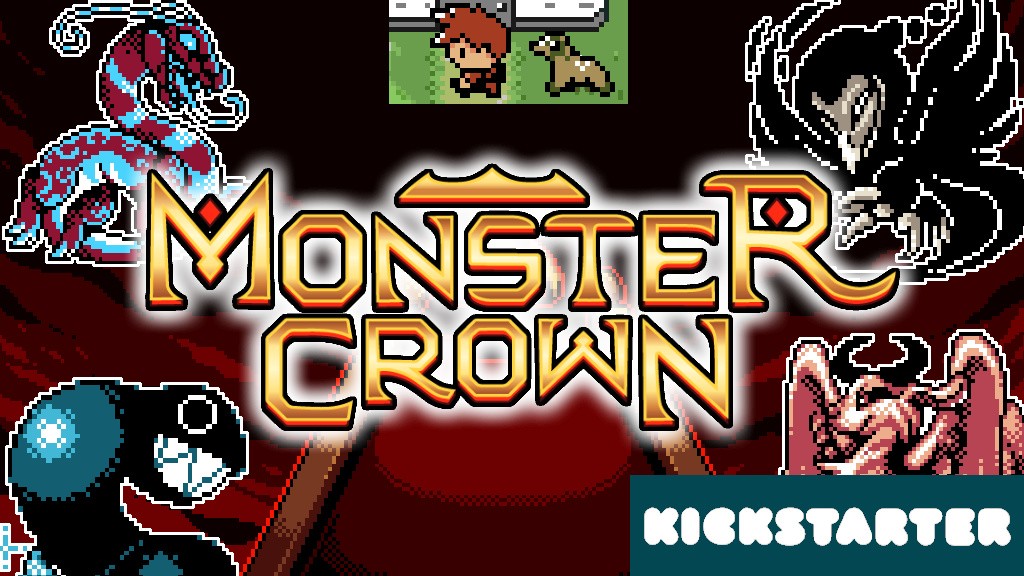
For many of us, the early Pokémon titles are truly special; it only takes one quick glance at those adorable little sprites, or just a handful of notes from its chiptune perfection, to throw us head-first into the world’s best nostalgia trip. Monster Crown is a game that aims to channel that nostalgia, taking games like Pokémon as a clear inspiration, to make something that focuses on a slightly different perspective.
The game, which is currently taking great big chunks out of its Kickstarter funding goal, places an emphasis on the breeding element of monster-taming. When you breed two of your monsters, the offspring will be true mixes of both parents in every way, essentially allowing you to create brand new species. The appearance, colour, moves, typing, and stats are all inherited, allowing countless possibilities.
On top of this breeding mechanic, you’ll also be exploring Game Boy Color-inspired locations, taking part in battles, and exploring the game’s story. You can check out a handful of the game’s features below.
200+ Monsters to Collect Countless Combinations to Breed A Sprawling, Wild World A Deep, Dark Story A Pivotal Choice that Drastically Changes the Ending and Post-Game Online Battling/Trading
If you’re interested, you can find out everything you need to know about the potential release via its Kickstarter page and even add a pledge of your own to help the project if you wish. At the time of writing, the game needs to raise just under $1,500 more of its initial $5,000 goal with 29 days to go. As ever, there are also some stretch goals should the game continue to rake in the support.
Do you like the sound of this one? Will you be helping the development team with a pledge over on their Kickstarter? Let us know your thoughts in the comments below.
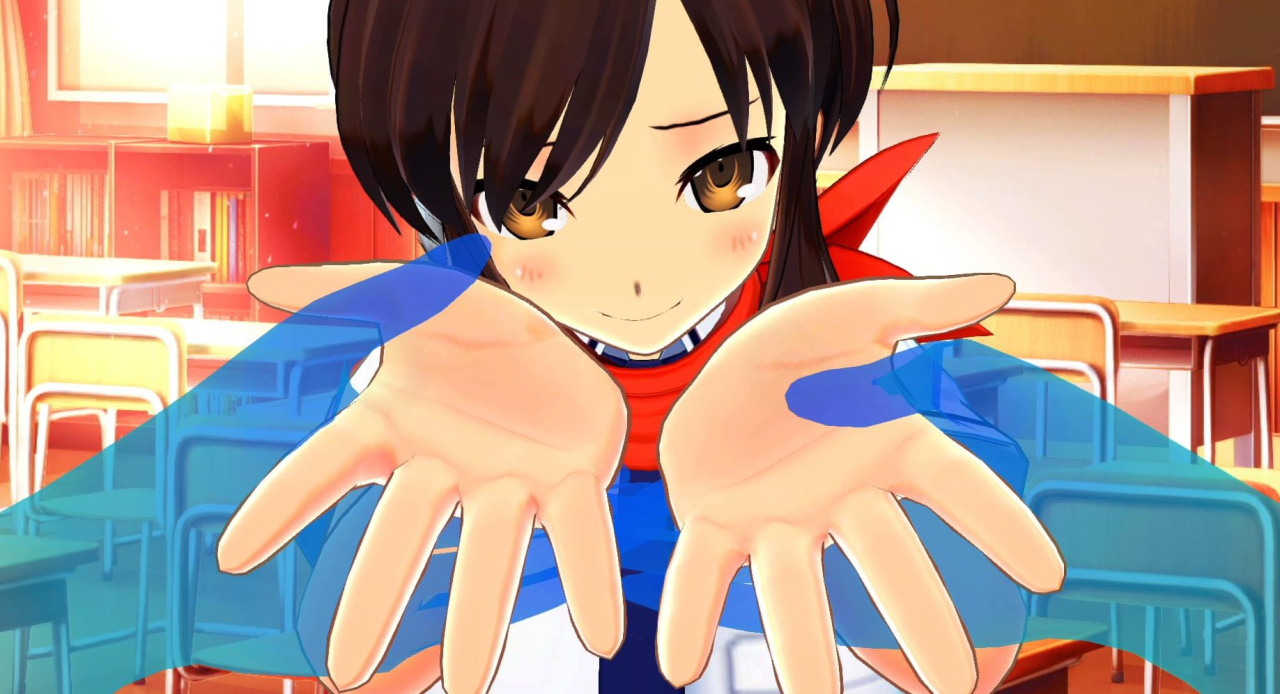
The mainline Senran Kagura series has never shied away from the obvious sexual overtones of its female ‘fronted’ games – even creator Kenichiro Takaki refers to them as ‘busty brawlers’ – so it’s hardly a shocker to see this new spin-off taking an equally adult route.
Known as Shinobi Refle: Senran Kagura in Japan, the localised Senran Kagura Reflexions will task you with getting to know series heroine Asuka by using massage and reflexology to ease away her aches and pains. You’ll use the Joy-Cons to… ahem… “melt away Asuka’s worries and stresses by hand or through a variety of useful tools and explore deeper relationships than have ever been possible in the series before.” So yeah, this is a thing and it’s coming to your Switch this summer.
So, what do you think about a risque massage game coming to Switch? Will you ever look at your Joy-Cons the same way again? Share your thoughts below…
A brand new Party Crash event will be taking place in ARMS this weekend, giving players a chance to test out all of those lovely new features just released in the game’s Version 5.3.0 update.
As always, this timed event will allow players to earn brand new badges and in-game cash as they fight through round after round as one of the featured fighters. This time around, Min Min and Helix are the event’s competitors, fighting under a ‘Stretch to the Limit’ theme.
The event starts at 9am UK time on 13th April, and ends exactly three days after at 9am UK time on 16th April.
Will you be taking part? And, more importantly, whose side are you on? Let us know in the comments below.
It is a truth universally acknowledged, that a Wii U game in possession of great critical acclaim, must be in want of a port. And cor ruddy blimey does Donkey Kong Country: Tropical Freeze fall into line with that as well.
One of the more forgotten gems of 2014, if only for the fact that it was on Wii U, is also the titular Kong’s fifth entry in the mainline Donkey Kong Country series, and in my personal view, the best. But has bringing it to Nintendo Switch hampered its gameplay or overall potential? Obviously not, but it’s the only way I can think to segue into the preview.
Everything you’d expect to be here is here, as far as we can tell nothing has been changed or stripped out of the main game to make it more ‘child-friendly’ or less difficult. The very same balls-to-the-wall hardcore ape platforming you’d want to see is here just as you left it, only with an arguably better choice of controllers. TV mode is just like the original, with a crisp 1080p resolution, a super-solid 60fps, and dripping with additional colour thanks to the full RGB range. We noticed a dip in framerate at one point when discovering a secret, but when trying to replicate it we weren’t able to get anything but buttery smooth performance, so that’s very reassuring.
Portable mode is very much the same deal, only at a native 720p. Both modes also benefit greatly from an excellent amount of anti-aliasing; everything on screen is crisp and sharp, but saw-tooth edges are basically non-existent. To say this is a good-looking game is a gross understatement.
So it looks amazing, plays superbly, and is all around a tip-top port, but what about all this funky new gubbins Nintendo’s been bleating on about? Well, the biggest addition by far is that of Funky mode, a mode in which you’re able to play as Funky Kong himself should you wish to take the edge off the challenge. Funky Kong plays much like Donkey Kong only with a host of new abilities and a larger health bar, being able to take five hits instead of just two (or four when partnered with another Kong). He can roll indefinitely just as though he had a partner Kong with him at all times, gain a little bit of extra height by double jumping, slow his descent to a crawl by hovering with his surfboard (don’t think about it too much), breathe forever underwater thanks to a totally disregard of how snorkels actually work, and even stand on spiked floors thanks once again to his trusty surfboard.
It’s quite the laundry list of new skills, and at first it may sound like it makes the entire game a total breeze, but that’s not entirely true. For example, hovering with Funky gives you incredibly limited horizontal movement, so if you fluff up a jump you might be able to save yourself, but by relying on it too much you could also put yourself in more trouble than if you were playing with the Donk. Also don’t discount pits, there’s not an awful lot that can save you from them. Or mistiming barrel blasts. Or just not hitting the buttons. Where Funky does make things much easier however is in the collectibles. Otherwise out-of-reach KONG letters or puzzle pieces can often be grabbed with ease by Funky using his double jump.
He absolutely makes the game easier, there’s no doubt about it, but he doesn’t make the game straight-up easy. What’s more when you start a save file you’re asked whether you want to play in Funky Mode or Classic Mode, and that decision is final. Should you want a purely classic experience you can do so with absolutely no interruption by the bodacious baboon-relation. What’s more if Funky Kong is too making things too easy you can switch to playing Donkey Kong at any time provided you’re not mid-level. Doing this still gives Donkey Kong a bonus of an additional heart as well, so it’s not jumping from one extreme to the other.
It’s absolutely the right move by Nintendo to add this mode; the original game was incredible, but very, very tough. What’s more, the inclusion of Funky outside of making things easier also makes it possible to complete levels more quickly in Time Trial mode, meaning a whole new potential avenue of play for speedrunners. It’s also just fun to be able to play through levels you know as a new character, but if you’re adamant that you don’t want any noob stuff invading your ultra-hardcore 2D platformer about giant apes collecting bananas from penguins, you can just stick to Classic mode.
The only other notable inclusion aside from the previously mentioned funkiness is HD Rumble, which admittedly we didn’t notice when playing in TV mode at first. Rather than using Super Mario Odyssey’s policy of making everything and anything vibrate the controllers, Tropical Freeze takes a more traditional, subtle approach. Most of the time you won’t feel anything, but when landing on platforms or blasting from barrels, you’ll get some lovely tactile feedback. The latter is a huge highlight, as it feels like a spring is going off in your hands and is all the more noticeable in handheld mode. It’s a bit of a shame there’s nothing else really new given the price point of the game and the fact that it’s a port, but apart from that it’s difficult to find any complaints at all.
In short, this Switch version of Donkey Kong Country: Tropical Freeze is a holotype for how ports should be handled. Everything is just as you remember it, the gameplay hasn’t been affected in the slightest outside of Funky mode, and that little extra bit of spit and polish coupled with faster loading times just makes it an ever-so-slightly sweeter way to play the game. If you’ve never played the game before there’s no better time to sup from these apey waters.
Please note that some of the links on this page are affiliate links. If you click them and make a purchase we may receive a small percentage of the sale which helps support the site. Please read our FTC Disclosure for more information.
Donkey Kong Country: Tropical Freeze lands on Nintendo Switch on 4th May. Will you be picking it up?