Considering how her name is in the title of one of gaming’s most venerable series, Princess Zelda has had surprisingly little time in the dungeon-clearing spotlight. And that goes for Nintendo Switch super-hit Breath of the Wild, too. Well, one group of ambitious modders have decided to give her the proper heroine makeover she deserves: say hello to The Zelda Conversion.
The 20-strong team of modders has been hard at work bringing the titular character to the forefront of the series’ biggest title to date. An unfinished character model – which was discovered deep in the game’s code – was used as a base for her build, with the team constructing everything from new dialogue and armour to adjusting the score and adding an appropriate title screen.
One of the main fans behind the project, a modder by the name of Ainz, recently spoke to Kotaku about the project, and revealed how the team has swelled to help support what’s become a huge undertaking:
“I started looking at ways in which we could enhance the mod. Which meant giving Zelda appropriate dialogue, changing music and other tweaks to improve the game. In doing so I invited multiple people to help make this a reality and after certain members joined, left and numerous other events we’ve reached the stage where we’ve made considerable gains in the project.”
Ainz confirms the group hopes to have The Zelda Conversion ready for Wii U and CEMU emulator at a later date, although he has teased this could be sooner rather than later: “We plan on having an initial release really soon so it’s a bit of a secret.”
Let us know what you make of the project in the comments section below. Which character do you prefer in the lead of the series? Zelda or Link? Let us know in the comments below…
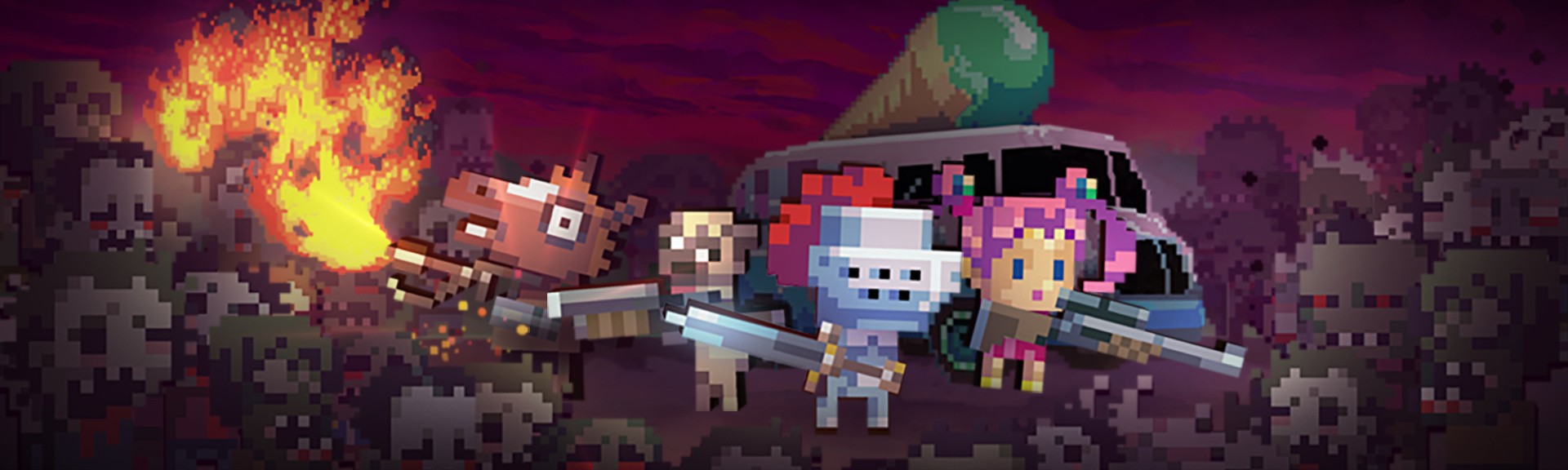
Stories about the inevitable zombie apocalypse have come of age in recent years. While survival remains the number one priority, more recent television adaptations such as The Walking Dead have chosen to focus extensively on social upheaval – providing the perfect blend between action and narrative. Death Road To Canada is much the same. Each time you play, a unique adventure is generated – providing a good mix of text-based storytelling, role-playing and classic button-bashing action sequences.
With no time to spare, you’re taught how to wield and deal damage with an assortment of weapons and even how to throw chairs and trolleys. Once you’ve grasped the basics, you must then attempt to escape to the safety of Canada. In each session you create a survivor with their own unique looks and perks – which provide special abilities ranging from improved healing to incredible abilities with a rifle. If you’re feeling lucky, you can opt with a randomised character. You’re also given the option to start the game with a buddy by your side. From here, how your adventure unfolds depends on the choices you make.
As you drive your car, the game presents text-based information about your party’s journey. Fuel, food, weapons, ammo and rest in these survival conditions are highly valued. As a result, you’ll spend most of your time scavenging supermarkets, gas stations and gun shops while evading hundreds of zombies at once. Occasionally you’ll stumble across a friendly camp that sells much-needed supplies. There’s always a risk involved when visiting certain locations, and sometimes it’s better to keep pushing onwards. It’s just like other zombie media that depicts the survivors in a constant struggle.
Text-based decision-making is just as vital as the locations you decide to visit. Say if a group of bandits ambush your team, if you fail to select the right response, then brace yourself for team casualties as well as a loss of important supplies. Party members must also keep their moral high – with the role-playing aspects balancing each party member’s emotion and how much certain scenarios affect them. Each team member has the ability to gain special perks while certain characters provide unique benefits to the entire party – with some acting as medics for example. Like any zombie apocalypse, things can quickly spiral out of control if aspects of the journey aren’t properly managed. Fortunately, you can always recruit one of the many other survivors you encounter on your journey if you are running low on party members.
The primary concern at all times is party and supply management. Keeping a close eye on what skills you’re developing within your party should be the priority. Who will be the weapons expert, who will be the medic, is there enough fuel for your car, should you abandon your old car for a sports model or should you let a dog drive the car? There are a lot of random events that may completely derail what appears to be a perfect run. If it is all too much, you can always get a second player to jump in on the action. There are also variations of the main mode that will further test your survival skills.
The pixel presentation in Death Road To Canada perfectly matches the bite-sized zombie scenarios. There are grainy filters that can also be applied channeling classic zombie films to further enhance the immersion as well. Adding to this is an assortment of upbeat chiptunes incorporating well known music genres like disco and rock. The performance throughout all of the chaotic on-screen action also remains stable.
Conclusion
Death Road To Canada allows fans of the zombie genre to live out their ultimate survival fantasies again and again. Technically, there are a limitless amount of scenarios to experience thanks to the compact yet well designed gameplay, but after a while the patterns and outcomes may become a little too predictable for the average player. If you do happen to be a long-time enthusiast of zombies, this may be worth sinking your teeth into.
Poor old Nintendo Labo Toy-Con 02: Robot Kit, only charted at 20th place last week. This week it’s not anywhere to be found in the UK top 40. Ouch! So there we have it folks, UK consumers really don’t like buying cardboard kits it would seem.
The bean counters over at PlayStation UK will no doubt be delighted by the excellent God of War maintaining it’s first place supremacy. But hot on Kratos’ heels is the rather charming Donkey Kong Country: Tropical Freeze which rolls effortlessly into second place this week.
Of course, there’s no doubt of the quality of Tropical Freeze, but it did appear to struggle on its Wii U launch. Mainly because Wii U itself was doing so badly by that point. It’s great to see this game get the attention it deserves on Nintendo’s portable powerhouse.
Here are the UK charts top 20 for your consideration:
Lizardcube’s remake of Sega’s sublime Wonder Boy: The Dragon’s Trap was one of the very early eShop highlights on Switch. The work of programmer Omar Cornut and artist Ben Fiquet, this reimagining of an 8-bit classic took the Master System version and gave it gorgeous HD visuals while tinkering behind the scenes to make it play even better.
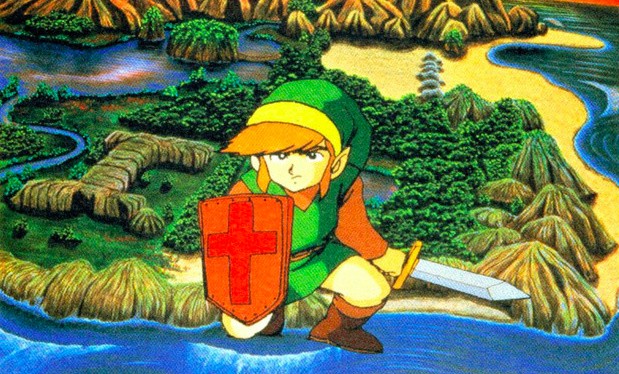
Eurogamer has been speaking to Cornut about his career and the creation of the Wonder Boy remake, and the interview is well worth a read. What’s perhaps most interesting to Nintendo fans is that Cornut, when asked which title he’d like to tackle next, suggests one of the NES Zeldas:
The first one is a better game – everyone seems to agree – but the second, it’s a game that could have been better. Which makes it a good candidate – we can take this game that was a bit flawed and actually improve it. It’d make sense… But the first Zelda, if you remade it, I don’t think I’d change anything. And if you did change anything, people would riot. But anyway it’s Nintendo, so…
Cornut seems to be suggesting that because it’s a Nintendo brand, there’s little chance of a remake happening at the hands of an indie – but lest we forget that Metroid II was recently made by an external company, so you never know…
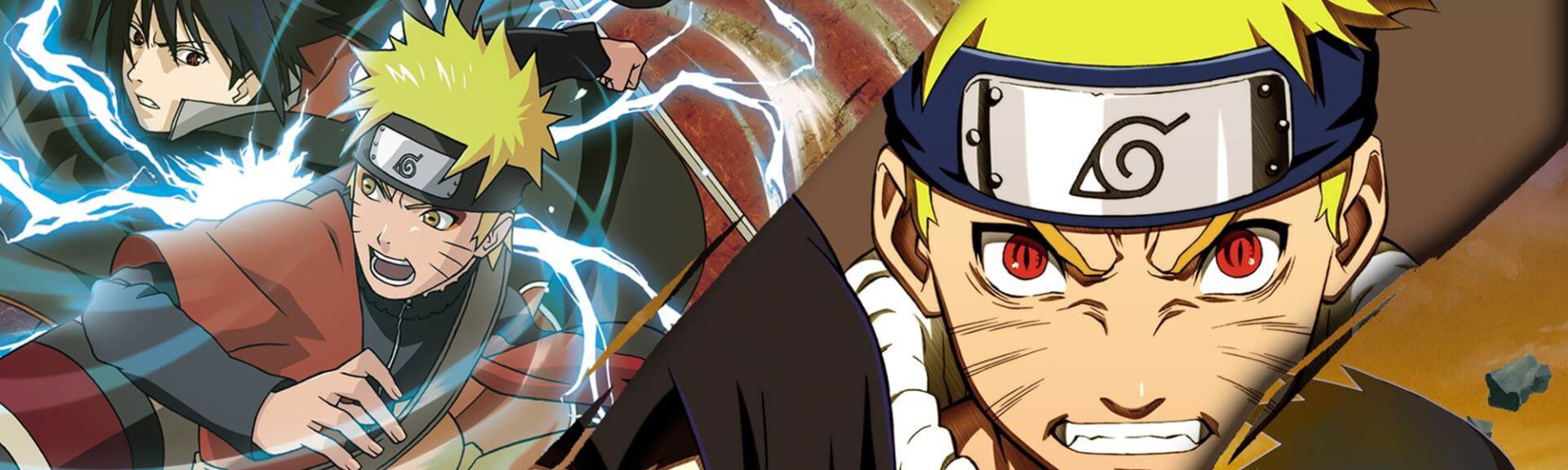
Naruto and Nintendo have long been cozy with each other. The earliest Naruto games appeared some 15 years ago on the GameCube and Gameboy Advance, but the Ultimate Ninja series of Naruto games skipped Nintendo’s consoles in favour of other platforms, but all that has changed with the release of Naruto Shippuden: Ultimate Ninja Storm Trilogy for Switch.
Trilogy is a collection of the first three games in the UNS series. On Switch, the collection is a port of a port. Each of the included games originally released for PS3 and Xbox 360, then were bundled as a trilogy and sold on PS4 and Xbox One last Summer. That port has now been ported to Switch. Have we said the word port too many times?
With the history out of the way, it’s time to address the elephant in the room: the resolution. Early news out of Japan pegged Naruto’s resolution at 540p in handheld mode across all three games. We can confirm this is true, however, we also opine that this isn’t as bad as the nightmarish images such a low number may conjure in one’s mind. The fact of the matter is, Trilogy looks and plays fantastically on Switch, both docked and in handheld mode.
Visually, Trilogy tries to replicate the feel of the anime on which it’s based, meaning it’s cel-shaded, much like many licensed titles based on similar series. That choice of visual style lends itself well to the Switch, as the graphics aren’t as demanding as one might expect from a game that released on competing consoles less than a year ago. The Switch port looks nearly identical (in docked mode) to the Xbox One and PlayStation 4 versions, an impressive feat.
Each of the three games maintains a rock-steady 30 frames-per-second throughout gameplay, with some minor dips on rare occasions during cutscenes. Speaking of gameplay, mechanically all three games are similar, albeit with minor tweaks between them. All three titles are 3D fighters in which you can play one-on-one or create a team of as many as three ninja to battle it out against your rivals. All of the Naruto series’ signature tricks are there, from sharingans and rasengans to tailed beasts and summoning jutsus.
More impressive yet is the fact that the framerate remains solid during the game’s flashy ultimate jutsus (super moves, essentially), which are massive in scale. In one, Naruto creates hundreds of clones of himself, each a fully realised 3D model and slams his opponent to the ground. In another, Naruto, Sasuke and Sakura each summon a giant monster and attack their opponent, resulting in a massive explosion. Switch handles all of these effects without so much as a hiccup.
Behind the sweet ninja moves is a deceptively deep fighting system. Like most fighting games, UNS is built on a system of creating combos and making effective use of the tools in your arsenal to take out your foes. The controls are simple to master, with one button dedicated to attacking, one for dodging, one for projectiles such as shuriken and one used to infuse any of the previous three with chakra, giving those attacks a temporary boost. Rather than the traditional super meter found in most fighters, Naruto takes a page from a number of Dragon Ball fighting games and includes a meter you can choose to fill at any time by holding down a button. Every character has a normal and an ultimate jutsu they can use, all of which are executed the same way. This is a great decision, because it means there’s no wall-like learning curve with regard to how to actually do each character’s moves, leaving the focus on strategy.
The key to winning in any of the three games included in this package is to make use of every tool at your disposal. You can carry up to three items into battle with you ranging from throwable weapons and traps, to healing and recovery items. While the items themselves aren’t overpowered, they can make the difference between a victory and a loss in a close match. Picking the right team is also key, as depending on which game you’re playing, you can unlock new opportunities and tactical choices. Similarly to how games such as the Marvel vs. Capcom series functions, you can tag in your teammates for a quick assist before they jump back out. Unlike MvC, however, you can’t permanently switch between your teammates. The character you choose as your main is the one you’ll be using throughout your match.
The three games each cover a different period of time in the Naruto canon, from the beginnings of the stories, to painfully close to the series’ penultimate moments. Each game’s story mode can range from 10 to 15 hours, depending on how many sidequests you choose to complete. The most eager of fans may even be able to squeeze 20 hours out of a single story if they aim for 100% completion. As you follow through the story, the roster, starting with 25 characters in the original balloons to a whopping 80 characters in the third installment. Nearly every player, central or tangential, to the series is represented across these three titles, including some of the crazier, kaiju-sized transformation Naruto and friends obtain in the anime.
The news, however, wasn’t all good. Combat is fun, fast-paced and engaging, but it all falls apart when you try to go online. Across all three games, Trilogy’s online play is incredibly disappointing. Matches are nearly always laggy, constantly stuttering and outright pausing. We tried everything we could think of to reduce the amount of lag we experienced, including directly wiring our Switch to a business-grade internet connection with no success. With friend both domestic and foreign, we couldn’t get a single match worth playing, which is a shame as the games would enjoy much more replay value if the netcode weren’t so poor.
Conclusion
Naruto’s first outing on Nintendo Switch is a wonderful first step for the orange ninja. While we would have loved to have seen the fourth title included to cover the entirety of in a single game, it’s hard for us to thumb our noses at three complete games in one package for about 40 bucks. For a Naruto fan, this is a no-brainer. If you like fighting games, this also might be for you, but beware if you mainly play online as you’re going to be frustrated. If local multiplayer or single-player are more your speed, however, there’s a ton of content spread across three excellent games, each of which are, despite their seemingly low resolution, a great showcase of Switch’s technical prowess. The thoughtful inclusion of both Japanese and English voice tracks is great for fans, too. If you’re looking for a fighting game to round out your Switch library, Trilogy is well worth a look.
Nintendo thrilled Switch owners today with hard details about its new Switch Online service, which includes NES games that can be played for free and feature modern elements, such as online play and voice chat.
We’ve known that retro games would form some part of the mooted online package for a while, but many were hopeful that the Virtual Console service – which launched on the Wii over a decade ago – would be included somehow. Through the Virtual Console platform, players have been able to gain access to some of the greatest games ever made for a reasonable fee, some of which are either exclusive to Japan or incredibly hard to obtain in their original form these days.
Sadly, Nintendo has confirmed to Kotaku that the service will not be coming to Switch in the near future:
There are currently no plans to bring classic games together under the Virtual Console banner as has been done on other Nintendo systems.
It would therefore seem that the vast majority of the retro content supplied via the Switch Online service will be part of your yearly fee – which, if that ends up being the case, more than makes up for the fact that the Virtual Console is effectively no more.
While we might not see all of the games that had previously launched across Wii, Wii U and 3DS under the Virtual Console banner, the notion of a flat yearly fee for online play and cloud saves which also gives access to some of Nintendo’s best titles from the past few decades as a bonus can’t be bad.
The Nintendo spokesperson added:
There are a variety of ways in which classic games from Nintendo and other publishers are made available on Nintendo Switch, such as through Nintendo Entertainment System – Nintendo Switch Online, Nintendo eShop or as packaged collections. Nintendo Entertainment System – Nintendo Switch Online will provide a fun new way to experience classic NES games that will be different from the Virtual Console service, thanks to enhancements such as added online play, voice chat via the Nintendo Switch Online app and the various play modes of Nintendo Switch.
They also refused to give any information regarding future platforms appearing on the Switch Online service, such as SNES and GameCube. However, we’d be amazed if Nintendo didn’t add more machines to the service in the future.
The news that Nintendo’s new online service for Switch will include cloud save support has been met with plenty of praise, as with the current system, all game data is tied with the console on a hardware level. If you lose or damage your Switch, you lose your save data, too.
It’s great that Nintendo is finally adding this much-requested feature to the Switch, but there are hints that not every game will showcase cloud save support – very much like not every Switch game currently supports video recording.
The official Japanese Nintendo Switch Online website states that “some software” will not use cloud saves. It’s worth noting that this text has been obtained using Google Translate, so some of the meaning may have been lost.
It’s also worth stating that “software” on Switch can mean a range of different things; Nintendo may not be referring to games in this case, but apps. The worst case scenario is that cloud saves have to be enabled at a software rather then system level in each game, and that some developers may choose to restrict this feature to avoid anyone altering save data and cheating in certain games.
Hopefully, this won’t be a massive issue and the vast majority of games on Switch will support cloud saves – we’ll no doubt find out more as that September launch approaches. In the meantime, let us know your thoughts with a comment below.
While Nintendo Labo continues to fascinate and confuse via the medium of cardboard, another very different creative suite has made its way to the hybrid halls of Switch. A digital audio workstation (or DAW as it’s known to its friends), KORG Gadget offers a robust piece of music making software that’s been fine-tuned to fit the console’s unique functionality – but it’s an experience with a handful of inherent problems that only serve to undermine some of those big selling points.
This isn’t the first time the Japanese keyboard maker has designed software for Nintendo either. KORG DS-10 and KORG DS-10 Plus (an updated version for DSi) arrived on DS almost a decade ago, while the excellent KORG M01D and KORG DSN-12 made creating your own EDM masterpiece a portable possibility. It’s a series with real pedigree, but one that’s been in need of a fresh approach for some time.
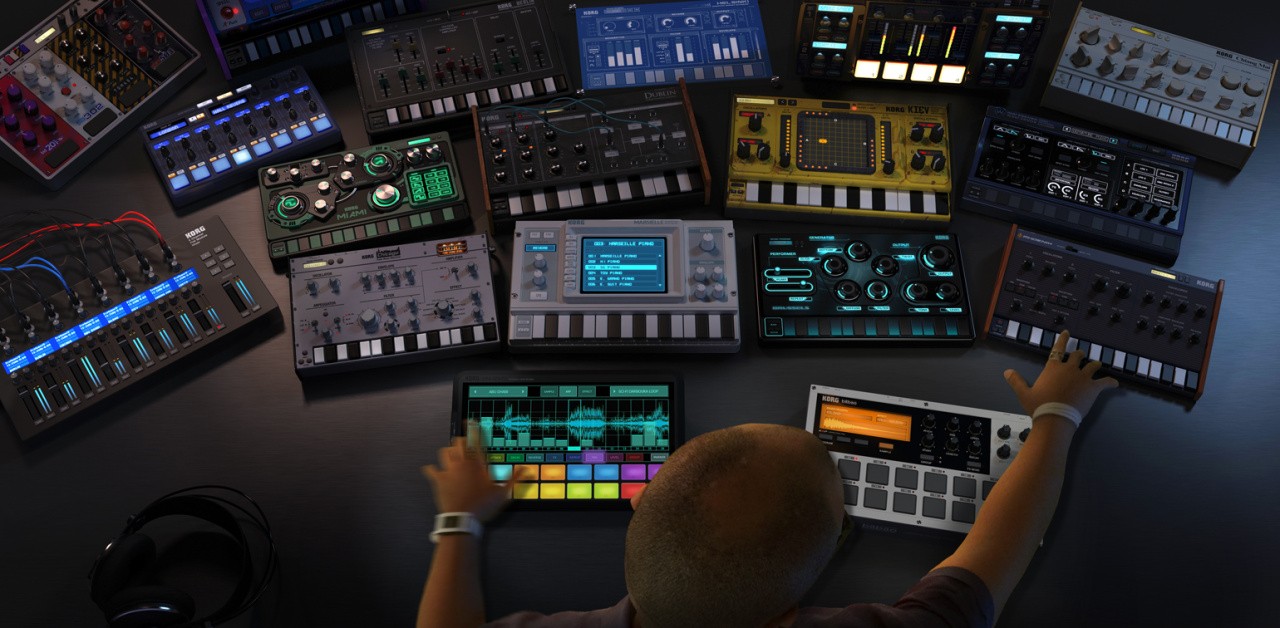
To that end, KORG Gadget is a resounding success. Originally designed for smartphones and tablets, the suite splits its 16 synthesisers and drum machines into toy-like ‘gadgets’, each with a specific theme. Each one comes with a variety of effects, offering everything from chiptune bleep bloops (so you can channel your inner Anamanaguchi) to classic D&B basslines (giving you the power to sound like a ripoff Pendulum – you know, back when they weren’t a knock-off nu-metal band).
It’s frustrating the number of gadgets has been reduced from the total available on Mac (that version has 30), but thankfully the Switch port is on par with the other mobile iterations. So even if you’re new to the world of digital song-making – or someone with a passing interest in the subject – KORG Gadget will still feel like a vast studio of emulated devices right there in your hands. Even one gadget has enough knobs and switches (including grid-style pads for testing out each sound before you use it) to keep you busy for hours.
While it may not boast as many synthesisers and drum machines as other versions, Detune (the same developer that worked on the KORG instalments on 3DS) has introduced plenty of new features you won’t find anywhere else. Switch being a console with co-op and multiplayer baked into its very soul, KORG Gadget comes complete with a collaborative option that supports local song-making with up to three other players.
With each user’s on-screen cursor defined by a different colour, it’s surprisingly easy to play as a group (using a single Joy-Con is just as responsive as using a Pro Controller or the touchscreen) and makes for one of the strangest yet enjoyable multiplayer experiences Switch offers right now. Whether as a bizarre party game or a fun couchplay oddity with your kids, the fun and clever presentation of its titular gadgets make what is actually a deep music design suite into something gamified in just the right way for would-be EDM musicians.
Detune has also made good use of a device with both buttons and touchscreen functionality. Holding ‘RZ’ will enable you to select multiple bars for creating longer drum loops, while a simple press of ‘Y’ will play your creation without a moment’s loading. A handful of useful shortcuts have also been mapped to the face buttons and the left analog stick, and we find flitting between each section of the app a breeze once we memorise the setup. You can even use motion controls with the Joy-Cons to manipulate your song (an adjust them via ‘-’), while holding ‘+’ enables you to jump between the main Piano Roll screen, your Overview page, each gadget’s individual edit screen and a Mixer for syncing together the whole mix.
As you can see, this is far from a cheap port. However, while it adds in plenty of unique features to set itself apart, there’s one huge issue that holds KORG Gadget back from being a fully-fledged console DAW: the inability to import or export songs. Considering this feature is fully present on the iPad version, it’s bizarre Detune couldn’t find a way to support such a vitally important aspect of the software. So what you end up with is an impressively deep piece of software, but one that exists in isolation rather than part of a wider ecosystem.
Much like the 3DS instalments, you can share songs locally with our Switch users, which is something of a consolation, but considering you could do this with older Nintendo hardware, it’s mind-boggling that the developer didn’t find a way to address this issue beyond an existing feature. The lack of support at launch for MIDI controllers only adds to this frustration.
Conclusion
While Detune has found some special ways to gamify the process of designing, layering and manipulating a piece of EDM, the lack of support for MIDI controllers or the ability to import/export tracks between other devices takes the shine off Switch’s first proper music title. While it’s ultimately more of an app than a game, KORG Gadget still brings an entirely new experience to your hybrid console and one that’s perfect for tinkering on a track while on your commute.
Nintendo shares new details about its Nintendo Switch Online service coming in September
Nintendo’s upcoming Nintendo Switch Online service is an affordable, multi-featured paid service that lets users enjoy online play for compatible Nintendo Switch games, access classic NES games with added online functionality, back up save data for most games and use additional features for the Nintendo Switch Online smartphone app that will enhance the online experience for compatible games.
Nintendo revealed more information about Nintendo Switch Online, including pricing, Save Data Cloud backup and additional details about the classic NES games subscribers will be able to play when it launches in September.
U.S. Pricing: Various price points offer a variety of affordable options for different players.
Individual memberships:
One month: $3.99
Three months: $7.99
12 months: $19.99
Family membership (12 months): $34.99 With a family membership, up to eight Nintendo Account holders will be able to use the Nintendo Switch Online service, even on different systems.
Nintendo Entertainment System – Nintendo Switch Online: Subscribers will have access to NES – Nintendo Switch Online, a compilation of classic NES games. The collection will initially include 20 games, with more added on a regular basis. At launch, previously announced games Balloon Fight, Dr. Mario and Super Mario Bros. 3 will be joined by Donkey Kong, Ice Climber, The Legend of Zelda, Mario Bros., Soccer, Super Mario Bros. and Tennis. An additional 10 launch games will be announced in the future.
For the first time ever, players will be able to enjoy these classic NES games online. Depending on the game, players can engage in online competitive or co-op multiplayer, or take turns controlling the action. Friends can even watch each other play single-player games online, and “pass the controller” at any time. Every classic NES game will support voice chat via the Nintendo Switch Online smartphone app*. It will also be possible to play these games offline.
Save Data Cloud Backup: By using Nintendo Switch Online, a backup of Nintendo Switch save data for most Nintendo Switch games will be stored online for easy access. This is great for people who want to retrieve their data if they lose, break or purchase an additional Nintendo Switch system.
Nintendo Switch Online App*: The Nintendo Switch Online smartphone application can be used to enhance the online experience for compatible games through voice chat and other features.
*The Nintendo Switch Online app is for Nintendo Account holders 13 years old or older. Persistent internet access and compatible smartphone are required. Data charges may apply.
There’s something to be said about the simple things in life. Every now and then, the uncomplicated and downright straightforward is greeted with open arms – especially when it comes to video games. As gamers, a lot of us have grown accustomed to memorising finicky controls that, when a title has gathered a healthy amount of dust, are easily forgotten and have us sheepishly fumbling to the options screen for that all-important diagram of the controller. Bouncy Bob, however, does away with such worry; the only button to press is ‘A’.
Holding down ‘A’ grants Bob with a metronome-esque launch arrow that fires him in the desired direction (similar to launching one of those Angry Birds) when ‘A’ is released. Mash said button while Bob is airborne and he’ll flutter his puny arms giving that little extra distance to reach platforms and other hard-to-reach areas. It’s a heavily simplistic approach for navigation and proves to be fun with a chain of successfully executed jumps and well-timed launches. Spiked walls and chasms are deployed in all but the first arena to put a stop to mindless Bob-launching, but no layout of hazards become an integral challenge to overcome when fending off waves of zombies.
In the 15-or-so arenas, you’ll encounter a lacklustre selection of continually-spawning enemies that hone in toward Bob and want to take a nibble from his health bar. From zombie rabbits to spear-throwing skeletons (and exploding bats), it’s Bob’s job to wobble his way over and trample on the head’s of the enemy to rid them. Reaching the quota of kills will unlock the next arena.
Unfortunately, that lack of variety starts to chip away at Bouncy Bob’s replay value. The game’s premise is as simple as the control method, which is troublesome as we manage to clear all the stages in just over an hour. The repetitive soundtrack doesn’t help the situation either with only a handful of short, looping tunes cropping up that will see you grabbing the TV remote and turning down the volume in favour of your own music. Still, it may be to some tastes, but the game could do with a bigger playlist.
There are some power-ups to obtain in each area that, when used with a screen full of bad guys, can enable a sure fire way to wipe out a ton of the undead. Laser beams, bombs, arrows and a few others are locked in timed boxes that offer a small degree of strategy in the later arenas, but none are satisfying to use and mistakenly bounding into one isn’t enough of a punishment to warrant a level restart.
Bouncy Bob does have a multiplayer mode, which gives us a brief moment of hope that the title might redeem itself by being one of those games to break out with a few friends over, but it’s a weak affair and one that’s very easily forgotten. There are no enemies in sight when playing with more than one Bob; it’s just a case of scrambling to bounce on your buddy’s head. With only five arenas to bounce around, playtime is short-lived and not helped by software crashes when loading up the next round.
Conclusion
Bouncy Bob attempts to demonstrate how a simple idea of a one-button control mechanic can be fun and accessible. But it’s met with shortfalls aplenty. Rather than being an attractive and accessible gimmick, it’s a painfully restraining annoyance and, although quashing a row of enemies can be satisfying, being given the one method to play quickly becomes a chore. Granted, the eShop isn’t awash with one-button titles – and Bouncy Bob stands out for this reason – but this title may be an example as to why this is the case.