Posted on Leave a comment

Review: Garage (Switch eShop)

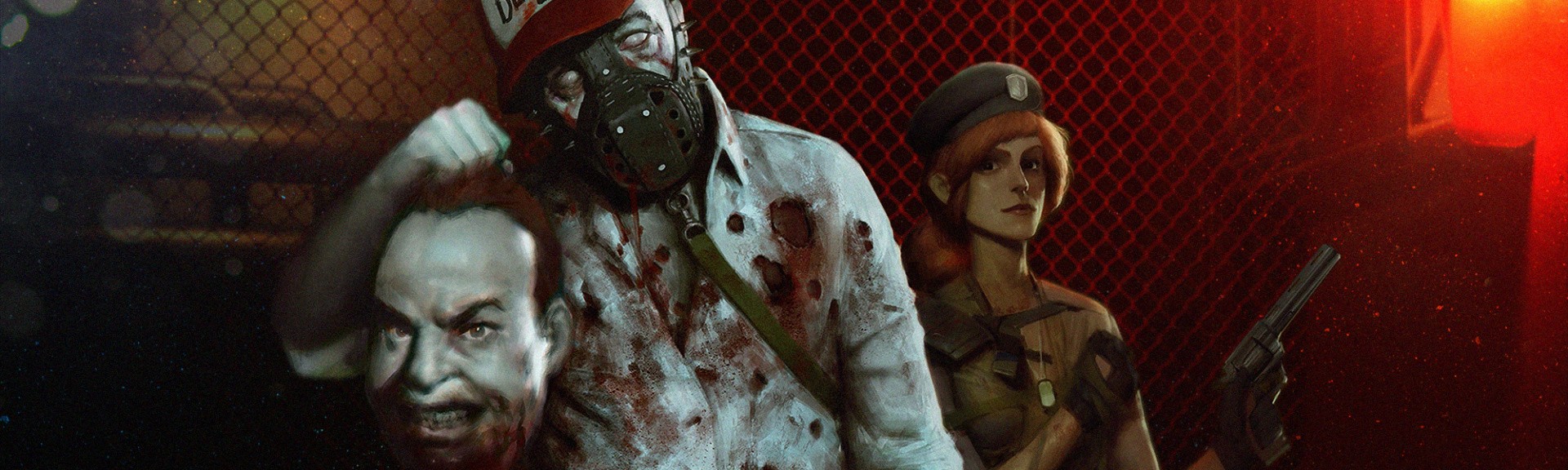
Deadbeat drug dealer Butch wakes up in the trunk of a car and climbs out into a top-down urban hellscape. It’s up to him, with the help of his mysterious handler ‘Anaconda’, to battle through the Garage, an underground mall formerly owned by shady corporation Smith Investments. Cue horrific encounters with mutated vermin, zombified citizens, botched experiments and more.

With movement and aiming on the left and right sticks respectively, punching, swinging and shooting is handled with ‘ZR’, and you can kick watercoolers, traffic cones, rats and severed heads with ‘ZL’. There’s a weapon wheel on ‘R’ containing an ax, plus the assortment of firearms you’ll find on your journey. Careful ammo management and timed reloads are the order of the day – your health won’t last long against a face-munching member of the undead horde if you’re jamming fresh cartridges into your shotgun.

While exploring the blackness of the Garage, you’ll kick doors open into new areas which are then illuminated. Secret rooms containing equipment or notes to read are found through cracks in walls. The facility is in a right old state, with fires and fluorescent strip bulbs providing most of the lighting. Zombie Dynamics pulls some neat environmental tricks, with pipes running across the ‘ceiling’ and bulbs falling to the floor around you, but the Garage is dark and it can be tough to make out details. To make matters worse, the picture gets noticeably softer in handheld mode – a brightness adjustment setting would have been very helpful, especially if you’re on the move during daylight hours.

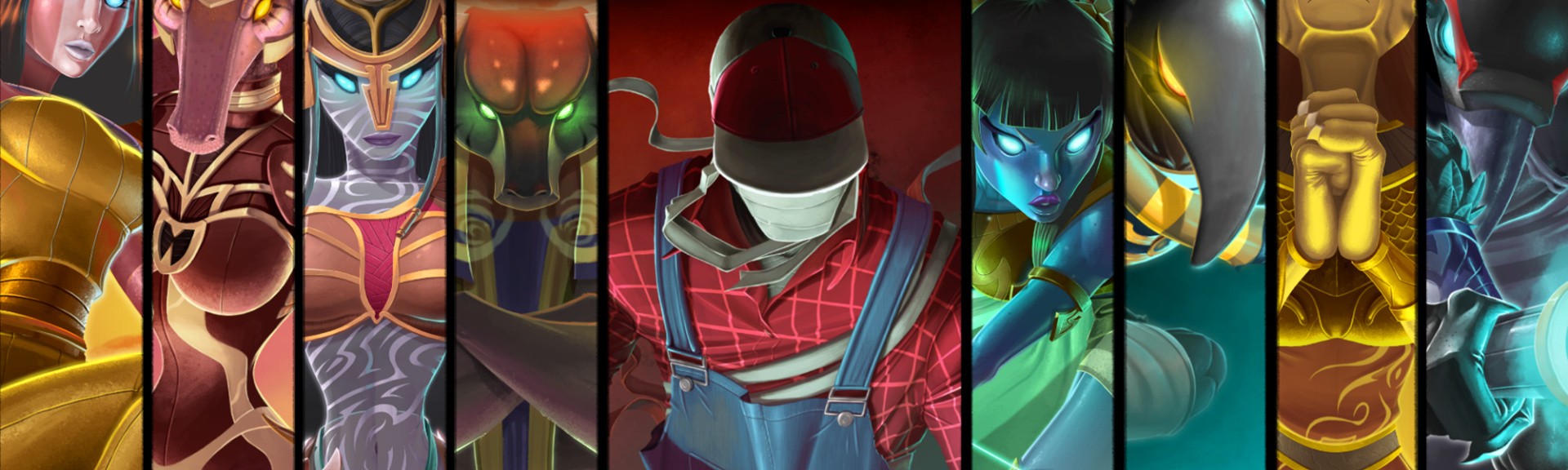
Garage wears its references on its sleeve, shirt and cap. The story is B-movie horror shlock through and through, and no trope is left behind. There are humorous moments but, like the films it nods to, it’s a little hit-and-miss. The screen crackles with occasional static and a persistent scanline effect evokes old CRT televisions and VHS video nasties. This works well enough in-game, but not so much with the painterly character portraits that pop up alongside dialogue boxes, nor the high-def hell hound on the title and loading screens. A screen-bending psychedelic sequence further muddies the waters and the different art styles never quite gel.

The base twin-stick mechanics are competent, though, and as the game progresses you’ll need to outmaneuver smarter enemies that carry arms (guns, not limbs). Items and enemies appear on-screen only when Butch has a clear line of sight to them, which increases tension but limits possibilities for player creativity. Of Garage’s many influences, Hotline Miami is writ largest – from the retro styling to the trippy narrative and thumping soundtrack – but that game enabled players to see all enemies on the map, strategise and chain combos with a kinetic and addictive flow; Garage is far more rigid and linear in its gameplay. That’s not necessarily A Bad Thing™ but it’s certainly a different experience and you won’t be achieving that sort of visceral ‘flow-state’ here.

Instead you’ll find keys, shoot exploding barrels, hunt fuses to power up generators, kick debris onto land mines and watch CCTV footage for clues to enemy positions. You’ll also come across passcode-protected caches containing goodies or letters that flesh out the story. A few vehicular set-pieces offer a change of pace, although these interludes vary in effectiveness. Collapsing ceilings and regular checkpoints prevent too much backtracking and, although the darkness can be disorientating, levels are never labyrinthine.

It’s disappointing, then, to find lengthy loading times between areas. While docked, we counted 45 seconds from start-up to title screen. Levels generally load in 20-30 seconds, although restarts are more-or-less instant. The pixel art is a veneer over a heavier game engine and, as such, you’ll spend a lot of time staring at the loading screen over the course of the game’s thirteen chapters. Performance-wise, there’s a touch of slowdown when things get busy, but nothing like the stutter of tinyBuild stablemate Mr Shifty at launch.

Conclusion

Garage is – somewhat fittingly – a hodgepodge assembly of parts co-opted from cinematic and gaming sources. It offers some effective jump scares and decent top-down action against squelchy enemies. The pixel aesthetic it adopts is fine but also emblematic of the game as a whole – a well-intentioned affectation that lacks real direction or substance. With nothing new or interesting up its sleeve, Garage’s zombie apocalypse setting feels very tired and it lacks the readability, coherence and sheer style of Hotline Miami, a game the developer is clearly in awe of. However, if you’re desperate for some gory twin-stick shooter action with a horror bent, it scratches that itch well enough to warrant investigation. It’s just hard to shake the feeling you’ve played this game before, and better.

Posted on Leave a comment

Miitomo, Nintendo’s Original Mobile App, Passes Away

Miitomo, brainchild of mobile game producer DeNA, has passed away. It was just over two years old.

The cause of death is currently unknown; however, it is believed that the de-emphasizing of Miis on the Nintendo Switch – as well as Nintendo’s increasing focus on adapting traditional games such as Mario and Animal Crossing for mobile – played a role in Miitomo’s untimely and tragic demise.

As of May 9th, the servers for the mobile app have been taken down, and users have had their access to the game revoked.

Nintendo paid tribute to its fallen offspring with the following eulogy:

We want to thank you for enjoying Miitomo so much.

Miitomo’s service has come to an end as of Wednesday 9th May 2018, 16:00 (JST).

We’ve come a long way since the app was launched, and once again we want to thank everyone who’s been involved.

We hope to go on to even bigger and better things in the future with Nintendo, and we hope you’re there to share the fun.

We hope to see you again soon!

In its lifetime, Miitomo had many accomplishments. Within a month of launching, the app claimed over 10 million users, and 300 million conversations between friends. It also contributed to an 8% increase in Nintendo’s shares within a week of its launch.

Miitomo was beloved by its fans, and will surely be missed in the world of mobile gaming.

However, for those looking to fill the Mii-shaped holes in their hearts, Nintendo announced on April 30th that a browser-based Mii Maker tool will launch by the end of this month. Users will even be able to use the same Miis they played Miitomo with.

All good things must come to an end – hopefully this shift of focus will mean more exciting things are on the horizon for Nintendo in the months to come. In the meantime, let’s pour one out for Miitomo.

Do you think Miis will become a relic of the past for Nintendo, or has the company not quite given up on them yet? Let us know your thoughts in the comments below…

Posted on Leave a comment

Review: Immortal Redneck (Switch eShop)

Immortal Redneck feels like it could have been made 15 years ago. For many games that could be considered a negative thing, but for this one it’s hard to think of a better way to praise it. It feels like it comes from a simpler time, when shooters were about shooting.

The premise is silly: you play as a redneck who crashes his desert buggy, presumably dies in the process, and finds himself resurrected as a mummy. It’s up to you to blast everything in sight because… um, reasons. To be fair, this one really isn’t about the plot and makes no bones about it. The game’s probably best described as an FPS roguelike, but even that isn’t entirely accurate: many who don’t generally like roguelike games can still find a lot to love here because it doesn’t feel like one.

Your task is to enter a pyramid and make your way to the top by finding the staircase on each floor and taking out the two bosses on the way. Manage this and there are two more pyramids to conquer before you can be deemed truly immortal. Each time you enter the pyramid you start in a central room with doors leading off in different directions. Every time you enter a new room its doors are locked and a bunch of enemies spawn: the doors won’t open again until you kill them all and the room has been cleared. The general aim, then, is to work your way through the pyramid, clearing out rooms and filling in your map as you go.

The game uses procedural generation, but only to an extent. Every time you enter the pyramid the layout is completely different: the map and rooms have changed entirely, and the stairs to the next floor aren’t where they were last time. To all intents and purposes, it’s a new adventure. The more you play, however, the more you come across the same areas and it eventually becomes clear that what you actually have here is a game where the map is procedurally generated, but the rooms aren’t. Instead, it’s taking a bunch of preset rooms and shuffling their location each time like big jigsaw pieces.

It’s the perfect combination, really, because it gives you that random element you usually get from procedurally generated games to keep things fresh, but combines it with well-designed, developer-created rooms to make sure the quality remains high (rather than being a bunch of random rooms with arbitrary pillars and enemies dumped in there). This mix of familiarity and the unknown makes it a treat to enter the same pyramid each time you die, because although you’ll still have to figure out which way to go you at least get the feeling you’re making some sort of progress because you can develop strategies for rooms you’ve visited before.

Don’t go thinking you won’t die, incidentally. You will. A lot. The whole driving force behind Immortal Redneck is that you begin the game woefully underpowered and have to gradually increase your abilities with each new playthrough. Every time you play you’ll collect coins from fallen enemies: when you die you’ll spawn in a central hub area where you can spend these coins on upgrading a skill tree. You can’t hoard these coins and grind the game to save them for something more impressive early on, either: Immortal Redneck is too smart for that. Each time you enter the pyramid you have to give up all your remaining coins as an offering to the gods, meaning you have to spend as much on upgrades as possible before entering or it’ll all go to waste.

As well as the stuff you’d expect from the skill tree – better health, more ammo, more powerful shots – you can also unlock the ‘favour’ of different gods, letting you choose which one to possess each time you’re resurrected. When you reach this point the game opens up even further, because now you effectively have up to nine different character classes to suit your playing style. Do you go with Seth, a defensive character who uses elemental weapons like a taser sword and tesla coil which means enemies take damage any time they hit you? Do you choose Apis, the God of Strength who’s armed with four weapons instead of the usual three but has limited movement? Or maybe Amunet, who offers more of a stealthy approach and can drop decoys to draw enemies’ attention away from you?

Of course, all this detail would be wasted if the game itself was lousy, and that’s where the main positive comes into play: at its core, it’s just great fun. Everything about this game is designed to make you feel like a bad-ass. Movement is smooth and fast, and it really doesn’t take much practice before you’re skilfully sprinting around, blasting your way through countless snake mutants, baby dinosaurs, crossbow-firing jackals and hopping sarcophagi.

Jumping is a treat too, which is something that’s rare in FPS games. Your character automatically grabs ledges and pulls himself up if you jump into them, meaning there’s far less chance of you tumbling to your doom because you couldn’t figure out where your feet are. It’s so well done that some rooms are huge vertical towers consisting of nothing but small ledges and despite this they’re still a breeze to climb.

Although you’re essentially in a maze, the game is also keen to make sure you don’t get lost or frustrated. Rooms don’t appear on the map until you’ve visited them and doors are clearly marked on it, making it easy to figure out where you haven’t been yet. If you’re in a particularly complex room and can’t find that last enemy you need to kill to clear it and unlock the doors, before long the game shows you their silhouette through the walls, making it easier to track them down instead of making you wander around aimlessly and endlessly.

Then there are the scrolls, which can be found in chests or dropped randomly by enemies. There are 100 of these, and each adds a modifier to your current game (the effect ends when you die and start over). Some of these are positive – infinite ammo for the floor you’re on, temporary invincibility when you take a hit – while others are negative, slowing you down or removing your ability to stand still. The best ones, though, are the weird and wonderful ones that either force you to change the way you play the game – the Vampire scroll means health pick-ups no longer work but you instead get health back every time you kill an enemy – or just do something silly, like the one that random turns enemies into clucking chickens.

All this combines to make a game that, while clearly packed with ideas, never feels overwhelming. As mentioned at the start of the review, it feels like something released 15 years ago, and that’s a compliment: Immortal Redneck could quite easy slot in alongside the likes of Quake, Unreal and particularly Serious Sam as another fast-paced FPS that ditches moody gravitas in favour of emptying rounds into hordes of bad guys with a big grin on your face.

The whole package just comes together so well, and while it’s designed to make you die regularly it never feels cheap. Deaths are always your fault and the fact you’re always improving your stats means that elusive ‘one more go’ factor so many games fail to achieve is very much present in this one: you’re sure you can do it this time. Okay, maybe this time. Right, definitely this time.

It isn’t perfect, though. It’s understandable that some visual compromises have had to be made to get the game running on Switch, and while the game runs at 60 frames-per-second on other formats it’s locked at 30fps here. More importantly, there’s a blurring effect that kicks in when you move around and stops when you’re standing still. It’s noticeable though easy enough to ignore when playing on the TV, but when playing in handheld mode (where the resolution drops further) it can be quite distracting at times. It’s not quite as severe as the blur effect in the Switch version of DOOM but it’s still worth mentioning.

Another stinker (though this depends more on personal taste) is the dialogue. While it’s a great thing that the gameplay feels like it comes from a bygone era, it’s sadly not so wonderful that the same can be said about the writing. Your redneck hero is essentially a rural Duke Nukem, regularly spouting unfunny one-liners and swearing more times than is necessary.

We aren’t prudes here at Nintendo Life (as our positive review of South Park: The Fractured But Whole shows), but there’s a difference between swearing creatively and trying too hard by forcing it into every sentence. It’s a shame because there are plenty of lines in there and many of them are contextual – when you turn an enemy into a chicken he’ll say the, “What’s the matter McFly? Chicken?” line from Back To The Future – but the fact there are more F’s in here than in a truant’s report card means you may be inclined to turn off the voice acting in the settings and never hear them.

Posted on Leave a comment

Here Are The Participants In The Super Smash Bros. Invitational 2018 Tournament

It’s going to be a smashing E3 this year as Super Smash Bros. for Nintendo Switch will be on show. The centrepiece of showing the game will, of course, be the Super Smash Bros. Invitational 2018 Tournament where eight of the most talented Super Smash Bros. players from around the world battle it out to see who will emerge victorious.

In the video above, you can learn a bit more about the competitors who will be involved in the event, or you can read their bios here:

  • MkLeo – A professional Super Smash Bros. for Wii U player from Mexico. His favorite Nintendo game is Fire Emblem. He was the champion at GENESIS 4 and GENESIS 5. He was also the EVO Japan 2018 champion.
  • ZeRo – A professional Super Smash Bros. for Wii U player from Chile. His favorite Nintendo game is Xenoblade Chronicles. His hobbies include writing and motocross. He was the champion at EVO 2015 and GENESIS 3. He also won the Super Smash Bros. Invitational in 2014.
  • Armada – A professional Super Smash Bros. Melee player from Sweden. His favorite Nintendo game is Super Mario 64. His hobbies include ice hockey and table tennis. He’s the GENESIS 2 singles champion and the GENESIS 4 doubles champion.
  • Abadango – A professional Super Smash Bros. for Wii U player from Japan. His favorite Nintendo franchise is the Xenoblade series. His hobbies include watching anime and reading. He was the runner-up at EVO Japan 2018. He also ranked in the top five at EVO 2016 and GENESIS 4.
  • Plup – A professional Super Smash Bros. Melee player from Florida. His favorite Nintendo game is Super Metroid, and his favorite Nintendo memory is beating Super Metroid for the first time. He was the champion at GENESIS 5.
  • Mr. R – A professional Super Smash Bros. for Wii U player from the Netherlands. His favorite Nintendo game is The Legend of Zelda: Ocarina of Time. His hobbies include reading manga and traveling. He was the runner-up at EVO 2015.
  • Lucky – A professional Super Smash Bros. Melee player from California. His favorite Nintendo game is The Legend of Zelda: Ocarina of Time. He ranked in the top five at EVO 2017 and at GENESIS 5.
  • Mang0 – A professional Super Smash Bros. Melee player from California. His favorite Nintendo game is Mario Kart 8 Deluxe. He was the champion at EVO 2014.

There are some very familiar names here, this will surely be a battle to remember. Each of these players will be playing the Super Smash Bros. game for the Nintendo Switch system for the first time at this event. Anything could happen!

Nintendo’s festivities at E3 kick off with two days of high-level competitive action. On Monday, 11th June from 3:30PM to 6PM (Pacific Time) international teams will ink their way to glory in the opening rounds of the Splatoon 2 World Championship tournament. The finals will take place the following day on Tuesday, 12th June immediately followed by the Super Smash Bros. Invitational 2018 tournament.

Let us know if you plan to tune in during E3 2018 with a comment below.

Posted on Leave a comment

Nintendo Was “Kind Of Liberal” When It Came To Creating The Super Mario Cartoons

Those of you who were alive during the late ’80s and early ’90s may well have fond memories of the Super Mario Bros. Super Show, a cartoon production which dominated kid’s TV during the early days of the Sega and Nintendo console war.

Eurogamer has been speaking to people associated not only with this and the other Super Mario cartoon shows, but also the Sonic the Hedgehog ones – amazingly, both were produced by the same company, DiC.

Reed Shelly – a creator and writer on the Mario and Sonic shows alongside his father, Bruce – describes the process of working on the shows:

He put up with me more than I put up with him. We sat across desks facing one another working 13 hours a day, through holidays and weekends. We kind of look at one another and…I think we both miss it to be honest. It was a fun time.

Phil Harnage – a writer on The Adventures of Sonic as well as The Super Mario Bros. Super Show, The Adventures of Super Mario Bros. 3 and Super Mario World – explains that having a link with the subject matter wasn’t always a given, but effort had to be made:

I have never been very good at video games, but I did play Mario because the in-house producer was a fanatic and had a Nintendo [console] in his office. Mostly, I would sit and watch him because he was so good, and he would say there’s that creature and this other creature you’ve got to watch out for. He taught me about the world. It was going to be different [from the games] yet it had to have all the familiar touchstones, like the Goombas, the fire plants…if we ever excused something from the game we heard about it, but Nintendo reviewed the scripts and they made sure that everything was good.

Harnage adds that Nintendo gave the team a surprising amount of freedom – something which clashes with the company’s reputation as a control freak:

They were also kind of liberal in letting us do things that had never been in the game and there was no pushback. I think they liked it when we put Mario in the wild west, in the future and underwater. We would take a familiar fairy tale, legend or something the kids already knew and we would build up an episode around that and make it as fun as possible.

Given that we’re getting Sonic and Mario movies soon – and Sonic has already had a successful recent TV show in the form of Sonic Boom – is there any scope for Mario to return to our small screens, perhaps in the same format as the DiC shows?

Shelly isn’t so sure:

It feels like a time capsule to me. It’s such a different world now and so different for kids. The shows were made for a different era.

We always looked at this and said, if you make seven million kids laugh, that must count towards something. And when I was a little older and doing more pre-school shows, like Teenage Mutant Ninja Turtles, I was a hero at my oldest daughter’s pre-school.

Did you watch these shows as a child? Let us know your memories with a comment.

Posted on Leave a comment

Review: Timberman VS (Switch eShop)

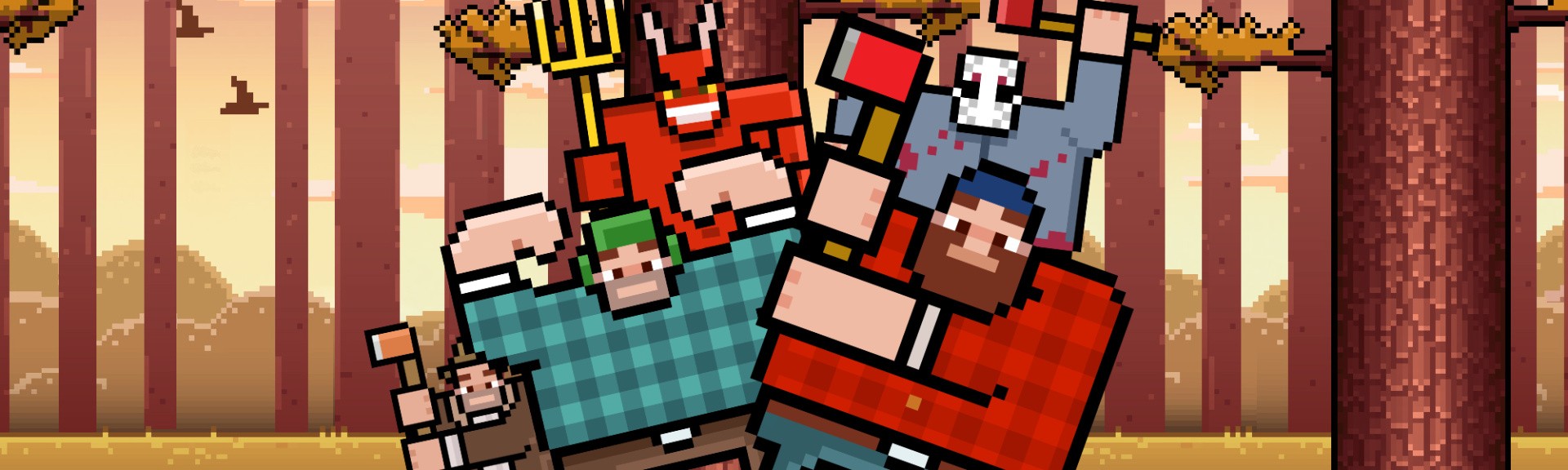
Timberman VS is Digital Melody’s Switch enhancement of its free-to-play arcade title first released on Android and iOS devices in 2014 (and eventually ported across to Steam in 2015). If the name wasn’t already enough of an indication, it’s a game about chopping trees as fast as you can until your hands hurt.

Given its mobile roots, the concept here is quite simple. You must chop down a tree while avoiding its branches at the same time. To chop, you press a button on the left or right side of your controller (which varies depending on your specific controller setup) and your character will move from side to side while avoiding any incoming branches. If you don’t maintain a certain speed while chopping, it’s game over. As a result, you must maintain a relatively consistent pace – which adds to the intensity and overall frustration of the exercise.

To motivate you to be the best lumberjack you can be, there are three different game modes. The classic mode is the most standard affair with an inbuilt XP levelling system. Each time you chop a tree you’re rewarded with XP, unlocking new avatars such as princesses and hockey players. You can also play this mode alongside three others. In hero mode you must save a nest of birds at the top of a burning tree and in the race mode you compete against three other players or AI opponents by reaching the finish line first.

Regardless of the mode, essentially the task is to chop as fast as you can at all times. The multiplayer will likely offer the more memorable moments, with the competitiveness between friends and family fuelling the fun. As a solo player, it’s hard to embrace – especially with the fact no online multiplayer or leaderboards are present at the time of review.

Given how basic the concept here is, the sound and visuals do a good job at offering a sense of variety. The pixel presentation is rather generic, but the selection of backdrops ranging from circuses, deserts and even an area strikingly similar to the Mushroom Kingdom is enough to keep each woodcutting session feeling fresh. The sound should also keep you on edge with satisfying wood chopping noises and music that maintains the intensity.

What makes Timberman VS more bearable than you might expect is its accessible design. This is amplified on Switch, mainly due to its own quick, responsive and adaptable traits. The game modes on offer means it can be played in short sessions when you’re out with friends or at home taking a break from more prominent titles. The performance is also steady whether you’re playing on the couch or in tabletop mode. Sure, this isn’t necessarily the definitive iteration, but it does offer its own unique advantages, yet again courtesy of the smart design of Switch. Still, all of this doesn’t necessarily hide just how basic the offering is. 

Conclusion

The trailer for Timberman VS describes it as ‘the most intense multiplayer rage game ever’ which is a pretty accurate summary. As infuriating as it may be at times, it’s mysteriously satisfying when you are victorious against friends and family. By yourself, there’s less reason to get excited when there’s no online play or leaderboards to spur you on. In saying this, by yourself Timberman VS still offers the same frustratingly addictive gameplay and with 50 humourous characters to unlock, there’s at least some incentive to keep playing. Ultimately, whether you play within the company of others or not, what’s on offer is a well-presented but simple and highly repetitive package. 

Posted on Leave a comment

Nintendo announces new adjustable charging stand for Nintendo Switch

Nintendo announces new adjustable charging stand for Nintendo Switch

Launching on July 13 at a suggested retail price of $19.99, a new adjustable charging stand for the Nintendo Switch system makes playing in Tabletop mode easier than ever. With a handy port for an AC adapter on the side, the adjustable charging stand allows the Nintendo Switch system to be charging while in Tabletop mode, enabling longer play sessions.

The angle of the stand can also be adjusted to create the best viewing angle for different environments.

Nintendo Switch can be played in three modes: TV mode, Handheld mode and Tabletop mode. Tabletop mode lets players set up the Nintendo Switch system to play games on the go without the need for a TV. The compact and sturdy stand will work with any flat surface, like a tray table on an airplane or a dorm room desk. While not required, the adjustable charging stand makes playing in Tabletop mode more convenient.

For more information about Nintendo Switch, visit https://www.nintendo.com/switch/.

Posted on Leave a comment

Review: Hyper Sentinel (Switch eShop)

If you happen to remember a time when video games came in audio tapes, the name ‘Hewson Consultants’ will surely ring an 8-bit bell. Exercise your memory a bit longer and you might even be familiar with Uridium, a 1986 scrolling shmup designed by Andrew Braybrook that sent both reviewers and gamers into a frenzy. After a successful Kickstarter campaign, Uridium’s spiritual reboot is finally within our grasp, but is there still a place for Hyper Sentinel 32 years later?

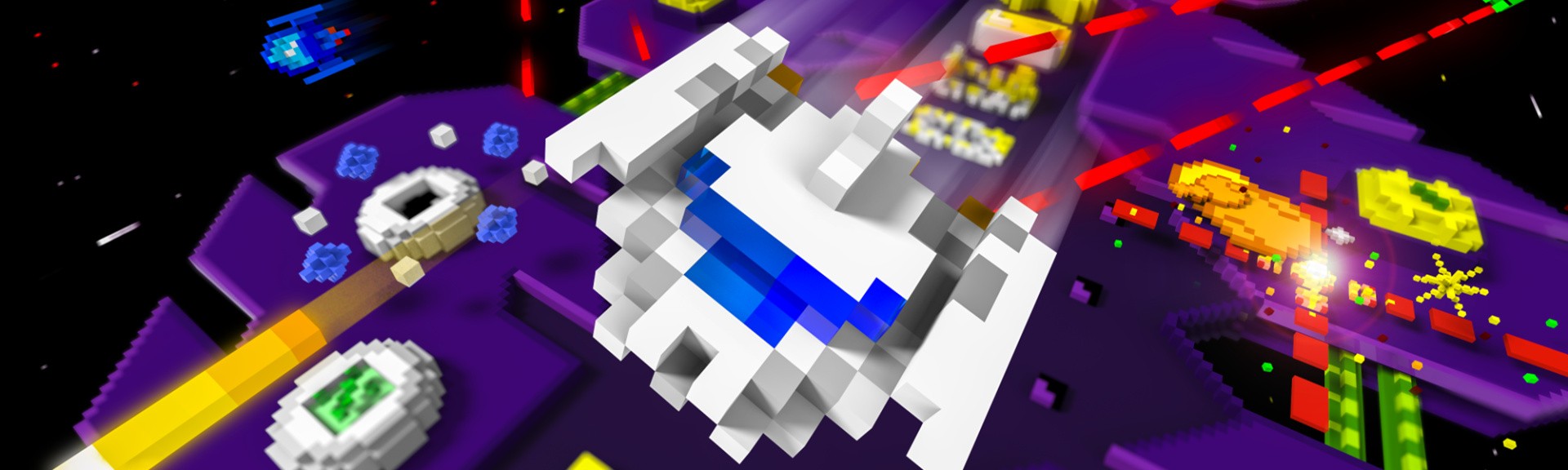
There are 12 enemy Super-Dreadnoughts causing all sorts of havoc across the solar system and, sadly, the only thing standing between complete obliteration is your single Hyper Sentinel space fighter. That is all the plot you need for this one, think The Last Starfighter meets Star Wars’ Star Destroyers in glorious 8-bit sprite-work.

Gameplay is lifted straight from the original 1986 game and, as such, every level is viewed from a top-down perspective and stretch as long as the particular Super-Dreadnought you’re fighting against. You can move back and forth along said enemy metal monstrosity at your discretion. In fact, you will often need to do so in order to either attack all the surface targets needed to sniff out the enemy boss or just to evade pursuing enemy ships and ensure you live enough to actually make it to said boss.

Its controls are nice and simple: the left analog or D-Pad control your ship in eight directions, ‘A’ or ‘B’ is your fire button and ‘RZ’ enables you boost to insanely fast speeds. This boost can be used to either give chase to enemy ships and power-ups or simply evade danger from surface weapons or boss attacks. However, you can not fire and shoot at the same time, so despite the non-stop frantic shmup action you will need to keep a cool head and know when to boost. Each level is a score attack, so chaining kills to rack up combo multipliers is the best strategy to make your way up the online leaderboards.

Despite the odds stacked against you, score boosters and special weapon pick-ups do help tip the scales in your favour. While your standard dual-firing lasers are more than adequate to take on anything the game throws your way, it certainly does no harm having a special (and sadly limited) weapon when facing up the Dreadnoughts many surface defences, ships and eventual bosses. There is even a very useful Smart Bomb pick up that clears the whole screen of baddies and gives you a much welcome brief respite form the onslaught. Keeping an eye out for these pickups is vital to succeed, but the action can get so frantic sometimes it’s hard to keep up with everything going on screen. This is, however, not a minus point – on the contrary, it is part of what makes Hyper Sentinel… well, hyper.

Once you have taken care of the ground targets of each Super Dreadnought, a unique boss will pop out and challenge you in its own way. You will need to change tactics and think of the best way to dispatch these efficiently, forcing you to discard the regular strafing run tactics in order to figure the best way to deal damage while not getting hit yourself. Your Sentinel shields do regenerate if you managed to stay away from enemy fire for a certain amount of time, but those seconds will always cost you multiplier bonuses. Finding the balance between ‘fight or flight’ will always keep you on your toes during these engagements.

The aesthetics are true to the original, with graphics inspired by the 8-bit original instead of the 16-bit Commodore Amiga sequel. But don’t let that fool you into thinking this is a ‘cheap’ decision; the original Commodore 64 and the ZX Spectrum would melt if they ever tried to shift as much action on-screen happening at any point in the game, let alone successfully maintaining a constant 60 fps count while doing so. On the subject of those two outstanding home computers, the game has a few options to allow emulating a CRT effect and both ZX Spectrum and Commodore 64 graphics modes that will certainly bring an additional nostalgic tear to anyone who owned these machines in the past.

The soundtrack complements the retro aesthetics with some over-the-top SID chiptunes by Fractures Music (aka Rob Fenn), the expected 8-bit sound effects and some digitised speech successfully manage to deepen the experience by immersing you further and reinforcing the faux-retro design of the whole package. Of course, that heavy reliance on nostalgia is always a double-edged sword. There is certainly a huge number of Switch owners who have never experienced Uridium before while others who did might be left wondering how can an 8-bit microcomputer game from 1986 possibly stand up to superior Japanese arcade offerings doing the rounds in Switch’s library. 

Those are certainly valid points while pondering the investment on ‘yet another shmup for Switch’, but if there’s something that none of the static pictures spread across our review can translate is how incredibly precise and addictive the whole gameplay portion of this package truly is. It was certainly fresh by 1986 standards and, amazingly, it retains all that made it special over three decades ago. The only real negative point we can find is the lack of multiplayer because this whole spectacle multiplied by another human-controlled Sentinel on-screen would certainly be something glorious to witness.

Conclusion

Hyper Sentinel is ‘neo-retro’ executed to perfection. Once you accept that the visual and audio directions are both design choices made to pay tribute to the original Commodore 64 game and sit down to take on your first Super-Dreadnought, you’ll be hooked. Every time you get a ‘Game Over’, the only thing on your mind will be on how to prevent whatever got the best of you in preparation of your next sortie (while, at the same, time browsing the leaderboards to see how your friends are faring in each level).

Posted on Leave a comment

Reaction: What are Your Thoughts on Nintendo Switch Online?

So, we finally know. Nintendo’s proverbial floodgates have opened and let through a relatively small but impactful chunk of knowledge regarding the oft-forgotten Nintendo Switch Online service. We’ve already covered everything that will be included along with all the semi-spicy details, but now we want to hear your thoughts on the matter, as well as point you in the direction of the delightful video above where we do something similar.

Vote in the polls below and be sure to let your text-based voices heard in the comments below should you have more details to add.

What’s your general feeling regarding Nintendo Switch Online? (407 votes)

Look amazing! Can’t wait to sink my teeth into it

6%

It looks pretty good, I’m excited for the most part

38%

I can take it or leave it if I’m honest

30%

It wasn’t brilliant

22%

I cannot stand to hear its name

4%

Please login to vote in this poll.

What feature of Nintendo Switch Online are you most excited about? (398 votes)

Save data cloud backup

44%

Free classic games with online functionality

36%

Online matchmaking (e.g. Splatoon 2)

6%

Continued use of the Nintendo Switch Online App

1%

I’m not interested in anything

14%

Please login to vote in this poll.

Do you feel the service is fairly priced? (399 votes)

Sweet gravy, absolutely! Bargain of the century

27%

It’s good enough, I think it’s a fairly sweet deal

29%

It’s about what I’d expect; not too expensive, not too cheap

25%

They’re asking a bit much, frankly

8%

I can’t believe they think they can charge money for this

11%

Please login to vote in this poll.

Will you be purchasing a subscription come September? (398 votes)

Definitely, even my own mother couldn’t stop me

60%

I’d rather chew my own legs off than pay for this

11%

I’m undecided/ambivalent, and will discuss it further in the comments

29%

Please login to vote in this poll.

Posted on Leave a comment

Retro Studios Handled The Donkey Kong Country: Tropical Freeze Port On Nintendo Switch

Donkey Kong Country: Tropical Freeze coming to Switch has given one of the Wii U’s most enjoyable platformers the chance to find a new audience – which it most certainly has – but it also raised the question of who was actually handling the porting duties.

In the past, other studios have been brought in to handle ports for Nintendo. When the original Donkey Kong Country Returns was released on 3DS, Monster Games was in charge of carrying Retro Studios’ work over to the small screen – Monster was also enlisted to bring Xenoblade Chronicles to the New 3DS in 2015.

However, it would seem that in the case of Tropical Freeze on Switch, Nintendo has returned to source. It was confirmed during the recent Nintendo Power podcast by Treehouse staffer Samantha Robertson that Retro was in charge of porting duties.

Retro hasn’t revealed what it has been working on since Tropical Freeze hit the Wii U back in 2014. We imagine that the team involved with porting the game to Switch will have been quite small, but it’s still a little surprising that Nintendo didn’t out-source this work to another firm to free up resources for Retro’s current project – which, lest we forget, we still know nothing about. 

What we do know is that one of the company’s lead writers and narrative designers recently left, which would suggest that his role in Retro’s unannounced project(s) is either finished, or he simply had enough of working there.

So yeah, we still know nothing. Roll on E3, eh?

Thanks to RunninBlue for the tip!