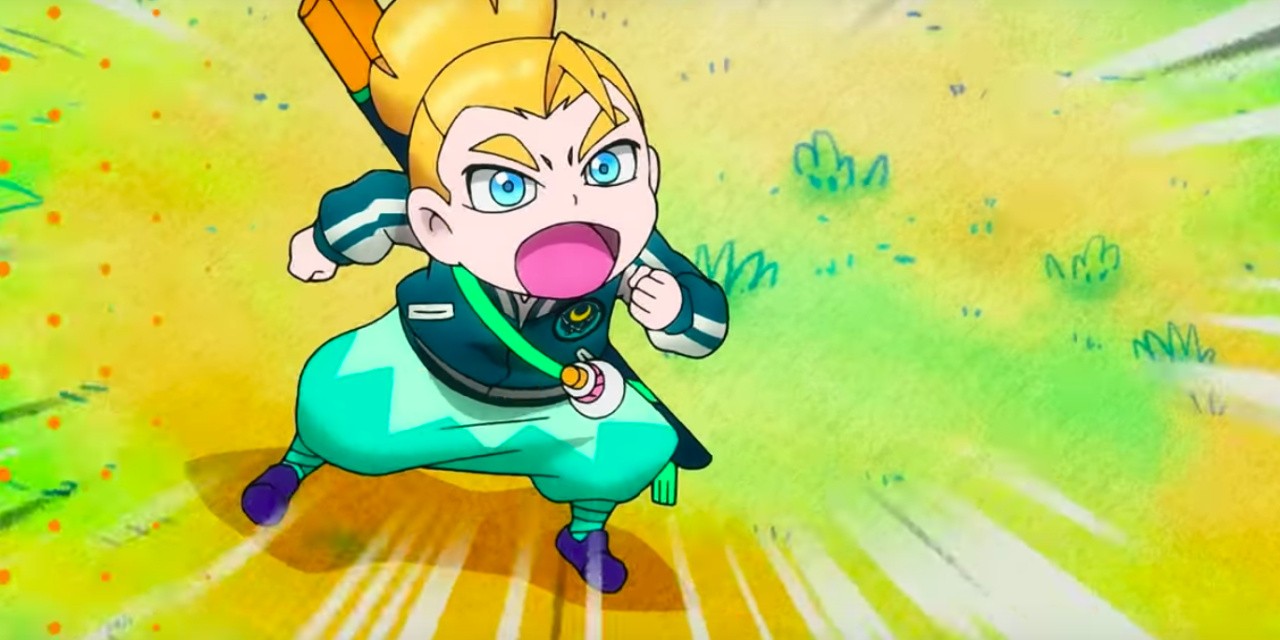
Sushi Striker is one of those games which could end up slipping under the radar of many, yet it’s shaping up to be quite a experience for puzzle fans. To ensure it doesn’t get ignored in the pre-E3 crush, Nintendo has released a story trailer for the title.
Set in world where (gasp!) sushi is outlawed, you must step into the shoes of orphaned hero Musashi – who is playable as either a male or a female avatar, we should add – and encourage people to start gobbling down large portions of raw fish once more.
Sushi Striker is coming to Switch and 3DS on June 8th. Yum.
Nintendo has revealed that it is using a special reservation system to allow players to get to grips with Super Smash Bros. at this year’s E3.
The aim is to “shorten the time fans will need to wait in line” apparently, with pre-booked slots providing a “faster, smoother experience” so people can “spend more time enjoying the rest of the June 12-14 show”.
How does it work? Here goes!
+ Anyone who registers for E3 2018 by May 31 will receive an email from E3 organizers on June 5 with details about how to reserve one electronic ticket to play the game (available while time slots last). Attendees should make sure to add [email protected] to their safe sender lists so the email doesn’t get lost in their junk folders. + Signing up to play the game ahead of time is mandatory. No on-site registration will be available. + Tickets will be in the form of QR Code patterns that can be stored on a smartphone or printed out. + For more details about ticketing, visit https://e3.nintendo.com/attendee-faq for continuing updates. + Reservations will not be taken for any other games at Nintendo’s booth, which will be available to play on a first-come, first-served basis.
That’s not all – if you bring your Switch system to the show, you could be selected by “roaming members of the Nintendo team” to receive an “exclusive, collectible Nintendo Switch pin” (while supplies last, of course).
Doug Bowser, Nintendo of America’s Senior Vice President of Sales and Marketing, had this to say:
We’re always looking to improve the ways people can maximize the fun they have with Nintendo at E3. This year our focus is on the upcoming Super Smash Bros. game, and we want as many people as possible to give it a try.
Are you need of a proper moment of relaxation? Are you looking to unwind after a long, hard day at work? Sounds like you need a game that’s all about chilling to the max – enter Zen Bound 2, a sedate puzzling experience that’s headed to the Switch eShop on 24th May.
Originally released on PC and smartphones back in 2010, the game is all about solving down-tempo puzzles that involve wrapping pieces of rope around a 3D shape. It’s all about using the ropes to eventually paint each object, which can be surprisingly complex, but strangely relaxing once you get the hang of it. It’s been retooled on Switch so you can use the gyro in the Joy-Con to control each object and wind said rope to solve the puzzle on-screen.
Check out the Switch-centric trailer above. The relaxing puzzling of Zen Bound 2 arrives on the Switch eShop on 24th May. Will you be tying yourself in a knot over this Finnish indie? Let us know in the comments below…
Nintendo has revealed that the upcoming Switch title Super Smash Bros. will be playable at a series of events in Japan during June and July.
The demo will kick off its Japanese tour at RAGE 2018 Summer, which takes place on June 17th at Makuhari Messe, Chiba. A week later it will be at Jisedai World Hobby Fair ‘18 Summer in the same location, and then on July 16th it will be at Jump Victory Carnival 2018 Tokyo – again at Makuhari Messe. The final date is July 22nd, when it will be playable at Jump Victory Carnival 2018 at the Intex, Osaka.
Given the timing of these events, it’s fair to assume we’ll be seeing a lot of this game at E3, which takes place on June 12th.
When Nintendo first unveiled Hyrule Warriors, people didn’t exactly know what to expect. The company had seldom handed over the keys to one of its cornerstone franchises before, and the proposed concept was odd, to say the least. The final product was an enjoyable (if flawed) experience, and over the years since release, it’s accrued quite a collection of post-launch DLC. Now, Nintendo and Koei Tecmo have decided to give it a final release on Nintendo Switch, tying together all of the previous content while adding in some extra improvements with Hyrule Warriors: Definitive Edition. Though this re-release still doesn’t completely fix the issues present in its past versions, it certainly does prove to be worthy of its title of ‘definitive’.
Gameplay in Hyrule Warriors is much closer to the Dynasty Warriors series than it is to Zelda. That’s not to say that gameplay elements from Zelda aren’t present, but the name of the game here is hacking and slashing your way through literally thousands of mook enemies that put up about as much resistance as a wet leaf, and occasionally spending more time hacking and slashing away at slightly stronger enemies that require a little more thought. There’s no grand adventure to be embarked on, no dungeons and puzzles to figure out, but there’s a heck of a lot of evil that needs a firm talking to from the business end of your blade. It’s fun, frantic, and rather shallow, but there’s something endlessly addictive about the sense of empowerment that the game so expertly instills in its players.
The typical stage will see you dropped in a battlefield strewn with keeps and outposts, from which pour a constant stream of enemies. Your primary job is to run to each of these keeps and outposts and kill whatever captain is in charge of them, while also slicing through whatever’s in your way. Once the location is secured, it flips from churning out enemies to churning out allies instead, thus strengthening your side’s hold on the map. As you hop between keeps, new objectives will occasionally arise that grab your attention. Perhaps a captain at one of your keeps requires immediate aid to fend off a fresh onslaught of Stalfos. Or, maybe one of your allies needs you to escort a massive Bombchu to a wall so it can be blown down and create a new pathway. There’s no shortage of objectives over the course of a single battle, although they can all ultimately be boiled down to cutting through things here instead of there.
Alas, this leads to one of the biggest issues that plagues Hyrule Warriors constantly: the repetition. Levels are hardly differentiated by their unique ideas and fascinating new mechanics, because this is ultimately a game of doing the same thing over again in slightly different ways. Every battle is about fending off hordes of virtually useless enemies and taking their keeps, and while there is a rather impressive amount of replayability that can be found in this admittedly simple core concept, it still feels like a game that spins its tires a lot. It’s a little disappointing in this sense, given that this game pulls from the entirety of Zelda’s rich and diverse history, although the repetition is offset largely by tight moment-to-moment gameplay and several interlocking upgrade systems that constantly encourage players to dive back in for another round.
Hyrule Warriors lets you play as dozens of characters from across the series’ history ranging from expected roster participants such as Link and Impa to more obscure characters including Marin and Zant. Regardless of who you pick, every character has a strong attack and heavy attack which can be strung together in myriad ways to produce some bombastic and devastating combos that dole out punishment by the truckloads. Every felled enemy slowly contributes to filling a special attack gauge, which can eventually be triggered for an incredible screen nuke-like attack that destroys just about every enemy surrounding your character. Though most enemies don’t put up much of a fight, it feels endlessly satisfying to carve vast swaths of destruction through enemy lines; the developers do a remarkable job of making you feel like a god among men.
The Zelda elements are few and far between in this moment to moment gameplay, but they sufficiently infuse it with some interesting wrinkles to keep combat from getting too reliant on button mashing. Progressing through the main story will gradually lead to you expanding your existing arsenal of sub-weapons and items, which can act as nice supplements to your main battle strategy. Bombs, for example, can be used for effective crowd control, while the bow and arrow can be used to stun crowds and line them up for a big follow-up attack.
Also, these items are pivotal in your fights against boss characters, which each have a weakness. Whether it be using your Hookshot to pull a dragon out of the sky or tossing a few bombs into the gaping maw of King Dodongo, that same ‘lock and key’ gameplay of Zelda boss fights is present, but adjusted for a faster-paced kind combat. Now, few of these special items have a significant impact on usual combat encounters, but their inclusion is both a clever nod to Zelda’s classic combat while also helping to break up the monotony of pressing two buttons over and over for the same general results.
Character upgrades are handled in several different ways, and while there’s a lot to manage in terms of how to power up your heroes, it feels like things could’ve been streamlined quite a bit. Each character will level up naturally through racking up kills – boosting their damage and sometimes health – but they also each have three skill trees that do things like unlock new combos and increase resistances to certain attack types. Rupees and crafting materials gained from fallen enemies are used to buff these trees, but the problem lies in how many trees there are to upgrade. The roster has over 20 different characters to choose from, each with virtually identical skill trees. It can be tedious, then, when playing a new character, and having to go into their trees to activate the same benefits that you’ve done a dozen times before for other characters.
What’s more is that each character also has several weapons to choose from, differing in elemental output, combos, and attached skills. It’s a lot to decipher – and things are only further complicated when you gain the ability to merge weapons to transfer skills between them – and the end results sometimes feel like they don’t justify the effort that goes into optimising gear. All of this combines to make for characters that feel like they’re a little more customisable than they should be; there’s a lot of bloat that could be cut away without losing much of that sense of control over character growth. Still, there are occasional concessions (like an option to spend rupees to buy levels for weaker characters) which make things more manageable, and the game somehow manages to hand out upgrades at just the right pace to keep you wanting more.
Hyrule Warriors is the kind of game that prides itself on its replayability, and the inclusion of all content from previous versions in this definitive edition makes it a game that is full to bursting with things to do. The core ‘Legend’ mode acts as the central campaign, featuring a shallow plot that somehow manages to explain how so many distinct Zelda characters from different dimensions and timelines are able to exist in one place at one time, but that’s just the tip of the iceberg. Adventure mode puts a clever spin on things by presenting you with an overworld grid that’s traversed Zelda-style, with each grid space containing a battle that requires special rules for a victory.
Winning these battles rewards you with item cards, which can be used to unlock secrets and rewards on the main map, while also granting you access to more grid spaces. These maps span the full Zelda franchise, each pulling a different gimmick or mechanic from the game that it’s based on. For example, the map based on The Legend of Zelda: The Wind Waker has you traversing a map fashioned after The Great Sea, fighting pirates and getting blown about by winds. It’s a clever riff on the gameplay found in the campaign, and finds an interesting equilibrium between the cerebral elements of Zelda exploration and the mindless button mashing of Dynasty Warriors.
In addition to this, there’s also a challenge mode, which puts certain constraints on players and challenges them to go for a high score. Achieving higher ranks in challenges unlocks other, harder challenges which tend to ramp up the difficulty more than you’ll find in other game modes. Also, roaming throughout all the modes mentioned are Golden Skulltulas, which can either be obtained as rewards for beating levels or found hiding in obscure parts of battlefields. Killing a Skulltula yields a piece of an Illustration, which can then be viewed in a gallery along with character and enemy models. It’s a nice way of tying together all the game modes, while giving you a cool visual representation of your overall progress through the game.
From a presentation perspective, Hyrule Warriors manages to wow. This game is very much a love letter to fans of the Zelda series, featuring detailed and faithful representations of characters, concepts, locations, and more. It’s the little things, like the ability to play on an invisible ocarina on loading screens with the same controls as the one from The Legend of Zelda: Ocarina of Time, that shows the developer really did its homework on the Zelda themes and wanted to make a game that would be worthy of crossing over with the Zelda series. The depth, variety, and detail of all the Zelda references are astounding, and you’ll be hard-pressed to come away from this one saying that Koei Tecmo didn’t understand the source of this game’s themes.
The graphics are surprisingly top-notch, running at 60fps with occasional dips, but the gameplay remains smooth throughout, even when indulging in some split-screen co-op. Colors are bright, textures are detailed, animations are smooth, and there’s a much greater sense of polish to things that seemed to be absent from the previous releases. In handheld mode, the visuals take a more noticeable hit, dropping to 30(ish)fps that only continues to decline if you toss another player into the mix. It’s really not too noticeable a visual decline if you wish to play in single-player, but we’d advise you wait till you get home if you want some co-op action; the screen is too small for two players to reasonably participate in the chaos of battle, and the framerate leaves a lot to be desired.
Of course, we’d be remiss to not mention the soundtrack, featuring a collection of medleys and remixes of classic Zelda songs from many games in the series. Indeed, while we can see the effort that went into this soundtrack, the extreme heavy metal and hard rock elements don’t marry very well with the generally more symphonic pieces of Zelda music, leaving us with a strange list of tracks that suffer something of an identity crisis. It’s not that the music is terrible – the rock music fits rather well with the intensity of the action on screen – but it feels like a bit of a reach to hear Saria’s Song interpreted as a rock ballad.
A collection of new rewards have gone live on the European My Nintendo website, giving fans the chance to spend their hard earned coins on discounts for various Wii U and 3DS titles.
This time around sees a celebration of some HAL Laboratory 3DS favourites, a splattering of love for some Doctor-based puzzle pleasure, and some pretty decent discounts on virtual console classics.
Have you been hoping to get your hands on any of these games? Do these offers interest you? Remember, your Gold Points can now also be spent on Nintendo Switch software directly from the eShop, too!
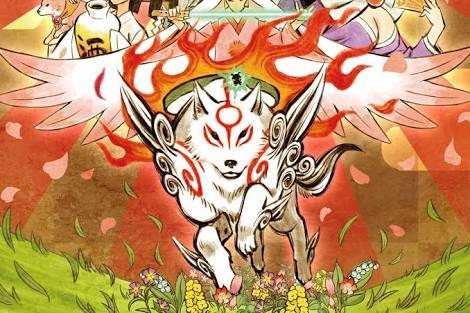
Japan’s weekly gaming magazine Famitsu has revealed that the Switch version of Okami HD will be released on 9th August. A limited edition, priced at ¥3,990, will be available alongside the standard edition (priced at ¥2,900). Sadly, there’s no news on whether this special edition will be making it to the West just yet.
For those new to the title, Okami is a beautiful ‘Sumi-e’-style adventure, where you take control of the sun god, Amaterasu. Special abilities are summoned by making various strokes with the titular celestial brush. Whereas in the past, players have had to use traditional inputs, Wii owners were able to conjure these powers using gestures made by the Wii remote.
With both the portability and touchscreen inputs, Okami HD on Switch may be set to make waves once again, and western release hopefully should be around the same time.
Let us know if you’ll be adding this classic videogame to your Switch collection when it arrives later this year…
Sushi Striker: The Way of Sushido combines bright, anime art style with frenetic yet tactical gameplay – centered on consuming as much sushi as possible – delivering a veritable conveyor belt loaded with surprise and delight.
Imagine a world in which the sinister Empire controls the consumption of sushi with an iron grip and denies any mention of it to all inhabitants of the vanquished Republic. Players assume the role of orphaned hero Musashi (playable as either a male or a female avatar), embarking on a grand adventure to restore sushi to the world. Meet a colorful cast of characters along the way, including treacherous local bully Kojiro, musclebound Imperial enforcer General Kodiak and beautiful sushi assassin Celia.
Battles are contested between two opponents, each with access to three of their own conveyor belts of sushi, plus a seventh shared belt in the middle. By linking (aka eating) sushi plates of the same color, players create stacks that can then be hurled at their opponent. The frenetic sushi-eating action is coupled with significant tactical depth. Players will encounter divine beings, called Sushi Sprites, which provide special skills that can be chained together in battle for a variety of powerful combos. There are more than 50 Sushi Sprites to befriend, many of which can evolve into more powerful forms.
In addition to the rich and wacky single-player adventure, two players can challenge each other to local multiplayer battles on a single Nintendo Switch system. With the Nintendo 3DS version of the game, players can battle locally with their own systems and games. So, grab your chopsticks and prepare for battle when Sushi Striker: The Way of Sushido launches on June 8.
Stylish and multi-award-winning noir puzzle games FRAMED and FRAMED 2 sneak on to the eShop this week as part of the FRAMED Collection, and while visiting Kyoto’s BitSummit indie game show over the weekend, we had the chance to talk to the game’s director and designer, Joshua Boggs.
Nintendo Life: When was the decision made to bring FRAMED and the entire collection to Switch?
Joshua Boggs: It was made shortly after the successful release of FRAMED 2, players were very excited at the release of the new title, but we kept getting asked to bring it to new platforms. The Switch is a very versatile device that fitted perfectly with our games style, mechanics and overall theme. I mean, FRAMED is literally a game about switching comic book frames to change the outcome of a story – the Nintendo Switch was a perfect fit.
The title has a double meaning, does it not? Could you explain the gameplay and narrative to new players…
Yeah! FRAMED’s core mechanic is to change the order of comic book frames in order to change the outcome of the story. The main story arc tells the tale of how two protagonists get framed and caught up in noir-styled espionage.
How many possible outcomes can there be in any one scenario?
It honestly just depends on the scenario and the puzzle’s difficulty, some only have 1 or 2 outcomes, but others have up to 16 different kinds of outcomes.
What influenced the gameplay and art style?
The gameplay mechanics of FRAMED games basically informed the noir-influenced aesthetic. In terms of inspirations, Saul Bass’s title work for Hitchcock films was a large one. Other games were an inspiration too, mainly older ones such as Strider, Actraiser and Eswat.
That was also one of the reasons FRAMED is set in the city is that there was an excuse to make huge, distant skylines and sunsets. Other key inspirations that we all referenced (for design as well), films such as Alan Parker’s Angel Heart, many of Hitchcock’s films (with Vertigo being the focus). We also watched a lot of Cowboy Bebop, too. So it’s all a bit of a mix, but hopefully from all of that disparate inspiration we landed on something unique.
After all the praise that the first game (rightly) received – including from one Hideo Kojima himself – how much pressure was there on you for the next game?
The development came naturally, as we had so much of this story to tell and so many ideas that we couldn’t fit into the first game. FRAMED 2 was originally a DLC, but expanded so quickly into a game of its own. But there was a lot to live up to. The first game was a unique, genre-defining experience, so we needed to make sure that we delivered on that high quality experience players have come to expect.
How much did you experiment with narratively or gameplay-wise, in the beginning and through to the sequel?
The original prototype really began as a thought experiment. We wanted to see if, instead of giving players control over the characters actions, we gave them control over the context that those actions happen in. The narrative developed out of this gameplay experiment.
Any characters, locations or ideas that you tried out but didn’t get in the sequel (or prequel)?
Definitely, there was a bunch of stories, puzzles, and other characters that we had to leave on the cutting room floor.
Could they surface in a future instalment or a new IP?
Certainly. There was a lot we couldn’t fit in and we do have more of this story to tell. It is difficult to speak about them right now, but there is nothing to say that we can’t bring these into a future title or use their influences in any new IP.
What’s next for the FRAMED franchise – possibly the last instalment in a trilogy?
Possibly, we definitely have enough for a final installment. At the same time we are happy with how we left FRAMED 2, as a prequel it focused on answering all of the questions people may have had in the first game. If we ever did a final installment, we would need to be careful not to leave players with more questions.
The art style is really cool. Could we see a physical version or maybe an art book or soundtrack?
Haha, yup, if there is a demand, there certainly will be! There will definitely be the second instalment of the FRAMED Original Soundtrack and another vinyl!
We would like to thank Joshua for his time. FRAMED Collection sleuths onto Nintendo Switch on 17th May. Be sure to share your thoughts on the game below…
As previously reported by the lovely Alex, many games from western indie developers are coming not only to Switch, but also to make their mark in Japan, which came to fruition under the new Nintendo umbrella ‘Indie World’. A cute pixellated world exhibiting both existing hits and upcoming titles, the initial reveal recently wasn’t as clear how literal that idea would turn out to be.
At this year’s BitSummit indie games show in Kyoto, Japan, Nintendo did something rather novel in an attempt to increase prolonged interest in the impressive line-up of titles from around the world at the show. In the West, this unusual practice would be known as a ‘stamp rally’, but in Japan it’s an old and much-loved pastime that’s enjoyed by all ages.
In Japan, the term historically comes from ‘goushin’, which used to be strictly for older people who would visit temples and receive both an inked seal and a personalised kanji in a special book. This trend in various forms has overflowed into mainstream popular culture. From the most sacred of temples to Pokémon characters, the most common events among children are associated with different areas or train lines during the school holidays.
There was also a small yet exclusive reward for completely filling your book with stamps from all the titles at Nintendos booth. What is even more impressive is that the majority, if not all, of the indie titles that are out or coming to Switch and playable at the show were issued with their own stamp, escalating the number to dozens.
Additional stamps and space made the overall experience of BitSummit much more Nintendo and Switch focused, both in terms of real estate and consumer interest. Nintendo has been known to include traditional Japanese designs in some marketing material in the part, for example club Nintendo calendar pages or the issue of ‘otoshidama’ (traditional new year money giving) envelopes at the end of last year.
The completed book was a nice memento of the experience, and it will be interesting to see their approach to TGS considering both the increase in presence of indies and Nintendos inexplicable absence from the event year on year.
With E3 on the horizon and at least one more mega-franchise out this year, Nintendo might not need these kinds of gimmicks to get systems in hands, but it was a fun and supportive gesture nonetheless. What direction the ‘Indie World’ takes going forward is still unclear, as the indies showcase directs have proved popular.
What do you think of these snazzy little stamps from BitSummit? A cool little addition for attendees or a forgettable gimmick? Share your thoughts below…