In an interview earlier this year, Team Cherry said a physical release of Hollow Knight was “absolutely” on the cards. With the gorgeous and grim Metroidvania now digitally available via the Switch eShop, the Australian-based studio behind the title has once again spoken out about a potential physical copy of the game being released in the near future.
During a Reddit AMA, the developer confirmed it was “working” on making it happen, with the team expected to share news very soon. Previously it was explained if a physical release got the green light; the team wanted to ensure it was perceived as an object of value and one that was worthy of preservation.
In addition to this update about the physical release, the developer was happy to reveal it was currently looking at how to implement video capture into the Switch version of Hollow Knight without sacrificing the game’s framerate. Customisable controls are another feature that could also be added later down the line.
Lastly, the studio admitted it was somewhat surprised with how well the game was initially received and stated it was satisfied with the current sales on Nintendo’s device, despite having apparently no expectations prior to release.
Would you be open to buying a physical copy of Hollow Knight on the Switch? Have you already got a digital copy you’re enjoying? Tell us in the comments.
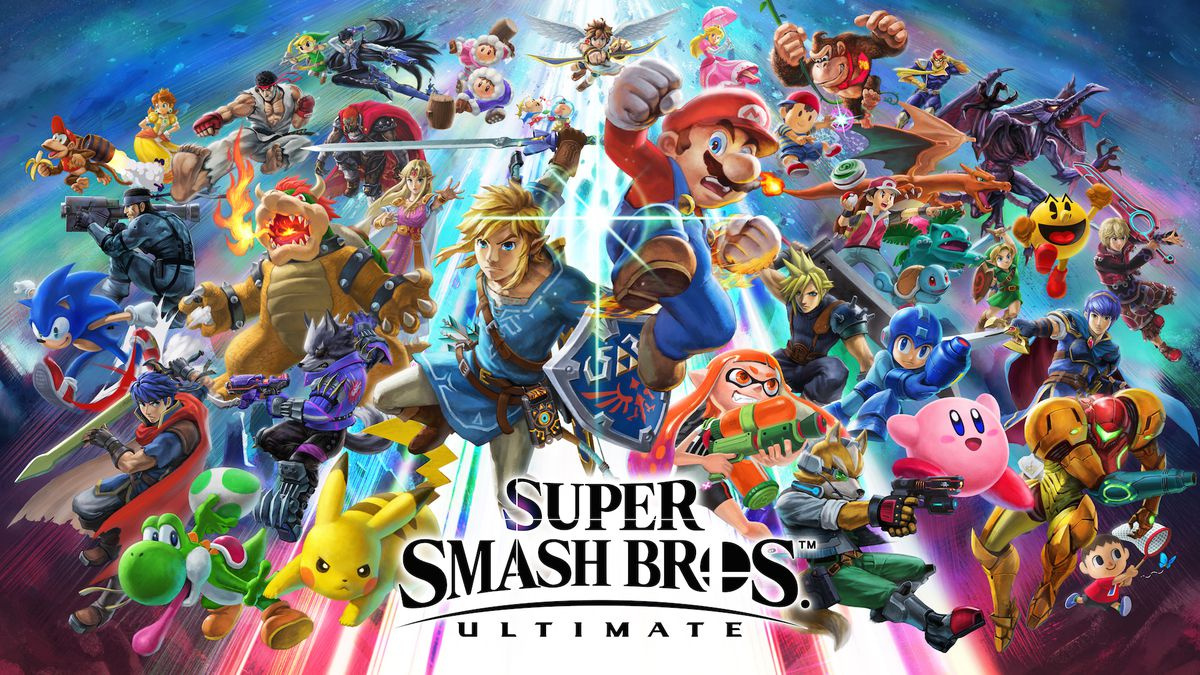
The recently revealed Super Smash Bros. Ultimate has appeared on the Nintendo UK store, and you can get your pre-orders in right now!
The highly anticipated return for the franchise was the most talked about game at E3 last week, no doubt exciting fans all around the world. Alongside the pre-order for the game itself, the Nintendo UK store also has listings for the Super Smash Bros. Edition GameCube Controller, and the GameCube Controller Adapter for Nintendo Switch, allowing players to get thoroughly stuck in with a nostalgic return to the series.
All of the items, including Super Smash Bros. Ultimate itself, release on 7th December.
Will you be pre-ordering the game? Let us know if you’re excited for its release in the comments below.
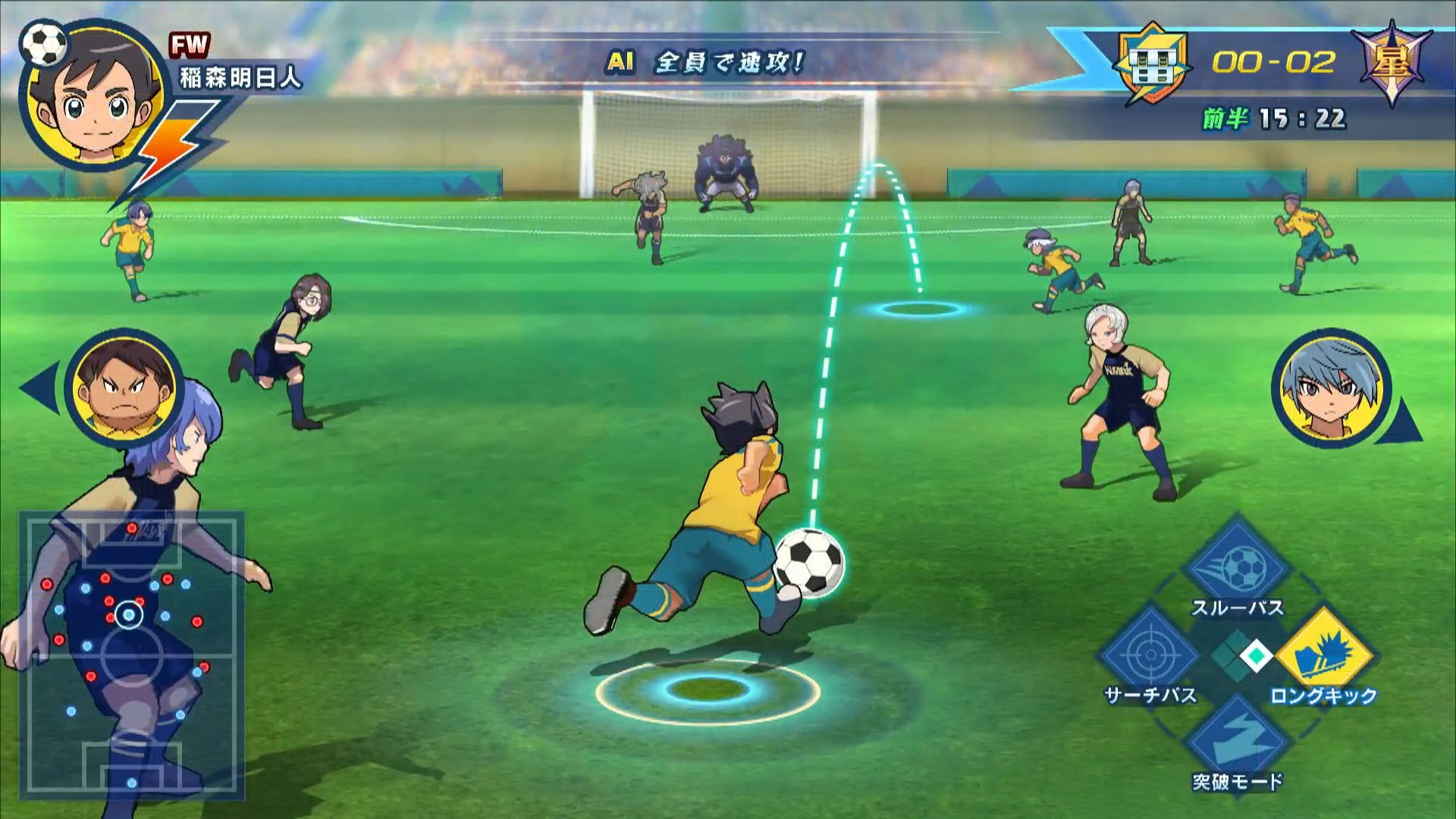
Level-5 has revealed that Inazuma Eleven Ares will be released in the west next year, with a new anime series hitting Europe and North America in the coming months, too.
The news comes as part of Level-5’s 20th anniversary celebrations, during which the company has shared plans for some of its upcoming titles. As mentioned above, the next video game instalment for the soccer RPG franchise is simply listed as being a “2019” release, but the new reboot for the anime series is a little more set in stone. The show is scheduled to air in Europe this fall, with North America having to wait a little longer.
Here’s the official PR:
“The latest instalment in the Inazuma Eleven franchise, Inazuma Eleven Ares, depicts a parallel world that will feature both new characters and cast from the original in action-packed, heart-wrenching matches between the good, the evil, and those in between.
Building on the foundation laid by previous series, which number over 250 episodes, four movies and more than eight million Nintendo games sold to date, the reboot series has begun its broadcast premiere in Asia, is scheduled to launch in Europe Fall 2018, and is planned to debut in North America for the first time in 2019. The slate also includes the premiere of the video game in 2019 with the aim to tap into the growing eSports movement.
Are you a fan of the Inazuma Eleven series? Are you excited to see another game on the way next year? Let us know with a comment below.
Once resigned to The Jackbox Party Pack (which appeared on Nintendo Switch back in 2017), the co-operative party game that is Drawful returns with a solo outing that’s just as silly and throwaway as the original version. And while it’s a no-go for solo players, those looking for some couchplay tomfoolery need look no further.
And when we say you’ll need friends, we mean it, and flesh and blood ones at that. Rather than relying on your Joy-Cons or a Pro Controller, Drawful 2 is very much a multi-device affair. You’ll use your controllers to briefly navigate the menus, but most of your interaction with this game will actually come from your smartphone or tablet. Originally released in 2016, this is an interactive experience with local multiplayer and Twitch interaction in mind so it’s both an ideal fit for Switch and a poor one.
Once you log into the game you’ll be given two options, ‘Play Drawful’ and ‘Make your own’. The former is the easiest to jump into and creates a room on the Jackbox servers. Your room will generate a special code, which you and the other players will need to use by going to jackbox.tv. You don’t have to sign up to anything or even download an app, you just have to use the room code, enter your name and draw a crude avatar. Your character will then appear on your TV/Switch, and when you have enough players (you need a minimum of three) the games can begin.
Each player is given a phrase or set of words which they then need to draw on their smart device. The image will then appear on-screen and it’s up to you to guess what your friend’s terrible artistic contribution is attempting to convey. So far, so Pictionary. As a concept it’s hardly groundbreaking, but it’s simple enough for pretty much anyone can pick up and enjoy. Although we will note the need for a smartphone or tablet does make this a little awkward for family play if there aren’t enough devices in your house for everyone to use (not all of us are rolling in smart devices).
At the end of each turn, the (usually) badly drawn image is displayed with everyone’s answers, the original prompt and a set of random ones, and it’s up to all the other players to guess which prompt led to the abomination on your screen. Guessing the right prompt nets you some points, while including some subtle yet wrong alternatives offers a great way to bamboozle other players on top. With games taking around ten minutes for so to play, it also offers a quick and easy way for up to eight players to link up.
The other option is ‘Make your own’ and here you’ll have a lot more room to customise the experience to your own tastes. In this mode you can create ‘episodes’ which enable you to write and include your own prompts. You can have a lot of fun here, especially if you want to get really specific (or devilishly obtuse) for your friends or random players you encounter in a Twitch stream. You can then choose to publish your episode so other uses can access it (via another randomly-generated code). Again, the premise doesn’t change, but the specificity of the prompts can make for a really fun round as you try and draw/guess your way to victory.
There are some nice extra touches that have been added in time for the Nintendo Switch version, such as the ability to share GIFs of your bad sketches on social media. Although we would say the ‘extra’ colour you’re offered to draw with is hardly something that’s going to get punters flying to purchase it from the eShop, but it certainly helps add a little more variety to your drawings. You can also censor certain prompts, set up family friendly settings and utilise an audience feature on Twitch that supports up to 10,000 viewers interacting with your game via a stream.
Those streaming-friendly additions are all way and good, but they don’t really benefit a console that doesn’t natively support streaming. If you have a capture card to hand then linking up to your Twitch account won’t be a problem, but those of you without such hardware will be left to experience Drawful 2 either through Jackbox’s own servers (via jackbox.tv) or purely as a local multiplayer experience. And while it’s fun for a time, its perquisite for additional devices and a real lack of support for the Joy-Cons bar moving through a handful of menus makes this an odd fit for Switch.
Conclusion
As part of The Jackbox Party Pack, Drawful offered a brief yet silly way to have fun with friends, but its no-frills concept, the sheer lack of support for online multiplayer (especially with the lack of native streaming support Switch users have to contend with) and the hefty £8 asking price and Drawful 2 becomes a tough sell at best. However, if you’re really desperate for a couchplay alternative, this one might just scratch that party game itch.
Fallout series developer and publisher Bethesda is reportedly suing Warner Bros. and Behaviour Interactive over the new Westworld mobile game, claiming it uses code originally created for Fallout Shelter.
Fallout Shelter is a free-to-play game which recently arrived on Nintendo Switch, tasking players with building and managing their own Vault as an Overseer. Players must guide and direct the citizens of their Vault, and need to keep them happy by meeting their essential life needs. The very recently released Westworld title is a park management simulator featuring a similarly cute art style, and gameplay which involves manufacturing and maintaining AI-based hosts to satisfy the desires of guests. You can see it in action in the screenshot below.
According to TMZ, Bethesda has stated that Behaviour Interactive was involved in the creation of Fallout Shelter, before going on to make the Westworld game a few years after. Court documents reportedly state that Bethesda believes Behaviour Interactive has stolen its designs, artwork, and codes, going on to use them again in this latest project in conjunction with Warner.
Aside from these mostly aesthetic similarities, it turns out that there’s one other pretty suspicious thing that Bethesda has noticed, potentially giving the game away even more. Apparently, the same bugs that were originally present in an early version of Fallout Shelter have also been found in Westworld. Oh dear…
Bethesda is reportedly suing to have the game shut down, hoping to get a healthy chunk of its profits in the process. It’ll certainly be interesting to see how this one develops.
If you’ve been keeping your eyes on these pages, you know that we’re keenly interested in Polymega, the new retro console by Playmaji, Inc. We tracked down Bryan, the company’s founder on the E3 show floor last week to talk about, and more importantly, actually play the thing.
The Polymega is a sight to behold in the flesh; it looks every bit as beautiful as the professionally-made product shots would lead one to believe. Whether it’s sporting the dust cover, which is pictured attached to the console at the top of this page, or one of the element modules — plugins which allow players to use their original cartridges from either the Sega Mega Drive, TurboGrafx 16 or Neo Geo — this thing is an absolute joy to behold. Its striking lines contrast with the muted, matte black surface and there’s just a small pop of colour in the logo to evoke an aesthetic that is simultaneously retro and modern. It’s just lovely.
Also on hand were the newly-revealed classic controllers, each of which will be bundled with a corresponding element module and are designed to mimic the look and feel of the originals. Each controller functioned as well as we remember our original NES, SNES, Sega Genesis/Mega Drive and TurboGrafx controllers feeling, but they felt a bit on the light side. We were told by the Polymega team that the controllers were not yet final and they were toying with the idea of making them a bit weightier, an addition we feel would be welcome. The build quality of the pads was solid and the buttons responded in a way that tickled the nostalgia centre of our brains. Each of the pads connected using the same proprietary plugs ‘80s and ‘90s kids are used to, and we were assured by the team that our original peripherals would work fine, if we opted to use those instead. We had the opportunity to test original Neo Geo and TurboGrafx controllers and can confirm they worked without issue.
The demo unit we tested at E3 supported all of the systems Polymega has announced to date, on original media, SD cards and internal memory. As soon as we grabbed the modern wireless controller — which Bernal told us was actually licensed from another company and was then branded with Polymega’s logo — we were off. The modern controller feels comfortable in the hand, similar to Sony’s DualShock. The D-pad takes centre stage, placed where you would expect to find it on a PlayStation controller, a choice that makes sense given the system’s focus on retro titles. The face buttons feel clicky and responsive and there wasn’t so much as a whiff of wireless latency when playing even the most demanding, twitchy 8-bit titles. Before we hopped into the games, however, we were keen to explore the system itself.
The user interface is every bit as responsive as it appears in the Polymega marketing material. It’s clear to us that the team at Playmaji, Inc. have put a lot of thought into how to make the experience for players with collections large and small as seamless as possible. At the top of the device’s home screen, you’ll see icons representing each machine the console is capable of emulating. Selecting one of those icons will display all the games you’ve copied to your Polymega that were originally released for the corresponding console. The Polymega remembers your recently played games as well, and it also allows you to create a list of favourites, along with custom game lists.
Once you find the game you’re looking for, pushing the start button on your controller will take you into it with no delay. We were shocked by how quickly games boot on the Polymega, even optical media-based games such as those on PlayStation. While the software running under the hood of the console isn’t yet final, the games we demoed ran as well as they did on their systems of origin. The team giving our demo was quick to note that it wasn’t quite yet perfect, however; games such as Star Fox, which shipped with a custom SuperFX chip inside the cart won’t play as the team hasn’t been able to accurately emulate the chip as yet.
Speaking of copying games, the process is dead simple, if a little on the slow side. When original media is inserted into the optical drive or one of the Polymega’s element modules, a small icon representing the media type will appear in the upper-right of the screen. Selecting it brings up a menu allowing you to install. Once you’ve done that, you can still play the game off of its original media as it’s copying, or play a different game you already have stored on the console, if you like. The systems detailing how much space is left on the Polymega (as well as notifications regarding game installation) weren’t functional in the version of the software we tried, but we were assured they would be by launch.
Our first run of a PlayStation game didn’t work quite as well as we had hoped, however. When booting up Tekken 3, we noted it was running very slowly, causing a brief moment of concern for those running the demo. We were informed the demo unit had been having some overheating issues due to the fact that the unit was not yet complete and didn’t have its final thermal solution in place. A quick reboot of the system saw PlayStation games once again running at full speed. For the rest of our demo, games ran smoothly. We’re hoping the team at Playmaji can sort out the thermal issues with enough time to manufacture and ship without delaying Polymega’s release.
All told, we spent about two hours with the console. Not quite enough for a full review or even solid impressions, but we came away impressed with what we saw. The Polymega seems to be the real deal, and if it is, it’s the retro console we’ve all been waiting for. We can’t help but feel the console is just a few tweaks away from being something truly special. If the speed and accuracy of the system can be maintained and the promised features we haven’t seen yet, like Twitch streaming, can be delivered in a way that both works and is easy to use, we don’t see any reason why fans won’t be champing at the bit to snap one up when pre-orders go up this Fall.
CoroCoro Comic – a monthly Japanese manga magazine that often shares and creates content on video game franchises – has uploaded a complete Splatoon manga online for free viewing.
This particular manga, which features both the newly introduced Octoling characters and the new Spy Gear, comes from this month’s magazine and will be available to view online until 13th July. We’ve shared the front cover and one image from the manga below, but we’d encourage you to take a look through the entire thing if you’re interested.
If you’d like to have a look, you’ll find the manga here. Naturally, being part of CoroCoro, it is all written in Japanese, but even if you can’t read the language the illustrations are fantastic throughout.
Have you been playing through the recently released Splatoon 2: Octo Expansion? Let us know how you’ve been getting on in the comments below.
Atari – not the Atari of your dad’s generation but the new Atari which is basically a company that owns the brand – has been in the press a lot of late. The ‘new’ company is doing everything it can to profit from the cachet which surrounds gaming’s first major player, from licencing the logo for Blade Runner 2049 to publishing new titles (with the help of crowdfunding).
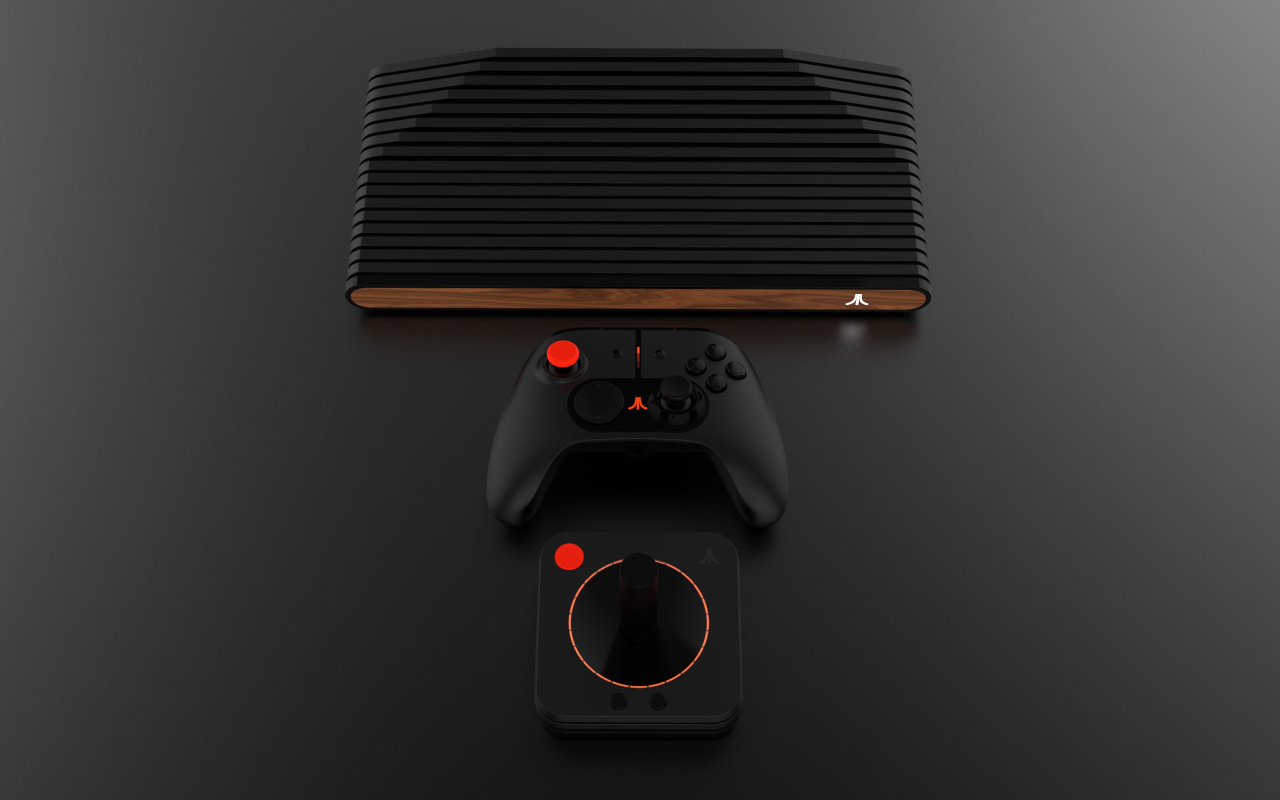
However, the Atari VCS (which borrows the name of the company’s most successful console, also known as the Atari 2600) is a step into a much larger league. Announced a while back, it seemed to be part NES Classic Edition, part Ouya; it will run classic Atari games but is apparently powerful enough to play modern titles, too.
We say ‘apparently’ because it would appear that even Atari itself has little idea what the final machine will do. Tech site The Register visited the company’s stand at E3 for a live demo and was shocked to discover that not only was the hardware just a mock-up (the wireless controller was a dummy unit without working buttons) but the executive overseeing the project – Michael Arzt – was unable to convincingly answer even very basic questions about the system, its accessories and the software we’ll (apparently) be playing on it.
We honestly can’t explain that article either. Our executives sat with that reporter for half an hour and he wrote what he wanted instead of what was discussed with him. Sadly there are even irresponsible trolls in ‘professional’ positions I guess.
We clearly said that we were bringing engineering design models to GDC and lots of people clearly don’t understand what that means. Hunks of plastic? Well, yeah, that’s how you finalize the designs and confirm that you can get the look and feel you want for the finished products. Sad.
The Register has responded by publishing the full audio interview with Arzt, in which he fumbles questions about key info. The most Artz is willing to divulge is that the VCS will cost around $250 / £180, will handle 4K video, will be powered by an AMD chipset (although it hasn’t been decided which yet) and will use Linux. Given that it’s unlikely to be challenging the PS4 and Xbox One – or their successors – in terms of processing power, it’s fair to say that Atari’s closest competitor may well end up being Nintendo.
However, judging from the responses given by Artz, it seems likely that Atari doesn’t even have a functioning prototype yet and is essentially using the crowdfunding campaign to raise the capital required to begin work in earnest – a very dangerous strategy, but one that appears to be working. There’s a week left on Atari’s VCS Indiegogo campaign and it has raised a whopping $2,921,382 at the time of writing – its initial goal was a modest $100,000. That’s a handsome sum of cash, but is it enough to create, manufacture and promote a new piece of gaming hardware? We’re not so sure.
Can the modern-day Atari possibly deliver on its promises? Or will the VCS turn out to be little more than vapourware, much like one of Atari’s previous crowdfunded efforts, the troubled Gameband? Let us know what you think – and if you believe Nintendo should be worried about this potential rival – by posting a comment.
Nintendo has been very clear that the concept of the Virtual Console is a relic of the past; on Switch, it seems that the company has other ideas about how to distribute retro games on its latest console.
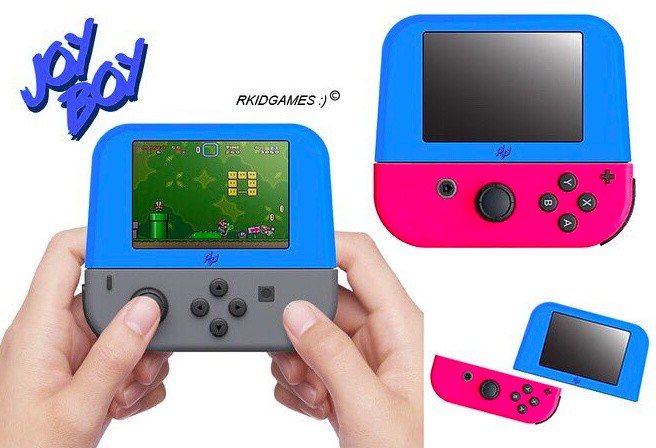
However, that hasn’t stopped Nintendo fan and indie developer JayH from dreaming up this intriguing hardware concept which bolts a screen to a single Joy-Con controller to create the perfect vintage gaming solution.
While it’s nothing more than a mock-up on a page at the moment, we’re struck by the simplicity of this design; it wouldn’t cost Nintendo much to produce a unit which houses a screen and a system-on-a-chip powerful enough to run SNES, NES, Mega Drive and Neo Geo games, and this could be equipped with Wi-Fi in order to download games from the eShop.
Or, perhaps an industrious individual not involved with Nintendo can find a way of connecting the Joy-Con to a screen for emulation purposes – could this be a Kickstarter in the making?
Let us know what you think of this cool idea by posting a comment.
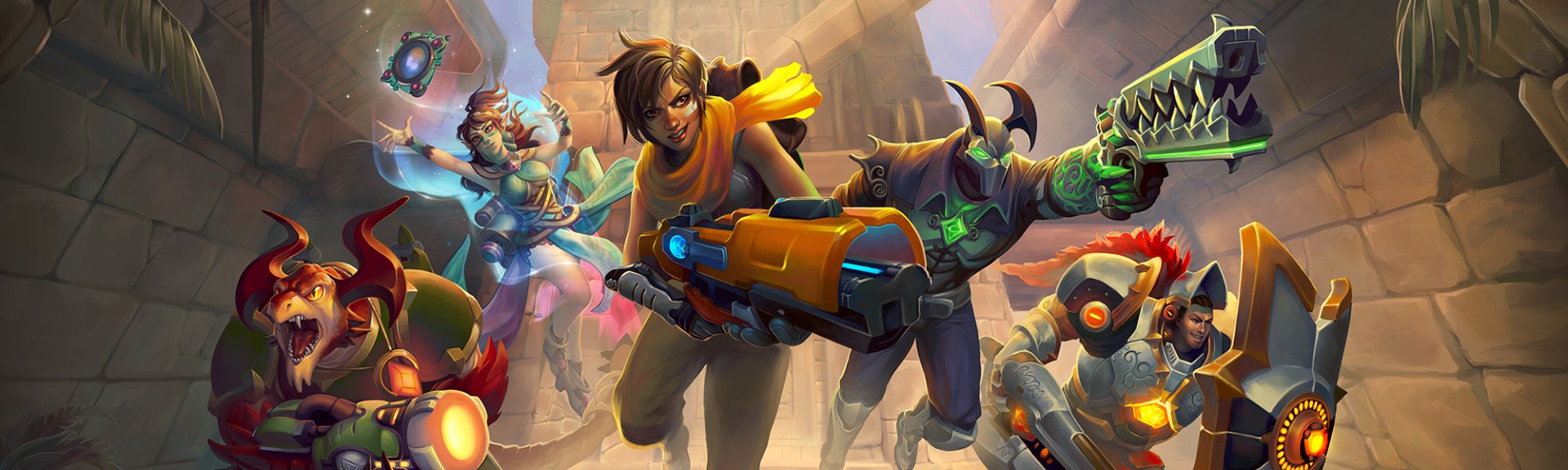
With Nintendo Switch fast accumulating all manner of new multiplayer experiences – including the global phenomenon that is Fortnite – it seems fitting the plucky hybrid machine would add another competitive string to its bow. Enter Paladins, a hero shooter that does an impressive of job of bringing the full experience to a new platform with a surprisingly small number of concessions.
At first glance/play, Paladins does look and feel an awful lot like Overwatch. Both games launched four months apart in 2016 and on paper the two do share plenty of DNA: both feature a roster of ‘heroes’ with unique weapons and abilities, both feature objective-based matches and both place a heavy emphasis on teamwork. But that’s where most of the similarities end, with Paladins adding a little more strategy to the mix to help set itself apart from the pack, but we’ll get to that in a bit.
There are 36 Champions to choose from, which are divided into four specific classes – Damage (those with mid-range health pools but large damage output), Flank (low health, but high mobility and high damage potential), Frontline (high health with a focus on shielding and brute strength) and Support (low damage output but essential for healing teammates). While they all fall into the familiar sniper, assault, tank and healer templates, there’s still plenty of crossover that makes many of its roster considerably more dynamic in battle.
The mech-toting goblin that is Ruckus is considered a Frontline with his heavy reserves of health and on-board shielding, but his double Gatling guns and rockets make him just as effective as a Damage character (especially when using his dash ability). Then there’s Grover, the axe-wielding tree from Smite (developer Hi-Rez Studios’ MOBA). He’s a Support by trade, but his axe has surprisingly low damage drop-off at range, making him an ideal Flank if needs be. Not every Champion is so dynamic in their application, but there’s a generous amount of scope for those looking to ‘main’ a specific character.
To complement your chosen warrior, and to mix things up further, Paladins also uses a card-based loadout system. Each Champion comes with a default loadout consisting of five normal cards and one talent card, with each one providing a specific buff or enhancement in battle. You can build your own loadouts as well, applying a set number of points to increase the potency of each effect. For instance, the blunderbuss-toting dwarf Barik (a Frontline beast by day) is built around the use of turrets, so you can use cards that heal his turrets when Barik is near, or reduce the cooldown between each deployment.
Talent cards are chosen at the start of each match and are periodically unlocked as you level up each Champion. These are geared towards a particular playstyle and give you glimpse into just how versatile some of them can be. Androxus, for instance, can use his Flank-based abilities in a multitude of ways. You could use the Godslayer card to increase his damage against enemies with 40% health or lower, or instead opt to increase the output of his Reversal ability when absorbing and redistributing enemy fire back at its source. It’s here you start to realise this is way beyond the simple point and shoot mechanics of Call of Duty and the like.
There are also items you can purchase before the start of each match to further buff your abilities. These only last for one match at a time, but add an extra dimension to play once you start actively learning what each one does. It’s a lot to take in for new players, so you can easily turn on auto-purchase which will select an extra buff based on your character and loadout. These are purchased with in-game credits, so you won’t have to worry about being penalised for not pumping in real-world cash. There is a premium Battle Pass you can buy, but this just drops cosmetic items such as profile avatars and skins and won’t affect how you play (unless fashion is your number one priority).
Game modes are pretty slim, but then again this is the same for Overwatch, so it’s not really a criticism. TDM (Team Deathmatch) is the best way to try out Champions for the first time, with its simple first to 40 kills setup offering a quick and clean way to see where your skills and persuasion lies. Onslaught adds more of an objective-based spin, tasking you with battling for control over a central area. The longer you spend in the area, the more you score, with kills also adding to your team’s total. It’s a great place to step up from TDM and start applying your abilities as a team rather than a lone wolf.
If TDM is Paladins’ hors-d’oeuvre and Onslaught its starter, Siege is the main course and dessert piled onto the same delicious plate. Two teams of five race to the middle of a large map, with the aim of controlling a central point then moving a payload towards their enemy’s base. These larger maps also offer some of the best level design, with shortcuts that favour the ambush potential of Flank characters and elevated positions perfect for Damage Champions looking to cut through a poorly grouped enemy team.
So here comes the big one – just how well does it run? Those aforementioned ‘concessions’ are certainly present and will stand out to most to those that have played Paladins on PC or other consoles, but even then they’re hardly game-breaking. There’s the occasional bit of slowdown during a match, but it’s a rarity, with the promised 60fps holding true for the most part. There’s a slight delay moving between screens when you’re navigating menus, with the online store suffering the worst – just trying to move between tabs can be a real chore.
Matchmaking for the most part is pretty stable, although frustration does arise when the game automatically kicks you from a lobby if one or more players fail to select a Champion before the pre-game timer runs out. Swapping them out for another player (or automatically assigning them a Champion) would be a far more productive process, and one that wouldn’t penalise those who are simply waiting to join a new match.
Again, it can’t be overstated just how well Paladins runs on Switch. Whether you’re a twitchy Damage player looking to snipe an objective from afar or a Support trying to heal multiple teammates during an unfolding battle, everything from hit detection to AOE all work just as well as they do on consoles and PC. It’s a really impressive feat from Hi-Rez Studios and proof that Nintendo Switch is far more powerful and versatile than we give it credit for. And with cross-platform play due to be patched in by the end of June, Switch’s Paladins community won’t be an isolated one either.
The lack of voice chat support is a problem, though, and one that can only be remedied by joining a Discord channel (such as the official Paladins one) and jumping into a party. Considering all other versions of the game support such a feature, as well as the fact Epic Games proved such a component can function on Switch without the need for the official companion app, there’s no excuse for its absence. We’re really hoping Hi-Rez is working on patching it in ASAP.
As it stands, you can only access Paladins via the £25 Founders Pack. It’s a big asking price when you consider the game will be free-to-play later in the summer, so those of you looking to avoid spending big might want to wait. However, considering it unlocks all 36 Champions as well as additional skins and a special mount, it’s an attractive early way in for those wanting to play ranked (where you need to have at least 14 Champions unlocked and have a level 15 account, with the former taking a lot longer to grind than the latter).
Conclusion
While locking the game behind a £25 Founders Pack might be a little cheeky for a game that’s actually free-to-play, the game itself is an easy sell. As exciting, tense and rewarding as Overwatch, Paladins: Champions of the Realm brings the cross-platform hero shooter to a new platform without sacrificing the moreish gameplay tenants that’s made it such a hit with both gamers and pros. There’s a definitive learning curve for those looking to play competitively, but it’s nonetheless one of the console’s best new multiplayer additions.