Posted on Leave a comment

Hands On: Going Into Battle With Arena Of Valor, Switch’s New MOBA Sensation

Nintendo Switch hasn’t even hit the 18-month mark and it’s already been acquiring all manner of popular new genres. It’s jumped onto the hero shooter bandwagon with the excellent Paladins and ticked the battle royale box so hard with Fortnite it’s gone right through the paper and snapped the pen for good measure.

So now it falls to a genre that’s long been one of the most impenetrable, a PC mainstay that’s become a crown jewel of the eSports scene – the MOBA. Known as a Multiplayer Online Battle Arena to its friends and family, the classic MOBA template remains incredibly popular on PC thanks to the success of Dota 2 and League of Legends.

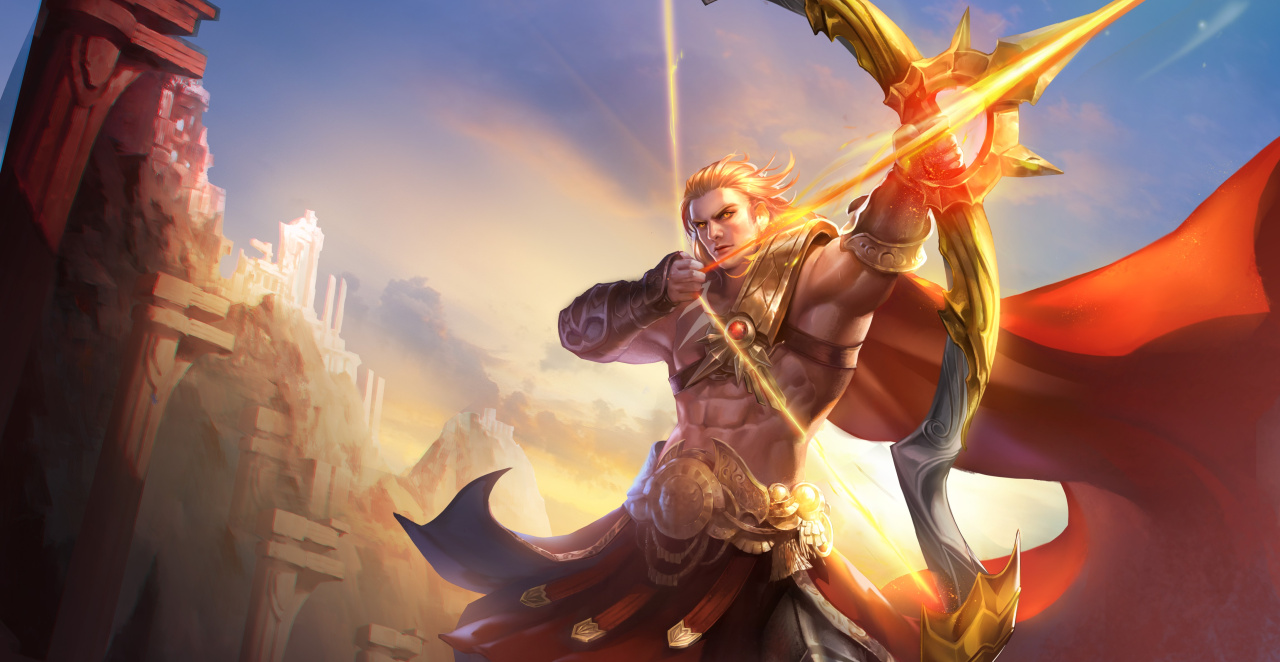
Arena of Valor – a new, previously mobile-exclusive instalment in the genre – shares a publisher with the latter (Chinese giant, Tencent Games, no less) and it’s that shared gene pool that’s helped take an often intimidatingly deep concept and turn it into a fast-paced and rewarding experience that’s just right for the ‘pick up and play’ ethos of a handheld-friendly console.

In fact, the free-to-play Arena of Valor takes more than inspiration from LoL. It outright copies many a character, right down to their costumes and abilities, but considering both games are aimed at very different markets, it’s a cross-breeding of ideas that’s unlikely to cause the industry to capsize. If anything, building on the solid foundation of a game like LoL only helps build AoV’s authenticity.

The concept is mercifully simple. Select a match type – they come in 5v5, 3v3 and 1v1 variants – select a hero from the 34 available then head into battle. Only a handful are available from the start, but if the unlock system from the mobile version follows suit on Switch, you’ll be unlocking new characters every few days through log-in bonuses, in-game challenges and special events. With skins and skills also dolled out regularly, it promises to keep you coming back for more.

Anyway, back to the action. Much like LoL, each map is divided in half, with three channels linking one end to the other. Each team has a core they need to protect – destroy your enemy’s core and the game is over. However, you’ll need to destroy towers along the way – which serve as a line of defence along each route – as well as engaging enemy heroes. It can be a little overwhelming at first, especially if you’re new to this genre, but its top-down view and myriad abilities soon start to open up.

Each hero has a unique set of abilities tied to ‘L’, ‘R’ and ‘LZ’, ‘RZ’, ‘B’ and ‘A’ and a number of these can be upgraded throughout a battle. To do this you’ll need to get in among the action, killing enemy heroes, taking out minions (AI-controlled fodder that follow you into battle) and increasing the credits you can spend. Soon you realise respawning back at your own core isn’t a punishment, it’s simply a way for you to upgrade a given power, making it far more potent by the time you rejoin the action. The controls also map over surprisingly well. The mobile version was a pure touchscreen affair, so being able to use the analog sticks on the Joy-Cons is instantly more tactile and responsive than a digital joystick on screen.

Many of your attacks also have cooldowns, so there’s a tactical nature of knowing when and where to use them. Many of the heroes also complement each other. It’s not as strictly team focused as Paladins and its objective-based action, but heroes are still divided into distinct categories – Tank, Warrior, Assassin, Mage, Marksman and Support.

Having a powerful heavy character such as the Viking-esque Ormarr ploughing into battle with his giant hammer is a great way to cause mass havoc near a tower, but his life expectancy can be dramatically increased if you have a Marksman such as Violet taking powerful potshots outside the AOE of a tower, or a Support such as Alice with her helpful shield abilities. Matches may only last around 10-minutes long each (regular MOBA matches on are usually around the half-hour mark), but there’s still a pleasing amount of depth once you stop aimlessly hacking and slashing.

Performance-wise its mostly good news. Designed to run on the same mobile processors found in Nintendo Switch, Arena of Valor usually only stutters when a match begins, with a short but frustrating drop in frames. Load times between matches are also painfully long, but once you’re into a match you’re only kept waiting by a cooldown timer between deaths. Its character designs look a little muddy on screen compared to their much higher-res cousins shown off in menus, but the in-game experience is still clear enough to keep the action discernable. The controls also map well to the Joy-Con or Pro Controller, offering just as much dexterity in handheld mode as it does tabletop/docked mode.

Overall, Arena of Valor’s short yet sweet beta has left us surprisingly optimistic for its eventual release. It looks and plays much like its genre counterparts, despite being of mobile origins, and there’s still plenty to enjoy and earn through in-game achievements for those not looking to spend real-world cash. With tweaked graphics and support for both casual and ranked play, Arena of Valor promises to be a huge new addition to Switch’s handheld library when it arrives later this year.

Have you played Arena of Valor on Switch? Are you a big MOBA fan? Share your thoughts on the game in the comments below…

Posted on Leave a comment

Guide: Crash Bandicoot N. Sane Trilogy – Coloured Gems, Secret Warps, Coco, And Keys Walkthrough

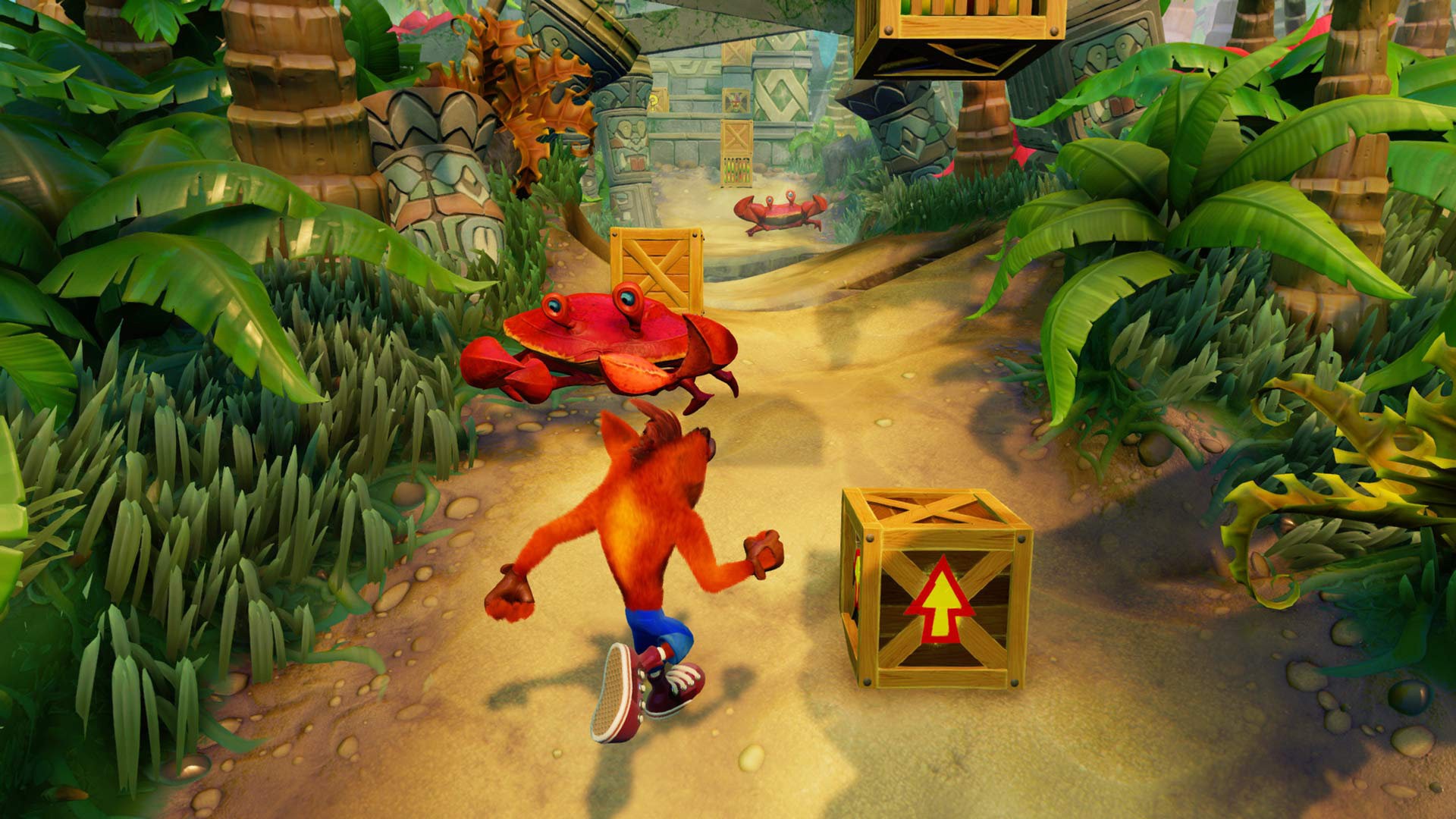
Crash Bandicoot N. Sane Trilogy revives our favourite platforming marsupial with a gorgeous visual makeover in this excellently remastered trilogy out now on Nintendo Switch.

Those of you who were fortunate enough to play the originals back on the original PlayStation might remember that Crash Bandicoot is pretty challenging – particularly the first instalment. You can easily lose entire evenings to the more dastardly levels like High Road or Native Fortress.

But all of that challenge pales in comparison to beating the game 100%. Not only does that require you to smash literally all of the boxes in every single level, it also requires you to do that without dying in a select few of them.

That sounds hard already, but if you bear in mind that Crash doesn’t have a health bar and dies in a single hit, it’s a recipe for frustration-fuelled disaster.

Fortunately, the latter two entries do mix things up with new methods of unlocking each gem, and not all of them are so brutally difficult.

In this guide, we’ll walk you through how to get every single coloured gem in the entire Crash Bandicoot N. Sane Trilogy. We won’t cover the white gems, as they simply require you to smash all of the boxes in each level, but we will tell you which gem unlocks what in which level. Let’s do this.

Crash Bandicoot – How The Coloured Gems Work

In the original Crash Bandicoot, there are two different types of gems: white and coloured. You unlock white gems by breaking all boxes in a level, and coloured gems for doing the same but without dying. Coloured gems only appear in a select few levels.

Coloured gems are worth the trouble because they unlock special routes in previous levels. These routes contain their own boxes, so you can’t actually get a white gem in certain levels until you’ve unlocked the specific coloured gem you need.

It’s worth noting at this point that a bonus round death does not count towards you dying in a level, so you can attempt these as many times as you wish and still get the coloured gem at the end, provided you don’t die at any point during the actual level. You can also die before reaching the first checkpoint as many times as you want.

The point in collecting all of these gems is to both beat Crash Bandicoot with a 100% rating and to unlock a special secret ending you can view.

Crash Bandicoot Coloured Gems Walkthrough

Coloured Gem Beat This Level Without Dying To Unlock Unlocks Gem Paths In These Levels
Green The Lost City Jungle Rollers / Castle Machinery
Orange Generator Room Upstream
Blue Toxic Waste Rolling Stones / Cortex Power / Jaws Of Darkness
Red Slippery Climb Native Fortress / Road To Nowhere
Purple Lights Out Boulder Dash
Yellow The Lab The Great Gate / Lights Out

Crash Bandicoot – How The Keys Work

As well as coloured gems, there are also keys to collect that unlock bonus levels. You’ll find these right at the end of the Neo Cortex bonus rounds, which require finding three Neo Cortex tokens in particular levels to access.

Crash Bandicoot Keys Walkthrough

Below, we’ve listed the levels in which you’ll find a Neo Cortex Bonus Round that you must beat in order to unlock a key. We’ve also included the name of the bonus level you’ll unlock by grabbing the key.

Beat The Neo Cortex Bonus Round In These Levels To Unlock A Key Unlocks This Bonus Level
Sunset Vista Whole Hog
Jaws of Darkness Fumbling In The Dark

Crash Bandicoot Neo Cortex Tokens Walkthrough

To make your life a little easier, we’ve tracked down the locations of each Neo Cortex Token to help you grab the keys and unlock the bonus levels a little easier.

Level First Neo Cortex Token Second Neo Cortex Token Third Neo Cortex Token
Sunset Vista Get to the top of the third-floor ruin and beat the lizard. Head inside and smash the crates to get the first Neo Cortex Token. Keep moving until you reach a set of moving walls. Get in the middle of them, then bounce between the crates to land on the second moving wall to get the second Neo Cortex Token. Reach the Neo Cortex Bonus Round teleport, and head inside the passageway behind you. Move left to find the final Neo Cortex Token.
Jaws of Darkness Right after the sequence where you have to jump through fire on moving platforms, smash the bottom crate of a stack topped with TNT to get the first Neo Cortex Token. Keep moving forward until you reach a snake. Beat the snake and the second Neo Cortex Token is in the crate behind it. Take the secret platform to the left of the second Neo Cortex Token and smash the crates to get the third.

Crash Bandicoot – How To Unlock Coco

Unlocking Coco is pretty darn easy in Crash Bandicoot. Simply beat the boss Papu Papu – AKA the easiest boss in the entire game – and you’ll unlock Coco’s Time Machine. Visit it to unlock Coco, at which point you can swap between her and Crash Bandicoot at any point by pressing ‘ZR’.

Crash Bandicoot 2: Cortex Strikes Back – How The Coloured Gems Work

Coloured gems work a little differently in Crash Bandicoot 2, but they’re no less challenging to unlock. Rather than just smashing all of the crates in a level without dying, this time you may have to beat a level without destroying any crates, access a level via a secret entrance, or find a secret area in a level.

At least it varies things up a bit, eh?

Crash Bandicoot 2: Cortex Strikes Back – Coloured Gems Walkthrough

Coloured Gem Unlocked In This Level Do This To Unlock It Unlocks Gem Paths In These Levels
Blue Turtle Woods Don’t destroy any crates Hang Eight / Spaced Out
Red Snow Go Access Snow Go from the bonus entrance, found in Air Crash Snow Biz / Spaced Out
Green The Eel Deal When you reach a fork, head right and go through the wall behind the Nitro crates Ruination / Spaced Out
Yellow Plant Food Beat the time attack section Sewer Or Later / Spaced Out
Purple Bee-Having Jump onto the Nitro stairs Spaced Out

Crash Bandicoot 2 – How Secret Warps Work

Certain levels have Secret Warps that will throw you to another level entirely. Often, you’ll need to use a Secret Warp to unlock a secret like a coloured gem in the level you warp to.

Crash Bandicoot 2 – Secret Warps Walkthrough

Levels With Secret Warps Do This To Find It Warps To
Air Crash Reach the first checkpoint and jump over the jetski and the floating crates to a platform on your right hand side Snow Go
Bear Down At the end of the level, head back across the floating platforms on foot Air Crash
Un-Bearable After your thrown off the bar, slide-jump over the chasm to get back to it Totally Bear
Hangin’ Out Drop through the hole that leads to a checkpoint, and walk towards the camera to find another hole leading to this Secret Warp Totally Fly
Diggin’ It Belly flop on the plant that throws bombs at you near the end of the level Road to Ruin

Crash Bandicoot 3: Warped – How The Coloured Gems Work

The coloured gems are mostly unlocked via Death Routes in Crash Bandicoot 3: Warped, and by that we mean reaching the end of a level without dying to unlock a secret area.

As before though, coloured gems unlock Gem Paths in other levels, which will help you gather all of the white gems in the game.

Crash Bandicoot 3: Warped – Coloured Gems Walkthrough

Coloured Gem Unlocked In This Level Do This To Unlock It Unlocks Gem Paths In These levels
Red Deep Trouble Hit the ‘!’ crate at the end to access a secret area with the red gem inside Bone Yard / Bug Lite
Purple High Time Take the Death Route at the end of the level Tomb Time / Bug Lite
Blue Tomb Wader Take the Death Route at the end of the level Sphynxinator / Bug Lite
Green Flaming Passion Take the Death Route at the end of the level Gone Tomorrow / Bug Lite
Yellow Hang ’em High Enter via the secret entrance in Warp Room 6 Dino Might! / Bug Lite

Crash Bandicoot 3: Warped – How Secret Levels Work

There are a number of secret levels in Crash Bandicoot 3: Warped that require you to perform specific actions in certain levels to unlock. Here’s how to unlock each level.

Crash Bandicoot 3: Warped – Secret Levels Walkthrough

Secret Level Do This To Unlock It
Hot Coco Jump on the second Pterodactyl sitting on the tree just after the dinosaur chase
Eggipus Rex Knock over the black alien sign 

Ski Crazed

Gather five Relics and unlock in the Basement Warp Room
Hang ’em High Gather 10 Relics and unlock in the Basement Warp Room
Area 51? Gather 15 Relics and unlock in the Basement Warp Room
Future Frenzy Gather 20 Relics and unlock in the Basement Warp Room
Rings of Power Gather 25 Relics and unlock in the Basement Warp Room
Posted on Leave a comment

Namco Museum Arcade Pac Is A 2-in-1 Bundle Coming Exclusively To Switch

Bandai Namco has announced that it will be bringing Namco Museum Arcade Pac exclusively to Nintendo Switch this September.

This 2-in-1 bundle will contain both Pac-Man Championship Edition 2 Plus and Namco Museum, bringing both titles together in a retail release. We loved both of these titles when they first launched, scoring them at 9/10 and 8/10 respectively in our reviews, so we can’t imagine this bundle being anything other than pure joy for those yet to experience the two games.

Of course, Namco Museum contains eleven different titles for you to enjoy, essentially bumping this up to a 12-in-1 package. In case you were unaware, here are those eleven games:

– Dig Dug
– Galaga
– Galaga ’88
– Pac-Man
– Pac-Man Vs.
– Rolling Thunder
– Rolling Thunder 2
– Sky Kid
– Splatterhouse
– Tank Force
– The Tower of Druaga

No pricing has been confirmed for the bundle just yet, with more details expected to follow, but we’d assume that it will offer a price lower than that of the two games separately. The launch date is currently scheduled to be 28th September.

Have you played either of these games? Will you be picking them up now that they’re in a bundle together? Let us know in the comments below.

Posted on Leave a comment

Mercenaries Wings: The False Phoenix Will Offer A Separate Story To Saga Chronicles On Switch

CIRCLE Entertainment has announced Mercenaries Wings: The False Phoenix for Nintendo Switch, a new game coming to the eShop later this year.

Once again developed by RideonJapan, Mercenaries Wings: The False Phoenix is not a direct sequel to the tactical RPG trilogy in Mercenaries Saga Chronicles (which was released on Switch earlier this year), but instead “offers a ‘separate story and worldview’ while also serving as a standalone Mercenaries game apart from that trilogy series.”

Details are still rather few and far between for the release, but we do know that the game’s standalone nature means that players don’t need to have played the original trilogy to fully enjoy the game. The news comes as part of a month of reveals planned throughout July from the publisher, so we can expect to see and hear more in the coming weeks.

We don’t have a confirmed release date just yet, but CIRCLE says that it will arrive “before the end of the year”.

Have you played Mercenaries Saga Chronicles? Let us know if you’re looking forward to this latest instalment in the comments below.

Posted on Leave a comment

Video: Here’s How Crash Bandicoot N.Sane Trilogy On Switch Compares To Other Versions

Crash Bandicoot N.Sane Trilogy is available now on Switch but has previously been released on Sony and Microsoft’s consoles. If you’re mulling a purchase and already own a PS4 or Xbox One system, you may well be wondering how the Switch version compares – and whether you should choose portability over performance.

As we said in our review, Crash runs in 720p in docked mode. You’ve got a resolution drop to contend with right from the start as the other versions render at 1080p or better, but what about the frame rate?

The guys at VG Tech have put the game through its paces on PS4, PS4 Pro, Xbox One, Xbox One X and Switch to see how it compares. While 30fps is the target on all formats, the Switch version drops more frames than its rivals – but it’s not anywhere near as bad as it sounds, with Nintendo’s hybrid console sticking to that 30fps goal surprisingly closely. In fact, were it not for the counter used in this video, you might not even notice the dropped frames.

Here’s what VG Tech found:

PS4 renders at a native resolution of 1920×1080. PS4 Pro renders at a native resolution of 2560×1440 and this is downsampled when outputting at 1080p. Switch in Docked Mode renders at a native resolution of 1280×720 and in Portable Mode renders at a native resolution of approximately 853×480. Xbox One renders at a native resolution of 1920×1080 and Xbox One X renders at a native resolution of 3840×2160. The UI is rendered at 3840×2160 on PS4 Pro and Xbox One X, 1920×1080 on PS4 and Xbox One, and 1280×720 on Switch in both Docked Mode and Portable mode.

The Switch in portable mode appears to run better than in docked mode, though the game can still occasionally drop below 30fps in portable mode during both gameplay and cutscenes.

Some differences between the Switch version and the other consoles versions are that it has removed fur effects, removed reflections, uses some lower quality textures, has reduced effects during some explosions and has a shorter draw distance. Reflections seem to render at the same resolution on PS4, PS4 Pro, Xbox One and Xbox One X.

Let us know what you think of the port by posting a comment.

Posted on Leave a comment

Crash Bandicoot Is The Fastest Selling Switch Game In 2018 As It Rockets To UK Number One

Crash clearly has plenty of selling power as he returns to number one for the eighth time thanks to the arrival of Crash Bandicoot N. Sane Trilogy on new platforms, including here on Nintendo Switch. In fact, his performance was so good he not only held off Ubisoft’s The Crew 2, but sold more copies than any other title on Switch in 2018.

The multiformat charts also saw Mario Tennis Aces drop from first to fourth place, and Mario Kart 8 Deluxe yo-yoing from fourth to six. FIFA 18 dropped a place but it’s still holding firm at the number three slot thanks to ye olde World Cup. Here’s the top ten:

1(22) Crash Bandicoot N. Sane Trilogy
2
(NEW) The Crew 2
3
(2) FIFA 18
4
(1) Mario Tennis Aces
5
(3) God of War
6
(4) Mario Kart 8 Deluxe
7
(-) Star Wars Battlefront II
8
(7) Grand Theft Auto V
9
(5) Fallout 4
10
(12) Far Cry 5

What do you make of this week’s chart data for the UK? Crash clearly has plenty of popularity in 2018. Not bad for an old PS1 mascot…

Posted on Leave a comment

Review: SpiritSphere DX (Switch eShop)

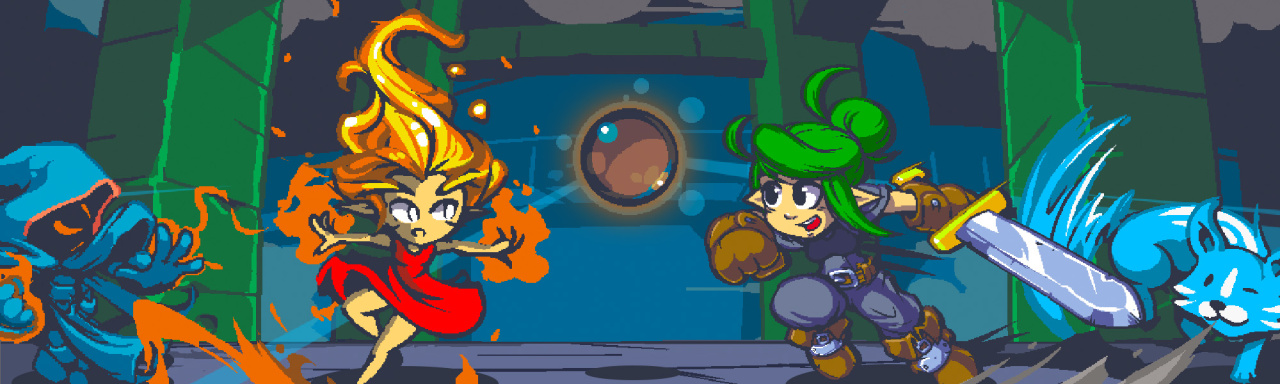
At a glance, you would be forgiven for thinking SpiritSphere DX was a sequel to one of The Legend of Zelda titles released long ago on the Game Boy Color. It looks, sounds and feels like one of Link’s outings on the classic portable device, but upon closer inspection, has absolutely nothing to do with adventuring. This is more like a glorified sports title set within the confines of a fantasy universe.

Its concept is simple – two competitors hit a sphere back and forth until one is outplayed. It’s sort of like the Mario Tennis games, although, the game’s creator cites Windjammer and even arcade air hockey as sources of inspiration. The cast of playable and unlockable characters on offer all have abilities that enable them to hit the sphere and move about the court slightly different from one another. An example of this is ‘Lin’ who can perform the iconic spin-attack with her sword. Sound familiar to anyone? Other characters include a dwarf with an axe (obviously, what else would any self-respecting dwarf wield?), a mage with the ability to teleport and many other appropriately-themed creatures who all have unique performance stats.

In each arena – ranging from springs to forests and volcanos – items can appear. These include a bow and arrows, bombs and even potions. Using certain items means you can temporarily stun your opponent or power-up in the heat of battle to nab a vital point. Each level also has its own hazards and dangers that will need to be taken into account. One particular dungeon-themed arena has a crowd of skeleton spectators that jump out to engage in battle with you, all while you’re busy trying to win a point against the opponent on the other side of the court. As exhilarating as this may sound, it doesn’t necessarily elevate the title above the competition.  

The erratic nature of the sphere physics can be troublesome, as intentional as this design choice appears to be. This is especially apparent on higher settings, requiring players to have both luck and skill on their side. While it’s easy to dictate the movement of the ball when you hit it, on the receiving end you’ll often find yourself taking a wild guess as to which direction it will travel or rebound. One mechanic to recover a play seemingly out of your control is the dash function. This allows you to prolong games, or might even give you a match point. If your character has problems returning shots, you can always slow down the play by making direct physical contact with the sphere. Fortunately, the controls are responsive, making sessions more tolerable – especially when opponents become impossible to outsmart on higher difficulties.

When you’ve adapted to standard matches, you’ll find there are plenty of other events to master in the campaign section of the game. On the same courts, you can partake in a game of squash – where the players take turns hitting the ball against a wall – and there are even bosses to take down. After each session, you are awarded lucky coins which can be spent at the ‘sphere fountain’  to unlock new character costumes and spheres.

Outside of the campaign, there are even more options. You can play a regular match with up to four players, play in a special hand-to-hand vertical mode with a friend, enjoy squash as a stand-alone spectacle, play the boss mode with two other people and refine your skills in the practice section. In the options menu, you can even enjoy a quick game of frisbee. There’s also a target mode, and a ghost mode for players who want to contribute but don’t have much faith in their own skills. The local multiplayer is on par with the campaign in terms of the value on offer. You can adjust the points required to win, enable or disable items, select the type of sphere you use and pick the level you play on. It’s just a pity there is no online play to extend the life of the game.

The graphics, as previously noted, act as somewhat of a focal point. Although the sprites look straight out of Zelda, they still add a great sense of personality to the game. Some visual aspects outside of matches and menus don’t look as impressive – such as enlarged characters on the selection screen. The music and sound effects aren’t a direct homage to Zelda, but still do an optimal job at recreating classic sounds you would commonly associate with games featuring these types of aesthetics.

Conclusion

SpiritSphere DX is possibly the closest we may ever get to a tennis game based on The Legend of Zelda series. In fact, in contrast to similar offerings currently available on the Switch eShop, this is a good budget pick. It’s got a small but challenging campaign mode with three difficulties, an adequate amount of local multiplayer content for up to four players and does a convincing job channeling the spirit of retro games. 

Posted on Leave a comment

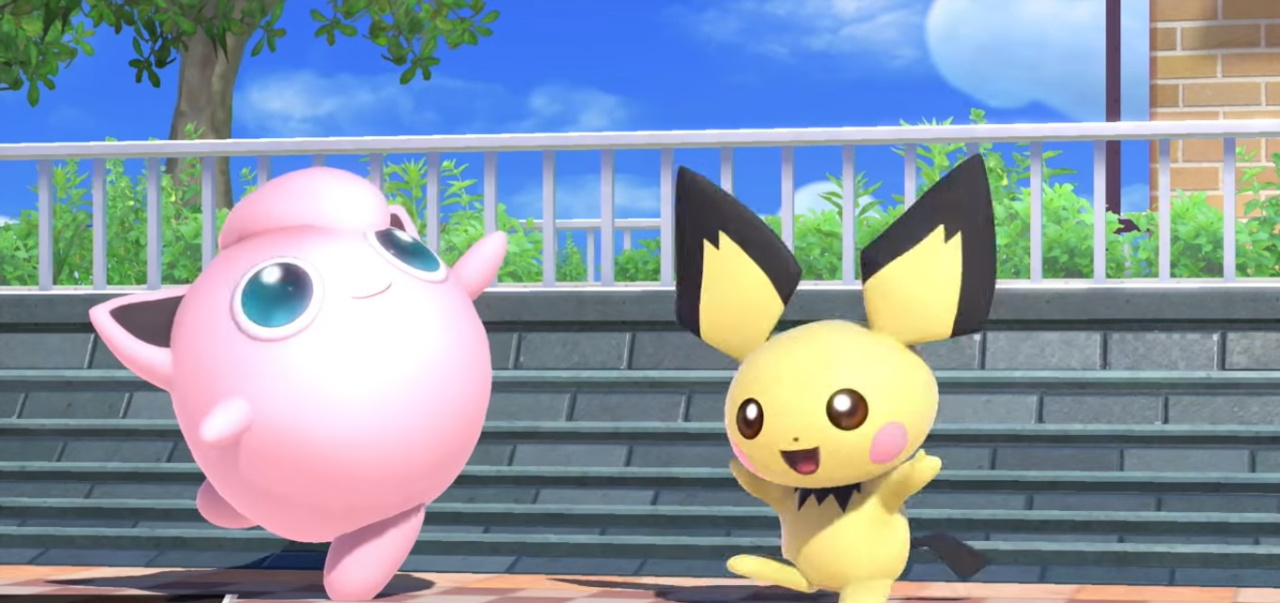
Pichu And Ice Climbers Receiving Ultimate amiibo Makeover For Super Smash Bros.

When Nintendo finally unveiled Super Smash Bros. Ultimate for the Switch during its special E3 2018 Direct, it didn’t hold back. The entire cast in the history of series was confirmed for the line-up, with both classics and fan-favourites alike returning. 

Now that the dust has settled, Nintendo’s Japanese website has unsurprisingly revealed Ridley, Daisy, and Inkling Girl won’t be the only characters receiving the amiibo makeover, with the veteran characters Ice Climbers and Pichu also locked in for the same treatment.

With confirmation all existing Smash amiibo will be compatible with Ultimate, it seems as if the additional classic fighters will be added to the amiibo line over time. So, if you’re hoping for the likes of Snake from Metal Gear Solid or Wolf from Star Fox, this is a positive development. 

Are you planning on buying any of the Super Smash Bros. Ultimate amiibo? Did you collect the original set made available alongside the existing release? Tell us below.

Posted on Leave a comment

Random: NieR: Automata Game Director Explains How He Was Inspired By Ikaruga

In celebration of the recent re-release of Ikaruga on multiple platforms including the Switch eShop, the Japanese publication Famitsu sat down with Yoko Taro – the director of the highly praised NieR: Automata – to discuss how exactly Treasure’s sublime shmup has influenced his own work over the years.

Upon reflection, the Japanese director was quick to acknowledge Ikaruga as the first game to properly synchronise music with gameplay:

Ikaruga influenced how I synchronize the game sequences with the music. Combining the two in a way that appeals to people’s hearts is a task that’s quite difficult. This sort of technique has been a hurdle for developers to overcome since the early days of gaming history, and I think Ikaruga is the first game to actually do it. Because, up until then, BGMs were only split by different scenes in each stage. In that regard, I believe Ikaruga was a game-changer in gaming history.

When queried about what exactly he liked about Ikaruga, Yoko Taro noted how the director and planner of the hit shoot ’em up was also responsible for the game’s music – allowing the stages and sound to be perfectly synchronised: 

Iuchi-san, the planner and director of Ikaruga, was also in charge of making the music. Thanks to this, the stage progress matches the music as well. That is one part of what makes Ikaruga amazing. Stage 2’s music starts off with a sense of speed to go along with the opening scene, but as the screen starts scrolling slower, the song goes slower as well.

This encouraged Yoko Taro to implement the same qualities into his own games:

How they mixed music and the sequences together was really groundbreaking, and it left such an impact on me that I stole it for the Nier series.

It did have an influence, but I don’t think it was as successful as in Ikaruga. You see, we forced in transformation gimmicks to bosses, and while music rises to fit the moment, that’s just a scripted event, as the developers don’t know when the player will beat the enemy.

In another scene in NieR: Automata, the boss movements match the rhythm of the music, but that was just forcing it…and not something the players could control in an interactive manner. If it were done properly, the music would increase in fervor when you do massive damage, or something like that where you feel the game via the music…it’s because it’s done so well in Ikaruga that it shines so brightly.

Have you downloaded Ikaruga from the eShop yet? Are you a long-time fan of the iconic shmup or is the Switch version the first time you’ve had the chance to play it? Have you played any of Taro’s games? Tell us in the comments.

Posted on Leave a comment

EA Sports Vice President Says FIFA 19 Will Be Upfront About FUT Card Pack Odds

With governments worldwide now cracking down on loot boxes and other forms of micro-transactions within video games, various companies have been required to make adjustments to key franchises in order to pass the new rules and regulations.

Speaking to Eurogamer at the Gamelab conference in Barcelona, EA Sports vice president and COO, Daryl Holt, spoke about how the next entry in the insanely popular football franchise – FIFA 19 – would disclose Ultimate Team card pack odds:   

For Ultimate Team, when you buy a pack you know what you are getting. You are getting a certain number of assets that are guaranteed – and we’re going to start to do pack odds disclosures that’ll show you the odds of what you might get. So, at least that aspect of understanding what the chances are of getting X, Y and Z card.

Holt did not elaborate on the finer details but was quick to reiterate EA’s stance on the subject of micro-transactions, insisting FUT packs were not considered a form of gambling because there is no real-world currency value associated with the digital items:  

For one, we don’t believe in the gambling aspect of some of the mechanics we’re introducing, because there is no real-world currency value to the packs…And there is the aspect of you know what you’re getting with the packs in terms of the assets you expect to get.

For anyone planning on picking up FIFA 19 this September, will you be playing the FIFA Ultimate Team mode? Tell us below.