Posted on Leave a comment

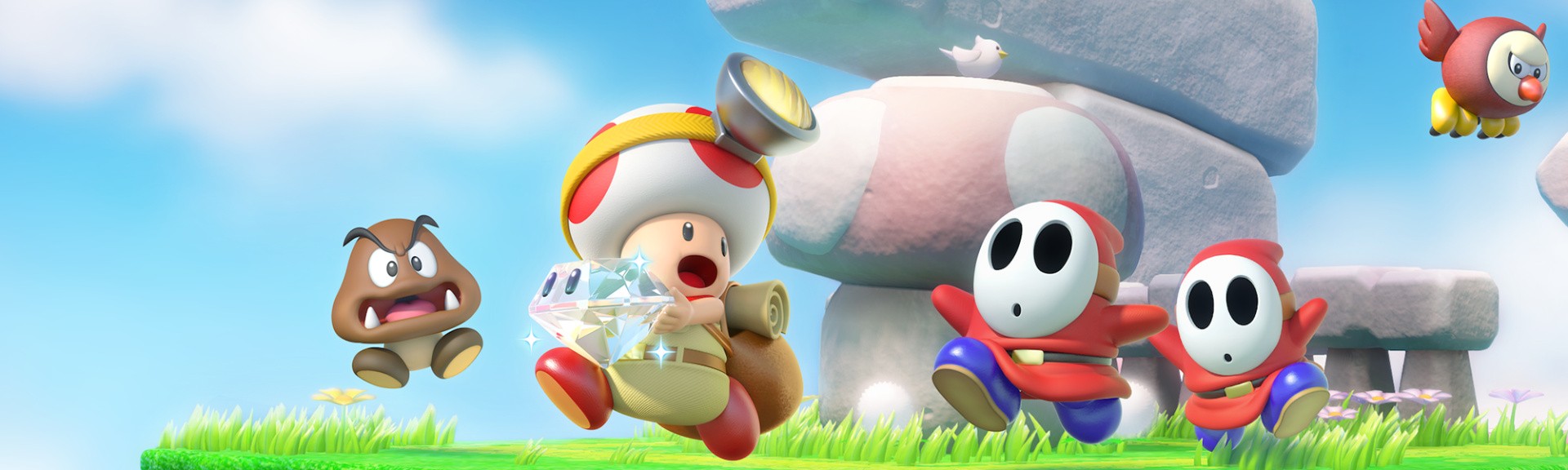
Review: Captain Toad: Treasure Tracker (3DS)

The Switch version of Captain Toad is a no-brainer. Given that Nintendo’s latest home console (of sorts) is massively more popular than the Wii U was, it’s only logical that Captain Toad would be the latest in a long line of ports aimed at giving some of the Wii U’s brilliant library a second chance at success.

For many, then, it’s the 3DS port – due for release on the same day as the Switch one – that’s raised a little more curiosity. After all, some question whether it’s necessary to keep committing resources to a system enjoying its twilight years, but the likes of WarioWare Gold and the upcoming Luigi’s Mansion remake prove that Nintendo’s still keen on ensuring those 70+ million 3DS systems out in the wild keep getting new games, at least for now. It’s just as well, really, because the 3DS version of Captain Toad is a fascinating demonstration of just how much it’s possible to squeeze out of this now seven-year-old device.

What’s initially impressive when playing the 3DS version is just how faithful everything is to the Wii U game. Like Hyrule Warriors Legends and Poochy & Yoshi’s Woolly World before it, it’s clear that sacrifices in visual detail have been made but the overall package is still the same. Most notable (especially when playing the Switch version then jumping over to the 3DS one) are the jaggier visuals, something which is pretty much inescapable given the 3DS’s humble resolution. Everything looks significantly rougher here, but that’s what you get when you’re dealing with a 400×240 output. When zoomed out the game’s levels can become a tad too low-res for comfort, though never to the extent that you can’t identify specific parts of the stage and figure out where to go next.

The frame rate also takes an understandable knock, from the stable 60 frames per second of the Wii U and Switch versions to (a similarly stable) 30fps. It’s certainly noticeable and does make things feel a little less slick and polished as a result, but given the slow pace of the game, it doesn’t really affect the way it’s played. One area in which it does achieve parity with the Wii U version is the controls. Since the Wii U technically used two screens, the 3DS version directly imitates them: the top screen is essentially the ‘TV’ while the touch screen stands in for the Wii U GamePad.

This means that, as in the initial release, you can use the touch screen to manipulate elements of the game world: moving blocks, spinning wheels, stunning enemies and the like. The Switch version obviously does this too in handheld mode, but while docked players instead have to make do with a less intuitive motion-controlled pointer. Since 3DS is handheld-only, no such concessions are necessary and it’s touch-based goodness for all.

This does, however, make for a curious situation in which both the top and bottom screen show similar action. In fact, they pretty much show exactly the same thing, albeit with the top screen obviously showing a little more of the sides due to its widescreen aspect ratio. Since both screens are rendering the same detailed 3D environments, it would be interesting to know how much processing power could have been freed had only one screen been showing the game instead. Maybe if the top screen had only shown information like level details and your life counter, improvements could have been made to, say, the frame rate.

That said, it’s still useful to have the action replicated on the top screen too, if only because it lets you play the game in 3D. Yes, it’s fair to say the 3DS’s stereoscopic 3D feature no longer drops jaws in the ways it did back in 2011, but there are still occasional new releases that remind you just how impressive it can be when used properly (take a bow, Metroid: Samus Returns).

This is very much the case here: Captain Toad’s self-contained floating 3D stages and its general concept of rotating and zooming around them works perfectly in three dimensions, and genuinely gives the 3DS version an edge over the Wii U one, even despite its lack of oomph in other visual aspects. This is easily one of the better uses of 3D in recent years, and it’s nice to see Nintendo still supporting it when it fits as well as it does here.

The 3DS version also gets the new Super Mario Odyssey-themed stages that have been added to the Switch port. Unlocked through general gameplay or instantly using the Mario wedding amiibo, these lovely new stages perfectly capture the feel of Odyssey and are clear highlights in this new release. It’s a bit of a shame, however, that these stages replace the four Super Mario 3D Worldthemed stages that were in the Wii U version. It would’ve been nice to have had those too, making the new ports the definitive versions of the game, but as it is you’re still going to want to keep hold of your old Wii U copy if you want to have access to every single stage.

Ultimately though, we’re only talking about four levels being substituted for new ones, and if you can live with that then you’re otherwise still getting the full experience here. While it could be argued that the Switch version is now the definitive one – its docked and handheld modes bettering both the Wii U and 3DS versions in terms of visual fidelity – that doesn’t mean the 3DS port should be ruled out entirely as a waste of time.

Indeed, given the relative lack of power in Nintendo’s little 3D wonder, it’s fair to say the 3DS version of Captain Toad is the most impressive: not only in terms of what it manages to pull off, but how it actually manages to improve things in a way with its effective use of 3D.

Conclusion

If you own a Switch then there’s no real decision to be made here: Captain Toad is still far and away better on Nintendo’s latest system. That’s not to say the 3DS version is a write-off, though, because that’s far from the case. As seemingly one of the final few big-name releases for the system, Captain Toad pushes it to its limits to produce easily one of the best-looking 3DS games ever made. The 3DS may be preparing for retirement, but games like this are ensuring it’s going out in a blaze of glory.
Posted on Leave a comment

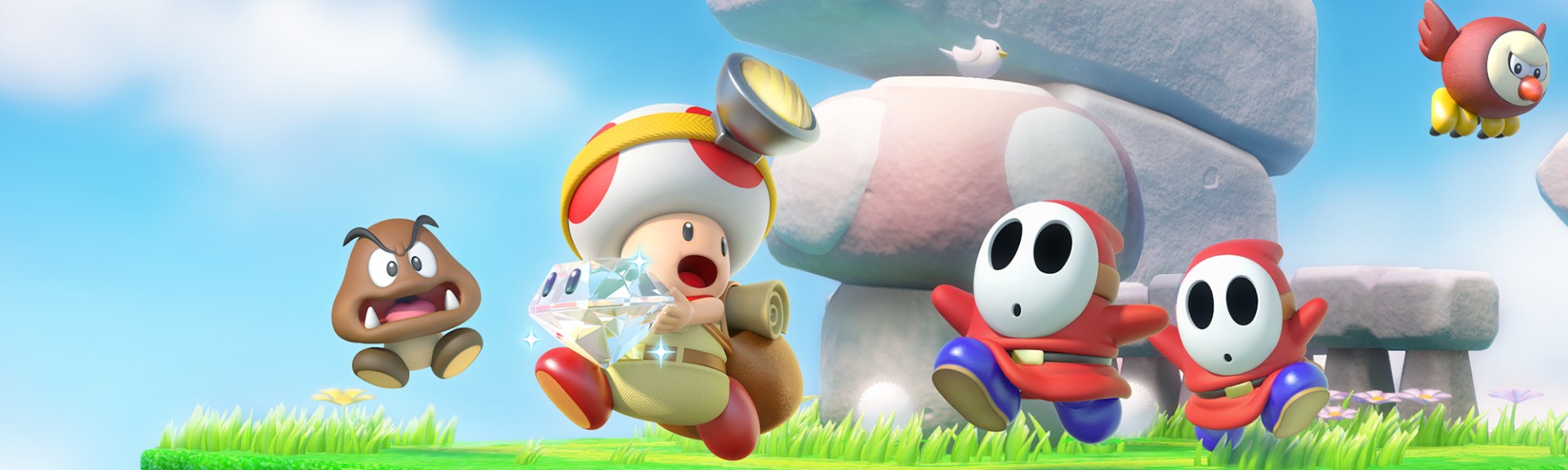
Review: Captain Toad: Treasure Tracker (Switch)

Captain Toad: Treasure Tracker was a real hidden gem of the Wii U era, which is amazing when you consider that it was almost created by accident. The original concept for Captain Toad existed inside Super Mario 3D World, which featured a few minigame-like levels in which you had to help Captain Toad navigate a bunch of tiny cube-shaped levels, avoiding enemies and collecting stars and coins.

These levels were a nice change of pace from the frenzied chaos of a typical Mario level, and that’s largely down to the fact that Captain Toad is the antithesis to Mario. He can’t jump, you see. Instead, you can only waddle around the environment, forging your own path around enemies, to the tops of platforms, and past various different traps.

Nintendo clearly saw the genius of this design, and how well it captured and made use of the Wii U gamepad, that it was turned into its very own game: Captain Toad: Treasure Tracker. The design remained largely intact – why fix what isn’t broken? – but was expanded on. Toad would now simply have to reach a single star to end the level, with hidden gems to find and extra challenges to pass for those that wanted more out of the leisurely difficulty.

It’s most notable for making excellent use of the oft-maligned and misunderstood Wii U Gamepad, allowing you to perform basic actions, like tapping to interact with the environment, to the unique, like blowing on the Gamepad’s mic to keep platforms afloat. The innovative ideas flowed thick and fast. The icing on the cake has to be its beauty. Make the case that this is one of the most gorgeous titles on the Wii U, and it’s unlikely anyone that had the pleasure of playing it will disagree with you.

So you could consider it criminal then that many of us never had the chance to play. Until now, that is, because Nintendo has dusted off the intrepid explorer and relaunched him on Nintendo Switch. And thankfully, the experience remains mostly intact. It’s clearly designed for play in handheld mode due to the amount of tapping and touching involved, but Nintendo has included gyro controls to allow for TV play. It’s definitely a far better experience in handheld, but the gyro controls more than suffice if you want to check it out on the big screen.

Either way you play is a trade-off though. It plays best in handheld mode but looks far better on your TV, where the higher definition visuals get to shine on the bigger screen. It’s amazing how well it holds up as well; though it launched on the Wii U back in 2014, it’s easily one of the best looking Switch games currently available. The amount of visual polish on show is remarkable, which is even more amazing when you consider that back in 2014 the Wii U was considered underpowered for a home console.

There’s new content as well, which is never a given where Nintendo is concerned. The best of these is the introduction of four new levels, themed on the Metro, Cascade, Sand, and Luncheon worlds from Super Mario Odyssey.

Curiously though, these new levels were included at the expense of levels themed on Super Mario 3D World. It’s not clear why Nintendo has made this decision – perhaps they’re holding them back for a Super Mario 3D World re-release on Nintendo Switch? – but it’s an odd omission. We can hardly complain due to the inclusion of new levels, but we can still shake our heads in confusion.

Given that it’s a Nintendo Switch title, room has obviously been made for multiplayer. You can each play with a single Joy-Con too, so it’s ideal for keeping the kids quiet during a long drive. The least interesting piece of extra content is the Pixel Toad challenges. These simply require you to scour each level with your eyes to find Pixel Toad somewhere and tap on him to complete the challenge. It’s cute, but rarely challenging and barely interesting. These were present in the Wii U version as well, but as they were gated behind the illustrious Toad amiibo before, they now unlock as standard without any plastic figurines.

Ultimately, there’s not an awful lot of new content, so you might not be persuaded if you’ve already played and own the Wii U version. But, if you’ve never experienced Captain Toad: Treasure Tracker before, you owe it to yourself to check it out. It’s found a great new home on Switch, and the added co-op feature breathes new life into it as you take on challenges with a friend.

Conclusion

Captain Toad: Treasure Tracker is a hidden gem from the Wii U era that’s been given a new lease of life on the Nintendo Switch, and rightly so. New levels and fresh multiplayer are welcome inclusions but it’s a bit of a shame that we’ve lost four levels as a result – and for no apparent reason. Still, all being said, this is a wonderful and gorgeous puzzler fit for all ages, and one which you should definitely experience if you’re yet to.

Posted on Leave a comment

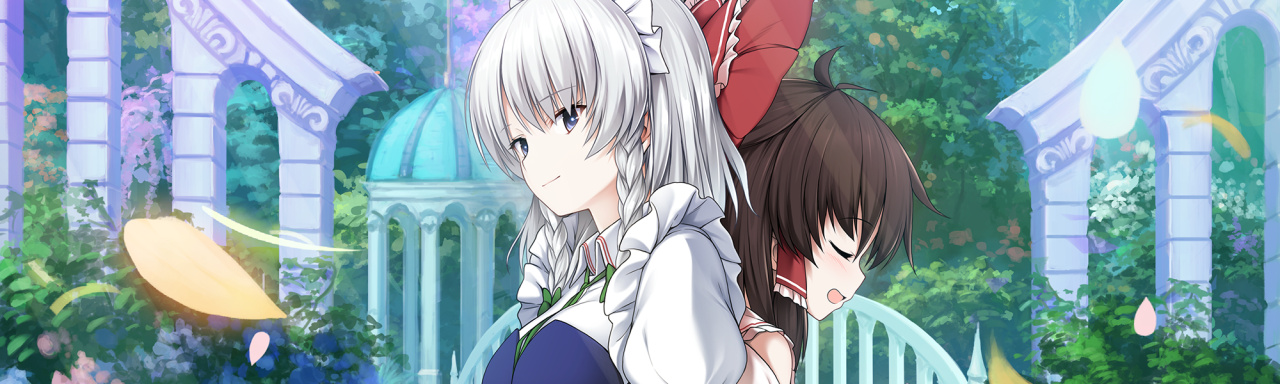
Review: Touhou Genso Wanderer Reloaded (Switch)

Ah, The Touhou series. Well, depending on your experience and exposure, the ‘project’ is either a long-standing production line of ‘Danmaku’ (curtain fire) bullet hell shmups, a vast array of parody and homages ranging from Castlevania clones to 3D fighters (in the form of Touhou Kobuto V: Burst Battle), or a vast, labyrinthine journey through literally thousands of fan-made media pieces, from music to literature. As the brain-child of Team Shanghai Alice starting back in 1996, the ‘core franchise’ spans over 20 years and more than two dozen games.

Project Touhou and it’s characters have certainly become a barely controllable beast, and roguelike RPG adventure Genso Wanderer makes its way to the Switch, ‘Reloaded’ from the original version released on PS Vita and PS4 in 2017, ready to satisfy long-term fans with lore and backstory, while attempting to be an accessible entry point for those new to the extensive universe.

Genso Wanderer tells the story of everyone’s favorite shrine maiden Reimu Haruki, as she becomes attracted to a ‘cursed’ golden sphere that contains strange, mystical powers. She tries to steal the sphere from dashing half-human/half-yokai (ghost) Rinnosuke Morichika. The game then plays out as a series of roguelike dungeons as you try to battle through various clones of the sphere’s dark power in order to restore peace and tranquility.

Anyone who has played Mystery Dungeon: Shiren The Wanderer on Nintendo DS or Sorcery Saga on Vita will feel right at home, as Gensou is a turn-based roguelike dungeon crawler, packing in all of the conventions that come with the genre. You’ll make your way through a set of randomly generated floors to accrue items, spells, weapons and you get to recruit a range of shrine maiden friends as you progress in order to further the plot.

There are two main factors when journeying through the floors of each dungeon. One is your HP gauge, which will deplete as you take damage from enemies but will restore gradually as you move across the grid-like areas without getting into conflict. The other is your ‘tummy meter’, which requires food regularly to prevent you from passing out. You’ll also collect money, spells and various weapons, along with the invaluable ‘danmaku’ projectiles and the ability to combine different fusion powers which is new to this ‘reloaded’ version.

Every so often, you’ll get the opportunity to restock and manage your inventory which becomes more important as you progress. Services and shops in the various towns must be used in order to be prepared for anything that the later levels might throw at you. One such drawback commonly found in roguelikes also presents itself here in the random nature of the level generation. It’s perfectly possible to breeze through the first few floors (especially with a rather powerful ally), only to hit a spike in difficulty which will finish you before you realise what you’re up against. Although you keep your items and your weapons retain their level, you and your new pals will have to start all over again.

While this cycle of learning through experience, when done well, can be addictive and satisfying, TGW lets itself down in a few key areas. First of all, there is a decent chance that enemy projectiles will come at you without being visible until it’s too late. The field of view becomes more and more restricted as you open up areas of a particular floor, as the minimap continues to grow. Combined with the text window, weapon cycle and various health meters, TGW becomes less and less bearable as what you are actually moving and fighting against is increasingly obscured by the HUD. It is a real shame, as the effects, environments and characters are well drawn, smoothly animated and brightly coloured, even if the Chibi anime style isn’t for everyone.

In general, there’s just an overwhelming amount of text at every conceivable juncture, whether it is during the quest itself or when you encounter merchants, allies, enemies or anyone else. The Touhou universe is certainly expansive, but the sheer volume of asinine banter and conversation between characters, combined with the intrusive text window logging every action taken during your quest just becomes exhausting. It is a lot to take in, even if the world of Touhou is one that you are already invested in.

Conclusion

Overwhelming for newcomers and probably too generic for genre aficionados, Touhou Gensou Wanderer Reloaded is difficult to recommend to all but die-hard series fans. The beautiful hand-drawn presentation and high production values are hindered severely by a contrived and intrusive interface, unimportant dialogue with very little character development and derivative mechanics. It certainly looks the part, but there are more fun and interesting adventure roguelikes such as Crypt Of The Necrodancer on the eShop right now.

Posted on Leave a comment

Minecraft’s Aquatic Update Phase Two Gets Wet And Wild Today On Switch

Minecraft: Nintendo Switch Edition has just received its next big update, bringing with it the next section of the big Aquatic Update that’s overhauled the game’s base underwater elements. If you’re big into Minecraft on Switch, you’ll be pleased to see all the big things Phase Two is adding to Mojang’s global hit:

New features

  • Realms are now available on Nintendo Switch
  • The Drowned – These dangerous, underwater zombies lurk in dark, deep water and will come up to the shore at night
  • Sea Turtles – These gentle creatures can be found swimming in oceans and tanning on beaches. Protect their eggs so more can hatch!
  • Turtle Shell and Scute items
  • Potion of the Turtle Master
  • Nautilus Shells – Can be found while fishing or held by the Drowned
  • Conduits can now be constructed underwater and give players the Conduit Power effect. Craft them with Nautilus Shells & Heart of the Sea
  • Bubble Columns – Magma Blocks create downward flowing columns and Soul Sand creates upward flowing bubbles
  • New Achievements!
  • Added new commands that only affect worlds with Education Edition enabled: 1. /ability – Sets a player’s ability 2. /immutableworld – Sets the immutable state of the world 3. /worldbuilder – Toggle World Builder status of caller

Changes

  • Changed the menu background to be themed for Update Aquatic
  • Undead mobs will now sink in water and can walk on the bottom
  • Improved the steering of Boats when using keyboard and mouse by pressing W to move forward and S to reverse
  • Dolphins can now be given Raw Fish or Raw Salmon and will swim towards the nearest Ocean Ruins or Shipwreck
  • Husks that have sunk in water will now transform into Zombies and Zombies will transform into Drowned
    Skeleton Horses can now be ridden underwater
  • Skeletons and Strays will switch from ranged to melee attacks while underwater and switch back when out of water
  • Coral blocks will no longer die as long as one side is touching water
  • Improved player swimming at the surface of water
  • Tridents can now be enchanted with Mending and Unbreaking
  • Added an animation when using Riptide in first person perspective
  • Slightly decreased the friction of Blue Ice
  • Updated the texture of the top of Kelp
  • Updated the texture of Cooked Fish
  • Updated the Riptide spin texture
  • Default Field of View has been reduced from 70 to 60 and can be adjusted in Video Settings
  • Tridents will no longer break blocks in Creative mode
  • The Inventory button has been moved to the top of the Store page

Are you a big fan of Minecraft on Switch? Which parts of this new update are you most excited to use? Share your thoughts below, fellow blocky builders…

Posted on Leave a comment

Review: Limbo (Switch eShop)

Switch owners have been spoiled for moody, melancholic platformers of late. First, we got the Metroidvania masterpiece that was Hollow Knight, then the beautifully grim platform-puzzling of Inside and its equally downbeat older cousin, Limbo. We’ve already taken a look at Inside and recommended it wholeheartedly. But if you haven’t played either of Playdead’s games to date, we’d advise considering a playthrough of Limbo first. It’s a great way to build to Inside, with many of the storytelling tricks and mechanical twists of the newer game foreshadowed in Limbo. It’s almost like seeing the expert sketches that precede the painting of a masterpiece.

That would be to (rather floridly) undersell Limbo a little bit, though. It remains a great platform-puzzler in its own right, with its own highly influential style and tone. You play the part of a bright-eyed young boy, deposited into a dark fantasy underworld that seems to represent some kind of ghastly afterlife. It’s never spelled out to you because, well, that’s not Playdead’s style. Without a word, you find yourself running to the right, scrambling over ledges, jumping between elevated platforms and dodgy cruel traps.

Pretty soon you’ll discover that you can interact with objects – boxes, grates, levers – by holding ‘A’ and pressing a direction. It’s this simple mechanic that lays the foundation for some genuinely head-scratching physics puzzles. The solution is always just a means to get to higher ground or to move forward, but the variety of ways in which this occurs reveals a cunning mind on the part of the developer.

There’s a fair amount of frustration built into Limbo. Each of its puzzles requires you to do more than just figure out a solution – you then need to execute your plan, often with some pixel-perfect platforming and expert timing. The checkpointing is excellent, but that also means that you’ll find yourself running through the same brief gameplay loops multiple times until you nail it. Knowing how to do something and yet failing repeatedly can get a little tiresome if you’re not the persistent sort.

The key to this is Limbo’s uniquely weighty handling. It’s never left in doubt that you’re playing a weedy child rather than a spring-heeled platforming mascot, and that means that you’re slow on your feed, with a pathetic little hop for a jump. Dealing with the protagonist’s inherent weakness soon becomes a major part of Limbo’s appeal, however, as you learn to become more cautious and attentive. It also drives the game’s deliberately vague background narrative, though this is something that needs to be experienced rather than explained.

It’s all sold convincingly with a striking silhouetted art style, which calls to mind vintage black and white horror films, complete with grainy filter. If this looks at all familiar to you, it’s because an awful lot of games have aped Playdead’s work with Limbo in recent years. Its immediate impact may have dulled slightly due to that familiarity, but it hasn’t aged much at all.

Docked mode is definitely the best way to experience Limbo though. Its muted art style reveals that the Switch display isn’t at its best when handling lots of shades of black. It’s just a little too reflective, and we were constantly aware of our face gawping back at us. Still, the game runs very well in both docked and portable modes. Just be sure to find a dark corner to play it in if you’re going handheld.

Another quick note on Limbo’s relationship to its brilliant brother. Playing Limbo straight after a complete run-through of Inside is a curious experience. In fact, it’s not necessarily something we’d recommend. You can tell that the two share a lot of common DNA, but Inside is such a step forward in every way that Limbo inevitably suffers by comparison.

The release of both simultaneously is unfortunate timing in a way, and it might have been a better idea to stagger the release. But that’s a small quibble. Stood in isolation, Limbo remains an outstanding and highly influential platform-puzzler. With its lower price, it’s also the perfect companion piece. Do yourselves a favour and buy both.

Conclusion

Limbo remains a brilliantly moody and expertly poised platform-puzzler a full eight years on from its original release. It might be a little stark, but it’s dense with ingenious physics puzzles and weighty platforming challenges. It’s the perfect cut-price companion piece to Inside, and a brilliant game in its own right.

Posted on Leave a comment

Random: This Switch User Interface Mock-Up Has Us Longing For More Features

The Switch’s user interface often sparks endless debate amongst fans, with players taking to the likes of social media or these very pages to share their wildest dreams on what they’d like to see. Now, this fan-made mock-up provides a glimpse at how a revamped interface could look and we’re madly in love with the entire idea.

It has to be said, there’s something smooth and sleek about the Switch’s current minimalist design (which you can see below); with the only real options being ‘light’ or ‘dark’ themes, the whole interface is left incredibly uncluttered to the point where the games themselves really catch the eye.

Having said that, we can’t help but long for more features and other goodies that could be implemented onto the screen. The mock-up, which has been shared online by Twitter user @NGameTheCube, shows a handy way to see in-game achievements (which still don’t exist on Nintendo platforms), additional information about your friends, access to extra info on the titles that you own in one convenient place, and even a lovely icon design for Virtual Console-type games such as Super Mario Sunshine on GameCube.

Other things are included, too, such as the sadly defunct Miiverse (which probably won’t ever return now that you can easily post to Twitter and Facebook from your console) as well as an internet browser and what looks like a music player. The layout looks fresh and pleasing to the eye, but it also shows how easy it could be to have these things ready and waiting from the home screen should Nintendo want to add these features in the future.

Would you like to see the Switch’s home screen have a large overhaul? Or would you be happier to see it keep its current, minimalist state? Share your thoughts and ideas with us in the comments below.

Posted on Leave a comment

Sausage Sports Club Brings Its Co-Op Party Goodness To Switch On 19th July

Looks like Sausage Sports Club‘s certification with Nintendo went well, because the originally Kickstarted multiplayer party game finally has a release date, which is set for 19th July on Nintendo Switch. The game will enable you and up to three other players to control all manner of animals, all of which have been given a stretchy makeover (hence the ‘sausage’ bit).

There’s an Adventure mode you can play in co-op or solo, as well as support for local multiplayer with up to eight players on one device. The developer has packed in plenty of extra modes, ranging from soccer to capture the flag, so you can ensure your wacky waving animal (which you customise to your heart’s content) will claim wobbly glory.

Check out the latest trailer above and share your thoughts in the comments below… 

Posted on Leave a comment

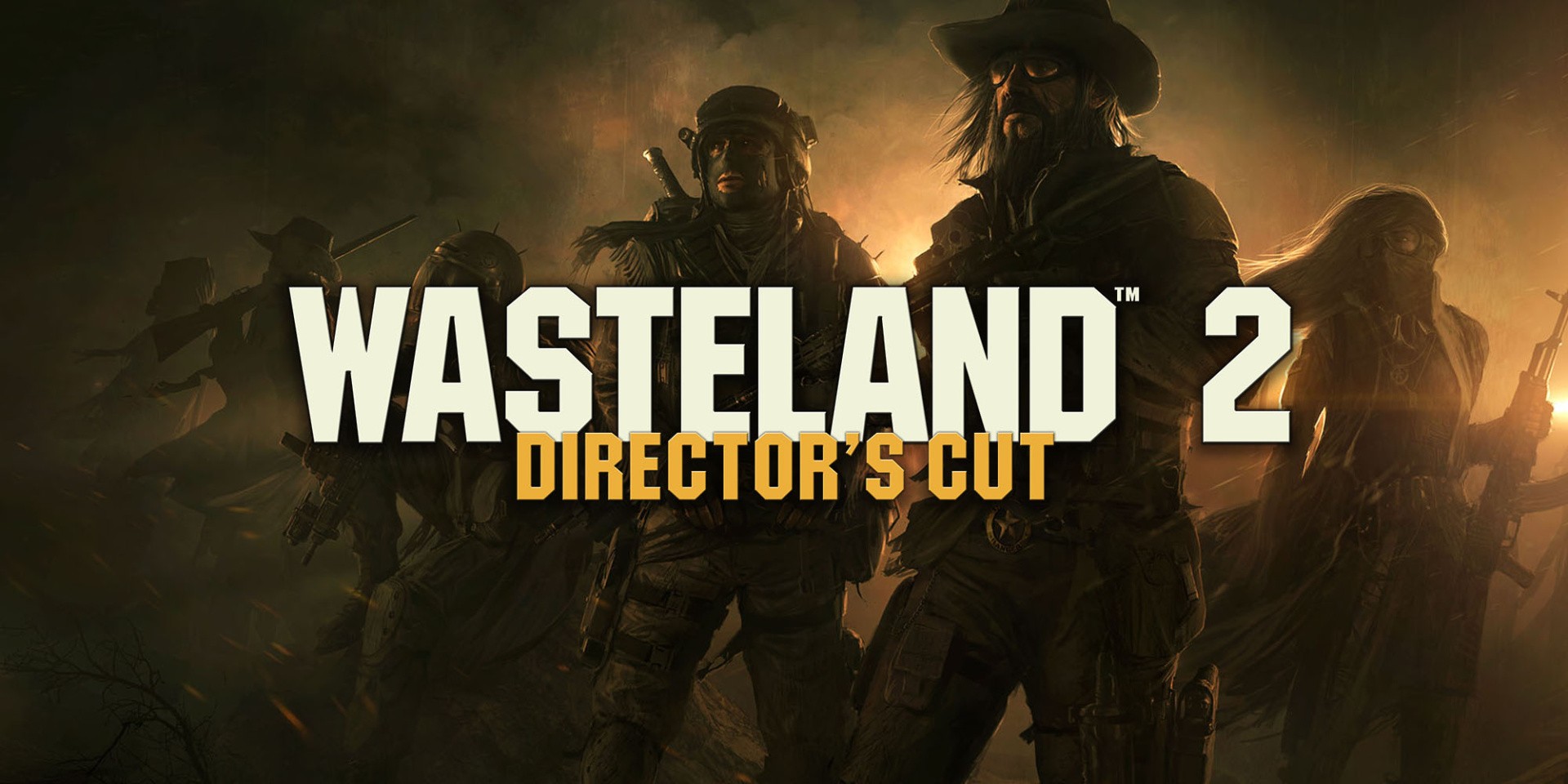
Wasteland 2: Director’s Cut Will Bring Its Turn-Based Strategy To Switch This Fall

inXile Entertainment has announced that Wasteland 2: Director’s Cut is “expected to arrive on the Nintendo Switch this August” – and we’ve got a brand new trailer to celebrate.

The game comes from the producer of the original Fallout and is an enhanced version of Wasteland 2 – which launched back in 2014. This Director’s Cut has been available on PS4 and Xbox One since 2015 and features numerous improvements and additions to that initial release. This post-nuclear RPG is said to offer “over 80 hours of gameplay” and these feature lists should give you some idea of what you can expect during that time.

Key Features:
– One Size Does Not Fit All: Don’t feel like finding the key for a door? Feel free to pick the lock, bash it down with your boot, or just blow it open!
– Decision Making… with Consequences: With both short and long term reactivity, player choices ripple outwards, changing the game’s events and forever altering the lives of those in the wasteland.
– Huge & Customisable: Hundreds of characters. Thousands of variations on the Rangers’ appearances. Over 150 weapons. No two players will have the same experience.

New Director’s Cut Features:
– Perks & Quirks: Players can customize their squads even more! Perks & Quirks are special personality traits players can use to give their characters even more life, with their own unique bonuses… and drawbacks.
– Precision Strikes: Fire on enemies and debilitate them with tactical attacks! Cripple a leg to slow an enemy down, fire on their gun to blast it to bits, or aim for the head to knock them senseless – or blow it clean off.
– Expanded Voice Over: Over 8,000 lines of new voice-over dialog have been added for the game’s characters and companions, bringing the wasteland to life like never before.

As mentioned above, the game is “expected” to arrive in August, but the new trailer above simply mentions “fall”. We’ll make sure to keep an eye out for any more announcements over the coming weeks.

Until then, though, let us know if you’re looking forward to playing Wasteland 2 on the go with a comment below.

Posted on Leave a comment

Gallery: Sonic Mania Plus Is The Version Of Sonic Mania You’ve Always Wanted

When Sonic Mania launched last year it received critical acclaim and restored the faith of many a lapsed Sonic fan. However, as a digital-only affair (no, the collector’s edition with a download code doesn’t count) it felt very much like a ‘bonus’ release alongside 2017’s full-fat Sonic outing: the much-maligned Sonic Forces

Fans called for some kind of physical release for Sonic Mania – which was perhaps the best Sonic offering in recent memory and has sold over a million copies – and thankfully, Sega listened. Sonic Mania Plus launches next week and it’s the version of Sonic Mania we really should have gotten at launch.

First things first, let’s talk about the packaging. Sonic Mania Plus comes in a cardboard slipcase which has a lovely holographic foil effect; inside this, you’ll find the standard Switch game case (which has a reversible sleeve inside showing a Genesis-style cover) and a surprisingly lavish 32-page art book containing concept and final artwork from the game itself (check out those logo ideas).

Then there’s Sonic Mania Plus the game – Mighty the Armadillo and Ray the Flying Squirrel are included as playable characters, and there’s a remixed “Encore Mode”, a four-player competition mode (ideal for when you’ve got a few friends round) and a few extra cutscenes. Oh, and the battle with Metal Sonic has been retooled to closely resemble the one seen in the oft-ignored 32X title Knuckles’ Chaotix.

If you already own Sonic Mania then inserting the game card will simply add the ‘Plus’ content to your existing game data, which is seamless and rather lovely; instead of creating an entirely new game icon on your Switch home screen, it simply uses the existing Sonic Mania one. Nice.

Is Sonic Mania Plus worth buying if you already own the original game? Depends how badly you want that physical case sitting on your shelf, we guess. If you’re steadfastly digital-only then you can download the ‘Plus’ content for $4.99 / £3.99, whereas the physical version will cost you $29.99 / £29.99.

We’ll leave you to wrestle with that taxing monetary puzzle, but there’s no denying that this is a lovely physical edition of one of Sega’s best games in years. Let’s hope Sonic Mania 2 isn’t too far away, and that Sega learns from the past and releases a physical version of that on day one.

Please note that some of the links on this page are affiliate links. If you click them and make a purchase we may receive a small percentage of the sale which helps support the site. Please read our FTC Disclosure for more information.

Posted on Leave a comment

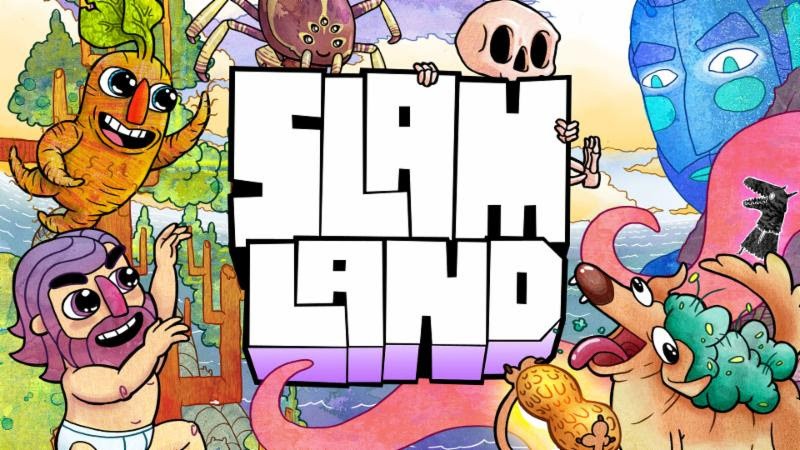
Smash Bros. Meets Basketball In Slam Land, Coming To Switch This August

Bread Machine Games has announced that its upcoming competitive party game Slam Land will be slam-dunking its way to Switch on 7th August.

Slam Land is a fast-paced, chaotic brawler where a bizarre blue giant instructs competitors to dunk one another into hoops for his amusement. Players must grapple, lunge, and dodge their way around the stages (and each other) as they try to slam their opponents into a variety of goals ranging from tree hollows to gaping maws.

These matches can be played either against the clock, with a goal of scoring the most points, or as a stock contest where players must outlive one another – not too dissimilar to Super Smash Bros. Other modes include ‘Peanut Mode’, where scores become more valuable the longer players hold on to the titular peanut, and a distinctive take on the classic basketball activity ‘H.O.R.S.E.’, where lettered NPCs spawn and players shoot them to fill out the word. 

The game is set to launch with an asking price of $7.99 / €7.99, available directly from the Nintendo Switch eShop on 7th August.

Will you be joining up with some friends for a trip to Slam Land? Let us know if you like the look of this one with a comment below.