Posted on Leave a comment

Review: Double Cross – An Enjoyable But Sadly Unmemorable Mega Man Clone

Back in darker times for Nintendo during the lifetime of the Wii U, the eShop was characterized by enormous content droughts where few worthwhile games were popping up between the major first-party releases. This opened plenty of space, however, for previously unknown indies to get a larger share of the spotlight, giving their releases the opportunity to generate a cult following. One of these successes was 13AM Games’ Runbow, a fun competitive platformer that featured a memorable colour-switching mechanic. Now, 13AM has produced its follow up, Double Cross, which drops the multiplayer focus in favour of a single-player platforming experience that pulls from a variety of genres for its inspiration. The final product, however, doesn’t quite live up to expectations, offering up a decent but flawed experience that falls short of greatness.

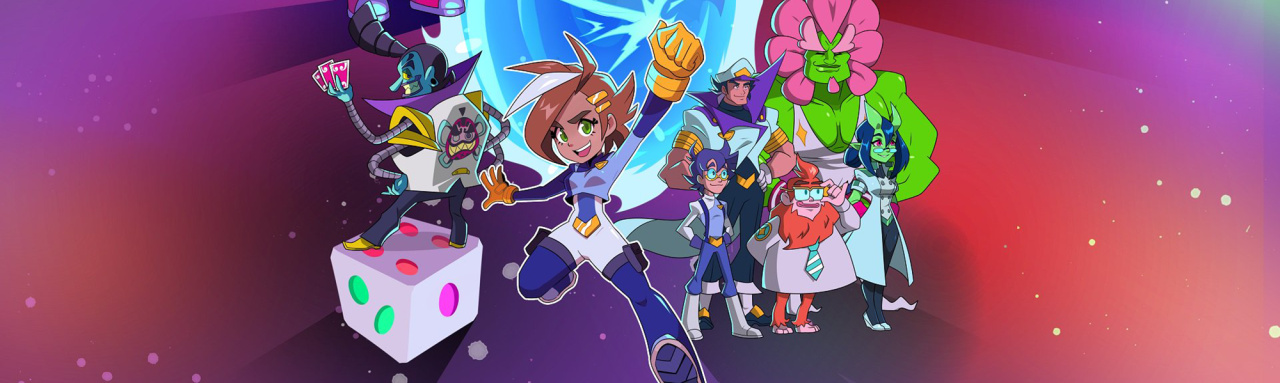
Double Cross follows the story of Zahra Sinclair, a peppy, Shantae-esque agent working for R.I.F.T. (Regulators of Interdimensional Frontiers and Technology), a sort of governmental organization that maintains order across the multiverse. After another routine day on the job, R.I.F.T. headquarters are attacked by a mysterious terrorist called “Suspect X” and it’s soon after revealed that the attack was orchestrated by somebody within the organization. Not entirely sure who to trust, Zahra sets out on a mission to learn the truth, while also neutralizing the unrest and conflicts in the dimensions she visits.

It’s certainly a fascinating premise and the writing, though often keeping to a lighthearted and humorous tone, can sometimes surprise with the depth that it reaches. At key points in the story, the idealistic Zahra comes to realize that R.I.F.T. isn’t nearly the shining beacon of justice that it’s made out to be, and moral shades of grey are filled in where her enemies are shown to have understandable cause for their actions. These moments do a great job of showing how morality isn’t always as cut-and-dried as we’d like it to be, and while that element of the storytelling is notably strong, the individual characters leave something to be desired.

Zahra herself is an interesting enough character, but the supporting cast is filled with a relatively forgettable lineup of cliché heroes and villains that seldom rise above the obvious functions that they serve in moving the plot forward. Ordinarily, this sort of thing would be more forgivable for a sidescroller, but Double Cross clearly makes an above-average effort in its storytelling, yet it still falls a little short. What’s on offer here is fine, and serves its purpose well enough in providing adequate context for all the action to follow, but it’s unfortunately nothing particularly memorable.

Gameplay could most closely be likened to a Mega Man X game with the combat system of Guacamelee; levels are laid out in a non-linear fashion and allow for a fair bit of exploration, even as they more or less keep you on a single path. Zahra’s signature ability can be found in her ‘Proton Slinger’, a handy tool that functions like a grappling hook which can affix to various points throughout the levels. It takes some getting used to, but the Proton Slinger feels wonderfully organic once you get the hang of slow-motion slingshotting from point to point. It can also be used to snatch certain projectiles out of the air, creating seamless sequences where you can launch Zahra across the screen while dispatching an enemy or two mid-air with dexterous movement.

Unfortunately, the combat that typically accompanies this movement system doesn’t hold up nearly as well. Opting for a close-quarters focused combat style, Double Cross comes off as feeling a bit like a watered-down Guacamelee in how battles play out. Zahra has a series of punches, kicks and rolls that can be chained together to put enemies in the dirt, and each felled foe drops energy orbs that can then be used to fuel a few special moves that bolster Zahra’s offensive capabilities or offer up some on-the-spot healing. All the elements of a solid combat system are in place, but they never quite come together to form something that’s more than the sum of its parts; combat is okay, but the pacing of fights is rarely exciting and encounters pop up a little more often than we’d like.

On the flipside, level design in Double Cross is remarkably strong, with each new stage introducing a new gameplay gimmick or hazard to keep things fresh or interesting. One stage may have you playing around with different forms of bouncy goo while another has you being pulled along by grapple points attached to rails; there’s no predicting what gimmick may come next and even within a level, the developers find ways to surprise you with how that stage’s unique feature can be implemented. Levels are conveniently marked by difficulty, and the curve is exceptionally well judged; usually, the gimmicks introduced in the first three levels of a world are combined in the fourth level, demanding that the player apply everything they’ve learned in a final gauntlet before the boss at the end.

To add in some much welcome replayability, each stage is also littered with ‘Upgradium’ fragments that act as the main driver of character progression. These little rocks are almost always hidden in secret side-caves or at the end of a particularly difficult platforming section that’s separate from the main path; you’re almost sure to miss several of these in your first run through each level, encouraging you to go back and scour every corner. Upon completing a level, all Upgradium is dumped into Zahra’s upgrade path, with each new level gaining her a new skill or combat ability. When you get back to R.I.F.T. headquarters or to one of the many generous checkpoints scattered throughout the level, you can then choose to equip any three of the skills on offer, giving Zahra a range of potential ‘builds’ to run with. One ability helps her recover health faster, while another bolsters her energy reserves for special moves; though we would’ve liked to have seen a little more depth in the skills being offered, there’s still enough here to allow for plenty of mix and matching.

Though there’s potential in this idea, the skills system is sadly undermined by the weak combat mechanics; it’s neat that you can spec Zahra according to your playstyle, but the relative easiness and monotony of combat makes the differences in builds feel marginal. This, in turn, makes the overall character progression lose its allure; unlocking new upgrades by levelling up isn’t very exciting when you’re not feeling a noticeable bump in power or ability. The more we experimented with this whole RPG-lite system, the more it seemed like Double Cross would’ve been a much stronger game had it focused on pure platforming; these combat and skill systems are okay, but they don’t really add much to the experience and feel a bit out of place.

Speaking of ‘out of place’, there’s a rather forgettable investigation system underlying your progress through all the levels that feels tacked on and hinders one’s active enjoyment of the game. Upon completing most levels, Zahra will find some sort of item or document that offers up a clue about Suspect X and whatever conflict is happening locally in that dimension. That object you find must then be shown to one of the support characters back at headquarters to trigger a conversation that expands more on the item; after you’ve done this three or four times, the case file is complete and you unlock the boss level for that world.

It’s a cool idea that has some potential, but the implementation feels half-hearted and the concept is rather awkward in an action platformer. Considering there aren’t very many characters at headquarters to begin with, completing a case file usually becomes a simple game of trial and error where you show the item to characters that you think might have something to say until you finally find the right one; it doesn’t feel very rewarding, and it just gums up progression. For context, imagine if you defeated all the Robot Masters in a Mega Man game, but before you could take on Wily, you had to go to the lab and solve an easy but tedious puzzle segment centred around several dialogues with Roll, Auto, and Dr. Light. It’s a concept that could potentially be interesting if it had been fleshed out more as a side mode or as a separate game, but it feels jarring and ill-fitting in a title that clearly isn’t focused on that slower, more methodical pace.

Presentation is another aspect that disappoints somewhat, landing squarely in the realm of “good enough, but not great”. Though 13AM deserves credit for trying something other than the pixel style that so many indies are enamoured with these days, the existing art style could have used a bit of a tune-up. Though characters are strongly drawn, animations are choppy and environments feel lifeless and uninspired; we can’t think of any moment that Double Cross wowed us with its visual flair or sense of style. Like much of the rest of the game, the art style isn’t terribly memorable; even if it doesn’t do anything that looks outright bad, there isn’t much here that sticks out in one’s mind. The same goes for the soundtrack, which consists of a rather bland, ’80s-sounding sci-fi inspired set of tunes that adequately match the action, but without making much of an impression.

It bears mentioning, too, that we noticed some particularly rough performance issues, bugs and general blemishes that make Double Cross feel a bit sloppy. We ran into several instances (docked and undocked) where the framerate stuttered considerably, even when the action on screen didn’t seem to justify such a noticeable drop. There were a few instances, too, where we found ourselves trapped in a wall or some other level geometry and had to back out of a stage altogether to escape. It’s little problems and things like this, none of which are too significant on their own, that come together to make Double Cross feel rough around the edges.
Posted on Leave a comment

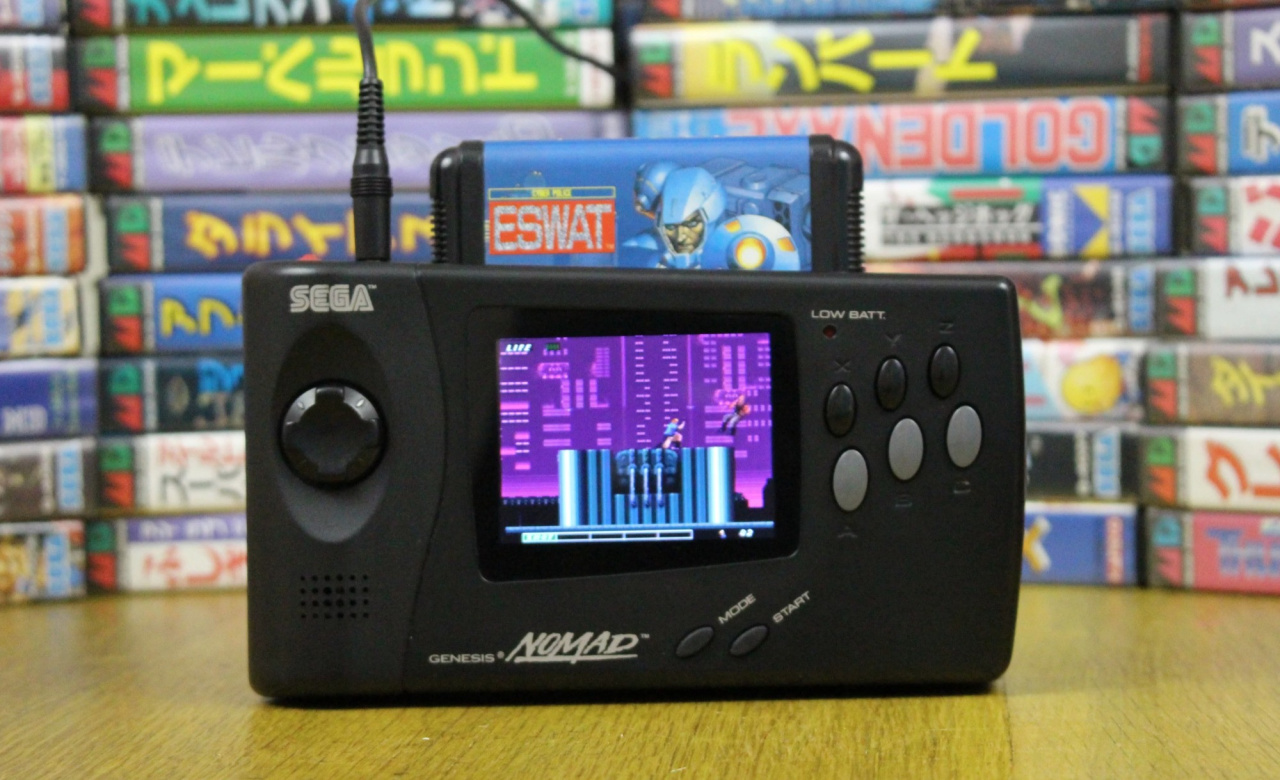
Looks Like Retro-Bit Is Resurrecting Sega’s Switch-Like Handheld, The Nomad

Sega Nomad

Retro-Bit – the company behind a series of clone systems and repackaged classic games – has already confirmed that it is working with Sega to produce a series of officially-licenced accessories for the Sega Genesis / Mega Drive and Sega Saturn. The company is showing these products off at CES right now, and they look so close to the real thing it’s actually impressive (whether or not they feel as good is something we’ll be investigating when we get our hands on them).

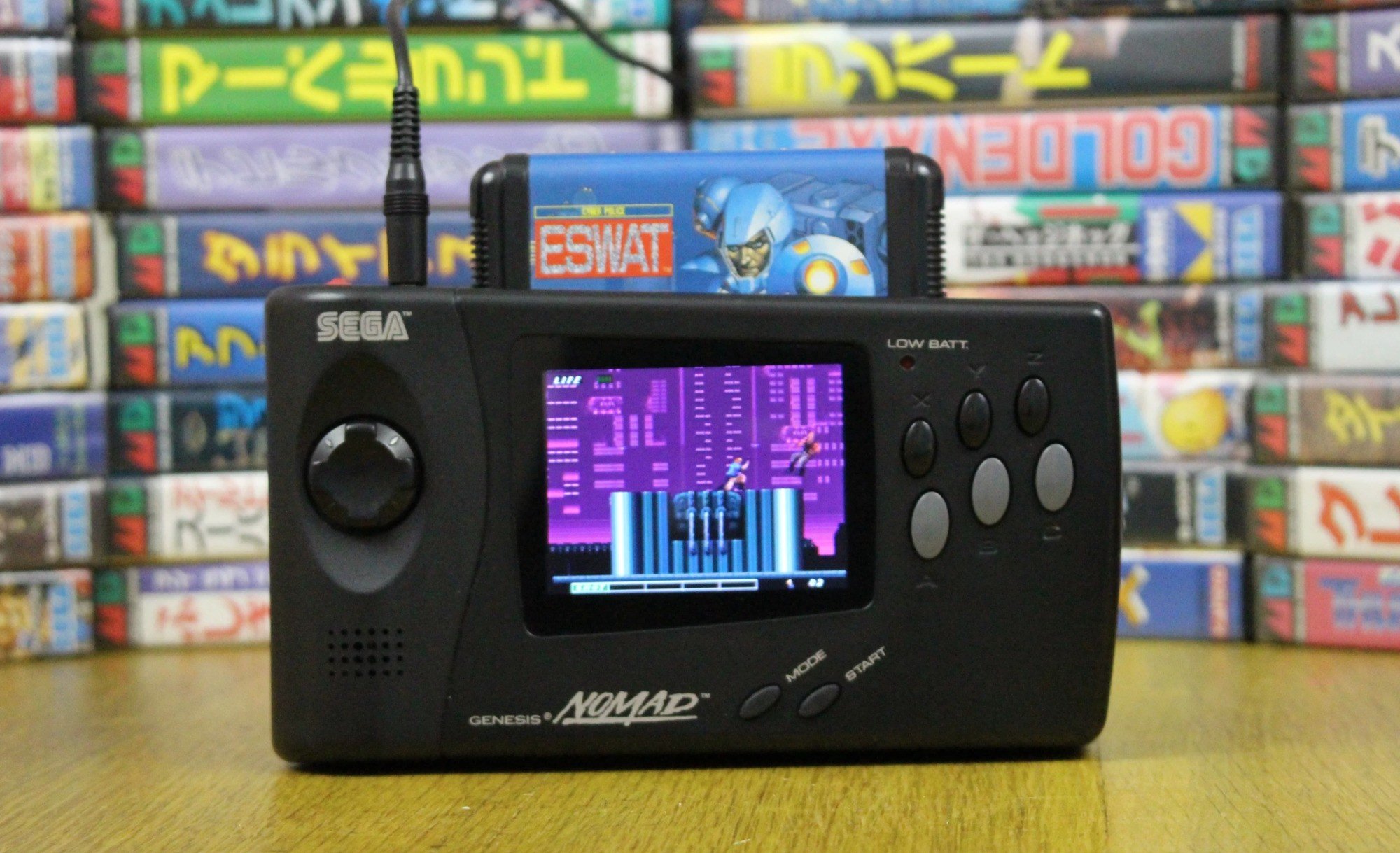
However, Retro-Bit has something else at CES which is even more interesting – it’s showing off a prototype of what appears to be a reborn Sega Nomad. If you didn’t know already, the Nomad was Sega’s ill-fated attempt to turn the Mega Drive into a portable system – if was kind of like the Switch before the Switch existed. It ran all Mega Drive (well, Genesis) games and could be connected to the TV for the full home console experience. While it was impressive for the time, it ate batteries like nobody’s business and didn’t really find the audience it perhaps deserved.

Fast forward to the present day, and modern rechargeable batteries and LCD screens should make this a more viable proposition, and the rumoured price point of around $80 would also make it pretty appealing. It’s worth noting that a lot of speculative hardware gets shown off at CES, and seeing as both of the units shown lack Sega’s branding, it could be that these units have yet to meet with the company’s approval.

We already have the Hyperkin Supa Boy, so it would be great to have a ‘new’ (and more importantly, decent) Mega Drive portable. Sega fans have had to endure some real stinkers in the past, with the decade-old GenMobile being the last notable system that actually allowed you to use original carts on the move.

Posted on Leave a comment

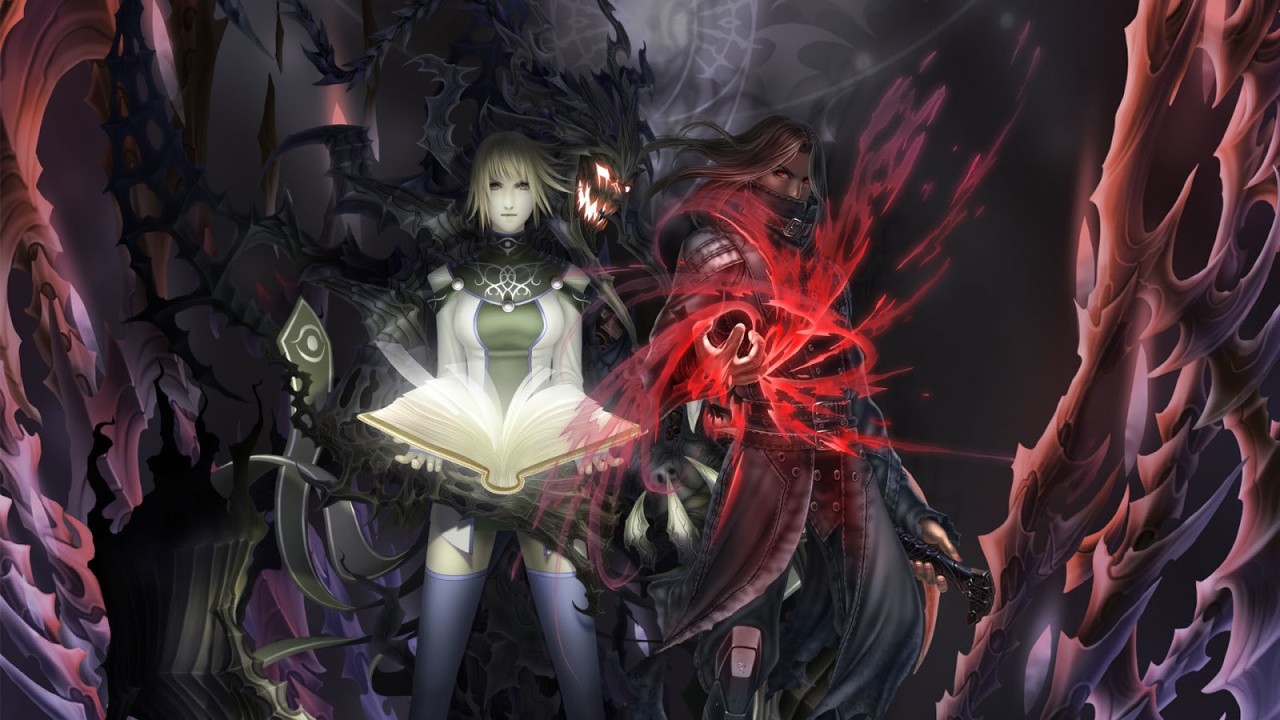
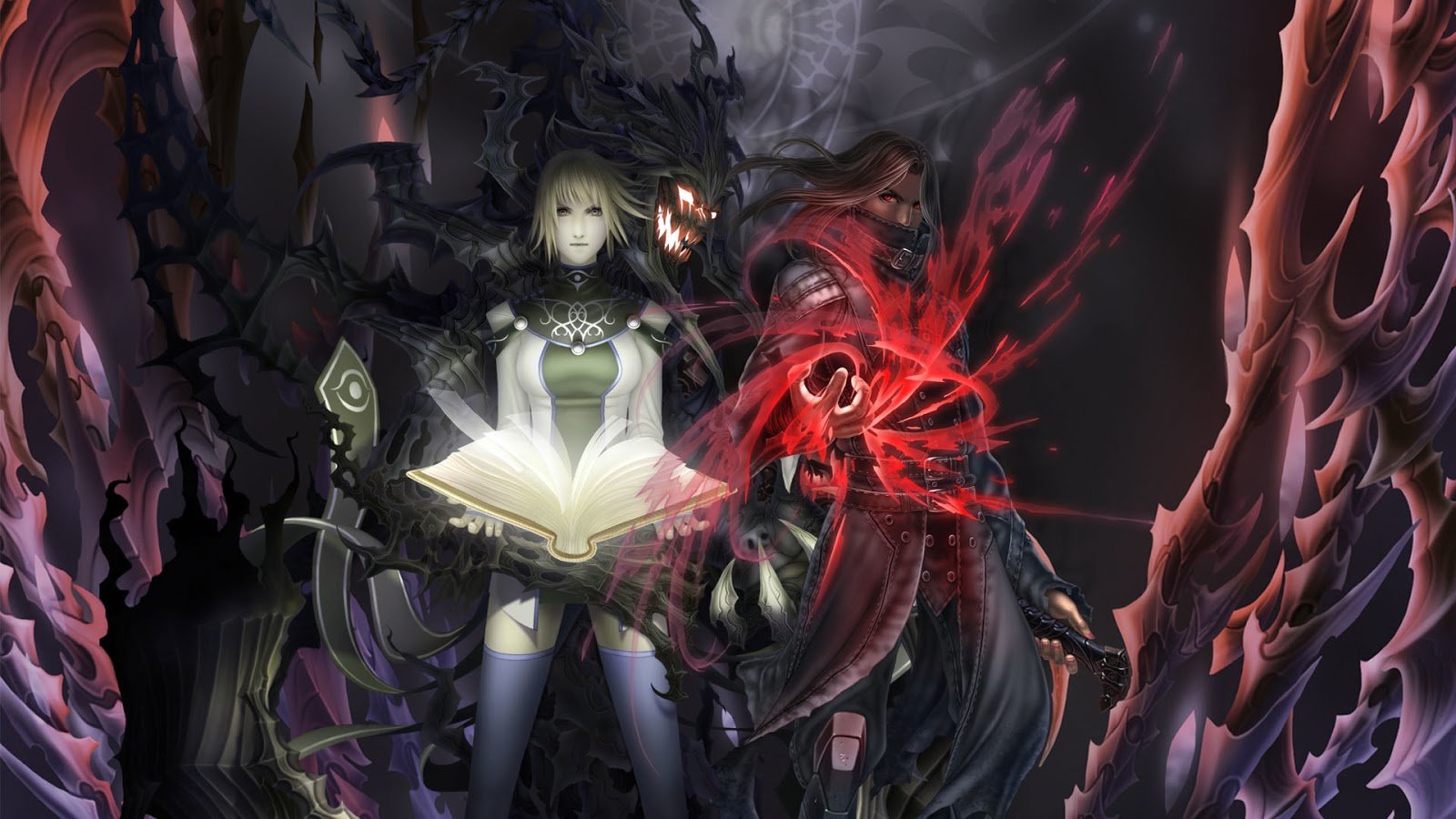
Anima: Arcane Edition And Ginger: Beyond The Crystal Both Get Physical Releases On Switch

Anima

Badland Games has confirmed that both Anima: Arcane Edition and Ginger: Beyond the Crystal are making the leap to physical on Nintendo Switch.

Yes, appealing to physical indie collectors everywhere, these two releases will both appear in stores from 14th January. Anima: Arcane Edition actually includes the two, previously released entries in the series, Gate of Memories and Nameless Chronicles, in one handy package. We’ve included trailers for each game below to give you a little more info.

Anima: Arcane Edition – Action RPG

Ginger: Beyond the Crystal – 3D Platformer

You can read our review of this one here.

Both games are now available to pre-order from Amazon UK (Anima: Arcane Edition costs £29.99, with Ginger: Beyond the Crystal costing £26.99). As noted above, both games are expected to be released in just a few days’ time on the 14th January.

Are you a collector of physical Switch games? Will you be adding either of these to your collection? Tell us below.

Posted on Leave a comment

Pumped BMX Pro Tricks Its Way Onto The Switch Next Month

It’s been an extreme week of announcements for Switch owners in more ways than one. Following on from Roll7’s OlliOlli: Switch Stance reveal for Nintendo’s hybrid platform, Curve Digital and Yeah Us! Games has now unveiled Pumped BMX Pro (the sequel to Pumped BMX+) will also be arriving next month.

Pumped BMX Pro rides onto the Switch exactly a week before the release of the OlliOlli double pack, on 7th February. If you missed the original outing available from the Wii U eShop in 2015, the second entry is more of the same – a momentum physics-based BMX freestyler. Here’s a description from Curve Digital’s YouTube channel:

Choose from 15 riders with pre-designed bikes, or come up with your own in the easy to use bike creator. Once you’re ready to hit the tracks, get creative with more than 40 trick options and combo your way through over 60 insane levels, maintaining your flow to ensure you reach the next obstacle wheels first instead of face first. For the best riders out there, there are over 200 challenges to beat. Have you got what it takes to go pro? High score chasers can compete on the global leaderboards, to see if they can thrash at the same level as the best riders in the world!

Take a look at the above trailer and tell us if you’ll be picking up this BMX sequel on Switch in February.

Posted on Leave a comment

Arcade Stunt-Racer FutureGrind Slides Onto Switch Later This Month

Just a couple of months ago, we reported on the fact that FutureGrind will soon be speeding onto a Switch near you. That day is getting ever closer and, to celebrate, a new, fast-paced launch trailer has landed.

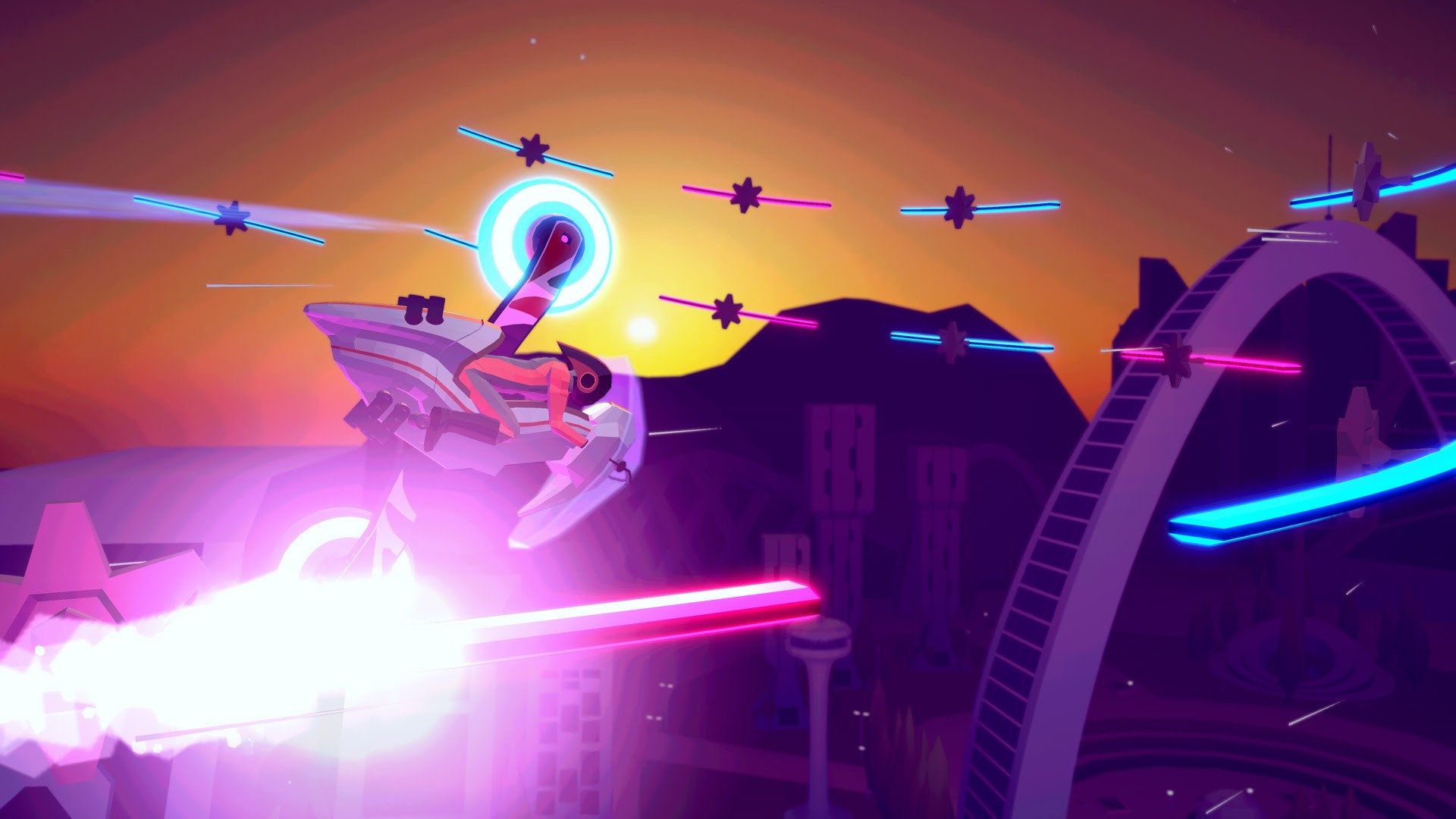
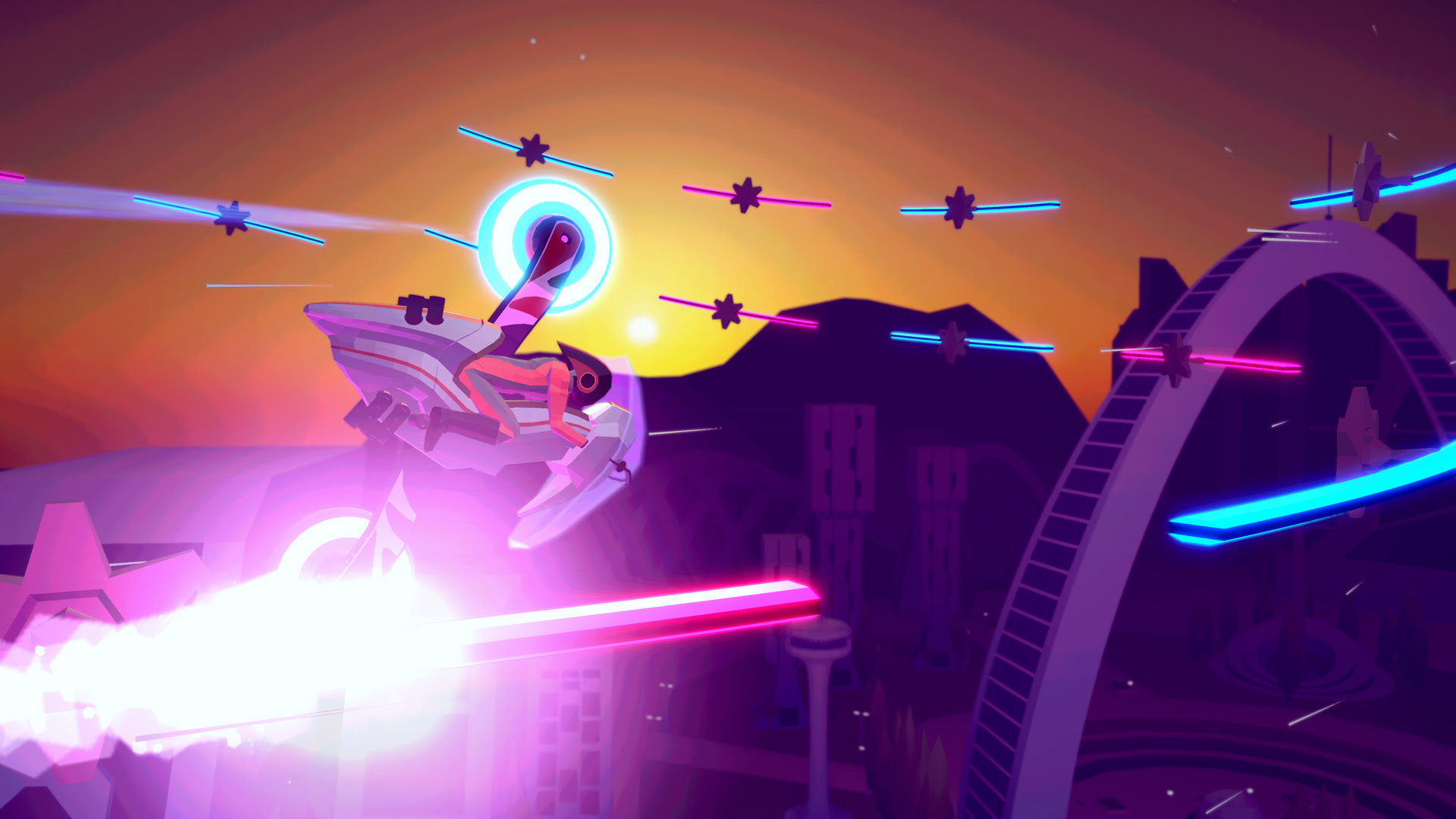
If you missed the news last time, FutureGrind is an arcade stunt-racer all about tricks, skill, and speed, throwing players into a futuristic, two-wheeled bike to rack up huge combos and hunt for the perfect line. To do so, you’ll need to match your coloured wheels with each track’s fiendish layout of rails, and the whole thing looks pretty exciting.

Racing for high scores isn’t the only focus, though; you’ll also be making your way through a story mode with more than 30 unique tracks featured. Taking on the role of a newly-sponsored rider, keen to make your mark on the pro circuit, you’ll need to fight for your sponsor’s favour, discovering the true nature of your new job. Here’s a feature list to give you a little more info:

Features:
– Dozens of hand-crafted tracks to test even the most skilled players
– Different bikes, each with their own unique style of play
– Chain tricks together in a deep combo system that rewards creativity
– Instant restarts (you’ll need them!)
– Compete for high scores in score attack mode

FutureGrind

The game is scheduled to launch on Switch on 22nd January, with PS4 and PC releases arriving on the same day.

Will you be picking this one up from the eShop? Tell us below.

Posted on Leave a comment

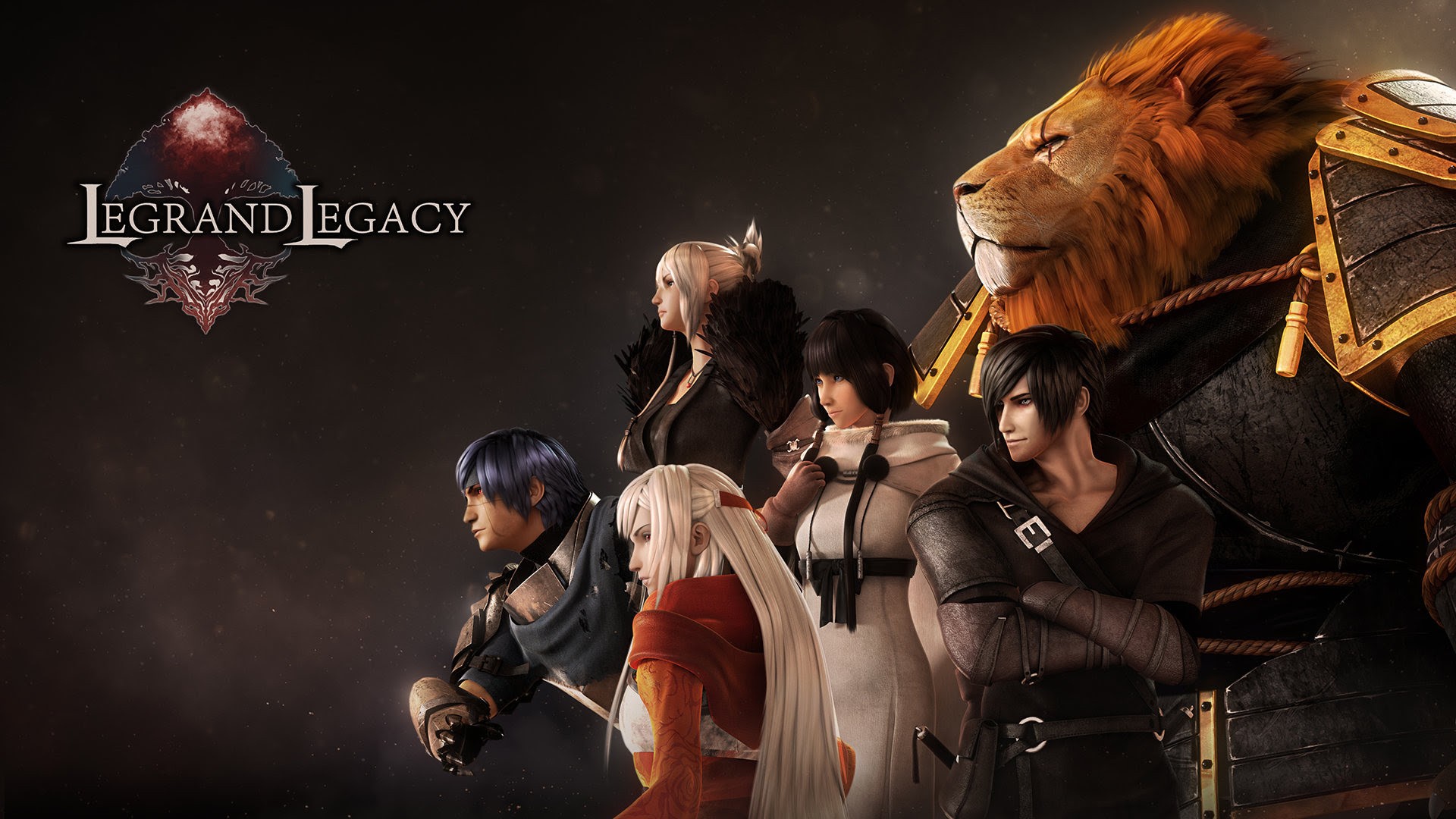
Legrand Legacy: Tale Of The Fatebound Brings PS2-Inspired JRPG Action To Switch This Month

Legrand Legacy: Tale of the Fatebound now has a firm release date for Nintendo Switch, officially arriving on the platform on 24th January.

This one aims to transport you back to the “golden era” of PlayStation JRPGs with a familiar, 3D polygon style mixed with a hand-drawn world full of scenery to explore. It was actually announced for Switch back in 2017 – with a “Q1 2019” date locked in even then – after making it through a successful Kickstarter campaign which saw the game launch on PC last year.

You’ll be tasked with helping the Fatebounds bring peace to Legrand, facing fearsome creatures, devasting wars, and more along the way. If you want to know a little more about this one, make sure to check out this handy feature list:

Features:
– Engaging, relatable, and tear-jerking storyline.
– Strategic gameplay mechanics including turn-based simultaneous clash QTEs to satisfy your nostalgic itch.
– Command the military might of nations in intense tactical battles.
– Delve deeper into your experience through mini-games, rewarding side quests, and castle rebuilding.
– Craft and configure items and grimoires, upgrade weapons and set your combat formation.
– Immerse yourself with an epic original orchestral soundtrack including music by world famous Emi Evans.

As noted above, Legrand Legacy will arrive on Switch in just a couple of weeks’ time on 24th January, priced at $19.99 / £17.99 / 19,99€.

Does this look like your kind of thing? Can you feel the good old JRPG nostalgia emanating from your screen? Tell us below.

Posted on Leave a comment

Visual Novel Song Of Memories Has Been Cancelled On Switch, PS4 Version Still Going Ahead

Som

Publisher PQube has revealed that the Nintendo Switch version of Song of Memories has officially been cancelled due to “development complications”.

Originally expected to launch for the system last year, Song of Memories is a visual novel game that tasks you with finding your soulmate in a musical love story. The game has been in development for Switch and PS4 for some time, and while the PS4 version is safe and sound (and will release early next month), the Switch version is sadly no more.

The news comes from a press release shared by the publisher today, in which the studio explains that the game “can’t be brought to a functioning level of quality” as demanded by fans of Nintendo’s machine:

“Today, PQube announces the release date of the romantic visual novel Song of Memories on PlayStation 4. The love story that turned the Japanese genre upside down with its surprising twist releases worldwide on February 1st.

While the PlayStation 4 version and the special Encore Edition are confirmed, we regrettably had to cancel the Nintendo Switch version of the game. Unfortunately, Song of Memories can’t be brought to a functioning level of quality our fans demand on the Switch due to development complications.”

You can see the official PS4 release date announcement video below.

Were you looking forward to playing this one on Switch? Are you sad to see the game be cancelled on Nintendo’s platform? Share your thoughts with us below.

Posted on Leave a comment

Fantasy RPG Fairy Fencer F: Advent Dark Force Hits Switch Next Week, New Screenshots Shared

Idea Factory has revealed that fantasy RPG Fairy Fencer F: Advent Dark Force will launch on Nintendo Switch next week, arriving slightly later than the originally-planned “fall” release.

The news comes from a new press release in which Idea Factory has also shared some new screenshots and information surrounding the game’s battles. Players will need to be aware of several different actions during battle – Action Window, Attack, Wait, and Command – as each move set chosen will ultimately affect the overall turn order. The Command option has a further five options within it, all of which are described below:

– Skills/Magic – Use your SP to use special attacks, heal HP, or other command buffs to help Fang and the gang through tough battles. Note that some skills require HP to use.
Items – Utilize items wisely to heal HP/SP, remove status effects, and revive party members that are knocked out.
Special – Each character possesses their own Special command with unique effects. “Fang’s Serious Face” Special, increases his attack power by 1.5x, while “Pippin’s Persuade,” if successful, will make Pippin attempt to “negotiate” with the enemy and drive them away.
Switch – This allows players to swap in reserve party members (Have up to 6 party members on the field!)
Fairize – Once your Tension Gauge reaches a certain level, characters can Fairize, which transforms your characters into powerful beings! During their Fairize state, a character’s attack and defense becomes much stronger. Players, however, must take caution of the Tension Gauge as characters will be forced out of the Fairize state once the gauge gets too low.

Here are the new screenshots we promised earlier:

The game will be available directly from the Nintendo Switch eShop on 17th January for $39.99. It comes with all 25 DLC previously released with the PS4 version of the game, and a 20% launch discount will be available for its first two weeks on sale.

What do you think? Will you be picking this one up next week? Let us know in the comments.

Posted on Leave a comment

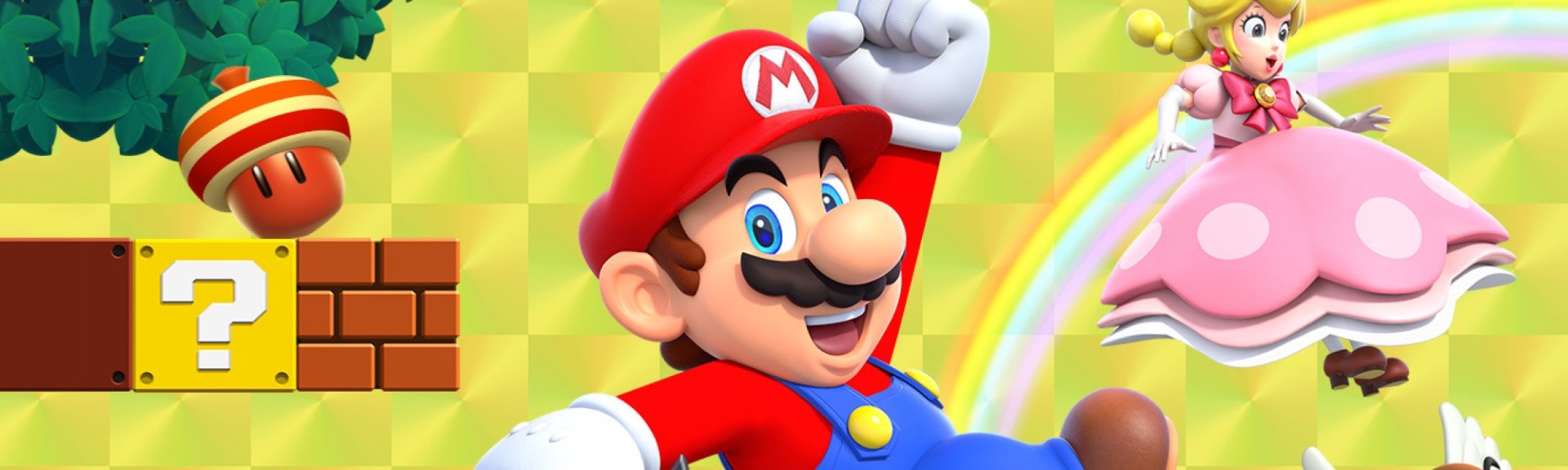
Review: New Super Mario Bros. U Deluxe – Nintendo Plays It Safe With This Timely Reissue

Ever since its debut on Nintendo DS way back in 2006, the ‘New’ branch of the Super Mario Bros. series has divided fans. As Nintendo transposed the 3D character-models of video games’ most treasured mascots back into the classic 2D realm, purists lambasted the ‘Disneyfication’ of the Mushroom Kingdom and bemoaned its idiosyncratic soundtrack. The style proved incredibly popular, though, and a further three entries gave a whole new generation ‘their’ 2D Mario. We’re delighted to see the series’ pinnacle spruced up for another outing, although we’re not sure New Super Mario Bros. U Deluxe does quite enough to earn its increasingly ungainly title.

Allow us to play contrarian for a moment and indulge readers for whom the ‘New’ series represents the nadir of the franchise; this is that style firing on all twelve cylinders – every bar of the soundtrack is capped with a screwball ‘wa’ sound and Mario is joined by only his most insufferable allies. Furthermore, its miscellany of worlds don’t hang together like the classics do in Super Mario Bros. 3 or Super Mario World and – perhaps most damning of all – this laid the groundwork for (shudder) the mobile game, Super Mario Run. If insipid bit-players and audio tics drove you up the wall a decade ago, we’re exceedingly doubtful this’ll win you over now.

Okay, so now we’ve shaken off the negativity (hey, we like Mario Run!), let’s peer with fresh eyes past the antiseptic façade and discover the tight 2D platformer beneath, filled with novel wonders, multiplayer mayhem and nods towards the series’ cherished history. With returning fan-favourite elements like the forking World Map and the Koopa Kids, New Super Mario Bros. U Deluxe does a fabulous job of gratifying long-time fans without alienating players for whom Ludwig and Iggy are simply randoms from the Mario Kart 8 roster.

We won’t waste your time going over the nuts and bolts again; our reviews for New Super Mario Bros. U and its add-on New Super Luigi U are still up and, Gamepad features notwithstanding, those appraisals generally hold true for this version – perhaps more so than with any previous Wii U hand-me-downs. Anything that gives a wider audience the opportunity to enjoy that console’s library is all right by us, but how does this launch title stand up after seven long years?

It’s worth remembering that New Super Mario Bros. U Deluxe was Mario’s belated HD debut and seeing him in 1080p (or thereabouts) for the first time was something special. Seven years is an age in video games, though, and we have to say it’s looking a tad underwhelming by 2019 standards. Don’t get us wrong – it’s colourful and pristine, but also a little plastic-y, especially on a big TV. Handheld mode reduces the artificial sheen but if this were a fresh release, there’d be atmospheric haze, depth-of-field effects, a subtle weave on Mario’s dungarees and they’d stay wet for a while after taking a swim. Despite its retina-searing presentation, it’s missing the bells and whistles you might expect after playing, say, Super Mario Odyssey. Here, the Mushroom Kingdom often feels like a rainbow diorama with the atmosphere sucked out.

That said, its jumble of art styles and willingness to throw any interesting idea at the wall arguably prefigure the preposterous variety of Mario Odyssey, a game in which we’d swear every world had a different art director. That mélange was held together only through sheer mechanical quality, and the same experimentation can be glimpsed here, whether in the Impressionist backgrounds of Painted Swampland or the ingenious enemies that turn up for only a stage or two. Nothing lingers long enough to become boring and even the unfairly-maligned soundtrack is as catchy as anything in the Mario canon. Were it not for those obnoxious ‘wa’s capping every single musical phrase (we can only assume Ross from Friends broke into the recording studio), these would surely rank amongst the best tunes in the plumber’s enviable songbook.

So, where’s the ‘Deluxe’ stuff, then? As we mentioned, New Super Mario Bros. U Deluxe includes New Super Luigi U, originally available as DLC or on standalone disc (and eventually released on a bundle disc with bonus videos, exactly as presented here). Offering reimagined levels using the same assets, difficulty is further increased through Luigi’s flightier jumps and reduced traction, plus fewer seconds on the countdown timer. In many ways it’s the main game’s Lost Levels, remixing familiar elements for a more hardcore experience. Fortunately, the inclusion of Nabbit as a playable character relieves the stress of the ticking clock by adding extra time and a lot more besides; the purple rabbit is immune to all enemy attacks. Clearing a level with him turns the node purple rather than blue, so you can always go back to finish it ‘properly’, but he gives everyone a chance to enjoy the intricate level design and ideas in the add-on without tearing your hair out.

But we’ve already played that, you cry! What’s new?! Well, Nabbit is now a playable character in the base game, too (and solo players aren’t restricted to Mario anymore). Labelled ‘Very Easy’, he’s a great choice for younger or inexperienced players, especially given the absence of the original’s Boost Mode which allowed one person to help or hinder the other(s) by affecting the world through the Wii U GamePad’s touchscreen. The Switch’s touchscreen is used only for menu navigation, although gyro-controlled elements remain in certain levels.

Toadette is another fresh face, replacing the original’s Blue Toad. A halfway house between Nabbit and the regulars, she’s labelled ‘Easy’ and shares his improved grip on ice, extra seconds and easier swimming controls (simply push in the desired direction, as if wearing the penguin suit), but is otherwise as vulnerable as the others. She has another trick up her sleeve, though: New Super Mario Bros. U Deluxe’s most infamous addition, Peachette.

Yes, the character that spawned the ‘Bowsette’ meme-fest of Fall ’18, Peachette is an odd one inasmuch as she’s not really a character at all. The Super Crown power-up is exclusive to Toadette, and essentially turns her into ‘Peach’, with the princess’ characteristic floaty jump physics. We’ve thought about this long and hard (in truth, too long and hard) and remain perplexed at how Nintendo arrived at this inelegant solution to getting a playable Princess in the game despite Bowser having her under lock-and-key. It’s fine – we’re not going to get hung up on the lore implications of the Super Crown – it’s just a little strange when you’ve already got a couple of Peach clones waiting in the wings; why not use Daisy or Rosalina instead?

You needn’t worry about losing access to Peachette – the game is very generous with power-ups, especially in multiplayer, which is as joyously chaotic as ever. It’s perfect for Switch and the loss of Boost Mode really isn’t felt unless you played the Wii U version to death. You can still use your Mii in the Challenges (non-Story trials that reward you with Gold, Silver or Bronze medals) and struggling players can still use the Super Guide to watch the CPU negotiate tricky stages, taking control whenever they wish.

Beyond menu tweaks, a Hints section and the removal of Boost Mode-specific Challenges, that’s pretty much your lot; arguably, the most ‘deluxe’ thing on offer is sweet, sweet portability. Switch takes that thrill you felt when you first carried the Wii U GamePad into another room and carried on playing to its logical conclusion and we still get a buzz from the console’s main gimmick. However, a nagging issue became apparent in this version that we don’t recall from 2012. We’re not ashamed to admit that we went through a lot of 1-Ups while hunting coins and searching for secret exits, and with each death the game spits you out to the World Map. Assuming you wish to dive straight back in (as we did 99 percent of the time), you’re forced to view the transition screen as the level reloads. Now, loads are only a few seconds, but at the rate we were going through lives, the constant pauses became interminable. We don’t remember this as a significant problem before, but on Switch it stuck out like a sore thumb.

Conclusion

New Super Mario Bros. U Deluxe is an impressive package if you skipped the original, offering the best of modern-era 2D Mario, madcap multiplayer and glimpses of the outrageous invention that was to come in Super Mario Odyssey. Only the most fervent fans will find enough new content here to justify double-dipping, though, especially if you already played the Luigi expansion. The chance to replay a top-drawer Mario game on a handheld may be enough for some – goodness knows we’ve rebought Super Mario Bros. 3 enough times! – but this is the oldest of the Wii U games to have found new life on Switch and, gameplay aside, ageing visuals and the colossal irritation of being kicked back to the world map after every death stand out as things in need of attention. The bottom line is that Switch now has a very fine 2D Mario to its name; we just can’t help feeling disappointed that Nintendo didn’t push the boat out with a more thorough ‘Deluxe’ refurbishment. Having said that, this is still an excellent package that deserves a new lease of life on Switch, especially as there will be many owners of that console who didn’t get to experience the Wii U original and its expansion.

Please note that some of the links on this page are affiliate links. If you click them and make a purchase we may receive a small percentage of the sale which helps support the site. Please read our FTC Disclosure for more information.

Posted on Leave a comment

Nindie Round Up: Feudal Alloy, Bury Me My Love, Animus: Stand Alone, Cake Laboratory And Unicornicopia

Nindie

This week’s indie offerings show the variety of quality available on the eShop with standouts like the Metroidvania platformer Fuedal Alloy, the emotionally-driven and heartfelt Bury Me, My Love, and the Dark Souls-inspired Animus: Stand Alone all flying the flag for quality content on the indie scene. At the less impressive end, but still potentially something to consider for a young crowd, we have the colourful and bright titles of Cake Laboratory and Unicornicopia.

Shall we?

CakeLaboratory

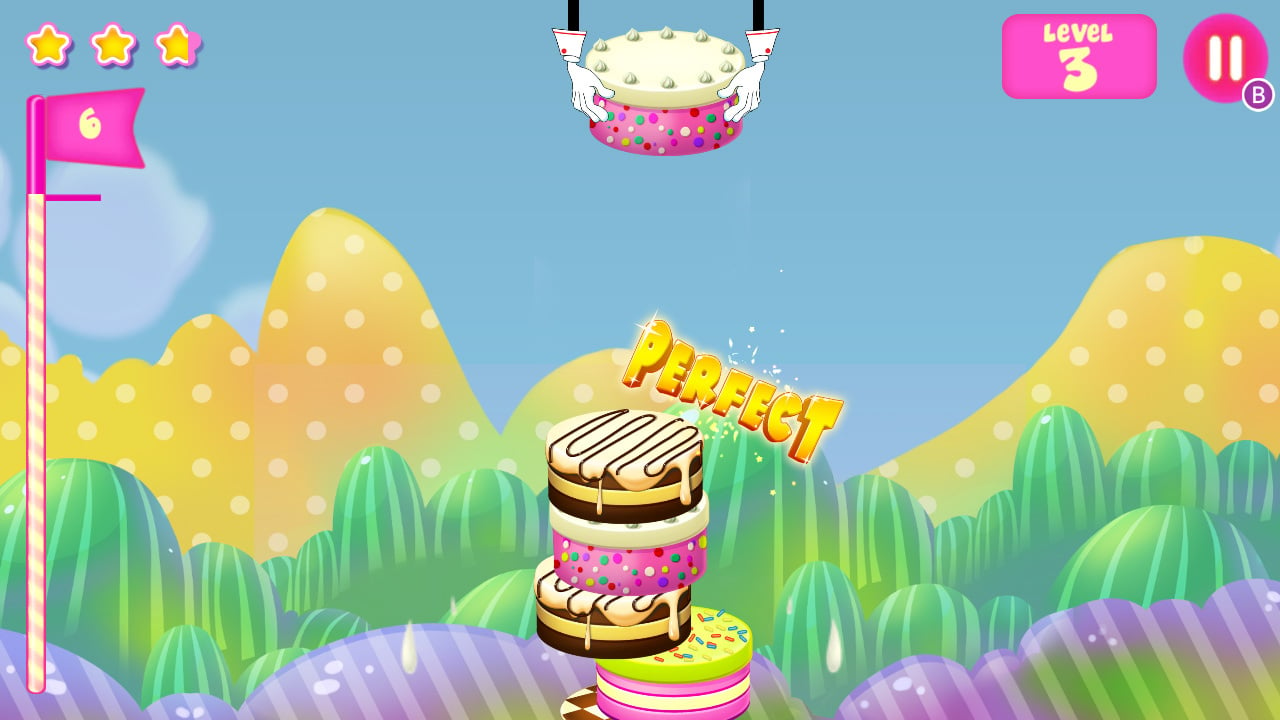
Ah, the food-based mobile arcade game. When will this trend end? Not this week, apparently, as we sample a not-so-sweet tower-builder in Cake Laboratory. The concept is incredibly basic and the visuals cartoonish and obnoxious. You’re tasked with creating the largest cake possible, stacking up a set amount each level and lining things up as neatly as you can. This is easy to get good at quickly and once your precision is a little practised, you should have no trouble getting three stars up until the last few levels.

There’s a good selection of levels to sample in Cake Laboratory, but they add little variety when the gameplay is so monotonous; the variability only really comes from the differences in cakes, which are purely aesthetic. You’re able to make your own cakes which is quite cute, but it doesn’t do a thing to improve the gameplay which is just too simple to be anything more than a mind-numbing time waster. Yes, the arms dropping the cakes get faster and, obviously, you have to stack more every time, but overall, this is a pretty dull time.

Aesthetically, it’s fine but a little garish. It takes a cartoonish style with comical splats and sploshes every time a cake makes moist contact with the bake below. The chef character, in particular, is a little hard on the eyes and in general, it’s far too reminiscent of a low-quality mobile game to be attractive. Its saving grace is that for a young child, it’s harmless and entertaining, with bright colours and simple game mechanics that, in fairness, do increase in difficulty over time. However, for an adult player, there really isn’t enough to even slightly recommend a purchase here.

Thumbs Down

BuryMeMyLove

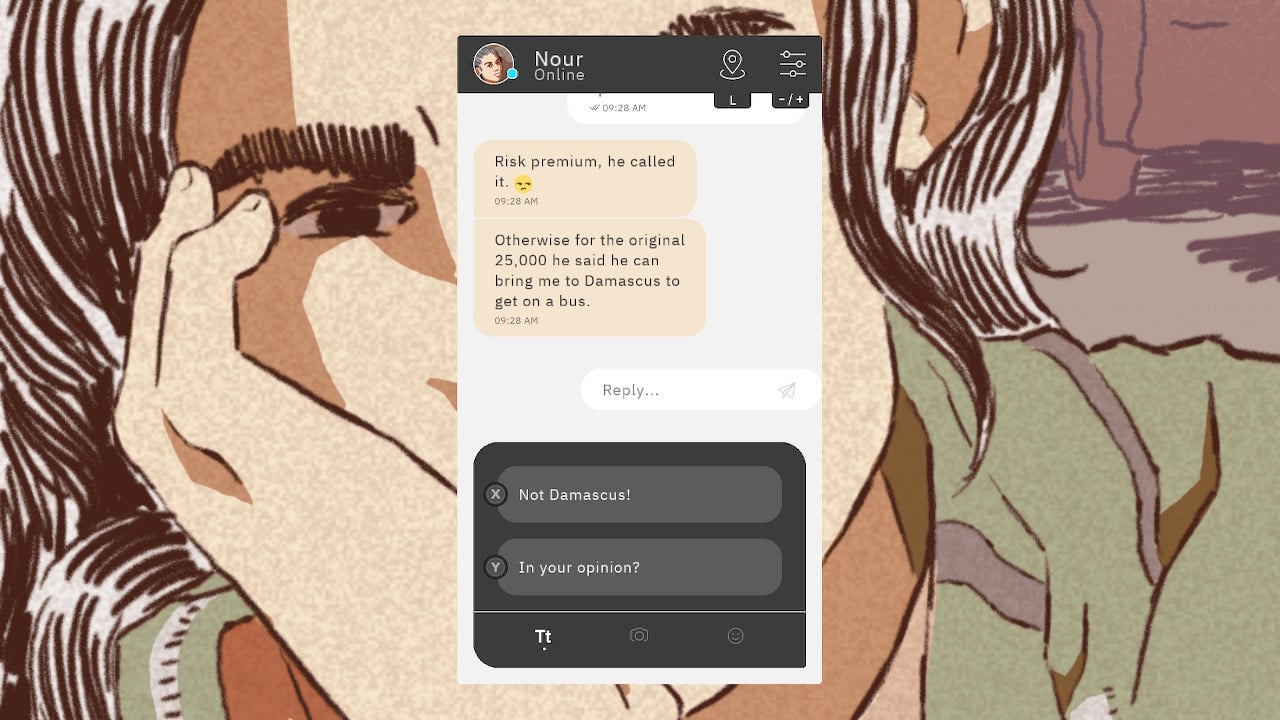
An intensely personal and deeply moving story focused text game, Bury Me, My Love, tells the tale of Syrian refugees and is based on the struggles of real people. It focuses on decision-based gameplay that urges the player to think empathetically. The story has you play as Majd, helping his wife Nour through the horrors of the Syrian battlefield in an attempt to start a new life in Germany. The game has 19 different endings, all of which are influenced by the way you speak to Nour and attempt to sway her decisions.

The true genius of Bury Me, My Love comes from its incredibly well written and realistic dialogue options. Everything you say to Nour has a knock-on effect, but she isn’t a robot that follows your every command. She’s your wife, a human being who doesn’t always listen to what you say. Thus, the game succeeds in putting you in the shoes of a helpless husband as your only powers are to advise on what you think is the right thing to do. You’re often left for a number of hours without word from her, which can be incredibly stressful. The dialogue is also supported by a heart-pounding and brilliant soundtrack that has a fast pace and drum-heavy influence whenever something dramatic is happening.

Bury Me, My Love is more an emotionally-invested experience than a game. The texts, map, and pictures sent by Nour are all you ever really see. Fortunately, this isn’t an issue as the art style is well done and simultaneously gritty and endearing, leading to further alignment with the characters’ plights. The game holds very little back in terms of the atrocities of war and also how horrified, yet desensitised, the main characters are to it. Bury Me, My Love should be experienced by anyone as a lesson in both empathy and wonderful text-based storytelling. Remembering that the emotional story has its basis in true events will make players consider the struggles of those less fortunate.

Thumbs up

Animus: Stand Alone

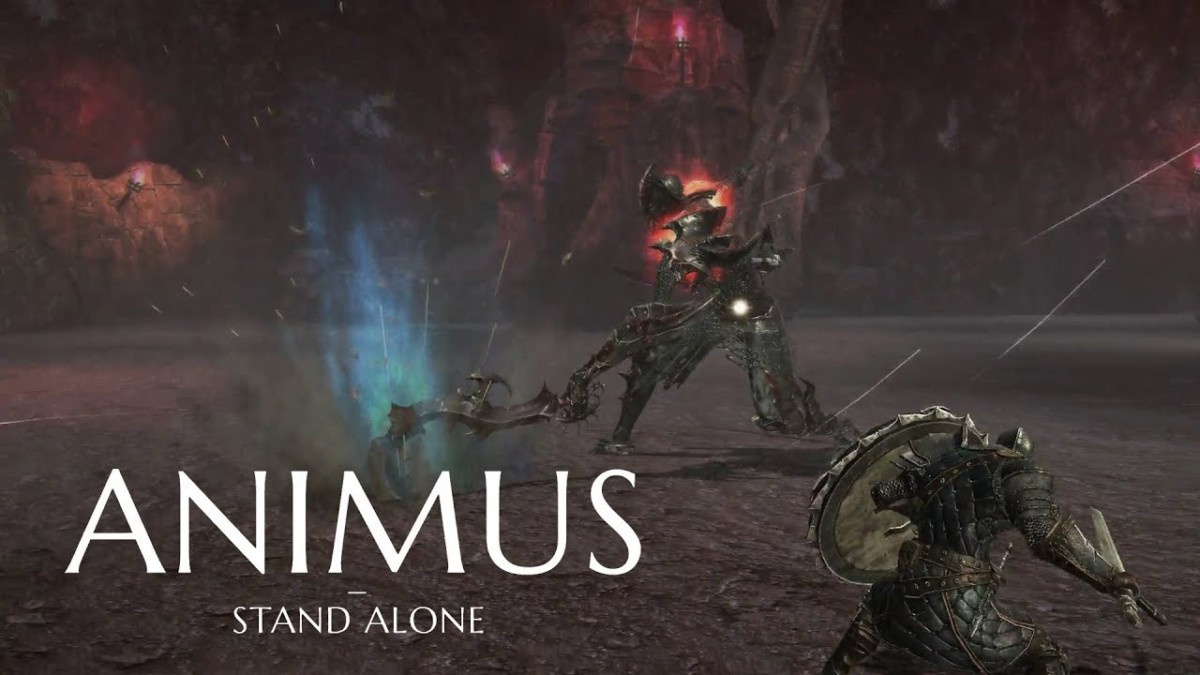
From the very first screen it’s clear to see the key influence of Animus: Stand Alone, in pretty much all areas. It is essentially a condensed version of Dark Souls for mobile, giving a combat-heavy RPG experience that revels in the huge boss battles and deep layers of precision fighting the series is known for. That is all readily available in this Switch port, too, and as a more bare-bones alternative to the AAA title, it’s good. Thrust into a mythical, medieval world, you’re the last knight; the chosen one tasked with taking down a great evil. That’s essentially all you’ll need to know regarding the story, which is told through occasional cutscenes, but also somewhat disappointingly through text segments too.

The combat and graphics of Animus are top-notch. Looking to the former first, it’s comparatively fast-paced, with a myriad of inherited mechanics including blocking, combination attacks, special moves and an exceptional variety of weapons to buy and sell. The focus is on the large-scale boss battles, which can provide some punishingly difficult encounters dependant on the level of the player and the upgrades made. As with Dark Souls, you’re penalised for the slightest mistake and will often find yourself restarting as a result. Refreshingly, however, Animus has you traversing through individual levels rather than an open world, culminating with a boss at the end of each. This is pleasantly different and allows some nice breathing time after an intense battle to pick up loot and improve your gear before cracking on with the next level.

Graphically, it’s also well done. Though the world is dark and dingy, the creatures are well-rendered and look appropriately hideous. For a presumably lesser budget, it’s really quite remarkable. The soundtrack is also epic, providing some real weight to both the cutscenes and big battles. The camera can, however, be a slight issue, particularly in the aforementioned boss encounters, which can irritatingly push you up against walls that obscure your view. Overall, Animus: Stand Alone is highly recommended for fans of the Dark Souls and Bloodborne series, offering a smaller scale, level-based variation on these titles that still sports excellent gameplay and impressive graphics.

Thumbs Up

Unicornicopia

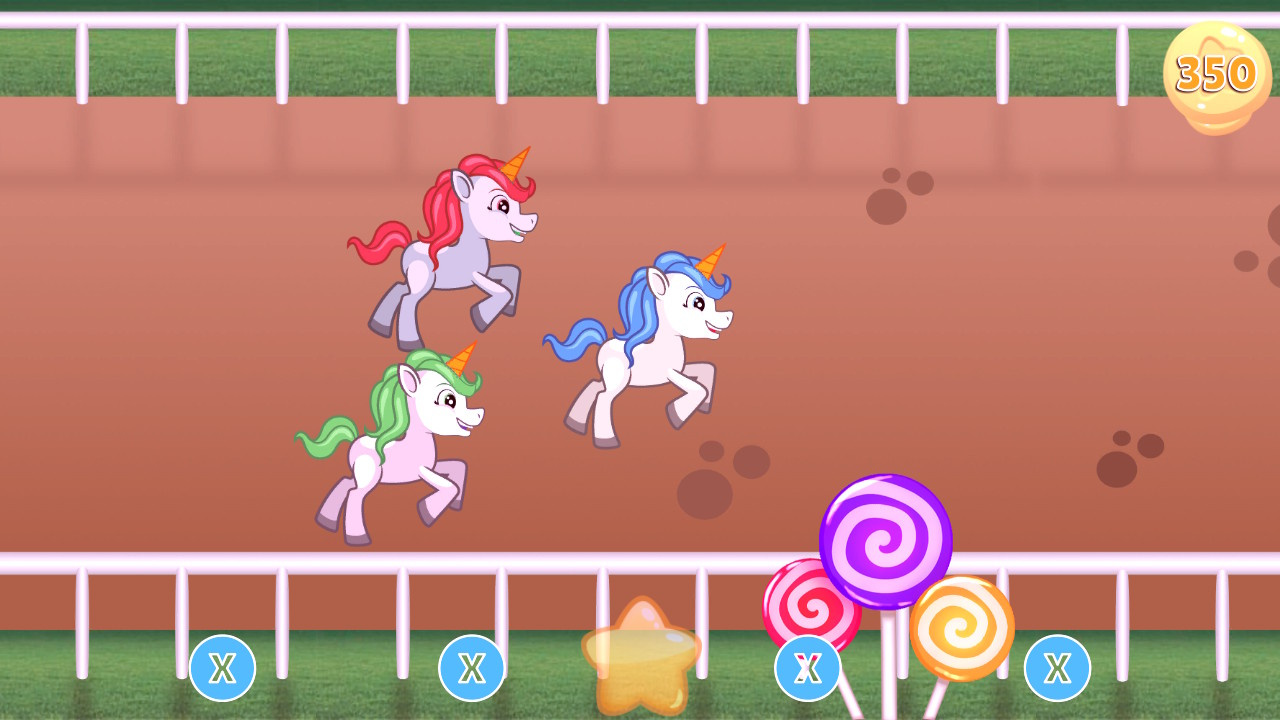
Unicornicopia is a maddeningly simple and colourful game that lacks both character and depth, making for a shallow experience under the guise of a child-friendly platformer. The ‘action’ is entirely on-rails and is about as basic as you can get. You’ll jump over enemies, duck to avoid enemies, and collect coins that allow you to refuel and run for even longer. There’s no control over your unicorn to move them back or forward and as such, no real way to fail at collecting every coin on the map.

The gameplay really is just too basic and gets frustratingly boring very early on. For a young gamer, this might not be the absolute worst way to introduce them to the concept of a platformer, but it really does deliver the bare minimum. The enemy design is about as stock as you can get, with cartoonish bugs and animals that somehow even hover unconvincingly as you dip, duck, dive and dodge their various unappealing palette swaps behind a nauseating array of garishly bright backdrops. The game also lacks any kind of customisation feature, which would’ve been a nice addition for kids to make their own technicolour steeds.

There really isn’t a huge amount more to say about Unicornicopia. Its game design is rudimentary and undeveloped to the nth degree and will offer zero challenge to anyone with gaming experience. Its art design is overly cartoonish and brash and it ends up with almost the exact same verdict as Cake Laboratory as a result; not awful for children, but completely unappealing, boring, and nauseating to an adult audience looking for an indie experience. Oh yes, and the soundtrack and sound effects are just as stock as the visuals, with a dive sound effect almost identical to that of Sonic’s jump. Skip it.

Thumbs Down

NSwitchDS FeudalAlloy 01

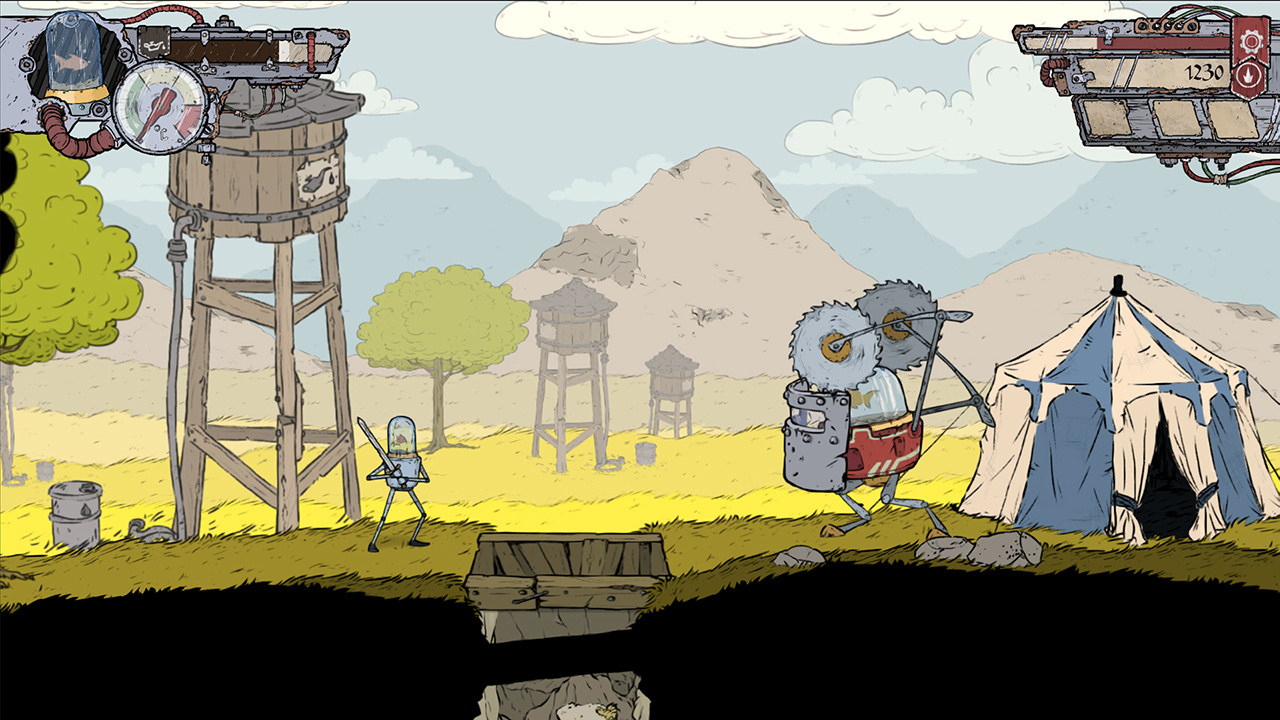
We round out this week with a really good indie platformer that blends the Metroidvania progression style with some interesting mechanics and a wonderful hand-drawn art style, delivering something really special as a result. Feudal Alloy obviously takes inspiration from the likes of Metroid and post Symphony of the Night Castlevania games by having you explore a huge open world, discovering new areas as you go and adding to your map to try and make sense of the maze you’re tasked with navigating. As with all games of this sub-genre, it can be very confusing and frustrating at times, but the sense of accomplishment when you successfully find your way outweighs the annoyance of being lost.

The plot is endearingly bizarre, having you take control of a fish in a tank controlled by a medieval robot called Attu, who takes revenge on bandits who stole oil from the residents of a care home for retired robots that he looks after. Weirdness like this is why we love indie games. Attu has a sword at his disposal but, as you progress, he gains the option to upgrade not only his weapon, but also purchase better legs, arms, torso, bombs, melee weapons, and of course, a nicer tank for the fish.

Progression is based on the collection of loot and coin, which can be traded and used for the aforementioned upgrades. Standard fare, but it has great synergy with the story elements. The interesting mechanics come in the form of a stamina meter that Attu can exhaust by swinging his sword too many times. This is also manipulated in environmental areas, such as in extreme heat where he can’t use his sword unless he applies a cooling agent. That does mean you’ll have to do some backtracking if you don’t have the right item at the right time, but it adds some great variety.

Stylistically, Feudal Alloy is reminiscent of titles such as Rayman Legends with its beautiful hand-drawn art style and detailed characters and backdrops. The movements are fluid and the world, despite being filled by machines, is full of life and character. Feudal Alloy is a wonderful example of a platformer done right. A brilliant, exploratory adventure that throws interesting mechanics to the table that breathe life into a well-established sub-genre.

Thumbs Up


Do any of these games sound like your kind of thing? Will you be spending your eShop funds on any of these indie picks? Whatever you decide, let us know in the comments below.