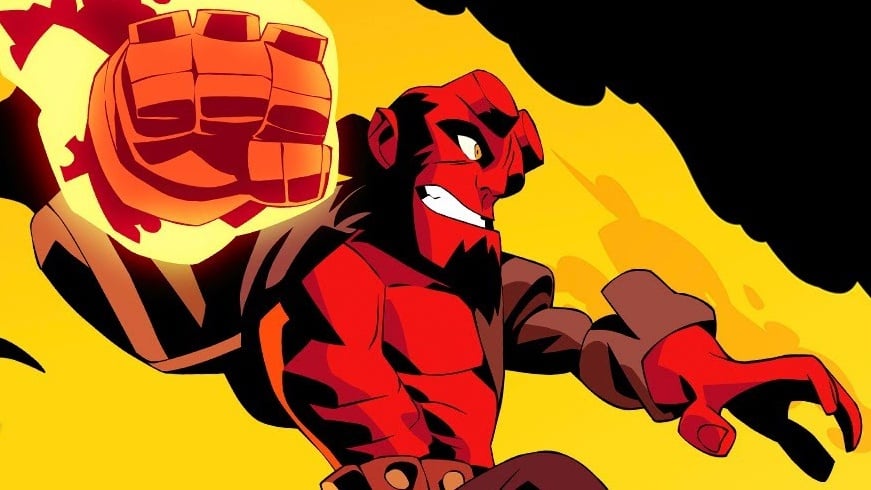
You may remember that just a few weeks ago, we shared the news that Hellboy movie characters were coming to free-to-play fighter Brawlhalla on Switch. Well, Ubisoft has now confirmed that the characters will be available from tomorrow, 10th April, and a new trailer has been released to celebrate.
A press release for the announcement tells you everything you need to know:
Fournew Hellboy (2019) skins – Hellboy – as a Cross Epic Crossover Skin – “Beast of the Apocalypse or lawful King of England? His destiny awaits.” – Nimue – as a Dusk Epic Crossover Skin – “This queen will create a new world.” – Gruagach – as a Teros Crossover Skin – “Seeking revenge on Hellboy, he’ll stop at nothing to regain his full powers.” – Daimio – as a Mordex Epic Crossover Skin – “A curse or a powerful blessing?”
Hellboy, Nimue, and Ben Daimio skins will be priced at 300 Mammoth coins each, while Gruagach is available for 240 Mammoth coins. The Hellboy (2019) skins will continue to be offered in store after the event.
Horde: the new Hellboy-themed game mode Players will team up in a group of four to defend the gates of the Great Hall against an army of demons, holding off as many waves as possible. Horde mode will be available as a custom game mode option after the two-week Hellboy event ends.
More epic Hellboy additions – A Hellboy-themed map, Apocalypse – Daily login bonus of 250 Gold – Two-week Hellboy UI Takeover – Hellboy avatar available for 60 Mammoth coins – Hellboy “Beast of Apocalypse” podium available for 240 Mammoth coins
Do you regularly play Brawlhalla? If you want to learn more about it, make sure to check out our full review right here.
For all its flaws, there was one thing that Miiverse was undeniably quite competent at, and that’s sharing and hosting Super Mario Maker levels. You could fire that puppy up, see a post with a load of buzz around it, or even just one that looks vaguely interesting, and download it straight to your now-dusty Wii U console. It was by no means perfect, but if you wanted some new Mario Maker levels, it was the best place to go.
So now with Miiverse cast aside like so many soggy used tissues, that leave a bit of a gap for the likes of Super Mario Maker 2 on the Switch. The tools certainly look more powerful than ever, but what about getting our levels into the mitts of other curiously-minded individuals who by some mad coincidence also own a Nintendo Switch and a copy of the game?
We imagine codes will rear their ancient, fossilised heads again as Nintendo seems to have a hard time ditching them, but there’s more scope here to make things even more delicious than Miiverse, and it involves using that four-worded piece of software many fear to mention; the Nintendo Switch Online App. Check out the video if you’re curious to hear more, or type furiously in the comments about your blatantly superior method using Morse code in the comments below.
@Keldraxas The problem with those sales though is it has really affected smaller developers. Things go on sale so fast on PS and Xbox that no one really has to pay full price for anything anymore on those platforms.
Xbox has a sale every week and PS has big game sales all the time which means there is rarely an opportunity for those smaller games to be more competitive. Even bigger games find themselves in a difficult position if they take a risk on something different so we get the same thing churned out over and over.
It has also encouraged a ‘race to the bottom’ in pricing terms which then leads bigger devs to start considering other means of making money – ones that many gamers complain of as exploitative practices.
Finally it has a damaging effect on independent retailers. It is a well known issue for smaller shops that they cannot buy games at a good price and make a decent profit on them even at full price but given that most game receive a discount in the first 3 months their stock becomes worthless in mere weeks. If they buy one copy too many they lose money overall.
Only Nintendo and the second hand game market stops some of these stores going under all together.
I know it’s nice to get more for your money but there are consequences to these practices and ones that aren’t ultimately good for the industry.
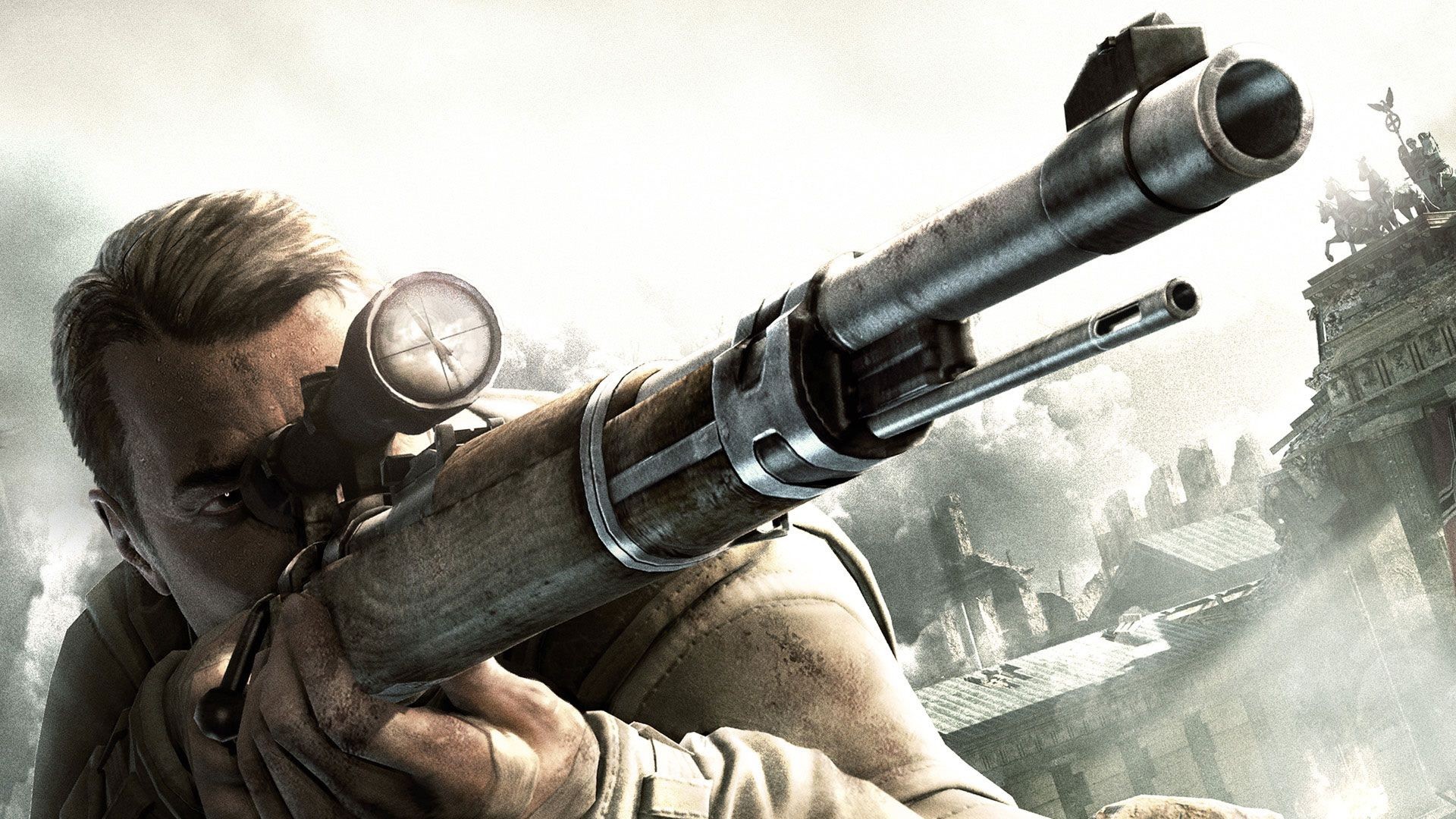
Rebellion has today confirmed the release date for Sniper Elite V2 Remastered on Switch. It’ll be available both digitally and physically on the same day as all other platforms, 14th May.
The news comes alongside a brand new trailer (which you can see for yourself above). Of course, Switch owners won’t benefit from the 4K and HDR support, but the game is also said to feature “beautifully updated environments, characters, weapons and vehicles, modernised rendering and post-processing effects, enhanced texturing and level geometry, a revamped lighting system” and more.
In addition to these visual upgrades, Sniper Elite V2 Remastered introduces a brand new frame-by-frame photo mode, seven new playable characters from Rebellion’s Zombie Army series, multiplayer for up to 8 players online, and all the additional content ever released for the game.
It’ll become available to pre-purchase on the Switch eShop from 24th April, with pricing set at £29.99 / $34.99 / €34.99; a 10% discount will be available before launch.
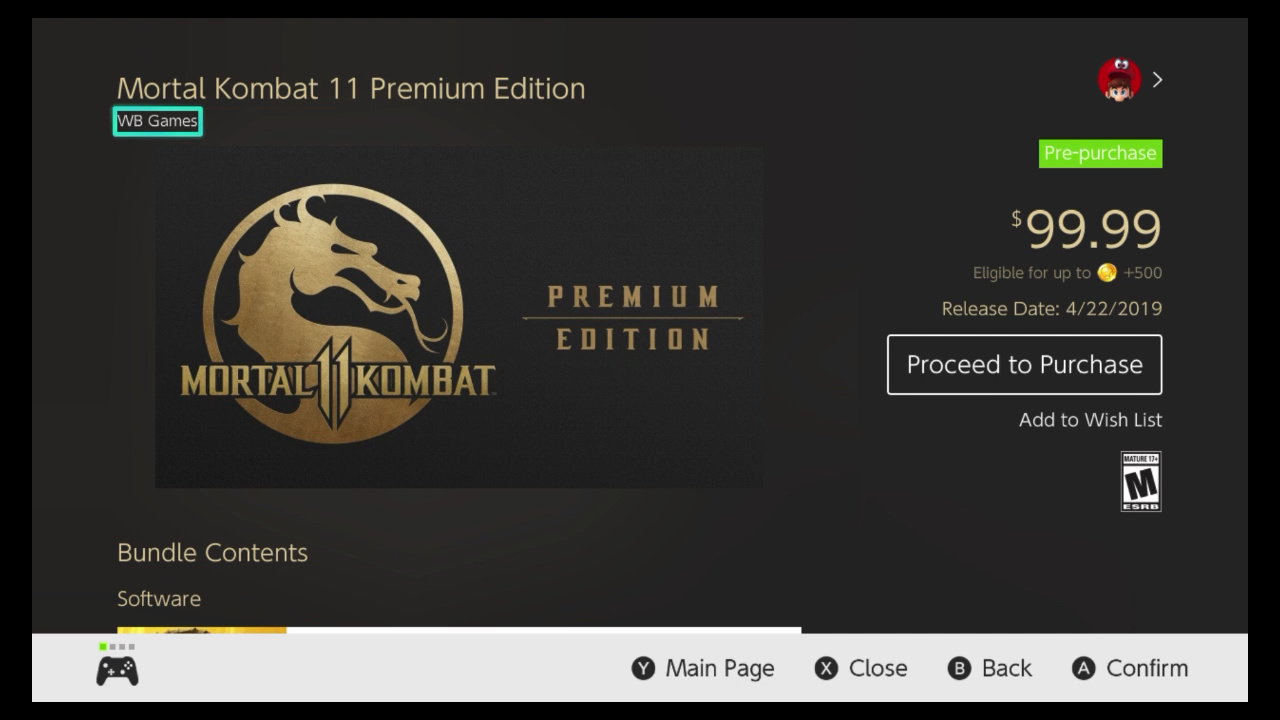
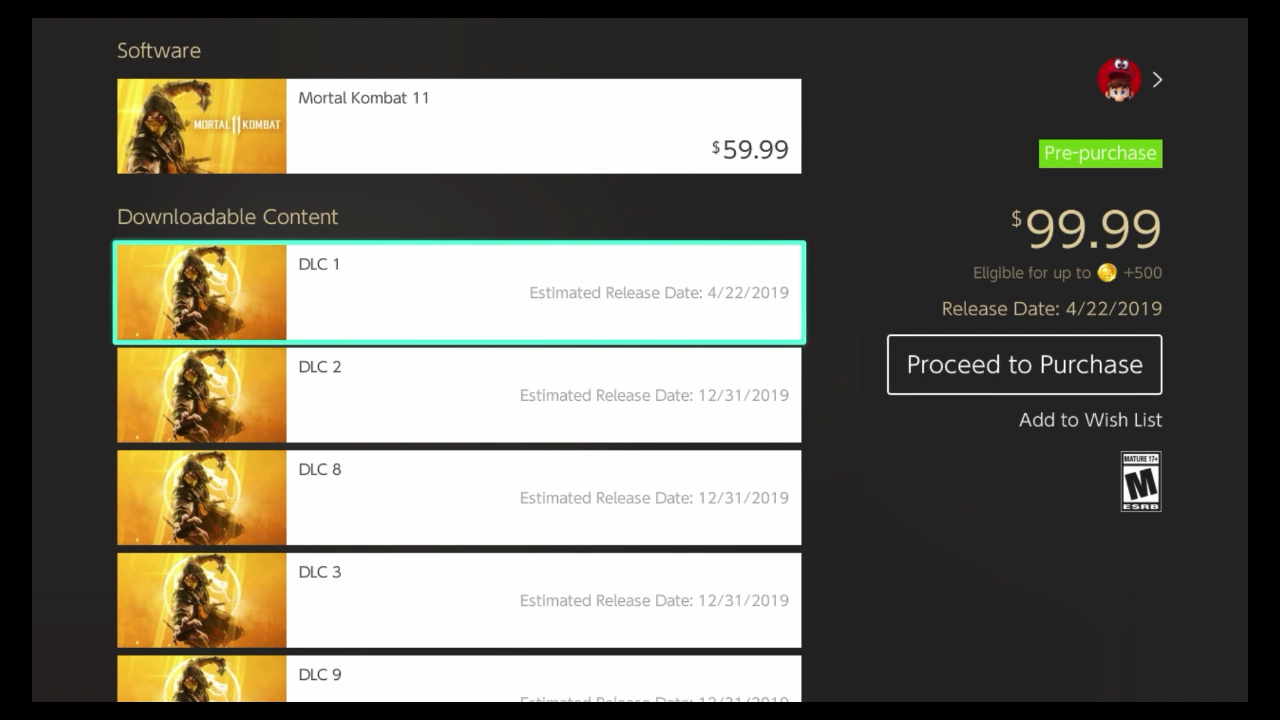
Mortal Kombat 11 has now appeared on the North American Nintendo Switch eShop, revealing its pricing, file size and more.
The main game is available to pre-purchase as we speak for $59.99, with the required amount of space currently set at 22.5GB (Nintendo notes that this is subject to change). It confirms that 1-2 players are supported locally, and online play will support 2-8 players.
Elsewhere, a Premium Edition is available for a mighty $99.99. The package comes with the base game, plus 13 pieces of DLC (as confirmed earlier today). Interestingly, while no details are given for what these pieces of DLC will contain, ‘DLC 1’ is set to release on the same day as the game, with all other DLC having a generic 31st December 2019 release date at present.
We’ve taken a couple of screenshots for you below.
Are you planning on picking this one up on 22nd April? Will you go for the Premium Edition, or is that far too costly? Tell us below.
The battle royale puzzle game Tetris 99 will be hosting its second Maximus Cup in North America this weekend from 12th April through to 14th April. This time the contest is slightly different to the first one, as you won’t have to win to score points. All you have to do is place as high as you can and you’ll still earn points. Here’s the official description from the PR:
The Tetris® 99 MAXIMUS CUP is back … and players of all skill levels can join in on the fun! From April 12 at 6 a.m. PT through April 14 at 11:59 p.m. PT, just start playing the game to enter. The Tetris 99 2nd MAXIMUS CUP is different than the first one, as you don’t have to win first place to score points. Even if you place high during matches, but don’t win, you could still come out on top. The higher you place at the end of each match, the more points you earn, with every 100 points counting as a TETRIS MAXIMUS.
On 28th April, the top 999 players with the most points will each receive 999 My Nintendo Gold Points. If you participate in the event, you could earn enough points to download some new games from the eShop on the Switch.
What do you think about changes to this competition? Will you be participating? Tell us down in the comments.
Shuhei Yoshida hasn’t exactly made an attempt to hide his love for Nintendo over the years. The President of Sony’s Worldwide Studios previously revealed he couldn’t resist trying out the Switch and was hyped about the release of The Legend of Zelda: Breath of the Wild.
In a recent exchange with a fan over on Twitter, Yoshida was asked if he was interested in trying out the Nintendo Labo VR Kit. It turns out he’s already pre-ordered a copy:
We can’t help but wonder what he’ll think about it compared to the PlayStation VR and can only hope he ends up posting pictures of himself using Nintendo’s cardboards creations.
Do you have even more confidence in the Labo VR Kit now that you know Mr. Yoshida has pre-ordered it? Will you be buying this kit yourself? Tell us down below.
Visual novels can be very hit-and-miss at times. Without the right story and dialogue married to the correct balance of interactivity from the player, they can too often descend into dull melodramas where player agency is reduced to skipping through an endless stream of cutscenes. So when the very first Ace Attorney confidently strode onto Game Boy Advance in 2001, it took the limited scope of the genre and used your involvement to create a fun and exciting courtroom adventure that spawned two equally brilliant sequels.
And while the Ace Attorney series has found its quality levels fall and rise over the years in the spin-offs that followed, the original Phoenix Wright: Ace Attorney Trilogy remains the franchise’s absolute pinnacle. All three sit among some of the best games to ever grace Game Boy Advance and Nintendo DS (which they were ported to for their Western release, starting in 2005), selling over 6.7 million copies worldwide, and now they’ve been tarted up and optimised for another successful Nintendo platform. If you’re completely new to the series then we envy you; you’ve now got the chance to experience probably the best set of visual novels outside of the Zero Escape and Danganronpa games.
Combining Phoenix Wright: Ace Attorney, Phoenix Wright: Ace Attorney – Justice For All and Phoenix Wright: Ace Attorney – Trials and Tribulations, this trio of courtroom dramas follows the legal career of the titular lawyer as he takes on a series of increasingly difficult and often purposefully convoluted cases. All three games split their action between crime scene investigations – where you’ll examine elements on-screen point and click-style in order to gather evidence and context – and courtroom-based exchanges.
The latter serves as the bulk of each game and, rather conveniently, presents the most rewarding and enjoyable experience. Here you’ll be presented with the accused and a series of witnesses. As a plucky defence attorney, you’ll listen to the testimonies of each one then compare to the evidence that’s been presented to the court. By performing cross-examinations of these testimonies you’ll then have the option to ‘press’ the witness or defendant to find inaccuracies or intentionally withheld details and ‘present’ evidence that potentially contradicts their statements.
So yes, it’s ‘Law & Order: The Video Game’, but what sets those first three Ace Attorney games apart from those that followed is creator Shu Takumi’s excellent writing. Each case finds the right balance between classic anime theatrics, disturbing crime details and moments of heartfelt levity, and while some cases really double down into that grey area where ‘good’ and ‘bad’ are blurred, its logic helps you develop a gut feeling of who to believe and who to disprove.
In-between courtroom sessions you’ll be out and about conducting investigations, inspecting locations for clues, collecting information for the Court Record and interrogating suspects, witnesses and more. You even get the special case added to the DS version of the original Ace Attorney, which introduced the ability to inspect evidence more closely. Both Justice For All and Trials And Tribulations are included in full, and they’re both still a riot to play, while Justice For All’s frustratingly short length feels like less of an issue now it’s been packaged together with the rest of the trilogy.
The Ace Attorney series has been ported plenty of times already, so it was only a matter of time before Mr Wright made his way to Switch. Thankfully, these new versions have fared far better than the ones that popped up on Wii, with enough optimisation – including resizing and cleaning up every frame to make them look better than ever both in docked mode and in handheld/TV modes. HD Rumble helps give those shaky moments of exclamation – including Wright’s classic lines, naturally – that extra bit of vibrating heft.
For longtime fans, Ace Attorney on Switch doesn’t bring anything new to the mix per se bar some touched up graphics, and despite the lack of features introduced in later games – such as the ability to spot tells and ticks when looking for lies and a greater emphasis on crime scene and investigation details – all three are still brilliant examples of how a game series can be both instantly enjoyable for new players and deep enough for returning sleuths. Sure, the lovely 3D character models of Phoenix Wright: Ace Attorney – Dual Destinies are certainly easier on the eye, but the 2D animations seen here still pop off the screen with plenty of character in 2019.
Conclusion
The original Ace Attorney is – dare we say it – almost 20 years old, which is remarkable when you consider just how well it holds up 2019. Sure, it’s been ported plenty of times and the jump to Nintendo DS certainly helped shake off the retro cobwebs, but as a piece of interactive history, Phoenix Wright: Ace Attorney Trilogy is as utterly addictive and truly rewarding as it was back at the turn of the millennium. Whether you’re brand new to the world of virtual defence law or a veteran attorney, Phoenix Wright’s first adventures are still a fine set of cases to undertake.
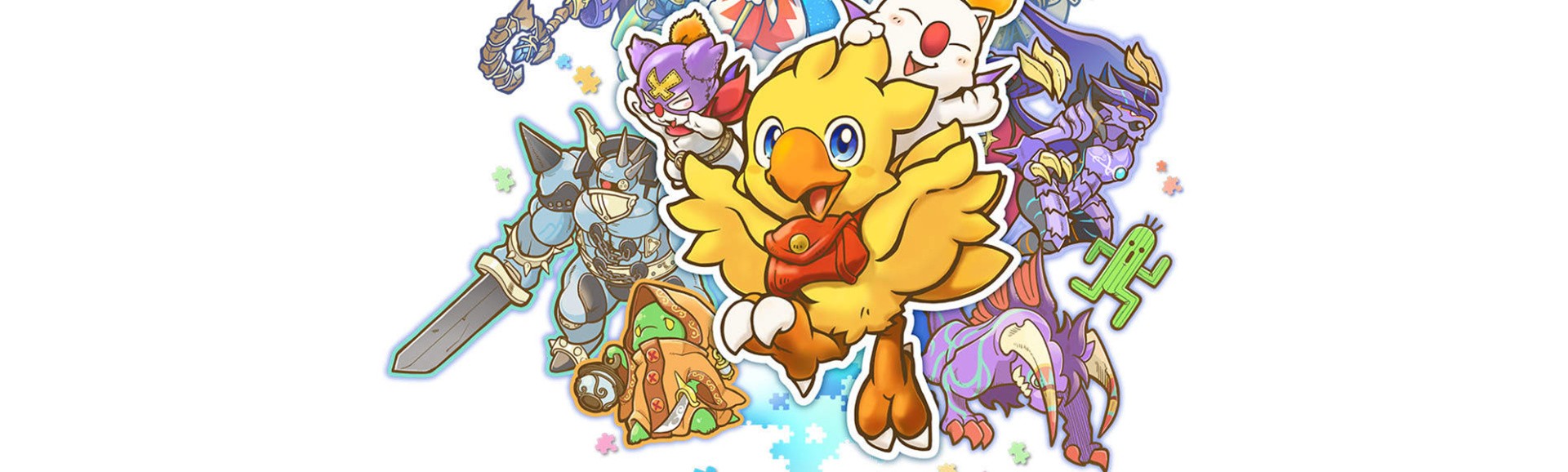
Esoteric and sprawling as it may be, the Final Fantasy series has always been unified by certain persistent themes, images, and music tracks, and one of the most recognizable of these continuities is that of the chocobo, the goofy-looking species of bird mounts that show up in most of the main games. Over the past few decades, Square Enix has released several spin-off titles centred around the chocobo – spanning a surprising variety of genres – and one of the most prominent of these was Final Fantasy Fables: Chocobo’s Dungeon, which saw a Wii release in the West in 2008.
This new release, Chocobo’s Mystery Dungeon: Every Buddy!, is a remake of that Wii title with a fresh coat of paint and some extra content thrown in to sweeten the deal, but the real question on everyone’s lips is how well the core game holds up after nearly ten years. The answer is “Kind of.” Chocobo’s Mystery Dungeon: Every Buddy! is unabashedly an enjoyable RPG romp through endlessly generated dungeons and it certainly benefits greatly from the Final Fantasy DNA that it borrows, but – like many of its fellow Mystery Dungeon brethren – it inevitably falls into the trap of repetitive gameplay that does limit some of its appeal.
Chocobo’s Mystery Dungeon: Every Buddy! opens with a surprisingly ambitious sequence in which you, an utterly adorable little chocobo, and your treasure hunting partner, Cid, plumb the depths of a desert temple to find a lost treasure, only to find that a rival treasure hunter and chocobo have already beat you to it. After a magical explosion and an impressively detailed FMV sequence, the chocobo and Cid find themselves transported to the mysterious town of Lostime, which labours under the constant threat of a magical bell in the town square that regularly rings and wipes the memories of anyone within earshot. After the chocobo discovers that it has the ability to jump into the minds of people and restore their memories after exploring twisted mental dungeons, you set out on an adventure to uncover the dark secrets of Lostime and return to the ‘real’ world with Cid.
Given that this is a Mystery Dungeon title, the focus on story can be surprisingly intense at times, but it’s a welcome element of the experience. Though the characters are all largely one-dimensional creations that fulfil obvious roles in the overarching plot, the exploration of memory and its surrounding philosophy often goes to unusually deep places given the cutesy appearance of everything. Even so, the story also seldom overstays its welcome; cutscenes are kept short and are easily skippable, as the Mystery Dungeon games are always about the grindy dungeon crawling gameplay first and foremost.
You’ll spend most of your time with Chocobo’s Mystery Dungeon: Every Buddy! trawling your way through seemingly endless randomly generated floors of dungeons, searching for the stairs to take you to the next floor while picking up any items and killing any enemies you encounter along the way. Chocobo’s Mystery Dungeon: Every Buddy! is the sort of game that shows its hand relatively early and seldom deviates from a rigid and repetitive gameplay structure that, while lacking in overall variety, sufficiently provides enough of a feedback loop to keep you coming back for more. You go down into the dungeon, level up and collect powerful gear, return to the surface for a break, then go down again to repeat the cycle, and – in true roguelite fashion – if you die in the dungeon before you make it back out, you lose all the items you’re currently holding.
Interestingly, Chocobo’s Mystery Dungeon: Every Buddy! is less of a standard JRPG than it is a turn-based RPG. Dungeons are laid out in a grid-like pattern and every time your chocobo moves a single space, everything else on that floor also moves a single space. When you’re in a combat encounter, this makes for some surprisingly cerebral gameplay at some points. For example, if you take a step towards an enemy two spaces away, they’ll be able to attack you once before you can respond, so it’s best to instead attack the empty space between you two and bait the enemy into coming closer so you can get the first strike. You need to be thinking about long-term strategy, too, as your chocobo has a ‘Hunger’ level that slowly drops with every few steps you take – eventually sapping your health if it drops too low – and each floor is rife with myriad traps that can inflict a number of debuffs, like poison or burn. Properly equipping chocobo with the right items and gear prior to each run is critical to succeeding the trials you’ll face below, and the difficulty often applies enough pressure to ensure that you have to remain mindful of these things if you want to succeed.
This being a Final Fantasy game, the jobs system lies at the heart of your chocobo’s progress, with each class change being represented by a cute new hat the bird can wear. There are dozens of classes on offer, from Thief to Black Mage to Knight, and each one brings with it a unique stat build and list of attacks. We found that the combat seemed a little skewed towards favouring classes that prioritized ranged attacks, but the overall depth of customization here is admirable for a Mystery Dungeon game; it’s by no means complex how you acquire or strengthen jobs, but the jobs system offers up sufficient depth and variety for keeping the ‘grindiness’ to a minimum. With a few notable exceptions, every class necessitates its own kind of playstyle, and this goes a long way towards extending your enjoyment of the campaign.
What’s a little stranger, however, is the way in which you level up the jobs. Every enemy destroyed grants you a certain amount of experience right off the bat that goes directly towards your chocobo’s level, but Job Points are only distributed on a random basis as an occasional item drop from the enemy, and the amount of Job Points per drop is random, too. Perhaps this was done as a way of keeping you from getting access to each job’s most powerful abilities too quickly, but it often feels like an unnecessary and inelegant roadblock that keeps you from progressing too far too fast. Whereas your character level progression is more or less defined as being a nice, straight line that inclines at a predictable rate, your jobs’ level progression could be defined as a jittery series of massive spikes, followed by long plateaus.
New to Chocobo’s Mystery Dungeon: Every Buddy! is the ‘Buddy’ system referenced in the title, in which you can bring certain NPC’s or a friendly variant of just about any monster with you to help in battling your way through the dungeons. Buddies are unlocked at a fairly steady clip, with NPCs joining you after certain story beats have been passed and with new monsters teaming up with you after collecting enough ‘Buddy Points’, which drop like Job Points. Admittedly, Buddies don’t do a ton to change up the core gameplay, but they’re a welcome inclusion in how they make certain enemy encounters a little less one-sided. You can’t really upgrade any Buddies, other than BP pickups unlocking new variants of monsters within the same family (i.e. new types of Goblins or Elementals), which makes this feature come off as being a bit tacked on, but the flip side is that it also creates an opportunity for a buddy (heh) next to you on the couch to hop in and take control of your partner if they’ve got a controller.
Something that bears mentioning about overall gameplay progress is the mind-numbing repetition that inevitably sets in as the hours roll by. The lack of unique differentiators between dungeons (other than new monster types) isn’t all that noticeable at first, but dungeons eventually feel excessively homogenous, and this is only further exacerbated when you find yourself grinding floors in search of JP to shore up some jobs that you haven’t been using in a while, or retreading the same ten floors for another crack at a tough boss. Mystery Dungeon veterans will be all too aware of this ‘problem’ – it’s also arguably the main draw of this niche series of roguelites – but we find that it’s important to reiterate that this isn’t the sort of game you play for the diversity and creativity of its gameplay; this is just about as grindy as RPG’s can get, and that can be both a blessing and a curse.
Luckily, things are made a little more interesting through the equipment upgrade system, which acts as a big motivator for continuing to grind away at floors. Your chocobo can wear a saddle, talons, and necklace, and you’re sure to come across a wide variety of equipment on your many dungeon crawls. This equipment can then be brought back to a smith in Lostime where you can then ‘Hone’ the equipment to upgrade its effectiveness or ‘Fuse’ it to transfer unique properties between like pieces, such as adding a passive fire effect to a previously vanilla item. Building and designing different equipment sets for different dungeon types (i.e. fire-resistant gear for a fire-themed dungeon) helps to add some further customization options and granularity to the different builds you can run on your chocobo, and we found that it also went a long way towards making each dungeon run feel that much more meaningful; not only are you building experience for your chocobo and its jobs, but you’re also constantly acquiring gear that can give you those extra few stat points you need on a given item.
This being a remake of a Wii title, the presentation often shows its age through the semi-blocky geometry and occasionally muddy textures that permeate the environments, but Chocobo’s Mystery Dungeon: Every Buddy! also manages to equally surprise in many places with how well it looks in motion. It’s clear that Square put in the effort to replace at least some of the textures with much higher resolution equivalents, and we found that performance hit 60FPS on a near-constant basis. This is most definitely not a system showcase in terms of its visuals, but we found that the charming, colourful worlds are well-realized and detailed; this is hardly a boring game to look at. Similarly, the soundtrack is filled with a collection of playful and occasionally serious tracks that blend well with the many well-made remixes of popular Final Fantasy music. Fans of the series will undoubtedly get the most out of this soundtrack, but we were a bit surprised at the number of original tracks in here that prove to be catchy; expect to hear a few that’ll stick in your head for a little while after playing.
Conclusion
Chocobo’s Mystery Dungeon: Every Buddy! easily proves to be the best version of Chocobo’s Mystery Dungeon, and we would even go so far as to say it’s in the running of being the best Mystery Dungeon game in general. The story proves to be surprisingly heartfelt and mature in many places, and the depth offered by the jobs system, coupled with auxiliary systems like Buddies and equipment, helps to keep the endlessly repetitive dungeon crawling from becoming too taxing. If you’re the type of player who doesn’t mind very much grind in their games, or you’re looking for something rewarding, but relatively mindless that you can dump a lot of hours into, Chocobo’s Mystery Dungeon: Every Buddy! is a solid purchase that’s sure to entertain. If you’re not in either of those camps, we’d caution you to think about it a little more before taking the plunge, as this could easily prove to be a disappointing experience if you come into it with the wrong mindset.
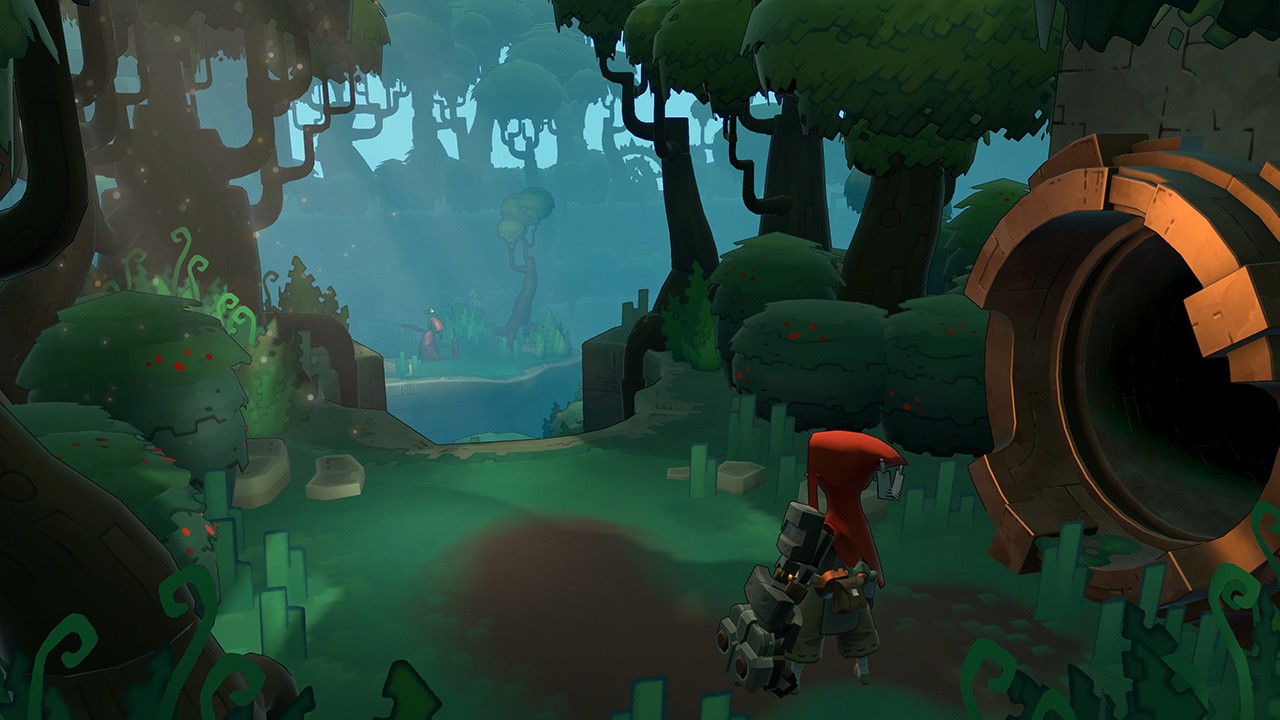
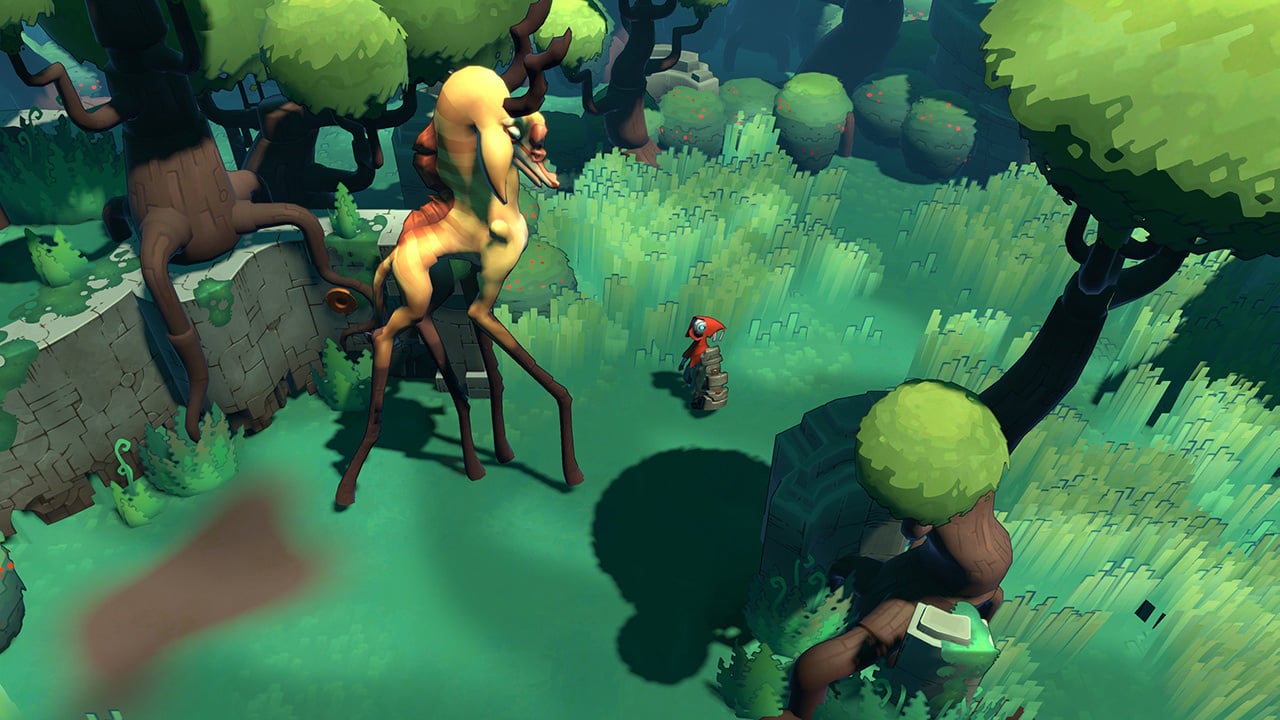
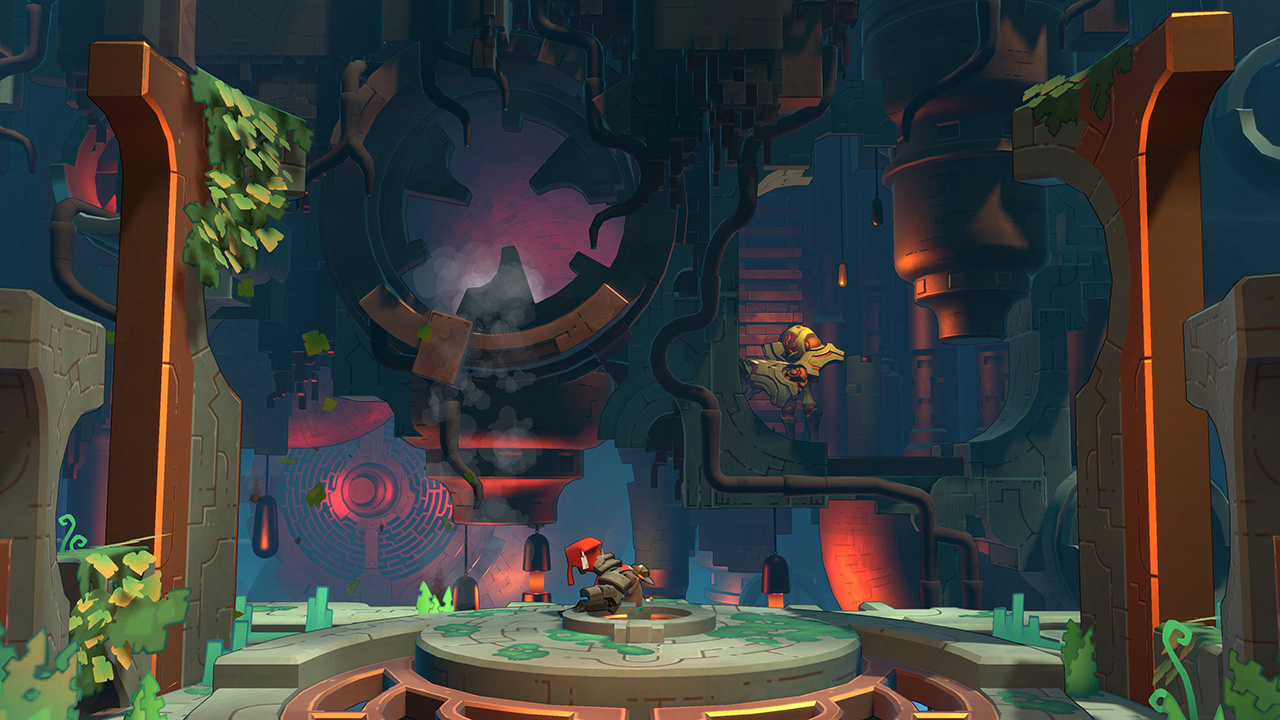
The recently-released Hob: The Definitive Edition came as a pleasant surprise, offering Switch owners an enchanting experience packed with puzzles, powers and a mysterious world that needs saving. As you’ll know if you’ve already consulted our review, we really liked it – and it’s clear that the conversion job done by Panic Button is top-class.
Keen to know more about how the company came to work on Hob, we sat down with Panic Button Technical Director Andy Hobbs, who has been previously involved in the Austin-based studio’s other Switch ports, which include DOOM, Rocket League and Wolfenstein II.
Nintendo Life: How did the partnership with Perfect World begin?
Andy Hobbs: We were introduced to Perfect World through our work on the original release of Hob on PC and PlayStation 4. We’d done some rendering and optimization work on the PS4 release, and we really loved the game and working with the original team at Runic Games. Throughout the project, we just kept thinking about how well the game would fit on the Switch. The art style, the gameplay, the world that they built – it all just felt like a Nintendo game. As we got more and more experience with the Switch, we kept coming back to that idea, and when we talked to Perfect World about it, they were totally on board. Since then it’s been a great partnership and we’re looking forward to doing more together.
You’ve become experts when it comes to porting games to Switch; has Hob posed any technical issues that you’ve not encountered so far?
Absolutely. Hob is unique among the games we’ve ported to the Switch in that it has a big open world. A player could run between all the different areas of the world without ever seeing a loading screen, which was a big challenge. There are also some rather massive vistas in the game where you can see almost the entire game world all at once, which was challenging.
For us, one of the most interesting things about the type of work we do is that no matter how many games we’ve worked on, each one presents a unique challenge – we’ve never seen it all.
Tell us about the improvements and enhancements present in the Switch port – how have you enhanced Hob for the Switch audience?
We had the benefit of being able to take a step back from the original and ask ourselves what we could improve while maintaining the spirit of the game.
The main thing we wanted to tackle was the sense of direction and continuity for players, answering the question, “Where did you come from and where do you go next?” This was a big challenge to solve because we didn’t want to introduce something heavy-handed like a journal, given that the whole point of the game is the minimalist style and the player’s role in interpreting what’s happening around them. Our solution was to take the player’s progress and show it to them visually with the Memories screen. At significant points in the game, we capture a screenshot of what the player is doing and the place on the map where it occurred. At any point, the player can now view a chronological record of where they’ve been and what they did.
Another change was to platforming. The game has some challenging traversal puzzles that, if you missed them, meant a respawn at the previous checkpoint. We took a cue from older games like Zelda where, if you fell to your death, rather than restarting, you simply lost one of your health pips until you ran out. We felt like this made these mistakes a bit less punitive without totally removing the consequences.
Players will also notice that we completely revamped the UI for the Definitive Edition. Everything was re-evaluated and updated. We added features like showing previews of skills you’ve acquired and adding touchscreen support, lots of quality-of-life updates.
The original team also had a ton of beautiful concept art that we wanted people to see, so we added a lot of that art as unlockable rewards for playing the game.
There are a lot of other small (but we believe meaningful) changes to the Definitive Edition that players will discover. We also realize that some of the fans will want to play the game as it was originally, and we added that option. Players can choose to play the game in ‘Classic’ mode, which provides an experience much closer to that of the original.
Hob is slightly smaller in scope when compared to your other ports, such as DOOM, Wolfenstein 2 and Rocket League. Could we see more indie-sized conversions of this type from you in the future?
The main thing we look for in a project is that it’s something we’re passionate about and really believe in. I remember looking at trailers for Hob, long before we ever met the original development team and all of us were just blown away by this beautiful world they were creating. My hope is that we always put that excitement first and foremost when choosing what we work on, whether it’s a AAA title or a smaller indie title. I’d say definitely yes.
Finally, regarding other projects, are you guys also working on Wolfenstein: Youngblood on Switch?
We don’t have anything to announce at the moment, but that game does look awesome.