Posted on Leave a comment

SimCity creator Will Wright’s new game will harvest your memories

Veteran game designer Will Wright, creator of titles like The Sims and SimCity, is working on a new mobile title called Proxi

His last game, Spore, launched in 2008, and was an ambitious universe simulation that allowed players to chart the evolution of their own unique species, helping them conquer their homeworld and eventually the stars.

Proxi, which is being developed with the help of game studio Gallium Artists, seems to be equally ambitious, and is being pitched as “a game of self-discovery.”

It’s hard to discern exactly what that means at this stage, although some brief shots shown during the Unity keynote unveiling at GDC suggest the game will feature vignettes constructed from the memories and experiences of players. 

“This is a game where we actually uncover the hidden you, your subconscious, your inner-Id, and bring it to the surface and bring it to life so you can interact with it, you can play with it, you can learn from it, and it can learn from you,” explained Wright. 

“We do this primarily by pulling out memories from your past, those unique things that happened in your life that make you who you are.”

Proxi is being developed in collaboration with Unity, and Wright has teamed up with the engine maker in the hopes of finding an artist to join his dev team.

Posted on Leave a comment

Unity getting new rendering, machine learning, and performance tools

Unity shared a glimpse of its Unity 2018 roadmap at GDC, explaining it’ll be focusing on building out next level rendering, machine learning, and performance tools over coming months. 

The company showcased a smorgasbord of new features during its opening keynote (available to watch above, or read on the Unity blog), which might be of interest if you’re one of the many devs using the popular game engine. 

Among those planned additions is a Scriptable Render Pipeline that allows for configurable, lean, user-centric rendering, and a GPU-based progressive lightmapper that gives instant feedback to artists during the process of tuning lights and baking at ~10x the speed.

Unity also intends to add Cinemachine Storyboarding, which is designed to aid developers who rough out their shots with Cinemachine and Timeline by letting them quickly construct and tweak grey-box levels and scenarios. 

The engine maker also outlined its commitment to “democratized” machine learning, with Unity keen to lower the barrier to entry so more devs can make machine learning an integral part of their projects. 

Beyond that, it pushed the notion of “performance by default,” and said it’s been working on a new high-performance multithreaded system that makes it possible for games to fully utilize the current crop of multicore processors without any headaches. 

“This is all possible thanks to the new C# Job System, a new way to write performant code by default utilizing our Entity Component System,” added the company, explaining how that system works.

 “This is coupled with a new math-aware, backend compiler technology named Burst. Burst takes the C# jobs and produces highly optimized code for any platform you’re building to.”

You can find out more about those features and more, including when they’ll be available, by checking out the full keynote recap over on the Unity blog.

Posted on Leave a comment

Blog: Working with pixel art sprites in Unity

The following blog post, unless otherwise noted, was written by a member of Gamasutra’s community.
The thoughts and opinions expressed are those of the writer and not Gamasutra or its parent company.


Welcome to a series of blog posts that will reveal my workflow for importing, animating, and placing 2D sprites in Unity while using the actual Unity editor as little as possible. I’ve taught myself how to navigate Unity’s API by the process of actually making a game, and I figured my long hours of scrambling in the dark could benefit other developers.

Before we can begin animating, we need art to animate with. Welcome to the surprisingly complicated world of simply importing your art assets into Unity

Part 1. Importing Assets for 2D Pixel Sprite Games

Unity was not meant for 2D games. Especially not pixel art sprite and tile-based 2D games. The headache of importing a sprite sheet and slicing it up, especially coming from other more straightforward frameworks, was incredibly disheartening. Imagine importing a sprite sheet into your project only to discover that you had to manually change half-a-dozen attributes each and every time? Or that, instead of slicing up a sprite sheet by simply defining a couple parameters, you had to manually slice up each frame? Well guess what, you don’t have to imagine it, that’s just how Unity works.

image

I desperately needed a solution that would return this process to the completely trivial category that it belongs in. And then I learned that my salvation lay in editor scripts.

Certain editor scripts execute automatically every time a certain Unity function is performed. Importing assets is one of those functions. To make an editor script, you must first simply create a new script in a directory called “Editor” somewhere inside the “Assets” directory of your project. This should be a class that extends AssetPostprocessor. The code listed in the OnPreprocessTexture and OnPostprocessTexture methods will change the behavior of how your assets are imported into your project.

So instead of manually editing all of these properties every time you import a sprite:

image

You could just edit this in script, once:

image

Now I don’t have to manually change filterMode to Point on every single sprite I import! Score. (FilterMode.Point keeps your texture art sharp, which is ideal for pixel art. Unity assumes you were importing a large texture to be used in a high-verisimilitude 3D game, in which case, a bilinear/trilinear filter might be better.) However, these properties will probably change from project to project, so don’t assume the code I’ve posted here is canon.

Next we’ll use the OnPostprocessTexture() method to slice up our script for us by iterating through the texture and storing the slices in an array on the metadata of the asset (you can see the code on GitHub if you want the details). The problem, however, was in deciding how to determine the dimensions of the sprites that needs to be sliced, and which of the imported assets should even be sprites in the first place. I didn’t want to have to repeatedly determine these properties in some editor window pop-up every single time I imported a sprite (that would defeat the entire purpose of this exercise). Eventually I settled on an auto-magical solution. Simply drag your asset into a folder named after an integer somewhere in your project’s “Resources” directory (eg. a directory named “16”), and the editor script will assume you want that asset sliced up as a sprite sheet with 16 by 16 pixel sprite dimensions.

I mean just look at this brilliant, sliced sprite:

image

In general auto-magic solutions make me slightly nervous. I decided to add a little pop-up window telling the user that the sprite was sliced, so the user was aware that something just happened.

image

And that’s about it! If you think this script could be useful for your project feel free to grab it on GitHub.

In my next post, I’ll share some of the things I learned defining and playing sprite animations in script rather than via the Unity editor. Until then, be good!

Posted on Leave a comment

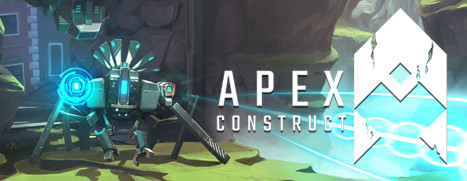
Now Available on Steam – Apex Construct

Apex Construct is Now Available on Steam!

Travel to the shattered future of Apex Construct, where merciless robots prowl the world as a result of mankind’s reckless experiments. As these synthetic creatures seek to dominate their new hunting grounds, you must use both your wits and combat skills to survive. In this atmospheric first-person Action/Adventure game, built exclusively for VR, the fate of mankind rests on you – the last human alive.

Posted on Leave a comment

Nintendo Switch kicks off its second year with a surge of standout indie games

Nintendo Switch kicks off its second year with a surge of standout indie games

In a Nindies Showcase video released during this year’s Game Developers Conference, Nintendo featured more than a dozen independent games coming to Nintendo eShop on the Nintendo Switch system in 2018. These “Nindies,” the term for independent developers making games for Nintendo systems, are creating unique experiences that fall into multiple genres – including stealth action games like Mark of the Ninja Remastered, tactical role-playing games like Banner Saga 3 and rhythmic “bullet hell” games like Just Shapes and Beats. And because of the unique features of Nintendo Switch, all of the independent games featured in the video can be played at home or on the go.

“Since the launch of Nintendo Switch, we’ve continued to be blown away with the amount of high-quality games coming from our passionate Nindie developers, and the positive fan reception for those experiences,” said Damon Baker, Nintendo of America’s Senior Manager for Publisher & Developer Relations. “This talented and ever-growing community of Nindies has found a home on Nintendo eShop on Nintendo Switch, and we absolutely welcome their inventive and visionary contributions.”

To view the Nindies Showcase video in its entirety, visit http://live.nintendo.com. Highlights of the presentation include:

  • Mark of the Ninja Remastered from Klei Entertainment: Originally released in 2012, this high-definition remaster of the critically acclaimed stealth action game is coming this fall. The game really makes players feel like a ninja, as they use silence, agility and wits to navigate beautifully designed 2D levels.
  • Banner Saga 3 from Versus Evil: As the epic conclusion to the award-winning Banner Saga trilogy of mature, story-driven role-playing games, players will need to brace themselves for tough battles, difficult choices and tragic losses. Banner Saga 3 launches this summer. The original two games, Banner Saga and Banner Saga 2, are also coming to Nintendo Switch. Players’ personal stories, progress and choices from the first two games will carry over to Banner Saga 3.
  • LUMINES REMASTERED from Enhance Games: A bombastic harmony of light, sound and intense puzzle action make this HD remake of the original critically acclaimed LUMINES as unforgettable to play alone as it is with a friend in local multiplayer. LUMINES REMASTERED launches on Nintendo Switch in spring.
  • Just Shapes and Beats from Berzerk Studio: This “musical bullet hell” game might be a genre all its own! Navigate deadly shapes solo or in local or online co-op multiplayer, all to a soundtrack composed by 20 chiptune artists. Just Shapes and Beats launches as a timed console exclusive on Nintendo Switch this summer.
  • Reigns: Kings & Queens from Nerial and Devolver Digital: As a monarch of the modern age, players face a seemingly never-ending series of requests from peasants, allies and enemies. By swiping left or right in the game, players impose their will on the kingdom. The Nintendo Switch version of Reigns: Kings & Queens, which launches this spring, features an exclusive local co-op multiplayer mode.
  • The Messenger from Sabotage and Devolver Digital: The Messenger allows players to transform the game from an 8-bit platformer into a gloriously rendered 16-bit time-traveling adventure. Players will find upgrades, new abilities, hidden levels and great speed-running opportunities as they journey through a cursed land. The Messenger launches on Nintendo Switch this summer.
  • Fantasy Strike from Sirlin Games: In a world where fantasy meets martial arts, anything can become a weapon. This gorgeous fighting game employs nuanced mechanics with simple combos and easy-to-perform special moves in local or online multiplayer modes. (Additional accessories required for local multiplayer mode; sold separately.) Fantasy Strike is coming to Nintendo Switch this summer.
  • Pool Panic from Rekim and Adult Swim Games: More than 100 levels await players in this game, in which everything – from jungles to deserts to cities – is one giant cartoon game of pool. The weird and wild game has the option to play in local multiplayer with up to four players. (Additional accessories required for local multiplayer mode; sold separately.) Pool Panic launches first on Nintendo Switch later this year.
  • Garage from tinyBuild Games: Inspired by the gloriously gory VHS era of B-movies, Garage is a top-down shooter set in a gritty underworld. Slay hordes of the living dead using a variety of weapons and skills. Garage launches first on Nintendo Switch this spring.
  • Light Fall from Bishop Games: This platforming adventure takes players to the forgotten world of Numbra, where they’ll have to master their surroundings by manipulating the Shadow Core, a magical box used to propel them into the air. In Speedrun Mode, players can race their friends or even the fastest players in the world to place on the online leaderboards. Light Fall launches first on Nintendo Switch as a timed console exclusive this spring.
  • Bomb Chicken from Nitrome: Who wouldn’t want to play a good old-fashioned chicken platformer? That’s the question asked by Bomb Chicken, a fast-paced game that combines action, puzzles and arcade gameplay. Lay bombs to escape tricky situations and discover secret areas when Bomb Chicken launches first on Nintendo Switch this summer.
  • Pode from Henchman & Goon: Two unlikely travel companions embark on an adventure in this co-op exploration puzzle game. Pode is inspired by Norwegian art and culture, resulting in stunning environments and gameplay. Pode launches this spring.
  • West of Loathing from Asymetric: West of Loathing is a slapstick comedy stick-figure Wild West adventure role-playing game. How’s that for a genre? The hilarious game, full of puzzles, quests and turn-based combat, launches on Nintendo Switch as a console exclusive this spring.
  • Bad North from Plausible Concept and Raw Fury: Arm troops, shore up defenses and protect citizens in this rogue-lite real-time strategy game. The Viking-themed Bad North launches first on Nintendo Switch this summer.

Remember that Nintendo Switch features parental controls that let adults manage the content their children can access. For more information about other features, visit https://www.nintendo.com/switch/.

Games Shown:

Posted on Leave a comment

Epic gifts over $12M worth of Paragon assets to Unreal Engine devs

Epic is giving Unreal Engine 4 devs access to over $12 million worth of assets from its soon-to-be shuttered online shooter, Paragon

The free-to-play offering launched back in 2016, but struggled to find its feet in a market dominated by titles like League of Legends and Dota 2

Epic eventually decided to shut down the game, claiming it couldn’t find a “clear path” to sustainability, and promised to refund players for every purchase they’ve made since launch. 

Every cloud has a silver lining, however, and as Paragon prepares to wind down for good on April 26, Epic has given the game a new lease on life by releasing its assets into the wild. 

That includes 20 “triple-A quality” characters, with their respective skins, animations, VFX and dialogue, and over 1500 environment components. 

All of that content is now available for free over on the Unreal Engine Marketplace, and Epic has given developers free rein to use any and all of them in their own Unreal Engine 4 projects. 

“For those interested in importing Paragon characters into their projects, we recommend starting with Shinbi, who comes with an animation blueprint,” wrote Epic, offering some pointers on where best to start.

“This can be used as a framework for animating the other characters in the Paragon packs. We’re also shipping a sample map that is handy for testing and can be used as a baseline for creating more customized environments.”

Epic plans to release additional Paragon assets in the future, and has said more will be landing in spring and summer. You can find out more about the asset release by checking out the Unreal Engine blog.

Posted on Leave a comment

Amazon debuts GameOn, a new cross-platform competitive game platform

As the Game Developers Conference kicks off today, Amazon has unveiled GameOn, a new platform aimed at helping devs implement cross-platform (mobile, console, PC) competitive multiplayer in their games.

This may appeal to teams looking for an off-the-shelf solution that helps players compete against one another across platforms, and Amazon is hoping to draw devs into trying GameOn by offering it for free until May 1st. 

After that, you can expect to be charged roughly $0.003 per play, though Amazon says after the May 1st cutoff it will then give devs 35,000 free plays per day for a limited time. 

What GameOn offers is pretty straightforward: standard multiplayer, leagues and leaderboards, as well as the ability for devs, players, and community members to create custom events or competitions. According to an Amazon representative, GameOn was initially intended to be an SDK — but feedback from devs pushed the team to go with a set of APIs instead.

More details on GameOn and other Amazon developer tech can be found on the company’s dev portal.

Posted on Leave a comment

Video Game Deep Cuts: The Exoplanets Of Trust

The following blog post, unless otherwise noted, was written by a member of Gamasutra’s community.
The thoughts and opinions expressed are those of the writer and not Gamasutra or its parent company.


[Video Game Deep Cuts is a weekly newsletter from curator/video game industry ‘watcher’ Simon Carless, rounding up the best longread & standout articles & videos about games, every weekend.

This week’s highlights include helping gamers find undiscovered exoplanets, research about ‘the trust spectrum’ from Raph Koster, and lots more.

As we drift into GDC week (wow, there’s a lot to do – oh, check out the alt.ctrl.GDC game preview!), here’s the latest roundup. Not many previews or reviews this week, but here’s some miscellany – IGF 2015 Grand Prize winner Outer Wilds has been reannounced, to be published by Annapurna Interactive, and looks sweet.

Also the new episode of Cool Ghosts is out, and it twins bizarre home shopping situations with odd, human game analyses in some beautiful ways. And what is going on with the Pixel Ripped 1989 VR game trailer? Is this the ultimate use of VR or mindbogglingly silly? I don’t know, which is half the problem…

Until next time,
– Simon, curator.]

——————-

What Works And Why: Opus Magnum (Tom Francis / RockPaperShotgun – ARTICLE)
“Opus Magnum is a puzzle game about designing machines that arrange and combine shiny little atoms to turn lead to gold, and other fanciful alchemy. It’s by Zachtronics, whose games follow such a recognised pattern that they’ve become a genre… But it’s a particular quirk of this format I want to dive into, and it’s one Opus Magnum does especially well: optimisation.”

Meet The Man Trying To Save Lost Video Games (Vice / YouTube – VIDEO)
“Waypoint meets Frank Cifaldi, the founder of the Video Game History Foundation. The history of video games are in danger of disappearing. Not just the games itself, but the packaging, the culture, and the experience of the players. We join Frank on his quest to save these relics.”

New Video Game Montage Seeks to Counter Trump’s Violent Reel (Brian Crecente / Glixel – ARTICLE)
“As with the White House violence video, the Games for Change video runs 88 seconds long. It features painterly landscapes, dazzling worlds and plenty of action. [SIMON’S  NOTE: I’ve seen some people complain that this video is missing the point, because we should be OK with defending violence in games. Possibly – but the video is still more apposite than the White House one.]”

Rachel Weil on Femicom and the Value of Preserving Classic ‘Girl’ Video Games (Adam Conover / Adam Ruins Everything – PODCAST)
” Our guest Rachel Weil is trying to change that by preserving these ‘girl’ games by going around the world and collecting these games and talking to the people who made them. She is a software developer for Microsoft and the founder of the Femicom Museum, a hybrid physical/digital museum and archive dedicated to the preservation and reimagination of femininity, girlhood, and the aesthetics of cute within twentieth-century video games, computing, and electronic toys.”

What Happened to ‘Reset,’ That Promising Time Travel Mech Game From 2012? (Patrick Klepek / Waypoint – ARTICLE)
“A lonely mech sitting in the rain has transfixed players for years, but after endless delays, abandoned release dates, and vague updates, fans have reason to be skeptical. We asked the developers what happened.”
 

Resident good: how video games can be used in church (Andy Robertson / The Guardian – ARTICLE)
“However, games are more than just entertainment. They can create spaces that address wide-ranging topics in imaginative and meaningful ways. The unusual texture of these spaces can have psychological, ethical, social and, yes, spiritual benefits.”

The Real Problem With Video Games (Seth Schiesel / New York Times – ARTICLE)
“Video games do not create murderers. With his Thursday meeting, the president was merely engaging in political distraction. And yet Mr. Trump was absolutely right when he said that “bad things” are happening on the internet. [SIMON’S NOTE: Seth is a former (quirky) games writer for the Times – quite fond of EVE Online, as I recall – so interesting to see him pop back up with a piece like this.]”

Road to GDC: Training Gamers to Hunt For Undiscovered Exoplanets (Attila Szantner / Glixel – ARTICLE)
“A couple of years ago my friend Bernard Revaz and I, started to work on a new project around citizen science, which is the crowd-sourcing of scientific data acquisition and analysis. Citizen science (CS) is a beautiful concept that I have been watching evolve ever since the first very successful online project, Galaxy Zoo was launched.”

What Makes a Good Puzzle? (Game Maker’s Toolkit / YouTube – ARTICLE)
“Puzzles can be one of the most complex things in game design. In this video, I break down some great conundrums from favourite games, and share some knowledge from sharp puzzle designers, to find out what makes a good puzzle.”

Decrypting video games events: which one is right for you? (Thomas Bidaux / ICO Partners – ARTICLE)
“There are more and more events every year dedicated to video games. Navigating through the annual schedule is getting increasingly complex, and we have many discussions with our different partners about the merits of the different events for them to attend, depending on the profile of their games, the current state of development of the projects, and the company’s long term goals.”

Interview: Todd Howard (AIAS Game Maker’s Notebook – PODCAST)
“Todd Howard of Bethesda Game Studios chats with Ted Price about the history, decisions, production challenges behind The Elder Scrolls and Fallout series, the relationship between games and their own family lives, and the games they play vs the games they create.”

What Developers Think Of Steam Reviews (Rick Lane / RockPaperShotgun – ARTICLE)
“Because of Steam’s ubiquity on the PC, Steam reviews have become one of the main ways that developers receive feedback on their games. But how do developers feel about the system itself? Do Steam reviews provide a beneficial service that can help improve games? Or is it a perpetual nuisance warped by review bombing and ‘joke’ reviews that cause stress and confusion to the people who make the games we play?”

The Trust Spectrum (Raph Koster / Raph’s blog – ARTICLE)
“Today I want to share with you a design framework that I’ve been working on for a couple of years now with a team at Google’s Advanced Technology and Projects (ATAP) group, led by Aaron Cammarata. We call it “The Trust Spectrum,” and it’s a practical design lens for designing multiplayer games, particularly ones involving co-operative play.”

Secret Writer’s Society, the best way to swear at children in 1998 (Phil Salvador / The Obscuritory – ARTICLE)
“Panasonic Interactive Media’s game Secret Writer’s Society was supposed to teach kids how to write well. Instead, it became infamous. The game had a text-to-speech feature that would read back what you wrote, and under the right circumstances in the Macintosh version of the game, it would read a list of obscenities instead.”

One dev’s quest to support every controller you can plug into a USB port (Jay Allen / Gamasutra – ARTICLE)
“The devs of Jelly Team—composed of three Northeastern University alumni: programmer and designer Mark Trueblood, artist and designer Oskar Strom, and programmer Liam Fratturo—set out to make use of as many of those oddball controllers as possible for their arena battle party game, Super Slime Arena.”

Video Games Don’t Know How to Handle Current Events (Granger Willson / Vulture – VIDEO)
“While the creators of Far Cry 5 and many other modern game designers are getting inspiration from real-world issues, most of them are taking a superficial approach. So how can video games successfully integrate current events and social politics into their stories and mechanics, without being insensitive or exploitative? [SIMON’S NOTE: This is surprisingly relevant to the next No More Robots game announcement, as you’ll see… soon!]”

Indie veterans on the state of indie games on Nintendo Switch versus Steam (Austin Wood / PC Gamer – ARTICLE)
“The big question is this: with Steam more overcrowded than ever, are the wide-open fields of the Switch a better alternative? The zeitgeist certainly says so. You can’t read an announcement nowadays without finding “Switch please!” in the comments.”

The Story of R.O.B. the Robot (Gaming Historian / YouTube – ARTICLE)
“In 1984, Nintendo made plans to bring their Famicom console to North America. There was just one big problem: Stores wanted nothing to do with video games. Learn how a small robot helped save the video game industry and made Nintendo a household name. [SIMON’S NOTE: Ah, accurate historical game analyses on YouTube – such a wonder and a relative rarity.]”

Directing from the sidelines (Matt Leone /  Polygon – ARTICLE)
“We look at the rise of concept teams — from Tetsuya Mizuguchi, Fumito Ueda and others — in Japan’s game industry. [SIMON’S NOTE: This is a signature Polygon piece – super interesting and readable, but BOY, it’s long – about 5 articles in one. But fascinating stuff in here about how big Japanese creators structure their firms nowadays.]”

Why It Took Seven Years For These ‘My Little Pony’ Fans to Ship Their Game (Patrick Klepek / Waypoint – ARTICLE)
“All it took was getting paid nothing for years, a cease and desist from the legal team at Hasbro, and a last-minute rescue from the creator of ‘My Little Pony’ itself.”

——————

[REMINDER: you can sign up to receive this newsletter every weekend at tinyletter.com/vgdeepcuts – we crosspost to Gamasutra later on Sunday, but get it first via newsletter! Story tips and comments can be emailed to vgdeepcuts@simoncarless.com. MINI-DISCLOSURE: Simon is one of the organizers of GDC and Gamasutra & an advisor to indie publisher No More Robots, so you may sometimes see links from those entities in his picks. Or not!]