Posted on Leave a comment

Blog: Indie PR and going beyond the mainstream

The following blog post, unless otherwise noted, was written by a member of Gamasutra’s community.
The thoughts and opinions expressed are those of the writer and not Gamasutra or its parent company.


I’m on a call with a developer. It’s an initial call about the possibility of working together. At my PR consultancy, Game If You Are, these calls are informal discussions: they help us to get a sense of whether we might be a good fit for the game, whether our ambitions align, and what sort of promotional work might be the best for their project.

One of the questions I like to ask in these calls is: “What does success mean to you?” Often people seem a bit nonplussed by this question, like, isn’t it obvious what success means? But almost every developer has a different answer.

This developer answers without missing a beat. “Well, I mean, to get press coverage, of course. Like, can you get us on Kotaku?”

The indie game PR dream?

You can replace ‘Kotaku’ with ‘IGN’ or ‘Gamespot’, but the message is the same: “We’re looking for an agency that can get us on the very biggest games websites.” But while having this in mind as an objective does communicate something about a developer’s vision, it’s often not the most helpful measure of success – and sometimes not even especially helpful from a promotional perspective.

On the surface, it’s easy to see why Kotaku may be an indie developer’s dream. It’s one of the biggest games websites on the planet, read by more than 15 million people each month. It’s also a highly engaged audience. A glance at Kotaku’s biggest stories of the week might lead you to hundred-comment-long threads that have been widely shared around the web by the site’s passionate and vocal community.

And it’s a household name in the gaming community, one of the most recognisable games media brands on the planet. To be covered by Kotaku (or IGN, or Gamespot) is to gain a tangible amount of prestige – and in the world of PR, prestige alone can go a long way.

Analysing the audience

All this said, when we’re designing a PR campaign for one of our clients, we need to be smart and calculated in the way we expend our promotional energy. And often, the tangible results that a story on Kotaku has on an indie game’s success are less than one might think.

For one thing, Kotaku – and, yes, IGN and Gamespot and the like – produces an especially high volume of content. Yesterday, Kotaku posted 40 stories on its US portal alone. Stories on the front page stay there for a matter of hours before being lost to oblivion. (In a sense, Kotaku isn’t too bad in this respect, compared to the competition. On Gamespot, only ‘popular’ stories make the front page by default at all.)

The content does get read, of course. But by whom? Kotaku’s audience largely comprises console gamers who are embedded in gamer culture. They play mainly on PlayStation and Xbox platforms, they value high production values and flashy marketing materials depicting fast-paced action. They are overwhelmingly male, and based largely in North America (Kotaku redirects international users to their own local portals, which are independently run and have much smaller readerships). Apparently they spend an above-average amount of money on amusement park tickets, but that’s probably a data point we can safely ignore. Unless you’re making a new RollerCoaster Tycoon, perhaps.

They also have – and this is not a dig at Kotaku readers, just a statement of fact – relatively short attention spans compared to readers of other games websites. Kotaku readers average 1.7 page views per visit. This suggests most readers scan the home page and maybe click through to one full article or discussion. They’re on the site for a little over 2 minutes a day. (By way of comparison, Gamespot’s numbers are 2.2 and 2:20; IGN’s are 2.6 and 2:34).

What does this mean?

It means that if Kotaku covers your game, it may spark a discussion – but it may simply fall down the listings, to be forgotten about within 24 hours.

It means that discussions that do form around your game might be negative. Sites that primarily cater to AAA console gamers, which then publish a story about a more humble indie game, often become very hostile spaces – with readers bemoaning “yet another crappy indie game” or finding it hilarious that your graphics shaders aren’t as competent as those used by first-party studios for their $100 million production.

And stories that get lost in the crowd, or which don’t resonate with the readership, are unlikely to serve you too well when it comes to getting people hyped up for launch day. But to dwell on these aspects is to miss an even more crucial point, an elephant in the room, which is that Kotaku probably won’t cover your game at all, no matter how hard any of us tries.

Why Kotaku won’t cover your game

Kotaku simply doesn’t regularly cover indie games. In the past three days (that’s around 40 stories a day, remember), aside from it’s ‘Weekly Indie’ video (weekly indie – think about how many indie games are released each week), Kotaku has covered two indie games. One is Frostpunk, whose developers 11Bit Studios were founded by ex-CJProjekt types and have already shipped multiple successful titles. The other is Death Road To Canada, which only made the news in reference to the horrific Toronto attack this week.

In the same time frame, Far Cry 5 has been covered twice, PUBG three times, and God of War six times. It’s no coincidence that these are currently among the highest-tending Google search terms leading people to Kotaku.

Why doesn’t Kotaku really cover indie games? Because, as we’ve established, Kotaku’s readers don’t really enjoy that many indie games. It’s not a good fit for their readership.

None of this is to say you should blacklist Kotaku. But it is about figuring out where best to invest your time and resources. Getting on Kotaku is going to be a challenge. It’s going to take a lot of hard work, a lot of failed pitches, an immense amount of reading to figure out which reporters work which shifts and which are the most likely to cover indies on which day and at what time. And even then it might not work. And even if it does, people might not care or, worse, leave with a negativeimpression of your game.

You might start to ask yourself if getting on a site like Kotaku is really the smartest campaign objective after all.

OK, never mind Kotaku then. What should you aim for?

Getting on the biggest games websites can be a great boost, but it’s important to think strategically about your wider marketing goals, and how your PR efforts need to fit into that.

If you want prestige then, sure, getting the occasional story in the major outlets can be a great way of developing that. But if you want to build a meaningful audience, more niche outlets are often a great way to start out.

If you’re making a PC game, then platform-specific websites such as Rock Paper Shotgun, PC Gamer and PCGamesN all have large readerships, who play games on your target platform, and who are more receptive to indie games than readers of most multiplatform websites. Even if their readership is half that of Kotaku’s, it’s very likely that the number of receptive readers is many times higher.

Plus, PR works best when your audience is exposed to your content regularly over a long period of time. The biggest games websites may struggle to justify running one story a month about your indie game in the run-up to launch – but smaller sites might be able to offer you that. A website like GameReactor.eu – which serves content to half a million readers a month – might be much smaller than the big three, but its willingness to get behind indie games it likes the look of means much better prospects of long-term exposure.

And starting out with smaller publications, building trust among their writers and readership, can be an excellent way of impressing the bigger outlets later down the line – as it shows that you have meaningful media value (find out more about media value and how to earn your place in the press).

Of course, all of this is without even considering the other PR channels that are available to everyone these days. Long gone is the era in which the press was the only way of reaching your audience. With YouTube, Twitch, social media and community all more vital tools than ever, investing more of your energy in these directions from an early stage can pay dividends later down the line.

Thinking strategically

The important thing is ensuring you’ve established a strategy, and working backwards from that to develop a meaningful plan of action that works for your game, rather than playing into an assumption of what good PR should be.

Who is your target audience? Which media do they consume? Where do they hang out? How can you really engage them? And what’s the most time- and cost-effective method of doing so? These are all questions you should be asking yourself, before you hit ‘send’ on that email to [email protected]

Data via AlexaQuantcast and SimilarWeb, captured on 24 April 2018.

Lewis is the director of Game If You Are, a PR consultancy based in the south of England, which specialises in publicising indie games and small development studios. @gameifyouare

Posted on Leave a comment

Dota 2 Update – April 26th, 2018

7.14:
==

* Enabled Techies in Captains Mode

* First creep wave no longer draws aggro on the side lanes until they meet the other wave

* Skull Basher: Now uses Mithril Hammer instead of Javelin. Gives +25 Damage and +10 Strength.
* Skull Basher: Bash no longer pierces evasion
* Abyssal Blade: Now grants +25 Damage
* Abyssal Blade: Bash no longer pierces evasion
* Monkey King Bar: Now uses Demon Edge, Quarterstaff and Javelin. Gives +52 Damage and 10 Attack Speed.
* Monkey King Bar: Procs changed from 60 Pure damage to 100 Magical damage
* Maelstrom: Now uses Javelin instead of Gloves and Recipe.
* Maelstrom: No longer gives +25 Attack Speed
* Maelstrom: Chain Lightning damage increased from 120 to 170
* Maelstrom: Procs can no longer be evaded
* Mjollnir: Procs can no longer be evaded
* Mjollnir: Chain Lightning damage increased from 150 to 170
* Mjollnir: Attack speed reduced from 80 to 75

* Battle Fury: Now requires a 300 gold recipe

* Blink Dagger: Cooldown increased from 14 to 15

* Boots of Travel: Building prioritization range increased from 700 to 900

* Dagon: Manacost rescaled from 180 to 120/140/160/180/200

* Force Staff: Now requires a Ring of Regeneration instead of a Ring of Health (total price is still the same)
* Force Staff: Manacost increased from 25 to 100
* Force Staff: Health regen reduced from 5 to 2
* Hurricane Pike: Health regen reduced from 5.5 to 2
* Hurricane Pike: Manacost increased from 25 to 100

* Helm of the Dominator: Health regen decreased from 8 to 7
* Helm of the Dominator: No longer grants +5 attack speed to the item holder
* Helm of the Dominator: Bounty increased from 125 to 200

* Linken’s Sphere: All Stats reduced from 15 to 13

* Magic Wand: Now requires a 150 gold recipe instead of a Mango
* Magic Wand: Now provides +3 All Stats instead of +2 All Stats and 1.5 HP Regen
* Magic Wand: Max Charges increased from 17 to 20

* Enchanted Mango: On sale now from 100 to 70
* Enchanted Mango: Health regen decreased from 1 to 0.7
* Enchanted Mango: Consumed Mana restore reduced from 175 to 125
* Enchanted Mango: Daily Bonus Hero now gives 2 Mangoes

* Necronomicon: Duration increased from 50 to 60

* Phase Boots: During Phase your base turn rate is improved to 1.0 (the highest value, can still be lowered by other effects)
* Phase Boots: Active duration increased from 2.5 to 3 seconds
* Phase Boots: Active speed reduced from 24/20% to 20/16%

* Observer Ward: Gold/XP Bounty rescaled from a constant 100 Gold and 100 XP to growing over time with 100 + 2/min Gold and 50 + 4/min XP

* Sange: Recipe cost increased from 500 to 700
* Sange: Now grants Greater Maim
* Heaven’s Halberd: Now grants Greater Maim
* Yasha: Recipe cost increased from 500 to 700
* Manta Style: Recipe cost lowered from 900 to 500

* Alchemist: Chemical Rage Health regen increased from 40/48/56 to 40/55/70
* Alchemist: Bounty Runes bonus gold increased from 2.5 to 3x

* Ancient Apparition: Chilling Touch damage rescaled from 30/45/60/75 to 20/40/60/80
* Ancient Apparition: Chilling Touch no longer pierces Spell Immunity

* Arc Warden: Magnetic Field cooldown reduced from 35/30/25/20 to 20
* Arc Warden: Level 15 Talent changed from +3s Flux Duration to +400 Flux Cast Range

* Axe: Battle Hunger manacost rescaled from 75 to 50/60/70/80
* Axe: Base movement speed increased by 5

* Batrider: Base strength increased by 3

* Bloodseeker: Blood Rite ground vision now increased to match the AoE of the spell (from 400 to 600)
* Bloodseeker: Bloodrage cooldown reduced from 12/10/8/6 to 9/8/7/6

* Brewmaster: Primal Split Fire Permanent Immolation damage increased from 15/30/45 to 20/40/60

* Broodmother: Spiderite bounty reduced from 16-21 gold and 20 exp to 3 gold and 3 xp
* Broodmother: Spiderling bounty reduced from 11-13 gold and 31 exp to 9 gold and 9 xp
* Broodmother: Spiderite armor reduced from 8 to 0
* Broodmother: Spiderling armor reduced from 8 to 0
* Broodmother: Spiderling damage reduced from 18-19 to 14-16 (~19% less)
* Broodmother: Spawn Spiderling manacost reduced from 120 to 100
* Broodmother: Spawn Spiderling cooldown reduced from 10 to 11/10/9/8

* Chen:  Hand of God heal improved from 250/375/500 to 250/400/550

* Crystal Maiden: Base armor increased by 1
* Crystal Maiden: Freezing Field attack speed slow increased from 30 to 60

* Dark Seer: Wall of Replica illusions incoming damage reduced from 300% to 200%
* Dark Seer: Wall of Replica illusions outgoing damage increased from 60/75/90% to 70/85/100%
* Dark Seer: Wall of Replica now auto attacks the hero it made the illusion of (can still be controlled)

* Dark Willow: Bedlam damage reduced from 60/140/220 to 60/120/180
* Dark Willow: Bedlam rotation duration increased from 1.5 to 1.8 seconds
* Dark Willow: Cursed Crown no longer grants vision after it stuns
* Dark Willow: Level 25 Talent increased from +1 Terrorize Duration to +1.5

* Dazzle: Fixed Poison Touch effective area covered not scaling properly with cast range bonuses

* Death Prophet: Base Health regen reduced from 2 to 1.5

* Earthshaker: Base damage increased by 3

* Ember Spirit: Flame Guard magical damage absorbed rescaled from 50/200/350/500 to 80/220/360/500
* Ember Spirit: Searing Chains duration rescaled from 1/2/2/3 to 1.5/2/2.5/3
* Ember Spirit: Searing Chains now does damage in 0.5 second intervals
* Ember Spirit: Searing Chains total damage rescaled from 80/120/240/300 to 90/160/230/300

* Enigma: Malefice stun duration rescaled from 0.25/0.5/0.75/1 to 0.4/0.6/0.8/1.0
* Enigma: Malefice cooldown rescaled from 15 to 18/17/16/15
* Enigma: Malefice manacost reduced from 110/130/150/160 to 100/120/140/160

* Faceless Void: Chronosphere cooldown increased from 140/125/110 to 140/130/120

* Invoker: Invoke manacost reduced from 60 to 40

* Io: Tether can now target Spell Immune allies
* Io: Tether cast point changed from 0.001 to 0
* Io: Tether no longer applies slow on impact
* Io: Spirits now apply a 20/40/60/80% movement speed slow on impact for 0.3 seconds
* Io: Spirits now have two fixed positions they go to, 700 and 100 (No longer granular with toggles, but just a single press action)
* Io: Spirits In/Out is just one ability now, alternates the direction (has a 1.5 second cooldown, same hotkey as spirits ability. Base cooldown/duration is still the same)
* Io: Spirits creep damage increased from 8/14/20/26 to 10/18/26/34
* Io: Spirits manacost from 150 to 120/130/140/150
* Io: Spirits collision AoE increased from 70 to 110
* Io: Spirits explosion damage AoE increased from 300 to 360
* Io: Level 10 Talent changed from +400  Spirits Max Range to +25% XP
* Io: Level 25 Talent changed from Tether Stuns to -60s Relocate Cooldown

* Leshrac: Lightning Storm manacost increased from 75/90/105/120 to 80/100/120/140

* Lich: Level 20 Talent increased from +120 Gold/Min to +180

* Lycan: Summon Wolves health increased from 200/240/280/320 to 230/260/290/320
* Lycan: Summon Wolves damage increased from 17/28/37/46 to 26/34/42/50

* Mirana: Leap speed buff duration increased from 2 to 2.5
* Mirana: Leap attack speed rescaled from 25/50/75/100 to 40/60/80/100
* Mirana: Moonlight Shadow now grants 15% movement speed bonus while invisible
* Monkey King: Primal Spring manacost reduced from 130/120/110/100 to 100

* Morphling: Adaptive Strike Talent now has a 300 cast range buffer for the secondary targets
* Morphling: Level 10 Talent from +300 Waveform Range to +350
* Morphling: Level 25 Talent from +2 Multishot Adaptive Strike to +3

* Necrophos: Reaper’s Scythe respawn time penalty increased from 10/20/30 to 15/30/45

* Omniknight: Purification cooldown increased from 11 to 14/13/12/11
* Omniknight: Base armor reduced by 1

* Outworld Devourer: Fixed Arcane Orb not using mana if it misses on the target
* Outworld Devourer: Arcane Orb manacost increased from 100/120/140/160 to 110/140/170/200

* Ogre Magi: Bloodlust on self now grants you 30/50/70/90 Attack Speed (default is 30/40/50/60)

* Pangolier: Rolling Thunder no longer gets canceled when rooted or disabled (rolls in place instead)
* Pangolier: Rolling Thunder cooldown increased from 70/65/60 to 70
* Pangolier: Swashbuckle manacost increased from 70/80/90/100 to 80/90/100/110
* Pangolier: Shield Crash cooldown increased from 13 to 19/17/15/13
* Pangolier: Fixed Shield Crash counting Spell Immune heroes
* Pangolier: Level 10 Talent reduced from +2 Mana Regen to +1.5

* Pudge: Base damage increased by 7
* Pudge: Rot slow reduced from 17/22/27/32 to 11/18/25/32

* Pugna: Base armor increased by 1
* Pugna: Level 15 Talent increased from +2 Nether Ward Health to +3

* Puck: Level 20 Talent from -5s Waning Rift Cooldown to -8s

* Queen of Pain: Sonic Wave damage increased from 290/380/470 to 320/410/500
* Queen of Pain: Sonic Wave Scepter damage increased from 325/440/555 to 370/480/590

* Riki: Tricks of the Trade now attacks at a slower pace, nerfed from 0.5/0.45/0.4 to 0.6/0.55/0.5

* Rubick: Telekinesis lift duration rescaled from 1.5/1.75/2/2.25 to 1.1/1.5/1.9/2.3

* Sand King: Caustic Finale no longer triggers when a unit is denied

* Shadow Demon: Strength growth increased from 2.2 to 2.4

* Shadow Fiend: Level 10 Talent reduced from 10% Spell Amplification to 8%
* Shadow Fiend: Level 15 Talent reduced from +40 Movement Speed to +35

* Shadow Shaman: Fixed Ether Shock effective area covered not scaling properly with cast range bonuses

* Silencer: Glaives of Wisdom from 15/30/45/60% to 25/40/55/70%
* Silencer: Global Silence duration increased from 4/5/6 to 4.5/5.25/6
* Silencer: Level 15 Talent increased from +90 Gold/Min to +120

* Slark: Base HP regen increased from 2.75 to 3.25
* Slark: Shadow Dance move speed bonus increased from 30/35/40% to 30/40/50%

* Spectre: Spectral Dagger manacost rescaled from 130/140/150/160 to 100/120/140/160
* Spectre: Haunt illusion damage increased from 40 to 40/50/60%

* Spirit Breaker: Greater Bash movespeed bonus increased from 15% to 17%
* Spirit Breaker: Netherstrike’s knockback now pushes the enemy twice the distance

* Storm Spirit: Level 15 Talent increased from +300 Health to +400

* Sven: Cleave distance increased from 570 to 625 (same as Battle Fury)
* Sven: Cleave end radius increased from 300 to 330 (same as Battle Fury)

* Terrorblade: Base HP regen reduced from 3 to 1.5
* Terrorblade: Reflection illusion now disappears when the reflection slow debuff is removed
* Terrorblade: Sunder minimum HP rescaled from 25% to 35/30/25%
* Terrorblade: Sunder cast range reduced from 550 to 475

* Timbersaw: Whirling Death attribute reduction now considers bonus attributes (instead of only base)
* Timbersaw: Whirling Death attribute reduction lowered from 15% to 13%

* Tiny: Tree Grab area damage reduced from 100% to 30/40/50/60%

* Treant Protector: Leech Seed duration increased from 4.5 to 5.25 (1 extra pulse)

* Tusk: Ice Shards duration reduced from 7 to 4/5/6/7
* Tusk: Snowball Speed reduced from 675 to 600/625/650/675
* Tusk: Frozen Sigil no longer provides flying vision (ground only now)

* Underlord: Firestorm overtime percentage based damage no longer affects Roshan/Ancients
* Underlord: Dark Rift manacost from 75/150/225 to 100/200/300

* Undying: Tombstone spawn interval improved from 4.5/4/3.5/3 to 4/3.5/3/2.5
* Undying: Level 15 Talent increased from +30 Decay Duration to +50
* Undying: Level 20 Talent increased from +4 Tombstone Attacks to +6

* Ursa: Base armor increased by 2

* Venomancer: Poison Nova duration increased from 16 to 18 seconds

* Visage: Grave Chill duration reduced from 3.25/4.5/5.75/7 to 3/4/5/6

* Warlock: Chaotic Offering Golem health increased from 1000/1500/2000 to 1000/2000/3000
* Warlock: Chaotic Offering Golem Permnaent Immolation DPS increased from 30/40/50 to 30/50/70

* Weaver: Health regen increased from 1.5 to 2.5
* Weaver: The Swarm attack damage from 14/16/18/20 to 18/20/22/24

* Windranger: Powershot damage increased from 180/260/340/420 to 180/270/360/450
* Windranger: Focus Fire attack speed increased from 350 to 400
* Windranger: Focus Fire now always fires on the target unless you are attacking another target, or pressed stop and are not moving.

* Winter Wyvern: Winter’s Curse duration increased from 3.25/4/4.75 to 4/4.75/5.5 seconds
* Winter Wyvern: Winter’s Curse attack speed bonus reduced from 85 to 55

* Wraith King: Wraithfire Blast manacost rescaled from 140 to 95/110/125/140
* Wraith King: Wraithfire Blast cooldown rescaled from 8 to 11/10/9/8
* Wraith King: Level 10 Talent changed from +40 Wraithfire DPS to +1.5s Wraithfire Blast Slow Duration

* Witch Doctor: Maledict cooldown increased from 20 to 50/40/30/20

* Zeus: Level 15 Talent increased from +1% Static Field to +1.5%

Posted on Leave a comment

Nintendo outlines plans for E3 2018

Nintendo outlines plans for E3 2018

Nintendo is returning to the E3 video game trade show in June with fan-favorite activities and new features to keep watchers around the world and attendees in Los Angeles engaged and having fun. As in recent years, Nintendo will focus its E3 activities on games coming soon, with a special spotlight given to a key headlining title: the recently announced Super Smash Bros. game coming to the Nintendo Switch system this year. Games launching beyond 2018 will be featured at a later date.

The festivities kick off with two days of high-level competitive action at the Belasco Theater in Los Angeles. On Monday, June 11, from 3:30 p.m. to 6 p.m. PT, qualifying teams representing the United States/Canada, Japan, Europe and Australia/New Zealand will ink their way to glory in the opening rounds of the Splatoon 2 World Championship tournament. The finals will take place the following day on Tuesday, June 12, immediately followed by the Super Smash Bros. Invitational 2018 tournament, which will pit invited players against each other in the recently announced Super Smash Bros. game for Nintendo Switch. A few fans who come dressed as their favorite Nintendo character on June 12 may be chosen to play the upcoming Super Smash Bros. game on stage in exhibition play. Tickets will be issued on-site at the Belasco Theater in Los Angeles each day of the event. Additional details about how fans can attend in-person will be shared in the future. All the action from both days will be streamed live on https://e3.nintendo.com, YouTube and Twitch.

At 9 a.m. PT on Tuesday, June 12, Nintendo will debut a video presentation* featuring games releasing in 2018, including the recently announced Super Smash Bros. game for Nintendo Switch. Right after the presentation, Nintendo Treehouse: Live | E3 2018 will begin three days of live gameplay, appearances by developers and an insider look at games, starting with the upcoming Super Smash Bros. game for Nintendo Switch. Everyone can watch the video presentation and Nintendo Treehouse: Live | E3 2018 at https://e3.nintendo.com, YouTube and Twitch.

June 12-14, visitors to Nintendo’s booth at the Los Angeles Convention Center will be able to play a variety of games, including the recently announced Super Smash Bros. game for Nintendo Switch. Additionally, some of the most noteworthy upcoming third-party games on Nintendo Switch will be featured across several Nintendo activities throughout the week.

Streaming content will be shown live at the Nintendo NY store, starting on June 11 with the Splatoon 2 World Championship opening rounds. And June 12-15, visitors to the store will be among the first to play a selection of games shown at Nintendo’s booth during E3.

“Every year we take a look at E3 and craft the best experience for our fans, regardless of whether they are attending the show or watching from afar,” said Doug Bowser, Nintendo of America’s Senior Vice President of Sales and Marketing. “We expect that each of our E3 activities will give an additional boost to the already strong momentum enjoyed by Nintendo Switch.”

Additional details about Nintendo’s presence at E3 2018 will be shared in the coming weeks. For the latest updates, keep an eye on https://e3.nintendo.com.

*Name not final.

Posted on Leave a comment

Now Available on Steam – Pizza Titan Ultra, 15% off!

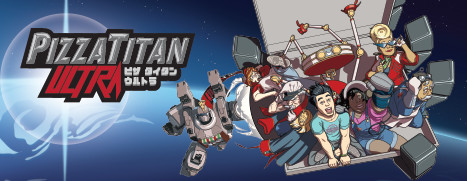
Pizza Titan Ultra is Now Available on Steam and is 15% off!*

Fast paced 3rd-person action platformer, fighting and smashing through a futuristic city, in a giant mech, to deliver pizza. Arcadey action with speedy attacking and dodging, while attempting to control the massive weight of a 10 storey mobile pizzeria – try not to make too much of a mess!

*Offer ends May 2 at 10AM Pacific Time

Posted on Leave a comment

Join Gamasutra and Chris Hecker for a chat about SpyParty at 3PM EDT

Asymmetric multiplayer game SpyParty has been in development for quite some time, but a few weeks ago the game finally manifested on Steam Early Access, bringing the assassination/party simulator to the masses. 

Since developer Chris Hecker and his compatriots have worked for quite some time on this project, we’re excited for a chance to talk with him about his process over on our Twitch channel at 3PM EDT, and what he feels about the state of the game so far. Hecker will also get an opportunity to review our performance with the game, which at best, could be described as “well-intentioned.”

If you’ve got questions about making it easy for players to simulate NPCs, asymmetricalgameplay, or releasing multiplayer games on Steam, come ask them in Twitch chat! 

And while you’re at it, be sure to follow the Gamasutra Twitch channel for more developer interviews, editor roundtables and gameplay commentary. 

Posted on Leave a comment

Social AR games are coming to Snapchat

Snap Inc. has announced that it’ll be bringing augmented reality games to its social camera and chat app Snapchat.

Dubbed Snappables, these in-app AR lenses offer Snapchat users small games to play that can be controlled through touch, motion, or, in some cases, facial expressions.

Much like Facebook Messenger’s Instant Games, many of Snapchat’s Snappables have a social element to them as well. For example, some games feature high scores and let players issue challenges to friends, potentially nudging Snapchat users of a more competitive nature to jump into the app more often.

Snapchat notably offers a free creation tool called Lens Studio that allows anyone to create custom AR lenses like face masks or stationary objects, but there’s no word if devs will eventually be able to create games as well through that program. 

It is worth noting as well that the introduction of games to Snapchat comes just one month after Snap Inc. acquired PlayCanvas, a UK-based tech firm and creator of a cloud-based HTML5 game engine.

Posted on Leave a comment

Blog: Why Atari’s infamous E.T. tie-in isn’t half bad

The following blog post, unless otherwise noted, was written by a member of Gamasutra’s community.
The thoughts and opinions expressed are those of the writer and not Gamasutra or its parent company.


[This is an excerpt from ‘21 Unexpected Games to Love For The Atari VCS’, available in the current game eBook Storybundle, which covers a number of classic VCS games that, untethered from nostalgia, may still be of interest to a player who didn’t grow up with the system. E.T. is the subject of so much hyperbole that it’s hard to see clearly. While frustrating in places (when getting out wells), could it be that it’s not as bad as people say?]

E.T.: The Extraterrestrial

1 player, joystick. 8K in size.

Created by Howard Scott Warshaw, with graphics by Jerome Domurat. Based on the movie. Published by Atari in 1982.

Accessibility: 2/5

In a sentence: Another adventure game from Howard Scott Warshaw, while also frustrating, once you’re used to how to tackle its wells E.T. is a much simpler, more accessible, much more replayable game than the rather overloaded Raiders of the Lost Ark.

It’s amazing how things become common knowledge, often incorrectly. A person hears something that is both memorable and likely, to them, to be true, so they pass it along. When one of these people writes for a popular blog or appears on a popular YouTube channel, and these factoids can spread quickly.

There are two facts in question concerning the Atari VCS game E.T.: The Extra Terrestrial. The first, that Atari was left with so much unsold product that they bulldozed them. This one is true, although it wasn’t just E.T. but a variety of product. The other is that E.T. caused the Great Game Crash of 1983. This is certainly not true. One factor was likely more the prevailing attitude of Atari that they could always spend a little and rake in great profits, as well as that of a plethora of third-party companies making bad games. But E.T. itself, while not flawless, is arguably a better game than its predecessor by the same developer, Raiders of the Lost Ark: it’s a lot more obvious how to play it, it doesn’t require two joysticks, it’s a bit less dependent on its manual, and once you know how to win the game it retains more of its interest.

There’s positive things about the game as well. The game is entirely non-violent. There are no weapons, for use by you or your opponents. There was no need for Steven Spielberg to digitally change handguns into walkie-talkies here, for there aren’t any guns at all. Your two human antagonists, the Scientist (I often call him the Doctor, it’s what he looks like) and the FBI Agent, have the power to harass and delay you, but not destroy.

E.T., like their interstellar comrades ToeJam & Earl, is trapped on Earth, and they’d very much like to go home. The Earth in E.T. is but six screens in size, connected to each other somewhat like the sides of a cube. They need to find the three parts of a “space telephone,” unhelpfully hidden in various wells scattered around Earth’s pockmarked landscape, find the right place in the game world to make a call from–and make it without any humans around, because E.T. hates eavesdroppers–then be in the landing zone on Earth at the right moment, also without any humans around. That last part will prove to be your undoing lots of times.

One of Earth’s six screens is the forest, where E.T. both lands and is rescued from. Another is “Washington D.C.,” where the humans live. The four others are well-filled wilderness, where you can find phone parts (in wells), energy-replenishing candy dots of some forgotten trademarked brand, and also power zones. These zones are the key to success in E.T., an interesting way both to mix up each play of the game and also give E.T. various abilities without having to resort to Raiders of the Lost Ark’s second joystick.

As E.T. travels the surface of Earth, a symbol will often appear at the top of the screen. This indicates what kind of power zone E.T. is currently in. Some are more common than others, and there are some places that aren’t in any power zone. When the icon indicates what function E.T. wishes to perform, press the joystick button while standing still to activate it. It’s an early form of the context-sensitive control gimmick that many games would later use. The power zones are randomly distributed every round, and a good memory is needed to keep track of important yet rare zones.

They’re all described in the manual, but a few are particularly important. The Question Mark zones, of which there are one on each well screen, when activated, will reveal one of the wells on-screen that contains a phone part, if any do. Once thus narrowed-down, E.T. must dive into the well to retrieve it.

Those wells. Most people who loathe E.T., they do it because of the wells. They’re maddeningly easy to fall into when you don’t want to, and some of the wells are near the edge of the screen, so if E.T. just crosses into that screen at the wrong place they’ll plunge in. When they hit the ground they’ll lose a large chunk of energy from the impact. It’s not well-known (heh) that it’s possible, with good timing, to halt E.T.’s fall by pressing the button on their way down, and, levitating, float the rest of the way. The timing is tricky, but it’s a good skill to learn, and will save you hundreds of energy points.

When E.T. has found a phone piece, whether they float down or land thud on the bottom, they can then collect it and then use the button to levitate back out. A word needs to be said about this process. Once E.T. is levitating up and out of the pit, they’re not safe yet. Once out of the pit, E.T. is still levitating. Care must be taken here, or else wherever the hapless alien stops levitating, which is the precise moment they’re no longer in contact with the well, they’ll then immediately fall right back in again! What to do is, while still levitating on the surface, E.T. can move in all directions. The safest way to escape the well is usually by going down, if possible. Sometimes left and right work too. The problem is that E.T. will plunge back in if any part of their body ends up overlapping the well upon landing. If you have excessive trouble with this (you’re likely to!), see the Links section for information on a hacked version with much less frustrating well behavior.

Now that a new phone piece is in their crinkly hands, that’s one task down. Three such pieces much be found, randomly scattered around the many wells of Earth, in order to return home. Then E.T. must find the Call Home zone and activate it –without any unfriendly humans listening in– then find the Landing Site zone in the Forest –again, without nosy intruders around– to return home and win the game. E.T. can then continue the adventure if they want, re-scrambling the world and going another round.

Confounding this process are those two large and annoying humans that are constantly chasing E.T. The Doctor grabs them and drops them off at his home building in Washington D.C. This isn’t really that bad, and can actually be taken advantage of for energy-free travel. The FBI Agent, however, is hateful. He’ll steal one of E.T.’s hard-won phone pieces and toss it into a random well! That’s another search for the right well and another plummet and possible crash to survive.

One fact that works in E.T.’s favor is, weirdly, only one human can be on-screen at once. The locations of the humans are not faked in this game, but are each either considered to be in one of the game’s six screens or at “home” in their building at any given time. If one tries to enter a screen where another human currently resides, it’ll block its movement until they can clear the zone. It’s not uncommon for the Doctor and FBI Agent to check each other’s movement like this, each trying to walk into the other’s vicinity. Humans sure are a strange and confusing species.

Back to the question of weapons. There is no danger of physical harm in E.T., the problem you have to overcome is your energy consumption. Earth’s strange environment takes its toll on our intrepid space raisin, and even just moving around saps energy from your total with surprising rapidity. E.T. can also run, caused by you holding down the button, which increases their movement speed but correspondingly drains energy much faster. If E.T. runs out of energy, his human friend Elliot will come find him and, through a process described as merging (?), give him 1,500 energy back a limited number of times. This is just a stopgap though; E.T. starts with 9,999, and unless they’re close to winning the game he’ll probably run out again soon.

With luck, you’ll collect the three phone pieces, call the ship, and finally be at the landing zone at the exact moment the timer runs out to win the game… or, most likely, one of the humans will show up and spoil E.T.’s rescue. Then E.T. will have to find the Call Ship zone again to restart the timer. Maybe this time they’ll have better luck, or maybe it’ll happen again and again. Things like this are why Earth receives so little alien tourism money.

Links

AtariAge  Manual

If you like the idea of ET but want to try a version missing some of the frustration, the owner of the site neocomputer.org has hacked the game a bit to make it a bit more playable, although at the cost of slightly worse graphics. A description, his notes, and the modified game rom itself are available here.

Also try…

Raiders of the Lost Ark, naturally. Or one of the other complex adventures on the VCS and covered in this book: Adventure, Haunted House, Riddle of the Sphinx, Private Eye, Pitfall II, Mountain King, Dragonstomper or Sword of Saros.

Posted on Leave a comment

Dota 2 Update – April 24th, 2018

* Dota Plus Post Game screen now animates faster. The Post Game no longer has Continue buttons blocking progress for the Hero Progress and Hero Relics screen; instead, after the presentation is over, there are icons on the top right to return to the summary screens.
* Hero Chat Wheel sounds will no longer be muted when announcers are muted.

Posted on Leave a comment

How Squidlit’s devs authentically recreated a Game Boy game in 2018

For those of you who miss the many shades of green, the chirpy sound effects, and the simplistic (yet challenging) gameplay of the Game Boy era, Squidlit is the answer to your prayers.

A Game Boy-inspired platformer, Squidlit aims to create a nostalgic experience through simulating the limitations of the handheld with their title.

In a recent interview with IndieGames.com, Squidlit devs Alex Barrett and Samantha Davenport talked about the challenges that came with designing a game for the classic system.

What drew you to create an authentic Game Boy experience 15 years after its discontinuation?

Samantha: We are, first and foremost, people who really enjoy playing video games. To that effect, we have a collection of a few hundred games that spans back to the late 1970’s. When Alex came up with the idea of creating our own video game, it seemed to make sense that we start, essentially, at the beginning with a console we know well and love. The first console Alex played was the Nintendo DMG Game Boy, so it was a natural choice.

When we looked at other games that sought to capture the nostalgia of a previous console, we always noticed that while capturing the look of a console like the Game Boy, it’s hard to find one that goes to the lengths to recreate all the console’s limitations as well. We thought to ourselves that if you don’t see something you think should be there, make it yourself!

squidlit_2.jpg

What challenges came with recreating the visual and audio style of the Game Boy?

Alex: I think the most challenging aspect of making Squidlit came from things going on in the background of the game. It was important to me that the four sound channels of the Game Boy be accurately represented. I had to make a system where if a sound effect used one of the channels dedicated to the music, the music on that channel would stop playing for the duration of the effect (it’s most noticeable when you talk to ooblugs). Also, almost all animations in Squidlit are synced to the beat of the music, so everything is that much cuter. This also took some finagling. Perhaps someone more experienced would have an easier time with stuff like this, but as my very first game it took months to figure out.

How did the limitations of the Game Boy technology affect the game’s design?

Alex: One of the more limiting aspects of the Game Boy was it’s inability to display more than 10 sprites in a horizontal line. Plip, for example, is made up of two 8 x 16 pixel sprites so the amount of obstacles we could throw in front of her was limited. I didn’t want any flickering to happen in Squidlit, so we had to go through every possible location of simultaneous objects on the screen and make sure we didn’t exceed this limit. The Game Boy also had an itty bitty 160 x 144 resolution screen, so you can’t see very far ahead of you. We put a lot of thought into trying to make the enemies fair in relation to your view.

squidlit_3.jpg

Were the play styles or visual themes dictated by the Game Boy limitations? How so?

Alex: I started doodling squidlits in high-school all over really serious things like math and economics. When I started making a game, I found they translated really well to the Game Boy’s limited palette. Kirby’s Dreamland was a big inspiration for Squidlit. Masahiro Sakurai, its director, once stated that the original concept for it used only one button. We took this to heart in trying to design a game around the Game Boy’s limited methods of input, and we ended up whittling the mechanics down to jumping and attacking using the same button.

What challenges did you face in creating cute characters and vibrant worlds when limited by the Game Boy’s visual style?

Samantha: When creating the world for Squidlit, we wouldn’t think about the technology at first. We would first talk about what the characters are like, what their world should be like, and what they would do. Skwit Skwot, God Emperor, does indeed have a reason for why she is creating this possibly dangerous magic, while Plip truly believes she must stop Skwit Skwot. The biggest challenge in this method was taking these grand ideas and finding ways to implement them into a GameBoy recreation. I think we managed quite well, as we ended up not having to sacrifice any of our major ideas.

If there was anything specific I had to point out, however, it’s the word limitation on how much each character could say before it felt overly tedious. It seems like some of the characters are saying a whole lot at certain points, but what they’re saying is very carefully condensed lore on what’s truly going on. That being said, Squidlit is a test run and prologue to our next title, Super Squidlit.

squidlit_4.jpg

How do you make your game feel fresh to modern players when working with a purposely-limiting older visual/audio style?

Samantha: In making a Game Boy recreation game, one thing we noticed was that a lot of platformer titles for the console didn’t really incorporate story too heavily. We decided that putting in an over-arching plot with hints as to motivations for both sides of the story would draw in more modern players with aspects of storytelling they are more familiar with. We also made sure to sprinkle in a hearty dose of Squidlit-y love and comedy in there to make things lighthearted and squishy!

Were there any rules of Game Boy development that you didn’t follow? Would this fit on an actual Game Boy cartridge?

Alex: To my knowledge, Squidlit doesn’t do anything that a Game Boy can’t. On that note, if anyone finds it doing something it’s not supposed to be able to, let us know and we’ll put out a patch! One could probably squeeze Squidlit onto a Game Boy cart from later in the console’s lifetime, and that was a deciding factor for the length of the game. We would probably have to pull some shenanigans to get some of the more fluid animations to play, much like Donkey Kong Land did. We capped the game at 30 FPS, even though the Game Boy can run at a full 60, to accommodate for some of the more complex things it does.

This article was originally published on Gamasutra sister site indiegames.com.