Posted on Leave a comment

Video: AI and animation in Assassin’s Creed: Brotherhood

In this GDC 2011 session, Ubisoft’s Nicolas Barbeau and Aleissia Laidacker discuss the AI and animation powering the virtual population of Rome in Assassin’s Creed: Brotherhood

The duo go over the concept of crowds, defined as the NPCs which help to make the world of Assassin’s Creed feel like a living and breathing environment.

They also explain the difficulties encountered when creating an evolving and changing crowds, like the challenges that popped up in production pipelines and animations.

It was an insightful talk that’s definitely still worth watching, so developers shouldn’t miss the opportunity to do so now that it’s freely available on the official GDC YouTube channel!

In addition to this presentation, the GDC Vault and its accompanying YouTube channel offers numerous other free videos, audio recordings, and slides from many of the recent Game Developers Conference events, and the service offers even more members-only content for GDC Vault subscribers.

Those who purchased All Access passes to recent events like GDC or VRDC already have full access to GDC Vault, and interested parties can apply for the individual subscription via a GDC Vault subscription page. Group subscriptions are also available: game-related schools and development studios who sign up for GDC Vault Studio Subscriptions can receive access for their entire office or company by contacting staff via the GDC Vault group subscription page. Finally, current subscribers with access issues can contact GDC Vault technical support.

Gamasutra and GDC are sibling organizations under parent UBM Americas.

Posted on Leave a comment

Activision Blizzard’s revenues falter after Destiny 2 DLC ‘underperformed’

Activision Blizzard today released its financials for its third quarter ended September 30, stating that its results were better than predicted despite showing a decrease in total revenue and overall player engagement. 

The company’s total revenues decreased roughly 7 percent to $1.51 billion, while net income was up 38 percent year-over-year to $260 million. It’s a bit of a slowdown for the company, which has reported robust earnings for the past two quarters.

The decline in total revenues can be attributed in part to Destiny 2: Forsaken​, which debuted in early September. The company’s revenues from console games and services dropped 34 percent year-over-year to $347 million, with the company adding that the recently-released Destiny 2 expansion isn’t performing as well as anticipated. 

Activision Blizzard’s mobile revenue was also down 11 percent to $523 million, but balanced out partially by a 21 percent boost in PC revenues to $482 million.

The growth in Blizzard’s PC game earnings is driven largely by the launch of World of Warcraft: Battle for Azeroth back in August, which sold 3.4 million copies during its first day on shelves — a record for the franchise, the company noted. 

Posted on Leave a comment

Daily Deal – Blendo Games Complete Collection, 73% Off

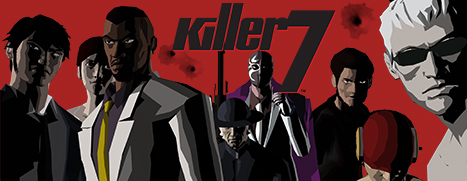
killer7 is Now Available on Steam and is 10% off!*

Step into the stylish and sinister world of killer7, the cult classic from Grasshopper Manufacture, Ltd., available for the first time in 13 years. Renowned for its unique gameplay and legendary storytelling from SUDA51, Hiroyuki Kobayashi, and Shinji Mikami, arrives on Steam for the first time.

*Offer ends November 22 at 10AM Pacific Time

Posted on Leave a comment

Review: Element RTS

At last, another mobile RTS enters the field. Element has been a PC game for a long time, undergoing playtesting in Steam’s Early Access program, so the version we’ve got on iOS now (sorry Android), is fat-free and beautiful.

Element‘s design is simple and incredibly refined. One might even be tempted to call it… elemental. Everything fits into overlapping matrices of three. There are three unit types: attack units shoot at other structures, defense units shoot at incoming bullets, and resource units generate energy. Each of these can be either a land, water, or air unit, depending on where it is placed, with a rock/paper/scissors strength relationship between them. Each can also be one of three strengths, being more effective for a higher energy cost. So in the end you have 36 different units, but so tightly organised they feel like far fewer. In addition, you have your base unit, mines, drones that can directly heal damaged structures, and missiles that directly attack the enemy.

Elements Rev 1

This highly-structured approach to units is welcomed because the actual real-time strategy gameplay is very unique and very intense. First of all, the game is played not on a two dimensional map, but on a sphere that can be rotated and constructed upon all over. That means there may be something horrible happening on the dark side of the planet, attacks come from six directions, and you will probably lose your bearings on a regular basis. This is compounded by each side’s ability to place units almost anywhere they want, which means you may find the enemy on your doorstep in a heartbeat. Rather than the traditional base buildings and mobile attack units, you will contend with sudden sprouts of enemy turrets and attack satellites that orbit the planet to regularly harass your bases. Because attacks can happen so suddenly, it becomes incredibly important to carefully manage your economy, balancing your energy expenditures. Each planet has a slightly different challenge. One will be mostly water, another will be tiny, another will have an extremely well-established enemy base you need to destroy.

Furthermore, you have a two-pronged goal for each level. Not only do you have to destroy the enemy base (mercifully, not every enemy unit) but also mine more than half of the planet’s limited elemental resource before the enemy does. The AI often starts ahead of you, with several mines already pumping out whatever element is under dispute, so you have to work quickly, efficiently, and ruthlessly to destroy their ability to mine, build up your own, and defend your territory before you can finally destroy their base. It’s impossible to simply rush to attack because you’ll fail the mission if you haven’t mined at least half the element, so each round is a delicate five-minute balancing act with orbital lasers.

Elements Rev 2

The AI is ruthless on later levels, taking advantage of any weakness in your defenses and pouncing if you overextend yourself. It can sometimes feel unfair when the AI starts with an advantage as well but the game’s difficulty curves well. Early missions are simple and straightforward, maybe even too easy. At the halfway point, you might be ready to throw your phone against the wall… but you won’t, because trying again will just take you five more minutes.

Not only are matches short and intense, they control beautifully on mobile. Swipes rotate the map, and a targeting reticule in the center selects a territory. Thanks to the organized units, it’s easy and fast to build the structure you want from the left-side menu. The right-side menus keep you up-to-date on all the necessary information you need to win.

Elements Rev 3

While the game design is incredibly tight, other parts of the game are not as thoughtful. Even at larger sizes, the units and buildings are very similar-looking. Everything is a grey or black tower with neon lighting, and while over time you can learn to recognize each one, the similarity definitely hinders comprehension. They could be more architecturally distinctive, for instance, by making defensive structures dome-shaped and attacking structures thornier. Even your own units can be mistaken for the enemy when you are spinning the planet quickly.

Despite the emphasis on quick battles, a lot of the game takes on a slow-motion 2001: A Space Odyssey aesthetic. This works well when you’re trying to handle a half dozen attack satellites and missiles, but other times becomes irritating. With everything moving so slowly, yet so inexorably, it would be nice if the game speed controls were a little more accessible, rather than behind the pause menu. Likewise, the opening menu pace is too leisurely, delaying your entry into a match while you slowly watch the camera pan over outer space. It’s pretty, but not necessary.

Elements Rev 4

The last big missing piece is multiplayer, which is totally absent. That’s a big shame, because Element‘s chess-like perfectly balanced design, dual objectives, and three-dimensional playing field deserve to be the object of some serious strategizing by some obsessive expert players. I’d love to see what kind of bluffs and counter-bluffs they come up with. If Element adds multiplayer in the future, I think it will be a must-buy for mobile strategy gamers.

For now, Element is a tight, unique design that works perfectly on mobile. If you are looking for a real strategic challenge, or just something not quite like anything you’ve never played before, Element is your game.

Posted on Leave a comment

Video: How to utilize different types of game randomness

Randomness is not equal. Because the impact of randomness is more visible in tabletop games, using the appropriate technique is critical to design a good player experience.

In this GDC 2018 talk, Mars International’s Geoff Engelstein examines the different types of game randomness, when each type is useful, and how to generate and use them in a board game context.

It’s an insightful talk that’s still worth watching, so developers shouldn’t miss the opportunity to do so now that it’s freely available on the official GDC YouTube channel!

In addition to this presentation, the GDC Vault and its accompanying YouTube channel offers numerous other free videos, audio recordings, and slides from many of the recent Game Developers Conference events, and the service offers even more members-only content for GDC Vault subscribers.

Those who purchased All Access passes to recent events like GDC or VRDC already have full access to GDC Vault, and interested parties can apply for the individual subscription via a GDC Vault subscription page. Group subscriptions are also available: game-related schools and development studios who sign up for GDC Vault Studio Subscriptions can receive access for their entire office or company by contacting staff via the GDC Vault group subscription page. Finally, current subscribers with access issues can contact GDC Vault technical support.

Gamasutra and GDC are sibling organizations under parent UBM Americas.

Posted on Leave a comment

Take-Two Interactive raises financial outlook due to Red Dead Redemption II

Take-Two Interactive released its financials for the second quarter ended September 30, reporting an 11 percent increase in revenue to $492.7 million thanks to successful sales of NBA 2K19.

Recurrent consumer spending (purchases of DLC, in-game currency and micro transactions) grew 12 percent and accounted for 49 percent of total net revenue.

Net income increased to $25.4 million, or $0.22 per diluted share, as compared to a net loss of $2.7 million, or $0.03 per diluted share, for the comparable period last year.

Grand Theft Auto V is still selling well, and Grand Theft Auto Online is exceeding company expectations even ahead of Red Dead Redemption 2’s release. 

NBA 2K19 sales increased 10 percent compared to last year’s release, driven primarily by growth in recurrent consumer spending. Digital downloads of the game also increased significantly.

Digitally-delivered revenue grew 18 percent to $358.4 million and made up for 73 percent of the total revenue, with the company noting that the split between digital download sales and physical sales are moving faster than initially anticipated.

Because these financials are for the three months ended September 30, it doesn’t include the launch of Red Dead Redemption 2, which generated $725 million during its first three days on shelves. 

However, due to better-than-expected sales of Red Dead Redemption 2, Take-Two has increased its outlook for the full financial year, expecting to hit between $2.55 billion to $2.65 billion in revenue with income of around $202 to $232 million.

Posted on Leave a comment

Nintendo to remove offensive Native American designs from Super Smash Bros. Ultimate

Nintendo says it will be removing Native American character designs from Super Smash Bros. Ultimate after receiving overwhelmingly negative feedback from players around the depictions.

This isn’t the first case of insensitive content being removed from a video game, with PlayerUnknown’s Battlegrounds developer PUBG Corp. discarding an offensive in-game mask back in July after players deemed the design to be tasteless. 

Noticed first by ResetEra users, the design was spotted during the Nintendo Direct live stream held last week, where one of Mr. Game & Watch’s attacks referenced an offensive depiction of Native Americans. 

The move, titled Fire Attack, references a 1982 cowboy game where players defend a wooden fort from Native Americans wielding burning torches and feathers in their hair. The same design was also seen in a separate Spirit character featured in the game as well. 

As Eurogamer points out, Fire Attack was previously edited by Nintendo when Game & Watch Gallery 4 was re-released on Game Boy, with the company removing the feather from the Native American characters’ hair.

It looks as though Nintendo will do the same with Super Smash Bros. Ultimate.

“Nintendo has been planning to distribute an update for Super Smash Bros. Ultimate that removes the feather from the silhouette of Mr. Game & Watch,” a Nintendo spokesperson told Eurogamer.

“The original game on which this depiction of the character is based was released more than three decades ago and does not represent our company values today.”

“We sincerely apologize that this change was not noticed in our marketing material and are continuing our work to make Super Smash Bros. Ultimate an experience that is both welcoming and fun for everyone.”

Posted on Leave a comment

Free Week – ARK: Survival Evolved


The Armistice Steam Sale fundraiser is back, promoting peaceful gameplay in support of children still affected by war today. This year marks 100 years since the armistice that ended the First World War, so War Child has pulled together a bunch of the best-selling games to mark the occasion that are either non-violent or have been modified as part of this year’s Armistice campaign (Dick Wilde & Prison Architect).

Each game that is part of the sale is donating a % of developer proceeds to War Child UK & its US partner Children in Conflict to raise vital funds for children whose lives have been torn apart by war.

ABZ (505 Games) – Donating 50% of developer proceeds / Discounted by 50%
Broken Sword 5 (Revolution Games) – Donating 50% of developer proceeds / Discounted by 25%
Democracy 3 (Positech) – Donating 100% of developer proceeds / Discounted by 25%
Dick Wilde (PlayStack) – Donating 50% of developer proceeds / Discounted by 50%
Machinarium (Amanita Design) – Donating 60% of developer proceeds / Discounted by 60%
Mini Metro (Dinosaur Polo Club) – Donating 50% of developer proceeds / Discounted by 50%
Prison Architect (Introversion Software) – Donating 50% of developer proceeds / Discounted by 75%
Scanner Sombre (Introversion Software) – Donating 50% of developer proceeds / Discounted by 75%
RiME (Six Foot) – Donating 50% of developer proceeds / Discounted by 50%
The Talos Principle (Devolver Digital) – Donating 50% of developer proceeds / Discounted by 75%
The Room (Fireproof Games) – Donating 100% of developer proceeds / Discounted by 75%