Posted on Leave a comment

Don’t Miss: The untold story of Lumines: Electronic Symphony

[How did the PlayStation Vita’s puzzle star take shape? Producer James Mielke (formerly of developer Q Entertainment) walks through early concepts for the game, outlines production difficulties, including never-before-seen in-progress screens and video.]

Officially greenlit in August of 2010 — in Paris, where I had brought a handful of pitches to our publisher, Ubisoft — Lumines Electronic Symphony (as it was eventually dubbed) had originally been conceived as Daft Punk Lumines.

In my quest to reboot the Lumines franchise, which had diminished somewhat since the original first took gamers by surprise on PSP, I thought that one way to avoid criticisms of “just another Lumines with new skins and new music” would be to focus solely on the work of one particular artist. And what better artist to approach than Daft Punk, who had clearly transcended the pitfalls that engulf most music acts.

Not only were they as relevant in 2010 as they had been in the mid-’90s, but they were now iconic, with Adidas/Star Wars crossover appearances, their own movies (Electroma and Interstella 5555), high-quality action figures, and a soon-to-be-released soundtrack to Disney’s Tron reboot on the way. Besides, even old ladies who don’t know a thing about club music know the song “One More Time”.

What I wanted to do was put the player in the cockpit of Daft Punk’s pyramid-shaped DJ booth that they tour with, and — as Daft Punk — rock the crowd by performing big combos in Lumines. Everything in the game was going to be Daft Punkified, from the HUD, to the soundtrack, to the bassy aural ambience found on their 2007 Alive live album, to the special effects, real-time lighting, bouncing 3D crowd, etc. Since we were developing this for the PS Vita I planned to use the rear touchpad to allow players to manipulate sounds and visuals in real-time (like laser spotlights for visuals, and tweak the audio like a Korg Kaoss pad).

Alas, while communication with Daft Punk’s management was good, the duo (who have both met Q Entertainent creative director, Tetsuya Mizuguchi, and professed to loving Rez) didn’t want to use previously released music, and didn’t have time to create new music, because of a high pressure schedule to finish the Tron soundtrack. Understandable, but at this point it was obvious that we (Q Entertainment) had to move forward conceptually.


This was a screen of a work-in-progress that was eventually discarded when we created an all-new engine for the game.

While driving to the airport one day with Tetsuya Mizuguchi (who I will refer to as “Miz” from now on; he’d want it that way), he began talking about how he wanted to see a Lumines with flowers and bright colors. I, on the other hand, had been thinking about taking Lumines players on a journey into space and beyond, so I started thinking about how I could reconcile these two vague ideas and make them work together.

It was at this point that I came up with the idea of creating a sort of “concept game” (like a concept album, in musical terms) that would start with a stage of classic, pure Lumines that would be interrupted about three minutes in before all the blocks onscreen exploded in a “big bang”. This is where the new Lumines would truly begin, right after surprising players for the first time.

I had a number of different names I was working with, inspired by the concept. Having a name in place really helps me visualize where I’ll go with the game concept, so some of the internal names for the concept were Lumines Forever, Lumines: Light Years, and Lumines: Electro Light Orchestra. The last one was actually one that we almost went with before the legal department thought that the band Electric Light Orchestra would give us problems down the road. Ultimately we went with a variation of that name, which turned out to be Lumines Electronic Symphony.


If you look closely at this screen, which clearly shows placeholder fonts and a notable lack of HUD elements, you can see that the blocks aren’t perfectly aligned. This was, at the time, one idea we were considering to reflect the physics and impact “engine” we had in mind. We wanted to add velocity and physics to the blocks so that when you dropped a block hard (by pulling down on the D-pad) it would cause the surrounding blocks to shudder from the impact.

This could have had further implications; for example if the blocks were designed as corn kernels, and the alternate blocks were butter cubes, and the skin design was of a frying pan or fire, when you cleared a combo it could create popcorn particle effects. Physics for that skin would then be light and fluffy, allowing the resulting popcorn to pop happily off the screen. Conversely, imagine a skin with ice cubes, water, and snow.

The concept for this variation of Lumines would be to take players on a conceptual journey, with skins arranged and grouped — post-big bang-effect — into phases: Molecule, Seed, Flower, Oceans, Sky, Civilization, Astro, Nebula, Heavens, and Beyond. Each phase would consist of three or four songs grouped to fit the vibe — for example I had selected songs by Towa Tei, Big Audio Dynamite, and The KLF to soundtrack the Civilization phase, to convey the feelings of business, a hectic pace, and the claustrophobia of modern living.

Following Civilization’s decline (originally planned to be a series of crumbling, wireframe, 3D Rez-like buildings symbolic of mankind’s self-immolation) was the relief offered by the Astro stage which, if I would have had my way, would have surprised people on a number of levels.

First, the song that would have kicked off the Astro phase was Supertramp’s “Give A Little Bit”. Yes, it’s not what anyone would have expected, but it’s a great song, and it’s uplifting, and it would have been a “Say Anything moment” in the game, one that players would have remembered years down the road. It was meant to send a signal of hope and promise (common Q Entertainment themes), an antidote to the musical rush of “What Time Is Love” that was originally planned to close out the Civilization phase.

The second thing that I was planning to do with the Astro phase was — since the skin would have been space shuttles slowly exiting the Earth’s atmosphere — reverse gravity. I was dying to hear the reactions of players who, upon entering the Astro phase, suddenly saw their blocks float to the top of the screen.

The gameplay would have remained unaffected, except that blocks would now begin rising from the bottom, as opposed to falling from the top. I thought, “If I can create a moment in puzzle gaming that people still talk about years down the road, I will have accomplished what I set out to do.” In the early stages of planning we discussed having blocks come in from all directions to a rotating cluster in the center, but we decided that would no longer feel like Lumines. A lot of things fell by the wayside for not feeling like Lumines — but I’m getting ahead of myself.

Posted on Leave a comment

Dota 2 Update – November 9th, 2018

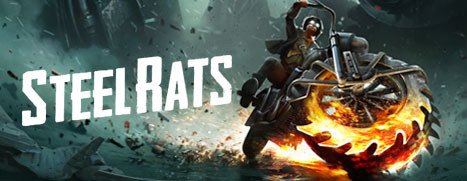
Steel Rats™ is Now Available on Steam and is 15% off!*

Wreck and ride in a visceral and ground-breaking evolution of the 2.5D action arcade genre, fusing destructive, octane-fuelled, motorbike combat and death-defying stunt gameplay, set in a visually stylised retro future world. Switch between four unique characters as you wreak havoc!

*Offer ends November 14 at 10AM Pacific Time

Posted on Leave a comment

Lord of the Rings Online returns to its 2007 roots with official ‘Legendary Server’

Lord of the Rings Online has opened up a “Legendary Server” that rolls the modern version of the game back (in some ways) to match the world it offered way back in 2007 when the online game first launched.

Legacy or vanilla servers have recently been a popular request from players of many longrunning MMORPGs like Lord of the Rings Online. Blizzard, for example, recently opened up a demo of the World of Warcraft legacy server it has in the works that gives its players a playable version of vanilla WoW

In the case of Lord of the Rings Online, the Legendary Sever isn’t a true return to LOTRO’s roots. The server keeps the UI and game system changes that have hit the game over its 11-year lifespan, and also features updated versions of some regions rather than the original ones that shipped with the game.

Things like the level cap and world story progression have been rolled back, but that line will be pushed forward to expand the content offered in the Legendary Server every 4 months. More information on exactly what is being offered can be found in an extensive FAQ on the game’s website. 

Posted on Leave a comment

Nintendo is ending video streaming support on the Wii

Nintendo is ending support for Netflix and all other video streaming services on the Wii. Netflix subscribers were notified of the coming change via email, and Netflix’s website now lists the 3DS as the only Nintendo system that supports its streaming service.

According to a copy of that email shared on Reddit, the switch is officially being flipped on January 31, 2019. After that, the Netflix Wii “channel” (and seemingly other streaming services like Hulu and Amazon Instant Video as well) will no longer function on the system. 

This is also the same expiration date Nintendo put on the Wii Shop Channel itself last year, meaning that January 31, 2019 sees both the end of streaming video support for the Wii as well as the closure of its digital game and app store.

Additionally, Nintendo has yet to bring Netflix to the Switch, its current-generation console. That system launched in March 2017 and has been slow to introduce support for video apps as a whole. So far, the Switch introduced a Hulu app in November 2017 and, just this week, brought a YouTube app to its eShop.

Posted on Leave a comment

Strategy guide publisher Prima Games is shutting down

Newsbrief: Prima Games, a longtime mainstay in the printed strategy guide business, is closing its doors for good. The publisher’s parent company DK announced this week that the company is winding down operations and will close down after 28 years in business.

The shutdown comes as a result of what DK described as a “significant decline” in its video game business, reflecting a years-long change that has seen strategy guides shift from a printed resource to a primarily online one. 

According to sources speaking to EGM, all three of the companies offices are being shut down as a result. While details about the New York office are unknown, the Roseville location is due to close later this month, while the Indianapolis office will continue on with a reduced staff until March 2019 to publish the remainder of Prima’s currently announced strategy lineup.

Posted on Leave a comment

Daily Deal – Risk of Rain, 80% Off

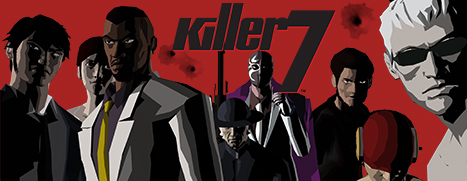
killer7 is Now Available on Steam and is 10% off!*

Step into the stylish and sinister world of killer7, the cult classic from Grasshopper Manufacture, Ltd., available for the first time in 13 years. Renowned for its unique gameplay and legendary storytelling from SUDA51, Hiroyuki Kobayashi, and Shinji Mikami, arrives on Steam for the first time.

*Offer ends November 22 at 10AM Pacific Time

Posted on Leave a comment

Pocket Tactics Presents: Ok Maybe The Weekender

Ok, so maybe the Weekender will stick around a bit longer. I’ve been able to make enough time to take care of it myself (more or less), and this is definitely a worthwhile thing that we enjoy doing. I guess it depends if we should come up with a new name to note the changing of the guard.

Something to ponder over the weekend, perhaps…

What We’re Up To

So… how about that Diablo Immortal announcement, huh? That proved… divisive. The backlash seems reminiscent of the one that followed in the wake of C&C Rival’s announcement, only magnified because this was Blizzcon and everyone wanted Diablo 4 instead.

This week also saw some great announcements – Rome: Total War for Android, as well as Carrier Battles hopefully making it over to Android, assuming the Kickstarter gets funded. We also reviewed the digital port of Love Letter, and RTS newcomer Element.

What’s on the horizon?

  • That C&C Rivals article is still coming, it’s just been delayed to next week.
  • We’ll also have more to say on Diablo: Immortal
  • Not as many reviews – Royal Advisor seems likely, but the rest are due later in the month.
  • More guide updates – definitely more than this week, as there’s been a few games that have earned themselves top spots.

Meanwhile, In mobile games…

Out Now

There aren’t really many high-profile releases this week, especially on Android, but a couple of interesting titles caught our eye:

Cat Lady – The Card Game (iOS Universal & Android)

I actually managed to get some play-time in with this one. Cat Lady is a digital port of a card game of the same name that sees you collecting cards from a 3×3 grid. You need to acquire cats to fill your ‘cattery’, but you also need to collect food for them to eat (so you can earn the points they’re worth), costumes for them to wear, as well as toys. There are plenty of other bonus and special cards as well to offer a variety of tactical choices and routes to victory.

This is a set collection game, and there’s a single, central deck. Once that runs out the game ends you total up the points – person with the most wins. The app itself is very slick and nicely animated, without going overboard. There’s a good tutorial, challenges and a challenge mode, and you can play against up to four AI or four local cat owners in pass-and-play. This is a fun quick game for all ages.

[embedded content]

Alphaputt (iOS Universal)

Ok, so it’s crazy golf, but the courses are in the shape of letters. What’s not to love? Local pass-and-play for up to four people, with 26 levels and several different game modes made this an intriguing pick for this week. We especially like the fact that you can type out words which then form the courses you will be playing, adding a touch of personalisation to proceedings. The trailer is a bit much though…

[embedded content]

Pangolin’s Puzzle (iOS Universal)

There have been a few puzzle releases this week, but this one caught our eye the most. It’s got a great, painted-effect art style, is mainly based around logic-puzzles (an excellent type of puzzle), and seems to have a very rich visual identity.

It’s although worth noting that developer Hero Factor are donating half of their profits from any IAPs to charities and organisations that look after real-life Pangolins (a type of Anteater). This is a premium game, but we’ve been unable to determine if there are any IAPS currently present, or what they may be. It’s possible they won’t come till later, but the developer says they won’t charge more than $6 for an unlock. Gameplay is estimated at 3 – 6 hours, with bonus unlocks and GameCenter achievements.

[embedded content]

Honourable Mention: Persephone (iOS/Android) (Puzzle), Teslagrad (iOS/Android) (Puzzle/Platformer)

Updates

There’s only one update of note this week, but it’s a good’un:

Galaxy of Pen & Paper (iOS Universal & Android) (Review)

The sci-fi spin-off of the charming Knights of Pen & Paper, Galaxy was a fun new take on developer Behold’s premise, but it fell a bit short of expectations. Now, nearly a year after release (and plenty of updates in the interim), there’s a new free content job called the “+1” update.

There’s a lot here for fans of the game, including six new classes, new planets and biomes, lots of new quests, skills, items etc… and a better event system, to name just a few things. If you haven’t played this in a while, might be worth giving it another look.

Sales

Quite a few sales that might interest you this week, although mainly on iOS. Asmodee Digital, Klei Entertainment and the Trese Brothers all offer discounts on some of their games:

Don’t Starve: Shipwrecked (Review) (iOS Universal & Android) – $0.99 on iOS
Don’t Starve: Pocket Edition (Review) (iOS Universal & Android) – $0.99 on iOS

Klei have slashed the price on both the original and the Shipwrecked version of their iconic survival/sim Don’t Starve. Both are equally as good, although the variations in Shipwrecked are potentially lost if you haven’t played the original. Bear in mind this can be a frustrating and gruelling experience at times as well. The last time the games were at this price was back in February, so while there’s a chance there may be a Christmas sale, I wouldn’t dally if you’ve yet to try this out.

Templar Battleforce Elite (Review) (iOS Universal & Android) – $4.99 on iOS

Last week the Trese Brothers discounted Heroes of Steel, this week it’s the premium version of Templar Battleforce (there is a free version, if you want to try it out). The Trese Brothers have been a dependable staple in premium mobile games, so their work is always worth checking out. This represents a 50% discount and it’s never been cheaper – that being said, the Brothers seem to run this discount fairly regularly so you can always wait for the next instance.

Twilight Struggle (Review) (iOS Universal & Android) – $4.99 
Splendor: The Board Game (Review) (iOS Universal & Android) – $4.99
Jaipur: The Board Game (Review) (iOS Universal & Android) – $2.99

Asmodee Digital have discounted a few of their boardgames this week – Jaipur & Splendor by a buck, with Twilight Struggle getting a discount of a couple of dollars. All of these games pretty much speak for themselves – especially Twilight Struggle – but do check out our review for more information. It’s also worth nothing that all of these games have been cheaper in 2018, so this isn’t the best discount – might be worth seeing if they go cheaper for Black Friday or at Christmas.

Also Spotted: The Quest & The Quest: Fire & Ice is 50% off on Android.

That’s all for this week’s update – seen anything else you liked? Played any of the above? Let us know in the comments!

Posted on Leave a comment

Going the Distance: Building a game – and community – over six years

Distance bends and twists the racing genre, bringing it closer to parkour and survival rather than focusing solely on quick laps. With the ability to race on walls and buildings, drive upside down, or even fly, it inspired players to find new routes in increasingly creative ways. The racing isn’t the only unique addition, as an unsettling atmosphere brings a new feel to the genre, and the game’s level creator ensures constant new challenges to those rushing through its mysterious locales.

Gamasutra spoke with Jordan Hemenway creative director at Distance developers Refract, to talk about taking racing in new directions, and building a game with a community over several years.

While we’re certainly inspired by a wide range of other racers and platformers, Distance’s gameplay is the result of eight years of iterative design. It started way back with the inception of our predecessor student game Nitronic Rush. The initial goal was to create a fresh take on 90’s arcade racers. Our team did weekly playtests to continually iterate on gameplay and track designs, and after 17 months we ended up with a neon racer that featured boosting, jumping, rotating, and flying.

Only at the very end of Nitronic Rush’s development did we realize the potential for parkour-style gameplay, despite our physics engine not really being built for it. Going into Distance, that was one of our dreams: to integrate wall and ceiling rides into the core gameplay and see where that takes us. It took quite a while to get it feeling like we wanted, but eventually we found something that worked with the wild track designs we had in mind.

With feedback from Distance’s beta players, we took that gameplay and expanded it as far as we could. Eventually, we even hired three of the most impressive level creators from our level-making community to help finish our main story campaign. Each of them brought a new perspective that I think strongly affected both the gameplay and aesthetic of the final experience.


“To get the most out of Early Access I think the biggest trick is understanding how to process the incoming feedback.”

Ignoring gameplay, aesthetics and atmosphere have always been important to us, and we knew they would be an integral part of the final Distance experience. I think our team is fairly unique in that everyone on the dev team has strong passion for aesthetics, so everyone is contributing to the art direction. Specifically, the “Arcade” portion of the game has allowed us to try out all kinds of visual styles and themes. We can go from a cyberpunk city to a desert oasis to a snowy fortress, and that variety makes sense since it keeps you on your toes.

When it comes to the story campaign, we started with a fairly straightforward dystopian sci-fi plot. Over time, I became fascinated with the horror genre and what opportunities it offers, emotionally. That was the motivation for me to write more “psychological horror” elements into the main campaign and see if it’s even possible to conjure up those uncomfortable feelings in a racing game.

Long story short, Distance branching into so many different directions was the result of continual experimentation and doing our best to follow our personal passions. We felt a duty to create something polished and refined, but above all, we wanted to create a personal experience that offered something fresh.

Yeah, it was about six and half years in total. There were a lot of motivating forces to press onward, one of the biggest simply being that we wanted to successfully live up to our Kickstarter promises from 2012. For better or worse, we promised a fairly monstrous final product (at least for our team size), so our work was cut out for us from the start.

Fortunately, we’ve had incredible support from our player community, our families, and our friends. For some reason, they never seemed to question that we would actually reach the end, and knowing that these people were out there rooting for us really makes such a difference. They give excellent feedback with each major update, and several times they’ve let us know if we’re slipping off the mark. It’s hard to imagine making Distance in a vacuum without that outside perspective.

Another massive motivator for me was continually seeing my teammates create incredible stuff. Knowing that they’re still in it, giving it their all and pushing the boundaries of what’s possible in Distance, has always been a huge boost for me. Perhaps they made a new art asset or fancy shader that I could now use in my level, or they created a new level to which I could add music or sound effects. I just loved seeing it all come together and being a part of it.


As you can imagine it’s been both challenging and helpful at different times, but overall I’d say for Distance, [player collaboration] was very beneficial. Since this was our first project outside the safety net of academia, it was amazing getting feedback on all of our tweaks and changes, especially from a technical perspective. We went into v1.0 with little fear of releasing a buggy nightmare because we knew thousands of people had been successfully playing a fairly similar build. It’s also been helpful in that we’re getting such a wide array of perspectives, from people who just put in a few minutes to someone who’s put in thousands of hours in the level editor.


“Our level editor is probably the ‘feature’ that has surprised me the most. Not only because it’s enabled community creators to create incredibly varied content, but also because it’s so dramatically affected my workflow for the better. Certainly a lesson in the value of powerful tools.”

Of course, there are plenty of negatives to this style of development. Since we decided to keep almost all story content locked away until v1.0, we had to be extra careful not to leak stuff into the public build. We did have a few people decompiling the game to find spoilers, but I’m still a bit shocked that I didn’t accidentally leak something big.

Changing anything major partway through Early Access seems likely to create drama and you pretty much just have to deal with it. Players who are deeply enjoying the current build might have forgotten that it’s supposed to be in an experimental state, and they’ve put in hundreds or thousands of hours into mechanics which might be tweaked or removed. We had a couple of those scenarios come up, which were quite tricky to work through, but in the end we stuck with our gut and made tweaks that improved the experience for us.

To get the most out of Early Access I think the biggest trick is understanding how to process the incoming feedback. I love getting as much feedback as possible on basically everything I release, but I try to make it clear to players that I might not act on any of it. At the start, I do my best to identify my artistic goals with whatever I’m testing and see if the feedback positively or negatively contributes towards them. You obviously want to keep an open mind, but I do find that helps me from getting overwhelmed by the flood of data.

Overall, I think Early Access was quite helpful financially. It allowed us to bring more people on the team, and it’s hard to imagine what Distance would be like without that extra support. There is obviously a time sink involved with handling the storefront and customer support, but those are things we would have to deal with eventually. I don’t think Early Access makes sense for all experiences, but fortunately in our case I’m glad we found a way to make it work.

We were indeed able to build a strong community of players over the years. I think the simple answer to our success is just that we’ve continually invested in our community by listening to and interacting with players as much as possible. We’ve done our best to highlight and support player-run events like Distance Advent Calendar, Speedy Saturday, and several tournaments. We also have been supporting level creators however we feasibly can through our built-in level editor and Steam Workshop support.

I’d say most of our add-ons were well received by Early Access players, but the ones that worked best were probably surprises that we hadn’t previously promised. For example, I added a feature called Boombox Mode which pulsed in-game lights and other visuals to whatever music was playing. I basically just added it for fun because I thought it would be interesting to create, and it really surprised me how many players actively used it.

Another addition that had a rocky start, but was eventually well-received, was our “grip” mechanic. Holding a button allows the car to hug the road, walls, and ceilings by deploying all of the car’s rotational jets at once. At first, some thought it made certain tracks too easy since you could snap to any surface with ease. Over time, however, we started to see community level creators push the mechanic further and create levels that truly required it to complete. Now, it seems to be well received as a primary feature of your car.

Most of our other big add-ons came in the form of level editor features. Early in development, we had a community level creator repurpose various buildings, obstacles, and whatever they could find as building blocks for custom objects. In response, we added simple primitives which allowed creators to much more easily create complex objects from spheres, cubes, cones, etc. Eventually, level creators stretched this about as far as possible, so we revamped the system to optimize it and allow for tons of customization. Combine that with our custom particle and animation systems, the possibilities are kind of wild. Recently, I even saw someone create a 2D platformer playable on a TV within a Distance level. Level creators are constantly blowing us away with clever ways of using these tools.

I’m not massively surprised at how Distance turned out in the end, mostly because the outline for the game was set in place years back. We added plenty of features and tools that I couldn’t have expected at the start, but the overall package is basically what we hoped for. Fortunately, we weren’t forced to question our initial design too much, but if something wasn’t working, we somehow seemed to find a way around it without violating the overarching premise.

Our level editor is probably the “feature” that has surprised me the most. Not only because it’s enabled community creators to create incredibly varied content, but also because it’s so dramatically affected my workflow for the better. Certainly a lesson in the value of powerful tools.

What I’m probably most proud of is that we were able to experiment with atypical emotions in our story campaign. Focusing on atmosphere, mystery, and a sense of uneasiness in the racing genre was incredibly exciting to me, and I think players appreciate seeing new stuff like this brought to the table. I learned a lot about my own personal tastes and passions throughout development, and it was amazing being able to explore them through the process of creating our own narrative.

Posted on Leave a comment

Make multiplayer parties even easier with a Super Mario Party bundle with included Joy-Con

Make multiplayer parties even easier with a Super Mario Party bundle with included Joy-Con

The Super Mario Party game for the Nintendo Switch system provides some of the most fun four-player party action this side of the Mushroom Kingdom! And to give prospective owners of the game the ability to play with four players right out of the box, Nintendo is offering a bundle that includes the Super Mario Party game and a pair of Neon Green/Neon Yellow Joy-Con controllers. The bundle will hit stores on Nov. 16 at a suggested retail price of $99.99 while supplies last. This is a great value for shoppers, as they will save almost $40 when compared to buying Super Mario Party and two Joy-Con controllers separately. Nintendo Switch comes with two Joy-Con controllers, so anyone that opens this gift during the holiday season will be able to start a four-player Super Mario Party with surrounding friends and family members right away!

Super Mario Party is the newest game in the long-running Mario Party series – and the first on Nintendo Switch. In the game, the much-loved four-player original board game mode is back with new features like character-specific Dice Blocks that add strategy to each roll. Players can compete in 80 minigames that use the Joy-Con controllers in fun ways, as well as new ways to play like the cooperative River Survival mode. For the first time in series history, party-goers can play sets of minigames online with other players. (Nintendo Switch Online membership is required and sold separately.) And in the new Toad’s Rec Room mode, two players that each own Super Mario Party can pair their Nintendo Switch systems, lay them flat and participate in some mode-specific minigames that combine both screens in creative ways.

For more information about Super Mario Party, visit https://supermarioparty.nintendo.com/.


Mild Cartoon Violence

Posted on Leave a comment

Take holiday shopping to the next level at the Nintendo Switch Holiday Experience

Take holiday shopping to the next level at the Nintendo Switch Holiday Experience

Some of the hottest Nintendo Switch games of the holiday season will be playable at the Nintendo Switch Holiday Experience, coming to select shopping centers all around the U.S. starting on Nov. 10. The all-star lineup of family-friendly games includes Super Smash Bros. Ultimate, Super Mario Party, Mario Kart 8 Deluxe, Just Dance 2019 and Overcooked 2, among others.

The Nintendo Switch Holiday Experience is a vibrant space that invites fans of all ages to stop in and experience all things Nintendo, and get recommendations about what Nintendo products to buy for their friends and family members this holiday season. Plus, they can try out a Nintendo Labo: Vehicle Kit and interact with a Fortnite-themed photo experience. Admission to the experience is free and everyone is welcome.

“With the Nintendo Switch Holiday Experience, we wanted to give families a place to take a break and play some fun games during their holiday shopping,” said Doug Bowser, Nintendo of America’s Senior Vice President of Sales and Marketing. “Being able to play games like Super Smash Bros. Ultimate before they launch is a great way to inform shopping decisions and educate people about what Nintendo has to offer this holiday season.”

People can visit the Nintendo Switch Holiday Experience in the following shopping centers from Nov. 10 to Dec. 16:

  • Mall of Georgia in Buford, Georgia
  • Woodfield Mall in Schaumburg, Illinois
  • Memorial City Mall in Houston, Texas*
  • Del Amo Fashion Center in Torrance, California
  • The Florida Mall in Orlando, Florida
  • Mall of America™ in Bloomington, Minnesota
  • Queens Center in Elmhurst, New York
  • King of Prussia Mall in King of Prussia, Pennsylvania
  • Arrowhead Towne Center in Glendale, Arizona
  • Westfield Valley Fair in Santa Clara, California
  • Tysons Corner Center in Tysons Corner, Virginia

*The Nintendo Switch Holiday Experience at the Memorial City Mall in Houston will start on Nov. 11.

The Nintendo Switch Holiday Experience will have playable games for all types of different players. Fans of high-octane racing will love taking part in four-player races on a giant screen with the Mario Kart 8 Deluxe game. Families who enjoy playing together can get the party started with Super Mario Party and Just Dance 2019. For Pokémon fans, the new Pokémon: Let’s Go, Pikachu! and Pokémon: Let’s Go, Eevee! games for the Nintendo Switch system can be played using the new Poké Ball Plus accessory, which looks and feels just like a real Poké Ball. (Pokémon: Lets Go, Pikachu! and Pokémon: Let’s Go, Eevee! will be playable at the Nintendo Switch Holiday Experience starting on Nov. 16.) With a giant cast of some of the most popular video game characters of all time, families will love to compete in Super Smash Bros. Ultimate and get a taste of their favorite fighters before the game launches on Dec. 7.

And if all of this isn’t enough, there will also be hands-on demos with Overcooked! 2, an uproarious four-player cooking co-op game created by Ghost Town Games, one of many talented independent developers, and the chance to get a feel for Nintendo Labo: Vehicle Kit, the latest in Nintendo’s line of interactive DIY experiences.

The Nintendo Switch Holiday Experience will be open to the public from 4 p.m. to 9 p.m. Monday through Thursday, 3 p.m. to 9 p.m. on Friday, 10 a.m. to 9 p.m. on Saturday and 11 a.m. to 6 p.m. on Sunday. In addition to all of the fun games that can be played, visitors who are My Nintendo members can check in with their My Nintendo QR Code** pattern to receive a holiday gift (while supplies last). For more information about the My Nintendo rewards program and how to check in, visit https://my.nintendo.com/news/e9bebd2024cfdd08. For more information about the Nintendo Switch Holiday Experience, visit https://happyholidays.nintendo.com/holiday-experience/.

**QR Code is a registered trademark of DENSO WAVE INCORPORATED.