Posted on Leave a comment

VGDC: Brandon Sheffield’s ‘All Time Greats’ article/video picks

The following blog post, unless otherwise noted, was written by a member of Gamasutra’s community.
The thoughts and opinions expressed are those of the writer and not Gamasutra or its parent company.


[Time for our third Video Game Deep Cuts guest post, following Kyle Orland’s & Bennett Foddy’s ‘best ever game article/video’ picks. This time, Brandon Sheffield of Necrosoft Games & the Insert Credit podcast (sign up for the Patreon!) contributes some great, often retro & Japanese-focused picks for his favorite game culture links of all time.

Coincidentally, Brandon – also my friend/former colleague on Gamasutra & Game Developer magazine – is also currently in the news for finding a ‘lost’ Samurai Shodown game for the upcoming Samurai Shodown Neo Geo Collection, thanks to some stellar detective work. So… we’ll call this column timing fortuitous, eh?]

ARTICLES

  • Two interviews with Japanese devs who like the Mega Drive (Takayan and Hideyuki Suganami, Shmuplations, 2004 & 1995 – links are below.)

I feel that these two Shmuplations articles are somehow companion pieces. Shmuplations does excellent work translating vintage Japanese game dev interviews, and this one about the obscurity Battle Mania, and this one about the better-known obscurity Alien Soldier, both show developers who love the Mega Drive [aka the Genesis], hate Nintendo, and just want to do what they want to do, no matter what.

It’s really interesting to see people being so honest with themselves, with their preferences and tastes, and almost using game development as a flag to rally around, or personal therapy (though the success of this therapy is debatable). Especially interesting when remembering the Mega Drive was not so popular in Japan.

I miss having fun while writing about video games. My own attempts at game journalism always gets so ponderous and serious! Frank’s article about the NES obscurity Princess Tomato in the Salad Kingdom reminds us that you can still have a good time with game journalism, turning (mostly) the entire kingdom into a recipe for a salad, complete with vinaigrette.

Way back in 1983, in an obscure video game magazine called “Video Games,” writer Anne Krueger highlights some of the early women of game development, and shows how their struggles for recognition, compensation, and just general respect have… frankly not changed that much over the years.

At the same time, it shows the resilience of a group of people who are really passionate about the medium, how they’ve always been here, always been influential, and how hard they’ve worked to make the industry a better place, and make games more fun.

It can be a struggle to keep a positive view of games and the future in general at times. I think one of the best things you can do is make a video game about that feeling. Matthew Burns’ dissection of his own game Eliza (a visual novel about a “virtual therapy” startup) gets into some great thoughts about what it means to externalize your internal fears, and to try to share them with others in a way that resonates.

I feel like visual novels “with a point” require that you trust the author to take you somewhere that won’t go against your values. If one did not already know Matthew Burns, this article would go a long way toward building that trust.

Hirokazu Yasuhara, the map designer of Sonic the Hedgehog 1 to 3, Uncharted, et cetera, has the most crystalline and easy to understand ideas about game design of anyone I’ve ever met.

Doing this interview opened my eyes to the world of game design as a methodology and a mental state, rather than spreadsheets or seat-of-your-pants ideas. I keep coming back to this conversation year after year, and really wish he’d write a book. (Full disclosure, I did this interview, but I’m sharing it for the content, not for my amazing writing!)

VIDEOS

I really like looking at the early days of 3D finding its footing in the console space, so the 5th generation of consoles has a special place in my heart. The Saturn, especially, which got a 3D chip kind of bolted onto it at the end of production, and which had terrible documentation for devs, basically required a combo of finesse and absolute brute force to get anything good out of.

Naturally, I love that.📰Low Score Boy breaks down the arcane summoning circle one must construct in order to get some of the most interesting graphical achievements of the generation moving on screen, across the console’s two (and a bit) main graphics chips. For bonus watching, here’s a discussion of the Saturn’s video formats. And if you like radical obscurity, be sure to check out his investigation of the Taiwanese-exclusive console, the Super A’Can.

It’s nearly impossible to choose a favorite GameHut video for me. GameHut is Traveller’s Tales co-founder Jon Burton’s channel, in which he reveals how he and his team pushed the boundaries of vintage consoles (Genesis through PS2, basically). There’s so much to be impressed with here. The “3D” depth effects in Toy Storyenvironment-mapped polygons in Sonic R, the “3D” tower in Mickey Mania, and on and on.

The dedication he shows to the craft of making games look good is palpable. For some reason he uses clickbait titles on each video, but the content is laid out so carefully that even the layperson can grasp the concepts behind the tricks. Each video is a fantastic peak behind the curtain of vintage game development.

This one only has Japanese text, but you’ll probably get the gist just by watching the footage. Essentially, it’s a collection of Kusoge (shitty games) for PS1, from King of Crusher, in which a guy who has to kick everything to death, to terrible fighting games, to terrible RPGs. In Volume 2, you get the excellent “Not Treasure Hunter” which had 50 endings, most of which just involve you accidentally falling off a cliff.

In the “weird games” series series, you can enjoy Suzuki Bakuhatsu [cover semi-pictured], a game about a woman who must defuse bombs contained in an increasingly unusual series of household objects. Ultimately this is about discovering new obscurities. If you like that, you’ll probably enjoy a lot of this YouTube playlist. I must admit the particular linked video is not my favorite of all time – it’s the SERIES that’s my favorite.

Tool Assisted Speedruns are mostly about completing games as quickly as possible. But I especially like when runners trick a game into thinking they’re doing the right thing when you’re actually doing something else.

In this TAS, runner Ryuto convinces Brain Age that they’ve written the answer to an addition problem when actually drawing Star Fox characters. It calls to mind the classic (somewhat problematic) Jeopardy TAS with answers like “I bathed Keanu Reeves” turning into the correct “Baker.”

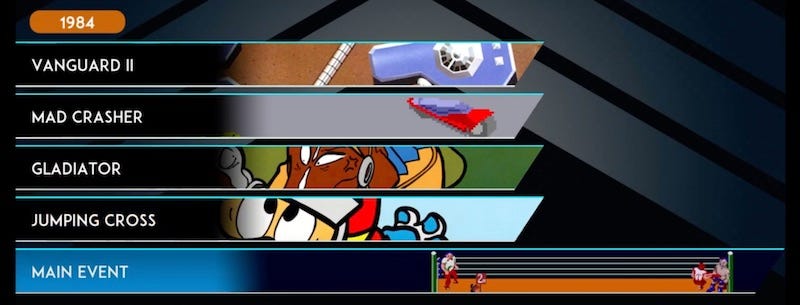
Okay, I worked on this one, but I’m putting it forward as a potential (very expensive) evolution of the video game article, and something I’d love to see more of. In the museum section of the SNK 40th Anniversary Collection game we are able to show a curated view of the evolution of an entire company, in this case SNK.

Through an interactive slideshow you are given a glimpse into the company’s roots, and why what they did mattered for the future. And when we hit on a game that’s actually playable in the collection, you can drop in and actually see for yourself what we’re talking about, either through watching a video or playing the game yourself.

Posted on Leave a comment

Sony says after July 13th, new PS4 games must be PS5 compatible

According to a report from Eurogamer, Sony has begun telling PlayStation 4 developers to prepare for the launch of the PlayStation 5 in a big new way. Starting on July 13th, games submitted for certification on PlayStation 4 must be compatible with PlayStation 5. 

This news comes by way of developer documentation apparently posted on PlayStation’s internal partner website, that Eurogamer got its hands on. Apparently developers are able to use their PS4 devkits to perform this check, thanks to an update released in April. 

The documentation also apparently states that “compatibility” means that the submission code runs without issues on the PlayStation 5, and provides the same features on PS5 as PS4. 

Developers who submit for certification before July 13th are apparently “strongly recommended” to prepare PS5 compatibility as well. 

Posted on Leave a comment

Blog: Understanding open world level design – Part 2

The following blog post, unless otherwise noted, was written by a member of Gamasutra’s community.
The thoughts and opinions expressed are those of the writer and not Gamasutra or its parent company.


In the first part of this chronicle dedicated to the level design of open world games, I addressed a question that every game designer must ask: What design objective(s) should the open world meet?. In other words, what should it be used for?. but once this answer is found, the designer has to define the  map features that will make it possible to reach this objective.

In this second part, I will cover a key need that an open world map must meet: Players’ progression.

An omnipresent feature

I am sure you noticed all open world games offer players many possibilities to develop their character or their opportunities in the game: Access to better equipment, improvement of character attributes, new features, unlocking new areas, etc.

It is not a coincidence. The choice to integrate such mechanisms meets many needs:

– The progression mechanisms give players short and medium-term goals, which bring them rewards. As a result, they encourage players to play a lot. It’s the principle of “open loops” that make freemium games so addictive. Let’s not forget that offering a long lifespan is one of the main benefits brought by open world games, especially in the eyes of publishers.

– The rewards associated with a progression mechanism are often gratifying for the players because they affect their experience of the game, they are not cosmetic. They, therefore, enrich the game.

– The progression mechanisms are inspired by those of RPGs. Players are offered many options to develop and specialize their characters as they see fit. The more choices a game system offers, the better.

– Finally, the progression feature can be used smartly to teach the game. The stakes are not negligible because open world games are often complex. If players do not understand properly how to develop their character, they do not benefit much from the experience of the game.

That said, the ubiquity of progression mechanisms tends to standardize open world games. In other words, their themes may be different, their game mechanics, and therefore the experience that results, are very similar and could tire players. It is for all these reasons that the implementation of progression mechanisms in level design is so important.

Strategies for building progression in an open world

A quality design is a design to meet needs. A good open world is therefore not designed at random by “sprinkling” elements of scenery and gameplay. Its construction must be a response to an intention to create a specific gaming experience. What can they be?

In an open world game, the players’ progression can be built to seek out three types of game experiences:

– The progression of players’ abilities. This is the most common case. Players start with weak characters and will seek to improve their capacities: Equipment, attributes, teammates, territories, etc. This strategy is at work in most Ubisoft open world games like those in the Far Cry and The Division franchise. The motivation of players is to continually increase the “power” of their character.

– The development of storytelling. For story-driven games, it is the progression of the main narrative arc that motivates the players. This is the case in Red Dead Redemption 2. Players’ characters have little to develop. Of course, they can earn (steal) money or goods to acquire better weapons or a better horse, buy outfits or potions. But this is not the interest of the game. While in the Ubisoft games mentioned above, the increase in the capacities of the players’ character becomes their main motivation to play, it is the development of the story in Red Dead Redemption 2 that drives players to play and get attached to his world.

– The progressive discovery of the world. In this case, the entire open world is not accessible at once. Players must progressively unlock access to new areas. This strategy is used in The Witcher 3.

Of course, most open world games mix these three experiences, but in different ways. It is therefore important, as a designer, to ask yourself very early on the question of the mix between these three strategies. The answer will lead to design choices for the world itself.

Implications for the open world level design

Let’s start with the player capacity development strategy. What are the best practices in building the open world?

I recommend making sure that obtaining the resources sought (materials, XPs, equipment, consumables, etc.) is only partially the result of luck. In other words, the discovery of resources must above all result from the choices of players and their knowledge of the world. This is a principle of good design. Excess chance kills good gameplay because it takes away the ability of players to perform with their talents and decision-making abilities.

Here are some recommendations that go in this direction:

– Develop a level design grammar. It is a set of rules determining, among other things, where players are most likely to find a given resource. For example, mushrooms can only be found in the woods at the feet of large trees. Once players have linked a resource to its location, they will be pleased to have “guessed” how to find a coveted resource.

– Associate resources with points of interest. Players will naturally be guided to them. In addition, it will be more immersive than constellating the mini-map with icons indicating where to go.

– Avoid “sprinkling” resources on the map. If players realize that it is enough to walk around at random to find resources or targets, the exploration of the map becomes mechanical, aimless. It is, therefore, less rewarding. It is more interesting to group the points of interest or the resources around “mini-clusters” whose access is similar to a mini-trip. The construction of the topology makes it possible to channel the movements of the players and therefore, to dress the course with interesting points of view, artifacts to find, encounters of opportunity, and the use of alternative means of transport. Thus, going to a point of interest, or a cluster of them,  becomes a mini-adventure, rather than being a monotonous interval.

Let us now see the case of the progression strategy which is based on the development of storytelling. What are good practices for building the open world?

– Of course, missions must be used as the main progression mechanism and not the harvesting of resources. But above all, missions must not be mere pretexts; missions must contribute to give meaning to the players’ actions as well as to allow them to forge relationships with NPCs and to get to know them better. This is how the team responsible for the script will be able to develop real narrative arcs and offer quality storytelling. I will deal with this last point in more detail in the fourth part of this chronicle dedicated to the level design of open world games.

– Develop the topology of the map according to the missions rather than adapting the design of the missions to the topology. It is common for the 3D art team to develop an open map and then for the level design team to grab it and add their missions. In other words, the construction of the decor comes before the design of the missions themselves. This is an approach that I do not recommend because a good mission design requires a tailor-made topology.

– Unlock missions in a cluster rather than in sequential order. For example, missions E, F, G and H could only be unlocked once the players have completed missions A, B, C and D. This system allows the screenwriter to control the progress of his narrative arcs while offering freedom of action for players since they can do the missions of each group in the order of their choice.

– Use the first cluster of missions for onboarding. As a reminder, onboarding does not cover only the tutorial; it also aims to give players the drive to invest in the long term. Good onboarding is therefore just as relevant on triple-A as for mobile games. The order of the first missions should be imposed and they must be built with great care. Indeed, it is during onboarding that players really get attached to the game. The context must be engaging, even spectacular, the missions must be simple to complete while providing a gripping experience, the first characters encountered must be endearing, is, of course, players must quickly develop empathy with their character.

Finally, let’s finish with the progression strategy which is based on the progressive discovery of the map. In this case, the entire map is not readily accessible and mechanisms, more or less restrictive, prevent players from going wherever they want. Thus, players are gradually discovering the geography of the open world.

This strategy offers less depth than the previous two but it offers two advantages: It is particularly motivating for players who like exploration and it helps to reinforce the two previous strategies: The development of players’ abilities and progression of narration.

A level design that integrates such a progression strategy must take care to answer two questions:

– How to differentiate zones? Indeed, if the discovery of new areas is an important element in building the players’ experience, each new area must be significantly different from the previous ones. Just changing the environment is not enough. New features that will have an impact on the gameplay should be introduced: New threats, new resources, new types of game objectives, new tactical options, etc. Once again, the level design must guide the objectives of the art team.

– How to avoid making the mechanism limiting player movement arbitrary? It is hardly elegant, in a game that promises an open world, to artificially block the movement of players. Solutions exist such as requiring players to build a given piece of equipment like a boat. Far Cry Primal offers an interesting compromise: Some cold areas are accessible but without warm clothing, players cannot stay there for long.

In the next episode…

In the third part of this chronicle dedicated to the level design of open world games, I will cover the construction of the map itself, its topology, the use of points of interest, and all that will make the world alive.

Previous publications:

Open world Level Design: The Full Vision (part 1/5)

Pascal Luban

Creative director & game designer, freelance

www.gamedesignstudio.com

Posted on Leave a comment

EA renews Madden NFL license through 2026

EA’s money-printing Madden NFL business will continue to stay strong. In a deal announced today with the NFL and the NFL Player’s Association, the company shared that it’s renewed its exclusive rights to the Madden NFL Franchise in a “multiyear” deal that will ensure it’s the only company in town developing football simulation games. 

There was some speculation that EA’s long grip on the football franchise might loosen after the NFL announced a deal with 2K games earlier this year, but for the time being, it appears that deal will continue to only cover non-simulation titles. 

According to Polygon, today’s announcement comes after a formal vote held by league owners yesterday, but an EA spokesperson stated that both organizations had agreed to renewal terms in advance of the vote, which proved to be “seen as a formality.”

An NFL representative also told Polygon that the deal will extend through 2026, though a reporter for MMQB reported that the additional year will depend on EA hitting required revenue goals.

EA’s press release also indicates the company is planning other football games “with more forms of play and self-expression, available on more platforms, including expanded offerings for mobile players.” 

Posted on Leave a comment

Blog: Lessons from the history of mobile 4X strategy

The following blog post, unless otherwise noted, was written by a member of Gamasutra’s community.
The thoughts and opinions expressed are those of the writer and not Gamasutra or its parent company.


Over their decade long run, mobile 4X strategy games, sometimes known as SLGs, have brought in billions of dollars in revenue with only more to come.

For those wanting to get in on it, the history of these games is littered with both progress and mistakes that any hopeful successor would be wise to learn from. Their history may even foretell where the next generation of these games will go, and what the secret sauce of the next big one will be. You just need to know where to look.

Where am I coming from? Over the past nine years, I’ve played an array of 4X strategy games at a very hardcore level. Even as a player who doesn’t spend on IAPs, I’ve been the #1 player, led top clans, and sold my accounts for a tidy four figures. That’s the outside perspective I bring.

The inside perspective? I was the founding developer that led a team of engineers to build one such game, and was hands on for its conception, through prototyping, launch, and beyond. I can’t discuss internal numbers of course, but nothing’s stopping me from discussing external ones.

In the beginning, the strategy games in the appstores were quite light. Games such as Kingdoms at War succeeded in reaching the top grossing charts. These were forebearers to what I’d consider the first real 4X strategy games on mobile. They had buildings, and armies perhaps. You could fight and interact with other players, and there might’ve even been PvE. But there was no world map. No physical world the players resided in.

There were PC and web-games that had this to be sure, but those hadn’t made the move to mobile, at least not yet.

There are far too many games in the genre for me to count let alone play to a deep enough degree. However, the seven I’ll go over paint an overall picture of the genre’s history over a large time span, and will give us a perspective into what’s worked, what hasn’t, and what’s to come. Let’s get to it.

[November 2010]

This was the first game I played in this space. A lesser-known title from Sega which saw some decent success for its time, making it high into the top grossing charts. It had the prerequisites. Upgradeable buildings, ten levels each. Armies, themed as trading cards. Eye candy for UA in the form of 3D PvE encounters, though players quickly found out it was just a facade for a loot box. But most importantly, it had a world map, and the emergent behaviours that it brought to the table. Already a staple in the web-based games of the genre, this was one of the early implementations of world maps on mobile. It was a great game. I played the hell out of it. Unfortunately it had a fatal flaw that limited its lifespan and doomed it. More on that to come.

Kingdom Conquest City Screen
City Building in Kingdom Conquest

Kingdom Conquest PvE
Eye candy, which didn’t do much for gameplay, but helped with user acquisition

From the very start, this genre of games had a tight, addictive NUX. Quests guide the player’s actions. Return notifications call players back again and again. New mechanics are introduced keeping things interesting, and giving players milestones to strive for.

Kingdom Conquest’s fatal flaw however was that they structured the game based on a short, finite season structure. After battling it out for multiple months, with a winner declared, player progress was reset. Not only this, but content was naturally structured with this in mind.

As many in the industry will know, the majority of the potential revenue from users comes from the tiny proportion of spenders who decide to spend a lot: the whales. To capture this full potential however requires time. Players can play for years and years, but artificially capping their lifespan slashes the full potential of this LTV.

As can be imagined, after a season reset, only a fraction of players return with the same interest and intent to spend. Any player would temper their spending in the game once they found out that even if they “won”, it’d all be gone within a few months. Maybe it was a worthwhile experiment to try at the time, but it was a severe handicap in the end.

A brief lull in the genre followed until early 2012.

[March 2012]

Here was the first mobile game in the genre that hit it big in this space. This was the mobile incarnation of what was already a Facebook success.

To the formula we had already seen in Kingdom Conquest, Kingdoms of Camelot added a few new things to the mobile mix. A distinct, though limited, research tree. Multiple player-owned cities. Simple heroes. Simple map PvE.

Building upgrades also included a minor twist, where players who wanted to fully upgrade the building to level 10 needed a premium item to do so. One which cost them premium currency, available through in app purchases.

However, despite the additional systems, the game proved to be less effective at monetization than future successors would be.

Their heroes, while a nice addition were simplistic and not fleshed out at all. Skipping the fine details about how they worked, players desired the benefits they provided, and would pay for them, but the shallow way they worked combined with the cost ceiling left a great deal of potential on the table. The limited research and useless PvE came with similar criticism. They were shallow and the game subsequently wasn’t as effective at monetization as it could be.

The ability for players to own multiple cities was an interesting advent as a way to try to stretch out the content, something the web-based game also made use of. But really it wasn’t necessary, as future takes on the genre would find: a single city with better-balanced building progression was cleaner, and better yet, was more conducive to monetization. Moreover, managing multiple cities was frankly tedious.

The emergent behaviours and PvP threats in the game world were also limited by a Kingdoms of Camelot-specific mechanic where players could opt to “hide” their troops, making them impervious to military losses. The resources in their city would be free for the taking in the meanwhile, but those were fairly easy to acquire. As a result, certain opportunities for conflict and the monetization that comes with it was lost altogether.

In an attempt to better monetize the game, part way through its lifespan the developers decided they’d allow troops to be directly purchased. Certain players loved this to be sure, and short-term revenues shot up as the ineffectively monetized players found an avenue to spend. But such an approach totally circumvented the rest of the game’s content and balance. It was a tacked on lever that was completely disconnected from the rest of the game, with a high potential to break it, which it sure enough did. The game’s leaderboards and community was subject to an inevitable p2w death spiral from which entire shards would never recover.

Wild power gain in Kingdoms of Camelot after monetization changes
Imbalanced monetization resulting in unstable community and p2w death spiral (data from first shard)

As an aside, some of this data is available in part because of how easy it was to decompile Unity builds in the past, allowing enterprising individuals to bypass API security checks the game server had in place. One such individual used this information to build a site that periodically scraped game information, allowing players to do game-breaking things such as easily searching for player city locations on the map.

Despite its shortcomings Kingdoms of Camelot found success at the time as it stood above its rivals, and it would spin off skins such as The Hobbit: Kingdoms of Middle Earth.

The games that would follow it though made up for these shortcomings, with better fleshed out systems and deeper content to match. These successors would reap the benefits of far higher LTV ceilings as a result.

[July 2013]

Game of War offered a big step up. The simplistic systems of the previous generation were taken, and properly fleshed out, while weaknesses were shored up, and brand new competitive features added.

To start off, let’s go over the added depth. A hero avatar was introduced, with a fleshed out skill tree and equipment to match. Both the city and research content was now much deeper, offering a deeper progression path to both strive and monetize for. And the world map was now livelier, with more to observe and engage in. Player marches were now visualized, something absent in past iterations, resources could be gathered, and PvE was actually useful and rewarding. A player seeking more strategy in their games would find it here.

On the whole, the balancing seemed to have kept a better eye on player goals, and as a result they did a better job monetizing the critical path players take in the game as they build out their city and research the top tier troops. While in previous games an engaged player could pretty reasonably complete their city and attain top troops, it now took either considerable time and effort, or more likely, money, to achieve the same. Every successful game to follow would take a similar route.

All of these advancements together made for a deeper and more engaging game, which reaped far better LTVs.

To top it off, significant end game features were added, creating sources of conflict and goals for the biggest spenders. This came in the form of Wonders, a sort of clan-pvp king of the hill, along with shard vs. shard events, commonly referred to KvK. Both made use of added rallying mechanics, enabling the joint attack and defense of clan members and structures.


Wonders and Marches as implemented in Game of War

The basic formula laid out by Game of War would be carried forward in some form in all of the genre’s successors to come. A new baseline had been set.

Outside of the game, Game of War was able to fully exploit its LTV advantages with tremendous UA efforts, including its infamous Kate Upton TV spots. Many in the industry questioned how they could be acquiring users profitably with the amount of spend here, but in the end, it’s undoubtable how much of the market they captured as they had a solid position on the top grossing charts for a considerable stretch of time.

As time marched on though, cracks emerged. This was marked most significantly by the way live ops constantly pushed the economy and the game’s players to the breaking point. Expensive whale content was frequently refreshed, which made older content obsolete, while at the same time aggressively inflating the economy.

It’s impossible to say if this might’ve been the right move from an LTV standpoint. Their strategy was to aggressively suck out as much money as possible from players while they were still engaged, perhaps as a way to try to recoup their UA costs as soon as possible. What is clear though is that as this became more drastic, this was the specific thing that started to drive more players away, even their most dedicated whales. An informal survey of whales placed this as a top concern. Attempts to improve LTV may have backfired in the end.

Machine Zone, the makers of Game of War, would later try to run the same playbook with games like Mobile Strike and Final Fantasy XV, but a combination of a dated engine, mismatched expectations, and perhaps a change in the market limited the success of these endeavors.

[June 2014 / August 2015]

The next major iteration on the genre came with the advent of clan-controlled territories on the map.

Games like Clash of Kings saw significant success here. Unfortunately this wasn’t one of the games I chose to pick up during this period as I was deep in the game development grind. However, observing colleagues playing the game and reading up on the details it’s clear it was a meaningful step forward and laid the ground for new sources of large scale organic conflict on the world map.

Here, clan members could work together to construct structures on the world map, which provided benefits and new capabilities to members within it.

Many games now have their own take on territory, and it’s something that’s still evolving. The game I did play during this time that tried to tackle territory in its own way was March of Empires, which saw only very limited success. Its take involved fixed territories and buildings on the map, as opposed to something more organic. Clans can take over these territories and buildings, which provide dwellers with advantages.

These different variations are perhaps a good example of some of the risks involved when exploring an untapped design space. While territory in Clash of Kings proved quite successful, the implementation in March of Empires felt lacking. It isn’t sufficient to just try something new, you still have to get it right.

Regardless, territory mechanics were a meaningful advance forward, and something which various successors would continue to take up.

[February 2016]

Then came Lords Mobile.

The two most obvious steps forward were:

  1. The more casual-friendly, “Heroes Charge”-like mechanic they grafted onto the game, which was ornamental in many ways but helped ease players into the on boarding until they could transition into the real 4X game.
  2. The much improved UX and friendlier, less-hardcore art style. Early games were often clunky to navigate, with a gritty medieval art style that could turn off many potential players.

Lords Mobile
Casual friendly mechanic as seen in Lords Mobile..

Heroes Charge
.. with similarities to Heroes Charge and games of the like

This was built atop of what was now the standard fare of 4X features. The only major thing missing was clan territory functionality.

Beyond this, their hero system was further fleshed out to include a multitude of different heroes, each of whom could be leveled up. Some were premium heroes that could only be purchased, while others could only be attained from events. The game also benefited from a live ops team that ran a healthier economy than some of its predecessors, supporting player longevity.

From the outside I can only speculate, but considering players of these types of games can play and spend for years and years, this healthier player longevity could have resulted in a significant benefit to their LTV metrics in comparison to the short-sighted live ops mentality of the past.

Lords Mobile became a long-lived success, as evidenced by the hundreds of millions of downloads it racked up, more than any of its predecessors.

If there was any short-coming to point out, it might only be that it didn’t push the fundamental gameplay forward that much. Someone who had played previous iterations wouldn’t have had too much new to look forward to beyond the initial novelty from the grafted on casual mechanics. It achieved great success in spite of this however, perhaps a result of the expanded audience base it was able to reach.

[September 2018]

That leads to Rise of Kingdoms, which significantly pushed forward the real time strategy elements of the genre on mobile.

The strategy elements had grown stagnant on this front for many years, with developers just taking the old formula and adding some new bells and whistles. The addition of wonders and territory were notable, but were mostly just layered on elements atop of the same gameplay. Rise of Kingdoms would change this, carving out multiple new paths on this front.

For almost a decade now, the basic march functionality remained more or less the same. Players could send their armies from their city to a target, an attack would be resolved, and the army would return. That’s it. Whether for technical reasons or lack of ambition, developers didn’t invest in pushing this forward. The underlying world map mechanics remained the same across all of these previous games.

Rise of Kingdoms promotes their take as a combination of Real-Time Battles, and Unrestricted Troop Movement, but this doesn’t do justice to spelling out all of the changes that were made to the underlying mechanics, and the strategy it enables.

Firstly, no longer are battles resolved instantly. Instead, when armies clash, combat plays out over a period of time, during which armies can withdraw, or reinforcements can arrive and change the outcome of the battle. This creates a more lively and dynamic environment, and a greater surface area for emergent behaviours to arise.

Amplifying this is what they market as unrestricted troop movement. Marches are no longer constrained to their simple: city-to-target, target-to-city routes. They can now be redirected mid-route, or halted altogether and ordered to camp out on the map. Moreover, marches can be intercepted mid-route. Combined, this enables whole swaths of new strategic behaviour. A single march for example can be sent out, hitting target after target across the map, causing mayhem. A band of invaders can coordinate their marches, invading and besieging enemy lands, locking inhabitants in. Conversely, since marches can now be attacked mid-route, no longer can an attack be launched deep into enemy territory with impunity. Geographic consequences come much more into play.

Speaking of that, there were advances on the map itself. In previous iterations, developers would take liberties as marches walked straight over water, mountains, and other cities unhindered. Here however, all of those create impediments that need to be navigated around. At its culmination, this creates natural choke points on the map which become focal points to be contested.

This enabling of time and space considerations allows for new dimensions of combat to be explored, and new ways to differentiate content. The time-factor for example enables heroes with a wide array of different abilities, damage over time effects, healing, buffs during certain health ranges, and more. Additionally the space-factor makes area of effect abilities possible, and makes troop speed a critical factor.

This is a far cry from the simple march mechanics of predecessors.

Multiple advances in the core gameplay of Rise of Kingdoms
Significant gameplay advances in Rise of Kingdoms

Beyond this are other meaningful advances I won’t dwell on. Massive zoom out capabilities, fog of war (though mostly cosmetic), an hour-long clan vs. clan battleground event with a heavy use of all of these new mechanics.

This sits atop of other tried and true pieces of the formula. Buildings, research, heroes, wonders, along with their particular take on territory systems and KvKs, where 8-shards compete over 2 months unlike most other games.

All told, if a new player were coming to the genre, or a hardened veteran was looking for the latest and greatest, Rise of Kingdoms would be the surefire game to point them to.

From the UA perspective, the game was originally titled Rise of Civilizations, later renamed due to trademark disputes. It’s reasonable to speculate they may have been looking to benefit from organic searches for Sid Meier’s seminal game. It also seems like it may have been a conscious choice to attempt to reap the worldwide UA benefits of the free “IP” available by centering the game around different nationalities and historical figures. The appeals of a Joan of Arc, Caesar, Cleopatra, or Sun Tzu.

Cleopatra in Rise of Kingdoms
Cleopatra and other historical figures potentially aiding UA

A Deeper Dive

From the game design perspective, there are three specifics worth calling out that play a significant part in shaping the actual gameplay as well as the monetization. These are the sort of things that might be easily overlooked unless you were a longtime player of the game.

First, a combination of the design decisions and the emergent behaviours that play out results in an environment that can be significantly more survivable and forgiving for a larger number of players, keeping them in the game longer. For example, the hospital and troop death rules are laid out in a way where combat can be much more forgiving in lower stake scenarios, while also being more risky for would be aggressors. Combined with the ability to intercept marches mid-route, this reduces situations where large players will want to take the risk and pay the cost of picking on weaker players – a frequent complaint in games of this genre. “Zeroings”, where players lose all their troops, can still happen but are much rarer. To top it off, the need for cooperation to succeed in KvKs creates a strong incentive for shards to coalesce, and as a result after an initial period of conflict, most successful shards find ways to organize and work together peacefully, with the only major conflict occurring in KvKs. With time, this practically eliminates such zeroings outside of KvKs, and with it the sort of harassment that makes a lot of players quit early on.

Second, monetization seems very healthy up front. With some meticulous data collection, and using information they happen to make available in the game, it’s possible to get a detailed assessment of certain player spending habits. Without going into fine details, the rate of monetization during my assessment period was very strong, a multiple over a less successful competitor at the time. For whales, a large part of this seemed to go towards acquiring limited hero content, where certain heroes were structured in a way that they could only be acquired by competing over them in events. This is on top of the desire to spend on other forms of content, especially research and troops, with an added boost of revenue during seasonal events.

To provide a little peek into the data collected, here was the spending behaviour from the top clan in one of the top shards over a one month period.


Daily spend by bundle type, heavily driven by event competition and content


80% of revenue came from players who spent $1000+ in one month

At the same time, the monetization balancing is far more f2p friendly, in that monetizing players get less of an advantage for their money than they do in competing games. Eyeballing it at one point, I found that a $10 bundle gave about 4x more of an advantage in Lords Mobile than in Rise of Kingdoms. As a result, f2p players aren’t as ridiculously outgunned, and monetizing players also need to pay more for the advantages they desire. Furthermore, as is the case in many of these games, when someone purchases certain bundles, their clan mates benefit by getting a gift of beneficial items or speedups. The final balancing is such that if you’re able to make it into the top clan in your shard, you can benefit tremendously to the point where even as a f2p player it’s possible to unlock all of the main pieces of content aside from the heroes. This is something that would cost players thousands of dollars to unlock in a reasonable timeframe otherwise.

To provide an anecdote to give you a sense of this, even though I play these games quite dedicatedly, I never buy IAPs. In less than a year, I was able to unlock the top tier of troops, and sell my account for a low 4-figures when I left the game. This amount isn’t something that was feasible in the balancing of other games.

The other side of this though is the cost to the developers. If someone who doesn’t buy IAPs is able to unlock top tier troops in that time frame, players who do monetize can do so even sooner, cutting off one of the primary drivers for monetization earlier on than in other games. Other reasons to continue monetizing remain, but these aren’t as enticing as completing your research and unlocking the top tier troops. I could imagine this putting a meaningful dent in their non-whale LTVs. Inadvertently, it’s possible this helps create a fiercer, more competitive environment for whales to continue spending against. Considering they make up 80%+ of the revenue, perhaps this is a worthwhile trade off.

The third thing worth calling out involves the consequences of the peaceful in-shard metagame, in contrast with the 2-month long KvKs. The KvKs can be intense, and prove a great incentive for players to monetize, at least the first time players participate in them. Due to their intensity however, the consequences and potential losses can be equally large. While it doesn’t happen in every KvK, once players have a sense of the costs involved, if the leaders of a shard get the sense they won’t have an easy time and be able to sweep the KvK, there will be strong incentives to reach a diplomatic end to the KvK, and divvy up the rewards. Similar to what happens in individual shards.

This has related knock-on effects. If KvKs typically reach a quick diplomatic end, entire shards will lose their last remaining source of conflict, not a great result. At the same time, if KvKs don’t wind up this way, KvKs are just too intense to be run too often. The result being that after the heightened activity of a KvK, players return back to their home shards for months worth of peace. It’s quite anti-climactic, and I can only imagine it hurting their daily revenue numbers. The coming and going of conflict for large periods of time also seems non-ideal when it comes to encouraging regular player spending habits. A long break from conflict-driven reasons to monetize seems to provide players a good excuse to break their IAP addictions, or even leave the game altogether.

Though these issues may limit its full potential, Rise of Kingdoms is undoubtedly a sizable step forward for this genre on mobile.

Mobile 4X strategy games have thrived for a decade now, and will continue to do so for years and years to come. They’ve undergone a constant evolution to get to where they are now, continuing to set higher and higher gameplay bars, and higher and higher metrics.

It’d only be fair to ask, “What’s next?”

In my previous life as a game developer, I’ve predicted and pushed for some of the very elements that have come to see breakthrough success in this genre. Not all of them certainly, but if you know where to look a certain pattern emerges, much of it in plain sight.

On the gameplay side, players who crave strategy will want more and more strategy. In many ways in this genre, mobile is playing catch up with PC games. When you look at something like the original Warcraft, or even games that preceded it, the gameplay there already delivered what’s only now at the cutting edge of the actual strategic gameplay on mobile. Specifically, unrestricted troop movement and real-time battles only came in 2018, over 20 years after Warcraft. On the technical front these are much more challenging to deliver in a massively multiplayer online game, so it’s no wonder it’s taken awhile to get here, but as developers continue to push on to try to deliver the next top grossing hit, these elements will continue to find ways to mobile.

So as a player, or a developer who’s asking what’ll capture player imaginations next, the answers are already out there.

Things like airborne troops common in RTSes open up swathes of strategy. Instead of just the surface-to-surface troops of today, we now have surface-to-air troops, air-to-surface, air-to-air, surface-to-all, or air-to-all attack types. Congratulations, you’ve just exploded the interesting combinations, content, and strategy you can deliver.

Or even changing some of the fundamentals, and moving towards more of a Civilization-like approach, where units on the map move slowly and gradually in more of a real-time fashion, and freedom of opposing troops on the map can be completely restricted and blockaded. This would open up problems to be solved to be sure, but it delivers on totally new strategy and gameplay.

There are numerous promising avenues here, both in and outside RTSes. Territory systems for example long existed in MMORPGs before RTSes.

Capital ships. WMD attacks. Shardless game servers. Troop transportation units. Espionage. And I’m sure plenty more come to your mind when you think about the possibilities.

To those wanting to deliver on strategy, the investment needed to develop these games will grow ever higher. It’ll be harder and harder for smaller developers to fund a team that can build this out. And the teams that can be funded will require costly bets.

For those who love these games though, the years to come should only bring more of what you love. And to those with the foresight to deliver on it will come the spoils.

Posted on Leave a comment

Heroic Labs Nakama Sponsor Defold

Today we are talking about Heroic Lab’s Nakama.  Nakama is an open source (as well as hosted and managed) solution for the networking side of the game development side of game development.  In October of 2019, Heroic Labs became a premium sponsor of the Godot Game Engine. This week Heroic Labs announced they are now sponsoring the recently open sourced* Defold Game engine.

Details from the Heroic Labs blog:

Today we are pleased to announce that Heroic Labs has joined the Defold Foundation as their first corporate partner in order to further support and expand open-source tools within the game development community.

The Defold Foundation has been formed to maintain and grow the newly open-sourced Defold game engine which was originally created by one of the world’s leading interactive games companies, King Digital Entertainment, to power their incredibly popular titles.

This partnership with the Defold Foundation has enabled us to join forces to create an open-source client library that integrates Nakama and Defold tightly together to enable developers to take advantage of the full range of client APIs found within Nakama including authentication, matchmaking, leaderboards, multiplayer, realtime chat, and much more.

At Heroic Labs we are firm believers in open-source tools and software being the future of game development; with the steady increase in the popularity of gaming, specifically online and social play, developers need access to tools that enable them to move quickly and provide the most engaging experiences to their players regardless of platform without service lock-in.

You can learn more about the Nakama server here and browse the available open source solutions on GitHub.  Learn more about Heroic Labs and Nakama in the video below.  If you want to learn more about Nakama, unfortunately we do not have a tutorial on the subject, but Nathan at GDQuest does, check it out.

*source available, not technically open source as per OSI definitions.

GameDev News


Posted on Leave a comment

Get a job: Digital Extremes is hiring an Intermediate/Senior FX Artist

The Gamasutra Job Board is the most diverse, active and established board of its kind for the video game industry!

Here is just one of the many, many positions being advertised right now.

Location: London, Ontario

Founded in 1993, Digital Extremes has become an employer of choice for talented people seeking rewarding career opportunities in the gaming industry. We are widely recognized for creating the award-winning Warframe, a free-to-play, third-person coop, PVP action shooter, space ninja adventure game available on PC, PlayStation, Xbox and Nintendo Switch. Our early titles include Epic Pinball, Solar Winds: The Escape, Unreal and Unreal Tournament co-created series (and all its iterations) as well as The Darkness II. With over 300 of the industry’s widely talented and culturally diverse employees in both Canada and the US, we are warriors combining our expertise to deliver superior fast-paced gameplay and intense melee combat all with a great deal of passion.

WHY WORK AT DIGITAL EXTREMES

Our culture is centered on providing great opportunities to our employees so that everyone feels they are making a meaningful impact. Developing new and existing talent is our long-term focus. We are honored that our work environment has been consistently recognized as one of “Canada’s Top 100 Employers”. We summon you to join our elite team! 

The rewards of a career with Digital Extremes include:

  • Competitive salary with bonus opportunities
  • Excellent benefits and paid time off
  • Matching RRSP plan
  • Employee Assistance Program (EAP)
  • Professional development and career support
  • Fitness and parking/transit subsidies
  • Daily lunches prepared onsite by our in-studio Executive Chef and professional kitchen staff
  • All-day snacks and drinks, sleep pods, massage chairs, cold brew, dog therapy days and more

ABOUT THIS POSITION

Digital Extremes is seeking an experienced Intermediate/Senior FX Artist to join our team. You will be utilizing traditional art training and knowledge of 3D art, design and computer graphics software to build efficient, high quality special effects while keeping in mind technical specifications relating to memory usage and gameplay speed. You will need to have an excellent understanding of what makes real time special effects work in addition to an understanding of game engines, tools, pipelines and development processes. Preferred extras include experience working with Maya, AfterEffects, Houdini, and Photoshop, as well as a thorough knowledge of the game development process. An understanding of scripting languages such as Python or Lua is also an asset.

RESPONSIBILITIES

  • Utilize traditional art training and knowledge of 3D art, design and computer graphics software to build efficient, high quality special effects, keeping in mind technical specifications relating to memory usage and gameplay speed
  • Keep up-to-date with contemporary effects techniques and research new effects technologies and solutions
  • Cooperate closely with art, design, audio and development department to deliver first class visual effects that exceed the state of the art
  • Work under the creative guidance of the Art Director
  • Deliver work on time and according to schedule as prepared by the Art Director
  • Actively participate in the feedback loop including accepting feedback from and providing feedback within the art and level design team as required, staying current on the scope and understanding of the project
  • Multitask effectively, prioritize competing demands, and follow through on details

REQUIREMENTS

  • 2+ years’ previous experience creating high quality VFX for film or video games
  • Excellent understanding of what makes special effects work – particle systems, postprocessing effects and shaders (specular and normal maps)
  • University degree in visual arts with specialization in graphic design, commercial art, graphic communications or cartooning or completion of a college diploma program in graphic arts
  • Understanding of game engines, tools, pipelines and development processes
  • Working knowledge of a commercial 3D package
  • Good communication skills across multiple disciplines; ability to follow direction and to collaborate successfully with others
  • Ability to handle and prioritize multiple tasks, to meet deadlines and to excel under production conditions
  • Strong work ethic, self-direction and artistic vision, dedicated work ethic
  • Have a genuine enthusiasm and interest in video games

JOIN US

Digital Extremes is an equal opportunity employer committed to diversity and inclusion. We welcome and encourage applications from people with disabilities. Accommodations are available upon request for candidates taking part in all aspects of the recruitment process. We thank you for your interest, however, only those candidates selected for the next steps in the hiring process will be contacted.

Interested? Apply now.

Whether you’re just starting out, looking for something new, or just seeing what’s out there, the Gamasutra Job Board is the place where game developers move ahead in their careers.

Gamasutra’s Job Board is the most diverse, most active, and most established board of its kind in the video game industry, serving companies of all sizes, from indie to triple-A.

Looking for a new job? Get started here. Are you a recruiter looking for talent? Post jobs here.

Posted on Leave a comment

Steam Cloud Play beta lets developers enable GeForce Now integration

It looks like Valve might have a big interest in cloud-based video game play in the near future. The Seattle-based developer and Steam operator has launched Steam Cloud Play into beta, a cloud-based gaming feature that, for now, lets developers enable users to play games from their Steam Libary in Nvidia GeForce Now. 

According to the documentation in Steamworks, Nvidia GeForce Now is the first and only service the platform is supporting. Users will need to download the GeForce Now client and connect their Steam account to Nvidia’s Service to play their Steam Library over the cloud. Valve still intends for users to pay Nvidia for its subscription service, while buying games on Steam normally. 

Valve wants developers implementing Cloud Play to know they may be playing from a new virtual PC, and so it’s important that games have Steam Cloud (or a different online save system) enabled.

Posted on Leave a comment

CD Projekt starts 2020 off with a record Q1 as The Witcher series continues its reign

The first three months of the CD Projekt Group’s 2020 year are starting out on a high note, financially speaking. At the close of the first quarter, the group covering game dev CD Projekt Red, game storefront GOG, and a handful of other businesses reported PLN 92 million (~$22.9 million) in net profit, up from last year’s PLN 20.5 million (~$5.1 million) net profit during the same chunk of time.

“Both with regard to sales and net profit this was the best first quarter in the Group’s history,” explains CFO Piotr Nielubowicz.

“The largest contribution to these results again came from strong sales of The Witcher 3, including its Nintendo Switch edition released last October. We take pride in this achievement – particularly given that The Witcher 3 has just celebrated its fifth anniversary. Our results were also bolstered by Gwent and Thronebreaker. In the first quarter Gwent was released on Android devices, while Thronebreaker debuted on Nintendo Switch.”

The CD Projekt Group reported PLN 192.972 million (~$48 million) in revenue for the quarter ending March 31, 2020, up quite a bit from the PLN 80.9 million (~$20.1 million) reported during the same quarter last year. The bulk of that increase looks to have come straight from game sales; CD Projekt’s “revenues from sales of products” category alone reported a 169.7 percent increase year over year, coming in at PLN 137.2 million (~$34.1 million) for Q1 2020.

The two other categories that make up those overall sales revenues—sales of services and sales of goods & materials—also saw year over year increases. Services rose to PLN 319,000 (~$79,309) from last year’s PLN 48,000 (~$11.933).

Goods and materials–the category that captures revenue from the physical components of physical game collectors editions, merchandise sold through CDPR’s online store, and externally developed games sold through GOG.com—saw an 85 percent increase year-over-year, coming in at PLN 55.433 million (~$13.8 million) for the quarter.

Breaking things down differently, the game development studio CD Projekt Red was responsible for PLN 147.8 million (~$36.7 million) of those overall sales revenue, while GOG.com chipped in for 49 million (~$12.2 million).

“The reported increase in Q1 revenues, both at CD Projekt Red and GOG.com, was likely associated with the growing popularity of videogames in light of movement restrictions and stay-at-home orders introduced in many countries,” notes Nielubowicz. “We’re very happy that in this difficult period our videogames provided joy and entertainment to millions of people around the world.”

Posted on Leave a comment

A new Dragon Quest game is coming to mobile next year

A new Dragon Quest game is in the works for iOS and Android. Square Enix revealed Dragon Quest: The Adventure of Dai – Tamashii no Kizuna during a live stream with Pokemon Masters creator Dena handling development duties. These game names are not getting any shorter.

Dragon Quest: The Adventure of Dai – Tamashii no Kizuna is due to release in Japan in 2021 on iOS and Android, but we don’t have a specific date just yet. There is also no word on a Western release date, either.

We got a quick glimpse of gameplay that shows Dai, Popp, and Maam dashing from fight-to-fight and engaging in three-lane battles. You can check more of the game out in the reveal trailer below. The dash RPG looks a tad like Pokemon Masters, at least where the fighting is concerned as that game also features three-on-three bouts. The main difference between the two is that you do your own fighting in Dragon Quest: The Adventure of Dai – Tamashii no Kizuna – obviously.

Dragon Quest: The Adventure of Dai – Tamashii no Kizuna – which means bonds of souls, in case you were wondering – was revealed alongside two other titles. Infinity Strash – Dragon Quest: The Adventure of Dai and Dragon Quest: The Adventure of Dai – Xross Blade will launch on consoles and arcade respectively.

All three of them are based on a manga called Dragon Quest: The Adventure of Dai which ran in a Japanese magazine called Shonen Jump.

[embedded content]

If next year is a year too far, then we’ve got a list of the best mobile RPGs to keep you sane while you wait. We even have Dragon Quest VIII on there if you fancy sticking to the beloved series.