Posted on Leave a comment

Pluralsight Free For Month Of April

In the face of the Covid-19 outbreak, several tech companies have stepped up in their attempt to make life a little bit easier, including Pluralsight.  Pluralsight are running a promo called Stay Home Skill Up #FreeApril, which makes all 7000+ of their courses available for free.  You do not need a credit card to sign up, simply an email address.  The free account is valid during the month of April, expiring May 1st.

Click here to sign up.  You can learn more about the promotion and Pluralsight in general in the video below.

GameDev News


Posted on Leave a comment

Shiro’s Game Technology Stack

Shiro Games, the developers behind such games as Evoland, Northgard and Darksburg, just posted a blog post on the technology they use to develop their game.

The primary parts of the development stack include:

The Haxe Language

Haxe is a cross platform open source programming language with a high-level strictly typed language capable of being compatible to multiple languages or runtimes.

Heaps

A cross platform open source high performance 2D and 3D game engine.  We did a three part tutorial series, getting started, 2D graphics and animation and sprite sheets.

HaxeLink

A high performance open source game focused virtual machine for Haxe.

HIDE

The confusingly named Haxe IDE is essentially a full blown level editor capable of creating 2D and 3D games.

CastleDB

A game focused game engine with a built in tilemap editor.  You can learn more about the CastleDB here.

Combined together you get a complete, battletested and production ready game engine with several high quality shipped titles under it’s belt.  You can learn more about the entire technology stack in the video below.

GameDev News


Posted on Leave a comment

PixaFlux Hands-On

Today we are taking a look at PixaFlux, an interesting free Windows based image creation and manipulation tool capable of creating PBR textures.  The entire process is node based and PixaFlux ships with an absolute ton of nodes to work with.  PixaFlux isn’t really easily described and is better seen or experienced, as you can in the video below.

PixaFlux is free to download for Windows, the download link is available here.

There is plenty of documentation to get you started.  There is a complete Wiki with step by step text tutorials available here.  There are additionally dozens of video tutorials available here.

The best way to get started with PixaFlux though is to see it in action in this video.

Art GameDev News


Posted on Leave a comment

Legends of Runeterra launches April 30 on mobile

Riot Games has announced that Legends of Runeterra, the upcoming League of Legends card game, will officially launch on mobile on April 30. That’s a simultaneous launch with the PC version, which is just rather lovely. If you’re not sure what this is, it’s a brand new card game by League of Legends creator Riot, who is clearly on a mission to beat Blizzard at its own game. Literally. It draws a lot of inspiration from Hearthstone, you see.

It’s free-to-play and you can earn cards by simply playing or purchasing them from the store. You’ll be able to directly purchase the cards you want, as well rather than rely on whatever you can get out of card packs. The ability to have that much more control over your decks will likely appeal to fans who are tired of bad luck.

Aside from that, though, it’s all very business as usual. You’ll craft a deck out of a wide variety of cards, each of which comes from one of six different regions. Regions behave similarly to classes in Hearthstone, providing a variety of different play styles. You can combine cards from different regions to create your own strategy.

You can also pick a champion, which is a powerful card that you’ll likely build your deck around. There are six champions in total, with each one hailing from one of the different regions available in the game.

Legends of Runeterra is currently available in open beta on PC, and you can still earn a limited-time Moonstruck Poro at launch if you check it out ahead of the full launch. That’s on April 30, when it will launch across PC, iOS, and Android simultaneously. You can pre-register right now on Android via Google Play, but will have to wait until the official launch to grab it on iOS.

Posted on Leave a comment

The Future of the Defold Game Engine

The Defold game engine is a free cross platform 2D focused game engine from King, we previously covered here and here as well as a video tutorial here.  The Defold team recently released an update on the future roadmap of the Defold game engine.

iOS

We will continue to keep the iOS platform support up to date with the latest iOS versions and requirements. Specific iOS tasks in no particular order:

Metal

Apple has announced that OpenGL will be deprecated on iOS and macOS, but no date has been announced. We have worked during 2019 to add a new Vulkan based graphics backend. This work is nearing completion and it will allow us to use MoltenVK on iOS and macOS. MoltenVK is a Vulkan Portability implementation. It layers a subset of the high-performance, industry-standard Vulkan graphics and compute API over Apple’s Metal graphics framework, enabling Vulkan applications to run on iOS and macOS. We have worked together with members of the Khronos Group to benchmark our implementation and have received only a few points of improvement.

Sign in with Apple

Apple will require that apps that authenticate or set up user accounts must support Sign in with Apple (SIWA). The deadline is June 30, 2020. We will release SIWA support through a native extension in Q2 of 2020. The extension has been developed at King and has already been tested in production.

Storyboard launch screens

Apple will require that apps use Xcode storyboards as the app’s launch screen. The deadline is June 30, 2020. We will automatically create a launch screen storyboard from the launch images set in game.project.

Android

We will continue to keep the Android platform support up to date with the latest Android requirements. We are collaborating with the Android and Google Play partnership teams to identify important tasks. The top four tasks in order of priority are:

Billing

Google Play Billing is a service that lets you sell digital content on Android. We will add support for the new Billing API via the existing IAP extension.

Google Play Game Services

We will continue to improve on the existing Google Play Game Services extension to ensure that it supports all of the latest features of Google Play Game Services.

Android App Bundles

Android App Bundle is a publishing format that includes all your app’s compiled code and resources, and defers APK generation and signing to Google Play. Google Play uses your app bundle to generate and serve optimized APKs for each device configuration, so only the code and resources that are needed for a specific device are downloaded to run your app. We will initially add support for basic bundling of applications using Android App Bundles and then expand upon the feature as needed.

Google Play Instant

Google Play Instant enables native games to launch on devices running Android 5.0 (API level 21) or higher without being installed. By allowing users to run an instant game, known as providing an instant experience, you improve your game’s discovery, which helps drive more active users or installations.

HTML5

We will focus on increased performance and reduced application size on HTML5. We will when possible update to newer versions of Emscripten and WebAssembly to achieve this.

Desktop

On desktop our only identified focus area is to add the ability to run the engine loop while the window is in the background.

Editor

We will mainly focus on performance and stability improvements in the editor. In terms of new features we have identified the following (in no particular order):

Improved 3D support

In 2019 we added support for perspective cameras and made some improvements to how collision shapes were visualised. These changes made it easier to work with and place 3D models in a collection, but there are still many improvements to be made to scene navigation when working in a 3D.

Auto-tiling

While we did some minor improvements to the tilemap system in 2019 (better tile palette and interleaved layers) we have so far left out auto-tiling. Auto-tiling can really speed up tilemap editing and it is the next big feature to add for the tilemap editor.

Editor extensions

We plan to expand the existing system for editor scripts to allow for more complex operations and we will look at how to customize the UI and/or add new UI widgets using editor scripts.

GUI layouts and templates

The system with GUI layouts and templates where one or both involve value overrides is fairly complex and hard to work with from a code maintenance perspective. We plan to review the system and possibly simplify it.

Engine

In 2019 we made several changes to improve editor stability. Two examples of this were reduced ANRs on Android and a standardized application loop on iOS. In 2020 we will continue to identify and fix stability issues in the engine. Besides stability improvements we will also work on the following features (in no particular order):

Sound threading

Sound playback is currently done on the main thread together with the rest of the game loop. This can become a problem if loading large resources while playing sound, resulting in playback stutter. The solution is to do sound playback on a separate thread to avoid stutter when loading content.

Physics decoupling

Physics is currently running at the same rate as the rest of the game loop. We will try to decouple the physics simulation from the game loop by running the simulation on a separate thread and optionally with a different number of updates per second.

Spine as an extension

We will look into the possibility of using the official Spine runtime as an extension and a replacement for the existing custom made native Spine support. This will allow the use of newer versions of Spine, something that currently is not possible with the existing and custom Spine runtime.

Physics as an extension

We will look into the possibility of moving the Box2D and Bullet3D physics engines to a native extension. This will allow the community to update or replace the physics simulation with an update version or completely different implementation.

Live update

We’re very happy to see that the live update functionality is used in several different scenarios (from Android Expansion Files to Steam DLCs). We have with the help of the community identified several improvements and we plan to deliver the most critical improvements in 2020.

Mesh component

The custom mesh component will be released in Q2 of 2020.

Vulkan

We will release support for Vulkan on all systems where it is supported. On Android it will be used by default on newer devices. On iOS it will be used under the hood to be able to use MoltenVK (see iOS above).

Build server

The Defold build server for native extensions will be open sourced in Q2 of 2020 to allow developers to build locally or set up their own build servers to cut the dependency to the Defold provided build service.

You can learn more about the Defold Game engine roadmap in the video below.  The tutorial mentioned in the video is open source and available here on Github.

Posted on Leave a comment

The award-winning platformer Gris is out now on Android

April 2, 2020 Gris is now available on Android, and you can find a link to download it at the bottom of this story.

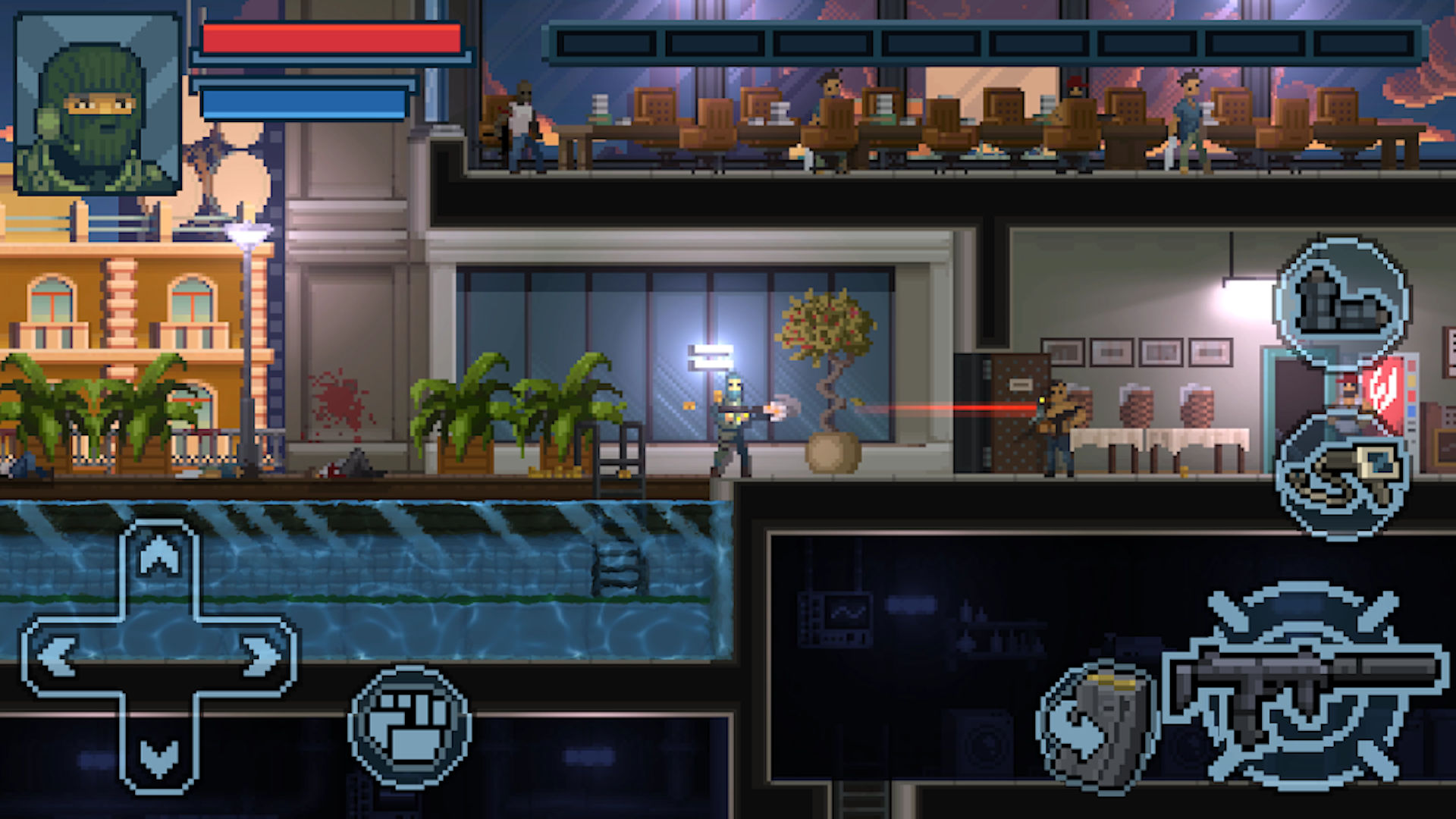
Winner of the Game Awards, ‘Games For Impact’ category, Gris is launching on Android later this week. Following the journey of a girl of the same name, Gris explores ideas of sorrow and grief in a fading world, her dress granting powers which she uses to traverse its many obstacles. Released in December 2018, and launching on iOS at the same time, Gris can be counted as one of the most critically acclaimed indie games of the past couple of years.

In particular, the game was praised for how it dealt with the subject of grief, but also its gorgeous visual aesthetic, and its enchanting soundtrack. Having already cemented its place on mobile with a wonderful iOS port, this Android release has been a long time coming.

Your journey through Gris is somewhat similar to Hellblade (though with far less stabbing of Norse spirits) as you gradually help her recover strength, represented in the powers linked to her dress, and to find acceptance in regards to whatever sorrowful event brought her to this strange plane of existence.

There have been a number of games dealing with mental health in recent years, whether Hellblade, or Sea of Solitude, but with a memorable art style and soundtrack, Gris has carved out some recognition for itself. It was also highly successful considering it was the first game of Barcelona-based developer, Nomada Studio; a collaboration between two ex triple-A developers.

It’s plain to see how inventive Gris is in terms of its gameplay, combining aspects of endless runners, platforming, puzzle, and Metroidvania in terms of abilities. But most of all, the game was recognised for creating a relaxing, therapeutic play experience, mirroring the restorative journey of its protagonist.

If this sounds like your cup of tea, you can grab the Android version right now on Google Play, or purchase the iOS from the App Store for $4.99 (£4.99).

Posted on Leave a comment

Now Available on Steam – メモリーズオフ-Innocent Fille-

メモリーズオフ-Innocent Fille- is Now Available on Steam!

「メモリーズオフ」シリーズ史上最もライトで最もシリアスな二面性のあるシナリオが、切なくて儚い、ただ一つの想いを選ぶ“二者択一の恋物語”(オルタナティブ・ラヴストーリー)へとプレイヤーを誘います。

Posted on Leave a comment

Raylib 3.0 Released

Raylib 3.0 was released today.  Raylib is an open source, cross platform C based framework of tools and libraries for making games.  Components of raylib can be used on their own, however you can also download a preconfigured development environment making it among the easiest ways to get started doing C or C++ game programming. 

Details of the 3.0 release:

  • All global variables from the multiple raylib modules have been moved to a global context state, it has several benefits, first, better code readability with more comprehensive variables naming and categorization (organized by types, i.e. CORE.Window.display.width, CORE.Input.Keyboard.currentKeyState or RLGL.State.modelview). Second, it allows better memory management to load global context state dynamically when required (not at the moment), making it easy to implement a hot-reloading mechanism if desired.
  • All memory allocations on raylib and its dependencies now use RL_MALLOC, RL_FREE and similar macros. Now users can easely hook their own memory allocations mechanism if desired, having more control on how memory is allocated internally by the library. Additionally, it makes it easier to port the library to embedded devices where memory control is critical. For more info check raylib issue #1074.
  • All I/O file accesses from raylib are being moved to memory data access, now all I/O file access is centralized into just four functions: LoadFileData(), SaveFileData(), LoadFileText(), SaveFileText(). Users can just update those functions to any I/O file system. This change makes it easier to integrate raylib with Virtual File Systems or custom I/O file implementations.
  • All raylib data structures have been reviewed and optimized for pass-by-value usage. One of raylib distinctive design decisions is that most of its functions receive and return data by value. This design makes raylib really simple for newcomers, avoiding pointers and allowing complete access to all structures data in a simple way. The downside is that data is copied on stack every function call and that copy could be costly so, all raylib data structures have been optimized to stay under 64 bytes for fast copy and retrieve.
  • All raylib tracelog messages have been reviewed and categorized for a more comprehensive output information when developing raylib applications, now all display, input, timer, platform, auxiliar libraries, file-accesses, data loading/unloading issues are properly reported with more detailed and visual messages.
  • raudio module has been internally reviewed to accomodate the new Music structure (converted from previous pointer format) and the module has been adapted to the highly improved miniaudio v0.10.
  • text module reviewed to improve fonts generation and text management functions, Font structure has been redesigned to better accomodate characters data, decoupling individual characters as Image glyphs from the font atlas parameters. Several improvements have been made to better support Unicode strings with UTF-8 encoding.
  • Multiple new examples added (most of them contributed by raylib users) and all examples reviewed for correct execution on most of the supported platforms, specially Web and Raspberry Pi. A detailed categorized table has been created on github for easy examples navigation and code access.
  • New GitHub Actions CI system has been implemented for Windows, Linux and macOS code and examples compilation on every new commit or PR to make sure library keeps stable and usable with no breaking bugs.

Raylib is available on https://www.raylib.com/, with the source code hosted on GitHub under the liberal ZLib license.  The raylib cheatsheet is a one stop shop for learning the commands from the various libraries.  Raylib is also well documented on the Wiki.

Learn more about raylib in the video below.

[embedded content]

GameDev News


<!–

–>