

Announcement – Valve
10:05am
Save up to 75% on Dovetail Games Franchise as part of this week’s Weekend Deal*!
*Offer ends Monday at 10AM Pacific Time
Share: 


New game releases.
Announcement – Valve
10:05am
*Offer ends Monday at 10AM Pacific Time

© 2019 Valve Corporation. All rights reserved. All trademarks are property of their respective owners in the US and other countries.
View mobile website

Number sense: you know your way around figures, can manipulate them quickly, line them up, cut them down to size. Calculating a tip, or guesstimating interest rate accrual. It’s a vague skill practiced from childhood in a million ways, large and small. Good to have for sure, but not exactly fun on its own. Every now and then a puzzle game makes regular arithmetic and number sense into centrepieces, and polishes each until it shines and fascinates. Divide by Sheep makes the player into a click-clack abacus for sheep destruction, keeping the challenge varied by rotating new mechanics and obstacles at a bracing pace. It can count itself among the lucky few games to make the ordinary deeply satisfying.
Each level has a setup of islands, sheep, obstacles and other dohickeys to fiddle with. The goal, ultimately, is to gather up sheep in groups with specific numbers and usher them onto the lifeboats. In a way this is a pathing problem, but really it breaks down into numbers, operations, and ordering. You have the raw material of the level presented right at the get-go, and just flick to send the sheep from one platform to an adjacent one. Maybe they fall into the water, get eaten by wolves, diced by lasers, mutilated by explosives…or maybe they join ranks with another group of sheep. Add, subtract, multiply, divide: the game is a primer on how these nominally dull operations work when placed at your fingertips.

The puzzles are clearly presented from the get-go, meaning the player can mentally model and consider a variety of potential solutions relatively easily. Puzzles are about tinkering and manipulating the field to see if that solution sitting in your head plays out nearly as neatly in reality. On that front, the game is extremely responsive and easy to play. It’s accessible from a practical and theoretical standpoint. Each move has a spatial element (paths matter) and a numerical element (how many sheep matters), so in combination the levels are just vexing enough to be challenging without blocking forward momentum. Mental struggle gives way to fireworks as that indefinable eureka moment comes, again and again.
Besides sheep and platforms, there are lasers, bombs, spatial vortices, Charon ferries, bouncing plates and safety nets, slippery pigs and voracious wolves. Each works distinctly, with a few of them counter-intuitive (pigs in particular take priority in some unusual cases) but in general the elements combine in naturally exciting and stimulating ways. ‘Fun’ in puzzlers means constantly teasing new possibilities

The progression and total amount of levels is rather generous, but if you’re already great at this sort of thing the game might more accurately be more of an appetizer and less of a main dish. (As opposed to, say, The Talos Principle, The Witness, Stephen’s Sausage Roll). Still, full marks for using dozens of levels to explore the variety of possible challenges. New tools, new obstacles, little redundancy or repetition. Still finite though, and exhaustible. Each ‘world’ has a different palette, standard set of mechanics and thirty levels, so in total there are one-hundred and fifty levels, with little to no redundancy between them.
If there were one avenue of criticism, it would be that Divide By Sheep’s puzzles can be solved by brute force, just messing around very quickly and carelessly with the possible permutations of moves. It’s not as inscrutable as other puzzle games, which might refuse to crack at all until the proper insight makes itself known. Each level in Divide By Sheep has three stars, and a ‘perfect score’ is not necessary to advance past a level, but a certain amount is required to move to new worlds. This means less gatekeeping and greater accessibility, but it also comes across as padding content somewhat. So whether these features are a liability or a reasonable compromise is a matter of perspective, but they are deliberate and present in the game.

In terms of design and art direction, the game’s buoyant blend of cartoonish gore matches the game perfectly. Messing around just to see the animations and mayhem is fun, as it well should be. It conveys the tone of gameplay deftly and sets the mood without being too flashy or forward.
All in all, the game makes for an excellent romp. Yes, it’s an excellent way to get anybody to practice their sums but that’s like praising a dish for ‘sneaking’ vegetables into it. Edifying to be sure, but a delight in its own right.

17 Jan 2019
Old-school strategy JRPG franchise Langrisser will be making its’ mobile debut next week via Langrisser Mobile – a freemium game that hopes to capture the free-to-play turn-based strategy crowd. Anyone looking for another game similar to Fire Emblem: Heroes will be able enjoy the full release version on January 22nd.
This is a sponsored article courtesy of Zlonggame.
Pre-registration is already live on both iTunes and the Google Play store, however, so if you want to sign up early you can do so via your app store of choice.
[youtube https://www.youtube.com/watch?v=TE7Gluk2Huk?controls=0]
Langrisser Mobile looks to capture the spirit of the classic tactical JRPG franchise by hitting all of those key nostalgic beats. Over 300 levels from across the series return, on tactical maps that can go as large as a 24×29 grid, and all set on the familiar continent of El Sallia. You’ll also be able to collect and fight with (or against) plenty of familiar faces from across the series, including Elwin, Dieharte and Luna.
Zlong has also brought back the series’ original composer, Noriyuki Iwadare, who’s joined by a star-studded Japanese voice cast that includes Ryotaro Okiayu (Fire Emblem, Bleach, Fate/Apocrypha).
Battles in Langrisser follow a familiar ‘rock ,paper, scissors’ style of gameplay based on the class of your hero, although there are two elements to a unit. The hero has their own special class but there is also an accompanying ‘troop’ that battles first. These will follow a basic class system and come in three tiers. Your heroes can be customised via their own class/progression tree, as well as different troops types and equipment. Similar to Fire Emblem, heroes and equipment all come with a rating.

If you want to try and get up to speed on the game while you wait for release, there’s an official wiki online that’s already been populated with some initial information and stats, which may help in your squad planning.
Langrisser Mobile launches worldwide on iOS and Android on January 22nd, 2019.

Bestowing your game with the same name as that of the most famous game’s designer on the planet is a bold statement. Depending on your point of view, you will either be disappointed or relieved to discover that there are no portly plumbers or pointy-eared heroes on display here. Miyamoto turns out to be a roguelike game with elements of both card play and turn-based tactical battles.
Before you even start playing, it is obvious that Miyamoto is a game proud of its tabletop miniatures gaming influences. The title screen shows a board game box and tapping on it will flip the lid, launching you into the game. Each playing piece is portrayed as a static model, posed on a coloured base. The game has a wonderful minimalist look, with the limited colour palette ensuring that the stylised units are both lovely to look at and easy to identify. Information is also kept to a bare minimum as each unit only has two statistics to display; health points and attack strength. To top it off, the way that cherry blossom flutters across the screen with the unobtrusive music playing away in the background, is in perfect keeping with the feudal Japanese setting.

Each of the eight levels is a skirmish battle set on a tiny four by four grid. At the beginning of each battle, your leader and your opponent’s leader are placed on opposite sides of the battlefield. Tap your leader and you are able to move them to an adjacent space and then if an enemy is within range, launch an attack. The results of combat are easily resolved; the strength of the attacking unit is deducted from the remaining health of the assaulted unit. It is as simple as that with no other statistics to worry about.
At the beginning of each round you will draw some cards. These do not cost any resources to play and will either allow you to introduce a new unit onto the battlefield or cast a spell. When a new unit is placed on the board it will usually be inactive until the start of the next round. Spells, meanwhile, have an immediate effect and fall into two types. Missile spells allow you to assail your enemies with the likes of fireballs and ice bolts. Other spells can be used to enhance a unit’s abilities; this may improve their attack strength or ready an inactive unit.

There is little opportunity to manage the content of your deck. After each victory, you are awarded a choice of one of three cards to add to your deck, but you never get to thin out your cards or even see the full list of the cards that you own. This does mean that the game has quite a high level of luck; drawing powerful cards early on will give you a distinct advantage.
The units have a satisfying variety of unique powers. The catapult is a static unit with a fearsome ranged attack that causes damage to all nearby units. The thief is weak but he does immediately add two extra cards to your hand (better not ask how he acquired them). He is great to use in tandem with the Princess as she gains an extra point of attack strength for each friendly unit already in play. The graveyard is another cool card; it will allow you to deploy an extra skeleton unit each round. Other units have abilities that enhance nearby friendly units, adding to their strength or protecting them from attack.

The overall aim of Miyamoto is to defeat eight progressively more difficult enemy leaders. Once a leader has their health reduced to zero the rest of their troops will pack up and go home. Hence, you need to protect your leader at all costs, which can be a real headache when you are coming under threat from every which way at once. It is at times like this that the small 16 square arena begins to feel especially claustrophobic, brutal and chaotic. If you are too wary then there is a real danger that your units will be swamped but throwing caution to the wind may leave your leader vulnerable.
Defeat an enemy leader and not only will you progress to the next battle but also earn some coins. This money can be put towards the cost of a new leader, each of whom has their own unique set of abilities. Be warned, these guys are not cheap. At the bottom end of the market and with an asking price of 10,000 coins is Hanzo whose fiery palms inflict area damage to all nearby units. Save up 30,000 coins and you can enlist the titular Miyamoto, whose wide-ranging power will give a permanent attacking boost to all allied units. The most that I have earned for defeating an opposition leader is around 300 coins, so a new leader is a long-term investment. However, they do give you the hope that they will provide the spark to defeat the final couple of tough levels.

Getting through all eight battles before your leader is killed offers a stiff and addictive challenge. Sometimes the enemy leader will make things a little easier by going on a kamikaze charge, leaving them in a very vulnerable position. Usually, however, the high speed turns and constantly changing battlefield means that you will always need to have your wits about you. A single high-powered strike against your leader can bring the entire campaign to an abrupt end. Miyamoto has lashings of rogue style tension. As you invest more time and effort you will have more to lose, thus escalating the pressure to ever-greater levels.
Miyamoto is a small game with very spartan presentation. There are only eight levels which means that the experience is going to be over sooner rather than later. There is no background story or rules explanation. Thankfully, it is straightforward enough to ensure that anyone with a passing familiarity with turn-based strategy games should be able to pick it up in next to no time. The interface helps, being instinctive and responsive, although it would be nice to be able to check on the abilities of enemy units. Some players will find the approach overly simplified. There is no pinning of units, terrain modifiers or flank attack bonuses. But that’s fine because Miyamoto isn’t aiming to be an in-depth simulation, in fact, with such a tiny field of play, there isn’t really that much scope for manoeuvring your units. It a fast-paced game of throwing your units into battle as quickly as possible, filling as many spaces around your leader, so that you can place new ones ever deeper into opponents’ territory – of course the problem is that they are attempting to do exactly the same.

Onimusha: Warlords / is Now Available on Steam!
Capcom’s riveting samurai adventure returns! This version includes the original game’s intense swordplay and dramatic revenge story, plus improved controls, widescreen display, a new soundtrack, and more. Experience this enhanced version of the best-selling action-adventure classic!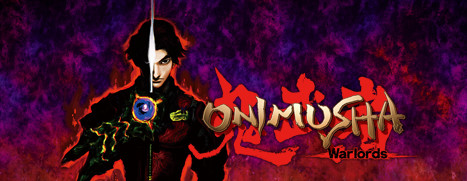

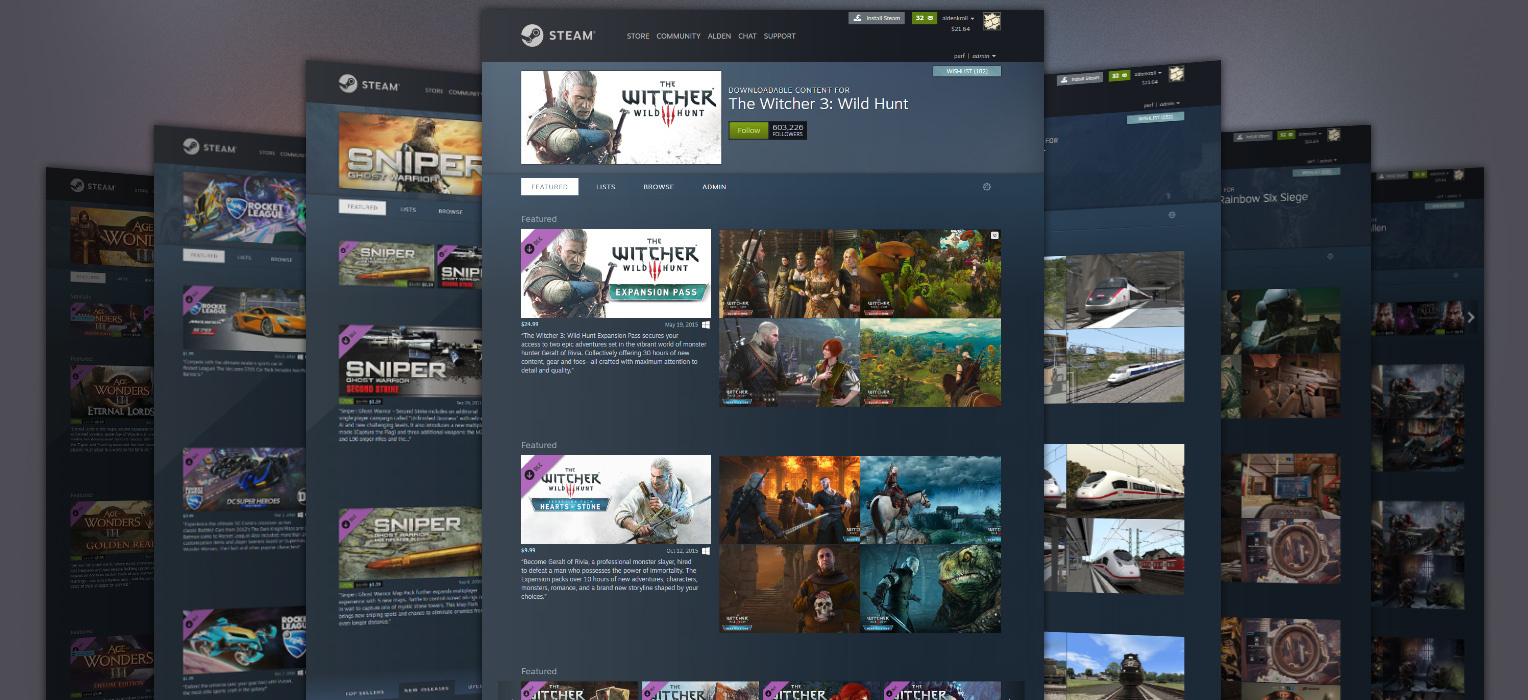
We’ve just rolled out an update that makes it easier to find downloadable content for your favorite games. Any game that offers DLC will now have a sortable, featured page of all of its DLC in one place. Furthermore, (and especially for games that have a tons of DLC) we’re providing ways for developers to customize how these pages by creating lists, adding branding and specifying which titles to feature.
Here are a few examples: Fantasy Grounds (1,166 DLC), Train Simulator 2019 (586 DLC), Microsoft Flight Simulator X: Steam Edition (272 DLC), and Rocket League (28 DLC)
To find these new pages, visit the store page for any game with DLC and click the new ‘View all’ button in the DLC area.
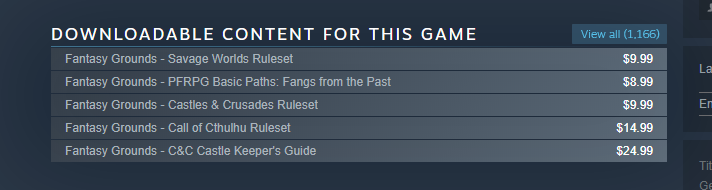
Let us know if you run into any issues or have feedback on these new pages.
-The Steam Team

We’ve just rolled out an update that makes it easier to find downloadable content for your favorite games. Any game that offers DLC will now have a sortable, featured page of all of its DLC in one place. Furthermore, (and especially for games that have a tons of DLC) we’re providing ways for developers to customize how these pages by creating lists, adding branding and specifying which titles to feature.
Here are a few examples: Fantasy Grounds (1,166 DLC), Train Simulator 2019 (586 DLC), Microsoft Flight Simulator X: Steam Edition (272 DLC), and Rocket League (28 DLC)
To find these new pages, visit the store page for any game with DLC and click the new ‘View all’ button in the DLC area.
Let us know if you run into any issues or have feedback on these new pages.
-The Steam Team
Starting on Feb. 4, three high-quality Nintendo 3DS games starring iconic characters – Super Mario Maker for Nintendo 3DS, The Legend of Zelda: Majora’s Mask 3D and Star Fox 64 3D – are joining the Nintendo Selects library. Nintendo Selects is a collection of games available at a suggested retail price of only $19.99 each.
The Nintendo Selects library features a wide variety of games for various Nintendo systems. In addition to these three newly added games, other games in the Nintendo Selects library for the Nintendo 3DS family of systems include classics like Super Mario 3D Land, Animal Crossing: New Leaf – Welcome amiibo, Kirby: Triple Deluxe and The Legend of Zelda: A Link Between Worlds. For a full listing of games in the Nintendo Selects library, visit https://www.nintendo.com/nintendo-selects.
In the Super Mario Maker for Nintendo 3DS game, build, play and share your own side-scrolling Super Mario levels using a wide variety of tools. Want to make your cannons shoot coins or have Bowser fly? With the intuitive touch-screen controls of the Nintendo 3DS family of systems, creating levels is easy and fun. Plus, you can take on 100 built-in courses as you tackle the Super Mario Challenge.
The Legend of Zelda: Majora’s Mask 3D game brings Link’s classic adventure to Nintendo 3DS. This remastered and enhanced version features a cast of memorable characters, unforgettable gameplay and a dark and mysterious story. With control of time itself, Link must save the world of Termina from destruction by helping citizens, battling bosses and solving challenging puzzles.
Join ace pilot Fox McCloud in the Star Fox 64 3D game, an action-packed space shooter that puts you in the control of the classic Arwing ship as you blast, warp and barrel roll across space. Each mission in the game takes you through a different planet of the Lylat system as you face off against enemies, collect power-ups and fight powerful bosses on the way to the final battle against the evil Dr. Andross.
Anyone looking to play these great games on a system in the Nintendo 3DS family can pick up any one of these affordable options:
For more information about Nintendo 3DS, visit https://www.nintendo.com/3ds/.
*Nintendo 2DS and New Nintendo 2DS XL play Nintendo 3DS games in 2D only.
**In specially marked packages.
For Nintendo 3DS systems, use Parental Controls to restrict 3D mode for children 6 and under.


With the recent release of Godot 3.1 beta, it’s a good time to look at the future. That is exactly what Juan Linietsky, lead developer on the Godot engine has done. On Twitter he laid out his current roadmap for development priorities in Godot 4.0/4.1.
In a pair of tweets, he first discussed general Godot improvements, mostly around the renderer:
Then in a second tweet, he discussed Physics improvements:
Keep in mind, although Juan is the lead and perhaps most important developer on the Godot team, he is by no means the only one. This means even though you don’t see a feature on the two above lists doesn’t mean it wont happen, as there is a vibrant community of developers adding new features to Godot.
[youtube https://www.youtube.com/watch?v=-f8xU-gEkg4&w=1280&h=720]

