Posted on Leave a comment

Microsoft Security Excellence Awards winners announced

Spirits soared at the Microsoft Security Excellence Awards on June 5, 2022. And is it any wonder? The celebration marked the first time that Microsoft executives and Microsoft Intelligent Security Association (MISA) members had gathered in person in more than two years so it was a special night for many reasons!

Formerly known as the Microsoft Security 20/20 Awards, the Microsoft Security Excellence Awards recognizes MISA member success across security during the past 12 months. MISA is a coalition of Microsoft leaders and subject matter experts, independent software vendors (ISVs), and managed security service providers (MSSPs) working together to defend against increasing security threats.

Attendees donned their fashionably festive best and gathered at the brightly lit San Francisco Design Center for cocktails, dinner, networking, and awards recognition. They smiled as they caught up with folks they may not have seen in years—and some even made new connections.

The stars of the evening were all the MISA members that work tirelessly to ensure the security of our shared customers. Congratulations to all our award finalists and winners! After cocktails, conversation, and dinner, Microsoft executives Vasu Jakkal, Phil Montgomery, Andrew Conway, Alym Rayani, Irina Nechaeva, Desmond Forbes, Sue Bohn, Mandana Javaheri, Madhu Prasha, and Scott Woodgate handed out the awards. Vasu Jakkal, Corporate Vice President of Microsoft Security, praised the recipients for their achievements.

“I’m so honored to recognize this year’s award winners. MISA members regularly impress us with their shared vision of helping create a more secure world,” Vasu said. “They support this mission through their solutions and services, their dedication to innovation, and their dedication to customers. Security is a team sport, and we are so proud to defend together with our MISA community. Heartiest congratulations to all of this year’s winners.” 

Be fearless with comprehensive security

Microsoft and MISA members share a commitment to supporting customers in their efforts to be fearless. That means ensuring that they have the comprehensive security necessary to help them grow their enterprise securely to match their vision. When we talk about comprehensive security, we’re not referring merely to security coverage, though that’s important. We’re also talking about best-in-breed protection, built-in intelligence, and simplified management.

Being fearless when it comes to cybersecurity comes when companies:

  • Gain confidence that their data and people are more protected—so they can limit nothing.
  • Natively integrate individual layers of protection across clouds, platforms, endpoints, and devices.
  • Get alerts from 24 trillion security signals analyzed every 24 hours.
  • Reduce the risk of data breaches and compliance violations.

Of course, partners are key to giving customers the results that ease their security worries.

Our 2022 Microsoft Security Excellence Awards finalists

A Microsoft cross-functional group decided on this year’s 10 award categories, including 4 categories where MISA members could nominate themselves. We carefully selected these categories to celebrate all the unique ways that MISA members support customers and Microsoft security products. We received hundreds of award nominations and the same panel carefully read each and narrowed the award nominees to three for each category. Microsoft and MISA members then voted on our winners.

Security ISV of the Year

ISVs that are all-around powerhouses, show growth potential and have innovative security solutions that integrate with a MISA-qualifying security product.

Security MSSP of the Year

MSSPs that are all-around powerhouses with strong integration between Microsoft products and ongoing managed security services that drive the end-to-end Microsoft Security stack to our mutual customers.

Security Trailblazer

Partners that are outstanding leaders in accelerating customers’ efforts to mitigate cybersecurity threats and that have developed innovative solutions or services that leverage Microsoft Security products.

Compliance and Privacy Trailblazer

Partners that deliver innovative solutions or services and are distinguished leaders in driving holistic or end-to-end Microsoft compliance or privacy strategy with customers.

Identity Trailblazer

Partners that are leaders in the identity space and have driven identity-related initiatives and delivered innovative solutions or services with Microsoft Azure Active Directory.

Zero Trust Champion

Partners that are dedicated to supporting customers in their Zero Trust journey and that have demonstrated vital integrations with the Microsoft Zero Trust platform.

Security Software Innovator

ISVs that have developed innovative solutions with disruptive and transformative technology in collaboration with Microsoft that makes work easier for our mutual customers.

Security Services Innovator

MSSPs that are exceptional at educating the market on Internet of Things (IoT) and Operational Technology (OT) security-related initiatives and that deliver innovative and transformative security services to customers.

Security Customer Champion

Partners that go above and beyond to drive customer impact and that have a proven track record of customer obsession and success.

Security Changemaker

Individuals within partner organizations who have made a remarkable security contribution to the company or to the larger security community.

Excited for another year of MISA success

Congratulations again to all our finalists and winners! Your innovation and your commitment to helping customers be fearless impresses us every day. We can’t wait to see what exciting accomplishments our partners achieve over the next 12 months and hope to see you at next year’s Microsoft Security Excellence Awards!

To learn more about Microsoft Security solutions, visit our website. Bookmark the Security blog to keep up with our expert coverage on security matters. Also, follow us at @MSFTSecurity for the latest news and updates on cybersecurity.

Posted on Leave a comment

Shopping for grads and dads? Check out these Windows 11 PCs for school, work and gaming

It’s the time of year when graduation photos fill up social media feeds, a major milestone and transition for many families. And then soon after, it’s Father’s Day – another opportunity to celebrate and give thanks to that special paternal figure in your life.

New grads embarking on the next chapter in their lives – college and/or career – are going to need a PC that can handle the multitasking of assignments, presentations and calculations; the streaming of favorite shows in their downtime; and video chats with family and friends across the country or world.

Students sitting at tables studying

With Windows 11, they can do all that, using features such as Snap Assist and Desktop Groups to juggle Microsoft Word, PowerPoint and Excel; using Widgets to easily access information such as weather, your Outlook calendar and news; and Chat from Microsoft Teams to stay in touch with loved ones.

And dads too, can enjoy a new PC to help juggle calendars, participate in video calls and do research. And like the younger generation, they might also like to get some “me” time in too: to game, online shop, browse cat or dog videos, etc. With the PC Game Pass, which many PCs include as a free trial, more than 100 high-quality PC games are available to play. New games are added all the time.

When that special someone gets a new PC, Windows 11 makes it easy to set up, transferring their existing setup from their old PC to the new one via OneDrive. And if you prefer using touchscreens, pens and your voice (speech-to-text), you can find a PC with those input options so you can work (and play) the way you like.

To get you started on your search for the right PC for your grad or dad, here are some picks for those different stages of life:

Going to college 

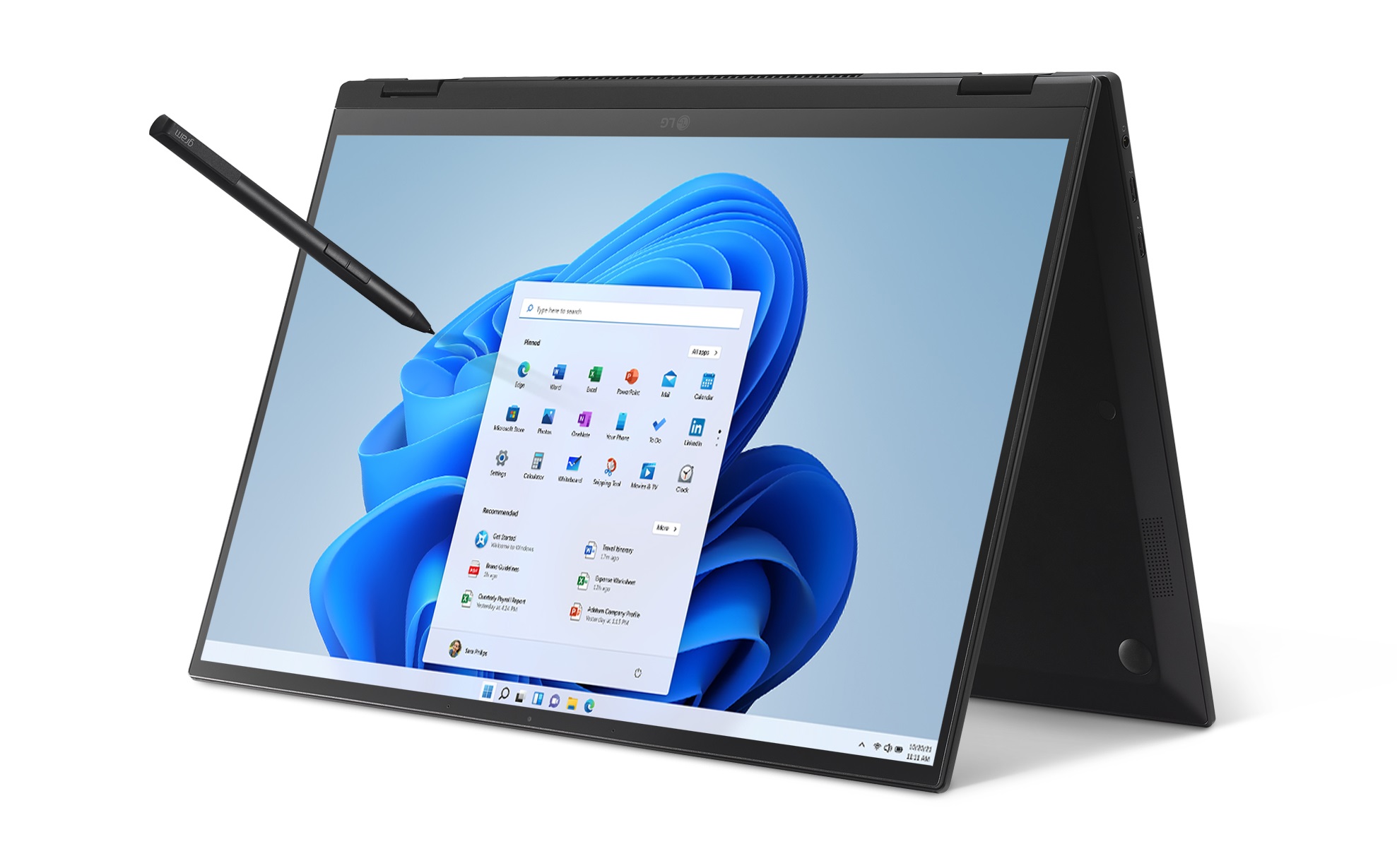
LG laptop in tent mode with a pen hovering over Windows 11 interface

Grads are growing up in less traditional environments and schedules, which is also reflected in the workforce. People are gravitating more toward mobile, simpler devices that adapt to the way they want to work. Tablets, for instance, are no longer just for entertainment. New grads can now use them for work and play, as well as 2-in-1s, like the LG gram 2-in-1 16. Go from a 16-inch laptop to a 16-inch tablet with a flip of the 360-degree hinge. At 3.26 pounds, this compact body also has a Gorilla Glass screen, full-size keyboard and 360-degree touch display. Powered by the 11th Gen Intel Core processor with Iris Xe graphics, it provides up to 1.2X CPU performance.

Acer laptop open and facing reader

The Acer Swift X lineup added two 14-inch and 16-inch models earlier this year, featuring a 16:10 aspect-ratio IPS screen with a 92.22% screen-to-body ratio. From there, 100% coverage of the sRGB color gamut delivers an immersive viewing experience – the better for streaming through Microsoft Store apps or shopping securely on Microsoft Edge. When you’re in Teams video meetings, you’ll find an FHD webcam with Acer’s Temporal Noise Reduction (TNR) technology for high-quality imagery, even in low-light conditions. And for added security when you’re working in communal spaces, there’s a fingerprint reader for easy login with Windows Hello. (Buy it on Amazon.com.)

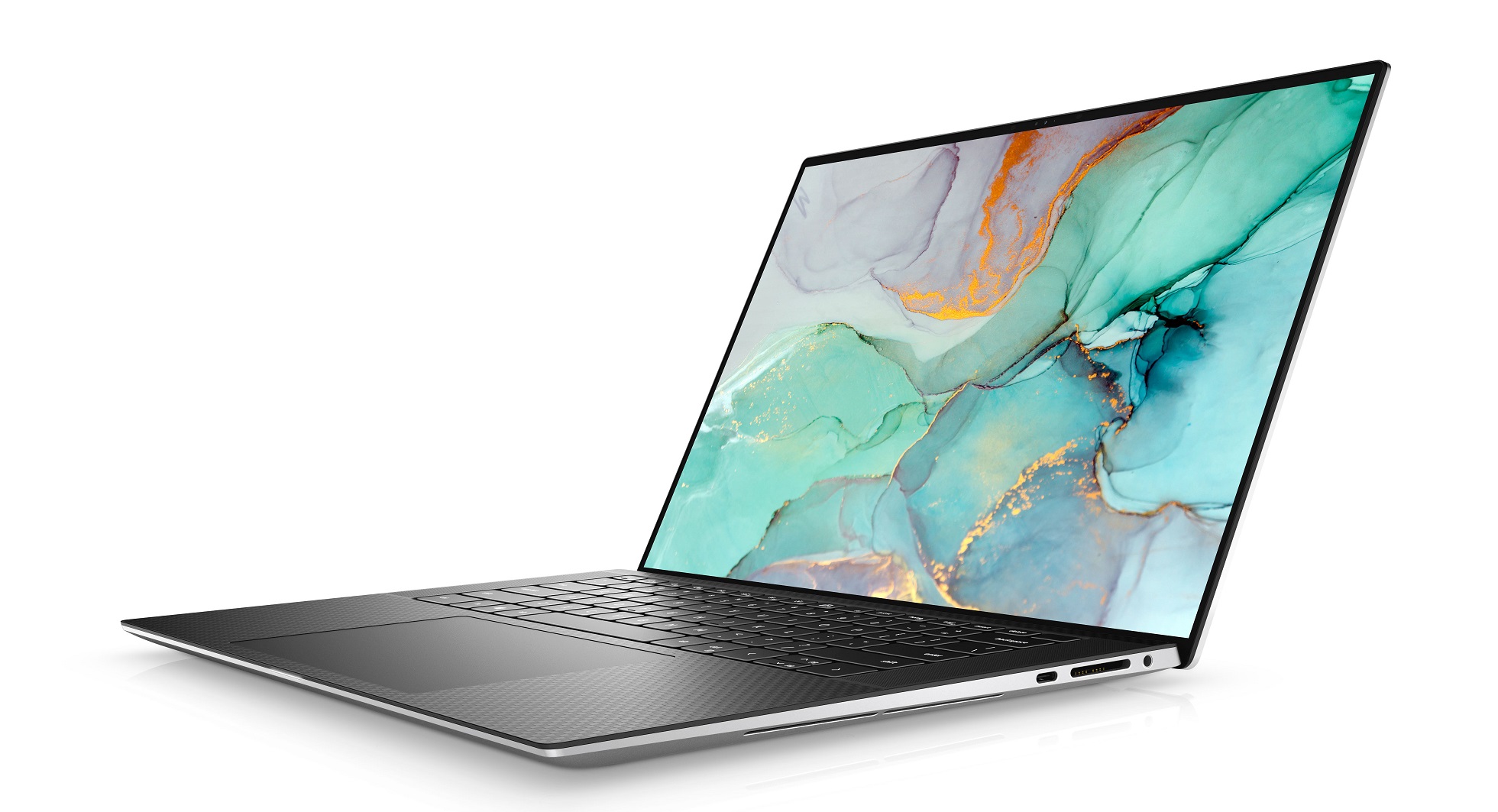
When you’re in your dorm room or on the go, you’ll find the Dell XPS 15 balances power and portability with an immersive visual and sound experience on a dynamic display that delivers high brightness, improved clarity and precise detail. Whether you are working on your next project, streaming, or editing photos, the XPS 15 has the power to move your ideas into reality, powered with the latest 12th Gen Intel Core processors up to i9k and DDR5 memory.  GeForce RTS 30 Series allows for top performance to create complex 3D scenes, edit 8K video, or live stream with the best encoding and image quality. Log-on securely with facial recognition or a fingerprint reader with Windows Hello. (Buy it at Dell.com.)

Lenovo IdeaPad 5 open and angled to the left

The Lenovo IdeaPad 5, with up to 11th Gen Intel Core processors, comes with a 15.6-inch FHD touchscreen with narrow borders, providing an ample canvas to work on or to play. Stay connected at home or on campus by combining what you love about your smartphone with the efficiency of a thin and light fan-less laptop. And when you’re out and about, webcam privacy shutters and fingerprint readers deliver both security and easy logins with Windows Hello. USB-C ports and Quick Charging gets your battery full faster. All this empowers you to download movies, make calls and send emails from virtually anywhere. (Read more about it on the Windows Experience Blog.)

Welcome to the workforce 

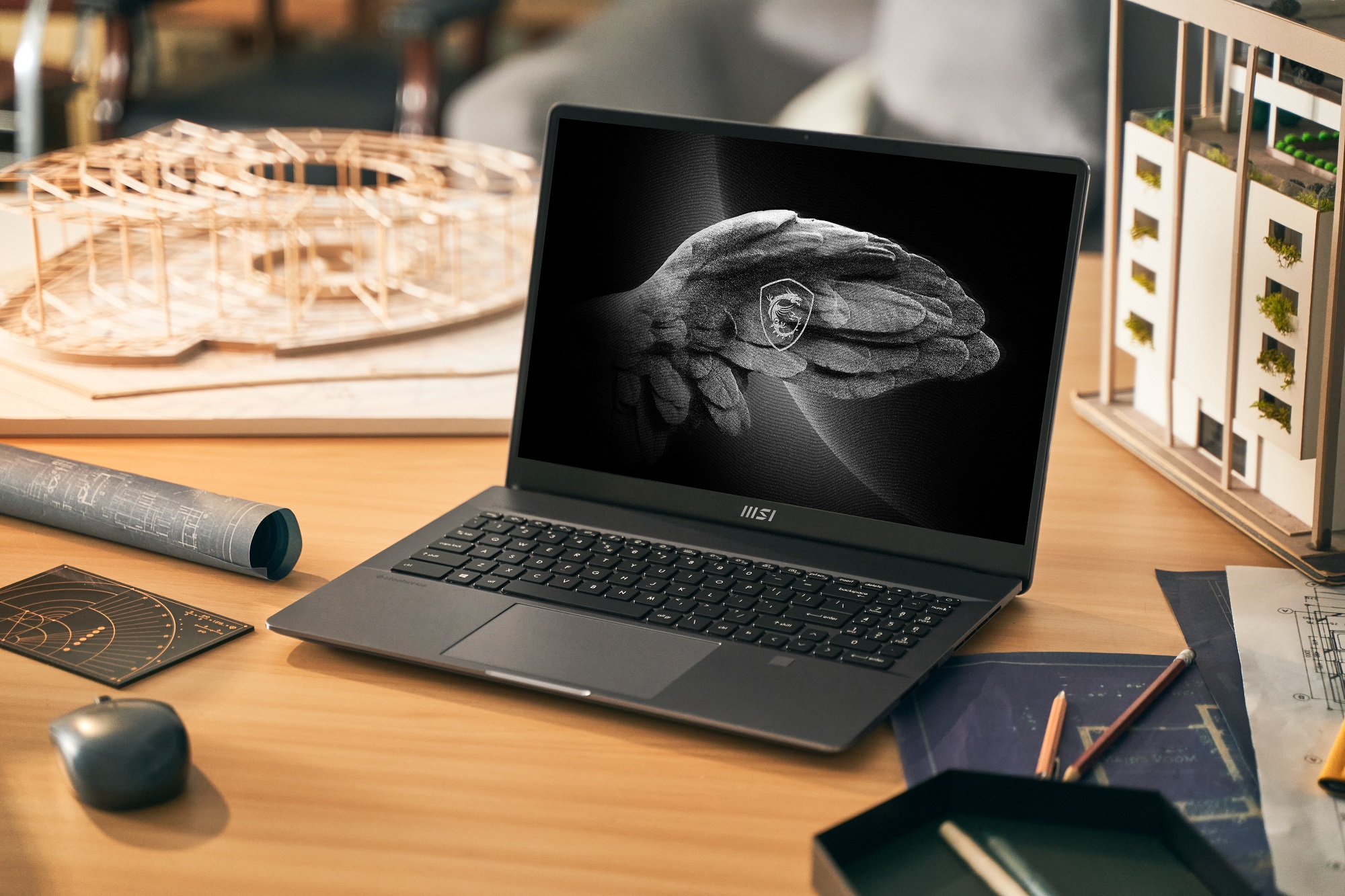
MSI laptop open on a desk

The MSI Creator Z16P Windows 11 PC includes the latest 12th Gen Intel Core i9 processors and GeForce RTX 30 Series GPUs to bring your creativity to life as you start your new job or need refresh tech on your current job. Your workflow will zip along faster with twice the rendering performance and twice the graphics memory of the 20 Series, to make editing up to 8K HDR RAW video and working with extra-large 3D models a snap. You can do all this with a 16:10 Golden Ratio Display, MPP2.0 Active pen support and exceptional vapor chamber cooling. (Buy it at authorized resellers and read more about it.)

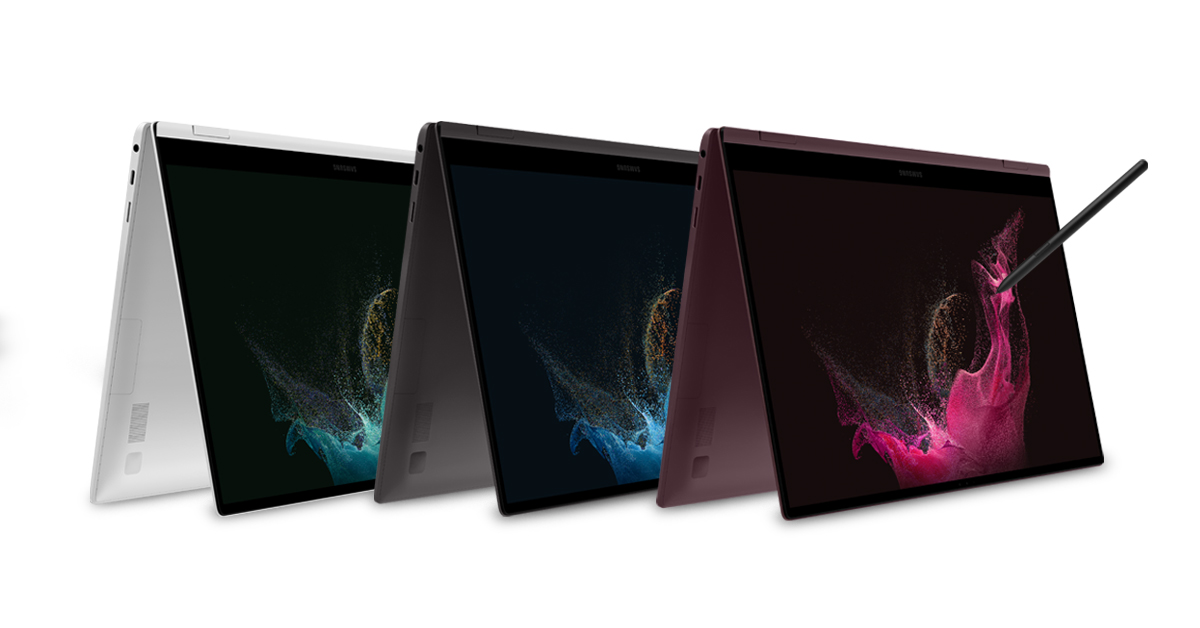
Samsung GalaxyBook2 Pro 360 in tent mode, three side by side

The Samsung Galaxy Book2 Pro 360 made its debut in February at MWC Barcelona, where it showed off updates to features such as Phone Link (formerly known as Windows/Microsoft Your Phone) [1], which pairs your Galaxy smartphone to your Galaxy Book2 Pro series device. With Recent Apps, users can swipe up on their Windows 11 taskbar to check their smartphone’s status and choose their most recently used smartphone apps to use directly on their desktops. To provide power to do more, the Galaxy Book2 Pro series features the latest 12th Gen Intel Core processors for reliable performance to work, video call and game. Because video calls are now a part of everyday life, the Galaxy Book2 Pro series is upgraded for high-quality call experiences, with 1080p FHD webcams and wider field of view angles [2]. To keep you protected, the Galaxy Book2 Pro series is the first consumer PC lineup meeting Microsoft’s Secured-core PC requirements. Previously designed for enterprise PCs in high-security industries, this Secured-core PC designation delivers the highest level of protection on Windows 11 and features deeply integrated hardware, firmware and software to enhance protection against potential cyberattacks [3]. (Shop for it at Samsung.)

Dynabook laptop open and facing left at an angle

The Dynabook Portégé X40-K is a 14-inch Windows 11 Pro PC built with new hybrid-architecture 12th Gen Intel Core P-Series 28W processor options, configurable with Core i5 or i7 CPUs, up to 64GB of memory and reinforced with ultra-fast SSD storage, Wi-Fi 6E and Thunderbolt 4. Created with the hybrid workplace in mind, the laptop is just 0.70 inches thin and weighs under 3.2 pounds. The Portégé X40-K was engineered and tested to MIL-STD-810H standards for strength and durability to ensure robust endurance to the rigors of daily use in or out of the office. Opening the lid exposes a thin-bezel 14-inch IPS or multi-touch display, premium backlit keyboard and large multi-touch ClickPad embedded into a comfortable aluminum palm rest. When you’re not using it, Sleep & Charge technology keeps a USB port powered, which means the laptop can charge a smartphone and other accessories.

Gaming 

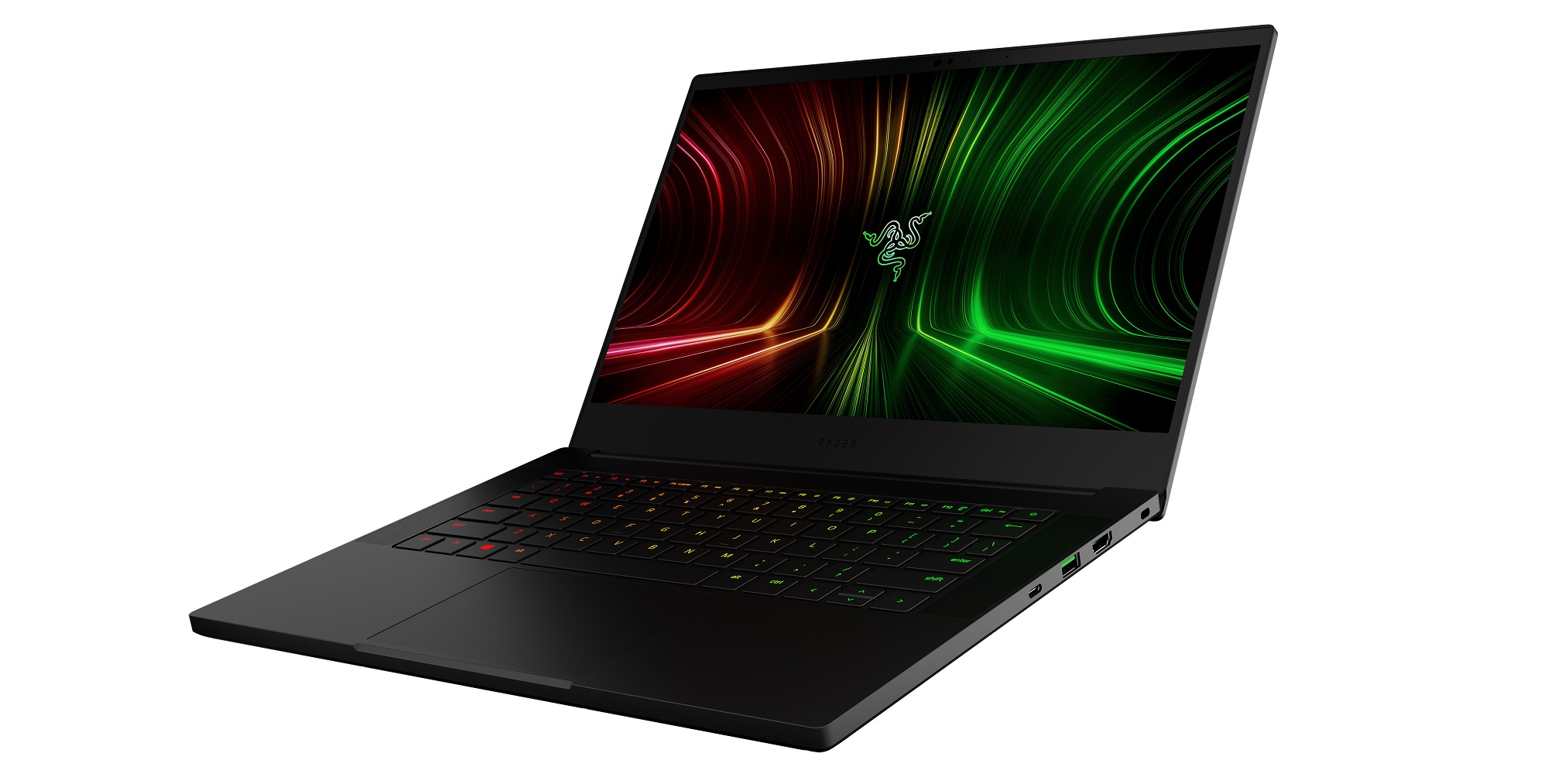
Razer Blade 14 open and facing left

CES 2022 introduced the Razer Blade 14, which includes Windows 11 and all its gaming benefits, including DirectStorage, Xbox Game Bar and Xbox Game Pass. It comes with the next generation of AMD Ryzen 6000 Series Processors. Every configuration prominently features the ultra-fast Ryzen 9 6900HX processor, enabling some of the most powerful AMD gaming possible on a mobile device. With a newly implemented MUX Switch, the Blade 14 allows players to increase gameplay performance by utilizing the discrete GPU to drive games on the internal display. This laptop now also joins its slightly larger family members with the addition of the same fingerprint resistant coating and a 1080p Windows Hello IR webcam, making video calls twice as clear as before. (Buy it at razer.com.)

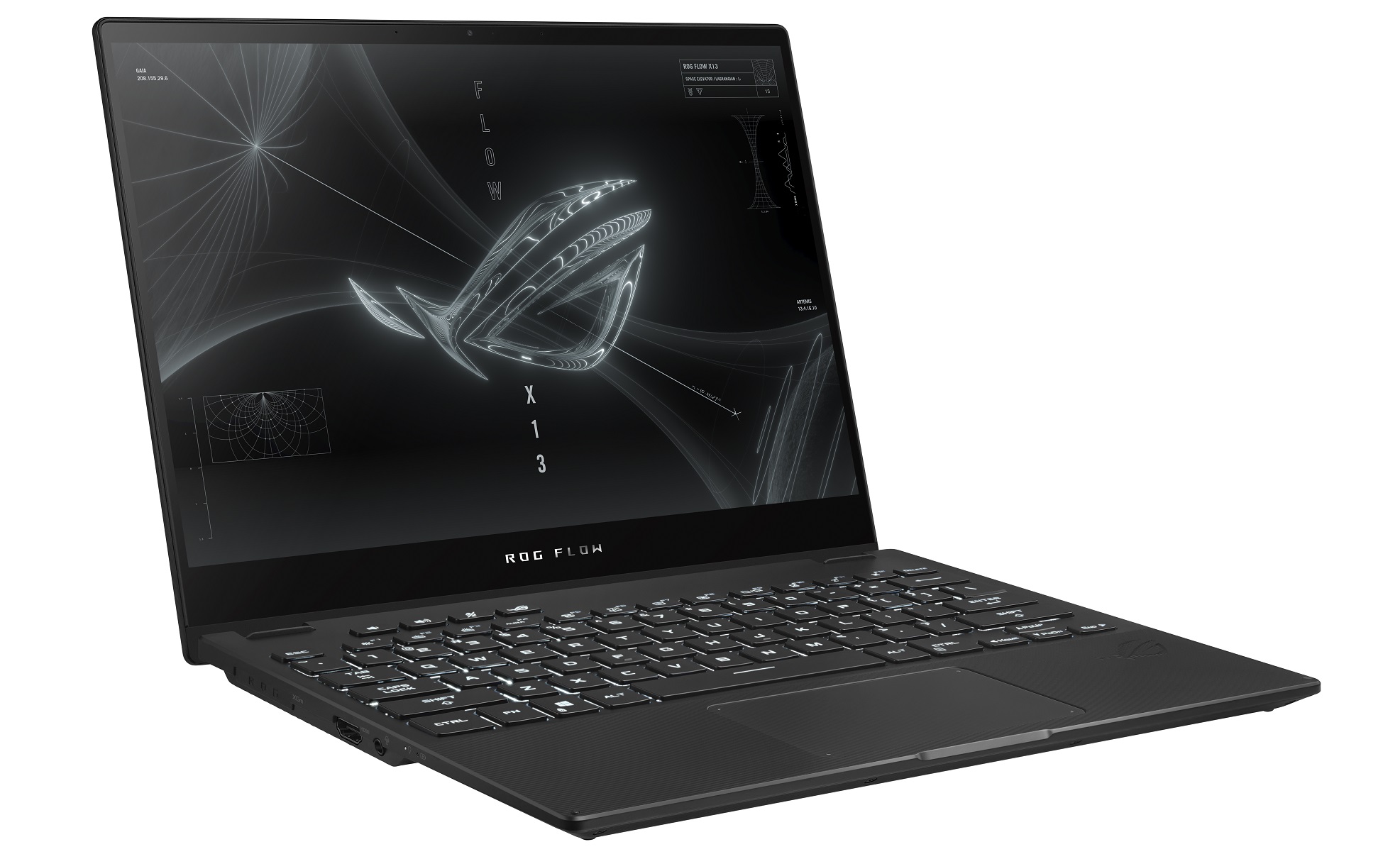
ROG Flow X13 open and facing right

The ASUS ROG Flow X13 was the first 2-in-1 convertible ROG gaming laptop that now comes with Windows 11 Pro and up to the latest Ryzen 9 6900HS processor and GeForce RTX 3050 Ti GPU which provides the performance needed for demanding workloads and enables strong performance in the latest games. Your favorite player can also choose between 4K UHD or 120Hz FHD displays. On both displays, Adaptive-Sync synchronizes the panel’s refresh rate with the GPU’s frame rate to reduce lag, minimize stuttering and eliminate visual tearing. Sign on with Windows Hello. You can also wake it up like a smartphone thanks to an integrated one-touch login. A 360-degree hinge maximizes touchscreen viewing and interaction, quickly flipping from laptop mode into positions for gaming, drawing and presenting. You can also take advantage of Windows Ink. The edge-to-edge keyboard design incorporates a full-sized, desktop-style layout into its compact chassis. (Buy it on the ROG website and find out more about it.)

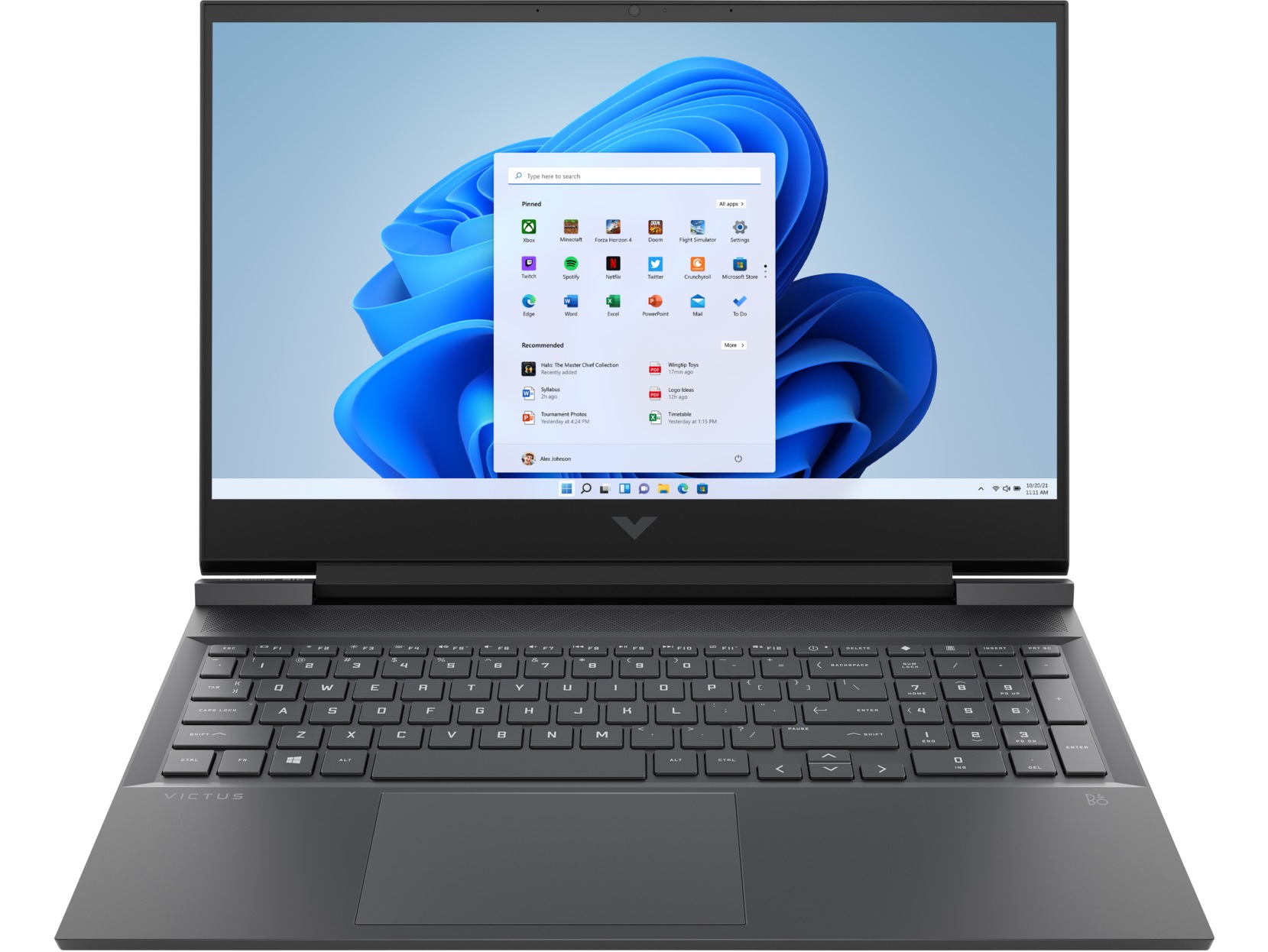
Victus 16 open and facing reader

Built with OMEN’s DNA, Victus by HP debuted in 2021 for entry-level gamers. The Victus by HP 16 was the first of this line. Pixels have never moved faster on these second-generation GeForce RTX 3060 laptops with graphics powered by award-winning NVIDIA Ampere architecture. Computing gameplay on the screen is lightning fast with options up to Intel Core i7-12700H or AMD Ryzen 7 6800H series processors along with up to 32 GB DDR5 4800 MHz memory. Wide rear vents add a visual flair on top of enhanced thermal efficiency, which is bolstered by five-way airflow and a four-heat pipe design. With a single SSD up to Gen4 1TB PCIe storage, storage options are plentiful for gaming and other activities. (Buy it at HP.com and go to the Windows Experience Blog to find out more about it.)

[1] Users must link their Galaxy device to their Windows PC through ‘Link to Windows’ on phone and Phone Link app on PC, follow the set-up prompts, including being signed into same Microsoft account. Link to Windows is preloaded on select Galaxy devices. Phone Link requires Windows 10 April 2019 Update (or later) on the PC and recommends the latest Windows 11. Phone Link requires Galaxy device to be on and connected to the same Wi-Fi network as the PC. Some mobile apps may restrict content to be shared on other screens or may require a touch screen to be able to interact with them. Multiple Android applications can be launched simultaneously up to five at a time in Windows 11 PC.

[2] Galaxy Book2 Pro series device features 87-degree field of view compared to 77-degree field of view in Galaxy Book Pro series.

[3] Secured-core PCs use hardware-based security components like Trusted Platform Module 2.0 (TPM) and modern CPUs along with virtualization-based security (VBS) and Windows hypervisor code integrity (HVCI) service to create a secure, hardware-isolated environment that effectively isolates memory and critical components to prevent attacks and unauthorized access to critical parts of the operating system. The Secured-core PC relies on advanced security capabilities built into modern CPUs to protect the integrity of Windows and its boot process from advanced attacks at the firmware level.

Requires specialized hardware, including fingerprint reader, illuminated IT sensor or other biometric sensors and capable devices.

Posted on Leave a comment

How to watch the Xbox & Bethesda Games Showcase coming Sunday, June 12

In a little less than a week, gamers across the globe will come together to watch the Xbox & Bethesda Games Showcase, featuring the latest on games from Xbox Game Studios, Bethesda, and our partners from around the world.

The show will include everything you want to know about the gaming lineup coming to Xbox and PC, including upcoming releases on Xbox Game Pass, and more.

Wherever in the world you may be, if you have a screen and internet access, you’ll be able to join in on our biggest moment of 2022 so far. Now, how about some specifics?

When is the event? Sunday, June 12 at 10am Pacific Time.

How do I watch? The showcase will be streamed out live on official Xbox channels, including Twitch, YouTube, Facebook, Twitter, and, for the first time, TikTok.

The show will also be streamed out simultaneously on regional Xbox and Bethesda channels around the globe, as well as on Steam, China’s Bilibli, and media outlets.

Important note: the show will be streamed in 1080p at 60fps. For a more representative look at the visuals contained in the showcase, we recommend watching the 4K / 60fps rebroadcast of the showcase on the Xbox YouTube channel, which will be available after the conclusion of the premiere. We will be sure to post on @Xbox social when the 4K / 60fps version is ready to view. 

Is the event available in languages other than English?  We will be providing subtitle support and/or audio dubbed translations in the following languages: Arabic, Chinese (Simplified), Chinese (Traditional), Czech, Danish, Dutch, Finnish, French, German, Greek, Hebrew, Hindi, Hungarian, Indonesian, Italian, Japanese, Korean, Malay, Norwegian, Persian (Farsi), Polish, Portuguese, Portuguese (Brazilian), Russian, Slovak, Spanish (Castilian), Spanish (Latin America), Swedish, Thai, Turkish, Ukranian, and Vietnamese. We expect to have all languages available with the show’s live broadcast but it is possible that select languages may need to be added in the days following the broadcast if they have not finished translating.

The easiest way to find your preferred language is to check out your country’s Xbox page on Facebook or by viewing on the official Xbox YouTube channel and clicking the gear icon in the lower right corner.

Is the show going to be Accessible to those with low/no hearing or low/no vision? There will be a version of the show with Audio Descriptions (AD) in English on the Xbox YouTube channel, and American Sign Language (ASL) on Xbox’s YouTube channel and the new /XboxASL Twitch channel.

I’m not going to be able to watch, where can I find out what was announced? As announcements roll out during the broadcast, the Xbox Wire team will be publishing detailed blog posts containing key announcements right here at news.xbox.com (including localized versions in Brazilian Portuguese, French, German, LATAM Spanish, and Japanese).

Xbox FanFest Watch Parties: There is no better way to celebrate this year’s Xbox & Bethesda Games Showcase than with friends around the world! That is why we are inviting all Xbox fans to join us at the Xbox FanFest Virtual Watch Party. To get access, sign up as an Xbox FanFest fan at www.xbox.com/fanfest and opt-in to the virtual event.

Xbox FanFest is also hosting in-person watch parties around the world. Select Xbox FanFest fans won tickets to attend watch parties in Los Angeles, California; Madrid, Spain; Toronto, Canada; and Melbourne, Australia. Become an Xbox FanFest fan to unlock access to exclusive events, offers and more. Sign up as an Xbox FanFest fan at www.xbox.com/fanfest.

Notes for co-streamers and creators: We at Xbox greatly appreciate any co-stream efforts and aim to ensure you have a smooth experience if you choose to do so.

However, due to forces beyond our control, we cannot guarantee that glitches or disruptions by bots and other automated software won’t interfere with your co-stream.

Video on Demand (VOD): For those planning to create full post-show breakdowns in the form of VOD coverage, we recommend you do not use any audio containing copyrighted music to avoid any action by automated bots, and to also consult the terms of service for your service provider.

Will there be an Extended Stream? Yes! Stay tuned for the Xbox Games Showcase Extended on June 14th at 10am PT where we will share new trailers, take deeper looks at the news from the Xbox & Bethesda Games Showcase and speak with some of your favorite game creators. This all-new broadcast is approximately 90 minutes in length, and will be broadcast live in English, Latin America Spanish, Brazilian Portuguese, German and French, and the additional languages we offer will be available within a week. Audio Descriptions and American Sign Language will be offered live.

YouTube.com/Xbox
YouTube.com/Bethesda
Twitch.tv/Xbox
Twitch.tv/XboxASL
Twitch.tv/Bethesda
Twitter.com/Xbox
Facebook.com/Xbox
Facebook.com/Bethesda

Xbox_ShowcaseExtended_Tunein

See you on Sunday!

Posted on Leave a comment

Gen-trepreneur Z is making its mark on the future of small business

How Gen Z is flipping the career paradigm on its head and navigating the entrepreneurial world independently. 

The data featured in this post is from an internal study, the “Small Business State of Mind” report, commissioned by Microsoft Corporation in April 2022 and conducted by Wakefield Research.

In 2021 alone, Americans submitted over 5.4 million applications[i] to start a new business. With the U.S. experiencing a small business boom, Gen Z, the generation known for bucking traditional paths, is shaping its future. They’re showing us their entirely unique perspective on work and success and shaking up the world as we know it with their social media prowess, value of self-expression and heightened social consciousness. With 62% of Gen Zers[ii] indicating they have started—or intend to start—their own business, Gen Z is making its mark poised to become the most entrepreneurial generation the world has seen.

So, what does the state of small business look like today and how is Gen Z shaping this evolution? Microsoft Store’s “Small Business State of Mind” report—a survey of 1,000 small business owners with 0-24 employees—digs into the mindsets of today’s entrepreneurs to understand their work motives, lifestyles and vision for the future as they lead, navigate and plan for the opportunities and obstacles that lie ahead.

Key Findings

A look at five small business trends shaping entrepreneurship as we know it:

  1. 9-to-never. Gen Z small business owners are redefining the workplace hustle.
  2. The do-good effect. Small business owners investing in social good are seeing the benefits.
  3. Risky business. Small businesses are letting data breach prevention fall to the wayside.
  4. Road to retirement. Why is Gen Z set on small business ownership? Early retirement.
  5. TikTok over textbooks. Gen Z small business owners are leaning into TikTok for business advice while debating the necessity of a higher ed degree.
Smiling man wearing an apron and holding a tablet device, next to two statistics

The workplace hustle experienced by Millennials—typically consisting of long work weeks and endless hours at a desk in front of a computer—has simply taken on a new form with Gen Z. The Gen Z grind may look similar to the Millennial hustle, but it has some key differences.

Survey results show that 91% of Gen Z small business owners work unconventional hours outside of 9 a.m. to 5 p.m., and 81% of Gen Z small business owners work while on vacation, compared to 62% of small business owners overall. They wear multiple hats: nearly half of Gen Z (48%) and non-Hispanic Black small business owners (49%) have multiple side hustles, compared to 34% of small business owners overall. Additionally, a clear majority of Gen Z (64%) and Black, Indigenous and People of Color (BIPOC) small business owners (58%) operate at least half of their business on their phone, compared to 48% of small business owners overall.

Not only does Gen Z hustle, but they’re fueled by a purpose. Half of Gen Z small business owners (50%) rank social good as among their top three business priorities compared to 39% of small business owners overall—more on this in the next section.

“At Microsoft Store, we know technology is critical to supporting a flexible and mobile work lifestyle,” says Travis Walter, vice president of Microsoft Store. “It allows small business owners the ability to manage a business at anytime from anywhere, reach customers where they are at, and gives them space to focus on what really matters to them and their business.”

Text about the do-good effect, next to two statistics

As the world continues to navigate a two-plus yearlong global pandemic, and a period of vast change at a societal level, Microsoft Store found Gen Z small business owners adopting non-traditional priorities when it comes to their small business—social good. On top of that, the data exemplifies a “do-good effect”—positive impacts were reported as a result of these social good investments.

The survey reported that half of Gen Z small business owners (50%) rank social good as among their top three business priorities, out of a list of options including financial stability, business growth and expansion, brand image/reputation, environmental sustainability and achieving fame. In fact, while 88% of small business owners overall put financial stability in their top three priorities, and 77% put business growth, that figure falls to 73% and 65%, respectively, among Gen Z small business owners.

The focus on social good doesn’t stop with Gen Z—nearly two in five small business owners (39%) placed it in their top three business priorities. And it has made an impact in more ways than one. The data shows a “do-good effect,” with 88% of small business owners who prioritize social good in their business saying it helps their business grow and 44% saying it has positively impacted their mental health.

Interestingly, 82% of Gen Z small business owners say prioritizing social good has helped their business grow, and 52% said it positively impacted their mental health; and 86% of BIPOC small business owners who prioritize social good in their businesses said it helped their business grow, and 56% said it positively impacted their mental health.

Text about risky business, along with one statistic

The pandemic drove many small business owners to adjust their operations or invest in technology to maintain business and reach their customers. With every pivot comes risk. The survey found that nearly half (47%) of small business owners haven’t invested much in data security and are rolling the dice hoping to avoid a data breach.

“This underscores the importance of investing in the right technology and taking proper precautions,” says Walter. “Technology has the power to open doors for small business owners—allowing them to efficiently run their business, more easily reach their customers, improve their productivity and increase output—but preventative security measures are a must. A recent study from Microsoft[iii] found there are now 921 password attacks per second, that’s 79.5M attacks per day—a data point that has nearly doubled in the last year. It’s critical to put proper data security measures in place, take the time to safeguard devices and arm employees with the knowledge to prevent data theft.”

Small business owners can access cybersecurity training and resources for free at Microsoft Store’s Small Business Resource Center.

Text about the road to retirement, along with one statistic

There are many motives to opt for small business life, and Gen Z acknowledges one additional reason: the potential for early retirement. Sixty-one percent of Gen Z small business owners believe pursuing entrepreneurship will lead them to retirement sooner than if they had gone corporate, compared to 40% of all small business owners. Early retirement offers the opportunity to pursue personal passions while age is still on their side. One thing is for certain, Gen Z is not afraid to write their own playbook.

Text about TikTok, along with two statistics

Gen Z is entering the workforce at a tumultuous moment in the evolution of work, following recent years of pandemic-fueled online schooling. Historically, graduating from college was seen as a rite of passage, an achievement previous generations expected and longed for. Gen Z, however, believes other paths are possible to achieve their goals. Seventy-eight percent of Gen Z small business owners say obtaining a college education is not very necessary for running their own business. What are they turning to instead? TikTok, of course.

TikTok has risen as a career resource for the next generation of entrepreneurs, ushering in a new wave of mentorship as the social platform teaches them new entrepreneurial skills they may not have had the chance to learn in a classroom setting. Microsoft Store found that while a third (33%) of small business owners overall use TikTok as a resource to learn about business, that percentage nearly doubles for Gen Z small business owners (65%).

In fact, small business owners who use TikTok as a resource (48%) are more likely to have multiple side hustles than those who do not (27%), more evidence of today’s workplace hustle.

What’s next for small businesses?

“It’s your local coffee shop, florist and barbershop you’ve been visiting for the past 10 years—it’s these small businesses that are driving our economy forward,” says Walter. “Small businesses [with fewer than 20 employees] make up 89% of all businesses in the U.S.[iv] Supporting these businesses is crucial, especially as they face no shortage of obstacles today.”

Half (51%) of small business owners ranked inflation as the biggest threat to their businesses right now, followed by COVID concerns (21%) and supply chain shortages (18%).

Despite that, a majority of small business owners (59%) surveyed are optimistic, expecting business growth in the next 12 months, including Gen Z (55%) and BIPOC (67%) small business owners. And they aren’t looking to trade in their “boss” title for a badge: 86% of small business owners stated they are more likely to keep their small business in favor of quitting and going to a corporate 9-to-5 job.

The state of small business will continue to evolve as our world evolves, but what we can expect is for Gen Z and its entrepreneurial and non-traditional mindset to fuel the future of it. This is only the beginning.

We invite small business owners to visit Microsoft Store’s Small Business Resource Center for free access to trainings, tools, products and business solutions to connect with teams, reach new customers, safeguard their businesses from data security threats and grow their businesses.

[i] (United States Census Bureau, 2022). https://www.census.gov/econ/bfs/index.html.

[ii] Engine, W. (2020). Generation Influence: Reaching Gen Z in the New Digital Paradigm.

[iii]Microsoft. (2022). This World Password Day consider ditching passwords altogether.

[iv] Small Business & Entrepreneurship Council. (2019). American Business is Overwhelmingly Small Business.


Posted on Leave a comment

Internet connectivity brings opportunity to remote region where violence once lived

For more than a quarter of a century, violence was nearly constant in Ovejas, Sucre, a small town in the foothills of the Montes de María in northern Colombia. The region was the scene of fierce clashes between armed groups and a mass exodus of its inhabitants. Their cultural richness, music and traditions stopped in time, along with the region’s development.

With the signing of a national peace agreement in 2016, the people began to return along with opportunities: previously impenetrable territories managed to connect again with government and private organizations, and Ovejas came out of isolation.

With Microsoft’s Airband Initiative, which aims to close the digital divide and bring high-speed internet connectivity to communities around the world, connectivity has arrived in this remote region of Colombia and opened a new world for hundreds of children and young people.

YouTube Video

“My children tell me they have learned so much from the internet, and that is so important,” said Wilmar Hernández, who shares the courtyard of his house with the San José de Almagra school. He makes a living growing tobacco, and today his children teach him how to handle a cell phone.

“Now one’s children have all the possibilities,” he said.

Thanks to broadband access provided through the Airband initiative and Microsoft’s local broadcasting partner Telecaribe, 650 children from eight schools tucked among the dusty streets and green mountains around Ovejas have been able to experience internet connectivity for the first time. Colombia is one of the Latin American countries that has made the most progress with the Airband Initiative, which has connected more than 180 schools and community centers there.

To get to school, many children and young people living near Ovejas must walk kilometers under the sun and rain on difficult roads. Some children from the indigenous reserves arrive on donkeys’ backs, while others ride on the motorcycle of a neighbor traveling to town.

On a typical day they now arrive punctually to learn on the screens of cell phones that relatives or friends lend them. They read, review video sessions and download curriculum guides with the help of teachers such as Wílmer García, multigrade teacher of the San José de Almagra Educational Institution, headquarters of Escuela Nueva Activa Las Mercedes.

Collage of students and places in Ovejas, Sucre.
Research shows that that 77 million people living in rural Latin America lack internet connectivity with minimum quality standards. Microsoft’s Airband Initiative aims to change that. Photos by Nicolás Congote.

In a single classroom of about 40 square meters (430 square feet), García improvises virtual learning guides in which he shares material interactively. His goal is to inspire children and young people to finish school and then take the next step to professional, technical or technological university careers.

Forty minutes from there, at the El Camping Education Center, his colleague Julio Hernández teaches natural science lessons to a handful of children in a classroom that 20 years ago sheltered workers who built the road that connects Ovejas with Sincelejo, the capital of the Sucre Department.

“The internet connection…came when children needed it most, just in time for virtual classes,” said Hernández. “People came from other schools to connect, and it was also very useful for students of technical education programs. Here they had connectivity, a roof and furniture to do their projects and assignments and even to connect to their online classes.”

Connectivity with purpose

Research conducted by the Inter-American Institute for Cooperation on Agriculture (IICA), the Inter-American Development Bank (IDB) and Microsoft in 24 countries in Latin America indicates that 77 million people living in rural populations lack connectivity with minimum quality standards. This connectivity gap limits the social, economic and productive potential of the region.

In Colombia, the differences in broadband access between cities and the countryside remain stark, with 71% coverage for urban areas and only 37% for the countryside. Some remote areas are completely cut off from a world that is increasingly digital. According to the study conducted by IICA, Microsoft and the IDB, only 9.4% of households in rural areas have a desktop, laptop or tablet computer, which has hindered access to educational and professional opportunities in these communities.

García, who has been teaching in the region for 21 years, sees technology, but above all connectivity, as essential for young people to succeed today.

Collage of Ovejas, Sucre.
Colombia is one of the Latin American countries that has made the most progress with Microsoft’s Airband Initiative, which has connected more than 180 schools and community centers there. Photos by Nicolás Congote.

“For decades they were lagging behind in the countryside, dedicated exclusively to agriculture, and did not envision living here. Today this technology is giving them a new vision because they can go to study and, if they want, return to work in their field, but with better tools and knowledge,” he said.

Paula Imitola lives next to the El Camping Education Center, which she first attended when she was five years old. Today, she has a preschooler and fifth grader who study there. In addition to her children’s classes, Imitola found support to finish her studies there — with her computer in hand, she sat outside the school for two, three hours to do her work and take virtual classes.

‘When the internet came, many kids who are in college or high school, as well as parents and the community in general, benefited. Even people who are not part of the community came here to connect, to do errands, to make their resume, to look for a job,” she said.

The goal: connecting 2 million people in Colombia

Microsoft has committed about 10 billion Colombian pesos, roughly 2.5 million USD, to deploy its purposeful connectivity program in Colombia, where it aims to reach 2 million connected people by 2022. In addition to the project in Ovejas, the Airband program is collaborating with partners such as the Alcaraván Foundation (Ecopetrol and Sierra Col), the Lavazza Foundation (with ALO & Partners and Makaia), the National Federation of Coffee Growers and the Luker Foundation.

In addition to its educational component, Airband Colombia has projects in agriculture, health and local empowerment aimed at reactivating the economy and promoting rural development. “There are projects in the coffee, cocoa, livestock and cotton production chains where technology is helping people be more productive, so their costs are lower and they receive more money at the end of the day,” said Germán Otálora, Airband’s director for Latin America.

Group of people displaying thumbs up.
650 children from eight schools tucked among the dusty streets and green mountains around Ovejas have been able to experience internet connectivity for the first time. Photo by Nicolás Congote.

Telemedicine solutions have also enabled people living in remote areas to access essential medical services as well as specialists in dermatological, cardiovascular and respiratory diseases who have improved their quality of life — without having to journey several days to reach a doctor.

“Progress cannot leave anyone behind,” said Otálora. “Technology is only a means, the true end is to generate development, opportunities and well-being.”

Top image: Microsoft’s Airband Initiative has brought internet connectivity for the first time to Ovejas, Sucre, a small town in the foothills of the Montes de Maria in northern Colombia. Photo by Nicolás Congote

Posted on Leave a comment

How to make your Microsoft Teams meetings more effective and inclusive

In 2021, nearly three-quarters of employees experienced a 70% increase in meetings after organizations shifted to remote work due to the onset of the COVID-19 pandemic.¹ When 43% of remote workers state they do not feel included in meetings², the natural question is, how can we make meetings more effective and inclusive?

We were curious too, so we decided to survey a large number of Microsoft customers who wanted to improve meeting experiences in their organizations. As it happens, this was the first large-scale study that we’re aware of conducted by a technology company to determine what makes meetings effective and inclusive.

We used statistical, mathematical, and machine learning techniques to analyze meeting dynamics through survey data and anonymous telemetry. This enabled us to build a model to understand and predict which meetings would be effective, and why. Criteria such as using an agenda, active participation, having video turned on, keeping meeting sizes small, and sharing pre-meeting material all ranked high for driving inclusiveness and effectiveness. Additionally, data analysis showed strong connections between meeting participation and attendees’ subjective perceptions of inclusiveness, sense of comfort, and meeting effectiveness.

Since meetings are a permanent fixture of modern work, we encourage you to dive into the findings below and find new ways to promote behaviors that lead to more effective and inclusive meetings.

TeamsMeeting.jpg

Identifying Our Audience and Survey Methods

We used two survey methodologies in tandem to measure meeting effectiveness and inclusiveness across Microsoft employees and a select group of Microsoft Teams customers:

  1. Post-meeting pop-up – A two-question survey within Teams that popped up at the end of a meeting to collect sentiment in near real-time.
  2. Email-based survey – Approximately 20 questions designed to understand the nuances of the most recent meeting the respondent attended.

The in-Teams survey methodology was designed with goals to:

  • Reach a random sample of meetings throughout the organization
  • Minimize intrusion in the workday
  • Lower the burden to respond
  • Keep responses anonymous to ensure a psychologically safe place to provide feedback on meeting effectiveness and inclusivity

Survey types and population groups have different survey response rates, adding another layer of sampling to our data collection. While this additional layer induces a “non-response” bias to the data, our analysis showed a negligible amount of bias that did not degrade the data utility.

In-product surveyIn-product survey

Modeling the Survey Data

To understand the drivers of meeting effectiveness and inclusiveness, we began examining the strength of dependencies between user ratings on these criteria with expected factors including meeting duration, the number of participants, usage of audio/video/screen sharing, and presence of an agenda among others.

We used a variety of statistical tests and machine learning (ML) algorithms to learn the set of factors and combinations that correspond to fundamental differences in ratings of effectiveness and inclusiveness. While an abundance of articles and small-sample studies provide a long list of potential drivers for meeting effectiveness and inclusivity, many of them are shown to not be significant after large-sample analysis.

A proven method of breaking down the collective pattern of dependencies among the set of potential factors and ratings is through the use of graphical models. We developed a process for selecting top contributors by fitting a web of dependencies and estimating the strength of each connection. A sample of such a model is shown below. The following graphical model from our peer-reviewed publication³ illustrates the multivariate interplay between factors.

Multivariate model of effectiveness (red and green show negative and positive effects, respectively)Multivariate model of effectiveness (red and green show negative and positive effects, respectively)

The arrows in the above graph show the relationships between the variables and in relative terms. Using green arrows to show positive correlations and red arrows show negative correlations, this model helped us select the truly impactful factors on meeting effectiveness and inclusiveness from a sea of claims and anecdotal hypotheses. For example, the green arrow with “2.5” between “Participation” and “Inclusive” can be interpreted as meetings with high participation are 2.5x more likely to be rated as inclusive.

Participation represents “speaking in the meeting more than once.” It shows a significant positive impact on the chance of the meeting being rated inclusive (4 or 5-star). This pattern consistently shows up regardless of the survey type or audience group. The strength and consistency of this impact encouraged us to develop targeted ML models to further understand details about this correlation. Specifically, to include the interaction effects and explore the ramifications under different segments. Our findings show that:

  • Meetings with higher levels of participation were rated more inclusive. Participants who spoke often during the meeting gave a 98% inclusive rating, participants who spoke a few times gave an 89% inclusive rating, participants who spoke only once gave a 67% inclusive rating, and participants who only listened gave a 36% inclusive rating.
  • Participants who felt their presence was necessary for the meeting felt more included – giving the meeting a 92% inclusive rating over those whose presence was not necessary, who gave a 53% inclusive rating.
  • Meetings with smaller meeting sizes were rated as more inclusive. This is a decreasing trend where 2-person meetings were rated by all participants as inclusive, while meetings with more than 10 people were rated only 60% inclusive.

Our analysis also showed that the impact of participation on inclusiveness was also influenced by other factors including meeting duration and length of the meeting. For example, the most significant gain is observed for thirty-minute or shorter meetings. In this segment, participation can increase meeting inclusiveness by ~6% and effectiveness by ~4%.

Video usage was another area where the large sample of our survey allowed us to learn from nonlinear patterns. While additional research is warranted to understand the breadth of meeting scenarios that benefit most from having video on, and which scenarios benefit from having video off, our survey data did yield interesting findings. We found the meeting scenario with a higher chance of benefiting from video usage is a “small meeting” with fewer than eight participants where some people are in a meeting room, and the rest are joining remotely. The benefit mostly comes from local participants (those in the meeting room) being able to see remote participants via video. Larger meetings may be more prone to “Video Conference” due to prolonged eye gaze, an effect that’s magnified when users are required to stare at numerous one-inch boxes of faces on their screens.⁴

More Resources and Insights

In addition to encouraging behaviors correlated to increased meeting effectiveness and inclusiveness, Microsoft Productivity Score and Viva Insights are valuable resources to help monitor organizational productivity, effectiveness, and engagement.

Productivity Score can be accessed through the Microsoft 365 Admin CenterProductivity Score can be accessed through the Microsoft 365 Admin Center

Better Meetings… Through Science

Bookshelves are full of pages dedicated to the topic of meeting effectiveness, though many of these insights are based on small samples and anecdotes. While there’s still much about meetings yet to explore, such as the influence of meeting purpose on effectiveness and inclusion (brainstorming and problem solving versus status meetings), our research offers valuable constructs for how to make such connections.

What is clear in a hybrid-first world, is that the volume of scheduled and ad-hoc meetings is likely to increase. Organizations need a trusted methodology to identify and measure the factors that lead to more valuable meetings and enable us to form and strengthen connections between colleagues and friends.

1. Atlassian. 2022. You Waste A Lot of Time at Work Infographic | Atlassian. [online] Available at: https://www.atlassian.com/time-wasting-at-work-infographic
2. Work Trend Index: Microsoft’s latest research on the ways we work
3. Cutler, R., Hosseinkashi, Y., Pool, J., Filipi, S., Aichner, R., Tu, Y., & Gehrke, J. (2021, February 19). Meeting effectiveness and inclusiveness in remote collaboration. arXiv.org. Retrieved May 23, 2022, from https://arxiv.org/abs/2102.09803
4. Karl, K., Peluchette, J. and Aghakhani, N., 2021. Virtual Work Meetings During the COVID-19 Pandemic: The Good, Bad, and Ugly. Small Group Research, 53(3), pp.343-365

Posted on Leave a comment

Microsoft adopts principles for employee organizing and engagement with labor organizations

As we approach the second quarter of the 21st century, the American economy continues to evolve. Our free market is being reshaped in part by changing public expectations about the nature of work and the responsibilities of corporations. Technology is contributing to these changes, and the tech sector itself is addressing anew a facet that has long been important to the U.S. economy and American democracy – the right of workers to organize.

Recent unionization campaigns across the country — including in the tech sector — have led us to conclude that inevitably these issues will touch on more businesses, potentially including our own. This has encouraged us to think proactively about the best approach for our employees, shareholders, customers, and other stakeholders.

Our employees will never need to organize to have a dialogue with Microsoft’s leaders.  

But we also recognize the workplace is changing. That’s why we are sharing principles to guide our approach with labor organizations. 

Today we are announcing a new set of principles around employee organizing and how we will engage with our employees, labor organizations, and other important stakeholders in critical conversations around work.  

Two factors are guiding our thinking.

First, while relationships with labor organizations are not new to Microsoft, we know that we have a lot to learn. Many other industries have vastly more experience and knowledge than we do. In recent months we’ve talked with and worked hard to learn from prominent labor, business, and academic leaders. We have built on our company’s own collaborative experiences with works councils and unions in other countries, something I learned about myself in the 1990s when I was responsible for our European corporate and legal affairs. But mostly, we recognize that we have far more learning ahead of us than behind us.

Second, we recognize that the right approach for Microsoft may be different from what will work best for others. Each industry and each company is unique. We approach these issues with a deep appreciation of the vital and innovative role our employees play in the development and adoption of new technologies. This depends on a shared company culture that is grounded in a growth mindset focused on listening, learning, and evolving our approaches together, especially on important issues in a rapidly changing world.

Reflecting these factors, we believe Microsoft’s stakeholders will be served best with an open and constructive approach based on the following four principles:

• We believe in the importance of listening to our employees’ concerns. Our leaders have an open door policy, and we invest in listening systems and employee resource groups that constantly help us understand better both what is working and where we need to improve. But we recognize that there may be times when some employees in some countries may wish to form or join a union.

• We recognize that employees have a legal right to choose whether to form or join a union. We respect this right and do not believe that our employees or the company’s other stakeholders benefit by resisting lawful employee efforts to participate in protected activities, including forming or joining a union.

• We are committed to creative and collaborative approaches with unions when employees wish to exercise their rights and Microsoft is presented with a specific unionization proposal. In many instances, employee unionization proposals may open an opportunity for Microsoft to work with an existing union on agreed upon processes for employees to exercise their rights through a private agreement. We are committed to collaborative approaches that will make it simpler, rather than more difficult, for our employees to make informed decisions and to exercise their legal right to choose whether to form or join a union.

• Building on our global labor experiences, we are dedicated to maintaining a close relationship and shared partnership with all our employees, including those represented by a union. For several decades, Microsoft has collaborated closely with works councils across Europe, as well as several unions globally. We recognize that Microsoft’s continued leadership and success will require that we continue to learn and adapt to a changing environment for labor relations in the years ahead.

We acknowledge that this is a journey, and we will need to continue to learn and change as employee expectations and views change with the world around us. And we recognize that employers and employees will not always agree on all topics – and that is okay.

Perhaps as much as anything, we bring a sense of optimism grounded in an appreciation that success in a competitive global economy requires that businesses and labor strive to work together well.

When I visit officials in Washington, D.C., I sometimes think back to the fact that President Theodore Roosevelt in 1903 created a single cabinet agency, the Department of Commerce and Labor. A decade later, this department was divided so two different federal agencies could each focus more squarely on their distinct needs. But then, as now, real progress for companies and the country alike has so often required dialogue, collaboration, and trust between business and labor.

None of us ever knows precisely what challenges the future will bring. But we’re willing to bet that a company that listens to and works well with its employees is likely to have a winning hand.

Tags: , ,

Posted on Leave a comment

Looking to the future at Microsoft Envision; Season 2 finale coming June 14

Envision collage of photos
During the Season 2 finale of Microsoft Envision, Jessica Hawk (upper left) will explain how the metaverse is being used to transform business processes and enhance collaboration.

Over the past year at Microsoft Envision, the digital series we co-produce with Accenture and Avanade, we’ve heard from business leaders about how organizations can persevere in a time of ongoing disruption, as well as what it takes to build agility and foster innovation.

Speakers this season have included former PepsiCo Chair and CEO Indra Nooyi, LinkedIn cofounder Reid Hoffman, and Julie Sweet, chair and CEO of Accenture, along with tennis icon Billie Jean King.

The conversation will continue during the Season 2 finale on Tuesday, June 14. There we’ll be joined by Klaus Schwab, founder and executive chairman of the World Economic Forum, who’ll talk with Judson Althoff, Microsoft Executive Vice President and Chief Commercial Officer, about key themes from this week’s WEF Annual Meeting, as well as steps that business leaders can take to drive equitable growth and improve the state of the world.

During the episode, we’ll explore how leaders can prepare their organizations for the future with the help of emerging technologies. I’ll describe the industrial metaverse and the value it can deliver — as well as the importance of keeping the metaverse safe, secure and open.

Accenture Group Chief Executive and Chief Technology Officer Paul Daugherty will also share insights from Accenture’s Technology Vision 2022 report on the “Metaverse Continuum” and how the metaverse will remake the way we conduct business in the years to come.

In addition, attendees will hear from Kate Varah, Emma Keith and Toby Coffey of the National Theatre in London, who’ll share how they’re using mixed reality in innovative ways to transform storytelling and make the performing arts more accessible.

I hope you’ll take part in the discussion. Microsoft Envision is free to attend. To register, visit envision.microsoft.com.

Tags: , ,

Posted on Leave a comment

Naval Postgraduate School and Microsoft accelerate research and development capabilities

Advanced education and research enables discovery and innovation. The Naval Postgraduate School (NPS) recently announced a Cooperative Research and Development Agreement (CRADA) with Microsoft to help bring the latest in commercial innovations to its campus and from there to the rest of the Navy and Marine Corps. As the nation’s premier defense graduate university, NPS is focused on empowering its operationally experienced students and expert faculty to research and solve operational challenges faced by the U.S. Navy, Marine Corps and Department of Defense.

NPS developed this strategic collaboration to bring some of the brightest military students and researchers together with technology leaders to accelerate applied research into capability solutions to address several highly complex issues affecting national security.

The CRADA enables a new Cooperative Research Initiative (CRI), where Microsoft experts will collaborate side-by-side with NPS students, faculty and staff to address four major areas:

  • Implementing cloud-enhanced network and intelligent edge capabilities – exploring software-defined connections via terrestrial, submarine fiber and satellites, and demonstrating advanced computing capabilities at the tactical edge.
  • Developing a campus of the future – integrating the latest technology from our collaboration and productivity tools to help transition NPS into a state-of-the-art learning institution – a campus of the future – to enable virtual classrooms so service members can access real-time education and training resources anywhere in the world.
  • Accelerating 21st century Gaming, Exercising, Modeling, & Simulation (GEMS) – collaborating to research and innovate with the latest modeling and simulation capabilities to support enhanced strategic gaming capabilities and mission planning needs.
  • Enhancing digital enterprise and field experimentation – testing and integrating the latest developments from a joint innovation lab to the field, accelerating the pace of innovation to deliver emerging capabilities for our war fighters.

One of the first of these priority areas to be delivered and have a strategic impact is an effort known as Project Athena – a key component of the campus of the future initiative. Athena is a collaborative research tool that will significantly improve research and collaboration not just at NPS — but across the entire Department of Defense (DOD). The quick development of Athena showcases the promise of this critical collaboration between Microsoft and a key DOD research and innovation partner like NPS.

YouTube Video

Roadblocks to research

NPS is home to many of the nation’s brightest minds working to solve our country’s most complex security and defense challenges. The school has decades’ worth of data stored in its archives, and NPS students and faculty are essentially human databases themselves. To graduate, students are required to complete a thesis or capstone research project, which requires choosing a relevant topic/problem and then conducting research by digging through digital databases and working alongside faculty.

Determining a thesis topic is not something NPS students take lightly. “While research at NPS is technically focused, our students are committed to service. So, when they’re asked to choose areas of research, they all want to work on projects that would have a huge impact for the Navy,” says Marine Corps Col. Randy Pugh, NPS senior Marine and program lead.

But NPS data infrastructure was not conducive to timely research or collaboration. Their databases were siloed and disconnected, making it challenging to discover ongoing or future research initiatives. Just finding what to research — let alone how to research — was equal parts guesswork, crowdsourcing and luck. Todd Lyons, vice president of the NPS Foundation, explains: “You could access the database of record to find research that had already been completed — assuming it was uploaded to NPS Calhoun archive — but there was no way of knowing what was happening today. To know that, you’d have to go out of your way asking faculty and other students what they were working on, hoping it’d be similar to your idea. It really was word of mouth, to be honest.”

Even if you did find a relevant problem to cover, finding relevant answers presented its own set of challenges. “Typically, a sponsor would enter their question into the Naval Research Program portal and it basically disappeared for a year or two,” says Lyons. “There was also no guarantee that the answer — if you received one — was actually what you were looking for.”

NPS needed a better, more organized way of storing information, encouraging collaboration, and connecting students with subject matter experts (SMEs) – and they needed a technology partner to make it happen.

Modernizing and accelerating national security research

Project Athena is a collaborative research tool built on the Azure stack and deployed through Microsoft Teams. Over the last year, the NPS Foundation has supported the development of Project Athena to provide a scalable platform that empowers the NPS community’s innovative academic ecosystem. It provides a comprehensive and inclusive intelligent data store that will support access to all existing DOD research projects, research resources and all current requests for new research.

Integrated into Teams for ease of use and centralization, Athena’s user interface for data discovery and user collaboration is built around six basic features:

  • A consistent “workspace” application model for all research endeavors
  • The ability to use keyword-prompted searches and full-text searching to find relevant information and resources quickly and efficiently
  • A table-defined and easily modified hierarchical subject taxonomy that organizes resource query results into familiar and logical research areas
  • Standardized subject-based keywords that are used to tag all Athena resources
  • A set of customizable filter menus that disclose the resources available through Athena and the most common properties
  • A set of context-specific popup menus that allow users to discover, collect, connect, share and collaborate over Athena’s research resources

Athena allows NPS to standardize data in a way that keeps it orderly and easily searchable. This helps SMEs to easily and securely clean up and merge keywords, customize and tag the taxonomy, modify and extend the filter menus, and clean up the use of standardized search terms within resource records. SMEs can work with source repository owners to prepare their data for Athena ingestion and adapt the taxonomy to best meet the needs of their research area.

Through collaboration with Microsoft, NPS will have the ability to use Azure Cognitive Search translation capabilities in Athena to translate documents written in other languages into English, drastically reducing the time and cost of seeking manual translation.

The future of research

For NPS students and researchers, Athena will be game-changing. With Athena, all they need to do is log into Teams to get the latest information about completed, ongoing and proposed research projects.

Athena will not only improve research, but also collaboration. Through a single tool, students are now able to find advisors, collaborators, sponsors and partners with specific interests and skills to help develop their research. This creates a research environment that encourages experimentation and socialization between like-minded researchers and communities.  Most importantly, Athena also allows those who are experiencing problems in the Navy, Marine Corps, or joint force to know their problems are being worked on by these teams, to participate in the development of solutions, and to quickly implement the results of the research when the projects are completed.

It also creates pathways for students to test their research findings out in the real world. “We created Athena to help people identify problems, develop ideas and connect students to the field people actually working on these problems, whether they’re in an IT environment, on an aircraft carrier or on a forward-operating base.” says Rick Hargrove, NPS Foundation member and lead architect of Athena. “If the research could help them with their job, then we want to foster that collaboration.”

A lasting partnership

Microsoft has supported our national security community for more than 40 years, delivering the latest technologies to ensure our women and men have the tools to meet their missions.

Athena serves as an example of the type of the capabilities this collaboration with NPS can enable through the Cooperative Research Initiative. Through continued collaboration, the CRI’s four focus areas will integrate and complement one another to help NPS build a robust campus and institution that will leverage the latest in commercial innovation to advance its mission impact and address current and future challenges.

Tags: , , , ,

Posted on Leave a comment

Accenture, Microsoft and Avanade expand partnership to help organizations tackle their greatest sustainability challenges

NEW YORK, REDMOND, Wash. and SEATTLE; June 2, 2022 – Accenture (NYSE: ACN) and Microsoft, together with their joint venture Avanade, are joining forces to tackle climate change, one of the most critical and urgent challenges for both businesses and people. With an immediate emphasis on delivering solutions to help organizations transform their operations, products, services and value chains to help accelerate the transition to net zero, the three companies will expand their focus to broader environmental, social and governance (ESG) challenges in the future.

The companies are investing in the co-development of innovative solutions—architected and designed at the onset to emit less carbon over their life cycle—and offering advisory services to help businesses reduce carbon emissions, speed the transition to new energy sources, and shrink or even eliminate waste of finite resources such as water, food and raw materials.

With the powerful combination of Accenture Sustainability Services, Avanade’s human-centered digital experience, the Microsoft Cloud and each company’s robust data and artificial intelligence (AI) capabilities, the expanded strategic partnership will address both horizontal and industry-specific sustainability challenges to help drive impact and deliver new value.

“Increasingly, as all stakeholders look to business to move from commitment to action on environmental challenges, companies that embed sustainability across their enterprises can become a powerful force for change,” said Julie Sweet, chair and chief executive officer of Accenture. “Our partnership with Microsoft and Avanade will help organizations find new value at the intersection of technology and sustainability – from embracing green software development principles and sustainable cloud migrations, to digital twin technology adoption – to drive stronger performance and competitiveness, and make progress on their decarbonization goals and their journey to net zero.”

“Operating sustainably has become a source of competitive advantage, enabling organizations to increase efficiency, accelerate growth, and lead with purpose,” said Judson Althoff, executive vice president and chief commercial officer, Microsoft. “By combining our expertise with Accenture and Avanade, we have an opportunity and responsibility to deliver innovative solutions that will empower organizations to achieve their sustainability goals and drive lasting environmental change.”

Through the expanded strategic partnership, the companies will collaborate to extend existing capabilities and develop new joint offerings across four areas:

  • Digital Manufacturing Transition – Manufacturing organizations need to rapidly establish and scale the digital foundation of individual production sites and factory networks. Joint offerings will help improve asset utilization and deploy business models that enable circularity. They will also apply digital twin technology to help reduce emissions, waste, the consumption of materials, water and other resources in production and operations, and improve transparency across the value chain. The Accenture/UN Global Compact study found that globally, 44% of CEOs say that digital twins will make a significant impact on sustainability in their industry over the next five years
  • Low Carbon Energy Transition – Seventy-three percent of CEOs told Accenture and UN Global Compact that they feel increased pressure to act on sustainability over the next three years. To do so, businesses need to transform operations across the energy value chain. Joint offerings will help companies in the transition to a net zero economy by connecting and integrating energy infrastructure to develop carbon intelligence, and transform customer offers and business models that can support low carbon energy experiences.
  • Sustainable IT with Microsoft Azure and Green Software Engineering – Organizations are seeking energy-efficient infrastructure along with greater workload flexibility and business agility. Accenture research shows that shifting from on-premise data centers to the public cloud can reduce an enterprise’s energy usage by 65% and cut carbon emissions by more than 84%. New solutions on Microsoft Azure span strategy development and assessment of current IT infrastructure; architecting and piloting solutions; a carbon aware approach to migration and green software engineering; and continuous improvement and business transformation with low carbon cloud as its foundation.
  • ESG Measurement, Analytics and Performance with Microsoft Cloud for Sustainability – Facing increasing regulatory and stakeholder demands, organizations need insights at their fingertips to innovate and embed sustainability into the design of new products and services. Joint solutions will focus on providing sustainability intelligence for value chains by helping to break siloes and provide data-led insights so clients can not only record and report sustainability metrics, but—even more importantly—take action. Companies that consistently demonstrate high ESG performance score 2.6x higher on total shareholder return than counterparts, according to Accenture research.

“The world is at an inflection point where organizations are expected to play an active role in addressing sustainability issues,” said Pam Maynard, chief executive officer, Avanade. “Now more than ever, technology is key to accelerating environmental, social and governance goals and enabling organizations to be sustainable through continual change. We’re excited about the opportunity to help leaders leverage the power of people and technology to take practical sustainability actions that make a genuine human impact.”

Josh Matthews, industry analyst from HFS Research, added, “Sustainability technologies and services need ecosystems of partners to refine and scale solutions. They must quickly set the benchmark for others to follow given how far behind most organizations, industries, and governments are in aligning under the global sustainability context of decarbonization and addressing all 17 UN Goals. Ecosystem collaboration, like this one between Accenture, Microsoft and Avanade, will not only help to refine and scale solutions, but also help to solve the data and transparency challenges which organizations frequently cite to us as major barriers to their sustainability journeys.”

This expanded strategic partnership builds on Accenture, Microsoft and Avanade’s current joint sustainability efforts, including their pioneering role in the Green Software Foundation, a non-profit that is building a trusted ecosystem of people, standards, tooling and practices for green software development. Through a joint initiative called Project Amplify, Accenture and Microsoft have also supported dozens of start-ups focused on social impact and sustainability by providing access to emerging technology and expertise to help scale their solutions.

About Accenture
Accenture is a global professional services company with leading capabilities in digital, cloud and security. Combining unmatched experience and specialized skills across more than 40 industries, we offer Strategy and Consulting, Technology and Operations services and Accenture Song—all powered by the world’s largest network of Advanced Technology and Intelligent Operations centers. Our 699,000 people deliver on the promise of technology and human ingenuity every day, serving clients in more than 120 countries. We embrace the power of change to create value and shared success for our clients, people, shareholders, partners and communities. Visit us at accenture.com.

About Microsoft
Microsoft (Nasdaq “MSFT” @microsoft) enables digital transformation for the era of an intelligent cloud and an intelligent edge. Its mission is to empower every person and every organization on the planet to achieve more.

About Avanade
Avanade is the leading provider of innovative digital, cloud and advisory services, industry solutions and design-led experiences across the Microsoft ecosystem. Every day, our 56,000 professionals in 26 countries make a genuine human impact for our clients, their employees and their customers. We have been recognized as Microsoft’s Global SI Partner of the Year more than any other company. With the most Microsoft certifications (60,000+) and 18 (out of 18) Gold-level Microsoft competencies, we are uniquely positioned to help businesses grow and solve their toughest challenges. We are a people first company, committed to providing an inclusive workplace where employees feel comfortable being their authentic selves. As a responsible business, we are building a sustainable world and helping young people from underrepresented communities fulfill their potential.

Majority owned by Accenture, Avanade was founded in 2000 by Accenture LLP and Microsoft Corporation. Learn more at http://www.avanade.com/.

# # #

Contacts:

Hannah Unkefer
Accenture
+1 206 839 2172
[email protected]

Alexander Aizenberg
Accenture
+1 917 452 9878
[email protected]

Microsoft Media Relations
WE Communications for Microsoft
+1 425 638 7777
[email protected]

Claire Booty
Avanade
+447930760031
[email protected]

Copyright © 2022 Accenture. All rights reserved. Accenture and its logo are trademarks of Accenture.