Posted on Leave a comment

Gaming is for everyone, everywhere, and we’re committed to bringing the joy and community of gaming to billions of players around the world on…

Posted on Leave a comment

Xbox is building the gaming platform for the next 20 years

This Sunday, at the Xbox & Bethesda Games Showcase, we’ll be giving our fans a closer look at an amazing line-up of games coming to Xbox, PC, and cloud. As we prepare to pull back the curtain on the games to come, we also wanted to share some updates on how you’ll be able to play them. We think of it as a progress update on our mission: to bring the joy and community of gaming to the 3 billion gamers on the planet.

With Xbox’s 20th anniversary recently behind us, it’s also important to let you know what to expect from Team Xbox, including our devices and services, as we build a platform for the next 20 years of gaming. Today, we’d like to share what we’re doing next to continue making Xbox the best value in gaming for players to enjoy the best games, across genres and across console, PC, and cloud, including new Xbox Game Studios titles with Xbox Game Pass the same day they launch.

We are:

  • Bringing the Xbox app to Samsung 2022 Smart TVs
  • Expanding Xbox Cloud Gaming to more countries
  • Bringing new gaming experiences to Microsoft Edge and Windows 11
  • Rolling out updates for Xbox Game Pass members
  • Introducing more options to express yourself with Xbox Design Lab

As Microsoft Gaming CEO Phil Spencer sees it, “We’re building a platform that can reach billions of players—whether it’s on console, whether it’s on PC, whether it’s through Xbox cloud streaming – where players on any device they want to play on should be able to find the content they want to play.”


Bringing the Xbox app to Samsung 2022 Smart TVs


Today, we announced we’re partnering with Samsung to bring the Xbox App to 2022 Smart TVs so that you can play hundreds of cloud-enabled games, without a console.

  • That means hundreds of games in our Game Pass Ultimate library, and Fortnite without a subscription.
  • Playing Xbox games on Samsung’s 2022 Smart TVs will be a seamless experience – it will be similar to using any other streaming app on your TV.
  • It’s simple, starting on June 30, access the Xbox app from the Samsung Gaming Hub or Media Hub and log into your existing Microsoft account, connect your favorite Bluetooth controller.
  • If you’re a Game Pass Ultimate member, you’ll have access to play loads of great cloud-enabled games, or you can jump into Fortnite without a subscription.
Samsung Hero Image

Continuing to expand Xbox Cloud Gaming


To meet demand and make gaming available to even more people, today, Xbox Cloud Gaming (Beta) is opening up to players in Argentina and New Zealand.

  • Xbox Game Pass Ultimate members in Argentina and New Zealand can play hundreds of games from the cloud on Apple and Android phones and tablets, Windows PCs, Xbox Series X|S and Xbox One consoles, and soon on Smart TVs with our launch partner Samsung.
  • Like players in other countries, Argentina and New Zealand gamers can play Fortnite with Xbox Cloud Gaming for free and without any membership required.

Microsoft is Bringing New Gaming Experiences to Microsoft Edge and Windows 11


We’re continuing to collaborate across Microsoft to provide great gaming experiences. That work continues with new updates coming to Windows 11 to deliver an even better gaming experience:

  • Optimizations for windowed games are currently being tested in the Windows Insider program. These are designed to significantly improve latency and unlock other exciting gaming features, including Auto HDR and Variable Refresh Rate (VRR).
  • A new HDR calibration app will enable players to improve color accuracy and consistency of their HDR displays.
  • The Game Pass Widget will allow players to browse and discover games from Game Pass and jump back into their recently played titles.
  • Controller bar features a list of most recent games, and shortcuts to popular game launchers, including the Xbox app. Controller bar enables players to jump back into their games or even access Xbox Cloud Gaming without the need for a mouse and keyboard. This is also currently being tested in the Windows Insider program.

We’re also excited to share how Microsoft Edge is evolving to meet gamers’ needs and help bring gaming to everyone, everywhere. Exclusive new gaming features are coming soon to the desktop version of Microsoft Edge, including some Xbox Cloud Gaming integrations:

  • A new personalized gaming home page featuring news, game guides, live streams, game highlights, tournaments, upcoming and newly released games, and the Xbox Cloud Gaming library, including easy access to recently played games and related content. 
  • Built-in Clarity Boost makes gameplay from the cloud look sharper and clearer when playing in the Microsoft Edge browser on Windows.
  • The new Games menu in Microsoft Edge offers easy access to free, popular games like Microsoft Solitaire, Atari Asteroids, Microsoft Jewel, and Microsoft Edge’s exclusive Surf game, plus helps players discover new ones.
  • Efficiency mode helps improve gaming performance on Windows 10 and 11 to keep them running fast and smooth by automatically reducing browser resource usage when a PC game is launched.

Get More Out of Your Xbox Game Pass Membership


We’re excited to share that later this year, it’s our intent to roll out the ability for Xbox Game Pass Ultimate members to play, from the cloud, select games they already own or have purchased outside the Xbox Game Pass library.

We’re also revealing the first details of Project Moorcroft, a program that brings the fun and discovery of playing new, curated demos of upcoming games to our Xbox Game Pass members.

  • The program will begin rolling out within the next year, beginning with a focus on providing independent developers from around the world more opportunities to build excitement for their games.
  • Participating developers will be able to see how their demos perform, and be compensated, enabling them to bring their creativity to Xbox and reach new audiences with Game Pass.

More Options to Express Yourself with Xbox Design Lab


Xbox Design Lab allows players across the globe the opportunity to express their personalities and opens up billions of possible combinations. Today, we have expanded that audience and the range of customization options and colors.

  • This includes new pastel colors – Soft Pink, Soft Orange, Soft Green, and Soft Purple. As well as new Camo Top cases with matching side caps – Mineral Camo, Arctic Camo, Forest Camo, Sandglow Camo and Blaze Camo.
  • Xbox Design Lab is also launching in 11 new countries, including Australia, New Zealand, Japan, Korea, Singapore, Czech Republic, Greece, Hungary, Norway, Slovakia, Switzerland, and we’ll add Taiwan later this summer.
Xbox Design Lab

The changes and improvements to the Xbox experience we announced today are all part of our mission to bring the joy and community of gaming to everyone on the planet. It’s a big goal, with multiple steps throughout the coming years. Gaming will evolve every day, but we see empowering and connecting the people who create games, with the people who play them, as a constant and rewarding pursuit.

To learn more about those amazing games coming to Xbox and PC, please join us on Sunday, June 12 at 10AM PT for the Xbox & Bethesda Games Showcase.

Posted on Leave a comment

Play Xbox games on your Samsung Smart TV – without a console

Our mission at Xbox is to bring the joy and community of gaming to everyone on the planet. We are committed to achieving this vision by delivering great games and services and enabling more people to play than ever before. That’s why we created Xbox Game Pass and continue expanding Cloud Gaming to new devices – so that we can open up the ways people can play across the devices they already own: PC, console, mobile, tablet devices, and now Smart TVs.      

Last June, we shared our vision for bringing Xbox to more gamers by working with global TV manufacturers to embed the Xbox experience into Smart TVs. Today, the Xbox team provided an update on our approach and vision, which included how we’re making last year’s vision a reality by bringing the Xbox app to Smart TVs, starting with our partner Samsung, the global leader in TVs.

Together, Samsung and Xbox partnered to bring Xbox Game Pass to the millions of Samsung Galaxy phones around the world, and now we are partnering again to bring our Xbox gaming experience to their 2022 Smart TVs. I’m excited for you to experience cloud gaming on Smart TVs on June 30 in 27 countries.


Xbox app now on Smart TVs


Playing Xbox games on 2022 Samsung Smart TVs gives Xbox Game Pass Ultimate members easy and instant access to over 100 high-quality games, including Xbox Game Studios titles on the same day they release. And as we recently announced, you can also play Fortnite without a membership through cloud gaming.

The Xbox app on Smart TVs presents new opportunities to play:

  • If you are getting a new Samsung 2022 Smart TV, you will now have more ways to play games in your house.
  • If you’re new to gaming, this is an easy way to get into the fun without needing to buy a PC or console and also to join a thriving community of over 25 million Game Pass members worldwide.   

We are bringing the Xbox App to Samsung Smart TVs first, and our intent is to explore other TV partnerships as part of this next evolution in our vision.  


How it works


Playing Xbox games on 2022 Samsung TVs will be a seamless experience, similar to using other streaming apps on your TV. Simply launch the app, connect your favorite controller, and start playing. Here’s the step by step:

  • Access the Xbox app from the Samsung Gaming Hub and log into your existing Microsoft account. If you’re a Game Pass Ultimate member, you’ll have access to hundreds of cloud-enabled games or you can check out Fortnite without a membership.
  • If you are new to Xbox Game Pass Ultimate, join or upgrade today for just $1, or you can sign up directly in the app.
  • Connect your favorite Bluetooth-enabled controller like the Xbox Wireless Controller, Xbox Adaptive Controller, Elite Series 2 Controller, or the DualSense controller. Start playing over 100 high quality games, from the cloud including A Plague Tale: Innocence, Hades and Tom Clancy’s Rainbow Six Extraction.

We’re super excited by what this next step means for all you gamers out there. With this rollout, we’re making it easier than ever to play games on the devices you already own. With Xbox Game Pass Ultimate and a controller, you can easily jump into the world of gaming and connect with your friends and communities on Xbox.

For more details on today’s update from Xbox leadership, read here.

Posted on Leave a comment

Meet the Hive, crafting a new hybrid meeting room experience

New hybrid meeting experiences are coming to Microsoft’s employees and guests, a Microsoft Teams Rooms-powered transformation that will save space at the table for everyone, no matter where they join from.

Thanks to new meeting room layouts, improved technology, and better integration with Microsoft Teams, remote participants will feel more included in meetings that will also be better for people in the room.

Getting these experiences right will play a big part in helping everyone feel comfortable and included in this new hybrid work environment. It’s not about making sure both remote and in-the-room experiences are perfectly equal—that’s not possible. Rather, the goal is to enhance and optimize each experience so each is the best it can be.

“When they decide to go into the office, employees want experiences that are worth the commute,” says Nathalie D’Hers, corporate vice president of Microsoft Digital Employee Experience, the organization that powers, protects, and transforms the company. “That means making sure that when they choose to go in, they do so for an experience that they can’t get from home.”

And vice versa, it’s important to make sure that those who work from home, at a coffee shop, or from a hotel on the road feel like that experience has been optimized for them.

“We’re building solutions that solve for both sets of needs,” D’Hers says. “Most of us are working in both worlds anyway—it benefits us all to get both experiences right.”

Several organizations across Microsoft—including Microsoft Digital Employee Experience, Global Workplace Services, and Microsoft’s product groups—are working together to make sure we get these hybrid experiences right. We want to properly greet employees and guests when they go to a Microsoft campus and that we make them feel equally welcome when they virtually join a meeting.

“We’re digitally transforming our meeting spaces and facilities around the world so we can support more inclusive experiences,” says Michael Ford, corporate vice president of Global Workplace Services, the organization responsible for planning, building, maintaining, and operating Microsoft’s global real estate and security. “Our culture is about diversity, inclusion, and trust, and we are designing experiences that support and promote those important values.”

Along with other new transformations—including improved transportation, dining, and workspace reservation experiences—creating new hybrid meeting room experiences represents a major step forward in the future of work at Microsoft.

Meet The Hive

There’s a place on Microsoft’s Puget Sound campus where our software engineers, audio-video engineers, architects, and interior designers are coming together to weave new devices, technology, and concepts into transformed meeting room experiences.

It’s called The Hive.

“It’s the facility where we bring in all the new devices that are coming to us from our OEM partners and test them out and see how they work,” says Matt Hempey, a principal program manager who focuses on engagement and collaboration at Microsoft Digital Employee Experience. “We think about all of the subtleties of how a physical space and hardware can interact—that’s the challenge we’re trying to solve here at The Hive. This is how we can get things just right for everyone.”

In The Hive, teams across Microsoft can gather to brainstorm, test, and validate all meeting room scenarios that they can think up. It’s all about coming up with new ideas, like being inspired to try a new room layout when a set of new components comes in. This can include moving walls, bringing in new furniture, and cutting a table in half—all of this can be done quickly without having to do the expensive work of structural redesign.

“We think of it as our living laboratory,” says Scott Weiskopf, director of the Center of Innovation for Global Workplace Services. “You’ve got cardboard tables and Styrofoam things that we can move around and do rapid prototyping and testing with. It’s our little garage that we can tool around with stuff.”

A new work experience

When thousands of Microsoft conference rooms around the globe suddenly sat empty, it was clear that the work experience was changing. The shift to fully remote demonstrated that people liked flexibility and that meetings could happen from anywhere.

In some ways, it leveled the playing field.

“It used to be that people dialing into a meeting felt like they weren’t going to be as important as people who were physically there,” Hempey says. “Suddenly we were in a world where no one was physically in the room, so everyone was having the same meeting experience. Everyone was equally important; meetings became more inclusive—everyone felt heard and seen.”

Matt_Hempey.jpg

At the same time, a lot of human connection was lost.

Social bonds, the richness of discussions, the little chats that occur at the start of the meeting, and the fidelity of in-person brainstorming on a whiteboard were missed. As good as the remote technology was, some individuals still had a strong desire to get back together in meeting rooms.

The shift brought on by the pandemic gave employees the opportunity to choose the kind of workstyle that worked best for them. Some would remain working from home while others would come back to the office. And some would manage a mix of both.

It was clear this dueling dynamic between remote and in-person would require new accommodations from Microsoft.

Having a modular environment to come up with new ideas—The Hive—has empowered Microsoft to pivot to these new circumstances, including upgrading to a new Microsoft Teams Rooms experience powered by hybrid meeting rooms.

Doing hybrid right

The pause in meeting room usage meant The Hive team could step away from normal escalations and concerns and get creative in designing the new workplace experience. This break from the norm would ultimately prove to be key in deciphering the balance between employee needs.

“We’ve had to look at what technologies can be used to make remote employees feel more included in a meeting and vice versa,” Weiskopf says of the effort to help connect in-person and remote attendees in a meeting room. “It involves physical changes to the room and furniture, technical changes to the audio-visual equipment and software. And then, of course, trying to optimize this idea of including everyone.”

Collaborators throughout The Hive designed Microsoft’s new hybrid meeting rooms as immersive and inclusive spaces. Everything was reimagined, from fabric, light, the different pieces of furniture, to how the space itself is arranged.

“What creates a great hybrid experience is not necessarily the technology as much as just the way everyone is facing,” Hempey says. “If people are facing each other in the room, they’re not focused on the people that are there remotely.”

By default, all of Microsoft’s new hybrid meeting rooms face a large screen where remote attendees are displayed. Rooms that used to sit 10 in a center-facing direction will now be refitted with a guitar pick-shaped table that focuses attention on the screen and cameras at the front of the room.

To offset any loss of capacity due to the new table shape, a second elevated table sits at the back of the room. Cameras in the room easily capture both levels of seating, so remote attendees can clearly see everyone in the room.

Other design decisions, like enabling presentations and content to appear on screen without bumping remote attendees out of line of sight, further enhance the experience. A Microsoft Surface Hub at the back of the hybrid meeting room generates additional functionality, allowing the device to be utilized for groups of two or three people without starting a formal meeting.

Working as a team

You can’t create a hybrid space without thinking about the technology that’s going to bring in virtual attendees.

Transitioning to Microsoft Teams prior to the pandemic was a huge benefit for when it was time to go virtual. Now that same technology is central to Microsoft’s hybrid meeting room experience.

“People already associate Microsoft with software, they expect to see lot of computer screens and code,” Hempey says. “For software to shine, you need the room itself to be that end-to-end experience. Our basic fundamental premise is that every room you walk into is just a Teams room, just like the software that’s on your device.”

Microsoft Teams front row.jpg

To further improve the attendee experience, hybrid meeting rooms do away with some of the traditional headaches of finding the right cable hookups and inviting everyone into the call. Instead, the same process for joining a call in Microsoft Teams initiates the room.

This empowers attendees to use their own devices to interact with and take advantage of the room’s features.

A new standard for work

With around 13,000 meeting rooms around the globe, Microsoft is developing a way to quickly deploy these new features to employees and guests. It’s a challenge everyone is facing as the new hybrid model of work is embraced.

“We’re developing standards for things that we would like to roll out quicker than our normal refresh cycle so that we can get a better hybrid experience in the hands of our employees, guests, and customers much faster,” Weiskopf says.

In rapidly testing and prototyping scenarios and use cases inside The Hive, Microsoft has created global AV design standards that enable hybrid meeting room experiences to exist at scale.

“We’re trying to get experiences right at Microsoft and hopefully others can benefit from that as well,” Hempey says of the new hybrid meeting rooms. “We can be very transparent about the challenges that we face. Our software is constantly evolving; our products are constantly getting better.”

As new lessons are learned, Microsoft can quickly update, incorporate, and deploy changes. This iterative process will allow employees and guests to have experiences that make the trip to a Microsoft campus worthwhile.

“It’s the combination of software, hardware, and the placement of people and cameras that enable the experience,” D’Hers says. “And that’s what creates the kind of experiences that we want, that are personal and accessible.”

Key takeaways (3-7 customer actions readers can take immediately after reading your story):

  • The conference rooms of the past won’t necessarily be the conference rooms people want for the future; the space itself must be part of the hybrid solution.
  • Space is expensive, companies spend a lot of money on real estate, but the priority needs to be on creating value without having to structurally redesign; that’s how you get maximum impact with minimum effort.
  • Microsoft’s hybrid experience is built on Microsoft 365, including Microsoft Teams.
  • The global AV design standards are available to other companies who are looking to build new hybrid meeting rooms. This reduces the uplift of testing and discovering new solutions.

Related links:

Posted on Leave a comment

Top 5 reasons to attend Azure Hybrid, Multicloud and Edge Day June 15

Azure Hybrid, Multicloud, and Edge Day on June 15

Infrastructure and app development are becoming more complex as organizations span a combination of on-premises, cloud, and edge environments. Such complexities arise when:

  • Organizations want to maximize their existing on-premises investments like traditional apps and datacenters.
  • Workloads can’t be moved to public clouds due to regulatory or data sovereignty requirements.
  • Low latency is required, especially for edge workloads.
  • Organizations need innovative ways to transform their data insights into new products and services.

Operating across disparate environments presents management and security complexities. But comprehensive hybrid solutions can not only address these complexities but also offer new opportunities for innovation. For example, organizations can innovate anywhere across hybrid, multicloud, and edge environments by bringing Azure security and cloud-native services to those environments with a solution like Azure Arc.

That’s why we’re excited to present Azure Hybrid, Multicloud, and Edge Day—your chance to see how to innovate anywhere with Azure Arc. Join us at this free digital event on Wednesday, June 15, 2022, from 9:00 AM‒10:30 AM Pacific Time.

Here are five reasons to attend Azure Hybrid, Multicloud, and Edge Day:

  1. Hear real-world success stories, tips, and best practices from customers using Azure Arc. IT leaders from current customers will share how they use Azure Arc to enable IT, database, and developer teams to deliver value to their users faster, quickly mine business data for deeper insights, modernize existing on-premises apps, and easily keep environments and systems up to date.
  2. Be among the first to hear Microsoft product experts present innovations, news, and announcements for Azure Arc. Get the latest updates on the most comprehensive portfolio of hybrid solutions available.
  3. See hybrid solutions in action. Watch demos and technical deep dives—led by Microsoft engineers—on hybrid and multicloud solutions, including Azure Arc and Azure Stack HCI. You’ll also hear product leaders present demos on Azure Arc–enabled SQL Managed Instance, Business Critical—a service tier that just recently became generally available. Business Critical is built for mission-critical workloads that require the most demanding performance, high availability, and security.
  4. Get answers to your questions. Use the live Q&A chat to ask your questions and get insights on your specific scenario from Microsoft product experts and engineers.
  5. Discover new skill-building opportunities. Learn how you can expand your hybrid and multicloud skillset with the latest trainings and certifications from Microsoft, including the Windows Server Hybrid Administrator Associate certification.

And here’s a first look at one of the Azure customers sharing their perspective at this digital event: Greggs

A United Kingdom favorite for breakfast, lunch, and coffee on the go, Greggs has been modernizing their 80-year-old business through digital transformation. When they needed to consolidate their sprawl between their on-premises server estate and their virtual machines, their IT team turned to Azure Arc.

“One of the advantages of Arc was that we could use one strategy across both on-premises and off-premises architecture,” says Scott Clennell, Head of Infrastructure and Networks at Greggs. “We deployed Azure Arc on our on-premises architecture, then throughout the rest of the infrastructure very rapidly—a matter of a couple of weeks.”

Not only has Azure Arc helped the IT team manage their digital estate better—it’s transformed their team culture. By uniting their entire IT team around Azure Arc, they can work better with their developers using common systems and collaboration tools.

Hear from Greggs and more featured customers at Azure Hybrid, Multicloud, and Edge Day. We hope you can attend!

Azure Hybrid, Multicloud, and Edge Day

June 15, 2022
9:00 AM‒10:30 AM Pacific Time

Delivered in partnership with Intel.

Register now

Posted on Leave a comment

Procter & Gamble’s CIO believes passion is contagious. His latest passion: digitally remaking the 185-year-old company

At age 17, Vittorio Cretella left school to enlist in the Italian Army, eager to work with missile and radar systems.

Now truth be told, what he really wanted as a gung-ho teenager was to fly helicopters.

Problem was, the Italian military required chopper pilots to be 18. So, facing that stern rule, Cretella simply tweaked his ambitions. He donned his Army fatigues and immersed himself in a new mission: learning all he could about electronic engineering.

“Going in the Army was following my dreams,” says Cretella, chief information officer at Procter & Gamble. “But if I had become a helicopter pilot, who knows where I would be now?”

And just where is he now? In Cincinnati, leading a massive digital transformation at one of the world’s largest companies.

“Passion is contagious. Technology today offers massive opportunities to companies like P&G to build superior solutions that can solve the daily problems of billions of consumers around the world and make their lives better,” he adds. “That is a passion.”

As part of that tech modernization, P&G and Microsoft on Wednesday announced a new, multi-year, collaboration that will leverage the Microsoft Cloud to accelerate and expand P&G’s digital manufacturing platform and enrich the Industrial Internet of Things (IIoT).

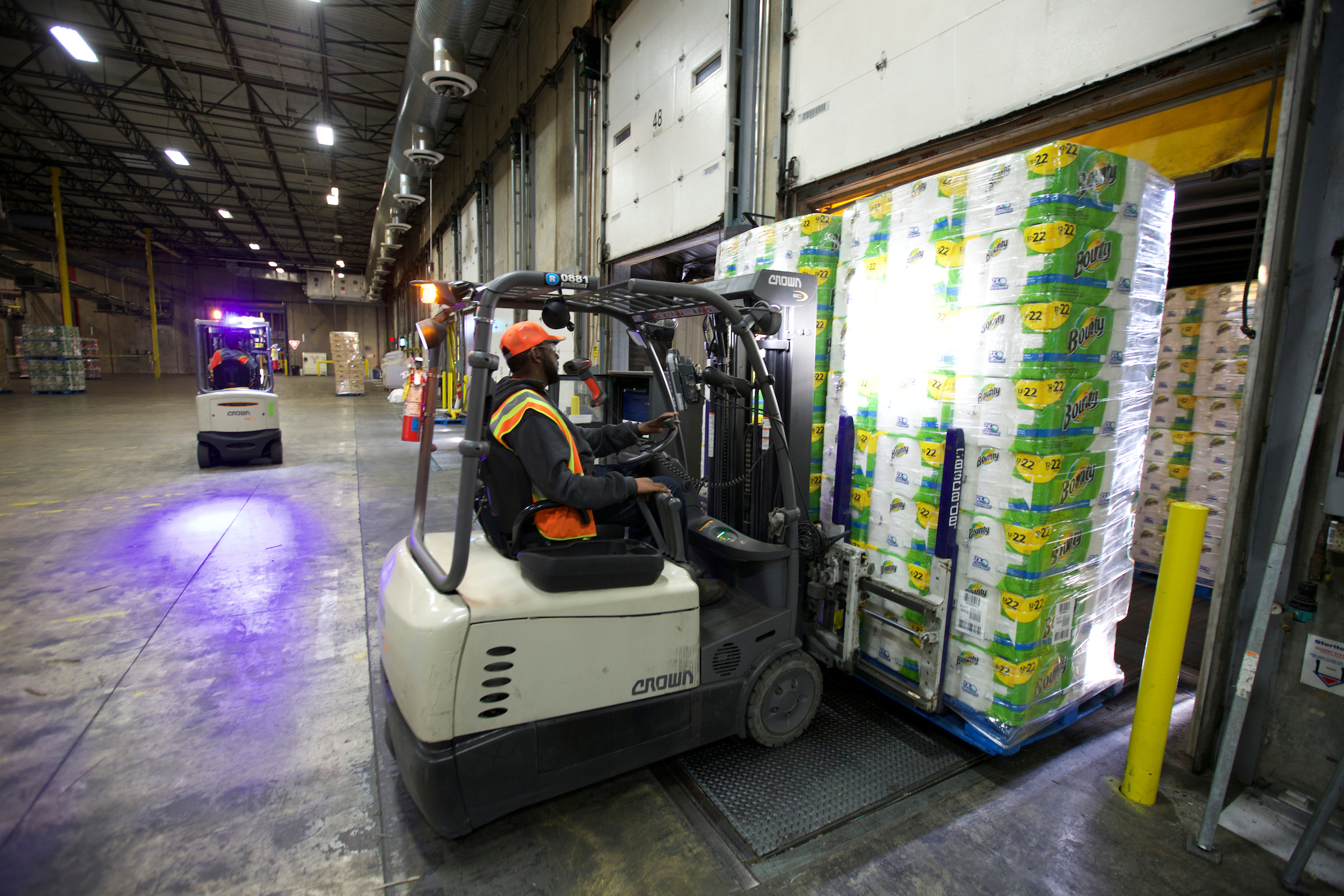
A man operates a fork lift loaded with Bounty paper towels.
P&G manufactures some of the most recognizable brands in the world.

P&G makes and sells dozens of consumer product brands, including Pampers, Bounty and Gillette. Through that collaboration, P&G expects to improve productivity, bring products to consumers faster, boost customer satisfaction and reduce costs.

Recently, Transform spoke with Cretella to hear more about his latest and perhaps biggest mission: spearheading a digital shift across a 185-year-old company that operates in about 70 countries.

TRANSFORM: You served six years in the Army and emerged with a computing diploma. I imagine you still draw on lessons from your military days. How do those experiences continue to shape you?

CRETELLA: I learned the importance of agility, the importance of being always open to learn, to experiment. If you choose a career in technology, you must be ready to embark on a never-ending learning journey.

I always tell our junior recruits, our interns, what they learned in college would be obsolete in fewer than five years. That should not depress them, but rather motivate them to work in a professional field that gives you the opportunity to learn throughout your career.

We have so many examples at P&G of data and AI (artificial intelligence), cloud capability, DevOps, APIs, creating better business models. A critical part of my job is to help connect the dots between technology and business opportunity, and to share the passion of creating consumer value through technology with my colleagues and the rest of the organization.

Plastic-wrapped packs of Charmin toilet paper move along on a conveyor belt at a P&G manufacturing facility.
Packs of Charmin move along a conveyor belt at a P&G manufacturing facility.

TRANSFORM: With Microsoft Azure serving as the foundation, this effort marks the first time P&G will be able to digitize and integrate data from manufacturing sites around the world. Scale is the story here. How rare is it for a consumer goods company to access this level of data at scale?

CRETELLA: You’re right. We are implementing this technology at scale at hundreds of manufacturing sites around the world. Billions of products are coming out on those manufacturing lines.

However, we have a large manufacturing footprint built over a long period and the shop floor equipment is not the same in each of manufacturing facilities. That lack of standardization makes it difficult to digitally transform at scale. The digital IoT edge and cloud power platform that we are co-developing and co-innovating with Microsoft will allow us to work with our diverse environment and overcome those challenges.

We need the capability of making the data compatible from those different sources, so that we can work on those and replicate success. The result will be faster deployment, faster time to market, more productivity and doing things once instead of many times.

TRANSFORM: P&G now will be able to digitize and integrate data on a larger scale, enabling workers to check production and make quicker decisions. Can you describe some of the decisions that P&G workers will make even faster from the manufacturing floor?

CRETELLA: Right now, we are tapping the opportunity of using AI and machine learning in the manufacturing space. We already have compelling use cases for our manufacturing IoT and edge analytics initiative.

Those pilots include quality – making sure we check quality, real-time, on the production line. There is also resilience – making sure that all the different parts of the (production) lines run effectively with preventative maintenance, with early signs and early warnings of problems. And third, sustainability. AI and machine learning help us control energy consumption and water consumption, reducing our carbon footprint.

For example, thanks to those algorithms, a line operator will immediately know if a machine is not cutting sheets of paper to the correct length, and they can adjust.

The grounds and external entry at a P&G plant in West Virginia that was built to follow sustainable practices.
The P&G manufacturing facility in West Virginia is one of the most sustainable plants among P&G’s global manufacturing and supply-chain operations.

TRANSFORM: How will P&G optimize environmental sustainability in manufacturing through this digital transformation?

CRETELLA: One use case that we will replicate across many plants is using machine learning to optimize energy and water consumption. That will reduce the carbon footprint and support our 2040 carbon neutrality goal.

We can achieve this, on one hand, by investing in alternative energy sources. But on the other hand, we can use machine learning to optimize consumption. This is where the Industrial IoT initiative will make a significant difference, by using these algorithms to fine tune the use of manufacturing assets and to minimize waste.

TRANSFORM: For many people, sustainability is a personal passion. Why is sustainability important to you?

CRETELLA: Number one, it’s the responsibility of what you leave behind for future generations. Second, for me, it is second nature to avoid unnecessary waste. All our natural resources must be used wisely.

Those two things make me personally excited about using technology for sustainability.

Top photo: Vittorio Cretella. All photos courtesy of P&G.

Posted on Leave a comment

P&G and Microsoft co-innovate to build the future of digital manufacturing

Fork lift driver moves a pallet of Bounty paper towels in a warehouse
P&G and Microsoft announce collaboration to build the future of digital manufacturing. Photo courtesy of P&G

Microsoft technology empowers scalability for consumer products leader

CINCINNATI and REDMOND, Wash. — June 8, 2022 — On Wednesday, The Procter & Gamble Company (NYSE: PG) (P&G) and Microsoft Corp. announced a new multiyear collaboration that will leverage the Microsoft Cloud to help create the future of digital manufacturing at P&G.

The two companies will co-innovate to accelerate and expand P&G’s digital manufacturing platform and leverage the Industrial Internet of Things (IIoT) to bring products to consumers faster, increase customer satisfaction and improve productivity to reduce costs.

“Together with Microsoft, P&G intends to make manufacturing smarter by enabling scalable predictive quality, predictive maintenance, controlled release, touchless operations and manufacturing sustainability optimization — which has not been done at this scale in the manufacturing space to date. At P&G, data and technology are at the heart of our business strategy and are helping create superior consumer experiences. This first-of-its-kind co-innovation agreement will digitize and integrate data to increase quality, efficiency and sustainable use of resources to help deliver those superior experiences.”

P&G and Microsoft logos“Together with Microsoft, P&G intends to make manufacturing smarter by enabling scalable predictive quality, predictive maintenance, controlled release, touchless operations and manufacturing sustainability optimization — which has not been done at this scale in the manufacturing space to date,” said P&G CIO Vittorio Cretella. “At P&G, data and technology are at the heart of our business strategy and are helping create superior consumer experiences. This first-of-its-kind co-innovation agreement will digitize and integrate data to increase quality, efficiency and sustainable use of resources to help deliver those superior experiences.”

With Microsoft Azure as the foundation, the new collaboration marks the first time that P&G can digitize and integrate data from more than 100 manufacturing sites around the world and enhance its AI, machine learning and edge computing services for real-time visibility. This will enable P&G employees to analyze production data and leverage artificial intelligence to immediately make decisions that drive improvement and exponential impact. Accessing this level of data, at scale, is rare within the consumer goods industry.

P&G selected Microsoft as its preferred cloud provider to build the future of digital manufacturing based on a four-year history of successfully working together on data and AI. The new collaborative effort will:

  • Allow for better utilization of data, AI capabilities and digital twins technology.
  • Optimize manufacturing environmental sustainability efforts.
  • Increase workforce efficiency and productivity.

“We are excited to help P&G accelerate its digital manufacturing platform using Microsoft Azure, AI and IIoT to accommodate volatility in the consumer products industry with innovative, agile solutions that can easily scale based on market conditions. Our partnership will further P&G’s growth and business transformation through digital technology that seamlessly connects people, assets, workflow and business processes that promote resiliency.”

“We are excited to help P&G accelerate its digital manufacturing platform using Microsoft Azure, AI and IIoT to accommodate volatility in the consumer products industry with innovative, agile solutions that can easily scale based on market conditions,” said Judson Althoff, Microsoft’s chief commercial officer. “Our partnership will further P&G’s growth and business transformation through digital technology that seamlessly connects people, assets, workflow and business processes that promote resiliency.”

Empowering technicians and advancing operations with IIoT

P&G is already innovating and using Azure IoT Hub and IoT Edge to help manufacturing technicians analyze insights with greater speed and efficiency, creating improvements in the production of its baby care and paper products with pilot projects happening in Egypt, India, Japan and the United States.

Diapers and data: Quality control and process improvements

P&G is making advancements in its diaper manufacturing process to reduce manufacturing downtime, minimize scrap and lower maintenance expenses by automatically detecting and resolving the largest causes of line stops and rework using machine learning. The production of diapers involves assembling many layers of material at high speed with great precision to ensure optimal absorbency, superior leak protection and outstanding comfort. The new IIoT platform uses machine telemetry and high-speed analytics to continuously monitor production lines to provide early detection and prevention of potential issues in the material flow. This improves cycle time, reduces rework losses and ensures quality, while simultaneously improving operator productivity.

Pioneering paper towels

In a pilot with Microsoft, P&G can now better predict finished paper towel sheet lengths, improving the ability to deliver the right amount of product to the consumer. With the new IIoT platform, P&G can collect data from sensors on the manufacturing line and use technologies like advanced algorithms, machine learning and predictive analytics so it can improve manufacturing efficiencies.

Increasing sustainability and predicting equipment failure

To optimize manufacturing sustainability, P&G will use Microsoft’s machine learning and data storage platforms to improve energy utilization across its paper machines in Family Care. With the efficiency and speed of cloud computing, P&G teams can analyze large volumes of holistic data sets and pinpoint energy efficiency and machine maintenance opportunities across the manufacturing process. The Azure platform will allow P&G to easily integrate event summary data — such as production runs, downtime, changeovers and more — along with historical data.

Co-innovation with a new Digital Enablement Office and incubator

To accelerate technology integration and support pilot programs, Microsoft and P&G have co-created a Digital Enablement Office (DEO) staffed by experts from both organizations. They will jointly deploy the Azure platform, and the DEO also intends to serve as an incubator to create high-priority business scenarios in the areas of product manufacturing and packaging processes that can be implemented across P&G.

About Procter & Gamble

P&G serves consumers around the world with one of the strongest portfolios of trusted, quality, leadership brands, including Always®, Ambi Pur®, Ariel®, Bounty®, Charmin®, Crest®, Dawn®, Downy®, Fairy®, Febreze®, Gain®, Gillette®, Head & Shoulders®, Lenor®, Olay®, Oral-B®, Pampers®, Pantene®, SK-II®, Tide®, Vicks®, and Whisper®. The P&G community includes operations in approximately 70 countries worldwide. Please visit http://www.pg.com for the latest news and information about P&G and its brands. For other P&G news, visit us at www.pg.com/new.

About Microsoft

Microsoft (Nasdaq “MSFT” @microsoft) enables digital transformation for the era of an intelligent cloud and an intelligent edge. Its mission is to empower every person and every organization on the planet to achieve more.

For more information, press only:

Microsoft Media Relations, WE Communications for Microsoft, (425) 638-7777, [email protected]

Libby Coulton, P&G Media Relations, [email protected], and Rick Cohen, H&K for P&G, [email protected]

Note to editors: For more information, news and perspectives from Microsoft, please visit the Microsoft News Center at http://news.microsoft.com. Web links, telephone numbers and titles were correct at time of publication but may have changed. For additional assistance, journalists and analysts may contact Microsoft’s Rapid Response Team or other appropriate contacts listed at https://news.microsoft.com/microsoft-public-relations-contacts.

Posted on Leave a comment

Microsoft Garage opens in Atlanta as a hub for tech talent and community growth

Garage Atlanta launch event

The Microsoft Garage celebrates a new location at Microsoft’s Atlantic Yards campus to drive experimentation, innovation, and inspiration at Microsoft and in the vibrant city of Atlanta.

Atlanta’s skilled workforce is driven by an entrepreneurial spirit, providing an ideal landscape for international and local enterprises to establish a presence and open business. Atlanta has the third largest concentration of Fortune 500 companies in the United States. Add to the mix an energetic academic community of world-renowned Historically Black Colleges and Universities (HBCUs), with gifted young professionals eager to make an impact, the region continues to draw companies courting top-notch talent.

The Garage Atlanta enables collaboration, creativity, and experimentation. Through engagement with local communities, The Garage Atlanta will create connections and inspire innovation for the Atlanta ecosystem to amplify their voice and their expression, especially historically underserved and vulnerable communities.

Microsoft has partnered closely with the city every step of the way to involve the city council and local organizations in planning the campus. The Garage is purpose-built to promote Microsoft’s mission to empower people to achieve more, including a community gathering space for workshops, talks, and meetups, and a maker space with the latest fabrication and prototyping equipment.

The Garage Azure Showcase provides a 24/7 snapshot of real-time azure data with a video wall that enables a comprehensive view of Azure, from internal processes to the customer experience: it’s designed as a space where engineering teams, large and small, can come together to utilize the data to increase efficiency, anticipate issues, and deliver on customer needs.

The Garage will also provide programming for the site’s One Mic recording and editing studio. Located next to The Garage, the studio is an experience to drive collaboration, creativity, and experimentation. Through video and music creation and editing, employees can express their authentic voice and creativity, teams can collaborate and experiment with their communication, and the Atlanta community can amplify and elevate their voice.

The Garage Atlanta officially opened its doors in May during a Microsoft Atlanta (ATL) launch event hosted in The Garage space, kicked off with a lively performance by the percussion section band from Clark Atlanta University (CAU). Hosted by Vince “The Voice” Bailey, with Microsoft Atlanta site leadership discussion panel featuring Terrell Cox, Billy Anders, Gayle Sheppard, and Michael Ford, and words from Keisha Ebbensen, Jeffrey Brown, and Reginald Shareef who spoke about the ATL employee experience and culture. A broad array of business groups across Microsoft came together for the grand opening of The Garage Atlanta including Engineering, Legal, HR, and Finance groups, illustrating an appetite to innovate, to foster a hack culture and a growth mindset across One Microsoft.

Clark Atlanta University percussion section band performance at the ATL launch eventClark Atlanta University percussion section band performance kicking off the ATL launch celebration

“The Garage Atlanta will be moving full STEAM ahead by partnering with Microsoft Philanthropies and our community engagement groups to support local Science, Technology, Engineering, Arts, and Mathematics efforts.” LeAndra Jordan, Garage Atlanta Site Lead and Sr. Program Manager, is fully engaged and has already been connecting Microsoft to the local ecosystem. “We will continue to stoke creativity through different mediums of art including music and explore the intersectionality of aviation and hacking. We will offer opportunities for employee-led workshops to engage with each other but also the community.”

Located in Midtown Atlanta, The Garage is a tantalizing draw for new talent in tech and for Microsoft customers to experience what Microsoft’s culture is all about, how diversity in thought and curiosity to learn and collaborate can help create better products, more delightful experiences, and great innovations. Employees take principles practiced in The Garage back to their day jobs and while engaging customers – forming diverse teams and forging new relationships for better outcomes, valuing failure as essential to learning, putting the growth mindset into action with a bias for action, and understanding that good ideas can come from anywhere. Garage programs foster employee collaboration across the breadth of the company, breaking down silos and including varied perspectives.

The Garage Atlanta joins over a dozen Garages worldwide located in New England, New York, Bay Area, Vancouver, Kenya, Bengaluru, Dublin, Herzliya, Beijing and more.

Garage Programs include:
The Microsoft Global Hackathon, a company-wide, multi-day, global event produced by The Garage that brings employees and interns from all over the world together to create, innovate, and hack on ideas that inspire them.

New Employee Hacks, opportunities for new employees to be immersed in the Microsoft hack culture and learn The Garage approach to innovation.

Hack Advisors, a community for employees to put company cultural priorities into action by helping each other hack, gain feedback on products, and make connections across the company.

The Garage University Engagement creates career opportunities for underrepresented and underserved students.

Talks, Workshops, and Maker Kits are offerings for employees to exercise their curiosity and learn about topics and trends.

The Garage Growth Framework, a set of foundational methods to take your ideas from concept to sponsorship in the innovation lifecycle.

The Garage Experimental Outlet, where innovators at the company can put their ideas in the hands of real customers to get valuable feedback.

Garage Atlanta wall displaying Hackathon art and visual elements over the yearsWall display of Microsoft Global Hackathon visual elements and photos over the years

More about Microsoft Atlanta:

Microsoft announces next step in Atlanta campus development – Stories

Early community involvement has ‘meant a lot’ in Atlanta as Microsoft plans to expand its presence – Stories

Governor Kemp Announces Microsoft Corp. to Expand Presence in Atlanta with 1,500 New Jobs, New Facility | Governor Brian P. Kemp Office of the Governor (georgia.gov)

Posted on Leave a comment

How Microsoft Teams is expanding background noise suppression across platforms and scenarios

Over 270 million active users rely on Microsoft Teams to connect, share, learn, and collaborate, which affirms our commitment to continually improving call quality. In a previous Teams Blog post, we introduced machine-learning-based noise suppression, which automatically removes unwanted background sounds from calls and meetings. Since then, we have been working to expand the reach of this feature to more platforms and scenarios. After its initial release on Windows, background noise suppression is now available on Mac and iOS as well.

After the release of Teams background noise suppression for Windows users as an optional feature, we went through an iterative development and evaluation cycle to optimize our model and advance broader research in this field. With this goal in mind, we launched various competitions including our latest at the International Conference on Acoustics, Speech and Signal Processing 2022, and open-sourced both our dataset and the perceptual quality crowdsourcing framework.

These events helped improve the quality and complexity of our model. Our iterative experimentation process showed that improved call quality led to an increase in call duration for one-on-one calls. We also saw a 32% reduction in complaints of background noise reported in our end-of-call survey. Considering the significance of these improvements, we enabled machine-learning-based noise suppression as default for Teams customers using Windows. The same experiments were also conducted for Mac and iOS which showed similar improvements, leading us to release this feature as default on these platforms as well. This change of enabling noise suppression by default for most calls makes this feature the most widely used AI feature in Microsoft Teams, but more importantly improving experiences for millions of users who confidently take Teams calls and meetings from anywhere.

In addition to this extended platform coverage, we have also been working to make machine-learning-based noise suppression available on an expanded range of device types, including support for ARM-based devices and Microsoft Teams Rooms.

While the user benefits from machine-learning-based noise suppression appear obvious and ubiquitous, we were mindful of scenarios where it’s important to not suppress non-speech content, such as during music lessons. While it may be desirable that your kid’s music practice doesn’t disturb your work meeting, we also want to avoid negatively impacting the teacher’s ability to conduct the music lesson over Teams.

To differentiate those use-cases, we have implemented music detection into the noise suppression capability. This feature alerts users when AI identifies music so they can choose to disable noise suppression and enable transmitting music via our “High-fidelity Music Mode”. Music detection has been released for our desktop Windows client and has allowed us to turn on machine-learning-based noise suppression by default for our education customers as well. A future release of this feature is planned for education users on Mac and iOS devices as well as across all Teams Android and web clients.

While we’re excited about the advancements in Teams call quality we’ve achieved through machine-learning and AI, we’re just beginning to realize the opportunities ahead. Keep watching this blog to learn how innovation, testing, and optimization enables us to continually improve meeting and call quality in Teams.

Posted on Leave a comment

Why buildings are getting more efficient, safe and sustainable

Throughout my life, I’ve traveled to many places for work, pleasure, and education. Often with family, sometimes alone. Whether I am in Barcelona or Buenos Aires, Austin or Cleveland, Doha or Tel-Aviv, or closer to home exploring Manhattan, I’m always struck by the variation in the built environment.

Of course, cities look different based on when they were built, along with the cultural and architectural differences they reflect. There’s no mistaking Rome for Tokyo, for instance.

And yet, all over the world, the people who govern these cities have the same challenge: how to better serve residents and visitors. Whether it’s improving quality of life, the future of work, accessibility, or sustainability, city leaders and planners are thinking deeply about what the future holds and how to best prepare.

I wrote earlier in the year that we cannot miss the current chance to rebuild our infrastructure for accessibility. The same imperative applies to the buildings where we live, work, learn, and play.

Above all, our buildings don’t exist in isolation. I use the term “built environment” as a catchall to describe the various structures that distinguish cities from the natural environment. Looking ahead, the biggest benefits will be realized when buildings operate as a seamless part of the larger system of infrastructure.

Better accessible experiences

For anyone working in or visiting a place, the behind-the-scenes operations should remain invisible. What matters is the experience: how easy and accessible it is getting in and out of a space or building, how comfortable it is to accomplish work, and how seamless it is to visit. Reducing barriers and enabling a positive experience is what people want, and technology gives us much better ways of doing that.

But how does that happen? Let’s take a fun example—going to a sporting event. What makes it work?

  • An arena, like Madison Square Garden in New York, that’s connected to several major transit systems so people can use the mode of transportation that best fits their needs.
  • Ticketing that is easy to scan and keeps people moving through lines quickly. This is better for fans and workers.
  • A fully accessible space that helps everyone get to where they are going, easily and comfortably.
  • Contactless payment to keep concessions lines fast and short.
  • Strong connectivity that lets thousands of people use their devices.

Boosting operations with data

Heathrow airport is using data-driven insights to improve airport passenger flow, which helps deliver greater efficiency and cost savings for the airport and its carriers through more streamlined turnaround times for planes. This directly and positively impacts both the passengers and the staff working at the airport.

Daily operations—from security to air conditioning to lighting—come at a considerable cost. The fastest way to efficiency and cost reduction is by using data to make rapid, informed decisions. This is particularly important for older buildings that were not made for today’s technology and construction standards. As a result, the first rule for improving operations is that any changes or upgrades must apply to prioritized use cases. 

Creating a safer workplace

Our buildings also have a major impact on the way people work. For example, the physical workspace has an influence on employees’ ability to collaborate—it needs to accommodate employees’ needs throughout the day, and it needs to be intentional in facilitating movements in, out of, or around the space.

Government adoption of remote and hybrid work has varied widely since the start of COVID-19. But as governments invest in new buildings, it only makes sense to design them for safer working conditions—whether for hybrid or in-person workforces. It’s not only about productivity but also about creating a better employee experience. 

For example, Italy’s National Institute for Insurance against Accidents at Work launched a new badge system to solve building access issues. This resulted in a streamlined process for visitor access while ensuring that employees could easily move around the workplace. The new badge system made it easy to enable limited access to its physical spaces and data center only to authorized personnel.

Building sustainably  

Whether it’s a new building or the renovation of an old one, construction projects are a major opportunity to ensure focus on sustainability as a strategic priority. Energy efficiency across operations is a high priority in helping organizations achieve their sustainability goals while reducing costs of lighting and running heating, ventilation, and air conditioning (HVAC) systems. The automation of these systems to respond when buildings, floors, or even individual rooms are occupied can result in significant efficiencies. 

In a great example of how this works, MacDonald-Miller Facility Solutions helps customers build energy-efficient buildings and keep them operating at peak efficiency. MacDonald-Miller has gone all in with the Microsoft Cloud to design cutting-edge smart-building systems that save customers money.

But sustainability isn’t only about energy or carbon emissions. Technology can also help during construction to ensure building placement has a minimal environmental impact, enables more sustainable water use practices, and minimizes waste.

As we implement these solutions at scale, people will benefit from government and other publicly owned spaces and buildings—such as parks, arenas, or stadiums—to help them get the most out of their experience. Better operations help governments save money, and a focus on sustainability will ensure these spaces contribute to a healthier, cleaner future.

Transforming the built environment

By making bold investments in solutions that deliver on efficiency, safety, and sustainability goals, governments can make an outsized impact because of their vast real estate holdings. They also are major employers, and employees stand to realize significant benefits when improvements are made to government buildings. Our buildings were created to serve the public—and now we have the opportunity to make informed choices that will transform our built environment for the better.

Stay up to date on Microsoft’s global approach to government infrastructure by visiting the Microsoft for Critical Infrastructure website.