Posted on Leave a comment

Plex’s $249.99 five-year pass arrives after $749.99 Lifetime Pass price hike

Shortly after increasing the lifetime version of the Plex Plan to $749.99, Plex has now introduced a new five-year option. One charging $249.99 for streaming media from your Mac to your iPhone.

On July 1, Plex significantly increased the cost of its Lifetime Plex Plan from $249.99 to a staggering $749.99. While consumers will have missed the boat to get the old pricing, they can still spend $249.99 on something that’s not quite as everlasting.

Subscribers can sign up for a new five-year Plex Pass. The new option, offered alongside the monthly $6.99 and annual $69.99 subscriptions, gives users a lengthy period of usage without paying a regular subscription.

The price, $249.99, will be familiar to users, since it’s the same as the Lifetime Plex Plan pre-price rise.

Good, but not quite great

It does still work out to be a decent deal for Plex users as they’d pay the equivalent of three and a half years of the annual plan for five years of usage. Or just under three years worth of the monthly plan price.

This is a bit of a cost saving for consumers. But it’s not as good as the old Lifetime offer, which did the same thing but without an end date.

The new plan certainly does help soften the blow of the Lifetime price rise to $749.99. But there are still some elements to remember.

The key one is what happens after the five-year period ends. Users will then have to either sign up for a new five-year or equivalent plan, or consider switching to a monthly one instead.

However, they won’t get any grandfathered pricing. Due to the inevitability of price increases over time, you can count on the subscriptions going up in price within those five years.

Consider your streaming choices

In justifying the price rise, Plex admitted that it had previously considered removing the Lifetime Plex Pass altogether. While recurring subscriptions sustain long-term development, the lifetime pass does not, and becomes less useful to Plex as time goes on.

The new pricing of that plan “reflects the real, ongoing value of the software we’re committed to building and maintaining for years to come.”

The severely high price of the Lifetime pass certainly does make buying one of the lower-tier options more attractive to users. Especially the new five-year option.

However, this also serves as an opportunity for users to consider whether to stick with Plex at all.

Other options exist, such as Jellyfin, which is free to use. It offers the same core streaming functionality as Plex, but it requires a little more work to get it up and running.
Posted on Leave a comment

Three changes Apple could do to make iPhone Air 2 a hit

With iPhone Air 2 rumored to be less than a year away, Apple could turn to better cooling or more cameras to make the ultra-thin phone even more popular than the original. Here’s what’s been rumored, and some other possibilities.

Despite what some vocal online detractors say, iPhone Air has its fans. I’m certainly counted among them.

Early reports said Apple’s thinnest phone was a “failure” and that the second-generation was cancelled. Now that we’re three-quarters of the way through the iPhone Air first-year release cycle, it’s more evident that the phone isn’t a “failure” and a second-generation model is coming.

The iPhone Air is said to be twice as popular as the outgoing iPhone 16 Plus it replaced in the lineup. So it’s not all that shocking to see Apple doubling down on the model.

I think there are a few changes that Apple could implement to generate more fans, and based on the latest rumors, it seems Apple could be on the right track.

Here’s how my time with iPhone Air has been and what features version 2 should adopt.

iPhone Air 2 wish list

With day-to-day use, there’s not much iPhone Air falls short on. It is fast, comfortable, and the battery gets me through the day.

What I do start to notice is when I’m taxing the processor for prolonged periods of time, the top (where the guts of the phone live) can get quite hot. I know I push the phone a bit more than most people, but it’s definitely noticeable.

I know the performance can be boosted with better thermals for tasks like video exports or gaming. To combat this, Apple should add vapor chamber cooling as found on the pro line.

This would not only improve the general performance of the phone, but could help with other features, too. It’s possible that the iPhone Air lacks Cinematic Mode because of the cooling situation on the device, but unless Apple says something, we may never know.

The second thing I’d love to see is a secondary speaker. Currently, iPhone Air has a mono speaker situated at the top of the phone.

At first, I didn’t mind this. In fact, it can be beneficial at times because depending on how you hold your phone, there’s no bottom speaker to be blocked by your finger.

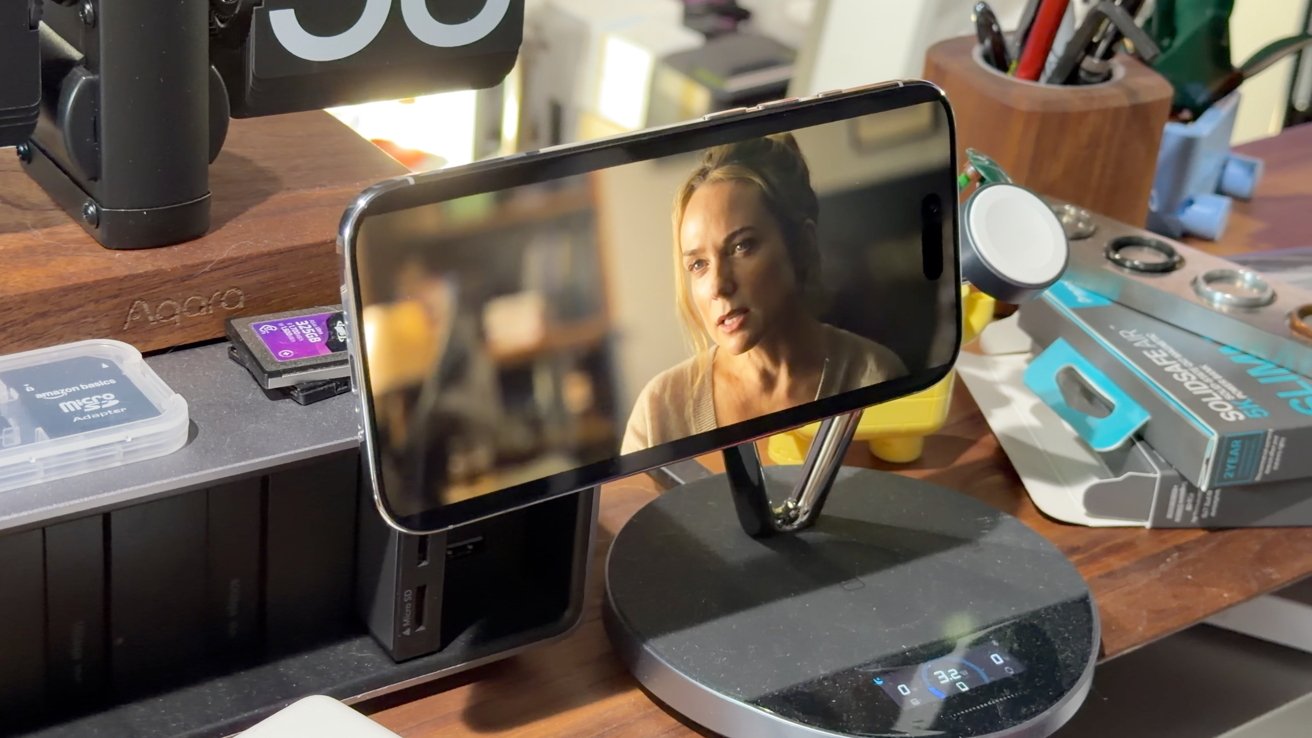
Smartphone on a metal stand playing a video of a woman speaking, surrounded by neatly arranged desk accessories, chargers, and tech gadgets on a wooden workspace

Watching videos in landscape on iPhone Air can be annoying with the solo speaker

Most videos I watch on mobile are vertical, while actual landscape videos I save for my iPad or television. But after a lot of recent traveling, I’ve been watching more landscape videos on my iPhone Air and that mono speaker is very noticeable.

This is also one of the most common complaints I see in the comments regarding iPhone Air. To make the second go around better, a second speaker needs to be added.

My final request is for a second camera, but not for the same reason that most others want it. Most probably want an ultra-wide lens for capturing new perspectives with photos.

On the other hand, I want the secondary camera to capture spatial content. Two cameras are necessary to capture that stereoscopic spatial footage.

For the past couple of years, I’ve captured a lot of photos and videos to use with Vision Pro. The iPhone Air lacks this capability due to its solo primary camera.

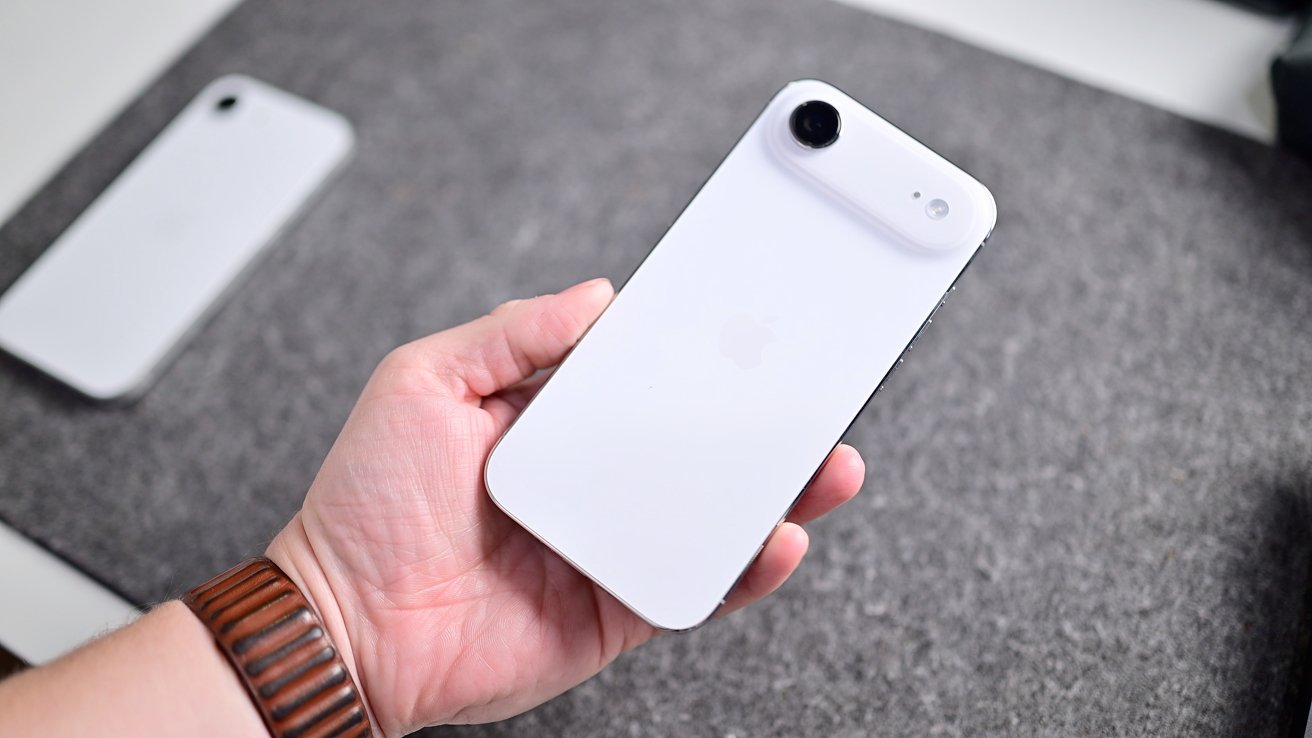
Hand holding a white smartphone with a single rear camera, viewed from the back, over a gray fabric surface, with another similar phone lying flat in the background

iPhone Air is a great phone, but the second-generation could be even better

Obviously the Apple Vision Pro isn’t a major hit among consumers. Spatial is something Apple is still heavily invested in, one way or another.

I want to capture spatial content now, versus in the future. These are moments and memories I can’t get back, so if I have the opportunity to capture a few spatial scenes, I want to do that.

There are questions on how this would work on the iPhone Air 2, though. Apple could adopt square sensors, like it did on the front-facing camera with the iPhone 17, but I’m getting into speculation and guessing at that point.

It could be a cool addition though, unlocking portrait or landscape recording in either phone orientation.

Release date

There are a lot of rumors around the iPhone Air 2, but it seems some of my requests may come to fruition. What will be interesting is how Apple pulls them off, such as fitting that second camera module into the plateau, as has been rumored.

Don’t expect iPhone Air 2 to be imminent though. The most recent reporting says Apple is planning a split launch for the iPhone 18 cycle.

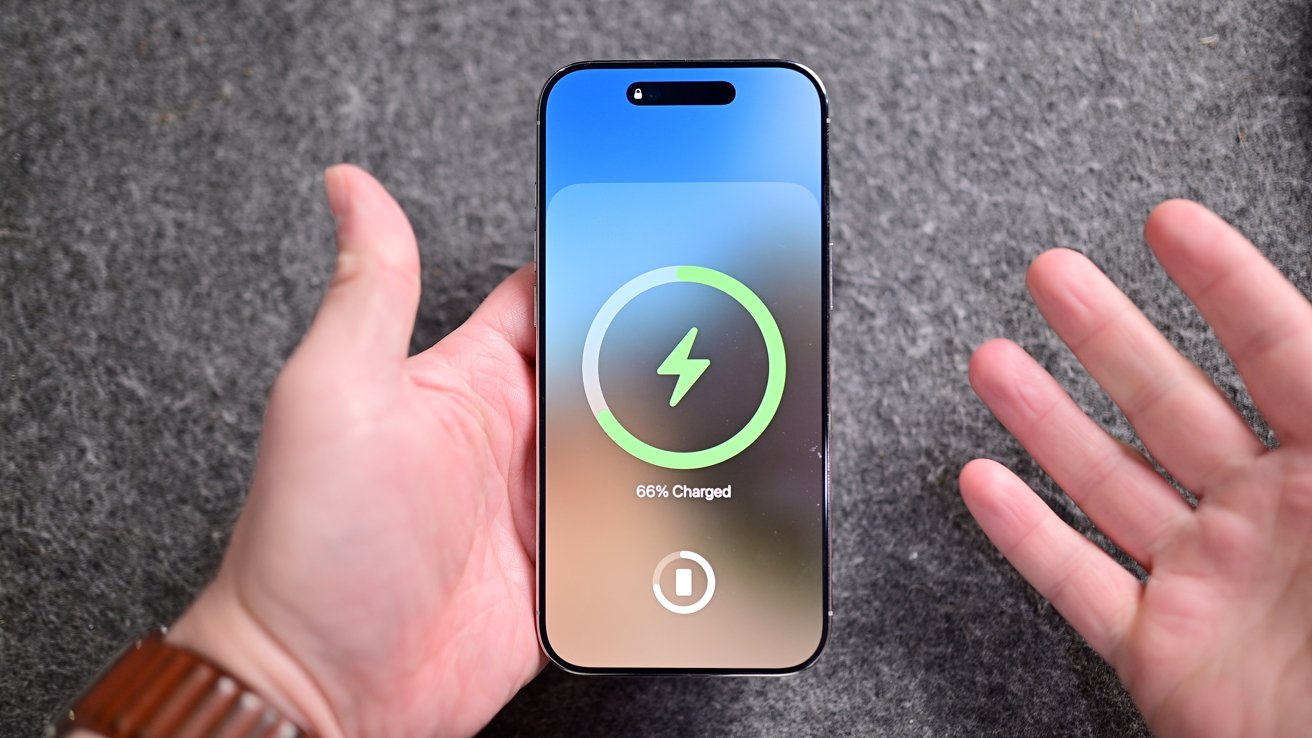
Hand holding a smartphone on a gray surface, screen showing a large green charging circle with lightning bolt and battery status at 80 percent, another hand gesturing nearby

iPhone Air has been great, but the second generation may have better battery life, a second camera, and more.

We could see iPhone 18 Pro, iPhone 18 Pro Max, and the “iPhone Fold” in the fall of 2026, Expected in early 2027 are the iPhone 18e, iPhone 18, and iPhone Air 2 land in the first half of 2027. I think that timing makes sense and helps push earlier adopters towards the higher-tier phones.

Between improved battery, a second camera, and any other new features, the iPhone Air 2 may prove even more popular than the first time around. Sounds like we’ll find out in the spring.

Posted on Leave a comment

Best 4th of July Apple deals: $89 AirTags, iPads up to $400 off, Macs up to $650 off

Take advantage of holiday savings in the U.S. on AirTags, MacBooks, iPads, and more. Many of these 4th of July deals could sell out after Apple’s recent price hikes.

Holiday deals are in effect in the U.S. and Apple products are now up to $650 off. Highlights can be found below, with even more discounts in our Apple Price Guides.

Shop Apple 4th of July deals

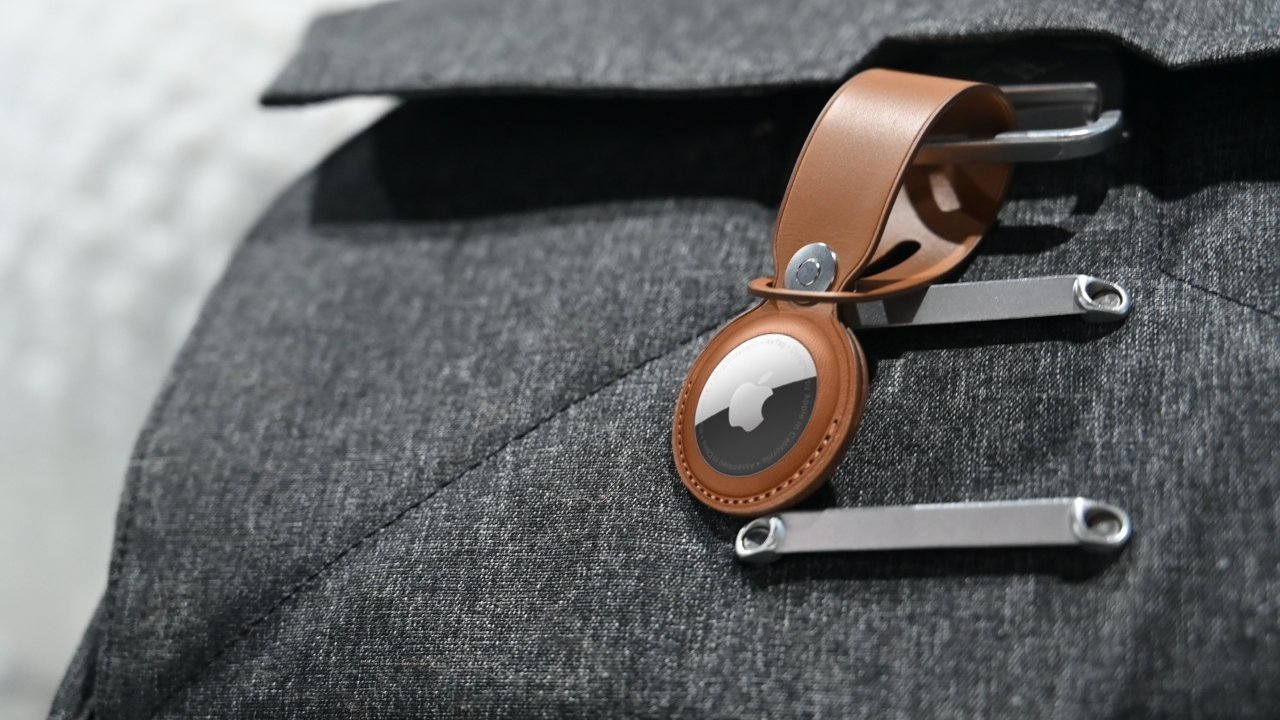
Close-up of an Apple AirTag in a brown leather keychain holder attached to the zipper pull of a gray fabric bag or jacket

Get 4 AirTags for just $89 for July 4th.

Apple’s newest AirTags are still at the lowest price seen since release when you opt for the 4-pack that’s on sale for $89.

AirPods from $99

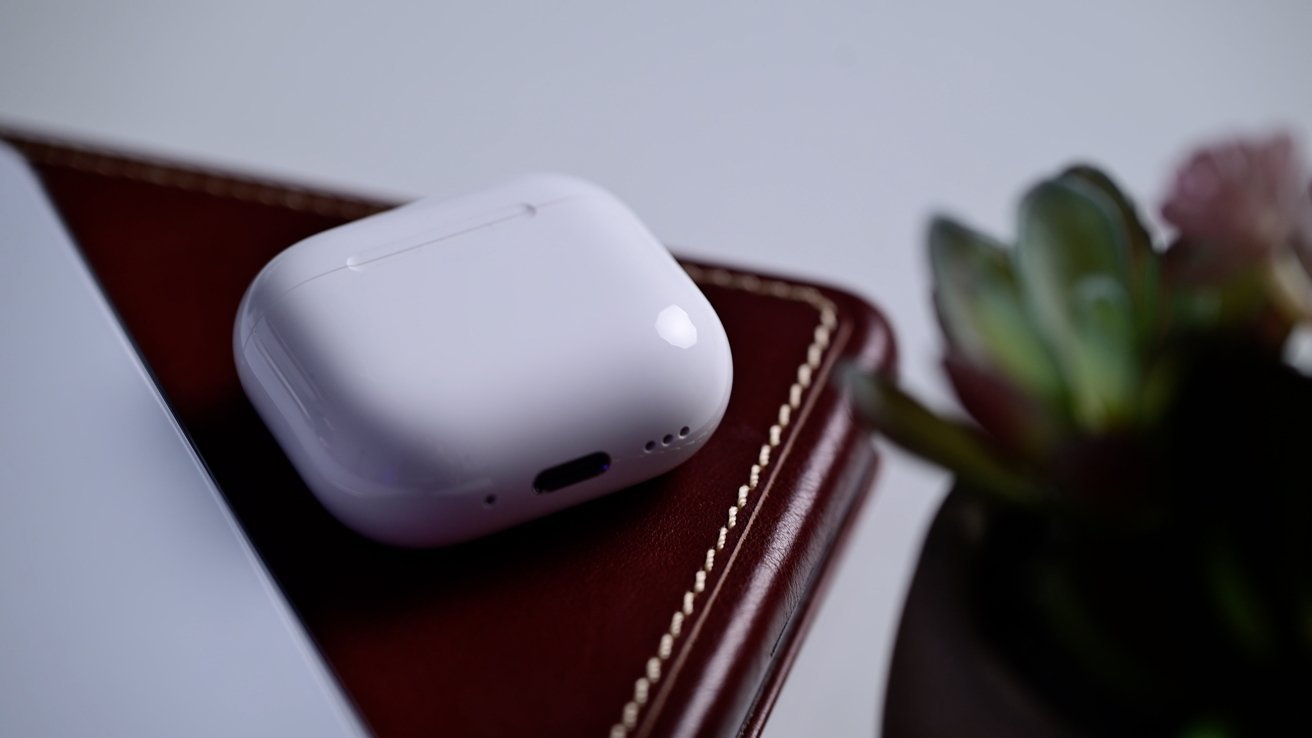
White AirPods 4 charging case resting on a closed brown leather notebook with stitched edges, next to a blurred green succulent plant on a clean, light-colored desk

AirPods 4 prices are as low as $99 heading into the weekend.

AirPods 4 without ANC are still available for $99 at Amazon, matching Prime Day pricing.

iPads up to $400 off

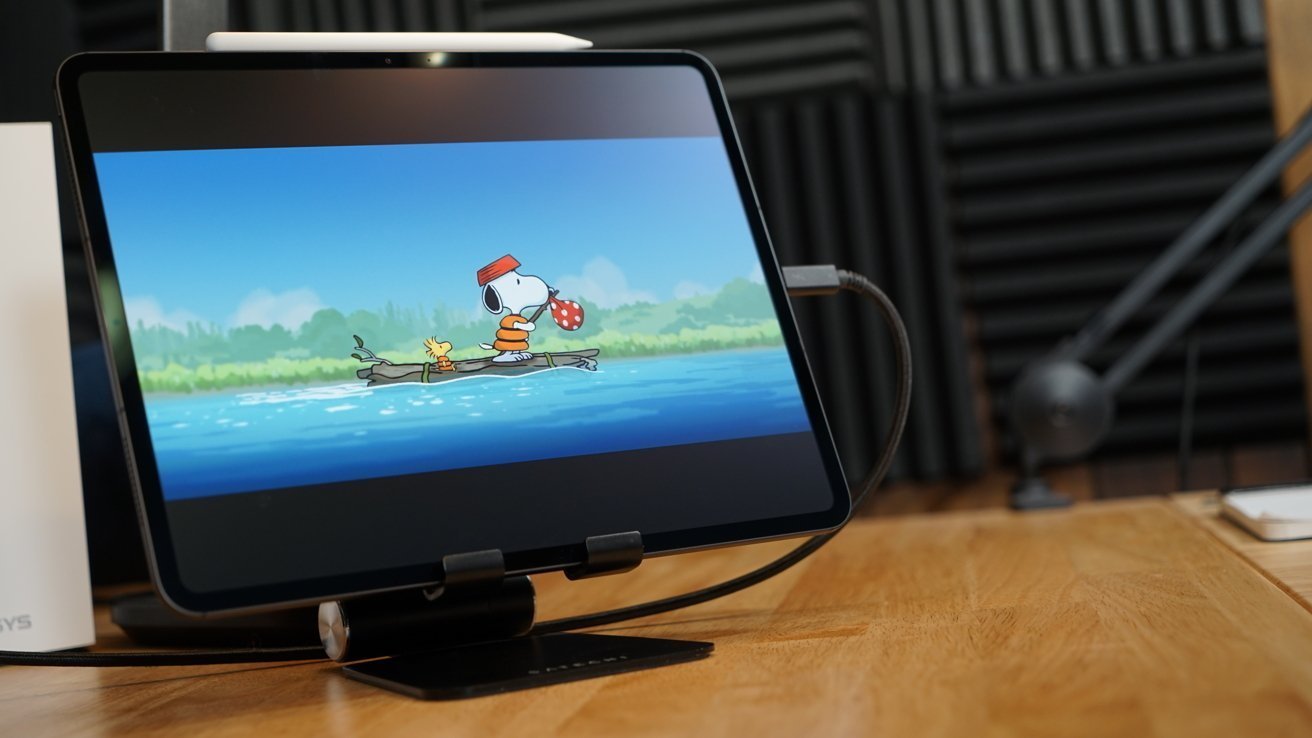
Apple iPad Pro 13-inch on a wooden desk showing Snoopy and Woodstock paddling a canoe on a calm blue river, with studio microphone and soundproof foam panels blurred in the background

iPad Pro and iPad Air models are heavily discounted at Amazon.

Amazon’s iPad discounts of up to $400 off are worth checking out, as Apple’s recent price hikes may result in these deals expiring or selling out soon.

11-inch iPad Air M4 deals

13-inch iPad Air M4 discounts

11-inch iPad Pro M5 sale

13-inch iPad Pro M5 sale

MacBook Air and MacBook Pro models up to $650 off

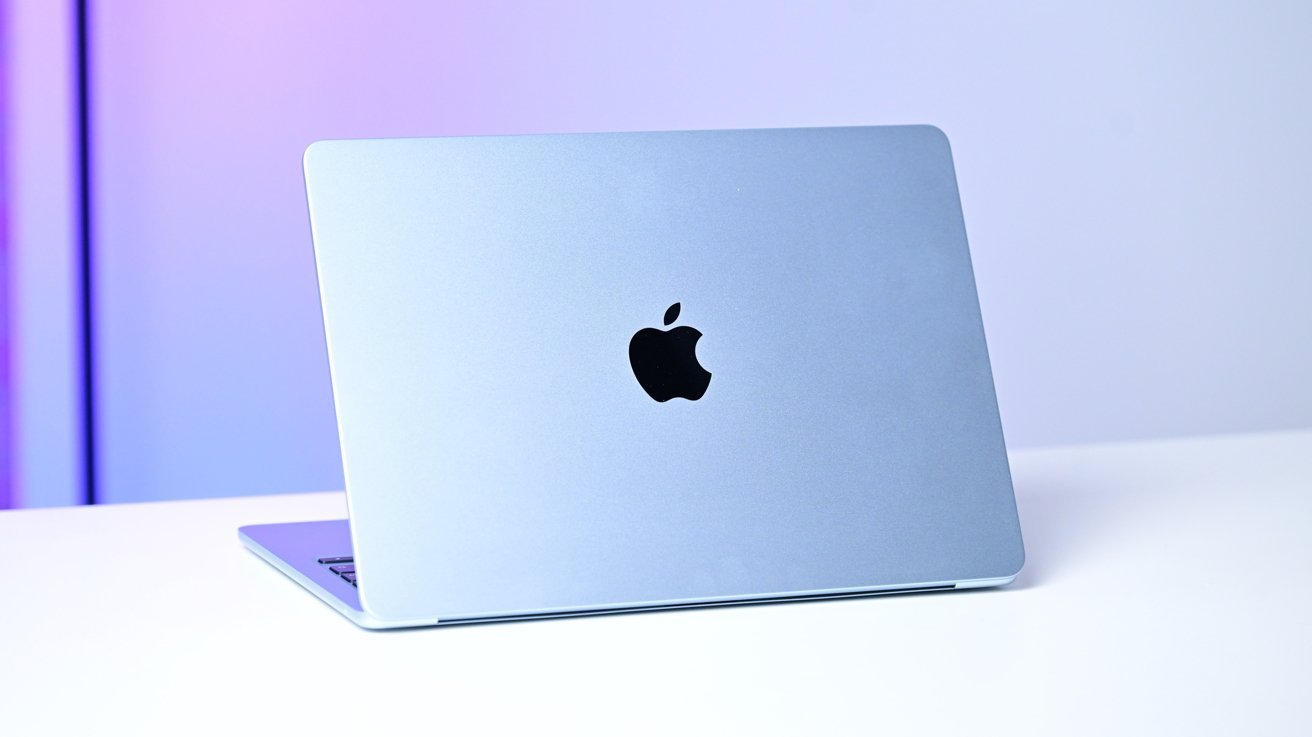
Sky Blue Apple MacBook Air laptop partly open on a white surface, showing the back of the screen with black Apple logo, against a soft blue and purple gradient background

Save up to $650 on current MacBook Pro and MacBook Air models.

Steep discounts are in effect on Apple MacBook Air and MacBook Pro models, with Amazon knocking up to $650 off M5, M5 Pro, and M5 Max models.

4th of July 13-inch MacBook Air deals

15-inch MacBook Air deals

Top 14-inch MacBook Pro deals

Best 16-inch MacBook Pro discounts

Posted on Leave a comment

Elon Musk’s SpaceX AI prototype is thinner than an iPhone

While the device has a questionable future, Elon Musk’s SpaceX is taking on Apple by shifting into AI hardware, reportedly showing investors a prototype before the company’s IPO.

SpaceX’s artificial intelligence arm, xAI, has been working on a considerably more grounded product it wants to sell to consumers, as it competes against Apple Intelligence and other AI platforms. One that doesn’t involve being blasted off the planet.

According to the Wall Street Journal, Elon Musk’s rocket company has worked on a prototype for an AI device for some time. It was shown off to investors and other stakeholders before the company’s IPO.

SpaceX tempered expectations for the device as being an early-stage project and that it could still change design. There’s also a chance it could cancel it altogether.

Few details have emerged about it, but witnesses say it has a sleek design and is slimmer than an iPhone. It runs on a proprietary operating system, which takes advantage of xAI’s technology to function.

Inside the casing, the device will eventually use a Qualcomm Snapdragon chipset. Little else is known about it at this time.

As it is described as an early-stage prototype, it will be quite some time before it becomes a shippable product. And, it may never arrive.

A tricky market to crack

SpaceX’s attempt to come up with a device follows after attempts by others to do the same thing. Attempts that ultimately resulted in failure.

The highest profile commercial cratering was the Humane AI Pin, which was a $700 unit that also required a $24 per month subscription. That experiment resulted in sales of the technology, staff moving on to HP, and the pins being switched off.

Then there was the Rabbit R1, a similar effort that initially boasted of the use of a “Large Action Model” to control apps on the user’s behalf. While it was significantly cheaper, it also didn’t fare well in the open market.

It turns out that creating a new form factor for AI is a tough problem to solve.

It’s a field that Apple is also wading into with its own efforts. That too apparently involves an AI pin or pendant as one option.

Then there’s Apple Glass, the Cupertino version of smart glasses. Though an initial version won’t necessarily include augmented reality, Apple is still planning to use AI with them, thanks to some onboard cameras.

There’s also the left-field option of AirPods packed with cameras. It’s effectively the same concept as smart glasses, but without the glasses bit.

Whatever Apple chooses for its own take on the AI hardware concept, it at least has some stiff competition from Musk and co.

A threat coming true?

The news of an Elon Musk company making an AI device that’s thinner than an iPhone is interesting, considering Musk’s love-hate relationship with Apple.

Back in November 2022, Elon Musk was musing about his trouble with Twitter, now X. At the time, there were allusions to Twitter potentially being taken down from the App Store, and Google doing the same in the Play Store, due to a sudden relaxation of moderation following a post-acquisition shake-up.

Since Twitter’s failure to moderate its users went against App Store policies on the topic, there were concerns that Twitter could be pulled from distribution. That led to Musk complaining in public about the affair.

At one point, someone proposed that Musk could create his own smartphone if Apple and Google ejected Twitter. Cue Musk saying he would make an “alternative phone” if there was no other choice.

It was almost certainly a throwaway remark, but at the same time, it could’ve driven him to look at the possibility too. After all, the Boring Company did sell “flamethrowers” online on a whim.

Musk’s companies certainly had the technology, the talent, and the resources to make a mobile device. A few years later, and it seems like it’s becoming a reality.

Posted on Leave a comment

Amex cardholders can now use Membership Rewards during Apple Pay checkout

American Express is bringing Membership Rewards points directly to Apple Pay checkout to give eligible cardholders a faster way to use their rewards for eligible online and in-app purchases. Here’s how to use it.

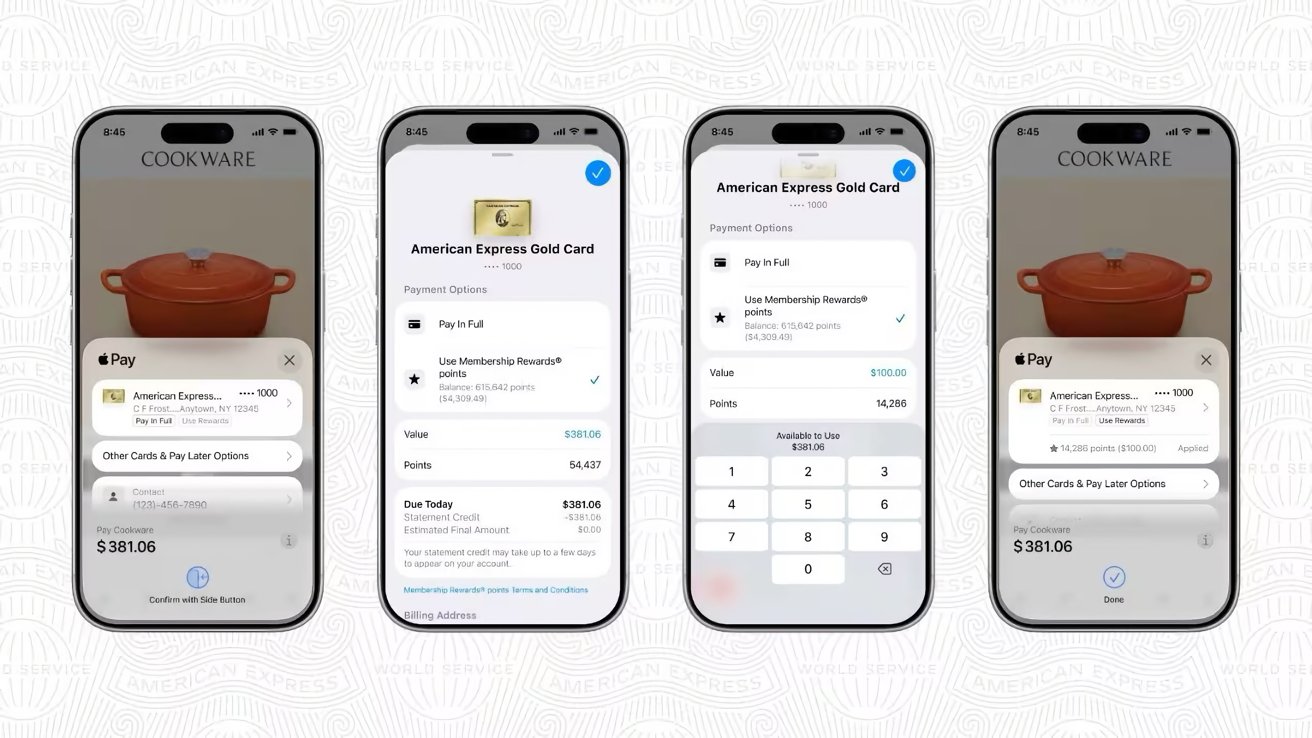
The new “Use Rewards” option appears during Apple Pay checkout when an eligible American Express Membership Rewards card is selected. Card members can choose how many points to apply toward all or part of an eligible purchase before completing the transaction.

Eligible cardholders can now apply Membership Rewards points during Apple Pay checkout. Card members no longer have to redeem points separately through the American Express app or website.

The rollout is limited to eligible U.S. Membership Rewards cardholders using Apple Pay for online and in-app purchases. American Express didn’t announce support for in-store Apple Pay transactions.

How to use Membership Rewards points with Apple Pay

Eligible cardholders can redeem Membership Rewards points during Apple Pay checkout in a few steps.

  1. Shop online or in an app that accepts Apple Pay.
  2. Select Apple Pay at checkout.
  3. Choose an eligible American Express Membership Rewards card.
  4. Tap Use Rewards.
  5. Enter how many points you want to apply toward the purchase.
  6. Complete your Apple Pay transaction.
Four smartphones display Apple Pay checkout screens using an American Express Gold Card to buy cookware, showing purchase details, card selection, numeric keypad for PIN or code, and payment confirmation.Eligible cardholders can now apply Membership Rewards points during Apple Pay checkout. Image credit: American Express

The redemption process takes place entirely within the Apple Pay checkout flow without requiring users to switch apps or complete additional steps.

The announcement follows American Express’ earlier disclosure that Fanatics will become a Membership Rewards transfer partner. Together, the additions expand where eligible cardholders can redeem Membership Rewards points across purchases and other rewards programs.

Posted on Leave a comment

Don’t wait to update: iOS 26.5.2 includes over 25 security fixes for web browsing

Apple’s iOS 26.5.2 update adds a variety of fixes to keep your data safe while browsing the web. Here’s what you need to know and why you should update.

On Monday, just under a month after releasing iOS 26.5.1, Apple made iOS 26.5.2 available for download. The update contains more than 25 different security enhancements, and over 15 of them are related to WebKit.

Notably, Apple patched two WebKit vulnerabilities that used maliciously crafted web content to disclose sensitive information. One of the vulnerabilities, a cross-origin issue, was resolved with improved tracking of security origins, while the other security issue was addressed with validation improvements.

iOS 26.5.2 also prevents sensitive data from being leaked when an iOS user visits a webpage. Apple addressed a permissions issue with additional restrictions. Similarly, Apple has added enhanced checks to prevent malicious websites from processing restricted web content outside the sandbox.

Another now-patched WebKit Storage vulnerability let malicious websites silently hijack clipboard data, affecting the text users were copying and pasting. iOS 26.5.2 resolves this issue through improvements to state management.

Multiple now-resolved WebRTC and WebKit issues allowed maliciously crafted websites to cause unexpected Safari and process crashes, along with memory corruption. All of these vulnerabilities have been addressed with the iOS 26.5.2 update.

Additionally, Apple fixed three kernel-related issues. One of the vulnerabilities, which was addressed with improvements to input sanitization, let apps leak sensitive kernel states. The other two kernel-related issues let apps cause an unexpected system termination and let them write or corrupt kernel memory.

Overall, though, iOS 26.5.2 mostly includes WebKit-related fixes, which will undoubtedly make web browsing safer on an iPhone. Unlike other iOS releases, Monday’s software update doesn’t include fixes for vulnerabilities that were used in targeted attacks.

Even so, AppleInsider recommends installing the iOS 26.5.2 update to ensure your devices have the latest security enhancements. Unlike the iOS 27 developer betas, which may contain bugs, glitches, and performance issues, iOS 26.5.2 is an update that should be installed by all users.

Posted on Leave a comment

This homebrew Apple II skips emulation, does it all in hardware

A project has cloned the Apple II Plus, but instead of using emulation, it goes the harder route by rebuilding Apple’s classic computer in hardware.

If someone wants to get the experience of using Apple’s vintage products, they often turn to a software emulator. However, as one project proves, it’s possible to get the same effect by focusing on the hardware side.

Posted on Sunday by Simon Boak, the SB Mini II is referred to as a “Homebrew Apple II Clone.” It is a rebuild of the Apple II Plus from a hardware standpoint, but using modern components.

Boak saw that most of the basic logic chips are still available to consumers, including the 6502 CPU. That, combined with circuit diagrams in the original manual and a library of books on the topic, helped Boak come up with a gameplan and a shopping list of parts.

A modern(ized) marvel

The clone does use modernized alternatives compared to the original design, mostly due to advancements in technology.

A key one is the replacement of the dynamic RAM (DRAM) used in the original Apple II. While the original kept to DRAM to save on cost, Static RAM or SRAM is also cheap enough for the project.

As a result, one and a half 32K SRAM chips are used to get the required 48k the Apple II Plus needs. The change also means there was no need to use circuitry to refresh the DRAM, which allowed the memory to function.

Boak remarks that a lot of the original circuit generated a composite video signal. Instead, using an Apple II VGA card, he was able to get a sharper video output, as well as removing the video generation logic from the circuitry.

In effect, it is a “headless” clone if it is used without the VGA card.

This also helped simplify the clock and timing signals as well. In this project, Boak uses a 4.096 MHz crystal oscillator, divided down to 1.024MHz, which is close to the 1.023MHZ of the original machine.

A Raspberry Pi Pico, which in itself is more powerful than the Apple II Plus, is used as a way to connect a USB keyboard to the Apple II. The Pico does generate the same parallel data signals as the original keyboard, as well as eliminating the need to use voltage level shifters.

Smart case

The project was finished off by being placed in a specially created case, which was 3D printed in parts before being glued and painted together. Those part files have since been released via GitHub.

It’s based on the design of the Apple ProFile hard drive. However, there are extra vents and a rear panel added so that connections could be accessed.

Just as the original was designed for easy access to the internals, the enclosure’s lid clips shut, so it can be opened without tools.

To go with the clone, Boak has also designed a matching Studio II LCD monitor.

This is far from Boak’s first attempt at making clones of Apple products. In June 2024, he created an Apple 1 clone with a printer, which used an SD card for storage.

The Apple II Plus recreation is certainly impressive, since it’s a hardware recreation instead of just using an emulator. But sometimes, even those efforts can be just as astounding.

In 2024, a Hackintosh project aimed to recreate the original Macintosh Plus, using modern components internally. However, the effort used 3D printing to produce a highly-accurate full-scale recreation of Apple’s hardware.

Posted on Leave a comment

PSA: Lifetime Plex Plan goes from $249.99 to a painful $749.99 on July 1

If you have ever wanted to buy Plex’s lifetime pass to keep streaming your movie collection to your iPhone, get it now before the price rockets up to a ludicrous $749.99 on July 1.

Price rises are a regular occurrence for most online services, and that even includes self-hosted streaming platforms. However, for a particular segment of Plex users, one extremely expensive jump in price is on the horizon.

Back in May, Plex warned that it will be raising the price of its Lifetime Plex Pass, which gives users all of the benefits of the normal annual or monthly Plex Pass, but without a subscription. That price rise is set to take place on July 1 at 12:01 a.m. UTC.

As for the amount the price will go up by, it’s not a small amount. Instead of the current $249.99 pricing, it will be going up to an eye-watering $749.99.

Get Plex Pass now

In justifying the price, Plex admitted that it had previously considered removing the Lifetime Plex Pass altogether. While recurring subscriptions sustain long-term development, the lifetime pass does not, and becomes less useful to Plex as time goes on.

The new price, according to Plex, “reflects the real, ongoing value of the software we’re committed to building and maintaining for years to come.”

Does this affect me?

The price change is something that really only matters to a small section of Plex’s user base. Those who don’t feel like paying the monthly or annual fee and believe they can get years of use out of Plex.

There are no changes to the monthly $6.99 or annual $69.99 subscriptions. It’s only affecting the lifetime version.

The current $250 price may seem hefty for a user to pay, but that’s the equivalent of three and a half years of the annual subscription in terms of cost. Or just under three years of paying the monthly plan.

By contrast, the $750 price change works out to be the same cost as just over ten years of the annual subscription.

Existing Lifetime Plex Plan users won’t have to pay anything extra, as they already have the plan. There won’t be any change of service either, as planned future changes affect all paid plans equally.

Consider your options

Current monthly and annual subscribers who are happy to continue paying the fee can carry on without worry. For those who were tempted but didn’t pull the trigger on the Lifetime Plex Plan previously, they have an incentive to get it now.

A 200% price increase is certainly a good incentive for fence-sitters to pay up.

That said, the market has changed, and maybe those users wanting to save a bit of money could consider a completely different option. One that was free, if you’re not afraid of a little work.

Rival app Jellyfin is free to set up and use in mostly the same way as Plex. Where Plex succeeds is in having a massive community and product support, whereas you’ve got more research to do with Jellyfin.

There’s also the alternative content sources Plex offers, but that’s a minor thing compared to the main functionality.

That said, it’s not that difficult to get up and running with Jellyfin. It has many of the same features as Plex, including fetching relevant metadata for your collection, as well as apps for many devices you would want to stream to in the first place.

Ultimately, this is a good opportunity for everyone to take stock in their setups, and to really work out what they want from their home streaming server.

You could “save” money by paying for the lifetime Plex upgrade now instead of suffering later. But you could also save by switching to Jellyfin and avoiding subscriptions altogether.

Posted on Leave a comment

Level Lock team gutting leaves unanswered questions

Assa Abloy, the parent company of Level, has laid off most of the company’s staff. While the Apple Home Key locks will work in the short term, others are concerned about the platform’s future.

The Verge reported on June 26 that Assa Abloy laid off most of Level Home’s employees and is folding the smart lock maker into its Kwikset brand. Assa Abloy disputed reports that Level was shutting down.

The company said it will continue developing, selling, and supporting its smart locks while keeping customer support in place. Existing owners shouldn’t expect immediate problems.

Basic locking and unlocking through Apple Home and Matter should continue because those features work locally instead of relying on Level’s cloud. Features such as the mobile app, auto-unlock, and door status updates still depend on the company’s online services.

Assa Abloy hasn’t announced any plans to shut those services down. If that ever changed, cloud-based features could stop working while local Apple Home and Matter functions would continue.

The restructuring reportedly includes the departure of Level co-founders John Martin and Ken Goto along with most of the engineering team. However, a small group of employees will stay on to finish a smart lock designed for multi-family housing.

According to The Verge, the anonymous source who described the restructuring offered a much less optimistic view of Level’s future.

“I think consumers should know that Assa Abloy is not equipped to preserve the customer base,” the source told the publication.

Assa Abloy bought Level Home in 2024 and already owns Kwikset and Yale. Folding Level into Kwikset brings three smart lock brands under the same parent company.

Level will continue operating as a business within Assa Abloy, the company said. Assa Abloy said it remains committed to investing in the smart lock category and doesn’t expect existing customers to see any changes to product support.

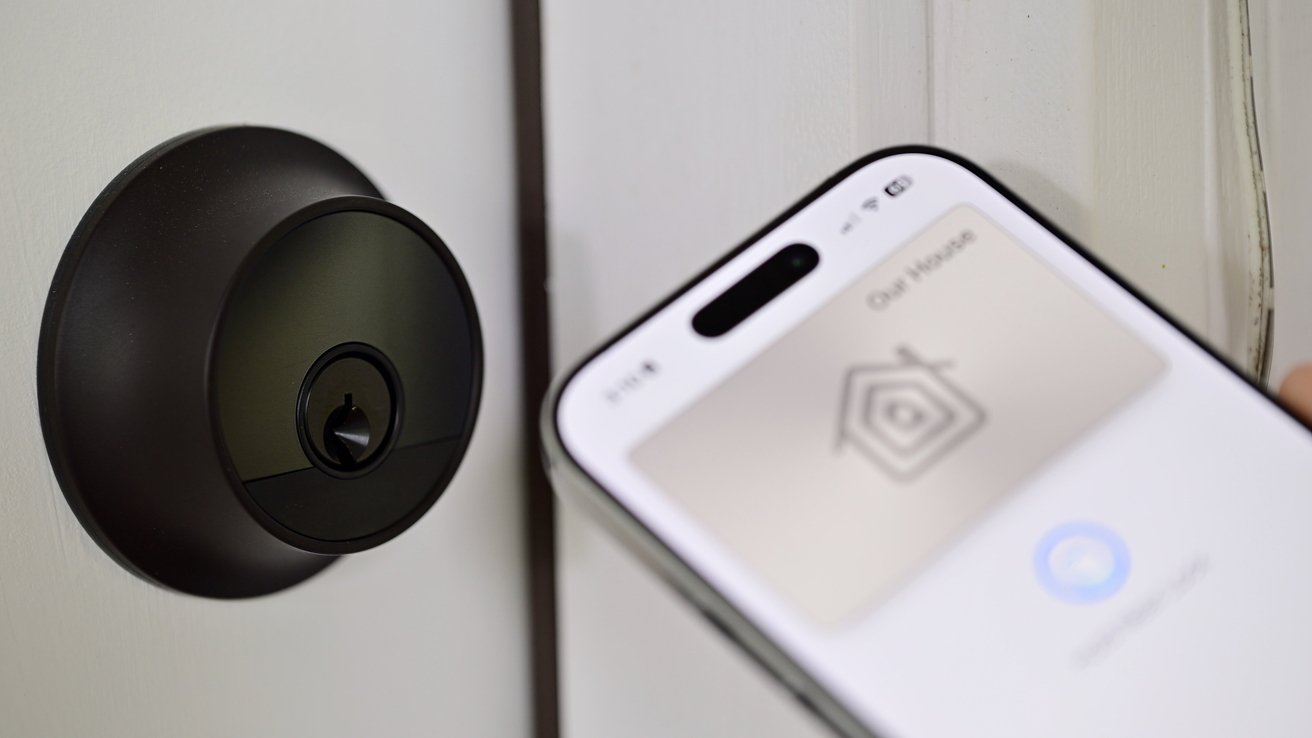
Level earned a following by hiding its battery, motor, and electronics inside a standard deadbolt instead of adding a bulky interior box. The design, combined with support for Apple’s Home Key feature, made it one of the more distinctive smart locks in the Apple Home ecosystem.

Current owners don’t need to replace their locks or worry about losing basic functionality based on Assa Abloy’s statements. The bigger unknown is whether Level will keep introducing new products and features, or if the Level cloud functionality will keep working, after losing much of the engineering team that built the platform.

Posted on Leave a comment

Amazon’s $299 iPad deal is in stock now, $150 off Apple’s new $449 price

Apple raised iPad prices today, but Amazon’s $299 iPad deal is still available, reflecting a $150 discount off the new MSRP. Plus save on iPad mini, Air, and Pro models for a limited time.

Prime Day ends tomorrow, and Amazon’s top iPad deals are likely to expire as well. That’s because Apple raised prices across its tablet range today and Amazon has yet to catch up on the new MSRPs. That delay is your gain, as you can still score significant savings, with many models in stock.

Pick up the 128GB Wi-Fi 11-inch iPad for as low as $299, with deals across mini, Pro, and Air models as well.

Get iPad deals from $299

Here’s a roundup of deals worth exploring:

Prime Day deals on current iPad models

  • iPad 11-inch A16 (128GB, Wi-Fi): $299 – New MSRP: $449
  • iPad mini 7 (256GB, Wi-Fi): $499.99 – New MSRP: $699
  • M4 iPad Air 11-inch (256GB, Wi-Fi + Cellular): $759 – New MSRP: $999
  • M4 iPad Air 13-inch (1TB, Wi-Fi): $1,199 – New MSRP: $1,549
  • M5 iPad Pro 11-inch (256GB, Wi-Fi, Standard Glass): $899.99 – New MSRP: $1,199
  • M5 iPad Pro 11-inch (256GB, Wi-Fi, Standard Glass): $1,199 – New MSRP: $1,499

Blowout iPad Pro sale