

Looking back at Apple’s November 2018, it looked like investors just weren’t getting as into the Christmas spirit as Apple is with its new holiday ads. And maybe Apple is looking for cheer in all the wrong places as Microsoft supplants it as the most valuable company in the world.


Apple’s Share Your Gifts ad
Sometimes there’s just nothing a trillion-dollar company can do. By November, Apple had released three new phones, two new iPads, a desktop Mac, a laptop, a pencil and some keyboard cover thing, but still its stock price dropped. The value of Apple stock dropped enough that in fact it was no longer a trillion-dollar company.
It’ll be back and if Tim Cook were here now, he’d be saying that it’s never about the money anyway, so there. Still, it had to hurt when during November 2018, Apple lost the mantle of World’s Most Valuable Company —to Microsoft.

Satya Nadella (Source: Microsoft)
You knew about the trillion-dollar part but you’d be forgiven for having forgotten that Apple was the most valuable public company in the world because it’s actually been that for so long. Apple was top from August 2011 to November 2018.
It will be again and Microsoft will be again and all of these firms will dance around but on the one hand, Apple must be smarting. And on the other, this is November. There were releases from Apple but the firm had just been through two months of announcing products, now it had to get them into peoples’ hands.
In transit
While many of us watched our delivery tracking information, Apple may have spent some time building a new shelf for all the awards it got.
The company as a whole won the Eleanor Roosevelt Humanitarian Award for its work toward device accessibility.

Examples of Apple’s work on accessibility
This is far from a new effort or direction for Apple and it’s also far from the first such award it’s received. In accepting the award, Apple’s Senior Director of Global Accessibility Policy and Initiatives Sarah Herrlinger said that accessibility had been central to the company “from the very beginning”.
“Our products should reduce barriers so you can do just that, regardless of ability. This work is never done,” she said. “But it’s exactly the kind of design and engineering challenge Apple was built for.”
Also this month, Apple as a whole earned the Thomson Reuters Foundation’s Stop Slavery Award and announced a new initiative to help victims of human trafficking to get jobs in the company.
Then the Steve Jobs Theater at Apple Park won the Structural Artistry award from the UK’s Institute of Structural Engineers. You’ve not heard of them and you’re wondering just how many things in the world are covered by awards ceremonies but then you see an image of Apple Park.

The Steve Jobs Theater at Apple Park
And you’re thinking yes, that’s structural artistry. Even if people walk into its walls. It’s a small price to pay for art.
The Steve Jobs Theater is “the largest structure in the world solely supported by glass”, said the UK organization, and it presented the award to architectural firm Eckersley O’Callaghan & Arup.
It won’t be the last award Apple Park gets. Also in November, Tim Cook was announced as being the first to win the Anti-Defamation League’s Courage Against Hate award.

Tim Cook
“During a time where technology is being used to spread hate, Tim has been a trailblazer in combating it on Apple’s platforms,” said ADL CEO and National Director Jonathan Greenblatt. “He is a staunch advocate for the LGBTQ community and immigrants’ rights while denouncing racist vitriol like the events in Charlottesville and we are proud and excited to present Tim with this award.”
Cook would collect the award in December, when he would also deliver a keynote speech.
Tim Cook was continuing this new role of speaking out about social and political issues but he was continuing to do so with keynote speeches. He’s good at those.
Money calls
Cook is similarly good when he has to speak on Apple’s quarterly financial call, the legally-required announcement of earnings. They’re little more than an audiobook version of the earnings statements Apple has to release. Although they also then include optimistic questions from analysts thinking Apple might reveal future plans, and patient answers from Tim Cook saying that it won’t.
The earnings call in November did come at an interesting time, though, because this month Apple set records. “We’re thrilled to report another record-breaking quarter that caps a tremendous fiscal 2018, the year in which we shipped our 2 billionth iOS device, celebrated the 10th anniversary of the App Store and achieved the strongest revenue and earnings in Apple’s history,” said Tim Cook on the call.
So Apple is making money hand over fist and it’s releasing acclaimed products.
What could possibly go wrong?
Apple’s stock price immediately took a beating because you don’t want successful new products and high earnings. Or rather, investment analysts look at this and think no, it can’t continue.
“Calendar fourth-quarter guidance reflects our cautious view on weaker-than-expected sell-through and production reductions for the iPhone XS and iPhone XR,” wrote Rosenblatt Securities analyst Jun Zhang.
In other words, nobody’s buying the new iPhones. Allegedly.

Apple’s new iPhone XS Max (left) and iPhone XS (right)
There were plenty of rumors that demand for the iPhone XR, in particular, had been poor.
Yet a lot of noise was being made over the fact that Apple had announced in this earnings call that it would no longer report specific iPhone sales figures. In future such calls, it would say how much money it made but not how many phones it sold.
This was greeted by furore by just about everyone and the conclusion was that Apple was hiding something. Sales must be going down and it’s only that the price of iPhones is going up that is saving Apple from being doomed.
Hang on, said AppleInsider, no other firm has ever reported its specific sales figures and nobody’s complaining about them.

Tim Cook at a Foxconn factory
Arguments
While some wrung their hands about Apple’s accounting practices and others saw how the move fitted into the company’s history, there were bigger disputes about the future.
It just didn’t always seem that way, or at least it didn’t appear to be that way for Apple. Now, for Qualcomm, it was bad news.
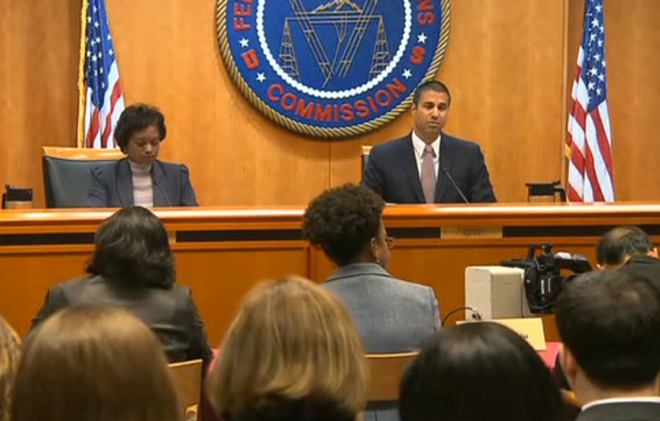
Amongst other things, Qualcomm makes modems for phones and Apple used their technology for many years. This month, US District Judge Lucy Koh issued a preliminary ruling against Qualcomm in a Federal Trade Commission’s antitrust lawsuit.
Qualcomm offices
The bottom line was that the court says Qualcomm must license its modem technology to rivals such as Intel.
Just getting to this point, though, Qualcomm had been in a global legal war over patents and royalties and in part with Apple. By November, Apple was rolling up its sleeves, preparing to go to trial, and definitely not talking privately with Qualcomm at all.
Somebody should’ve told that to Qualcomm CEO Steve Mollenkopf as he claimed the opposite. “We do talk as companies,” he told CNBC. “We’re really on the doorstep of finding a resolution.”
There’s an irony in the head of a company that makes communication equipment not knowing he isn’t communicating. Yet if you spot that this was really just an olive branch of a quote, you should know that it came too late.
Tim Cook for President? Not so much.
For even before that CNBC interview aired, the New York Times had revealed that Qualcomm’s PR company had been targeting attack campaigns aimed at Apple.
Definers Public Affairs, the same firm that Facebook used to sling mud at critics after the Cambridge Analytica debacle, worked to affect perception of Apple.
Much of the work revolved around conservative-leaning news aggregator NTK Network and whether it was used to disseminate stories critical of Apple. According to NTK‘s editor in chief, Joe Pounder, this is nonsense. “What NTK writes and posts on is what NTK chooses to write and post on,” he said.
Perhaps we’re foolish to automatically assume this means editorial independence as he could just have meant that NTK chooses to publish whatever Definers PR tells it.
For their part, Definers boasted to potential clients that it effectively owned NTK. “Definers manages NTK Network, a news aggregation platform that targets Washington D.C. influencers,” wrote Definers’ Tim Miller. “Through NTK we can directly re-publish favorable news from other outlets, and work with like-minded individuals to help create an echo chamber effect.”
Whether they were planted stories or completely independent editorial, NTK reportedly ran at least 57 articles about Apple. The New York Times also cited emails that demonstrated “dozens” of articles were planted on conservative news sites.
We can report that Definers emailed us, too. Back in June 2017, AppleInsider was contacted by Miller who pitched an article suggesting there was coordination between Apple, Intel, Samsung —those famously friendly firms —and the US Federal Trade Commission.
Just about the only thing Miller’s email to us failed to mention was the small fact that Definers was working for Qualcomm. We passed.
There was one more piece of work by Definers that we’ve got to mention. Here’s a company that was working to discredit Apple and Tim Cook but it was allegedly behind a Tim Cook for President campaign.
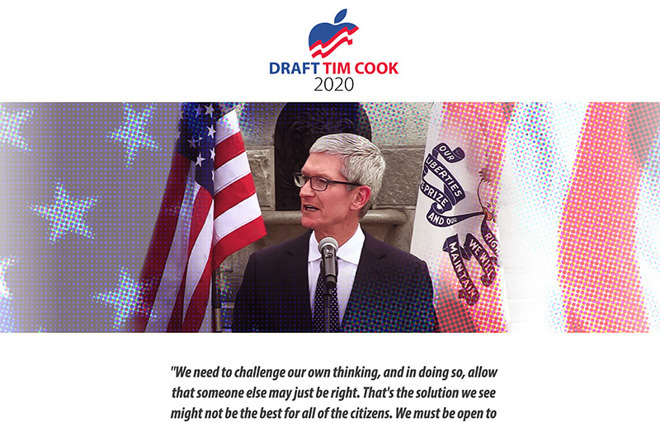
Screengrab from “Tim Cook for President” campaign website
Whether you think Cook would be good in the White House or not is one thing —and it isn’t what is believed to have mattered to Definers PR or Qualcomm. It’s the current occupant of the building who matters and at this point, Tim Cook and Donald Trump’s relationship was up and down.
Early in November, Apple had been one of more than 50 major US companies who drafted and signed a letter opposing the Trump administration’s plans to define gender.
Alongside Apple, the letter’s signatories include Google and Microsoft. Both of them were then invited to a technology roundtable event to be held in December at the White House but Tim Cook wasn’t. Oh, and Qualcomm’s Steve Mollenkopf was.
And while the administration has been imposing tariffs on all manner of industries, toward the end of the month it did specifically state that iPhones could come under question. Asked about the next round of tariffs and whether they would apply to duties paid on phones and computers imported into the country, President Trump said: “Maybe. Maybe. Depends on what the rate is. I mean, I can make it 10 percent, and people could stand that very easily.”
Speaking of politics
November saw the midterms in America and technology firms were among many working to get more people voting. All the major car-riding companies like Uber and Lyft offered free or discounted rides to voting stations —though specifically to, never back from there —and updated their apps to help with finding those stations.
On the day itself, Apple News revamped to bring midterms coverage front and centre on the app. In a link up with the Associated Press, Apple News provided real-time information on the balance of the Senate and the House.
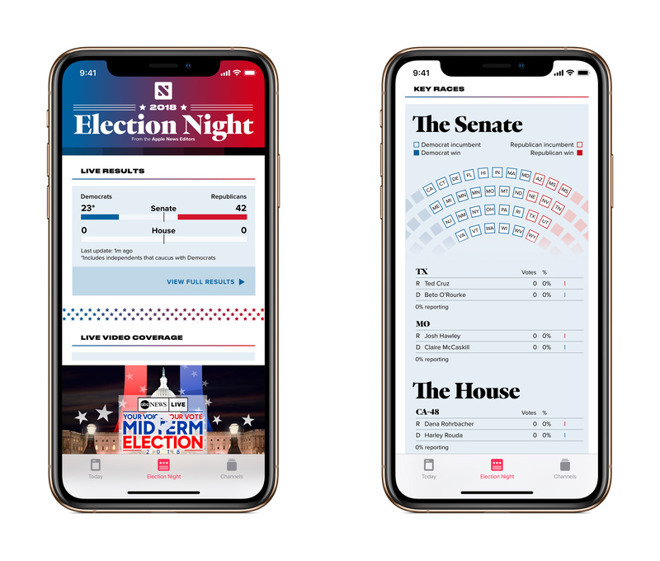
Apple News revamped for the midterms
As you know, the result was that Democrats gained control of the House of Representatives but it also saw Apple’s home state of California getting a new governor. AppleInsider looked at the effects both of these are likely to have on Apple.
Speaking of people
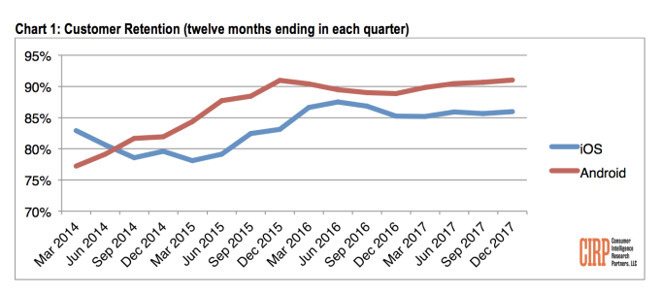
You didn’t have to be in office or a PR firm to make news this month. Though being Mark Zuckerberg helped as he allegedly ordered Facebook executives to all ditch iPhones because of Tim Cook’s criticism of Facebook. He did later deny being so petty and just laid it on that Android “is the most popular operating system in the world.”
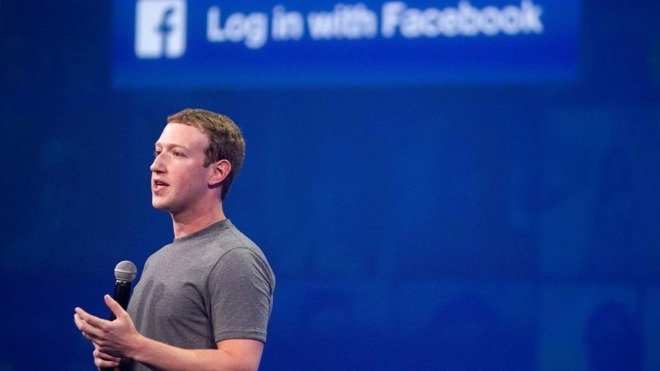
Facebook’s Mark Zuckerberg
There was then the case of the Black Friday shopper who either misread the terms and conditions or just didn’t notice them and so filed a class action lawsuit against Apple for not doing what it didn’t say it would.
We’re not entirely sure how much it costs to sue Apple and, one imagines, face a judge telling you to read the small print. However, it’s likely to be more than the $200 gift card this shopper believes she is due.
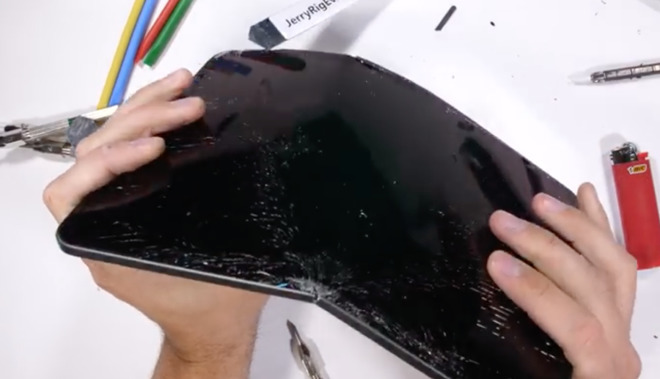
Not how this iPad Pro shipped
We’re also not completely on board with the idea of spending a lot of money to buy an iPad Pro and then deliberately bend it to the point of breaking. In hindsight, YouTuber JerryRigEverything could’ve just waited for Apple to bend some iPads but in November, he torture-tested one poor device himself for giggles.
AppleInsider also tested the new iPad Pro models in November, though our methodology was more about using them rather than holding up a lighter to see how long it takes a flame to burn through.
Everything tested
We also tested and reviewed and tried everything Apple released in its September and October events. The results were uniformly good but not uniformly great.
[youtube https://www.youtube.com/watch?v=_fuLSKBdv8k&w=560&h=315]
We were also highly critical of how Apple moved the Smart Connector on the new iPad Pros. That seemingly simple change belies a remarkably short-sighted approach that is going to mean the connector may never become as useful as Apple expected.
That said, we also found that the iPhone XR is far more than just the entry-level phone.
[youtube https://www.youtube.com/watch?v=IznHmFHgOaM&w=560&h=315]
Reflections on November
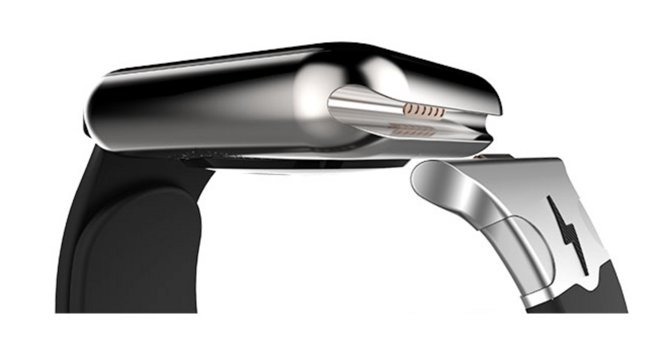
There were new releases from Apple in November and they did include hardware of a sort —the Apple Watch gained two new Hermes bands. And also somewhat more importantly there was new software too as watchOS 5.1.1 came out to fix issues with Apple Watches being bricked.
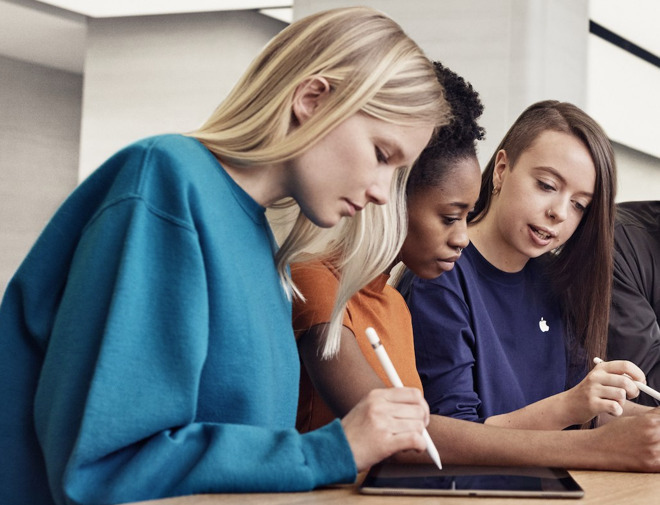
Otherwise Apple released plans for a new Entrepreneur Camp for women with app-driven businesses and it launched new adverts including a sweetly animated one for the holidays.
[youtube https://www.youtube.com/watch?v=3dJCroCMBPM&w=560&h=315]
It felt early to be looking to the end of the year but maybe Apple is just longing to put its feet up for a bit.
Keep up with AppleInsider by downloading the AppleInsider app for iOS, and follow us on YouTube, Twitter @appleinsider and Facebook for live, late-breaking coverage. You can also check out our official Instagram account for exclusive photos.




-l.jpg)










-l.jpg)


