Posted on Leave a comment

Round Up: The Reviews Are In For Switch 2’s Indiana Jones And The Great Circle Port

Indiana Jones and the Great Circle makes its debut on the Switch 2 this week, and it delivers a truly authentic Indy adventure.

The reviews are now rolling in, and personally, we think the Nintendo version offers a “great” experience, awarding it 8 out of 10 stars. Here’s a quick sample from our written review, and you can see our video review at the bottom of this page.

“Indiana Jones and the Great Circle is an authentic new franchise entry with a capable lead in Troy Baker. And despite taking the odd hit, the Switch 2 port holds its own admirably.”

So, what did other outlets have to say? Generally, the reviews are pretty positive so far:

Vooks – 4.5/5: “While the game’s mechanics are things we might have seen before, we’ve never seen Indiana Jones treated with this much respect for such a long time. MachineGames have nailed it, and the Switch 2 port shows that the age of the impossible port isn’t over, because you lose almost nothing by playing it here. We might not get another Indiana Jones movie again, but if we can get another Indy game as good as this, we’ll be just fine.”

GameReactor UK – 8/10: “The Great Circle on Nintendo Switch 2 continues to offer a pure Indiana Jones experience, where its successes in adapting to a less powerful system outweigh the limitations it faces.”

Nintendo Wire – 9/10: “Sure, there are some rough edges here and there. The UI can occasionally be frustrating, the enemy AI has some goofy moments, and the Switch 2 version obviously comes with a few technical concessions compared to the higher powered consoles. But honestly? None of those issues ever came close to ruining the experience… And somehow, one of the best Indiana Jones adventures in years ended up being a video game.”

CGM – 8/10: “Despite some sacrifices, Indiana Jones and the Great Circle is an impressive port on the Nintendo Switch 2 that is sure to please all but the most ardent framerate and resolution hardliners. It captures the fun and excitement of the films while maintaining the impressive qualities of its more beefed-up console brethren.”

NintendoWorldReport – 9/10: “The Switch 2 delivers this masterpiece nearly uncompromised. Its only the occasional stutter or low-resolution texture that gives away the game’s slimmed down form. Whether you’re delving into ancient ruins to solve puzzles, or introducing a nazi to the loving embrace of a sledgehammer, every moment of the Great Circle is absolute bliss.”


So, will you be picking up Indiana Jones and the Great Circle on the Switch 2 this week? Let us know in the comments.

Please note that some external links on this page are affiliate links, which means if you click them and make a purchase we may receive a small percentage of the sale. Please read our FTC Disclosure for more information.

Posted on Leave a comment

Hello Developer: May 2026

Hello Developer: May 2026 – Discover – Apple Developer

<!–

–>

Hello Developer: May 2026

A grid of 20 headshot portraits arranged in four rows, showing a diverse group of people of varying ages, genders, and ethnicities. Each person is photographed against a different background — ranging from plain studio backdrops to outdoor settings and colorful environments — and most are smiling or have a friendly, approachable expression.

In this edition:

  • Meet inspiring developers, advocates, and educators.
  • Prepare your app for Accessibility Nutrition Labels.
  • Meet the team behind the stylish open-world adventure Infinity Nikki.
  • Get the most out of your Apple Developer account.
  • Update your Intel-based Mac apps to Apple silicon.

Read now

Posted on Leave a comment

Random: Nintendo Once Sent WWE’s Cody Rhodes A “Cease And Desist”

Zelda GameCube
Image: Zion Grassl / Nintendo Life

Reigning WWE Champion and video game lover Cody Rhodes has revealed that his love for Zelda landed him in hot water with Nintendo. Well, lukewarm water, perhaps – he got a letter from Nintendo.

Calling it a “cease and desist” in the classic Nintendo style (but also “very kind”), the cause was the pro wrestler’s habit of making his entrance to the ring wearing boots bearing the Triforce logo. As noted by IGN, the topic came up on Rhodes’ What Do You Wanna Talk About? podcast when discussing video games with fellow wrestler Kit Wilson.

“I also got a cease and desist from Nintendo,” he said after showing Wilson the Triforce tattoo he now has on his finger. “It was very kind, they weren’t coming after anybody. I’m not the first guy to have the Triforce.”

Rhodes’ love of gaming is well-known — we’ll be seeing him soon as Guile in the upcoming Street Fighter movie — and he appeared very happy for the opportunity to talk games and specifically Zelda (“I live for that s***, dog”) on the show while digging into Wilson’s gaming history. Following some brief discussion of GoldenEye 007 and Nightfire, the guest mentioned the host’s Triforce boots and asked why the Zelda series appealed enough to make it a small part of his wrestling persona.

“I thought the principles of the Triforce, which are power, courage, and wisdom… For those who don’t know, Zelda’s the wise one, obviously Link is the one who’s got the courage, and power is Ganon. They make up the three parts of the Triforce. That’s the whole deal.

“I just like the idea of thinking and leaning towards your own wisdom, or what you’ve learned and applying it, of being ambitious and wanting to seek or be powerful, if you can, in a world that’s competitive, of sports and sports entertainment, and then having the courage to do it. Here you are, you’re taking a dive, you bust your elbow. You’re gonna decide to take the dive the next night, and you bust your elbow even further. I thought it was just applicable.”

He goes on to sing the praises of Twilight Princess and Wind Waker. While Rhodes love of gaming is no secret (come on, he used to come out to a crowd of thousands wearing Triforce boots), he’s evidently a man of impeccable taste, too. Thought perhaps a “kind” letter from Nintendo’s legal eagles is the biggest surprise here? Whodathunkit

You can check out the whole discussion in the time-stamped video below.

Posted on Leave a comment

Random: Nintendo Once Sent WWE’s Cody Rhodes A “Cease And Desist”

Zelda GameCube
Image: Zion Grassl / Nintendo Life

Reigning WWE Champion and video game lover Cody Rhodes has revealed that his love for Zelda landed him in hot water with Nintendo. Well, lukewarm water, perhaps – he got a letter from Nintendo.

Calling it a “cease and desist” in the classic Nintendo style (but also “very kind”), the cause was the pro wrestler’s habit of making his entrance to the ring wearing boots bearing the Triforce logo. As noted by IGN, the topic came up on Rhodes’ What Do You Wanna Talk About? podcast when discussing video games with fellow wrestler Kit Wilson.

“I also got a cease and desist from Nintendo,” he said after showing Wilson the Triforce tattoo he now has on his finger. “It was very kind, they weren’t coming after anybody. I’m not the first guy to have the Triforce.”

Rhodes’ love of gaming is well-known — we’ll be seeing him soon as Guile in the upcoming Street Fighter movie — and he appeared very happy for the opportunity to talk games and specifically Zelda (“I live for that s***, dog”) on the show while digging into Wilson’s gaming history. Following some brief discussion of GoldenEye 007 and Nightfire, the guest mentioned the host’s Triforce boots and asked why the Zelda series appealed enough to make it a small part of his wrestling persona.

“I thought the principles of the Triforce, which are power, courage, and wisdom… For those who don’t know, Zelda’s the wise one, obviously Link is the one who’s got the courage, and power is Ganon. They make up the three parts of the Triforce. That’s the whole deal.

“I just like the idea of thinking and leaning towards your own wisdom, or what you’ve learned and applying it, of being ambitious and wanting to seek or be powerful, if you can, in a world that’s competitive, of sports and sports entertainment, and then having the courage to do it. Here you are, you’re taking a dive, you bust your elbow. You’re gonna decide to take the dive the next night, and you bust your elbow even further. I thought it was just applicable.”

He goes on to sing the praises of Twilight Princess and Wind Waker. While Rhodes love of gaming is no secret (come on, he used to come out to a crowd of thousands wearing Triforce boots), he’s evidently a man of impeccable taste, too. Thought perhaps a “kind” letter from Nintendo’s legal eagles is the biggest surprise here? Whodathunkit

You can check out the whole discussion in the time-stamped video below.

Posted on Leave a comment

Nintendo Announces Switch 2 ‘Choose Your Game’ Bundle

Bundle #2
Image: Nintendo

Nintendo has announced a new ‘Choose Your Game’ console bundle for the Switch 2, launching at participating retailers in North America in early June for $499.99.

So essentially, you get the Switch 2 console itself plus a download code from a selection of three potential games: Mario Kart World, Donkey Kong Bananza, and Pokémon Pokopia. The offer saves you up to $29.99 when compared to purchasing an extra game separately.

Nintendo has not stated for how long the bundle will be available beyond a rather vague “limited time while supplies last”, but it’s likely to last for the Summer months only given that the Switch 2 on its own will be going up to $499.99 from 1st September 2026.

You probably don’t need a reminder, but here’s Nintendo’s description of each available game:

– Mario Kart World is the biggest Mario Kart game yet! Hit the open road with Mario and friends across a vast interconnected environment, where players can race seamlessly across connected courses that deliver Mario Kart racing like never before. Packed with places to go, races to win and the ability to explore the in-game world at your own pace, Mario Kart World is fast-paced fun (or leisurely exploring) for longtime fans and newcomers alike.

– Donkey Kong Bananza features (literal) ground-breaking exploration as you destroy your way through layer after layer as Donkey Kong and Pauline. With DK’s brute force and Pauline’s special singing abilities, you can crash through walls, carve tunnels with your fists, punch straight down into the ground, and even tear off chunks of terrain to swing around and throw. The more you smash, the more areas open up to explore. Pauline’s singing can also empower Donkey Kong with different Bananza Transformations, each with its own unique power. Join them as they delve deep underground – and discover that this subterranean world is a lot more than it seems on the surface.

– Pokémon Pokopia is a charming life sim where you play as a Ditto who has transformed to look like a human and is trying to restore a withered world using their transformation skills and new crafting abilities. Get nice and cozy while you craft, create, build and befriend a variety of Pokémon in an empty land brimming with promising possibilities.

So if you’re concerned about the incoming price hikes, then you might want to take advantage of this bundle when it goes live in early June.

In case you missed it, Nintendo also announced a Pokémon Pokopia bundle for those residing in Australia. This will also launch in June but, as indicated by the name, won’t offer the same selection of games, instead limiting it to a download code for Pokopia.

Will you be grabbing this new ‘Choose Your Game’ bundle when it launches in the US next month? Let us know with a comment.

Posted on Leave a comment

Nintendo Announces Switch 2 ‘Choose Your Game’ Bundle

Bundle #2
Image: Nintendo

Nintendo has announced a new ‘Choose Your Game’ console bundle for the Switch 2, launching at participating retailers in North America in early June for $499.99.

So essentially, you get the Switch 2 console itself plus a download code from a selection of three potential games: Mario Kart World, Donkey Kong Bananza, and Pokémon Pokopia. The offer saves you up to $29.99 when compared to purchasing an extra game separately.

Nintendo has not stated for how long the bundle will be available beyond a rather vague “limited time while supplies last”, but it’s likely to last for the Summer months only given that the Switch 2 on its own will be going up to $499.99 from 1st September 2026.

You probably don’t need a reminder, but here’s Nintendo’s description of each available game:

– Mario Kart World is the biggest Mario Kart game yet! Hit the open road with Mario and friends across a vast interconnected environment, where players can race seamlessly across connected courses that deliver Mario Kart racing like never before. Packed with places to go, races to win and the ability to explore the in-game world at your own pace, Mario Kart World is fast-paced fun (or leisurely exploring) for longtime fans and newcomers alike.

– Donkey Kong Bananza features (literal) ground-breaking exploration as you destroy your way through layer after layer as Donkey Kong and Pauline. With DK’s brute force and Pauline’s special singing abilities, you can crash through walls, carve tunnels with your fists, punch straight down into the ground, and even tear off chunks of terrain to swing around and throw. The more you smash, the more areas open up to explore. Pauline’s singing can also empower Donkey Kong with different Bananza Transformations, each with its own unique power. Join them as they delve deep underground – and discover that this subterranean world is a lot more than it seems on the surface.

– Pokémon Pokopia is a charming life sim where you play as a Ditto who has transformed to look like a human and is trying to restore a withered world using their transformation skills and new crafting abilities. Get nice and cozy while you craft, create, build and befriend a variety of Pokémon in an empty land brimming with promising possibilities.

So if you’re concerned about the incoming price hikes, then you might want to take advantage of this bundle when it goes live in early June.

In case you missed it, Nintendo also announced a Pokémon Pokopia bundle for those residing in Australia. This will also launch in June but, as indicated by the name, won’t offer the same selection of games, instead limiting it to a download code for Pokopia.

Will you be grabbing this new ‘Choose Your Game’ bundle when it launches in the US next month? Let us know with a comment.

Posted on Leave a comment

Get the most out of your Apple Developer account

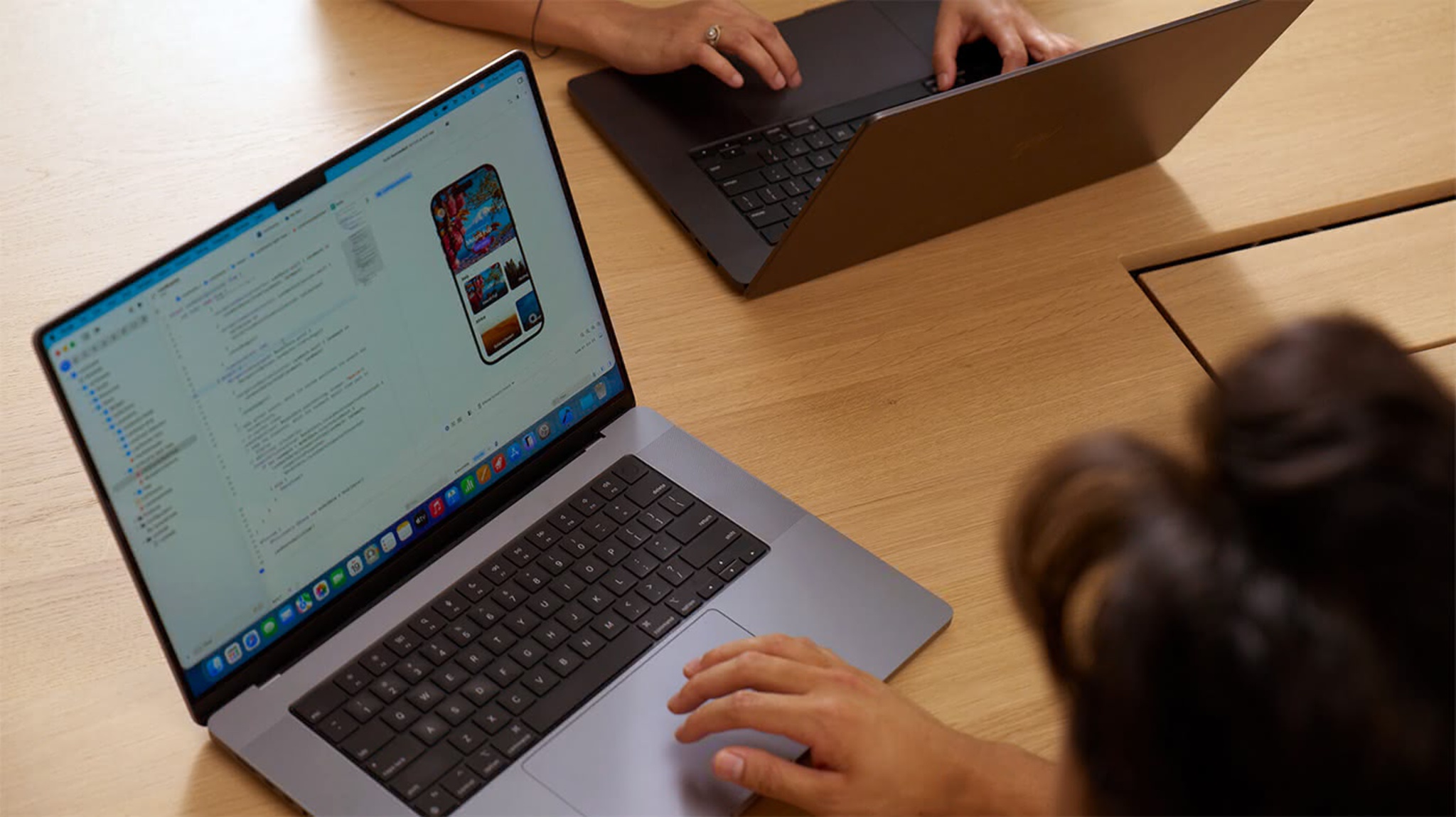
An overhead view of two people working side by side at a light wood table, each on a MacBook Pro. The foreground laptop displays Xcode with an iOS app simulator showing a colorful travel or photo-browsing app on a virtual iPhone screen. The second person’s hands are visible in the upper portion of the frame, typing on their MacBook, suggesting a collaborative development or code review session.

A free Apple Developer account provides access to the tools, resources, and support you need to build and test apps and games. A free developer account is separate from an Apple Developer Program membership. Even if your organization holds the paid membership, creating your own free account gives you direct access to downloads and support resources.


Don’t have an account?

To create your Apple Developer account, sign in to your Apple Account. If you don’t have an Apple Account, you can create one during Apple Developer account registration.

Sign in >


What you get:

Access beta versions of Xcode and Apple operating systems: Test your apps with upcoming features and API changes before release. Betas allow you to submit feedback and ensure your app works on day one of each new OS release. And you can test your apps directly on your own devices.

With Xcode beta versions, you have access to the complete toolchain to explore new SDKs, test enhanced APIs, and debug compatibility issues using the latest development tools and simulators.

Learn more about Xcode >

Learn more about Apple beta testing software >

Meet with Apple: Attend developer events that take place in person and online all year long. Events range from design workshops on UI/UX best practices to technical deep dives on frameworks and business sessions about App Store optimization.

Sign up for developer activities >

Apple Developer Forums: Join the forums to ask questions and share knowledge with developers worldwide. The forums cover specific frameworks and technologies, serving as a space to troubleshoot issues and share code samples.

Browse the forums >

Help shape the platform: Report bugs and submit feature requests with Feedback Assistant. File detailed reports with sample code, crash logs, and reproduction steps. Request new APIs or suggest enhancements. Some of the tools you use today started as developer feedback.

Download Feedback Assistant >


Looking for more?

An Apple Developer Program membership unlocks all the resources and support you need to build, test, share, and distribute apps and games.

  • Integrate Apple services: Configure your app with powerful features like the Foundation Models framework, CloudKit, MusicKit, and Apple Pay.
  • Beta test at scale: Use TestFlight to distribute beta builds to up to 10,000 external testers before your public release.
  • Unlock exclusive opportunities: Access more in-person Meet with Apple events and WWDC activities, including one-on-one appointments with Apple experts.
  • Distribute worldwide: Publish your apps and games on the App Store and grow your business. Easily share with people in 175 countries and regions and 50 languages.
  • Offer content and services for purchase: Help make purchases effortless in your app or game using Apple In-App Purchase, with secure authentication, and over 200 payment methods supported globally.

Learn more about membership >


Keep in mind:

As always, you can explore Apple Developer videos, documentation, tutorials, sample code, API references, and the Human Interface Guidelines without an Apple Developer account.

Posted on Leave a comment

“Your Proposal Is Neither Credible Nor Attractive” – eBay Rejects GameStop’s Takeover Bid

GameStop / eBay
Image: Nintendo Life

When we recently reported on GameStop’s bid to acquire eBay for a cool $55.5 billion, many of you were understandably sceptical. How could such an offer be made when GameStop’s own value is significantly lower than eBay’s?

Well, it turns out that eBay itself isn’t too keen on the idea either. In a letter to GameStop’s CEO Ryan Cohen, Paul S. Pressler, chairman of the board of directors at eBay, outright rejected the takeover bid as “neither credible nor attractive” (thanks, IGN).

Here’s the letter in full:

Dear Mr. Cohen,

The Board, with the support of its independent advisors, has thoroughly reviewed your proposal and has determined to reject it.

We have concluded that your proposal is neither credible nor attractive. We have taken into account such factors as 1) eBay’s standalone prospects, 2) the uncertainty regarding your financing proposal, 3) the impact of your proposal on eBay’s long-term growth and profitability, 4) the leverage, operational risks, and leadership structure of a combined entity, 5) the resulting implications of these factors on valuation, and 6) GameStop’s governance and executive incentives.

eBay is a strong, resilient business that has delivered meaningful results over the past several years. We have sharpened our strategic focus, strengthened execution, enhanced our marketplace and seller experience, and consistently returned capital to shareholders. With its differentiated global marketplace and a clear strategy, eBay’s Board is confident that the company, under its current management team, is well-positioned to continue to drive sustainable growth, execute with discipline, and deliver long-term value for our shareholders.

Our team remains focused on executing our strategy and driving our business forward in the best interests of the company, our shareholders, our employees, and millions of buyers and sellers around the world.

Sincerely,

/s/ Paul S. Pressler

Paul S. Pressler
Chairman of the Board of Directors, eBay

Ryan Cohen is unlikely to go down without a fight, mind you, since he previously indicated his intention to go straight to the shareholders in the event his bid is rejected. Cohen’s reasoning behind the bid was simple: he wants to turn eBay into a more significantly competitor to the eCommerce juggernaut Amazon.

At this rate though, it sounds like he may want to come up with a ‘plan B’. Indeed, Cohen was so adamant about his intention to buy eBay, he even launched a publicity stunt in which he sold items like baseball caps and socks on the site in an effort to ‘raise funds’. He listed items at such ridiculous values that it eventually led to him being suspended altogether.

What do you make of eBay’s response to the GameStop takeover bid? Was it expected? Leave a comment with your thoughts in the usual place.

Posted on Leave a comment

“Your Proposal Is Neither Credible Nor Attractive” – eBay Rejects GameStop’s Takeover Bid

GameStop / eBay
Image: Nintendo Life

When we recently reported on GameStop’s bid to acquire eBay for a cool $55.5 billion, many of you were understandably sceptical. How could such an offer be made when GameStop’s own value is significantly lower than eBay’s?

Well, it turns out that eBay itself isn’t too keen on the idea either. In a letter to GameStop’s CEO Ryan Cohen, Paul S. Pressler, chairman of the board of directors at eBay, outright rejected the takeover bid as “neither credible nor attractive” (thanks, IGN).

Here’s the letter in full:

Dear Mr. Cohen,

The Board, with the support of its independent advisors, has thoroughly reviewed your proposal and has determined to reject it.

We have concluded that your proposal is neither credible nor attractive. We have taken into account such factors as 1) eBay’s standalone prospects, 2) the uncertainty regarding your financing proposal, 3) the impact of your proposal on eBay’s long-term growth and profitability, 4) the leverage, operational risks, and leadership structure of a combined entity, 5) the resulting implications of these factors on valuation, and 6) GameStop’s governance and executive incentives.

eBay is a strong, resilient business that has delivered meaningful results over the past several years. We have sharpened our strategic focus, strengthened execution, enhanced our marketplace and seller experience, and consistently returned capital to shareholders. With its differentiated global marketplace and a clear strategy, eBay’s Board is confident that the company, under its current management team, is well-positioned to continue to drive sustainable growth, execute with discipline, and deliver long-term value for our shareholders.

Our team remains focused on executing our strategy and driving our business forward in the best interests of the company, our shareholders, our employees, and millions of buyers and sellers around the world.

Sincerely,

/s/ Paul S. Pressler

Paul S. Pressler
Chairman of the Board of Directors, eBay

Ryan Cohen is unlikely to go down without a fight, mind you, since he previously indicated his intention to go straight to the shareholders in the event his bid is rejected. Cohen’s reasoning behind the bid was simple: he wants to turn eBay into a more significantly competitor to the eCommerce juggernaut Amazon.

At this rate though, it sounds like he may want to come up with a ‘plan B’. Indeed, Cohen was so adamant about his intention to buy eBay, he even launched a publicity stunt in which he sold items like baseball caps and socks on the site in an effort to ‘raise funds’. He listed items at such ridiculous values that it eventually led to him being suspended altogether.

What do you make of eBay’s response to the GameStop takeover bid? Was it expected? Leave a comment with your thoughts in the usual place.

Posted on Leave a comment

Fedora Hummingbird: Taking the Hummingbird model to the full operating system

At Red Hat Summit 2026, we’re announcing Fedora Hummingbird — a new container-based rolling Fedora Linux distribution. This distribution provides access to the latest software as soon as it’s available upstream, which ensures that it’s up to date and secure.

Fedora Hummingbird primarily utilizes an image-based workflow, similar to containers, but also runs in virtual machines and even on bare metal. If you’ve been following Project Hummingbird‘s work on container images, or Project Bluefin’s work on the operating system, you already know the model. Fedora Hummingbird applies this model all the way down to the host OS.

The foundation for Fedora Hummingbird already ships today from the Hummingbird containers repository. You can pull and boot it right now.

What is Project Hummingbird?

The central goal of Project Hummingbird is to get as close to zero CVE reports as possible in every container image it ships, and to stay there continuously. The team made every architectural decision, including distroless images, minimal package footprints, hermetic builds, and the degree of pipeline automation, in service of that goal. “Distroless” means no package manager, no shell, just the application and what it strictly needs to run.

Why does this matter? When you pull a third-party container image today, you inherit its vulnerabilities and you’re on the hook for managing them. Pull a Hummingbird image and the team’s pipeline has already done the CVE triage, the patching, and the rebuild – you get to skip CVE hell. (If you’re curious, current CVE status across all images and variants is published live at the Hummingbird catalog).

Over the past eight months, the team has built a catalog of 49 unique minimal, hardened, distroless container images (that’s 157 variants including FIPS and multi-arch) covering Python, Go, Node.js, Rust, Ruby, OpenJDK, .NET, PostgreSQL, nginx, and dozens more. Distroless means no package manager, no shell, just the application and what it strictly needs to run.

How it’s built

The infrastructure behind this is a Konflux-based pipeline. It uses fully isolated, reproducible builds from pinned package lists, efficient incremental updates via chunkah (a tool the Hummingbird team built to ensure the system re-downloads only changed parts of an image), and continuous vulnerability scanning via Syft and Grype. When a vulnerability is patched upstream, the pipeline finds it, rebuilds, tests, and ships.

95%+ of the packages in every Hummingbird image come straight from Fedora Rawhide, unmodified. The build system pulls the remaining packages directly from upstream when Rawhide doesn’t yet carry them or isn’t new enough, and the team contributes changes back into Fedora. If that sounds like Fedora CoreOS, that’s because it’s a related idea, but serving a different use case. CoreOS is a minimal host for orchestrated workloads. Hummingbird serves developers who need to deploy multiple versions of runtimes (Python 3.11–3.14, Go 1.25–1.26, Node.js 20–25) in parallel and manage each version’s lifecycle independently.

The Hummingbird factory independently builds packages so they carry their own identity. This means each package can have a separate life cycle, patching policy, and CVE feed (specifically, a vulnerability feed that Red Hat’s Product Security team maintains). Every package ships with machine-readable vulnerability data that tells you not just which CVEs exist, but which ones actually affect your workload.

The OS as a container image

The challenges that Project Hummingbird seeks to address in userspace exist at the OS level as well, so we want to apply the same approach to addressing those challenges. This is where Fedora Hummingbird comes in. This image is already live at https://quay.io/repository/hummingbird-community/bootc-os. The team delivers this full Linux OS as an OCI image, and they build it using the same Konflux pipeline and hermetic RPM-locking approach as the rest of the Hummingbird catalog. Multi-arch: x86_64 and aarch64.

Under the hood, Fedora Hummingbird will use the ARK kernel (Always Ready Kernel) from the CKI project (already running in Fedora today) which tracks Linus’ mainline directly. The benefit of leveraging the CKI project is the curated kernel configuration and elaborate engineering framework that includes extensive testing around a fast-moving kernel stream.

The Fedora bootable containers initiative laid out the groundwork for all of this. The idea is that the OS is an OCI image, built and distributed like any other container, and updated atomically with rollback built in. No partial update states. No configuration drift. The root filesystem is read-only. Any writeable state lives in /var and /etc, cleanly separated from the OS content.

The Hummingbird bootc OS image boots today. What’s still in progress is the integration work. The image is currently a mix of Hummingbird-built RPMs and Fedora packages, and we’re working out how to bring the two closer together. That’s exactly the kind of work we’d love to collaborate on.

Hummingbird in the Fedora community

Many members of the Hummingbird team are already Fedora contributors and package maintainers – maintainers of Podman, and other container tools that Fedora and the broader Linux ecosystem depend on, as well as maintainers of Fedora CoreOS. Members of the Fedora community contributed the bootable containers work that underpins Fedora Hummingbird. Now those members are continuing the work as part of Hummingbird. Moving forward, we’d like to make Hummingbird a part of the Fedora Project so that it can benefit and grow within that same community.

The Hummingbird pipeline already builds and publishes a set of container images based entirely on Fedora Rawhide at quay.io/organization/hummingbird-rawhide. The team has already started bringing improvements back to Fedora. These include container-specific optimizations, bugs found in .spec files, and more. The vulnerability feed that ships with Hummingbird packages is something we think could benefit the broader Fedora ecosystem too.

Getting started

Here are some quick-start instructions for getting a virtual machine up and running:

1. Create the image

sudo podman run --rm --privileged --pull=newer \ --security-opt label=type:unconfined_t \ -v /tmp/bib-config.toml:/config.toml:ro \ -v /var/lib/libvirt/images:/output \ -v /var/lib/containers/storage:/var/lib/containers/storage \ quay.io/centos-bootc/bootc-image-builder:latest \ --type qcow2 --rootfs ext4 \ quay.io/hummingbird-community/bootc-os:latest

2. Rename the image

sudo mv /var/lib/libvirt/images/qcow2/disk.qcow2 \ /var/lib/libvirt/images/fedora-hummingbird.dc2.crunchtools.com \ && sudo rmdir /var/lib/libvirt/images/qcow2

3. Create a virtual machine

sudo virt-install --connect qemu:///system \ --name fedora-hummingbird.dc2.crunchtools.com \ --memory 4096 --vcpus 2 \ --disk /var/lib/libvirt/images/fedora-hummingbird.dc2.crunchtools.com,format=qcow2 \ --import --os-variant fedora-unknown \ --network network=default,model=virtio \ --graphics vnc --noautoconsole

Get involved

When you’re ready to try it, there’s no registration form, no subscription-manager, no entitlements required. The code is already there and the pipeline is already running — we’d love more eyes on it. Here’s how to jump in:

  • Try the image: You can find instructions on using the image on Quay
  • File issues and feedback: anything broken, missing, or surprising is worth reporting at this stage
  • Contribute: the project currently lives at gitlab.com/redhat/hummingbird/containers — establishing a home in Fedora’s own infrastructure is part of the work ahead
  • Join the conversation: visit the SIG page for info on our getting-started sessions.

Fedora has always been where the community proves out new Linux ideas before they matter everywhere else. Fedora Hummingbird is an experiment for image-based, continuously-maintained operating systems, and we think it’s ready for the community to kick the tires.