Following the news LEGO would be retiring its first Legend of Zelda set earlier this week, it’s now been discovered some other Nintendo sets will be discontinued.
According to the Lego website’s “last change to buy page”, sets from the Super Mario, Mario Kart and Animal Crossing series are also “retiring soon”. Here’s a look at each Nintendo set featured on this particular page:
Super Mario
Adventures with Interactive LEGO Mario
Image: LEGO, Nintendo
Party at Toad’s House
Image: LEGO, Nintendo
Captain Toad’s Camp
Image: LEGO, Nintendo
Prince Florian & Castle Bowser
Image: LEGO, Nintendo
Piranha Plant (UK)
Image: LEGO, Nintendo
Mario Kart
Mario Kart – Standard Kart
Image: LEGO, Nintendo
Yoshi Bike
Image: LEGO, Nintendo
Baby Mario vs. Baby Luigi
Image: LEGO, Nintendo
Piranha Plant Power-Up Pursuit
Image: LEGO, Nintendo
Bowser’s Castle
Image: LEGO, Nintendo
Wario & King Boo
Image: LEGO, Nintendo
Toad’s Garage
Image: LEGO, Nintendo
Baby Peach & Grand Prix Set
Image: LEGO, Nintendo
Animal Crossing
Leif’s Caravan & Garden Shop
Image: LEGO, Nintendo
Creative Houses: Seasons of Fun
Image: LEGO, Nintendo
These sets are listed on Lego’s “retiring soon” section in the US and UK. The Nintendo sets retiring may vary in each region.
Will you be getting any of these Nintendo sets before they’re gone? Let us know in the comments.
Please note that some external links on this page are affiliate links, which means if you click them and make a purchase we may receive a small percentage of the sale. Please read our FTC Disclosure for more information.
Apple software chief Craig Federighi will be taking part in xAI’s antitrust lawsuit against Apple and OpenAI over Grok’s treatment in the App Store, but Tim Cook seemingly won’t be.
In August 2025, Elon Musk’s xAI sued Apple and OpenAI, claiming that a partnership between the two affected Grok’s standings in the App Store. Specifically, Musk’s xAI accused Apple of bias in its App Store rankings, preventing Grok and X from getting the top spot in favor of ChatGPT.
As the antitrust lawsuit rolls on, it has now brought Apple SVP of Software Engineering Craig Federighi into the matter.
In a filing with the U.S. District Court for the Northern District of Texas on May 13, spotted by9to5Mac, X Corp and xAI attempted to make Craig Federighi and CEO Tim Cook custodians. This refers to parties who are most likely to have pertinent information or sufficient access to details for the lawsuit to proceed.
The argument was that both Cook and Federighi had made “high-level, strategic decisions about the Apple-OpenAI Agreement,” the filing states.
The court granted that Federighi should be a custodian, and that the plaintiffs successfully argued he may have “unique relevant evidence.” This includes information relating to Apple’s integration of OpenAI services into Apple Intelligence, because the SVP was almost certainly a key decision maker.
However, while there is an attempt to make Cook a custodian too, the court rejects this. The court says there’s no explanation for how Cook would have any unique relevant evidence that hasn’t already been produced, nor that Federighi would be able to provide.
Following this designation, Federighi has to provide responsive discoverable documents by June 17, 2026.
Employee rules, consumer use
While xAI was partially successful in its demands, it certainly wasn’t in others.
Late in the filing, the court explains it was asked by xAI to force Apple to produce all documents about internal policies concerning employee usage of generative AI and chatbots.
However, the court disputes the need for this, since it is unclear how Apple’s internal policies relating to employee AI usage would relate to the antitrust claims. Employee AI usage doesn’t directly impact App Store rankings, the court proposes.
The reasoning from xAI was that Apple touted the safety of OpenAI’s products, but was concerned enough to impose limits and rules on how employees used them. The court disagrees because Apple’s imposition of guardrails on employee usage doesn’t mean Apple is “misrepresenting” the safety and privacy of programs to the public.
As such, the court denied the document demand.
Not all demands were from xAI either. OpenAI moved to require Musk to present emails at Tesla and SpaceX, as well as other communications, by June 3.
Canadian peripherals company Dbrand has built its brand around an irreverent, sarcastic social media presence that’s landed it in hot water on several occasions. But despite multiple missteps and apologies in recent years, it’s still producing quality skins and accessories for consumer tech – and still raising eyebrows with its marketing.
The firm’s latest Switch 2 product is the Joy-Lock Controller Holder, which, in characteristically provocative fashion, the marketing claims is “80% cheaper than a Pro Controller, yet somehow even more comfortable.”
A bold statement, there, but bearing in mind that Nintendo’s standalone pad will set you back £64.95 / $89.99, anything approaching that level of comfort for a fraction of the price is worth consideration. For 90 bucks, you could get a game and Dbrand’s “more comfortable” accessory. But is there any truth to the spiel?
First things first. Although the Holder itself comes in at $19.95, you’ll want a pair of Joy-Lock Grips for them, too, which are also $19.95, although you get a $5 discount if you buy both. So, unless you already have some Killswitch sheaths, the real cost here is $34.90 for the precision plastic into which you’ll slide your Joy-Con. (There are some $10 stick grips available, too.)
Arriving in small foam beds inside handsomely printed black card slipcases, I was sent both the holder and grips for testing, but I wanted to first see how the holder held up on its own. As something small enough to throw in your bag with a slimline case, it could easily enhance the Switch 2 tabletop experience.
As you can see below, you can use the holder sans grips, but that really pushes Dbrand’s Nintendo-beating comfort claims into the realm of the bovine. I haven’t yet had massive issues using the larger Joy-Con 2 solo for extended periods, but joining them together without additional grippage, if anything, made them feel worse.
Slide them into those grips, however, and things start feeling more like a real pad, with a nice curved ridge to rest your middle fingers on. The grip material is coarser than the smooth holder or the Joy-Con themselves, but slippage during intense play isn’t a worry. Each grip has a trio of shiny stripe details that look pleasant, too.
The Joy-Con’s LEDs shine through into the holder, and colour detailing in the magnetic interiors matches the default red/blue. It’s a sturdy bit of plastic, comparable in build quality to Nintendo’s gear. The hinge is strong enough to withstand accidental opening and closing, with six positions to choose from by pulling the prongs apart, ranging from straight-down perpendicular to a 45-degree(ish) boomerang split.
I found just a notch or two out from perpendicular ideal; holding it ‘straight’ felt similar to using the official Grip that comes with the console (the one that makes your ‘controller’ look like a square puppy). Nothing massively wrong with that, but anyone with a Switch 2 already has one. We’re still not in better-than-Pro-Controller territory.
Pull those prongs apart with a gentle tug (steady), though, and…hmm. Yes, it feels more like a regular pad. Yes, it’s fairly comfy. But no, Nintendo or any firm producing a quality standalone pad won’t be losing sleep over this.
For testing, Pentiment didn’t seem the software to put the holder through its paces, but it held up fine during tense Pragmata hack-and-shoot sessions, likewise when crossing worlds with Sonic and company. The comfort claim aside, it functions as you’d expect and offers some welcome flexibility.
The issues here come more from the button arrangement on the Joy-Con than any inherent flaw with Dbrand’s accessory. Cracking the hinge open a couple of notches and comparing the Pro Controller (see above), you can see that the right stick is much closer to the edge of the Joy-Con, around a centimetre from where my thumb would rest naturally. Moving my thumb to a comfortable position on the stick pushes my palm from the edge, which compromises grip – and that’s the problem. However you hold it, you always feel that control is slightly compromised in some manner.
Image: Nintendo Life
Obviously, your hand size, digit length, and therefore your mileage will vary, especially if you’re a young gamer or someone with smaller mitts. If this were just $20, it would be easier to recommend if you’re desperate for a pad-like feeling without breaking the bank; for $35, it’s not quite comfortable enough.
And with prices shooting up across the board, whether for consoles, add-ons, storage, or software, more players will be scrutinising whether they really need to invest in a Pro Controller when the Joy-Con they own get the job done. The Joy-Lock Holder isn’t bad at all for what it is, but it’s not enough of an improvement over Nintendo’s regular grip that comes with the console. Unless you’ve already got some Joy-Lock grips, this halfway-house solution won’t stop you dreaming of a proper pad.
Conclusion
If you’re determined to avoid the $90 premium for a Pro Controller, there is merit to Dbrand’s offering here. It’s not a bad product; the build quality is good, and even if the comfort levels aren’t as advertised, it works well enough.
The problem is that the grips required to achieve acceptable comfort bump the price up closer to standalone pad alternatives. Crucially, while Dbrand’s comfort claims were never to be taken seriously, I can’t imagine a solution like this ever approaching the ergonomics and comfort of a proper gamepad. You’ll always be hampered by the position of the Joy-Con’s buttons.
Ultimately, if you bought a Switch 2, it came with an official grip in the box that essentially performs this function. Dbrand gives you a mite more flexibility, but not 35 bucks’ worth. If it charged your Joy-Con, it might be a different story; as is, this is worth consideration if you already own the Joy-Lock grips. Otherwise, I’d recommend investing a little more in a standalone controller.
The sample used in this review was provided by Dbrand. The Joy-Lock Controller Holder and Grips are available from Dbrand’s website.
IO Interactive’s marketing of 007 First Light is now in full swing ahead of Bond’s anticipated return on other platforms later this month.
To help build some excitement, the studio is now showcasing its “amazing” ensemble cast, and it’s got this underway with a brief chat with Irish actor Patrick Gibson – aka the guy who will be playing 007 in his new video game assignment.
Gibson has also shared a lovely message with Bond fans and gamers alike:
“Strap in, I’m as excited as everyone else to play, I hope people enjoy the game, I think there was a lot of love and passion put into it, and for fans of gaming and the character, I hope it delivers everything that they expect. I’m very excited to hear people’s reaction.”
Of course, while the marketing for this new James Bond game is now well and truly underway, Switch 2 owners will have to wait until “this summer” to get their hands on this new adventure.
Fortunately, IOI’s boss has already promised to do everything he can to get the game out on Nintendo’s hybrid hardware within this particular window.
Will you be checking out 007 First Light? What do you think of the new video game version of James Bond? Tell us in the comments.
Ahoy! You’ve made it to the weekend; give yourself a pat on the back.
It’s been a little quieter this week after Nintendo’s recent financial report and Star Fox announcement, but there are still a few things worth highlighting. First up, a new limited ‘Choose Your Game’ Switch 2 bundle was announced for the US, which should allow Nintendo to shift a good few consoles before the price goes up.
It’s also been confirmed that the Legend of Zelda movie will now release slightly earlier than planned – make your minds up, will you? Either way, even if the original date was kept locked in, the movie is now less than a year away. Welcome news, indeed.
Now that the review’s live, I can finally start raving about Sektori and proclaim that, yes, I’ll be playing it extensively this weekend. It’s bloomin good, man.
With news of the impending sequel, I also plan on playing a few rounds on Aliens: Fireteam Elite on PS5. It’s shallow yet endlessly entertaining, and I love it.
Jim Norman, Features Editor
Tomodachi Life: Living the Dream has been my ‘goldfish game’ for weeks now. I have it open and turn to look at it every now and then, beaming at whatever my weird little guys are up too. It has been wonderful, though I am craving something a little more hands-on.
Having been away for a few days, I’ve resisted starting Indy for the sole reason of playing it alongside my kids on the sofa, as if we were seeing a new film.
I’m not sure if watching their old man pottering around the Vatican will be enough to keep them engaged, but if nothing else, they’re going to love the start bit and hearing the Raiders march. Helluva weekend ahead. Have a good one, folks.
Mai Ladyman, Video Producer
After an eventful time with the rest of the Hookshot team, I am feeling more inspired to revisit some classics.
I’ll likely spend some time with Pokémon Blue and Yellow along with a secret game I can’t mention (yet!). Either way it’ll be a weekend of disconnecting but reconnecting to some much needed nostalgia.
Alex Olney, Senior Video Producer
I’ve got three lovely days to play games this weekend, but the reality is I’ll almost certainly not be able to play as much as I’d like.
But my plans? Definitely want to keep going with Indiana Jones and the Big Circle (chortle!), proverbially bash my head against a Sektori-shaped brick wall, and perhaps even a bit of Reanimal if the feeling takes me. Wish me luck!
Alana Hagues, Deputy Editor
Now that I’ve made some good progress in MIO, I’m really enjoying it. The platforming is absolutely sublime and sometimes pretty darn challenging. I’m hoping to blast through the rest of the game this weekend so I can move on or keep the slate clean.
However, Final Fantasy XIV has just opened up its free log-in campaign, and part of me would like to catch up before the MMORPG hits the Switch 2 this summer, or at least before the next expansion hits. So I may well be returning to Tural briefly. Have a good weekend, all!
Gonçalo Lopes, Contributor
While I still need to clear some of Asura’s Wrath fancy DLC chapters, this weekend will mostly go down in history for being shmup heaven. Forty eight glorious hours spend among Söldner-X2: Final Prototype – Definitive Edition, bring down the Bydo empire in R-Type Dimensions III, succumb to synaesthesia from sessions of Sektori and play for the first time Hudson Soft’s Vertical Force. I hope my neighbours like explosions, laser sounds, and thumping electronic soundtracks.
Game of the week is Indiana Jones and the Great Circle. For people of a certain age group, Harrison Ford is the best of the best. From blade running, intergalactic space smuggler rogue and archeologist college professor with a tomb raider side gig, he did it all with ease. There has never been a video game that puts the player in his literal shoes until MachineGames delivered this essential Indy masterpiece. With Vatican city behind, time to discover the local charms of Gizeh.
Those are our plans for the coming weekend. Now it’s your turn to tell us yours, so make sure to get busy with our poll, and let us know all about your weekend gaming plans in the comments!
FromSoftware’s parent company, Kadokawa, has released its latest earnings report this week, and the plan remains unchanged – both of these games are still expected to release in 2026. Here’s exactly what was mentioned in the company’s earnings report for fiscal year ended March, 2026.
Kadokawa: “FromSoftware is expected to contribute with ELDEN RING Tarnished Edition, as well as The Duskbloods (both slated for a 2026 release for Nintendo Switch 2), a completely new title. We will work to further expand the fan base globally.”
The previous official update from Kadokawa was shared in the company’s earnings report for Q3 2025/26, which also noted at the time how these titles were aiming for a 2026 release window on Nintendo’s new hybrid system.
In recent months, there have also been reports of an eShop listing and advertising for The Duskbloods appearing online.
Do you think we’ll see both of these games arrive on the Switch 2 before the year is out? Let us know your thoughts in the comments.
The fourth Sonic the Hedgehog movie has reached another significant milestone in its production cycle this week.
Director Jeff Fowler has revealed filming has now officially wrapped, with Sonic and the rest of his crew scheduled to return to theatres on 19th March 2027.
To celebrate this special moment, Fowler shared a message and teaser of what’s to come (spoiler alert):
“And that’s a wrap on Sonic Movie 4 !!! On behalf of this amazing cast/crew, we have filmed the BEST Sonic Movie yet and can’t wait to share”
Image: Jeff Fowler / Paramount Pictures, SEGA
As you can see, it’s a picture of Jeff and his new pal, Metal Sonic. Metal Sonic was teased at the end of the third movie, alongside the reveal of Amy Rose. As previously reported, Amy will be played by Kristen Bell.
Multiple cast members will also be returning. This includes talent such as Jim Carrey (Dr. Eggman), Ben Schwartz (Sonic), Idris Elba (Knuckles), Colleen O’Shaughnessey (Tails) and Keanu Reeves (Shadow).
Are you excited about Sonic’s fourth movie? Have you seen the previous three movies? Let us know in the comments.
Toy maker Jakks Pacific has already released multiple products for the Super Mario Galaxy Movie, and this week it has announced more are on the way.
The next product rollout will begin with the pre-sale of the Chomping Wonder Bowser Jr. feature figure, which will be available to pre-order on 15th May 2026. Here’s the official description:
“Standing over 8 inches tall, Chomping Wonder Bowser Jr. delivers dynamic, action-packed fun with 13 points of articulation and a signature chomping motion activated by pushing his shell forward. The figure also includes a multi-head paint brush with swappable tips including a brush, axe, mace and arrowhead, allowing fans to recreate epic battle moments. A water-reveal feature brings added interactivity, as users can use the brush tip to reveal ink splatter effects again and again.”
Jakks Pacific has revealed it will also be expanding the Super Mario Galaxy Movie toy line with the following items this Fall:
Mario Riding Yoshi Feature Figure [Walmart exclusive]
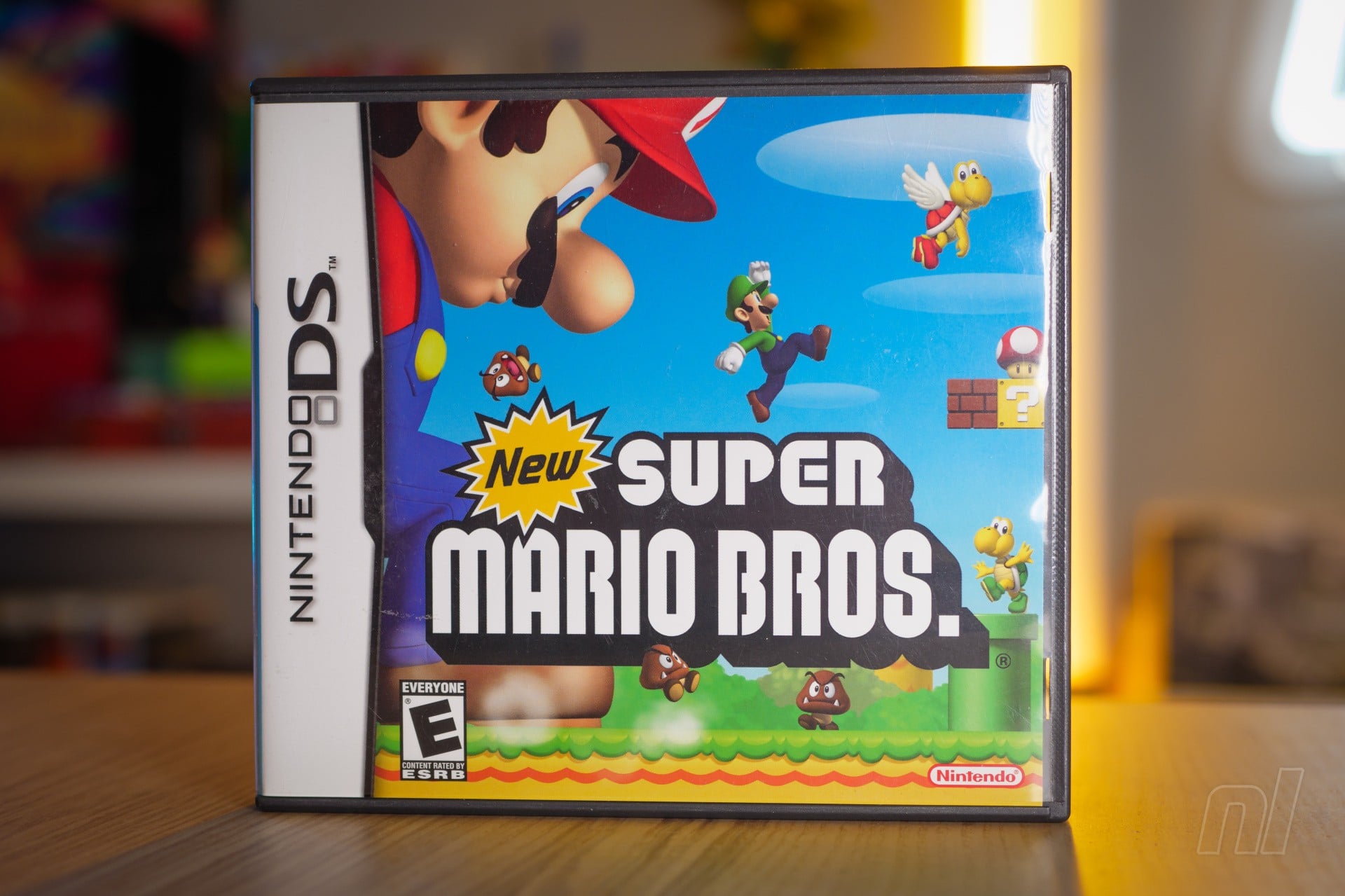
20 years ago today, something New was on the horizon. Yes, it’s time to feel extremely old, as New Super Mario Bros. launched for the Nintendo DS on this very day in the US in 2006.
Back then, New Super Mario Bros. was a big deal; it was the first new side-scrolling Mario platformer game since Super Mario Land 2: 6 Golden Coins and Super Mario World 2: Yoshi’s Island, reintroducing the classic Mario formula to a whole new audience, and it kickstarted a whole new sub-series for the plumber.
Because there have multiple ‘New’ games over the years, it’s sometimes difficult to appreciate just how big the game was at the time. Imagine being an adult who grew up with Mario on the NES or SNES, picking up a DS and playing through a whole new 2D-esque adventure? Or showing it to your kids, who have only ever known Mario via the N64 or GameCube era?
But New Super Mario Bros. was special: it blended the old and the new, giving Mario and Luigi classic power-ups alongside shiny new ones — who doesn’t remember picking up their first Mega Mushroom? That jingle is stuck in our heads, now…
The brothers also have new movement abilities like double jumps, triple jumps, and many other skills only seen in Super Mario 64 or other 3D games previously. Mario and Luigi could also swing on ropes and tiptoe across wires, allowing for even more creative level designs. And there were some excellent ones in NSMB.
Plus, you didn’t have to just play through the game on your own: you could play through the game co-op with someone else wirelessly or hang out with three friends and compete in minigames. And only one of you needed the game cartridge, too.
Unsurprisingly, New Super Mario Bros. went on to become the best-selling DS game ever: by 31st March 2016, the game sold a staggering 30.8 million units, almost 7 million more than the next closest competitor (Nintendogs, with 23.96 million).
While many feel that the ‘New’ series got a bit samey over the years, there’s no denying the original is an extremely fun and polished game. We may have moved on to Wonder at this point, but we’ll always have a soft spot for the first 2.5D entry on DS.
Did you grab New Super Mario Bros. on the DS back in the day? How do you feel about it now? Are you glad we’ve moved past the ‘New’ era? Vote in our polls below and share your thoughts in the comments.
Did you play New Super Mario Bros. on the DS? (609 votes)
Yep, bought it day one27%
Yes, I picked it up a little later61%
I’ve played it, but on the Wii U3%
Never touched it, I’m not a 2D Mario fan2%
I never had a DS (or Wii U)7%
What’s your favourite New Super Mario Bros. game? (561 votes)
New Super Mario Bros. (DS)35%
New Super Mario Bros. Wii (Wii)22%
New Super Mario Bros. 2 (3DS)7%
New Super Mario Bros. U / Deluxe (Wii U / Switch)32%
I don’t like any of them4%
Are you glad the ‘New’ series seems to be over? (564 votes)
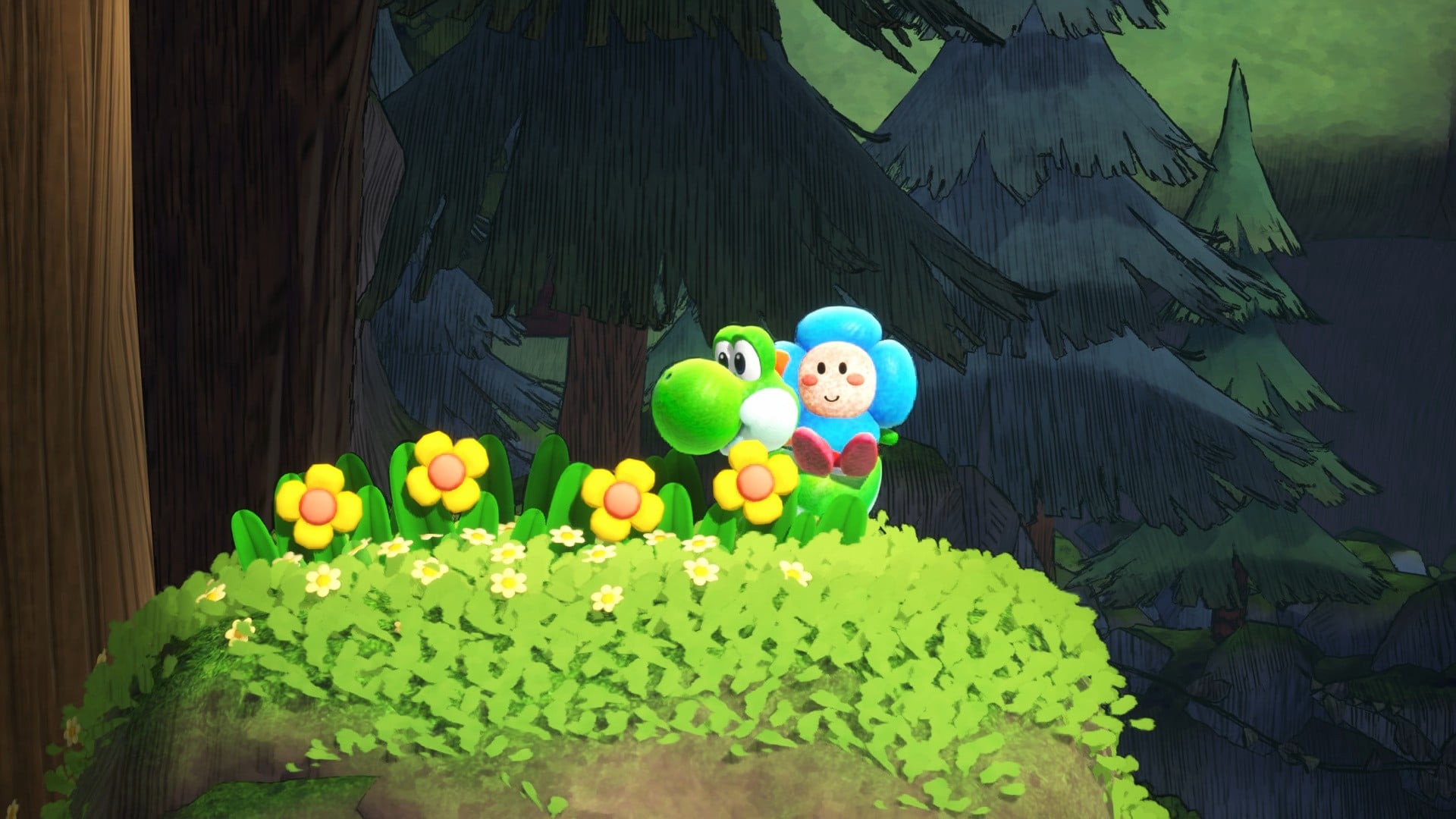
We’re just six days away from Yoshi and the Mysterious Book‘s arrival on Switch 2, so of course, today is the perfect day to drop an adorable new trailer, right?
That’s exactly what Nintendo has done, and while the footage doesn’t show us too much new stuff, it’s another excuse for us to indulge in the lovely art style and watch Yoshi go about his business.
As you probably know, the central mechanic of the game is all about investigating and determining what all of the creatures inside the Mysterious Book — aka Mr. Encyclopedia — do. And in the footage up top, we get a look at some more of these critters.
One is shaped like a boomerang and seems to be able to cut grass, which Yoshi says is “almost inedible”, while another Kirby-looking thing is a bit more like bubblegum. There’s also a big mossy creature that, while a bit too big for Yoshi to taste, can help the little dinosaur in other ways.
Otherwise, there’s lots of puzzle solving involved, and every creature can be used in a handful of different ways to get the most out of every level.


 by Liam Doolan