Posted on Leave a comment

Review: The Flame in the Flood (Switch eShop)

At first glance, The Flame in the Flood depicts a beautifully crafted world with its use of stylized art and charming audio. What isn’t quickly apparent about The Molasses Flood’s debut title is that it actually details the harsh reality of survival. Hunger, thirst, sleep, broken legs and bear attacks, it’s all part of a world that is constantly trying to knock the player down. This sense of realism is spot on and is The Flame in the Flood’s greatest strength, and conversely its biggest weakness. 

Set in a world where the water has risen and flooded the land, Scout and her companion dog Daisy set off to find a radio tower after discovering a radio transmission needing a stronger signal. Using a raft to sail through the raging river, players stop by different procedurally generated areas that provide supplies, shelter, and the imminent threat of death. From here the story goes through a few more updates but nothing too consistent. While the story updates feel more like mere checkpoints, the environmental storytelling at play helps give glimpses into what happened to this world. An old tire swing gives details on how long it’s been since the world changed, while random characters like the gravedigger show that there are still survivors. Unfortunately, because the areas are not the same each time they’re visited, most of these characters do not get the luxury of progressing the main story.

The overall concept is simple. Collect supplies to ensure survival long enough to make it to the next day, and keep moving down the river. And that’s about it; it’s a very repetitious cycle that won’t see any major mix ups before the credits roll. There will be upgrades to the raft that make sailing easier and different enemies that allow new items to be created, but the loop of find an area, get supplies and start sailing rarely changes. It’s realistic and the atmosphere calls for it, but that doesn’t mean that it’ll be enjoyable for everyone the entire way through. Towards the end, in our case, it was becoming a routine and the sense of discovery was starting to wear off.

Every detail matters. Hunger and thirst are important factors but you will soon be dealing with the need for sleep, weapons, medicine, and a variety of other smaller supplies that would truly be needed to survive in this kind of harsh environment. Crafting is simple and there is always that sense of relief when the right item is found in order to survive. The game doesn’t joke around. Getting attacked by a boar can result in a broken leg, staying out in the rain can start a sickness, running through poison ivy can create lacerations and poisoning. The list goes on. The Flame in the Flood nails the sense of desperation and resourcefulness, and its atmosphere is its biggest strong point.

For a game as beautiful as The Flame in the Flood, a lot of time is spent staring at menus. Inventory space, while realistic, is an immediate concern from the start of the game. Being out of room and deciding what to remove or transfer will be a constant requirement that usually ends in frustration. Moving items from the backpack to the dog or to the raft plays out rather like a chore. Not being able to stack items automatically within the different inventories is another headscratcher that makes the process needlessly more complicated. A more intuitive UI would have been appreciated, especially considering how vital it is for the entire experience.

A lot of talk has gone into praising the visuals, but an equal amount has to go to the vibrant and fitting soundtrack. The classic Americana vibes put a fitting tone to the setting and the environment compliments it with its southern looks. Music plays appropriately and even gives the much needed sense of hope when the right tune plays. 

Since this is the Complete Edition players can also expect an option to play with developer commentary, along with an endless mode that lets you play for as long as possible. If the repetitious nature of the game is not a hindrance, this mode will be an excellent addition to anyone that picks it up. Being able to play on the Switch is another plus; although some of the icons and text are small to read while playing in portable mode, nothing important is left out.

Conclusion

The Flame in the Flood is a gorgeous title that tries to find a good balance between realism and difficulty. The ideas and concepts are smart and make sense, but don’t expect them to delve too much deeper that what is presented at the start. A few nitpicks with the menu system and cumbersome inventory management take a bit away from the experience, but the core mechanics work well. The Flame in the Flood is a good addition to the survival genre, and another satisfying inclusion to the ever growing eShop library.

Posted on Leave a comment

Blog: Old games, remasters, and the joy of owning your work

The following blog post, unless otherwise noted, was written by a member of Gamasutra’s community.
The thoughts and opinions expressed are those of the writer and not Gamasutra or its parent company.


It’s weird to see over four years of my life just sitting there in a lump.

I’ve been making my little indie games for a living for 23 years. Being a greybeard in such a weird and young industry comes with special privileges.

For example, while some of my peers are getting around to remastering their old games, I am remastering our most popular game, Avernum 3: Ruined World, for the SECOND time. It is only when you rewrite the same material twice that you really test your discipline and integrity.

Writing indie games has become miserably competitive lately. Most new games, even promising ones with a lot of work in them, are sinking without a trace. Yet, thanks to the grinding tedium of rewriting the same game again and again, I have a fighting chance of my business surviving enough to write cool new stuff.

So I’ll tell the story or Exile 3: Ruined World/Avernum 3/Avernum 3: Ruined World. (Also on Steam.) There are things to learn here for any young person who thinks, “I wanna’ make cool things (not just video games), and make a living doing it.”
 

Don’t laugh. It sold like crazy.

In A Previous Millenium, I Wrote A Hit

In 1997, I’d been making games full-time for a couple years. I wrote (and still write) retro, turn-based, low-budget indie RPGs with fun systems, interesting stories, and mediocre graphics.

Happily, I got started at a time when there were very few good RPGs out in the market. I got a nice computer, wanted to play a good RPG, and couldn’t find one. So I wrote one. It sold, because no competition. This is a key example of my most important business strategy: Get Very Lucky.

My first games, Exile: Escape From the Pit and Exile 2: Crystal Souls, were designed on a simple principle: I would go back to all the RPGs Iloved as a kid and steal the best idea from each one. I then carefully combined all my quality stolen ideas into a coherent whole. This is called being a game designer.

For our third game, I had a better idea. I spent months playing all the new RPGs that had come out over the previous 2-3 years. Then I stole the best idea from each one of those. Thus, I transitioned from stealing ideas from old games to stealing ideas from new games. This is how you evolve as a game designer.

I ended up with Exile 3: Ruined World, which has been our biggest success. It features a gigantic world, that is easy to get lost in. As time passed, the game world evolved. If you didn’t fight the monsters off, they would ruin towns and kill the townsfolk. (Though, no matter how slow you play, you can always still win the game.) If you didn’t want to follow the story, you could be a bounty hunter or merchant. You could buy a house.

(If you want to try it out, it’s available as freeware here. Warning: It probably won’t run on your computer. That’s one of the reasons we had to remaster it.)


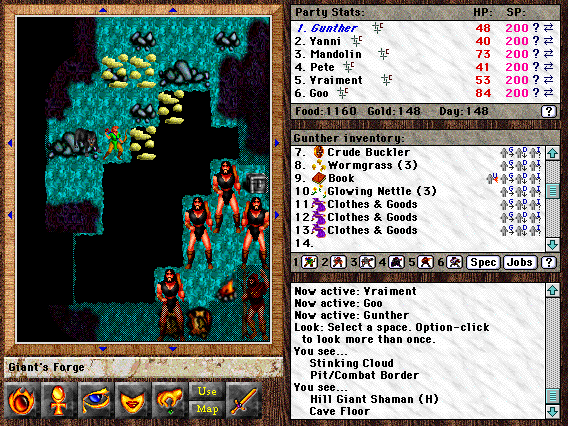
Exile 3 came out so long ago that most new computers then looked exactly like this.

It Was The Right Title At The Right Time

In 1997, it was what people wanted. It was a legit shareware hit. Now, having a hit indie game in 1997 (when the world wide web was basically nothing and most of my sales came from AOL) was different from having one in 2017.

These days, the sales of a hit indie game will buy you a mansion made of yachts. Back then, it bought me a modest house and made my parents slightly less ashamed to say what I did for a living.

I won awards, to the extent there were game awards back then. I got attention from the traditional games media, which was really worth something then. And it established me in the business for good.

But even then, I knew that the real prize was not the praise (which I don’t care about) or the money (which is nice, but then you spend it and it’s gone). What was really valuable was that I owned the game. It was mine. I could do with it whatever I wanted. Forever.
 

TREMBLE BEFORE MY MIGHTY 800×600 PIXELS!

Five Years Later, I Rewrote It For the First Time

We rewrote Exile 3 as Avernum 3 in 2002. Five years is a really short time to wait before rewriting a game, but I have a good excuse. When I started Exile 3, I’d only been making games for money for two years, and I wasn’t very good. There were a ton of ways in which the story, interface and graphics should have been improved, and I didn’t know to do it.

I spent well over a year writing Exile 3, and my wife and I spent another year turning it into Avernum 3. We went over every single location, line of dialogue, and bit of code, improving and expanding it to the best of our improved abilities. The revised version didn’t sell as well as the original, but it still made a lot of money. (Again, by early indie game standards. It was a lot of money for lone artists, but not big-shot money.)

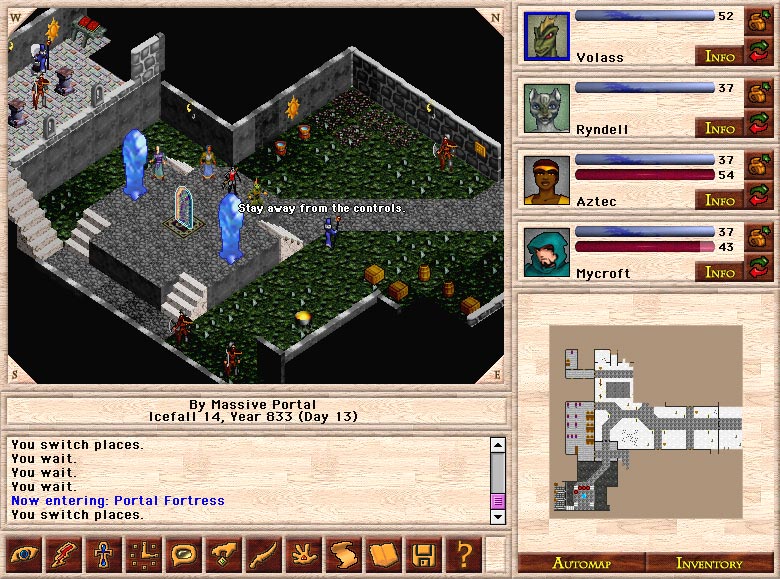
(If you want to try it out, you can buy it super-cheap here. Warning: It probably won’t run well on your computer. That’s one of the reasons we had to remaster it.)

                         
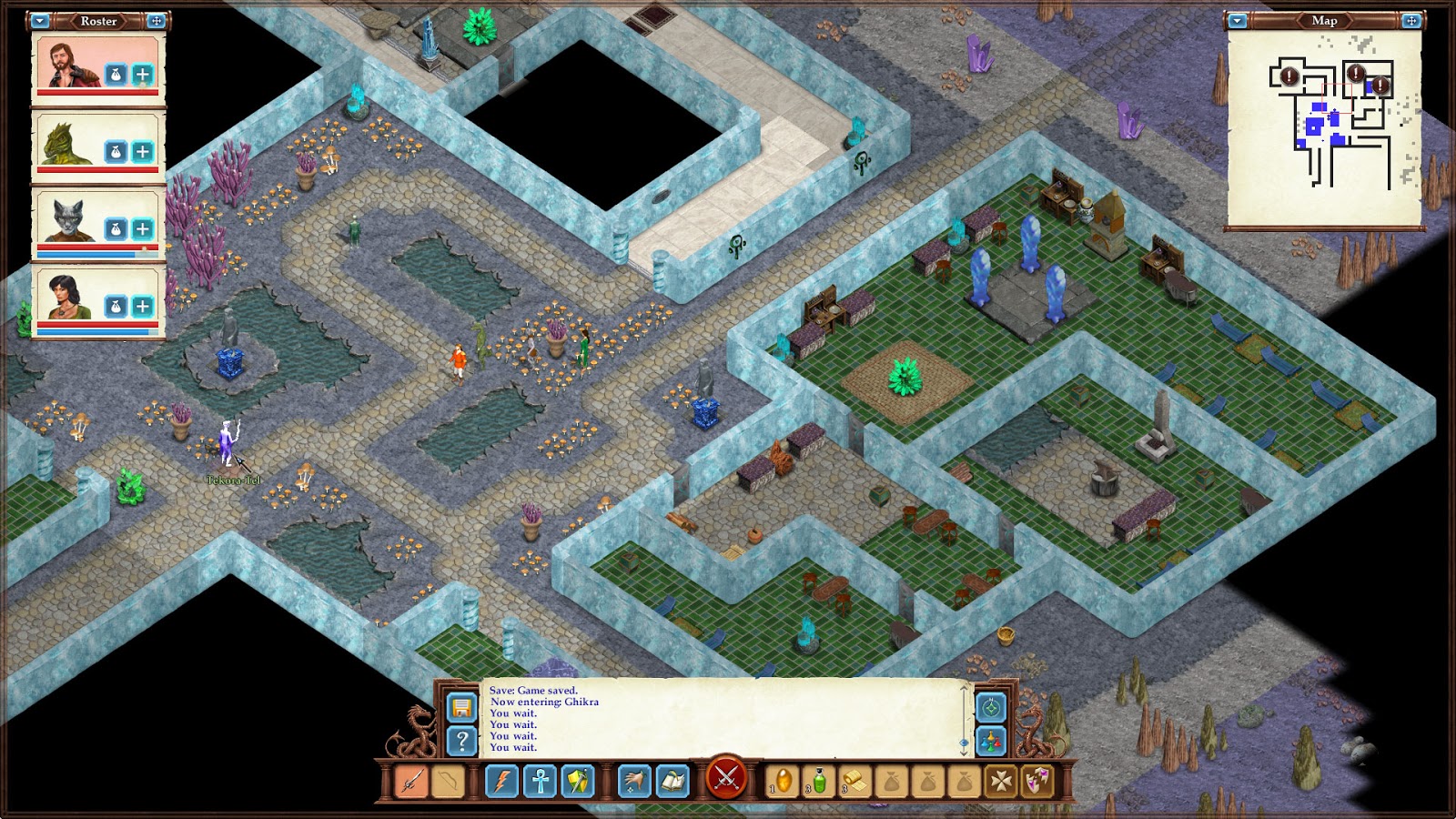
The new game. I am constantly accused by cranks of never improving my games. Look. I’m not saying this is super-fancy. But I don’t think you can say there’s been no improvement.

Now, Fifteen Years Later, We’re Doing It Again

Fifteen years is a long time in the tech industry. Our most popular game is now woefully out of date in every way, largely forgotten, and doesn’t even run on new Macs anymore. Now I can rewrite it so it actually works, and an iPad port will fall out of the process in the bargain.

Interfaces and game design have evolved in a million ways. I’m spending 18 months going over every tiny bit of the game again, redoing every single thing from scratch. I’ll release it in January or so, and it will hopefully sell. I think it will. I’ve spent over 20 years building up a loyal fan base.

The Pros and Cons of a Remaster

The good side of remasters is that they can be less work that writing a game from scratch. You can, with luck, get a full new title for 2/3 of the work, and it’s easy to market it because people already like it. (I’m assuming you’re not remastering a game everyone hated.)

The bad side of remasters is that you become the curator for your own work. It can be grinding to go over old material day in and day out. The reason a remaster is successful is because your fans like the original game. You don’t want to crap it up with too many new ideas, no matter how clever. People tend to not like change.

A Lesson For Young Creators

Never underestimate the value of owning your work. There hasn’t been a day since 1997 that I haven’t made money off of Exile 3. The reason is that I own it. It’s mine, to alter, remaster, and distribute. All according to my whims, with all the earnings going to me.

It’s a tough market out there. But suppose you release a new game and nobody ever even hears of it. Wait five years, remaster it and it really will be, as far an anyone is concerned, a new game. You can try selling it again!

And ten years from now, people will be using new consoles, new devices, new sorts of computers. Port your game to them! Each new port is an all new release. A new chance for your game to get noticed and catch on and become a hit!
 

“But Your Games Are All The Same And Look Like Crap”

I have a follow-up post about the reactions when I announced Avernum 3: Ruined World. It’s pretty funny, but this is already long so I broke it out into its own post.

When Avernum 3: Ruined World comes out (hopefully in January for Windows/Mac and March for iPad), I’ll have spent over four years of my life on it. It’s not a game for everyone. It’s mostly the product of one person, and it’ll show.

Even if you don’t like my work, I hope you take some satisfaction in this: Vidya games are still a place where one weirdo can make weird things for other weirdos and make a living at it. As long as this is possible, there’s hope. Maybe the next weird thing for weirdos will be YOUR perfect game, the Best Game Ever, and it never would have existed in a purely big-budget world.

### 

If you’re intrigued by the retro-RPG goodness of Avernum 3, you can wishlist it on Steam. News about our work and random musings can be found on our Twitter.

Posted on Leave a comment

Rainway Streaming App Continues to Push the Switch Version, Teasing Cuphead Footage

One of the intriguing plotlines of the early months of the Switch was the very public efforts of those behind the Rainway streaming app to promote its future on the system. If you need a reminder, it’s an app that allows you to stream a PC to a variety of devices via web browser technology; utilising this the developers showed many top tier games running on Nintendo’s system.

The appeal is obvious – those with a gaming PC would be able to play games on the Switch that will never otherwise see the light of day on the hardware. The big question mark, however, is whether the app will ever be allowed – officially – on the Switch; naturally there are a lot of doubts about that.

Over recent weeks and months the Rainway team hasn’t been put off, and is now teasing footage of co-op Cuphead play via the Switch; it’s been a hot recent release on PC and Xbox One.

There are a few issues to be cleared before this should generate legitimate hype – performance via Switch (through its browser) still needs to be shown to be strong. The bigger problem is that already highlighted above – actually getting permission from Nintendo to release the app on the eShop. The Switch doesn’t even have conventional apps like YouTube, Netflix etc yet, and there are various pitfalls and considerations around an app that would allow people to stream content from an external device (in this case their PC) to play non-platform games on the console.

It seems like a longshot, but strange things happen sometimes. Rainway is planning to release a beta of its app soon, though any prospective Switch release is still up in the air.

Thanks to all that sent this in.

Posted on Leave a comment

The Analogue Super Nt Is The Ultimate SNES Clone, And You Can Pre-Order Now

Retro hardware specialist Analogue has lifted the lid on its next major project, the Analogue Super Nt.

Like the Analogue Nt and Analogue Nt Mini before it, the Super Nt uses Field Programmable Gate Array (FPGA) technology to replicate the performance of vintage hardware (in this case, the SNES) on a hardware rather than a software level. That means zero lag, total accuracy and superb compatibility – the team has apparently tested over two thousand SNES and Super Famicom games to make sure they work.

The system accepts original cartridges and comes with two controller ports so you can use your original pads. It’s compatible with 8Bitdo’s new SNES-style wireless controllers, as well.

Output is 1080p via HDMI (720 and 480p modes are also available), and the system comes packed with unique features such as scanlines, scaling and 48KHz, 16-bit digital stereo sound. There’s an SD card slot to update the firmware, which suggests that (like the Analogue Nt), you’ll be able to install custom firmware and replicate other systems as well.

Here’s the machine in action:

The real surprise here is the price; Analogue products usually carry high price tags, and with good reason – they’re produced to the highest possible standards. We’re sure the Super Nt will be no exception, but the difference is it won’t break the bank – the unit costs a very reasonable $189.99. 

The Super Nt comes in four different designs: Black, Classic (North American SNES), SF (Super Famicom / Euro SNES) and Transparent. The 8Bitdo pads are available at a discounted price of $39.99 (you don’t get one in the box), complete with the all-important Retro Receiver which allows them to connect to the console wirelessly. If you have existing 8Bitdo pads then they will work as well.

Pre-orders are open right now, and the console is expected to ship in February 2018. Let us know if you’ll be placing an order by posting a comment below.

Posted on Leave a comment

Call of Duty Celebrates the Power of Camaraderie and Thrill of Reuniting with Friends with Live-Action Trailer “Reassemble!”

Activision’s Blockbuster live-action trailer for Call of Duty: WWII for First Time Features Multiple Versions

Call of Duty: WWII launches worldwide November 3

SANTA MONICA, Calif.–(BUSINESS WIRE)– The live-action trailer for Call of Duty®: WWII has arrived. Activision is delivering to fans an action-packed global experience for the title, which topped the Nielsen Game Rank™ list as the most anticipated multi-platform game this holiday, with the launch of not one, but three trailer versions of its iconic blockbuster, which follows three different squads of friends reassembling to play Call of Duty®.

Helmed by director Simon McQuoid in his first collaboration with Activision, the thrilling :90 piece celebrates friendship and the enthusiasm shared by friends as only Call of Duty can deliver. Unique French and UK versions along with a Global trailer, which debuted yesterday in the U.S., lets the world know that it’s time to get the group back together for Call of Duty: WWII, which launches worldwide November 3.

Call of Duty: WWII is a return to the boots on the ground gameplay and camaraderie of playing Call of Duty together with your friends. The enthusiasm and anticipation for this year’s game is incredible and speaks to the passion of our fans around the world,” said Tim Ellis, CMO, Activision. “‘Reassemble!’ spans the globe in a series of films about gamers, across all walks of life, getting their squads together with one mission – to play Call of Duty.”

Call of Duty: WWII marks a dramatic return to the franchise’s roots in an experience that redefines World War II for a new gaming generation. Players will be immersed in combat across three robust game modes; Campaign, Multiplayer and Nazi Zombies.

Activision is putting major marketing support behind the game with a high-impact TV, digital and outdoor advertising campaign. The global spot will be accompanied by bespoke U.K. and France spots, which were filmed in Prague and will be distributed specifically to those markets. Throughout the campaign, Activision has worked with creative agency 72andSunny Los Angeles on overall creative direction.

Call of Duty: WWII, launching worldwide on November 3, is published by Activision Publishing, Inc., a wholly owned subsidiary of Activision Blizzard (Nasdaq: ATVI), and developed by Sledgehammer Games with additional development support from Raven Software. For the latest intel, check out: www.callofduty.com, www.youtube.com/callofduty or follow @CallofDuty and @SHGames on Twitter, Instagram and Facebook. Call of Duty: WWII is scheduled for release on PlayStation®4 system, Xbox One, and PC. The game is rated M for Mature (Blood and Gore, Intense Violence, Strong Language).

About Activision Publishing, Inc.

Headquartered in Santa Monica, California, Activision Publishing, Inc. is a leading global producer and publisher of interactive entertainment. Activision maintains operations throughout the world and is a division of Activision Blizzard (NASDAQ: ATVI), an S&P 500 company. More information about Activision and its products can be found on the company’s website, www.activision.com or by following @Activision.

Cautionary Note Regarding Forward-looking Statements: Information in this press release that involves Activision Publishing’s expectations, plans, intentions or strategies regarding the future, including statements about the expected release dates, features and functionality of Call of Duty: WWII, are forward-looking statements that are not facts and involve a number of risks and uncertainties. Factors that could cause Activision Publishing’s actual future results to differ materially from those expressed in the forward-looking statements set forth in this release include unanticipated product delays and other factors identified in the risk factors sections of Activision Blizzard’s most recent annual report on Form 10-K and any subsequent quarterly reports on Form 10-Q. The forward-looking statements in this release are based upon information available to Activision Publishing and Activision Blizzard as of the date of this release, and neither Activision Publishing nor Activision Blizzard assumes any obligation to update any such forward-looking statements. Forward-looking statements believed to be true when made may ultimately prove to be incorrect. These statements are not guarantees of the future performance of Activision Publishing or Activision Blizzard and are subject to risks, uncertainties and other factors, some of which are beyond its control and may cause actual results to differ materially from current expectations.

© 2017 Activision Publishing, Inc. ACTIVISION, CALL OF DUTY, and CALL OF DUTY WWII are trademarks of Activision Publishing, Inc.

Activision Publishing, Inc.
Alan Johnson, PR Manager
310.255.2757
Alan.Johnson@activision.com

Source: Activision Publishing, Inc.

News Provided by Acquire Media

Posted on Leave a comment

Feature: Getting Reacquainted With Tamagotchi, The Original Virtual Pet

Back in June 1997, the cover of Computer & Video Games – then one of the UK’s biggest-selling specialist gaming magazines – was packed with the most popular titles of the time, as well as some familiar faces. Sega’s Sonic the Hedgehog took center stage, with news from the ’97 Tokyo Game Show regarding the company’s latest drive to promote the character, dubbed “Project Sonic” – an initiative which would ultimately give us Sonic Jam and Sonic R on the Saturn but little else of note. PlayStation classics Rage Racer and Final Fantasy VII also get a mention, while Blast Corps and Star Fox 64 fight in Nintendo’s corner. However, the reason this particular issue sticks out in my mind is the fact that it was my first exposure to Bandai’s Tamagotchi, the original virtual pet which, back in ’97, had just taken its homeland Japan by a storm.

Ever on the pulse of all things gaming in the days before the internet took over, CVG devoted two full pages to these bizarre-looking keyrings from Japan, explaining how they came to be, their success in the Far East (“3 million already sold!”) and – perhaps most importantly of all – exactly how they worked. It was the kind of in-depth, passionate coverage that the magazine was famous for at that point in time, and it had the desired effect on me, your humble scribe – at the earliest opportunity I was down my local Toys R Us attempting to ascertain exactly when stock would arrive, only to be told they’d all sold out. 

This began what was to become a rather depressing pattern for the next few months, as stores all over the UK were promptly relieved of Tamagotchis the very moment they hit the shelves. I was therefore forced to watch on enviously as one of my close friends – the only person I knew who had somehow been able to secure one – prodded and poked this strange beeping pebble. Tamagotchi ownership eluded me, at least for a short while.

Thankfully, in an event which perhaps says more of my friend’s attention span than the appeal of the gadget itself, I was able to buy his Tamagotchi from him. It was the transparent blue model, with fetching yellow buttons, and for the next few weeks it became the center of my teenage world. I cared dutifully for it, feeding it when necessary, cleaning up its mess and playing games to keep it happy and content. Then (and this is predictably where my recollection becomes hazy) it drifted into the mists of time, lost at the back of a drawer with its battery exhausted.

I’ll be honest, since that fateful day when I cast aside my once-beloved virtual pet, I’ve given very little thought to Tamagotchi. I’ve been aware that the series continued beyond 1997, has sold over 82 million units worldwide and has even found its way onto consoles like the Nintendo DS. However, I’ve never really given any deeper thought to these digital creatures, until very recently when it was confirmed that Bandai would be bringing back Tamagotchi to mark the 20th anniversary of the brand in the west. And that’s why, sat here in 2017 – older but most certainly not much wiser – I find myself once again cradling a small plastic lump with a crude LCD screen which periodically beeps at me when it craves my attention.

Rather than simply recycle the original Tamagotchi design, Bandai has delivered a tinier, streamlined version of the pet. It’s around 20 percent smaller than the original version, and lacks some of the functionality you may remember from 1997. Back then, you could give your creature medication, punish it for bad behaviour and play games with it. Bandai has pared back these features and now you simply press a button to deal with whatever your virtual pet needs. Has it pooped? Press the left-hand button to clean it up. Want to feed it? Press the left-hand button again, and select either a large meal or a treat. What this ultimately means is that dealing with your pet’s needs is easier than ever, but you don’t feel quite as involved as before; it’s possible that Bandai has simply reasoned that with so many other mobile devices fighting for our attention, Tamagotchi in 2017 needs to be a little easier to manage.

That’s ultimately the biggest difference here, at least from my perspective. Back in 1997 I didn’t have a mobile phone, my most advanced handheld was a monochrome Game Boy and we had no internet access at home, so the idea of pouring days or even weeks of effort into a small beeping trinket seemed like a pretty swell idea, thanks very much. Fast forward to the present day, and Tamagotchi is almost like a relic; Bandai has already done console games and you can download the official smartphone app for less cash, so the idea of carrying around a keyring to look after seems positively archaic. Still, we all know that Bandai is peddling nostalgia here, just like Nintendo is with the NES Mini and SNES Mini. These toys aren’t designed to capture the hearts and minds of kids in 2017; instead, they are aimed at adults who were kids in 1997.

As was the case back then, I can’t see Tamagotchi in 2017 being more than a passing novelty, at least to me personally – perhaps even more so, given how many other devices we have jostling for our attention on a daily basis. Still, there’s something unique about raising and caring for something so small, and because it’s a reassuringly round physical object it’s arguably more tangible than running an app on your phone. Interestingly, I’ve noticed that my 9-year-old son, against all odds, has really taken to the Tamagotchi – although it remains to be seen if his patience lasts beyond the first unfortunate death. For me, becoming acquainted with Tamagotchi in 2017 is bittersweet, like meeting a beloved childhood friend who you discover has refused to grow up and still lives with their parents. I’m happy for the chance meeting to reminisce about old times, though I’m not sure I’m leaving it any wiser or more enriched. But will I do it again in 2037? Of course I bloody will.


Tamagotchi is available this November in North America and Europe, priced $14.99 / £9.99.

Posted on Leave a comment

DOOM Confirmed for Nintendo Switch Launch on 10th November

One of the most notable third party releases coming up for the Switch later this year is DOOM, which held up really well in our hands-on preview; an impressive feat for the diminutive system.

While we knew that the game was targeted for a Q4 release this year, Bethesda has revealed today that the launch date will be 10th November. In addition to this a new id Software developer video has been released by Nintendo, which you can view above. 

In it creative director Hugo Martin and executive producer Marty Stratton discuss the features that players will experience in DOOM on Nintendo Switch, including the full single-player campaign, Arcade Mode, and the entire suite of Multiplayer maps and modes, including all previously released DLC content. They also go into further depth about working with developer Panic Button to ensure DOOM on Nintendo Switch feels fast, brutal, and true to the experience gamers have loved on other platforms.

Let us know if you are ready to bring the pain to the host of demonic hordes in November with a comment below.

Posted on Leave a comment

The Mario + Rabbids Kingdom Battle Ultra Challenge Pack DLC is Now Live

Mario + Rabbids Kingdom Battle is a bit of a gem, but beyond its core campaign it’s also had a low profile ‘Season Pass’. Though it’s been available to buy from the front screen of the game since launch, it’s had very little publicity.

Up to now the only content available has been in the form of ‘pixel’ and steampunk weapons, which look neat but are ultimately weaker than late-game equivalents. Now, however, the first ‘main’ part of the season pass content has gone live (at least in the UK, at the time of writing) – the Ultra Challenge Pack. Its release date is supposed to be 17th October, but evidently the roll-out is underway and it was available to us after manually updating the game.

It includes a couple of things – first up are ‘Special Challenges’, in the form of difficult maps that you can now tackle from the ‘Secret Area’ in each of the four worlds. Second up is the ‘Cataclysm Kerfuffle’ co-op campaign, which consists of five maps (and the unlockable ‘hard mode’ versions).

We’ll be checking out the content to see whether it offers much value as the initial notable addition from the season pass. Perhaps of more interest will be the ‘Story Mode’ pack that’s due on 16th January. These dates are from eShop receipts, as Ubisoft is yet to do much to promote the content.

Are you planning to try out this DLC?

Posted on Leave a comment

Nintendo of America Launches Its Holiday Gift Guide Website

Uh oh, prepare your wallets, the festive season is almost upon us. A genuinely lovely time of the year that’s always very efficient at emptying bank accounts; naturally Nintendo is hoping you’ll throw some of your holiday money its way.

Every year Nintendo of America puts together a holiday website to point fans towards goodies they can buy, and this year’s effort is actually quite impressive. Probably reflecting a bit more confidence courtesy of Switch buzz and the 3DS having hits of its own, the site goes big with various categories pointing to both the systems and their games; there is an entry for the SNES Classic Edition, too, if more stock comes around.

Beyond plugging lots of familiar games, a couple of nice touches are categories for ‘Toys & more’ along with ‘Fun on a budget’, catering to those watching every cent or looking for something a bit different.

All of the links on this official site relate to the North American market, but anyone else looking for ideas can check it out as well.

Will you be buying a lot of Nintendo gifts (or hoping to receive them) in the Holiday season?

Posted on Leave a comment

Deals: Grab Super Mario Odyssey On Digital Download For A Nice Price In The UK

Super Mario Odyssey for Switch is not far away now; it’s hard to imagine but on 27th October the game will be out in the wild. While collecting the physical version of the game will be nice (who doesn’t want this box on their gaming shelf?) – changing the cart in your Switch won’t be as much fun. Given that Super Mario Odyssey is a game that you will likely be going back to for months, if not years to come, perhaps a digital download is in order.

Annoyingly the digital version often costs more than the cart version, with ARMS and Mario Kart 8 Deluxe both costing £49.99 for the eShop version, when you can often buy the boxed edition for less.

If you fancy going digital this time, however, you are in luck; Super Mario Odyssey costs exactly the same on Amazon UK to buy on a cart or download, something the retailer hasn’t done often before now.

Please note that some of the links below are affiliate links. If you click them and make a purchase we may receive a small percentage of the sale which helps support the site. Please read our FTC Disclosure for more information.

Remember, Prime customers will get an extra £2 off their order, so you could get the digital version for only £39.99. We can’t say fairer than that!