Posted on Leave a comment

Pokémon GO Halloween Event Introduces Gen 3 Ghost Types

A few days ago we reported on the Gen 3 monsters revealed in a leak for the upcoming Pokémon GO Halloween event. 

Now the official PR is here, we can confirm that a number of Generation III ghost-type Pokémon “originally discovered in the Hoenn region” are coming to the game, including Sableye and Banette.

Here’s some more info:

Niantic, Inc. and The Pokémon Company International today announced an upcoming Halloween celebration in Pokémon GO with an in-game event that will herald the arrival of a number of Ghost-type Pokémon originally discovered in the Hoenn region, including Sableye, Banette, and others. From October 20 at 8:00 p.m. BST to November 2 at 9:00 p.m. BST, players will begin to see these mysterious Pokémon from the Hoenn region out in the wild, while also encountering an increased number of spooky Pokémon such as Gastly, Cubone, Misdreavus, Houndour, and more. We hope Trainers enjoy this special Halloween treat! Look forward to arrival of the rest of the Pokémon first seen in the *Pokémon Ruby* and *Pokémon Sapphire* video games, starting gradually as early as December.

For the duration of the Halloween event, special Pikachu will also be out and about, celebrating in costume and available for Trainers to catch. Candy rewards for catching, hatching, and transferring Pokémon will be doubled throughout the event, and your buddy will find Candy twice as fast. Trainers will also have the opportunity to stock up on special boxes from the in-game shop, featuring items such as Raid Passes and Super Incubators. Finally, players will be able to wear the all-new avatar item, Mimikyu’s Disguise Hat, created in the likeness of the mysterious Disguise Pokémon Mimikyu.

This will no doubt be exciting news for fans of Pokémon GO. Are you looking forward to Gen 3?

Posted on Leave a comment

Nintendo Download: 19th October (North America)

It’s another Nintendo Download Update for North America, and as is now the norm it’s absolutely jam-packed with content. The Nintendo Switch eShop accounts for most of the options, again, with a first-party retail title being joined by some download-only gems; the New 3DS doesn’t entirely miss out, either. Let’s get to it.

Switch Retail Downloads

Fire Emblem Warriors (Nintendo, $59.99USD) – The latest Musou crossover with a Nintendo franchise, this offers a hefty campaign, attractive visuals (and an option to target 60fps) along with historical battles to take on. In addition to the usual Warriors brawling it adds some smart tactical play to honour the Fire Emblem IP; we were very impressed in our Fire Emblem Warriors reviewAvailable from 20th October.

Just Dance 2018 (Ubisoft, $59.99USD) – The popular series (we assume) continues with this latest entry, including over 40 tracks at launch on the cartridge and over 300 more through ‘Just Dance Unlimited’. Available from 24th October.

Switch eShop

Spelunker Party! (Square Enix, $29.99USD) – An early retail title in Japan, this arrives in the West with a new name and as a download-only release. Essentially a puzzle platformer, it can be played either solo or alongside up to three extra players with both local and online multiplayer modes available. We’ll dig into a review soon.

This is the Police (Nordic Games, $29.99USD) – A strategy and adventure game set in the crime-ridden city of Freeburg. You assume the role of Police Chief Jack Boyd – voiced by Jon St. John (Duke Nukem) – and have to tackle a wide range of crimes, assigning officers to certain jobs and facing numerous moral dilemmas along the way. The ultimate aim is to raise $500,000 in 180 days, but you can choose to do that in any way you wish. Also coming to retail on 5th December, the download goes live on 24th October.

The Mummy Demastered (WayForward, $19.99USD) – Sure to be tempting with Halloween around the corner. Forget the questionable movie, this promises “a 16-bit-inspired battle against the undead in a 2D, nonlinear, action-packed adventure”. It looks rather neat and we’ll wrap it up in a review. Available from 24th October.

The Jackbox Party Pack 4 (Jackbox Games, $24.99USD) – With the Switch all caught up on the previous releases in this series, now we get to party with the latest version. As always it’s a collection of five varied games, and for the most part they’re good fun in the right company; we gave this a recommendation in our The Jackbox Party Pack 4 review.

The Count Lucanor (Merge Games, $13.49USD) – This is a “mystery and horror adventure” that previously made its mark on Steam; it has a stylish look to go along with its suitably creepy (and potentially varied) gameplay. We’re still working on our review, but did get a good taste of what it’s all about in our recent hands on impressions.

Elliot Quest (PlayEveryWare Games, $9.99USD) – It opts for a simple look, but underneath that exterior is a rather accomplished adventure game. It was an impressive indication of what could be achieved through HTML5 technology on the Wii U eShop, before it was then ported to C++ and released on other systems – including the 3DS. It promises plenty of abilities to try out through five dungeons, with 16 ‘unique bosses’ and multiple endings also thrown in.

Knight Terrors (Nicalis, $2.99USD) – This budget title offers simple controls but arcade-style challenge; you have to dodge dangers and also destroy any creatures that come your way. It could be a bit of fun for Halloween, but we’ll brave the horror and let you know what we think in a review.

Syberia (Microïds, $29.99USD) – This adventure game was first released on PC way back in 2002, with this first entry kicking off a gradual roll-out of the series on Switch. For those that enjoy narrative-driven games with puzzles and adventure this could be tempting; we’ll see how it holds up in a review. Available from 20th October.

Party Golf (Giant Margarita, $15.00USD) – A lighthearted game promising 100 modes, randomly generated levels and support for up to eight players with a Joy-Con each. Its European eShop listing even outlines ‘Twitch integration’ that allows stream viewers to change gameplay through the app’s group chat, but the Nintendo of America page doesn’t mention this. We’ll see what the score is in our review.

JYDGE (10tons, $14.99USD) – A top-down shooter where you get to build your own cybernetic JYDGE and eradicate crime in the never-sleeping megacity of Edenbyrg. Basically, shoot all of the things, and even do so with a buddy in local co-op. We’ll see whether it’s a hit or fills us with DREAD in our review.

Robo Army (HAMSTER, $7.99) – Originally released in 1991, this side-scrolling fighter was a very early Neo Geo release but boasts some attractive and detailed visuals. The gameplay is rather basic however, so we can imagine this will only appeal to those players who have a nostalgic connection to it, or those who simply have to own every single Neo Geo game on the Switch.

Revenant Saga (KEMCO, $12.99USD) – A publisher that ported a notable range of RPGs (many previously on mobile) to 3DS and Wii U, it now makes its move onto Nintendo’s latest system. Previously released on Wii U, this is the tale of an immortal being seeking vengeance, which is suitably dramatic.

Super Ping Pong Trick Shot (Starsign, $4.99USD) – On the surface this is a rather simple puzzle game in which you, unsurprisingly, try to trick shot a ping pong ball into a glass, with 80 challenges and varied stages promised.

Switch and New 3DS DLC

Fire Emblem Warriors Season Pass (Nintendo, $19.99USD, purchase separately for each system) – Will include three DLC packs as they arrive and will unlock a Lucina Bridal Costume.

New Nintendo 3DS Retail Download

Fire Emblem Warriors (Nintendo, $39.99USD) – Aiming to be essentially the same game as on Switch, this is naturally trying to give the same experience on weaker hardware. You can see how performance between them both compares in this video.

New Nintendo 3DS eShop

GALAXY BLASTER CODE RED (RCMADIAX, $1,49USD) – A basic shooter in which you try to hold off various foes descending from the top of the screen.

Wii U Retail Download

Just Dance 2018 (Ubisoft, $59.99USD) – Available from 24th October.


As always Nintendo of America wants you to browse the eShop and check out the official sales and deals website for discount details.

Plenty of options this week – let us know what you’ll be downloading in the poll and comments below.

Posted on Leave a comment

Spelunker Party! Launches With a Snazzy New Trailer

In recent weeks the Switch has been getting bombarded with so many new releases that we’ve started to think there are almost too many. Thursdays are when we see the vast majority of these titles hit the eShop and one of today’s new offerings is Square Enix’s Spelunker Party!

You can check out a brand new trailer celebrating the game’s release below.

The game can be played either solo or alongside up to three extra players with both local and online multiplayer modes available. You follow the story of Spelunkette and her friends, exploring their way through mysterious caves, challenging enemies, and traversing over gaps and platforms. The whole thing has an attractive, ‘cutesy’ vibe to it that looks like it has great potential as a co-op adventure.

Spelunker Party! will cost you $29.99 USD / £24.99 and, if you want to give it a try before splashing out the cash, there should be a demo available to download very soon. Do you plan on picking this one up today? Let us know in the comments!

Posted on Leave a comment

Exclusive: Game Freak Explains Why We Should All Play Pokémon Ultra Sun and Ultra Moon

Pokémon Ultra Sun and Ultra Moon aren’t far away on 3DS, and the more we learn about the new titles the clearer it gets that they’re offering more than minor expansions. The Pokémon Company and Game Freak have emphasised that there’ll be an expansive storyline, and in a new twist to previous expansions these games will also introduce entirely new Pokémon.

Recently we got a chance to ask Game Freak’s Kazumasa Iwao and Shigeru Ohmori (both serving as Directors on the title) some pertinent questions about what these games will have to offer, and why Pokémon Sun and Moon fans shouldn’t look past the new releases.

Check it out below.

For those of you that prefer text to video, the transcript is below – enjoy!

What made you decide to introduce new Pokémon in the middle of a generation, for the first time ever?

Iwao-san: So one of the big things of Pokémon Ultra Sun & Ultra Moon is exploring the Ultra Wormholes that appear. By going through there you’ll ultimately discover some new Ultra Beasts that you haven’t seen before, and gradually solve the mystery that is the Ultra Wormholes. Naturally as part of that we decided to add in the new Pokémon.

Why have you returned to the concept of an “enhanced version” rather than a straight sequel?

Ohmori-san: I worked as the director on Pokémon Sun & Moon, and as such worked on creating the new Alola region, and I really thought “can’t we expand this world even further?”. So I went to Mr Iwao and said I’d like to be the director of Ultra Sun & Ultra Moon, so we could explore the Alola region even further. In terms of the games themselves, Ultra Sun & Ultra Moon are probably closest to Pokémon Emerald in its relationship to Pokémon Ruby & Sapphire in terms of the core concept, but to give a new experience in surprising some of our players we decided to make the two new different versions as if we’re making a new game, and that way people can still enjoy battling and trading in the same way that they do with a new entry in the series.

What key elements do you feel differentiate Ultra Sun and Ultra Moon from Sun and Moon?

Iwao-san: If we go too far into this it could get quite long, but the first real big point that you’ll see is that the story is quite different. This time around it focuses on the character you’ll see on the boxes, Necrozma, and the two different forms of it; as that appears the story develops from there. You’ll also see returning characters in Hau and Lillie from the original Sun & Moon, and this time around we get to see a new side of them, so that’s quite different from Sun & Moon. There are also some gameplay additions, you can see the Mantine Surf feature has been added, so players can enjoy riding on top of Mantine, and there’s also the Alola Photo Club, where you can take pictures of the Pokémon that you’re adventuring with, turn those pictures into decorations, and share those with other players through the Festival Plaza, so there’s quite a lot of big differences.

What element of Ultra Sun and Ultra Moon do you think will surprise fans the most?

Iwao: There are lots of features and one in particular that I’d love to be able to talk about, but unfortunately I can’t right now. Something that’s really great is that after you finish the story, there’s a big post-story scenario that the players can really get into and enjoy, and another feature that’s hopefully something that’ll be really good for players to discover is that you can go and visit other worlds through the Ultra Wormholes. There’s Pokémon you can encounter and amongst them is actually Mewtwo, a strong Pokémon that players will be very familiar with who’s appeared in the past, and they can encounter and catch that, so hopefully players will really enjoy those aspects.

What would you say to those Sun and Moon players who have perhaps dismissed Ultra Sun and Moon already?

Iwao: This time around in Ultra Sun & Ultra Moon you’re able to explore the Ultra Wormholes from which the Ultra Beasts appear, so by playing these games you’ll finally be able to solve the mystery of the Ultra Wormholes. In addition to this is the Pokémon Necrozma; in the first games it was a bit of a mystery as to what Necrozma was, so by playing Ultra Sun & Ultra Moon you’ll be able to find out exactly what’s happening there, so we really hope players will play Ultra Sun & Ultra Moon and solve these mysteries for themselves.


We’d like to thank Kazumasa Iwao and Shigeru Ohmori for their time. 

Joe Merrick contributed to this feature.

Posted on Leave a comment

RiME Takes Up More Space On Switch Than On Xbox One And PlayStation 4

RiME comes to Switch soon, and while the wait has been quite a long one we’re hopeful that it will have been well worth it.

Interestingly, it has been discovered that RiME on Switch – despite being portable – takes up more storage space than it does on Xbox One and PlayStation 4.

According to the game’s eShop page, RiME gobbles up 6.9GB of storage, while the Xbox One version takes up 4.29 GB and the PS4 edition 4.25 GB.

What does this mean, ultimately? Perhaps Tantalus – the team behind the Nintendo port – hasn’t been able to compress the game data as effectively, or maybe the Switch version has extra content we don’t know about? 

It’s anyone’s guess, but let us know what you think by posting a comment.

Thanks to SLIGEACH_EIRE for the tip!

Posted on Leave a comment

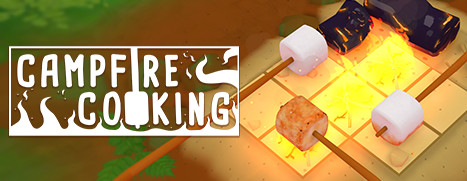
Now Available on Steam – Campfire Cooking, 15% off!

Campfire Cooking is Now Available on Steam and is 15% off!*

Campfire Cooking is a puzzle game about relaxing moments in nature, as you prepare meals over a warm fire. Follow a family’s vacation to beautiful and exotic hiking trails. Listen to stories, toast marshmallows, simmer fondue or play with magnets until each meal is ready to eat.

*Offer ends October 25 at 10AM Pacific Time

Posted on Leave a comment

Destiny 2 Launches on PC October 24—Preload Now!

The time to reclaim your home is almost here, Guardians—the PC launch of Destiny 2 is near! Destiny 2 goes live on PC globally starting October 24, and you can play exclusively through Blizzard Battle.net®. If you haven’t already, you can pre-purchase Destiny 2 right now through the Blizzard Shop. Check out this article to watch the PC launch trailer and find out what time the game goes live in your region.

Posted on Leave a comment

Blog: How EVE Online changed the design of citizen science games

The following blog post, unless otherwise noted, was written by a member of Gamasutra’s community.
The thoughts and opinions expressed are those of the writer and not Gamasutra or its parent company.


In my first post, I introduced briefly a collection of games that let players contribute to science. They are called citizen science games. They are a collaboration between players and scientists to solve real scientific problems using gameplay or game elements. For my second post, I was about to focus on Project Discovery, which became one of the most successful citizen science project integrated in EVE Online, the biggest sci-fi themed massively multiplayer online game. I realised that I wanted to start by giving some context and after writing more than a thousand words with no mention of EVE, I decided to split the article into several articles. Today, I’ll cover some differences in the approach scientists take to make their games depending on the question they are trying to answer. I’ll raise some problems citizen science games are facing. I’ll also show how the game industry, well, EVE Online so far, started tackling some of these problems.

Classification, interpretation, interaction

In her book,Knowledge games, Karen Schrier proposes a first categories of games. Two categories involve players processing and sometimes interpreting data. Cooperative contribution games invite players to classify, categorise or identify subjects, such as images, graphs, pictures. Often, the same subject is shown to many players and their answers are aggregated until a consensus is reached. In analysis distribution games, players must also provide a certain interpretation of the collected data. For this second category, Karen Schrier used the example of Apetopia. Players navigate through gates which colours match the colour of the sky, they avoid obstacles and collect coins. The players’ choices of colour provide data on how the shades of colour are perceived by humans. Scientists train a neural network and try to model the collected data in order to develop better colour metrics.

Another category is related to players solving complex computational problems by forming heuristic strategies and sharing their strategies with other players, scientists and computers. Researchers then study how players came up with different solutions to develop algorithms that can be shared with, used and processed by computers. The interaction can be pretty simple in a game like Quantum Moves. Players drag and drop an atom, represented as a wave, to a target area. They have 20 seconds to move the atom, keep the shape stable and release. The trick is that the wave behaves in its own quantum way. In a game like Foldit, the number of tools and possible interactions with the protein is… let’s just say huge and much more complex, for now.

Apetopia (left) uses player's perception to train a neural network. In  Quantum Moves (right), players find solutions to quantum computer optimization.

Apetopia (left) uses player’s perception to train a neural network. In Quantum Moves (right), players find solutions to quantum computer optimization.


‘Casual’ or not

Some citizen science games are pretty ‘hard-core’ in the sense that they are knowledge intensive, have a big learning curve and/or have challenges that can take a long time for players to solve. This is the case of the browser game EteRNA, which lets players fold RNA molecules. The developers at Stanford just released a new series of puzzles aiming at making gene editing with CRISPR ‘smarter and safer’. They are hoping to get around 100,000 RNA design solutions by the end of October. However, to contribute to this challenge, players must first earn 10 tools, and to earn these tools, they must complete about 120 puzzles. This represent hours (read weeks) of training. Benjamin Keep, PhD student in the learning sciences and former Eterna developer, explained to me that the community creates so much knowledge, this can become intimidating for new players:

“The project never “slows” down, so incoming volunteers have to play catch up, while experienced volunteers, who have logged thousands of hours and been doing this for 4+ years are already on to the next idea.  This also means there’s no way to contribute to the project casually”.

Colony B, on the other hand, is much more ‘casual’. In this mobile game, after a one minute tutorial, players start identifying clusters of bacteria, drawing circles around them before the timer expires. Learning more about these clusters allows researchers to figure out links between microbiome and human diseases. There is no perfect solution when clustering bacteria. Different solutions are good for the different criteria scientists use to estimate the quality of a cluster. When enough players have worked on a puzzle, the puzzle is removed. When I asked Jérôme Waldispuhl, associate professor in Computer Science at McGill University and project leader for Colony B and Phylo, about the level of scientific knowledge available in game, he explained that players can progressively learn about bacteria by unlocking badges. Their approach was to make the game accessible to a broad base of players and to gather scientific data early on:

“Our model is really benefiting of every participants. Even casual players answers make a difference.”


My attempt to solve the last puzzle to unlock a second tool in EteRNA (left). My design doesn’t match the expected design shown on the top left (But… how…??). On the other side (right), in Colony B my suggestion of cluster made me beat the best score within a few seconds of gameplay.


From subjects, to scientists, to experts

In citizen science games, players either become subjects participating in ‘online studies’, or they act as scientists. For example, there are currently two games advancing dementia and Alzheimer’s research. Dementia decreases cognitive abilities in more than 45 million people today and there is no cure for it.

In Sea Hero Quest, players generate valuable data about the mental process of 3D navigation by sailing their boat through mazes and by firing flares towards a target. The game records anonymously player’s sense of direction. Last year’s result showed that sense of direction declines consistently across the lifespan. Having a record from millions of players of this normal decline could help develop better tests to diagnose dementia.

Volunteers don’t provide data in Stall Catchers, but they help analyse the data. They look for stalls, clogged blood vessels that reduce blood flow in the brain. By reporting these stalls, they allow researchers to answer scientific questions about Alzheimer’s disease quicker. In Reverse The Odds, which I describe a bit more further down, volunteers were also assisting researchers by examining cancer cells. In this 2 minutes video, Anne Kiltie, scientist at Cancer Research UK, explains that patients are confronted with difficult choice of treatments. Analysing slides in the lab can give ideas of what treatment might better work, but the analysis is time consuming. By bringing players to that process, scientists could look at far more samples than they could do in the lab.

“The citizen scientists are doing exactly the same thing as we are doing. They are determining whereas there are tumor cells in the sample, of the tumor cells, how many of them are actually stained up for the protein, and then how intensely are the stains.”

Benjamin Keep explains that, in the case of EteRNA, some players, who sometimes call themselves “amateur scientists” (in the sense, non-professional / unpaid scientists) became experts in RNA design. A recent challenge was to design RNA molecules that could detect tuberculosis. While professional scientists in their lab couldn’t design a molecule that worked well, players manage to detect a 3-gene signature that indicates active tuberculosis. These molecules still need to be tested under different conditions to see if they actually work when applied.

“The experience volunteers have – looking at lab test results, interpreting them, building theory off of them, etc. and exploring computational models through the interactive simulation – has really created a different kind of (complementary) expertise to professional scientists.”  

Game, gamification, separation

In my first post, I also introduced the different design approach reported by Sande Chen in her article. She described three ways of making citizen science games. One way is to design a game around a scientific problem. The gameplay is what helps solve the problem. Another way is to gamify the scientific problem. There is no real gameplay, but game elements have been added to the problem. A less common approach, so far, is the separation between gameplay and scientific problem. It seems that the first citizen science game designed around this third approach was Reverse The Odds.

This mobile game was a collaboration between Cancer Research UK and Channel 4. Player’s goal was to assist some colourful creatures, ‘The Odds’ , which population was declining. Players could play mini-games, upgrade and restore the Odds’ land. To improve their lands and unlock the puzzle games, players had to earn potions. Potions regenerated with time, but could also be earned by entering the lab to examine cancer cell slides. This game, which goal was to help prescribe more accurate treatment for future patients, is now closed. Colin Macdonald, Head of All 4 Games, explains that the game was commissioned around a TV programme. They had managed to commission some updates after the programme ended. The funding then came to an end so after players worked through the last datasets, the game had to be taken down.


In Reverse the Odds, players could solve puzzles (left) to improve their land (middle). To upgrade the land, they needed potions that regenerated with time and that could be earned by analysis real cancer slides (right).


So where was I going with that?

Aaaand EVE Online!!

These citizen science games are free to play, and to my knowledge, none of them intended (is allowed?) to monetise. The development and maintenance costs depend on grants, funding, charity, donations. I don’t think scientists count with a big marketing budget to promote their game and reach out new players. Keeping players engaged requires a well-designed core loop, motivational factors, but also time and energy for the development team (sometimes the same scientists doing the research). In most citizen science projects, games included, the participation follows the 90-9-1 rule where only a tiny percentage of players makes most of the contributions. Benjamin Keep explained:

“Really, if you took away just a handful of players, the project would be crippled.”

Acquisition, engagement, retention issues are issues that Attila Szantner, passionate about games and citizen science, had noticed and decided to tackle. Him and his friend Bernard Revaz firmly believe that mainstream games can be a solution for some types of citizen science projects. They can harness players’ skills and time to help solve real-world issues. They created Massively Multiplayer Online Science (MMOS) to connect scientific research and games. They convinced CCP Games, EVE Online developers, to team up for the project and together they launched Project Discovery. In their pretty hard-core game, EVE players cooperatively help classify real scientific data. Using the same tools than biologists at the Human Protein Atlas, or astronomers at the University of Geneva, they contribute to science and accelerate biomedical and astronomical research projects. Project discovery is the first citizen science activity perfectly integrated in a well-established MMO. With millions of real scientific classifications, EVE Online players made of Project Discovery one of the most successful citizen science project. But I can’t say too much now. The whole story will be explained in the next article!

Thanks to Benjamin, Jérôme, Colin, Karen and Attila who have always taken the time to answer to my questions for the last 2 years. 


This post was first pusblished on my website, citizensciencegames.com. Twitter accounts: @Claire_csg and @CS__Games

Posted on Leave a comment

Robloxians Beware: the Hallow’s Eve Event is Now on Xbox One

Ready for a fright this spooky night? Good, because you’re in for a real treat! Bloxtober, Roblox’s thrilling month-long Halloween celebration, is already in full swing and we’ve got even more fang-tastic surprises to share with the entire Xbox community! From now until October 31, you and your friends can play three ghoulishly delightful Roblox games, including the all-new Hallow’s Eve: A Tale of Lost Souls, for a chance to win exclusive accessories for your avatar. Feast your eyes on this year’s heart-pounding, bone-chilling, hair-raising Hallow’s Eve event!

Roblox Hallows Eve Hero Screenshot

Hallow’s Eve: A Tale of Lost Souls is not a game for the faint of heart. After hearing rumors about a haunted orphanage in the town of Halloween Village, your curiosity naturally leads you inside its dreamlike labyrinth of horror and mystery. Luckily, you’re not alone. Dr. Stein, a peculiar mad scientist, asks you to help him free the lost souls he’s accidentally trapped inside this world. Team up and explore strange and otherworldly environments, encounter ghosts, witches, and more, then stop an evil plot from coming to fruition in this exclusive Hallow’s Eve Roblox game, now on Xbox One!

Roblox Hallows Eve Hero Screenshot

Bloxtober is one of our favorite times of the year at Roblox. Not only is it fun to see so many gamers get into the Halloween spirit, but it’s also a unique opportunity for a lucky group of creators from around the world bring the creative vision and spookiest ideas to life. Each year, we select a team of young and talented developers from the community to build a brand-new game just for this special holiday. Together, they designed an imaginative adventure filled with chills, thrills, and—you guessed it—tricks and treats galore. We can’t wait for everyone to experience and share their favorite moments from Hallow’s Eve: A Tale of Lost Souls!

Roblox Hallows Eve Hero Screenshot

But that’s not all—there’s even more fun games (and prizes!) to get your scare on during the Hallow’s Eve event. Roblox developers Berezaa and Aqualotl have transformed their games, Azure Mines and Blox Hunt respectively, into a Halloween playground featuring all-new missions. Complete them, and you’ll earn some awesome virtual prizes to dress up your avatar just in time for Halloween!

Want to know the best part? All these games are totally free and they’re a blast to enjoy with kids of all ages! Roblox’s Hallow’s Eve event is now available on Xbox One, so scare up some fun with your friends today! Have a happy Halloween, Robloxians!

Posted on Leave a comment

Registration is now open for GDC 2018!

Good news, everyone: Game Developers Conference 2018 is now open for registration!

Join the global game development community for an unparalleled week of education, inspiration and networking at GDC.

View GDC 2018 passes and prices and register early to get the best price. Plus, some passes have limited quantities — so if you’re interested, don’t wait!

GDC 2018 will take place March 19th through the 23rd at the Moscone Center in San Francisco, CA. As always, GDC Conference tracks span all major facets of game development – from in-depth business strategy to hardcore design and programming sessions.

The conference will host deep dives into key topics in GDC Summits and Tutorials – spanning indie, mobile, UX, narrative & many more deep dives, as well as VRDC@GDC, focused on virtual and augmented reality for games and entertainment.

This year, VRDC@GDC access is included in the All Access Pass, and can also be added on to a GDC Conference+Summits, GDC Conference, or GDC Summit pass.

Alongside all this, the GDC Expo will showcase all of the most relevant game development tools, platforms and services helping to drive the industry forward, alongside a raft of country-specific pavilions, playable games in the GDC Play area, and more.

GDC 2018 will also host curated interactive spaces, including the popular Alt.Ctrl.GDC alternative controller exhibit (which is still seeking submissions), the Indie Megabooth Showcase, the Day of the Devs game lounge, and the GDC Retro Play retro gaming area (which is also accepting submissions)!

GDC will also feature the 20th annual Independent Games Festival, the longest-running and largest festival relating to independent games worldwide, where original games compete for the attention of the publishing community, and the 18th annual Game Developers Choice Awards, the premier accolades for peer-recognition in the digital games industry. So don’t delay — come join us!

For more information about GDC 2018 visit the show’s official website, and subscribe to regular updates via Facebook, Twitter, or RSS.

Gamasutra and GDC are sibling organizations under parent UBM Americas