Posted on Leave a comment

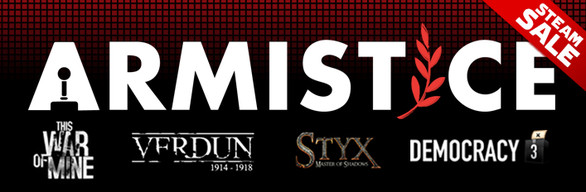
Now Available on Steam – Armistice Bundle

Warchild Armistice Bundle is Now Available on Steam!*

In partnership with War Child charity, the Armistice bundle is a collection of best-selling titles that promote or have non-violent playthrough options and are donating up to 100%* of developer proceeds towards children affected by conflict.

Supporting games include:

• Styx: Shards of Darkness (Focus Home Interactive) – Donating 30% of developer proceeds to War Child UK
• Styx: Master of Shadows (Focus Home Interactive) – Donating 30% of developer proceeds to War Child UK
• This War of Mine (11 bit studios) – Donating 50% of developer proceeds to War Child UK
• Democracy 3 (Positech Games) – Donating 100% of developer proceeds to War Child UK
• Verdun (BlackMill/GameDrive) – Donating 50% of developer proceeds to War Child UK

*Discounts ends November 13 at 10AM Pacific Time

Posted on Leave a comment

Review: Splasher (Switch eShop)

There’s no shortage of platformers on the Switch eShop nowadays, but that certainly hasn’t done anything to deter Splasher from carving out its own niche in the library. Created by some staff that worked on the likes Rayman Legends and Rayman Origins, Splasher works as a brilliant callback to that style of twitch platforming while adding in a little bit of Splatoon to make something that’s rather fresh.

The premise of the game is simple: you’re a common worker of the evil Inkorp who has realized the company’s sinister intentions. Utilizing the might of your paint gun, you’ll run, jump and splash your way to freedom, freeing your fellow workers from captivity along the way. It’s fun, irreverent and weird, perfectly fitting the style of gameplay by keeping the tone light and upbeat throughout.

Gameplay is reminiscent of the above mentioned Rayman games and Super Meat Boy, aiming for a decidedly rapid pace that encourages constant retries. Your character is precise but slippery; this isn’t a deliberately paced platformer, it’s one that actively encourages you to keep moving. The gimmick here is that ink plays a significant role in both the obstacles and the way you navigate levels. Red ink makes you stick to surfaces, yellow ink acts as a bounce pad, and water can wash both types of ink away.

Levels are designed in a brilliant fashion that somehow strikes that balance between being fast-paced while still taking the time to teach you mechanics by way of showing and not telling. Nothing in Splasher comes at you as a surprise, obstacles and mechanics are introduced in a safe environment and then the game gradually takes the training wheels off as it steps up the difficulty. On top of that, levels are made with the idea of flow; there’s really only one way to get through any given set of obstacles and the game encourages you to keep retrying until you can find the right moves. Checkpoints are plentiful and there are no lives – when you die you quickly reset and have another go.

Splasher excels at providing the right amount of difficulty at the right time, and manages to feel fresh throughout its run. Though there are several recurring themes and obstacles in levels, it’s quite keen on introducing alternative spins on old ideas and bringing in new ideas at a decent clip. You’ll rarely find yourself bored while working through the campaign, and just when you find yourself becoming familiar with its tricks something new gets tossed in to re-engage you once more.

The campaign is relatively short, but this is because of the game’s broader focus on replayability. Every stage has an optional seven workers to save, each of which spells out a character in “SPLASH!”. You’ll find these workers scattered about levels in hard to reach places or in special Quarantine Zones that act as Donkey Kong Country-style bonus levels. Beyond this, however, there is a speedrunning focus. Beating the game once through is essentially just a long training run for the speedrun modes, which task you with beating the game as fast as possible for glory in the leaderboards.

This is where the real beauty of Splasher emerges – every level is fine tuned for you to blast through, and you’ll gradually drop time as you get the muscle memory worked out, much like a 2D Sonic game. It takes practice and work to get right, but there are few things more satisfying than shaving some extra seconds off your time and knowing that you completely mastered a given level’s challenge. It’s here that players will likely invest the majority of their gameplay time; there’s always something that could be done just a little bit faster or tighter to shave off some extra time.

From a presentation perspective Splasher doesn’t necessarily have a wow-factor, but it gets the job done. The artstyle adopts a quirky animated 2D look that utilizes bold lines and simple colours, perhaps evoking memories of mid-2000s Flash games. It’s not exactly a stand-out in this regard, but it looks quite smooth in action and the levels are all designed to have lots of activity and weirdness going on in the background and foreground. The soundtrack opts for an industrial dubstep sound, which somehow manages to feel both fitting and strangely out of place. It doesn’t sound half bad, though, and there are some tracks that bring to mind the music of David Wise’s Donkey Kong Country soundtracks, which is a nice bonus.

Conclusion

All told Splasher is a smartly designed, tight platformer that offers up hours of replay value on top of the creative ideas it delivers. It takes the Super Meat Boy template and builds upon it in a notable way, creating an experience that feels just the right amount of familiar and fresh. Though there isn’t a whole lot to write home about when it comes to the presentation, the core gameplay is more than enough to keep you engaged.

We give this one a strong recommendation, especially to those who are looking to dip their toes into the twitch platforming genre. Splasher is easy enough to pick up, yet difficult to master, and stands as a worthy addition to the Switch eShop.

Posted on Leave a comment

Video: Get Up to Speed With the Sonic Forces Launch Trailer

Sonic Forces is out on 7th November, and plenty will be hoping that Sonic Team’s release will bring us the second top-notch title for the mascot this year, following in the footsteps of Sonic Mania. For those eagerly jumping in on day one the wait is almost over.

To get people in the mood the official launch trailer has been unveiled, which goes big on drama and set pieces while also including a decent amount of gameplay among the cinematics.

As for our review, you’ve likely noticed that not many have popped up online as yet; in our case we’ll bring that to you as soon as we possibly can.

Posted on Leave a comment

DOOM Pre-Purchase is Now Live on the European Switch eShop

There are some heavy-hitters arriving on the Switch over the next few weeks, one of them being DOOM. It’ll be fascinating to see how this one is received on Nintendo’s system, and those eager to jump in as soon as it lands on 10th November may be looking into pre-orders.

Just last week Nintendo of Europe confirmed that The Elder Scrolls V: Skyrim is now available for pre-purchase / preload on the eShop in the region, and now DOOM is also up for grabs. With the download clocking in at 21.3GB in the EU those looking to get started right away at midnight on 10th November should perhaps consider ordering ahead of time.

At the time of writing the eShop pre-purchase options for these two titles aren’t available in North America, but we’ll keep an eye out for any updates.

Are you planning to pre-purchase many eShop games on the Switch?

Posted on Leave a comment

There’s Plenty Of Retail Opportunity For Third Parties On Switch, Says Sold Out Boss

The Switch continues to sell like hot cakes the world over but amazingly we’re still seeing some reluctant publishers, such as EA, playing the waiting game when it comes to supporting the system. As a result, Switch is given less shelf space within retail stores than the PS4 and Xbox One, which seems to have created a vicious circle where big third party publishers see little in the way of physical retail opportunities on the system – despite the fact that indies are reporting massive success with downloads on the eShop.

One company which has bucked this trend is UK firm Sold Out, which recently announced that it is working with Team17 to bring Overcooked and Worms W.M.D. to physical retail.

Speaking to Gamesindustry.biz, Sold Out CEO Garry Williams stated that there is a greater chance of success on Switch than many third party publishers assume:

There are many companies who have managed to earn really good revenues through Nintendo hardware sales to consumers. When I worked for Imagineer in Japan we made some very welcome revenues making Sim City SNES, many of us also did well on GameCube, Wii and DS. The opportunities are there. Nintendo does not exclude you, it just asks you to ‘up your game’. If it were easy, everyone would be doing it.

Williams argues that finding the right game for the audience is key:

The boxed retail model is a tough model on Switch so you need to feel pretty certain your title works before entering the market. Luckily for us, the Team17 Switch releases are tried, tested and proven on the Nintendo decks. Overcooked, for example, is a double BAFTA-winning title and already successful on the Nintendo format.

Sold Out is not in the business of ‘vanity publishing’. If we were not certain we could generate profits, we would not enter the Switch boxed retail market. Nintendo simply delivers the platform for success and it is up to third-party publishers to decide how best to either get on board or to watch the sales juggernaut leave the depot.

He also feels that the Switch’s current lowly status in the picking order when it comes to physical shelf space is down to the poor performance of the Wii U, and that this situation will change over time:

If Switch continues at it’s current pace then it will receive the same space in store. Content is king and retail will support whatever the customer is choosing to buy as long as there are significant revenues delivered in the process.

While EA may be keeping its powder dry, we’re certainly seeing a notable increase in the number of games getting physical releases on Switch. Do you think by this time next year the console could command more shelf space in your local game store than the Xbox One, or even the PS4? It sounds silly, but cast your mind back to the Wii era and that was the case in many outlets. 

Let us know with a comment.

Posted on Leave a comment

1-2 Switch Update Adds Video Sharing Functionality

Do you remember good old 1-2-Switch, the slightly forgettable minigame bonanza everyone bought alongside the rather excellent The Legend of Zelda: Breath of the Wild? It went on to sell a whopping 1.37 million units, so it certainly found its audience.

Even if like many of us at Nintendo Life you have grown tired of virtual cow-milking and gunfights, Nintendo hasn’t forgotten about its Switch launch game and has put out a v1.1 update – it doesn’t add any new minigames, but it will allow you to capture 30 seconds of video footage to share on social media by holding down the capture button. So, if you always wanted to show off your soda shaking skills to the world, now you can.

In truth it’s an odd update, as it’s a game that encourages players to look at each other and not the simplistic on-screen visuals that will be captured in the video. Still, it increases the small tally of games supporting video capture on the Switch, so that’s something.

Let us know if you are still playing 1-2-Switch with a comment below.

Posted on Leave a comment

Microsoft Wants To Reach Gamers On Rival Systems, Says Xbox Chief Phil Spencer

Microsoft is about to launch the Xbox One X worldwide, the company’s latest play in what has become an increasingly competitive hardware arena.

The Xbox One has lost out to the PlayStation 4 in terms of global share, while Nintendo’s Switch has seemingly carved out a whole new sector of the market thanks to its hybrid nature. Microsoft is playing catch-up to a certain degree, but Xbox boss Phil Spencer has said that the firm’s aim is to reach as many gamers as possible regardless of the platform they choose – and that could mean key Xbox exclusives being available on other consoles.

This is already happening with Minecraft, a Microsoft-owned property which is available on PlayStation 4, Wii U, New 3DS and Switch. However, Minecraft is subtly different because it was a brand with global appeal before Microsoft purchased it; what we could potentially see moving forward is AAA Xbox exclusives heading elsewhere.

Spencer was promoted in September to the role of executive vice president, which means he now reports directly to Chief Executive Satya Nadella rather than Windows boss Terry Myerson. Spencer revealed that his new role gives him more “latitude” to reach gamers on any device, rather than using “gaming to make Windows more successful.”

Spencer has acknowledged that console sales continue to be of the utmost importance, but said that Microsoft is now more focused on “growing game software and services”, stating that success is measured by the number of people who use its Xbox Live service. 

In its fiscal first quarter ended September 30th, Xbox Live clocked up 53 million monthly active users, which is a rise of 13 percent from a year earlier. However, overall gaming revenue rose just a single percent to $1.9 billion as a 48 percent fall in hardware sales was balanced out by a 21 percent rise in software and services.

Microsoft’s platform agnostic approach may be some way off, but the company has proven itself to be the most open when it comes to exploring the possibilities of working with its hardware rivals. The company has employed cross-platform play in Minecraft, whereas Sony has blocked a similar move.

Do you think we’ll ever see a day when Halo, Forza and other big Microsoft exclusives appear on Switch, or future Nintendo hardware? Would you want to see that day, personally? Let us know with a comment.

Posted on Leave a comment

Review: Monster Jam: Crush It! (Switch)

Even to someone without an earnest interest in them, monster trucks are an awe-inspiring sight. The giant wheels, the loud engine and a gauche chassis upholding a crazily designed body scream power both literally and figuratively. It’s not hard to imagine wanting to drive one, jumping over destroyed cars and hills whilst the muffler hollers in rage. There’s a lot that you could do with that in a video game to bring that suffocating and unhinged power to a player, ideal for vehicular power fantasies.

Monster Jam: Crush It! doesn’t fulfill this wanderlust. In fact, it barely functions as a mediocre game at most points.

The biggest point of contention, and what is ultimately the crux as to whether this type of game works, is that something is amiss in the feel of how the vehicles drive. Being loose and slippery is to be expected, but Monster Jam goes so far down that path it’s as if the tires are made of soap and you’re driving on a watery surface. The sense of control isn’t acceptable; you never feel as if your hands are on the wheel, but rather that you’re passively suggesting where your truck goes. There’s no feedback on the screen and not even any rumble to give you a feel for the drive; with that in mind, the modes can’t hold together because they are just as broken as the controls.

Monster Jam floats four options to you. The first is races, which has you haphazardly hitting check points in various loops in contained arenas against another truck. At no point does it feel like you’re competing against anything but your own patience, as the other truck randomly moves around and you float across checkpoints. Proceeding is a matter of attrition as, even when tackling the track in the same manner, whether or not you win feels like it’s based on fortune. Freestyle is a trick competition that has you hopping, doing wheelies and spinning donuts to meet an arbitrary point total. While the racing feels utterly reliant on luck, freestyle is always an “I win” game because there’s no skill needed to pull off the high point tricks. Rounding out the ways to play is a demolition mode that loosely scores you based on how well you run over things, and a hill climb that feels like Excitebike or Trials – only without the thrills.

The final nail in the giant coffin is a presentation that fails on both a thematic and technical scale – this makes it even harder to recommend Monster Jam to even the most stalwart monster truck aficionado. The game has numerous collision issues that add to that lack of true control, and in our time with it the game even crashed on multiple occasions. The visuals are ho-hum in general, but a low resolution smeariness permeates the entire experience. Match this with a terrible metal soundtrack and an obnoxious announcer and you have a game that isn’t fun to look at, listen to or play.

Conclusion

Whether you’re a monster truck nut or not, you should avoid Monster Jam: Crush It! at all costs. It lacks a lot of polish, has a lackluster presentation, poor controls and no semblance of progression that can in any way be construed as satisfying. It feels like a slapdash attempt at riding the wave of Switch goodwill, but doesn’t join the growing list of games on the system that are worth playing.

Posted on Leave a comment

Pokémon GO’s Raid Battle Roster Gets A Rejig

Niantic has surprised Pokémon GO players by updating the game’s raid roster over the weekend.

The most noticeable change is the fact that raids now last for 45 minutes instead of the usual hour. However, Niantic has also changed the raid roster around a bit, with some of the choices proving to make more sense than others.

Here are the new raid tiers:

Tier 1

  • Ivysaur
  • Charmeleon
  • Wartortle
  • Metapod

Tier 2

  • Sableye
  • Magneton
  • Marowak
  • Cloyster
  • Tentacruel
  • Sandslash

Tier 3

  • Porygon
  • Ninetales
  • Scyther
  • Omastar
  • Alakazam
  • Gengar
  • Machamp

Tier 4

  • Poliwrath
  • Victreebel
  • Golem
  • Nidoking
  • Nidoqueen
  • Lapras
  • Tyanitar
  • Snorlax

It’s nice to finally have an altered raid lineup, but what do you make of some of those picks? Let us know with a comment.

Posted on Leave a comment

Random: Bask in the Nostalgia of Nintendo’s Old Flash Games and Websites

The internet has evolved a great deal over the last 20 years, to put it mildly. There was a time in the early-to-mid noughties, for example, when Flash was a big part of online browsing. Sometimes it was used extremely poorly, but it was also a useful tool for making websites more interactive and interesting; naturally Nintendo and other game makers jumped on board.

An intrepid fan called SKELUX has set about ‘collecting’ Nintendo’s old flash websites and games, giving us a look at how official video game websites worked in generations long gone. By viewing this website you can experiment with quite a few archived sites and minigames that run through Flash, and there are some fun examples in there. Not all of them are running fully, with SKELUX offering a small reward to those that help him complete the collection.

It’s an interesting blast from the past, that’s for sure.

[via origami64.net, motherboard.vice.com]