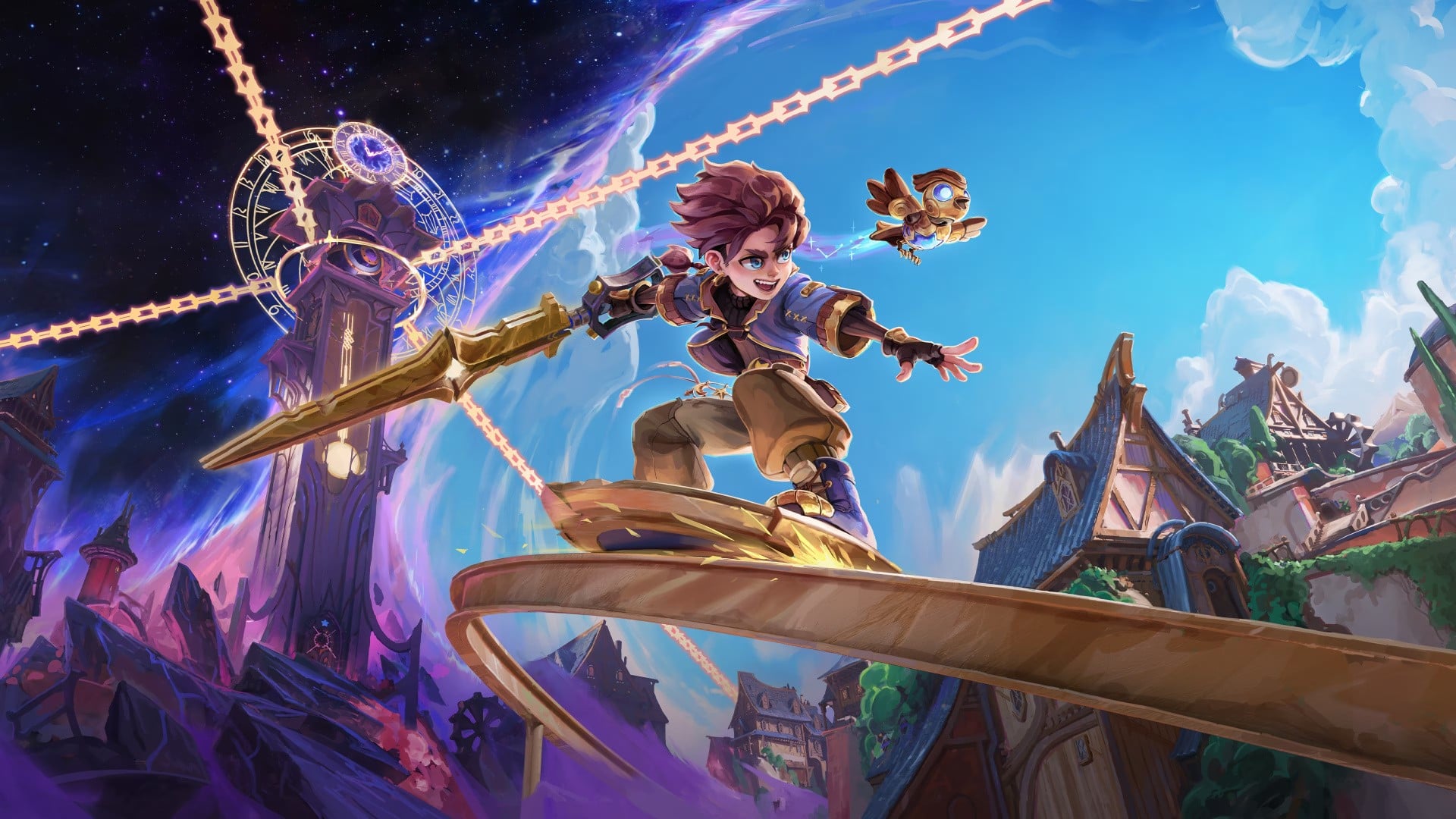
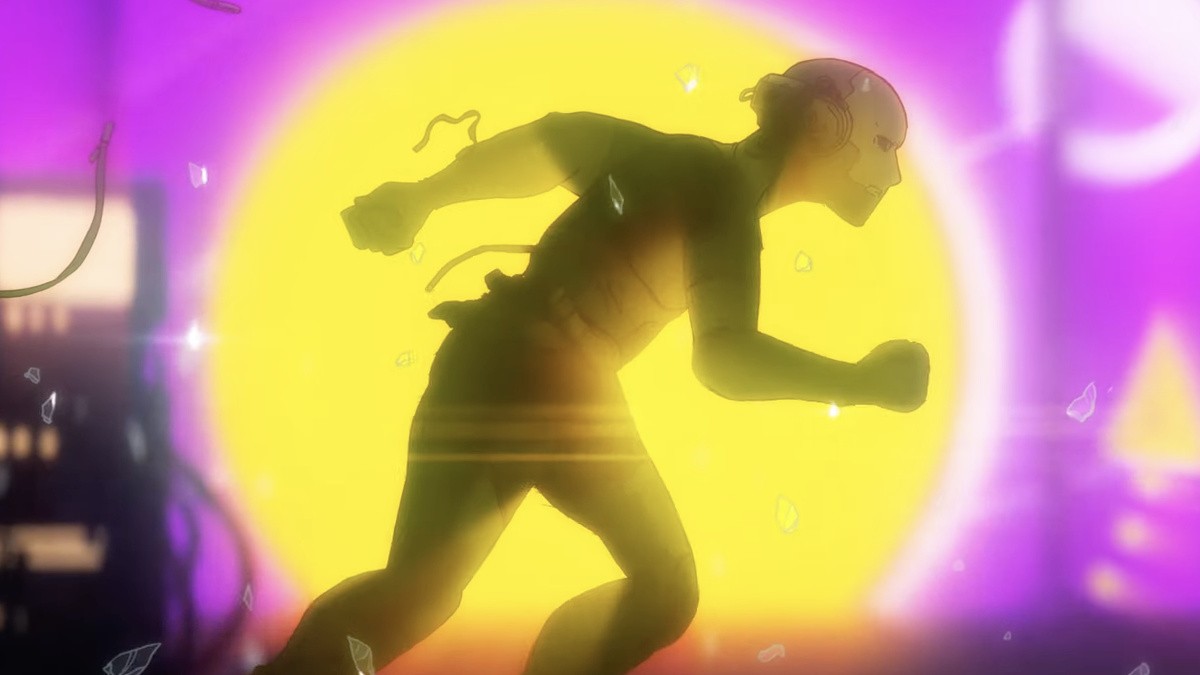
As part of today’s Future Games Show, Fireshine Games has revealed a Switch 2 version of Duskfade, a 3D action-platformer that looks back to the PS2 for inspiration.
The game was revealed with a 2026 release date months ago on other platforms, but it’s now got a 13th August date attached, which includes Switch 2.
With shades of Kingdom Hearts and Jak & Daxter, the team at Spanish developer Weird Beluga are clearly channelling that early-to-mid-2000s era to recapture some of the magic of the PlayStation 2/GameCube/Xbox; publisher Fireshine is calling it “a love letter to the PS2 classics”.
The new trailer above is worth a watch if the above whets your whistle. As for the story (which you’d hope would be appropriately in-depth and a little cuckoo with Kingdom Hearts as a touchstone), here’s a synopsis from the PR blurb, plus some screens:
After the world has been plunged into an eternal night and his sister trapped in the mysterious Clock Tower at the heart of this mysterious darkness, Duskfade’s leading hero, Zirian, must explore the corrupted lands to uncover the ancient secrets of the Master Clockmakers, in hopes of finding a way to free her from the clutches of Despair. From ethereal forests and underwater realms, to the sunscorched dunes and lands above the clouds, there’s always a new vista begging to be explored. Joined by his mechanical companion Cuckoo, Zirian will learn to slash, grind, jump and grapple through breathtaking environments that call back to the classic platformers of the past. Each stage provides unique challenges that blend precision platforming and action combat, as well as rewarding exploration that encourages uncovering hidden secrets off the beaten path. Duskfade’s coming-of-age journey is layered with emotional depth and heart in every detail. Each enemy and challenge Zirian will face represents a deeper emotional hurdle our hero must overcome to complete his high-stakes quest to save his loved ones and the world.
The developer’s previous game, Clid the Snail, was a top-down shooter released in 2021 on Steam (“Mostly Positive”) and PlayStation (“Mixed or Average” on Metacritic), so fingers crossed for Duskfade, which feels a tad more ambitious. PC and PS5 owners can access a demo from today, so let us know below how it feels if you’ve got access and you’re sufficiently intrigued.
No word on a Switch 2 physical version yet – we’ll keep you posted when we hear more.
Excited for this one? Let us know in the usual place.
We’ve seen enough ‘Nintendo Switch 2 Editions’ now that the promise of a replay doesn’t get us quite as excited as it did a year ago. When it’s one of our absolute favourites from last year, however, with so many branching paths that a replay feels completely warranted, then yes, we’ll get a little excited.
Both Citizen Sleeper – Nintendo Switch 2 Edition and Citizen Sleeper 2: Starward Vector – Nintendo Switch 2 Edition (try saying that one three times fast) will launch on 25th June, with pre-orders going live on the eShop today. Those who already own the Switch 1 version of either game will be able to upgrade for free on launch, which is always welcome.
These new editions boast improved resolution (4K docked and 1080p in handheld) and a crisp 60fps bump. There’s no word on a Mouse Mode addition just yet, but it feels like a no-brainer.
For those who have missed this duo in the past, the Citizen Sleeper games, inspired by tabletop RPGs, are narrative-driven space adventures, where your key decisions live and die on the roll of the dice. They both contain some of the best writing in recent memory, with wonderfully drawn characters and tense set pieces aplenty.
The dev teased that they will reveal their next game at the upcoming PC Gaming Show, in a swanky ‘World Premiere’. We know nothing about this one so far, but given that all three of their last games have made the jump to Nintendo consoles, we’re hopeful that we’ll see the same with whatever comes next.
Will you be checking out either of the Citizen Sleeper games on Switch 2? Let us know in the comments.
SFB Games, the studio behind Snipperclips and Crow Country, popped up in the SGF Story Rich Showcase to reveal that it has another murder mystery in store for Switch 1 & 2.
The Mermaid’s Mask is the sequel to 2019’s excellent Tangle Tower, and it’ll arrive on the eShop on 16th July.
Much like in the previous game, this one will see you play as Grimoire and Sally, tasked with solving another murder. It’s a classic locked-room mystery this time, with a dead submarine captain, a creepy cauldron, and a bunch of suspicious suspects.
This is wrapped up in some particularly eye-catching hand-drawn visuals, and while the puzzles match the style of the last game, the clues themselves are now fully 3D — fancy!
Here’s a rundown of the game’s key features and a handful of screenshots from SBF Games:
– Investigate an impossible locked-room murder – Explore a sprawling, hand-crafted submarine filled with secrets – Interrogate a cast of eccentric, fully voice-acted suspects – Find and piece together clues to uncover motive, means, and opportunity – Experience satisfying “aha!” moments through layered puzzle design
We had a wonderful time with the predecessor, Tangle Tower, back in 2019, calling it “an exemplary addition to the point-and-click genre, providing superb puzzles and very well written dialogue, backed up by some of the finest voiceover work in recent memory” in our review. The sequel promises to bring more of the same, so let’s hope it can deliver.
Will you be diving into this murder mystery next month? Let us know in the comments.
Exactly two years ago, I made a bold prediction of every first-party Switch 2 release over the first five years of its lifespan.
My forecast wasn’t based on leaked insider information or baseless speculation. Instead, I crunched the numbers (check out the full breakdown here) to find trends and repeated behaviours over Nintendo’s generations’ worth of game-making.
Numerous patterns emerged, such as the average number of years between releases per franchise, the number of releases per generation by franchise, the number of releases per year per console generation, the average generational year that each franchise receives a release, and so on.
Let’s call it the ‘Nintendo Playbook.’
Sprinkle in a bit of educated guesswork and we had ourselves a release schedule that Nintendo could’ve copy-pasted directly into their corporate plans. But did they?
With Year One now in the books, let’s see how closely Nintendo followed the script.
Image: Nathan Lockard / Nintendo Life
Following the Script
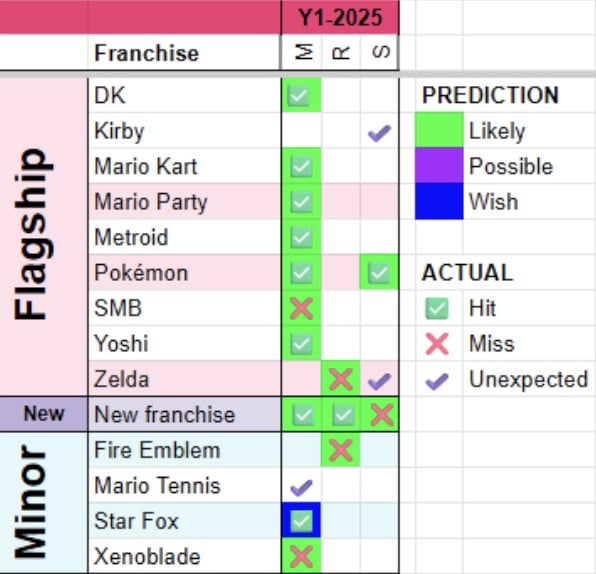
Minus Switch 2 Editions of older titles, Nintendo released 13 first-party titles in the Switch 2’s inaugural year, and the Playbook successfully identified 10 of them:
6 mainline entries, for Donkey Kong, Mario Kart, Mario Party, Metroid, Pokémon, Yoshi, and Star Fox*
2 new IPs
and 2 non-mainline releases in the Pokémon and Zelda franchises *almost
Mario Kart and Pokémon titles are all but guaranteed in Year One, and the Switch 2 didn’t disappoint. Metroid Prime 4 was another easy prediction, given its inevitable dual launch for the Switch & Switch 2.
Image: Zion Grassl / Nintendo Life
While I don’t expect a gold star for knowing the sun rises in the East, you’ll forgive a victory lap for my spreadsheet suggesting the first 3D DK title in 26 years and an otherwise unlikely Star Fox series revival. And yes, I’m lumping the 3D rail shooter into Year One even though it technically misses it by a couple of weeks.
Yoshi and the Mysterious Book was another solid prediction. Mario’s dino pal usually appears mid-cycle, but the math indicated an early appearance this time around.
Finally, and admittedly this is a stretch, Super Mario Party Jamboree arrived on the Switch only five months before the Switch 2 launched, but received a hefty Switch 2 Edition to satisfy the franchise’s Year One slot.
Year One Anomalies
Like the pirate’s code, Nintendo’s Playbook proved to be more what you’d call guidelines than actual rules. Four predictions that didn’t come true were mainline Super Mario and Xenoblade Chronicles titles, a Fire Emblem remake, and a third New IP.
Mario’s absence is downright shocking. Two years ago, I proclaimed that “There are three certainties in life: death, taxes, and a mainline Mario game during a Nintendo console’s first year.” Apparently we’re down to two absolutes, because, for the first time ever, Mario didn’t show up in Year One, notwithstanding the underwhelming Switch 2 Edition of Super Mario Bros. Wonder.
Technically, the GBA didn’t get an exclusive Mario either, although it did receive a couple of remastered ports (Super Mario Advance 1 & 2). Heck, even the lowly Virtual Boy received an exclusive Mario title.
Perhaps Nintendo decided that last year’s Super Mario Galaxy 1 & 2 bundle was sufficient to check their Year One Mario obligation. The Playbook forecast that game’s release, though not until Year 3. If only I had known that The Mario Movie sequel would bump up the compilation’s release date!
Image: Zion Grassl / Nintendo Life
Mario Tennis Fever also came far sooner than anticipated, but given its lacklustre sales, it appears Nintendo should’ve stuck with its usual mid-cycle rally rather than a Year One serve.
Kirby Air Riders charged onto the scene as another surprise. My bingo card didn’t include a sequel to a 20-year-old, one-and-done Kirby spinoff title, but looking back, I should’ve known Kirby would make his annual appearance.
Rounding out the year’s anomalies was the Switch 2 bucking a trend by introducing only two original IPs: Drag X Drive and Nintendo Switch Welcome Tour. The previous three consoles fielded exactly three new IPs each, making this the fewest new franchises for a home console’s first year since the Nintendo 64’s inaugural outing in 1996-1997.
Looking Ahead to Year Two
Image: Zion Grassl / Nintendo Life
Switch 2’s Year One slightly strayed from the script, but its sequel may be a greater test of Nintendo’s adherence to history.
President Furukawa has teased an increased volume of software — unusual for a console’s sophomore outing — but with a price hike just around the corner, Nintendo also needs to stack the deck with multiple system sellers. Year Two is where the Playbook meets the Price Hike head-on.
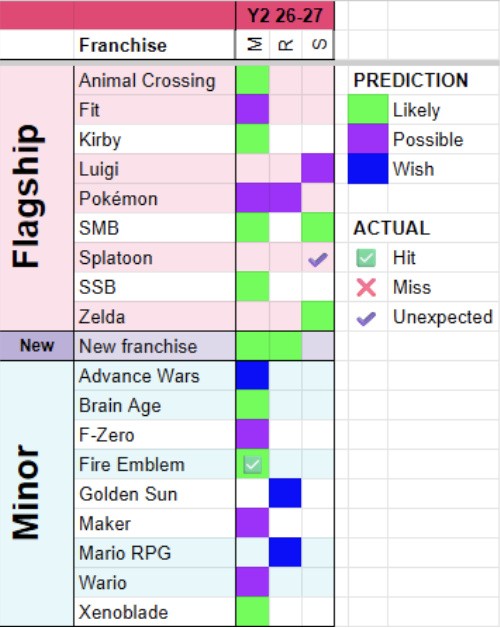
Given all that, let’s see how the Year Two predictions are holding up. Two years ago, the Playbook predicted:
mainline entries for four major franchises: Smash Bros, Kirby, Animal Crossing, and Nintendo Fit
entries in three ‘minor’ franchises: Mario Maker, Fire Emblem (confirmed!), and Big Brain
spin-offs for Mario and Zelda
series revivals for Wario Land, F-Zero
a remake or remaster in the Mario & Luigi, Pokémon, and Golden Sun franchises
and finally, two new IPs
A few changes are in order, as a Splatoon spinoff is locked in and the now-overdue 3D Mario sequel is a near certainty. Pokémon may receive a mainline release two years in a row, but that will depend on the exact release date of Pokémon Winds & Waves.
Image: Zion Grassl / Nintendo Life
A new mainline Advance Wars title feels unlikely given the lukewarm sales of Advance Wars 1+2: Re-Boot Camp, so perhaps another dormant franchise takes its place.
Image: Nathan Lockard / Nintendo Life
Nintendo’s annual Zelda release historically toggles between spin-off and remake/remaster. Patterns dictated a spin-off in 2024 and a remake for 2025, but instead we got two straight spin-offs in the form of Echoes of Wisdom (which I consider a spin-off despite being canonical) and Age of Imprisonment.
In other words, we’re long overdue for a Zelda remake. Fingers crossed it’s the Ocarina of Time remake everyone’s been buzzing about.
And last, but not least, the Xenoblade series missed last year’s window, so we’re bumping it back to this coming year.
Wrap-up
If all goes according to script, Year Two is shaping up to be a banger, with both quality and quantity to spare. It may even define the Switch 2’s entire legacy.
Your move, Nintendo. Don’t make my data look bad.
Do you agree with the ‘Playbook’ approach, or has Nintendo changed too much for patterns to apply? Drop a comment below, and let us know what you think.
Google has set new browser performance records for Chrome following a year of improvements, with the latest results made using an M5 MacBook Pro.
As one of the main browsers in use today, Google Chrome has engineers working to improve its performance, so it can maintain its position in the market. That work can sometimes lead to massive improvements, even for Mac users.
In a Chromium blog post on June 4, Google declares that its optimizations to Chrome have resulted in it setting records in some industry-standard benchmarks. They are said to be records across all browsers.
For the JetStream 3 benchmark, it managed a score of 469, a new record and a 10% improvement from the start of 2026. At the same time, a test of Speedmeter 3.1 resulted in another score of 61, a 5% year-over-year bump.
The blog post explains that the results were measured using a MacBook Pro M5 with macOS 26.0.1 installed.
Project improvements
Google outlines three areas where work was carried out to improve performance.
The first, JavaScript, adjusted an optimizing compiler to inline “fast paths,” common paths used regularly, helping the engine skip some time-consuming tasks. Inlining async operations like microtask dispatch and await resolution also had a big impact.
Work was also made to improve Google’s heuristics of what JavaScript code to optimize, as well as to implement some missing optimizations in BigInt handling.
For WebAssembly, Google looked into how V8 managed internal data structures. Code generation optimizations helped improve performance for AI, cryptography, and interpreter use cases.
Changes were also made to reuse temporary memory in the compiler more efficiently. There was also work to reduce the overhead of function calls from JavaScript to WebAssembly.
On the rendering engine, Blink, there were optimizations to style resolution and DOM operations using smarter caching and reducing redundant DOM lookups. A fast bailout path reducing checks was introduced for element attribute tracking, while style recalculation delays were minimized and CCSS selector caching was simplified.
Foundational page-loading and text-processing performance was addressed, including making string copying more efficient. Critical performance bottlenecks were also identified in typography and vector graphics rendering.
The team also completed Apple Advanced Typography shaping optimizations and fixed font fallback issues. At the same time, it eliminated heap allocations for glyph width calculations and added a cache to speed up SVG processing for graphics.
A well-timed release
Google’s decision to publish a blog post on optimizations in early June, as well as bringing up the use of the M5 MacBook Pro and Apple Advanced Typography, is quite apt. Especially considering the week ahead.
Apple’s WWDC event is set to start on June 8, with the keynote address happening on the first day. That keynote will focus on software changes coming up in Apple’s operating systems, and will almost certainly touch upon Safari improvements at some point.
As a developer-focused event, a cynic may view Google’s article as trying to spoil Apple’s party and to try to diminish Safari in advance of the keynote. However, since the article is very much a web developer-focused piece, it is doubtful that it will make any real impact in the eyes of consumers.
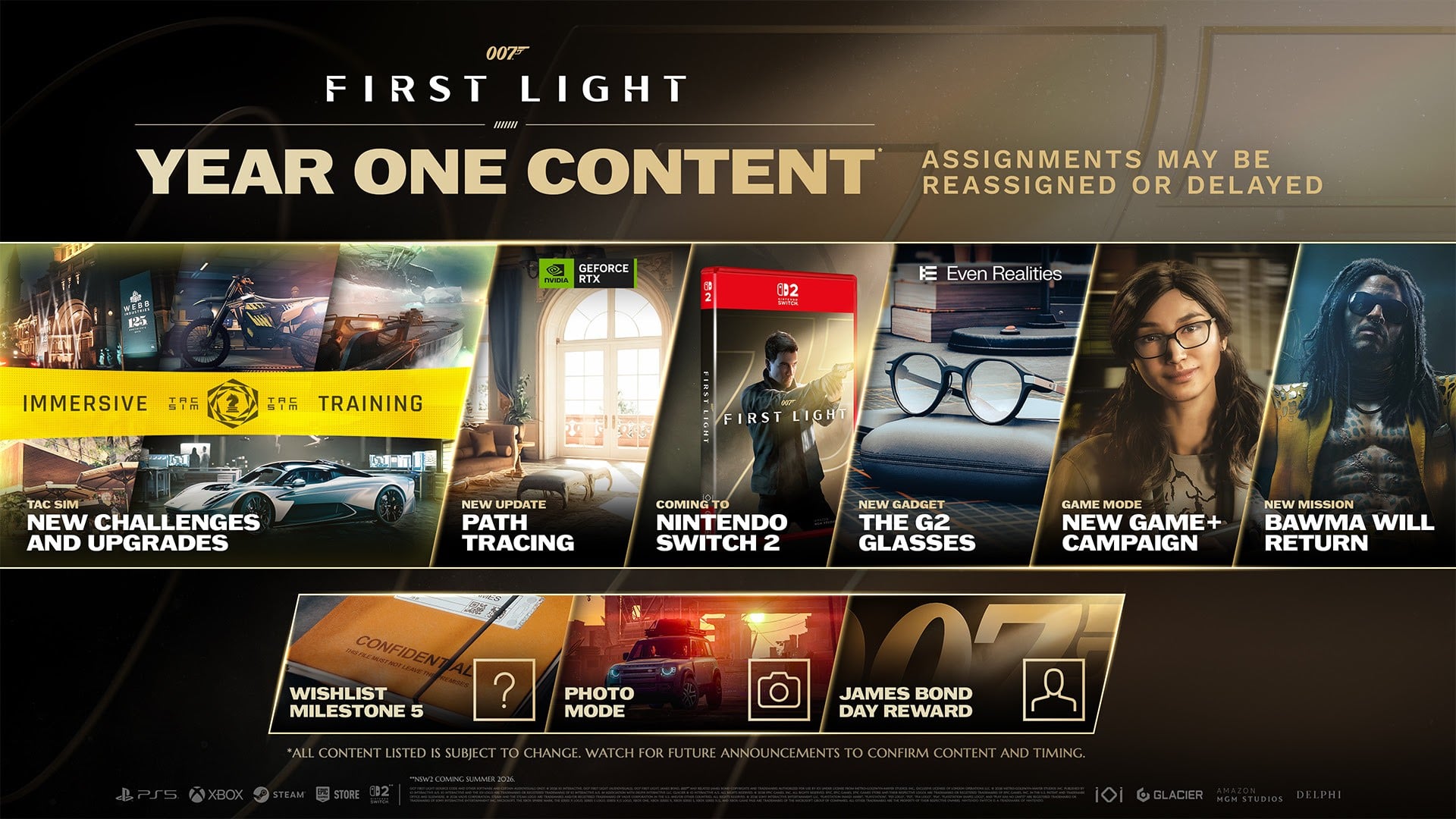
007 First Light is already available on other platforms and IO Interactive has this week provided an update about the game’s sales and also shared its “first year content” plans.
Firstly, this roadmap reconfirms James Bond’s new mission is still on target for a “Summer 2026” release on Switch 2, although there is a warning that assignments featured here “may be reassigned or delayed”. Here are the details from the PR:
“007 First Light will launch on Nintendo Switch 2 this Summer 2026, bringing the full Bond experience to Nintendo players. The release on Nintendo Switch 2 will enable players to enjoy the cinematic espionage adventure wherever they go, delivering the complete 007 First Light experience in both handheld and docked modes.”
As for the first year of content, there are new challenges and upgrades planned for the Tactical Simulator mode, a new Gadget (G2 Glasses), new game+, a photo mode and more. There’ll also be a new mission featuring Bawma:
“Following events in Mauritania, an unexpected alliance forms between MI6 and Pirate King Bawma, with the Pirate King seeking MI6’s help with a sensitive issue that requires Bond’s personal involvement. To support Bond in these new challenges, Q is developing a new gadget: the Even G2 display smart glasses from Even Realities, opening up new gameplay opportunities.”
Image: IOI Interactive
And as for the sales update, according to IO Interactive, 007 First Light has now sold more than 2.7 million copies in its first week. This follows the title shifting 1.5 million copies in its first 24 hours on the market.
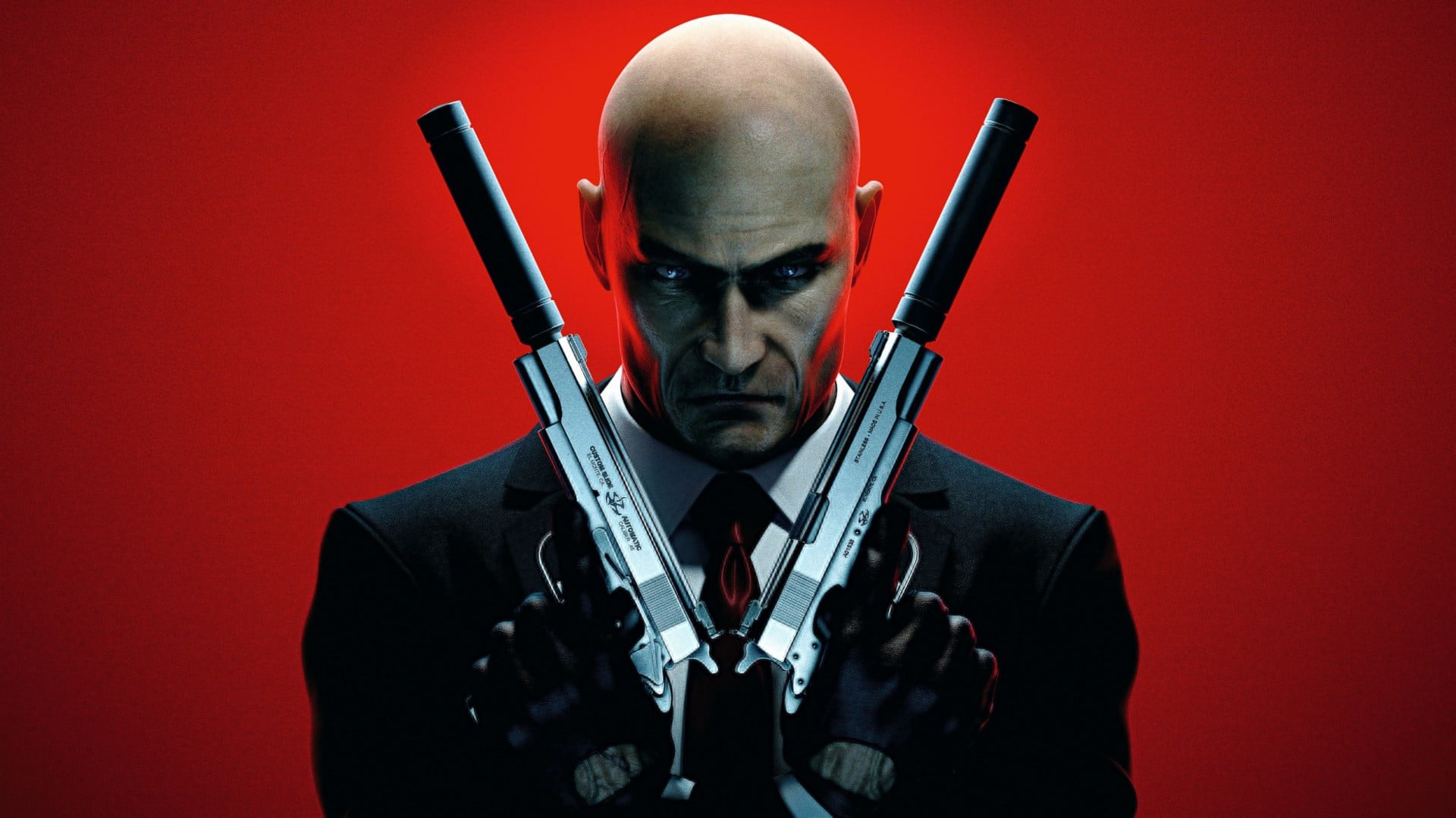
In some other IOI news this week, it’s also announced a new elusive target mission for Hitman World of Assassination featuring Wiz Khalifa as “The Wizard”. You can check out the trailer on YouTube.
Will you be getting 007 FIrst Light when it arrives on Switch 2? Let us know in the comments.
After announcing Hitman: Absolution would be coming to the Switch 2, Feral Interactive has now narrowed down the release date of this native upgrade pack to “summer” 2026.
The development team has also mentioned how the previously announced Contracts mode for the Switch version will apparently be coming via a free update “very soon”. Once again, you’ll be able to set challenges against friends and compete for high scores.
You can find out more about this title in our mini review. We gave the Switch version 7 out of 10 stars, calling it “a decent port”. Here’s a sample:
“Hitman: Absolution is widely regarded as the ‘black sheep’ of the series thanks to its focus on cinematic storytelling over player freedom. This is very much still the case with this fresh release on Switch from Feral Interactive, but now that original developer IO Interactive has righted the ship with the excellent World of Assassination trilogy, it’s much easier to look back on Absolution and better appreciate it for what it is”
In some other Hitman news this week, a new elusive target has been announced for IO Interactive’s Hitman World of Assassination. It’s Wiz Khalifa as “The Wizard”. A Hitman “Classic Remastered Trilogy” has also been announced for other platforms.
Will you be giving this game a go on the Switch 2? How about the Contracts mode when it arrives? Tell us in the comments.
I finally got 100% in LEGO Batman: Legacy of the Dark Knight. It was excellent and immersive. The Riddler and Cluemaster puzzles were a grind. I’m glad the game is over. That said, it has gotten me back into the world of comics, and now I’m reading several Batman stories.
I also finished Mina the Hollower. After some reflection, I consider it better than Shovel Knight which is no easy task. It’s easily one of the most charming Zelda-likes I’ve ever played. The amount of secrets to uncover, from hidden bosses, new locations, additional weapons, trinkets and more, each frame features something unique if you pay attention.
The comparison to Bloodborne is hard to understand. If it’s referring to difficulty, then maybe there is an argument for that. However, if we are going to compare it to a FromSoft game then I think Elden Ring is the appropriate choice. There are several subtle nods and (secrets?) moments in Mina that are reminiscent of various secrets in ER.
And now, according to the developers, many people are missing out on approximately 50% of the game. I have an item that tracks your collectibles per location, but I’m really intrigued if there is even more to unearth if you experiment.
I now have 007 First Light on the docket, but I’m not entirely in the mood to play it at the moment. In the same vein, however, I downloaded Hitman: Blood Money on the Nintendo Switch 2. It’s one of the rare games in the franchise that I haven’t played. I’m not very far, but what I’ve played has been fun, albeit archaic in its mechanics. Nonetheless, that’s sort of to be expected. And with the announcement of the original trilogy being remastered, I’m even more enthralled to be immersed in this world of Agent 47.
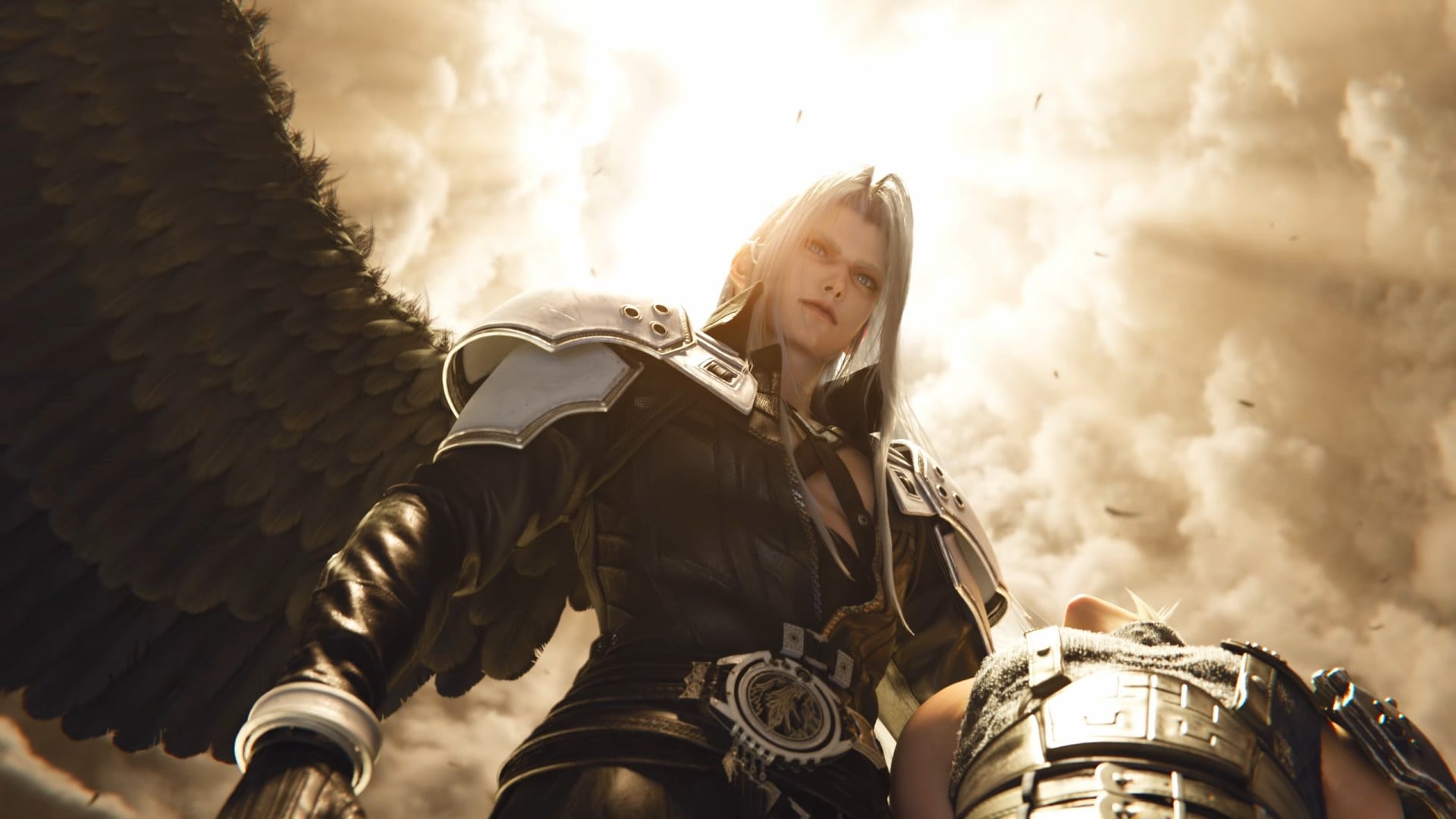
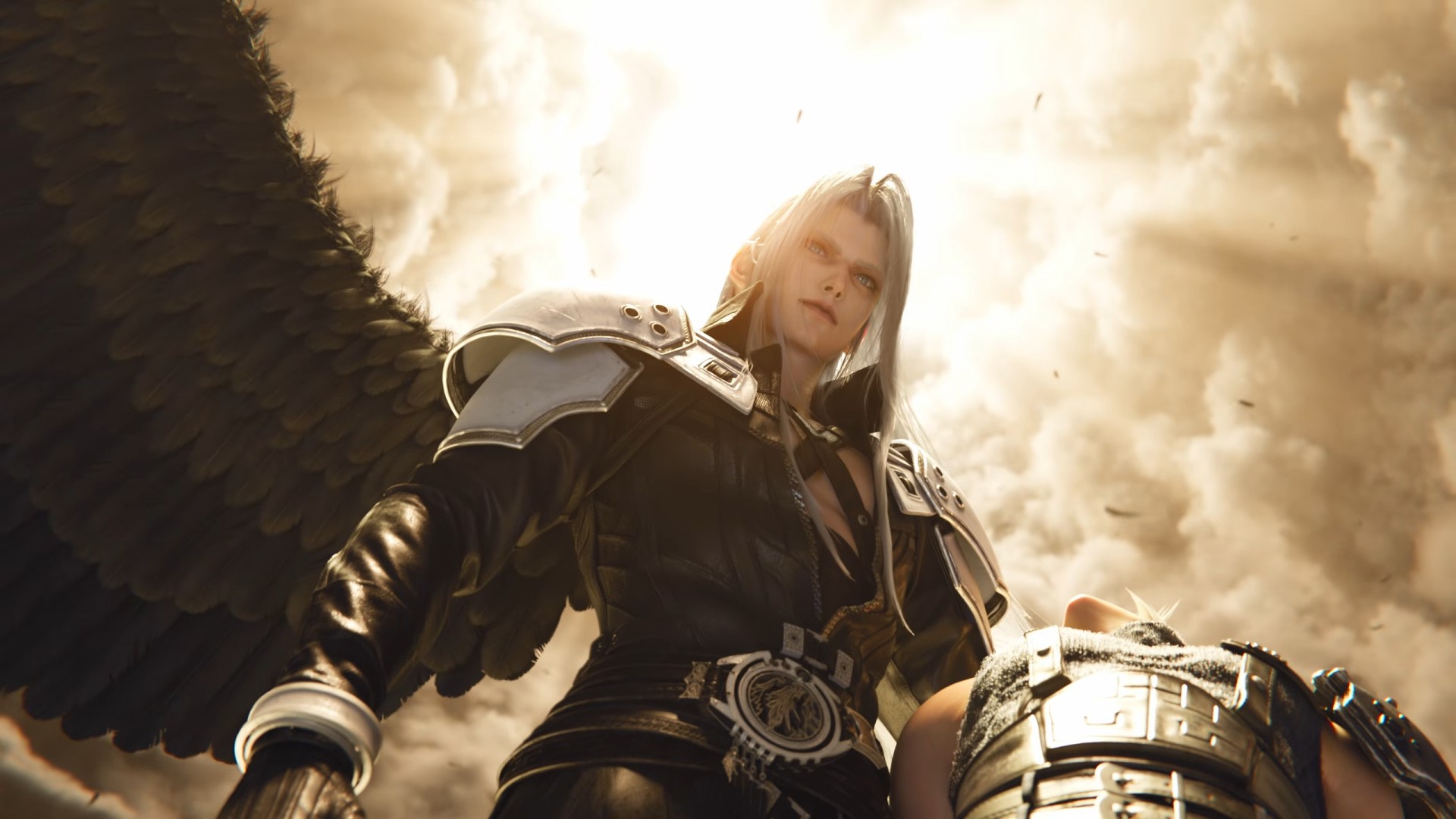
In some surprise news, Square Enix has confirmed the voice actor of Sephiroth will not be returning in Final Fantasy VII Revelation.
The game’s director Naoki Hamaguchi revealed this during a chat with Maximillian Dood. He explained how Tyler Hoechlin, who played the role in Remake, Rebirth and also Crisis Core: Final Fantasy VII Reunion, was not available for the third outing. Here’s the full exchange and official translation to go with it:
Max: “Sephiroth seemed to be maybe a different voice actor in the English version of the official trailer – do we have any confirmation of that if it is a different voice actor, or is it something you guys can’t discuss right now?”
Hamaguchi: “Oh you realised…so yes, the former voice actor that was doing voice for Sephiroth was unable to participate, so we do have a new voice actor.”
Although the director didn’t reveal who would replace him at the time, Square Enix reached out to Max later and confirmed the new voice actor for Sephiroth will be played by Travis Willingham.
Willingham has also kind of acknowledged this news – mentioning to host Geoff Keighley on social media how the Summer Game Fest ending (showcasing Final Fantasy VII Revelation) “was a banger”.
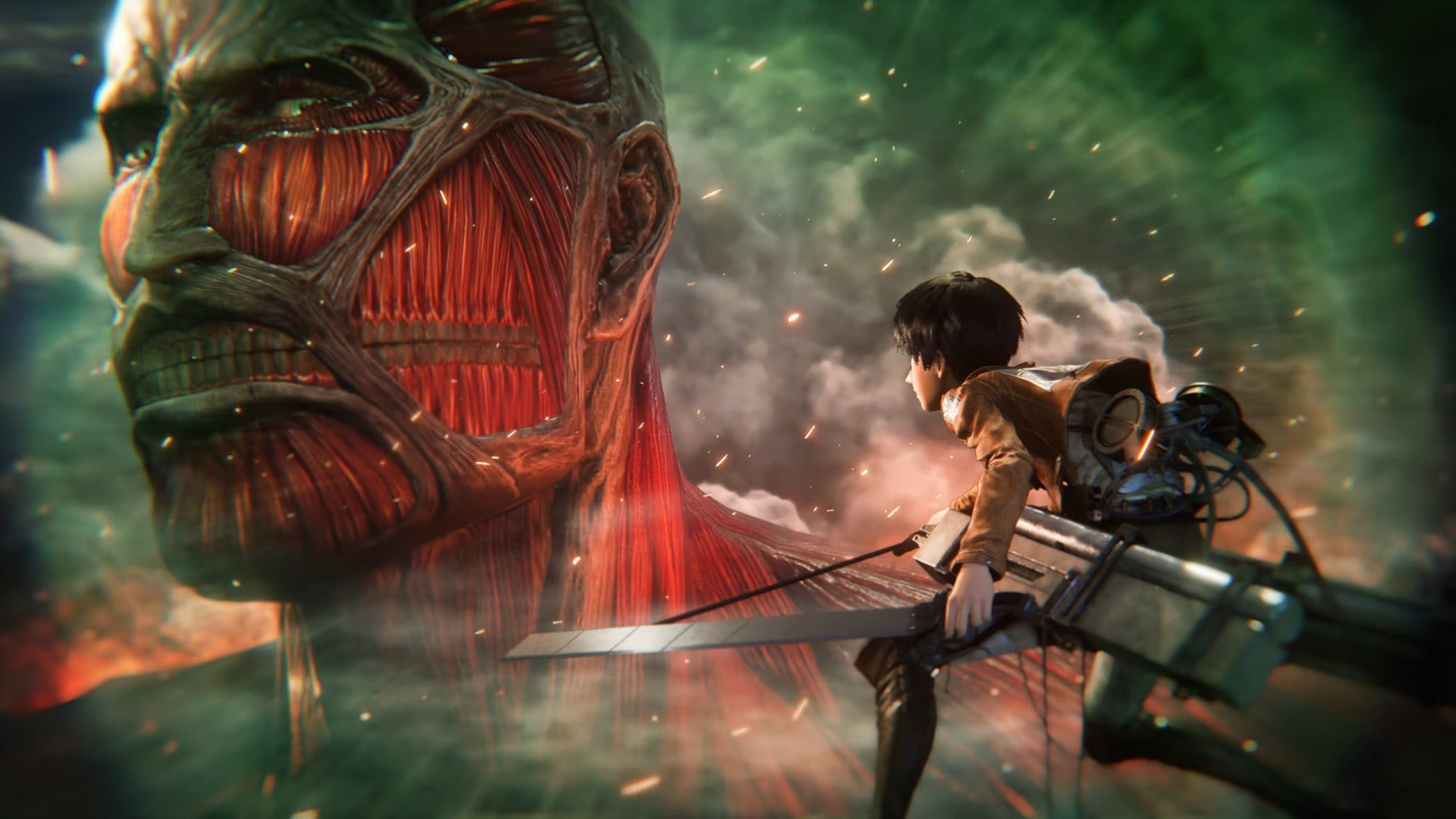
Koei Tecmo and Omega Force have this week announced they will be bringing Attack on Titan 3 to the Switch 2.
As mentioned in the official press materials, this will be the “riveting culmination of the action game series” based on the popular anime and manga series by Hajime Isayama.
There’s no release date just yet, but more information about the title will be shared in an official live stream next month.
A.O.T 3 is the riveting culmination of the action game series, depicting the story of Attack on Titan from its survey corps beginnings to its dramatic conclusion. As with previous titles in the series, the game will be developed by ω-Force (Omega Force). Fans can ready their blades for combat against the Nine Titans for the very first time, while learning more about the characters and lore through brand-new story content. With new upgrades and improvements to the omni-directional mobility gear battle system, experience the terror and drama of Attack on Titan’s epic story as never before.
“On 1stJuly 2026, more information about A.O.T. 3 will be revealed during an official livestream, featuring special guests Yui Ishikawa (voice of Mikasa) and Shiori Mikami (voice of Christa). Further details about the livestream will be announced at a later date via the official channels.”
No other details have been shared, but this entry will follow Attack On Titan 2, which was released on the original Switch in 2018.
Would you be interested in this game? Have you played any of the Attack on Titan titles previously? Tell us in the comments.